Sage green looks easy to decorate with, until you actually bring it into your living room.
Suddenly, the beige sofa looks too warm, the gray rug feels too cool, or the green you loved online looks completely different on your wall.
The problem usually isn’t sage itself; it’s what you pair with it.
Before you buy new furniture or repaint the room, you need a color palette that works with your sage shade, natural light, and the pieces you already own.
In this article, I’ll show you which colors work best with sage green and how to use each one.
Let’s jump in!
What Colors Go With Sage Green for a Living Room?
Sage green works best with colors that either warm it up or give its soft tone some contrast.
If you want a light, relaxed room, pair sage with cream, warm white, beige, or light wood.
For more depth, bring in brown, charcoal, navy, or black through furniture and smaller accents.

Terracotta, rust, mustard, and blush work well when the room needs warmth instead of another neutral.
A gray-toned sage usually works better with cooler neutrals, while warmer, olive-leaning sage sits naturally beside cream, tan, brown, and earthy colors.
You also don’t need to match everything. Let sage lead the palette, then use two or three supporting colors to keep the room balanced.
Soften Sage Walls
A soft sage backdrop works beautifully when you already have a beige or greige sofa and want more color without making the room dark.
Keep the fireplace, shelving, and trim white to break up the green and brighten the walls.
Repeat sage lightly through cushions, then bring in a faded neutral rug, simple patterns, and leafy plants.
Black details from the TV and fireplace add just enough contrast, making this combination especially useful for smaller living rooms that need both warmth and definition.

Layer Sage Accents
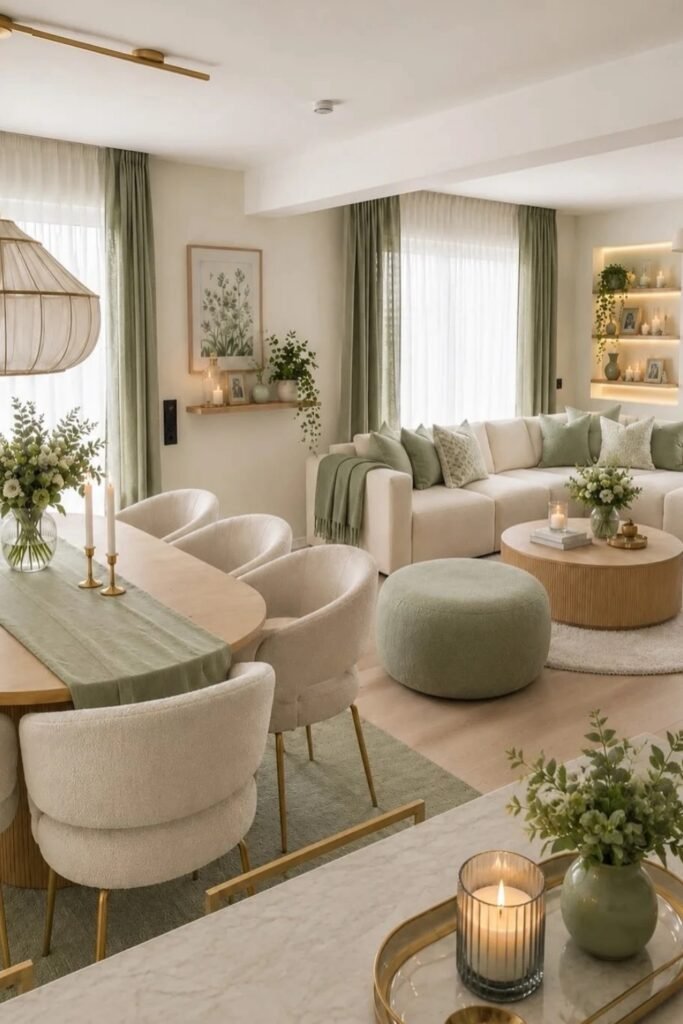
If you want sage without committing to green walls, spread it through a few larger accents instead.
Sage curtains, cushions, an ottoman, and a soft rug give the cream living room enough color while keeping it bright.
Use slightly different green tones rather than matching every piece exactly, then add light wood and small brass details for warmth.
This approach works especially well in open-plan living rooms where you want the seating and dining areas to feel connected.
Ground Sage Naturally
Sage feels much richer when you pair it with warm wood instead of surrounding it with more pale neutrals.
In a large living room, carry sage across the walls, then use exposed beams, built-in wood shelving, and a chunky timber table to add warmth.
Light sofas keep the deeper green from feeling heavy, while rust cushions bring out the warmer tones in the wood.
This combination works especially well in rooms with tall ceilings and plenty of natural light.

Keep Sage Minimal
When you want a calm living room without letting sage take over, use the color in different strengths rather than adding more contrasting shades.
Start with muted sage walls, then repeat a slightly deeper green through cushions and a small accent seat.
A cream sofa, beige curtains, pale rug, and light wood table soften the palette and keep everything bright.
This works especially well for minimalist living rooms where texture, plants, and simple shapes provide interest instead of bold colors.

Build Around Paneling
Sage-painted paneling gives a living room more depth than a plain green wall, especially when you want a cozy cottage or modern farmhouse feel.
Let the paneling carry most of the color, then place a light sofa against it so the seating stays visually separate.
Layer deeper green cushions and a throw instead of matching the wall exactly.
Natural wood tables, woven textures, and warm beige accents will keep the stronger sage tones grounded and comfortable.

Embrace Earthy Layers
Sage can feel especially cozy when you build around its earthy side instead of trying to brighten everything with white.
Pair muted sage walls with an olive-toned sofa, dark wood tables, and a natural woven rug for a warmer traditional look.
Floral upholstery and vintage-style landscape art add pattern without introducing harsh colors.
This approach works beautifully in cottage or classic living rooms where you want sage to feel collected and comfortable rather than overly modern.

Carry Sage Through
Open-plan spaces can feel disconnected when every area uses a different color, so let sage become the thread that ties them together.
Repeat the same muted green across the entry door, architectural paneling, console, and lower kitchen cabinets rather than painting every wall.
Warm white surfaces keep the scheme bright, while brass hardware and soft lighting add warmth.
This works especially well when your living room connects directly to an entryway or kitchen.

Balance Sage Lightly
A cream sectional is a smart choice when you want sage walls to stay soft rather than making the whole room feel green.
Repeat the wall color through just a couple of cushions and artwork, then bring in pale wood for warmth.
Sheer white curtains help natural light spread across the muted walls, which makes this combination especially useful for smaller or quieter living rooms.
A single dusty pink cushion can add warmth without disrupting the calm palette.

Frame Sage With Wood
Sage feels sharper and more modern when you frame it with warm wood instead of relying only on beige and cream.
Use sage on the TV wall, cabinetry, and curtains, then repeat walnut tones through shelving and the coffee table.
A cream sectional and rug keep the stronger green from becoming heavy, while black fixtures add crisp contrast.
This setup works especially well in contemporary living rooms where you want the TV wall to become part of the design.

Let Florals Lead
A sage sofa gives you an easy base for adding pattern without making the living room feel busy.
Bring in floral cushions with pink, red, and deeper green details, then keep the surrounding walls warm white so those colors stand out.
Rustic wood, woven rugs, and stone add enough earthy texture to support the green naturally.
This combination works beautifully in cottage or country-style rooms where you want sage to feel cheerful, collected, and lived-in.

Warm Sage Gently
If sage walls start feeling a little cool, warm them up with cream upholstery, honey-toned wood, and soft amber lighting.
Add chunky knit cushions, a textured rug, and a woven pendant so the neutral pieces still have plenty of character.
Repeating sage through just a few cushions keeps the palette connected without overdoing the green.
This cozy approach works especially well in smaller living rooms where softer colors and layered lighting can make the space feel more inviting.

Highlight Classic Details
Sage is a natural fit for traditional living rooms because it can emphasize molding without making ornate walls feel too formal.
Carry the green across the paneled walls, then use cream seating and pale wood to keep the room light.
A few deeper green cushions create contrast without competing with the architecture.
This works especially well in rooms with high ceilings, fireplaces, and large windows where sage can add character while still letting the original details stand out.

Double Down Sage
Using sage on both the fireplace wall and sectional can work beautifully when you vary the shades instead of chasing an exact match.
Keep the surrounding walls warm white, then add cream rugs, floral cushions, and chunky throws to break up the green.
Natural wood along the hearth and coffee table brings warmth into the middle of the palette.
This approach suits larger living rooms where repeating sage across separate areas helps the whole space feel connected.

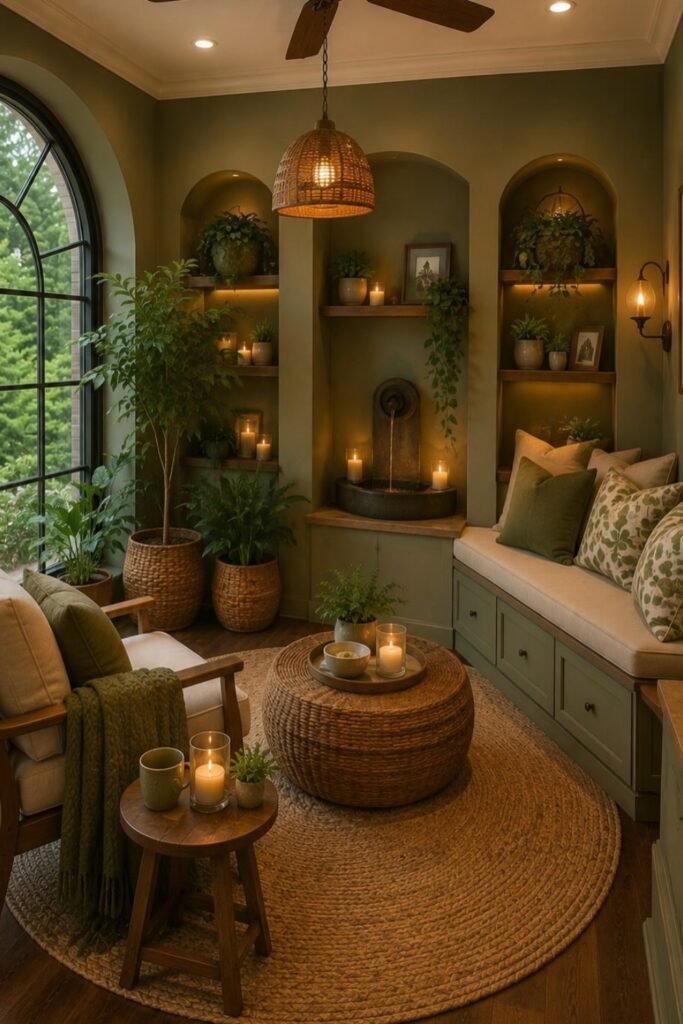
Create A Cozy Nook
A darker sage can make a reading corner feel intimate, especially when the space has a large window for natural light.
Use built-in shelves and a window seat to carry the color around the nook, then soften it with cream cushions and botanical patterns.
Woven baskets, a jute rug, warm wood, and amber lighting add texture and keep the deeper green from feeling flat.
This approach is ideal for a quiet corner where you want a cozy retreat rather than a bright, open feel.
Keep Sage Airy
If you love sage but want a bright, elegant living room, balance it with plenty of warm white instead of adding more green.
A cream sectional, pale rug, and light curtains keep the walls feeling fresh, while sage cushions and a throw bring the color back into the seating area.
Add a round mirror and brass details to reflect natural light and give the soft palette a little polish.
This works particularly well in spacious rooms with large windows.

Add Bold Contrast
Sage walls can handle black accents surprisingly well, especially when you want a more polished, modern living room.
Keep the sofa and main upholstery cream, then introduce black through the media console, coffee table, frames, and lighting.
A few olive cushions and leafy plants connect the darker details back to the sage without adding more colors.
This combination works particularly well when you want a soft green room to feel sharper and more contemporary.

FAQs
Does Sage Green Work With Dark Furniture?
Yes. Dark wood, black, and walnut furniture can give sage green more depth.
Keep larger pieces balanced with cream, beige, or warm-white upholstery so the room doesn’t feel too heavy.
A few brass or natural wood accents can also soften the contrast.
How Do I Keep A Sage Green Room From Looking Dull?
Add contrast through texture and small warm accents instead of introducing lots of colors.
Try woven rugs, linen curtains, wood furniture, patterned cushions, brass lighting, or terracotta accessories.
Keeping different textures in the room will make a muted sage palette feel layered rather than flat.