You can love a blue living room in a photo and still wonder whether the same color will work in your own home.
Go too dark, and the room may feel heavy; choose a cooler shade without enough warmth, and it can quickly feel flat or cold.
Then there’s the bigger question: what actually goes with blue? The good news is that blue gives you plenty of room to work with.
In this article, you’ll find practical ways to make blue work with your furniture, lighting, and decorating style.
Let’s jump in!
What Colors Go With a Blue Living Room?
Blue works with more colors than you might think, but the right pairing depends on whether you want the room to feel warm, fresh, calm, or bold.
If your blue walls feel too cool, bring in cream, beige, warm brown, or natural wood to soften them.
For a cleaner look, white works well, especially with navy or deeper blues.

You can also add terracotta, mustard, or rust when the room needs more warmth and contrast.
Sage and olive green create a softer, natural combination, while blush pink can make dark blue feel less serious.
Before choosing an accent color, look at your blue’s undertone and the room’s natural light so the colors work together rather than fight each other.
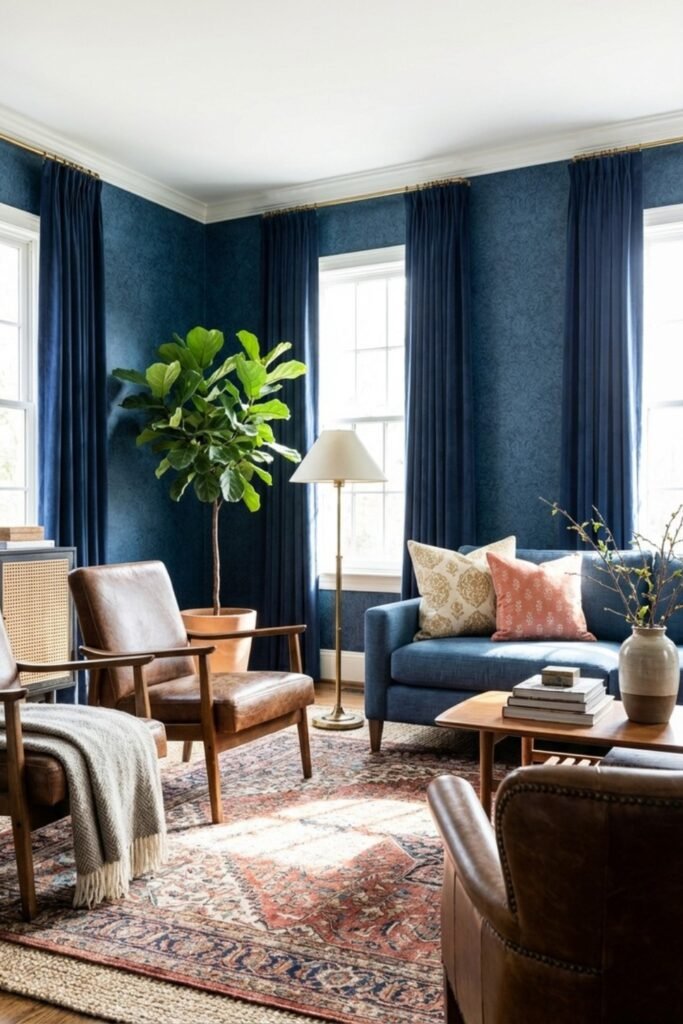
Warm Navy Layers
Deep navy feels much warmer when you pair it with brown leather, natural wood, and woven textures.
A vintage-style rug adds pattern while keeping the room grounded.
Keep the curtains close to the wall color for a rich, layered effect, then soften everything with cream cushions, warm lighting, and greenery.
This combination works especially well in traditional or transitional living rooms where you want navy to feel cozy rather than overly coastal.
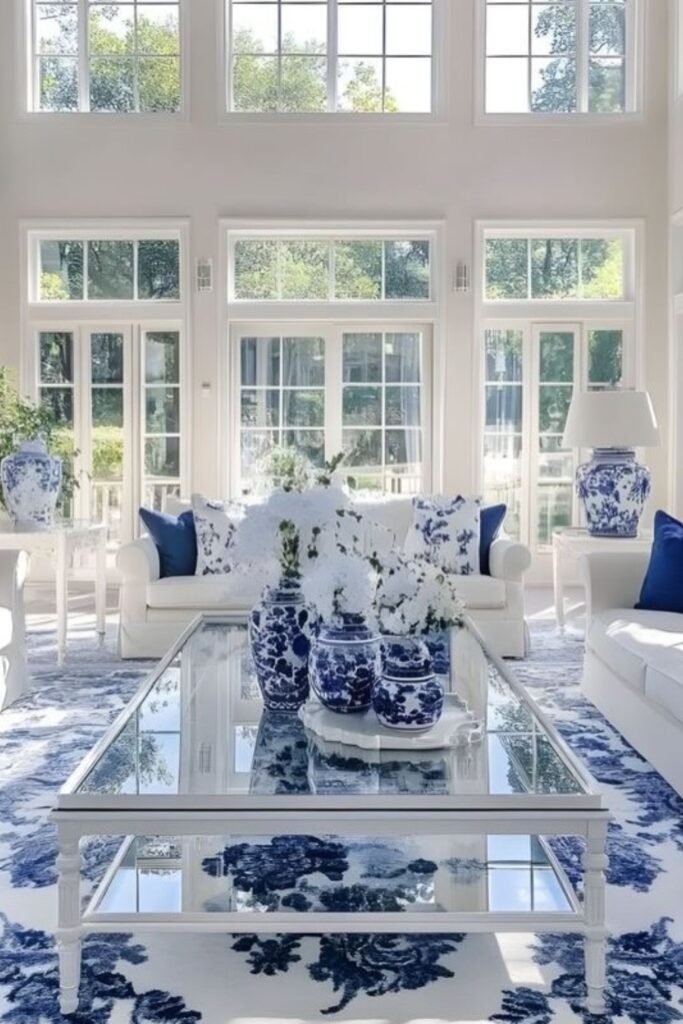
Crisp Blue White
A blue-and-white palette keeps a living room bright, especially when large windows already bring in plenty of natural light.
Use white sofas and walls as the base, then introduce blue through patterned rugs, cushions, ceramics, and artwork.
Keep several shades of blue together instead of matching everything exactly.
A glass coffee table also helps preserve the airy feel without adding visual weight.
Blue With Warm Accents
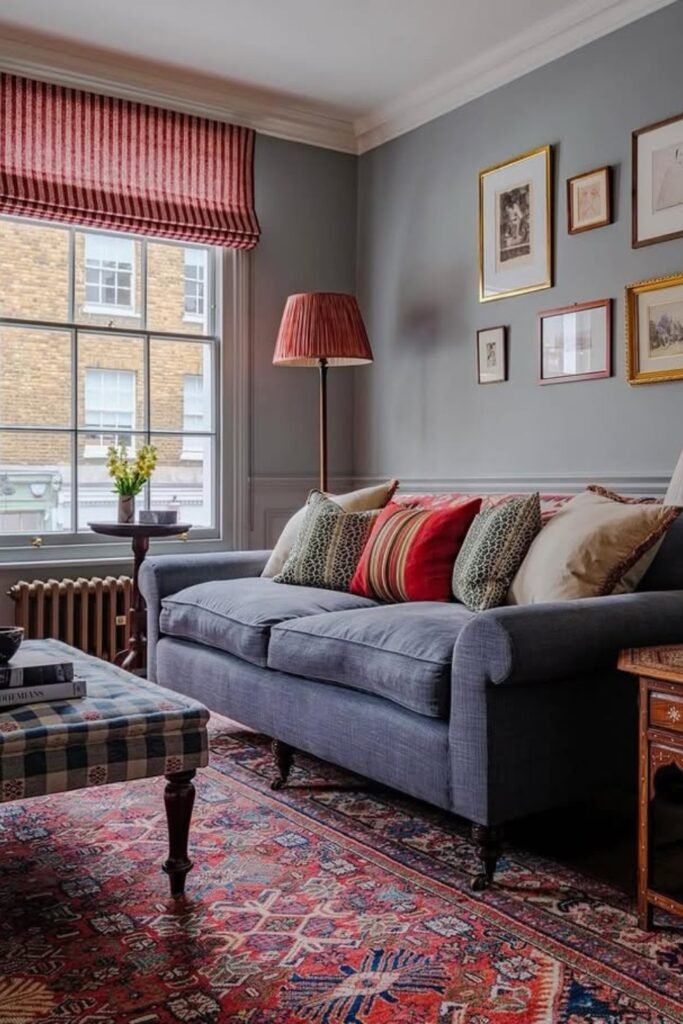
Cool blue-gray walls become much cozier when you bring in rust, red, and warm brown accents.
A patterned rug can tie these colors together while striped cushions add smaller touches of contrast without overwhelming the room.
Choose wooden furniture and warm-toned lighting to reinforce the inviting feel.
This palette works especially well in traditional or collected living rooms where you want blue to feel rich, comfortable, and lived-in rather than overly cool.
Balance Blue Neutrals
A deep blue sofa becomes easier to style when the surrounding pieces stay light and warm.
Cream walls, pale rugs, floral cushions, and soft pink accents keep the blue from dominating the room.
Gold details add warmth without making the space feel too formal.
This approach works well in bright living rooms where you want a bold blue sofa to stand out while keeping the overall space fresh and comfortable.

Soft Coastal Layers
A blue accent chair can bring color into an otherwise neutral room without making the space feel overly themed.
Pair soft blue with cream upholstery, pale wood, rattan, and woven rugs for a relaxed coastal feel.
Keep the walls light and let small blue details repeat through cushions, shelving, or ceramics.
This approach works especially well in open-plan living rooms where you want the seating area to feel connected to the brighter kitchen and dining spaces.

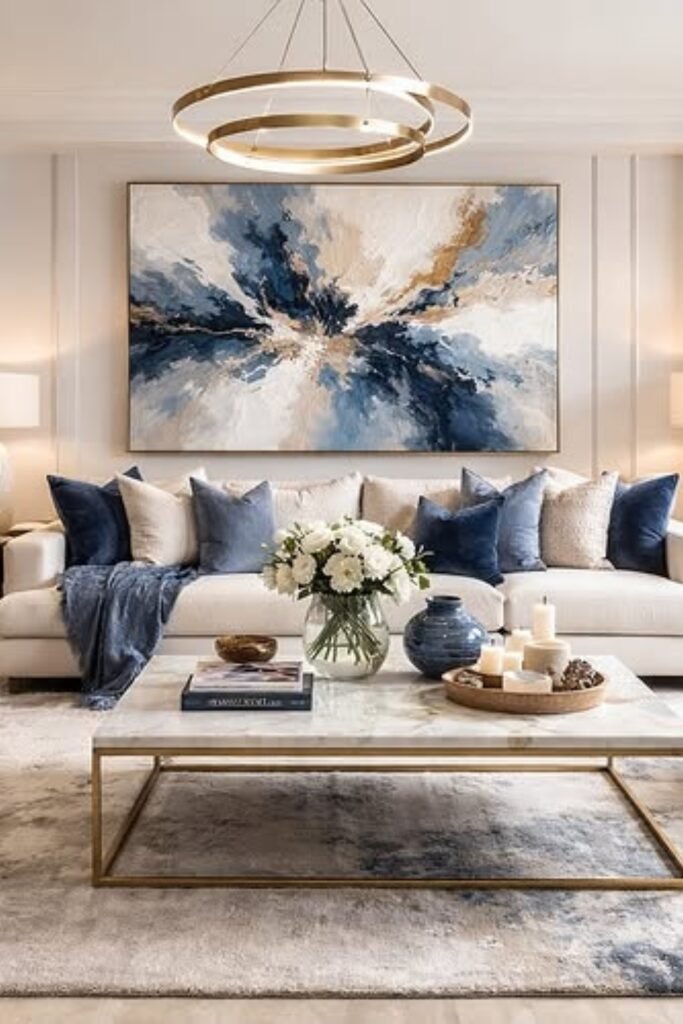
Blue Through Accents
A neutral sofa gives you plenty of freedom to bring blue in through chairs, cushions, throws, and artwork.
Keep the larger furniture pieces cream or beige, then repeat blue in a few places so the room feels connected rather than scattered.
Gold finishes and warm lighting add polish, while the abstract artwork can tie the different blue tones together.
This works especially well when you want blue to feel sophisticated without committing to blue walls.
Airy Blue Details
Let white and cream handle the larger surfaces, then use soft blue in cushions, rugs, artwork, and small accessories.
The pale palette keeps the room bright while repeated blue touches give it enough contrast to feel finished.
Brass lighting and natural wood flooring add warmth without competing with the softer colors.
This setup suits bright living rooms where you want a fresh blue-and-white feel without making the space look overly nautical.

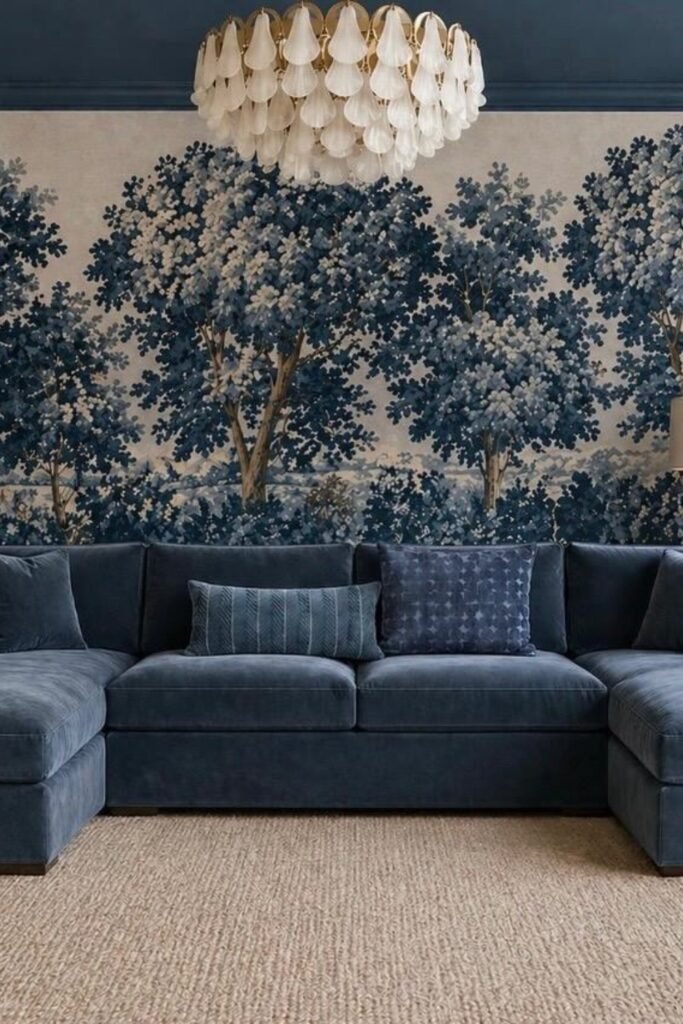
Embrace Moody Blue
A deep blue sectional can handle an equally dramatic backdrop when you keep the shades closely related.
Use blue-patterned wallpaper behind the sofa, then carry the color onto the ceiling for a more immersive effect.
Cream lamps, light curtains, and a natural textured rug give the darker palette enough breathing room.
This approach suits larger living rooms or spaces where you want a cozy, sophisticated mood instead of trying to make the room feel brighter.
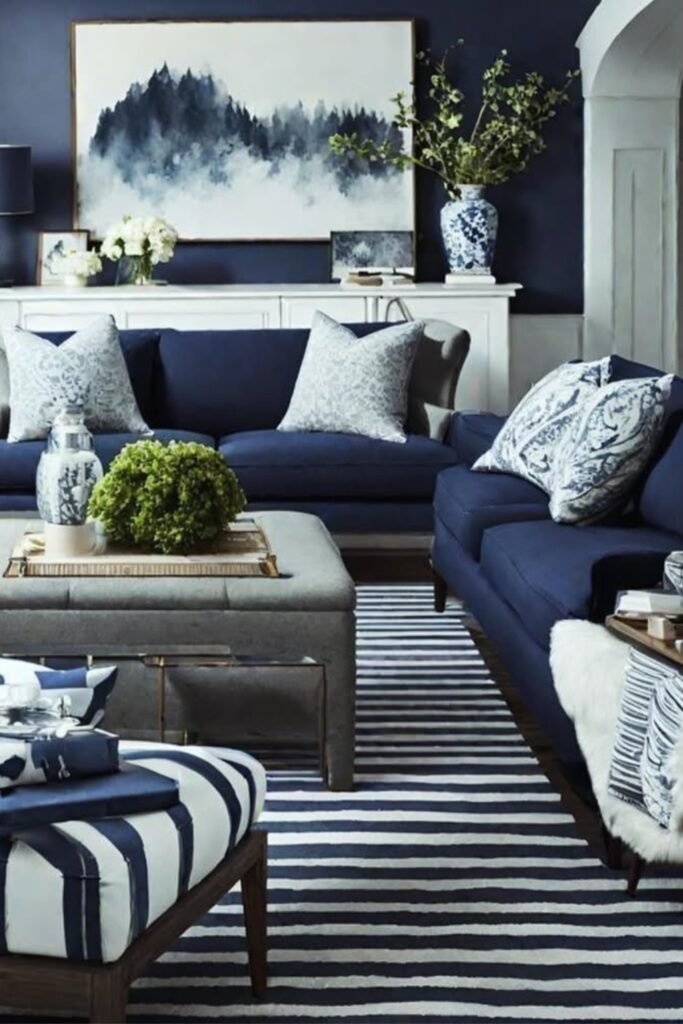
Navy And White
Navy walls and sofas can feel balanced when crisp white furniture and trim create strong breaks between the darker areas.
Add blue-and-white patterned pillows, a striped rug, and artwork that repeats both shades to make the palette feel intentional.
Keep one or two softer elements, such as a light ottoman or fluffy throw, to prevent the room from becoming too stark.
This works especially well in traditional living rooms where you want a classic blue-and-white look with more depth.
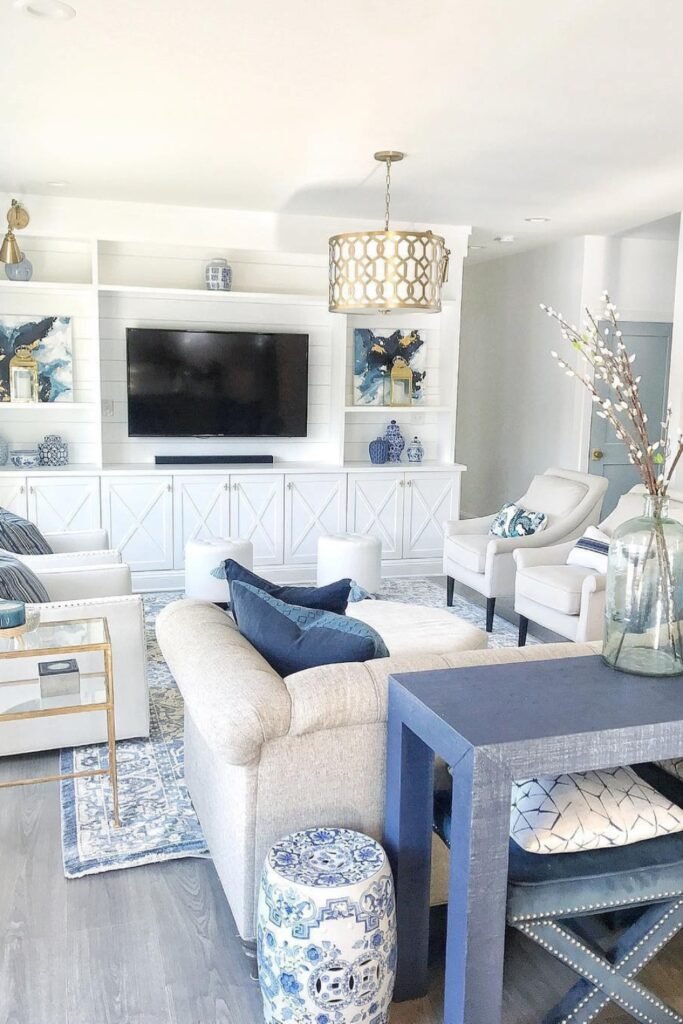
Coastal Blue Layers
Keep the walls and main furniture white, then let blue build through the rug, cushions, stools, artwork, and small accessories.
Mixing navy with softer blue shades keeps the room from looking flat or overly nautical.
Gold accents and pale wood add warmth while maintaining the airy feel.
This approach works especially well in bright, open living rooms where you want a relaxed coastal look without covering the entire space in blue.
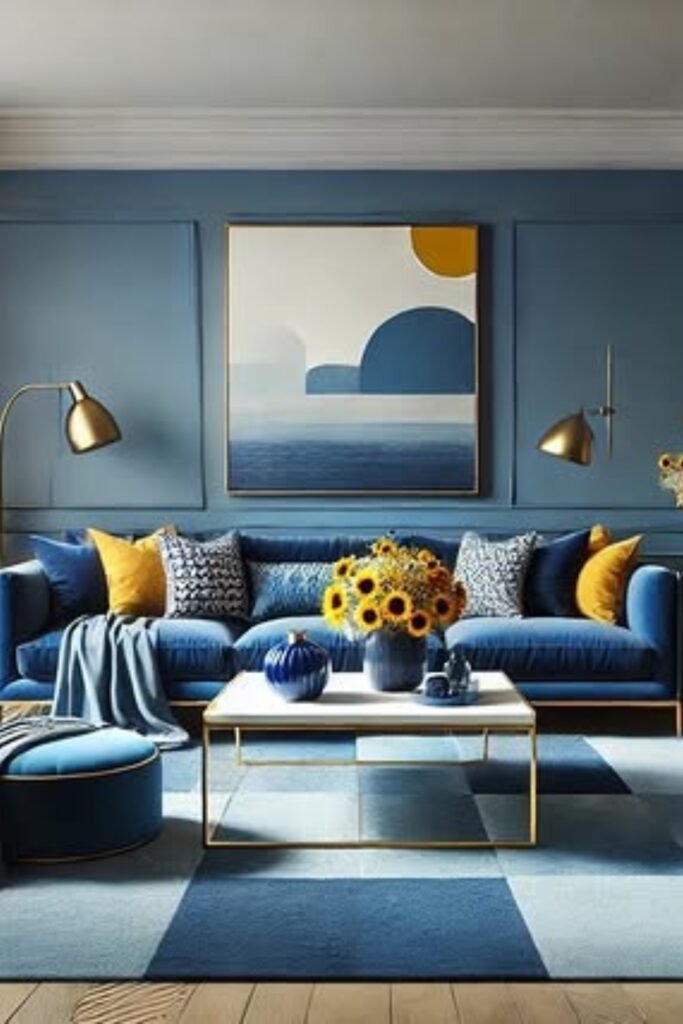
Energize Navy Yellow
Yellow accents give a deep blue room the warmth and energy it needs.
Repeat mustard or golden yellow through cushions, flowers, artwork, and small décor rather than spreading it across large furniture.
Keep the blue tones layered across the sofa, walls, rug, and chairs so the brighter accents feel intentional.
Warm wood flooring and brass lighting add another soft contrast. This combination suits modern living rooms when you want navy to feel lively instead of overly dark.
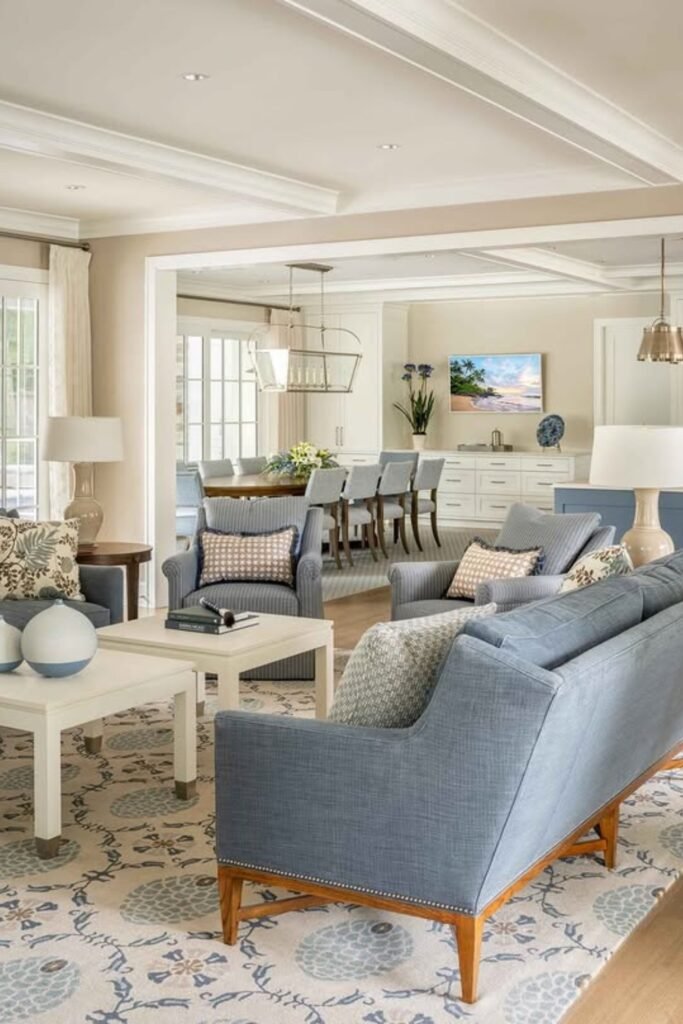
Blue Gray Comfort
Blue-gray furniture works beautifully with warm cream walls, white cabinetry, and natural wood when you want a softer take on blue.
Keep the larger pieces in muted blue, then use patterned cushions and rugs to bring in gentle contrast.
Warm wood legs and brass lighting prevent the palette from feeling too cool.
This approach suits open-plan living rooms where you want the seating area to feel calm, connected, and easy to live with.
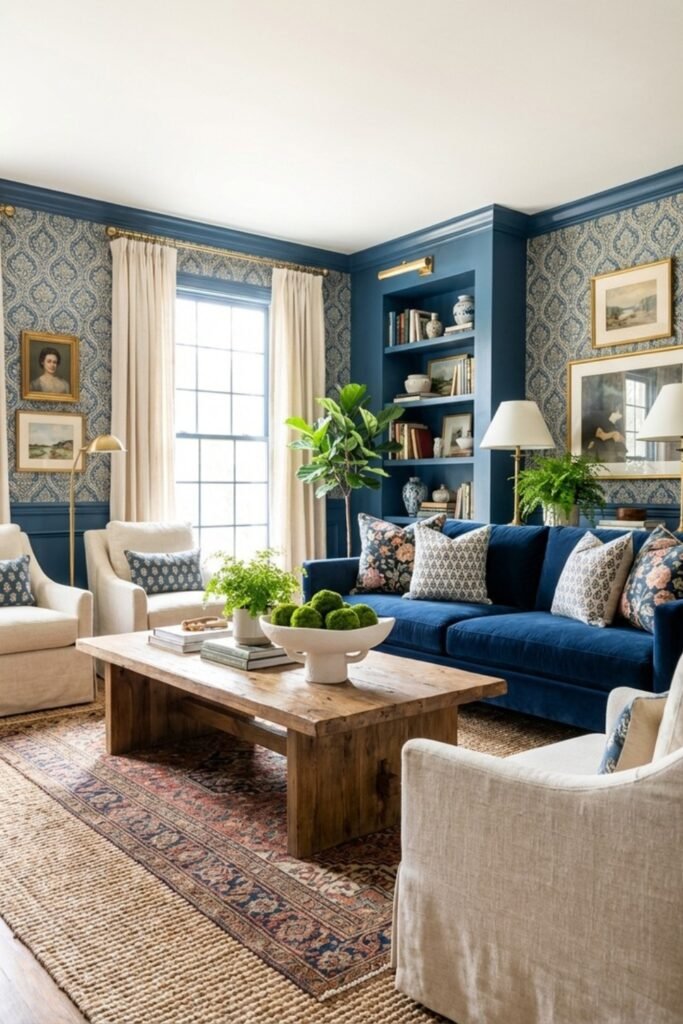
Patterned Navy Depth
Navy looks richer when you repeat it through wallpaper, trim, upholstery, and smaller patterns instead of relying on one solid surface.
Keep cream chairs and curtains nearby to break up the darker palette, then add a rustic wood table for warmth.
Floral and geometric cushions bring enough variation to keep the room from feeling heavy.
This layered approach works beautifully in traditional or collected spaces where you want blue to feel detailed and sophisticated.
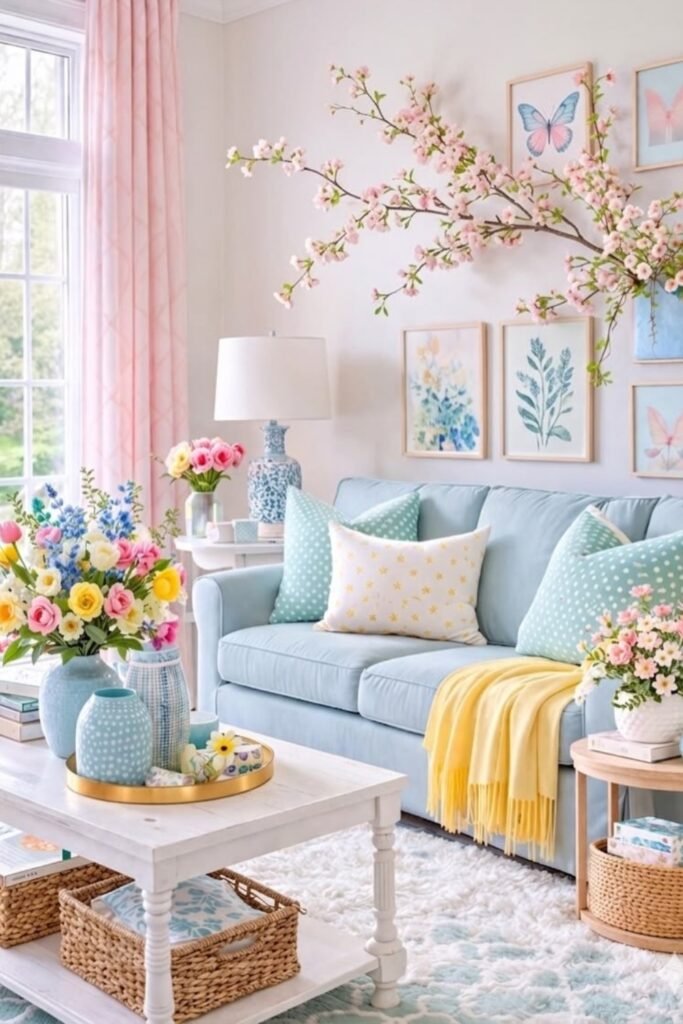
Pastel Blue Bloom
Soft blue feels fresh and cheerful when you pair it with blush pink, sunny yellow, and plenty of floral details.
Keep the walls and larger furniture light, then repeat these colors through cushions, curtains, flowers, and artwork.
Natural baskets add texture without making the palette feel busy.
This combination works especially well in bright, cottage-style or spring-inspired living rooms where you want blue to feel playful and welcoming rather than formal.
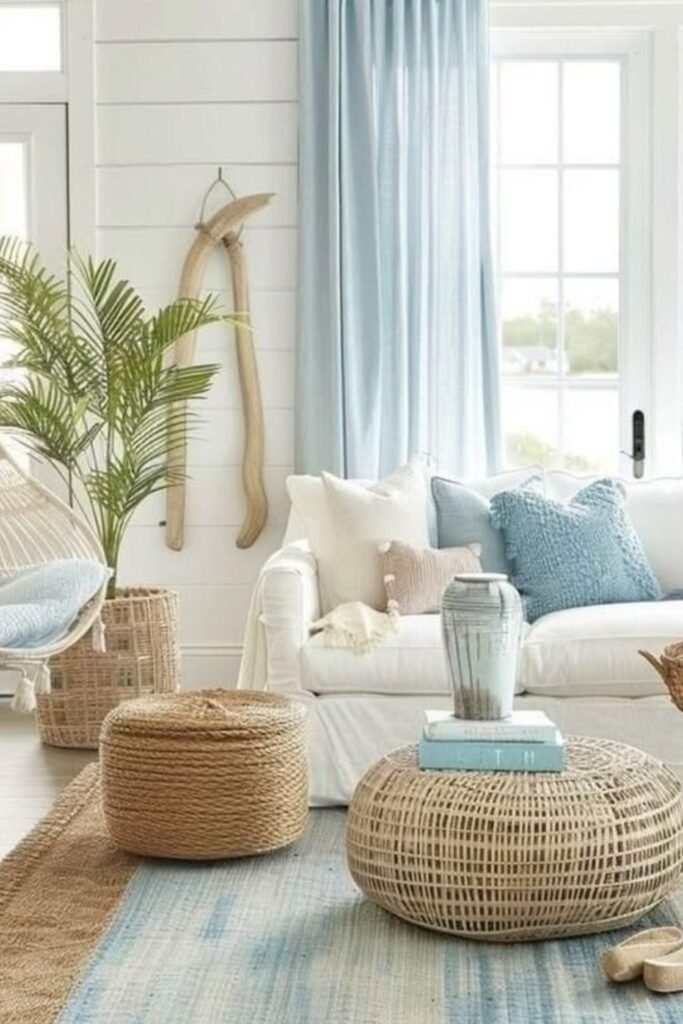
Subtle Coastal Blue
You don’t need much blue to create a coastal feel. Keep the room mostly white.
Then add pale blue through artwork or a few decorative pieces while natural wood, jute, rattan, and linen provide warmth.
Surfboard-style wall décor reinforces the relaxed beach theme without needing obvious nautical accessories.
This works best in bright rooms where you want the space to feel airy, casual, and connected to the coast.
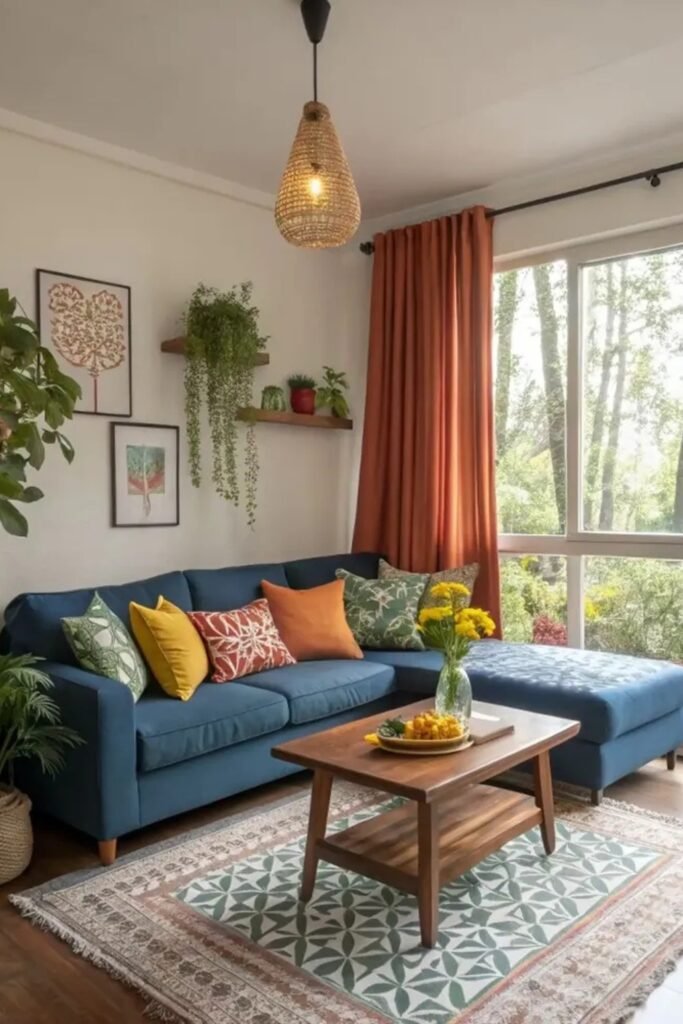
Warm Blue Contrast
Terracotta curtains can instantly warm up a blue sofa without taking away its calm character.
Add mustard cushions, leafy green accents, and walnut furniture to create a richer, more lived-in palette.
A patterned rug can repeat those colors and pull the whole room together.
This combination works especially well in bright living rooms where you want blue to feel cozy, earthy, and energetic rather than cool or overly formal.
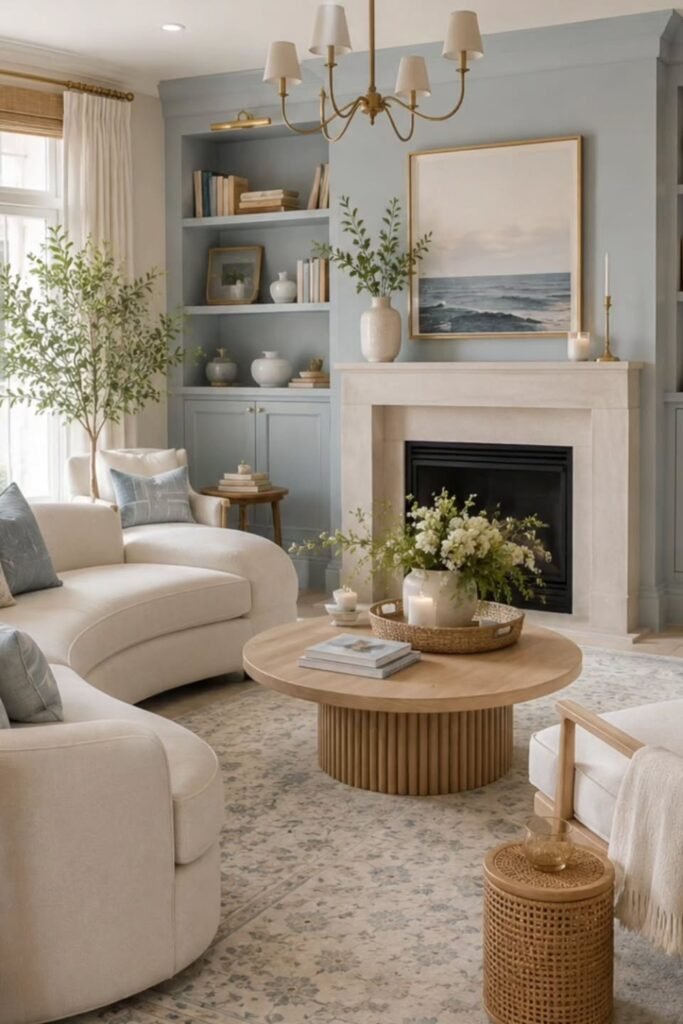
Soften Blue Gray
Blue-gray built-ins feel much softer when surrounded by creamy upholstery, pale wood, and woven textures.
Keep the fireplace light to break up the blue, then repeat the shade through cushions and artwork for a connected look.
Brass lighting adds a subtle warm contrast without overpowering the calm palette.
This approach suits cozy, traditional, or coastal-inspired living rooms where you want blue to feel relaxed and welcoming.
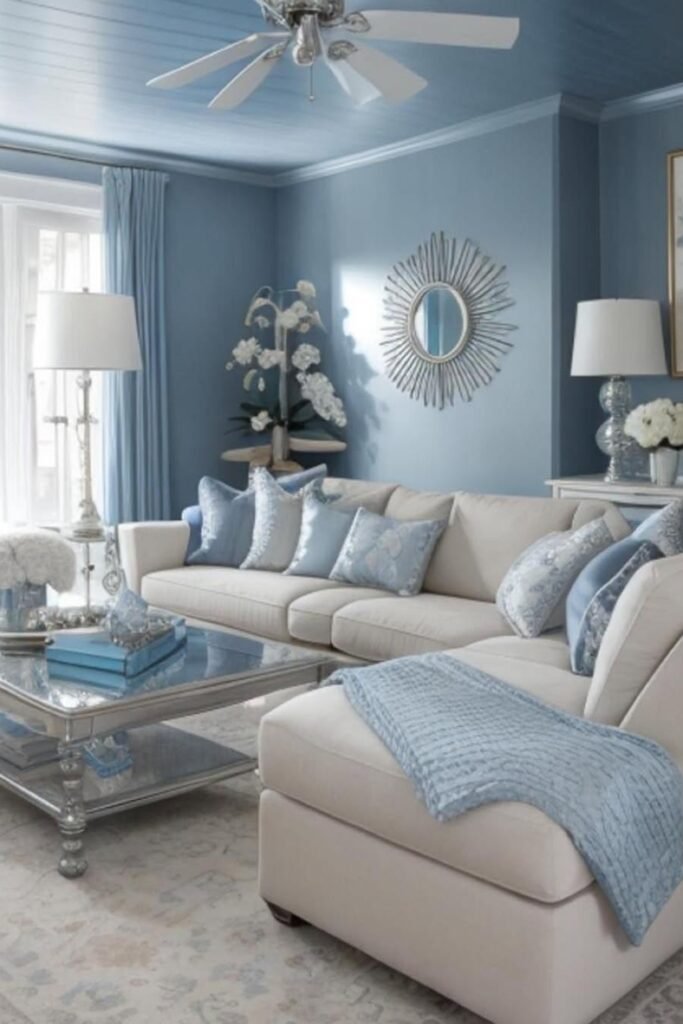
Soft Blue Layers
Pale blue walls can feel calm and polished when you repeat the shade through curtains, cushions, and a textured throw.
Keep the sofa and larger pieces creamy white to give the blue plenty of breathing room.
Silver accents and reflective furniture add brightness without introducing another strong color.
This palette works best in well-lit living rooms where you want a soft, elegant look that feels peaceful rather than overly colorful.
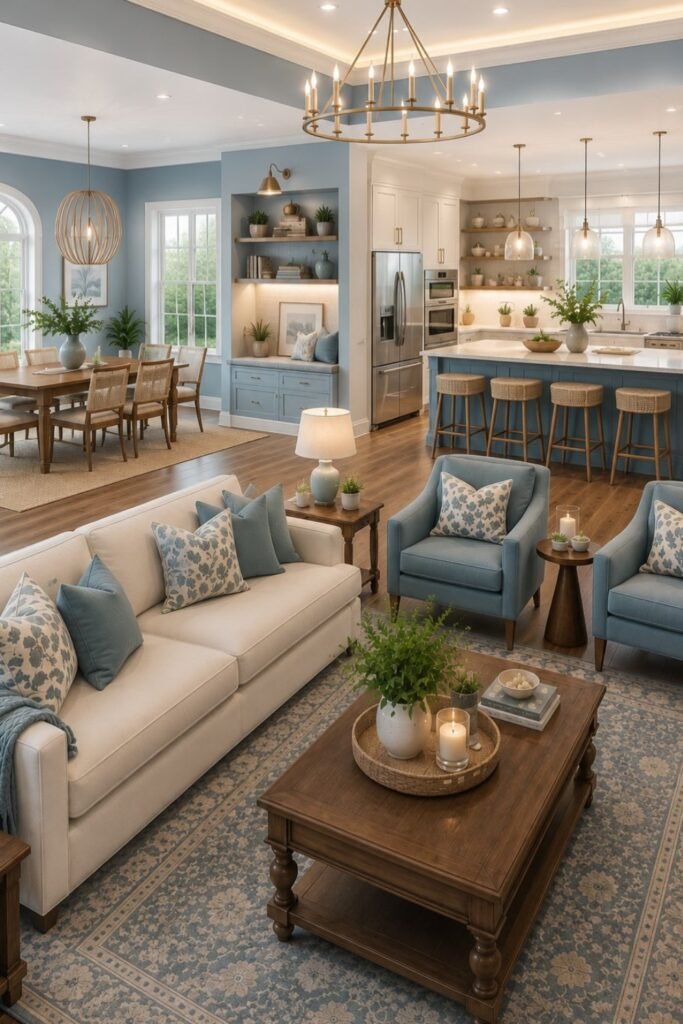
Blue Open Layout
A soft blue palette can flow beautifully through an open-plan living room when you repeat it across seating, cabinetry, cushions, and rugs.
Keep the sofa light and use deeper blue on accent chairs or built-ins to create clear layers.
Warm wood furniture and woven seating balance the cooler tones, while cream cabinetry keeps the connected kitchen and dining areas bright.
This works especially well when you want one blue scheme to visually tie several spaces together.
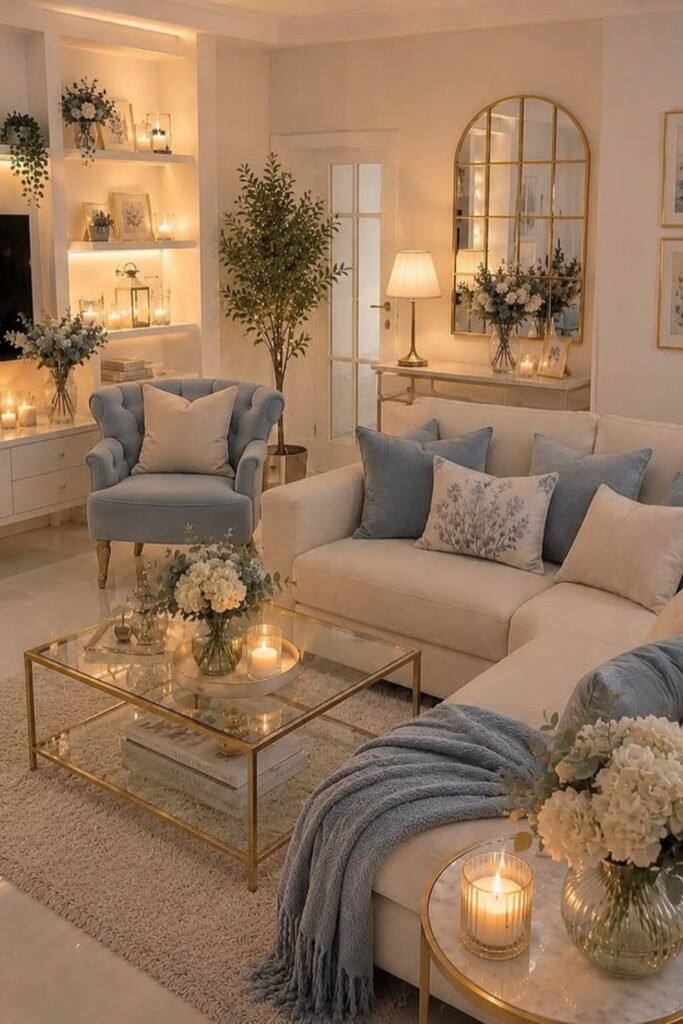
Glow With Blue
Warm lighting can completely change how blue feels in a living room.
Use soft blue upholstery and cushions against cream seating, then bring in brass tables, mirrors, and lamps to reflect the golden glow.
Candles and layered lighting make the cooler blue feel softer and more inviting after dark.
This works especially well in cozy living rooms where you want blue to feel elegant without making the space look cold.
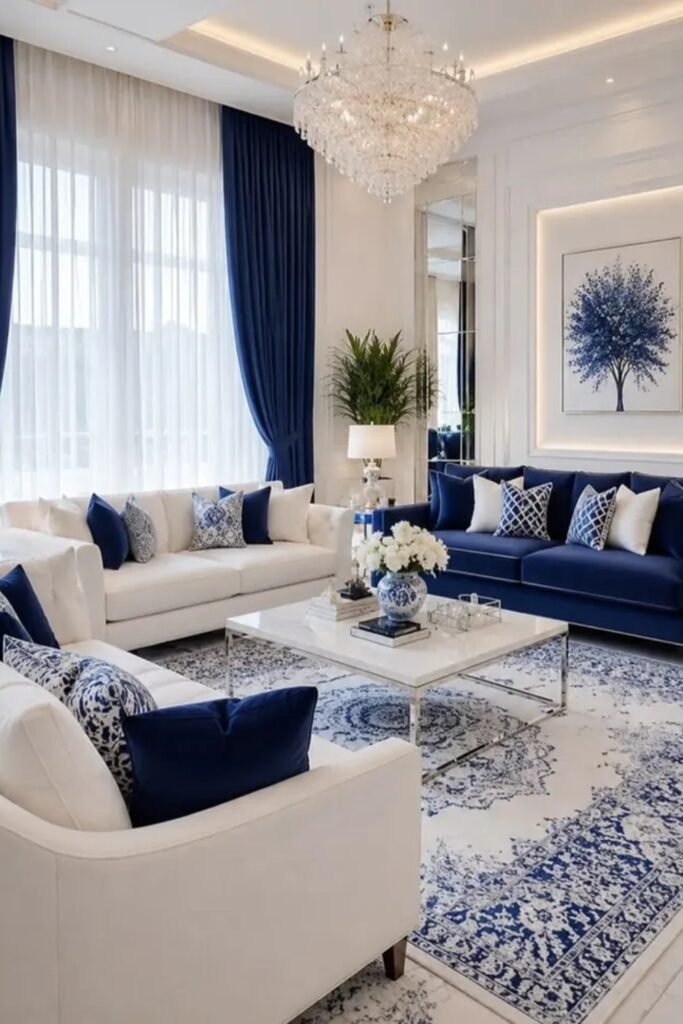
Elegant Navy Contrast
Navy becomes striking when you let white carry most of the room.
Use deep blue on one sofa, curtains, cushions, and a patterned rug, while white upholstery and walls keep the space bright.
Repeat the blue through small details rather than adding more dark surfaces. Crystal lighting and mirrored finishes bring extra polish.
This combination works well in formal or luxury living rooms where you want navy to feel bold, refined, and balanced.
FAQs
What Color Furniture Goes With Blue Walls?
Cream, beige, white, warm brown, and natural wood furniture all work well with blue walls.
For darker navy walls, lighter furniture helps keep the room from feeling too heavy.
Brown leather is another great choice when you want a warmer, more traditional look.
How Do You Make A Blue Living Room Feel Warm?
Bring in warm materials and colors instead of adding more cool tones.
Natural wood, cream fabrics, rattan, brass, terracotta, rust, and mustard can soften blue and make the room feel more inviting.
Warm lamps also help blue look cozier in the evening.