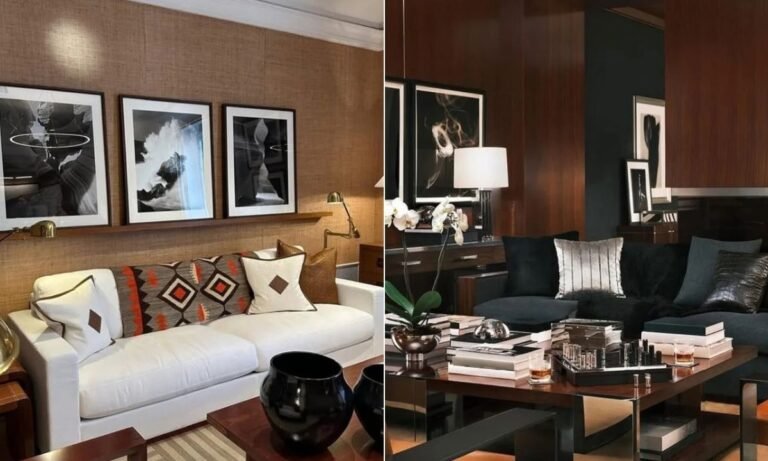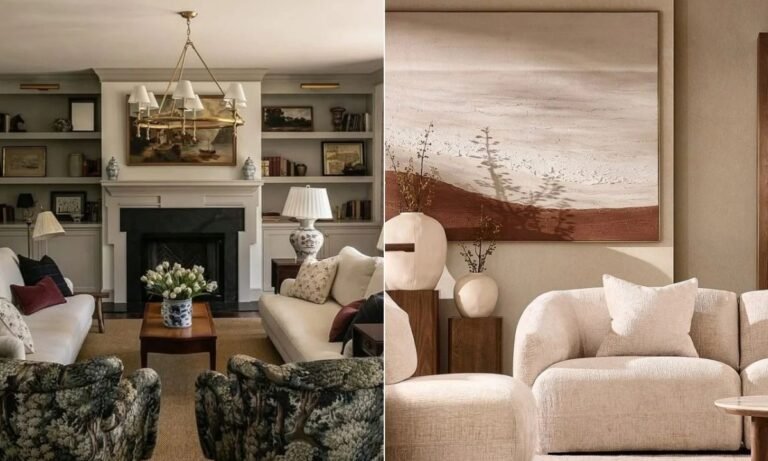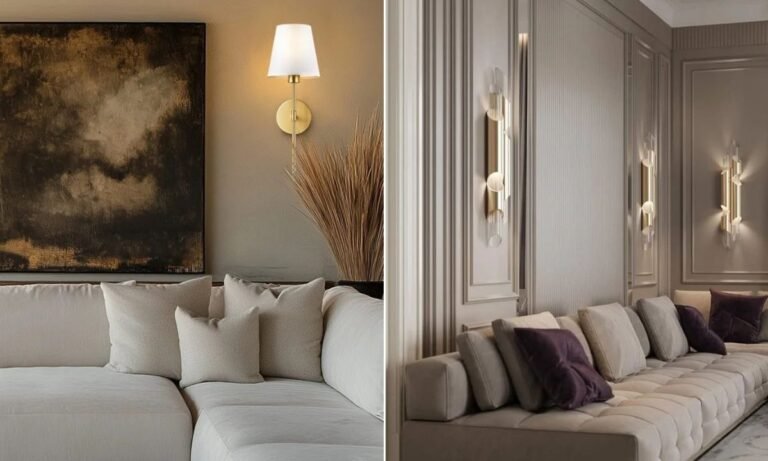
Beige looks effortless in those perfectly styled living rooms.
But bring too much of the same shade into your own space and suddenly everything starts blending together.
The sofa disappears into the walls, the rug adds no contrast, and the calm neutral look you wanted just feels flat.
The good news is you don’t need to give up beige, you just need to layer it properly.
With the right mix of warm tones, natural wood, texture, darker accents, and a little color, beige can feel cozy and full of character.
In this article, I will show you how to get that balance right without losing the soft, relaxed look.
Is Beige a Good Color for a Living Room?
Yes, beige is a great living room color if you want a space that feels warm, calm, and easy to decorate. The trick is not using the exact same beige everywhere.
If your walls are light beige, bring in a slightly deeper sofa, warm wood, textured fabrics, or darker accents so the room has some depth.

Beige also gives you plenty of freedom when you want to change the look later.
You can pair it with brown and cream for a cozy feel, black for stronger contrast, or olive green for a more earthy look.
Just test your beige paint in the room first, because natural and artificial light can make its undertones look warmer or cooler.
Black Accent Balance
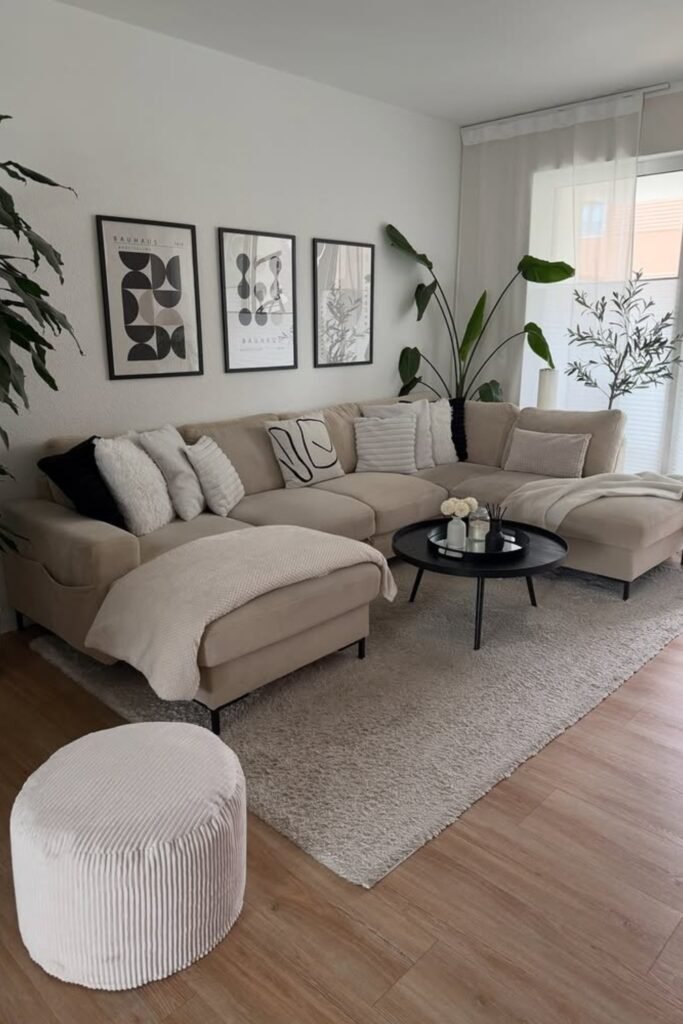
A beige sectional can start looking flat when every surrounding piece stays equally soft.
Add black through a slim coffee table, picture frames, or a few cushions to give the room clear definition.
Keep cream throws and textured pillows close to the sofa color so the contrast doesn’t become too harsh.
Tall green plants are another easy addition, especially in bright rooms where you want the beige palette to feel fresh, cozy, and naturally layered.
Colorful Beige Foundation
Beige doesn’t have to control every large piece to define the room.
Use it through curtains, rugs, and warm natural textures, then bring in deep green or blue seating for stronger personality.
Mustard and rust accents help connect those richer colors back to the warm neutral base.
This approach works especially well when you love beige but want your living room to feel collected, colorful, and less predictable.

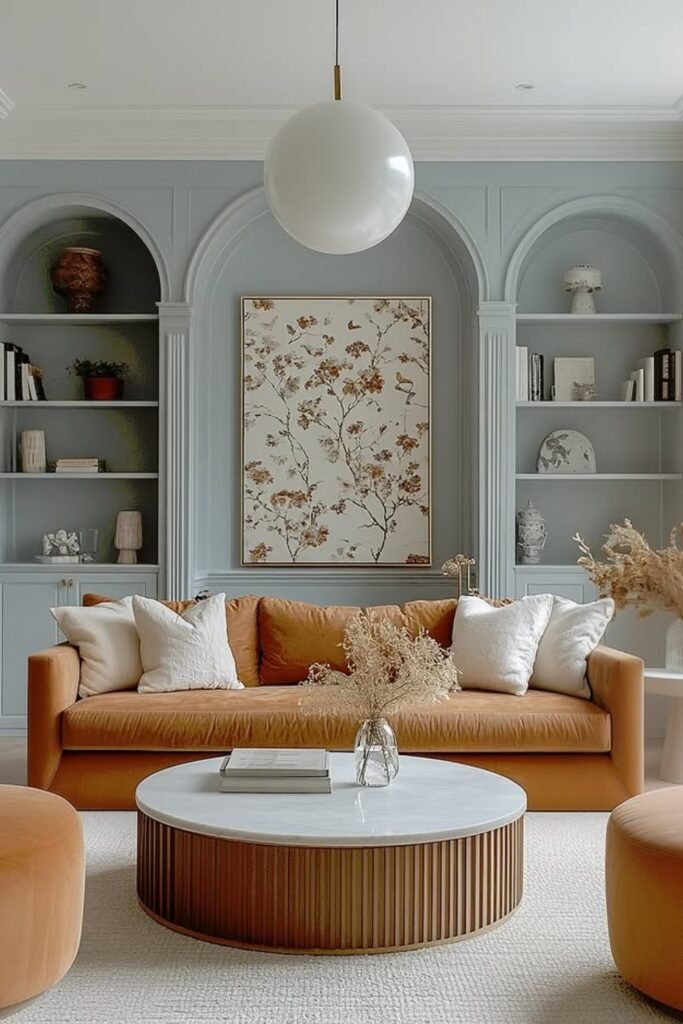
Warm Camel Contrast
Pale beige rooms can handle a richer sofa without losing their calm feel.
Choose camel or caramel upholstery, then soften it with cream pillows and a light neutral rug.
Cool-toned walls can make the warmer furniture stand out even more, while wood and brass details help bridge the two temperatures.
Try this approach when your beige living room feels washed out and needs warmth without adding several different colors.
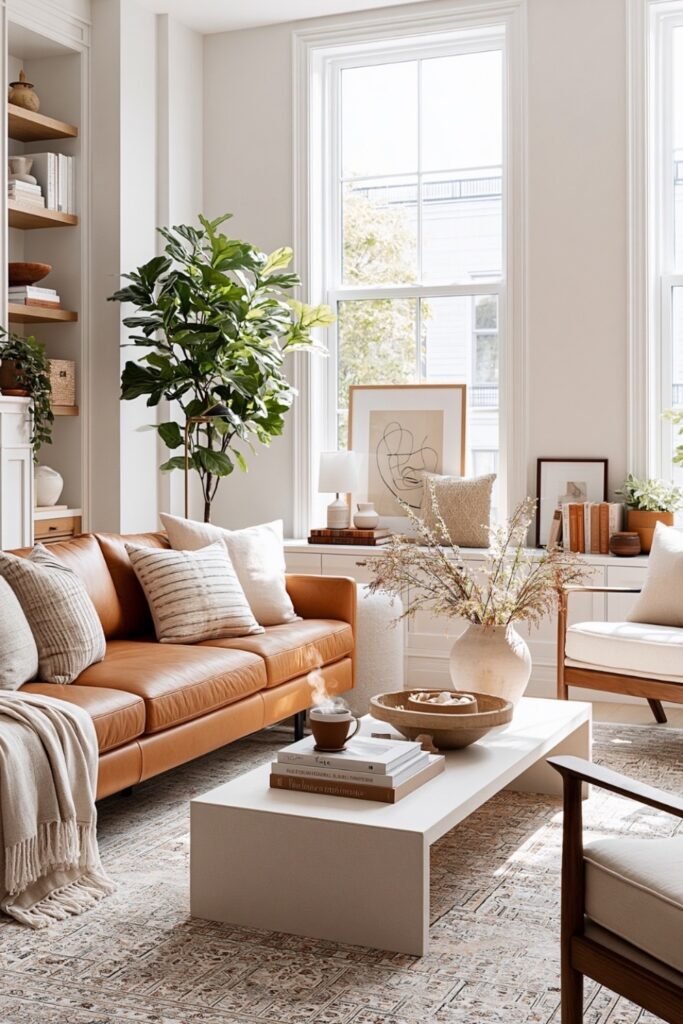
Leather Warms Neutrals
When a beige room feels a little too pale, a caramel leather sofa can bring back the warmth without making the palette busy.
Surround it with cream chairs, soft beige walls, and light textiles so the leather becomes the main grounding color.
A faded patterned rug and natural wood shelves add another layer without competing for attention.
This combination works beautifully in bright living rooms where plenty of daylight keeps the richer brown tones from feeling heavy.
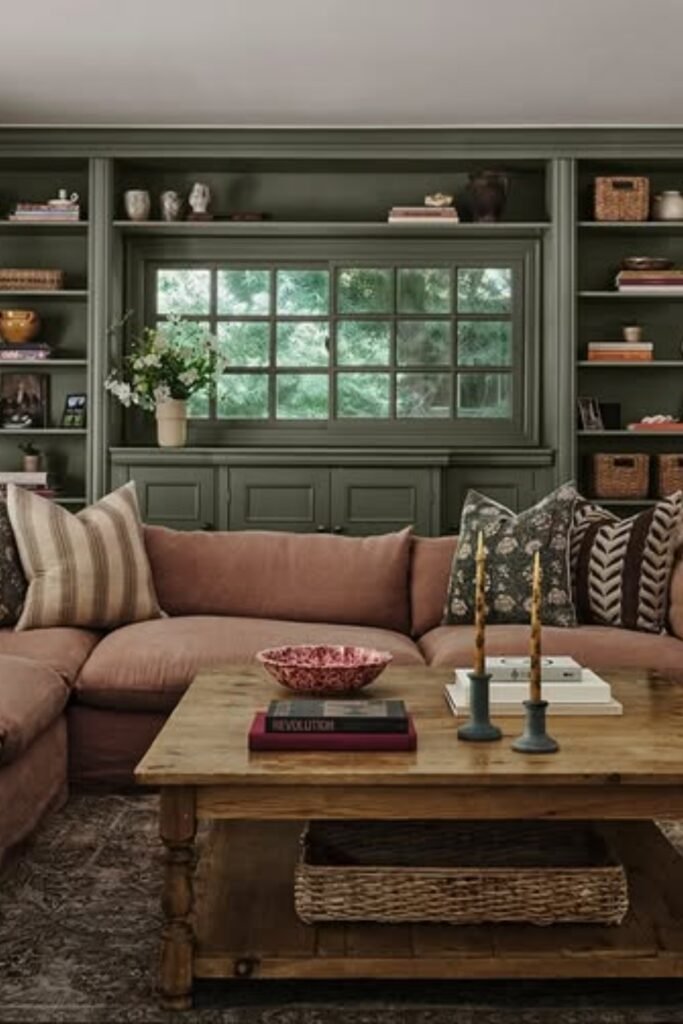
Ground Beige Naturally
Beige becomes much more interesting when you surround it with deeper earthy colors.
Pair a soft brown-beige sectional with olive built-ins, aged wood, and a patterned rug to create depth without relying on bright accents.
Keep a few cream pillows in the mix so the darker tones don’t take over.
This approach suits larger living rooms especially well, where deeper green and brown shades can make an open space feel warmer and more settled.
Let Beige Breathe
A beige base gives you room to use stronger colors without making the living room feel chaotic.
Keep the walls and rug soft, then introduce sage green seating, warm wood, and patterned cushions for personality.
Woven lighting and botanical artwork reinforce the natural look while adding texture above eye level.
Try this approach when you enjoy boho or collected interiors but still want beige to keep the overall palette grounded.

Build Cozy Layers
Beige feels especially inviting when you let texture do most of the decorating.
Pair a soft cream chair with chunky knits, warm wood floors, and a muted vintage rug rather than adding bright color.
Built-in shelves filled with books bring deeper brown and taupe tones naturally into the palette.
This approach is perfect for a quiet reading corner or fireplace living room where you want beige to feel lived-in, warm, and comfortable.

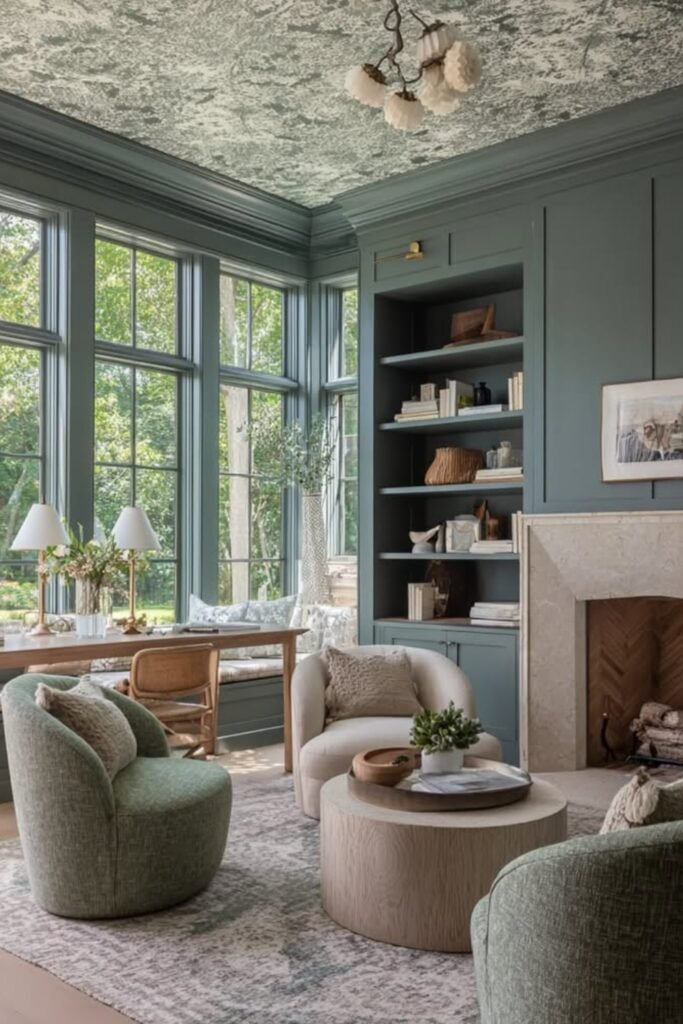
Soften Deep Green
Deep green walls can make beige furniture feel warmer and more noticeable instead of fading into the background.
Keep the rug, rounded coffee table, and one chair in creamy beige, then repeat the green through textured accent chairs for balance.
Natural wood and stone prevent the contrast from feeling too sharp.
This pairing works especially well in bright living rooms where large windows can handle a darker wall color.
Ground Bold Colors
Beige can work quietly in the background when you prefer stronger furniture colors.
Start with warm beige or off-white walls and natural wood flooring, then layer in jewel-toned seating and a graphic rug.
Mustard, rust, and navy accents add personality without needing another wall color.
This approach suits eclectic living rooms where you want a neutral foundation but don’t want the finished space to look overly coordinated or minimal.

Layer Tonal Beige
Using several beige shades together creates depth without disturbing the calm neutral look.
Keep the sofa and chairs creamy, then introduce warmer beige through the walls, curtains, and vintage-style rug.
Dark wood and black accents give the softer tones clear edges, while warm lamps make everything feel cozier at night.
This approach works beautifully in traditional or softly modern living rooms where you want an almost monochromatic palette that still feels layered.
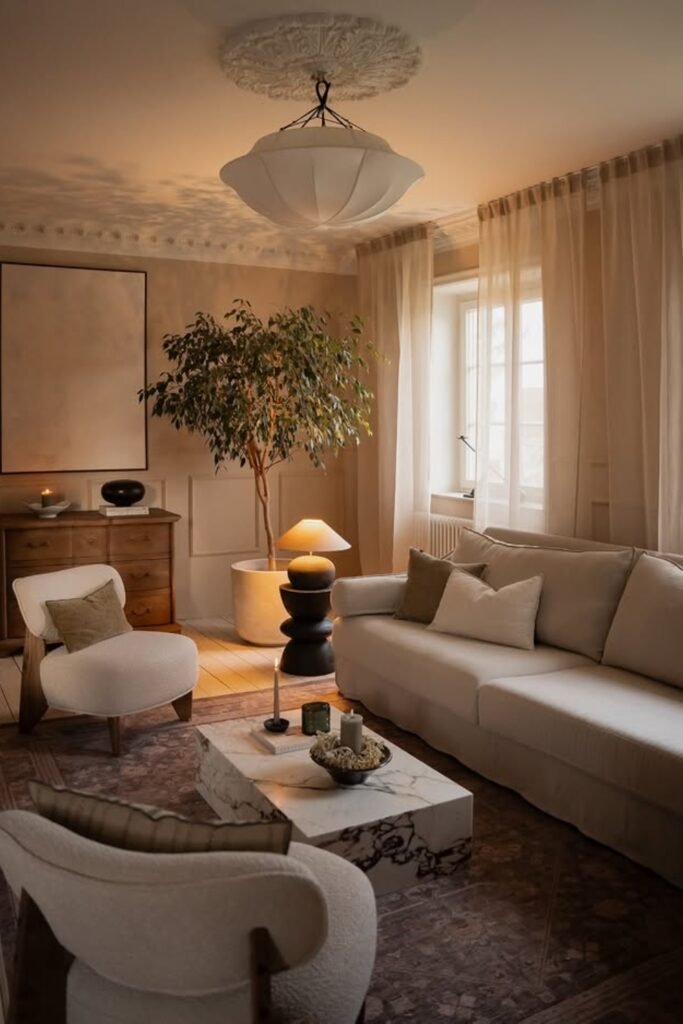
Bring Nature Inside
Warm beige feels richer when you repeat earthy materials around it instead of adding more color.
Pair a beige sectional with rustic wood, woven baskets, jute rugs, and soft brown textiles to build natural depth.
A few olive cushions and leafy branches are enough to break up the neutrals without changing the relaxed palette.
This approach works especially well in open-plan living rooms where repeated wood and beige tones can visually connect the seating area with the kitchen.

Warm Beige With Mustard
A mustard sofa is an easy way to warm up a light beige living room without making the space feel dark.
Keep the walls creamy and let a vintage rug introduce deeper blue, rust, and brown tones underneath.
Patterned pillows and collected artwork can then repeat those colors in smaller amounts.
This approach works especially well in sunny rooms where beige provides a quiet background for warmer, more personal pieces.

Balance Beige With Wood
A large beige sectional needs something warmer nearby so the room doesn’t feel washed out, especially with pale walls and lots of daylight.
Use medium-toned wood for the coffee table, console, and fireplace mantel to create that contrast naturally.
A soft patterned rug can separate the sofa from the floor without introducing strong color.
This combination works especially well in large, bright living rooms where you want the neutral palette to stay open and airy.

Add Boho Texture
Beige feels much less plain when you mix smooth upholstery with woven and handmade details.
Keep the sofa, curtains, and rug light, then add warm wood shelves, rattan baskets, patterned cushions, and textile wall art.
Green plants bring enough color to freshen the palette without taking away from its neutral feel.
This approach works especially well in smaller living rooms where texture can create character without filling the space with bulky furniture.

Layer Warm Neutrals
Cream furniture gives you a softer starting point than matching beige from wall to wall.
Bring in camel, tan, and chocolate through cushions and throws, then repeat those shades in large artwork so the palette feels connected.
Brass lighting adds another warm layer without introducing a new color.
This approach works well when you want a polished beige living room that still has enough contrast to keep the sofa from disappearing into the background.

Soften With Sage
A light beige room can feel more relaxed when you bring in a small amount of muted green instead of stronger contrast.
Use sage through a few cushions, then repeat natural tones with pale wood, woven lighting, and textured baskets.
Keeping the sofa, rug, and curtains within slightly different cream and beige shades adds depth without making the room busy.
This combination is especially useful for small or bright living rooms where you want an airy, natural feel.

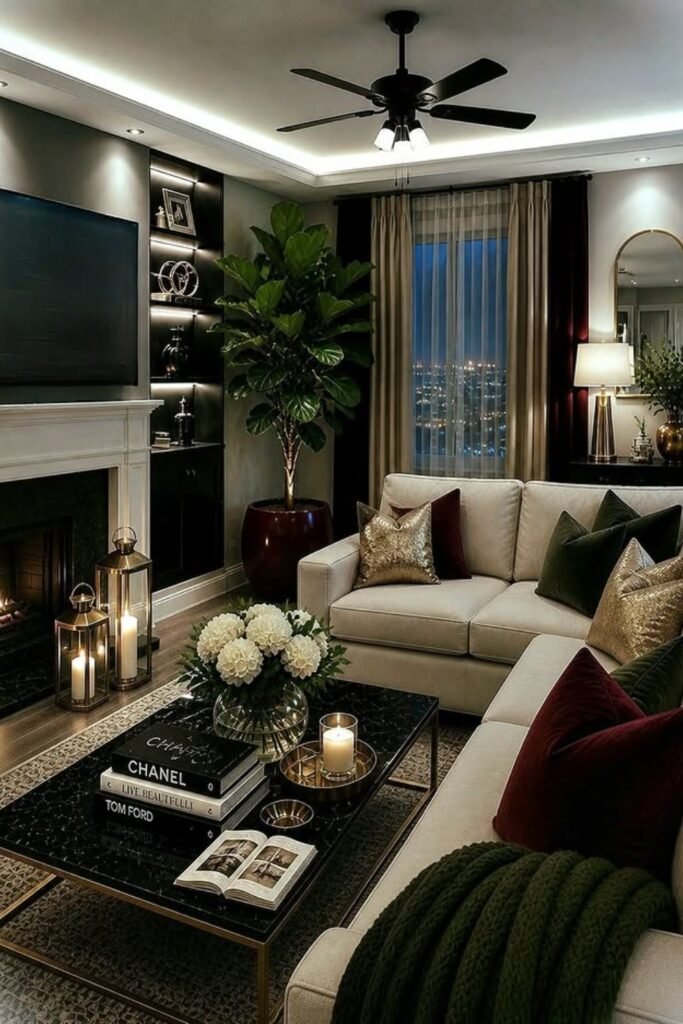
Add Moody Contrast
Beige can still feel rich and dramatic when you surround it with darker accents.
Keep the sectional light, then bring in black furniture, deep green cushions, burgundy textiles, and warm metallic details for contrast.
Layered lamps and fireplace lighting make the darker palette feel cozy rather than heavy.
This approach works especially well in evening-focused living rooms where you want beige to soften a moodier, more luxurious color scheme.
Pair Beige Green
Green furniture can carry the room while beige keeps everything around it soft and balanced.
Use creamy walls, a light textured rug, pale wood, and neutral cushions so the olive sectional remains the strongest color.
Black window frames or ceiling beams can add definition without competing with the green.
This combination works especially well in bright living rooms where natural light brings out the warmth in both beige and earthy green.

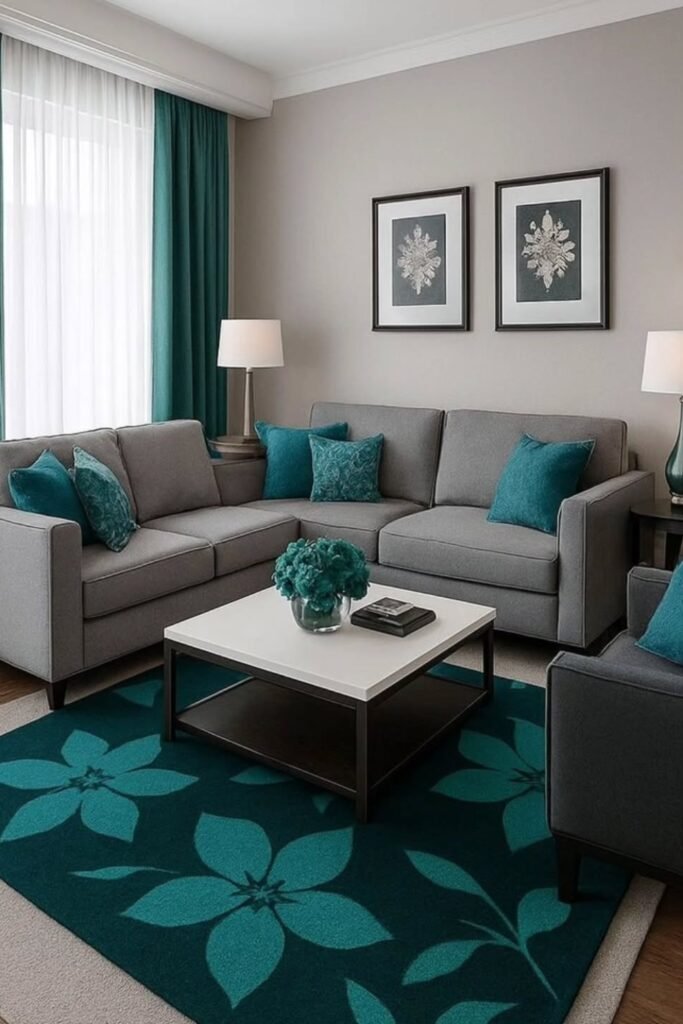
Cool Beige Contrast
Cool beige walls give you more freedom to introduce stronger blue-green accents without making the room feel overly colorful.
Use teal through curtains, cushions, and a patterned rug, while keeping the larger sofa in a soft gray-beige tone.
Dark tables and picture frames help define the lighter neutrals.
This approach works especially well in smaller living rooms where repeating one accent color creates a pulled-together look without adding too many competing shades.
Terracotta Meets Beige
A creamy beige sofa gives terracotta chairs enough room to stand out without making the living room feel overly warm.
Add black through the coffee table, window frames, or furniture legs to sharpen the softer colors and create a more modern finish.
A neutral patterned rug can quietly connect everything underneath.
Try this combination when you want beige to stay dominant but still need one earthy accent color to give the room personality.

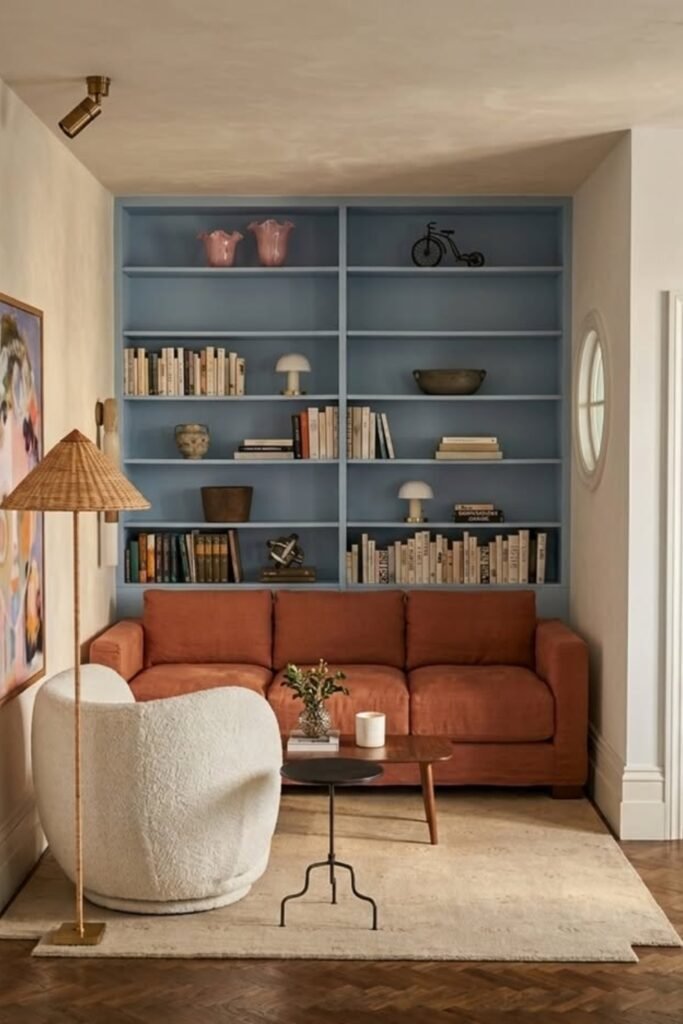
Balance Warm Accents
Beige works well as a calming base when you want two stronger colors in the same room.
Keep the walls, rug, and accent chair creamy, then combine a terracotta sofa with muted blue built-ins for contrast.
Warm wood and woven lighting help bridge both colors so neither feels disconnected.
This approach is especially useful in smaller living rooms where one colorful furniture piece and one painted feature can create personality without making the space feel crowded.
Pair Beige Blue
Soft blue is a great choice when you want beige to feel lighter and more classic rather than earthy.
Keep the main sofa taupe-beige, then introduce powder blue through an ottoman, cushions, and small decorative pieces.
White chairs and cabinetry keep the palette bright, while warm wood furniture stops the cooler blues from feeling cold.
This combination works especially well in traditional living rooms with plenty of natural light.

Keep Beige Practical
A beige living room can stay calm even when the space needs to handle everyday family life.
Use a large cream rug to define the seating area, then bring in taupe upholstery and light wood furniture that won’t make the room feel crowded.
A warm beige accent chair adds just enough variation from the cooler sofa.
This approach works especially well in narrow living rooms where keeping the main palette light helps the space feel more open.

Keep Neutrals Light
Small living rooms benefit from beige when you keep the larger surfaces close in tone.
Pair a soft greige sofa with pale walls, matching carpet, and light wood furniture so nothing visually crowds the room.
Instead of adding strong colors, use patterned cushions and a little greenery to create variation.
This approach is especially useful when natural light is limited and you want the living room to feel brighter, cleaner, and more spacious.

FAQs
How Do You Keep a Beige Living Room From Looking Boring?
Give similar beige tones different textures instead of trying to match everything perfectly.
Mix a smooth sofa with a woven rug, linen curtains, chunky throws, warm wood, and patterned cushions.
A few darker details or muted colors such as olive, brown, or terracotta can also create contrast without taking away from the neutral look.
What Color Furniture Works Best With Beige Walls?
You have plenty of options beyond beige furniture. Cream and light wood keep the room airy, while camel leather and dark wood add warmth and depth.
Olive green, muted blue, or terracotta furniture can bring in more personality.
If your beige walls have warm undertones, stick with equally warm furniture colors so the whole room feels connected.