You pick a cream sofa, add a beige rug, keep the walls light, and somehow the room still feels flat instead of warm and inviting.
That’s the tricky part about decorating with neutrals, when every shade is too similar, even beautiful pieces can disappear into the room.
A darker wood tone, a textured rug, warmer lighting, or even a few deeper neutral accents can completely change the space.
In this article, you’ll find neutral living room ideas that show you how to mix tones, textures, furniture, and lighting.
Let’s jump in!
What Is the Best Neutral Color for a Living Room?
Warm off-white, soft beige, and light greige are some of the easiest neutral colors to use because they work with many furniture and wood tones.
But don’t choose one just because it looks good on a paint card. Look at the natural light in your living room first.
A north-facing room can make cool gray feel colder, so a creamy white or warm beige usually works better.

If your room gets plenty of warm sunlight, greige or soft taupe can balance that warmth nicely.
Also check your sofa, flooring, and wood furniture before choosing the wall color.
If their undertones work together, the whole room will feel connected instead of looking like several different neutrals were randomly mixed.
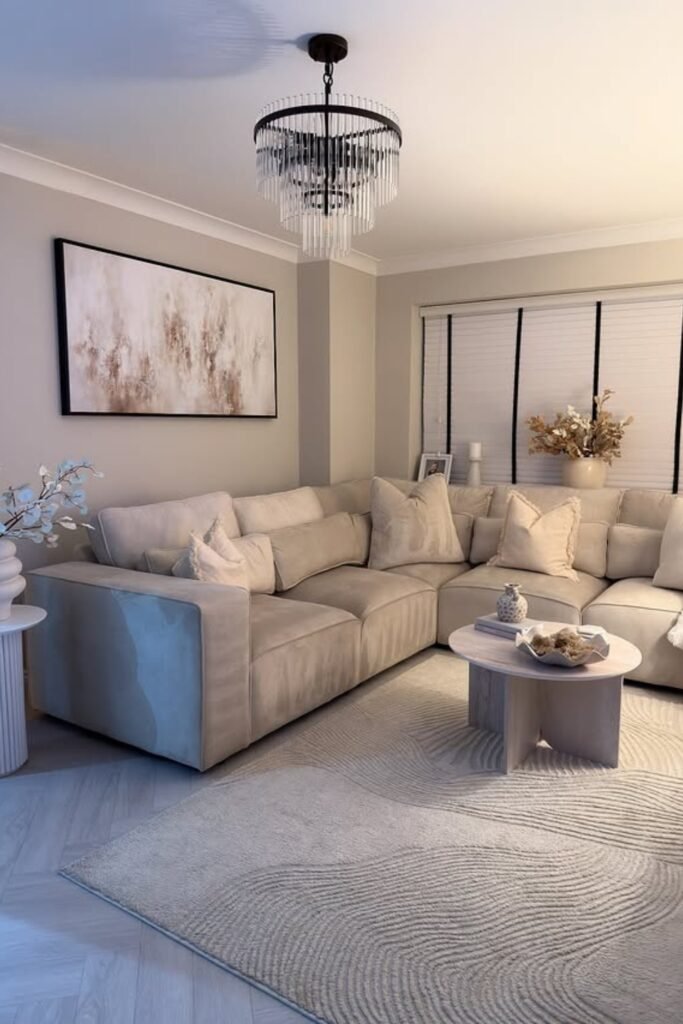
Layered Cream
Keep pale neutrals from disappearing into each other by pairing a deep cream sectional with a patterned rug and sculptural wood tables.
Soft taupe walls add enough separation behind the sofa, while black-framed artwork and the chandelier introduce small doses of sharper contrast.
Choose this approach for family rooms where generous seating matters, then layer tonal cushions and textured throws instead of introducing unnecessary bright colors.
Natural Warmth
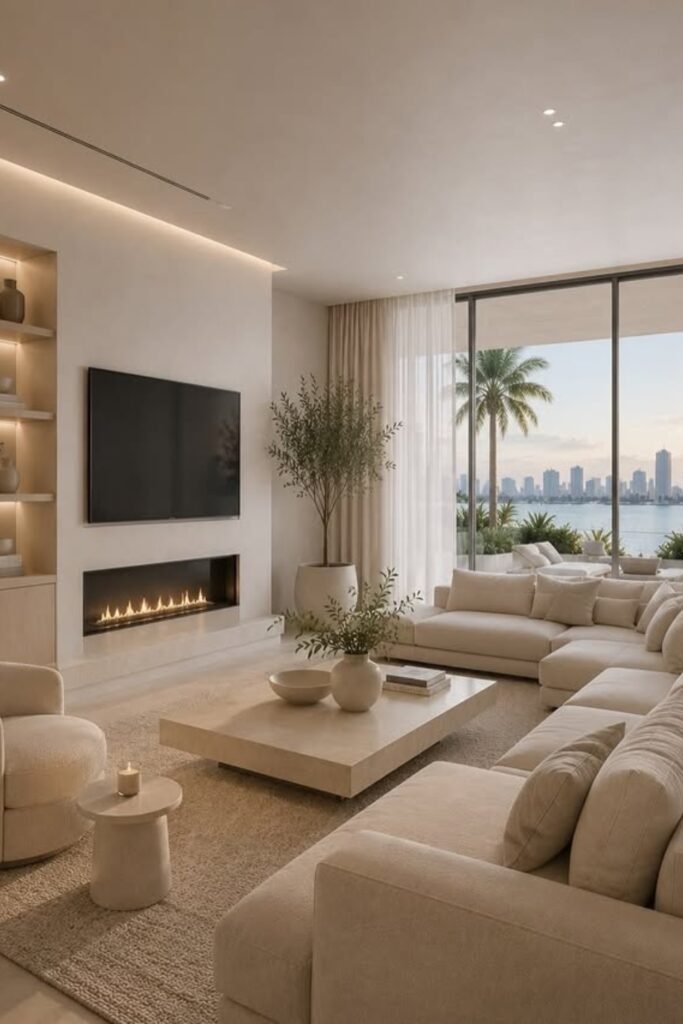
Large, bright living rooms can handle an almost monochromatic palette when natural wood, woven textures, and greenery break up the creamy surfaces.
Build the seating around soft ivory upholstery, then ground it with a chunky neutral rug and an oversized light-wood coffee table.
Warm shelf lighting, a linear fireplace, and sheer curtains create softer evening layers without taking attention away from the peaceful waterfront view.
Sculpted Neutrals
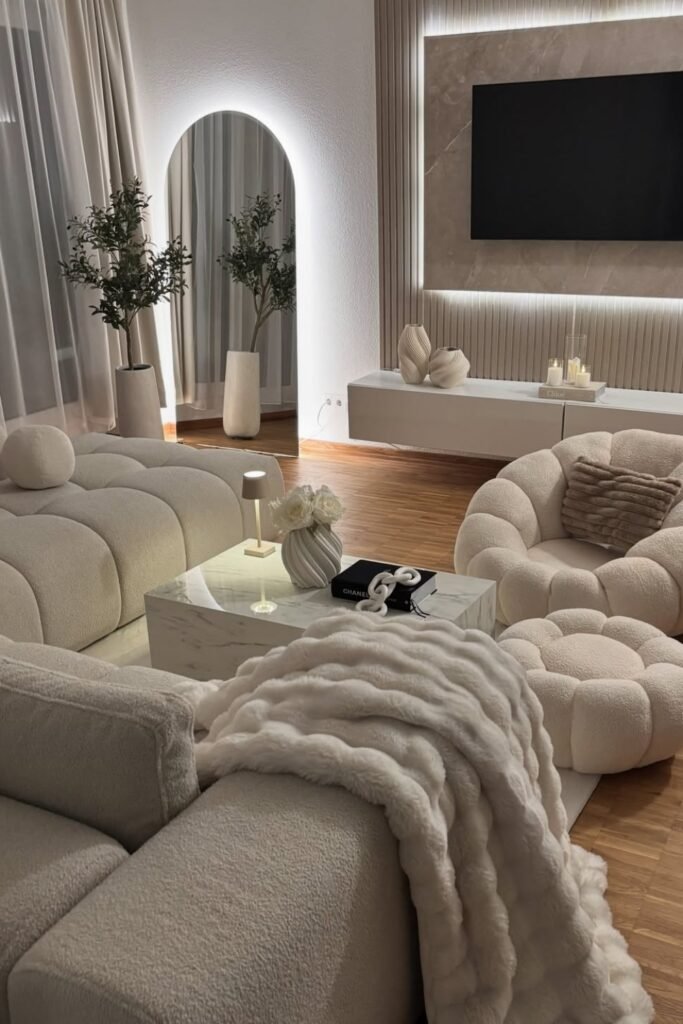
Curved furniture gives a pale room personality without relying on color, making this approach perfect when you want something modern but still cozy.
Mix bouclé seating in slightly different cream tones with a marble table, then let warm timber flooring stop the palette feeling overly white.
Backlighting around the mirror and television wall adds depth after dark, while fluted paneling creates another texture without cluttering the room.
Soft Curves
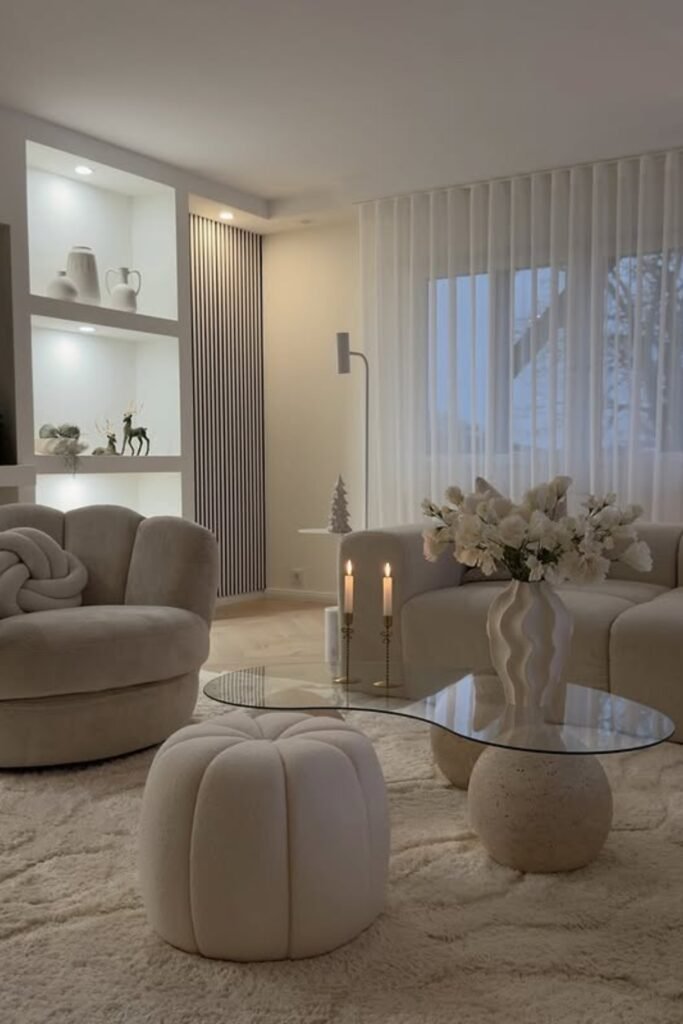
Skip boxy furniture when you want a neutral living room to feel softer; rounded seating and an irregular glass table immediately loosen everything up.
Anchor those playful shapes with a plush cream rug, then repeat gentle curves through the ottoman, flower vase, and knotted accent cushion.
Built-in shelf lights, candles, and filtered window light create several warm focal points, making this setup especially inviting for relaxed evening seating.
Grounded Greige
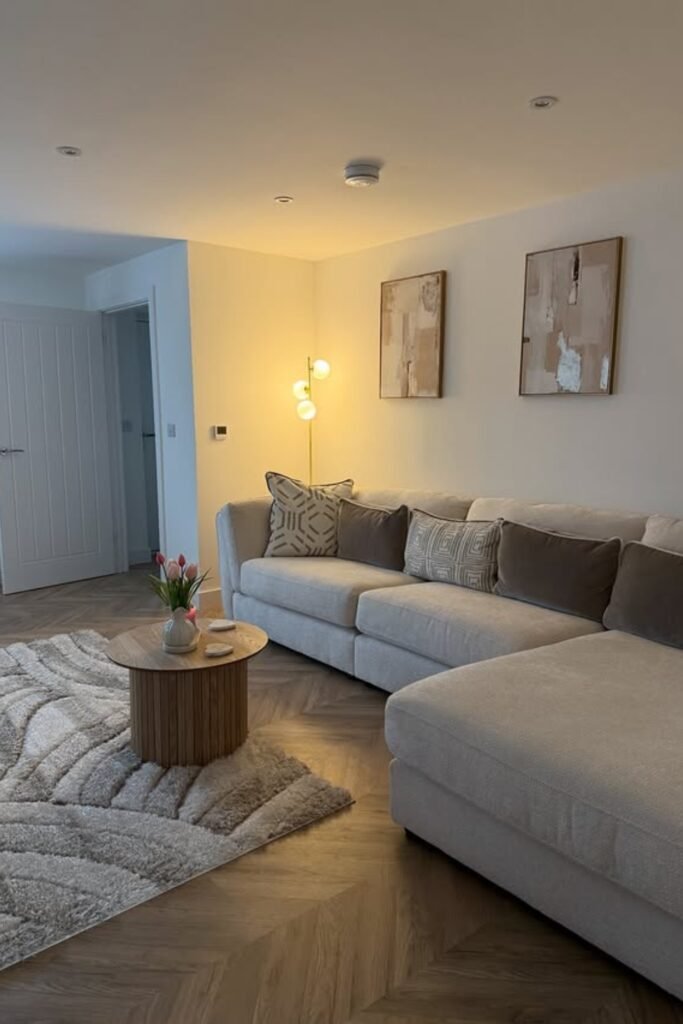
Greige works harder when you give it contrast, so pair a light sectional with charcoal cushions instead of keeping every accessory equally pale.
A carved wood coffee table and herringbone flooring bring natural warmth underneath, while the raised rug pattern stops the floor area feeling plain.
Use this combination in everyday family rooms where you want forgiving neutrals, then add warm lamps and simple abstract art for softness.
Quiet Elegance
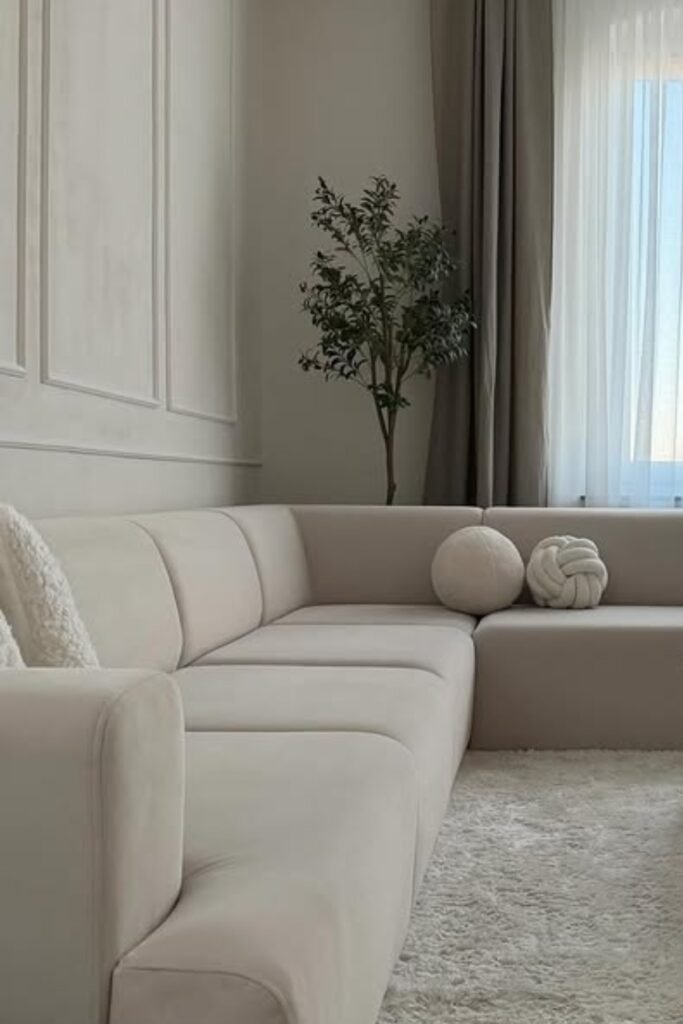
Let architectural details carry the room when you prefer fewer decorations; wall molding and a textured ceiling make an all-cream palette feel considered.
Choose a low sectional, thick shag rug, and polished stone table, mixing matte and reflective finishes so similar shades remain visually separate.
Full-height curtains soften daylight beautifully here, making this approach especially useful for formal living rooms that need calm without looking unfinished.
Modular Comfort
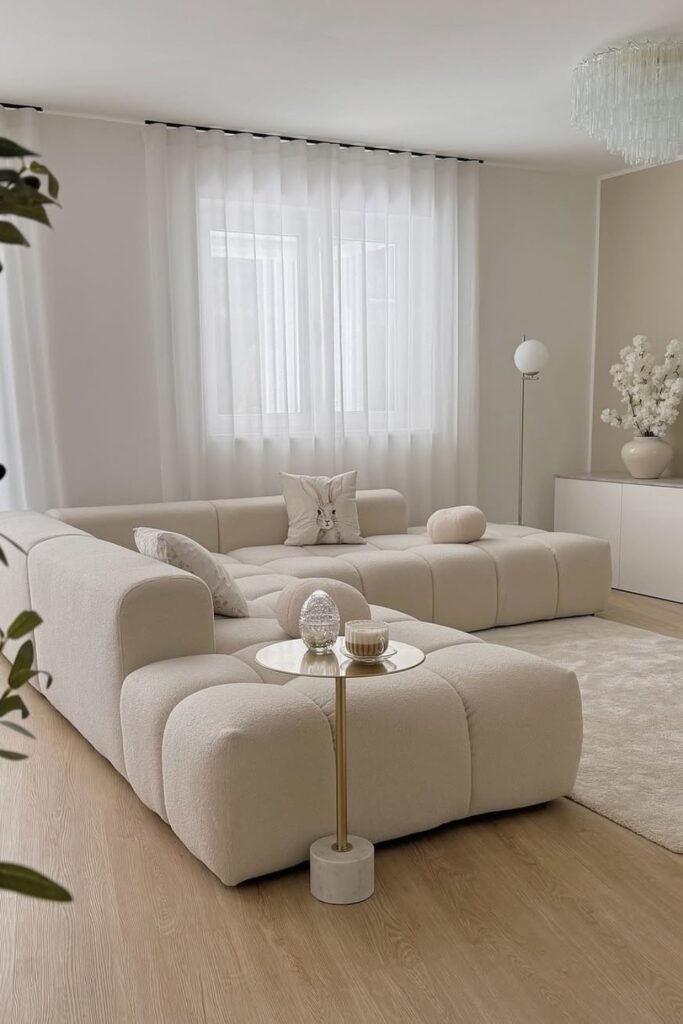
One oversized modular sofa can become the whole design statement, especially when its rounded sections add shape to an otherwise simple neutral room.
Keep surrounding pieces visually light with a slim brass table, low white cabinet, soft rug, and sheer curtains that preserve an airy feeling.
Warm wood flooring keeps all that ivory from turning cold, while greenery and a glass chandelier introduce just enough contrast and sparkle.
Open Plan Neutrals
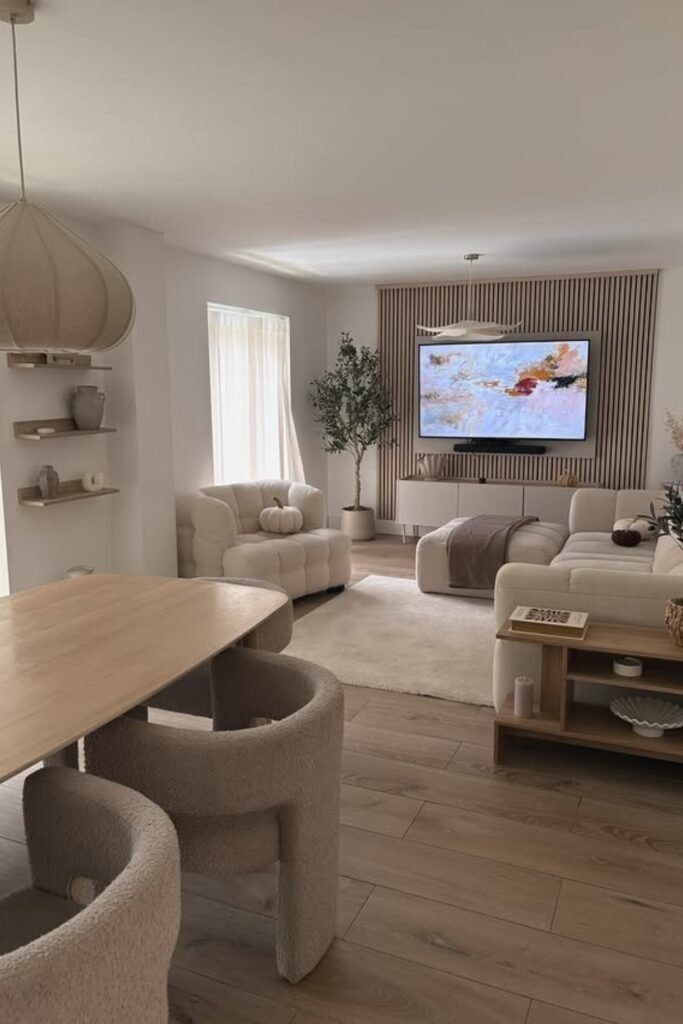
Carry the same wood and cream tones through adjoining dining and living zones when you want an open floor plan to feel connected.
A slatted timber media wall gives the lounge its own identity, while matching wood shelving and furniture quietly repeat that material across both areas.
Keep rugs and upholstery lighter than the timber, then use plants and soft daylight to prevent the repeated neutral palette feeling too coordinated.
Sunlit Oatmeal
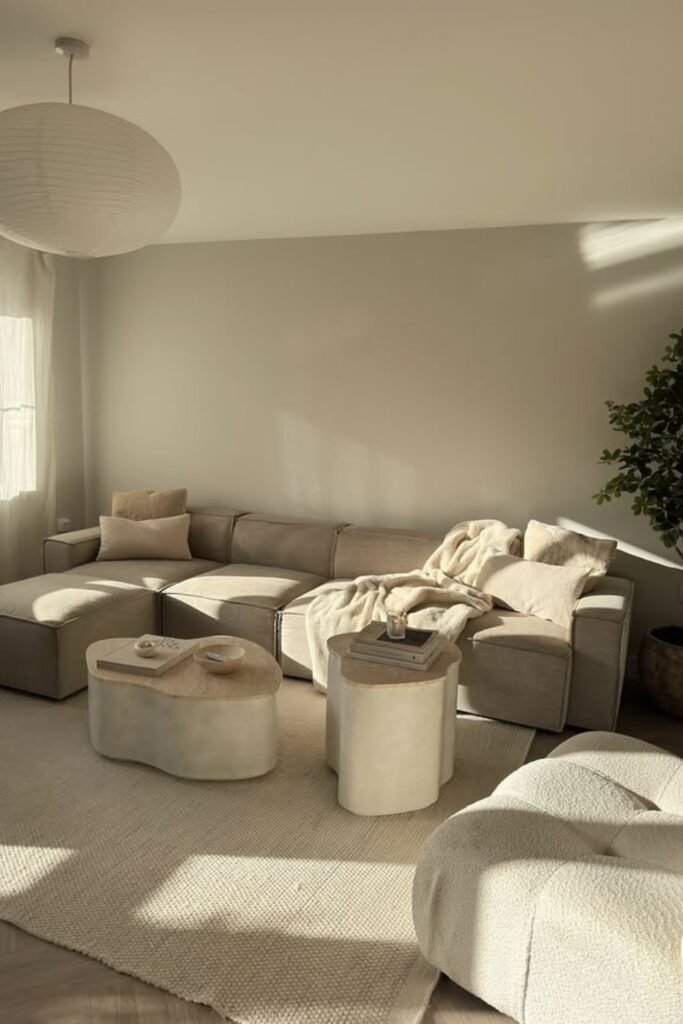
Let sunlight become part of the palette by choosing oatmeal upholstery, warm beige walls, and stone tables that glow rather than wash out.
Keep the floor equally soft with a tightly woven rug, then bring in one leafy tree to interrupt the room’s sandy tones naturally.
A paper pendant and sheer curtains diffuse daylight instead of competing with it, making this setup ideal for bright rooms with generous windows.
Graphic Contrast
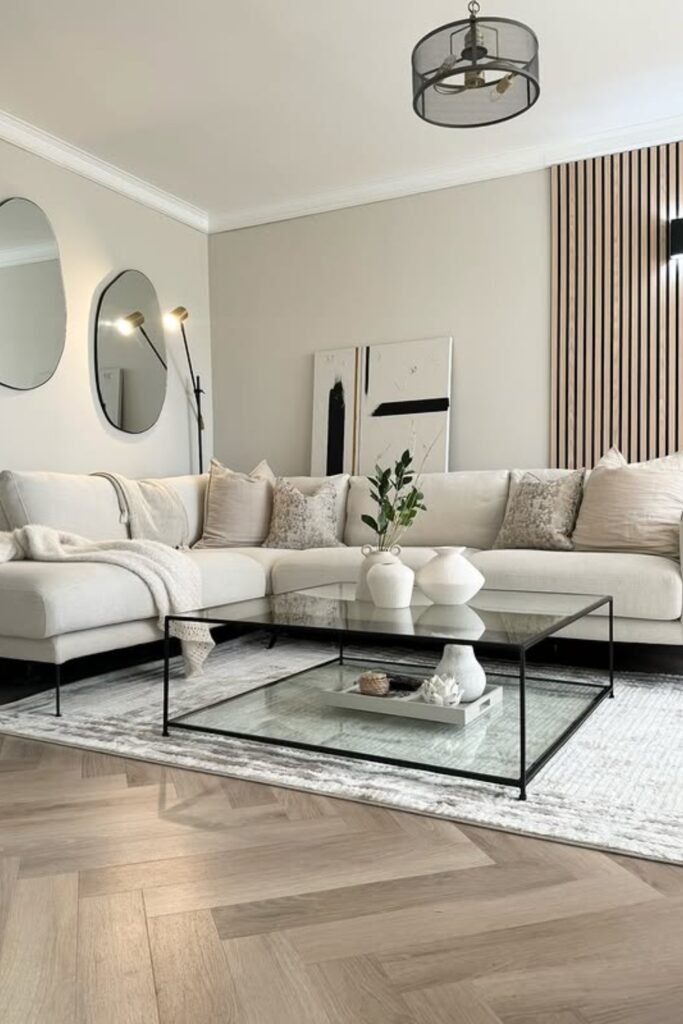
Black details can sharpen a creamy living room without making it feel dark, especially when they appear repeatedly across several different surfaces.
Start with a white sectional and pale rug, then repeat slim black lines through glass tables, mirrors, artwork, lighting, and furniture legs.
Warm timber slats and herringbone flooring soften those crisp accents, giving modern living rooms stronger definition while keeping the overall palette comfortably neutral.
Chocolate Accents
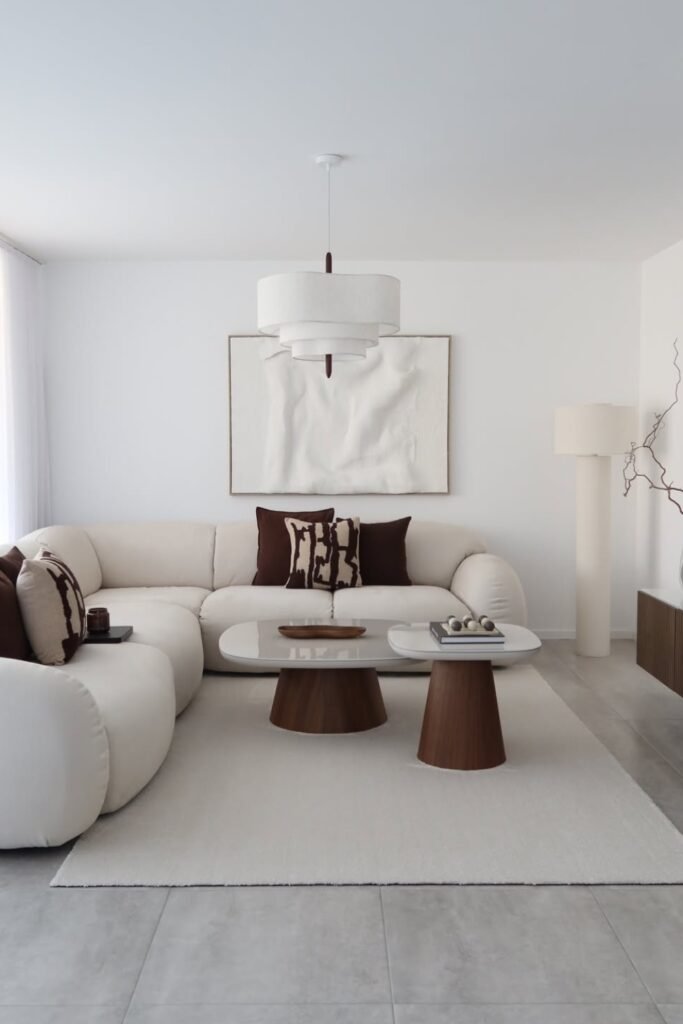
Deep chocolate is an easy fix when an ivory living room feels too pale, because it adds depth without introducing a separate color family.
Scatter brown through cushions and timber table bases, keeping larger surfaces white so the darker details become deliberate anchors rather than dominant features.
Use a large cream rug underneath everything, then repeat curved shapes in the sofa, tables, pendant, and artwork for a softer modern finish.
Fireplace Balance
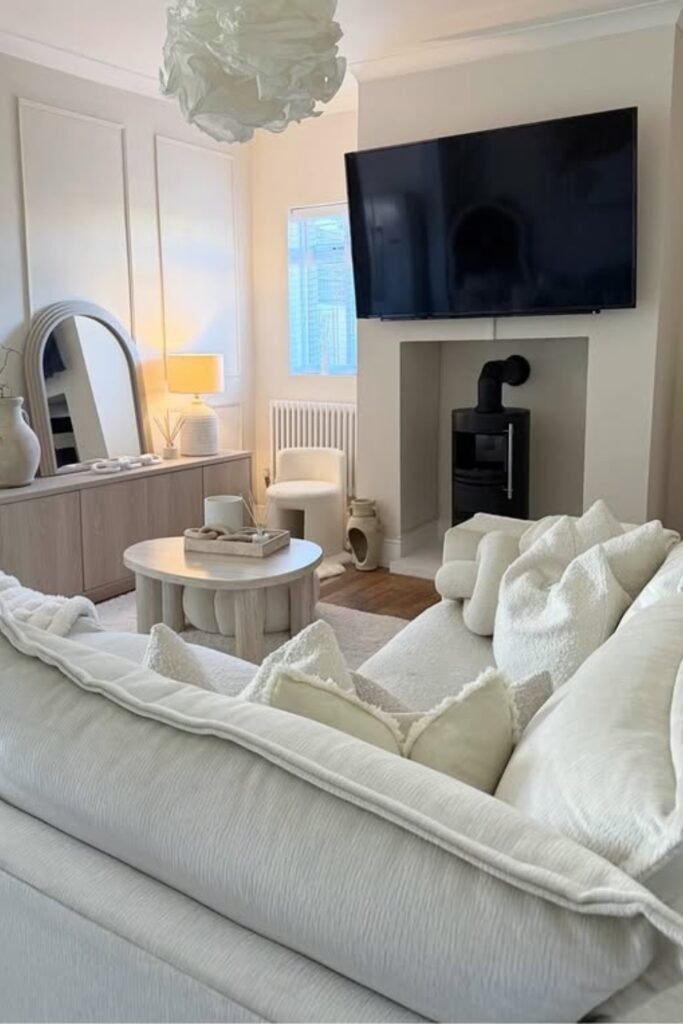
Make a fireplace wall earn its place by keeping surrounding furniture pale, allowing the dark stove and television to provide natural visual weight.
Position generous cream sofas around a compact round table, then use wall molding, an arched mirror, and light wood cabinetry for subtle character.
Soft table lamps work better than harsh ceiling light here, especially in traditional rooms where warm evening lighting makes layered whites feel inviting.
Polished Marble
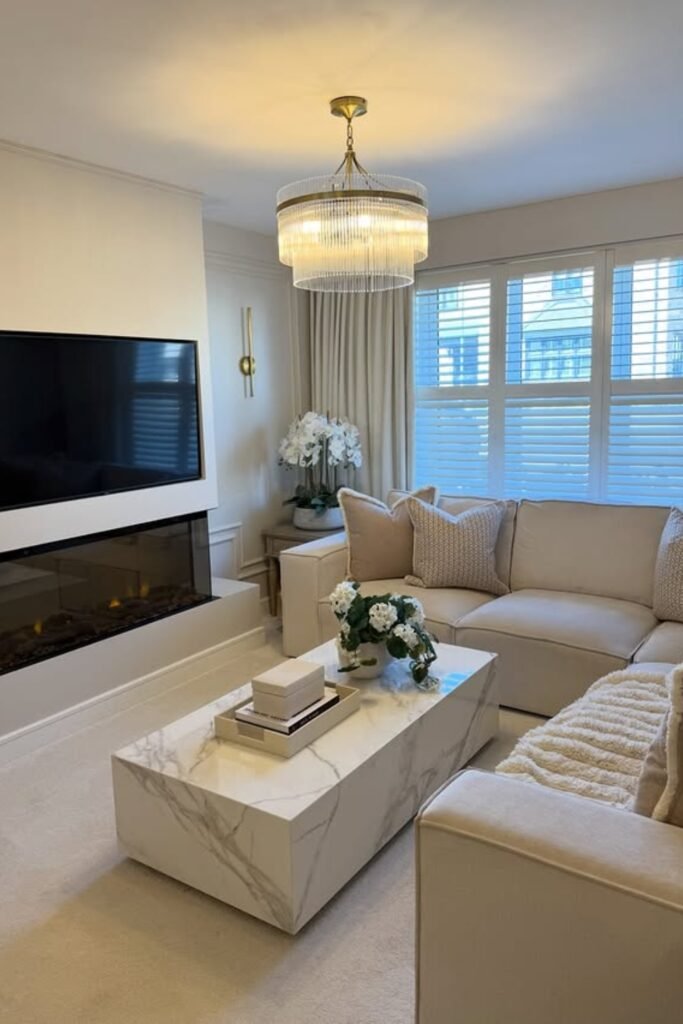
Give a compact neutral room a polished finish by making one substantial marble table the centerpiece instead of filling the floor with smaller accessories.
Keep the surrounding sofa, rug, curtains, and walls within warm cream tones, then introduce subtle pattern through cushions for gentle visual separation.
A glowing chandelier and fireplace provide warmth at different heights, helping the pale palette feel inviting during evenings without needing darker furniture.
Circular Layout
Rounded furniture can make a spacious neutral room feel more conversational, especially when curved sofas and chairs gently wrap around the central table.
Place a circular woven rug beneath the arrangement to reinforce that flow, then keep artwork simple so the furniture shapes remain the focus.
Wood slats and a small indoor tree bring natural contrast, preventing the cream upholstery and pale flooring from becoming overly uniform or sterile.
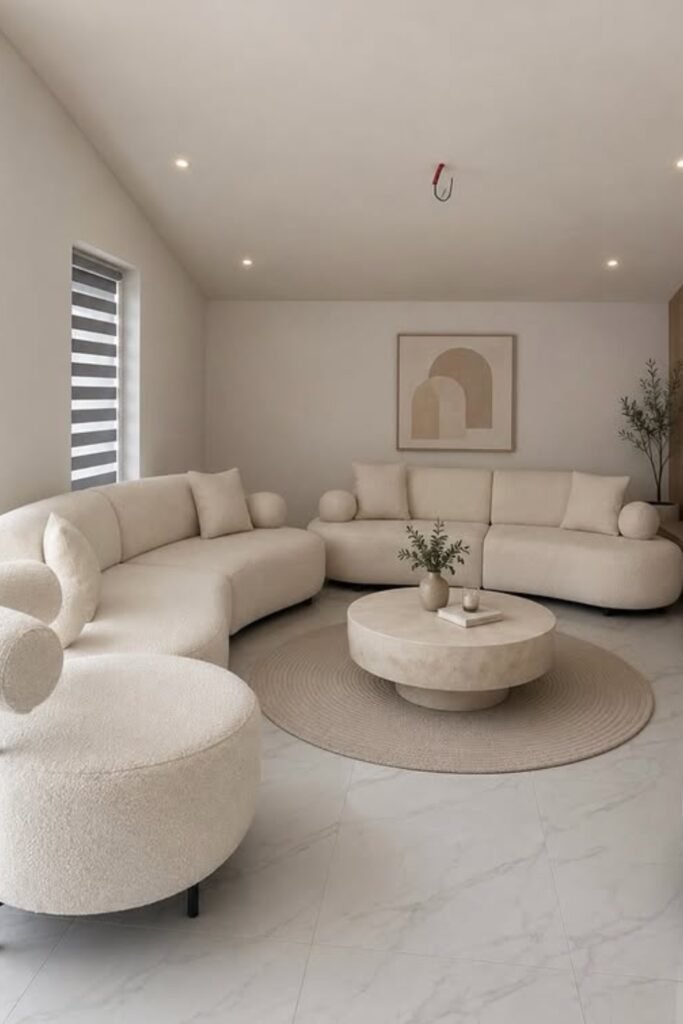
Illuminated Niches
Turn built-in shelves into evening mood lighting by adding warm recessed lights, giving a simple gray living room depth without extra decorative clutter.
Keep the sectional and ottoman close in tone, allowing herringbone flooring and the dark television wall to provide stronger contrast underneath and ahead.
This approach suits smaller family rooms particularly well because illuminated niches add display space, atmosphere, and architectural interest.
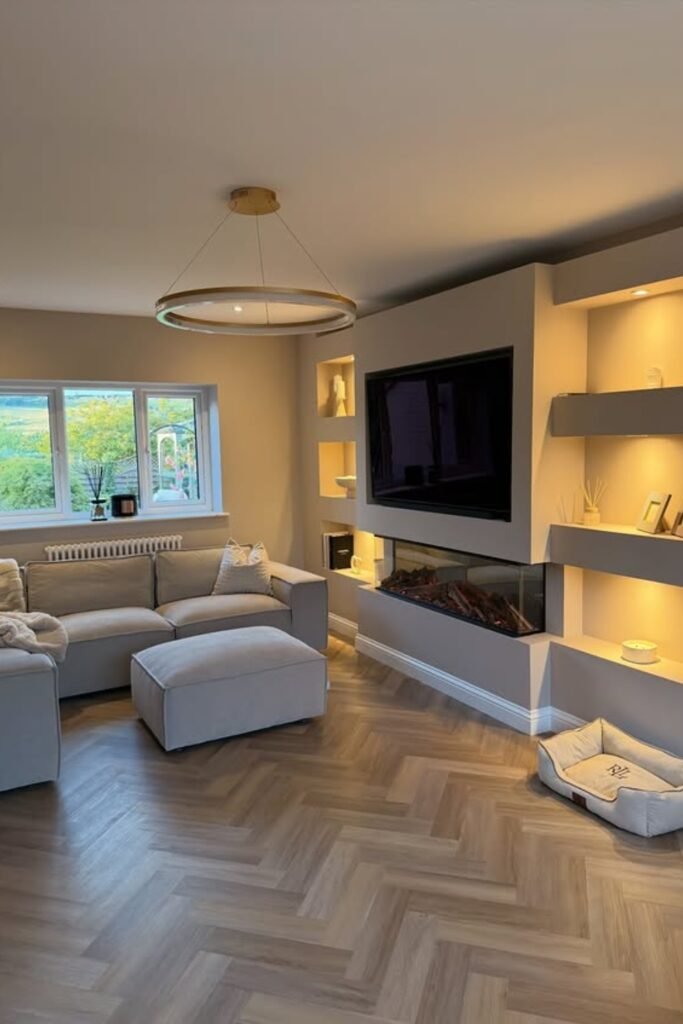
Slatted Feature
A timber slat wall can instantly warm a cream living room, giving the television area definition while keeping the overall scheme clean.
Balance its vertical lines with a long low sectional, oversized ottoman, and plush accent chair so the furniture feels relaxed rather than rigid.
Finish with a broad cream rug and leafy tree, letting soft window light and a sculptural pendant keep the seating area bright.

Tonal Texture
When beige dominates the entire room, vary texture instead of adding color by mixing suede-like upholstery, woven rugs, wood, and rough ceramics.
Use darker taupe and brown cushions around the sectional to create depth, then repeat those earthy tones through bowls and decorative objects.
A glowing table lamp softens the scheme after sunset, making this layered approach especially useful for compact rooms built around generous corner seating.
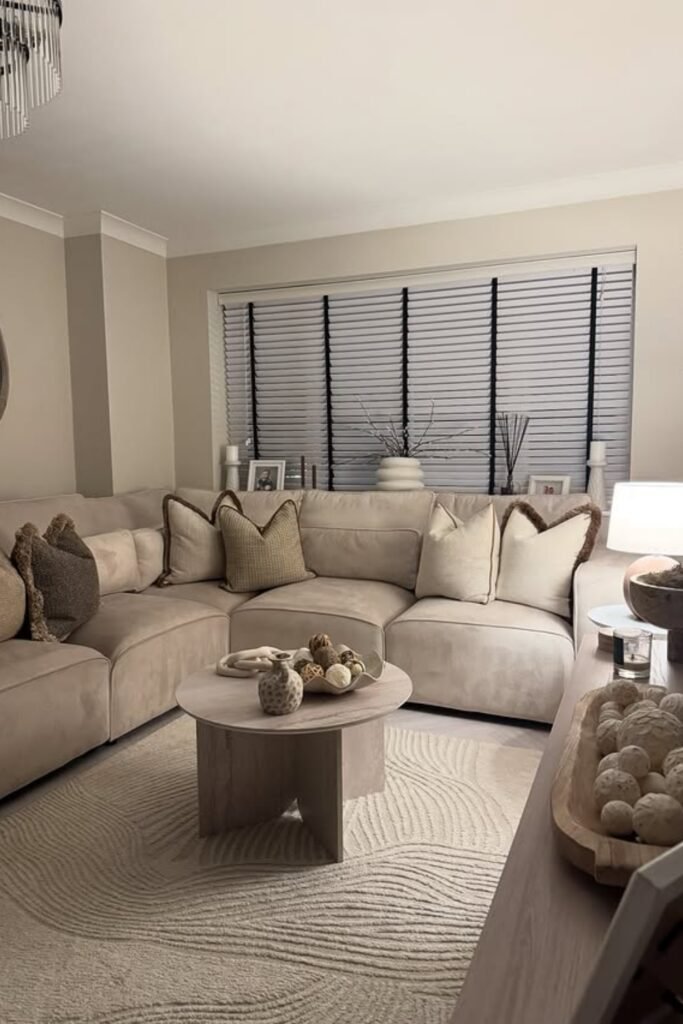
Cocoa Contrast
Chocolate brown can make an ivory sofa feel instantly richer, so repeat it through cushions, throws, stone tables, and smaller decorative accents.
Black-framed mirrors sharpen the wall without introducing artwork, while their reflections spread warm lamp light and visually open the seating area.
Try this palette when plain cream feels too safe; deep brown adds personality while still keeping every major furniture piece comfortably neutral.

Balanced Taupe
Taupe works beautifully as a bridge between white upholstery and warm wood, especially when you want modern neutrals without an overly creamy finish.
Run timber slats behind the television, then echo their warmth through a stone-look coffee table while keeping the rug and seating noticeably lighter.
Open shelves, greenery, and a globe pendant add interest above eye level, helping this arrangement work particularly well in smaller contemporary living rooms.
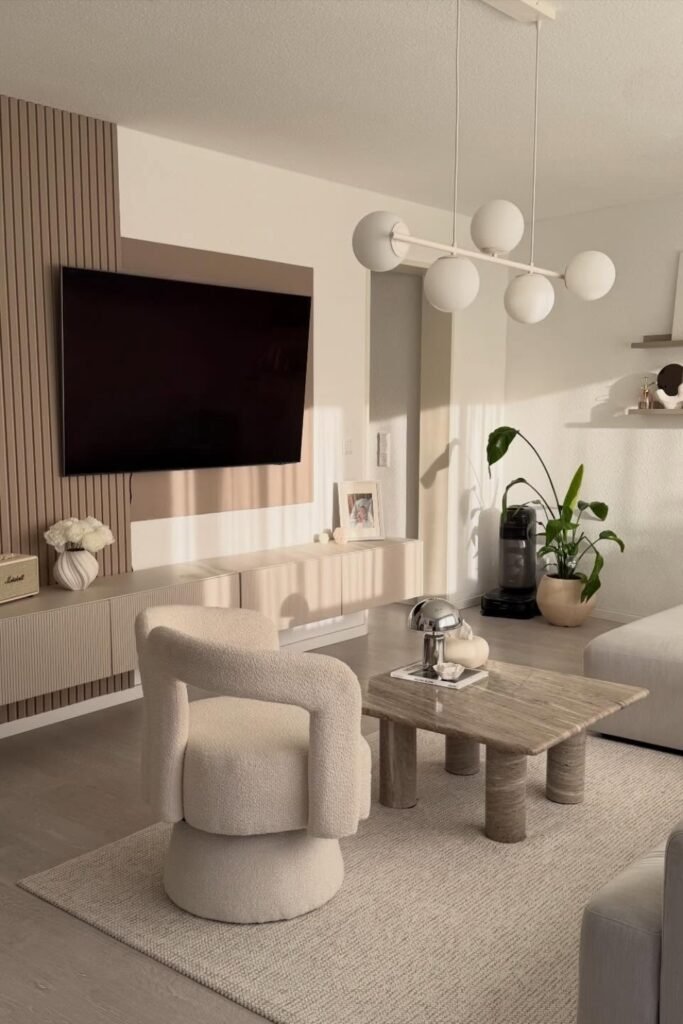
Warm Reflections
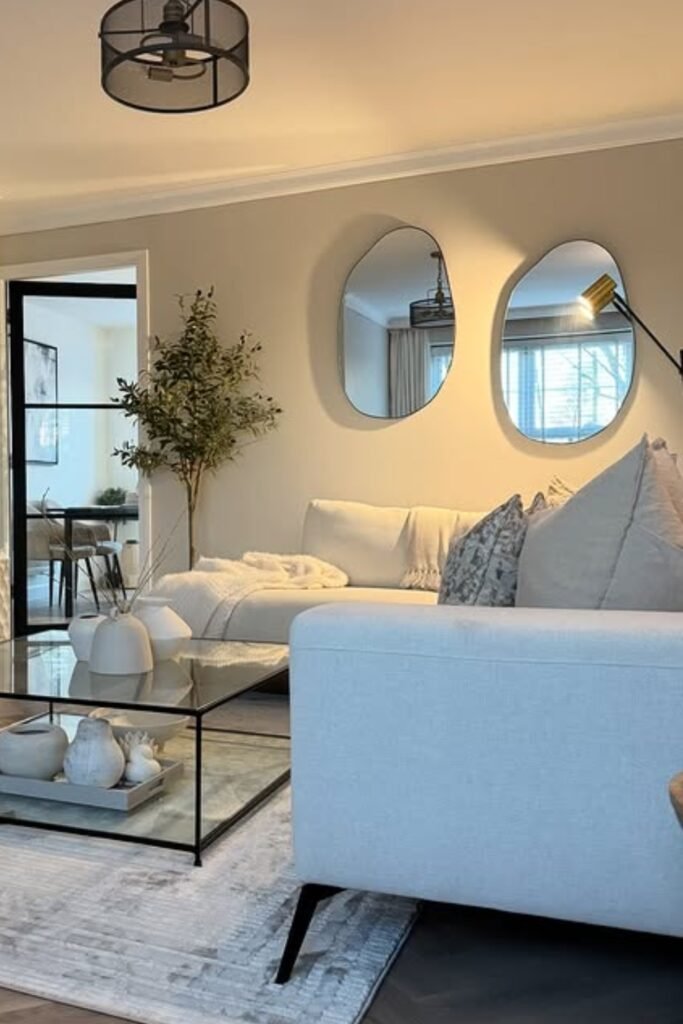
Mirrors can do more than fill an empty wall; place them near warm lighting to spread that glow throughout a compact neutral room.
Keep the sofa and rug pale, then use black frames, table legs, and the fireplace opening to stop those softer surfaces blending together.
Herringbone flooring adds movement underneath, while a tall indoor tree brings natural height beside the seating without stealing valuable space from the layout.
Patterned Foundation
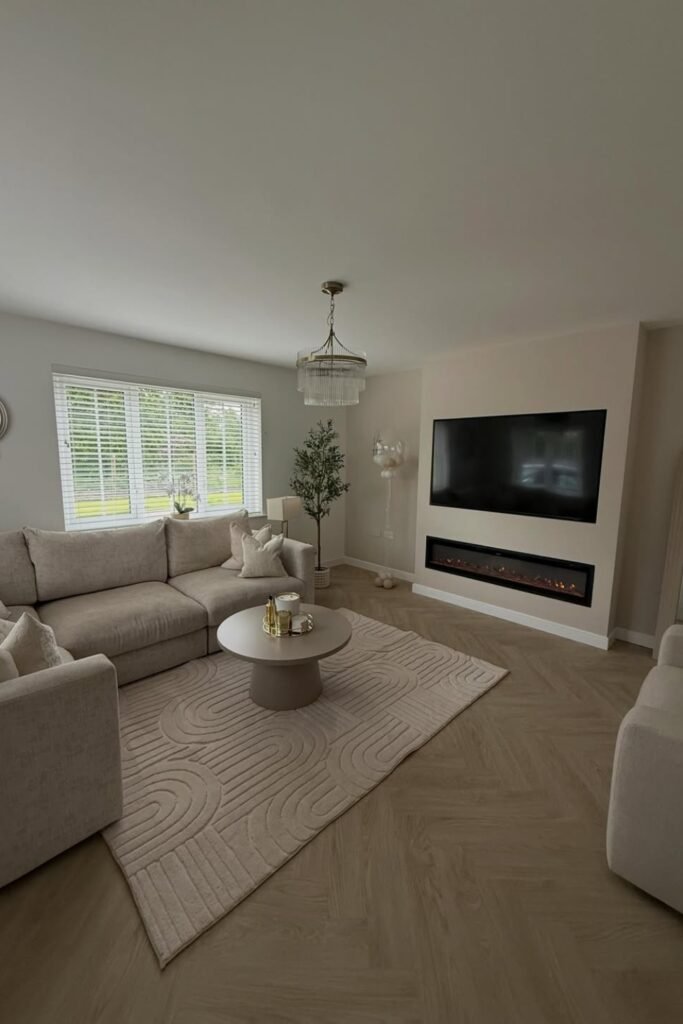
Let the rug create movement when your furniture stays simple; a raised geometric pattern adds depth without disturbing the calm neutral palette.
Pair it with taupe seating and a round coffee table, allowing curved shapes to soften the straight television wall and wide window.
Herringbone flooring, greenery, and fireplace glow supply extra warmth, making this approach useful when a spacious neutral room feels slightly empty.
FAQs
How do you keep a neutral living room from looking boring?
The easiest way is to create contrast through texture, tone, and materials instead of adding lots of color.
Mix cream upholstery with a woven rug, warm wood, stone tables, linen curtains, and textured cushions so every surface feels slightly different.
You can also bring in deeper neutrals such as chocolate brown, charcoal, or black through smaller accents.
Add plants, artwork, books, and warm layered lighting to give the room personality.
Can you add color to a neutral living room?
Yes, and you don’t need much color to make a noticeable difference.
Keep larger pieces such as the sofa, rug, curtains, and walls neutral, then introduce muted shades through smaller details.
Sage green, olive, terracotta, dusty blue, rust, and soft brown all work beautifully with cream, beige, taupe, and greige.
Try adding color through cushions, artwork, flowers, pottery, or a single accent chair.