Choosing a living room rug sounds easy until you actually start shopping.
One feels too small, another fights with your sofa, and the rug you loved online suddenly looks completely wrong against your flooring.
Even the right color can fall flat when the size, pattern, or placement is off.
Instead of choosing a rug just because it looks good on its own, think about what your room needs.
In this article, you’ll find living room rug ideas for different layouts, styles, and color schemes.
Let’s jump in!
What Kind of Rug Is Best for a Living Room?
The best living room rug is one that fits your seating area, handles your daily routine, and works with the colors already in the room.
Start with size because a rug that is too small can make your sofa and chairs look disconnected.
In most layouts, choose one wide enough to sit under at least the front legs of your main seating.

For busy homes with kids or pets, a low-pile, washable, or stain-resistant rug makes cleaning easier.
Wool works well when you want softness and durability, while jute brings natural texture.
If your furniture is already colorful or patterned, keep the rug quieter.
With neutral furniture, you can use stronger color or pattern to give the room more character.
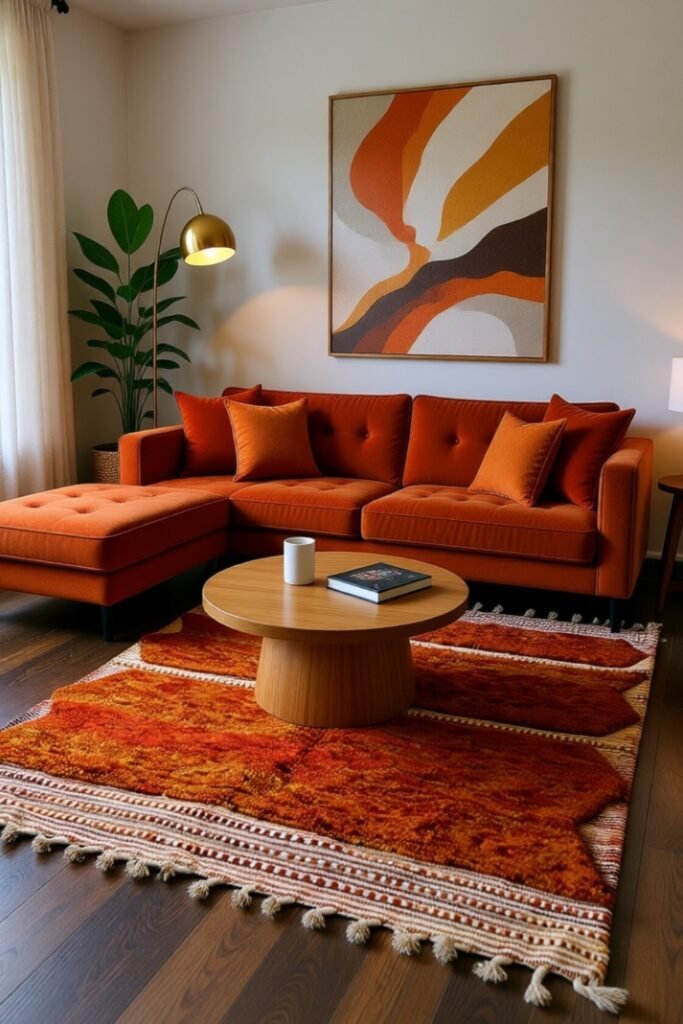
Burnt Orange Rug
Let burnt orange become the anchor when your living room already has warm wood floors and similarly rich upholstery tones.
Choose a textured rug with rust, terracotta, and cream details, then keep its front edge extending beyond the coffee table comfortably.
Repeating the rug’s orange through cushions or artwork ties everything together, while cream edging prevents the palette feeling overly heavy.
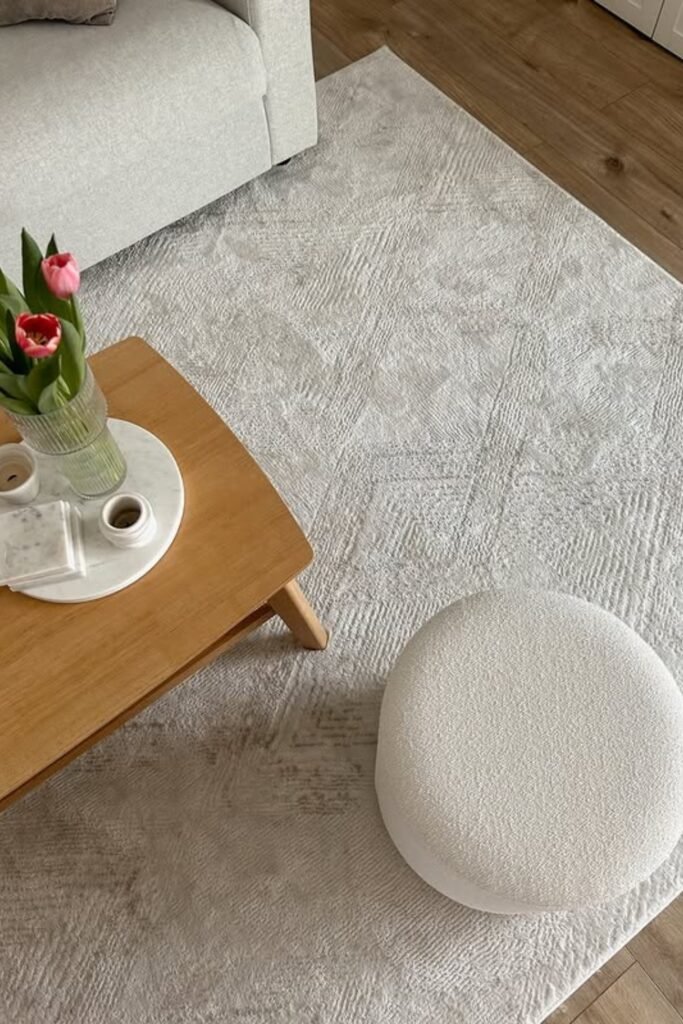
Textured Ivory Rug
Soft texture can carry a neutral room when you do not want strong color or busy pattern competing for attention.
Pick an ivory rug with a subtle woven pattern and size it generously beneath the main seating rather than coffee table alone.
Warm wood furniture keeps pale upholstery from feeling washed out, while the tonal rug quietly separates the seating zone from surrounding flooring.
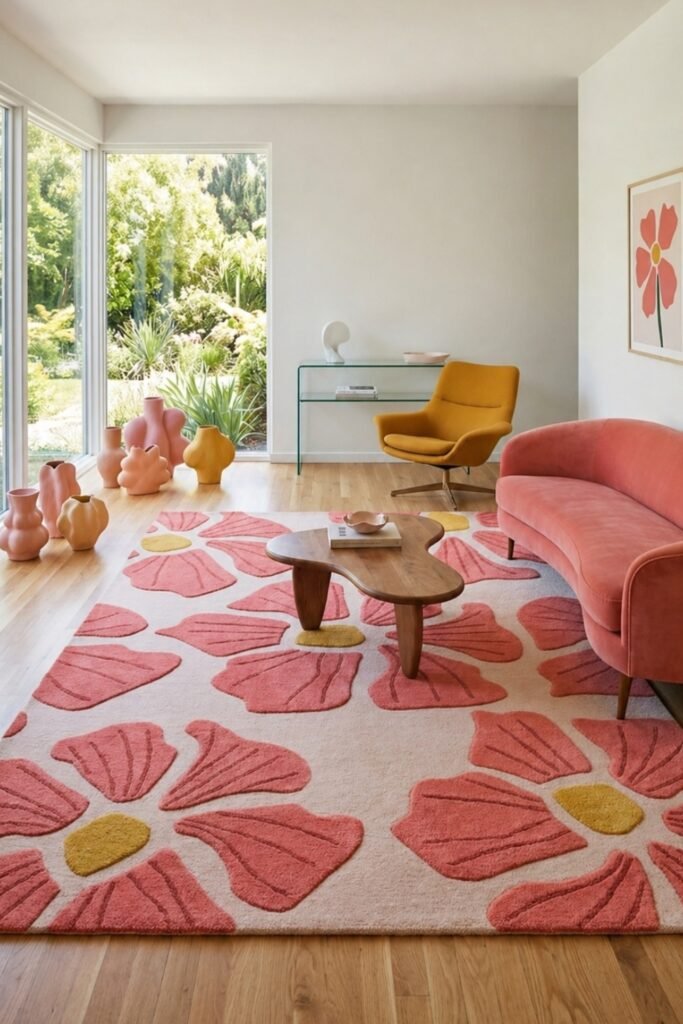
Playful Floral Rug
Let the rug lead your color story when your living room has simple walls and plenty of bright natural daylight coming inside.
Choose an oversized floral design, then pull one or two shades into the sofa, chair, or nearby accessories for balance.
Keeping plenty of plain floor and wall space around a bold pattern stops playful colors from making the room feel crowded.
Faded Vintage Rug
A faded vintage-style rug is useful when cream furniture needs more depth but you still want a calm, grounded room.
Look for muted charcoal, olive, tan, or brown patterns, and let the rug extend beneath the sofa’s front legs for connection.
Pairing its aged pattern with simple upholstery and natural wood keeps the room relaxed while giving a fireplace seating area stronger definition.

Sunset Geometric Rug
Go bold with geometry when your living room already carries saturated walls, colorful upholstery, and collected pieces that can handle stronger pattern.
Pick a rug that repeats two or three existing shades, then use its border to clearly frame the entire conversation area.
Keeping the rug pattern large and structured gives busy decor a visual foundation instead of introducing another layer of tiny competing details.

Sage Green Rug
Bring soft green underfoot when white or cream seating needs gentle color without turning the rug into the room’s main feature.
Choose a simple bordered design and repeat its sage tone through cushions, botanical artwork, or greenery to build an easy connection.
Leave enough wood flooring visible around the edges so the green feels intentional while the seating area remains clearly defined and balanced.

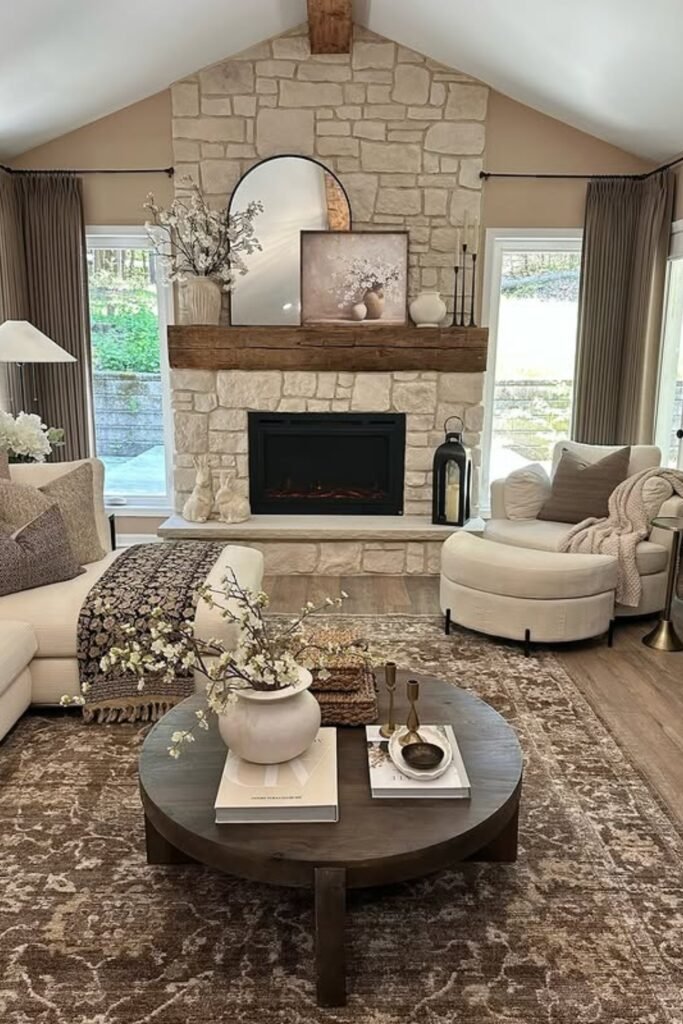
Brown Vintage Rug
Ground a fireplace-centered living room with a deep brown vintage rug when beige seating and stone finishes need stronger contrast below.
Choose a generously sized distressed pattern that reaches beneath the front sofa legs and surrounding chairs, keeping every seat visually connected.
Echoing brown through wood furniture, throws, or cushions helps the darker floor layer belong naturally without making neutral upholstery feel dull.
Tonal Cream Rug
Keep a bright living room calm with a tonal cream rug when white sofas, pale walls, and rustic details already provide texture.
Look for a subtle faded pattern rather than a completely plain surface, giving the floor depth without competing with furniture or seasonal decor.
Size it to connect facing sofas and the coffee table, then introduce brown cushions and woven accents for contrast against the pale foundation.

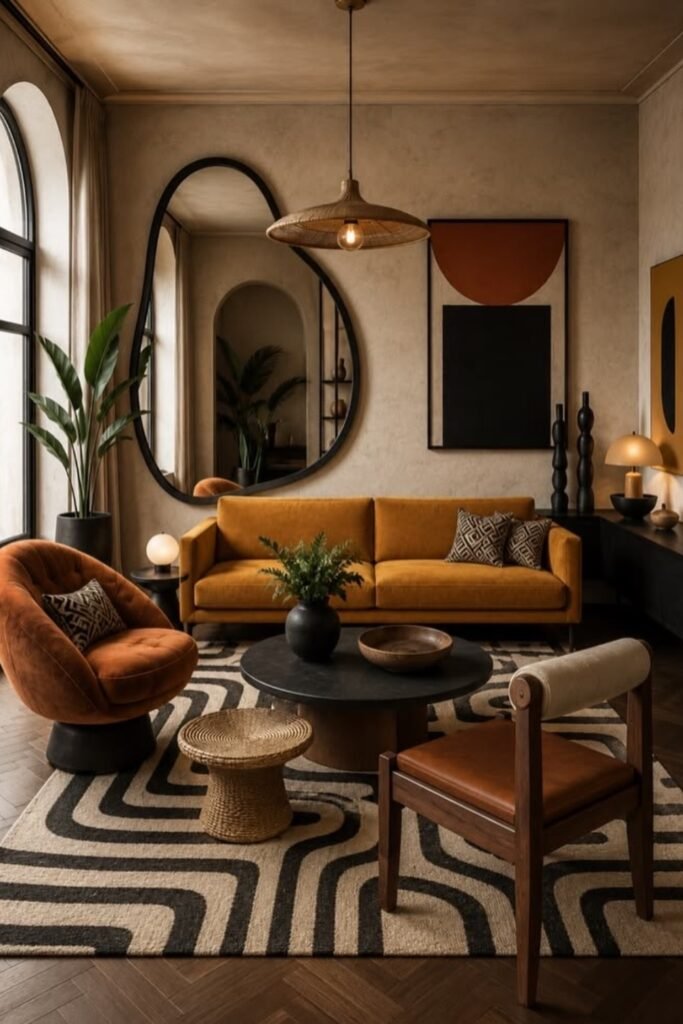
Graphic Maze Rug
Break up an earthy living room with a bold black-and-cream rug when warm brown furniture needs sharper contrast and stronger visual movement.
Choose a large geometric pattern with thick lines, then keep surrounding artwork and accessories within the same earthy palette for better balance.
Let several seating pieces touch the rug so its graphic design connects the conversation area rather than floating beneath the coffee table.
Muted Sage Rug
Use faded sage under cream seating when you want a hint of color that still keeps the living room soft and relaxed.
Pick a lightly distressed pattern instead of solid green, then repeat muted sage through cushions and plants without matching every shade exactly.
Natural oak and woven accessories work especially well here because their warm tones stop the pale green rug from feeling cool or washed-out.

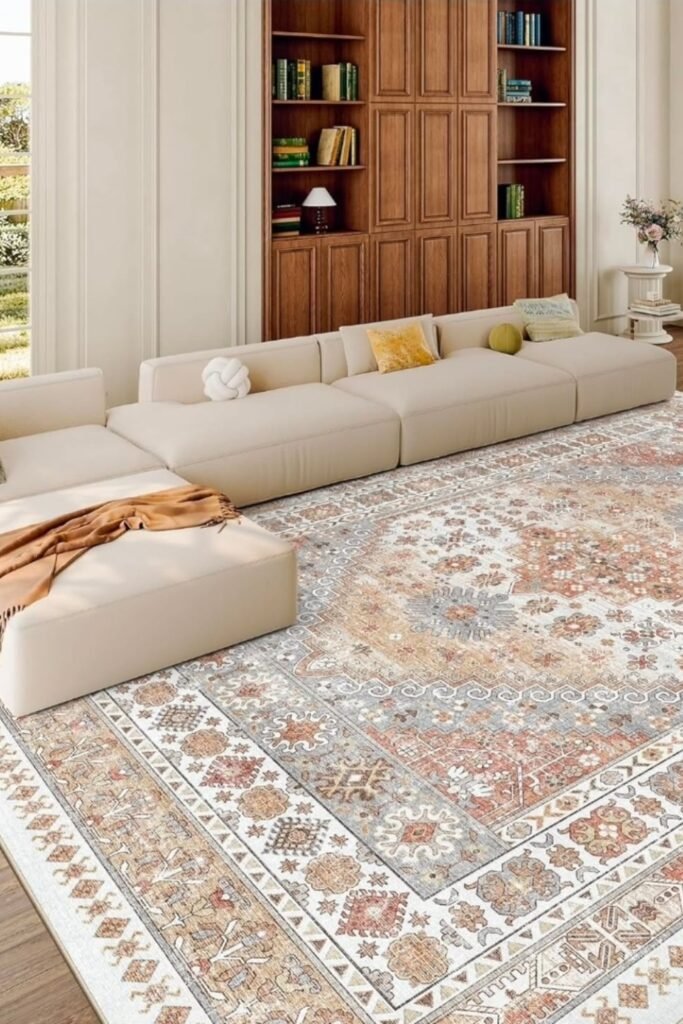
Oversized Persian Rug
Give a spacious living room clearer boundaries with an oversized Persian-style rug that stretches well beyond a long sectional or modular sofa.
Choose faded rust, beige, and blue-gray details when you want traditional pattern without overpowering modern cream furniture or rich wood cabinetry.
Allow generous rug space in front of the seating so the pattern feels properly scaled instead of disappearing beneath oversized furniture pieces.
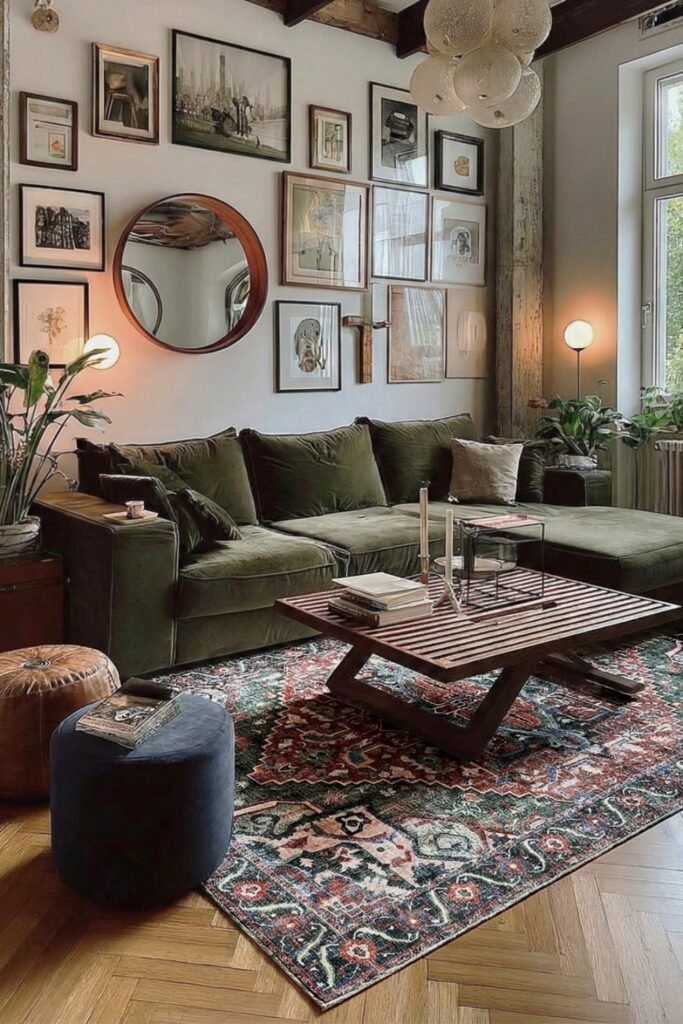
Jewel Tone Rug
Deep green seating can handle a richly patterned rug, especially when you want an eclectic room to feel collected rather than carefully matched.
Bring in rust, navy, cream, and green through a Persian-style pattern, letting those shades connect artwork, wood furniture, and smaller accessories.
Keep some wood flooring visible around the rug to frame its busy pattern and prevent an already layered living room from feeling overloaded.
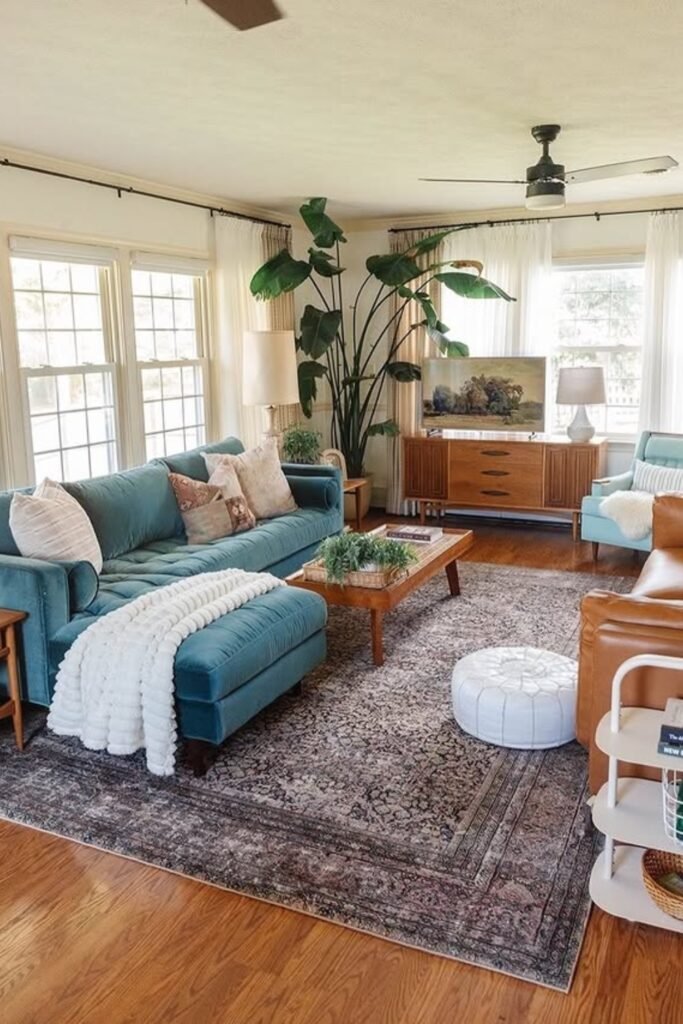
Charcoal Persian Rug
Mixing teal and caramel seating becomes easier when a charcoal Persian rug gives both colors one darker foundation to share.
Choose a distressed pattern with muted brown, gray, and cream details, allowing it to handle colorful furniture without adding another dominant shade.
Run the rug beneath the main seating edges so separate sofas and chairs read as one conversation zone instead of scattered pieces.
Natural Jute Rug
Natural jute is a smart counterpoint when polished marble floors and cream sofas make a living room feel slightly too formal.
Choose a tightly woven rectangular rug with a simple border, letting its sandy tone introduce texture without disturbing the clean neutral palette.
Keep the rug wide enough to relate to both sofas, while exposed marble around it preserves the bright, spacious character of the room.

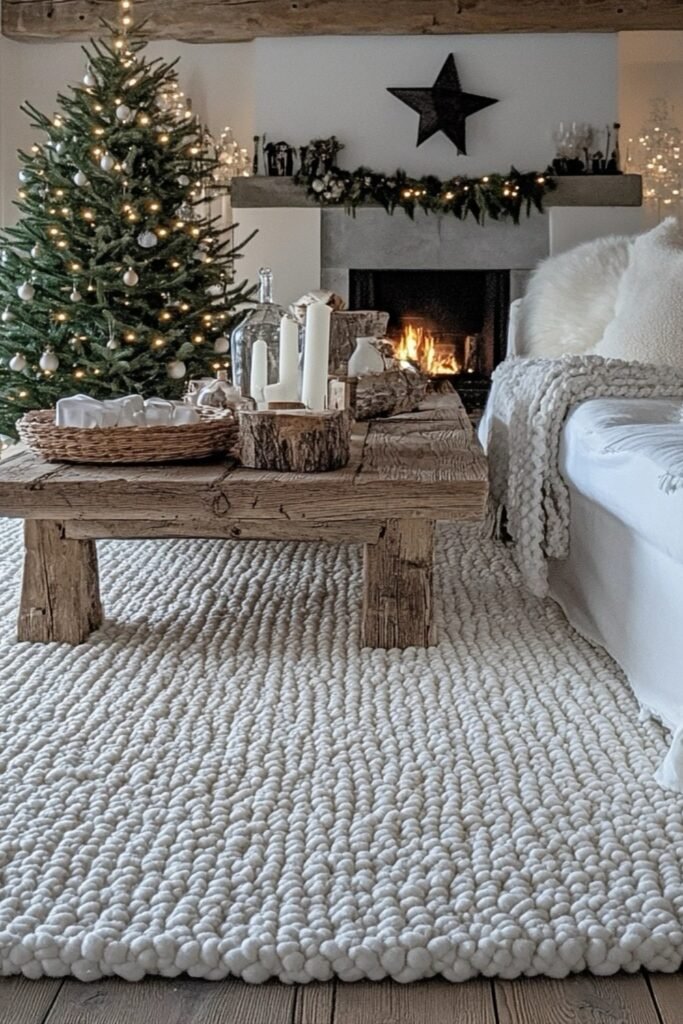
Chunky Cream Texture
A chunky cream rug works beautifully when your living room already has rustic wood, soft upholstery, and plenty of warm natural texture.
Choose a generously sized design that reaches beneath the sofa and coffee table, so the thick texture anchors everything instead of floating.
Keep surrounding colors quiet because this heavily textured surface already adds interest, and pair it with simple furniture that lets softness lead.
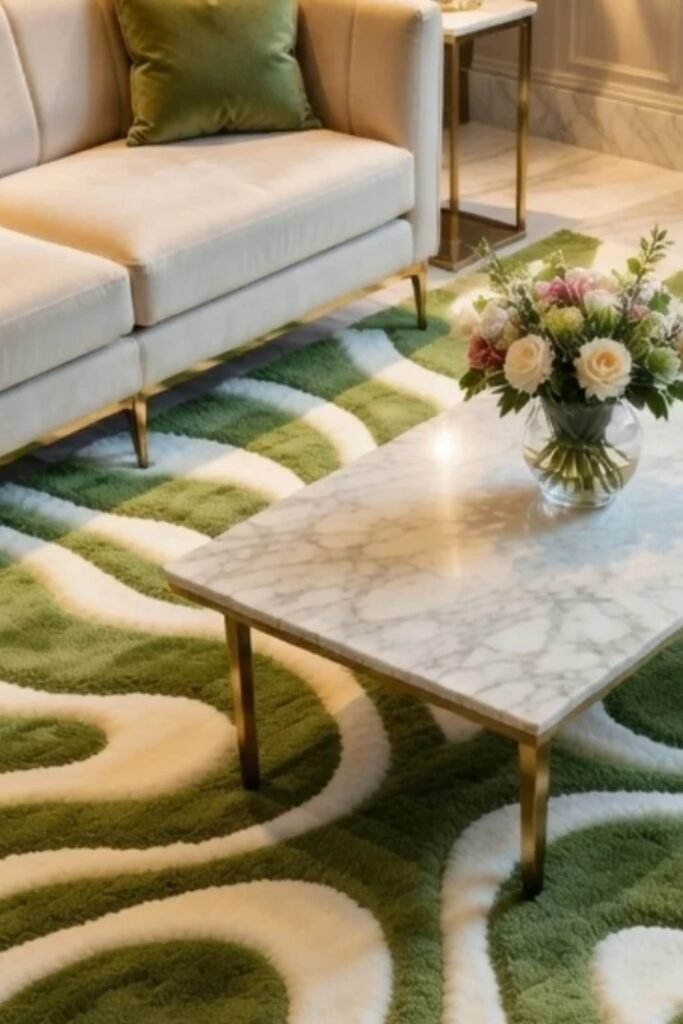
Wavy Green Statement
If your neutral living room needs a stronger focal point, a green and cream wavy rug can add personality without changing furniture.
Let a bold pattern cover most of the seating zone, then repeat its green through pillows or small accessories for an intentional connection.
Keep the sofa and coffee table fairly simple around this look, since competing prints can quickly make the floor pattern feel overwhelming.
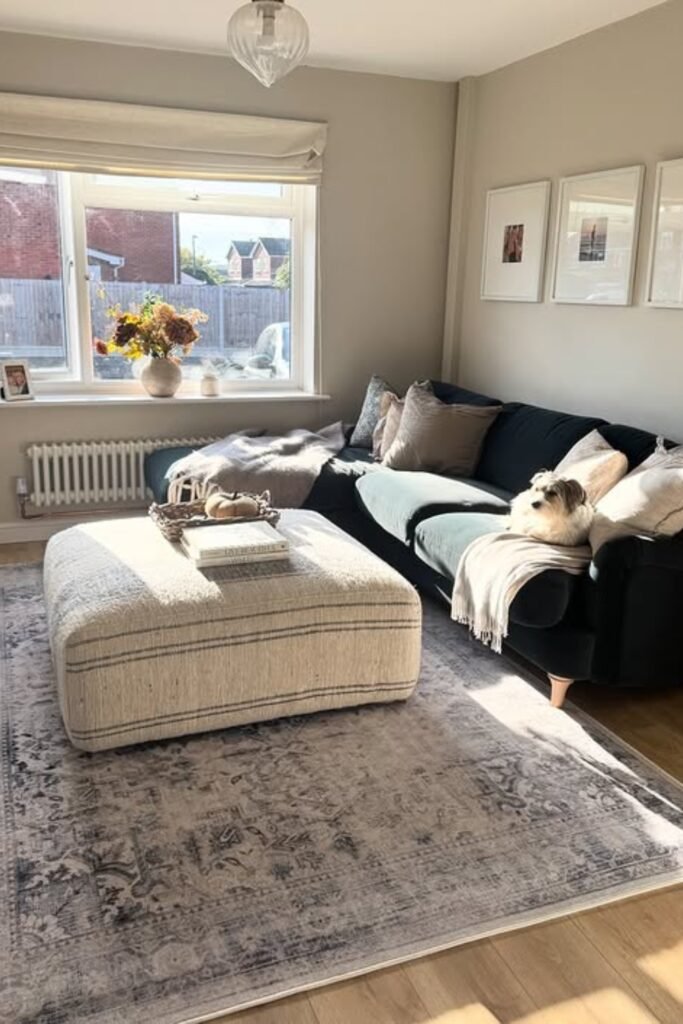
Faded Gray Pattern
A faded gray rug is a smart choice when you want pattern in a smaller living room without making the floor feel busy.
Choose one wide enough to extend beyond the ottoman and reach beneath the sectional, which helps the compact seating arrangement feel connected.
Soft gray, beige, and charcoal tones work especially well here because they bridge dark upholstery with lighter walls without demanding extra color.
Vintage Color Blend
When a gray sofa feels a little flat, a vintage rug with rust, blue, and cream can bring warmth underneath it immediately.
Use the rug colors as small decorating cues rather than matching everything, pulling perhaps one blue or rust shade into nearby accessories.
A defined border also works well in traditional or cozy rooms because it frames the seating area and gives open flooring clearer structure.

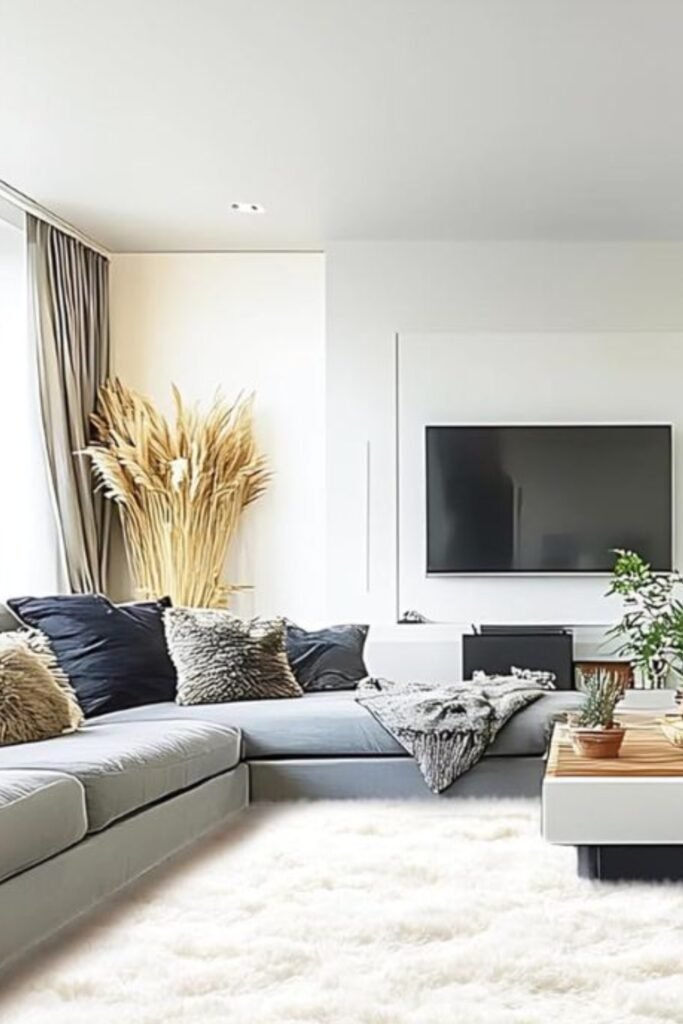
Oversized White Shag
A plush white shag rug is ideal when a modern living room feels visually cold and needs softness without introducing another color.
Choose an oversized version that stretches well beyond the coffee table, allowing the rug to connect a sectional with surrounding furniture.
Keep this high pile style for lower traffic spaces, since its long fibers need more vacuuming and care than flatter rugs.
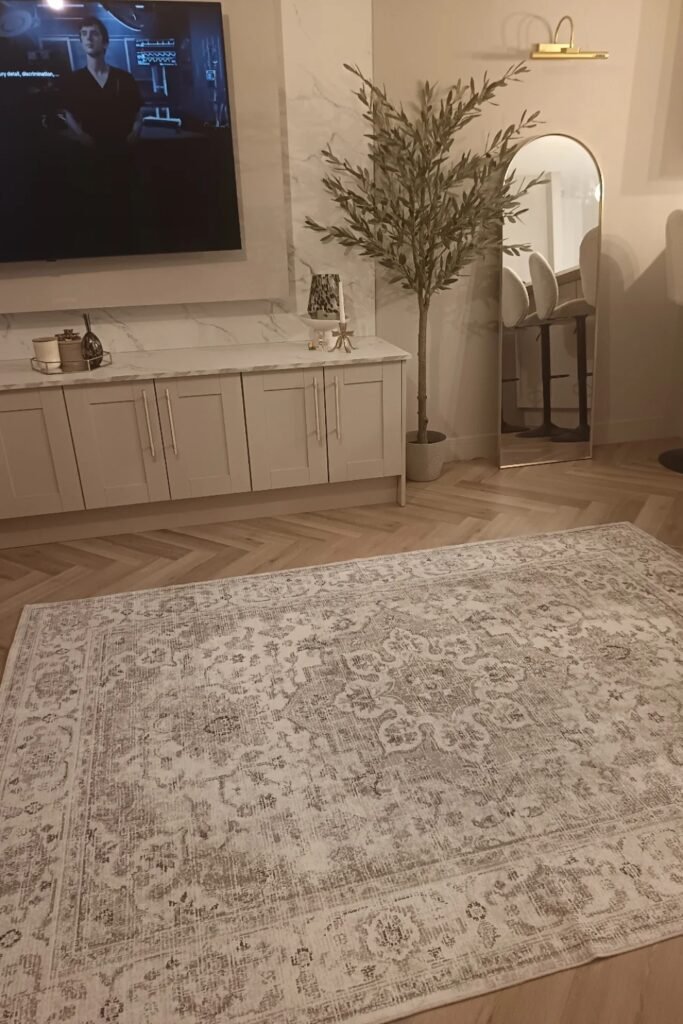
Faded Neutral Pattern
If you prefer a quiet floor, a faded neutral rug gives you pattern without competing with herringbone wood, marble, or cabinetry.
Look for beige and taupe motifs with a worn finish, which soften hard surfaces while keeping the overall palette calm and connected.
In an open room, position it around the actual seating area rather than centering it automatically beneath the television or wall.
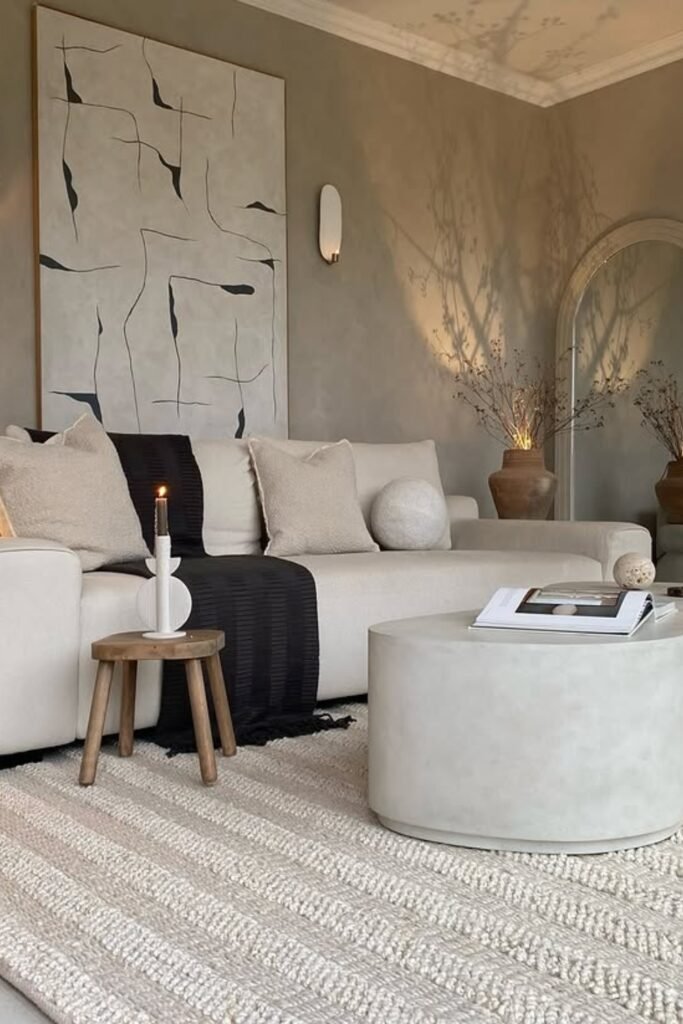
Soft Woven Stripes
Texture can do the decorating when you want a nearly monochrome living room, especially with cream upholstery and warm plaster-toned walls.
Choose a thick woven rug with subtle raised stripes, so the floor gains definition without breaking the soft neutral color scheme.
Let the sofa sit partly on the rug and repeat its natural texture through wood, linen, or pottery for an easy connection.
FAQs
Should a Living Room Rug Be Lighter or Darker Than the Sofa?
Either can work, so focus on creating enough contrast to keep the sofa and rug from blending together.
A light rug can brighten a dark sofa, while a deeper rug can ground cream or beige furniture.
You can also choose a patterned rug that includes both light and dark tones when you want an easier connection between different colors in the room.
How Far Should a Living Room Rug Extend Past the Sofa?
Aim for a rug that extends beyond both sides of the sofa rather than ending exactly at its edges.
This makes the seating arrangement look balanced and prevents the rug from appearing undersized.
The exact distance depends on your room, but keeping at least the sofa’s front legs on the rug is a practical starting point for most living rooms.