Mounting the TV is usually the easy part.
You can add too much decor and the wall feels busy; leave it bare and the TV looks like a black box floating in the room.
The good news is that you don’t need an expensive built-in media unit to fix it.
A longer console, smart wall panels, hidden cables, balanced shelving, or even the right paint color can completely change the setup.
In this article, you’ll find 26 TV wall ideas for living rooms of different sizes and styles.
Let’s jump in!
How to Make a TV Look Good on a Wall?
Start by treating the TV as part of the whole wall instead of decorating around it as an afterthought.
Mount it close to seated eye level, then use a console that extends beyond the screen to give the setup visual balance.
If the wall still feels empty, add wood panels, paint, shelves, or simple artwork, but don’t fill every open spot.
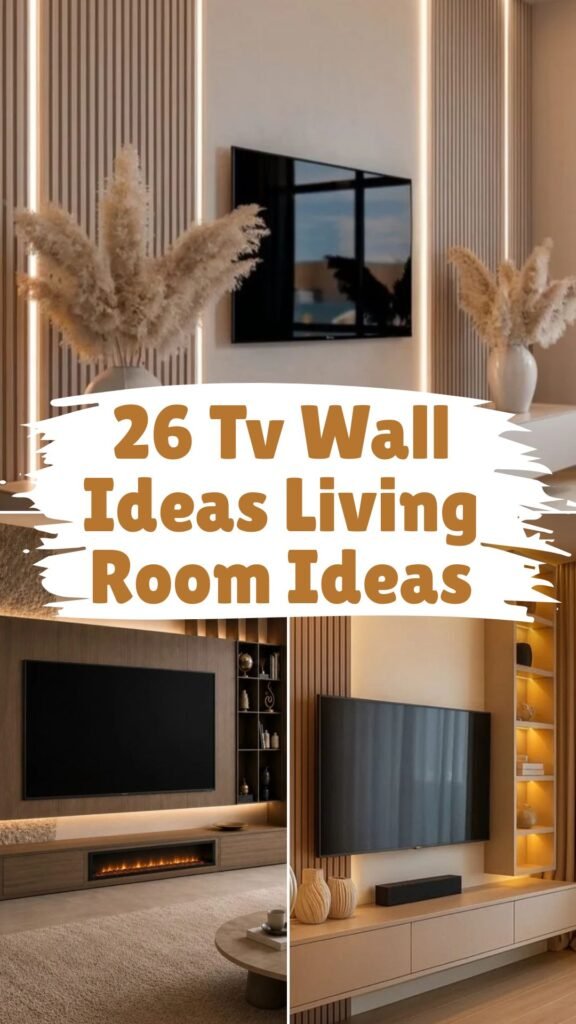
You can also use a darker wall color to help a black screen blend in when it’s turned off.
Hide visible cables before adding decorative details because messy wires will quickly undo a clean setup.
Finally, check where windows and lamps sit so glare doesn’t make the TV uncomfortable to watch.
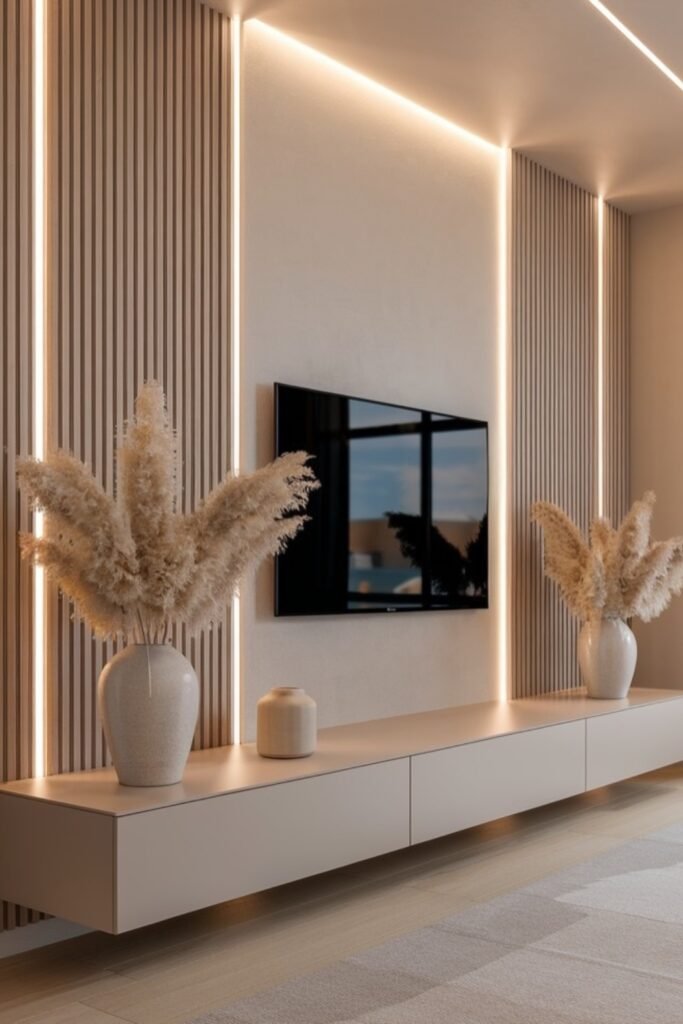
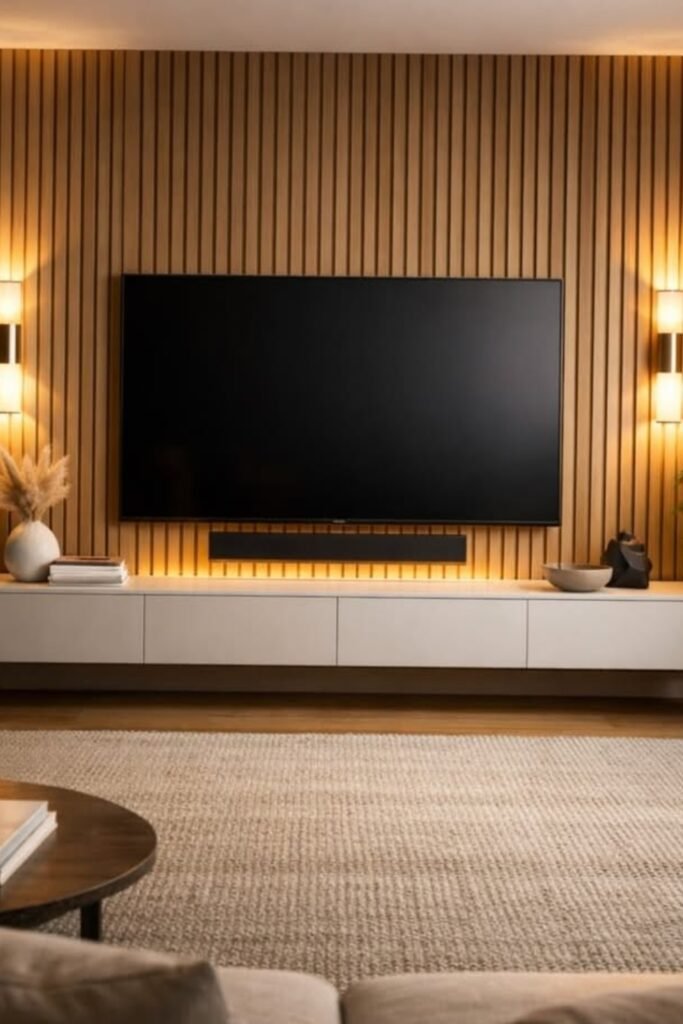
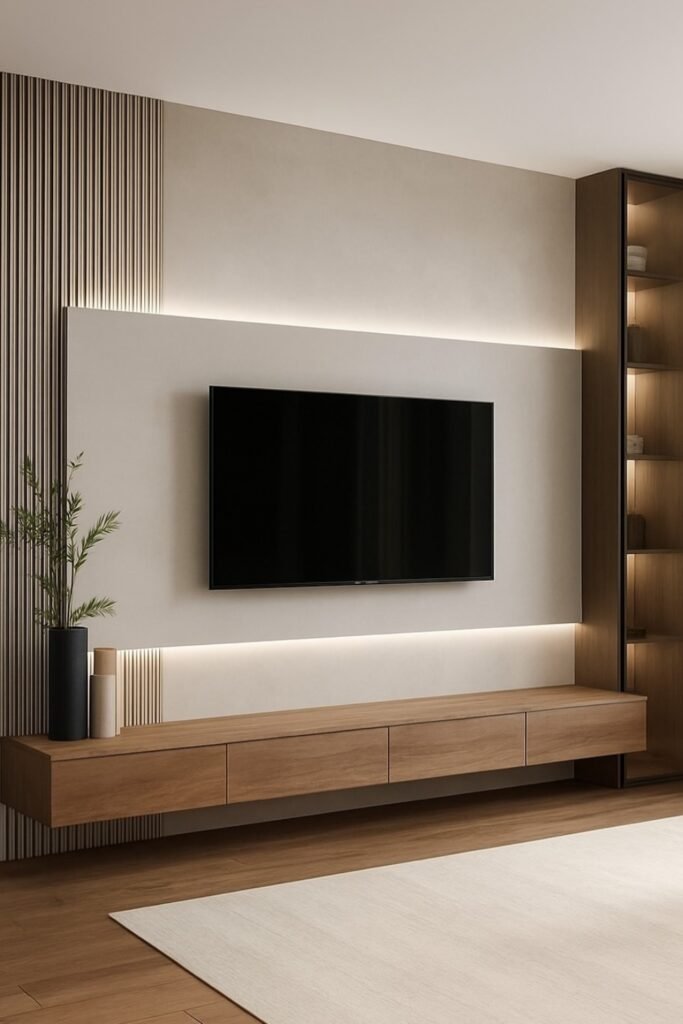
Slatted Balance
Break up an extra-wide TV wall with slim wood slats placed at both ends, leaving a calm painted section around the screen.
Run concealed LED strips along the panel edges and ceiling line to add depth without crowding the wall with extra decoration.
Finish with a long floating console and a few oversized neutral vases, which keep storage practical while balancing the vertical panels.
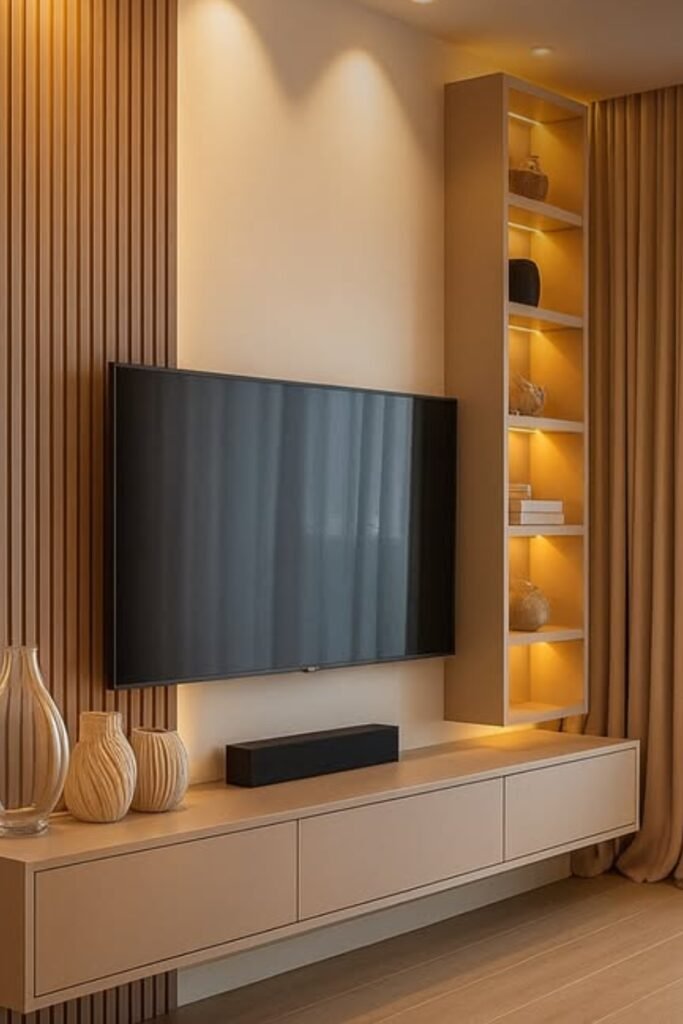
Corner Storage
Give an awkward TV corner more purpose by using wood slats on one side and a narrow display tower on the other.
Keep the television over a long floating cabinet, then use the open shelves for a few objects instead of filling every level.
Warm shelf lighting and concealed strips behind the slatted panel soften the screen area, making this setup especially effective near full-height curtains.
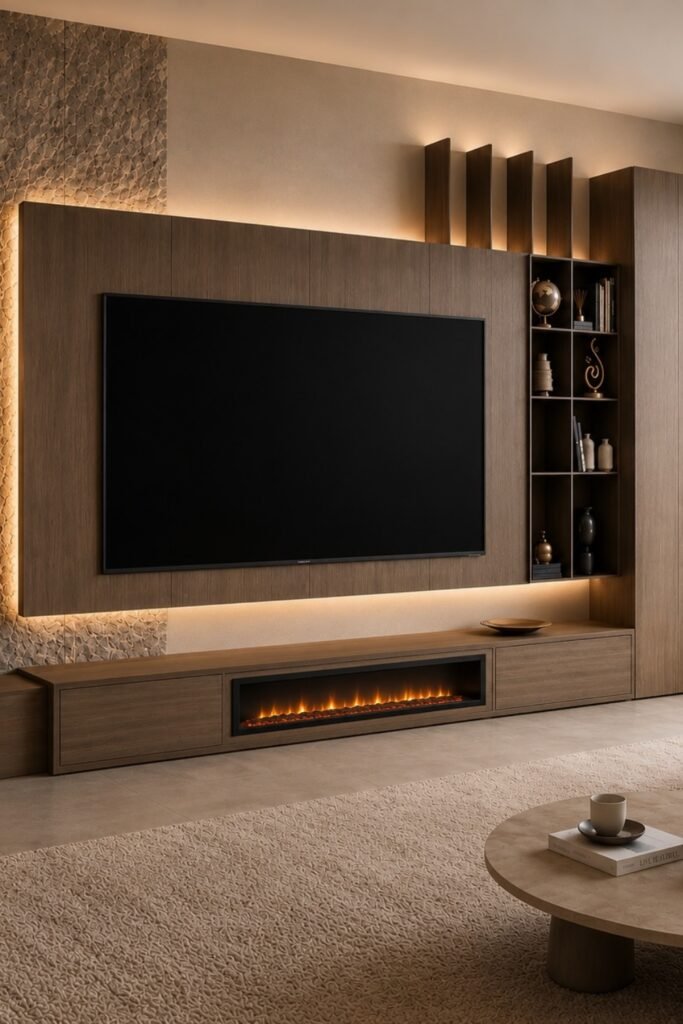
Fireplace Media Wall
Turn a large living-room wall into useful storage by building the television into a wide wood panel with cabinetry beside it.
A low linear fireplace can sit beneath the screen when clearances allow, giving both features one strong center instead of competing separately.
Use hidden lighting around the raised TV panel and upper wood fins to reveal texture, while closed lower cabinets keep everyday clutter invisible.
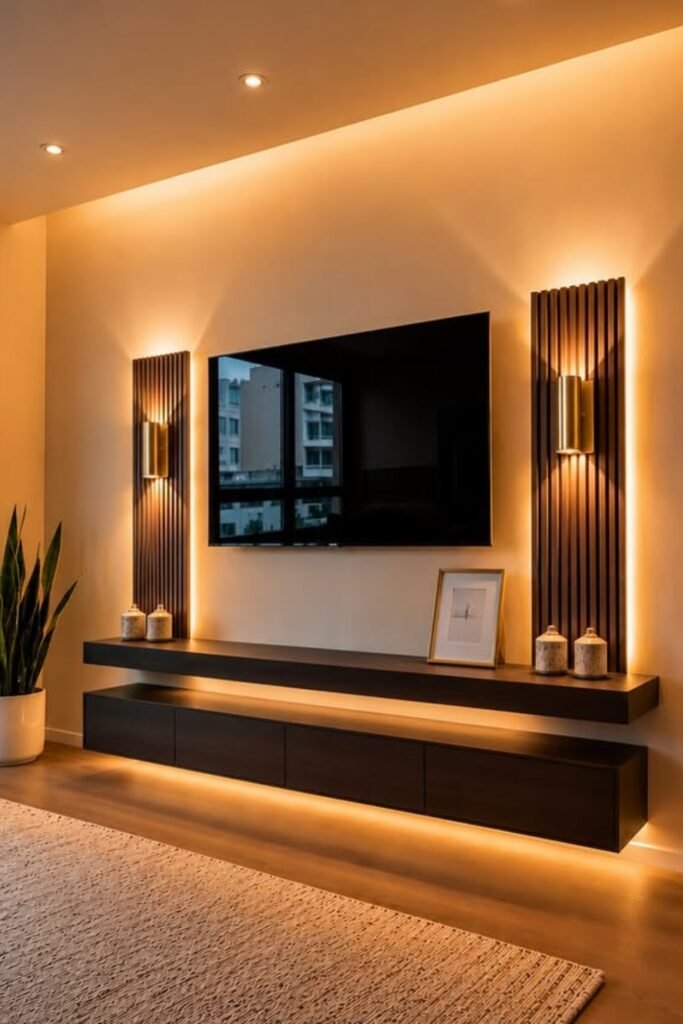
Sconce Framing
Frame a plain TV wall with two narrow slatted panels instead of covering the entire surface, which keeps the room visually lighter.
Mount a simple sconce on each panel and repeat the dark wood in floating cabinets below to make both sides feel connected.
Leave the center wall mostly undecorated, then hide lighting beneath the upper shelf and lower cabinet for a warm evening glow.
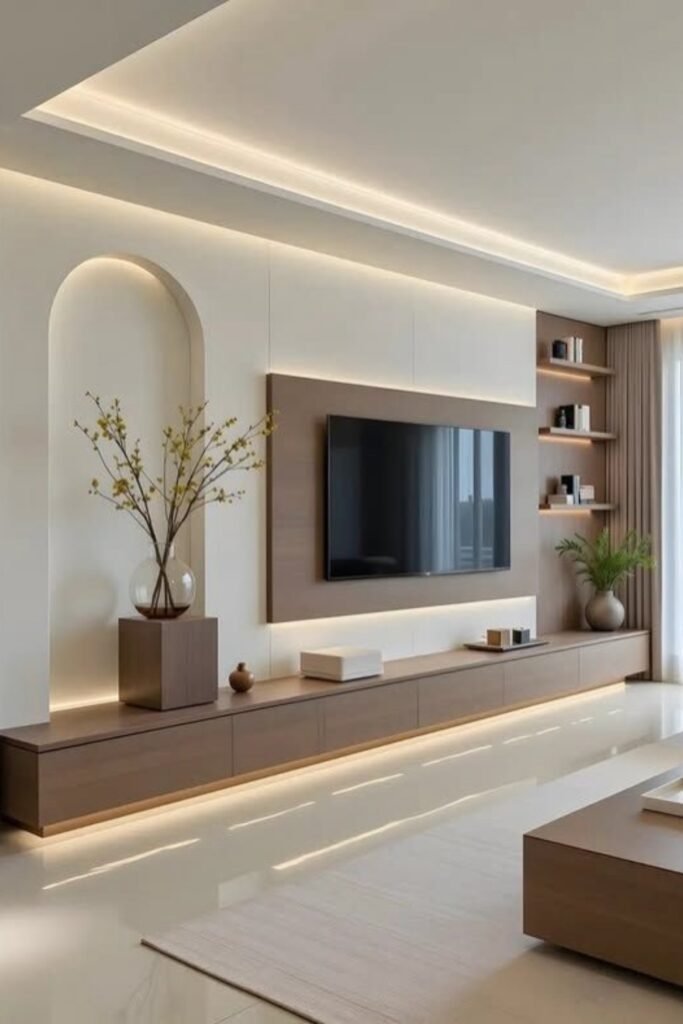
Arched Balance
Give a long TV wall some architectural shape by pairing an arched niche with a raised wood panel behind the screen.
Run low cabinetry across the wall and continue shelving into the corner, giving larger living rooms storage without bulky standalone furniture.
Soft LED strips around the ceiling, TV panel, and cabinet base create depth, while restrained accessories keep the layered design calm.
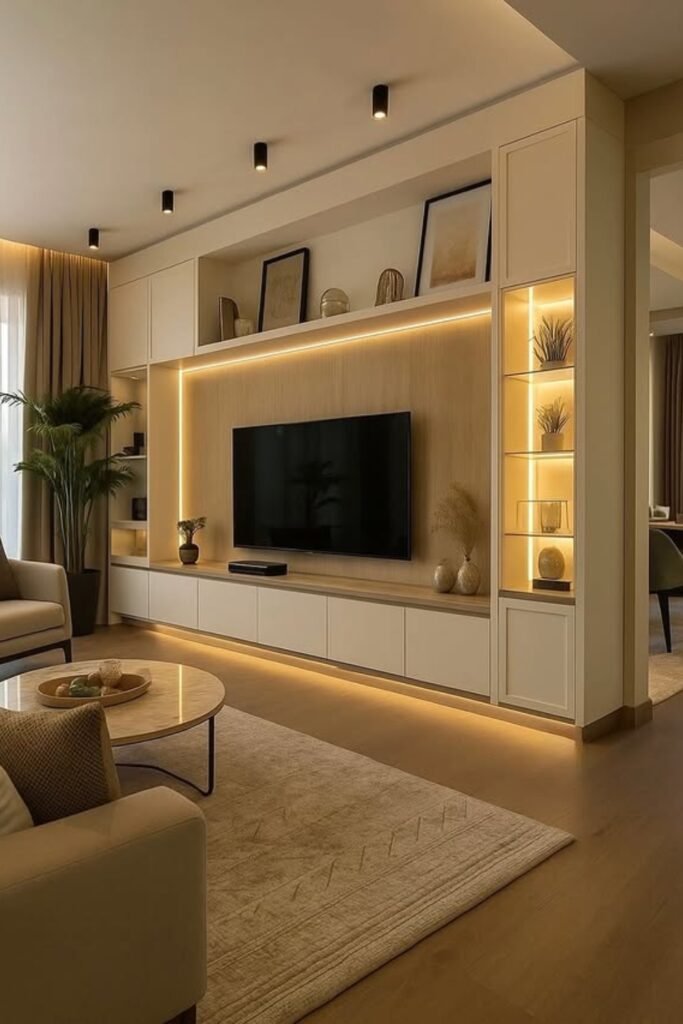
Built-In Storage
Use full-height cabinetry when your TV wall needs to handle storage, display pieces, and electronics without spreading furniture around the room.
Center the screen within a warm wood recess, then place closed cabinets below and lighter display shelves along one outer edge.
Integrated shelf lighting and a concealed strip above the TV brighten the joinery, while ceiling spotlights handle general living-room illumination.
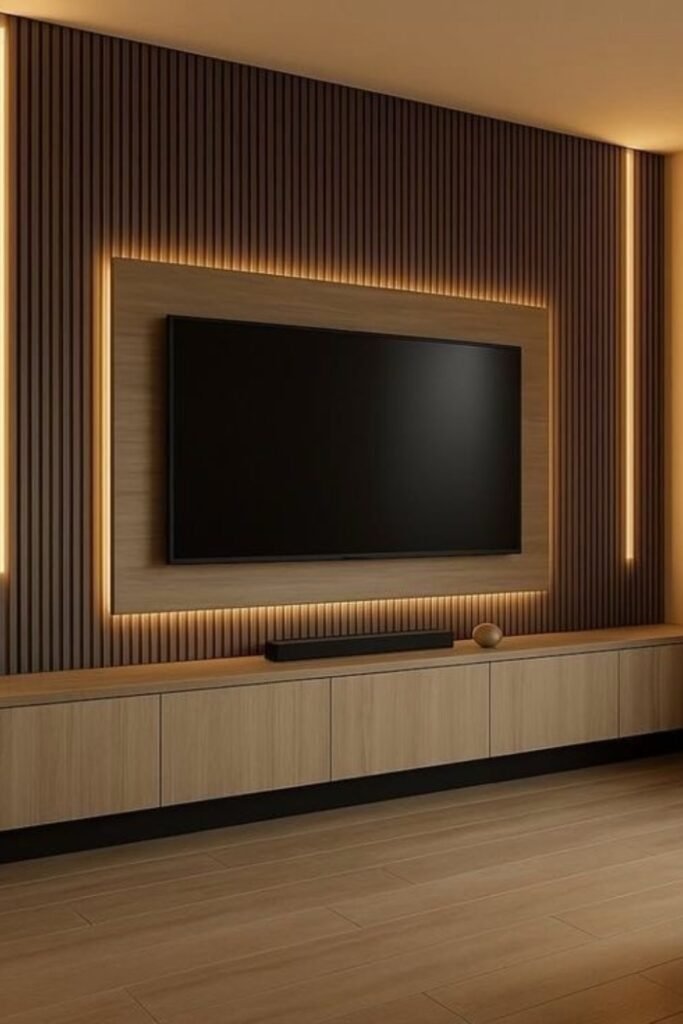
Full Slat Wall
Let narrow vertical slats cover the whole feature wall when you want strong texture without adding shelves, artwork, or decorative clutter.
Mount the TV on a slightly raised wood panel so the screen gains separation from the darker slatted background behind it.
Finish with a long low cabinet and concealed warm lighting around the panel, creating a clean setup suited to modern living rooms.
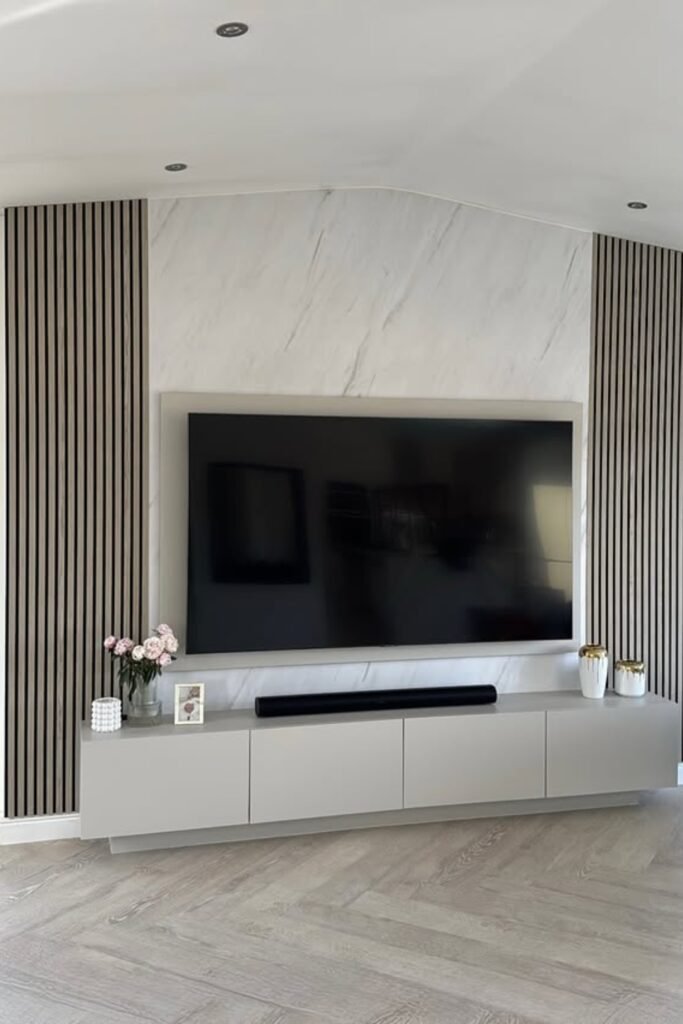
Marble Center
Use marble-effect panels between two narrow slatted sections when you want a polished TV wall without making every surface visually heavy.
Keep the television centered over a low handle-free cabinet, allowing the pale stone pattern to provide interest without needing extra wall décor.
Small flowers, framed art, and containers are enough at console level; keeping both sides restrained lets the contrasting wall materials stay noticeable.
Sconce Symmetry
Warm wall sconces can do more than light the room; placing matching fixtures beside the TV gives a full slatted wall clear symmetry.
Keep the console pale and simple beneath the screen so the rich wood texture and balanced lighting remain the main design features.
Add only a few low accessories near the outer edges, leaving the center open for a soundbar and an uncluttered viewing area.
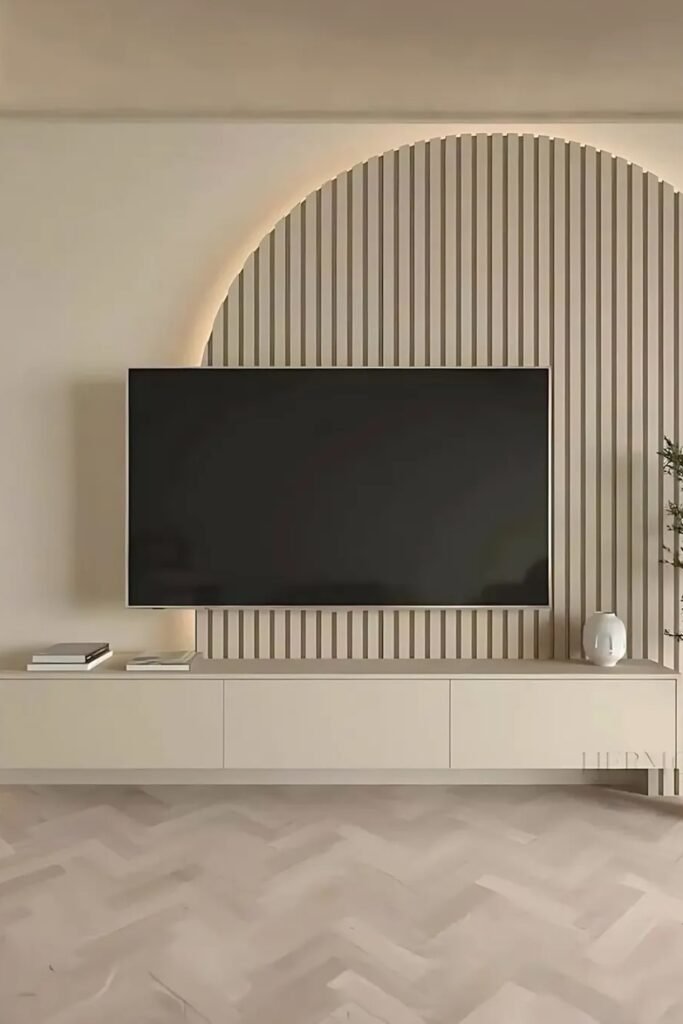
Slatted Arch
Give a minimalist living room more character by shaping pale vertical slats into one oversized arch instead of adding several decorative materials.
Let the arch extend behind the television and beyond one side, creating an off-center feature that makes a plain wall feel intentional.
Pair it with a handle-free floating cabinet, soft perimeter lighting, and one tall plant so the curved feature stays clean and noticeable.
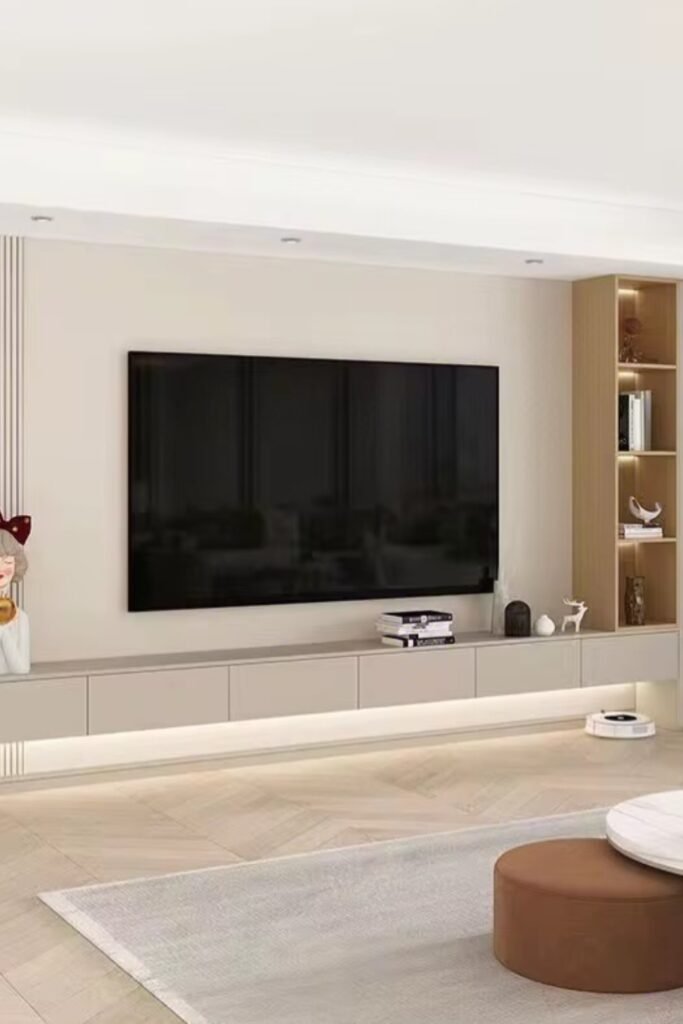
Low Storage
Keep a wide living room feeling open by running one low cabinet across the TV wall instead of surrounding the screen with heavy storage.
Add a single illuminated display column at one end for books and objects, while subtle vertical detailing balances the opposite side.
Under-cabinet lighting makes the long unit appear lighter above the floor, while closed drawers provide plenty of hidden everyday storage.
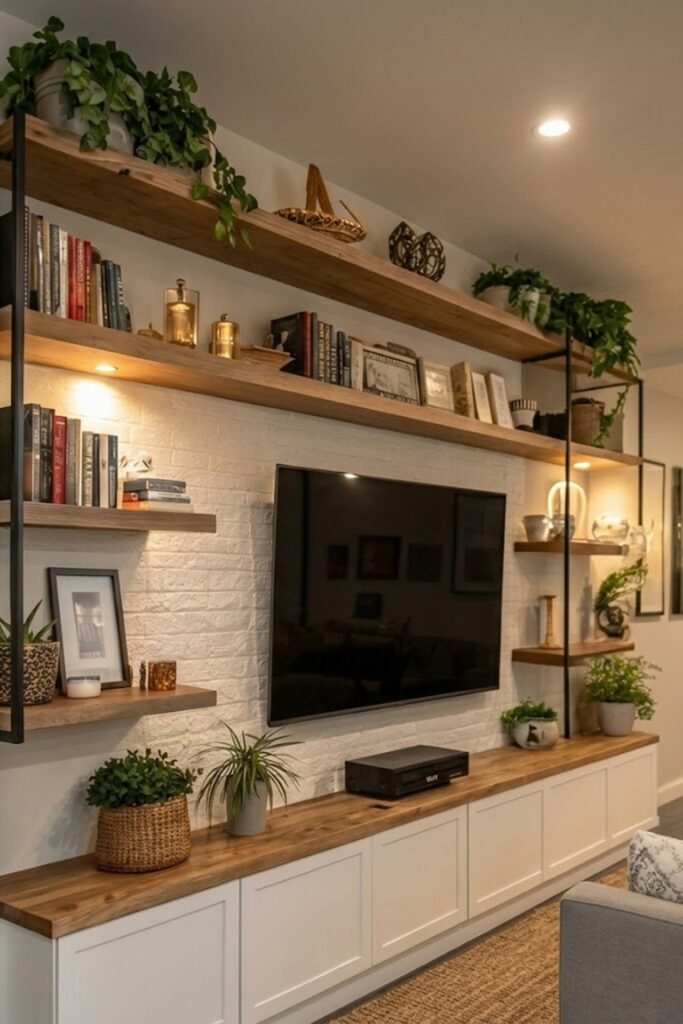
Library Wall
Turn the TV wall into a relaxed library by combining warm timber shelves, white brick texture, plants, books, and closed base cabinets.
Keep the shelves irregular around the television rather than perfectly symmetrical, which gives a casual family living room a more collected character.
Install small lights beneath selected shelves to brighten the brick and display pieces, while keeping the area directly around the screen relatively clear.
Split Material
Mix plaster and timber slats across one TV wall when you want contrast without covering the entire surface in one heavy material.
Keep floating shelves on the slatted side only, giving books and small objects their own zone without crowding the television itself.
Continue a low cabinet across both finishes, then add concealed backlighting behind the screen to visually connect the two contrasting sections.
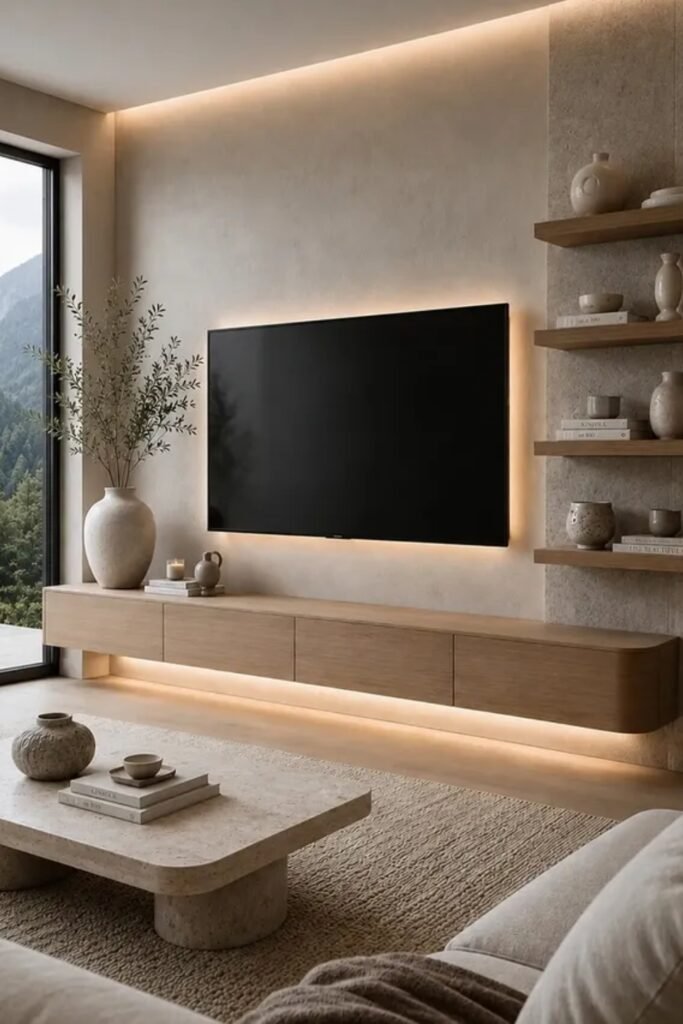
Rounded Console
Soften a modern TV wall with a long floating cabinet that has rounded ends, especially when the room already uses curved furniture.
Keep the wall finish quiet and place open shelves on just one side, allowing the television to remain the strongest central element.
Warm backlighting behind the screen and beneath the cabinet adds depth, while pale wood and neutral pottery keep everything relaxed and cohesive.
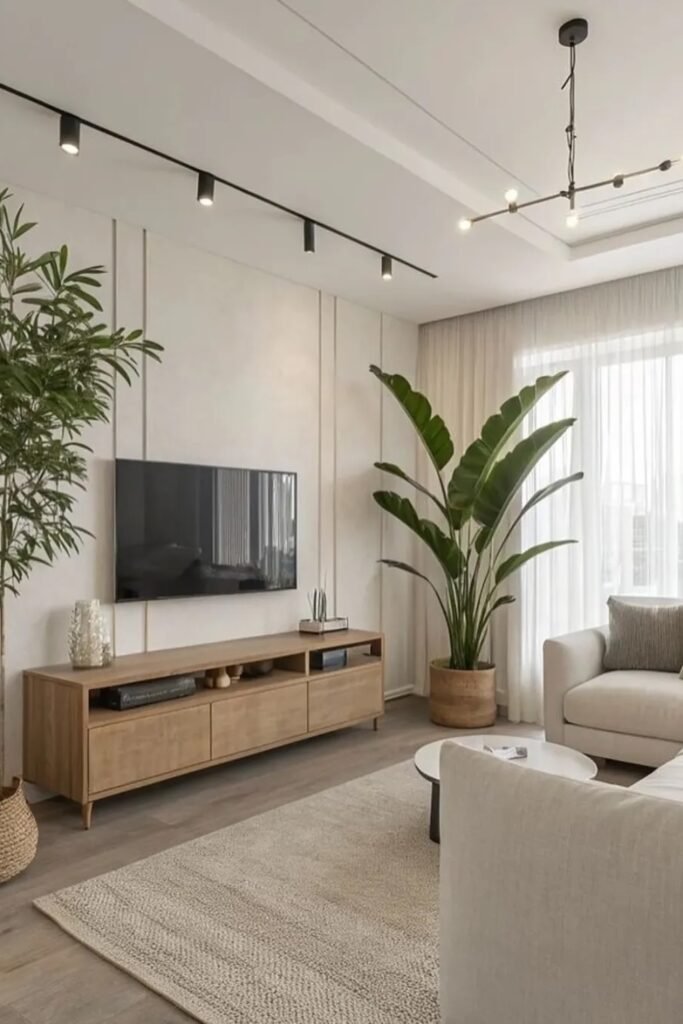
Plant Framing
Bring life to a simple TV setup by using tall indoor plants as natural framing instead of adding shelves around the screen.
Choose a warm wood console with open media compartments and closed drawers, giving everyday electronics practical storage.
Keep the paneled wall pale and understated, then use ceiling track lights for flexible illumination while daylight handles most daytime brightness.
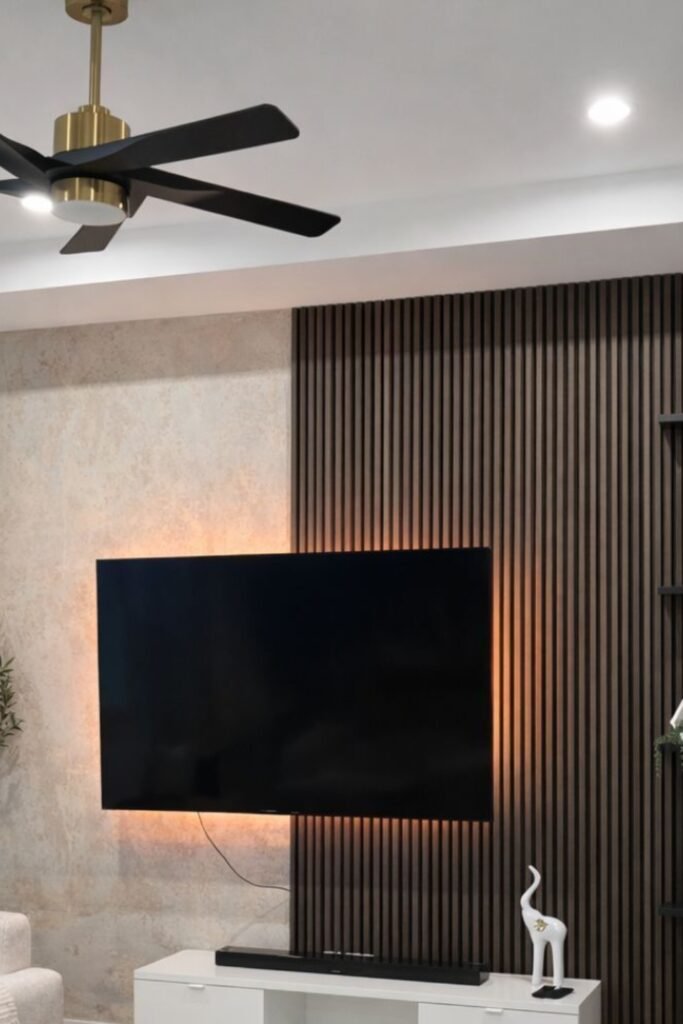
Half Slat Wall
Split a wide TV wall between textured plaster and dark slats when a full timber treatment would feel too strong.
Let the television overlap both finishes slightly, then use narrow display ledges on the slatted side to balance the off-center placement.
Add soft backlighting behind the screen for evening depth, but conceal the visible power cable so the strong material contrast stays polished.
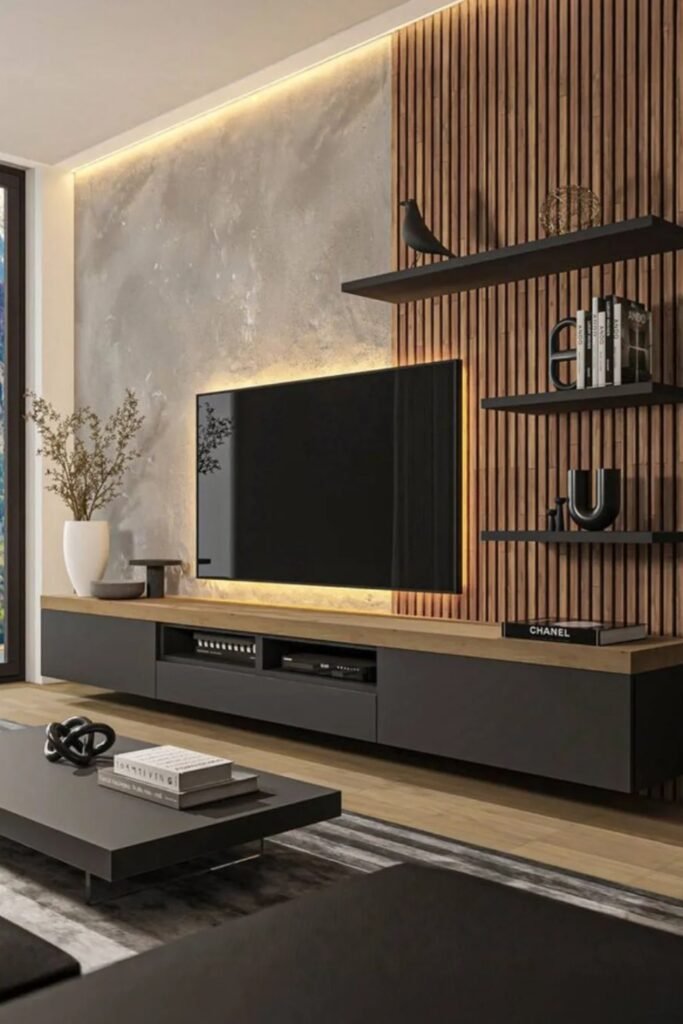
Side Slat Shelves
Shift the slatted feature to one side when you want texture and display space without making the television wall feel overly designed.
Match floating shelves to the walnut slats, then continue the same timber across a long cabinet to visually connect both wall sections.
Keep pottery and greenery grouped toward the edges, leaving generous space around the screen so the asymmetrical arrangement still feels calm and balanced.
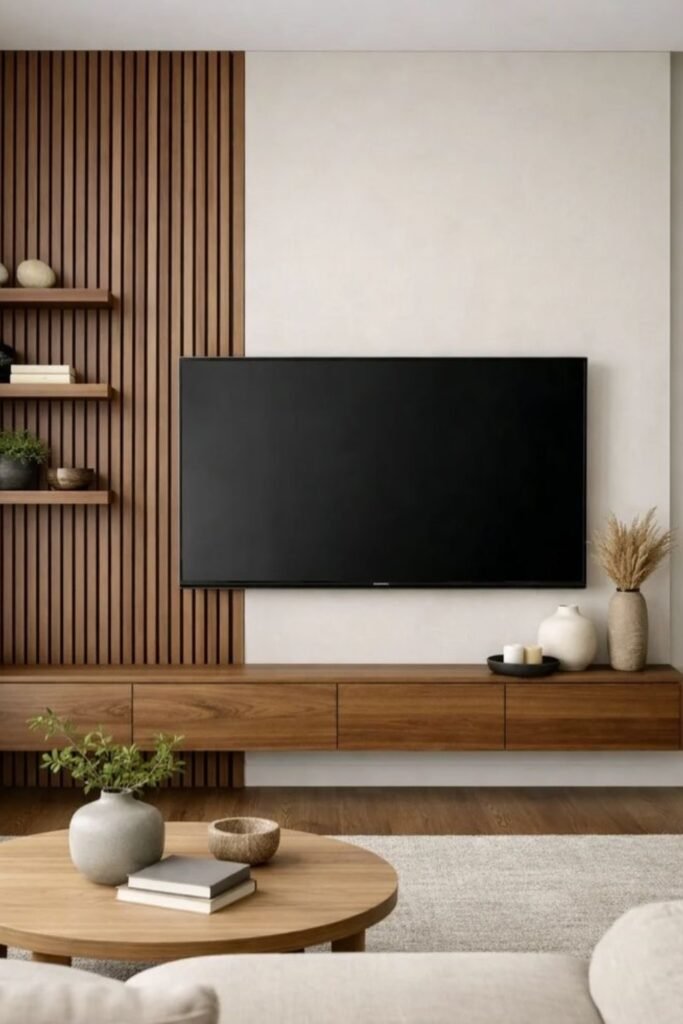
Personal Display
Use one slatted section for family photos and small keepsakes when you want the TV wall to feel personal rather than showroom-perfect.
Black floating shelves work especially well against warm timber, creating enough contrast to separate framed pictures, plants, and decorative objects clearly.
Ground everything with a dark low cabinet, keeping open media storage near the center so consoles and sound equipment remain easy to reach.
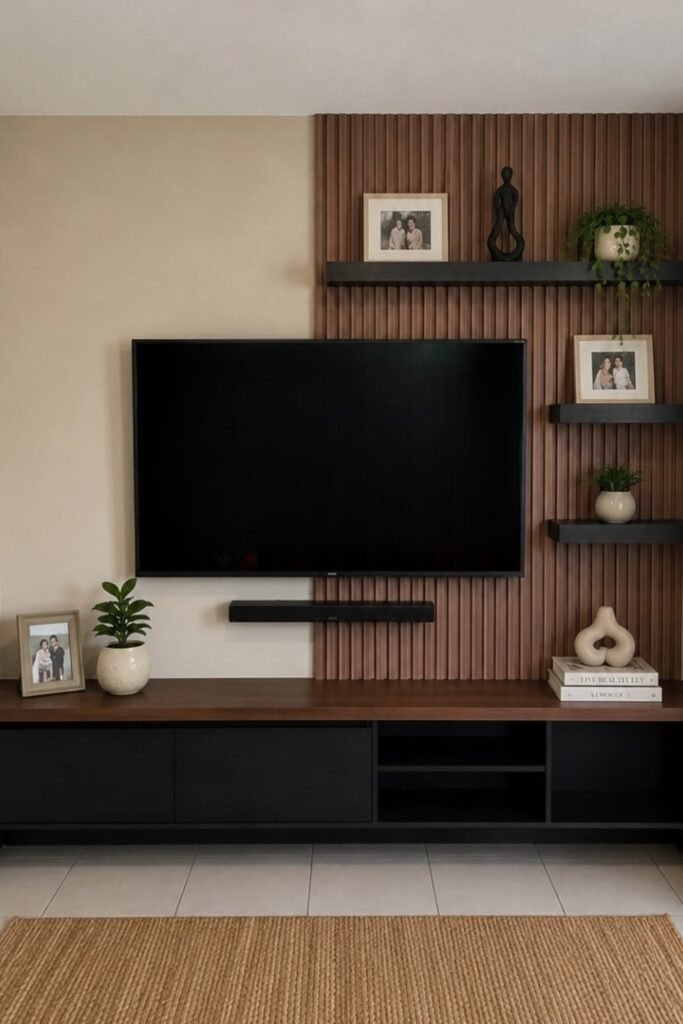
Greenery Shelf
Stretch one timber shelf above the television when floor space is limited but you still want greenery to soften a practical media area.
Mix trailing and upright plants across the upper shelf, then repeat smaller pots below so the greenery feels connected rather than randomly placed.
Choose a warm wood console with closed drawers and an open electronics compartment, giving a compact living room storage without bulky built-ins.
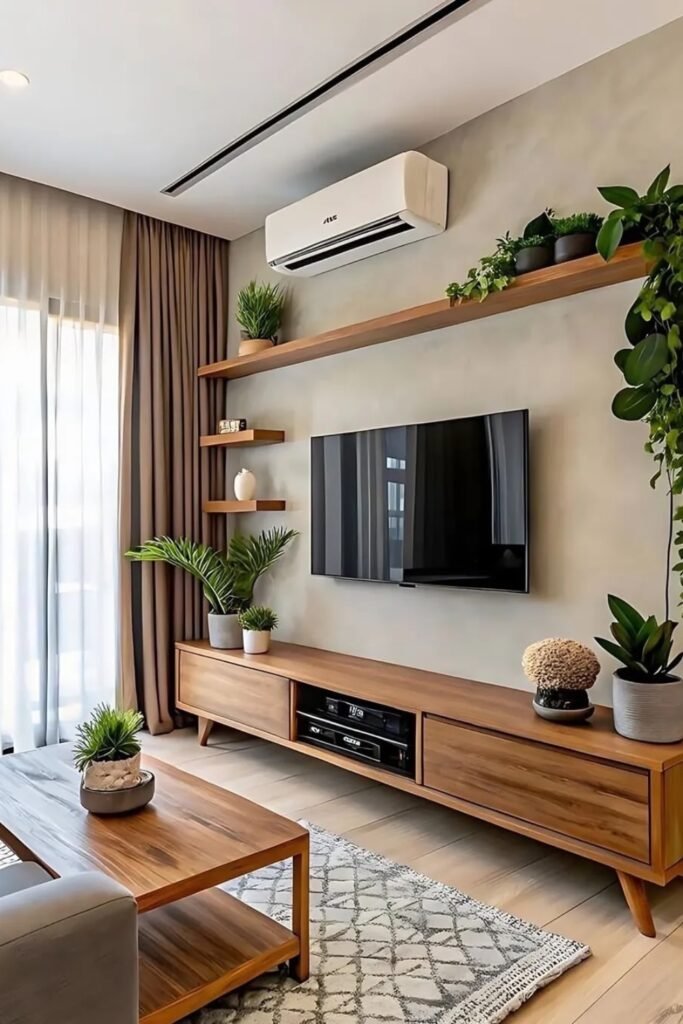
Stone Contrast
Make a tall TV wall feel substantial by centering dark stacked stone between narrow timber slats instead of covering everything with stone.
Mount slim sconces on the wood sections so warm light catches the vertical grooves while keeping direct glare away from the television.
Run a low floating cabinet underneath and hide lighting below it, giving the heavy stone center a lighter, more balanced base.
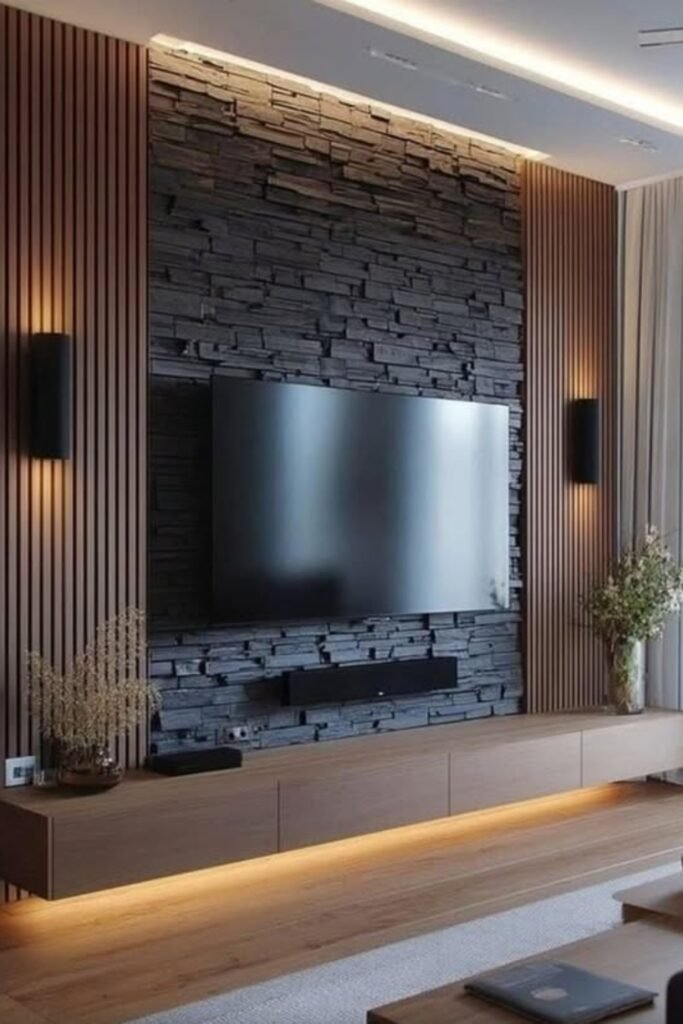
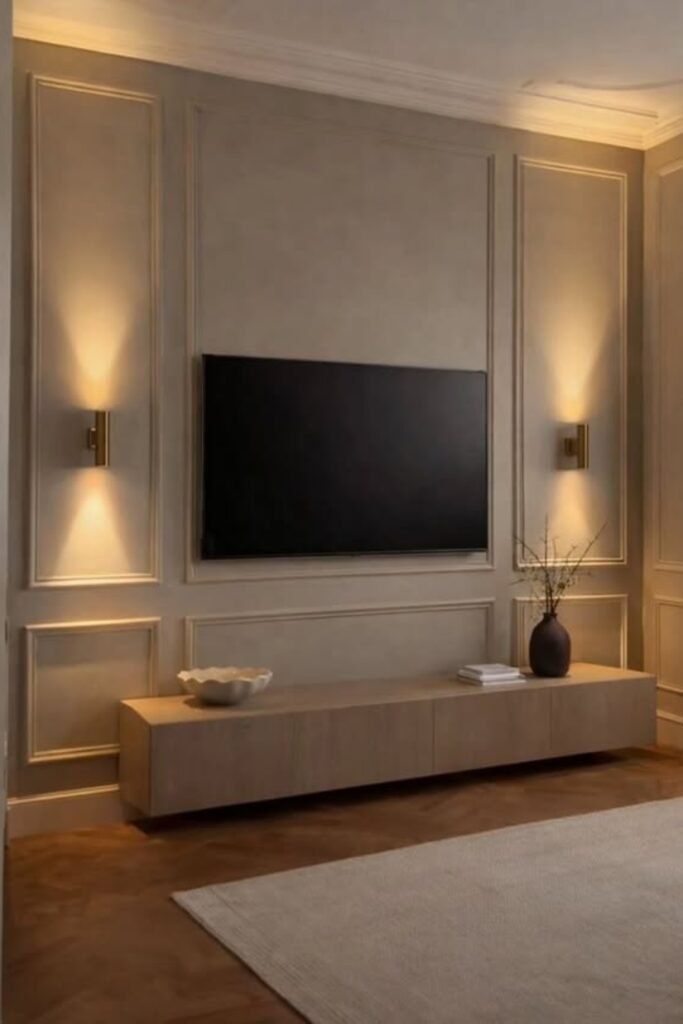
Classic Molding
Give a traditional living room a cleaner TV setup by using slim picture-frame molding instead of heavy media panels or built-ins.
Place matching sconces inside the outer moldings to frame the screen softly and spread warm light across the tall wall.
Keep the floating wood console simple and sparsely styled so the classic wall detailing remains noticeable without competing with the television.
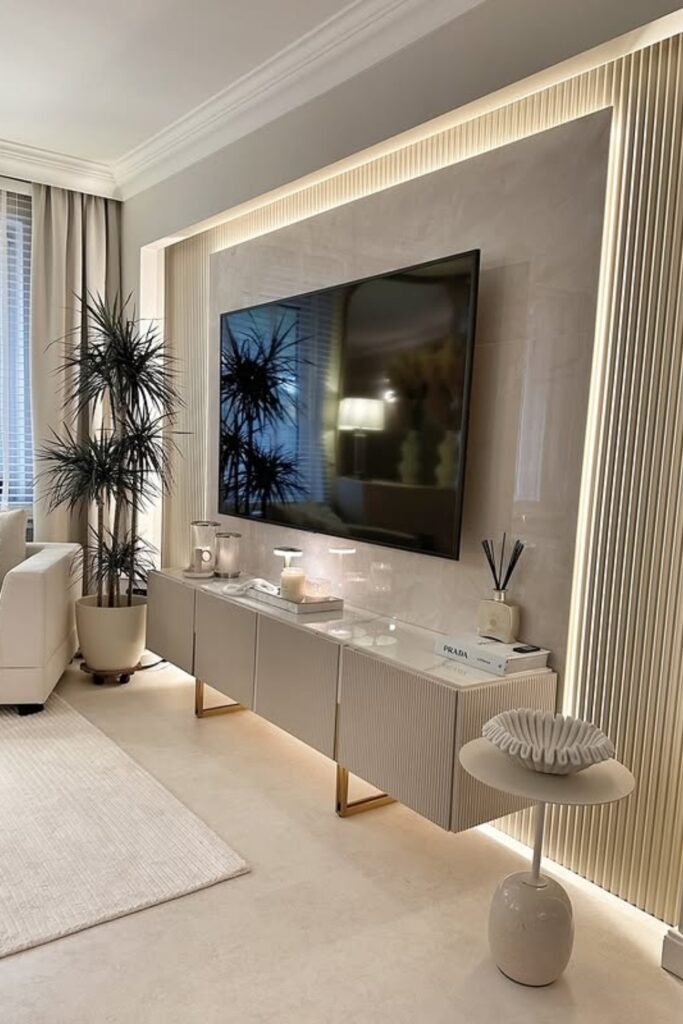
Fluted Frame
Create a brighter feature wall by framing a pale stone-effect center with narrow fluted panels running vertically along both sides.
Mount the television inside the central section and choose a ribbed floating console below to repeat the wall’s subtle texture.
Use concealed perimeter lighting around the feature wall to define its edges at night without adding decorative fixtures beside the screen.
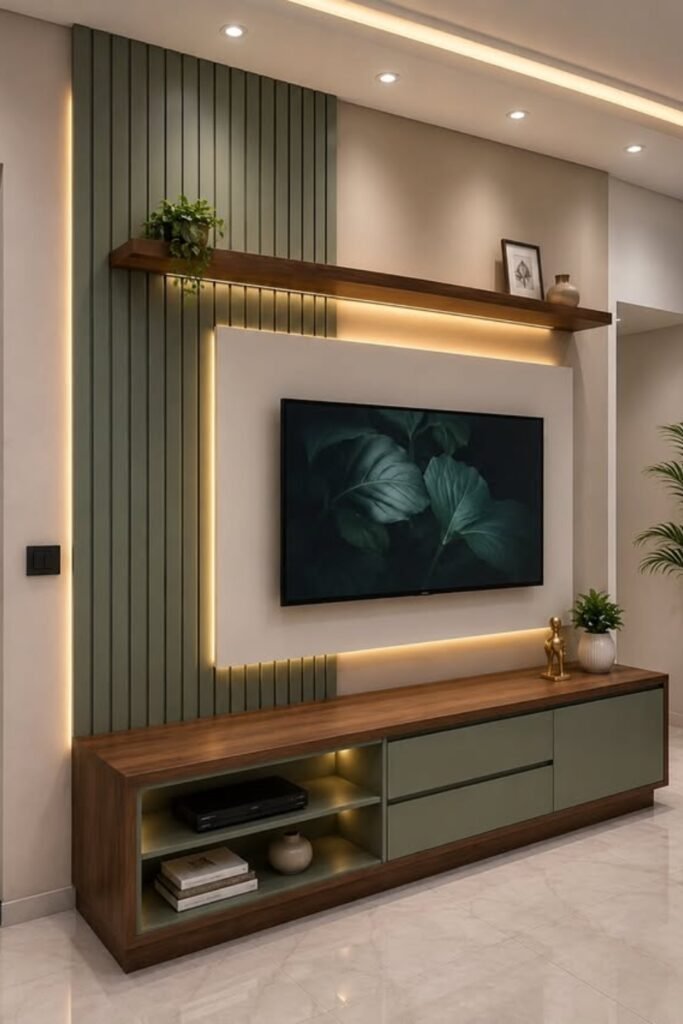
Muted Green
Bring color into a neutral TV wall with muted green vertical panels rather than relying on artwork or busy accessories.
Wrap warm timber around the long console and upper shelf so the green sections feel connected instead of randomly added.
Hide LED strips behind the TV panel and beneath the shelf, then use open cubbies below for media equipment and books.
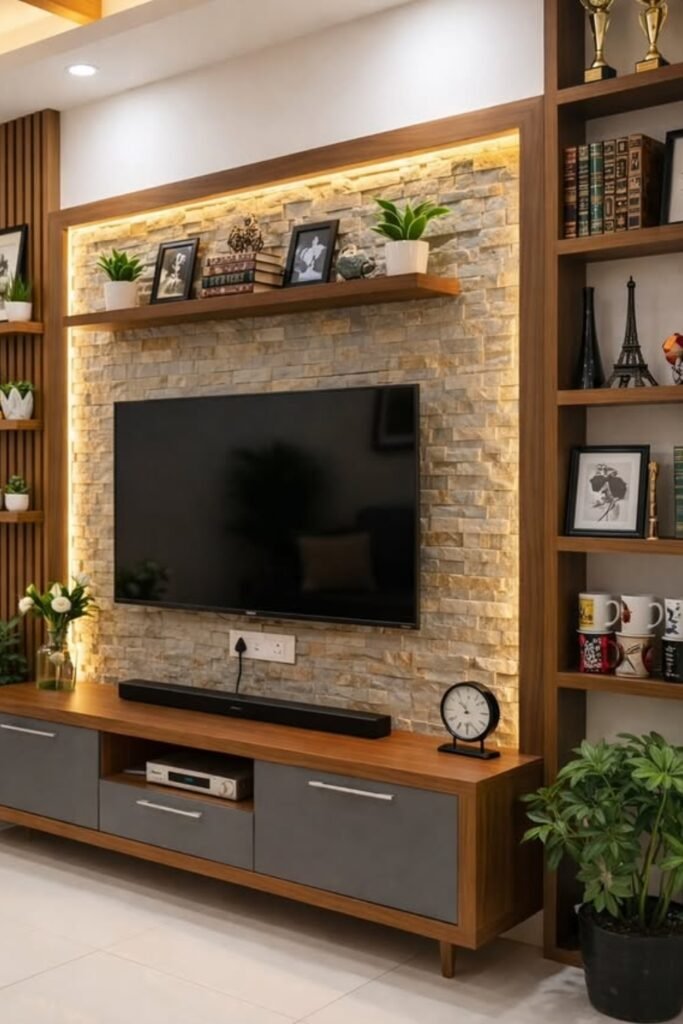
Display Surround
If your living room doubles as a display space, build shelving around a stone TV center instead of adding separate cabinets.
Keep the television area relatively open, then place books, framed photos, plants, and collectibles on surrounding shelves to organize visual clutter.
Backlight the stone panel and upper shelf with warm LEDs, while closed lower storage keeps cables and everyday electronics out of sight.
Vertical Display
Use a tall display cabinet beside the television when you need storage but want the main TV area to stay visually open.
Frame one edge with slim vertical slats, then carry warm timber across the floating console to connect the different sections naturally.
Run concealed lighting above and below the raised TV panel, while small shelf lights turn the narrow cabinet into an evening feature.
Sconce Slats
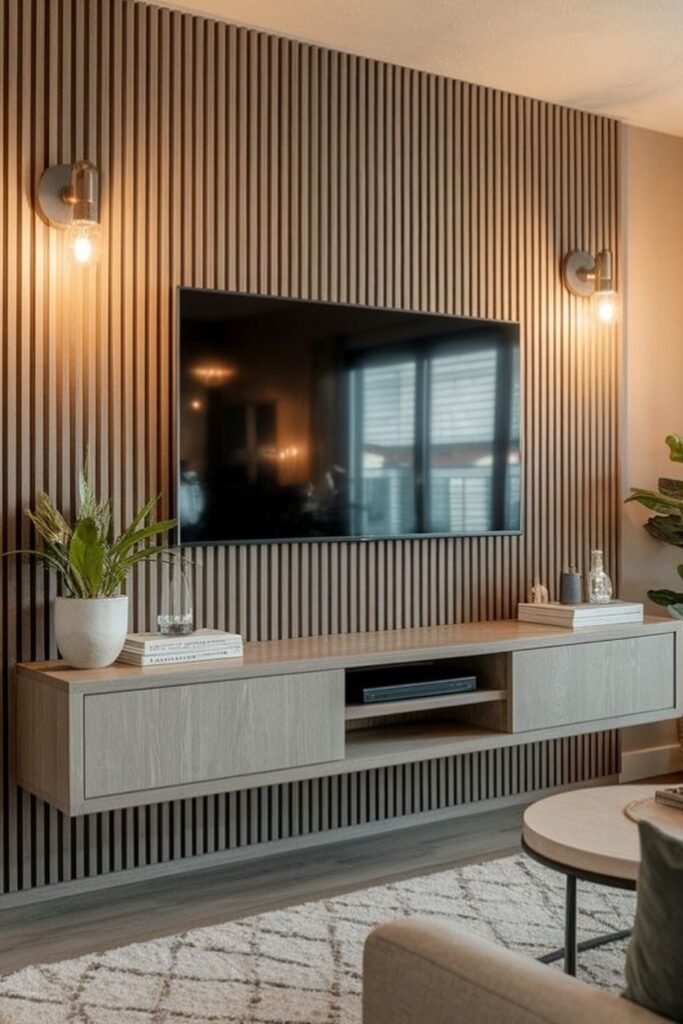
Make a compact TV wall feel finished by covering it with vertical wood slats and framing the screen with two simple sconces.
Choose a floating console with closed cupboards and one open center compartment, keeping media equipment accessible.
Place greenery near both outer edges to soften the timber, while warm sconces provide atmosphere without adding more furniture or decorative shelves.
FAQs
How can I decorate around a TV without making the wall look cluttered?
Choose one strong feature, such as slatted panels, shelving, or wall molding, then keep the remaining space simple instead of filling every gap.
Use a long console to ground the television and limit accessories to a few plants, books, or objects placed away from the screen.
Leaving some empty wall space gives each detail room to stand out and keeps your TV area comfortable rather than visually overwhelming.
What is the easiest way to make a TV wall look expensive?
Start with good proportions by pairing your television with a console wider than the screen, then hide every visible cable before decorating.
Add one affordable architectural detail, such as wood slats, molding, textured wallpaper, or a darker paint section behind the mounted television.
Finish with warm indirect lighting and a few well-sized accessories instead of many small decorations, which can quickly make the setup feel busy.