You can love the warmth of rustic living rooms and still worry that too much wood, brown furniture, and heavy decor will make yours feel dated.
You don’t need a cabin, exposed beams, or a huge stone fireplace to bring that relaxed, natural character home.
A few well-chosen textures, warmer colors, aged pieces, and lighter finishes can give you rustic charm without making the room feel dark or overdone.
In this article, you’ll find 22 rustic living room ideas that show you how to get that balance right in spaces of different styles and sizes.
Let’s jump in!
What Is a Rustic Style Living Room?
A rustic living room feels warm and relaxed because it uses natural materials instead of finishes that look too polished or perfect.
Wood, stone, linen, leather, woven fabrics, and aged furniture usually do most of the work, but you don’t need all of them together.
If your room already has wooden floors or a stone fireplace, use that feature as your starting point and build around it.

For a plain room, a solid wood table, textured rug, warm neutral sofa, and a few vintage pieces can create the same feeling.
Keep lighter colors around heavy wood or dark furniture so the space stays cozy without becoming too brown, gloomy, or visually crowded.
The goal isn’t to make your home look like a cabin; it’s to create a comfortable room that feels natural and lived-in.
Soften Heavy Wood
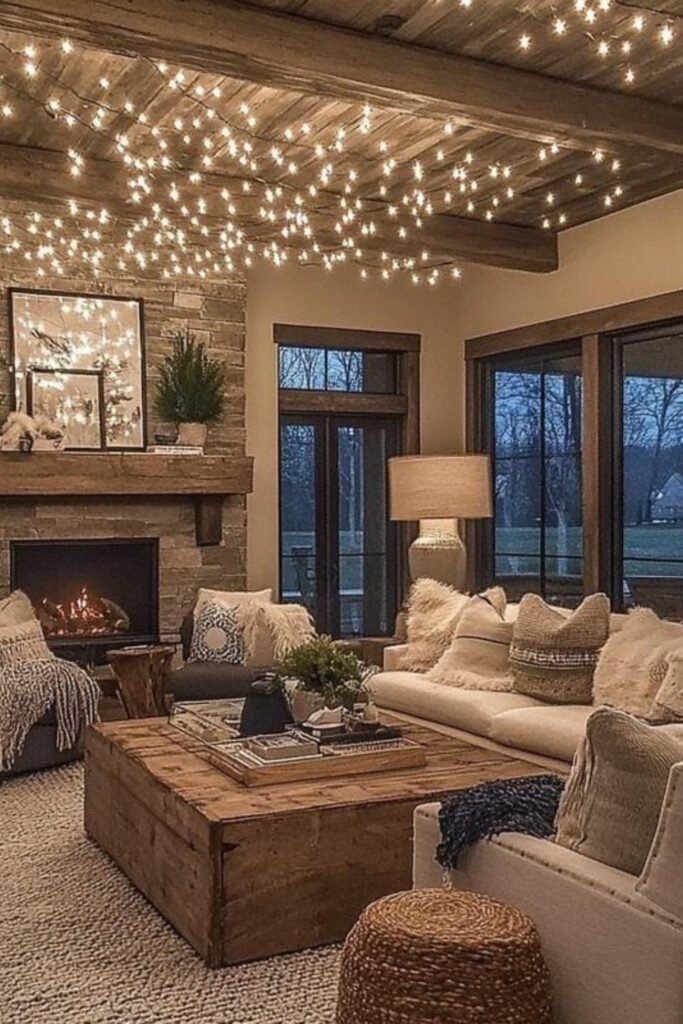
When timber covers the ceiling, keep your seating creamy and textured so all that beautiful wood feels warm rather than visually heavy.
A large woven rug and oversized reclaimed table work especially well in open rooms because they ground seating beneath high rustic ceilings.
Finish with soft throws and warm string lights when you want the room to feel relaxed after dark without adding more bulky decor.
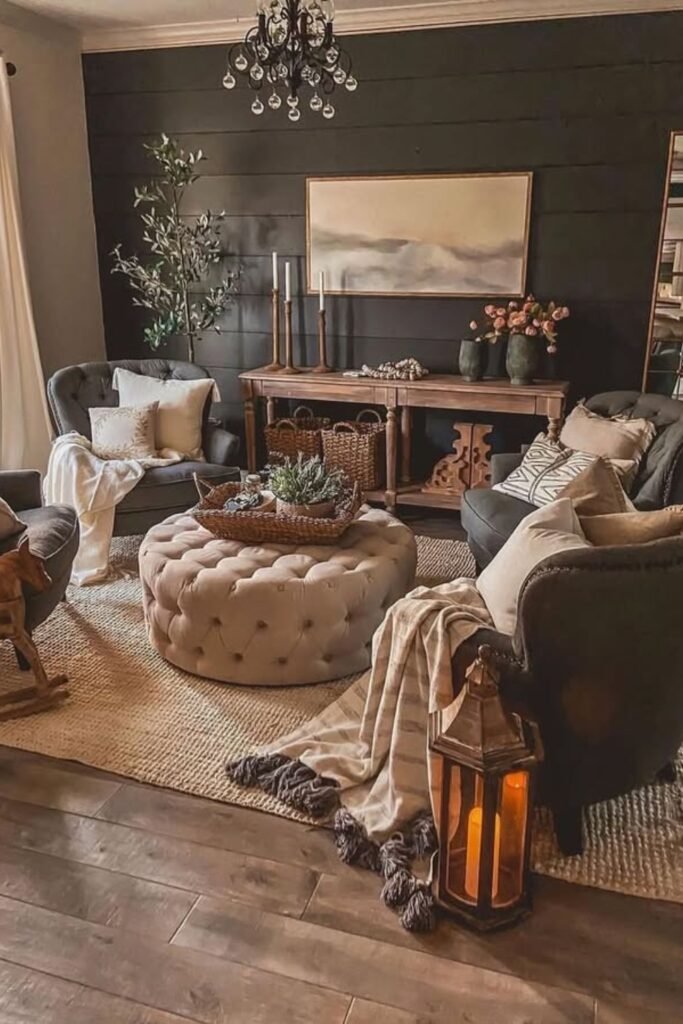
Go Dark Intentionally
A charcoal plank wall can give rustic style a moodier direction, especially when your room already gets plenty of daylight from nearby windows.
Instead of adding more dark furniture everywhere, bring in oatmeal textiles, woven rugs, warm wood, and greenery to soften the strong backdrop.
Arrange comfortable chairs around a round upholstered ottoman when you want a conversation area that feels intimate rather than centered around television.
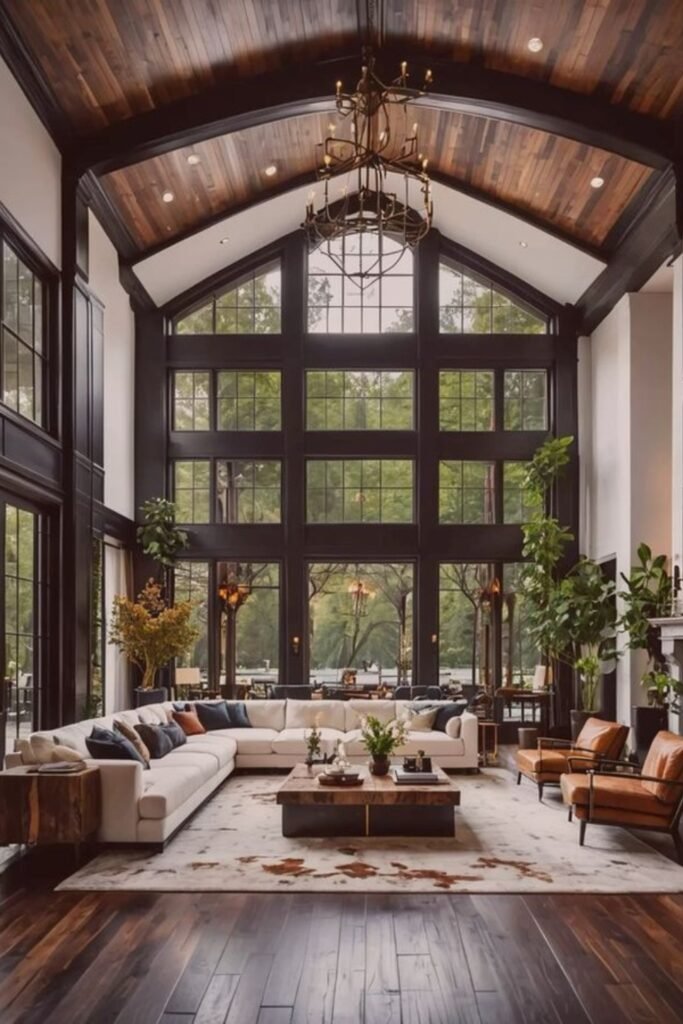
Balance Dramatic Beams
High timber ceilings already bring plenty of rustic character, so you can keep everything below them cleaner instead of repeating heavy finishes everywhere.
A low cream sectional keeps attention on the architecture, while slim leather chairs add warmth without competing with those dark window frames.
Try this balance in large open living rooms where oversized windows, tall ceilings, and strong architectural details could otherwise overwhelm your furniture.
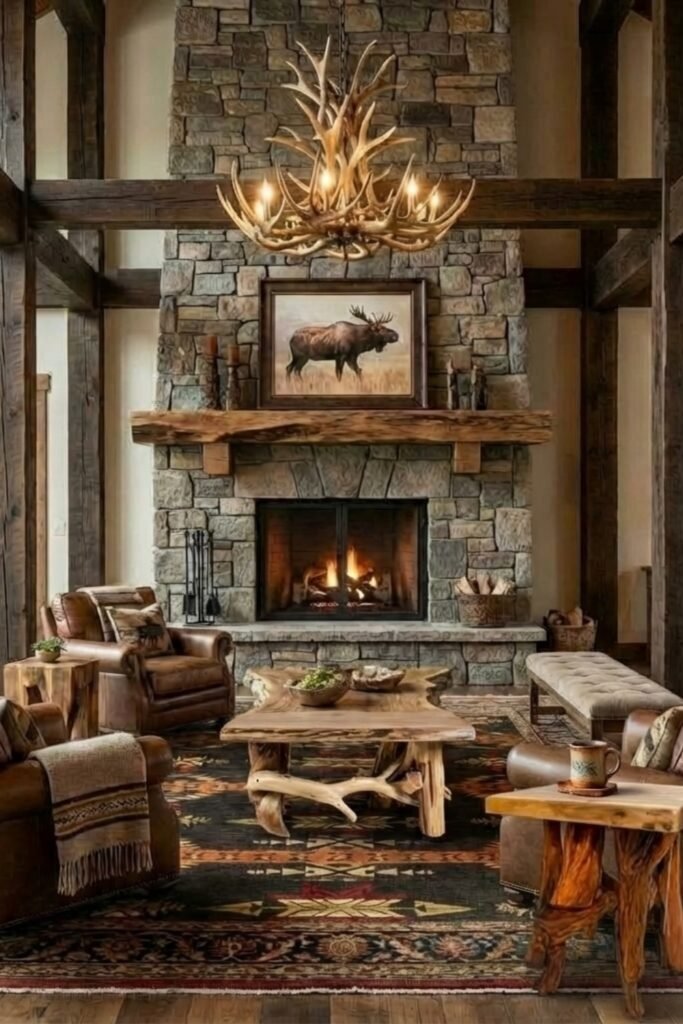
Let Stone Lead
When you have a floor-to-ceiling stone fireplace, treat it as the room’s anchor instead of surrounding it with several competing statement pieces.
Leather chairs, rough wood tables, and patterned rugs suit this lodge-style setting because their earthy finishes naturally connect with stone and timber.
Keep seating turned toward the fireplace and use warm blankets sparingly, so the arrangement feels inviting without hiding those beautiful natural materials.
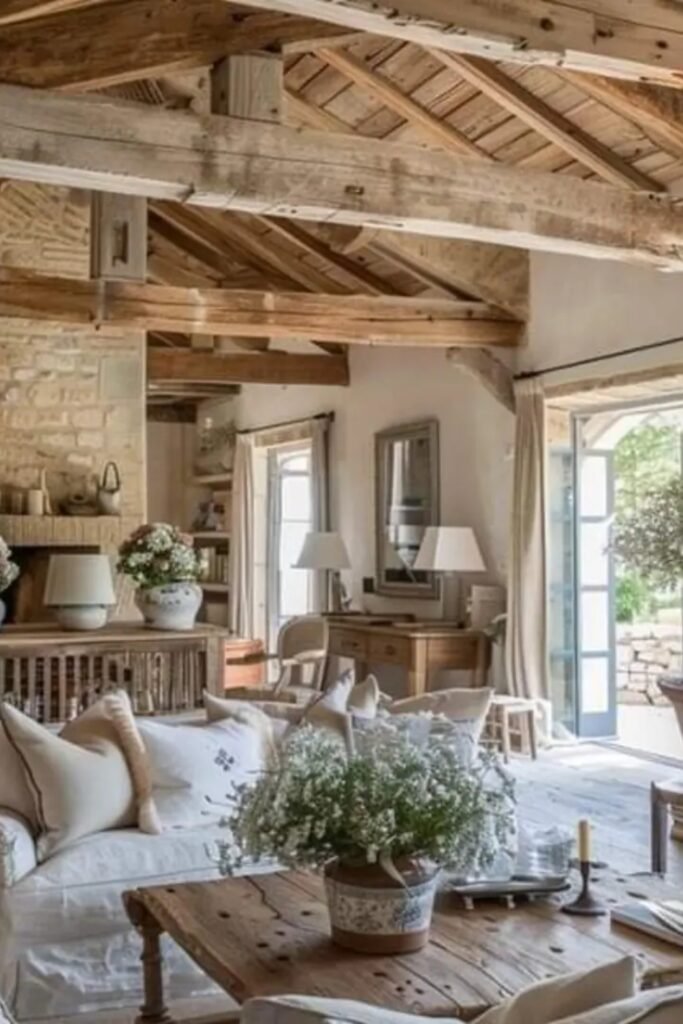
Keep Old Wood Light
Weathered beams bring enough age and texture on their own, so surround them with pale walls and relaxed linen seating instead of darker furniture.
This approach suits cottage-style rooms especially well, where old stone, worn timber, and simple furniture should feel collected rather than heavily decorated.
Bring in potted greenery near windows and doors to soften all those hard surfaces while connecting the rustic interior naturally with outdoors.
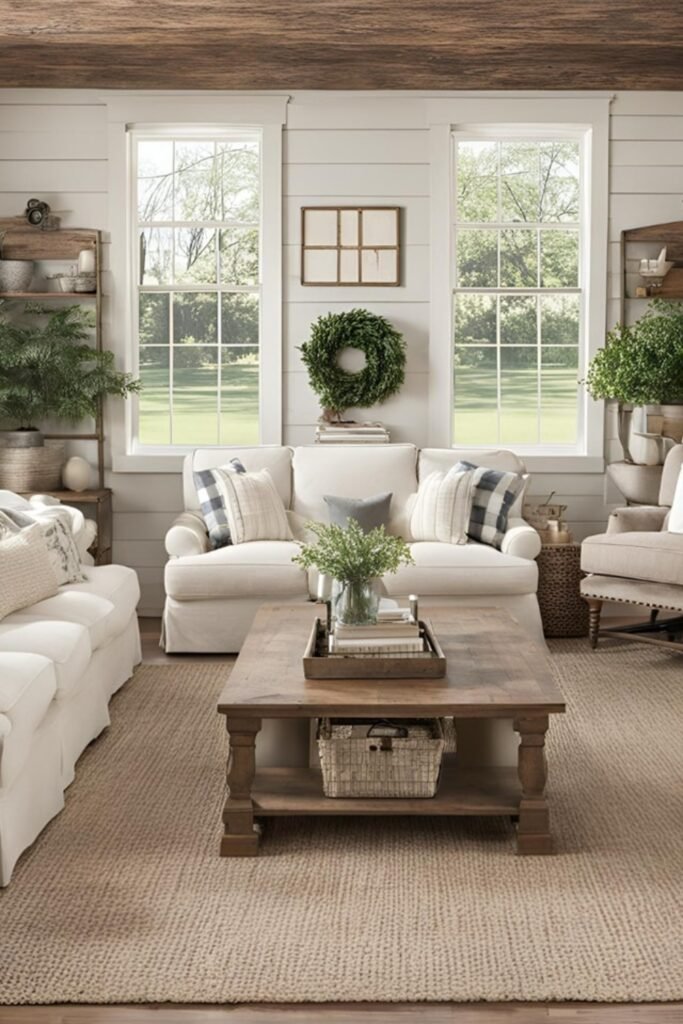
Brighten Rustic Walls
White plank walls are an easy way to keep farmhouse-style rustic rooms bright, especially when your ceiling or furniture already brings darker wood.
Repeat natural brown through the coffee table, shelving, and woven rug so the white backdrop feels warm rather than overly clean or stark.
For smaller living rooms, keep upholstery pale and let greenery provide contrast without introducing another heavy color that visually closes the space.
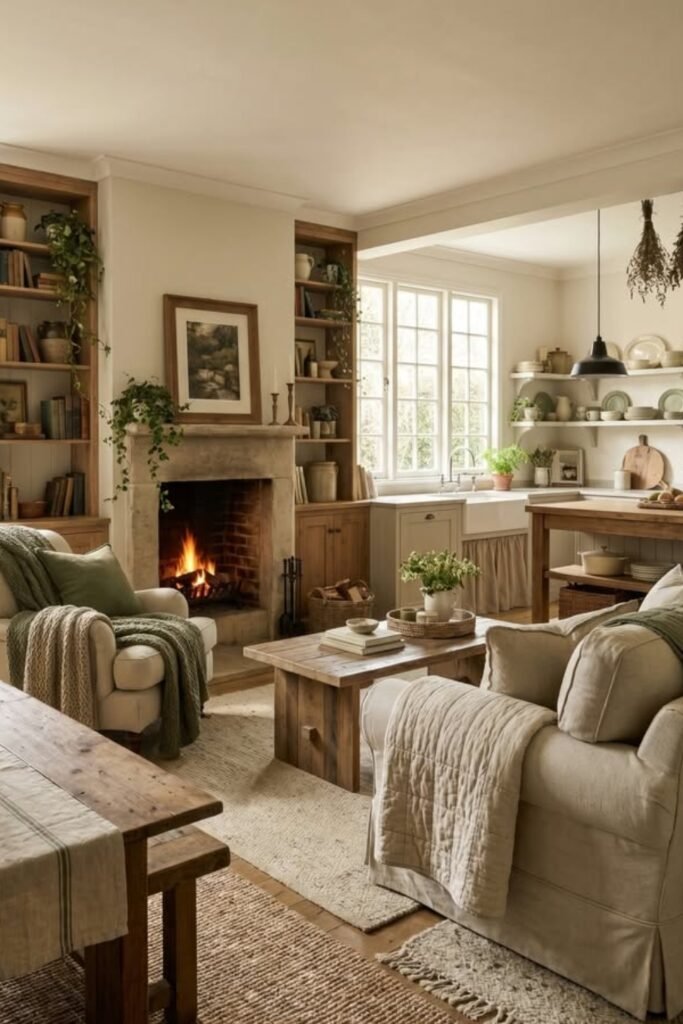
Connect Open Spaces
An open living room feels more connected to a rustic kitchen when you repeat the same warm wood, soft neutrals, and muted greens.
Keep seating close to the fireplace to create a defined conversation zone, rather than letting furniture float awkwardly across the shared floor plan.
Layer simple rugs beneath each area and repeat natural fabrics throughout, giving both spaces their own purpose without breaking the relaxed visual flow.
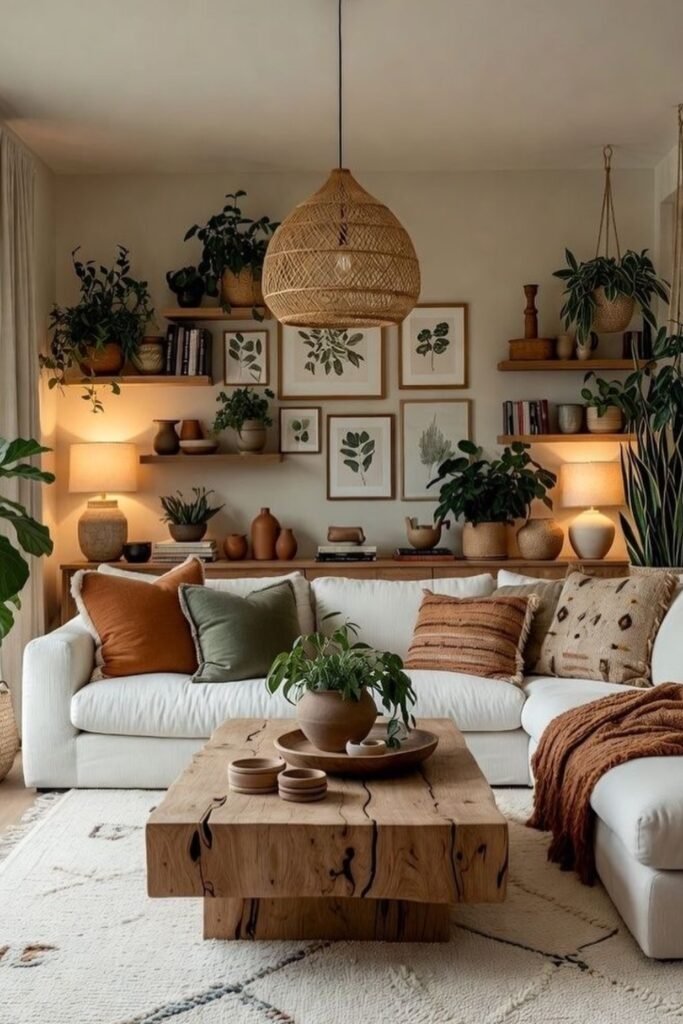
Bring Nature Inside
If your room lacks beams or stone, plants can create an earthy rustic feeling without requiring expensive architectural changes or permanent renovation work.
Start with a simple white sofa and chunky wood table, then layer terracotta, olive, woven baskets, and botanical artwork around the room.
Use plants at different heights on shelves, floors, and hanging planters so greenery feels naturally collected instead of crowded into one corner.
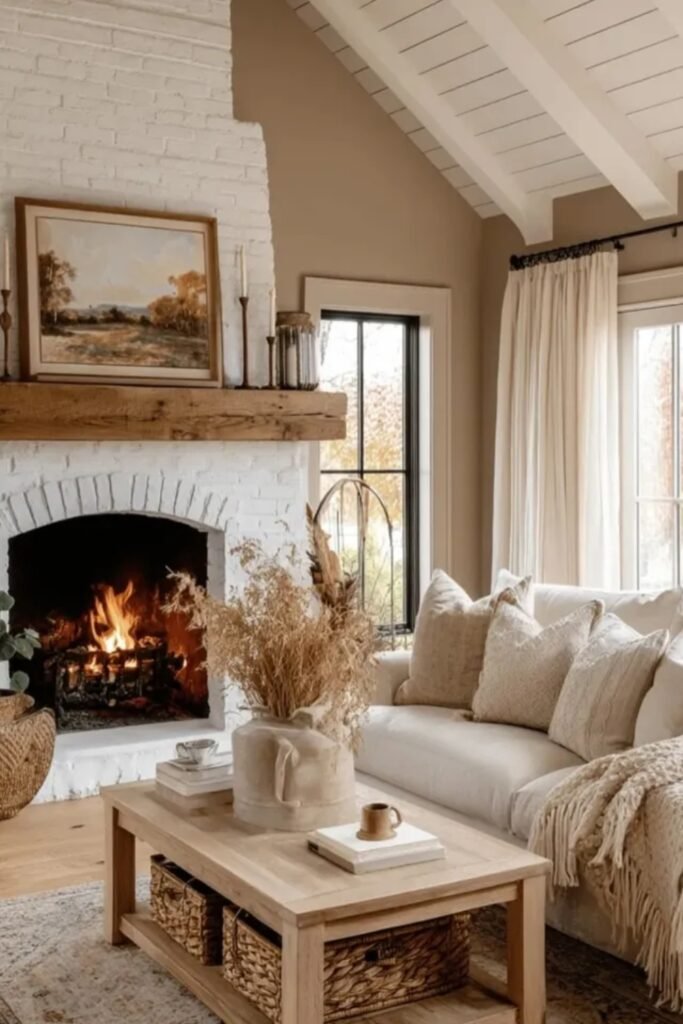
Refresh Rustic Brick
Painting brick white keeps its rough texture visible while making a fireplace feel lighter, which works especially well in smaller rustic living rooms.
Keep a chunky timber mantel unpainted so you still have natural warmth, then repeat that wood through a simple coffee table nearby.
Soft cream seating and long neutral curtains finish the balance, giving you rustic character without letting the fireplace make everything feel visually heavy.
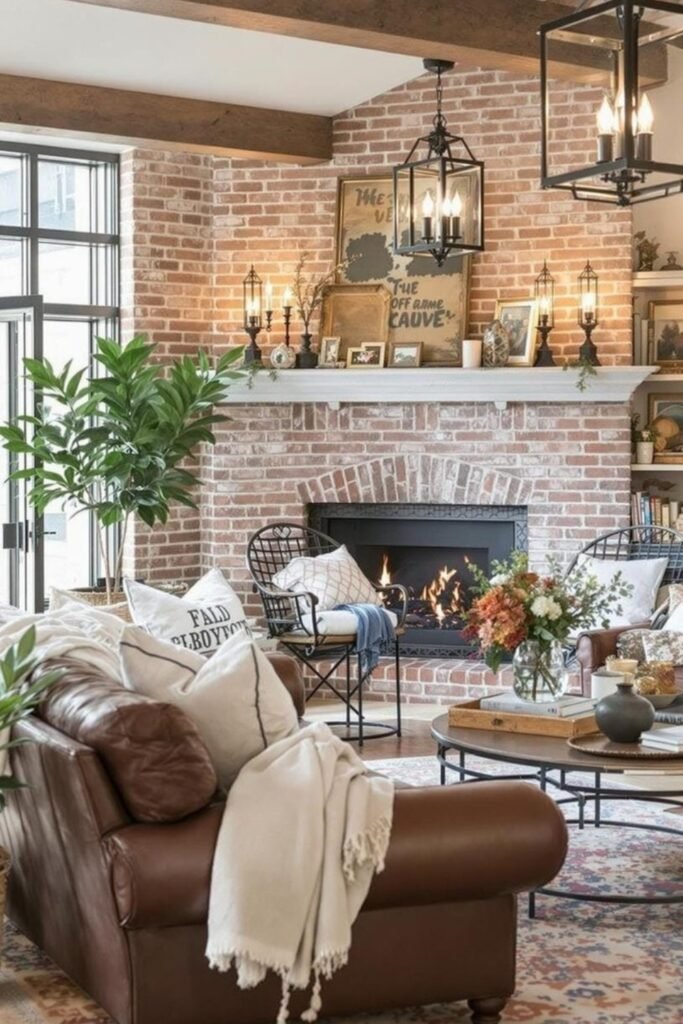
Warm Up Brick
Original red brick already brings plenty of color and texture, so let it stay visible instead of covering every rustic surface with wood.
A brown leather sofa works naturally here, while cream pillows and throws stop those warm brick and leather tones from blending together.
Use this approach when you want traditional rustic character, then add black lantern lighting for definition without making the room feel overly farmhouse.
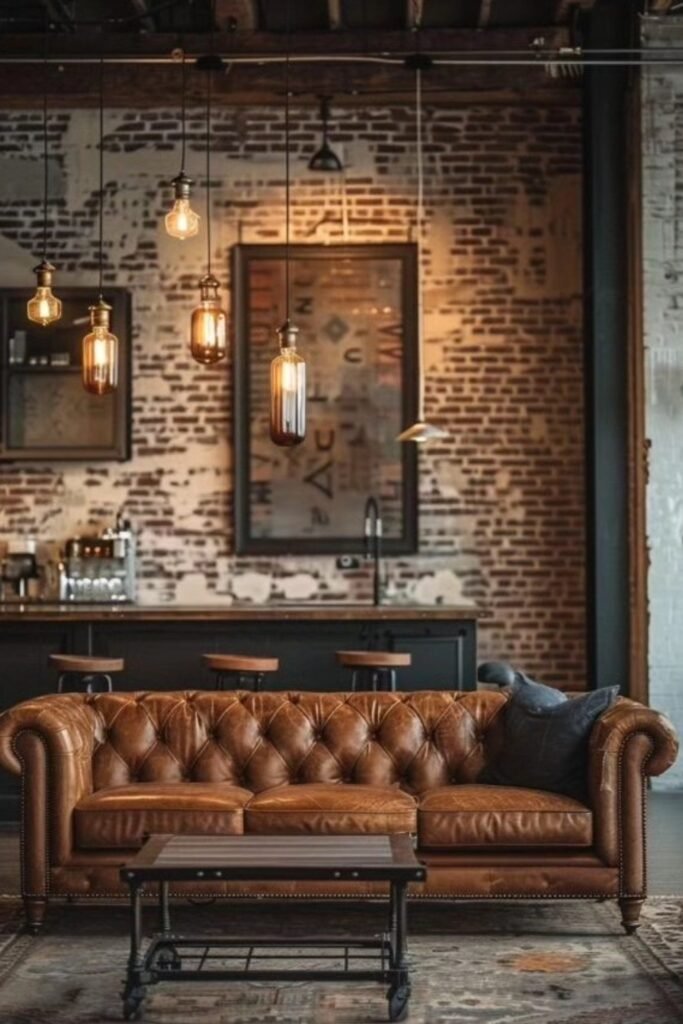
Try Industrial Rustic
Exposed brick and aged leather make a strong rustic base, but black metal details can push the room toward a cleaner industrial direction.
Choose one worn leather sofa as your warm focal point, then keep tables, kitchen finishes, and hanging lights slimmer and more structured.
This mix works especially well in lofts or open apartments where original brick deserves attention without filling the room with traditional cabin furniture.
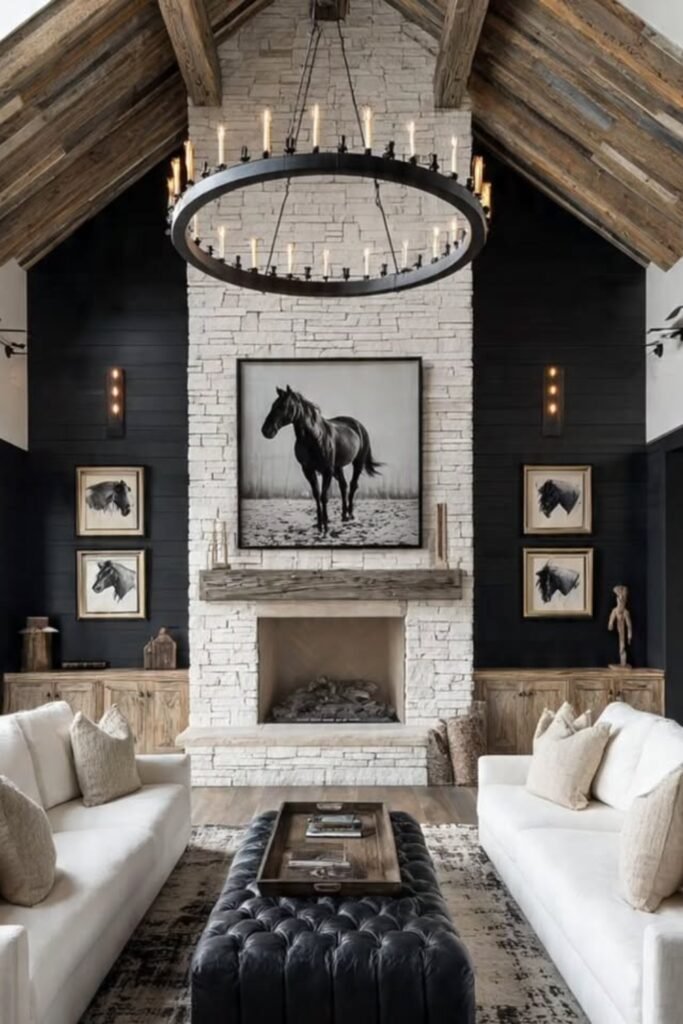
Add Bold Contrast
Rustic doesn’t have to stay brown and beige; black walls can make pale stone, reclaimed beams, and natural wood look much stronger.
Keep large sofas white or cream when using this much black, giving the seating area enough brightness to balance those dramatic surrounding walls.
For tall rooms, one oversized circular chandelier fills the vertical space beautifully while keeping attention centered above the fireplace and conversation area.
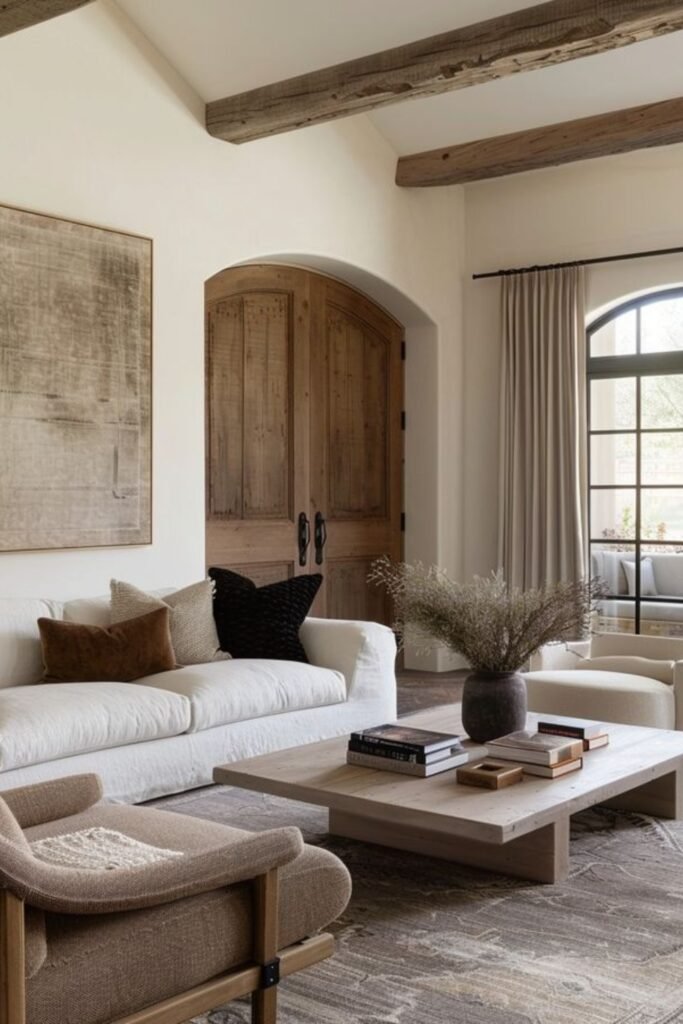
Keep Rustic Refined
Rustic can feel calm and polished when you limit rough finishes to exposed beams, natural doors, and a few warm wood accents.
Choose clean cream seating and a low coffee table to keep the room visually open, especially when architectural wood already draws attention overhead.
Finish with one large neutral artwork and soft taupe textiles, letting texture create interest instead of filling every surface with rustic accessories.
Scale Up Comfort
A tall vaulted room needs furniture with enough presence below, so use a generous sectional and broad coffee table to anchor the floor.
Keep upholstery light when beams, built-ins, and stone already bring strong rustic texture, preventing a large room from becoming unnecessarily dark.
Place the seating around both fireplace and television when your family uses each, creating one practical zone instead of competing furniture arrangements.
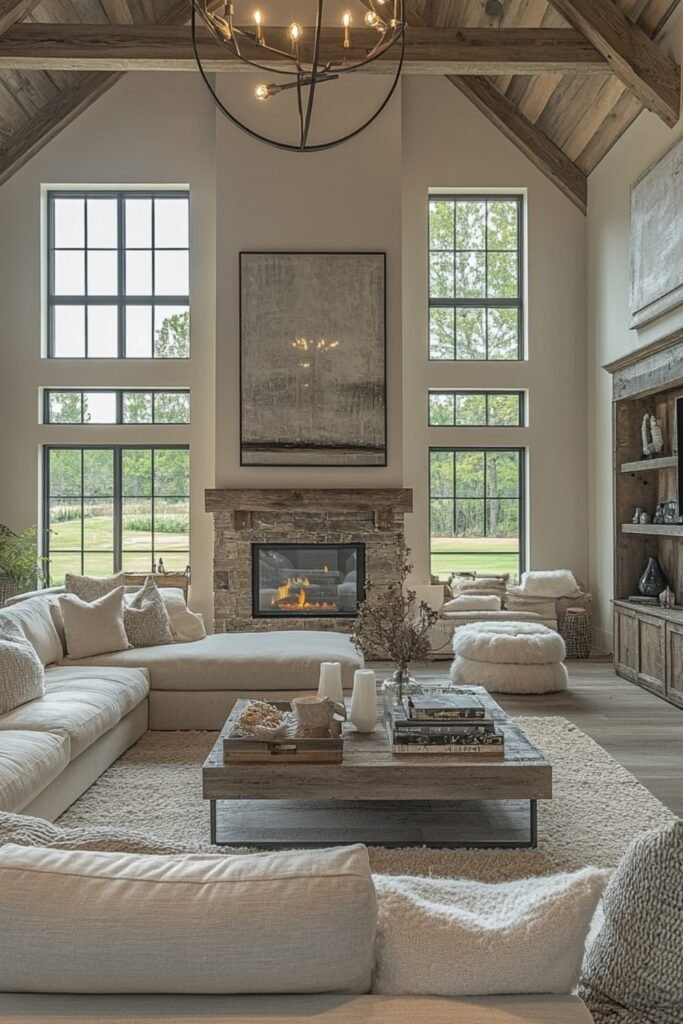
Bring In Soft Green
Muted green gives warm wood a fresh partner, making it especially useful when you want rustic style to lean softer and more country.
Repeat the shade through pillows, throws, wall paneling, and plants, but leave your largest sofa neutral so the palette stays easygoing.
A floral rug and woven baskets can carry that natural feeling further, adding pattern and texture without covering the room in themed decorations.
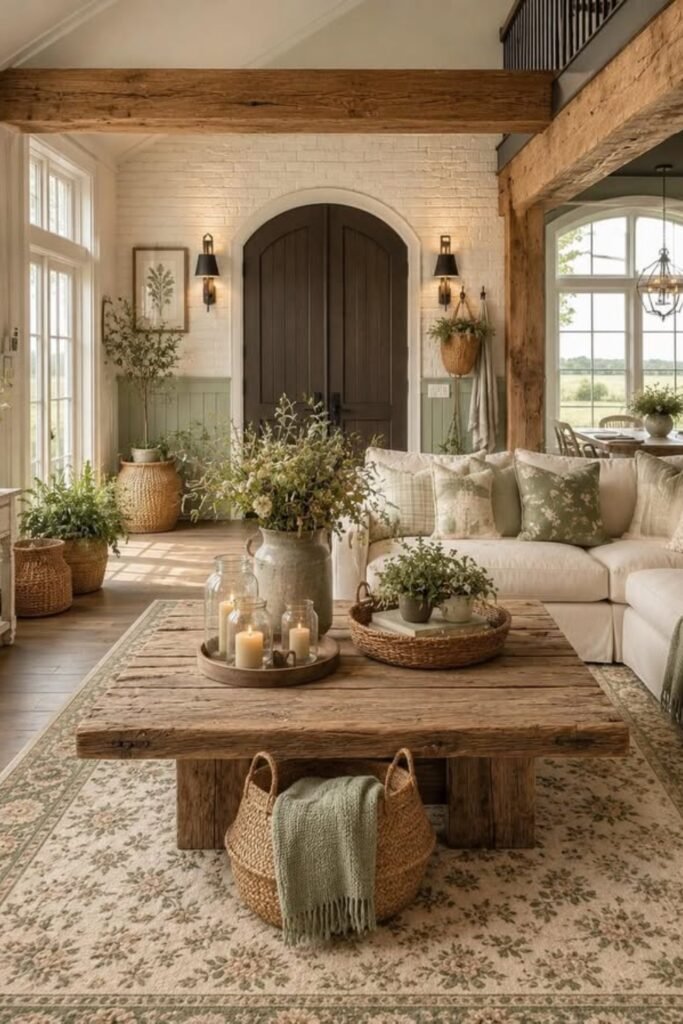
Frame the Architecture
When beams and a stone fireplace already define your rustic room, keep furniture simple enough that those original features remain the main story.
Place pale sofas opposite each other to create an easy conversation area, then use a reclaimed table to connect them with the architecture.
This layout works beautifully in long rooms because it keeps pathways open while giving both the fireplace and outdoor view equal importance.
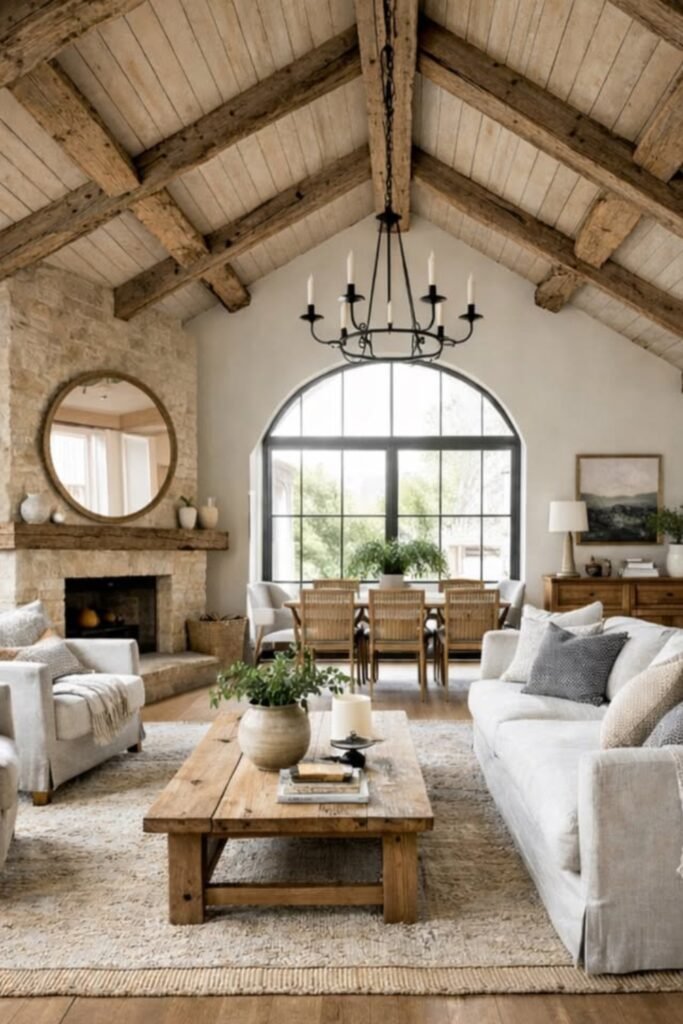
Lean Into Leather
When you love leather, repeating it across the seating can work if you give those rich brown tones enough lighter texture underneath.
Use a large cream rug and simple reclaimed table to break up the leather, while stone and wood keep everything naturally connected.
This setup suits mountain homes especially well, where large windows bring enough daylight to stop deep leather and timber from feeling too heavy.
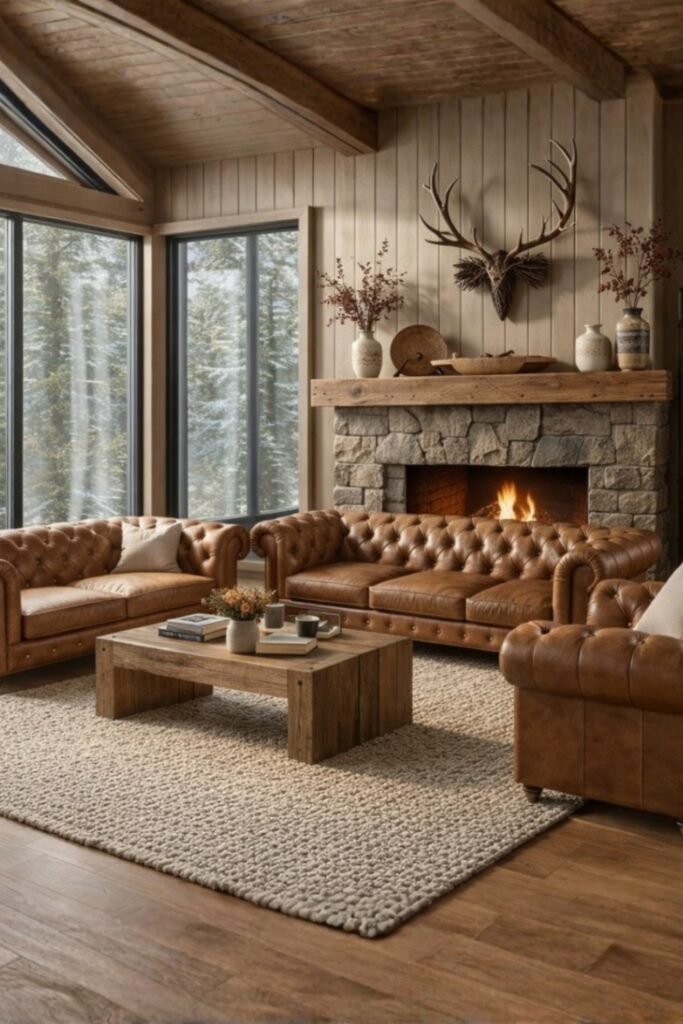
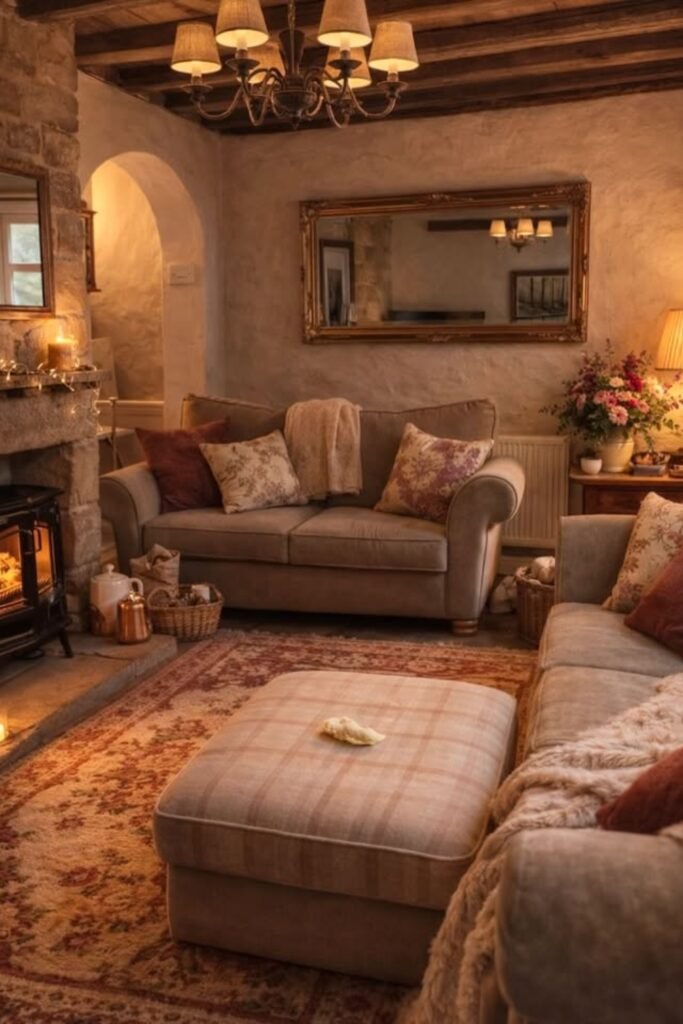
Layer Cottage Warmth
A smaller rustic room feels instantly more welcoming when you layer warm lighting, patterned textiles, and soft upholstery around an existing fireplace.
Instead of adding bulky wooden furniture, let a vintage rug, floral cushions, plaid ottoman, and aged mirror bring the old-fashioned character.
This softer approach works beautifully in cottages where stone walls and ceiling beams already provide enough rough texture without needing extra rustic decor.
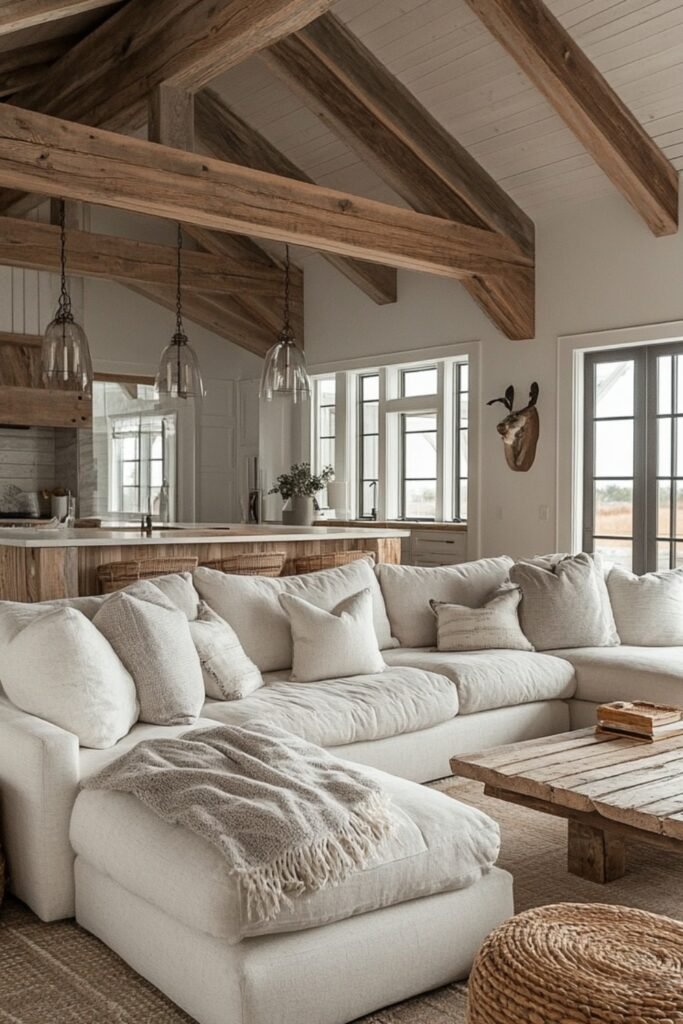
Open Up Farmhouse
An oversized cream sectional can make an open rustic living room feel comfortable without competing with exposed beams.
Keep the coffee table rough and simple, then use woven stools, baskets, and a textured rug to spread natural materials across the space.
This works especially well for family rooms because generous seating keeps everyone together.
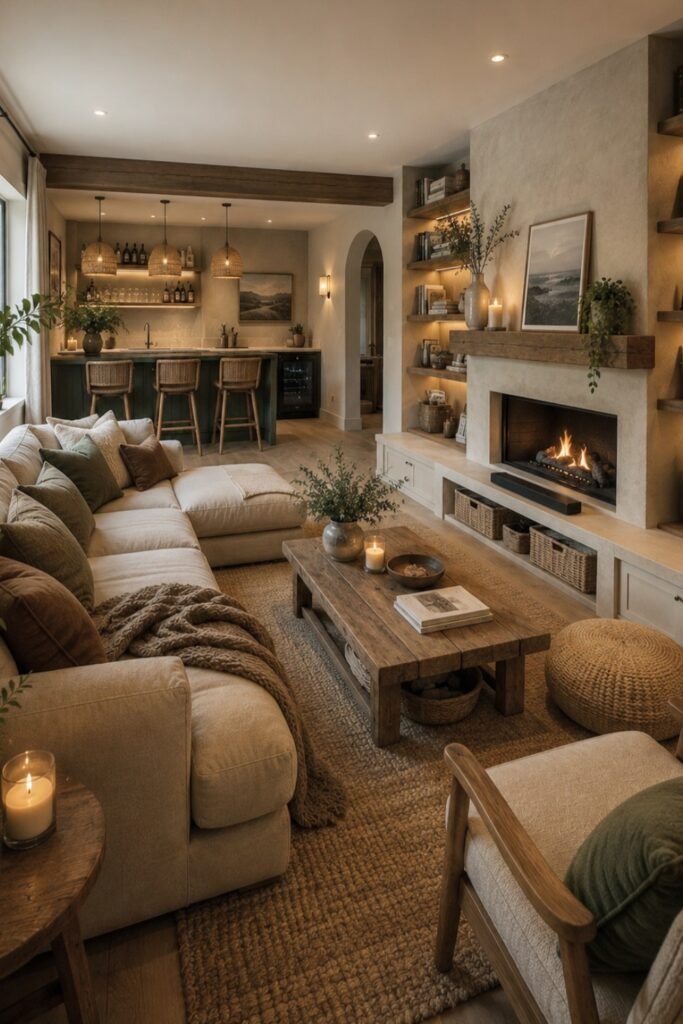
Build Evening Warmth
For a rustic room that feels cozy after sunset, spread warm light across shelves, pendants, candles, and the fireplace instead of relying overhead.
Earthy olive pillows and natural woven pieces add enough color to cream seating, while reclaimed wood keeps the relaxed rustic foundation clear.
Use this layered approach in open-plan rooms where living and kitchen areas need to feel connected without matching every finish or furniture piece.
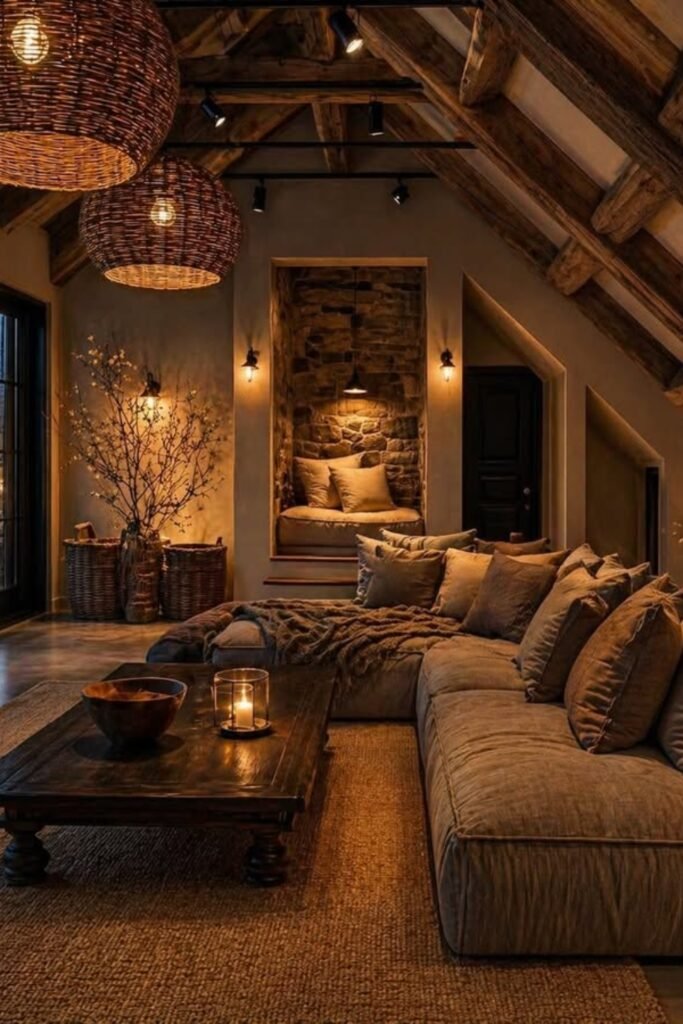
Embrace a Moody Glow
Dark rustic rooms feel inviting when lighting comes from several warm sources, rather than one bright fixture flattening every natural texture.
Pair deep timber ceilings with oversized woven pendants and subtle wall lights, letting their softer glow bring out stone and weathered wood.
Keep the sectional relaxed and generously layered, creating a comfortable evening retreat where darker finishes feel cozy instead of closed or gloomy.
Mix Rustic With Modern
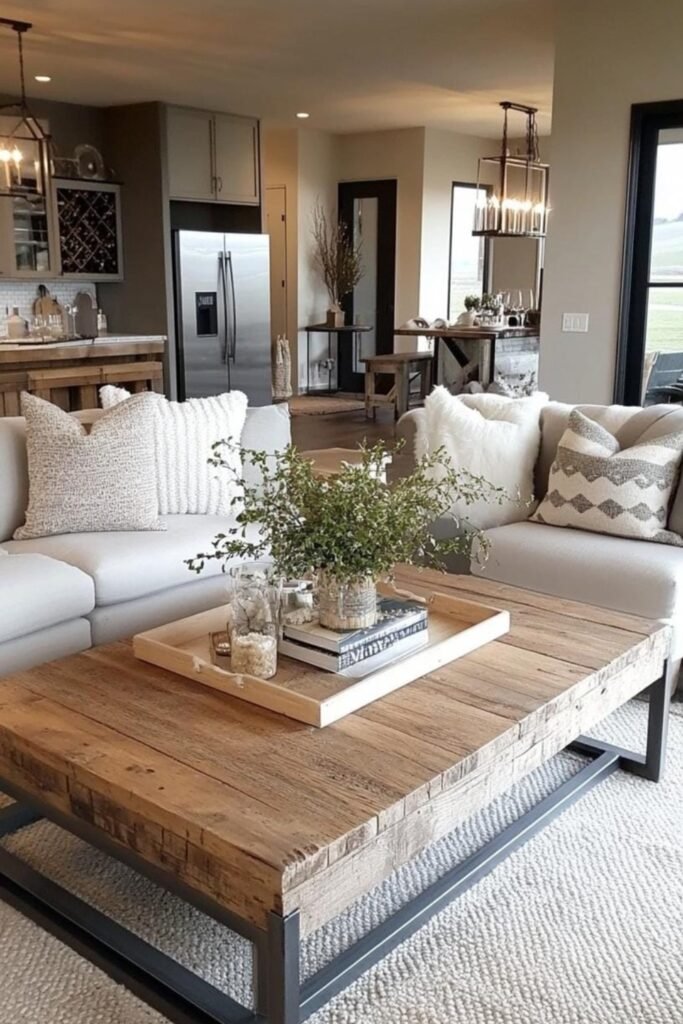
You don’t need exposed beams or stone walls when one substantial reclaimed wood table can bring enough rustic character into a modern room.
Pair its rough surface with clean cream sofas and black metal details, creating contrast that keeps the wood from feeling overly farmhouse or traditional.
This approach works especially well in open-plan homes, where repeating black accents between living and kitchen areas helps both spaces feel connected.
FAQs
Can You Mix Modern Furniture With Rustic Decor?
Yes, and mixing the two can actually keep a rustic living room from feeling too heavy or old-fashioned.
Start with clean-lined sofas or simple chairs, then bring in rustic character through reclaimed wood, stone, woven rugs, pottery, or vintage pieces.
Keep the balance intentional so neither style takes over the whole room.
How Do You Make a Rustic Living Room Feel Brighter?
If dark wood or stone makes your living room feel heavy, balance those finishes with cream upholstery, warm white walls, and lighter curtains.
A pale rug can also brighten the floor, while mirrors and layered lamps help spread light around darker corners.
You don’t need to paint every original wood feature just to make the room feel fresher.