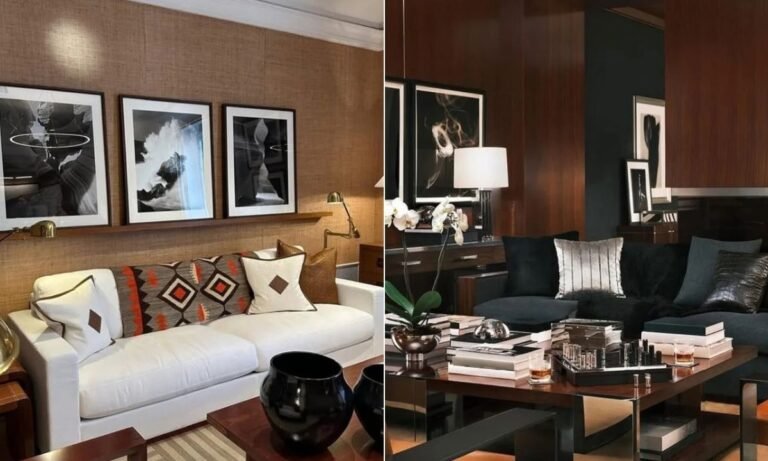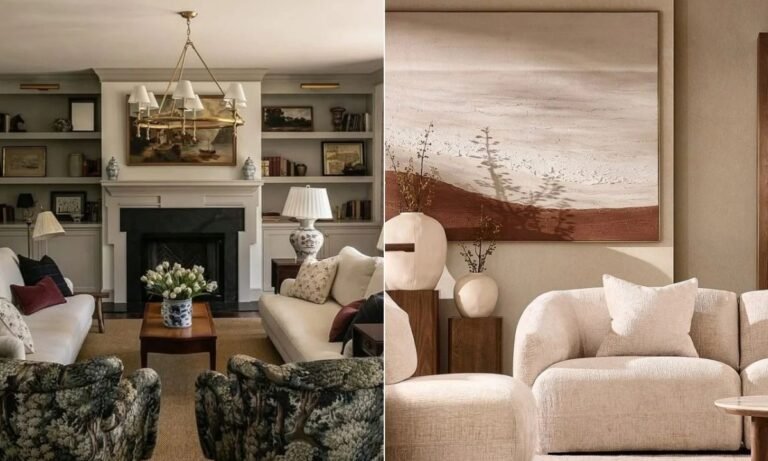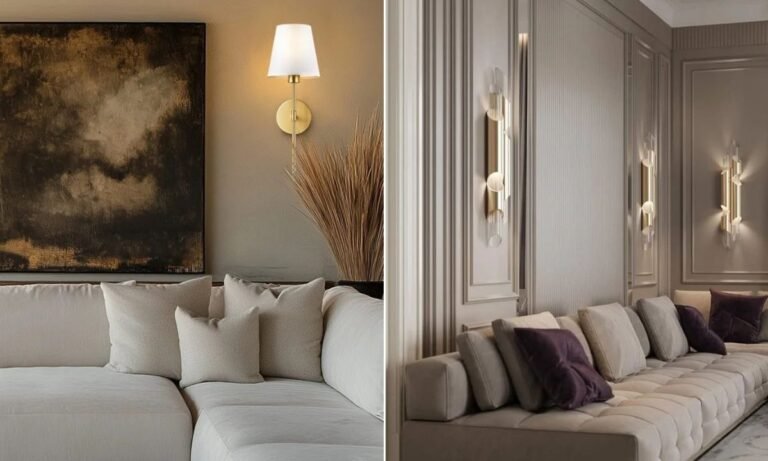
Industrial living rooms look easy to pull off until all that black metal, exposed brick, and concrete starts making the space feel cold.
The trick is knowing when to stop adding raw finishes and start bringing in warm wood, softer fabrics, comfortable furniture, and better lighting.
Get that balance right, and you can keep the bold warehouse character without making your living room feel dark, heavy, or uncomfortable.
In this article, I’ll show you how to style an industrial living room that feels warm, practical, and genuinely comfortable to live in.
Let’s jump in!
How to Style an Industrial Living Room?
Start with one or two raw materials, such as exposed brick, concrete, dark metal, or reclaimed wood, instead of using everything together.
If your walls already have strong texture, keep the sofa and larger furniture simple so the room doesn’t start feeling visually heavy.
Bring in warm wood, a large rug, soft cushions, and fabric seating to balance harder surfaces and make the space more comfortable.

Use black metal through lighting, shelving, or table frames, but repeat it carefully rather than filling every corner with industrial details.
Warm bulbs and layered lamps work especially well with dark finishes because they stop grey, brick, and metal surfaces from looking cold.
Finally, add plants, artwork, books, or vintage pieces that feel personal, so your industrial living room still feels like a real home.
Exposed Warmth
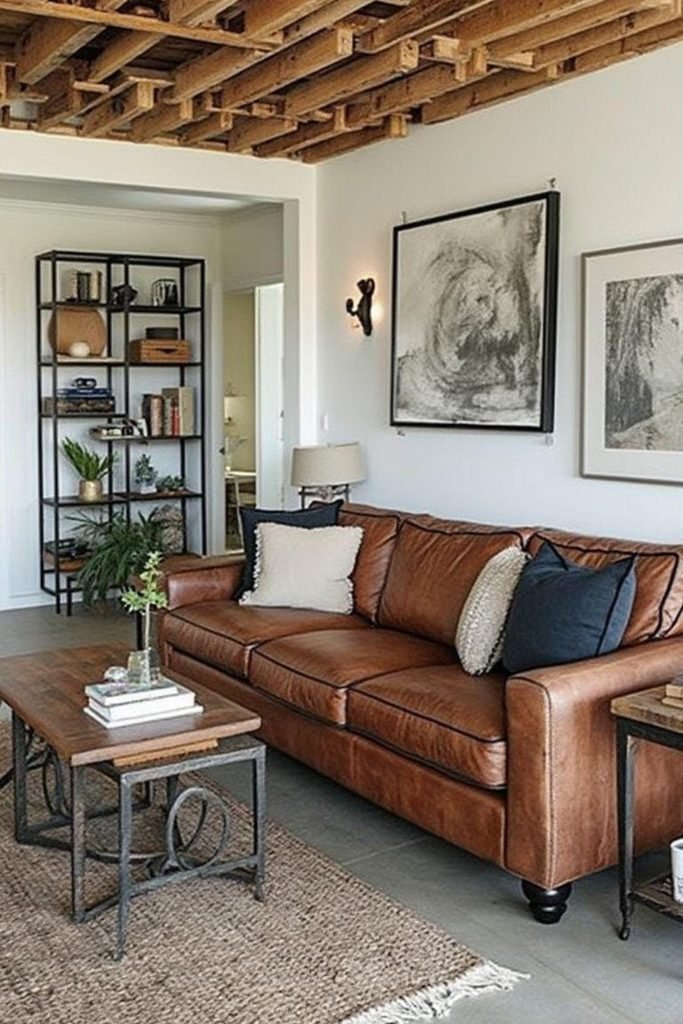
Let exposed ceiling beams carry the industrial character, then balance their rough texture with white walls and a rich leather sofa.
Ground the seating area with a woven rug and weathered wood table, giving all that metal and leather something naturally softer.
This approach works beautifully in brighter living rooms where you want industrial details to feel relaxed rather than dark or overly rugged.
Brick Glow
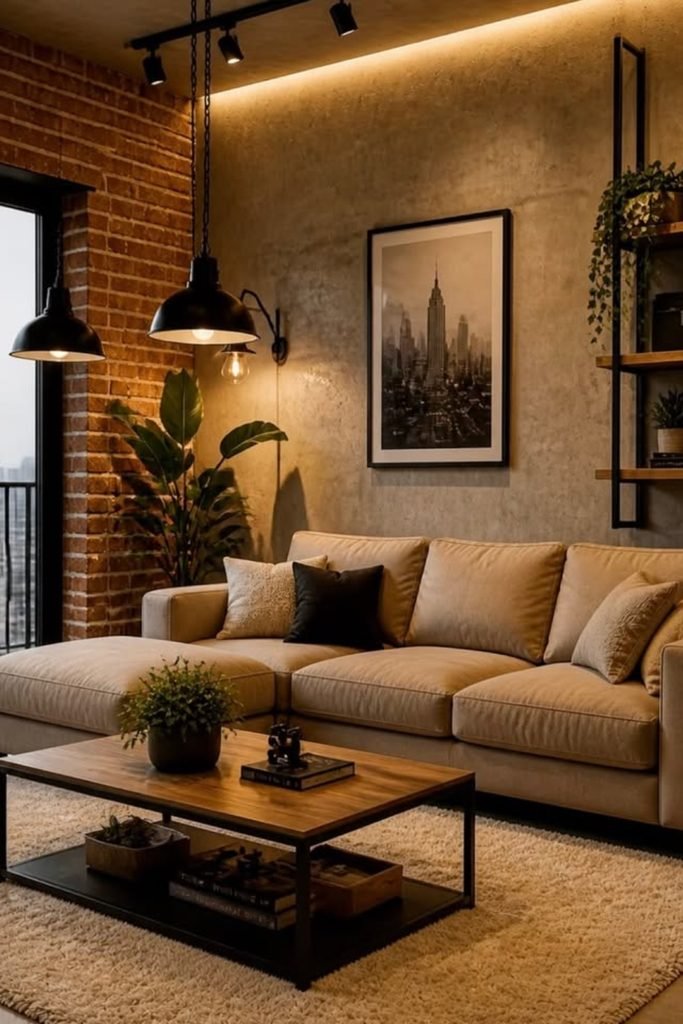
Instead of darkening exposed brick further, surround it with warm lighting and creamy upholstery so the room keeps its character without heaviness.
Choose black pendant lights and slim metal furniture to repeat the industrial lines, while a soft rug keeps the seating area comfortable.
Apartment living rooms suit this balance especially well because one brick feature wall provides enough texture without making every surface feel busy.
Concrete Color
A concrete backdrop does not need neutral furniture; a muted blue sofa can break through the grey while keeping the room grounded.
Bring natural wood into the flooring or occasional tables, then use slim black furniture so the stronger colors still have breathing room.
Large artwork works especially well against plain concrete, giving modern industrial living rooms personality without relying on predictable factory signs or decorations.

Loft Comfort
Large loft living rooms need furniture with enough visual weight, so generous leather sofas can stop high ceilings from swallowing the seating area.
Arrange sofas around a broad coffee table and oversized rug, creating a clear conversation zone within an otherwise open industrial floor plan.
Where brick, ductwork, and steel already dominate, add plants and faded textiles rather than more factory decor to make everything feel lived-in.

Metallic Luxury
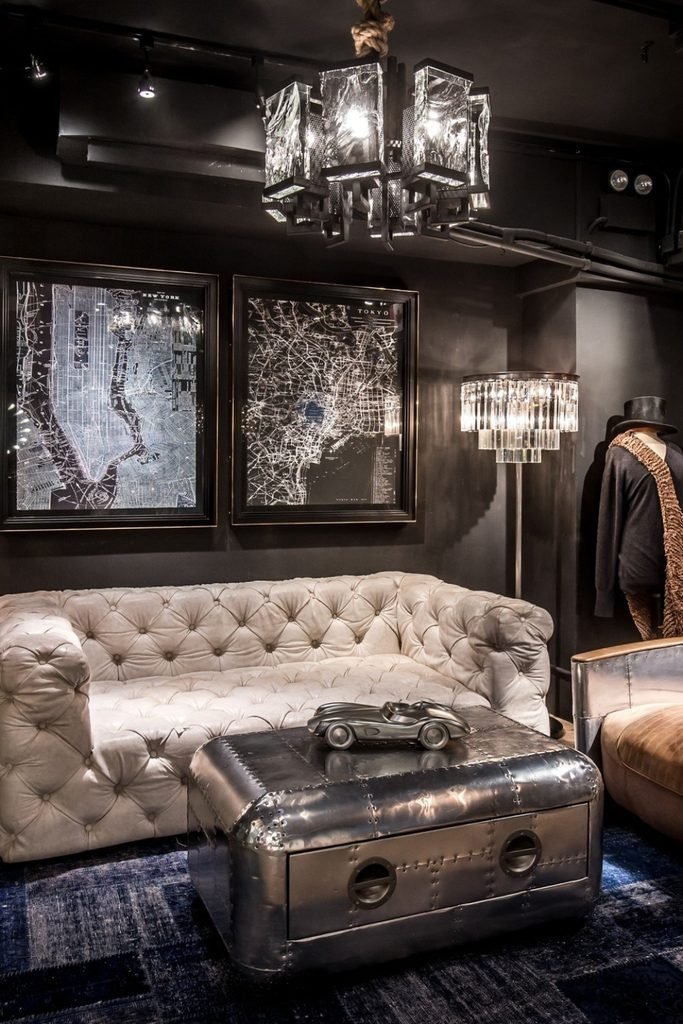
Polished metal furniture can push industrial style in a more luxurious direction, especially when dark walls create a dramatic background for reflective finishes.
Soften all that shine with a tufted sofa and deep rug, giving the living room enough comfort to balance its harder surfaces.
This bolder approach suits compact statement rooms where carefully chosen lighting can highlight metal details without making the entire space feel overly flashy.
Brick Layers
When brick stretches across multiple walls, let it become the main feature instead of competing with extra patterns or unnecessary industrial decorations.
Brown leather seating naturally picks up the brick’s warm tones, while a pale textured rug keeps the lower half from becoming too dark.
Use this setup in open-plan or double-height living rooms, where black railings and warm lighting can connect separate areas without adding clutter.

Industrial Warmth
Exposed brick, black steel beams, and polished concrete give this living room a strong industrial base without making it feel cold.
Rich leather seating introduces warmth, while the patterned rug visually anchors the conversation area inside the large open-plan layout.
Recreate the balance with brown leather, reclaimed wood, dark metal details, and warm lighting that softens harder architectural finishes.

Urban Comfort
Floor-to-ceiling factory-style windows make natural light the main feature, while soft neutral furniture keeps the surrounding city architecture visually connected.
Instead of filling the room, leave generous breathing space around a low sectional, sculptural chair, and substantial wooden coffee table.
Muted textiles, indoor greenery, linen curtains, and warm lamps work especially well when you want an industrial apartment to feel relaxed.

Brick Retreat
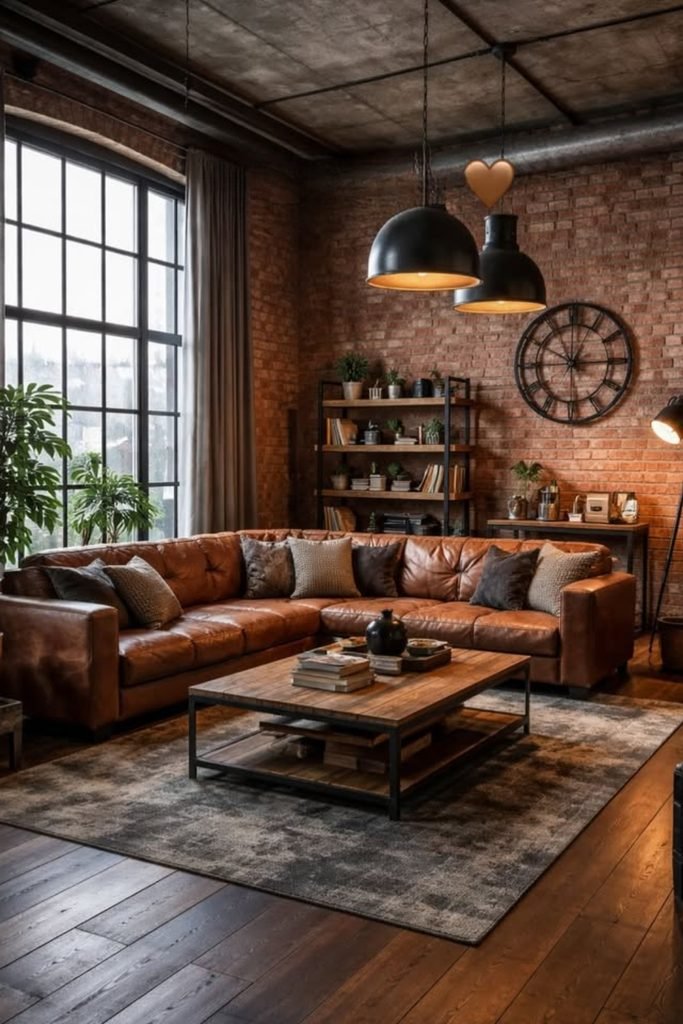
Deep brown leather becomes especially inviting against exposed brick, creating a living room that feels rugged but still comfortable for everyday lounging.
Use an L-shaped sectional to define the seating zone, then repeat black metal through pendant lights, shelving, and coffee-table framing.
Warm wooden floors and a faded oversized rug soften the darker finishes, preventing the industrial details from becoming visually heavy or harsh.
Loft Contrast
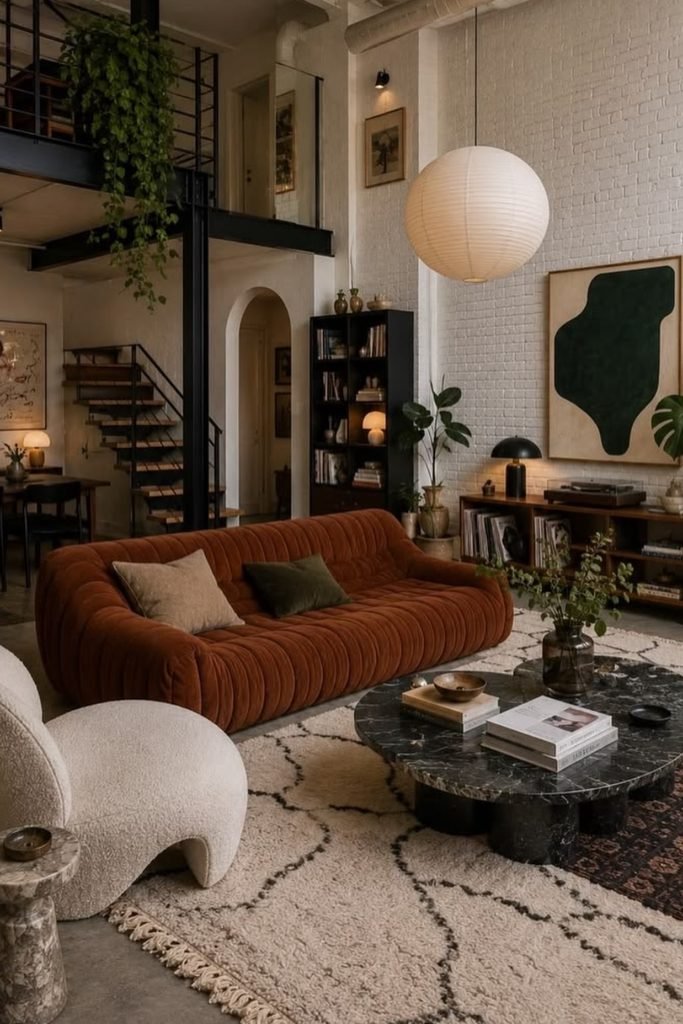
Soft curves can completely change a loft, especially when a rust-colored sofa and rounded chair sit against straight black architectural framework.
White-painted brick brightens the tall living room, while dark shelving, abstract artwork, and marble introduce enough contrast to preserve its character.
For double-height spaces, choose one oversized pendant and taller plants so decorative pieces match the scale instead of disappearing visually.
Rustic Layers
Vintage character comes forward through the leather sofa, reclaimed wood table, exposed brick, and open metal shelving filled with collected accessories.
Layer soft pillows and a faded patterned rug around harder materials so the industrial living room stays comfortable rather than overly rugged.
Warm Edison pendants and leafy plants finish the setup beautifully, making this approach especially useful for smaller lofts needing personality without clutter.

Sunlit Brick
Natural light does most of the decorating here, allowing tall black-framed windows and warm brick walls to become impressive living room features.
Pair caramel leather with cream seating, woven textiles, and pale wood so the room feels airy despite its strong industrial architecture.
Keep furniture low around oversized windows, then add large greenery and a neutral rug to soften brick without hiding its original texture.

Warehouse Character
High ceilings deserve confident decorating, so substantial leather seating, graphic artwork, and oversized rugs help bring an expansive warehouse room down to scale.
Instead of covering original brick and steel trusses, let those architectural details frame the living area while warm wood adds natural balance.
Black-and-white patterns introduce sharper contrast beneath the furniture, while scattered plants and lamps keep the spacious industrial setting welcoming and lived-in.

Moody Mezzanine
Dark industrial rooms become surprisingly inviting when cognac leather breaks through black cabinetry, steel railings, and shadowy walls with noticeable warmth.
Position a deep modular sectional beneath the mezzanine to turn otherwise unused vertical architecture into a cozy, clearly defined lounging zone.
Keep accessories restrained and repeat charcoal through cushions, rugs, and throws, allowing subtle integrated lighting to create depth without brightening everything equally.
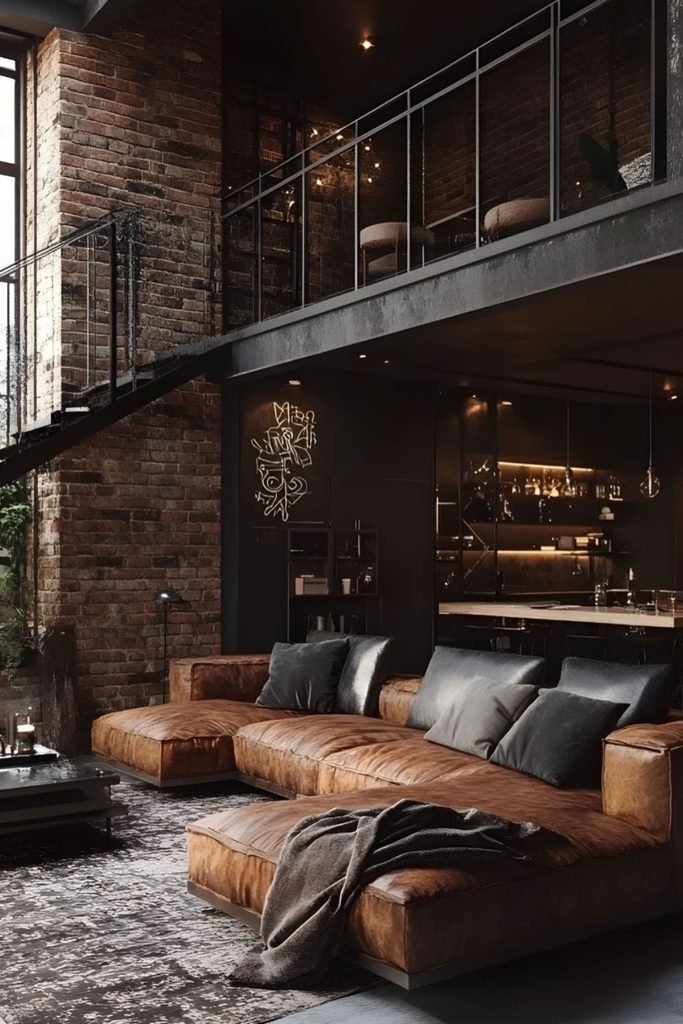
Open Warehouse
Wide-open architecture works best when the living room becomes its own defined zone instead of competing with the nearby kitchen.
Position substantial leather sofas around a central rug and wood table, allowing the furniture arrangement to create boundaries without adding physical walls.
Exposed brick, steel framing, and concrete floors can remain untouched because warm upholstery and patterned textiles naturally soften their harder industrial character.
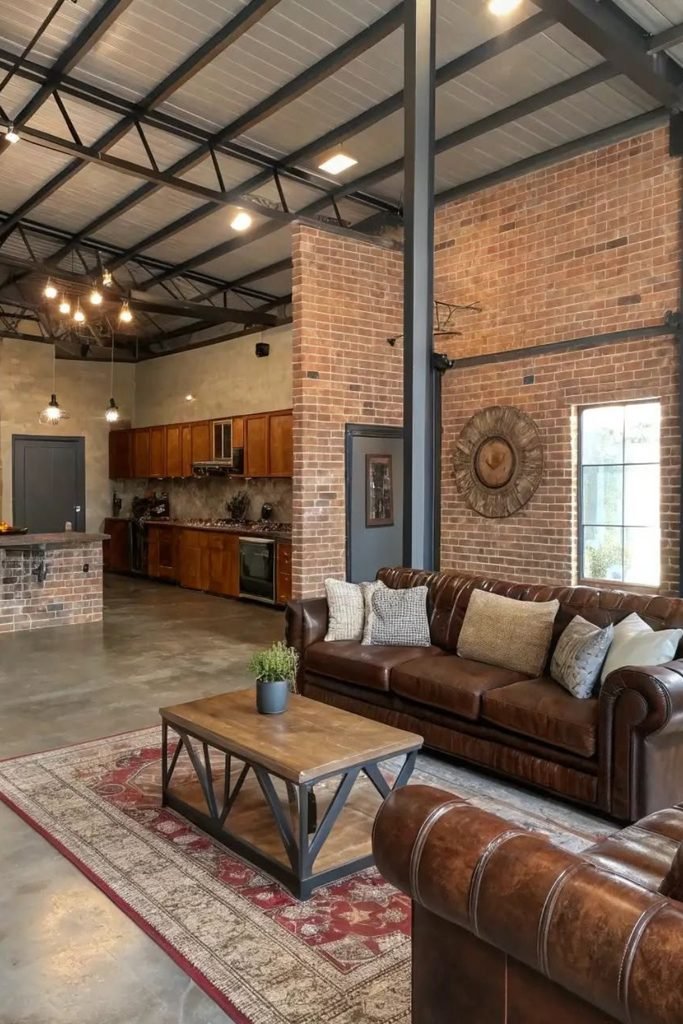
Vintage Loft
Weathered finishes give this living room its personality, turning imperfect brick, aged wood, and worn leather into features worth keeping visible.
Choose a low leather sofa and reclaimed coffee table, then spread a distressed rug underneath to connect the seating with surrounding industrial textures.
For older lofts, preserve rough surfaces wherever possible and introduce colorful cushions sparingly so the room feels collected rather than overly coordinated.

Brick Display
Wall shelving becomes part of the decorating when warm timber boards are mounted directly against exposed brick above a simple neutral sofa.
Mix pottery, framed pieces, greenery, and vintage objects across different shelf heights, leaving enough empty space to keep everything visually relaxed.
Finish with industrial pendant lights and a storage coffee table, giving compact living rooms useful organization without sacrificing their warm warehouse-inspired personality.

Glass Division
Open-plan living feels more organized when slim black-framed glass partitions separate functional areas while still allowing daylight to travel between spaces.
Keep the living room restrained with a long neutral sectional, lightweight metal tables, and a large rug that quietly defines the seating footprint.
White walls make this approach especially effective in brighter industrial homes, where original brick can remain concentrated as one striking background feature.

Gallery Greenery
Concrete ceilings can feel severe, but oversized plants, colorful wall art, and warm table lamps quickly turn the industrial shell into something personal.
Build the seating around a bold patterned rug, then mix relaxed low sofas with one sculptural chair instead of matching every furniture piece.
Use artwork vertically between tall windows and let greenery occupy awkward corners, giving compact loft living rooms character without adding unnecessary bulky furniture.

Rustic Metals
Warm brick becomes more interesting when black metal shelving, oversized wall pieces, and cage lighting repeat the industrial details throughout the living room.
Choose caramel leather seating beside chunky reclaimed wood furniture, creating enough warmth to balance the cooler metal framework and exposed architectural surfaces.
Smaller industrial rooms benefit from vertical shelving because it adds display space while keeping valuable floor area open around the main seating zone.
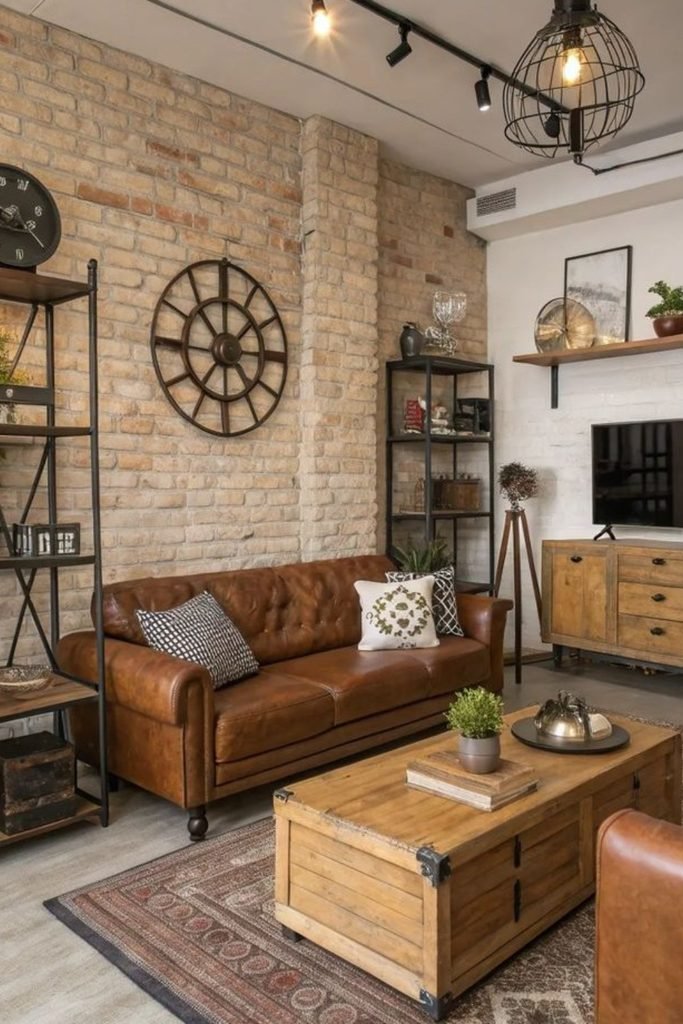
Farmhouse Loft
Industrial style can feel noticeably softer when creamy sofas and chunky reclaimed wood replace the darker leather normally associated with warehouse-inspired living rooms.
Center an oversized timber table between facing sofas, then use textured pillows and a pale woven rug to keep the arrangement casual.
Black metal table legs and nearby lantern-style lighting provide just enough industrial contrast without overpowering the brighter farmhouse character.

Concrete Media
Raw concrete makes an impressive media wall when warm integrated lighting outlines its texture instead of covering the surface with extra decorative pieces.
Keep technology visually organized with a floating wood-and-black console, while a large charcoal sectional creates comfortable seating for movies.
Repeat amber lighting around the television wall and pendant fixtures, helping concrete, black steel, and darker upholstery feel atmospheric rather than cold.

Retro Loft
Playful color gives this industrial loft a softer personality, with olive upholstery, orange accents, and graphic artwork warming the tall open interior.
Let one sculptural sofa anchor the living area, then introduce curved furniture and bold cushions to contrast against straight steel architectural lines.
Carry greenery onto both levels and repeat warm wood throughout, helping the double-height living room feel visually connected rather than divided.

FAQs
How Can Industrial Living Rooms Feel Warm And Comfortable?
Warm materials such as leather, reclaimed wood, textured rugs, and soft cushions prevent exposed brick, concrete, and metal from feeling overly cold.
Layer ambient lamps and warm pendant lighting around seating areas instead of relying entirely on harsh ceiling lights throughout the living room.
Indoor plants, neutral textiles, and personal artwork add softer details while still allowing the original industrial architecture to remain clearly visible.
What Furniture Works Best In An Industrial Living Room?
Choose substantial sofas, low coffee tables, and simple shelving that can visually hold their own against exposed brick and large open spaces.
Leather, weathered timber, black metal, and textured upholstery naturally complement industrial architecture without making every furniture piece look overly coordinated.
Keep enough open floor space between larger pieces so the living room maintains the spacious, relaxed character that makes industrial interiors appealing.