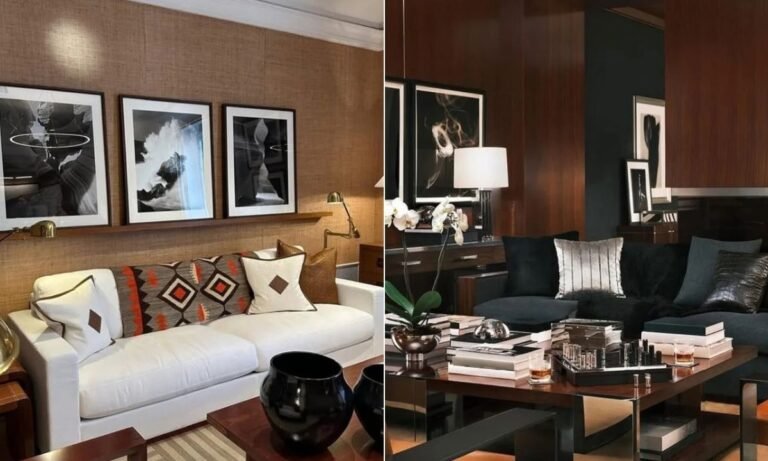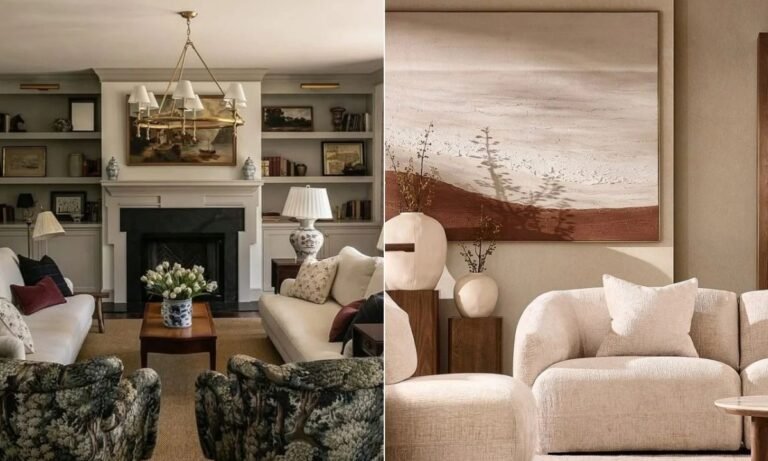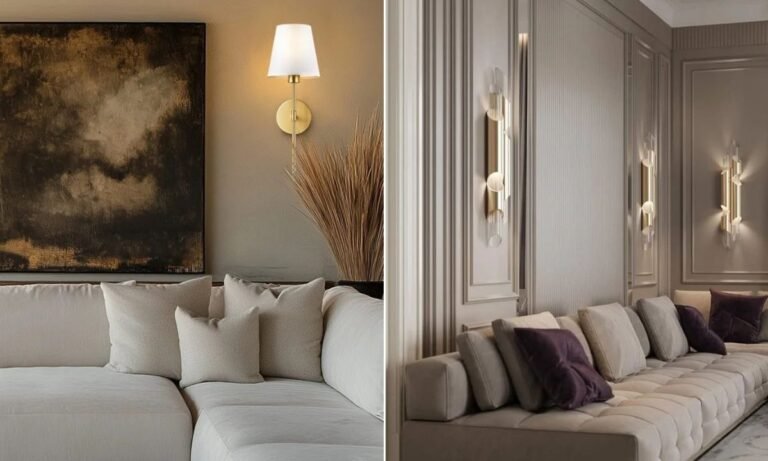
You can buy a beautiful sofa, add a marble table, and still wonder why your living room doesn’t look as luxurious as the rooms you keep saving.
Most of the time, the problem isn’t how much you spend, it’s the wrong scale, flat lighting, small details fighting for attention.
Once you fix those basics, even simple furniture can start to look more expensive and the whole room feels much more put together.
In this article, you’ll find 16 luxury living room ideas that show you practical ways to create that high-end look.
Let’s jump in!
What Makes a Living Room Look Luxury?
Luxury starts with how everything works together, not how much each piece costs.
If your sofa, rug, coffee table, and artwork are the right size for the room, the space immediately feels more balanced and intentional.
Use warm layered lighting instead of relying on one bright ceiling light, because softer light makes colors and materials feel richer.

Choose a few good-looking materials like wood, stone, linen, velvet, or metal, but don’t use every luxury finish at once.
Hang full curtains higher, use a properly sized rug, and leave some empty space instead of filling every corner with decor.
If you get the scale, lighting, texture, and placement right first, even simple furniture can give your living room that expensive, finished look.
Marble Warmth
Cold marble feels far more inviting when you balance it with warm wood flooring, soft upholstery, and creamy walls instead of more stone.
Keep one substantial marble feature as your luxury anchor, then let darker wood and textured fabrics soften its sharp, polished appearance naturally.
This approach works beautifully in larger living rooms where a fireplace, coffee table, and seating can each hold their own visual weight.

Navy Contrast
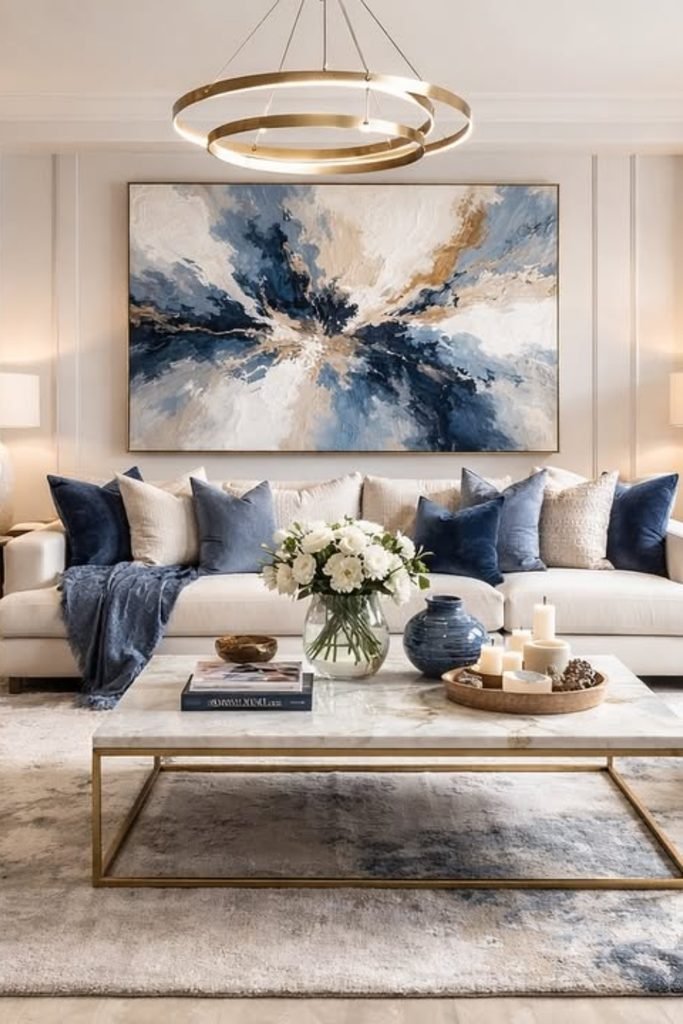
If a neutral living room feels too safe, introduce deep navy through a few substantial pieces rather than scattering small blue accessories everywhere.
Pair a cream sofa with navy chairs and cushions, then repeat blue once through artwork or the rug to make everything feel connected.
Keep brass finishes limited to lighting and table frames, because small metallic touches bring richness without pushing the room toward an overly glamorous look.
Earthy Layers
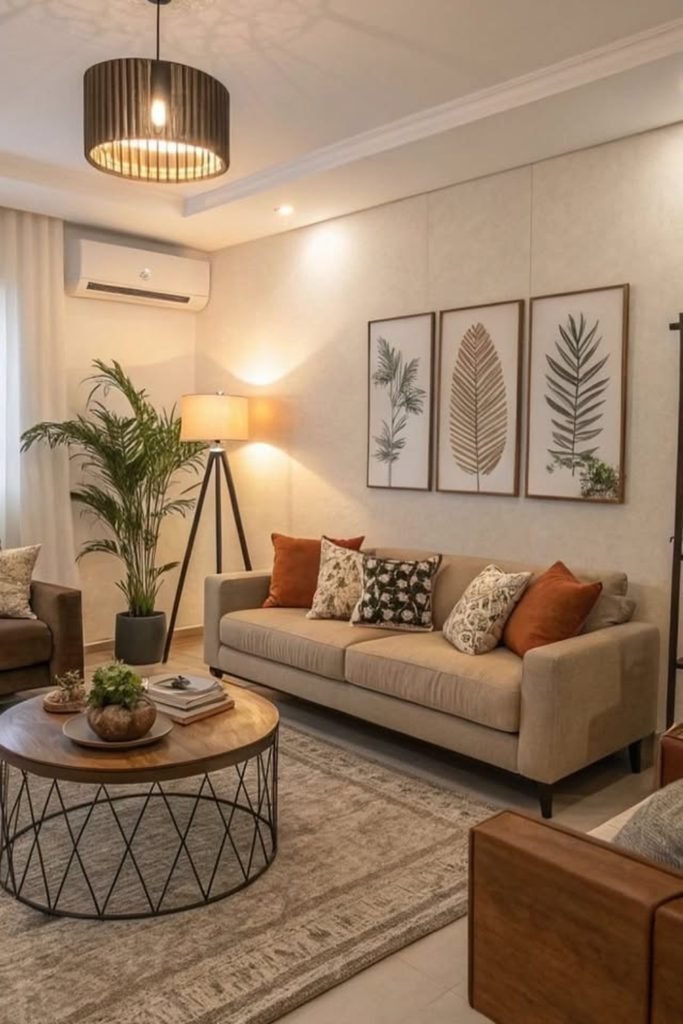
Luxury can feel relaxed too, especially when warm beige furniture gets its character from rust cushions, natural wood, and leafy indoor plants.
Bring in one round wooden table and repeat earthy brown through smaller furniture, then use patterned cushions to stop beige upholstery feeling plain.
This combination suits everyday family rooms especially well because you get warmth and personality without relying on delicate finishes or expensive statement furniture.
Moody Balance
Deep walls can make a living room feel expensive when you give the darker color enough natural light and warmer materials around it.
Start with charcoal walls and a navy sofa, then bring in walnut paneling, a pale rug, and a light table for controlled contrast.
Large windows are especially helpful here, while one oversized artwork gives the dark wall purpose without covering it with several distracting decorative pieces.

Built-In Balance
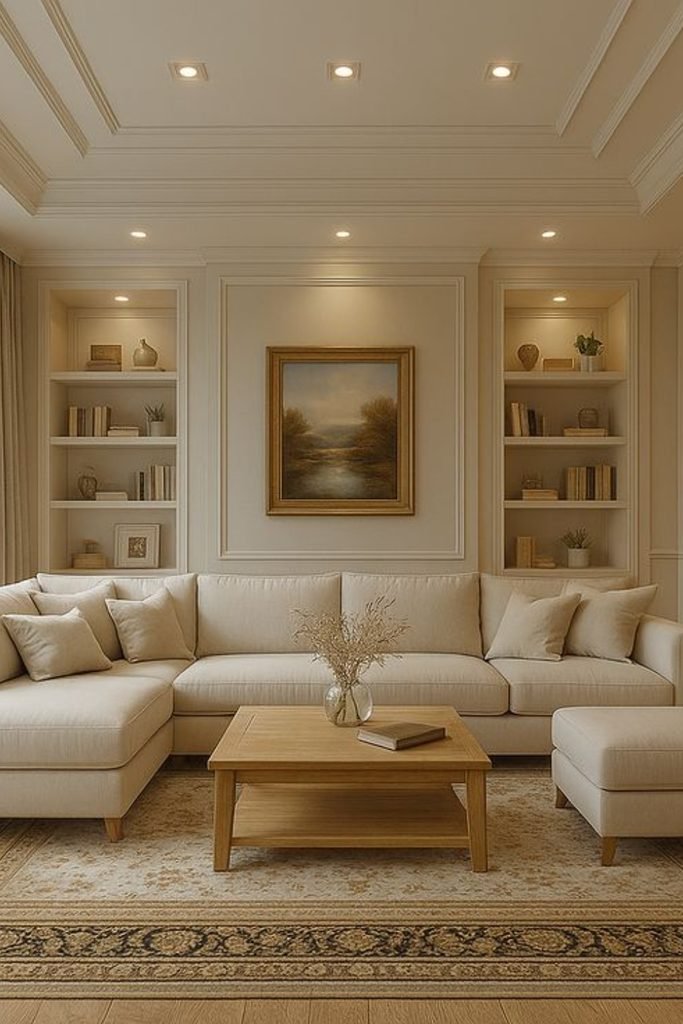
Built-in shelves can make a living room feel custom when you keep both sides balanced and leave breathing room between decorative pieces.
Frame the main artwork with matching shelving, then use books, pottery, and small plants sparingly so the wall never feels overcrowded.
Carry the same soft cream across walls and seating, while a bordered rug and warm wood table keep the neutral scheme grounded.
Coastal Warmth
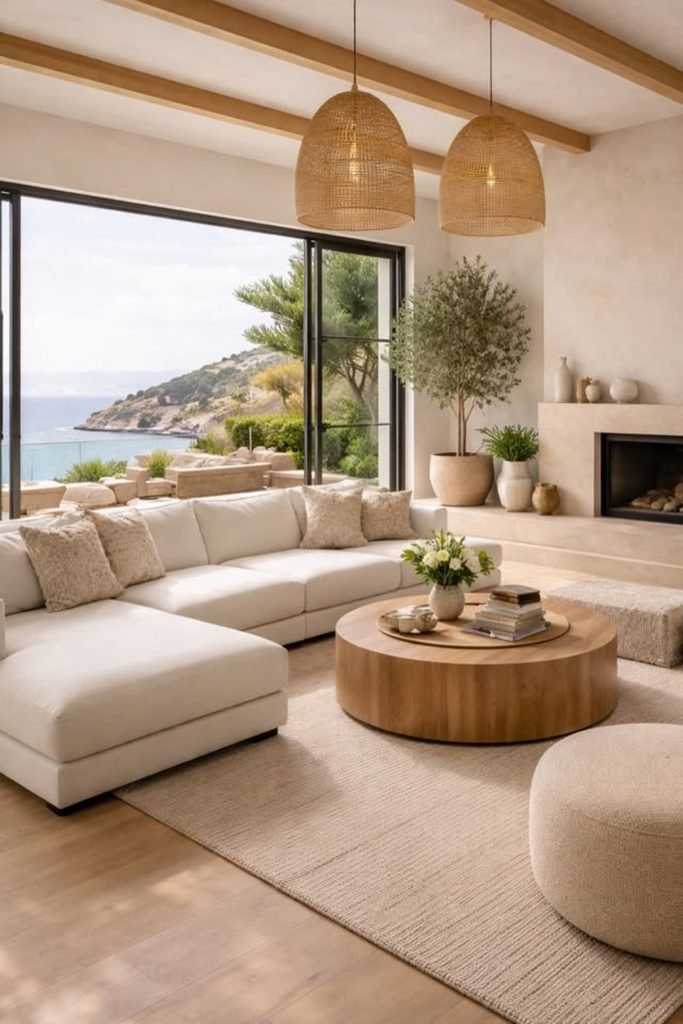
Letting natural materials lead the room works especially well when large windows already bring plenty of sunlight and an outdoor view inside.
Pair creamy seating with exposed wood beams, woven pendant lights, and a chunky timber table to create warmth without adding flashy luxury finishes.
Keep the rug and fireplace close to the wall color, so natural wood becomes the contrast that gives this relaxed space character.
Curved Seating
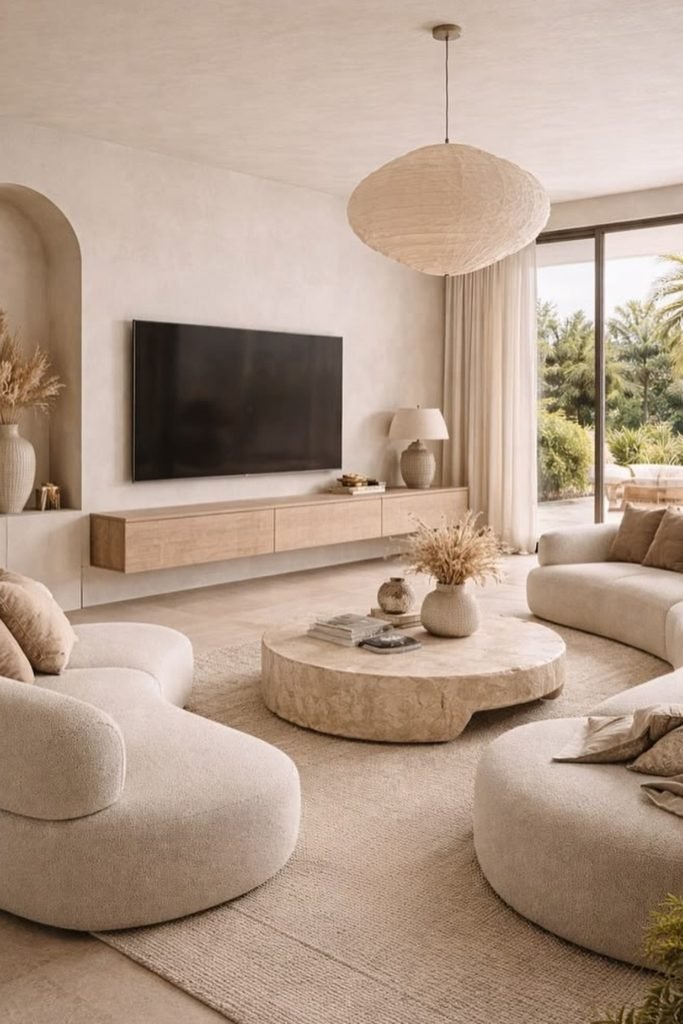
Straight furniture is not your only option; rounded sofas and chairs can make a formal living room feel softer and more welcoming.
Arrange curved seating around one round coffee table, giving every seat an easy view across the room while keeping conversation naturally connected.
A large chandelier works best above this arrangement because it marks the center clearly and gives the soft furniture a stronger visual anchor.

Ceiling Glow
Look upward when your living room still feels ordinary, because a well-designed ceiling can add more impact than another expensive furniture purchase.
Use recessed warm lighting around the ceiling edges, then add slim light strips and one hanging fixture to build several lighting levels.
Keep walls and furniture simple when the ceiling carries this much detail, otherwise too many competing features can quickly make luxury feel overdone.

Hidden Media
When a television dominates the wall, surrounding it with warm wood cabinetry makes the screen feel built into the room instead of added later.
Run low storage beneath the TV and keep shelves lightly styled, giving everyday items somewhere to disappear without breaking the clean luxury look.
Soft beige seating and matching curtains work well beside darker wood because they brighten the room while keeping the media wall visually grounded.
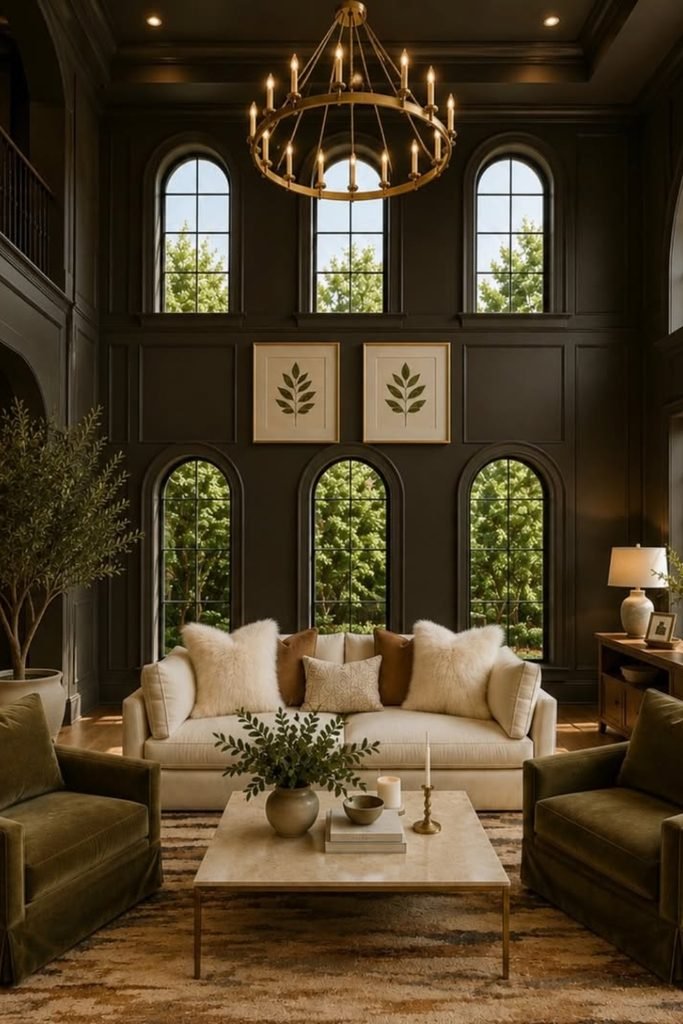
Heritage Drama
Dark walls become especially striking in tall living rooms where large windows can bring enough daylight to stop the space feeling closed in.
Use deep charcoal across walls and molding, then contrast it with cream seating, olive chairs, warm timber, and restrained brass lighting.
This works best when the architecture already has character, because arched windows and high ceilings can carry darker finishes without needing extra decoration.
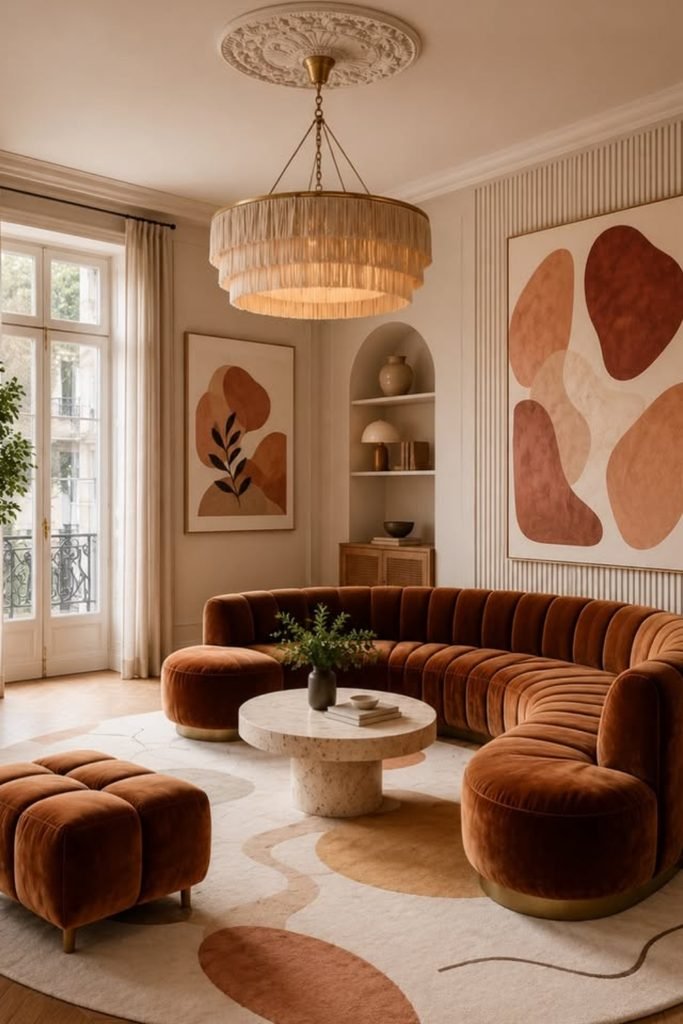
Velvet Curves
Rich color feels more luxurious when you commit to one strong furniture piece instead of spreading several bold shades around the entire room.
Choose a curved rust velvet sofa as your anchor, then repeat its warm tones through artwork and the rug without matching everything exactly.
Keep walls creamy and the coffee table pale, giving the deeper upholstery enough contrast to stand out without making the room feel heavy.
Tonal Calm
Busy rooms rarely feel expensive, so try reducing the color changes before you start adding more furniture or decorative pieces.
Build around cream and soft beige, then create depth through rounded seating, a stone table, textured fabric, and lightly finished wood.
This approach suits bright living rooms especially well, where natural daylight can reveal subtle material differences that would disappear under harsh artificial lighting.

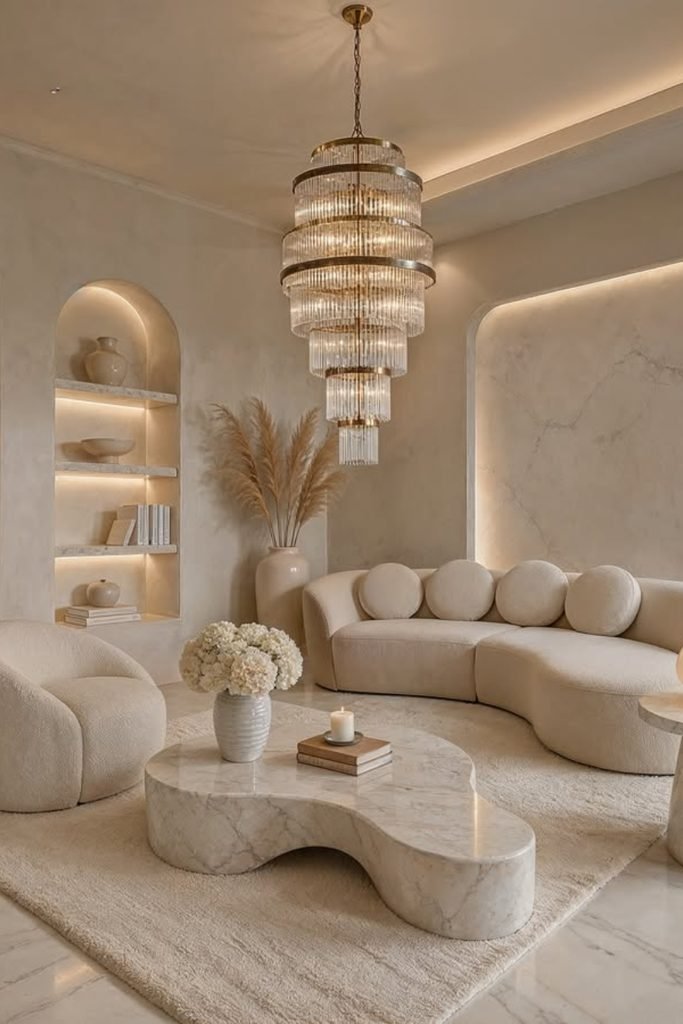
Sculpted Neutrals
Soft neutrals feel richer when furniture has strong shapes, so choose rounded seating and an irregular stone table instead of relying on color.
Keep cream tones close together, then use candles, soft lamps, and hidden wall lighting to create shadows that give pale surfaces more depth.
This works especially well in smaller luxury living rooms, where fewer sculptural pieces can make an impact without taking over every available corner.
Framed Views
Treat a beautiful outdoor view as part of your decor instead of filling nearby walls and windows with unnecessary decorative details.
Place low neutral seating beneath large artwork, then use a round wood table and simple pendant so neither competes with the scenery outside.
Keep curtains full but understated around wide windows, allowing you to soften the room at night without hiding the feature during daylight hours.
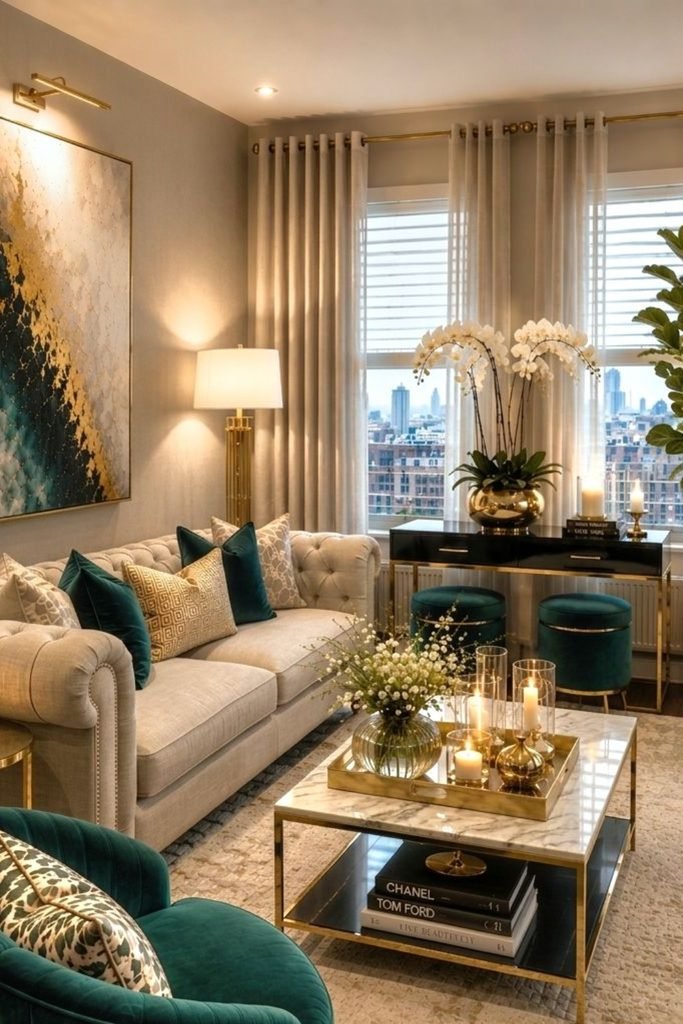
Artwork Focus
One oversized artwork can make an ordinary wall feel far more finished than several small frames competing for attention above your sofa.
Center the piece over your main seating, then add a slim picture light so its colors remain noticeable once natural daylight disappears.
Pull two or three tones from the artwork into cushions and wood finishes, creating connection without making every element look deliberately matched.
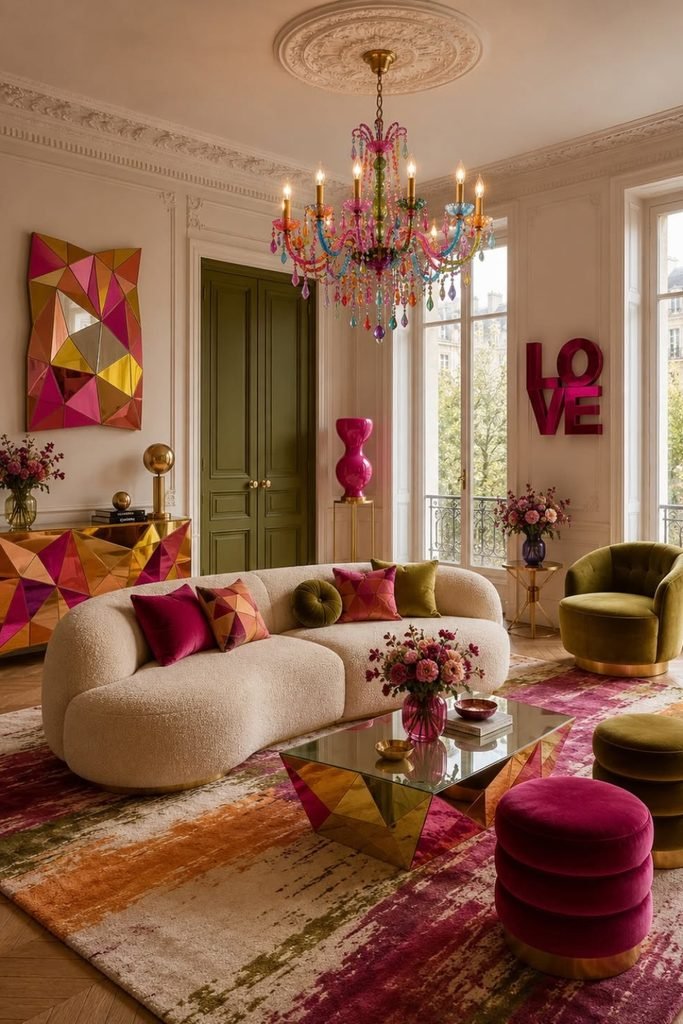
Fireplace Height
Tall living rooms need a feature with enough scale to fill the vertical space, and a full-height fireplace wall can handle it beautifully.
Run stone or textured brick upward, place the television above the fire, then frame both sides with dark shelves for useful visual balance.
Large windows and a substantial chandelier help complete this setup, while low furniture keeps the impressive ceiling height open instead of visually crowded.

FAQs
Can Luxury Living Rooms Still Feel Comfortable?
Luxury should never make your living room feel untouchable, so choose deep seating, soft fabrics, and furniture that supports everyday relaxation.
Mix polished finishes with warmer materials like wood, wool, and linen to keep expensive-looking pieces from making the room feel cold.
Leave comfortable walking space around furniture and avoid overcrowding surfaces, because a room feels more luxurious when living in it stays easy.
Which Details Make Luxury Living Rooms Look Expensive?
Small finishing choices often change the whole impression, especially full-length curtains, properly sized rugs, warm lighting, and well-scaled artwork.
Choose fewer decorative pieces with stronger shapes instead of filling shelves and tables, because extra clutter can quickly weaken an otherwise expensive look.
Repeat materials or colors in two or three places so everything feels connected, but avoid matching every piece too closely or perfectly.