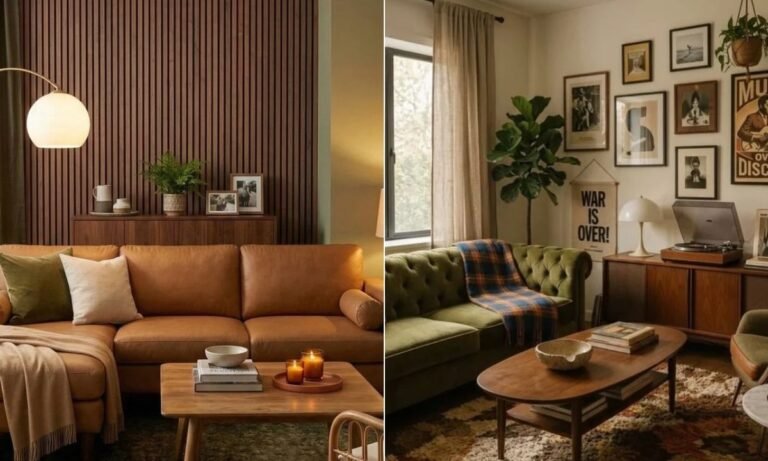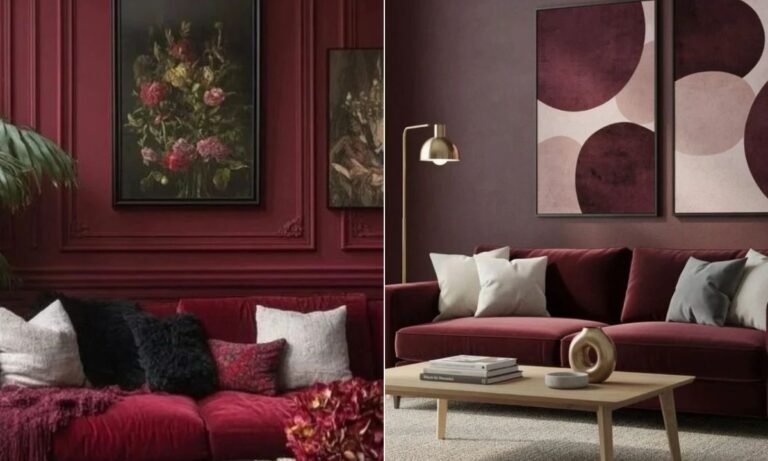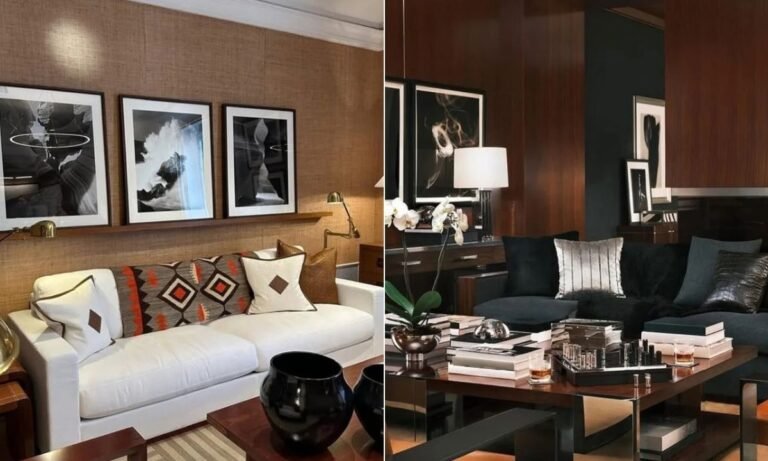
A dark living room can look cozy and expensive, but one wrong choice can quickly make the whole space feel gloomy or closed in.
The real trick is knowing where to use deep colors, where to add contrast, and how to keep enough warmth and light around the room.
Once you balance dark walls with the right sofa, lighting, wood tones, rugs, and textures, the room starts feeling comfortable instead of heavy.
In this article, you’ll learn how to style a dark living room properly, then see 20 ideas you can use for your own space.
Let’s jump in!
How to Style a Dark Living Room?
Start with one deep color you love, then build the room around it instead of mixing too many dark shades at once.
If the walls are dark, add contrast through a lighter sofa, rug, curtains, or artwork so the room does not feel too heavy.
Use warm lamps, sconces, and floor lighting because one ceiling light usually leaves dark corners and makes the space feel flat.
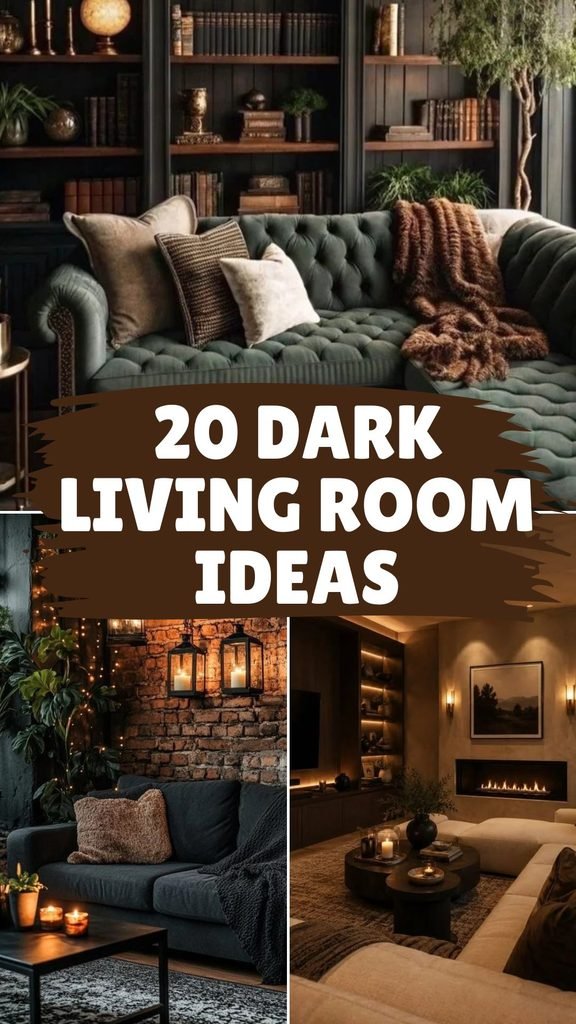
Bring in wood, leather, linen, velvet, or stone to add texture and stop the room from looking like one solid dark block.
Keep furniture sizes balanced with the room, especially in smaller spaces where bulky pieces can make the layout feel tighter than it really is.
Finally, repeat a few colors and materials throughout the room so everything feels connected without making every surface look exactly the same.
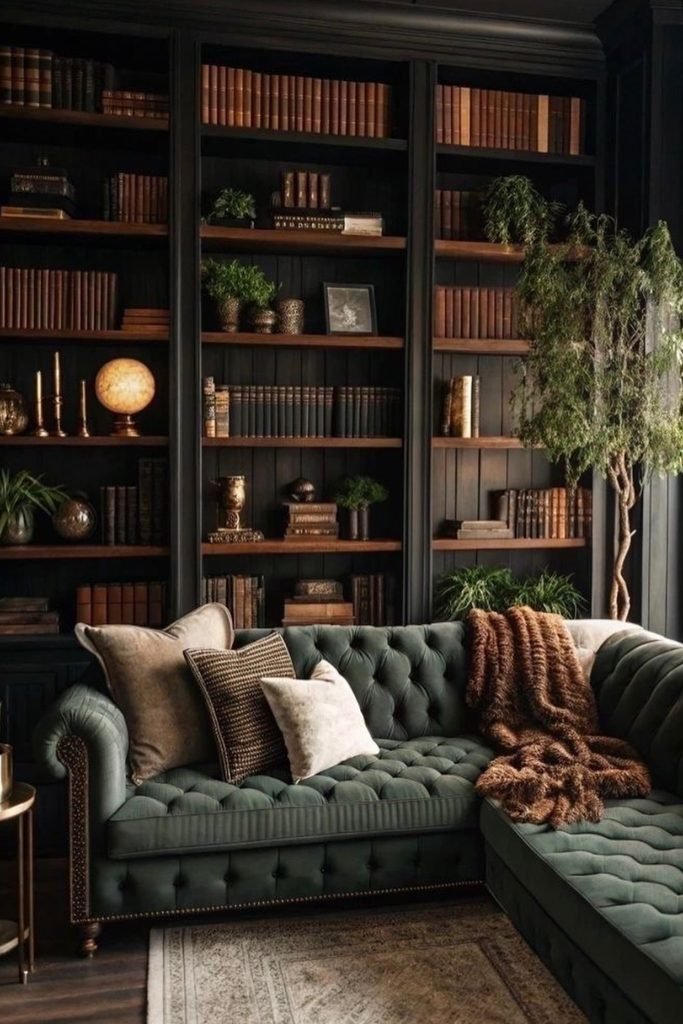
Library Depth
Turn one wall into dark built-ins when you want a living room to feel richer without covering every surface in black.
Warm wood shelves, old books, and a deep green sofa keep the dark background from feeling flat or too formal.
Add a lighter rug and a few plants near the window so the room still gets softness, contrast, and natural life.
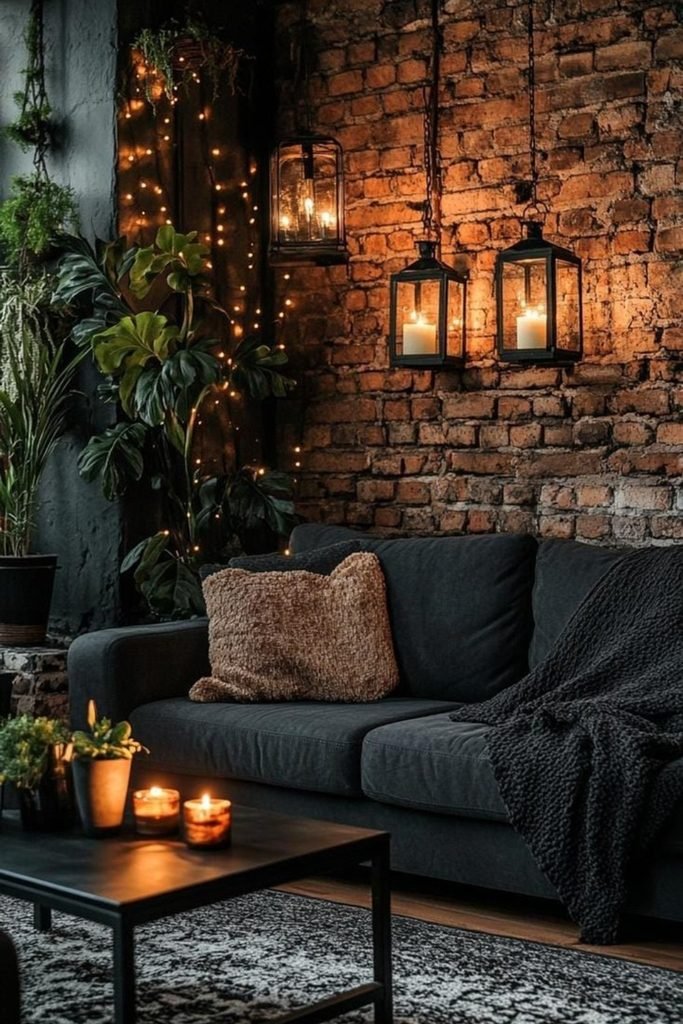
Brick Glow
Exposed brick is a smart partner for charcoal walls because its warm orange tones stop the whole room from looking cold.
Use several small lamps, lanterns, or candles around the seating area instead of depending on one bright ceiling light alone.
Keep the sofa simple and dark, then bring in plants and a textured rug to soften the heavier industrial materials.
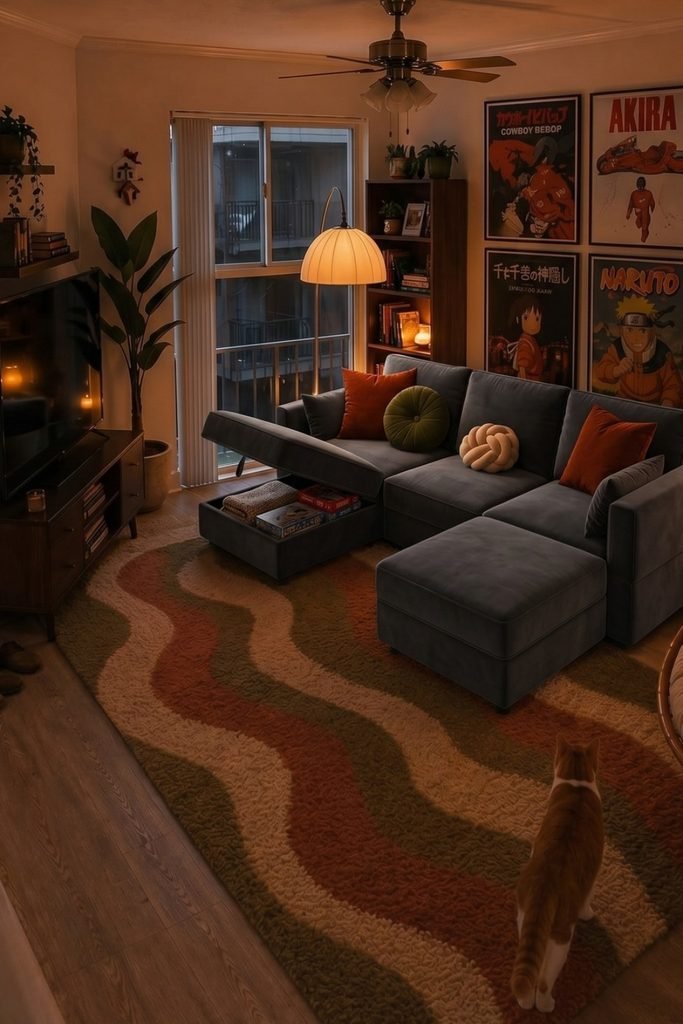
Sofa Anchor
You can build a dark living room around one charcoal sectional even if you are not ready to repaint the walls.
Let warm orange, olive, and cream accents break up the sofa, then repeat those colors in artwork and the rug.
Place a floor lamp beside the seating, not across the room, so evening light falls exactly where the dark upholstery needs it.
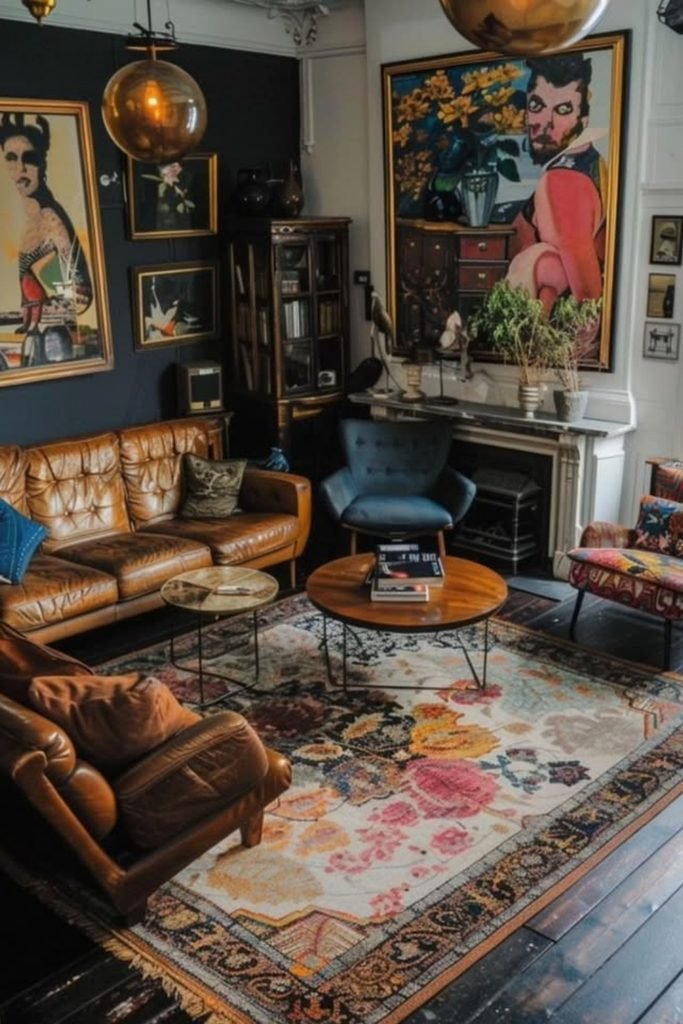
Art Contrast
A dark wall becomes much easier to live with when bold artwork gives your eye something bright to land on first.
Pair black or deep charcoal paint with cognac leather, warm wood, and a patterned rug to keep the palette lively.
This mix works especially well in older living rooms with fireplaces, where collected art can make the darker walls feel intentional.
Warm Contrast
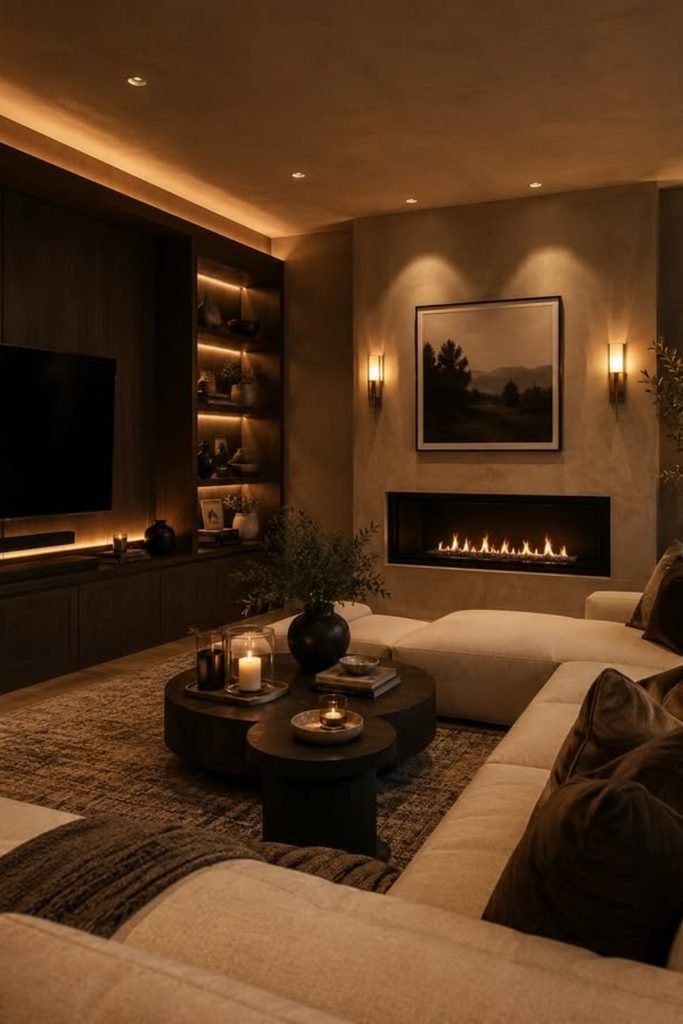
Pair dark built-ins with a cream sectional when you want strong contrast without losing the cozy mood of a darker living room.
Use hidden shelf lighting, wall sconces, and the fireplace glow to spread warmth across the room instead of relying on overhead light.
Keep the coffee tables and pillows dark so the lighter seating feels intentional rather than disconnected from the surrounding palette.
Color Balance
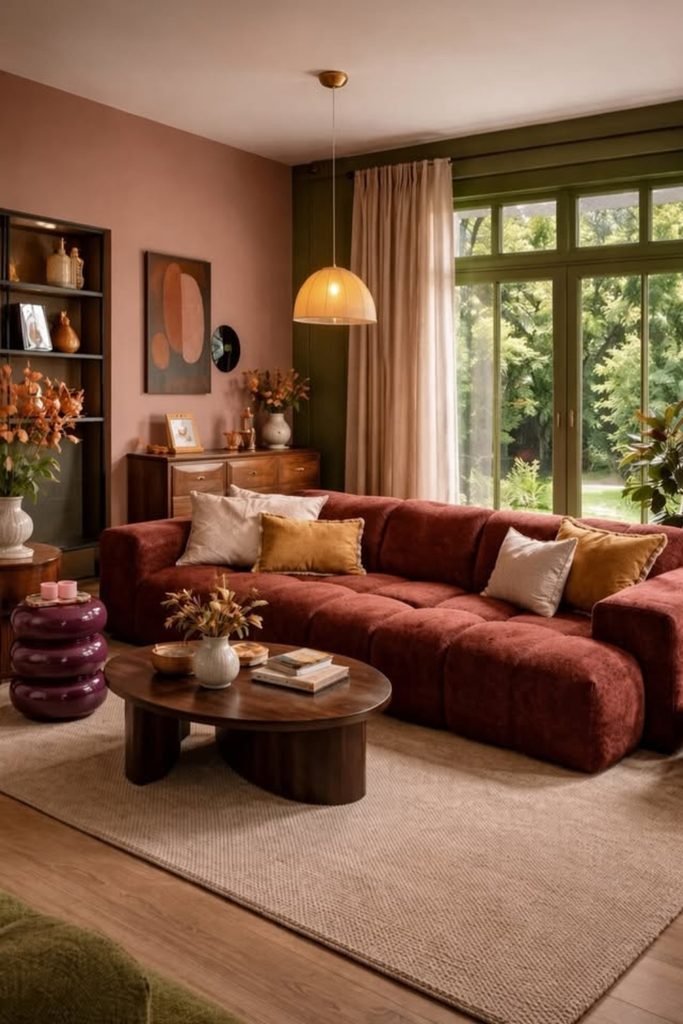
Dark rooms do not need dark walls everywhere; let one deep olive wall carry the mood while warmer colors handle the rest.
A rust sofa, blush wall, and natural wood keep the palette rich, while the large window prevents the space from feeling heavy.
This approach works well in bright living rooms where you want depth and color without turning every surface into a dark feature.
Natural Contrast
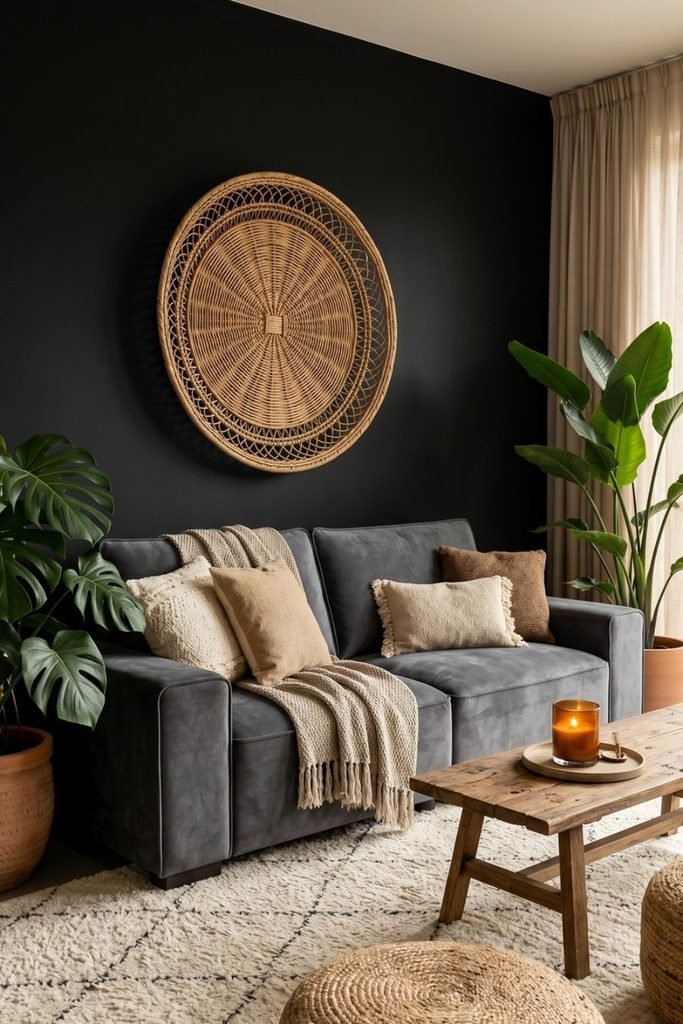
Black walls feel much softer when you layer them with woven textures, pale textiles, and plenty of natural wood around the seating area.
Choose a charcoal sofa instead of pure black, then use cream cushions and a light rug to keep the center visually open.
Large plants near the window add movement and color, making this setup especially useful for small rooms that still need a darker backdrop.
Earthy Layers
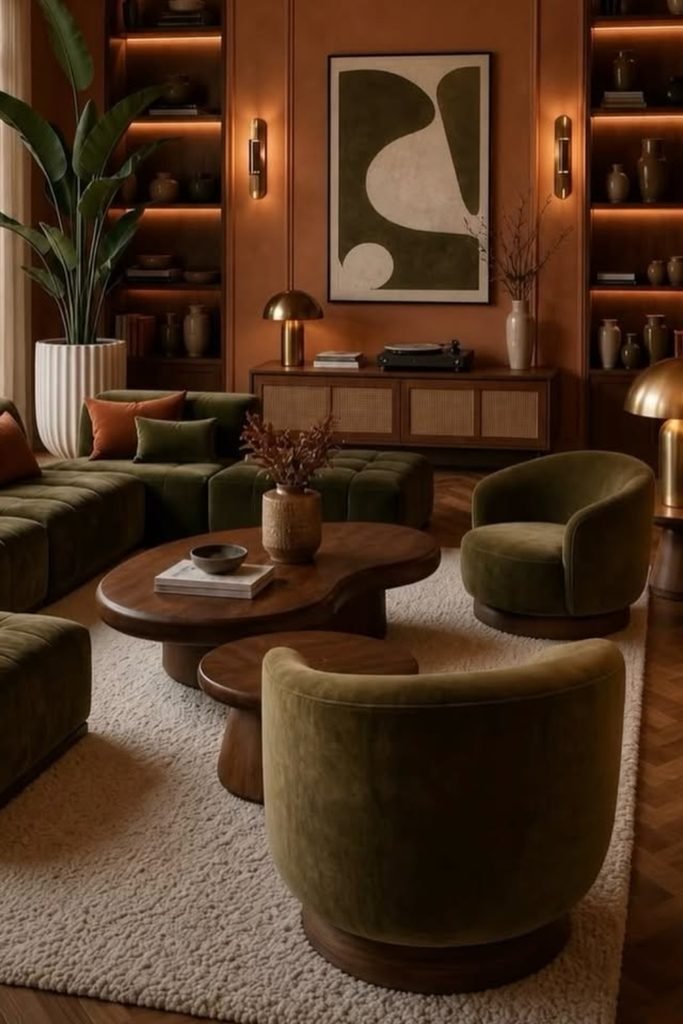
Use deep terracotta walls when black feels too severe but you still want the living room to look rich and cocooning.
Olive seating, walnut tables, and brass lamps build warmth through several earthy shades without making the room look overly matched.
A light textured rug is important here because it separates the dark furniture from the wood floor and gives the layout breathing room.
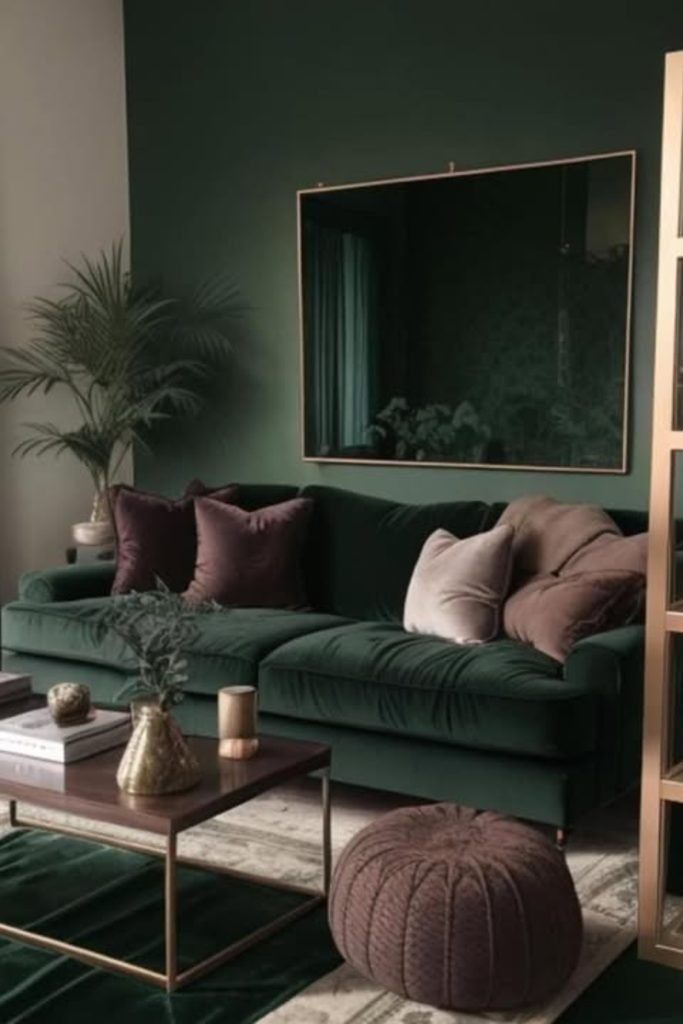
Tonal Green
Go tonal with deep green walls and a matching sofa when you want darkness to feel calm rather than sharply contrasted.
Break the green with dusty plum cushions, pale flooring, and a large mirror so the seating area still has visual breathing room.
This setup suits smaller formal living rooms especially well because the repeated color keeps the wall and sofa from feeling visually disconnected.
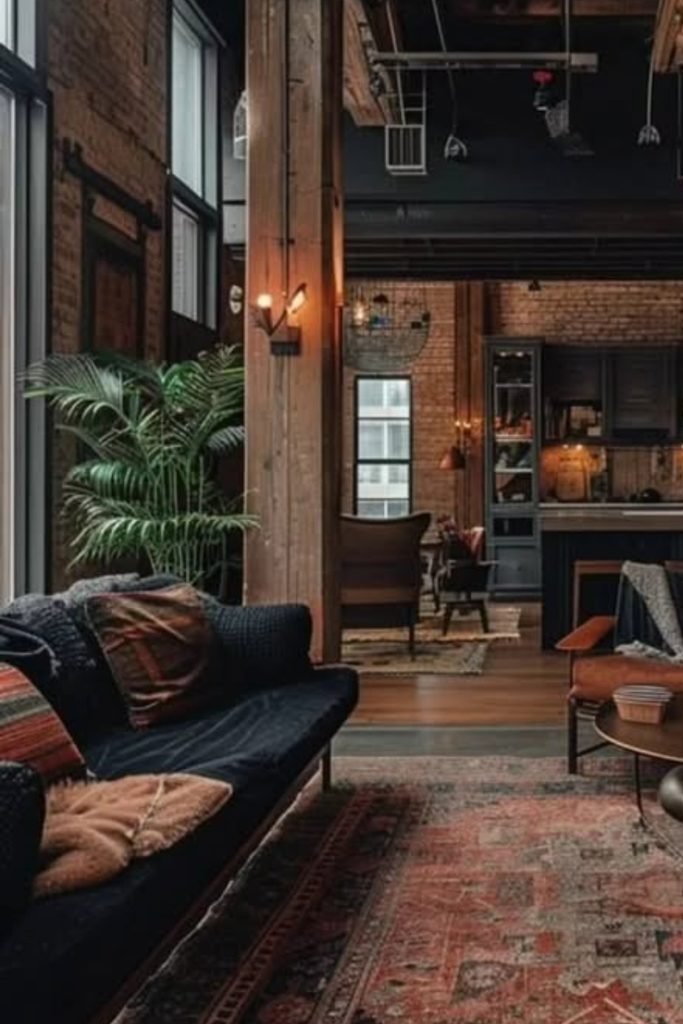
Industrial Warmth
Let exposed brick carry the warmth in an industrial living room, then use black ceilings and cabinetry to deepen the overall mood.
Brown leather chairs and a faded vintage rug soften all that black, while keeping the loft character strong and comfortably lived in.
Use this approach in open-plan spaces where tall windows and exposed structure can handle darker finishes without making the room feel boxed in.
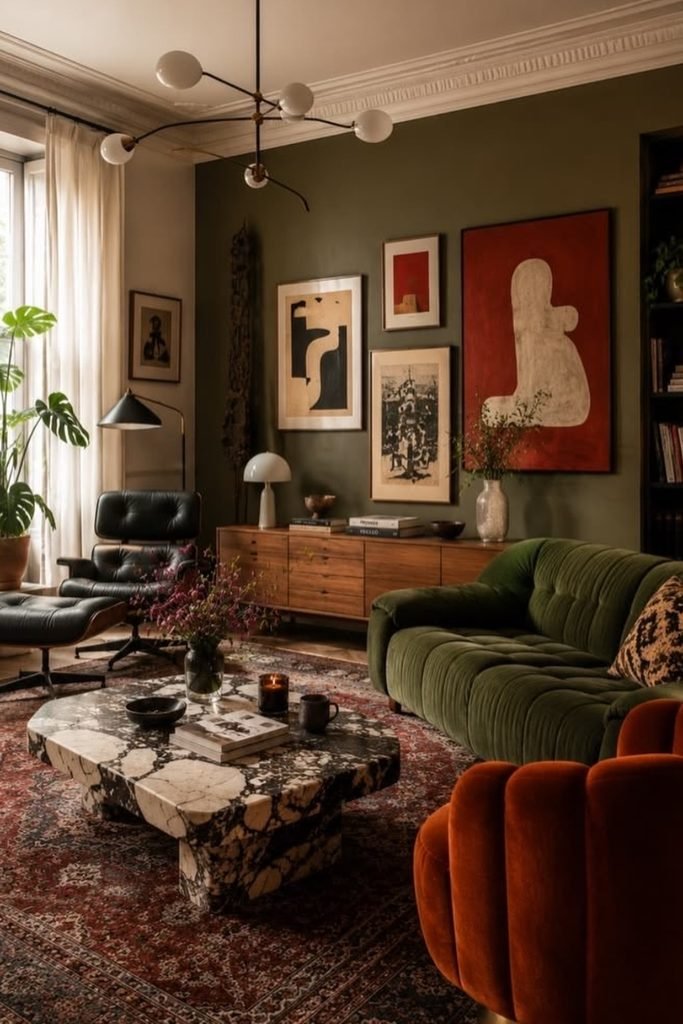
Olive Mix
Olive walls become much richer when you bring in rust seating, walnut storage, and artwork with warm reds and soft neutral tones.
Instead of matching every piece, mix a green sofa with one orange chair so the room feels collected rather than overly coordinated.
A patterned rug and bold stone coffee table help ground this look, making it ideal for vintage-inspired or eclectic living rooms.
Window Balance
Use very dark walls confidently in a tall living room when large windows already bring plenty of daylight into the space.
Keep the main seating lighter, then add one olive sofa so the room has depth without turning the entire furniture layout dark.
A pale rug, oversized artwork, and reflective lighting lift the lower and upper areas, which helps a high-ceiling room feel balanced.
Archway Depth
Use deep olive across tall arches when you want an open-plan living room to feel intimate without hiding its architecture.
Cognac leather seating and warm wood ceilings bring enough contrast to keep those dark green surfaces from feeling cold or heavy.
Repeat low amber lighting along stairs, pendants, and the fireplace so each zone stays connected after daylight begins to fade.
Rust Grounding
A rust rug can carry most of the warmth when charcoal walls make a living room feel too serious or visually cool.
Keep the sectional cream, then repeat rust and olive through pillows and chairs so the dark background still feels balanced.
This works especially well in entertaining spaces, where bold artwork and a nearby bar can support a richer, moodier palette.
Sectional Cocoon
Choose an oversized olive sectional when you want a dark living room built around lounging, conversation, and long relaxed evenings.
The fireplace, pendant cluster, and candles create several warm light points, which stops the charcoal walls from swallowing the seating.
Add a worn patterned rug and rough wood table underneath to give the large sofa texture, warmth, and a stronger visual base.
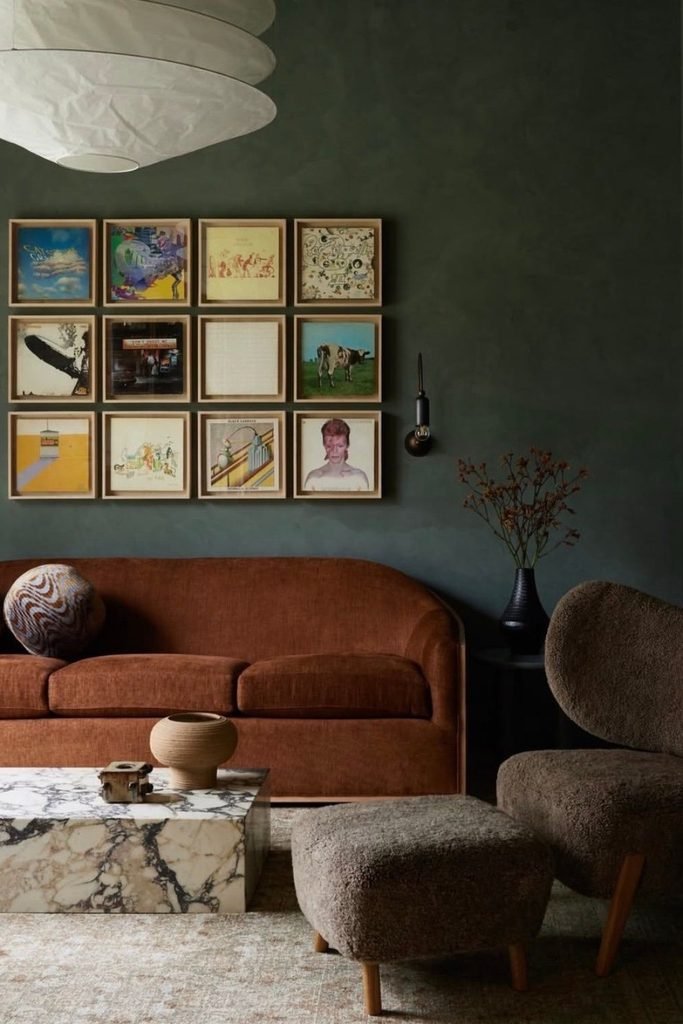
Gallery Break
Break up a deep green wall with a tight gallery grid when you want darkness without leaving one large surface visually empty.
A rust sofa and brown textured chair keep the palette warm, while pale artwork and marble add lighter points around the room.
This setup suits compact living rooms because the furniture stays low, letting the dark walls feel dramatic without crowding the space.
Boho Contrast
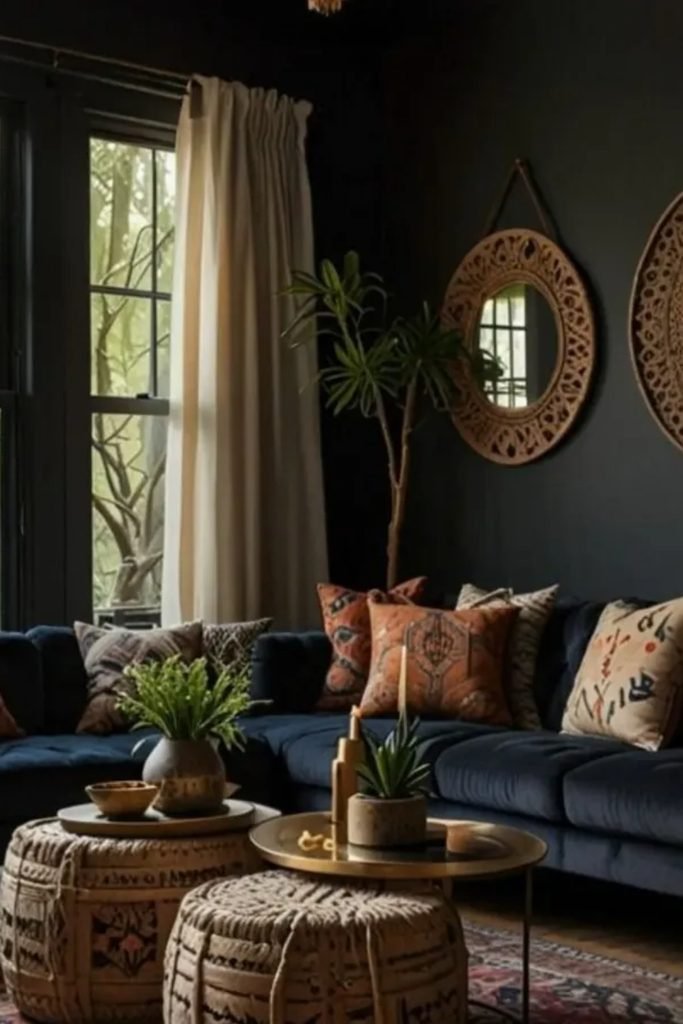
Soften black walls with woven mirrors and patterned pillows when you want a dark living room to feel relaxed rather than formal.
Keep the sectional deep blue, then bring in cream curtains so the window adds brightness without breaking the room’s moody palette.
Natural textures work especially well here because they warm up the dark background while keeping the seating area casual and layered.
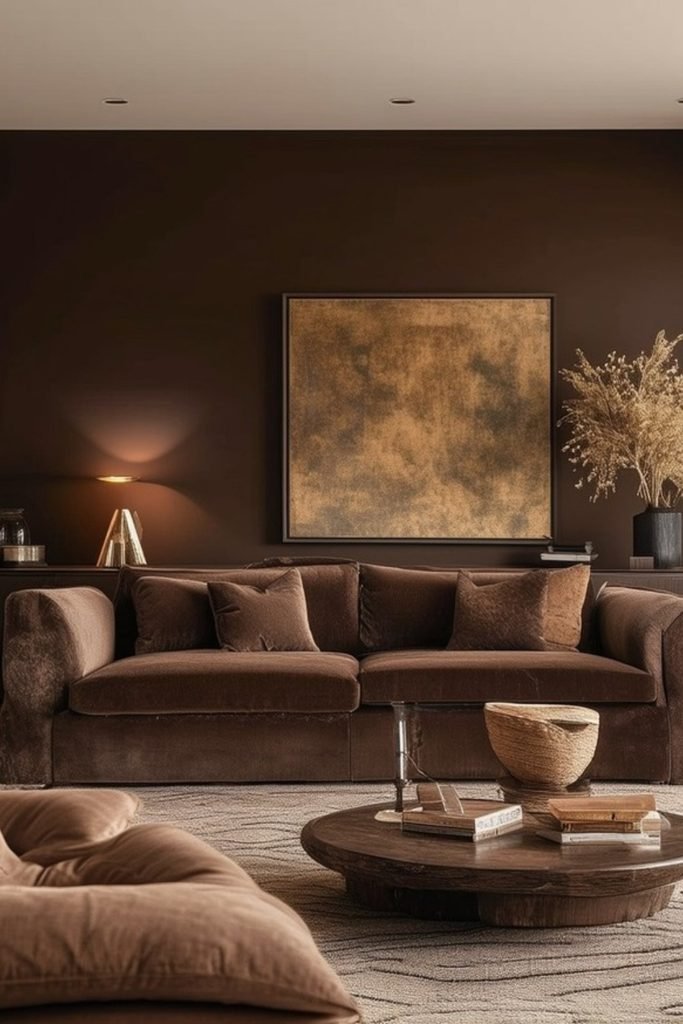
Clean Contrast
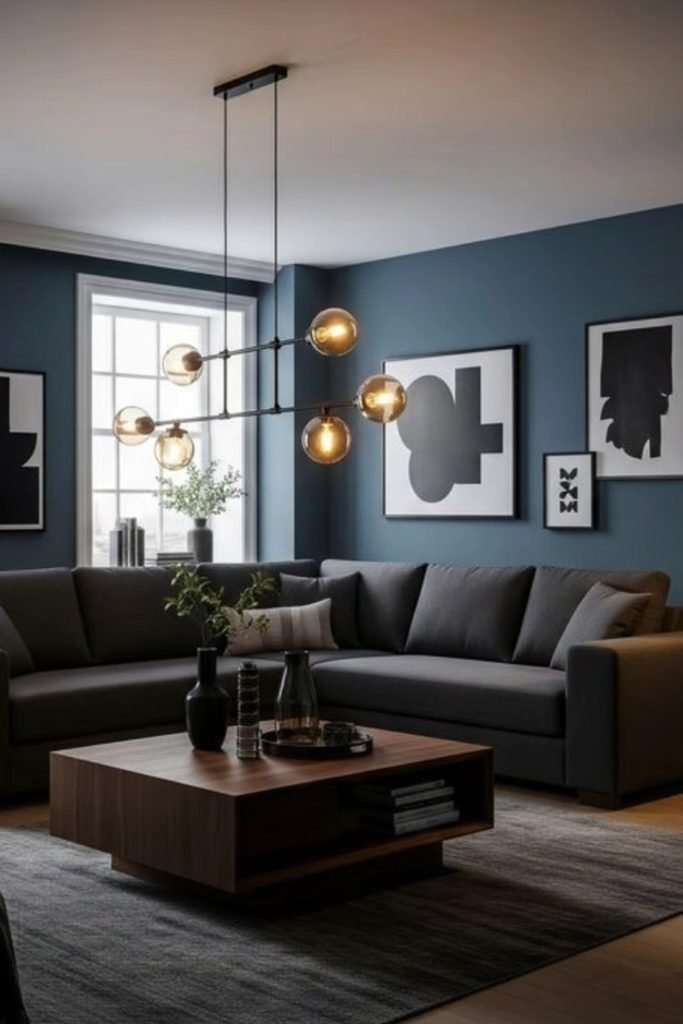
For a cleaner dark look, pair blue-gray walls with a charcoal sectional instead of stacking several unrelated colors around the room.
Black-and-white artwork keeps the palette sharp, while a walnut coffee table adds enough warmth to stop the space feeling cold.
This approach suits modern living rooms where you want a moody base but still prefer simple lines and very little visual clutter.
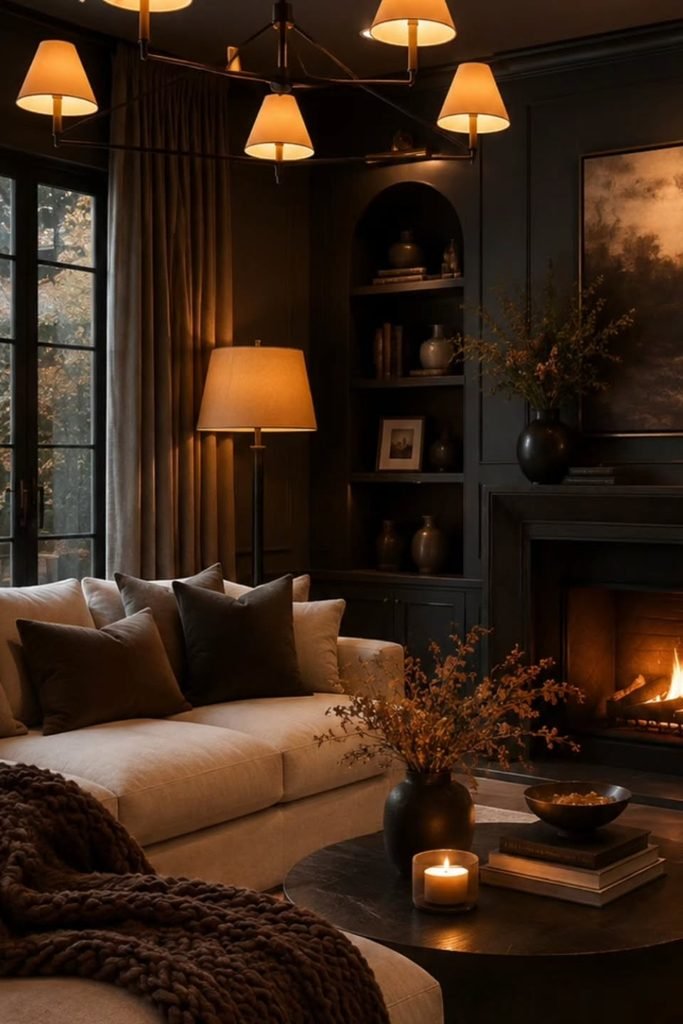
Plum Drama
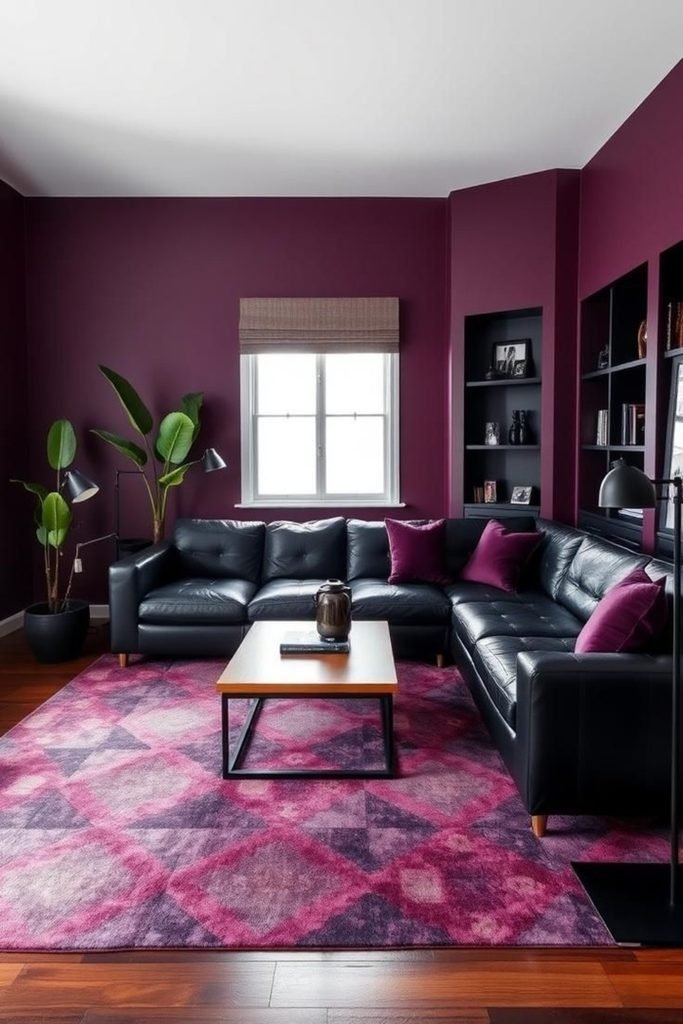
Use plum walls when you want a dark room with more personality than black, navy, or charcoal can usually give you.
A black leather sectional grounds the color, while magenta pillows and a patterned rug pull the wall shade into the seating.
Keep the ceiling white and the coffee table simple so the richer palette feels bold without overwhelming a medium-size living room.
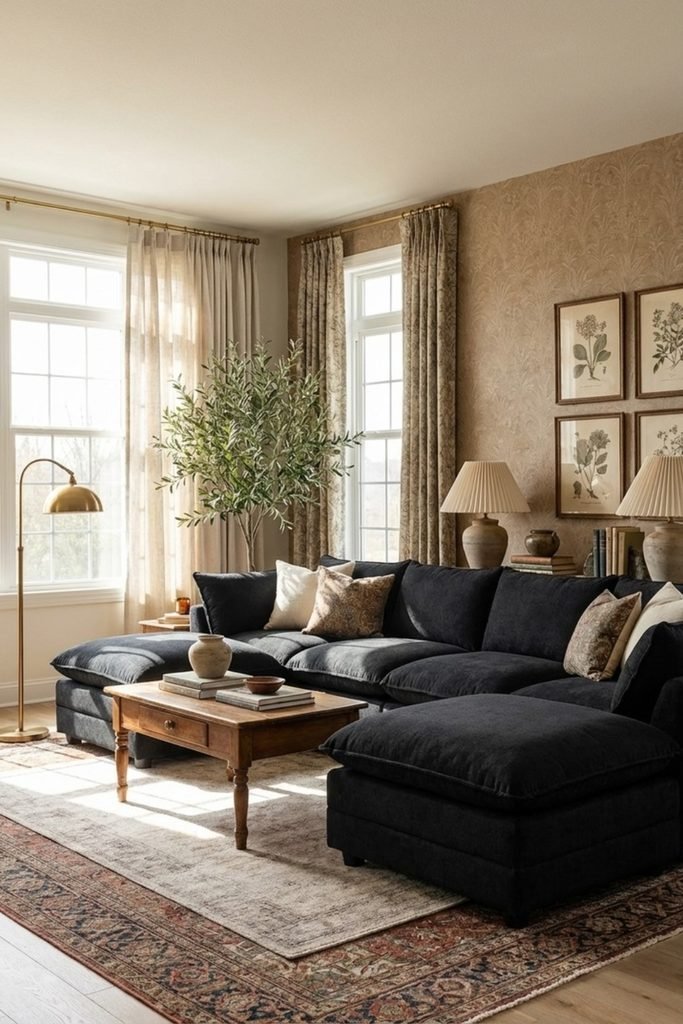
Mirror Lift
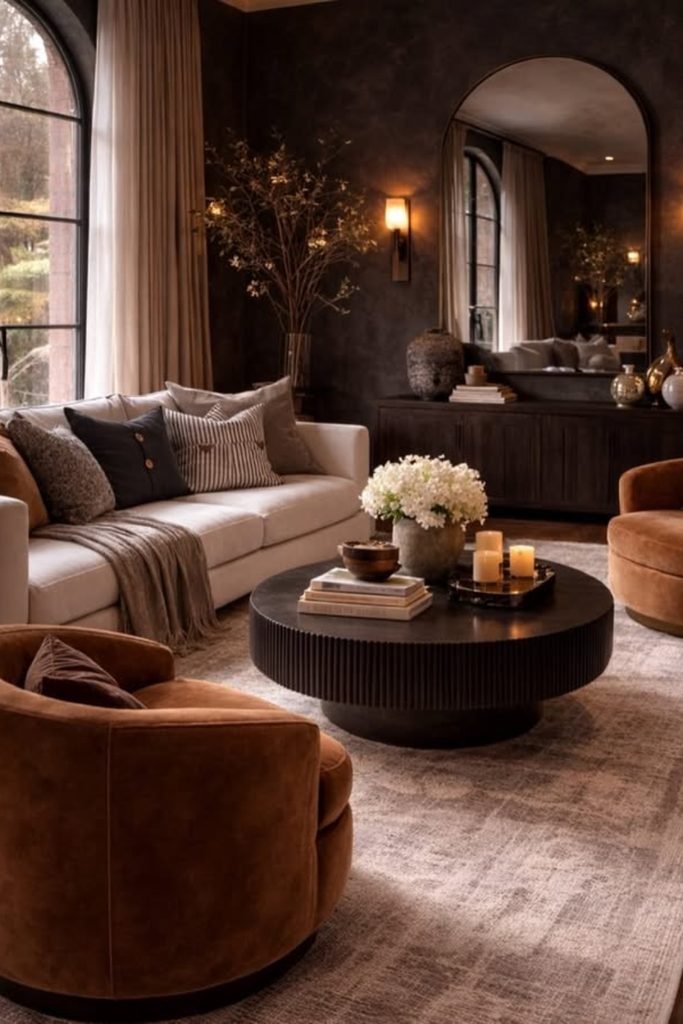
A large mirror is one of the easiest ways to open up a dark wall without repainting or adding another light color.
Place warm sconces beside it so the reflected glow spreads across the room and makes the wall finish feel softer at night.
Cream seating and cognac chairs then create a balanced center, which works especially well when the surrounding walls stay very deep.
FAQs
Can dark walls work in a small living room?
Yes, but keep enough contrast through lighter rugs, artwork, curtains, or seating so the room does not turn into one heavy block.
Use warm lamps in darker corners and avoid oversized furniture, because poor lighting and bulky pieces usually make a small room feel tighter.
Deep green, charcoal, navy, or brown can all work well when you balance them with texture, light, and a simple furniture layout.
What colors go best with a dark living room?
Cream, beige, rust, cognac, olive, warm wood, and brass all pair well with dark walls without making the room feel too cold.
Choose one or two lighter colors for contrast, then repeat them through pillows, rugs, artwork, or curtains to keep everything connected.
If your dark shade already has a warm undertone, use earthy accents; cooler charcoal or navy usually benefits from warmer brown and cream tones.