A side table can look bare with one lonely lamp, yet a few extra pieces can quickly make it feel crowded and messy.
The real trick is knowing what deserves space, what should stay off, and how to keep the table useful beside your sofa.
Whether you have a tiny round table or a wider end table, the right mix of height, texture, and function changes everything.
In this article, you’ll find practical living room side table decor ideas that help you create a finished look.
Let’s jump in!
What are Popular Side Table Styles?
Round side tables are popular because they soften sharp furniture lines and fit easily beside sofas, sectionals, and accent chairs.
Wood tables bring warmth and work especially well in cozy, farmhouse, traditional, and modern organic living rooms.
Glass and metal styles feel lighter, so they are a smart choice when your living room already feels small or crowded.

Stone, marble, and ceramic tables add more visual weight and can often look finished with only one simple decorative piece.
Tables with drawers or lower shelves work better in busy rooms because they give remotes, books, and baskets a proper place.
Choose the style that matches your room first, then decorate it without covering the surface you actually need every day.
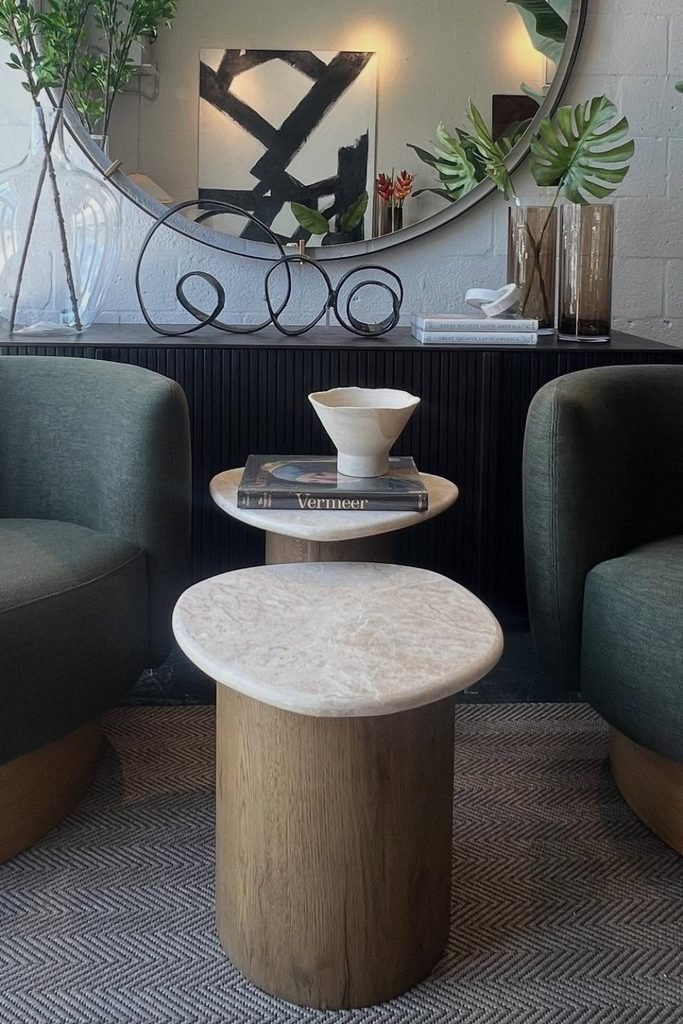
Nested Layers
Use nesting side tables between two accent chairs when you need flexible surfaces without crowding the center of your living room.
Keep the taller table lightly styled with one book stack and a bowl, so the smaller table stays ready for drinks.
This setup works especially well in conversation areas, where matching rounded shapes soften bulky chairs and make the seating feel connected.
Split Styling
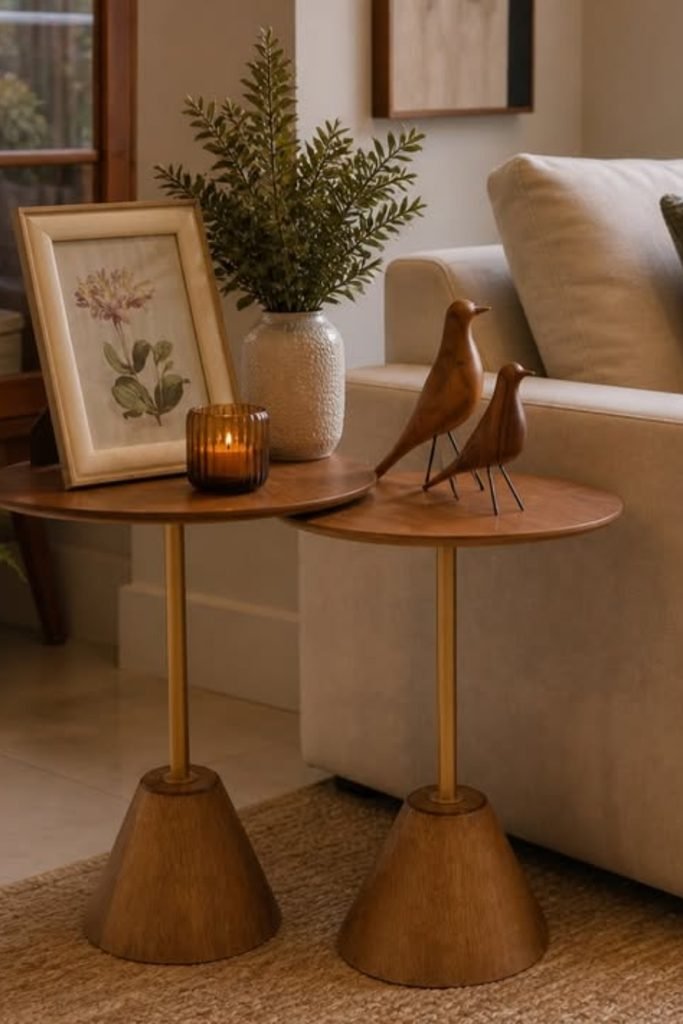
Pair two slim side tables beside a sofa when one surface feels too small, but you still want an airy setup.
Give one table the taller pieces, like framed art and greenery, then keep the second table simpler with one sculptural accent.
Repeating the same wood and brass finishes keeps both tables related, while the different arrangements stop the corner from looking overly matched.
Stone Contrast
Let a textured side table do most of the decorating when your living room already has a clean, neutral furniture palette.
A pale stone top against dark wood creates enough contrast, so you only need one vase and one small glass accent.
Choose loose branches for height instead of extra accessories; they fill the empty wall space while leaving useful room near the sofa.

Leather Balance
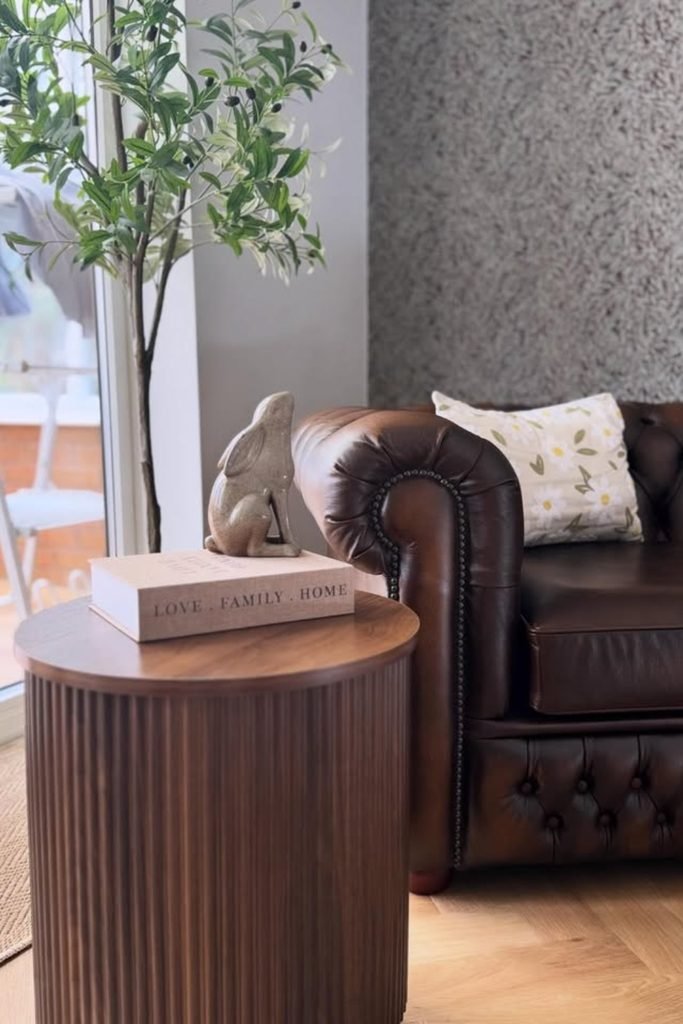
Beside a heavy leather sofa, keep the side table simple so the rich upholstery remains the strongest feature in the room.
Stack one large book under a small sculpture to create height without adding clutter, especially on compact round tables near sofa arms.
Matching the table’s warm wood tone with the leather creates a pulled-together look, while the lighter book keeps everything from feeling dark.
Golden Branches
Let a slim statement table carry the decorative weight when your sofa corner feels plain but does not have room for bulky furniture.
Stack one bright book beneath a small flower vase, giving the tabletop color and height without covering the useful marble surface.
Gold legs work especially well with warm neutrals, while nearby blue ceramics can add contrast without making the living room feel busy.

Patterned Pair
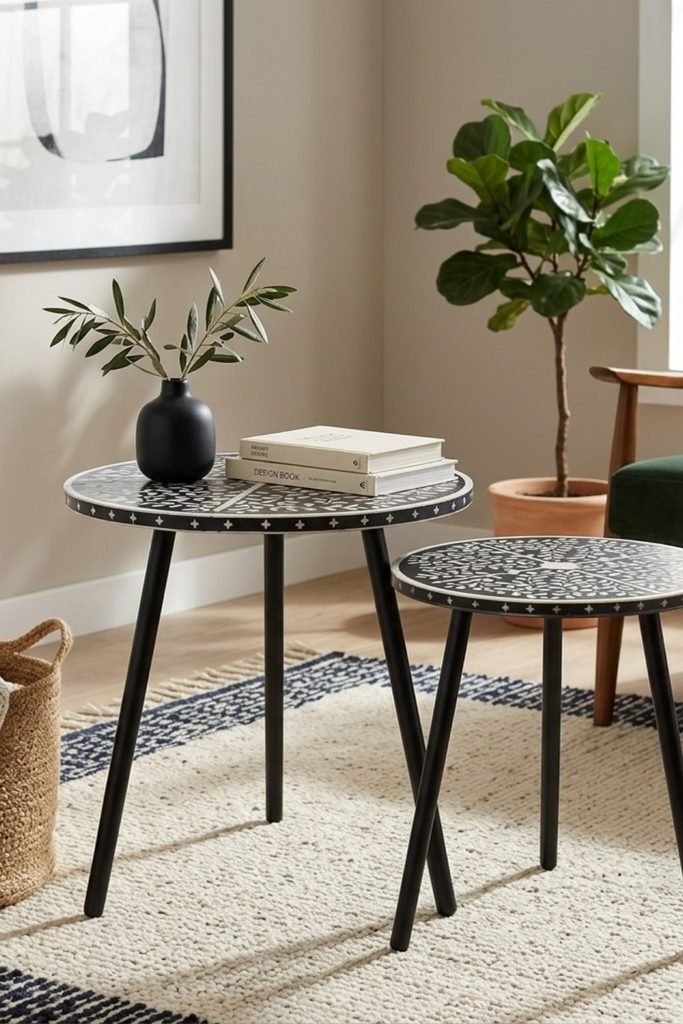
Nesting tables are a smart pick for flexible seating areas because you can separate them when guests need another surface nearby.
Style only the taller table with a compact vase and books, then leave the smaller one open for everyday use.
The black pattern adds enough detail on its own, so simple greenery keeps the arrangement fresh without competing with the tabletops.
Double Duty
Pair a narrow display table with a storage end table when you want decoration up front and hidden function beside the sofa.
Use the slimmer surface for one tall vase, while the drawer handles remotes and the lower shelf holds a soft basket.
This works nicely in calm neutral rooms because the open shapes keep the corner light, even with extra storage close by.

Brass Landing
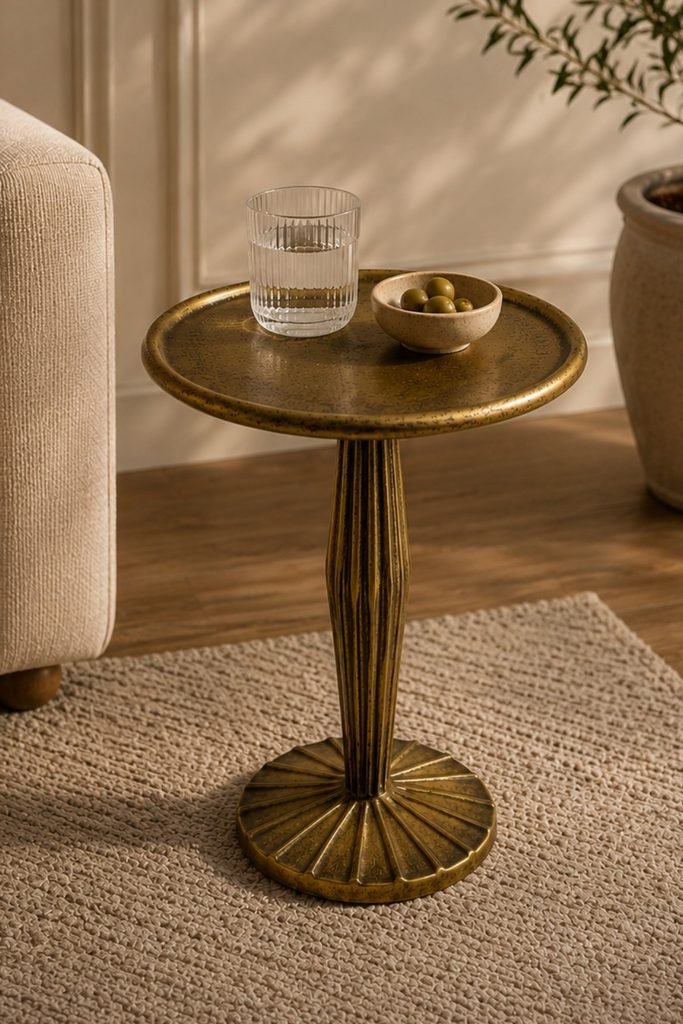
When your side table mainly serves drinks and snacks, let a detailed metal finish provide the decoration instead of adding accessories.
A small bowl and clear glass are enough here, keeping the surface practical while the brass base brings warmth and character.
This approach suits compact living rooms especially well, since the pedestal shape takes little floor space and still feels visually strong.
Black Balance
A wide black pedestal table works best beside a light sofa when you want one strong anchor without adding bulky furniture.
Start with a lamp and oversized greenery, then use one book, a bowl, and a small sculpture to fill lower levels.
This layered mix suits modern neutral rooms because the dark table repeats black accents while warm lighting keeps the corner welcoming.
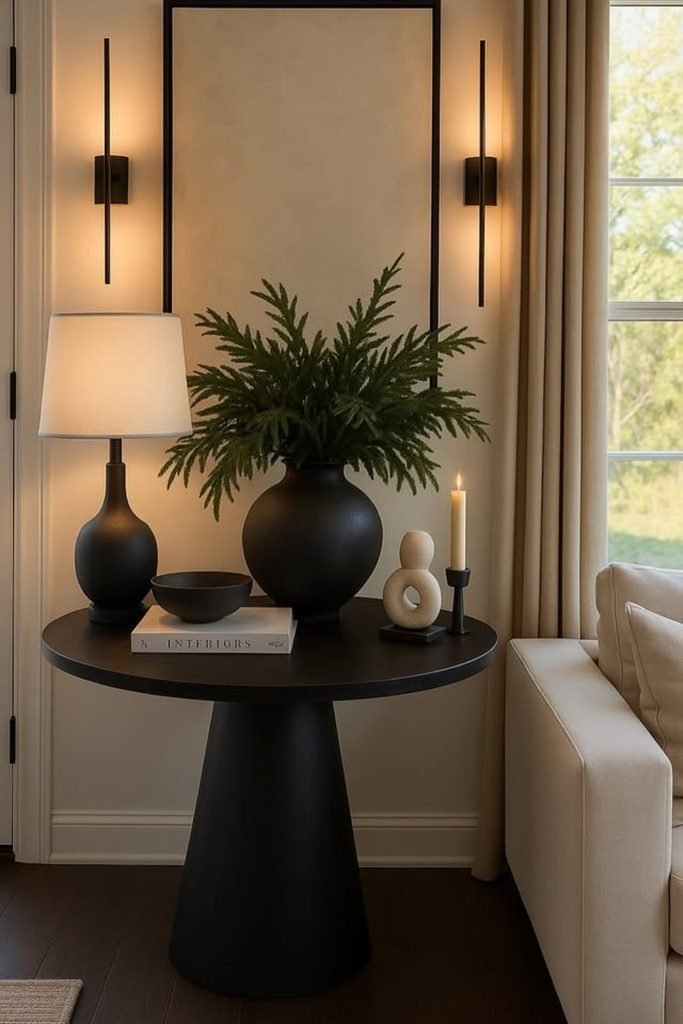
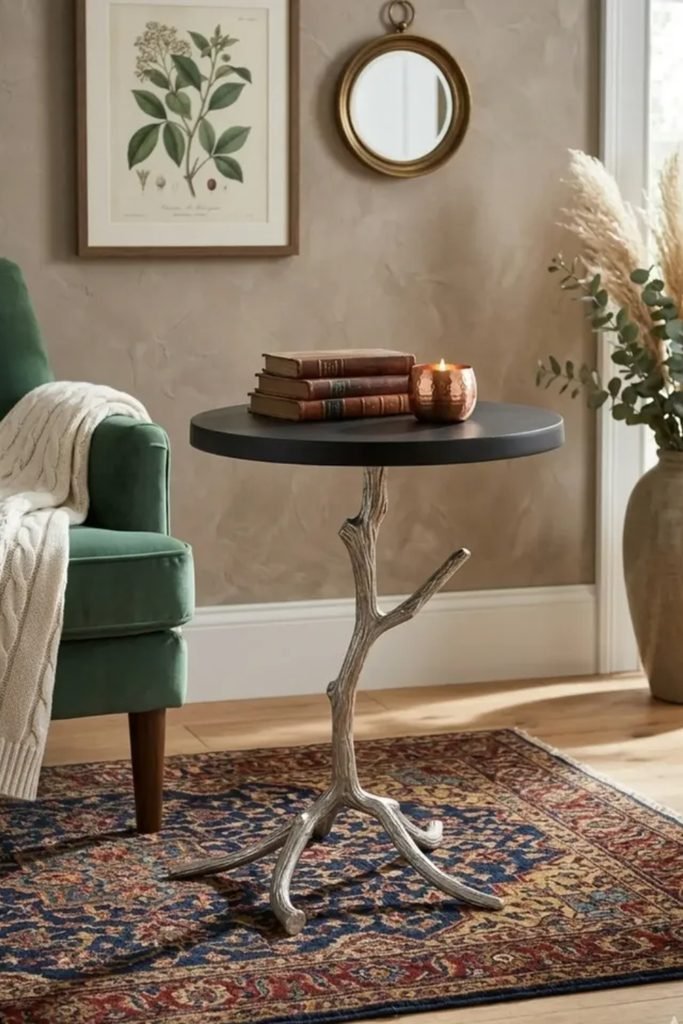
Branch Base
Choose a branch-base side table when your living room already has traditional pieces and you want one detail that feels less expected.
Keep the top simple with vintage books and a candle, letting the sculptural base remain visible instead of competing with extra decor.
It fits reading corners especially well, where an accent chair, soft throw, and warm metal tones can make the setup feel collected.
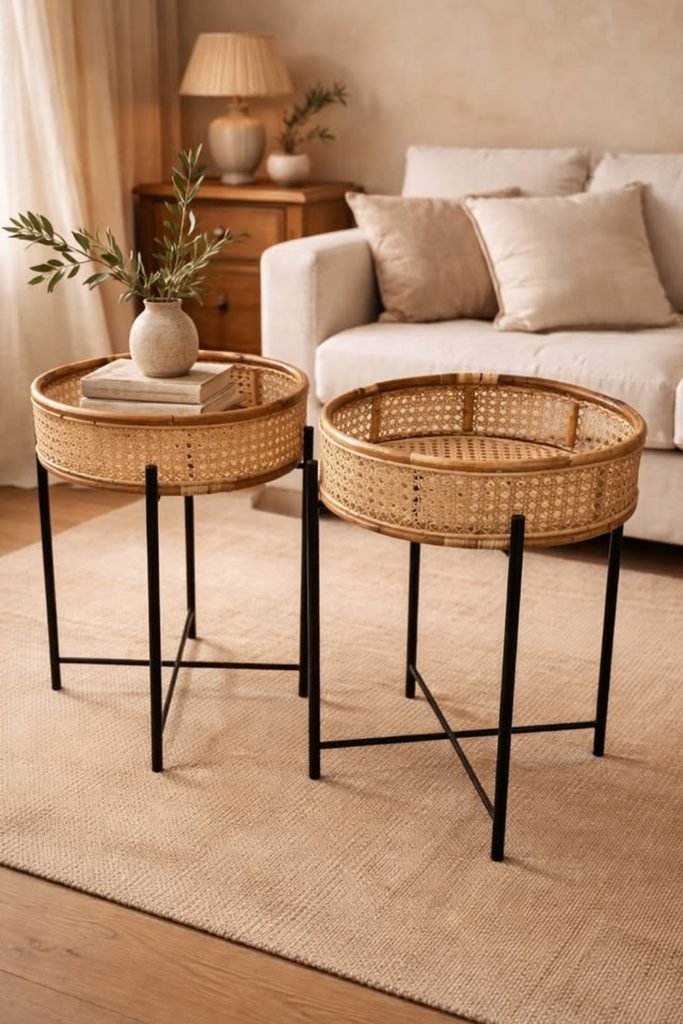
Woven Pair
Use matching woven side tables when you want extra surfaces that feel light, casual, and easy to move around a relaxed living room.
Style only one with stacked books and a small vase, then leave the second clear for guests, snacks, or evening drinks.
The cane texture pairs naturally with beige sofas and rugs, while slim black legs stop the arrangement from becoming overly rustic.
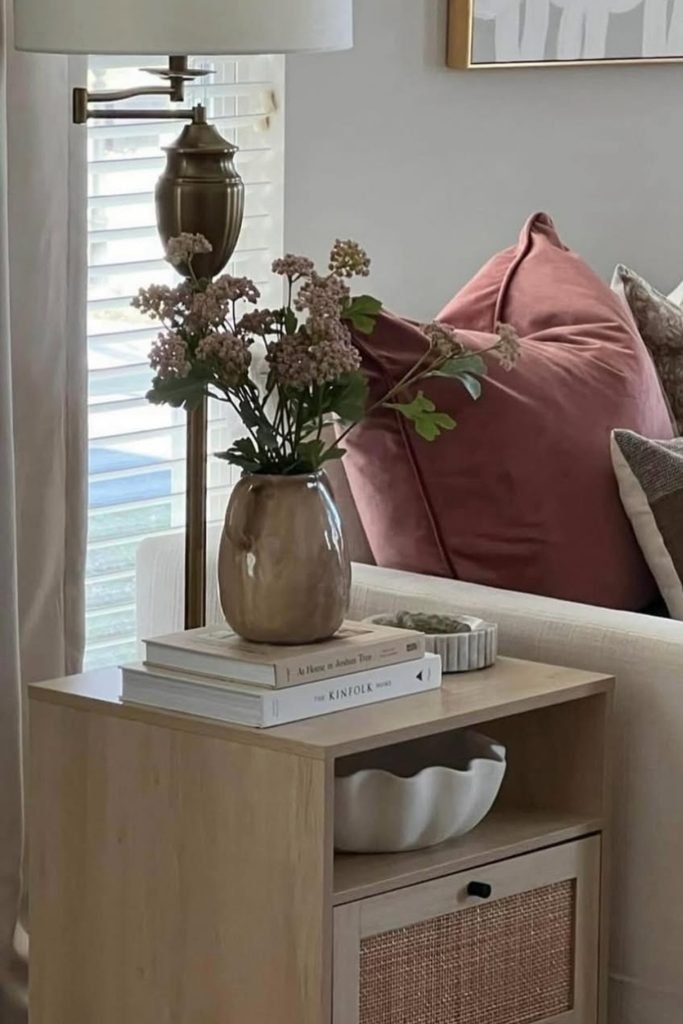
Hidden Storage
Pick a side table with a drawer and open shelf when your sofa area needs decoration but also collects everyday clutter.
Keep books and flowers on top, place one larger bowl on the shelf, and use the drawer for remotes and chargers.
This works especially well in family living rooms, where you want the corner to look polished without hiding everything somewhere else.
Sculptural Curve
Use a sculptural side table when your living room already has bold furniture and you want one smaller piece to echo those curves.
Keep the tabletop simple with fresh flowers, letting the unusual base and nearby dark coffee table provide most of the visual interest.
This works especially well in modern rooms, where one clean arrangement can soften large furniture without making the seating area feel overstyled.

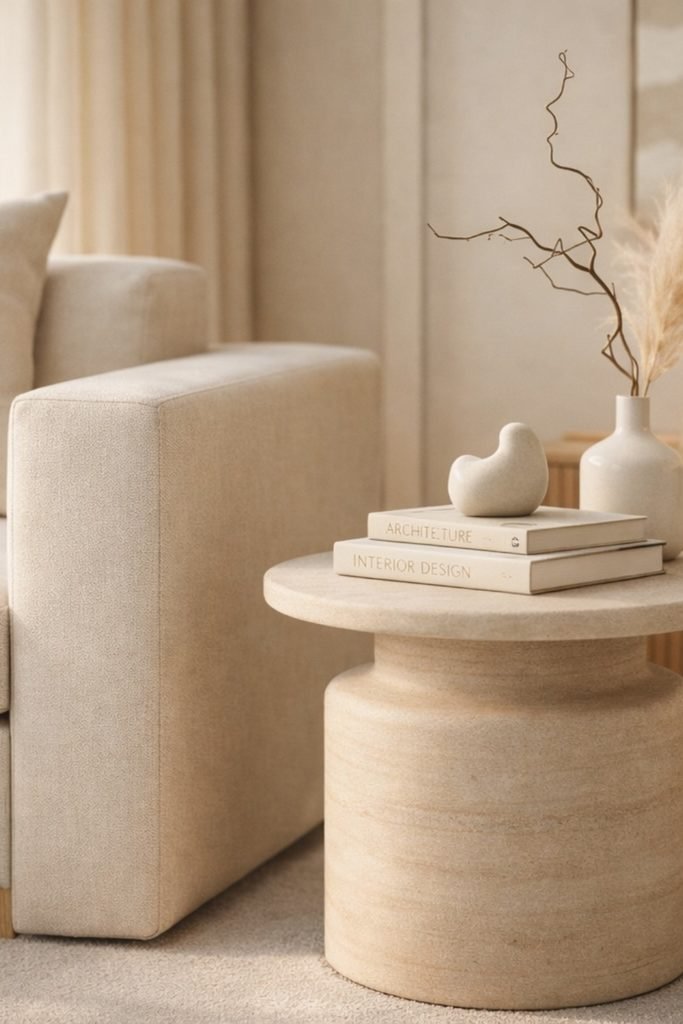
Stone Layers
Let a chunky stone side table carry the look when you want a calm neutral corner that still feels interesting up close.
Stack two books beside a small vase, then add one sculptural object so the surface feels layered without looking crowded.
This setup suits warm minimalist living rooms because the matching beige tones feel quiet, while the rounded shape adds enough visual character.
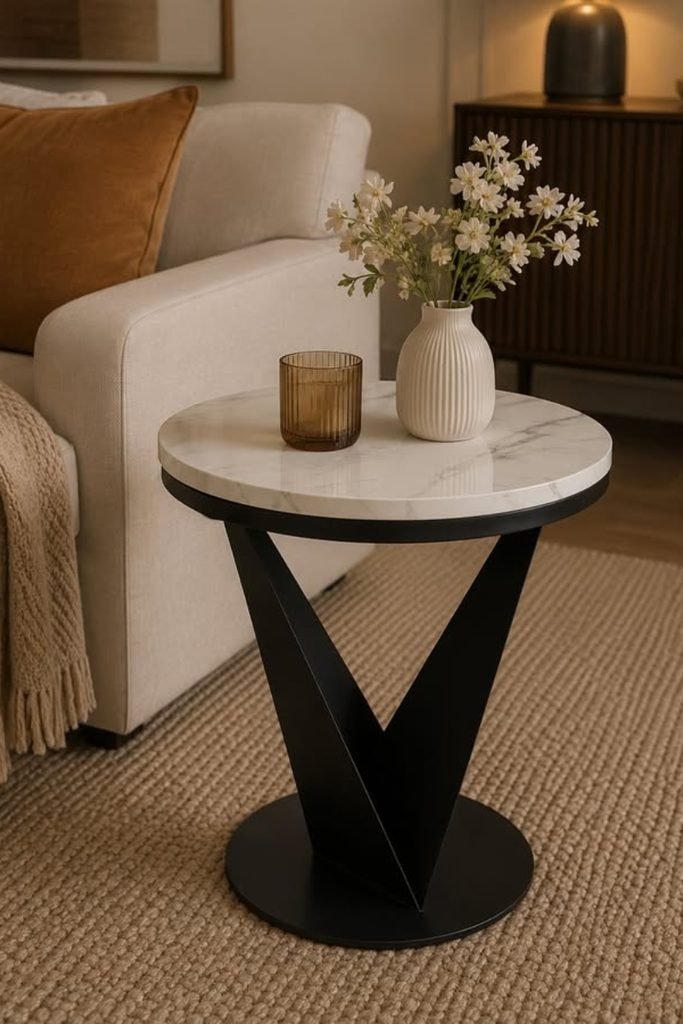
Open Frame
Choose a slim metal side table when you need something useful beside the sofa without blocking light or adding too much visual weight.
Books and one amber vase are enough here, because the open base already gives the corner texture and a slightly collected feel.
This type works beautifully in smaller living rooms, especially when the sofa is bulky and you want the floor area to stay open.

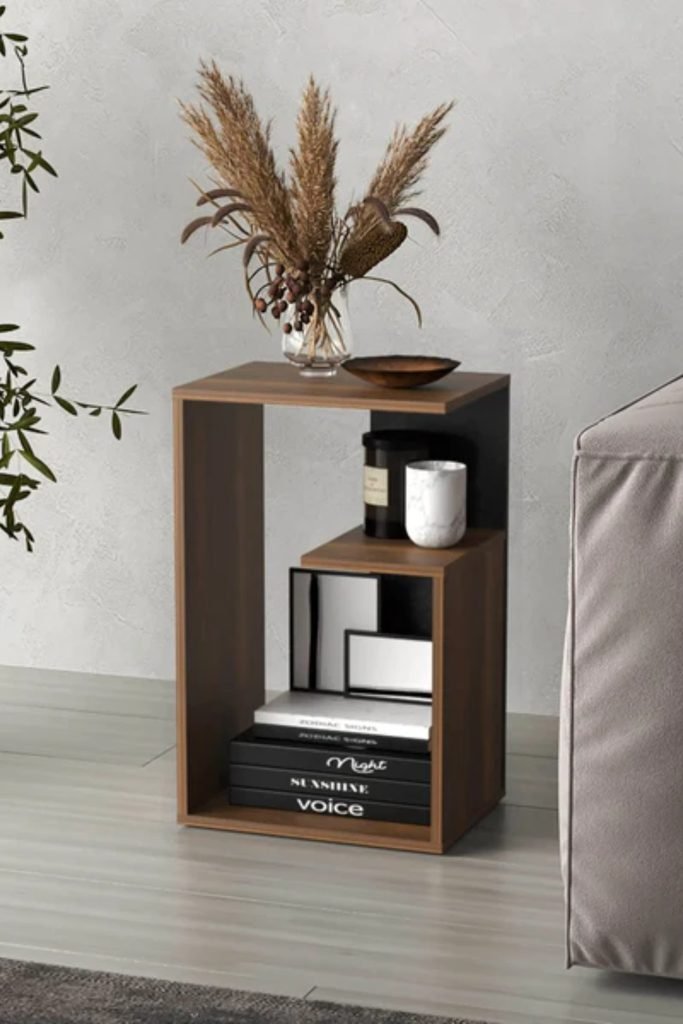
Vertical Storage
Turn a narrow open-shelf table into useful storage when the space beside your sofa is too tight for a wider end table.
Keep the top for one vase and shallow bowl, then use the lower shelves for candles, books, and small everyday pieces.
This layout works well in compact living rooms because vertical storage adds function without pushing extra furniture farther into the seating area.
Candle Corner
Tuck a narrow side table close to a deep sofa when you need lighting and storage without widening the seating footprint.
Pair one compact lamp with a single candle, leaving enough open surface for a drink, phone, or remote beside you.
Use the lower shelf for current magazines or books, so practical items stay nearby without cluttering the tabletop above during everyday use.

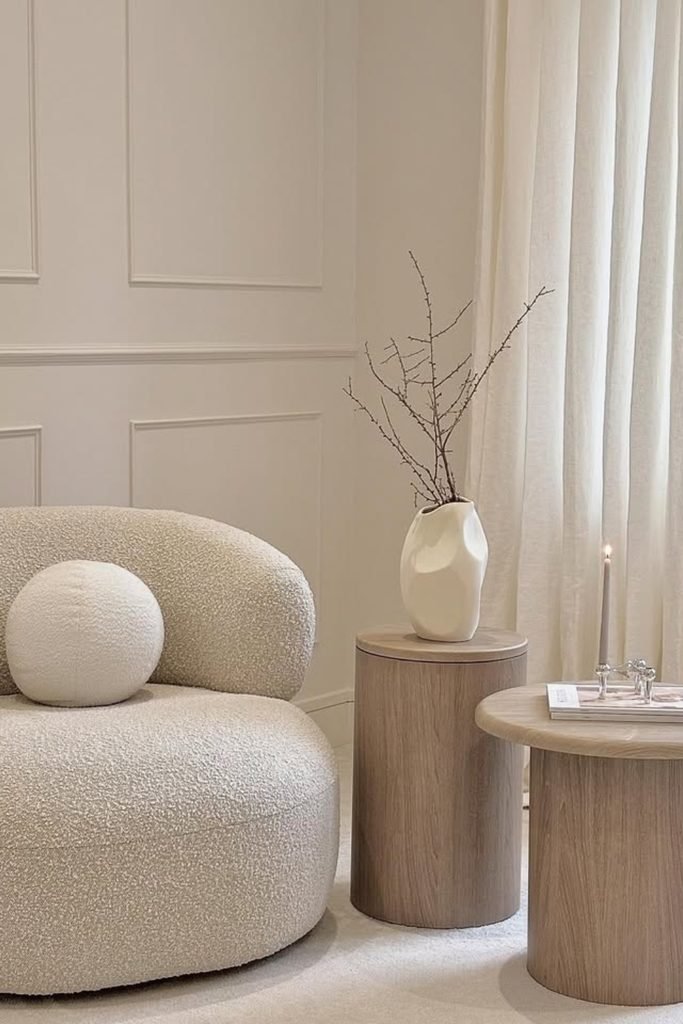
Soft Cylinders
Round pedestal tables work beautifully beside curved seating because repeating the shape makes a neutral living room feel softer and more connected.
Decorate the taller table with one sculptural vase and bare branches, then keep the shorter table mostly clear for daily use.
Sticking to pale wood and cream accessories keeps both pieces calm, while the height difference stops the pairing from feeling flat.
Mirror Moment
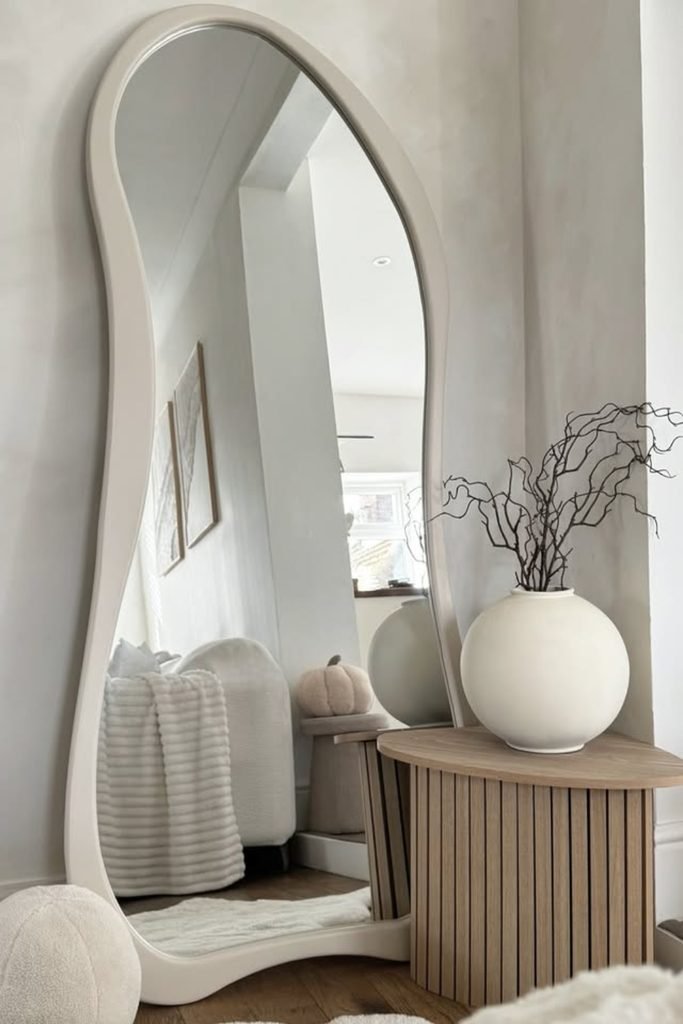
Place a fluted wood side table beside a large mirror when you want one small corner to feel styled and visually bigger.
Use one oversized round vase with twisting branches, since the mirror doubles their shape and gives the arrangement more visual presence.
Keep everything else off the tabletop so the wood grain, vertical slats, and reflected decor can carry the look without clutter.

Shelf Styling
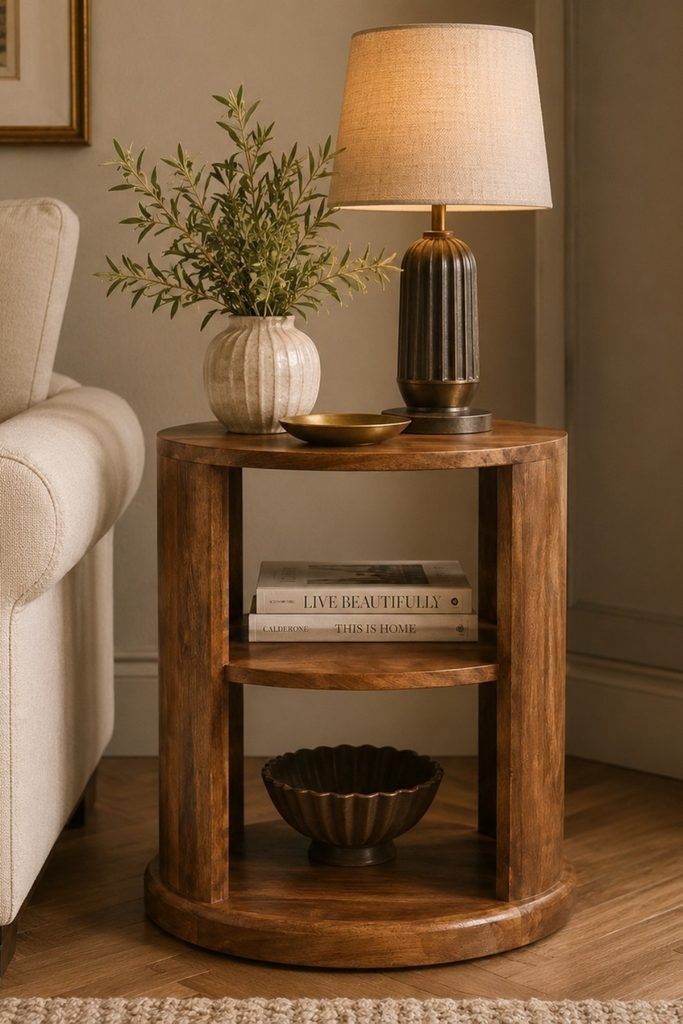
Choose an open round table beside a classic sofa when you want one compact piece to handle lighting, decor, and storage together.
Balance the lamp with a leafy vase and shallow bowl on top, keeping the arrangement useful instead of filling every inch.
Let books occupy the middle shelf and one larger bowl sit below, creating order while keeping everyday pieces easy to reach.
Textured Trio
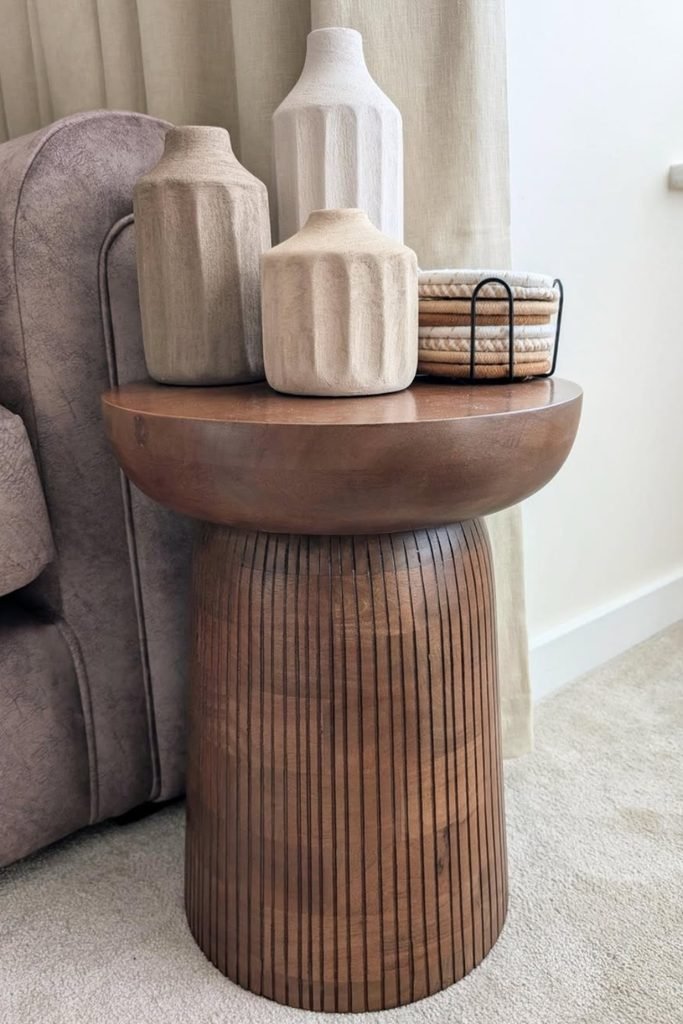
Use a sculptural wood side table beside a soft armchair when you want the furniture itself to add warmth and shape.
Group three neutral vases in different heights, then keep coasters together so the arrangement feels styled without becoming too precious.
This works best in cozy neutral rooms, where varied textures can create interest even when the color palette stays very quiet.
Collected Layers
Give a larger side table more purpose by mixing lighting, books, and one decorative bowl instead of filling it with small accessories.
Keep the lamp as the tallest piece, then let the bowl and stacked books create lower layers across the tabletop.
Use the bottom shelf for extra books, which keeps reading material close while preventing the upper surface from looking crowded or messy.
Flexible Nesting
Choose nesting tables when your living room needs flexible surfaces that can move closer to the sofa whenever drinks or guests arrive.
Style the largest table with one small vase and books, then leave another table clear for coffee or everyday use.
Their rounded triangular tops work especially well in modern rooms because they soften a dark sofa without adding bulky visual weight.
FAQs
Do Side Tables Need Lamps?
No, every side table does not need a lamp, especially when a floor lamp or wall light already covers that seating area.
Use a vase, books, greenery, or one sculptural piece instead, but keep enough open space for a drink or your phone.
Choose lighting only when it adds real function, because forcing a lamp onto a small table can make the whole corner feel crowded.
Should Both Side Tables Match?
They do not have to match, but repeating one detail like wood tone, shape, lamp finish, or height keeps the room connected.
Style each table a little differently so the seating area feels collected rather than copied, especially when your sofa already looks symmetrical.
You can use the same color family on both sides, then vary the books, greenery, bowls, or personal pieces for balance.