Your coffee table can look empty one minute and overcrowded the next, which makes finding the right balance surprisingly frustrating.
You may already have books, candles, trays, or vases, but arranging them without making the table look messy is the harder part.
The best setup gives your living room some personality while still leaving enough space for drinks, remotes, and everyday use.
In this article, you’ll find practical living room coffee table decor ideas that help you create a balanced, stylish, and useful setup.
Let’s jump in!
What to Put on a Living Room Coffee Table?
Start with one main piece, such as a vase, bowl, or tray, so the table has a clear visual focus.
Add a small stack of books to create height and give smaller decor pieces a proper base instead of letting them look scattered.
A candle, small sculpture, or decorative box can fill the middle space without making the setup feel too busy.

Bring in flowers, branches, or greenery if the table needs softness and a little natural color.
Use a tray or lidded box for remotes, coasters, and other everyday items you want close but not messy.
Most importantly, leave some tabletop empty so you still have room for drinks, snacks, and daily use.
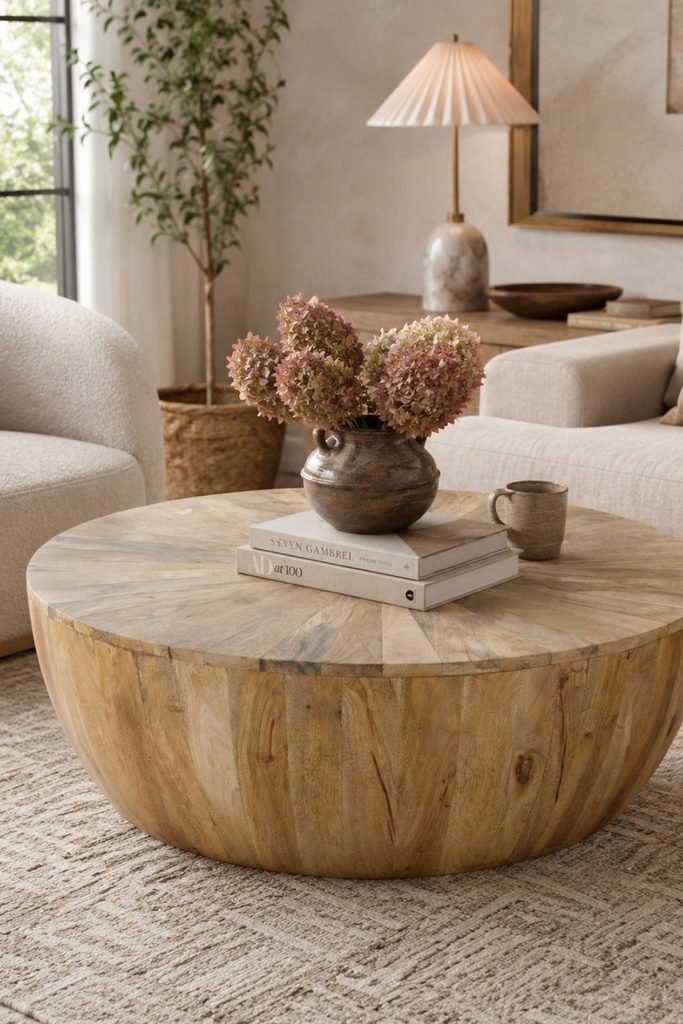
Natural Balance
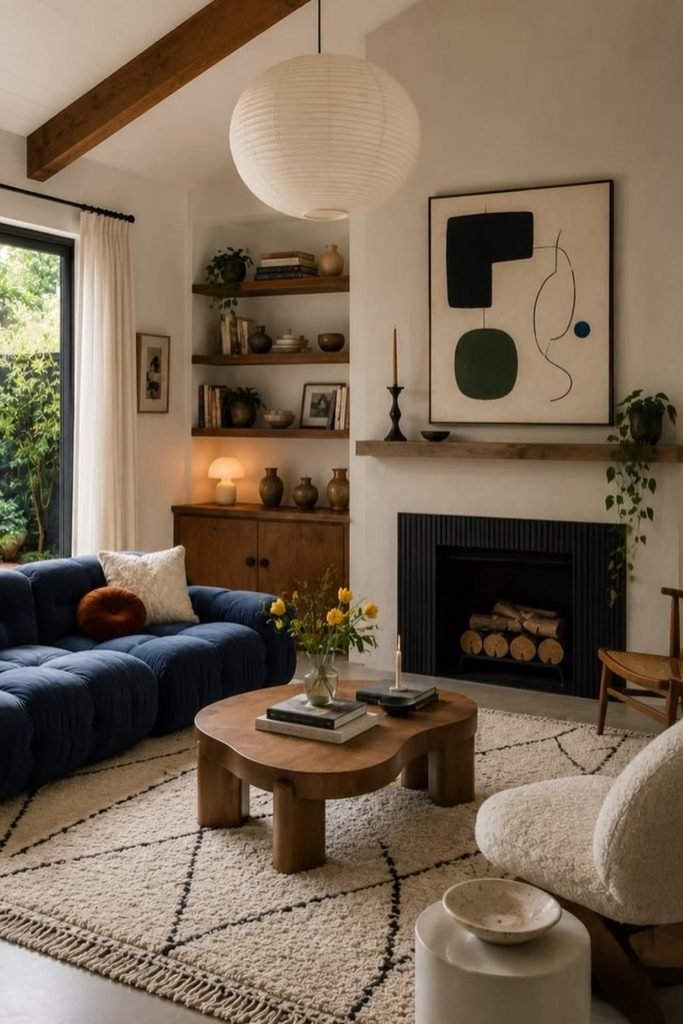
Let a chunky wood table carry most of the visual weight, then keep the styling simple with books and one earthy vase.
Muted hydrangeas soften the heavy round shape without hiding the grain, making this setup especially good for warm neutral living rooms.
Leave enough open surface around the arrangement for coffee or snacks, so the table still feels useful instead of overly staged.
Tray Layers
A large tray is useful when you want several decorative pieces together without letting books, candles, and flowers spread across the table.
Build the arrangement with mixed heights, then place a smaller object outside the tray so the whole surface feels less rigid.
This fuller look suits spacious living rooms, while baskets underneath can quietly hold blankets, games, or everyday items you use often.

Light Styling
Keep a sculptural coffee table from competing with its own base by using just one leafy vase, stacked books, and a low bowl.
The greenery adds height while the fruit introduces warm color, giving a pale living room interest without filling every inch of space.
Choose this lighter approach when the table itself has a strong shape, because too many accessories can hide what makes it special.

Polished Glow
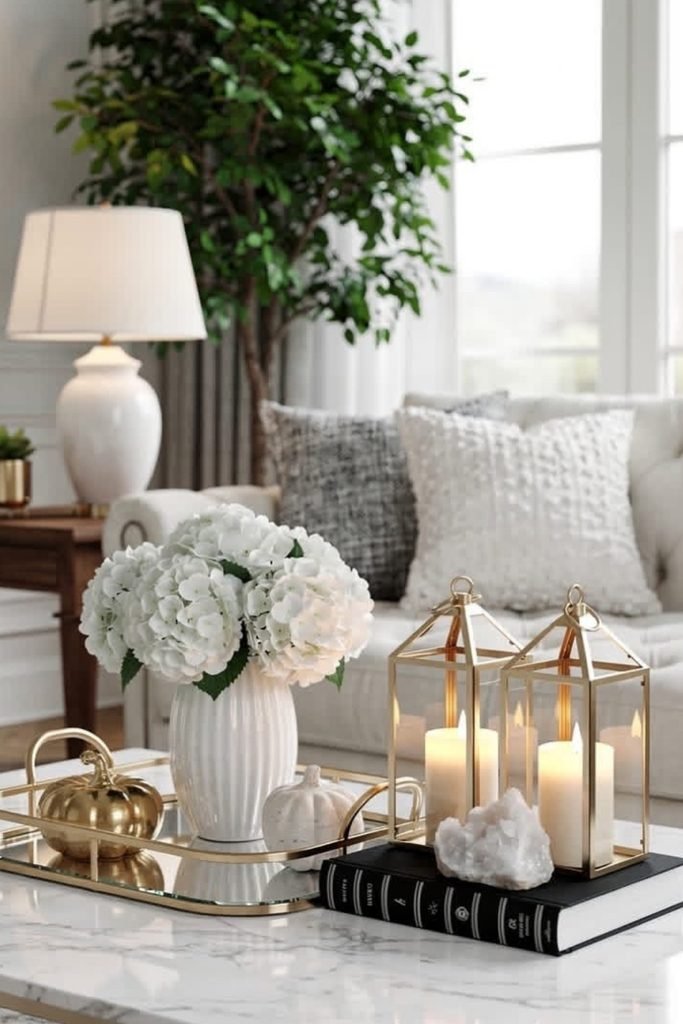
Use a reflective tray to gather polished accents on a marble table, especially when you want the living room to feel brighter.
White flowers keep the arrangement soft, while lantern candles and touches of gold add enough contrast to make the pale surface interesting.
Keep the taller pieces grouped to one side and leave the opposite edge clearer, so drinks and daily items still have room.
Color Anchor
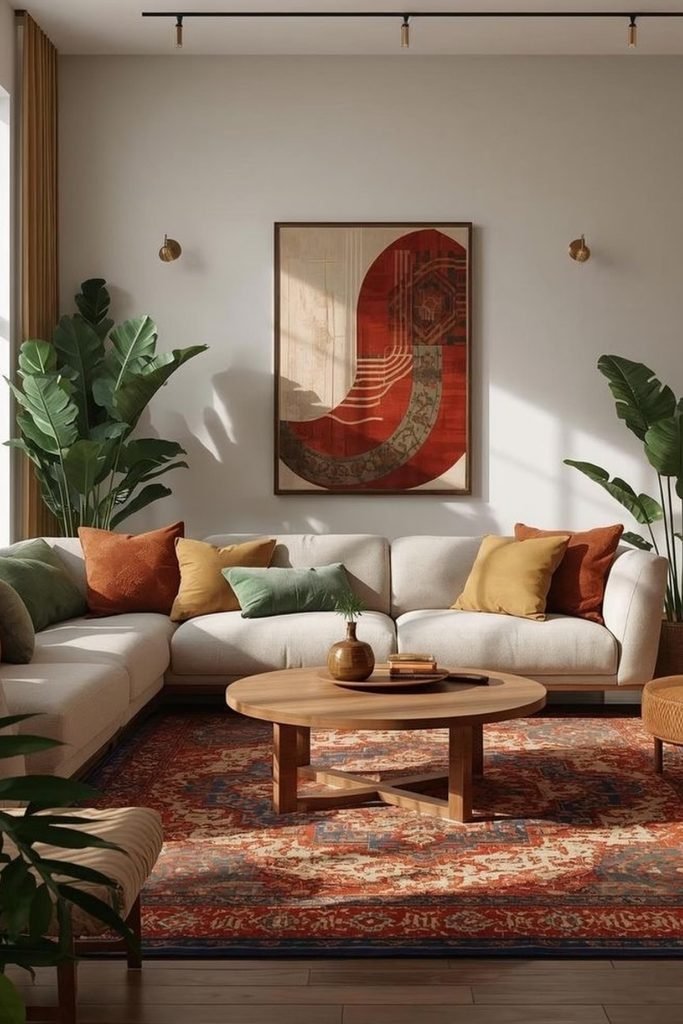
Let the warm rug and colorful cushions lead the room, then keep the coffee table simple with one low earthy arrangement.
A small vase, tray, and stacked books add interest without competing with the artwork, plants, or patterned textiles around the seating.
This works especially well in colorful living rooms where the table needs to connect everything without becoming another busy focal point.
Tray Control
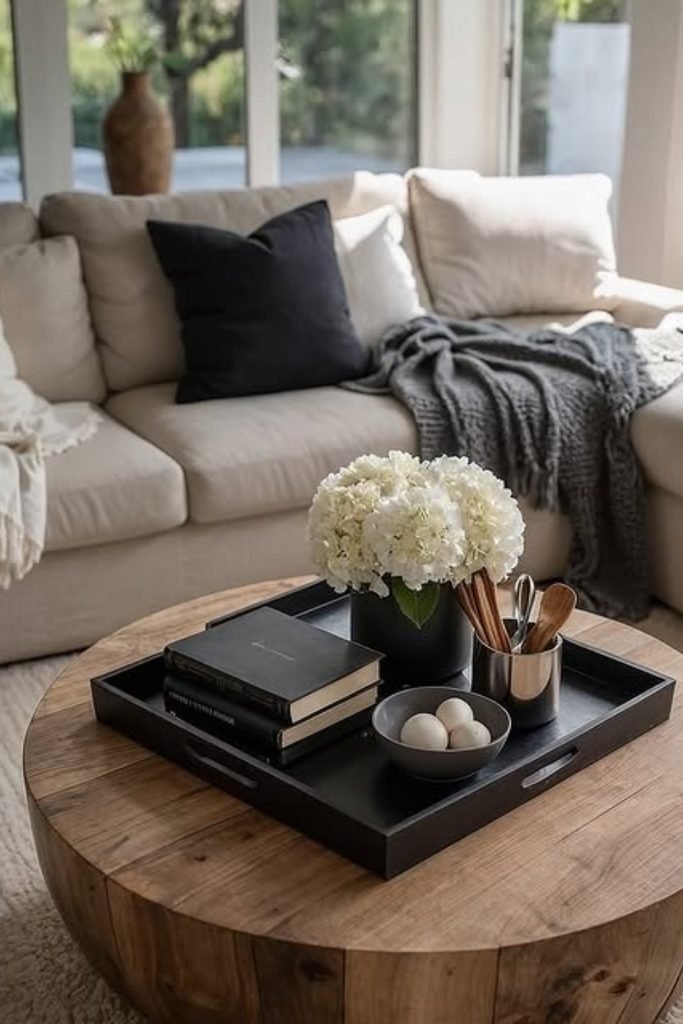
Use one oversized black tray when a chunky wood table needs structure, then keep every small object contained inside that defined area.
Books, flowers, a bowl, and everyday utensils feel organized together, while the exposed wood still keeps the setup warm and relaxed.
Choose this approach for family rooms where you want decor nearby but need the entire arrangement to move quickly when required.
Glass Layers
Glass tables can handle richer styling because the transparent surface keeps the room visually open even when several decorative layers are added.
Build height with flowers and candleholders, then ground them with books, a box, and a mirrored tray for a polished finish.
This arrangement suits formal living rooms where reflective finishes, metallic details, and soft seating already create a more dressed-up overall look.

Soft Repeat
Keep a pale coffee table calm by repeating soft colors already used in the chairs, rug, curtains, and nearby lighting.
Two small flower arrangements create gentle height, while one low candle keeps the center useful and prevents the table from feeling overdone.
This simple setup works best when the living room already has strong lighting or furniture shapes that deserve more visual attention.

Layered Heights
Use tall dried stems when a wide coffee table feels too flat, because their height fills space without adding more clutter.
Keep the lower pieces simple with books, a bowl, and one small tray so the tall arrangement still feels balanced.
This setup works especially well in warm neutral rooms where wood tones, patterned rugs, and soft upholstery already create plenty of texture.

Woven Centerpiece
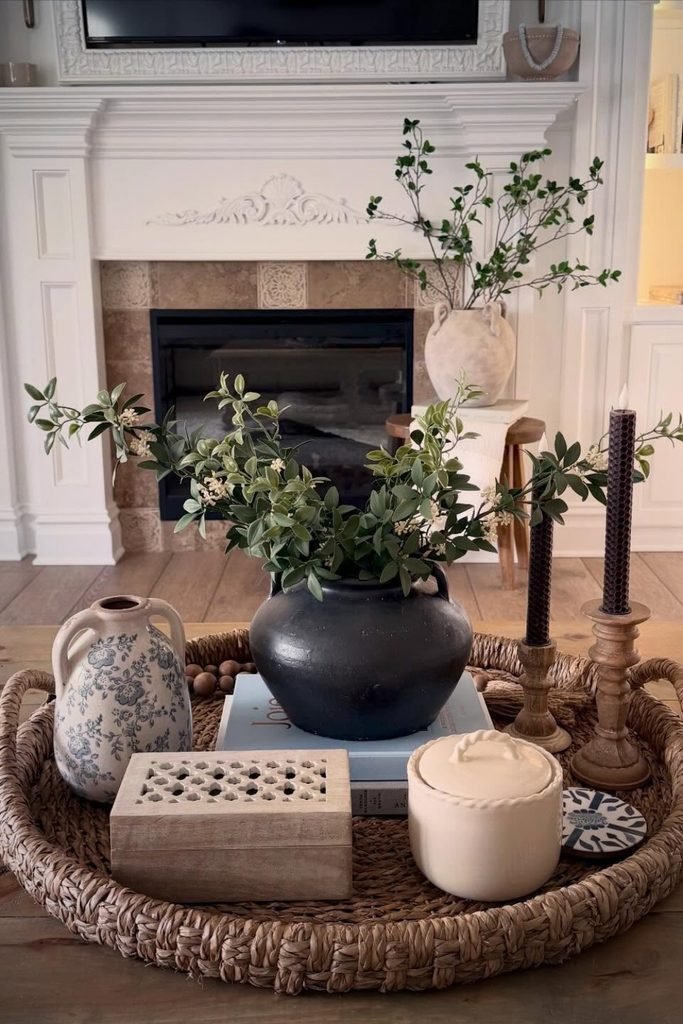
A woven tray can make a large wooden table feel finished while keeping several decorative pieces visually connected instead of scattered.
Mix greenery, books, pottery, and candlesticks inside it, but vary their heights so the arrangement does not read as one heavy block.
Use this idea near a fireplace or built-ins, where natural textures can soften all the straight lines and painted architectural details.
Shelf Balance
When your coffee table has a lower shelf, let that extra level handle storage so the top can stay calm and intentional.
A rounded vase, small book stack, and low bowl give the dark surface enough contrast without hiding its rich wood finish.
Tuck extra books into a basket below, which keeps everyday reading close while preventing the main tabletop from becoming crowded.

Cozy Layers
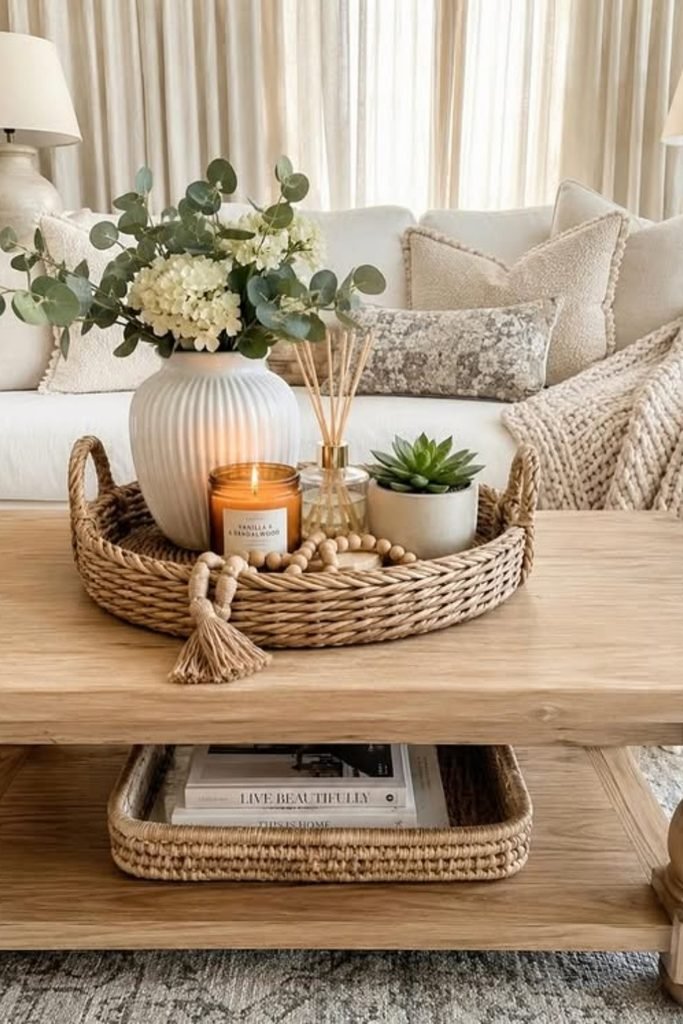
A rectangular table feels more relaxed when one woven tray holds the main decor, leaving the surrounding wood open for daily use.
Pair flowers with a candle, diffuser, and small plant to add scent, greenery, and warmth without spreading pieces across the surface.
Use the lower shelf for books in another basket, so the room stays cozy while the top remains easy to clear.
Dark Anchor
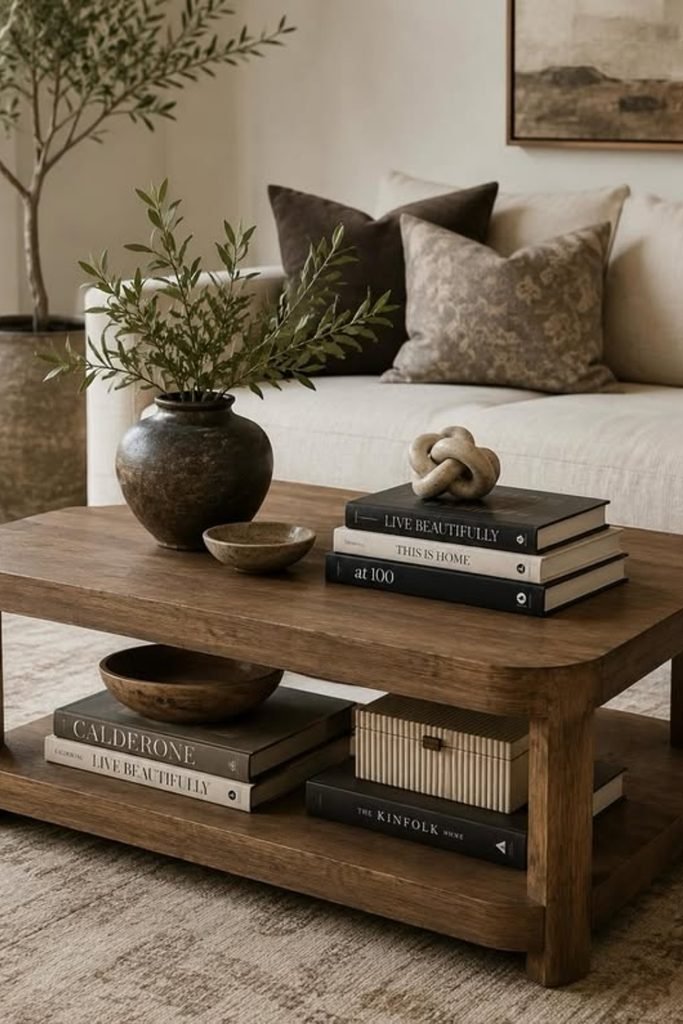
Let one dark vase become the main anchor when a warm wood table needs contrast without losing its calm, natural character.
Stack books beside it and add one sculptural object, which gives the tabletop shape while keeping the arrangement easy to understand.
Use the lower shelf for extra books and a closed box, so storage stays useful without making the top feel crowded.
Open Base
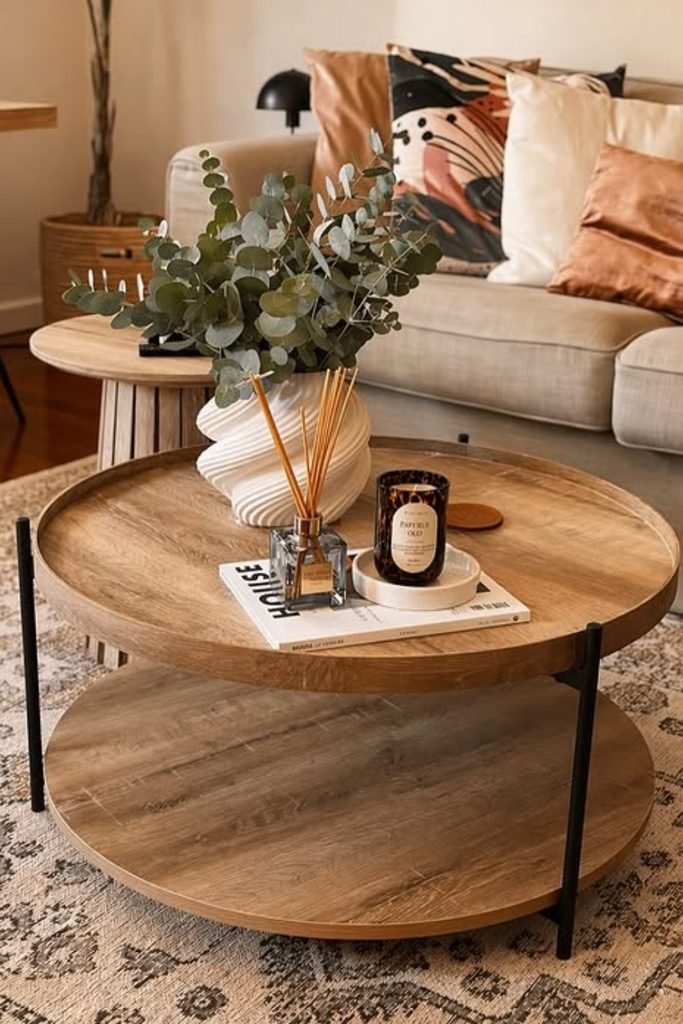
A two-level table already has plenty of visual structure, so keep the upper surface focused instead of filling every available spot.
Place greenery at the back, then layer a diffuser and candle over one book to create height without blocking the room.
Leaving the lower level mostly bare lets the wood grain show and gives the whole setup a lighter, less decorated feel.
Woven Warmth
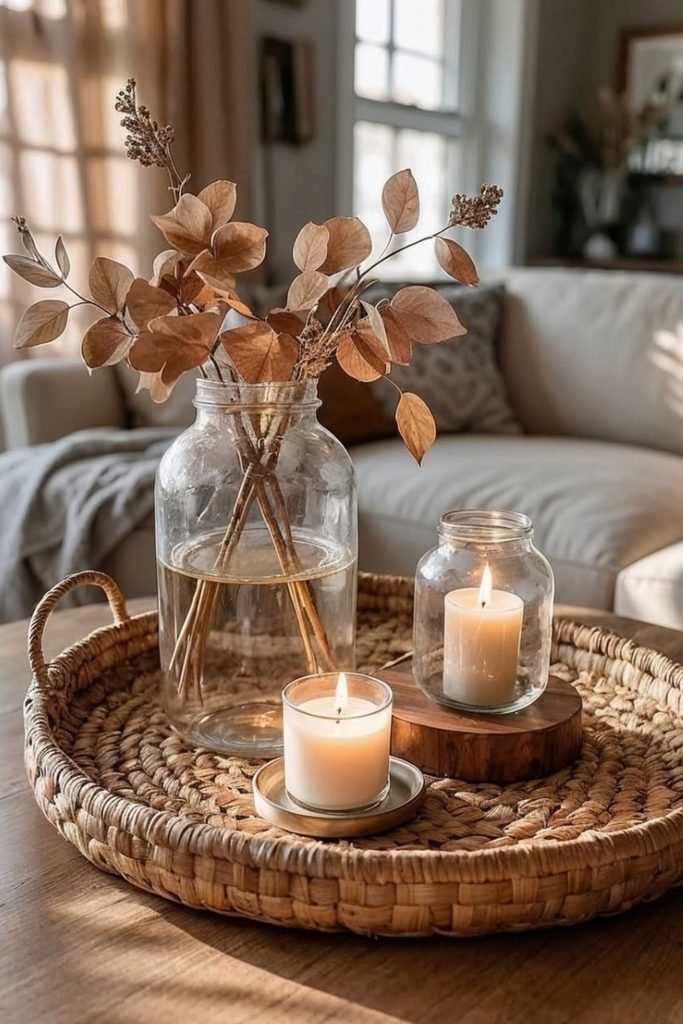
Turn a simple woven tray into a cozy focal point by pairing clear glass, dried stems, and candles in warm natural tones.
The transparent vase keeps tall branches from feeling heavy, while the basket texture adds enough depth to a plain wooden surface.
Keep everything inside the tray when you want an easy seasonal arrangement that can be lifted away whenever more table space is needed.
Glass Contrast
A glass coffee table can disappear visually, so use solid shapes and stronger colors to give the center of the room more presence.
White flowers soften the look, while dark books, wooden knots, and red taper candles create contrast at several different heights.
This works well in neutral living rooms where the table needs personality, but you still want the transparent surface to stay visible.

Sculptural Luxury
Use sculptural pieces instead of books when a glossy statement table already has pattern, shine, and enough visual weight of its own.
Keep the palette tight with dark glass, gold accents, and white orchids so the styling feels rich without becoming visually noisy.
Try this approach in formal living rooms where mirrors, metallic finishes, and tailored seating can support a more polished centerpiece.

Quiet Focus
Let a bold sofa and oversized artwork do the talking, then keep the coffee table low, simple, and easy on the eye.
A small vase, two books, and one candle are enough to connect the wood table with the room’s warmer accents.
This setup suits modern living rooms where the furniture already has strong color, shape, or texture and extra decor would feel distracting.
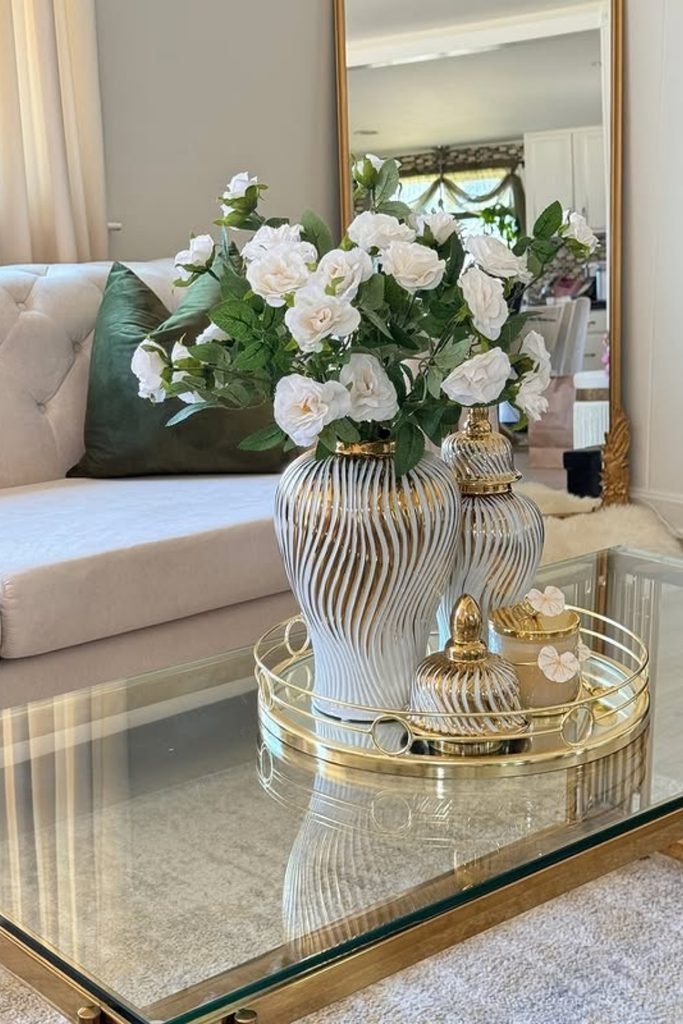
Gold Grouping
On a clear glass table, group ornate pieces inside one gold tray so the arrangement feels intentional instead of scattered.
Choose one tall floral vase, then surround it with smaller matching containers to create height while keeping the color story consistent.
This works best in glam or traditional rooms where reflective finishes already appear, because the tray repeats that polished look naturally.
Playful Pause
Let the coffee table act as a calm break when the room already has strong reds, greens, patterns, and playful furniture shapes.
Keep the surface mostly open and add only useful pieces, like cups or a small tray, instead of forcing decorative clutter.
This idea fits lively apartments especially well, because a quieter tabletop gives all the surrounding color and personality room to breathe.

Blue Balance
Repeat one accent color across flowers, pillows, and nearby decor so a glass coffee table feels tied into the whole living room.
Keep the tabletop arrangement compact with a vase and candle, letting the gold frame and reflective surface add enough visual interest.
This works especially well in polished rooms where blue, cream, and metallic details already create a clear, coordinated color story.

Amber Contrast
Warm a pale room with one amber vase, a candle, and stacked books instead of filling the round table with extra pieces.
The darker glass adds contrast against soft upholstery, while a few branches bring height without making the setup feel heavy.
Use this approach in minimal living rooms where sunlight, light wood, and neutral fabrics already provide most of the visual softness.

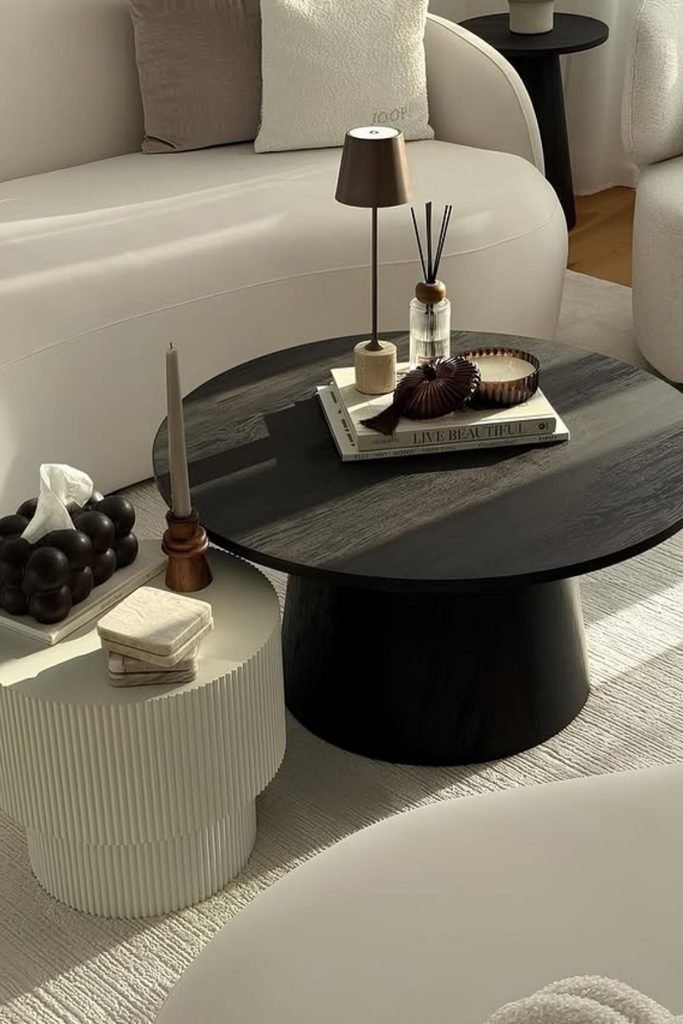
Portable Glow
Use a small lamp on the coffee table when you want decor that adds both function and a stronger evening atmosphere.
Layer it over books with a diffuser and candle, then keep the rest of the dark surface open for balance.
This works best in modern neutral rooms where black accents need warmth, and the portable light can replace another decorative object.
Soft Coordination
Let a marble or stone table stay mostly visible, then use one low tray to gather flowers and a small decorative accent.
Repeating the room’s soft blue tones in the vase and cushions keeps the whole living room connected without overmatching everything.
Choose this setup for classic or transitional spaces where gold frames and pale upholstery already give the room a clean, elegant base.

FAQs
Should Coffee Table Decor Match the Living Room?
Your coffee table decor does not need to match everything, but repeating one or two colors helps the room feel connected.
Pull those colors from pillows, artwork, rugs, or nearby furniture so the table feels related without looking overly coordinated or forced.
Mixing different materials and shapes will keep the setup interesting, even when the colors stay within the same general palette.
How Often Should You Change Coffee Table Decor?
You do not need to restyle the table often; change it when the room feels stale or the season changes.
Swapping flowers, candles, books, or one small accent can refresh the whole setup without buying an entirely new collection of decor.
Keep your main pieces consistent, then rotate a few smaller items so the table stays practical, familiar, and easy to update.