When your living room is tiny, even one oversized sofa or badly placed table can make the whole space feel harder to use.
You may have enough furniture, but still struggle with narrow walkways, awkward TV placement, no storage, or a room that always feels crowded.
The good news is that a better layout, smarter furniture choices, and a few simple styling changes can make the same space feel much easier to live in.
In this article, you’ll find practical tiny living room ideas that help you save space, improve flow, add storage, and make the room feel more open.
Let’s jump in!
How to Style a Tiny Living Room?
Start with the layout before you buy anything, because one oversized sofa or badly placed table can quickly block the whole room.
Keep the main walkway open, then place your sofa where it gives you enough seating without cutting off doors, windows, or the TV.
Choose fewer furniture pieces, but make sure each one earns its place through storage, extra seating, or another useful function.

Use wall-mounted shelves, slim consoles, and tall storage when you need more room without taking up valuable floor space.
If the room feels boxed in, add better lighting, longer curtains, a larger rug, or furniture with visible legs to open it visually.
Most importantly, style the room around how you actually use it, not around furniture you think every living room should have.
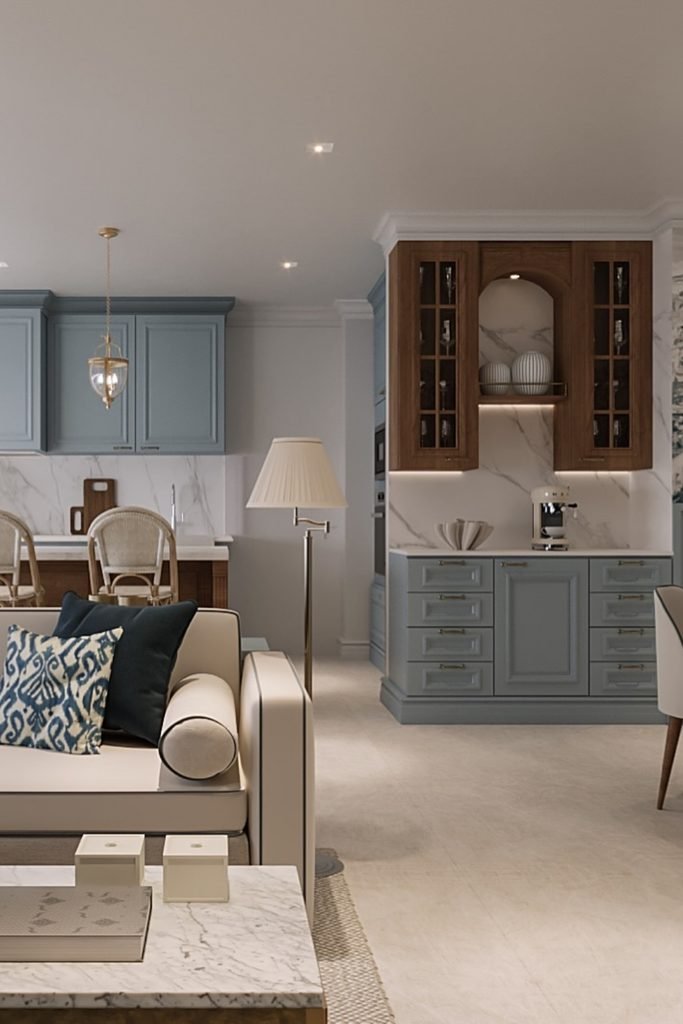
Blue Harmony
Open layouts feel more polished when living and kitchen finishes share a controlled palette, letting blue cabinetry quietly connect with patterned cushions.
Keep the sofa neutral, repeat blue through smaller accents, and use marble surfaces to bring brightness without making the room feel cold.
Warm wood cabinetry and soft floor lighting add enough contrast, helping the connected entertaining space remain comfortable, layered, and visually balanced.
Media Glow
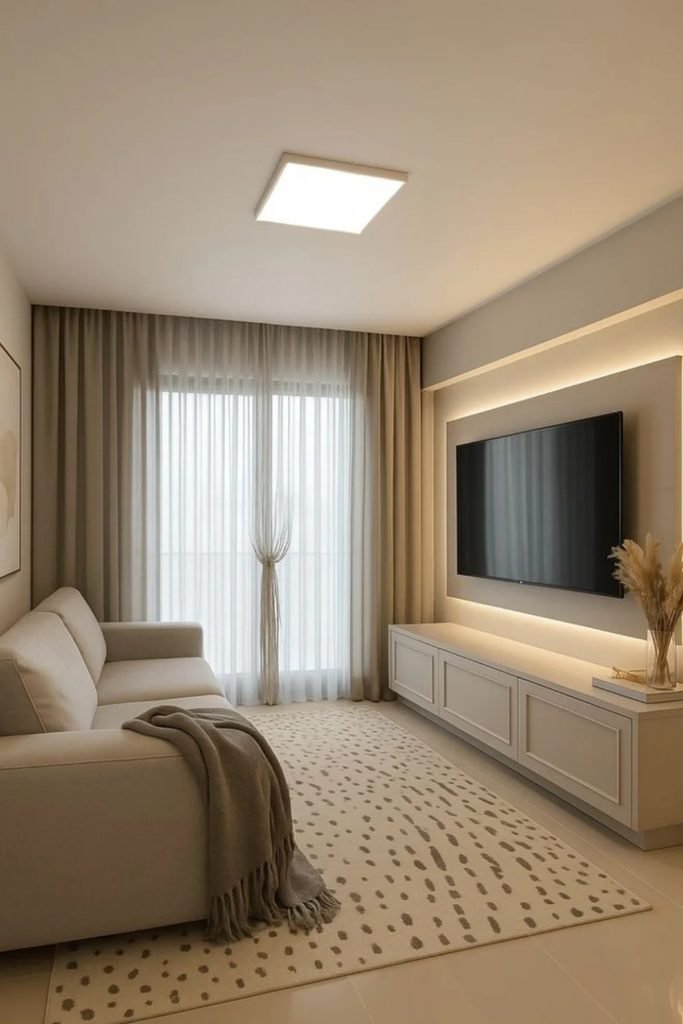
Small living rooms gain breathing room when the television wall handles storage, lighting, and decoration within one clean built-in arrangement.
Mount the screen above a long closed cabinet, then frame the panel with warm backlighting to soften its strong rectangular shape.
Finish with full-height neutral curtains and a lightly patterned rug, keeping furniture pale so daylight can spread easily throughout the narrow room.
Artistic Layers
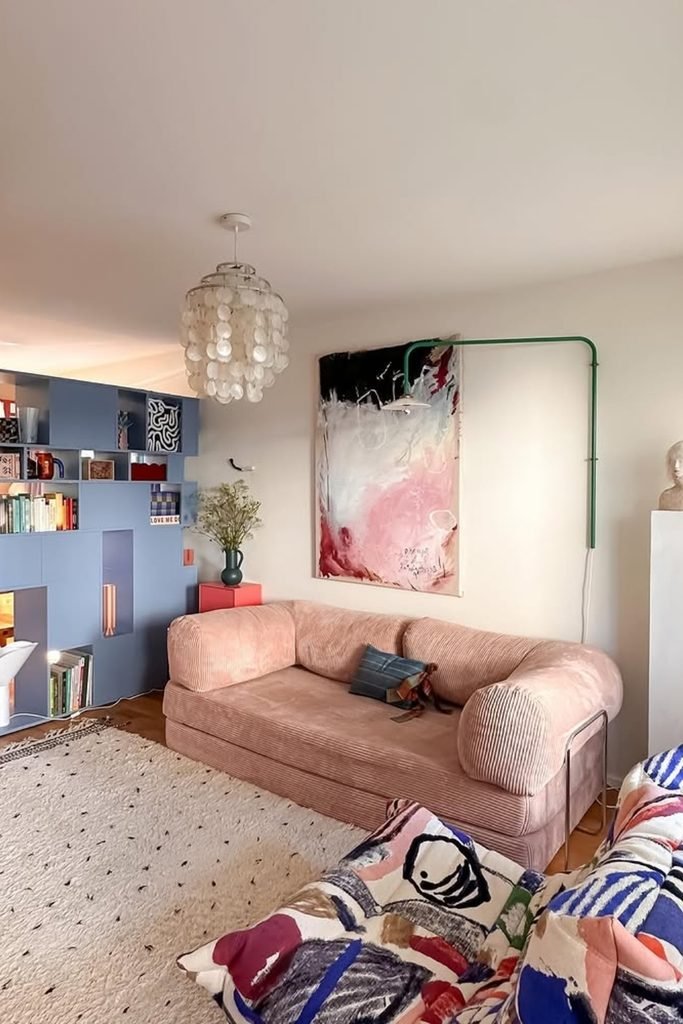
Colorful rooms work better when one soft furniture piece settles the louder artwork, shelving, and patterned textiles surrounding the seating area.
Choose a dusty pink sofa as the calm center, then introduce stronger reds, blues, and graphic prints through movable accessories nearby.
Leave generous white wall space between expressive pieces, allowing each color moment to stand separately instead of turning the room visually chaotic.
Sage Connection
Open-plan apartments feel more connected when the living room borrows muted kitchen colors instead of competing with an entirely separate palette.
Repeat sage green from the cabinetry on a comfortable sectional, while pale wood furniture keeps the dining zone light and naturally transitional.
Use one soft rug beneath the seating area to mark its boundary, then maintain open walkways toward the dining table and kitchen.

Timber Glow
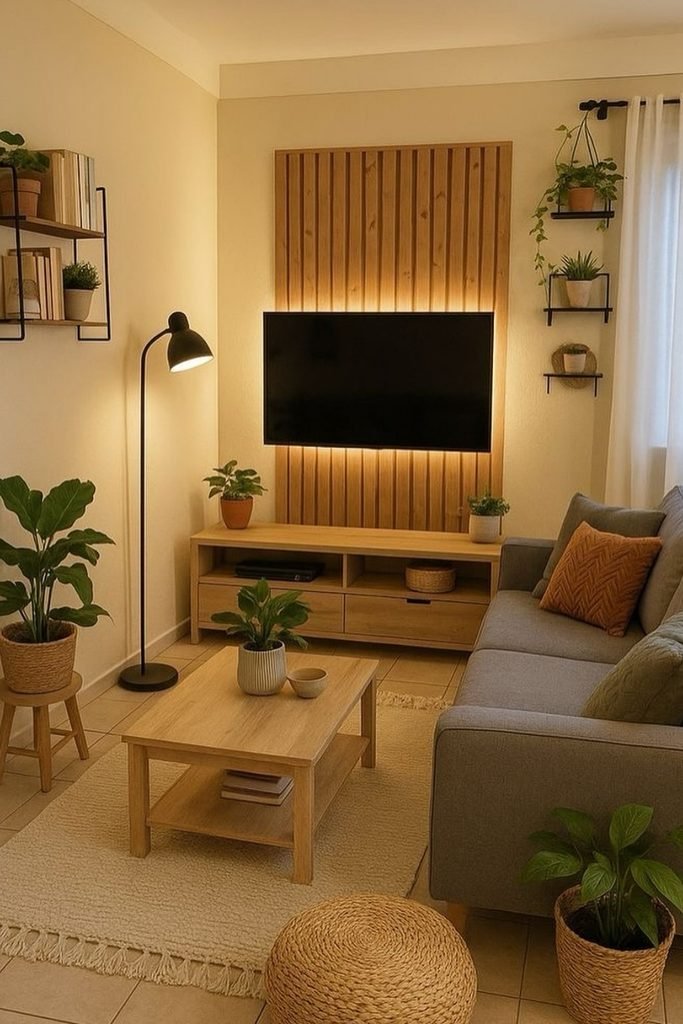
Warm timber instantly makes a compact living room feel calmer, especially when vertical slats create one strong feature behind the television.
Pair light wood furniture with a gray sofa, woven textures, and leafy plants so the room gains warmth without feeling overly rustic.
Soft backlighting behind the television panel adds evening depth, while a slim floor lamp keeps darker corners comfortable without taking much space.
Earthy Comfort
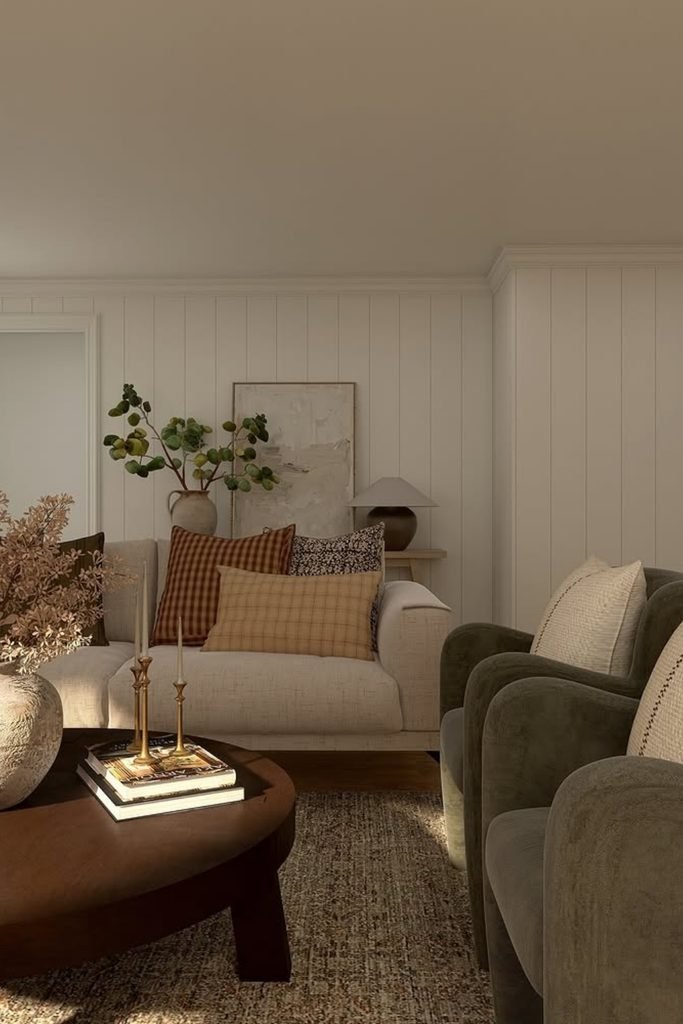
Deep olive armchairs can anchor a neutral living room beautifully, giving pale upholstery enough contrast while keeping the overall mood naturally relaxed.
Bring warmth through rust and checked cushions, then choose a dark wooden coffee table to create a grounded center between different seats.
Textured rugs, simple wall paneling, and oversized branches finish the space gently, making this combination especially effective for cozy conversational living rooms.
Natural Flow
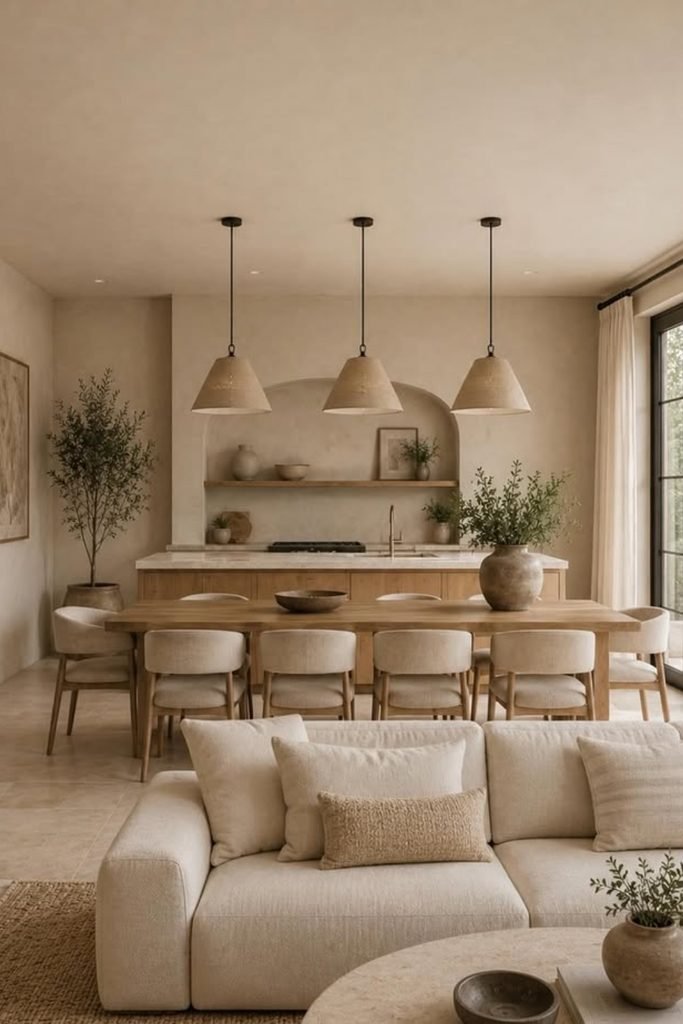
Large open-plan rooms feel more inviting when living and dining areas share creamy upholstery, pale timber, and softly textured natural materials throughout.
Position a low neutral sofa toward the dining area, allowing sightlines to stay open while each zone remains clearly defined by furniture.
Pendant lights above the table create a separate dining focus, while greenery and pottery repeat earthy details across both connected gathering spaces.
Compact Balance
Limited floor space becomes easier to manage when lightweight seating and smaller tables provide comfort without blocking movement toward the nearby kitchen.
Place the sofa along one wall, then use an accent chair opposite it to create conversation space while preserving a central walkway.
Bright cushions, pendant lighting, and small plants add personality without demanding extra room, making this approach practical for apartments and studio-style layouts.

Sunlit Neutrals
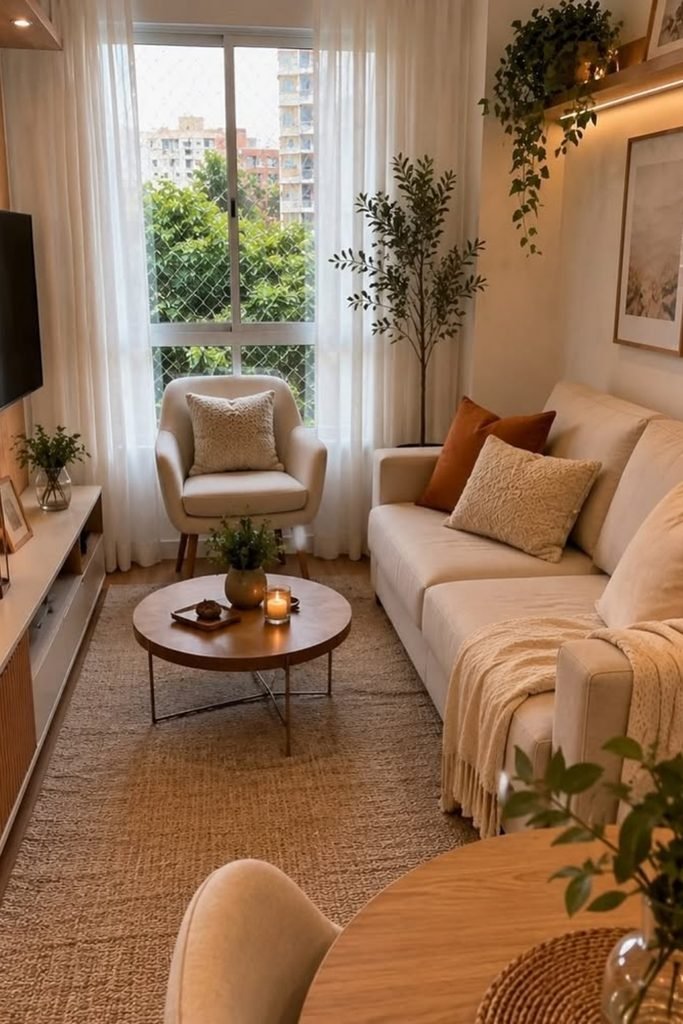
Natural light does most of the decorating when a warm beige sofa sits beside tall windows dressed with simple sheer curtains.
Ground the seating with a large faded rug, then bring in rounded wooden tables and gray textured accents for gentle visual contrast.
Finish the brightest corner with one oversized leafy plant, allowing greenery to add height without filling valuable floor space with smaller decorations.

Retro Warmth
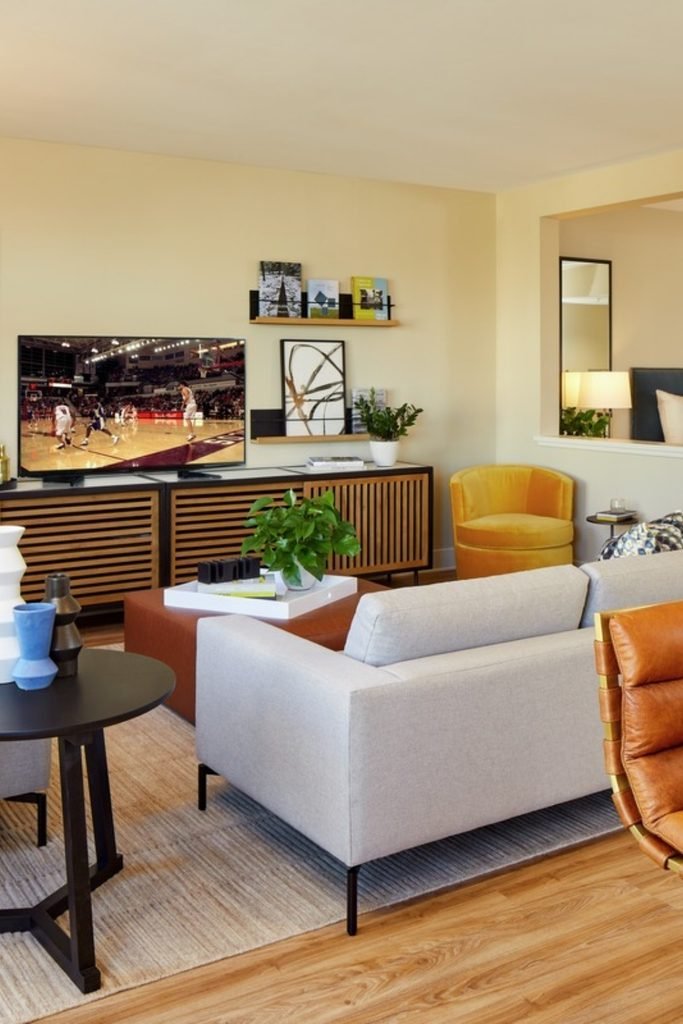
Mid-century furniture brings character without heaviness, making it especially useful when your living room needs several seats within one open gathering zone.
Mix slim gray seating with caramel leather and mustard accents, then anchor everything using warm wood cabinetry and simple black tables.
Keep decorative pieces colorful but controlled, allowing different furniture finishes to feel collected over time rather than perfectly matched or overly coordinated.
Autumn Layers
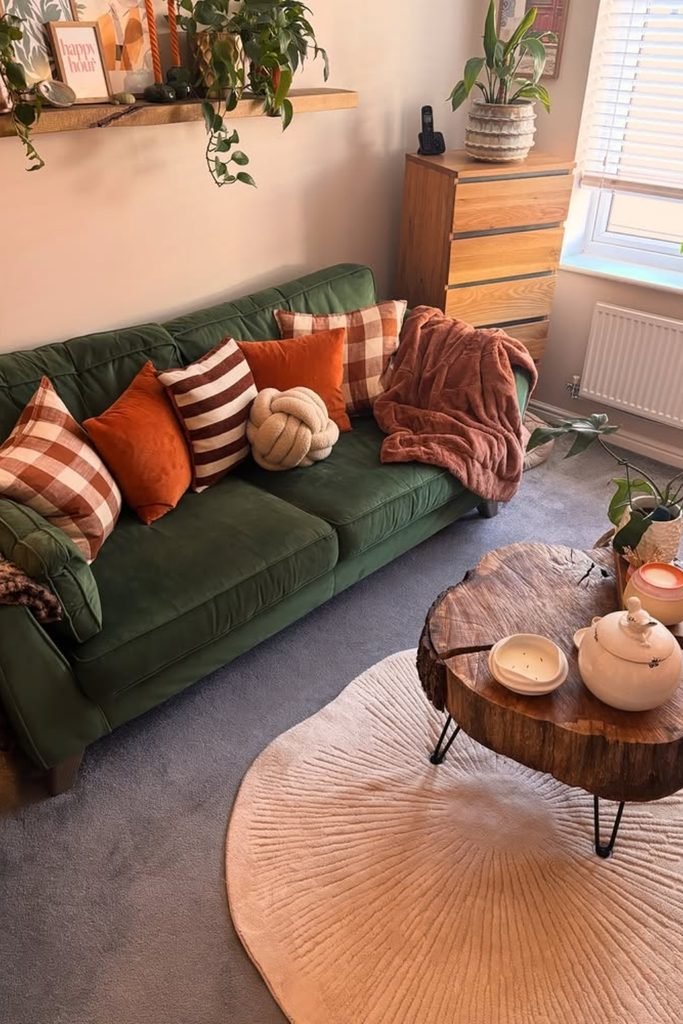
Deep green upholstery gives cozy living rooms a strong base for seasonal colors, especially burnt orange, warm brown, and soft cream accents.
Layer checked cushions with solid velvet pieces and a relaxed throw, varying patterns carefully so the sofa feels inviting instead of overcrowded.
Raw wood tables and trailing plants introduce natural texture, while a rounded cream rug softens the arrangement and breaks up darker flooring.
Forest Retreat
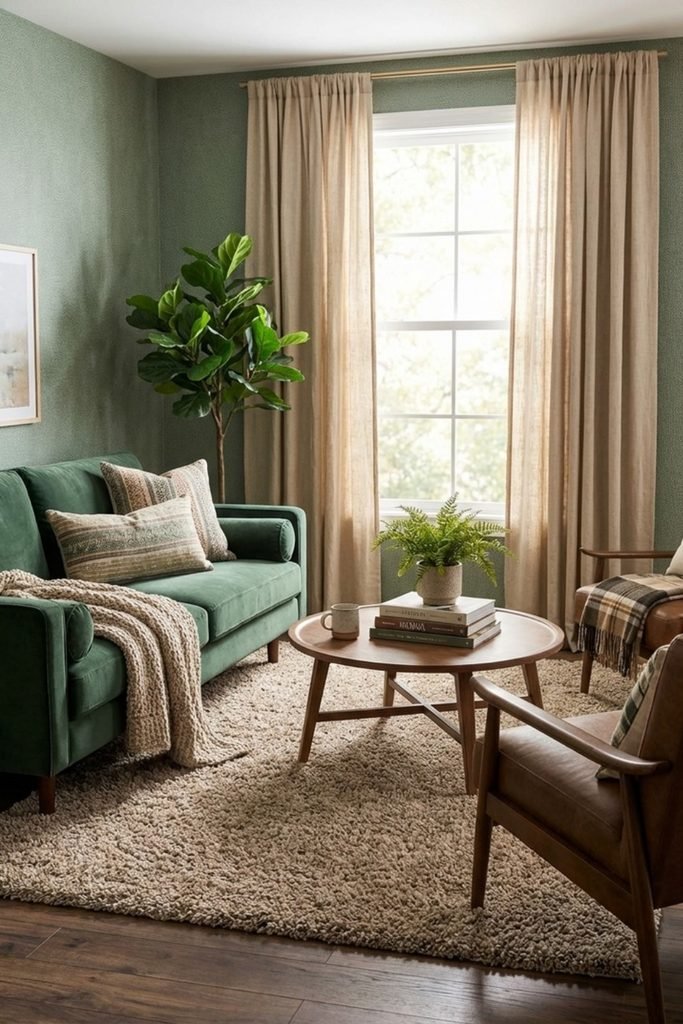
Green walls become surprisingly restful when paired with matching upholstery, creating a cocooning living room that still feels connected to nature.
Balance the deeper color with oatmeal curtains, a thick cream rug, and warm wooden furniture so sunlight keeps the room feeling comfortable.
Use one tall indoor tree near the window and smaller greenery centrally, creating varied plant heights without turning every corner into foliage.
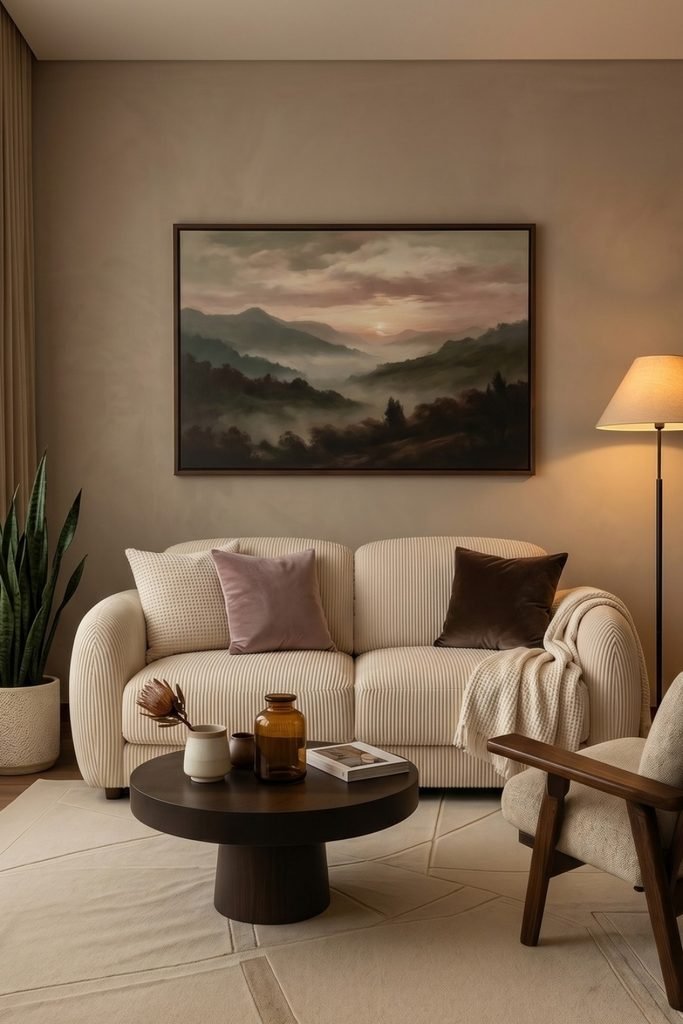
Gallery Calm
Large landscape art can set the entire mood of a living room, especially when its earthy colors echo nearby wood and upholstery.
Keep the sofa creamy and softly textured, then introduce chocolate and muted blush cushions to pull subtle tones from the artwork naturally.
Finish with a dark round table and warm floor lamp, creating enough contrast to stop the neutral arrangement from appearing flat.
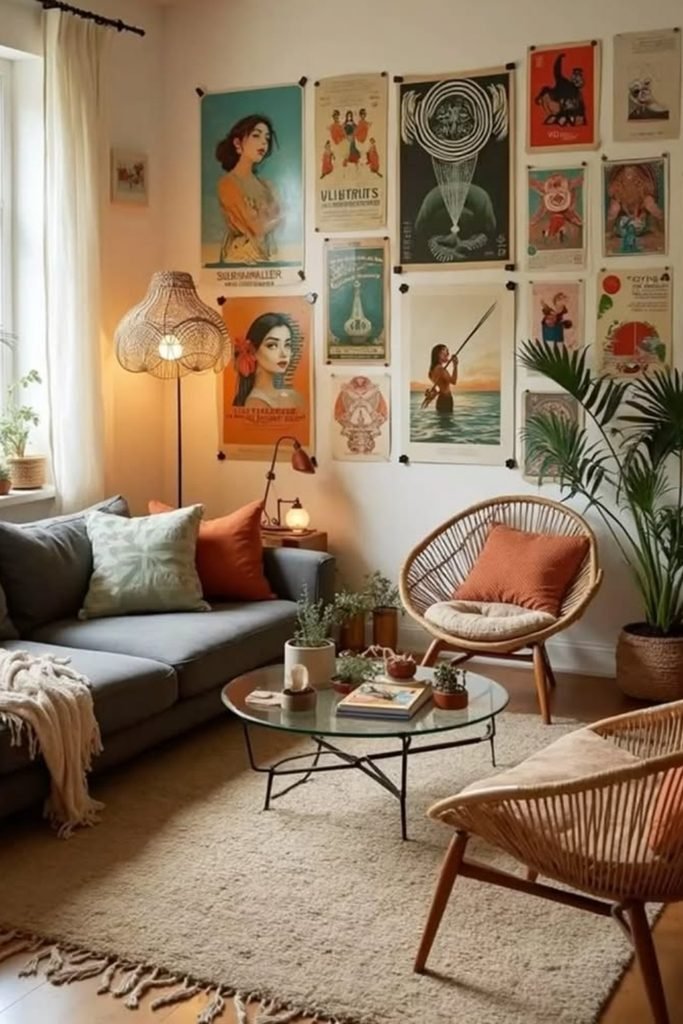
Poster Gallery
Personal collections deserve wall space, and grouped vintage posters can turn an otherwise plain living room into something playful and memorable.
Build the gallery upward behind simple seating, mixing print sizes while keeping narrow gaps so the arrangement still reads as one feature.
Rattan chairs, leafy plants, and warm orange cushions continue the relaxed character, making this approach especially suitable for casual eclectic interiors.
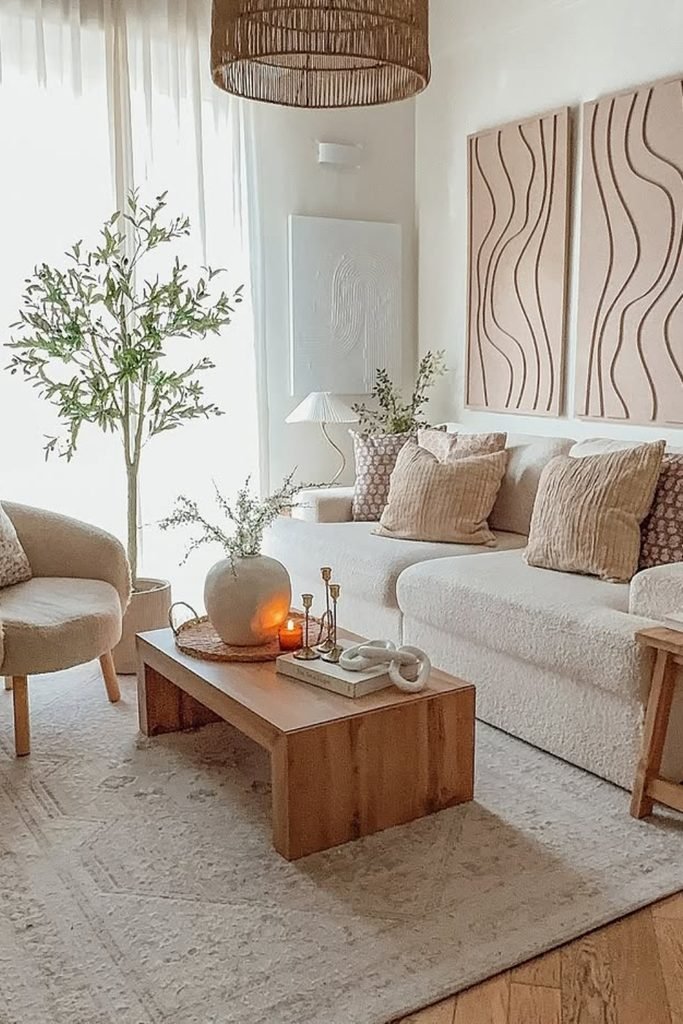
Textured Neutrals
Quiet color schemes become far more interesting when texture carries the design through boucle seating, carved wall panels, timber, and woven lighting.
Choose creamy furniture first, then layer sandy cushions and natural wood pieces so every surface adds warmth without introducing distracting strong colors.
Oversized sculptural artwork gives the sofa wall dimension, while a large pale rug connects separate furniture pieces into one calm conversation area.
Airy Sectional
Tall windows can make a modest living room feel generous when low furniture leaves plenty of open wall and vertical space visible.
Set a soft modular sectional beneath the window line, then use sheer curtains to filter daylight without hiding the room’s strongest architectural feature.
Add one glass coffee table and oversized pendant overhead, giving the simple arrangement personality while keeping the floor visually open and uncluttered.

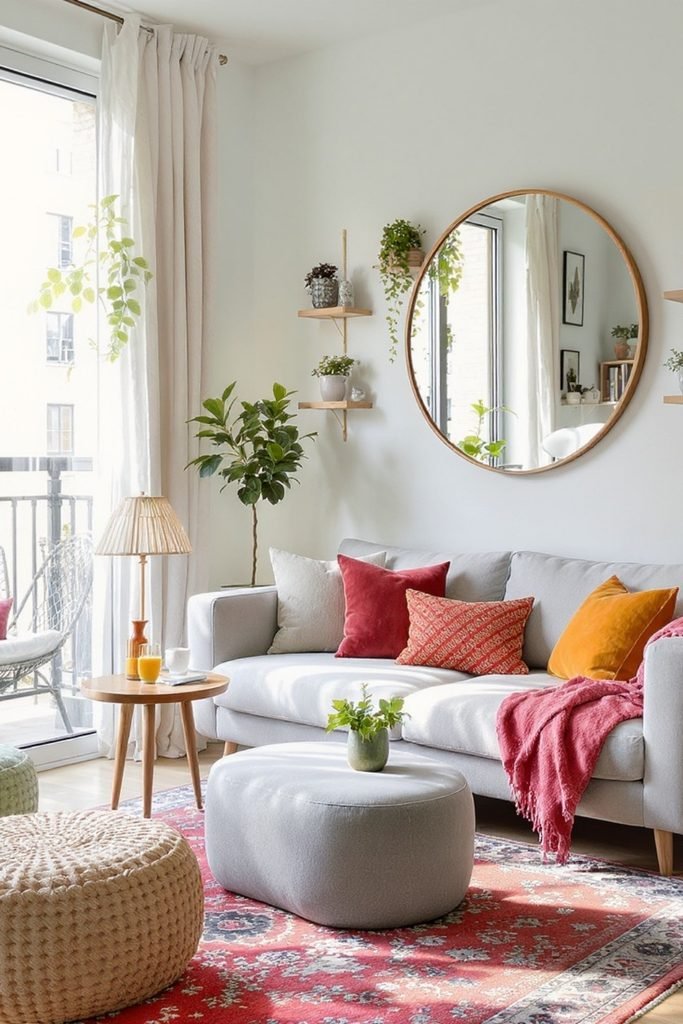
Colorful Balance
Bright accent colors feel easier to live with when a pale sofa provides breathing room between raspberry, orange, and patterned decorative pieces.
Bring those stronger shades through cushions, throws, and a vintage rug, letting each layer add personality without committing entire walls to color.
Use a large round mirror above the sofa to bounce window light deeper inside, then soften surrounding wall space with small plant shelves.
Narrow Comfort
Long living rooms become easier to navigate when seating hugs opposite walls and a compact round table keeps the central pathway comfortably open.
Choose creamy upholstery and warm timber surfaces, then layer rust cushions and woven textures to prevent the practical layout from feeling overly plain.
Soft shelf lighting and scattered greenery bring warmth upward, helping a narrow apartment living area feel finished without sacrificing useful walking space.
Coral Seating
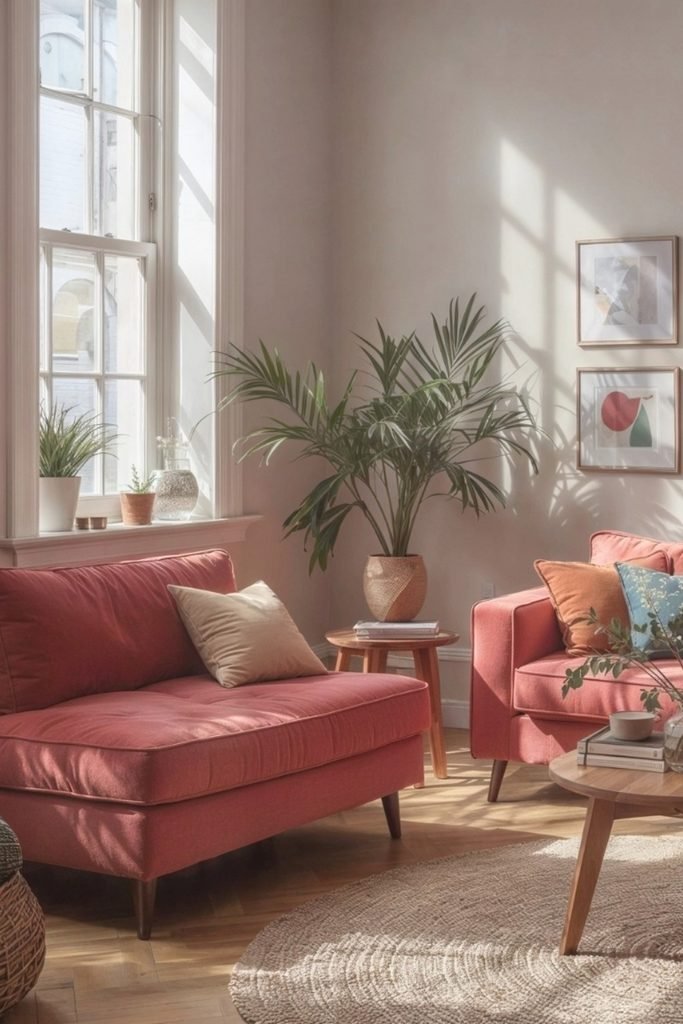
Sun-filled rooms can handle stronger upholstery beautifully, and coral seating brings warmth without needing colorful walls or excessive decorative accessories nearby.
Separate two matching seats with a tall palm, giving each piece visual breathing room while greenery naturally softens the saturated coral fabric.
Keep tables, rugs, and walls neutral, then introduce only a few contrasting cushions so daylight remains the strongest feature throughout the space.
Heritage Layers
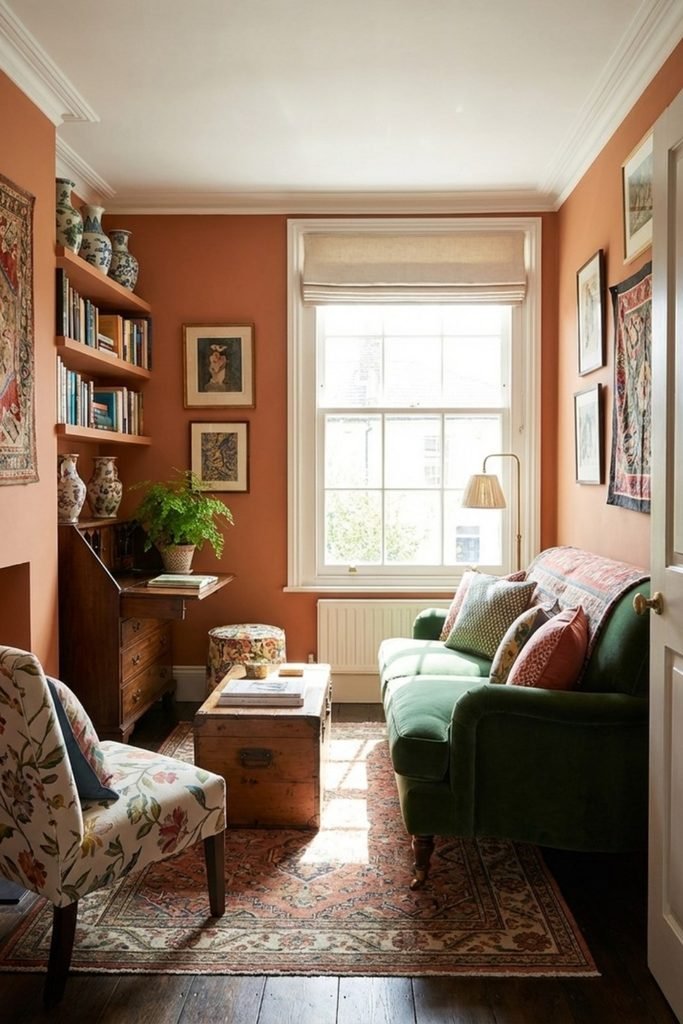
Small traditional living rooms gain character from collected pieces, where books, textiles, ceramics, and older furniture create depth rather than unwanted clutter.
Start with a deep green sofa against terracotta walls, then repeat earthy reds through patterned rugs, cushions, and carefully placed woven artwork.
Use an old wooden trunk instead of a standard coffee table, adding practical storage while strengthening the room’s warm, lived-in character.
Woven Pathway
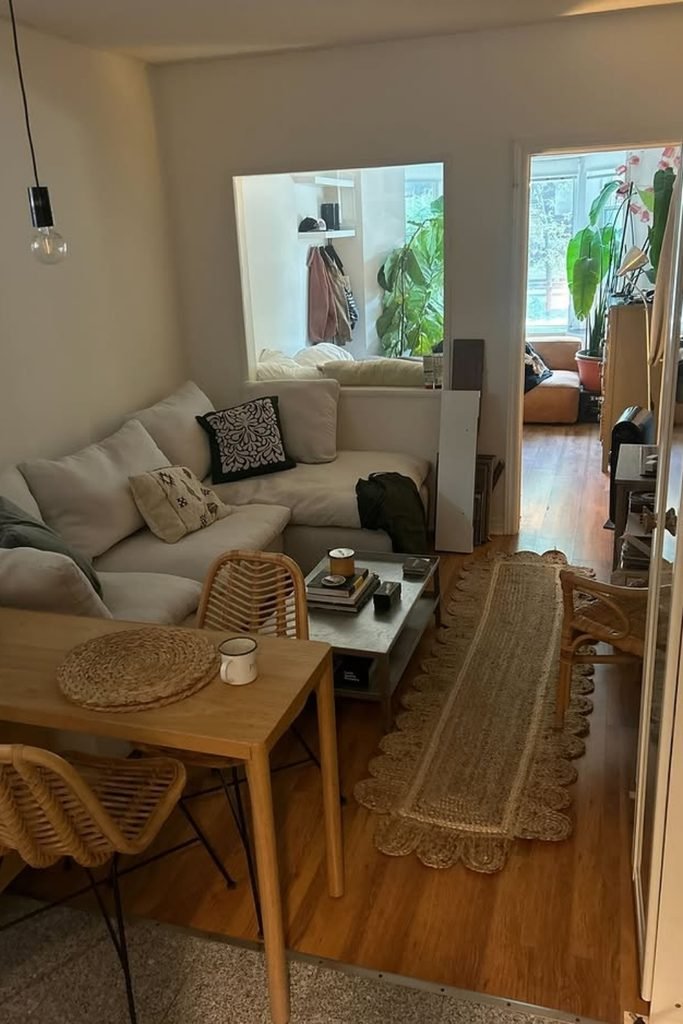
Narrow layouts work better when furniture stays close to the walls, leaving one clear walkway between the living area and adjoining rooms.
Choose a soft corner sofa for maximum seating, then pair it with lightweight rattan chairs and a slim table that avoid visual heaviness.
Run a woven runner along the main passage to define circulation, while natural wood and cane textures keep the compact space feeling warm.
FAQs
Can a Tiny Living Room Still Have a Sectional?
A sectional can work in a tiny living room when it replaces several separate seats instead of crowding the room with extra furniture.
Choose a compact design with a shallow seat, low back, and chaise that does not block the main walkway or doorway.
Measure the full footprint first, because the right sectional should create more usable seating without making daily movement feel awkward.
How Do You Make a Tiny Living Room Feel Bigger Without Remodeling?
Start by clearing the main walkway and removing furniture that does not earn its place through seating, storage, or everyday function.
Then use taller curtains, better lighting, visible furniture legs, and one larger rug to make the room feel less broken up.
Keep colors connected rather than perfectly matching, because a simple palette helps the eye move around the space without constant visual stops.