A square living room looks simple to arrange until the sofa, TV, chairs, windows, and doorways all start competing for the same space.
Push everything against the walls, and the center can feel empty; pull too much inward, and suddenly your walking paths feel cramped.
The trick is finding a layout that gives your furniture a clear purpose while keeping the room comfortable, balanced, and easy to move through.
In this article, you’ll find practical square living room layout tips plus 24 inspiration ideas.
Let’s jump in!
How to Layout a Square Living Room?
Start with the room’s main purpose because a TV-focused setup needs a different arrangement than a space built mainly for conversation.
Choose your focal point next, then place the sofa where it faces that feature without cutting across doors or main walking paths.
If the center feels empty, pull the seating inward instead of automatically pushing every piece of furniture against the walls.

Keep enough space around chairs, tables, and doorways so people can move through the room without squeezing between furniture.
Use one large rug to connect the main seating pieces, and choose furniture that suits the room’s actual size rather than filling every corner.
For larger square rooms, create a second zone for reading, dining, or working instead of stretching the main seating area too far apart.
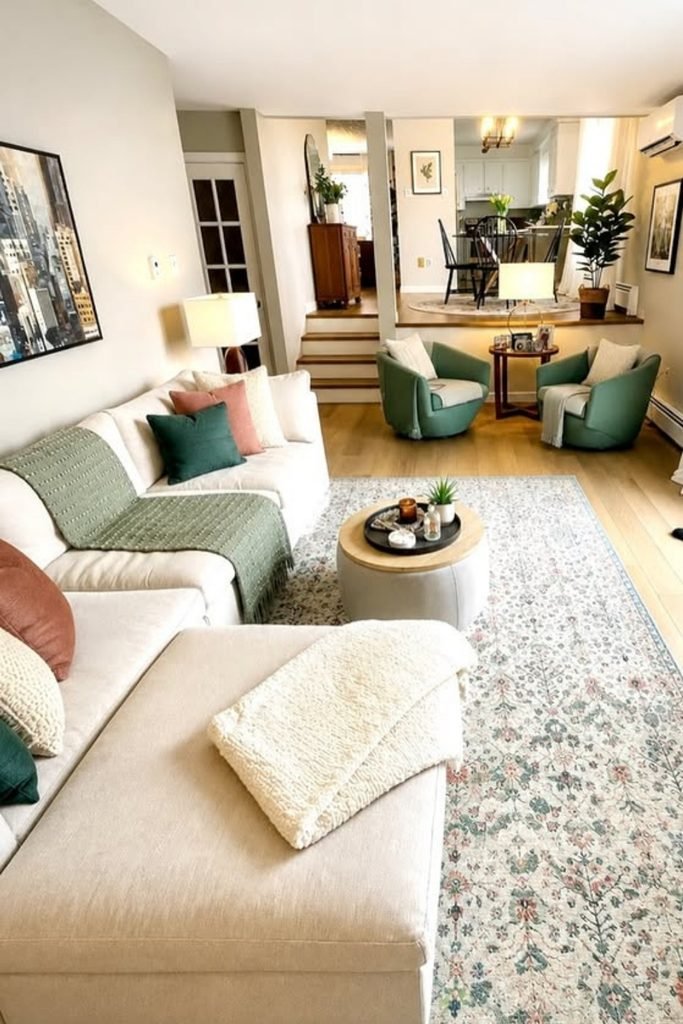
Open Sectional
Use a sectional along one wall when you need more seating without closing off the main walkway through a square living room.
Place two compact chairs across from it to complete the conversation zone while keeping the glass doors and dining area easy to reach.
A round ottoman works well in the center because it softens the sharp layout and gives everyone a comfortable shared surface.
Window Balance
Let the sofa hold one side of the room, then use a slim bench opposite so the window area still feels open.
A round coffee table keeps movement easy between both seats, especially when the living room connects directly to a kitchen or hallway.
Keep the rug large enough to sit under the main furniture, which helps this simple arrangement feel connected instead of scattered.
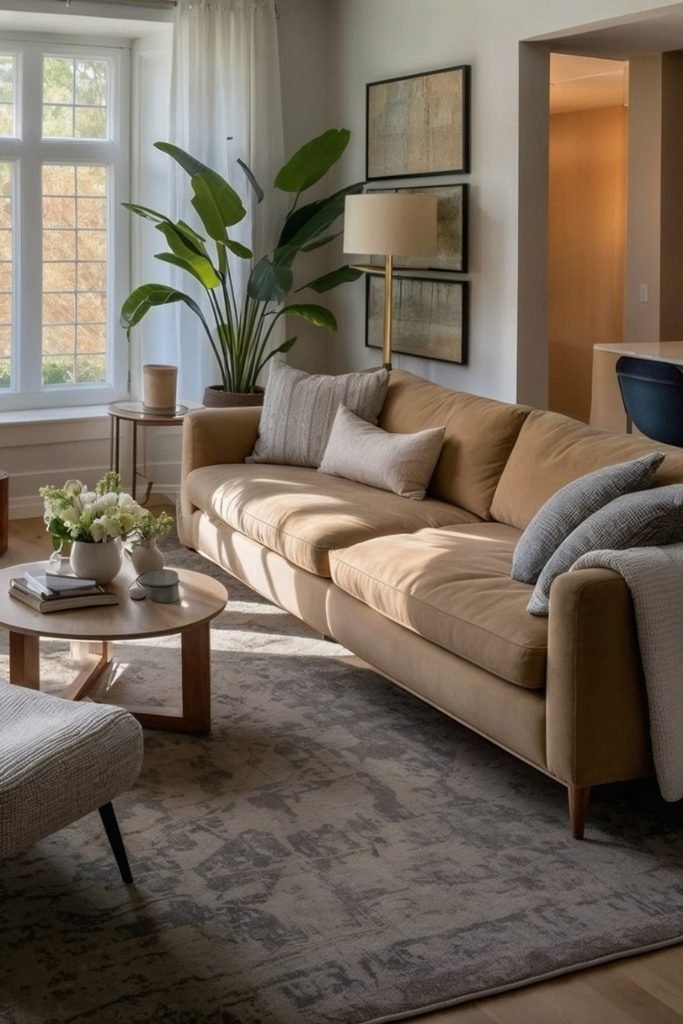
Flexible Seating
Mix one sofa with two different chairs when you want a square living room to feel balanced without becoming overly matched.
Angle one chair toward the sofa and keep the second closer to the window, creating an easy conversation setup with flexible movement.
A large rug should connect all three seats, while a small central table leaves enough open floor around the furniture for circulation.
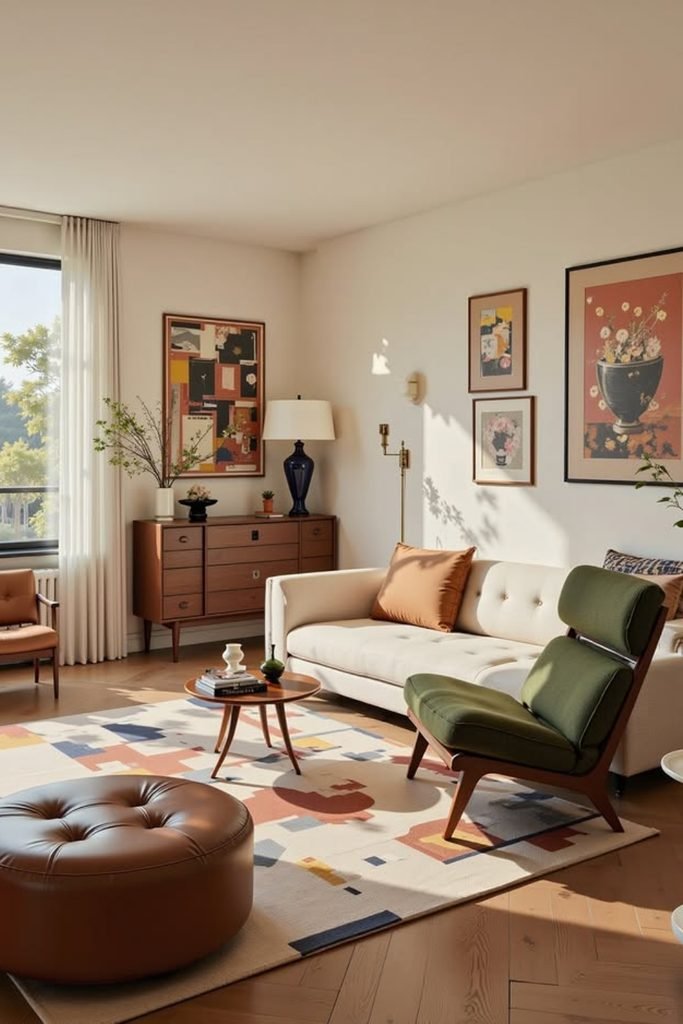
Fireplace Conversation
Build the seating around the fireplace when conversation matters more than television, using facing sofas to give the room a clear center.
Add one or two chairs near the open sides so larger gatherings feel comfortable without pushing every seat against the walls.
Keep the coffee table centered between the sofas and leave the doorway side open, which makes this fuller arrangement easier to navigate.
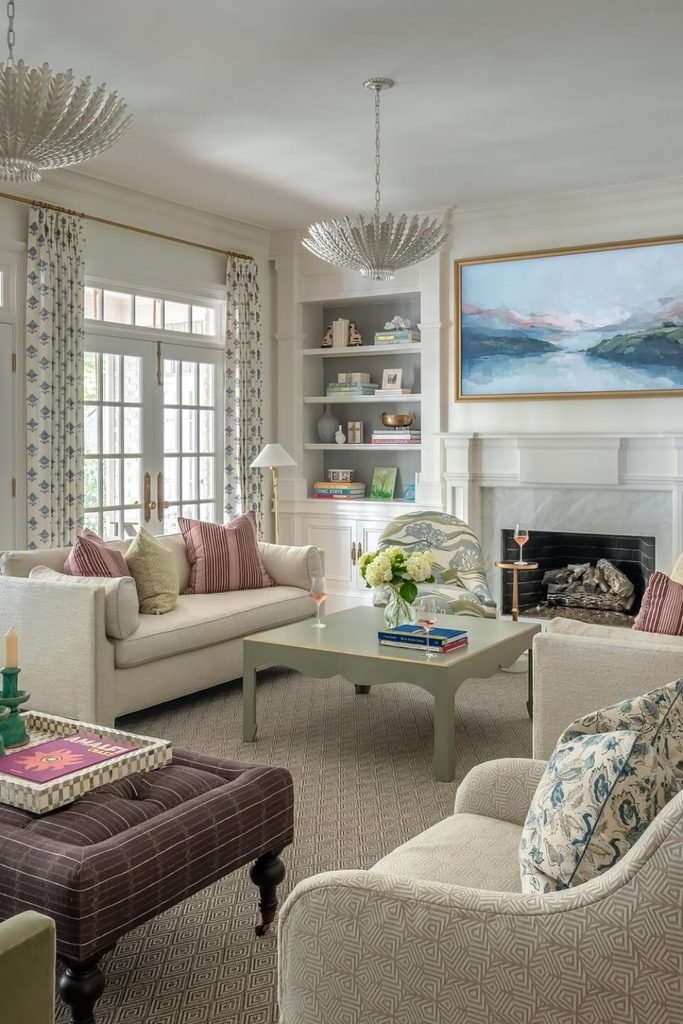
Three Sofas
Bring three compact sofas around one large coffee table when you want generous seating without turning a square room into separate zones.
Keep the fireplace side open enough for circulation, then angle the seating so every sofa still feels connected to the center.
A broad rug under all three pieces makes the arrangement feel intentional and stops the furniture from looking scattered around the room.
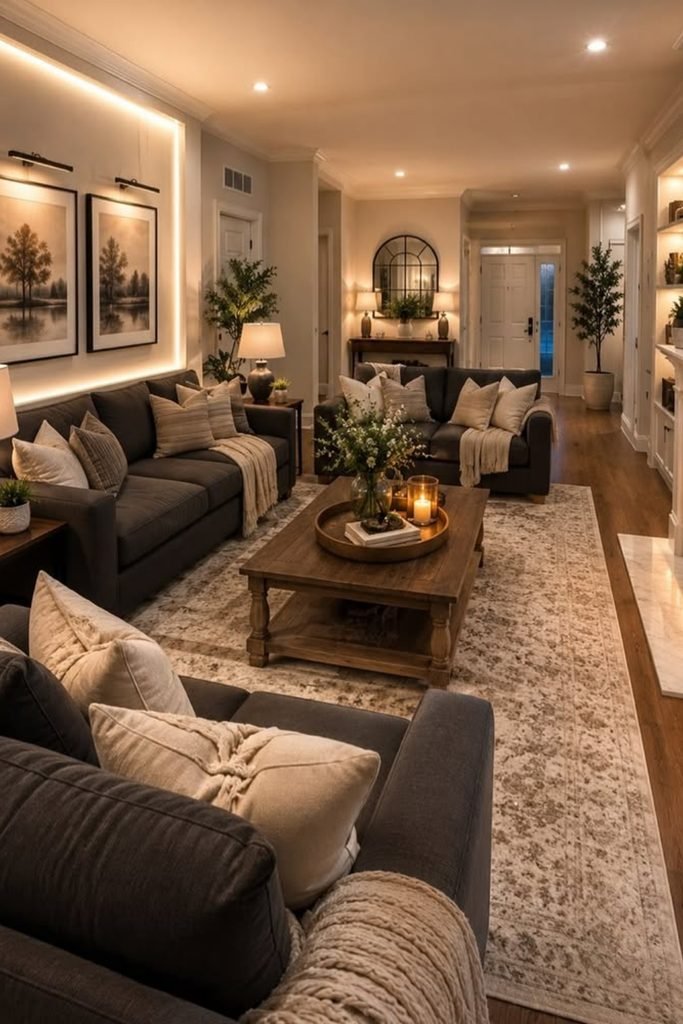
U Sectional
Choose a U-shaped sectional when TV viewing is the priority and you want plenty of seating without adding separate chairs.
Center the longest section toward the screen, then leave the window side clear so natural light and movement are not blocked.
Use one large rug beneath the whole seating footprint to ground the arrangement and keep the oversized sectional from feeling visually heavy.
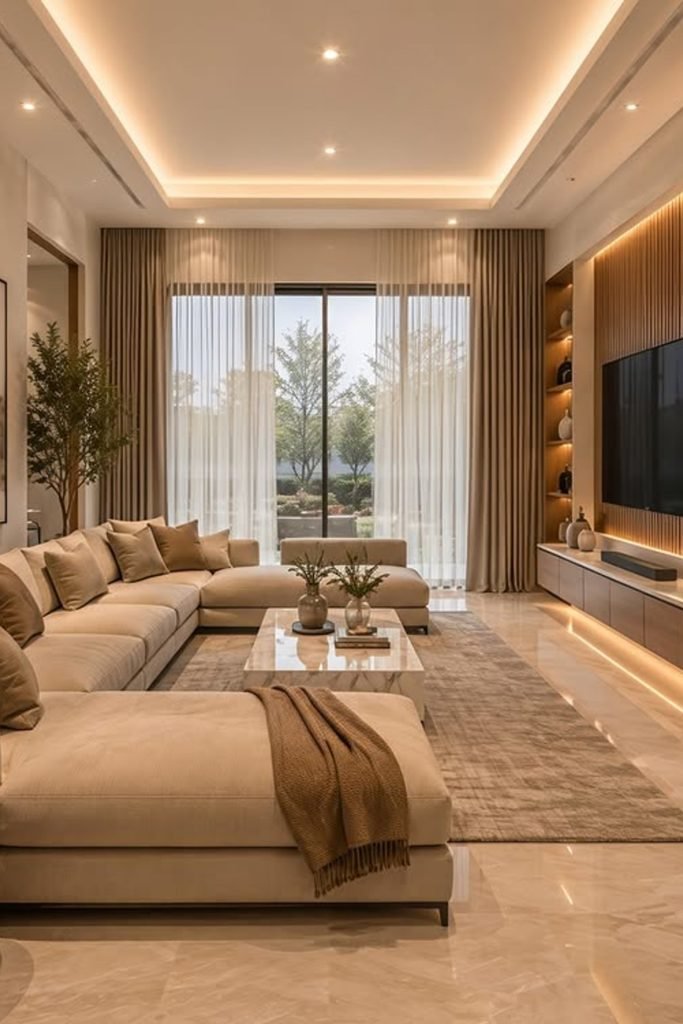
Curved Sofa
A curved sofa is a smart choice when a square room feels too rigid, especially around a fireplace or central conversation area.
Turn the curve slightly toward the fireplace, then place a round coffee table nearby to keep the furniture lines soft and easy.
This setup works best in medium rooms where you can leave enough space behind the sofa for movement without crowding corners.
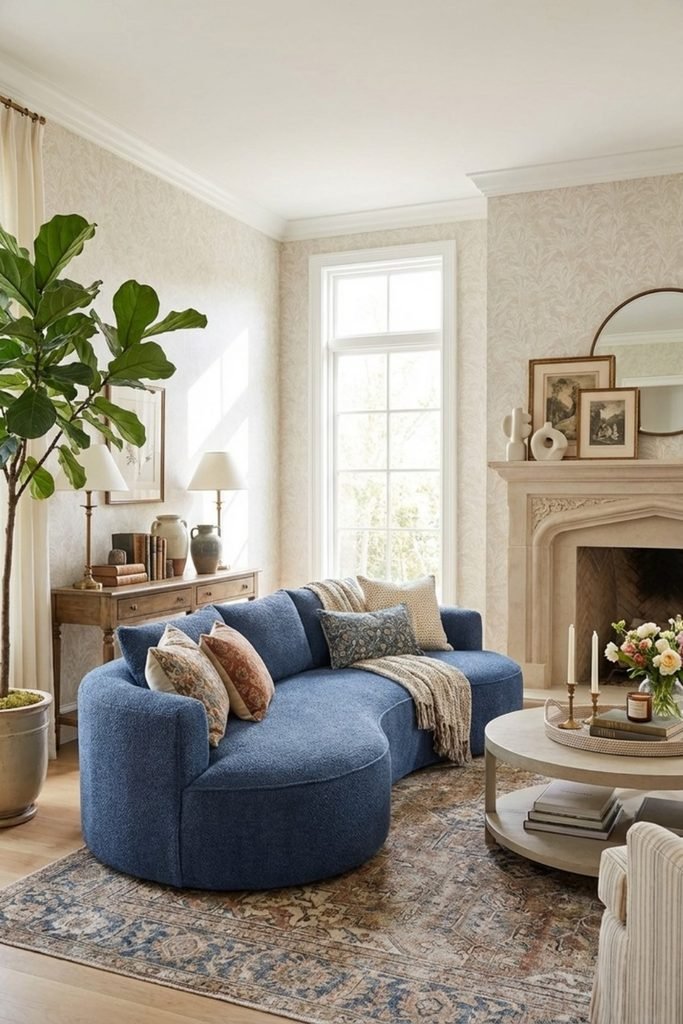
Floating Sectional
Float an L-shaped sectional between the kitchen and TV when you need the seating area to feel separate without adding any divider.
Keep the open end toward the balcony or doorway, giving people a direct path around the sofa instead of through the seating.
Match the rug to the sectional footprint and center the coffee table inside it, which makes the open-plan square feel clearly organized.
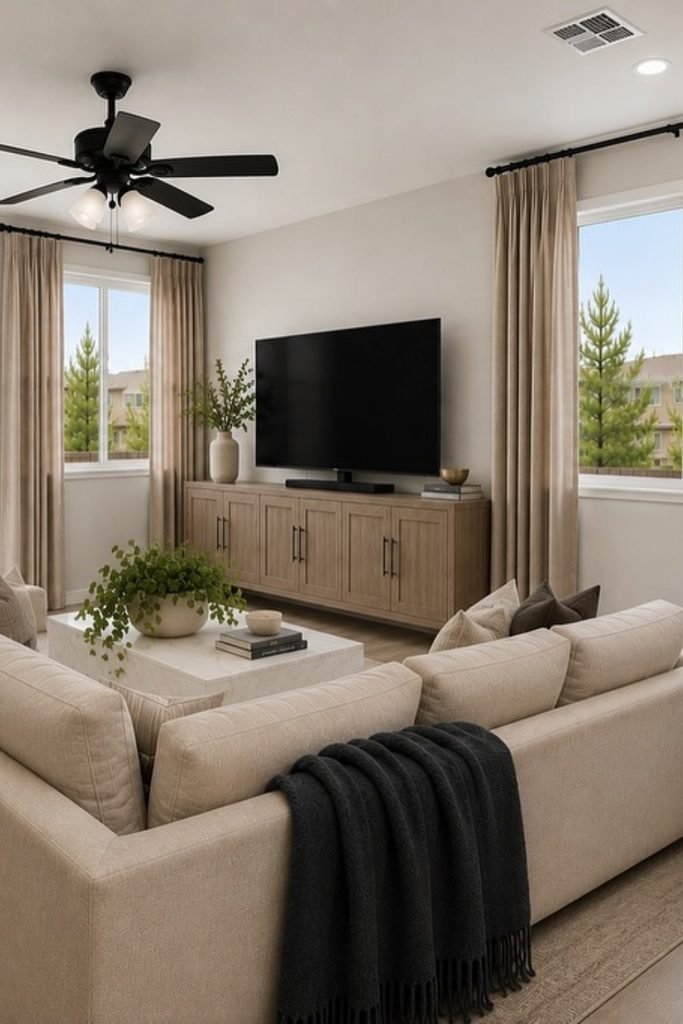
Linear Zones
Keep the sofa and TV on opposite walls when a compact living room also needs space for dining behind the seating zone.
Use a slim coffee table and narrow rug so the center stays practical without stealing the walkway between both functions.
Placing the dining table close to the kitchen keeps meals convenient while the sofa still creates a clear boundary for lounging.
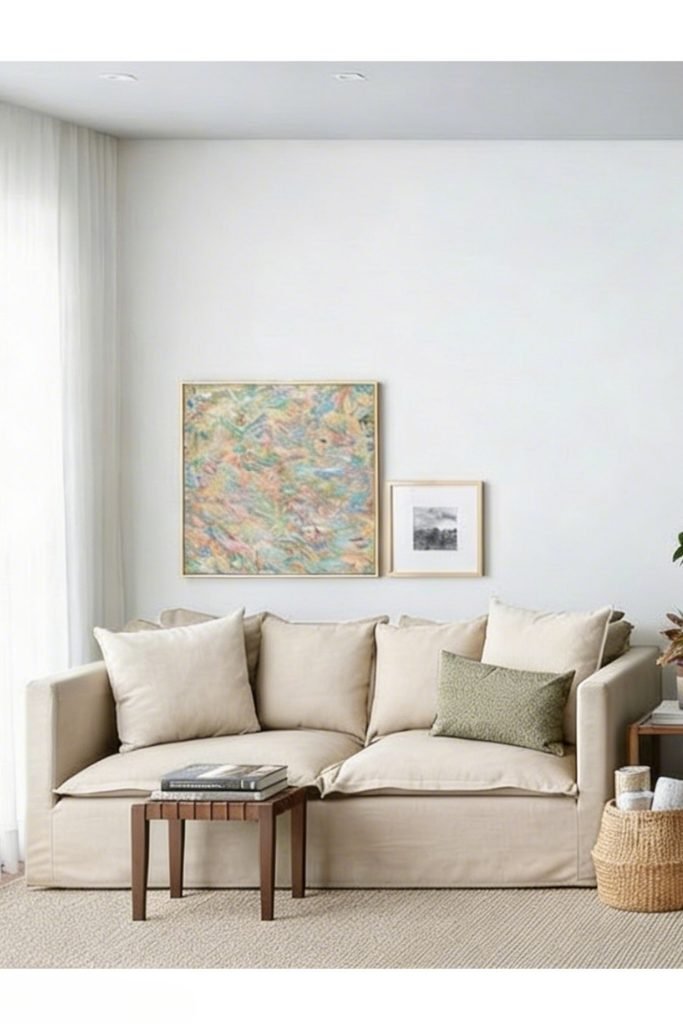
Wall Alignment
Let the sofa hug one wall when the room is too tight for floating furniture, especially in a narrow open-plan apartment.
Mount the TV opposite and choose a shallow media unit, leaving the center free for comfortable movement between kitchen and hallway.
A long rectangular rug can visually connect the seating area without widening its footprint, which helps the whole layout feel more organized.
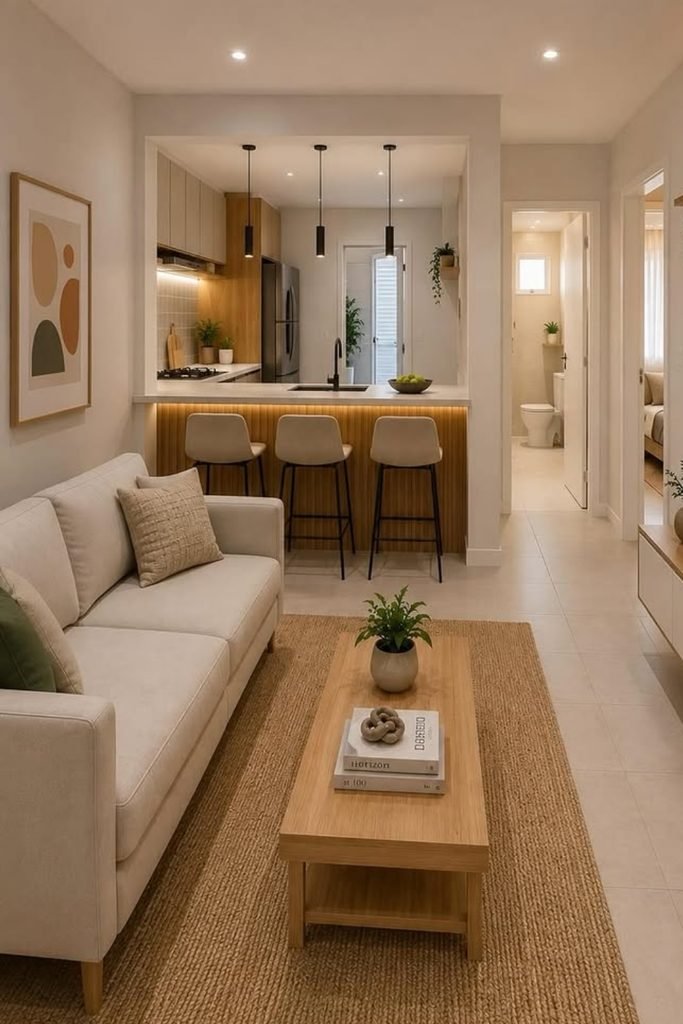
Split Purpose
Use the sofa as the dividing line when one square room needs to handle both everyday lounging and a full dining area.
Keep the dining table closer to the kitchen, then turn the sofa toward the TV so each zone has a clear purpose.
Leaving open floor between both sections makes the room easier to cross and stops the furniture from blending into one crowded block.
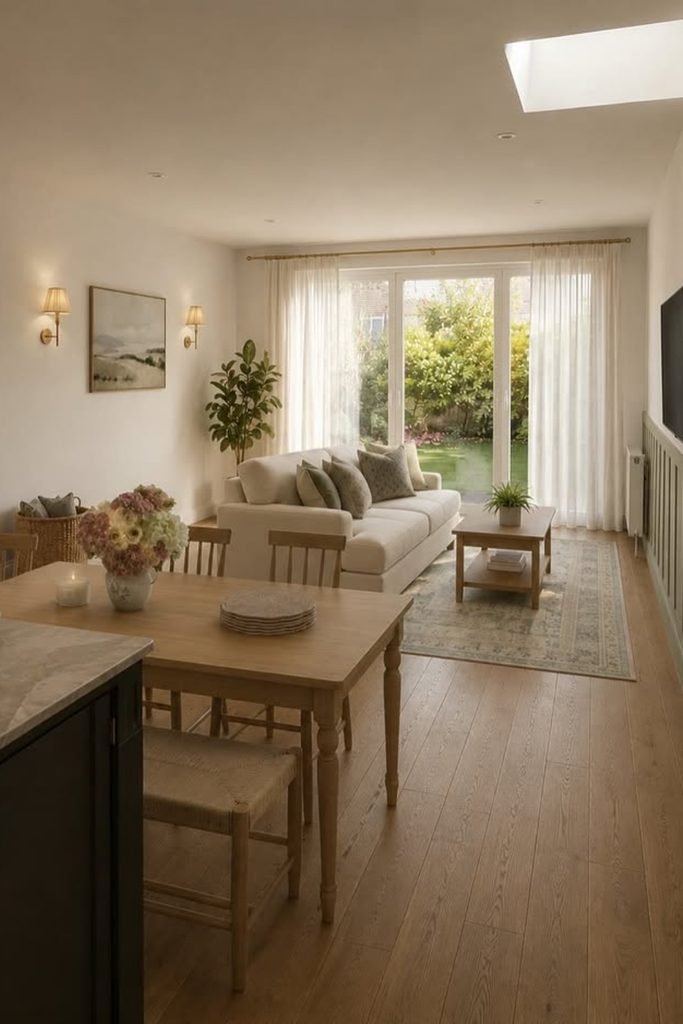
Reading Corner
Save the brightest corner for a single reading chair when your main sofa already gives the room enough everyday seating.
Keep the sofa facing the TV, then place the chair beyond the rug so it feels separate without needing another room.
A low media console keeps that wall useful without adding bulk, while the open window end stays calm and easy to reach.
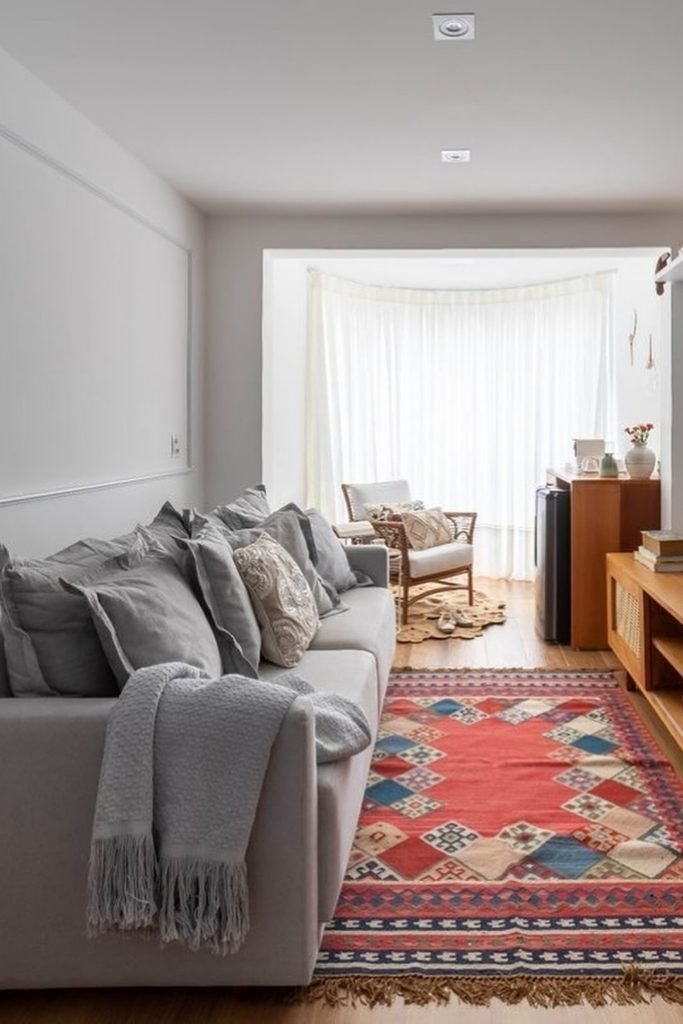
Shared Dining
Use a round dining table beside the sofa when one compact room needs meals, lounging, and television without feeling crowded.
Keep the table centered near the window, then place the sofa along the wall so both zones stay easy to use.
A slim media unit and open-leg chairs reduce visual bulk, helping the shared space feel lighter and easier to move through.
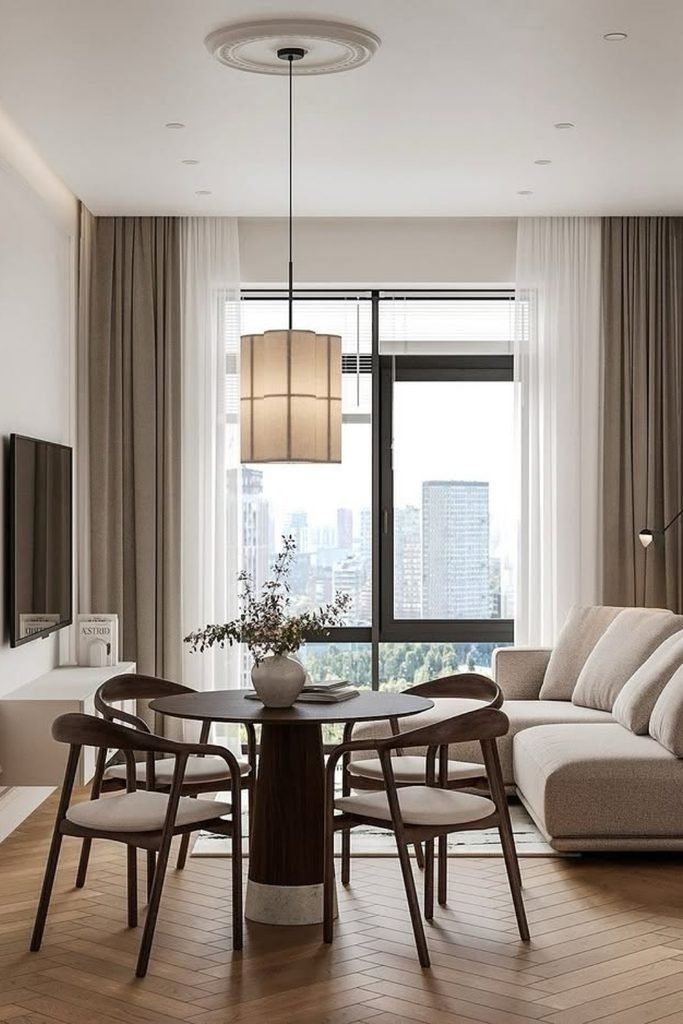
Sectional Divider
Let an L-shaped sectional define the living zone when your dining area sits directly behind it in one open-plan room.
Face the sectional toward the TV wall, then keep the dining table close enough for easy access without overlapping the seating area.
Using separate rugs under each zone gives both functions their own clear boundary while still keeping the room visually connected.
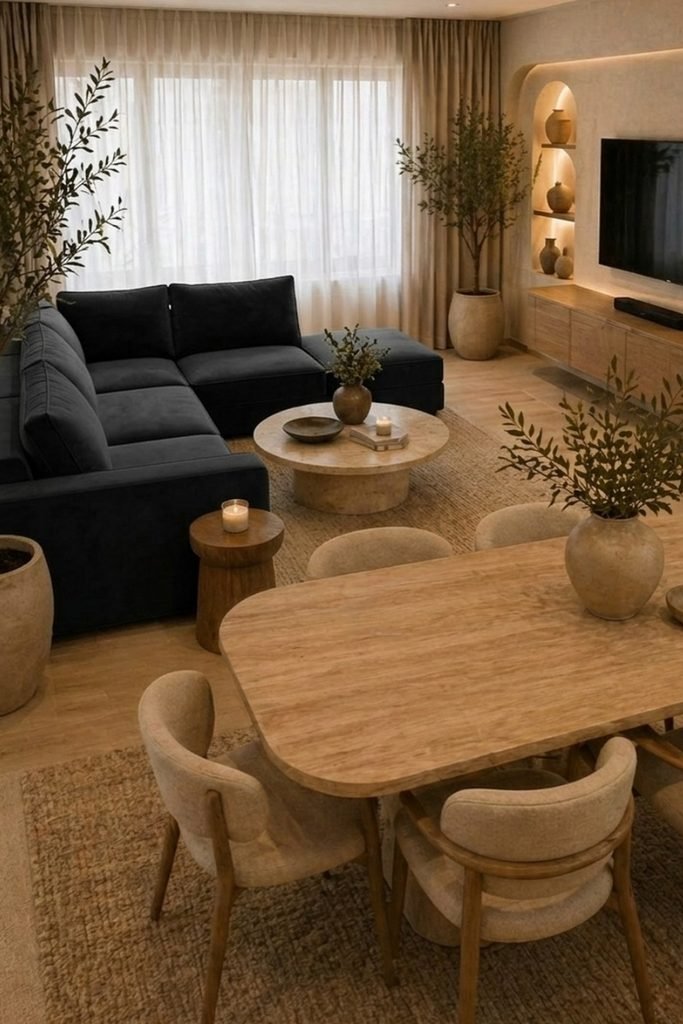
Round Center
Break up a square seating area with one round coffee table when straight furniture lines start making the room feel too rigid.
Pair a simple sofa with one accent chair and keep both angled toward the center so conversation still feels natural.
Let the rug carry the whole seating group, which helps mismatched chairs and artwork feel connected instead of randomly placed.
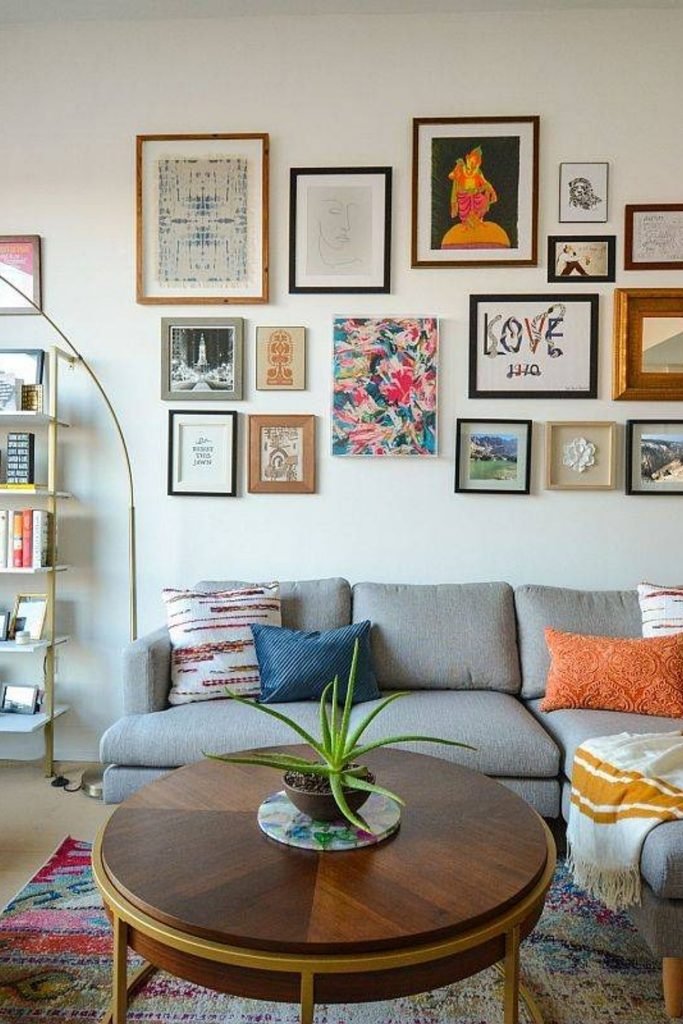
Studio Zones
Turn one side of a studio into a proper living room by placing the sofa and coffee table before the sleeping zone.
Keep the chair between both areas so it can serve the lounge without blocking the bed or the main path.
Two separate rugs help define each function, making one open room feel organized without adding bulky dividers or extra furniture.
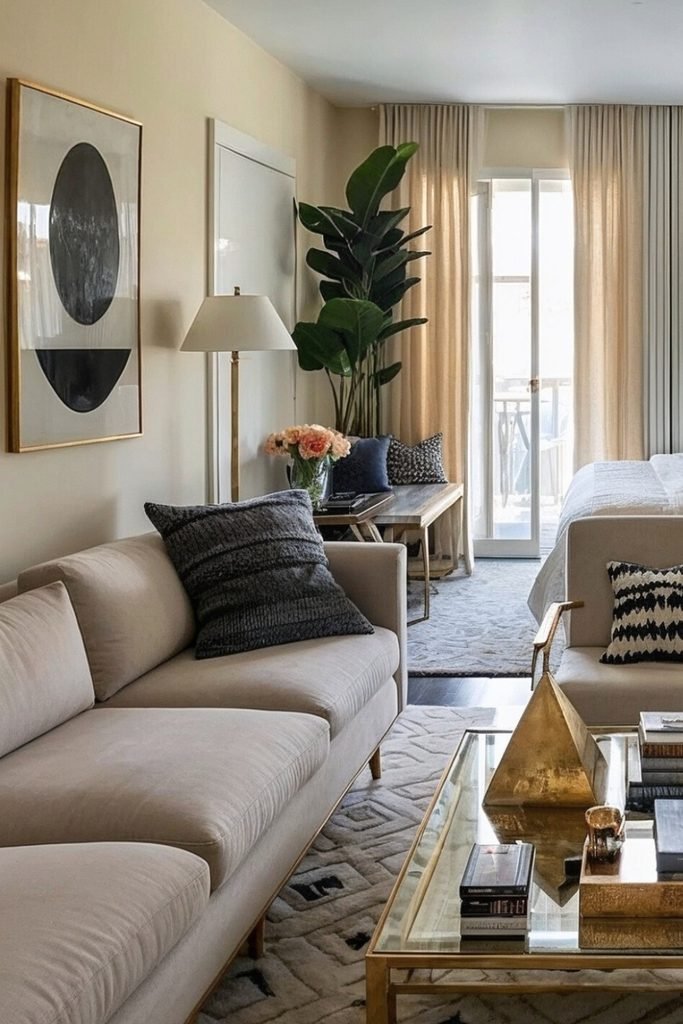
Sofa Divider
Use the sofa as a divider when the living and dining areas share one open room but still need clear separation.
Face the sofa toward the TV, then keep the dining table parallel behind it so both zones stay easy to navigate.
Leave enough space between the sofa back and dining chairs, which keeps everyday movement comfortable and stops the layout feeling cramped.
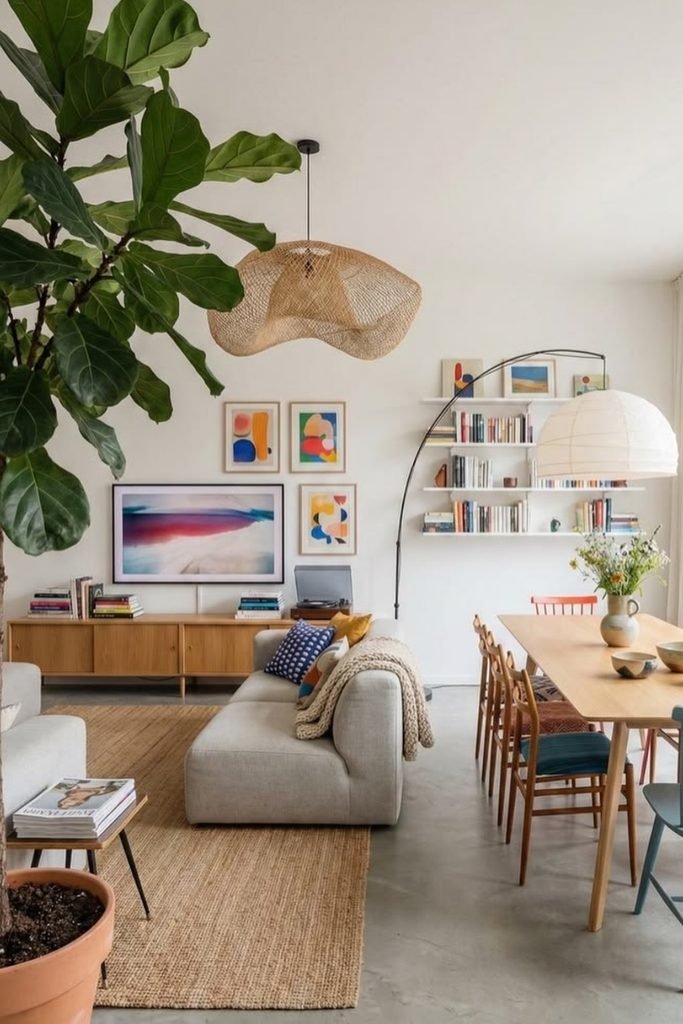
TV Sectional
Wrap an L-shaped sectional around the center when you want a TV-focused room that still feels open and easy to use.
Keep the chaise away from the main entry path, then place one accent chair opposite to balance the heavier seating side.
A round coffee table works especially well here because it softens the square footprint and gives every seat easier access.
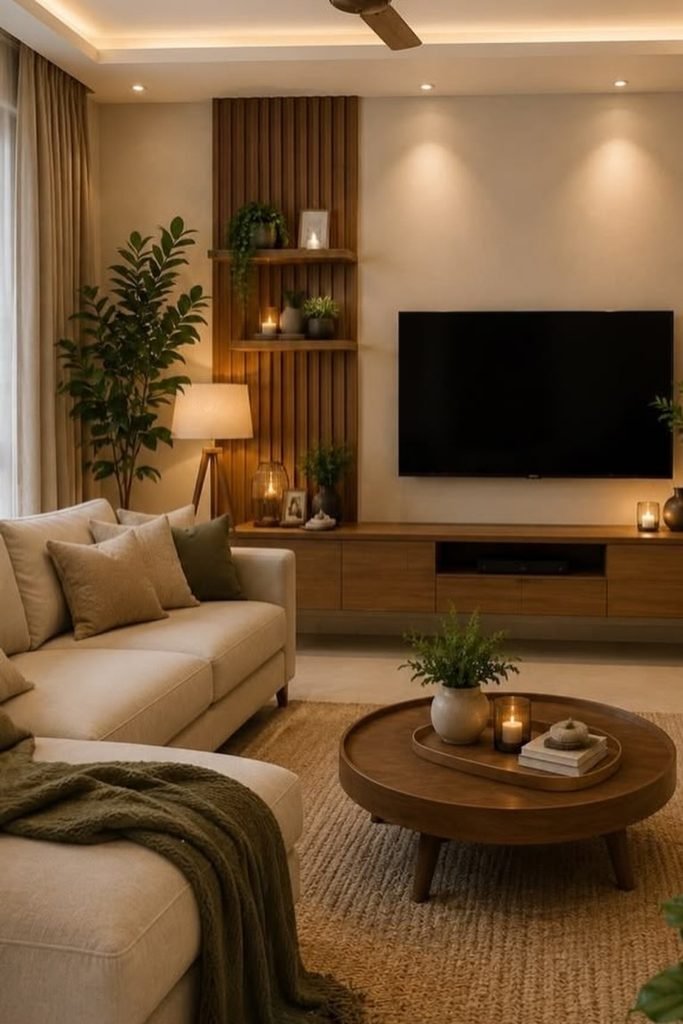
Compact Pairing
Choose a wall-hugging sofa when the living area shares space with dining and you need to protect every inch of circulation.
Place the round dining table just behind the lounge zone, letting its softer shape make tight movement between both areas easier.
Mount the TV opposite the sofa and keep storage shallow, so the room stays useful without making the walkway feel squeezed.
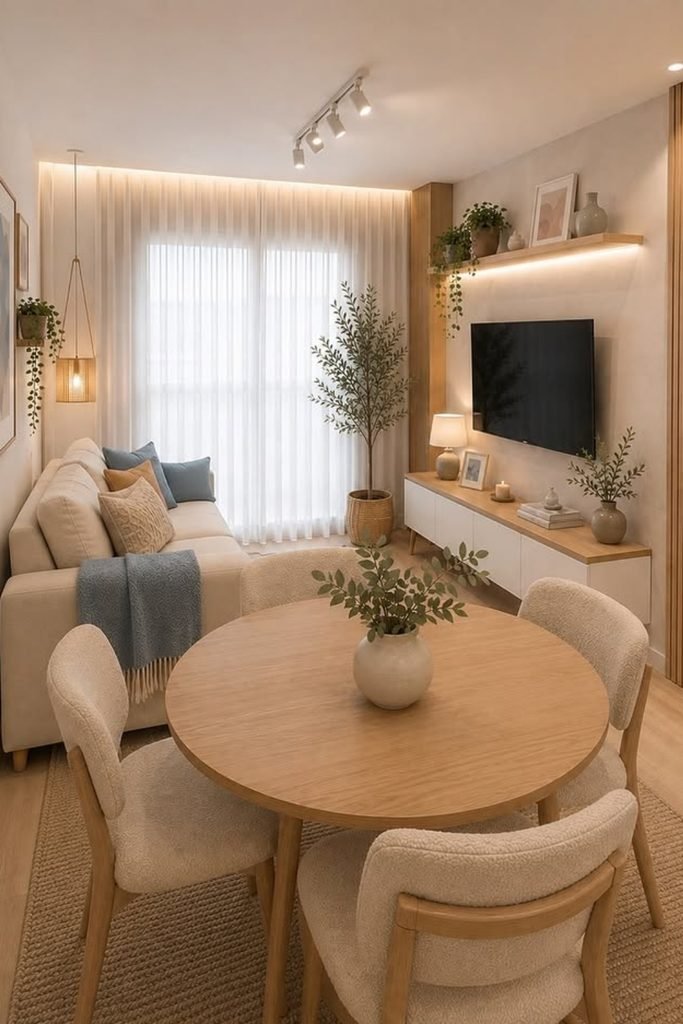
Corner Seating
Tuck the sectional into one corner when a small square room needs comfortable lounging without sacrificing the opposite side for storage.
Add one light chair near the window instead of another bulky seat, giving you flexibility without closing off natural light.
Keep the coffee table narrow and centered on the rug, which makes the seating zone practical while preserving a clear path.
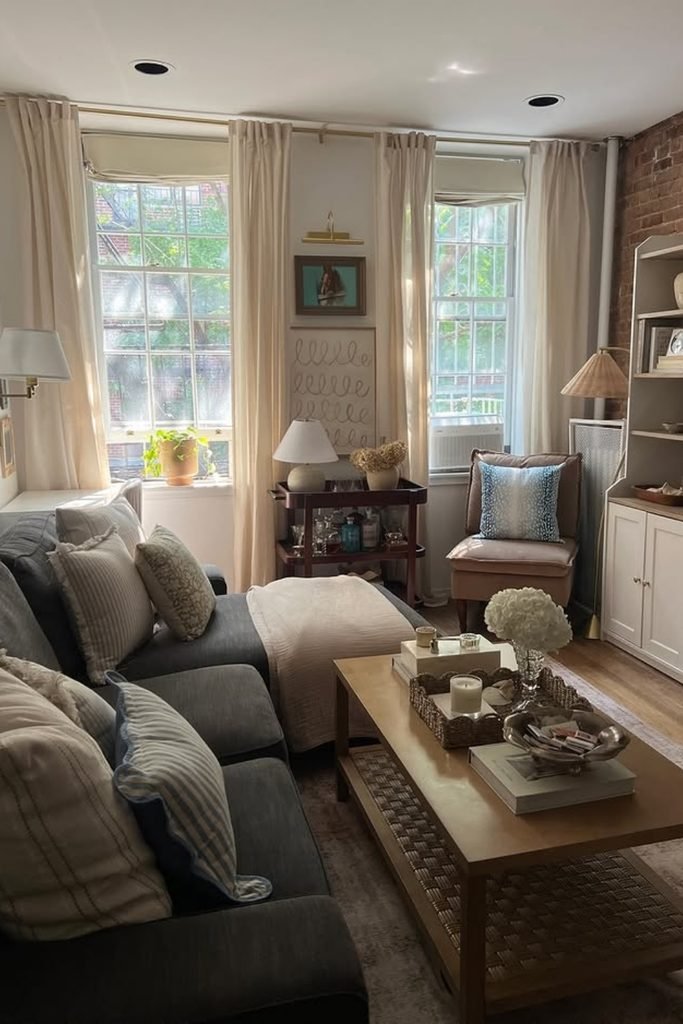
Facing Sofas
Place two sofas across from each other when you want conversation to feel natural while still keeping the television visible from both sides.
Keep the larger sofa slightly off the wall, then use a single chair near the window to soften the open end.
A broad rug should connect every seat, helping the room feel centered without forcing furniture into a perfectly symmetrical arrangement.
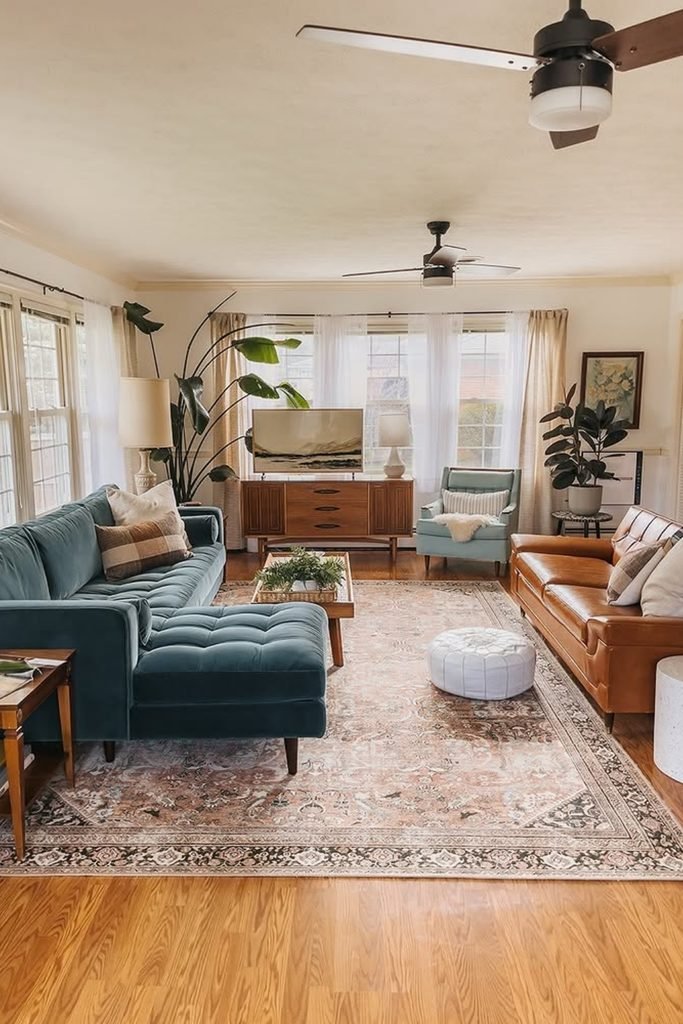
Open Divider
Float the sectional between the lounge and dining area when you need separation without blocking sightlines across an open-plan square room.
Turn the seating toward the TV wall, then leave the dining side open enough for chairs and everyday movement behind it.
A round coffee table keeps the center easy to navigate and stops the sectional from making the room feel too rigid.
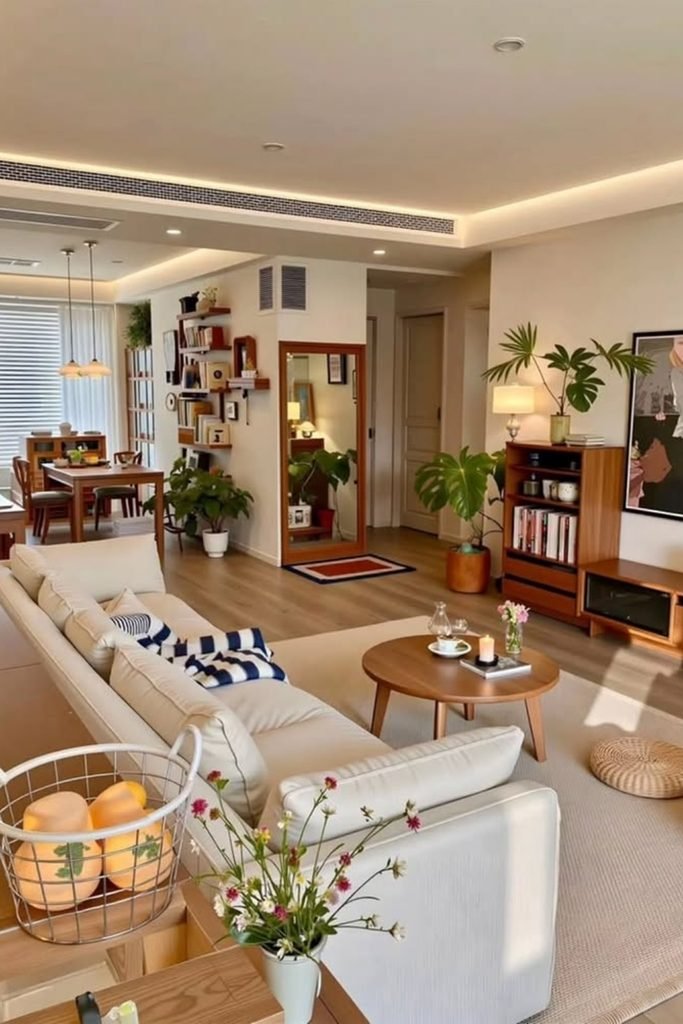
Kitchen Edge
Keep the sofa on the window side when the kitchen opens directly into the living room and you need one clear traffic lane.
Mount the TV opposite, then choose a compact coffee table so the seating zone stays useful without spilling toward the island.
Let the rug stop before the kitchen walkway, which gives the lounge a boundary while preserving easy access between both spaces.
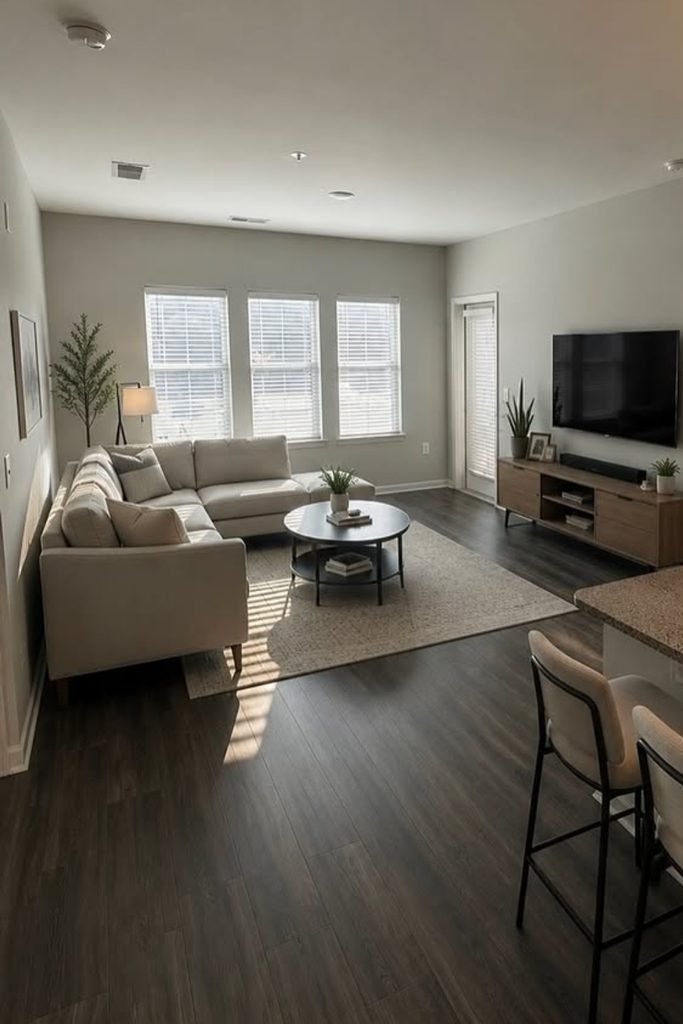
Fireplace Axis
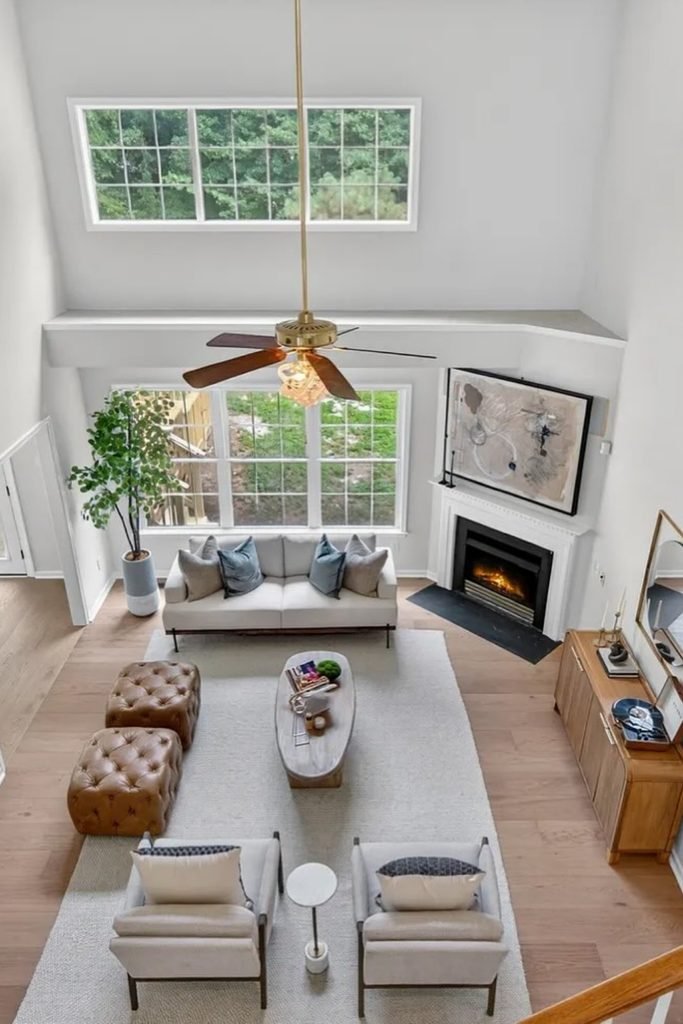
Use a sofa and two facing chairs when a tall square room needs structure without filling the center with oversized furniture.
Place the sofa beneath the main window, then angle the chairs toward it so conversation stays comfortable beside the fireplace.
Keep the middle open with a slim coffee table and separate ottomans, giving the large floor area better balance and flexibility.
FAQs
Should a Square Living Room Use a Sectional?
A sectional works well when you need plenty of seating, but its chaise should never block the room’s main walkway.
Choose a compact L-shape for smaller rooms, and keep the open side facing the doorway, window, or busiest traffic path.
In larger square rooms, floating the sectional slightly inward can create a stronger conversation zone without making the edges feel empty.
What Rug Shape Works Best in a Square Living Room?
A rectangular rug usually gives a square room better direction, while a round rug can soften layouts that feel too rigid.
Whatever shape you choose, make it large enough to connect the sofa and chairs instead of sitting under only the table.
That simple connection makes the seating area feel intentional and keeps a square room from looking like separate furniture pieces.