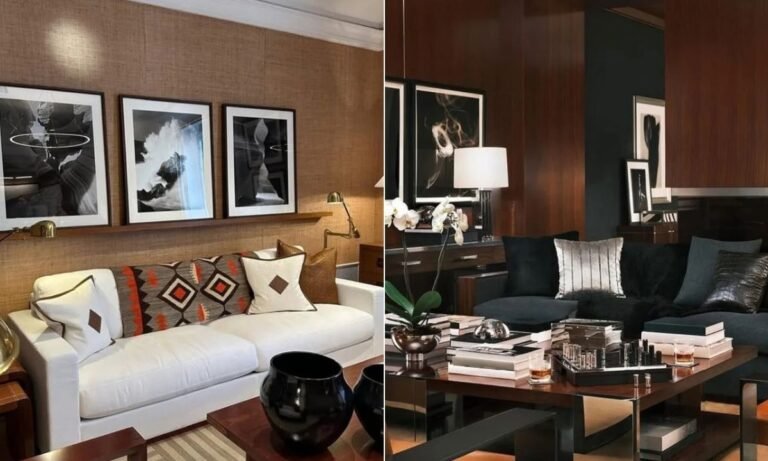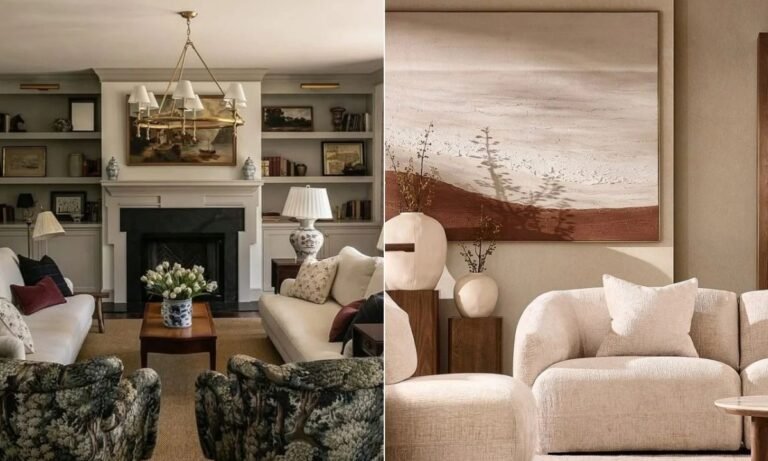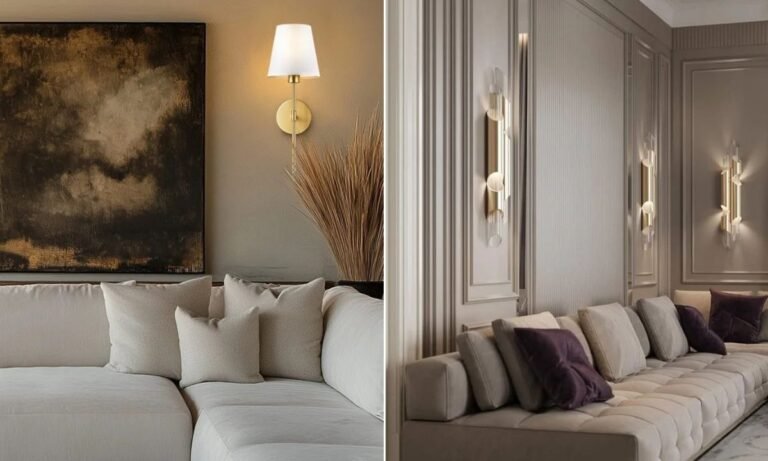
You can have a beautiful sofa, clean walls, and stylish decor, but the room can still somehow feel cold and unfinished.
That usually happens when the colors are too flat, the lighting feels harsh, or there is not enough texture and warmth around the space.
The good thing is, you do not need to replace everything because a few smart changes can completely change how the room feels.
In this article, I’ll show you how to make your living room feel warmer, softer, and more comfortable.
Let’s jump in!
What is a warm color for a living room?
Warm living room colors usually have soft red, yellow, or earthy undertones, so think cream, beige, tan, brown, terracotta, and rust.
If your room feels too cold or gray, start with one warm neutral on the walls, sofa, rug, or curtains.
You can then bring in deeper shades like caramel, chocolate, olive, or clay to give the room more depth and contrast.

If you want the space to stay bright, keep the largest surfaces light and use darker warm colors only through smaller accents.
Natural wood also helps because oak, walnut, and similar finishes can warm up white, gray, or beige rooms without adding another strong color.
Always check your colors in daylight and at night, because the wrong undertone or harsh lighting can make even warm shades look dull.
Warm Timber
If your living room feels too plain, exposed wood beams and earthy green seating can bring instant warmth without darkening the walls.
Keep the larger furniture soft and muted, then repeat natural wood through tables, frames, and side pieces to make everything feel connected.
This works especially well in bright rooms with tall windows, where plants and warm lamps can soften all that open architectural space.

Rust Accents
A light sofa does not have to feel cold when you layer rust pillows, brown texture, and warm wood around it.
Use this mix when you want an earthy look without repainting, because the deeper accents can warm up an existing neutral base.
Choose artwork with similar browns or burnt orange tones so the wall joins the palette instead of sitting separately above it.

Burnt Orange
If you want the sofa to do most of the warming, a burnt orange sectional can carry the room without extra heavy decor.
Balance that strong color with pale walls, a cream rug, and light wood so the space still feels open and modern.
This approach suits apartments especially well, since one large colored piece adds personality while keeping the rest of the room visually simple.

Soft Glow
When a white living room feels flat after sunset, layer floor lamps, table lamps, candles, and soft string lights around the seating.
Keep the bulbs warm rather than bright white, then add sage textiles and natural wood to stop the pale palette feeling sterile.
This setup works beautifully in smaller rooms because the warmth comes from light and texture instead of darker paint or bulky furniture.

Rust Balance
A rust sofa works beautifully in rooms with dark beams because the color warms the center without fighting the strong ceiling.
Keep the walls creamy and the surrounding chairs lighter, then use brown curtains and wood tables to connect everything naturally.
This mix suits traditional or rustic living rooms where you want warmth, contrast, and comfort without making every surface feel heavy.

Cream Contrast
Large cream sectionals can still feel warm when you ground them with camel leather, natural wood, and a textured neutral rug.
Use this approach in bright open-plan rooms, where pale upholstery keeps the space airy while deeper brown accents add visual weight.
Finish with full-length curtains and warm lighting so the high windows feel softer and the seating area feels more contained.

Sage Warmth
Sage green becomes much warmer when you pair it with honey-toned wood, cream upholstery, and a woven rug instead of cool gray.
Try this in a family living room where you want color to feel calm, because muted green is easy to live with.
Repeat the wood through shelves, tables, and chair arms, then add plants so the palette feels natural rather than overly coordinated.
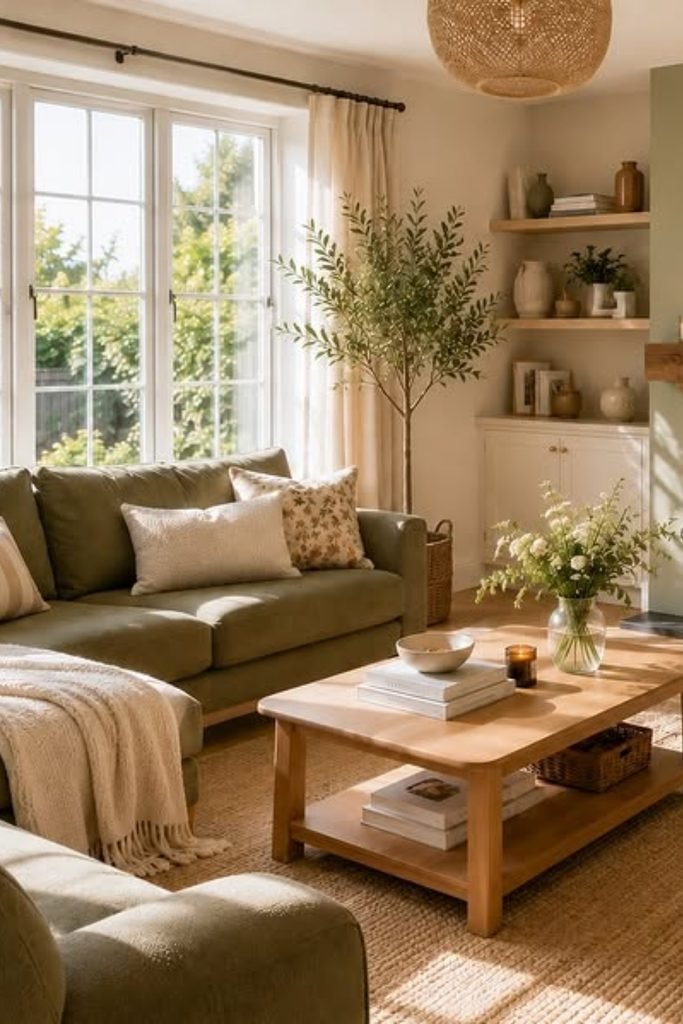
Cozy Glow
Warm layered lighting turns an ordinary living room into a relaxed evening retreat, especially when overhead brightness normally feels too harsh.
Pair table lamps, candles, and a warm pendant with soft neutral seating, then spread each light source around different corners.
Large leafy plants bring freshness into the warm palette, while a patterned rug and wooden furniture keep the cozy arrangement visually grounded.

Vintage Warmth
Rust velvet seating can become the strongest feature in a traditional living room without making the surrounding space feel overly dark.
Balance its rich color with cream walls, antique wooden chairs, brass lighting, and a patterned rug that carries softer earthy tones.
Positioning greenery near bright windows adds natural contrast, while framed artwork and classic fireplace details give the room a collected, lived-in character.

Natural Flow
Open-plan living rooms feel more connected when repeated natural materials visually carry the eye from the seating area toward the dining space.
Bring in woven rugs, rattan chairs, wooden furniture, and basket pendants, keeping their tones similar so both zones belong together naturally.
An olive-green feature wall and grouped houseplants introduce depth without interrupting the calm palette, making this approach especially useful for bright interiors.

Terracotta Layers
Terracotta walls can handle equally warm furniture when lighter accents are added strategically to stop the living room from feeling visually heavy.
Build around a rust sofa, then introduce cream chairs, patterned cushions, dark blue details, and an earthy rug for controlled color variation.
Bold artwork works beautifully above the sofa, while natural wood and leafy plants soften the stronger colors and make the arrangement feel balanced.

Boho Layers
Soft neutrals become much warmer when rust textiles, woven accents, and greenery are layered throughout a relaxed living room without overwhelming it.
Use a cream sectional as your base, then bring terracotta cushions, patterned throws, macramé art, and a vintage rug into the arrangement.
Trailing plants above the sofa draw attention upward, while candles and warm wood furniture make smaller living rooms feel especially cozy and personal.

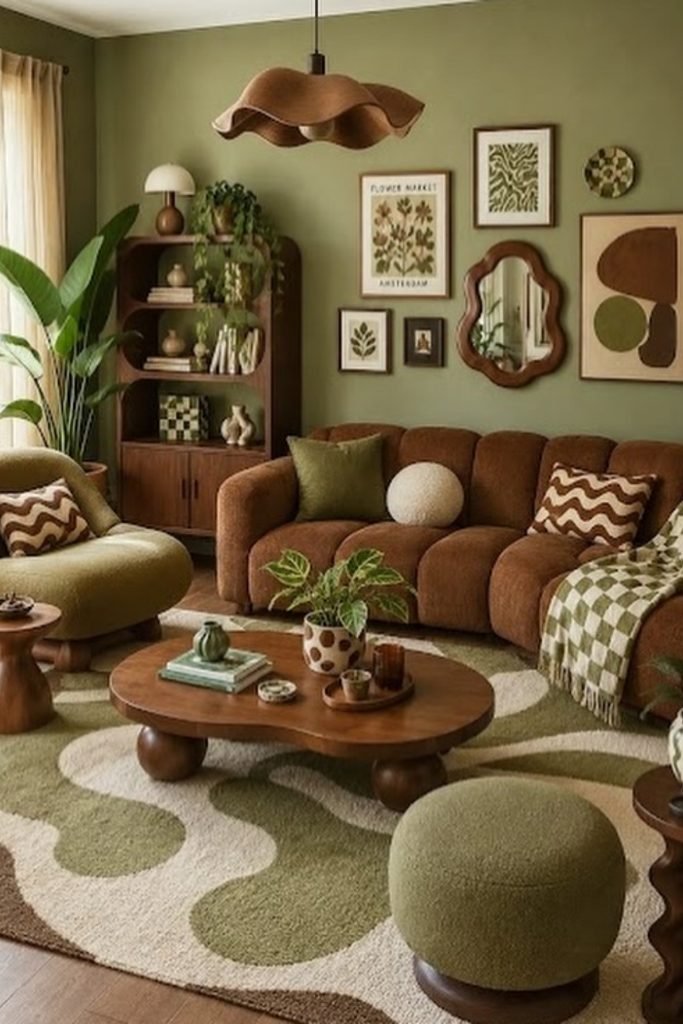
Retro Greens
Olive green and chocolate brown create a playful retro living room when rounded furniture replaces the sharper shapes commonly used in modern spaces.
Choose a curved brown sofa, sculptural green chair, and low wooden table, then repeat both colors through cushions, artwork, and accessories.
Keep plants and patterned pieces scattered rather than concentrated together, helping the room feel collected while maintaining enough visual space between stronger elements.
Evening Retreat
Evening comfort depends heavily on layered lighting, making recessed shelves, a fireplace, pendant light, and table lamp especially effective when combined.
Keep the sectional and walls creamy so warm illumination can spread gently, then introduce brown cushions, woven textures, and natural wooden furniture.
Large windows facing a garden work beautifully here because indoor lighting can continue outside, visually extending the living room after daylight disappears.

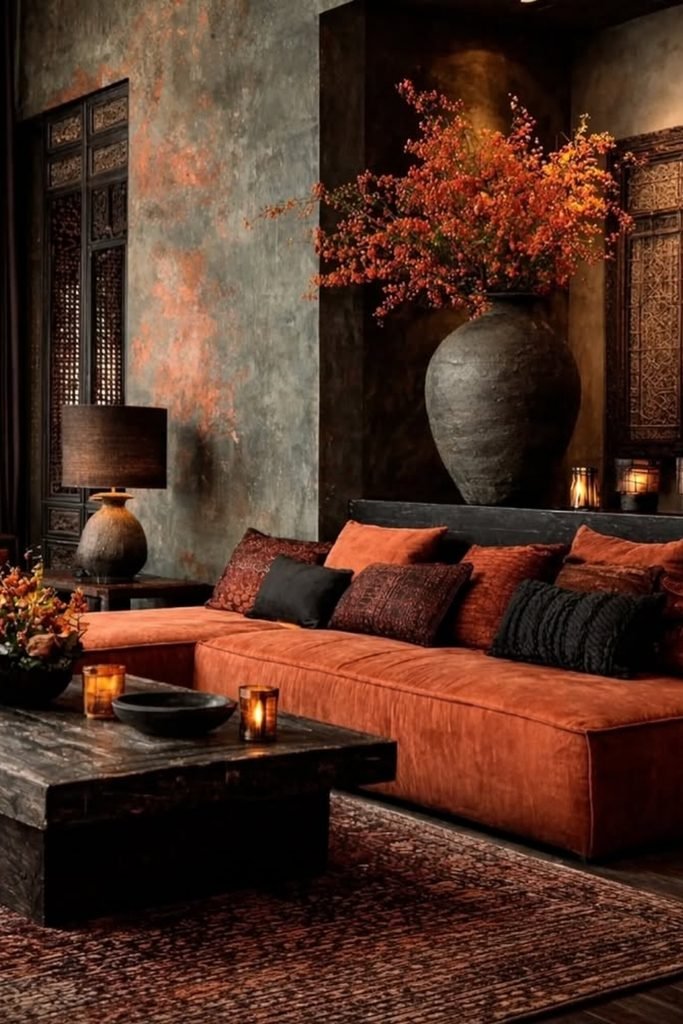
Moody Terracotta
Deep charcoal surroundings give terracotta seating unexpected richness, creating a dramatic living room suited to anyone who prefers darker, intimate interiors.
Anchor the room with a low rust sectional, then layer black, burgundy, and patterned cushions against textured walls and carved wooden panels.
Oversized branches add height without extra furniture, while candlelight, dark timber, and a substantial coffee table reinforce the warm, enclosed atmosphere.
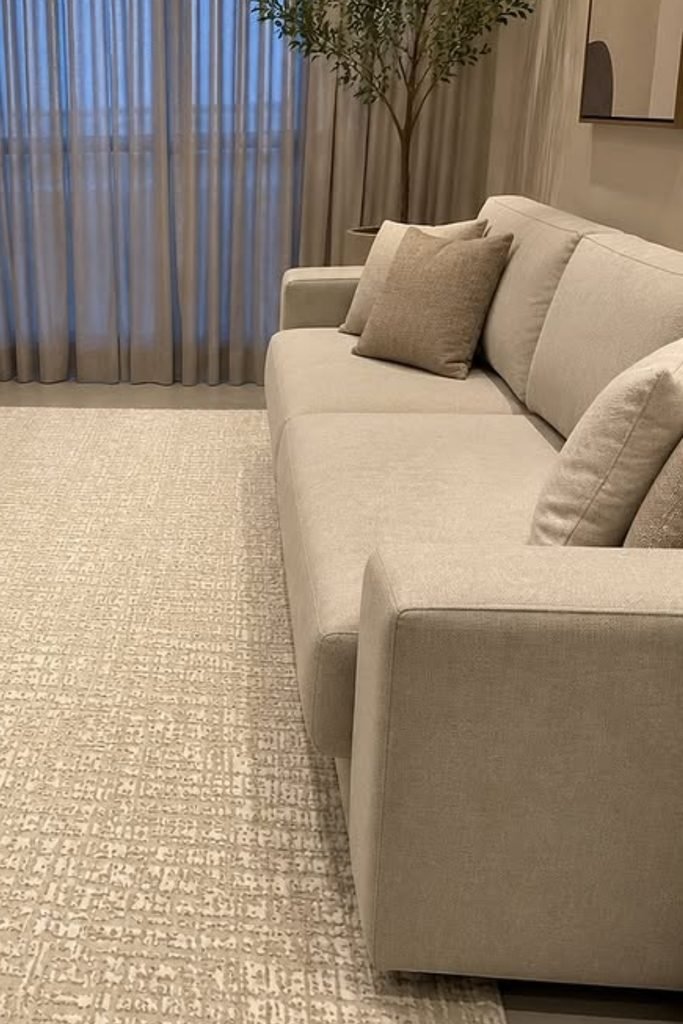
Quiet Minimalism
Clean neutral surfaces make compact living rooms feel noticeably wider, especially when bulky furniture and unnecessary decorative pieces would otherwise crowd limited floor space.
Choose a streamlined cream sofa, pale textured rug, and floating media cabinet, allowing similar tones to create an uninterrupted visual flow throughout.
Soft shelf lighting adds warmth after sunset, while one tall indoor tree brings enough natural contrast without disturbing the room’s calm simplicity.
Sculptural Comfort
Curved furniture can soften a living room filled with strong artwork, giving the seating area an inviting shape without competing for visual attention.
Pair a rust sofa with a rounded cream chair, stone side table, and brass lighting to build contrast through materials rather than extra colors.
Oversized abstract artwork creates the main backdrop, while leafy branches and a vintage rug keep the polished arrangement from feeling overly formal.

Classic Balance
Traditional living rooms feel more welcoming when symmetry stays slightly relaxed, allowing elegant architectural details to shine without making seating arrangements feel rigid.
Arrange cream sofas around a dark wooden coffee table, then repeat warm brown through cushions, curtains, side furniture, and understated decorative pieces.
Fireplace molding, an oversized mirror, and soft wall paneling establish character, while layered lighting makes the setup especially comfortable for evening gatherings.

Garden Connection
Garden-facing living rooms work beautifully with muted green seating because the color creates a natural transition between indoor comfort and outdoor greenery.
Position a generous sectional toward large windows, then add weathered wood tables, neutral cushions, and a faded rug for relaxed country warmth.
Exposed ceiling beams and leafy plants reinforce the organic direction, while soft cream walls prevent all those earthy materials from becoming visually heavy.

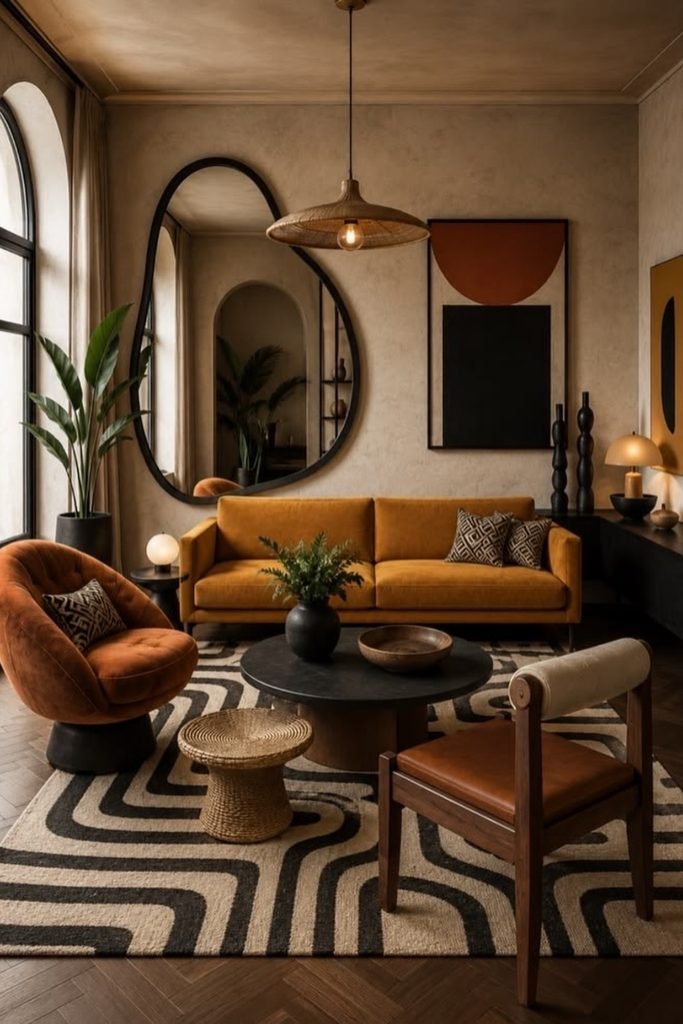
Graphic Warmth
Mustard seating brings instant personality to a neutral living room, especially when black accents are used nearby to sharpen its earthy warmth.
Ground the brighter sofa with a bold geometric rug, rounded coffee table, and rust chair so contrasting shapes keep the arrangement visually interesting.
An oversized mirror can open the wall dramatically, while abstract artwork and tall greenery finish the room without adding unnecessary furniture or clutter.
Balcony Flow
Open-plan apartments feel calmer at night when the living room and dining space share warm lighting, natural wood, and similarly soft neutral tones.
Place a cream sectional beyond the dining table, leaving a clear walkway toward the balcony so both areas remain connected without feeling crowded.
Carry candlelight and string lights outdoors to visually extend the living room, making this setup especially effective for apartments with compact entertaining areas.

Sunset Accents
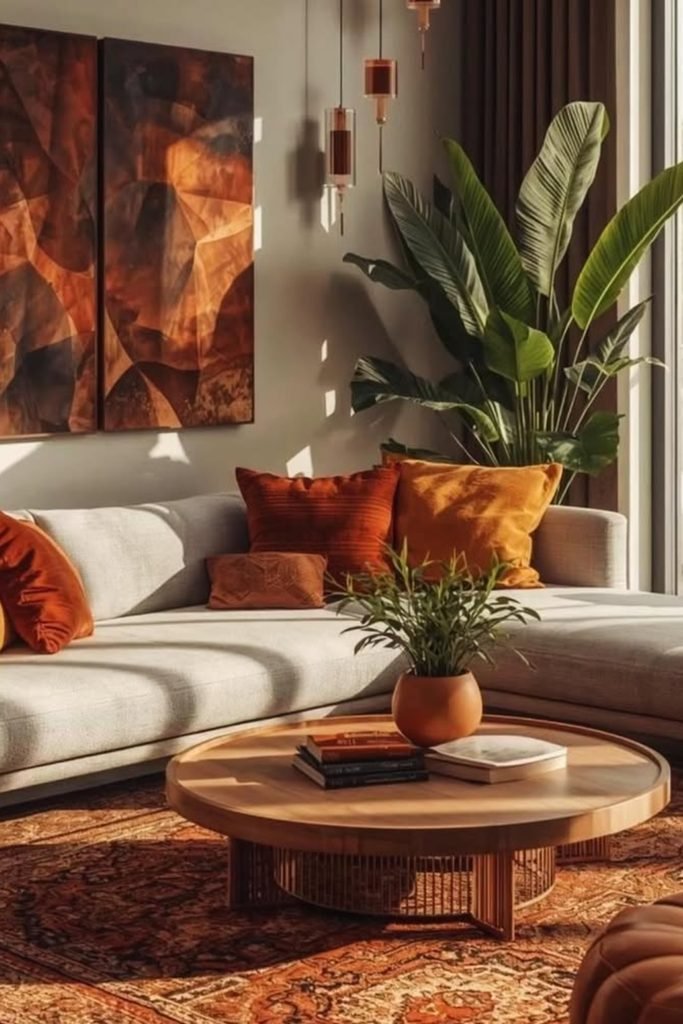
Sunlight makes rust and burnt-orange accents especially vibrant, giving a pale living room warmth without requiring darker walls or heavily colored furniture.
Start with a light sectional, then scatter velvet cushions in graduated earthy shades and anchor everything with a warm vintage patterned rug.
Tall greenery beside the window softens strong afternoon light, while matching terracotta artwork helps carry the accent palette upward across otherwise quiet walls.
Fireside Layers
Fireplace living rooms become more inviting when soft textiles and warm brown patterns are concentrated around seating rather than spread across every surface.
Dress a cream sofa with floral cushions, rust velvet, and a chunky knitted throw, then use weathered wood for the central coffee table.
Built-in shelves can hold pottery and books quietly, while candles, leafy branches, and a table lamp create several gentle evening light sources.

Soft Contrast
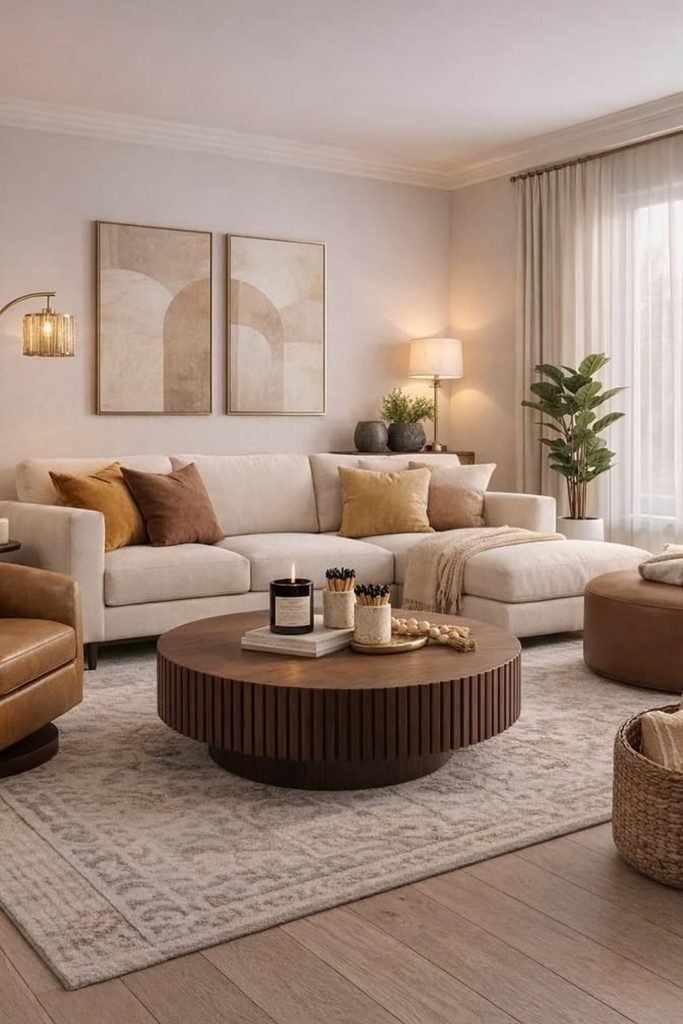
Cream seating gives a living room an airy foundation, while caramel and chocolate accents add enough warmth to prevent neutrals from feeling flat.
Center a low dark wood table on a pale textured rug, then repeat its warmth through leather seating and softly colored cushions.
Sheer curtains keep daylight gentle, while layered lamps, simple artwork, and one leafy plant complete the room without interrupting its peaceful balance.
FAQs
Can a Gray Living Room Still Feel Warm?
Yes, gray can still feel warm when you pair it with cream, camel, rust, natural wood, and softer lighting throughout the room.
If your sofa is gray, bring warmer tones through pillows, rugs, curtains, and nearby furniture instead of replacing the larger piece.
Avoid adding more blue-gray around it, because too many cool surfaces can make the space feel flat even with cozy accessories.
How Do You Warm Up a Small Living Room?
In a small living room, keep walls and larger furniture light, then add warmth through wood, textiles, lamps, and earthy accents.
Choose one or two deeper colors, such as chocolate or terracotta, so the room gains depth without feeling visually crowded.
A larger rug, full curtains, and several low light sources can also make the space feel softer without adding bulky decor.