Your living room can start feeling like a toy zone fast when kids, snacks, books, and everyday mess all pile into one space.
You still want a room that feels comfortable for your family without giving up the style, seating, or layout you actually enjoy.
In this article, you’ll find practical kid-friendly living room ideas that help you manage clutter, and protect your space.
Let’s jump in!
What Are Some Ideas For a Child-Friendly Living Room?
Start with the parts of your living room your kids use most, then make those areas safer, easier to clean, and easier to organize.
If toys stay in the living room, give them low baskets, drawers, or cabinets so cleanup does not become a daily struggle.
Choose a sofa, rug, and tables that can handle spills, crumbs, jumping, and regular family use without needing constant care.
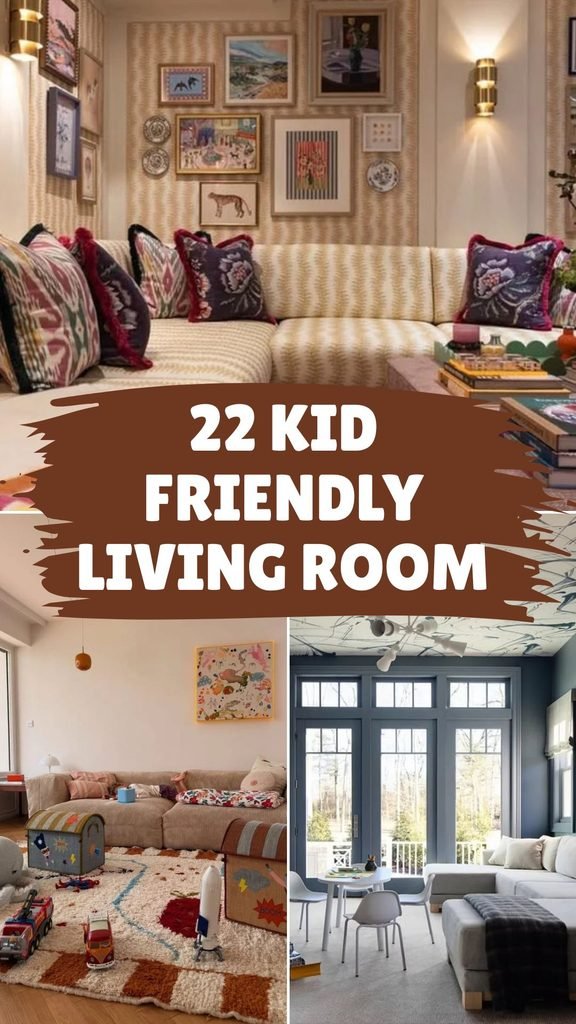
Rounded tables, soft ottomans, secured furniture, and clear walking paths also make the room easier to use when younger kids are around.
If you do not have a playroom, create one small play or reading corner instead of letting toys spread across the whole room.
Most importantly, keep your normal decor, because a child-friendly living room should still feel comfortable and stylish for the adults using it too.
Layered Comfort
Mixing a striped sofa with warm rust chairs gives a traditional living room personality without making the seating arrangement feel overly formal.
Keep larger furniture grounded in muted tones, then bring depth through patterned rugs, blue cushions, wood tables, and smaller vintage-inspired accents.
Rooms with generous natural light suit this approach especially well because daylight keeps multiple patterns and darker furniture finishes feeling balanced and welcoming.

Playful Lounge
Giving children generous floor space beside comfortable seating turns a family living room into somewhere adults can relax while kids stay occupied.
Choose a deep neutral sectional, then use a soft oversized rug to define the play zone and provide cushioning for everyday activities.
Toy baskets or decorative storage trunks keep cleanup manageable, while colorful artwork and patterned textiles make practical storage feel connected with the room.

Ceiling Drama
Drawing attention upward can completely change a narrow living room, especially when floor space needs to remain practical for several everyday activities.
Use darker walls and built-in cabinetry as a calm foundation, then introduce a graphic ceiling treatment to create character without sacrificing usable space.
Placing a sectional along one side leaves enough open room for a small activity table, making the layout useful for families and entertaining.

Collected Corner
Layering artwork closely above a sectional makes a compact living room feel personal while using wall space that might otherwise remain visually empty.
Build the arrangement with different frame sizes and artwork styles, keeping enough repeated colors nearby to prevent the gallery from appearing disconnected.
Patterned cushions, a narrow vintage rug, and warm wall lighting finish the room beautifully, especially in cozy spaces designed for conversation and lounging.
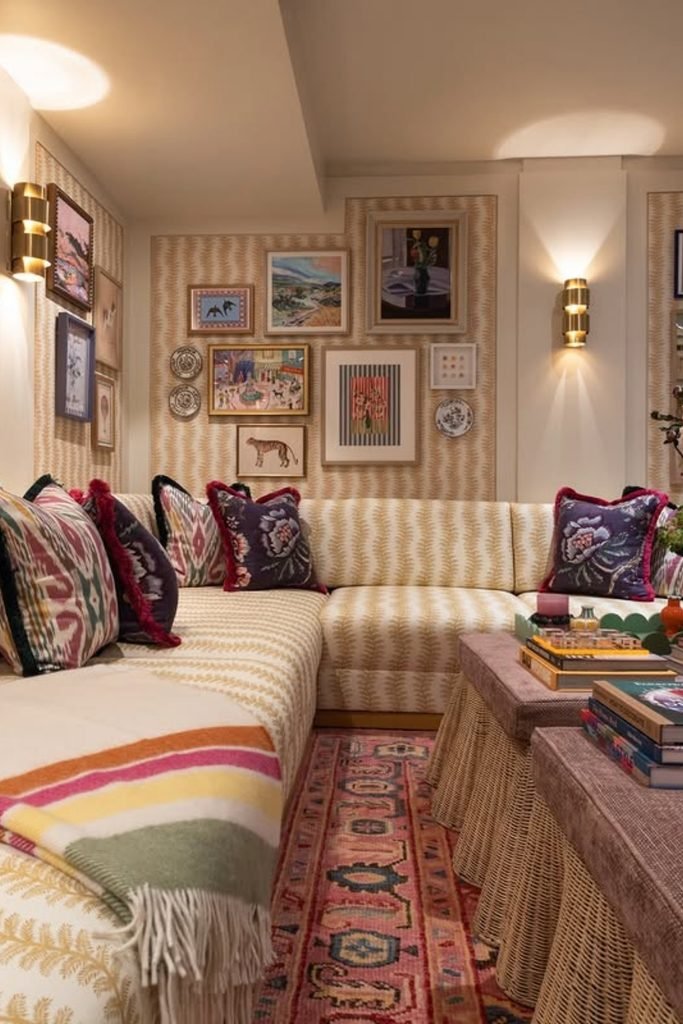
Family Flexibility
Keeping elegant furniture around an open center gives a family living room enough flexibility for children’s play without sacrificing its polished appearance.
Use durable upholstery, a large neutral rug, and movable accent chairs so the layout can easily adjust between entertaining and everyday family time.
Classic artwork, warm leather, and patterned blue fabrics help practical pieces blend naturally, making this approach especially useful in busy shared living spaces.

Soft Tradition
Muted green walls create a restful background for traditional furniture, allowing a living room to feel established without becoming dark or overly formal.
Pair a soft blue sofa with neutral armchairs, then introduce floral cushions, natural woven rugs, and dark wood for gentle visual contrast.
Smaller living rooms benefit from this arrangement because furniture gathered around one central table encourages conversation while leaving clear pathways near the windows.

Modern Calm
Breathing room between furniture matters when you want a modern living room to feel relaxing rather than simply sparse or unfinished.
Anchor a pale sectional with a darker rug and low wooden table, using their stronger shapes to give the neutral seating clear definition.
Sheer curtains, rounded seating, and restrained artwork soften the clean lines, making this combination especially effective in bright rooms with large windows.

Cottage Ease
Slipcovered seating works beautifully when comfort matters most, giving a casual living room an inviting finish that can handle regular everyday use.
Position a generous sectional beneath corner windows, then soften incoming sunlight with woven shades and full curtains for privacy without losing warmth.
Finish with a skirted ottoman and faded patterned rug, creating layered cottage character while keeping the furniture palette simple and easy to coordinate.

Shared Living
Combining dining and lounging zones works especially well in open rooms where one continuous space needs to support meals, relaxing, and gatherings.
Use the sectional as a soft divider, then position a slim dining table behind it so both areas remain connected without overlapping.
Blue upholstery and checked curtains bring continuity across the room, while pale flooring and walls prevent the larger furniture pieces from feeling crowded.

Everyday Zone
Leaving part of the floor intentionally open makes a narrow family living room easier to use when toys and daily activities constantly move around.
Push the main sofa against one wall, keep television storage shallow, and choose compact tables that preserve a comfortable walkway through the center.
Soft curtains and a light rug keep the practical layout welcoming, while accessible storage nearby makes quick cleanup much easier after busy days.
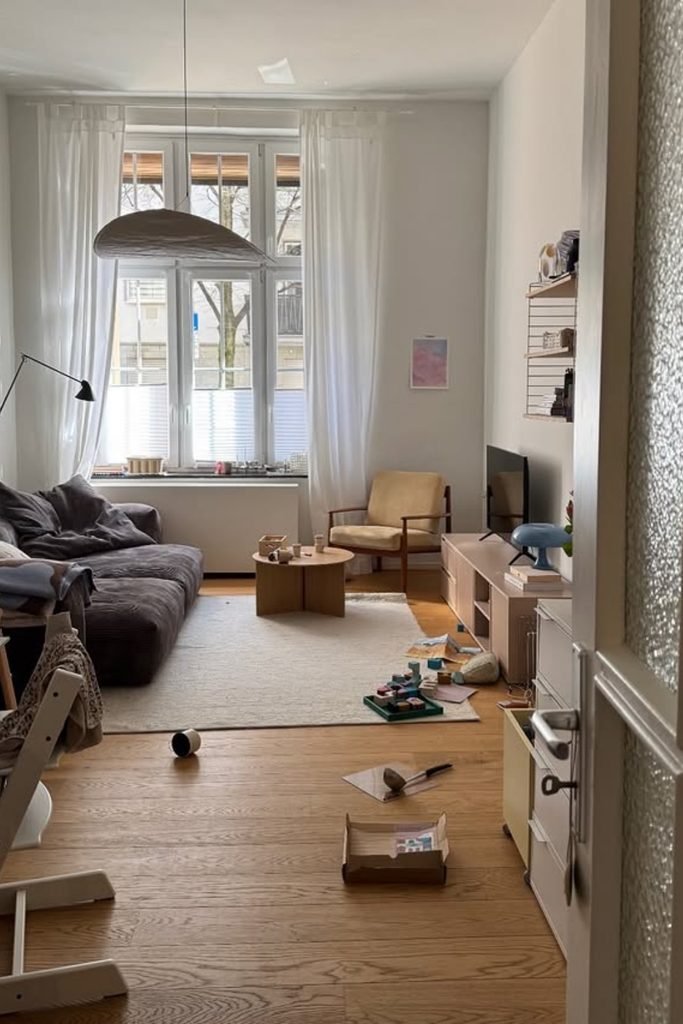
Country Gathering
Generous sectional seating can make a traditional living room feel noticeably more relaxed, especially when several people regularly gather in the same space.
Balance the large sofa with a woven trunk coffee table, giving the room useful storage while introducing texture against soft blue upholstery.
Grouped landscape prints strengthen the country character, while muted cushions and a faded rug keep the layered arrangement calm rather than overly decorated.

Artistic Contrast
Bold artwork becomes easier to decorate around when the living room repeats several of its colors through smaller furniture and textile choices.
Start with a neutral striped sectional, then pull pink, blue, and purple accents from the painting into cushions, flowers, and occasional tables.
Keeping the surrounding walls and rug understated gives those brighter touches room to stand out, making the approach ideal for art-focused living spaces.

Forest Focus
Deep green seating gives a modern living room instant weight, especially when pale walls and flooring need stronger contrast to feel complete.
Add vertical wood slats behind the sofa to warm the darker upholstery, while simple framed artwork keeps the surrounding wall clean and balanced.
Finish with one sculptural ceiling light instead of several small accents, creating personality overhead without taking valuable space from a compact seating area.

Natural Balance
Large living rooms can feel cold when ceilings rise high, so bringing warm wood overhead helps visually lower and soften the entire space.
Keep sofas, ottomans, and cushions within creamy neutral shades, then introduce an aged rug and chunky wooden table for texture closer to floor level.
Organic branches and understated artwork suit this relaxed arrangement, especially when you want an open-plan living room to remain calm despite its generous proportions.

Gallery Layers
Covering adjoining walls with collected artwork turns a small living room into an expressive retreat without requiring extra floor space for decorative furniture.
Choose one soft sofa color as your anchor, then mix frame sizes and artwork styles while repeating several colors through patterned cushions nearby.
Checks, florals, wicker, and patterned rugs can comfortably coexist here because their softer palette connects each layer instead of making the room feel chaotic.
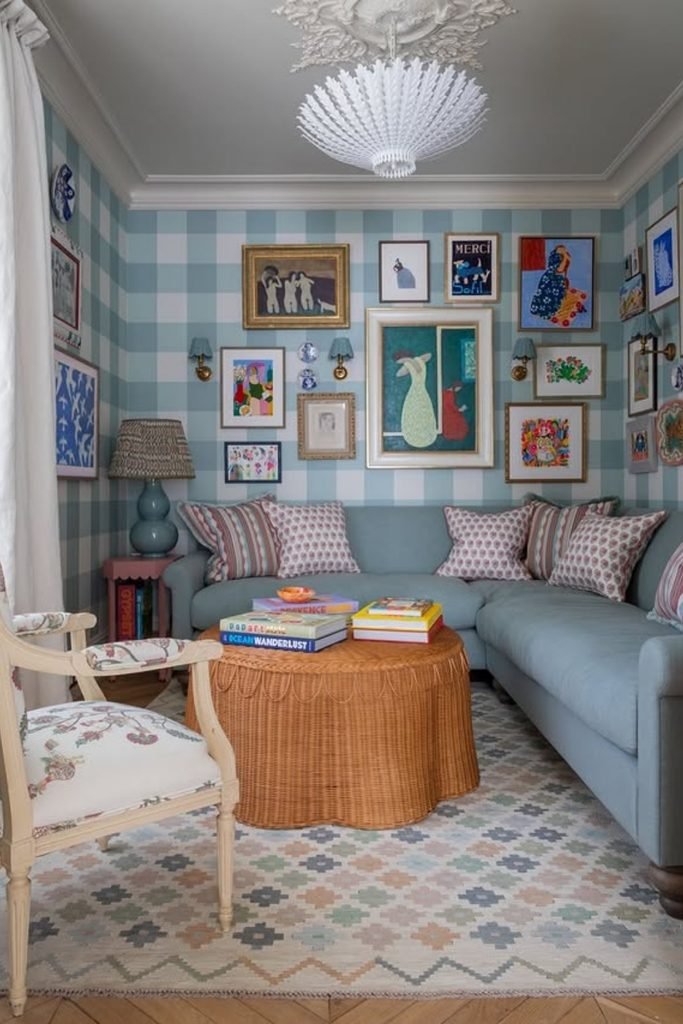
Green Cocoon
Wrapping walls, trim, and ceiling beams in one muted green creates a cozy living room that feels intentional rather than visually chopped apart.
Bring in sectional seating with slightly varied green tones, then break up the palette using geometric cushions, soft pink accents, and pale artwork.
Wicker tables and warm woven flooring prevent the greens from feeling heavy, making this layered approach especially effective in bright rooms with multiple windows.

Airy Gathering
Vaulted ceilings can make seating feel disconnected, so a generous sectional helps anchor the living room and creates a comfortable gathering zone.
Repeat soft blue through curtains, upholstery, and flooring, then add small green cushions to keep the coordinated palette from feeling overly matched.
Natural wood dining furniture adds warmth nearby, making this arrangement especially useful when one spacious room needs separate lounging and dining functions.

Playroom Blend
Turning one end of a living room into a children’s zone keeps toys accessible without allowing playtime storage to dominate the entire space.
Build shelving around a window seat for books and baskets, then place a child-sized table nearby where crafts and quieter activities can happen.
Neutral furniture keeps the shared room grown-up, while low storage and washable surfaces make daily tidying easier for both children and adults.
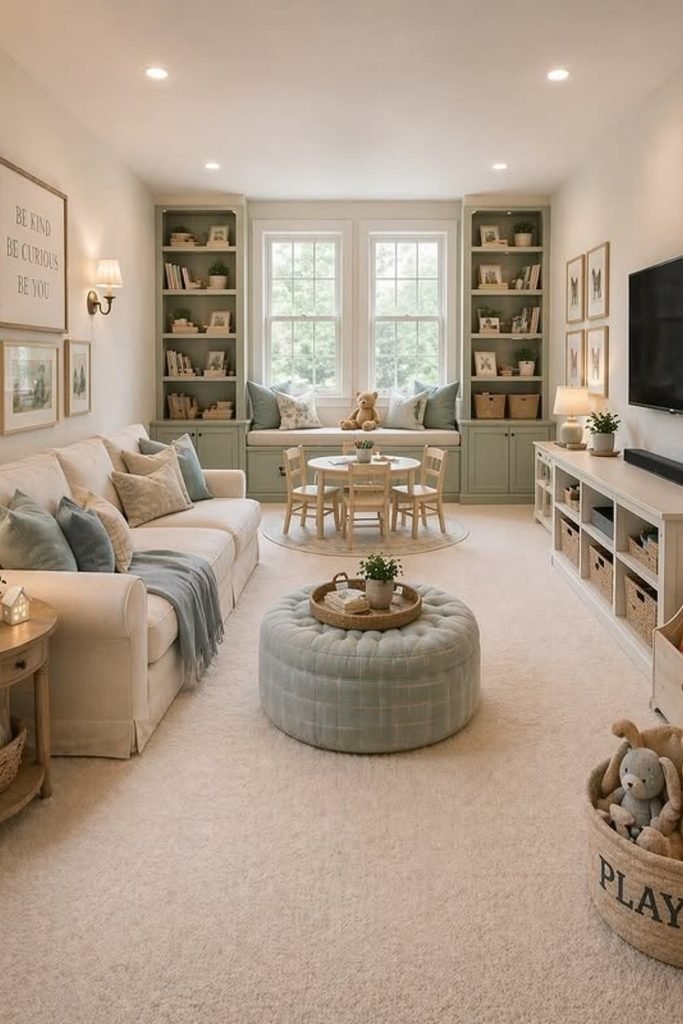
Creative Gallery
Warm wall color gives an art-filled living room a stronger foundation, helping different paintings and frame styles feel intentionally collected over time.
Place a rust sectional beneath the gallery, then introduce striped upholstery and a faded rug to balance colorful artwork with more structured patterns.
Low toy storage can sit comfortably beside the seating, making this approach practical for family rooms where creativity and everyday living naturally overlap.

Fresh Mix
Mixing several upholstery colors works best when each piece shares the same soft, slightly muted quality rather than competing for immediate attention.
Start with green as the central sofa color, then surround it with blue, patterned, and neutral chairs to create flexible conversation seating.
Warm wood tables and restrained wall décor ground the varied palette, making this combination ideal for bright living rooms used for frequent entertaining.

Playful Corner
Carving out one organized play corner lets children stay close to the family while preserving the living room’s comfortable adult seating zone.
Use low drawer units for toys, add a washable rug beneath activities, and keep frequently used items within easy reach for children.
Warm wood furniture, leafy plants, and burgundy accents help the practical storage blend naturally into a bright living room instead of feeling temporary.

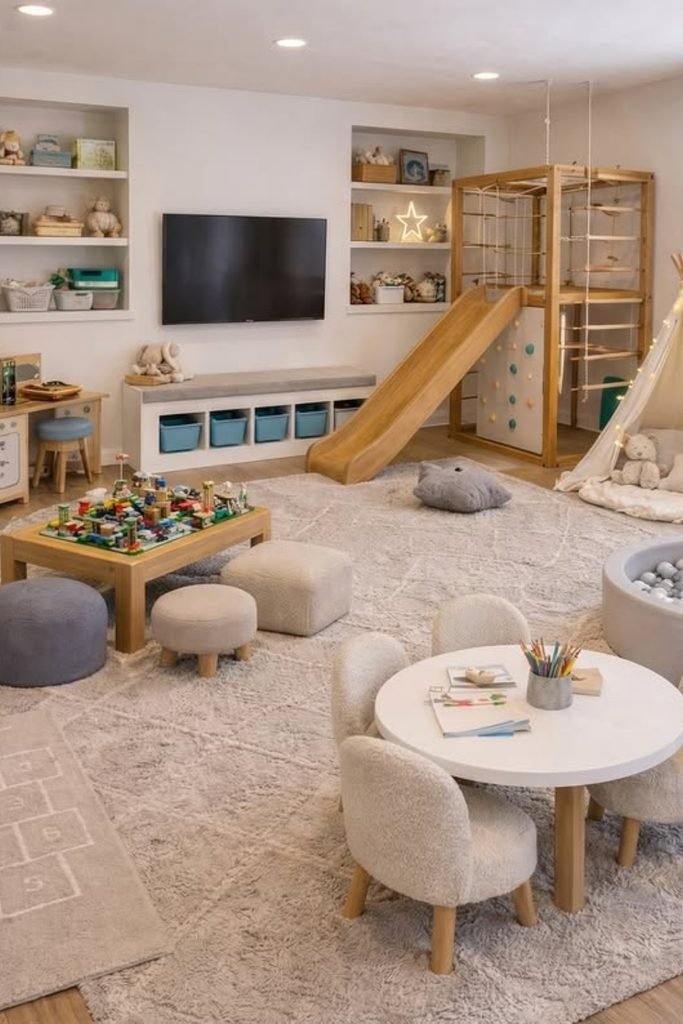
Activity Lounge
Dedicated activity stations work well when a large family living room needs to support energetic play, crafts, reading, and quieter entertainment together.
Divide the floor into clear zones using a craft table, climbing structure, soft seating, and open shelving rather than adding physical partitions.
Keeping furniture low and the palette neutral reduces visual clutter, while generous rugs provide a softer surface for children moving between activities.
FAQs
How do you hide toys in a living room without adding bulky storage?
Use closed cabinets, storage ottomans, or deep baskets near the play area so toys stay easy to reach but disappear quickly afterward.
Keep only a few everyday toys visible, then rotate the rest so shelves stay calmer and kids are not overwhelmed by too many choices.
If space is tight, use vertical cabinets or a bench with hidden storage instead of adding another large piece across the floor.
What furniture works best in a living room with young kids?
Choose sturdy pieces with rounded edges, easy-clean surfaces, and enough weight or support so they can handle busy everyday family use.
A soft ottoman can replace a hard coffee table, while washable sofa covers make spills much easier to manage without constant stress.
Keep walkways open and secure taller furniture properly, especially when toddlers are climbing, running, or pulling themselves up around the room.