A living room bench sounds easy to add, until you actually try to place one and suddenly every spot feels awkward.
The right bench can solve that problem, but its size, placement, material, and styling all need to work with the way you already use the room.
In this article, you’ll see how to style a living room bench so it looks intentional, and stays practical.
Let’s jump in!
How to Style a Living Room Bench?
Start with placement first, because even a beautiful bench will look awkward if it blocks a walkway or feels disconnected from the sofa.
Use one or two cushions, a throw, or a small tray to add comfort without covering the whole seat with decor.
If the bench sits against a wall, add artwork, a mirror, or a sconce above it so the area feels complete.

Match the bench to your room through color, wood tone, or texture instead of trying to copy the sofa exactly.
A hard wooden bench works better with a cushion, while an upholstered bench usually needs less styling to feel comfortable.
Keep the setup simple enough that the bench still works for seating, storage, or whatever job you added it for.
Art Wall
Turn a bare living room wall into useful seating by placing a slim upholstered bench beneath one large piece of artwork.
Keep the frame open and dark if you want the bench to feel light while still giving the neutral room some contrast.
Style one end with cushions and the other with books or a vase, leaving enough clear space for someone to sit.

Vintage Floral
Give a plain living room corner more character with a vintage settee, especially when modern furniture makes the space feel too new.
Let the patterned upholstery become the accent, then keep the nearby wall, rug, and accessories quiet so the bench does not compete.
Choose this style for a traditional or collected room where carved wood and softer fabrics can connect easily with existing pieces.

Cane Window
If your living room needs another seat without blocking light, place a cane-back bench beside or slightly below a bright window.
Add a firm olive cushion or another earthy shade to soften the wood while keeping the woven back visible and airy.
Pair it with a warm wood coffee table and textured rug so the bench feels connected instead of looking like spare furniture.

Gallery Wall Settee
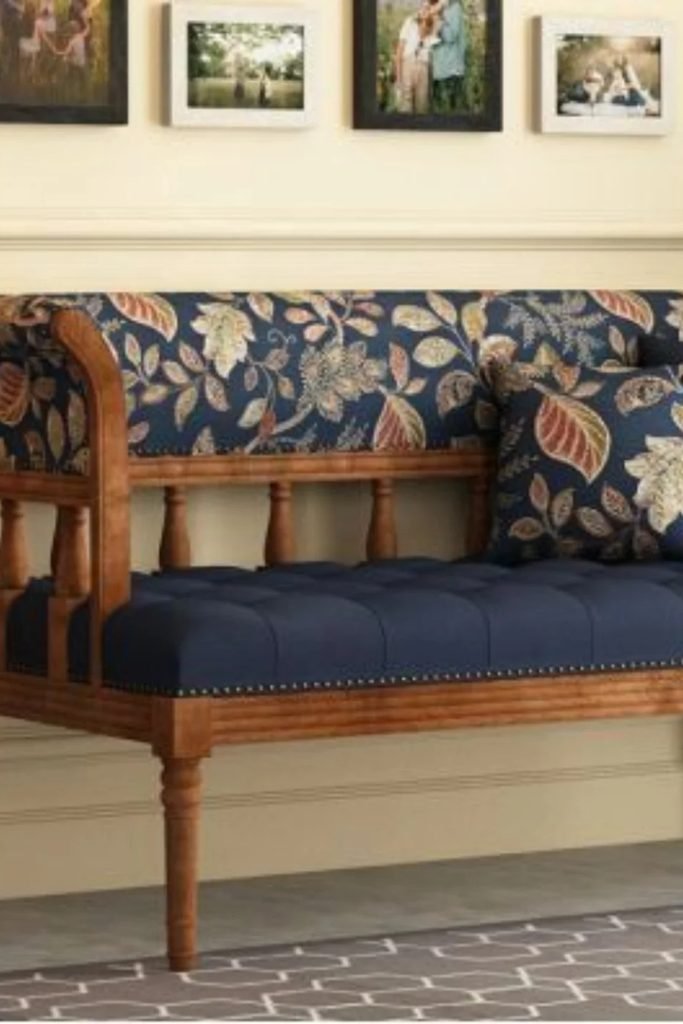
Use a long wooden bench beneath family photos when you want the wall to feel personal without adding another bulky cabinet.
Repeat one deep color, like navy, across the seat and pillows so mixed floral fabric still looks controlled rather than overly busy.
This setup suits traditional living rooms best; leave the floor area open around its carved legs so the furniture can breathe.
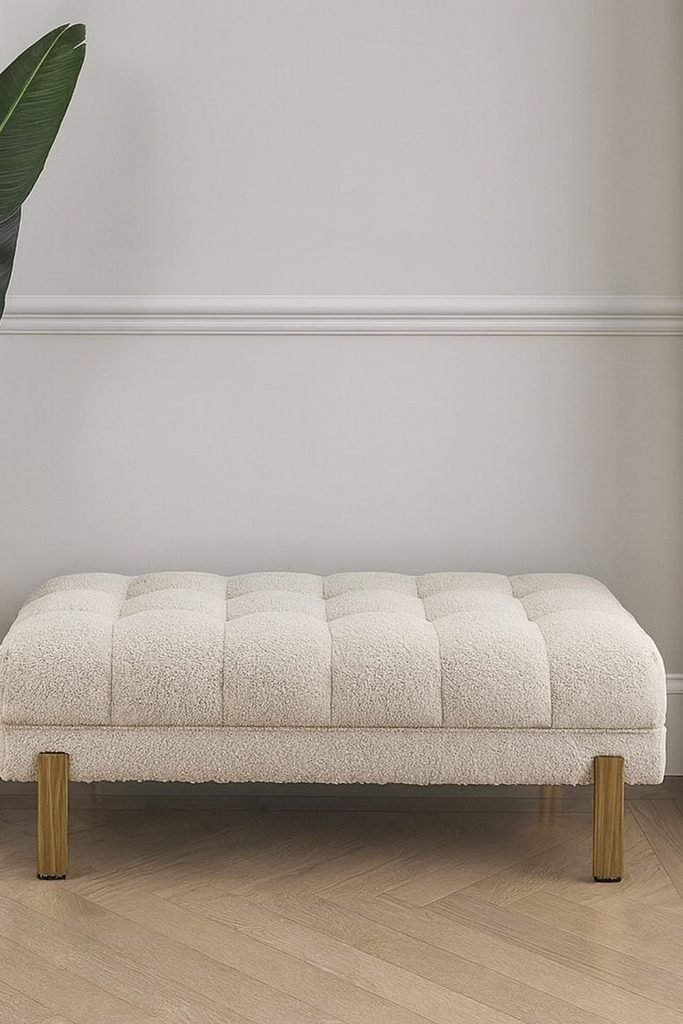
Textured Boucle
Use a low boucle bench along a quiet living room wall when you want extra seating without adding another bulky chair.
Pair the soft cream texture with dark wood or black accents so the setup feels grounded instead of overly pale.
Keep decor minimal with one vase or artwork above, leaving most of the seat clear enough for guests to use.

Light Corner
A compact tufted bench works well in an unused living room corner where a full armchair would make the layout feel crowded.
Choose slim legs and light upholstery to keep more floor visible, then add one tall plant for height and natural contrast.
This setup suits small neutral rooms especially well because it gives you a useful seat without creating another heavy furniture block.
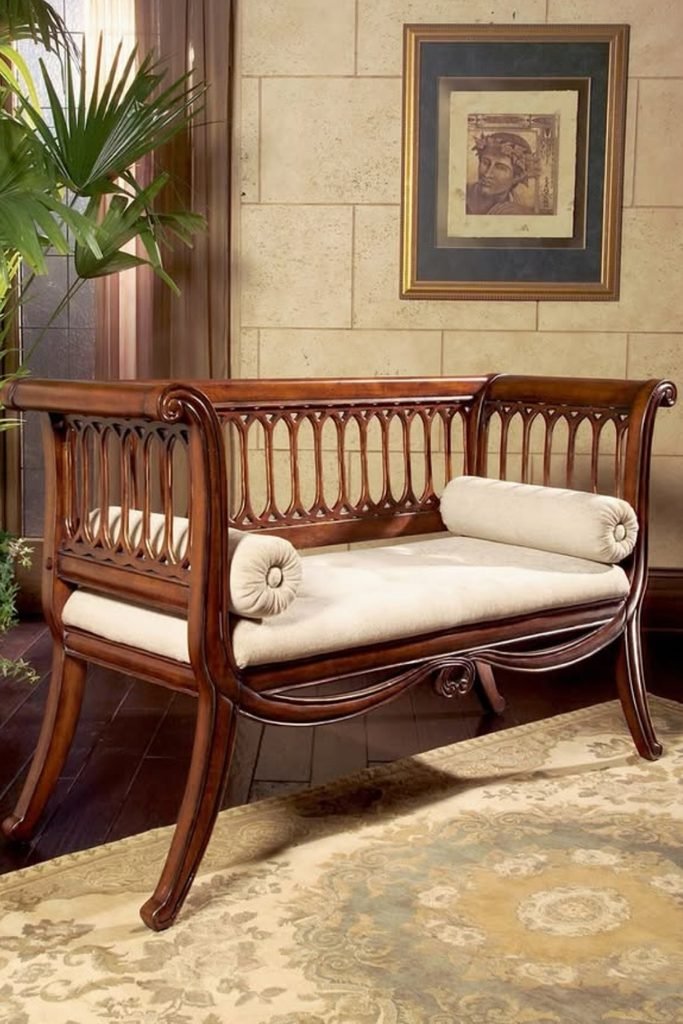
Carved Wood
Bring character into a traditional living room with a carved wood settee when plain upholstered furniture starts feeling too predictable.
Use a simple cream cushion and matching bolsters so the detailed frame stays noticeable without making the seating area look busy.
Place it beside greenery or classic artwork, where the warm wood can connect naturally with rugs, floors, and other traditional finishes.
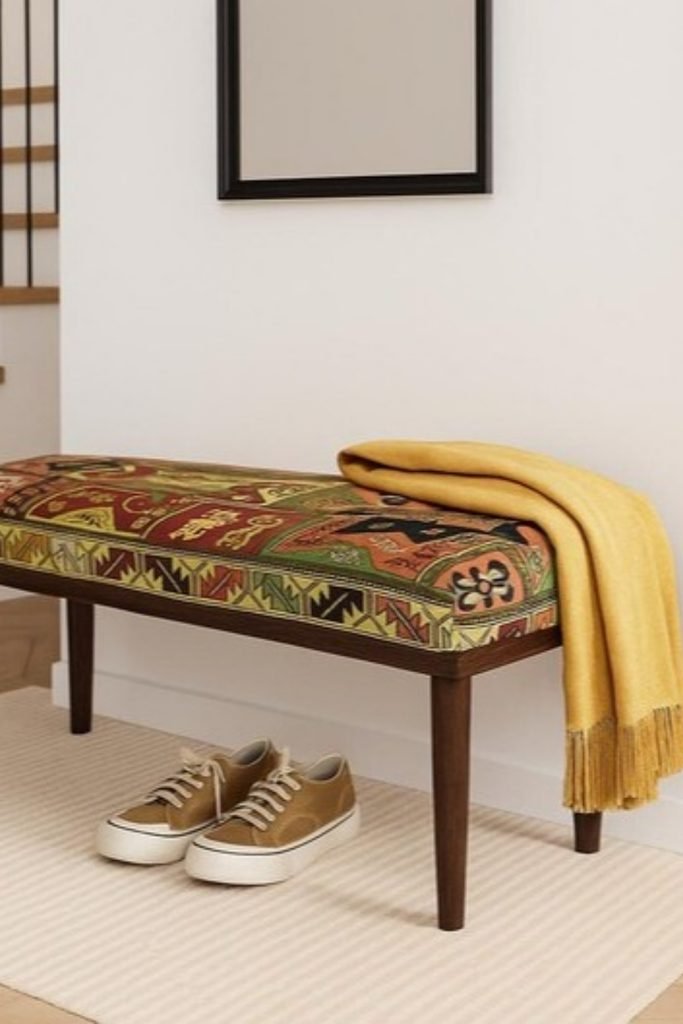
Patterned Accent
Use a patterned bench near the living room entrance when you need a quick seat but do not want a bulky console.
Let the upholstery carry the color, then keep the wall and surrounding furniture simple so the pattern feels intentional, not overwhelming.
A folded throw makes the bench feel softer, while the open space underneath keeps shoes or small baskets easy to reach.
Cane Back
Bring warmth to a neutral living room with a cane-back bench, especially when you want texture without adding heavy upholstery.
Place it near a bright wall or window, then pair the natural wood with a soft rug and one leafy plant.
Keep the seat mostly bare so the curved frame stays visible and the bench still works as practical everyday seating.

Window View
A backless cushioned bench works beautifully near large windows when you want extra seating without interrupting the garden view outside.
Choose a rounded wood base and soft neutral upholstery to keep the piece low, comfortable, and easy on the eye.
Set it partly on the rug so it feels connected to the living area instead of floating alone beside the glass.

Mirror Wall
Turn the space beside your living room entrance into a useful landing spot with a slim bench and one bold cushion.
Hang a large round mirror above it to bounce light around, then use nearby greenery to soften the straight furniture lines.
This setup works best when the bench stays narrow enough for bags, shoes, and quick seating without crowding the doorway.

Patterned Statement
Let one patterned bench carry the personality when your living room already has strong architecture, artwork, and warm vintage details.
Repeat a few colors from the wall art in the upholstery so the bench feels connected rather than randomly added.
Keep the frame simple and the floor around it open, giving the bold fabric enough room to stand out cleanly.

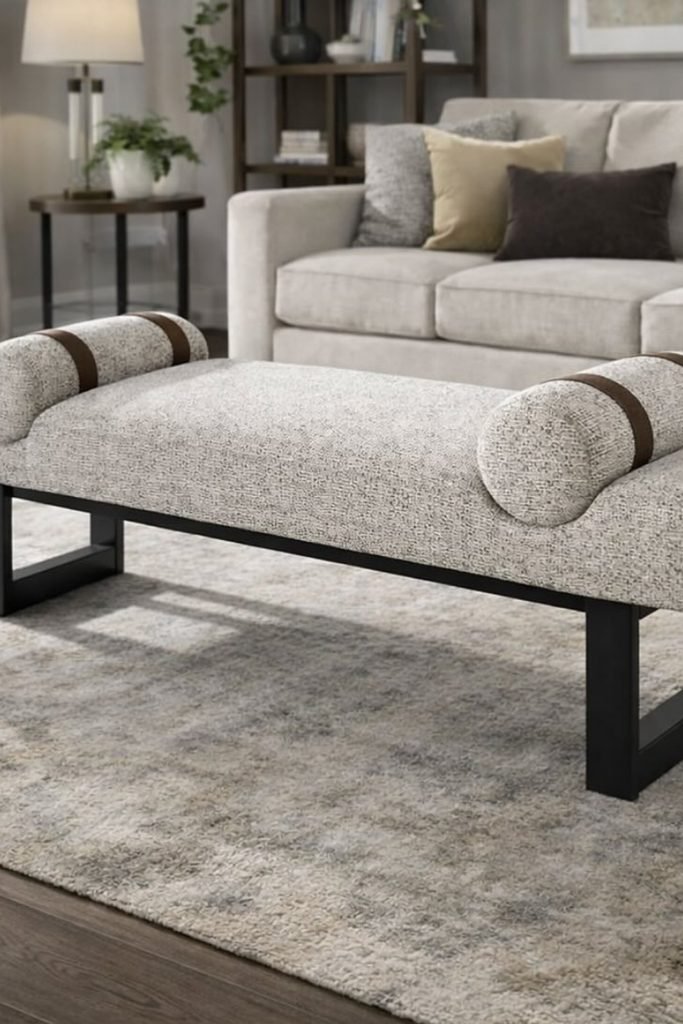
Sofa Front
Use a wide upholstered bench in front of the sofa when you want extra seating that can also act like a soft coffee table.
Keep the frame low and open so the room still feels spacious, then add a tray whenever you need a stable surface.
Choose small bolster pillows at the ends for comfort without covering the center, leaving plenty of room for guests to sit.
Deep Plum
A deep plum bench can anchor a quiet living room wall when you want richer color without adding a full second sofa.
Keep the shape simple and tailored, then repeat the darker tone through one or two accessories so the room feels balanced.
This works especially well in formal or transitional spaces where wall molding, brass lighting, and neutral flooring already add structure.

Sculptural Boucle
Choose a sculptural bench when the living room needs one standout piece rather than another predictable rectangle of upholstered furniture.
Pair creamy boucle with warm wood so the unusual legs and rounded seat feel artistic without becoming too cold or severe.
Keep nearby decor restrained and let one large artwork or plant finish the corner, giving the bench enough space to stand out.

Spindle Back
A spindle-back bench works well along an open living room wall when you want real support without the bulk of another sofa.
Add one long seat cushion instead of several pillows, keeping the wood frame visible while making everyday sitting far more comfortable.
Use a small side table and soft rug nearby so the bench feels connected to the main seating area, not pushed aside.

Orange Accent
Bring energy into a neutral living room with an orange bench, especially when the surrounding walls and floors already feel calm.
Keep the wooden base visible and use matching bolster cushions so the bold color looks intentional instead of overly playful.
Place it beneath simple artwork or beside a floor lamp, letting the bench become the room’s main color statement there.

Floral Vintage
Use a floral vintage settee when your living room needs softness and character without adding another plain upholstered seat nearby.
Let the patterned backrest stand out, then keep the seat cushion neutral so the overall look stays balanced and easy.
This works beautifully near a bright wall or window, where natural light can highlight the carved wood and delicate fabric.

Tufted Ottoman
Swap a standard coffee table for a tufted bench when you want the center of your living room to feel softer.
Choose upholstery close to your sofa color so both pieces connect, then let the turned legs add subtle traditional detail.
Keep enough space around the bench for movement, and add a tray only when you need a firm surface for drinks.

Sculptural Mirror
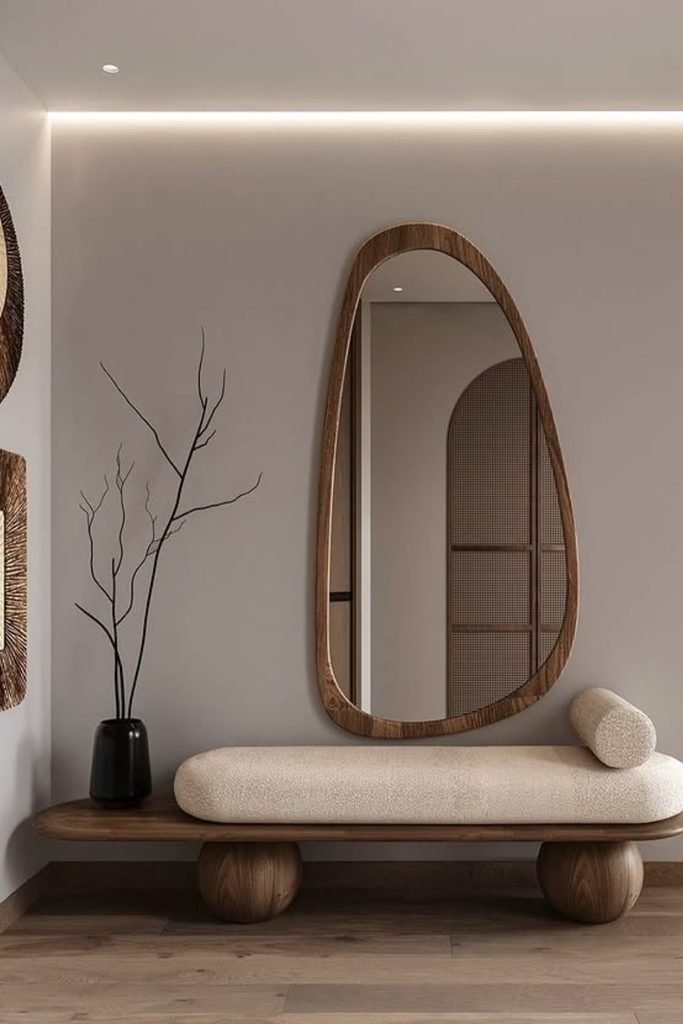
Turn a quiet living room wall into a focal point by pairing a sculptural bench with an oversized organic-shaped mirror.
Choose rounded wood legs and creamy upholstery to soften straight walls, then keep nearby decor minimal so the shapes stay noticeable.
This setup works best in modern or organic rooms where the bench can offer occasional seating without competing with larger furniture.
Mirror Corner
Fill an unused living room corner with a low upholstered bench when you need extra seating without making the area feel heavy.
Hang a tall arched mirror above it to reflect light, then add two soft cushions so the bench feels inviting.
Finish the setup with a woven rug and oversized vase, keeping the palette neutral so the small space stays calm.

FAQs
Can a Living Room Bench Replace a Coffee Table?
Yes, a wide upholstered bench can replace a coffee table when you want a softer center and occasional extra seating.
Add a sturdy tray for drinks, books, or decor so the soft surface stays practical without losing its flexible use.
Keep enough space around it for walking, and choose a height that feels comfortable beside your sofa and nearby chairs.
Should a Living Room Bench Match the Sofa?
No, your bench does not need to match the sofa, but both pieces should share at least one visual connection.
Repeat a wood tone, fabric color, metal finish, or texture so the bench feels related without looking like a matching set.
If the sofa is neutral, use the bench for contrast through warmer wood, patterned upholstery, velvet, leather, or bold color.