Tile flooring can look clean and practical, but the wrong color, finish, or pattern can make your living room feel cold and unfinished.
You may also struggle with what rug, sofa, wood tone, or wall color will actually work with the tile you already have.
In this article, you’ll find practical tile floor living room ideas that help you choose, style, and balance the floor.
Let’s jump in!
Is Tile Flooring Good for a Living Room?
Yes, tile flooring can work very well in a living room if you choose the right finish, color, and size for your space.
It handles daily wear, spills, pets, and heavy foot traffic better than many softer flooring options, so it suits busy homes especially well.
The main problem is comfort, because tile can feel cold and hard unless you balance it with rugs, curtains, and upholstered furniture.

Warm beige, cream, travertine-look, or wood-look tiles usually feel softer than very glossy white or cool gray floors.
For smaller rooms, lighter tiles and matching grout can make the floor feel calmer and reduce visual breaks across the space.
Choose tile based on how you actually use the room, then build warmth around it instead of treating the floor as decoration alone.
Polished Openness
Let polished gray flooring become the quiet foundation in spacious living rooms where large windows and pale furniture already provide plenty of brightness.
Keep furniture grouped over a warm neutral rug so the glossy surface feels inviting instead of making an open layout appear overly empty.
Soft upholstery, an oversized floor cushion, slim tables, and one tall plant add comfort while preserving the clean contemporary character of the room.

Stone Simplicity
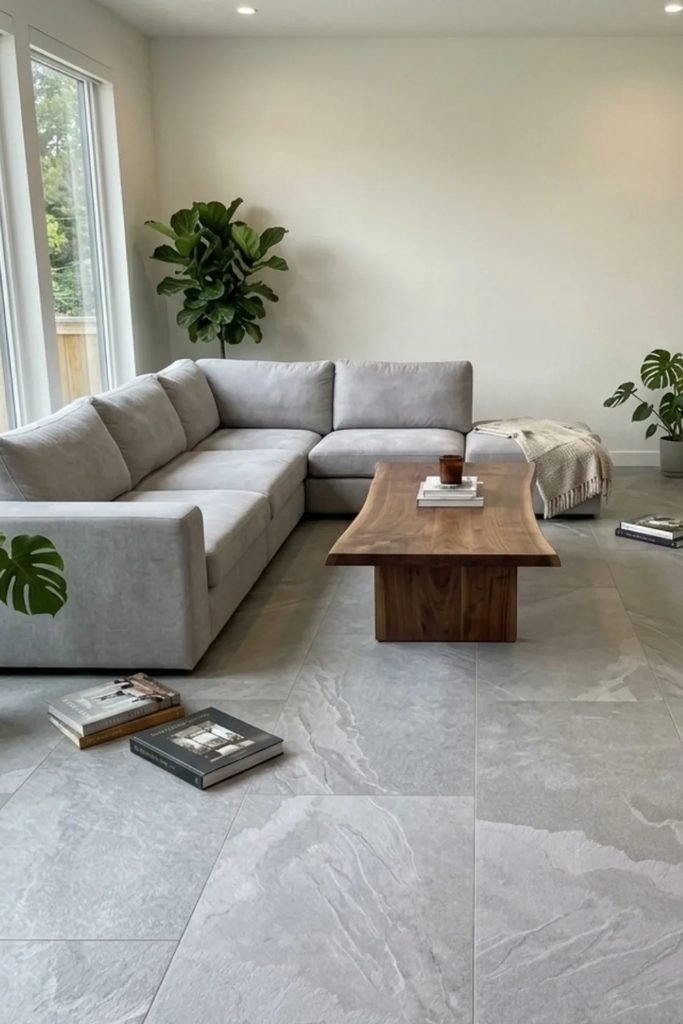
Large stone-look tiles can make a smaller living room feel calmer because fewer grout lines create a cleaner, more continuous visual surface.
Pair cool gray flooring with a light sectional and warm wooden coffee table to prevent the simple neutral palette from feeling overly cold.
Place leafy plants near windows and open corners, giving the restrained room natural color without filling valuable floor space with unnecessary decorative pieces.
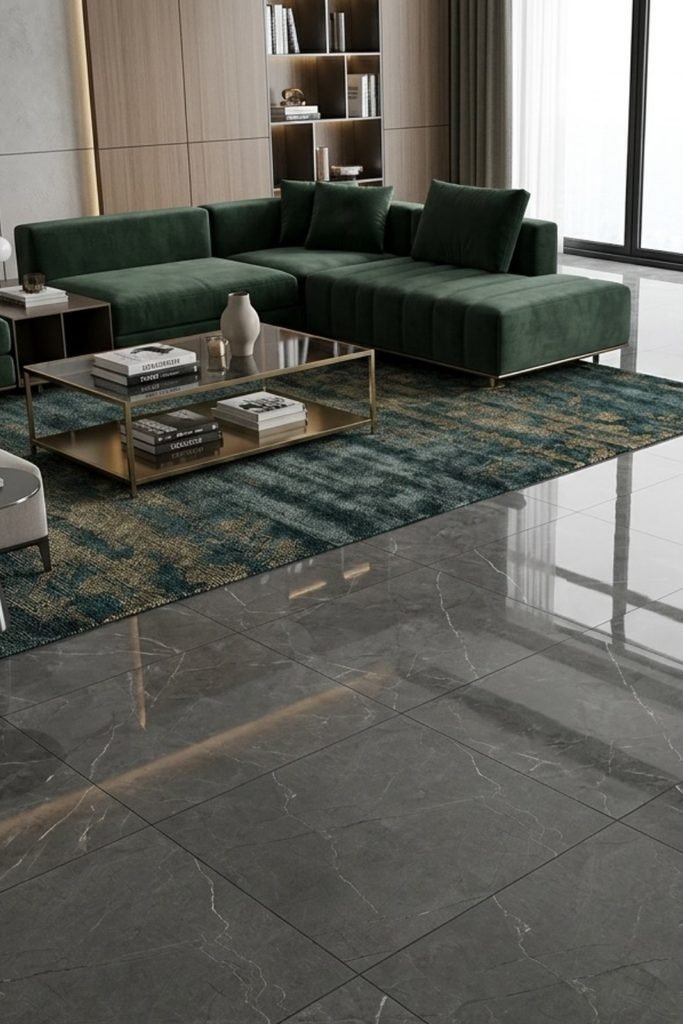
Marble Depth
Dark marble flooring gives a large modern living room instant depth, especially when strong daylight prevents the charcoal surface from dominating the space.
Pull a deep green sectional and patterned rug into one defined seating zone, allowing exposed flooring around it to emphasize the room’s scale.
Warm metallic tables and softly lit wood cabinetry balance the darker finishes, creating enough contrast to keep the luxurious scheme comfortable and visually layered.
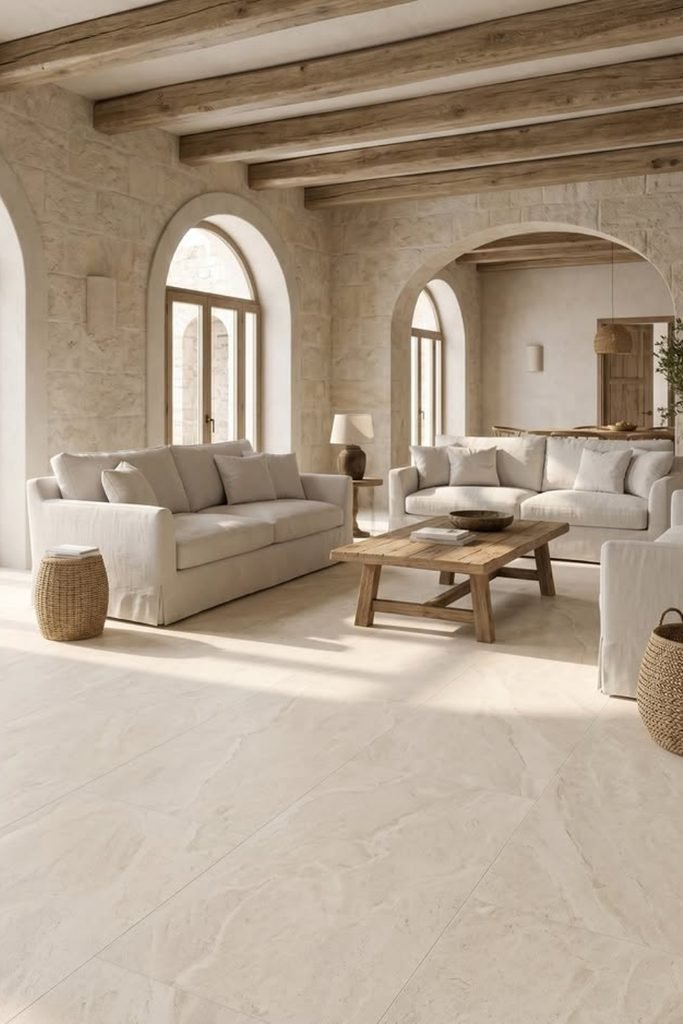
Mediterranean Warmth
Sunlit living rooms gain an easy Mediterranean warmth when pale stone flooring continues the soft neutral tones already used across walls and upholstery.
Bring in rustic timber through ceiling beams and a substantial coffee table, then repeat woven textures with baskets to soften the stone surfaces.
Choose relaxed cream sofas and keep accessories minimal, letting arched windows, natural materials, and generous daylight create most of the room’s character.
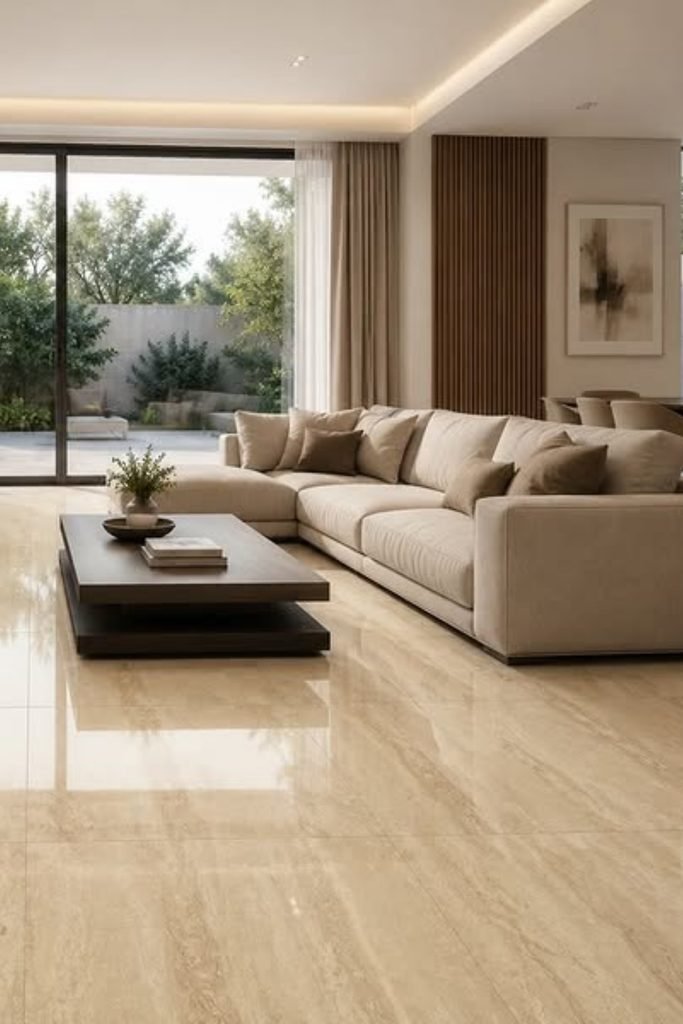
Seamless Shine
Warm beige flooring works beautifully in open living rooms where sunlight can reflect across the surface and make the entire layout feel brighter.
Run the same large tiles throughout adjoining areas, then choose creamy upholstery and dark wood accents to create definition without interrupting visual flow.
Hidden lighting beneath cabinetry and around the ceiling adds evening warmth, keeping the polished floor elegant instead of letting its glossy finish feel cold.
Fireplace Balance
Give a statement fireplace more presence by surrounding it with stone tones that connect naturally with the large neutral tiles covering the living room.
Low-profile seating keeps sightlines open, while a glass coffee table prevents bulky furniture from competing with the fireplace wall and expansive flooring.
Try this approach in contemporary rooms with tall windows, adding small green accents and natural wood to soften the strong architectural finishes.

Airy Marble
Smaller living rooms can gain visual breathing room from pale marble-look tiles because their subtle veining adds interest without creating heavy floor patterns.
Keep sofas around the room’s edges and leave the center relatively open, allowing long tile lines to visually stretch the available floor space.
Warm beige seating, soft throws, and focused wall lighting stop the pale surfaces from appearing sterile while maintaining a clean modern atmosphere.

Layered Neutrals
Luxury feels more comfortable when glossy cream flooring is balanced with a large textured rug instead of leaving every polished surface completely exposed.
Build the seating zone with an oversized cream sectional, then introduce walnut paneling and deeper brown cushions for warmth against the lighter flooring.
Finish with a rounded statement table and soft lamps, giving spacious contemporary living rooms enough texture to feel welcoming without adding visual clutter.

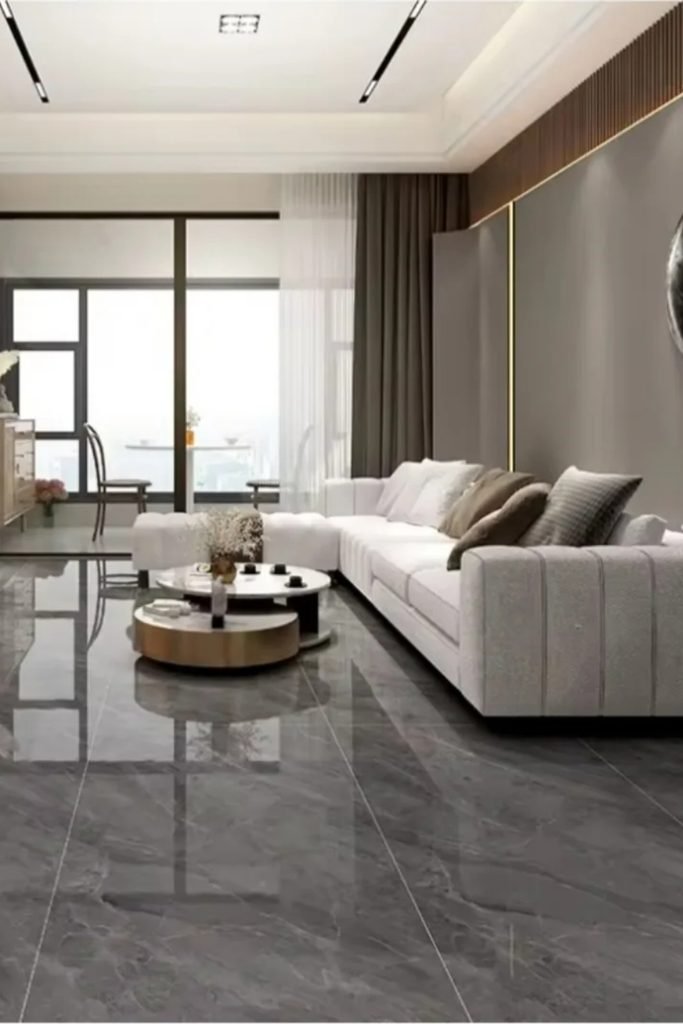
Reflective Contrast
Dark marble flooring can anchor a bright living room beautifully, especially when white seating and walls already provide plenty of visual balance.
Use glossy large-format tiles to strengthen the spacious feeling, then introduce warm fireplace lighting so the gray surface never feels overly harsh.
Keep furniture streamlined and low, allowing reflections from nearby windows to travel across the floor and give compact contemporary rooms greater visual depth.
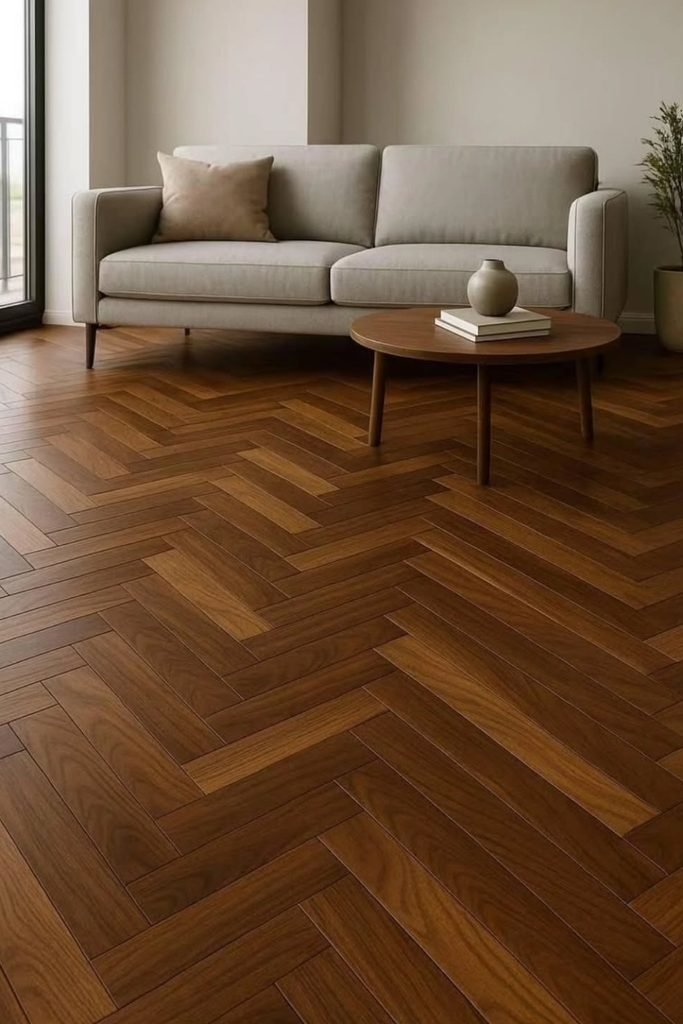
Herringbone Warmth
Rich herringbone flooring brings movement into a simple living room without needing patterned rugs, bold walls, or excessive decorative pieces for added character.
Pair the warm wood with a soft neutral sofa and rounded timber table, letting similar earthy shades create a calm and connected palette.
Natural light highlights the changing grain direction beautifully, making this flooring especially effective in smaller rooms where subtle texture can provide enough interest.
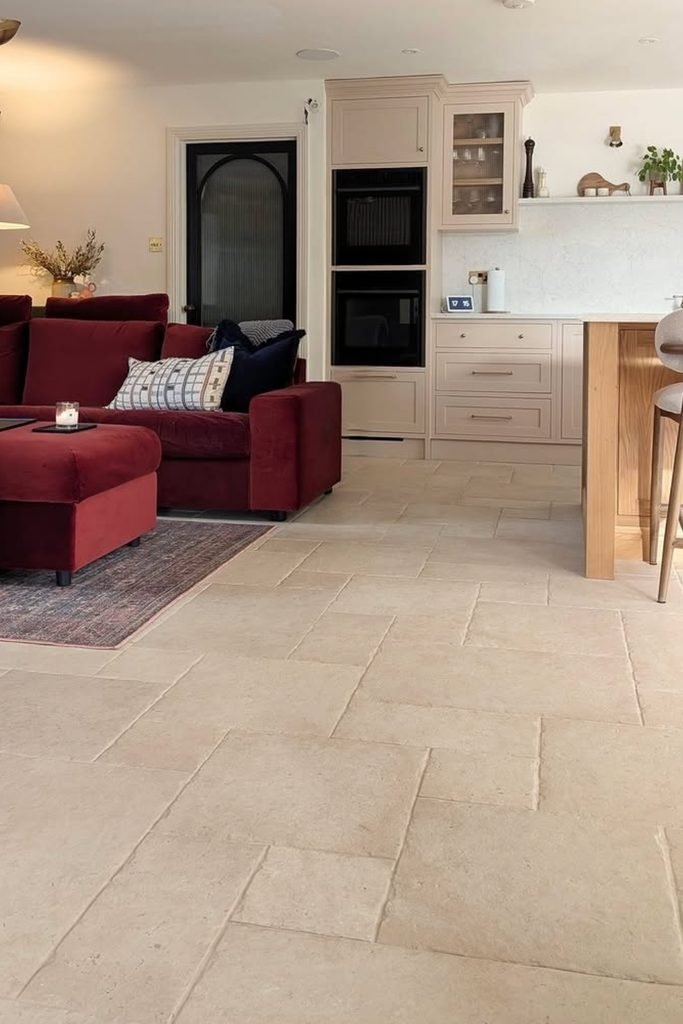
Rustic Limestone
Open-plan living areas feel naturally connected when pale limestone-style flooring continues from the seating zone directly into the adjoining kitchen and dining space.
Balance the quiet stone with a deep burgundy sectional, using one strong furniture color to give the neutral floor a warmer focal point.
Choose irregular rectangular tiles and restrained grout lines for a relaxed country character that suits family spaces better than highly polished formal flooring.
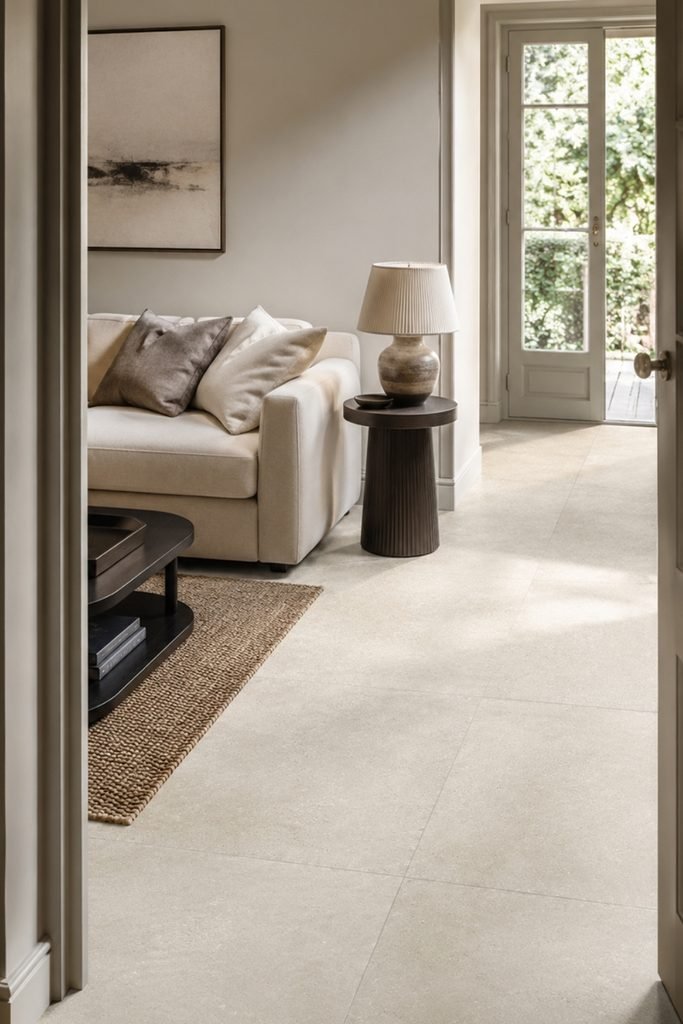
Quiet Continuity
Running pale floor tiles beyond the living room doorway creates gentle continuity, helping connected spaces feel larger without requiring completely identical furniture or decoration.
Introduce a woven rug beneath the seating area to mark where relaxation begins while still leaving enough flooring visible around the room’s edges.
Cream upholstery, dark wood tables, and soft ceramic lighting work especially well here because their natural tones complement the understated stone finish.
Open Continuity
Large neutral tiles make an open living room feel uninterrupted, especially when the same flooring continues toward dining areas, stairs, and nearby windows.
Keep grout lines subtle and furniture low so long floor sightlines remain visible, giving spacious interiors an even calmer architectural sense of scale.
Bring warmth through cream upholstery, dark timber cabinetry, and indoor greenery, which prevents the pale minimalist scheme from becoming visually flat or sterile.

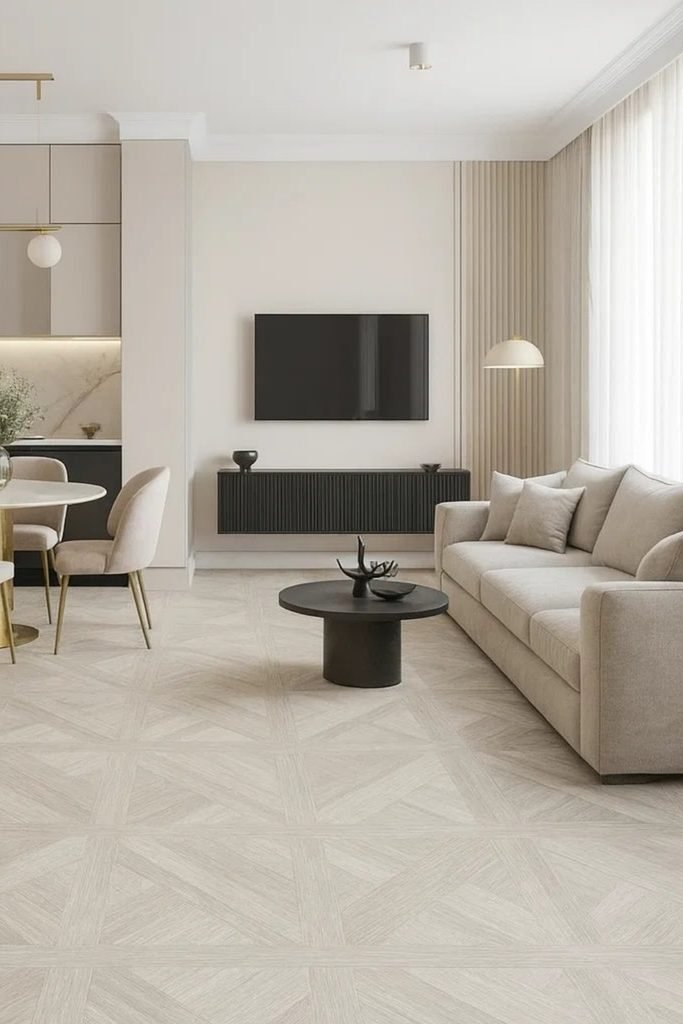
Geometric Softness
Patterned pale flooring can introduce quiet detail into compact living rooms without relying on colorful rugs or busy decorative accents for visual interest.
Use soft geometric tiles beneath both seating and dining zones, allowing one continuous pattern to gently connect different functions within an open layout.
Black cabinetry and tables provide useful contrast, while cream furniture and warm brass details keep the overall living space balanced and comfortably refined.
Balcony Retreat
Turn a covered balcony into an outdoor living room by choosing polished marble-look flooring that handles the transition from indoors with visual elegance.
Layer compact seating with woven poufs and a round wooden table, leaving enough open floor around furniture for comfortable movement and casual entertaining.
Vertical planting and warm lantern lighting soften the glossy tiles beautifully, making this setup especially inviting for apartments with sheltered balconies or terraces.

Grounded Comfort
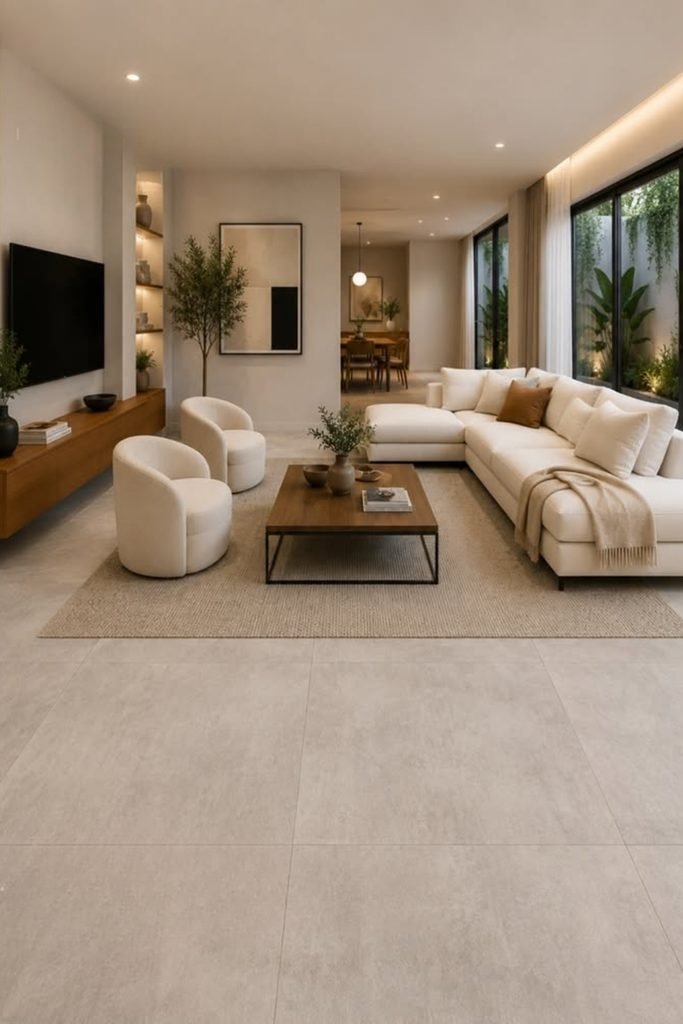
Matte large-format tiles give busy living rooms a practical foundation while keeping the floor visually quiet beneath layered furniture, rugs, and natural wood.
Define the seating arrangement with a textured neutral rug, but leave generous tile borders exposed so the room still feels open and easy flowing.
Warm timber, curved chairs, creamy upholstery, and greenery add softness around the understated floor, creating an inviting balance for everyday contemporary family spaces.
Amber Layers
Warm stone flooring becomes especially inviting when sunset light and amber shelving create soft reflections across an otherwise neutral living room palette.
Deep burgundy cushions and rounded velvet seating add richer color, while cream sectionals keep the darker wood walls from making everything feel heavy.
Use layered lamps, candles, and concealed shelf lighting after sunset, letting each warm source highlight the floor and build a cozy luxury atmosphere.

Gallery Scale
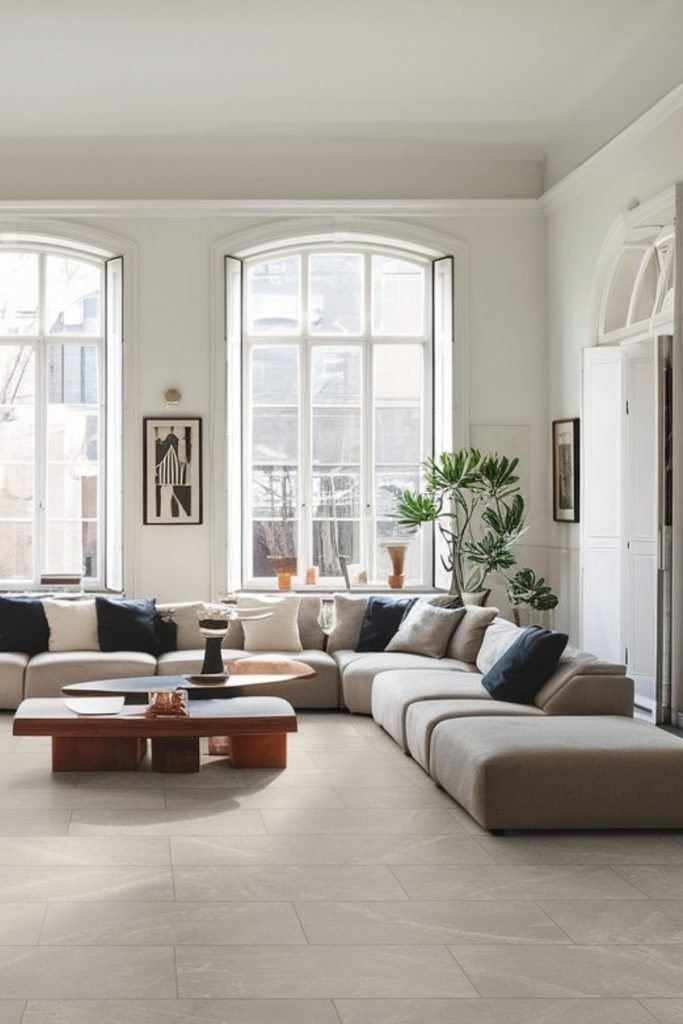
Long rectangular tiles suit oversized living rooms because their repeated lines guide the eye across wide floors without introducing distracting patterns or color.
Arrange a generous sectional near the windows while leaving the central floor open, allowing the room’s impressive proportions to remain clearly visible.
Low wooden tables and restrained artwork add warmth without competing with tall architectural windows, making this approach ideal for bright high-ceilinged interiors.
Travertine Calm
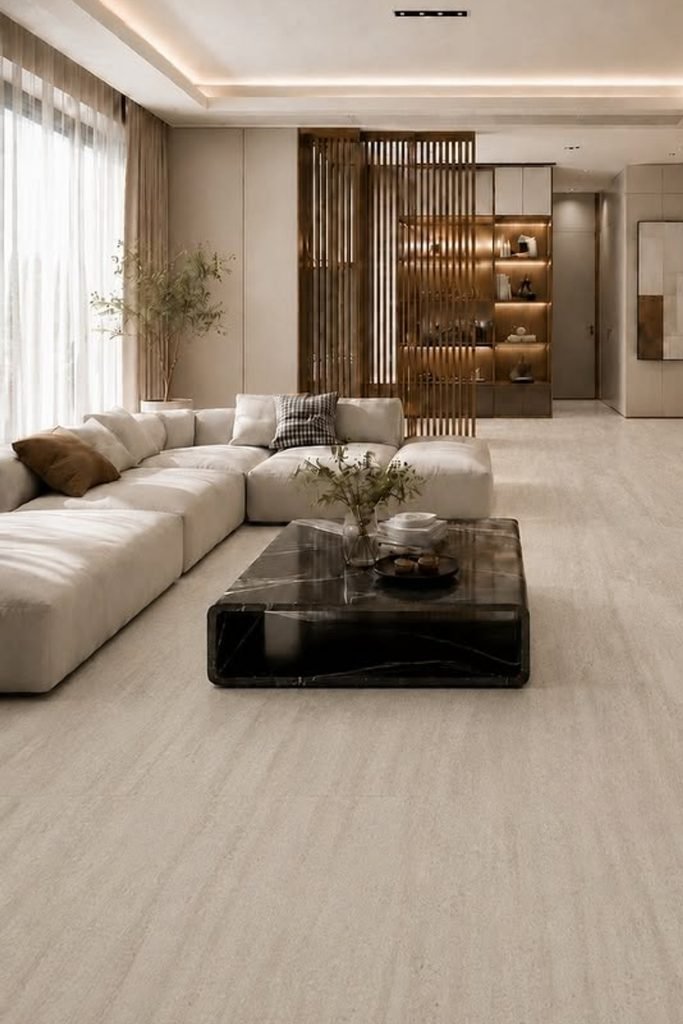
Travertine-style flooring brings gentle movement to minimalist living rooms, giving large neutral surfaces enough natural variation without relying on decorative rugs for texture.
Pair its warm linear grain with creamy modular seating and one dark stone table, creating contrast while keeping the overall palette intentionally restrained.
Wood slats, illuminated shelving, and concealed ceiling lights reinforce the floor’s earthy warmth, making spacious contemporary rooms feel polished yet comfortable for everyday living.
Terracotta Character
Terracotta patterned tiles can turn a simple living room into a strong focal space, especially when you want warmth without adding another decorative rug.
Bring teal lounge chairs and a caramel sofa into the arrangement, using their saturated colors to complement the earthy orange tones underfoot naturally.
Rustic timber trim, leafy plants, and handcrafted furniture strengthen the relaxed character, making this flooring especially fitting for eclectic or Southwestern-inspired living spaces.

Tonal Harmony
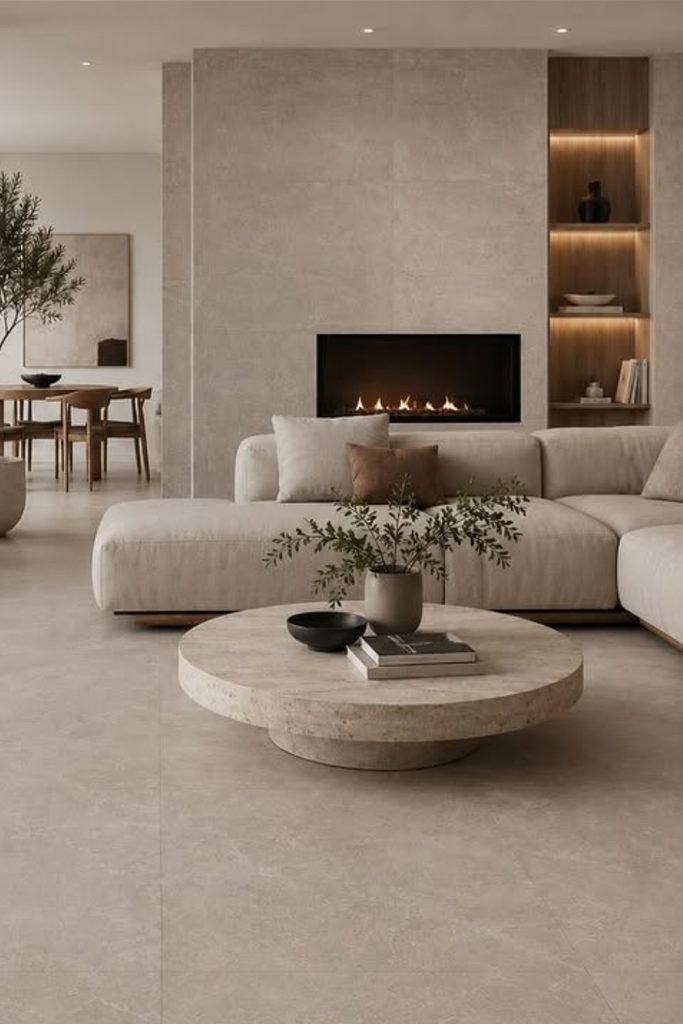
Soft stone flooring works beautifully when you want the living room, fireplace, and surrounding walls to blend into one calm neutral composition.
Choose oversized cream seating and a rounded stone coffee table, repeating similar tones while changing textures enough to keep the room visually interesting.
Built-in shelf lighting and a simple fireplace bring gentle warmth, making this restrained approach especially effective in open modern homes with abundant daylight.
FAQs
Do Tile Floors Need Rugs?
A rug is not required, but it can make tile feel warmer, quieter, and more comfortable around your main seating area.
Choose a size that reaches under the front legs of your sofa so the furniture feels connected instead of floating.
Keep the rug pattern simple when your tile is already busy, because two strong patterns can make the whole room feel crowded.
What Tile Color Makes a Living Room Feel Warmer?
Warm beige, cream, terracotta, and soft stone tones usually feel cozier than icy gray or stark white flooring in living rooms.
If you already have cool tile, bring in wood furniture, camel upholstery, rust accents, and warm lighting before changing the floor.
Matching the wall color to the tile undertone also helps, because clashing cool and warm shades can make the floor stand out.