22 Awkward Living Room Layout Ideas for 2026
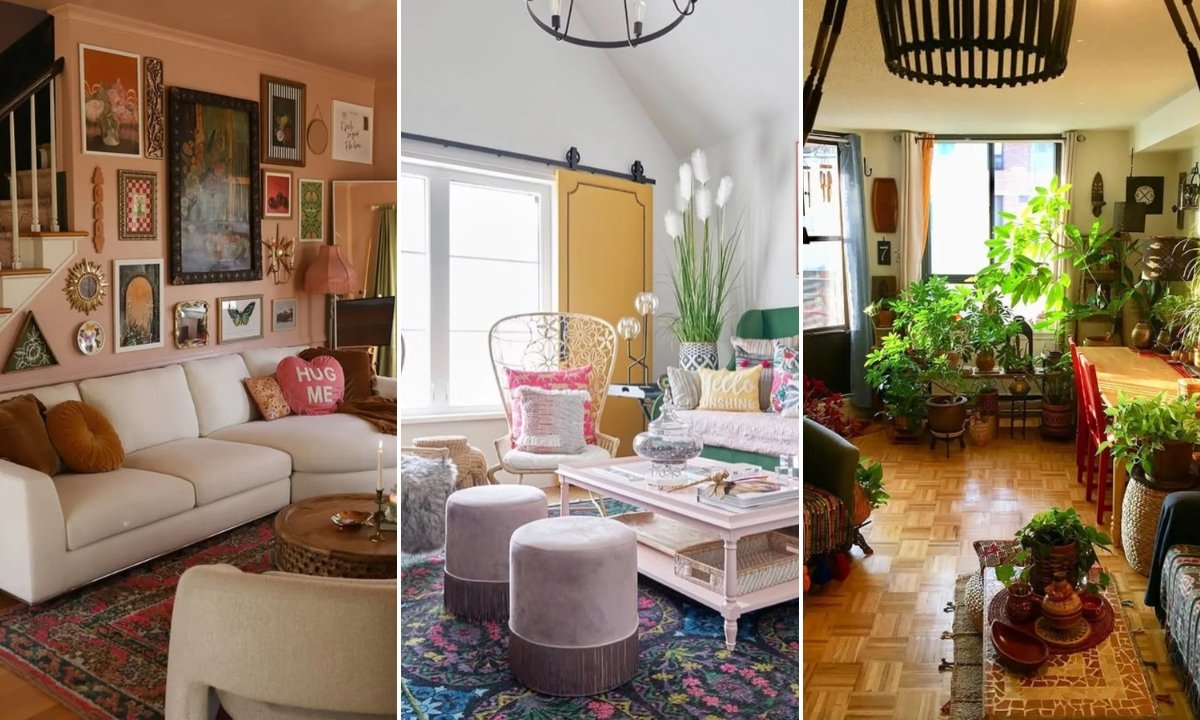
You bought the sofa, and you thought placing the TV would be easy.
You tried three different layouts, and you kept moving things around. But somehow, you still feel like your living room is… off.
You notice the TV ends up in a weird corner, and you realize the sofa keeps blocking your walkway. You see the fireplace and TV fighting for attention, and you wonder if you’ll ever get it right.
When you move one thing, you feel like you’re just making another problem. If that sounds familiar, don’t worry, you’re not bad at decorating, you’re just dealing with a tricky layout.
In this article, you will learn exactly where you should put your TV in an awkward living room, then I will show you 22 layouts you can try.
Let’s jump in!
Where to Put a TV in an Awkward Living Room?
First, you need to stop trying to center the TV, that’s where most people go wrong.
You might think symmetry looks nice, but in an awkward living room, the “center of the wall” is usually not the right spot.
You shouldn’t place the TV based on looks, you should place it based on how you use the room.
Start by asking yourself this: Where does your seating naturally belong? Because you want the TV to face your seating, not the other way around.
If your room is long and narrow, you can mount the TV on the short wall. You’ll instantly reduce that “bowling alley” effect, and you’ll see the room feel wider.
Then you can float your sofa across from it instead of cramming everything against the walls.
When every wall has a door or window, you should think about a corner setup.
You can put the TV in a corner, and it often solves your traffic flow problems because you can angle your seating naturally while keeping walkways clear.
If your fireplace is off-center, don’t force the TV above it unless it actually works. You can mount the TV on a nearby wall, and you can let the fireplace stay a secondary focal point.
You will see that trying to make both fight for attention usually makes the room feel tense.
And always check your spacing. You should keep about 7-10 feet between your sofa and a standard 55-65 inch TV, and you can leave at least 30 inches for walkways so you don’t bump into furniture.
When you place the TV where movement feels natural, you’ll notice the whole room starts to calm down, and you’ll finally feel like it all makes sense.
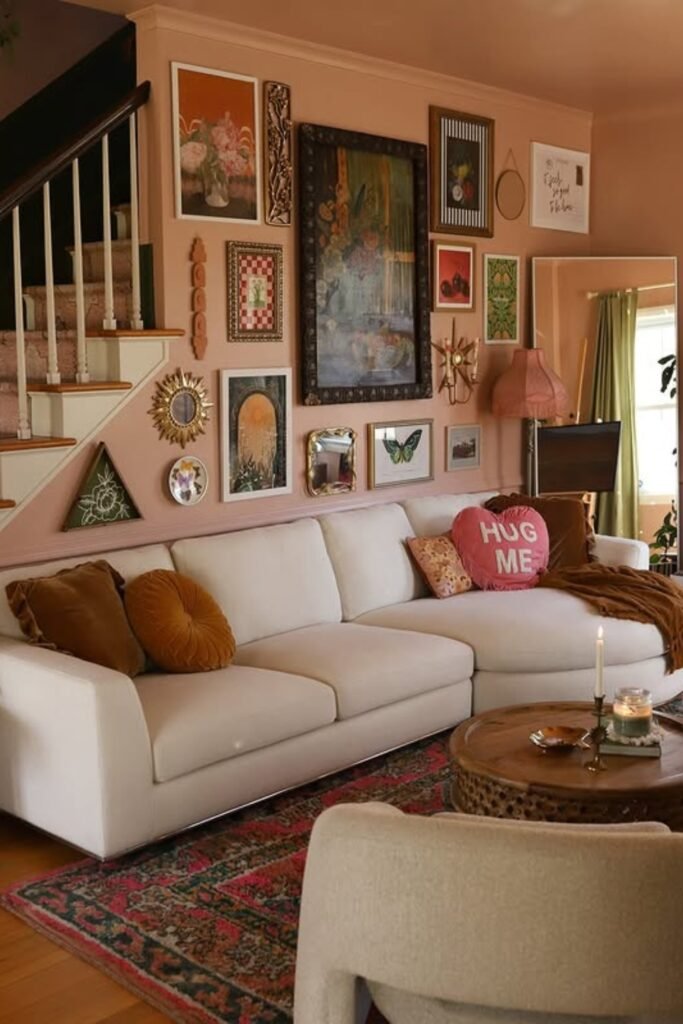
Staircase Wall Solution
When the stairs steal your main wall, you can use what’s left with purpose.
You might place your sofa right under the staircase line and turn that awkward wall into a bold gallery feature.
You should mount the TV on the adjacent wall instead of fighting the slope. By doing this, you keep the layout clean, and you avoid visual clutter near the steps.
You can let art fill the odd angles so your TV doesn’t compete for attention.
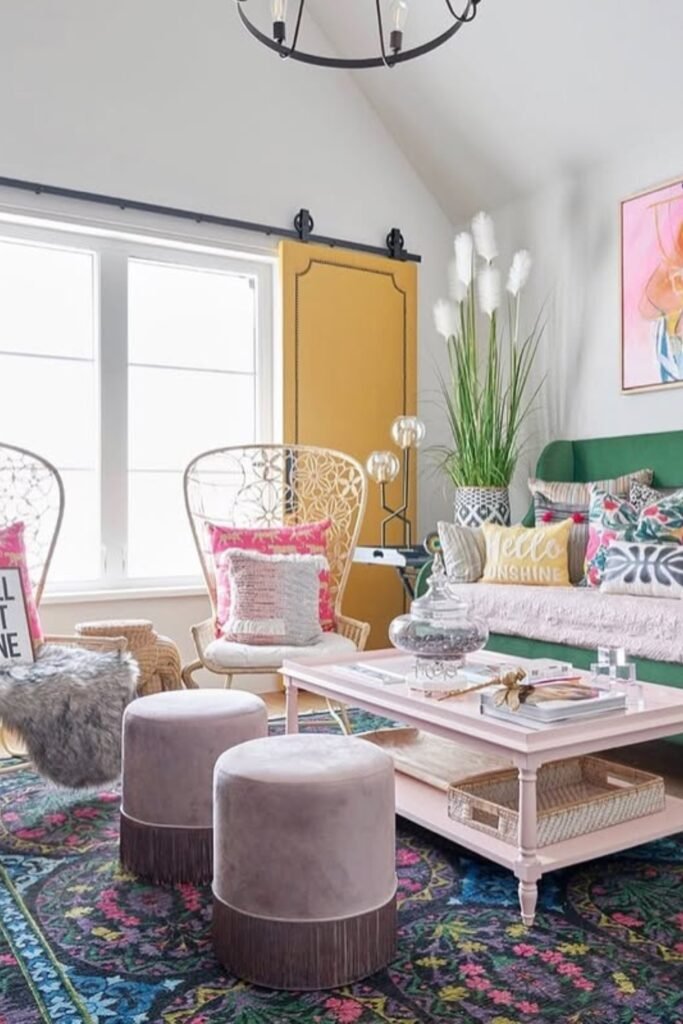
Window Wall Focus
When every wall feels busy, you should let the windows guide your layout.
You can keep your sofa against a solid wall, and you shouldn’t place the TV directly across bright glass, you will hate the glare.
Instead, mount the TV on the side wall where light won’t hit your screen. You can use lightweight seating like poufs or small chairs to keep the space flexible.
You’ll see this works beautifully in sun-filled rooms when you don’t want the TV to dominate.
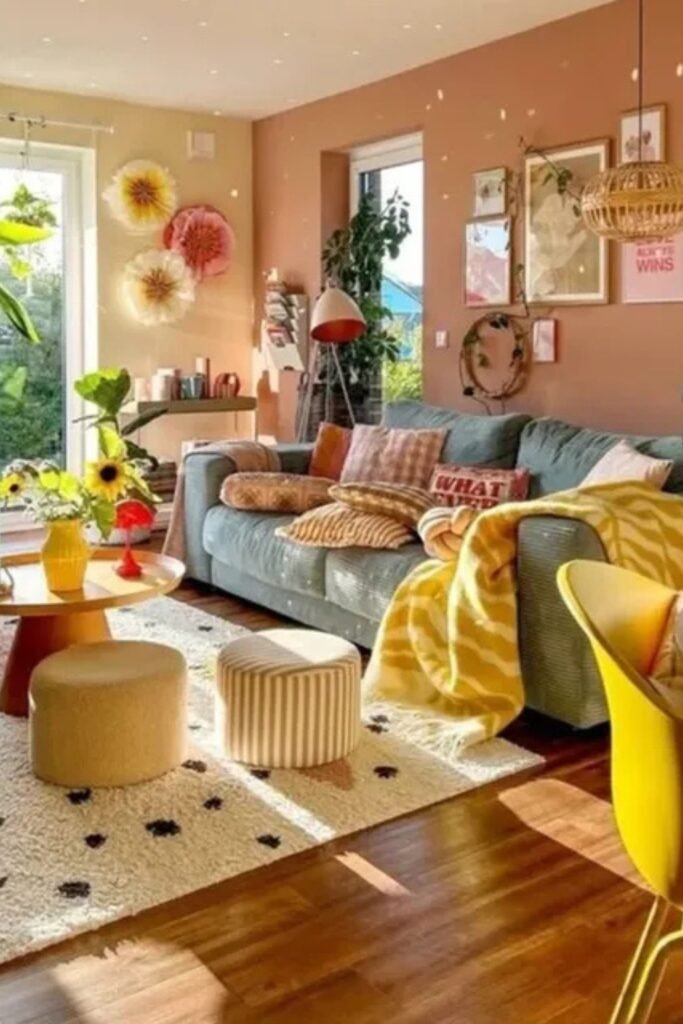
Sliding Door Layout
Big glass doors might limit your TV options, but you don’t have to let them control the room.
You should keep your main seating facing a solid wall and mount the TV there instead of blocking natural light.
You can use chairs and ottomans that shift easily to maintain access to the doors.
You will notice this layout works perfectly in bright spaces where you want sunlight and a good viewing angle without glare.
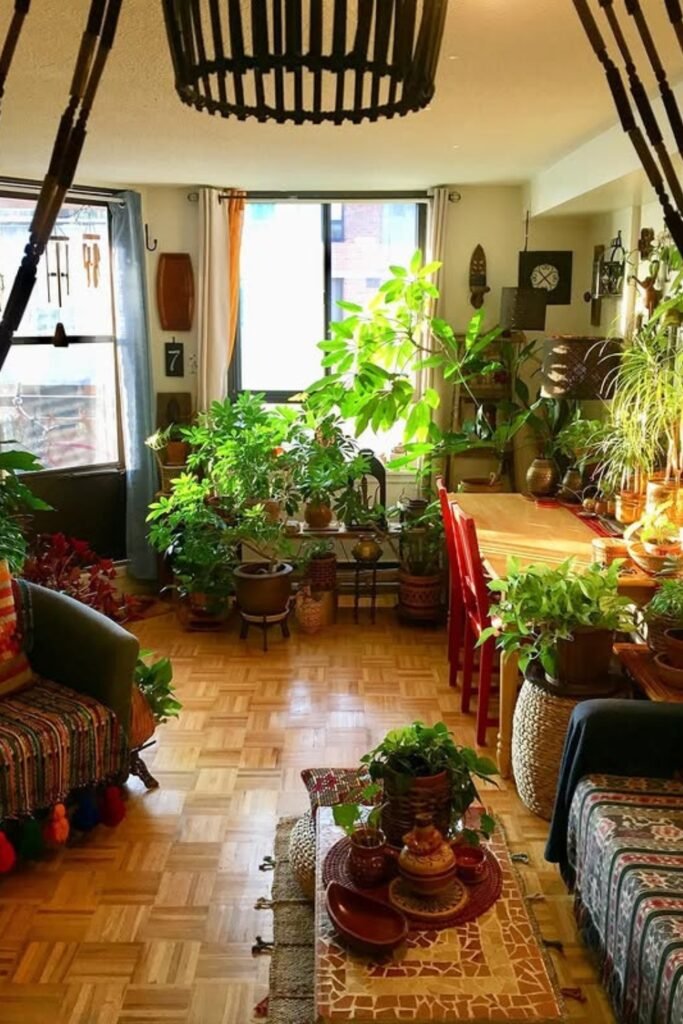
Plant-Filled Corner
When windows dominate the far wall, you can let greenery soften the space and keep your TV out of the bright zone.
You might place your seating along the longer side wall and mount the TV opposite it so glare doesn’t fight you.
You can frame the screen with tall plants without blocking it, and suddenly everything feels intentional.
This works especially well in boho or nature-inspired rooms where you want your tech to blend in, not take over.
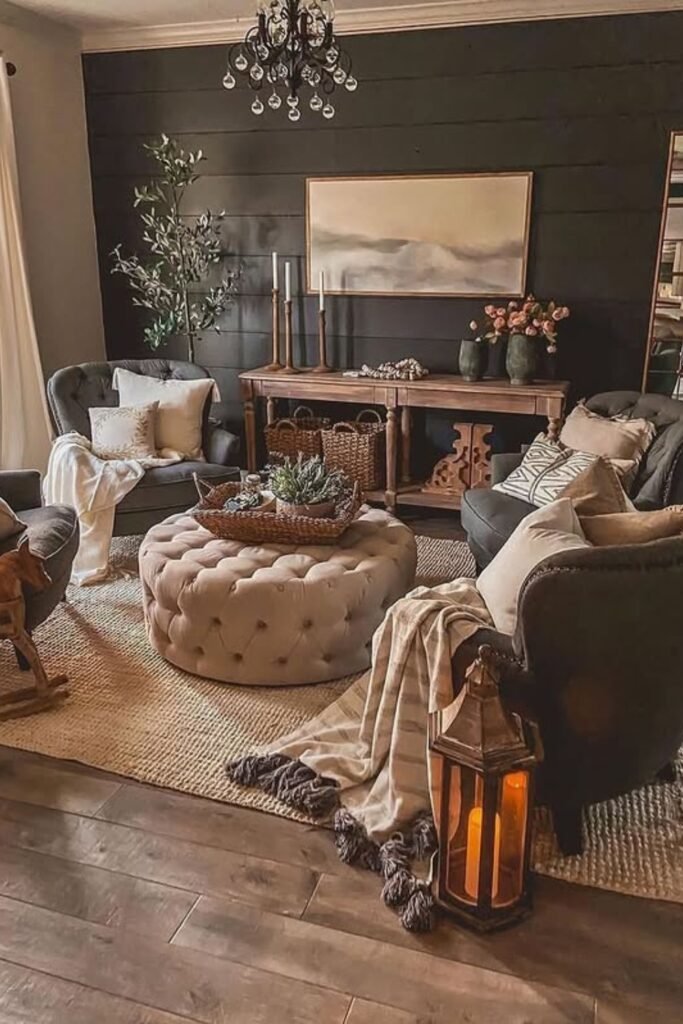
Accent Wall Anchor
When one wall already makes a statement, you should use it to anchor your layout.
You can mount the TV low and centered above a console so it blends instead of sticking out.
You should arrange your seating in a tight circle facing that wall, and you will see the room suddenly feel intentional instead of scattered.
Bold walls make awkward layouts much easier for you to control.
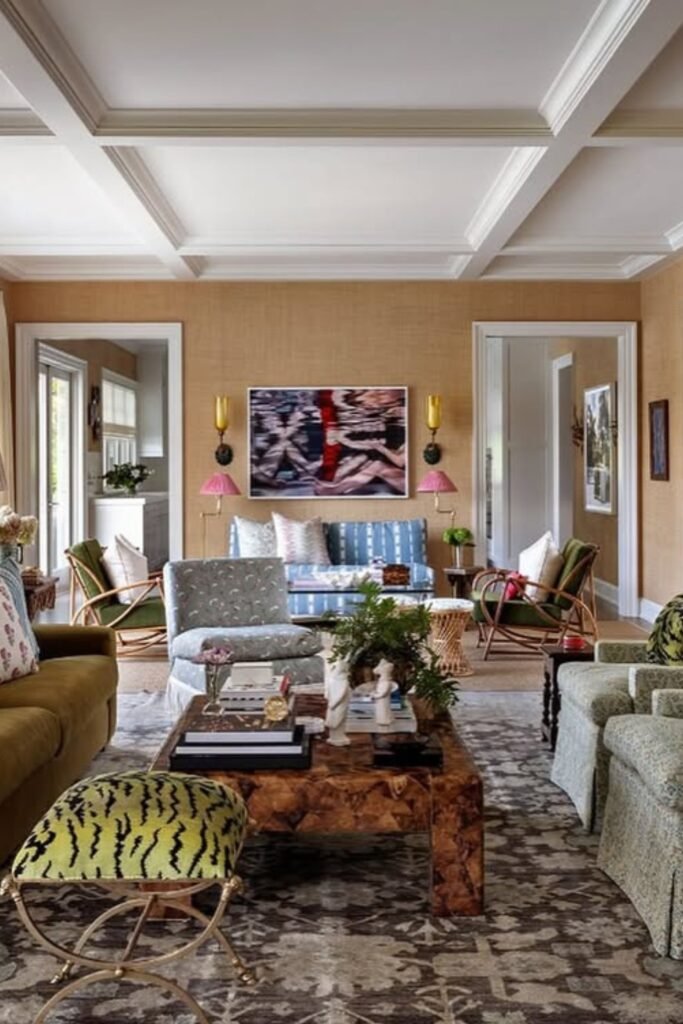
Centered Doorway Balance
Two doorways on one wall might make TV placement feel impossible, unless you use the space between them.
You could mount the TV in the middle and let the openings frame it naturally.
You should keep your main sofa facing that wall and build seating symmetrically so the room feels grounded.
You will find this trick works beautifully in traditional layouts where balance and traffic flow matter.
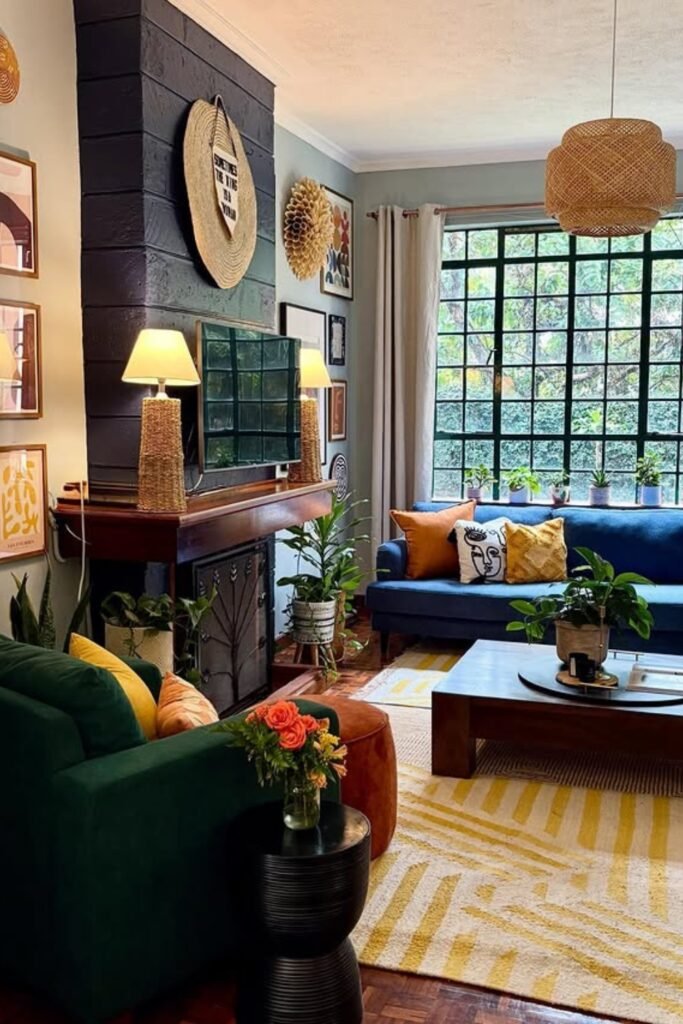
Fireplace Side Mount
When the fireplace sits off to one side, don’t force the TV above it if it feels cramped.
You can mount the TV directly on the chimney breast, centered over the mantel for clean lines.
You should angle your main sofa toward it instead of pushing everything straight across.
You will keep the fireplace as a feature while giving the TV a proper home without dividing the room.
Corner Fireplace Layout
A corner fireplace can throw off your plan if you try to center everything around it.
You should treat it as a side feature instead. You can place your main sofa facing the longest solid wall and mount the TV at eye level.
You could angle a chair slightly toward the fireplace so it stays part of the conversation. This keeps your room balanced without forcing awkward alignment.
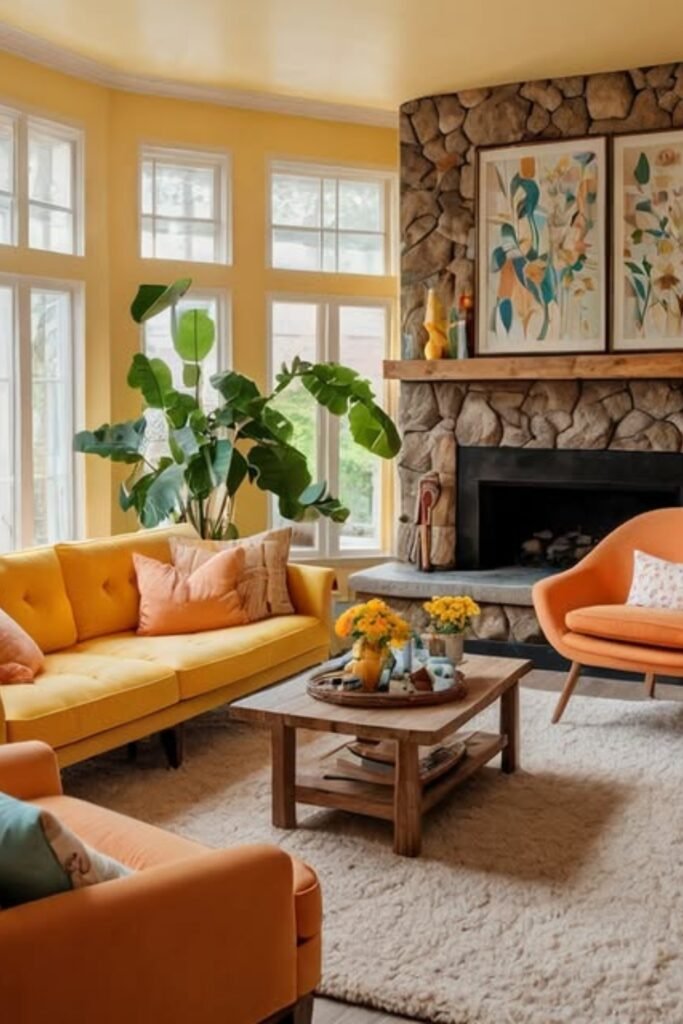
Window Bench Balance
When a full window wall takes over, don’t compete with it, work around it.
You should keep your sofa centered and place the TV on the opposite solid wall so light stays behind you.
You can let the windows act as a backdrop and use lower furniture so the view stays open.
You will see this setup keeps the space bright without sacrificing comfortable viewing.
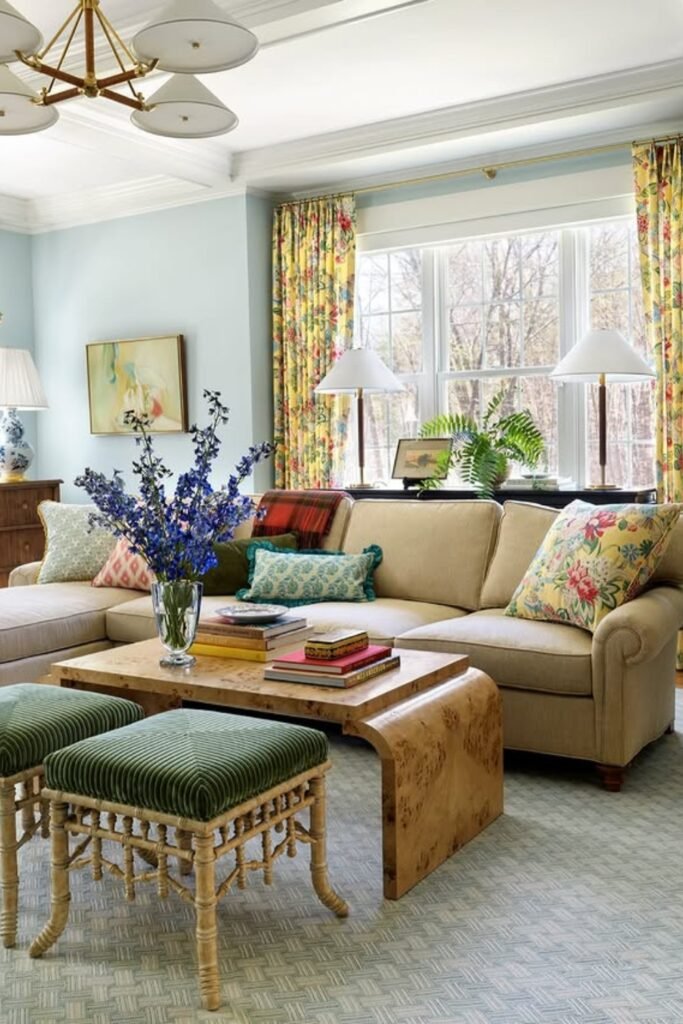
Long Room Alignment
When your living room stretches like a hallway, don’t line everything along the walls.
You should pull the sofa slightly inward and place the TV on the narrow end wall to shorten the space visually.
You can keep your coffee table centered on a rug to define the seating zone.
You will notice this instantly breaks the tunnel effect and makes the room feel like a cozy destination.
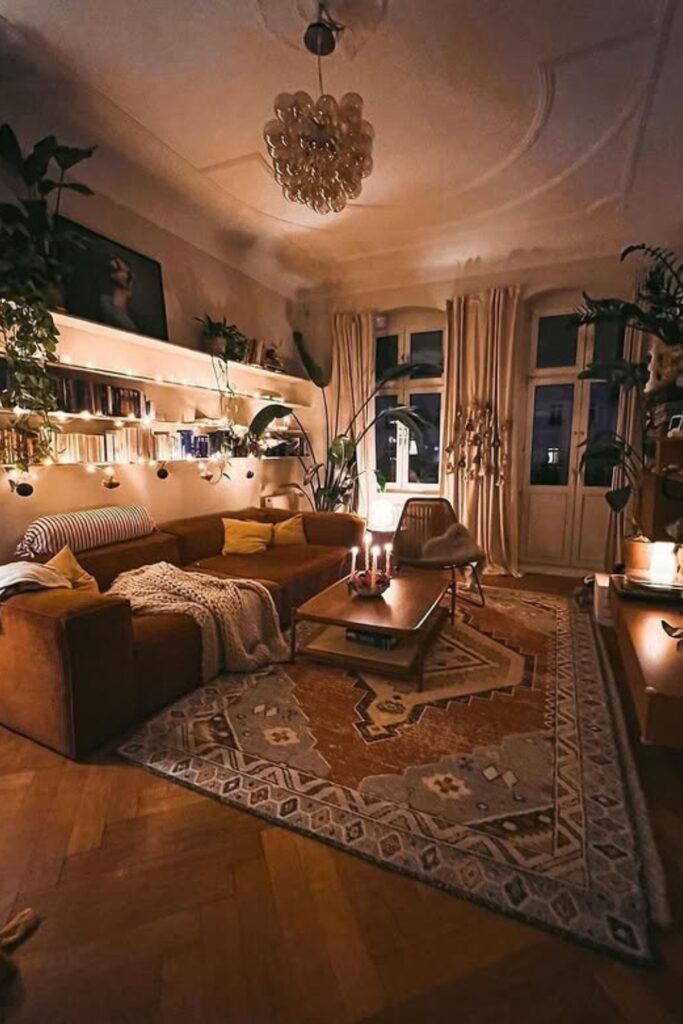
Built-In Niche Trick
No full blank wall? You can use a niche.
When a fireplace dominates and walls are broken up by openings, you should mount the TV inside a recessed shelf or built-in unit instead of above the mantel.
You will keep the screen at eye level and avoid neck strain. You can angle your sofas slightly toward it, and you will see the layout feels intentional instead of squeezed between architectural details.
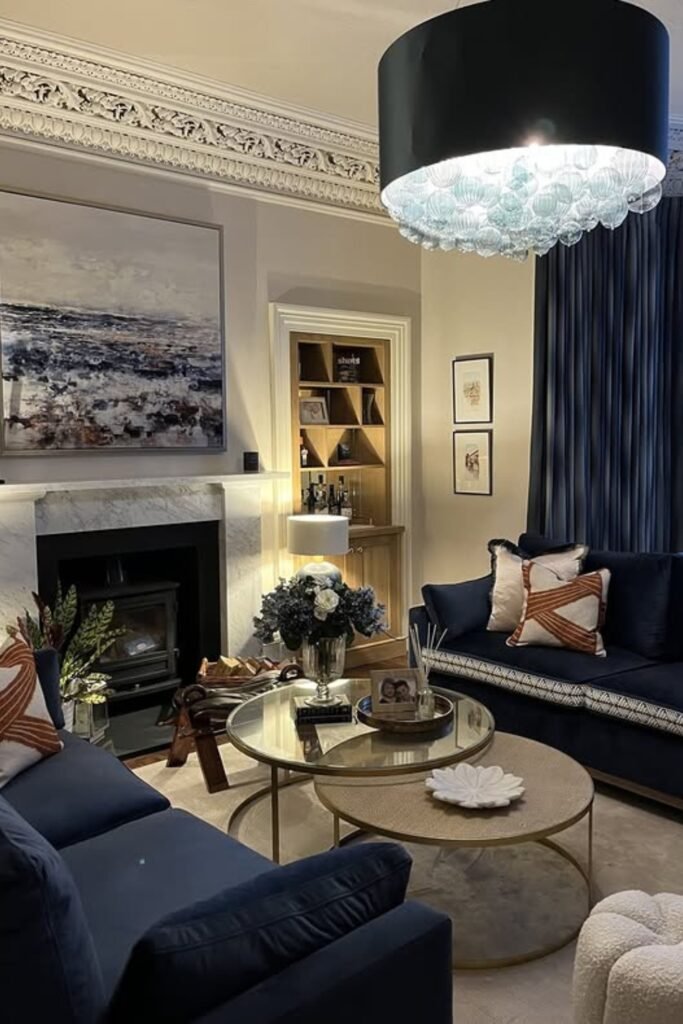
Floating Furniture Zone
When you hug the walls in an open layout, you might feel the space is chaotic.
You should pull the sofa away and let it float on a large rug, this helps you define the living area clearly.
You can place the TV on the longest uninterrupted wall so it anchors the space. You will want to leave at least 30 inches behind the seating for walkways.
When you do this, you’ll see a wide, airy room instantly feel structured and make sense.
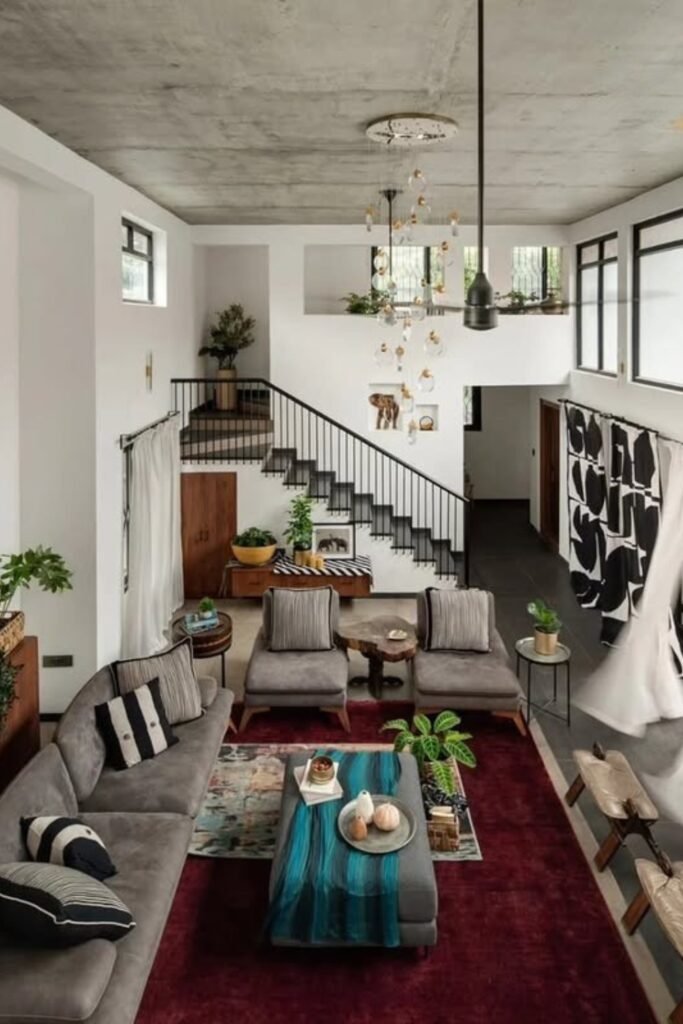
Mirror Distraction Trick
If your wall space feels tight, you can shift attention upward.
You might put a large mirror above your sofa to visually expand the room, which lets you place the TV on a side wall without it feeling off-balance.
You should keep your seating facing the TV, not the mirror, and you can use matching lamps to create symmetry.
You will notice this works especially well in small or narrow rooms where every wall already feels claimed.
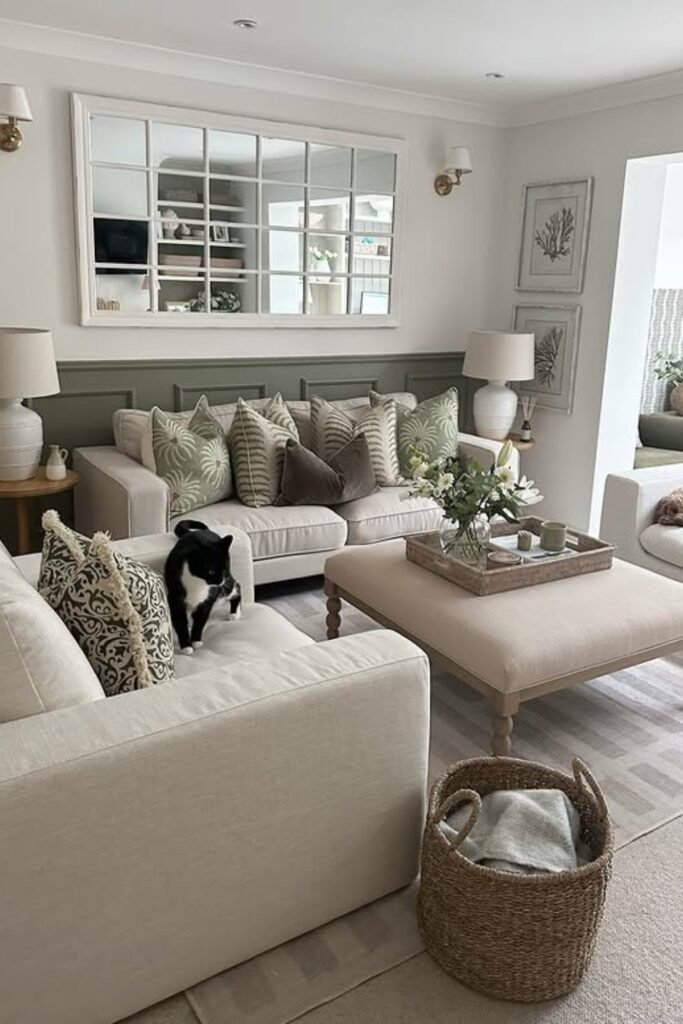
Sofa-Back Divider
Sometimes, you can turn your sofa into a wall.
In an open layout like this, you should place the sofa with its back toward the dining area and face it directly toward the fireplace wall where the TV is mounted.
You will instantly define your living zone without adding partitions.
You can keep side tables slim so traffic flows around the seating instead of cutting through it.
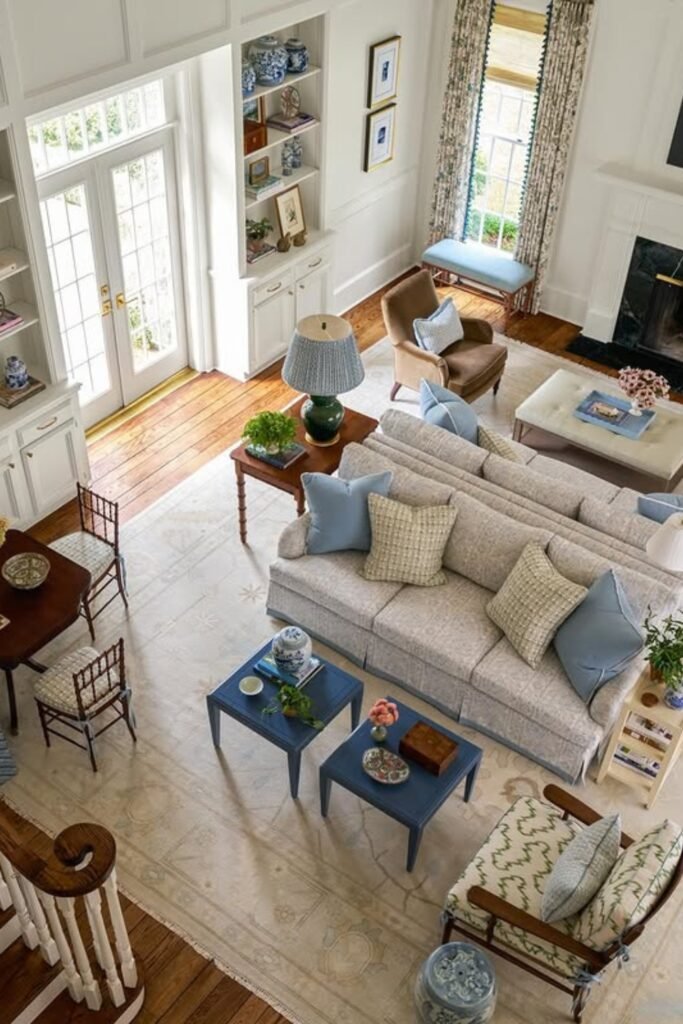
Bay Window Offset
When you have bay windows, you might feel tempted to center everything on them, don’t.
You should let that curved nook stay a cozy seating spot and mount the TV on the solid wall near the fireplace instead.
You must keep your main sofa facing the TV, not the window, so the layout feels grounded.
You’ll see the bay become a bonus lounge area while the rest of your room finally gets a clear focal point.
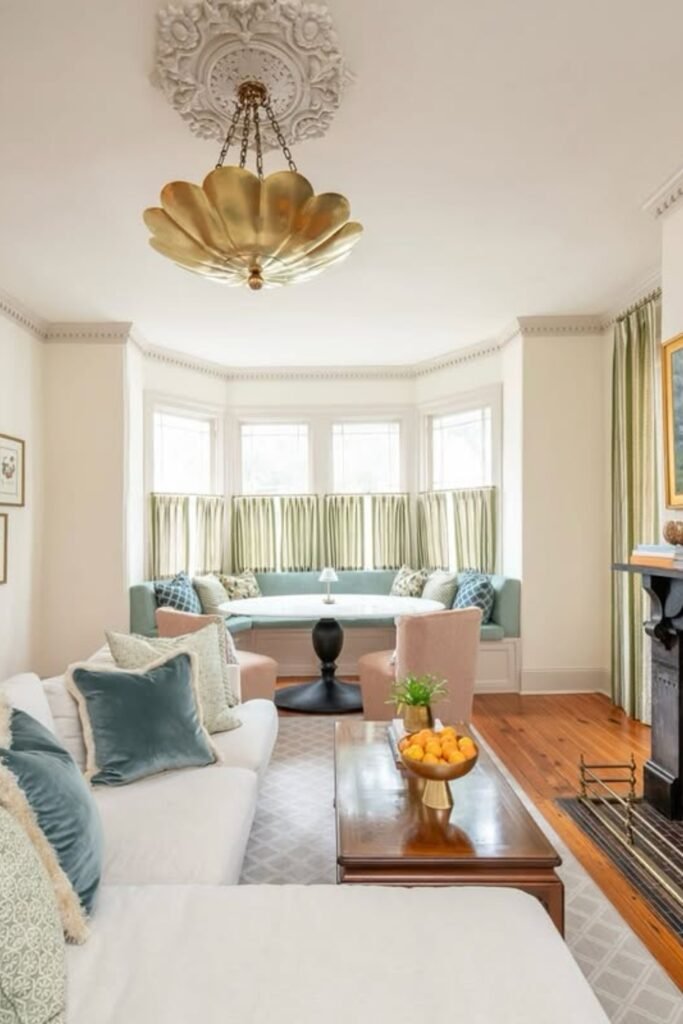
Side Wall Screen
When built-ins and windows dominate the back wall, you can look to the side.
You should mount the TV on a plain side wall and let shelving stay decorative instead of functional.
You can arrange sofas to face that direction, even if it means turning them away from the windows.
You will keep the layout intentional and prevent the room from feeling like everything is fighting for attention.
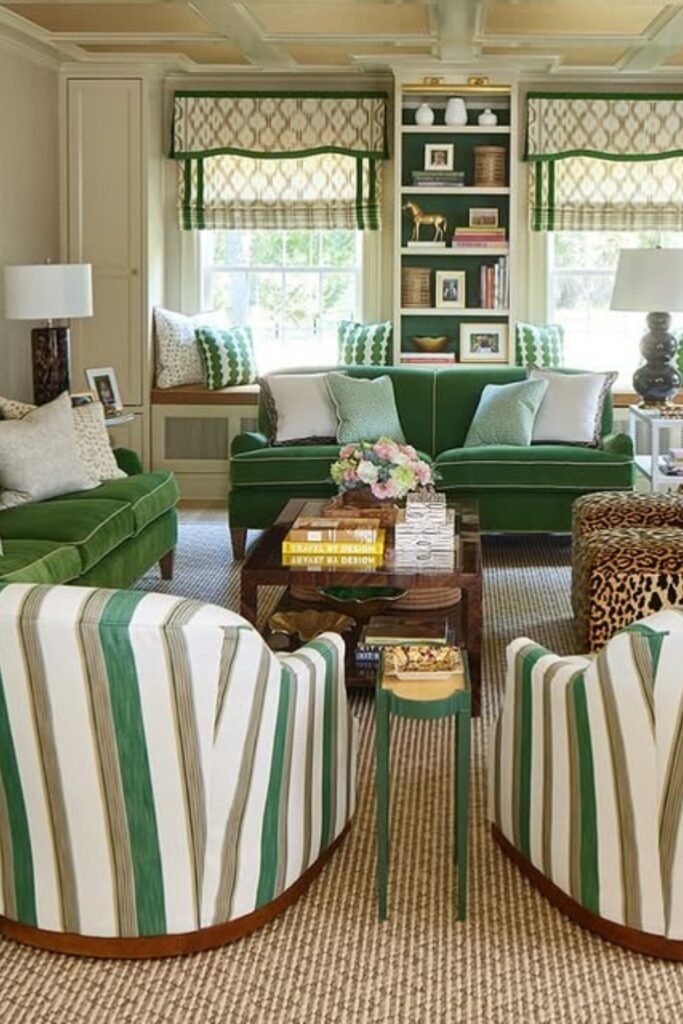
Narrow Room Strategy
Small, skinny rooms don’t give you many options, so you should go straight.
You can place the TV along the longest wall and line the sofa directly across from it to keep things simple.
You will want to avoid bulky side tables and use slim nesting tables so traffic passes easily.
When you do this, you’ll prevent the room from feeling cramped or chaotic.
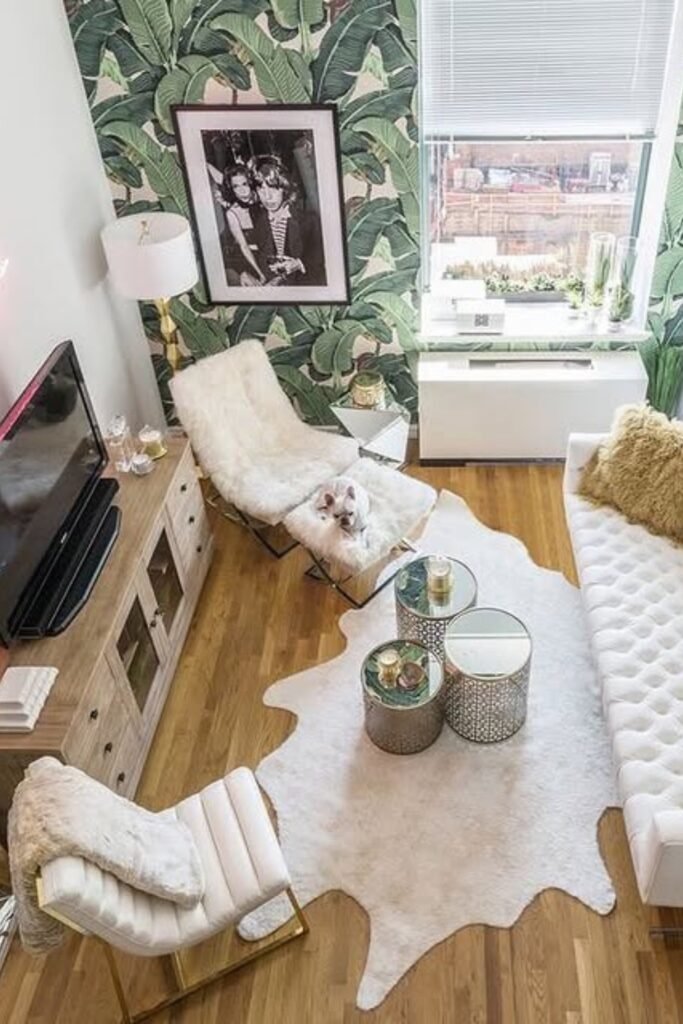
High Ceiling Anchor
Tall ceilings can make your TV feel lost. You should place it on a standard-height wall and keep seating grounded around a large rug instead of mounting it too high.
You can let lighting and artwork draw your eye upward while the TV stays at a comfortable height.
You’ll balance vertical drama with practical placement so the space feels cozy, not overwhelming.
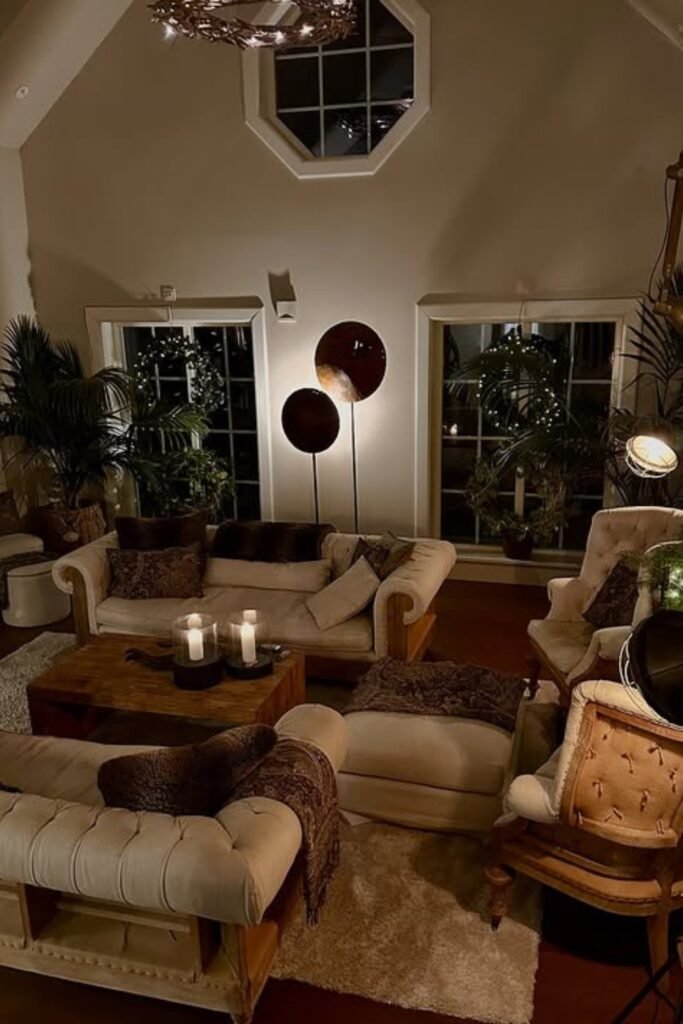
Built-In Frame Placement
When shelving surrounds your fireplace, you can let it frame the TV instead of competing with it.
You should mount the screen neatly above the mantel and balance décor on side shelves so nothing feels crowded.
You will want to arrange seating directly facing that wall and keep coffee tables low for sightlines.
This works best in traditional rooms where built-ins already guide your layout.
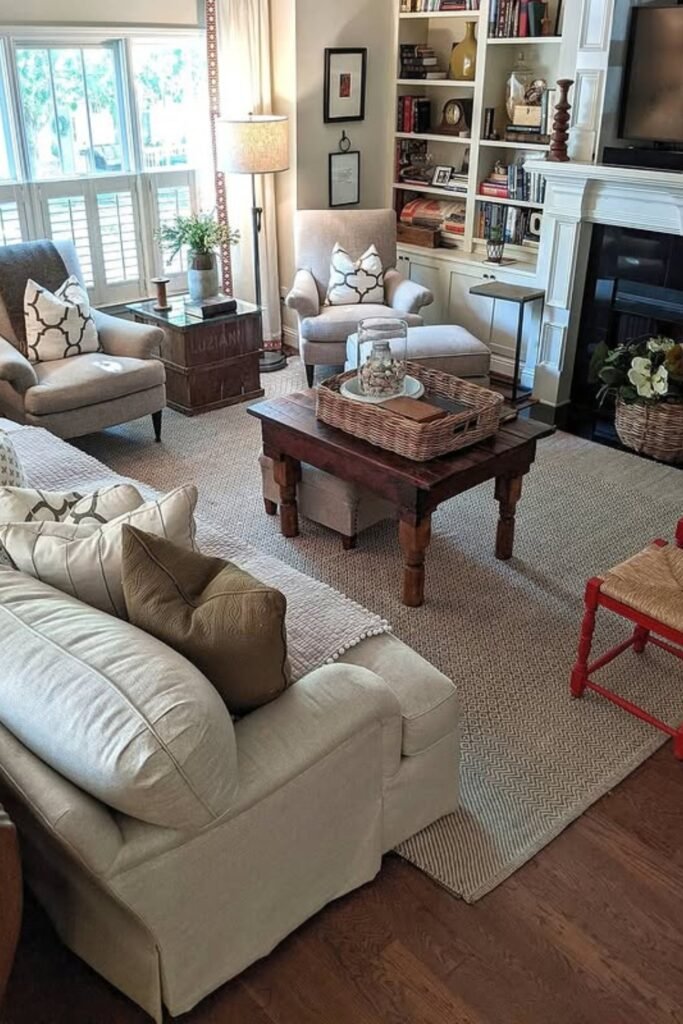
Side Fireplace Shift
If your fireplace sits off to the side, don’t let it boss the room.
You should mount the TV on the adjacent wall at eye level and turn your sofa to face it directly.
You can angle a chair toward the fireplace so it still feels included.
You’ll keep the room functional for watching TV while letting the fireplace stay a cozy bonus instead of a layout obstacle.
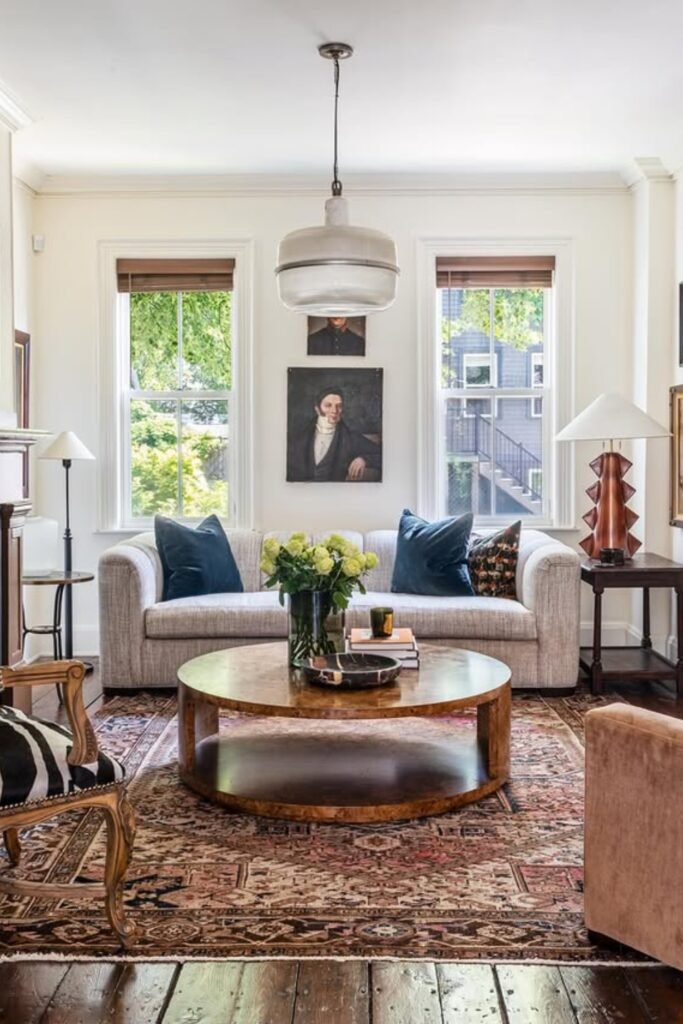
Symmetry Smart Swap
When a fireplace sits perfectly centered, you might want to mount the TV above it but high ceilings can make that uncomfortable.
You should place the TV on a side wall instead and keep the fireplace purely decorative.
You can arrange sofas facing the screen and let built-in niches balance the room visually.
You will maintain symmetry without straining your neck.
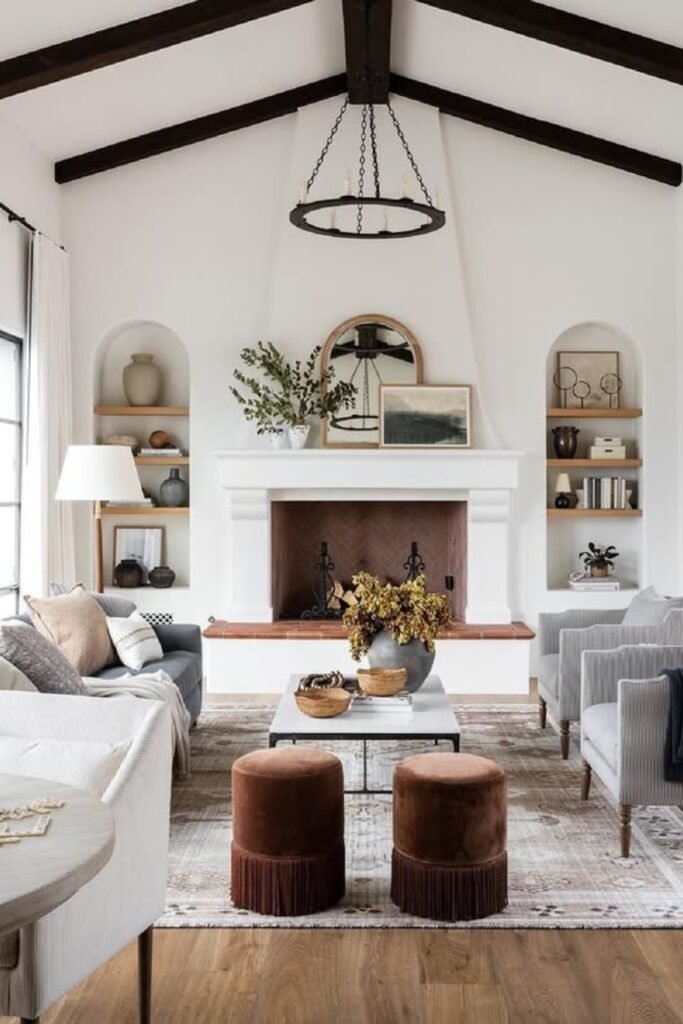
Stone Wall Contrast
If your stone fireplace already grabs attention, the TV shouldn’t compete. You should skip mounting above the mantel if it feels too high or crowded.
You can place the TV on a nearby solid wall and angle the sofa slightly toward it.
You’ll let the fireplace stay a design feature while the TV handles function, keeping the room balanced instead of overloaded.
FAQs
Should the TV always go above the fireplace?
Not always. You will notice it only works if the height feels comfortable when you’re seated.
If you find yourself tilting your head up to watch, you know it’s too high.
You should place the TV on a nearby wall at eye level and let the fireplace stay purely decorative.
You will see that comfort should always win over symmetry.
What if every wall has a window or doorway?
You should look for the wall with the least glare and the clearest viewing line from your main sofa.
You might find that corners work surprisingly well, especially if you use a swivel mount.
You need to keep walkways clear and make sure you don’t block natural light.
When your wall space is limited, you will see that function matters more than perfect centering.