Finding a cabinet you love is easy. Figuring out where to put it without making your living room feel crowded is the harder part.
You may need somewhere to hide remotes, games, electronics, or everyday clutter, but you also want enough open space for books and decor.
You can float them under the TV, build them around a fireplace, fit them into an awkward alcove, or use a slim freestanding piece when space is tight.
In this article, you’ll find living room cabinet ideas that show you how to get more storage while keeping the room comfortable.
Let’s jump in!
What Are the Latest Trends in Living Room Cabinets?
Living room cabinets are moving away from bulky units that take over an entire wall.
Think low floating cabinets under the TV, built-ins painted the same color as the walls, warm wood finishes, fluted doors, and a mix of closed cabinets with open shelves.

You’ll also see more floor-to-ceiling storage because it uses vertical space without adding extra furniture around the room.
For a cleaner look, handleless doors and hidden cable storage work especially well around TVs.
If you prefer something less permanent, a slim sideboard or glass-front cabinet can give you useful storage without committing to custom built-ins.
Framed TV Storage
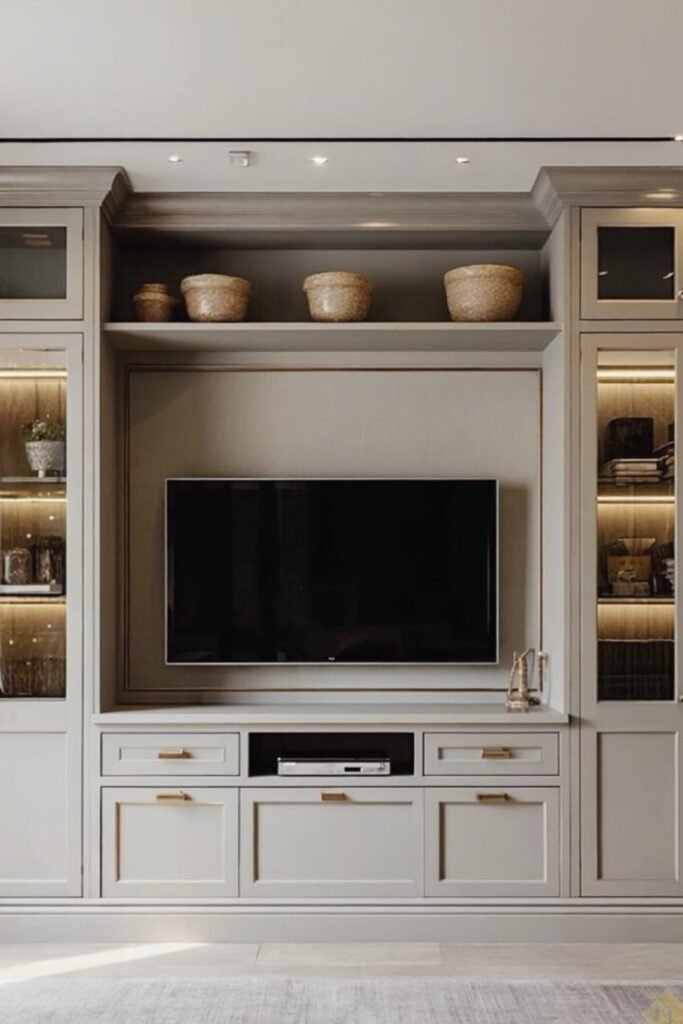
Use tall cabinets around the TV when you need plenty of storage without adding furniture across the living room.
Keep everyday clutter behind the lower doors, then reserve glass-front sections for books and a few decorative pieces.
Warm lighting inside the shelves breaks up the large cabinet wall, while leaving open space around the screen keeps the TV area from feeling boxed in.
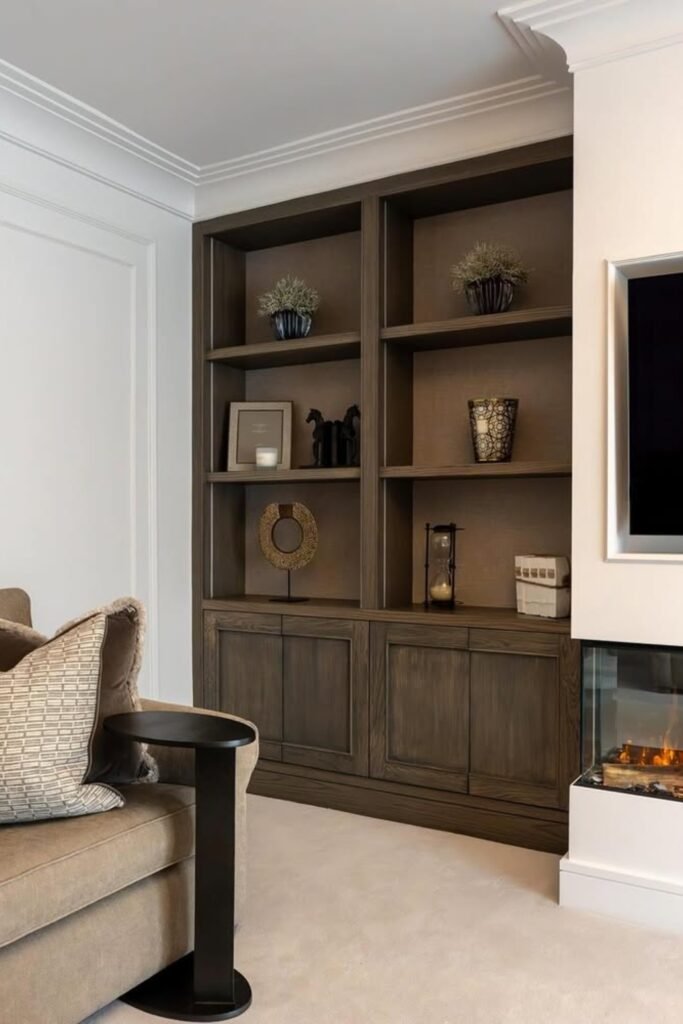
Fireplace Side Storage
Turn the empty space beside a fireplace into useful storage instead of squeezing another cabinet elsewhere in the room.
Closed cupboards below can handle clutter, while open shelves keep favorite books and décor within view.
A dark wood finish also gives the cabinet enough visual weight to balance a bright fireplace wall without making the whole room feel heavy.
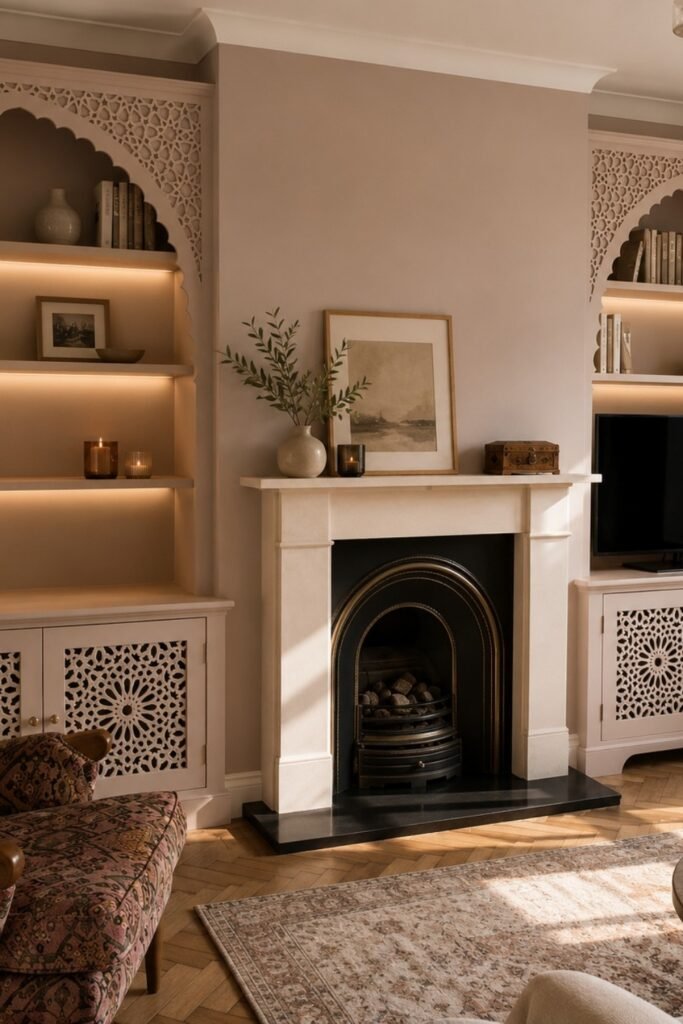
Decorative Alcove Cabinets
Make fireplace alcoves work harder by combining closed cabinets below with open shelving above.
Decorative cutout doors keep the storage from feeling plain, while matching arched details turn each alcove into part of the room’s character.
Add warm shelf lighting and keep the styling fairly sparse so the detailed cabinetry stays noticeable without making the fireplace wall feel busy.
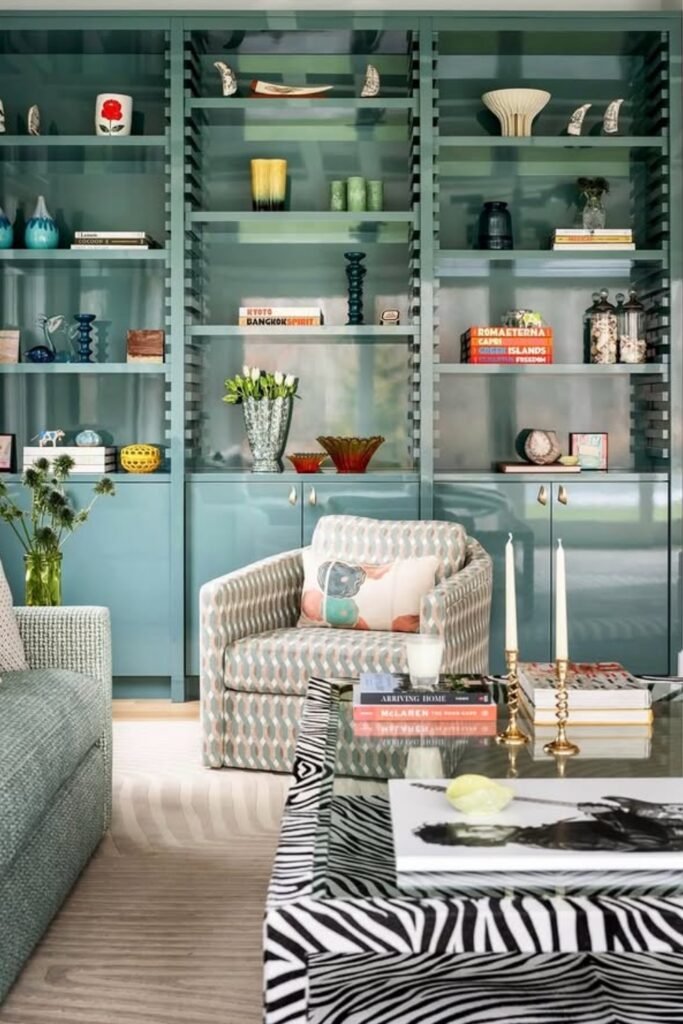
Color Drenched Storage
A full cabinet wall doesn’t have to fade into the background.
Choose one rich color for the doors, shelves, and backing to make storage part of the living room’s design.
Keep the lower section closed for practical items, then spread books and larger décor loosely across the shelves.
This approach works especially well on a wide blank wall that needs both storage and a strong focal point.
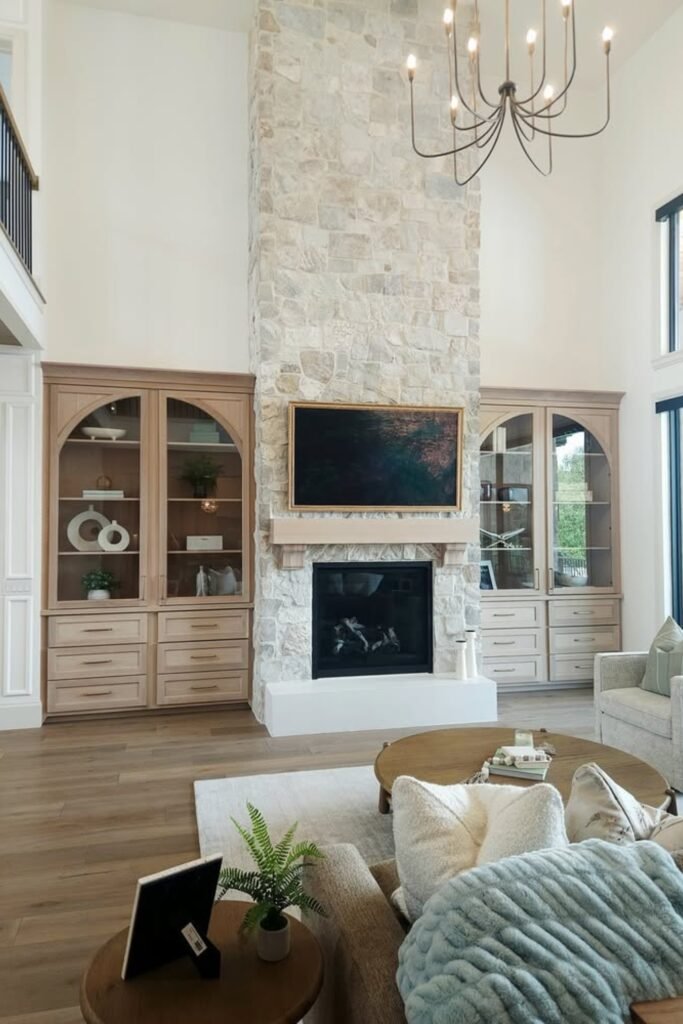
Arched Display Cabinets
Soften a tall fireplace wall by using curved glass-front cabinets on both sides instead of heavy square built-ins.
The upper sections keep decorative pieces visible, while deep drawers below give you easy-access storage for less attractive essentials.
Choose a wood tone that connects with the flooring and mantel so the cabinets frame the stone rather than compete with it.
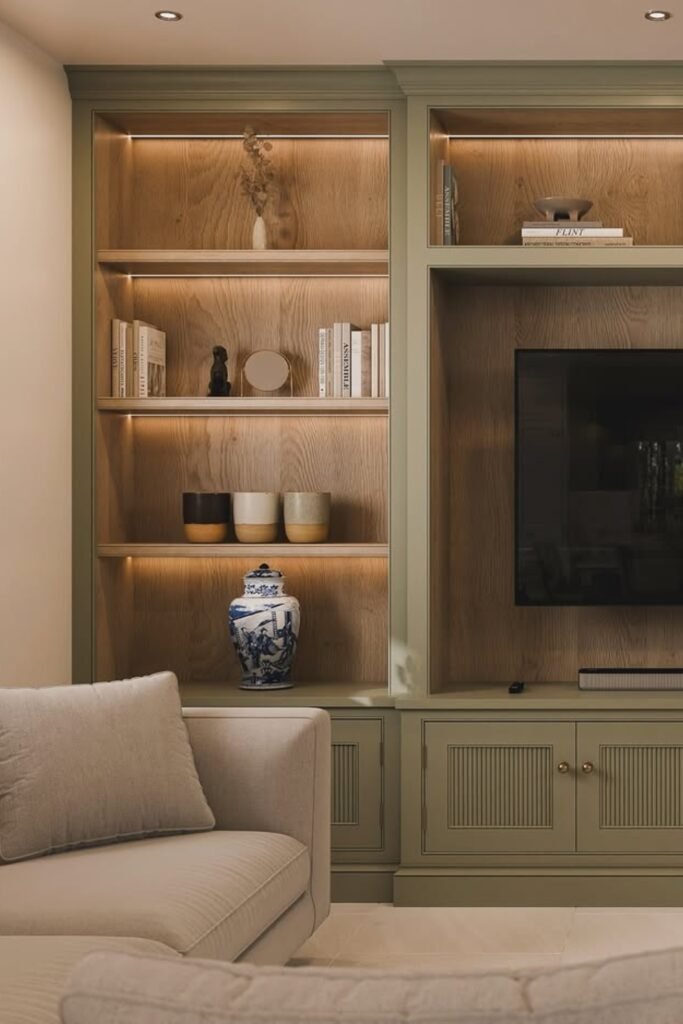
Warm Wood Backdrop
Break up painted cabinetry with natural wood behind the open shelves and TV.
The contrast adds warmth while helping books, ceramics, and artwork stand out without needing lots of decoration.
Keep closed cabinets along the bottom for electronics and clutter, then run subtle lighting beneath the shelves.
This combination works especially well when you want built-ins to feel cozy rather than like one large painted wall.
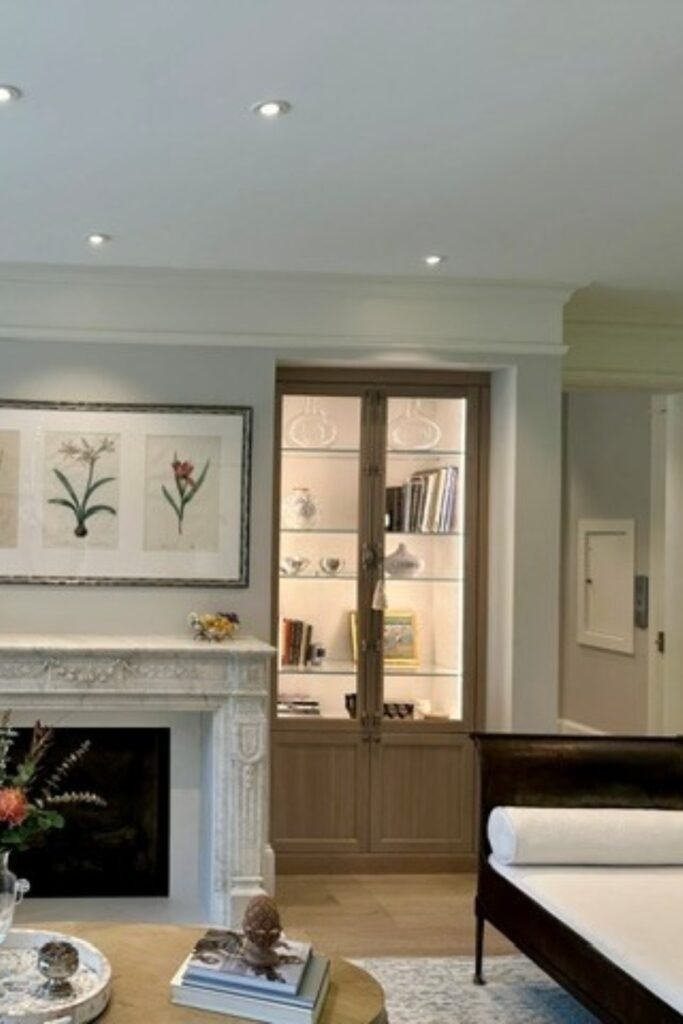
Balanced Fireplace Cabinets
Give a fireplace more presence by placing matching cabinets on both sides instead of leaving those wall sections empty.
Glass doors protect books and decorative pieces while still keeping them visible, and solid lower doors handle anything you would rather hide.
Keep both cabinets similar in height and finish so the fireplace stays centered and the whole wall feels balanced.
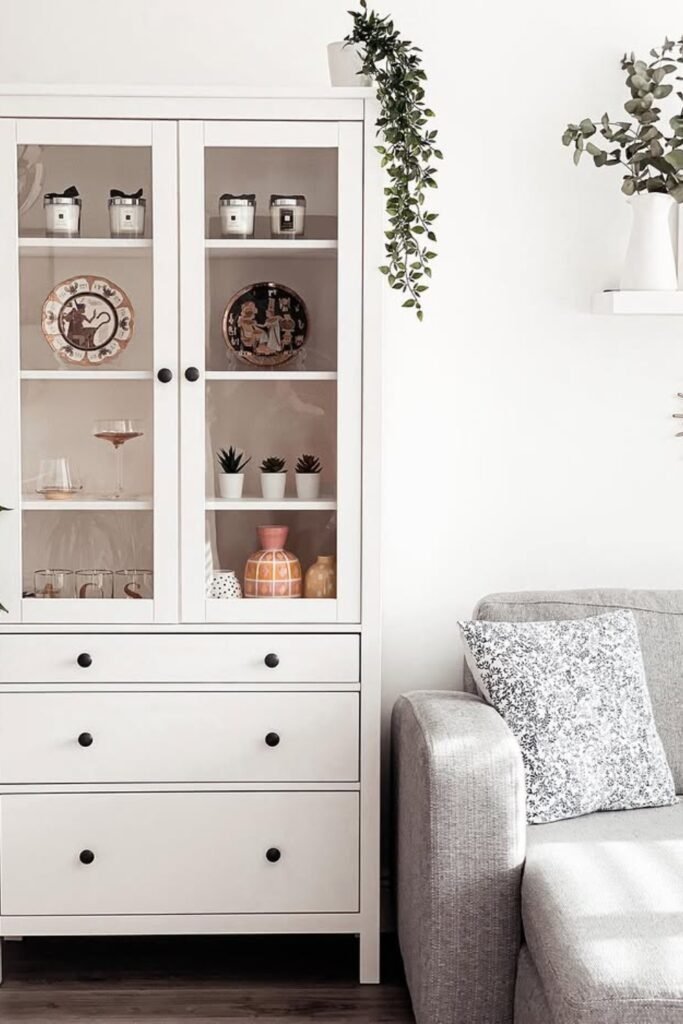
Slim Display Cabinet
A narrow freestanding cabinet is a smart choice when you need extra storage but cannot dedicate an entire wall to built-ins.
Use glass doors for pieces worth displaying, then let deep drawers handle games, linens, chargers, or other clutter.
Its vertical shape takes advantage of height while leaving more floor space open, making this setup especially useful beside a sofa or along a small living room wall.
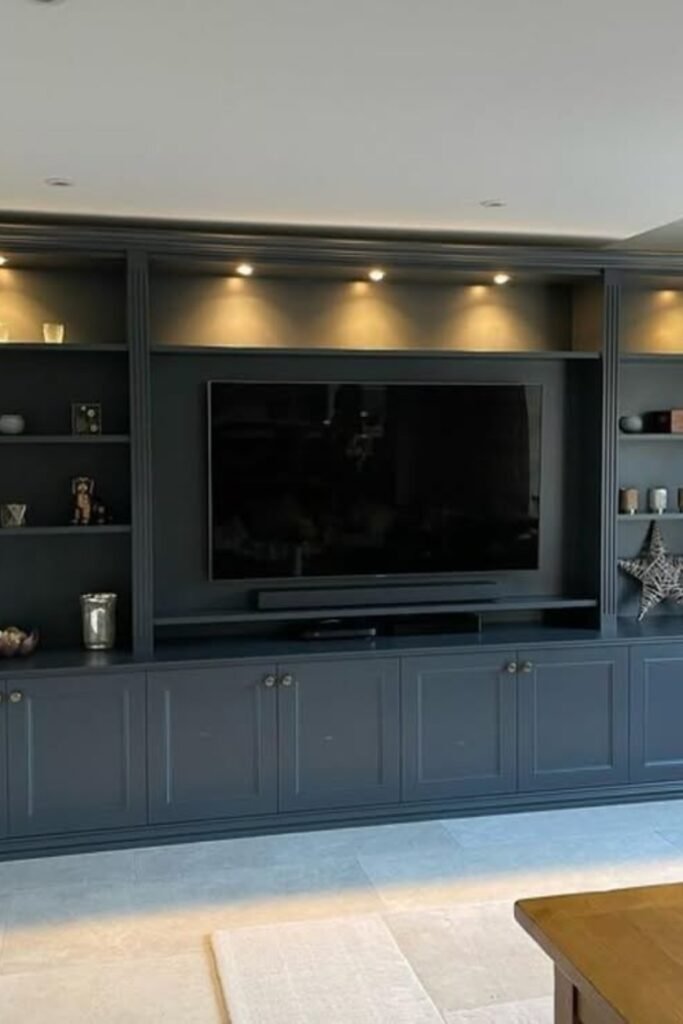
Dark Media Wall
Go dark when you want the TV to disappear into the cabinetry instead of becoming the first thing you notice.
Run closed cupboards across the bottom for electronics, cables, and everyday clutter, then keep the surrounding shelves open for lighter decorative pieces.
Small spotlights across the top stop a deep cabinet color from feeling flat and give the display wall more depth at night.
Fireplace Storage Mix
Let each side of the fireplace solve a different problem instead of forcing perfect symmetry.
A closed cabinet can hide everyday clutter, while an open bay keeps firewood neatly stacked beneath the TV.
Carry the same wood across the cabinet tops and floating shelves to connect both sides, even when their functions are completely different.
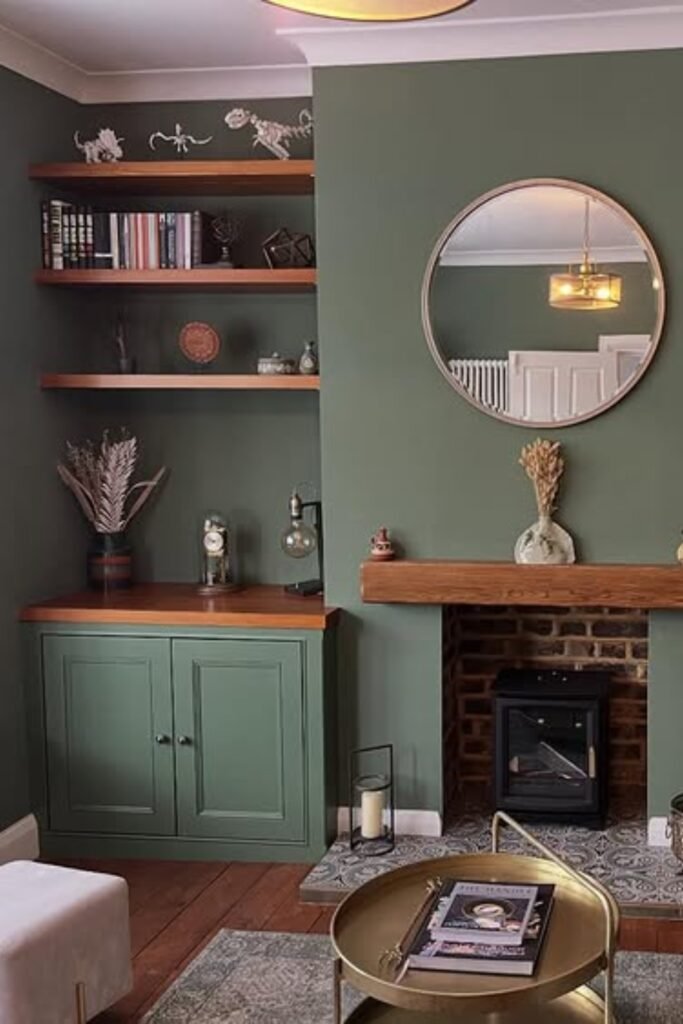
Full Wall Storage
Use one continuous cabinet run when you want maximum storage without scattering smaller furniture around the living room.
Closed cupboards along the bottom can hide bulky everyday items, while open shelves give books and décor their own place.
Keep the TV centered within the cabinetry and add lighting to selected shelves so the large unit feels more like part of the architecture than a storage wall.
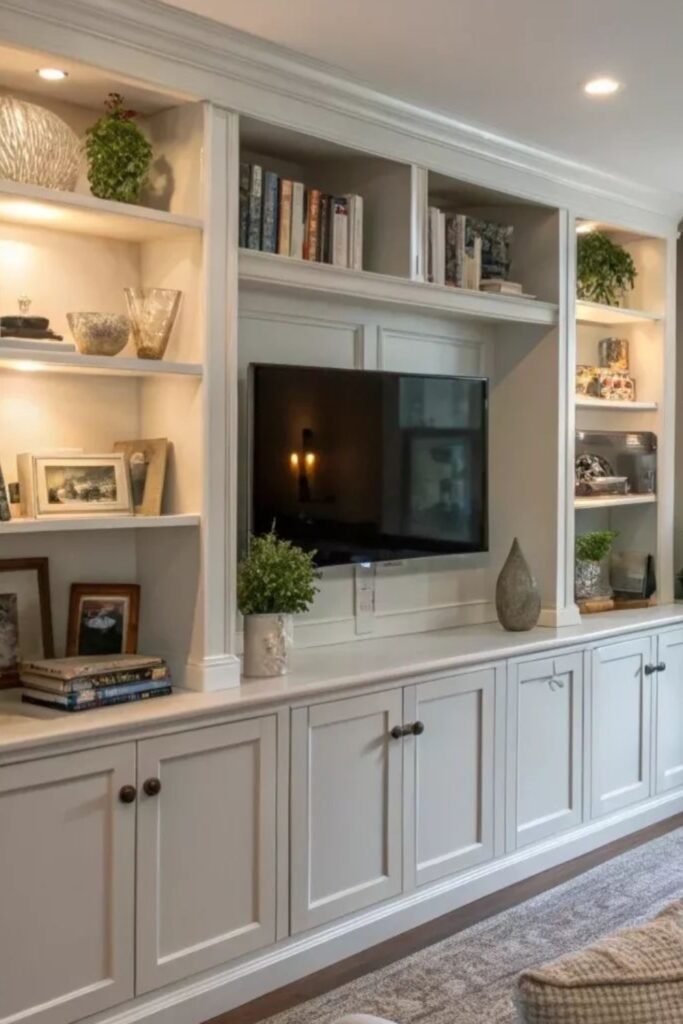
Arched Book Cabinet
Turn an unused section beside the fireplace into a dedicated book cabinet instead of filling the wall with open shelving.
Glass doors keep books and collected pieces visible but protected from dust, while deep drawers below handle less attractive items.
An arched top softens the tall cabinet and makes it feel like a deliberate architectural feature rather than extra storage added later.
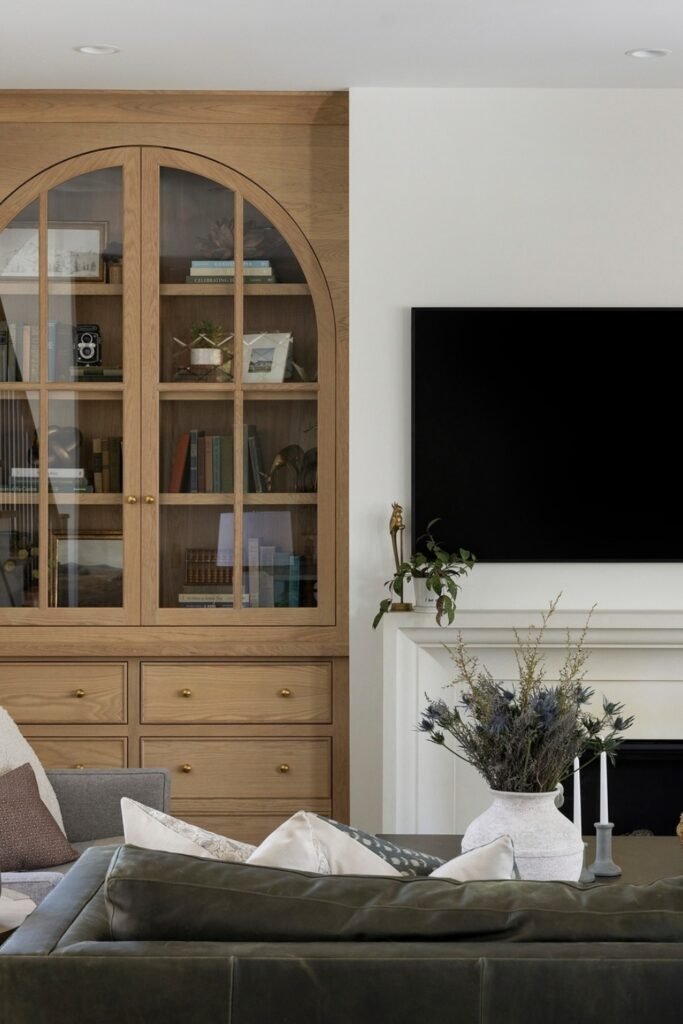
Cozy Alcove Storage
Make a fireplace alcove feel useful without turning it into a heavy storage zone.
Closed cabinets at the bottom can hide games, blankets, and everyday clutter, while open shelves leave room for books, framed photos, and larger decorative pieces.
Painting the entire unit one muted shade helps it settle into the room, especially when the fireplace already provides a strong focal point.
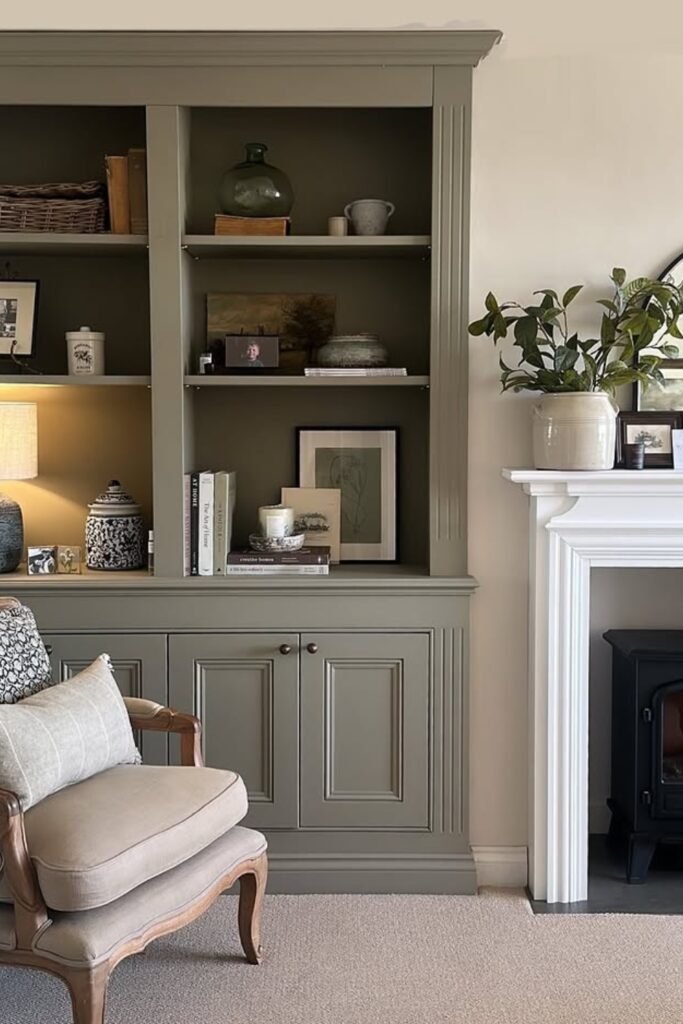
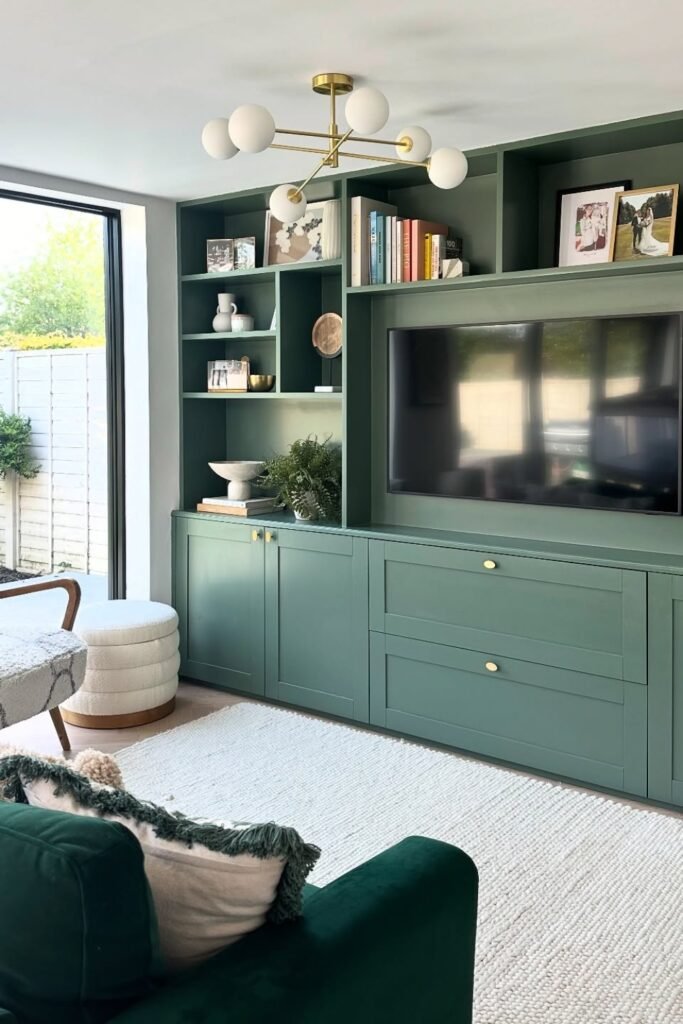
Green Media Cabinet
Color can help a large media unit feel intentional instead of purely practical.
Carry one deep green across the lower cabinets, TV surround, and open shelves to visually connect the whole wall.
Use drawers for smaller items and cupboards for bulkier clutter, then leave plenty of gaps between displayed pieces above.
This works especially well in bright living rooms where natural light can balance a darker cabinet color.
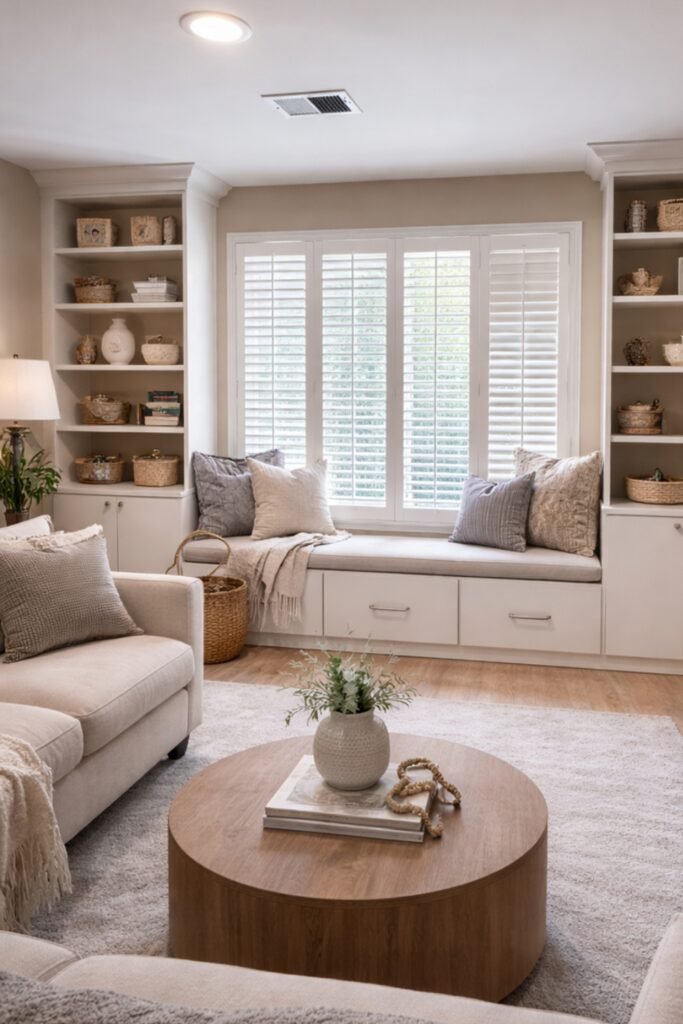
Window Seat Storage
Put storage around a wide living room window and you can gain cabinets without sacrificing the natural light.
Tall shelves make use of the narrow spaces on either side, while drawers beneath the seat are ideal for blankets, games, or seasonal items.
Adding a cushioned bench in the middle also turns the cabinet arrangement into a comfortable reading spot instead of treating the window wall as wasted space.
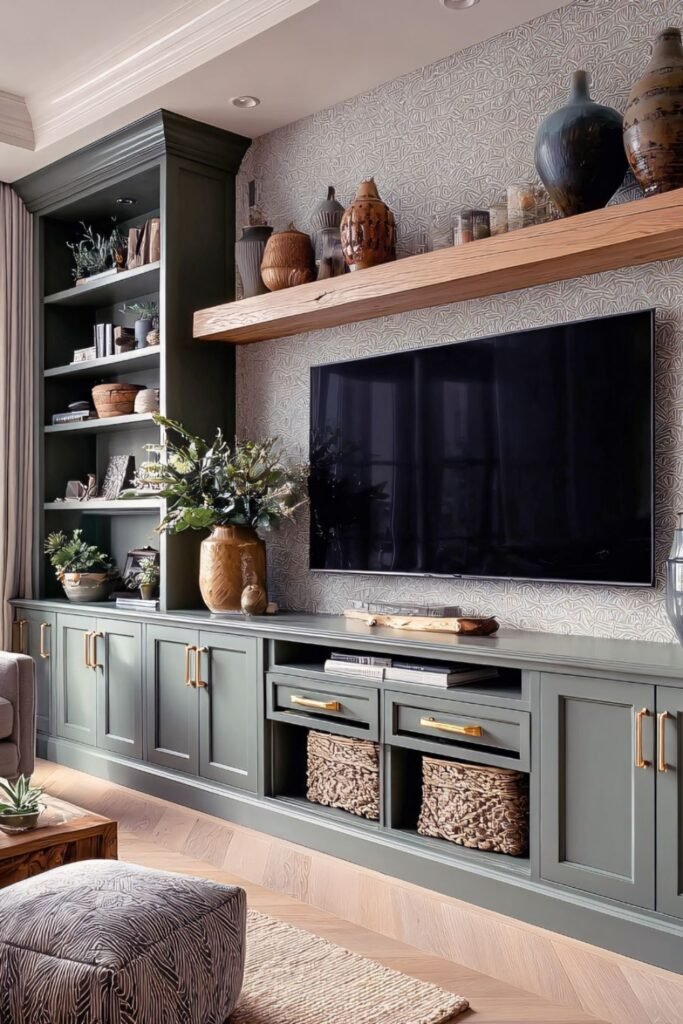
Layered Media Storage
Mix cabinets, drawers, open cubbies, and shelving when one TV wall needs to store several types of items.
Tuck everyday clutter behind doors, use baskets for things you grab often, and keep electronics in open sections for easier access.
Extending one tall bookcase upward adds display space without making the entire wall equally heavy, while a long wood shelf helps tie the TV area together.
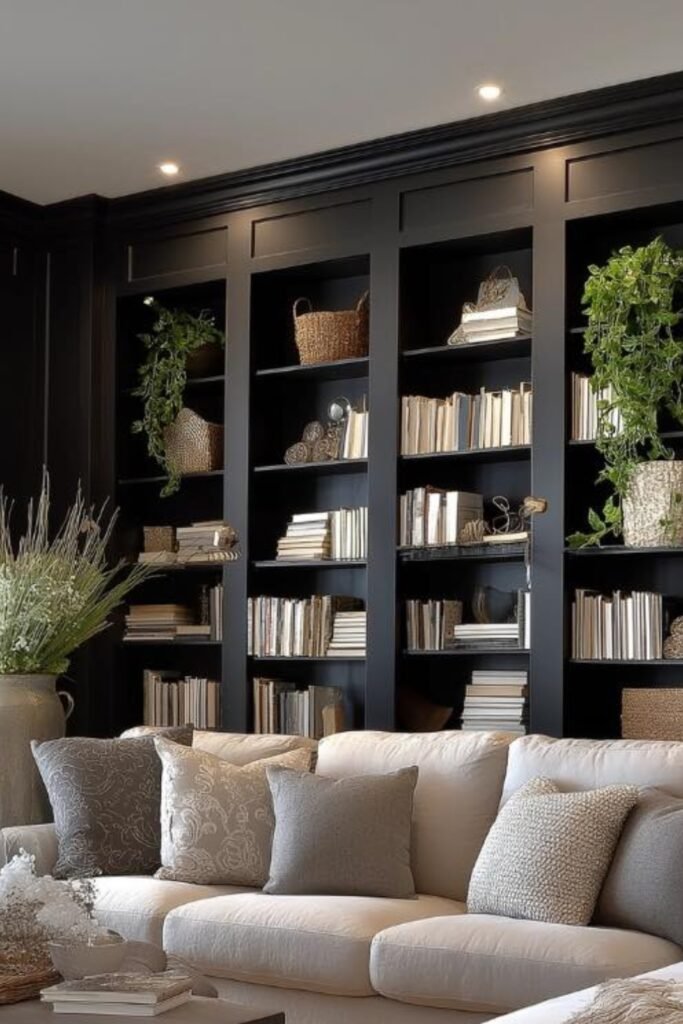
Library Wall Cabinets
Turn a long empty wall into book storage by taking built-in shelving all the way to the ceiling.
A dark finish gives the shelves depth, while lighter books, baskets, and greenery keep them from looking too heavy.
This setup works especially well behind a sofa, where shallow cabinetry can add plenty of storage without interrupting the main walking space.
Open Shelf Storage
Use open shelving above closed cabinets when you want storage without making a long living room wall feel solid and heavy.
Hide games, electronics, and everyday mess behind the lower doors, then give books, plants, and larger décor breathing room above.
Keeping the cabinetry close to the wall color also helps a wide built-in blend into the room rather than dominate it.

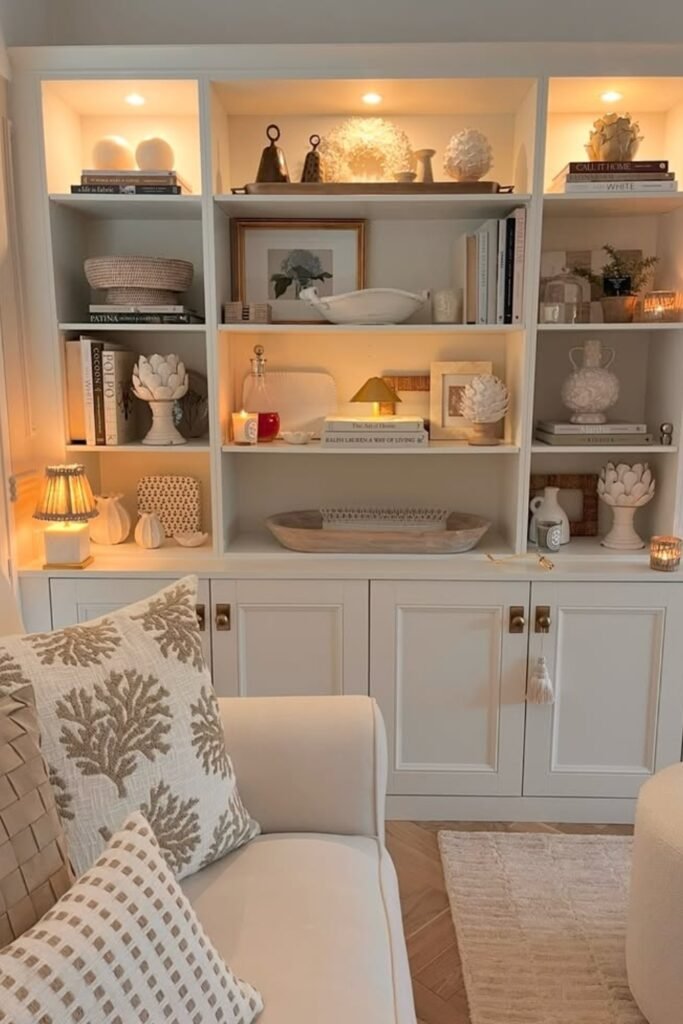
Illuminated Display Storage
Add lighting to open shelves when you want cabinetry to contribute to the room even after the practical storage is handled.
Keep everyday items behind the lower doors, then style the shelves with a loose mix of books, ceramics, and small lamps.
Warm lighting near the top and between displays creates depth, which is especially helpful with light-colored cabinets that might otherwise look flat.
FAQs
Should Living Room Cabinets Match the Walls?
They don’t have to, but matching the cabinet and wall color can make large built-ins feel less bulky.
If you want the cabinetry to become a focal point, choose a contrasting paint color or natural wood finish instead.
How Do You Keep Living Room Cabinets From Looking Cluttered?
Keep everyday items behind closed doors and use open shelves only for pieces you actually want to display.
Leave some shelves partly empty, vary the height of books and décor, and use baskets or drawers for smaller items that quickly create visual clutter.