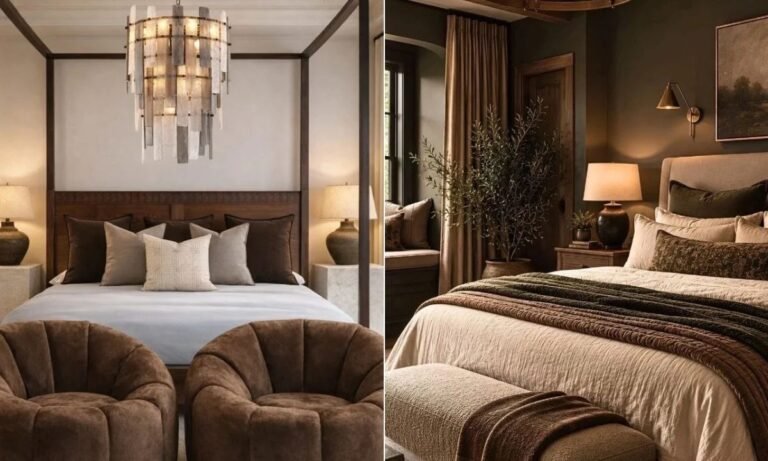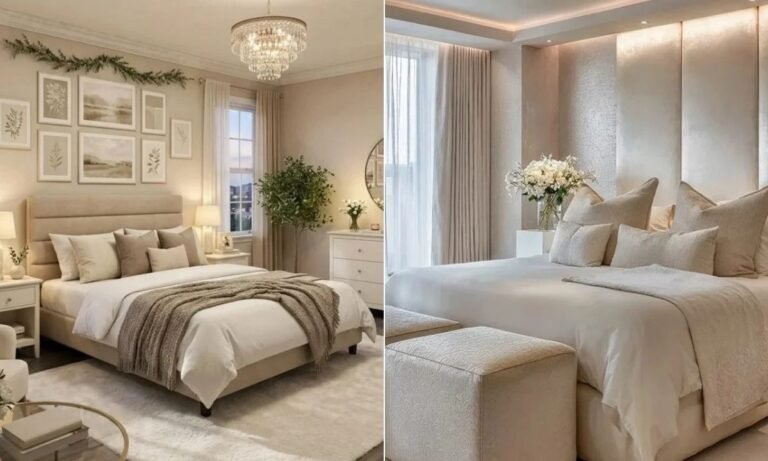
Going dark sounds easy until your bedroom starts feeling cold, cramped, or heavier than the cozy look you had in mind.
The right mix of warm lighting, soft textures, deep colors, and lighter contrast can make the space feel rich without turning gloomy.
In this article, you’ll find cozy moody master bedroom ideas that help you create a warm, relaxing, and well-balanced space.
Let’s jump in!
How To Make A Master Bedroom Feel Cozy?
Start with warmth, because dark paint alone can make a master bedroom feel heavy instead of comfortable.
Use soft bedding, a textured rug, full curtains, and a few layered fabrics to make hard surfaces feel less cold.

If your walls are deep or moody, balance them with warm wood, cream bedding, or lighter furniture so the room still feels open.
Skip one harsh ceiling light and use bedside lamps, sconces, or dimmable lighting to create a softer mood at night.
Keep the room layered but not crowded, because a cozy bedroom should feel calm, easy to move through, and comfortable to sleep in.
Ceiling Drench
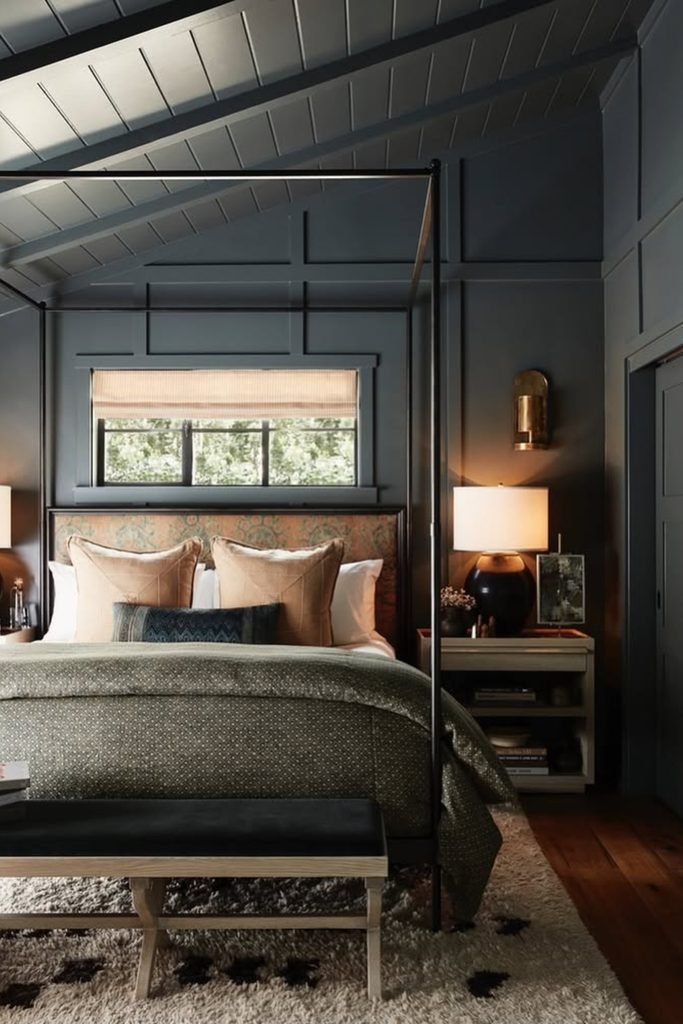
Carry a deep charcoal shade across the walls and ceiling when you want the whole bedroom to feel intentionally cocooned and calm.
Break up that darkness with cream bedding, a pale rug, and warm bedside lamps so the room never turns flat or severe.
This approach works especially well with exposed beams or paneled ceilings, because the architectural lines keep the dark finish looking detailed.
Soft Contrast
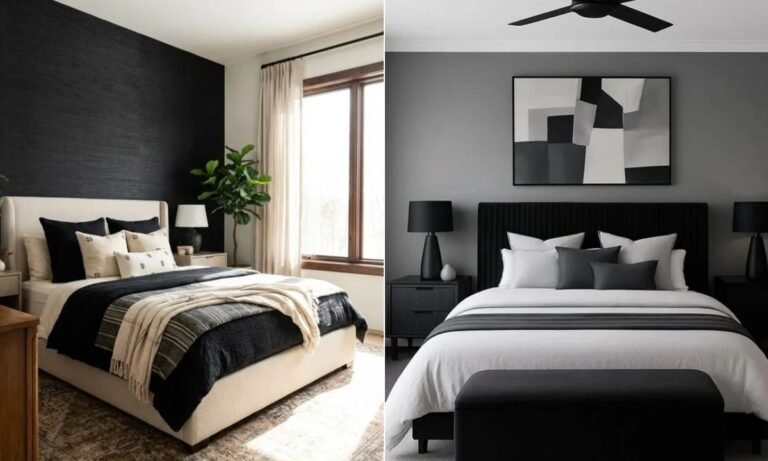
If you like moody walls but still want plenty of brightness, keep the ceiling, curtains, bedding, and bench in warm neutrals.
Use black only on the main wall, headboard, and smaller accents, then let cream fabrics carry most of the visual weight.
Matching lamps on both sides make the bed feel settled, while simple framed art keeps the dark backdrop from feeling too empty.

Panel Balance
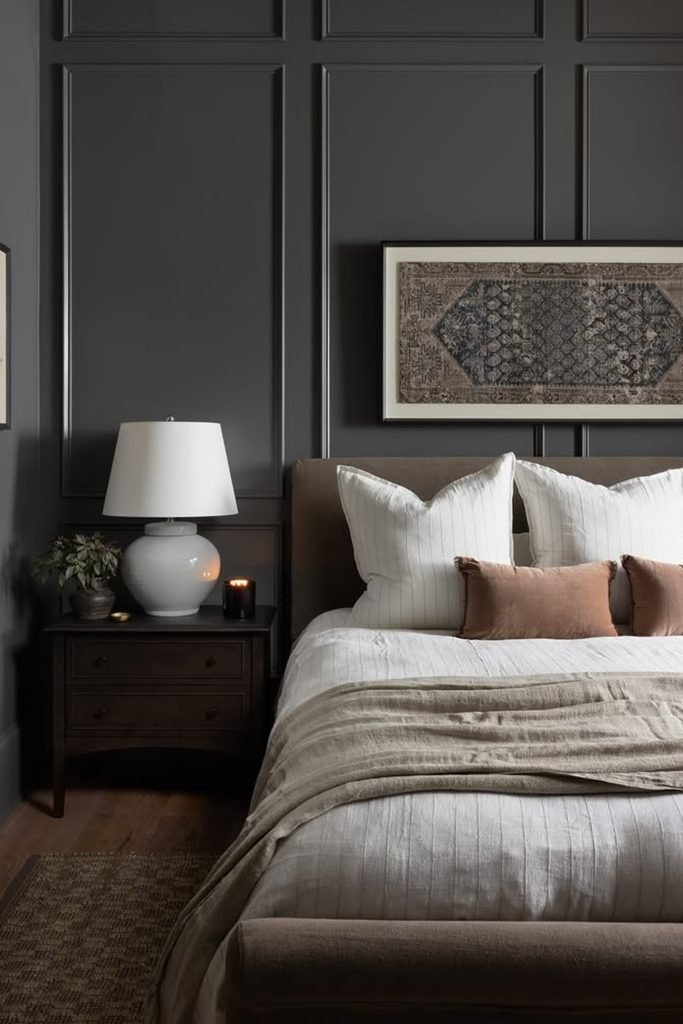
Dark wall molding can make a simple bedroom feel finished, especially when you keep the bed lighter and avoid matching every surface.
Choose white or warm ivory bedding against charcoal paneling, then repeat the wall color through small pillows instead of another heavy layer.
This works best in rooms with clean furniture lines, because the molding already adds enough detail behind the bed and artwork.
Earthy Drama
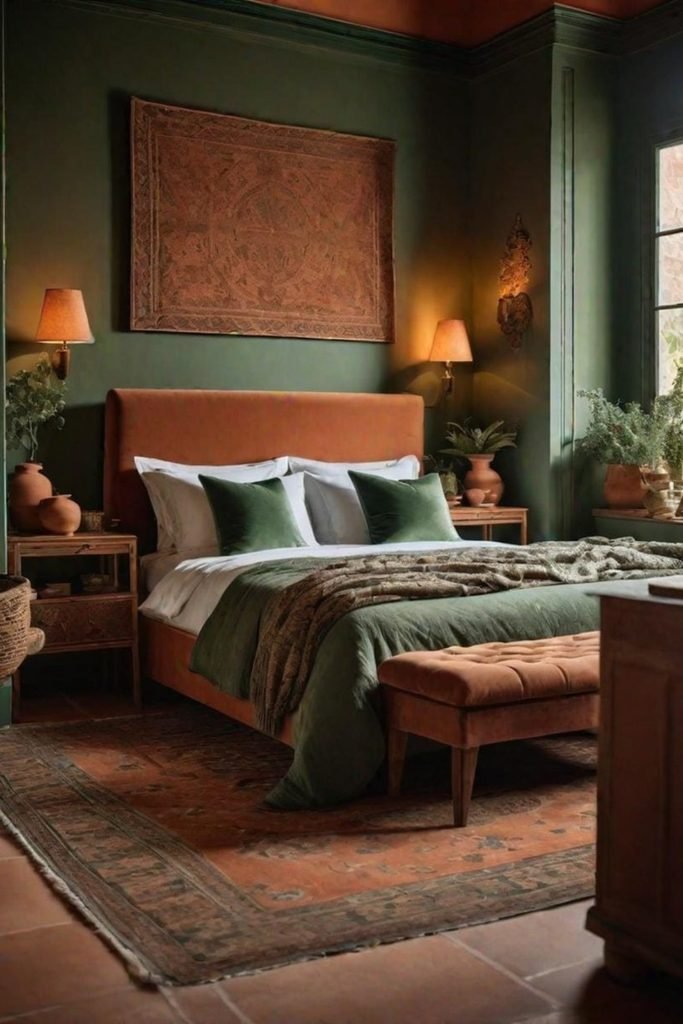
Deep green feels much warmer when you pair it with rust, terracotta, or tobacco tones instead of relying on cream everywhere.
Bring those earthy shades into the headboard, ceiling, rug, and pottery so the room looks layered without needing extra decorative pieces.
Warm sconces matter here, because green and terracotta can feel heavy after sunset if the lighting is too cool or overly bright.
Library Mood
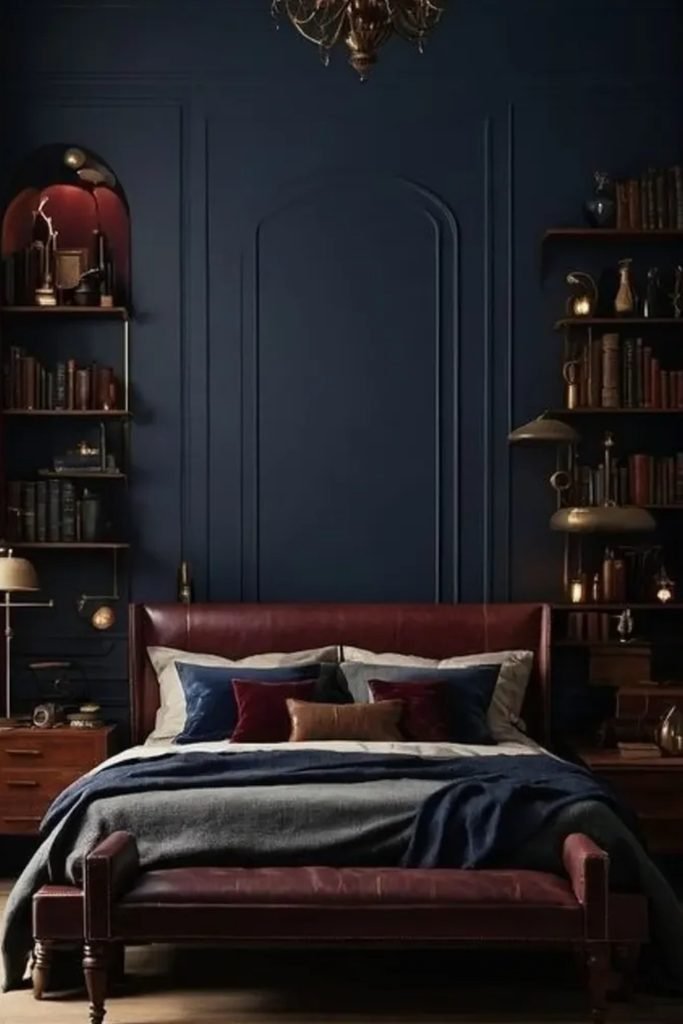
Turn a dark bedroom into a library-inspired retreat by pairing navy walls with burgundy leather, warm wood, and collected books.
Keep the bedding mostly navy and gray, then add smaller wine-colored cushions so the palette feels layered instead of costume-like.
This look suits larger rooms especially well, because tall shelving fills blank walls while low lamps keep the atmosphere intimate.
Burgundy Bloom
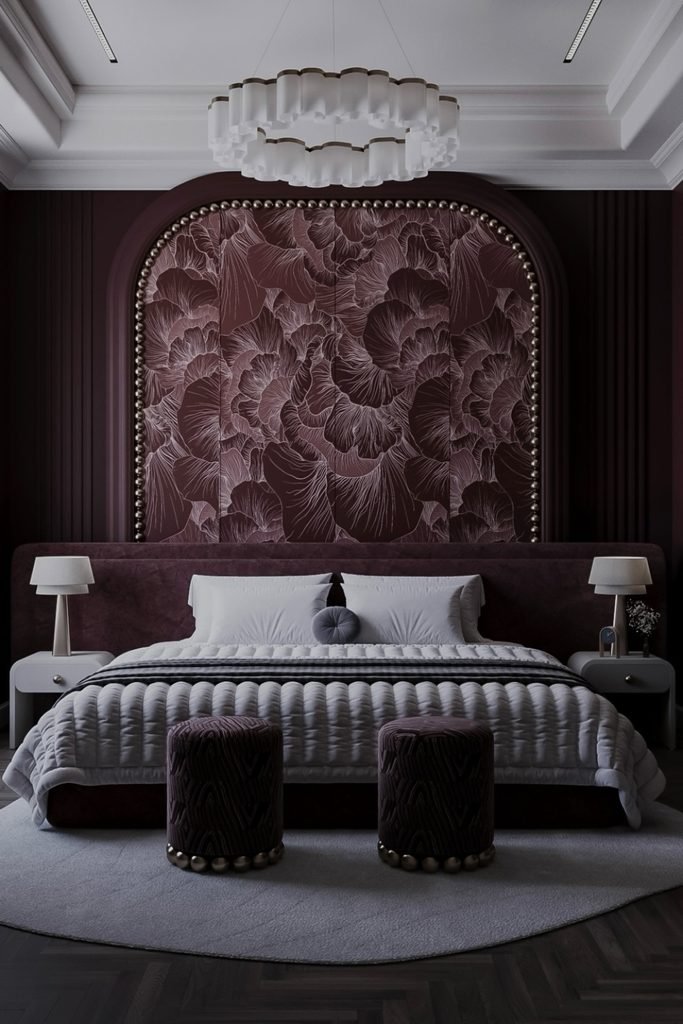
Use a floral feature panel behind the bed when solid burgundy walls feel too plain, but full wallpaper would overwhelm the room.
Let crisp white bedding and pale nightstands break up the wine tones, giving your eye somewhere lighter to rest comfortably.
This approach works best in a polished master bedroom where one oversized pattern can carry the drama without adding extra accessories.
Olive Layers
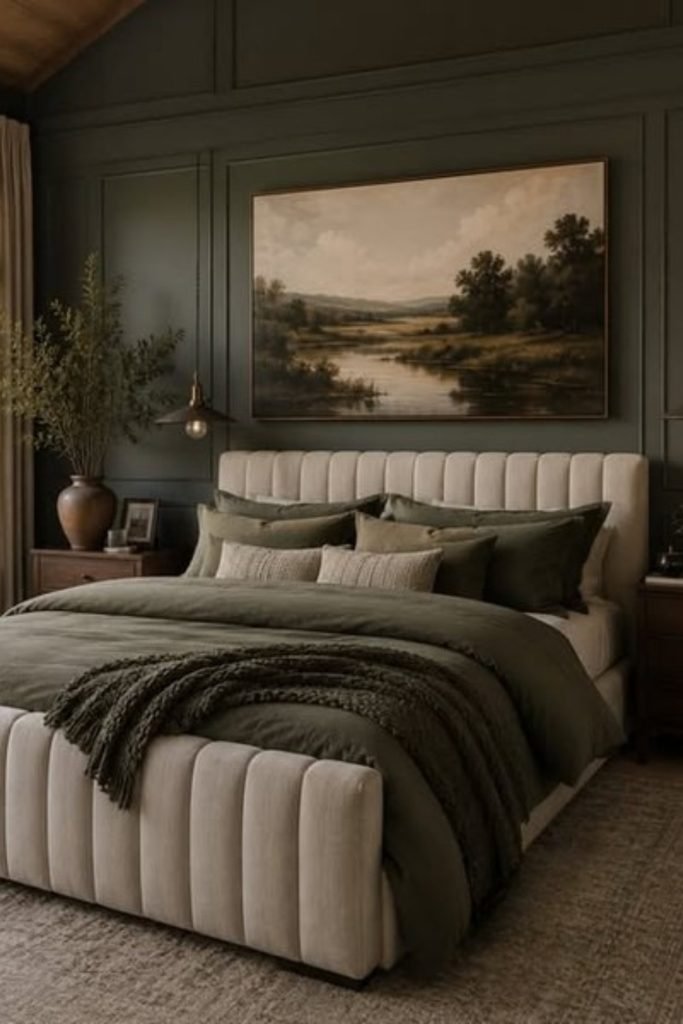
If you want a moody room that still feels restful, soften olive paneling with a cream upholstered bed and light curtains.
Repeat the green through bedding instead of furniture, then bring in dark wood nightstands to ground the softer upholstery around it.
A large landscape above the bed suits this palette beautifully, because earthy artwork connects the greens, browns, and warm neutral fabrics.
Floral Ceiling
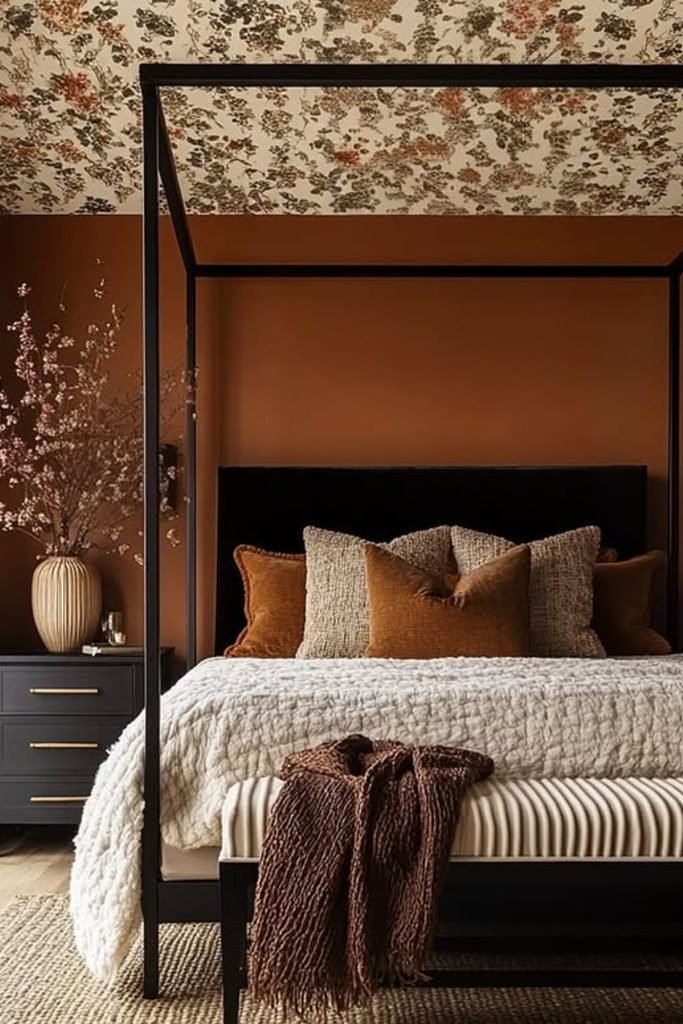
Take the pattern overhead when you want strong color on the walls without covering every vertical surface in busy wallpaper.
Rust walls make floral ceiling paper feel warmer, while a slim black canopy bed gives the room enough structure to stay balanced.
Keep most bedding cream and textured here, because another large print near the bed could compete with the ceiling too quickly.
Black Cocoon
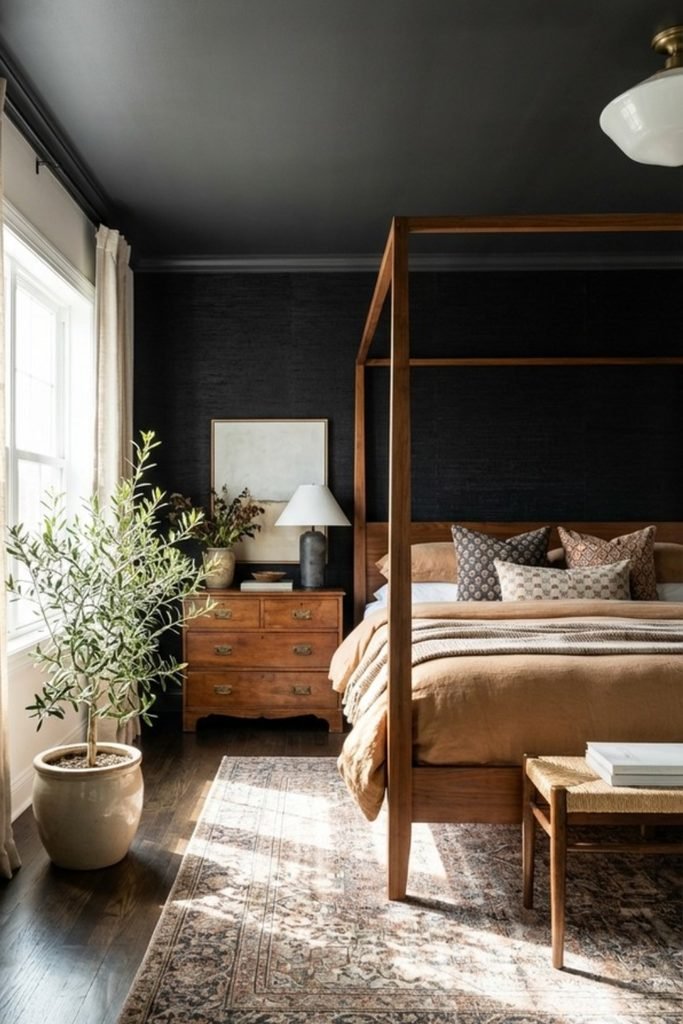
Go fully dark on the walls and ceiling when your room gets strong daylight, then warm it back up with natural wood.
A walnut canopy bed, vintage dressers, and tan bedding keep black surfaces from feeling flat while still holding onto the moody look.
Use a faded patterned rug and soft linen curtains to connect the darker furniture with the brighter window side of the bedroom.
Vintage Contrast
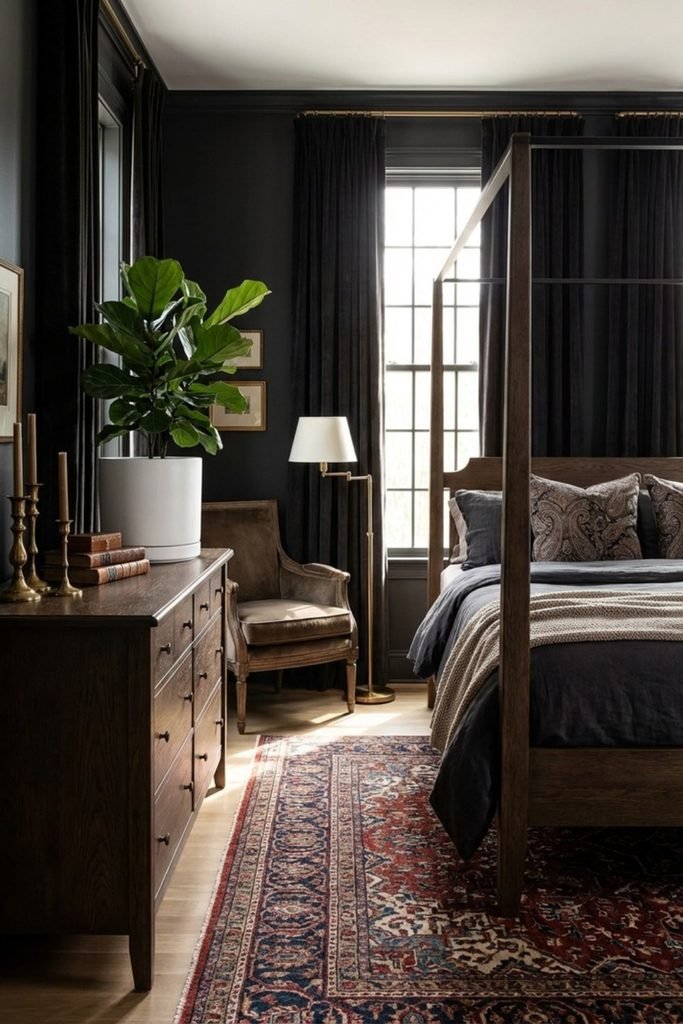
Keep the ceiling light if you want black walls without a boxed-in effect, especially in a bedroom with tall windows.
Dark curtains can still frame the room beautifully, but leave enough contrast through warm wood furniture, brass lighting, and lighter trim.
A richly patterned vintage rug is useful here because it breaks up the black palette and gives the floor some needed warmth.
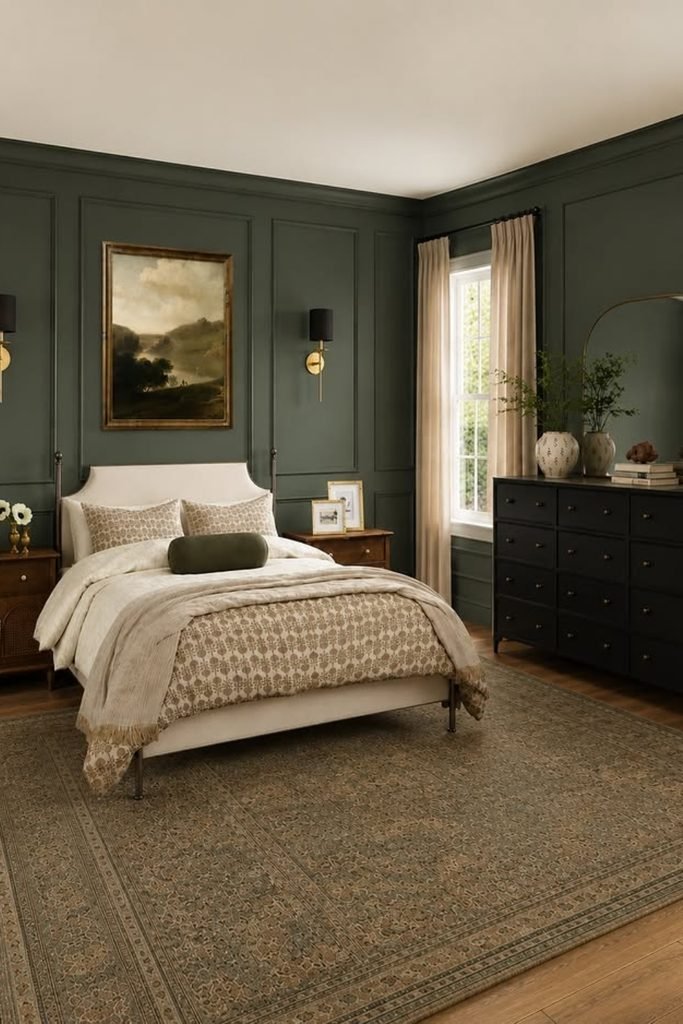
Olive Calm
If black feels too severe, deep olive paneling gives you the same moody depth with a softer, more natural finish.
Pair it with an ivory upholstered bed and pale curtains, then repeat the green only through a bolster or smaller cushions.
A dark dresser works well against this shade, while warm wood nightstands stop the room from becoming too matched and heavy.
Shadow Layers
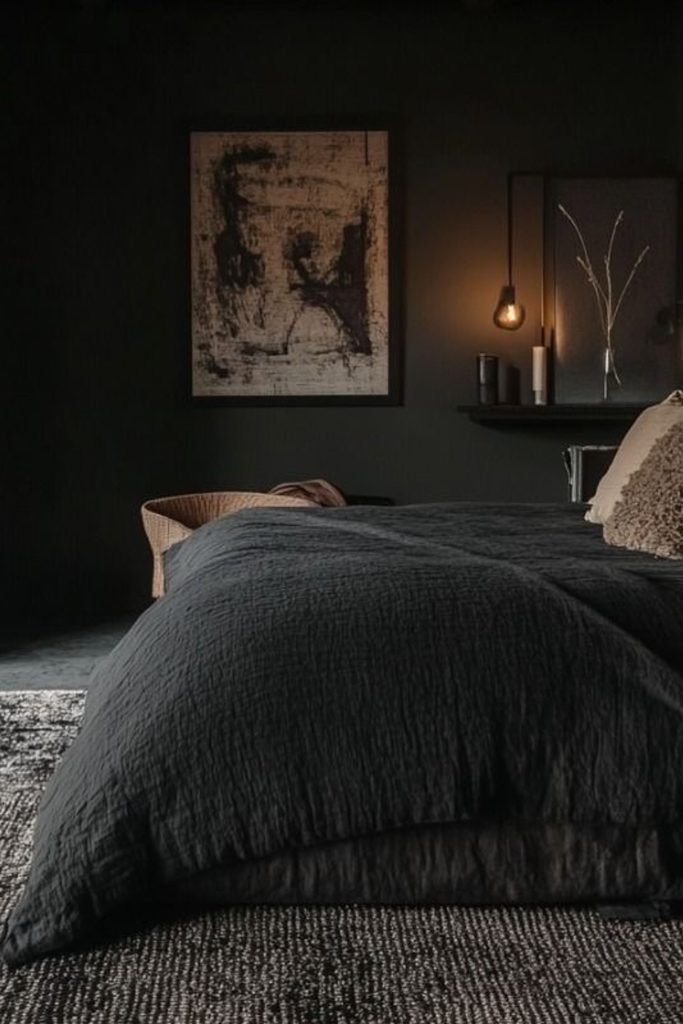
Monochrome can still feel cozy when you build the room with texture instead of trying to soften everything with extra color.
Use washed black bedding, a nubby rug, linen curtains, and matte walls so each dark surface catches light a little differently.
Small warm lamps matter more in this setup than bright overhead lighting, because they create enough glow without flattening the shadows.
Natural Contrast
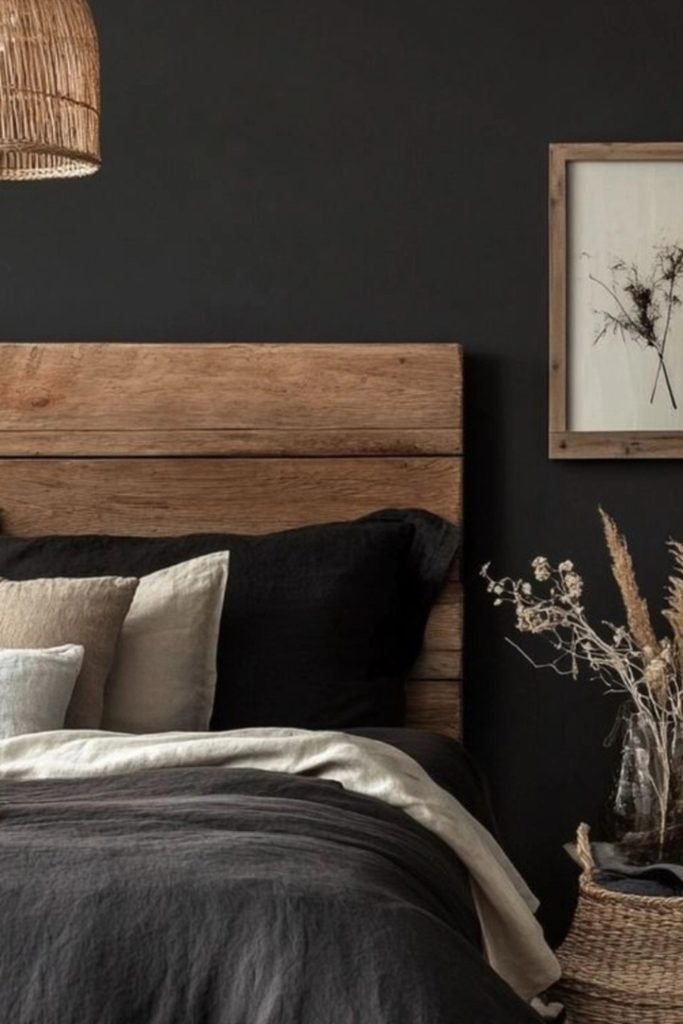
Black walls feel less severe when you bring in raw wood, woven lighting, and dried grasses instead of adding more dark furniture.
Keep the bedding split between charcoal and warm cream, so the bed looks layered while still connecting back to the wall.
This combination suits simple bedrooms especially well, because texture does the decorating work without needing busy patterns or lots of accessories.
Burgundy Built-ins
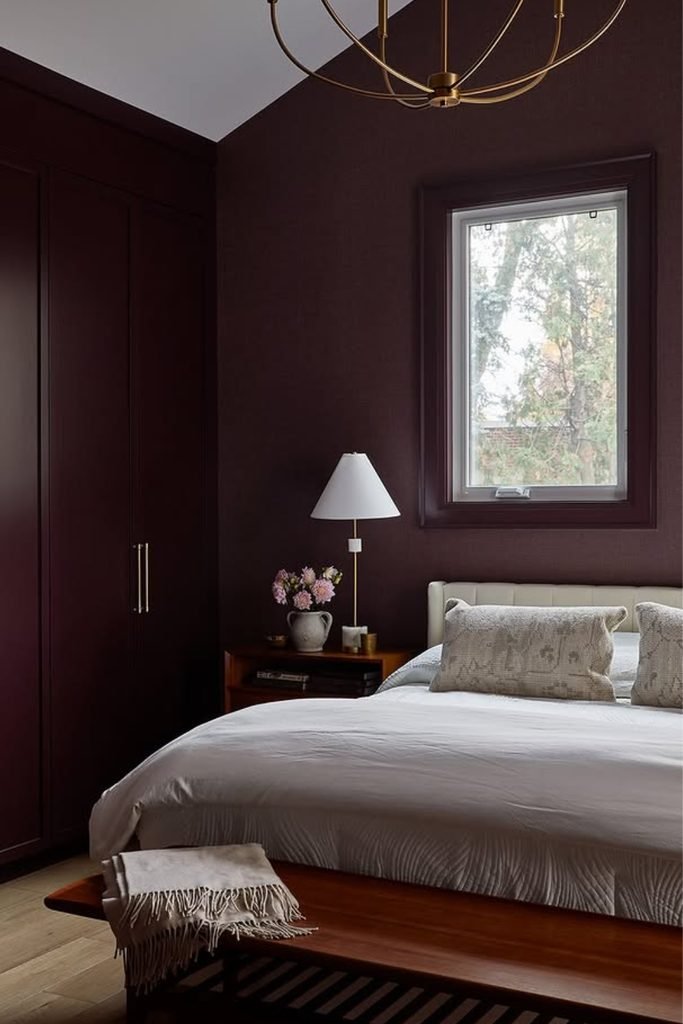
Deep burgundy works beautifully when wardrobes share the wall color, because the storage blends in instead of breaking up the room.
Use crisp white bedding and a pale ceiling to give your eye enough relief from the strong color surrounding the bed.
Warm wood and brass accents stop the scheme from feeling flat, especially in a bedroom with limited natural light during winter.
Rust Accents
Rust cushions are an easy way to warm up charcoal walls, especially when you want contrast without bringing in a lighter palette.
Keep the headboard in a soft oatmeal fabric, then repeat natural wood nearby so the darker bedding never feels too heavy.
One warm pendant beside the bed creates enough glow for this look, while simple botanical art keeps the wall calm and grounded.
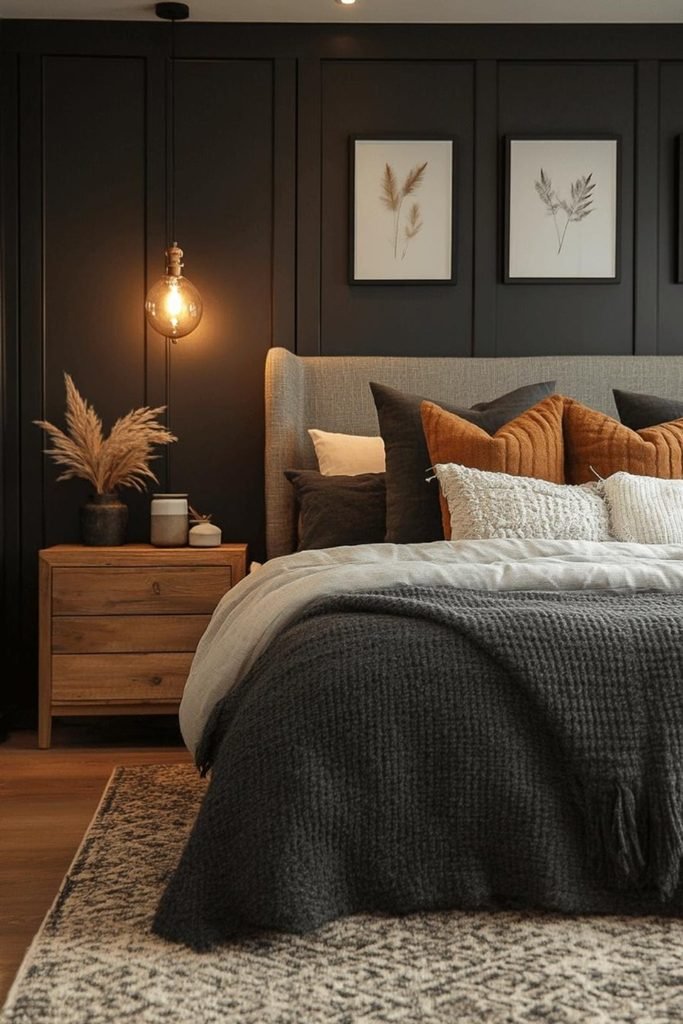
Dusty Rose
Dusty rose can still feel moody when you carry it onto the ceiling, trim, and walls instead of keeping everything pale.
Choose muted mauve rather than sugary pink, then add aged wood, antique brass, and faded rugs to keep the room grounded.
Soft gray bedding works here because it cools the rosy walls slightly, while floral cushions keep the bedroom relaxed and collected.
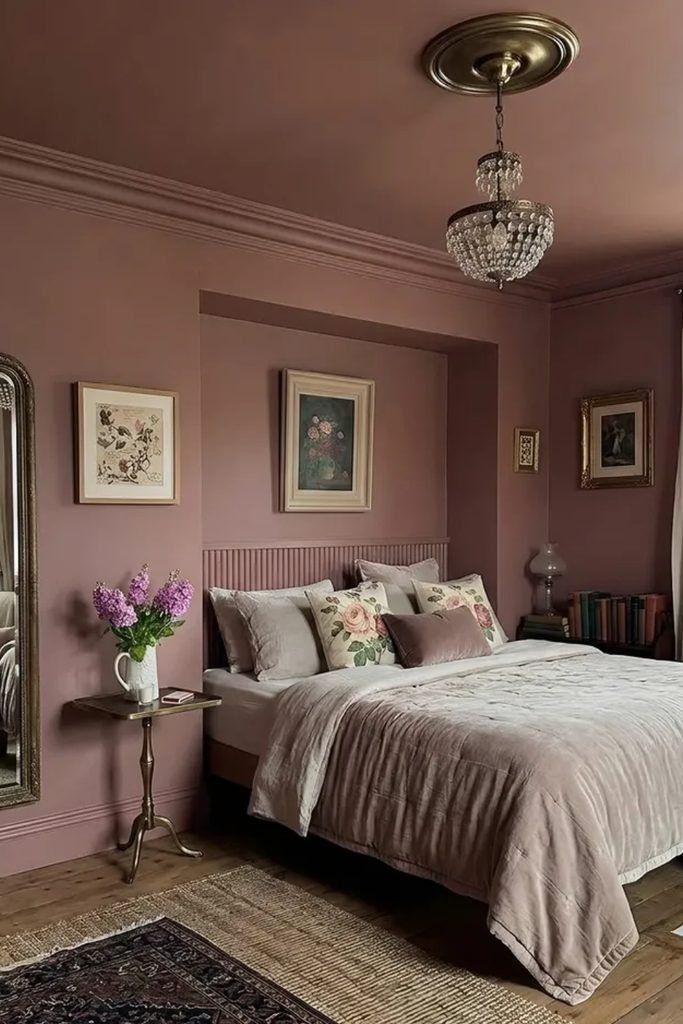
Marble Drama
Deep black marble instantly gives a bedroom more presence, especially when you want a luxurious look without filling every corner with decoration.
Carry the stone behind the bed as one oversized feature, then surround it with warm vertical lighting to soften its dramatic appearance.
Dark bedding, low furniture, and recessed ceiling lights complete the mood while keeping the marble wall firmly at the center visually.
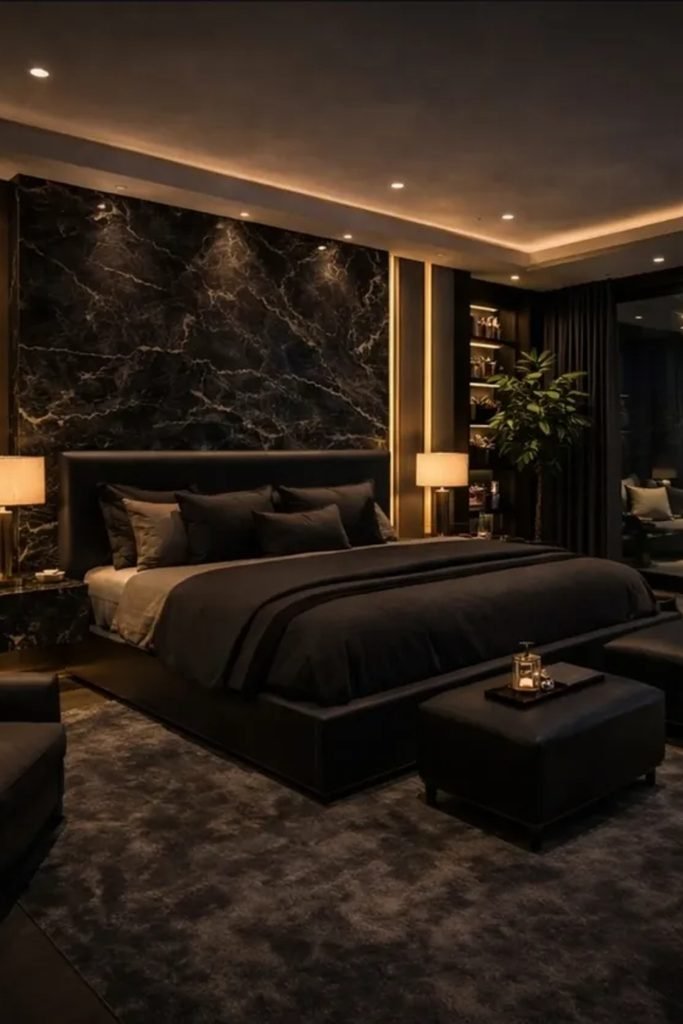
Natural Warmth
Warm timber furniture works beautifully when you want a bedroom that feels grounded, comfortable, and collected rather than overly polished or decorated.
Pair a substantial wooden dresser with crisp neutral bedding, black furniture, and woven textures so every natural material has breathing room.
Sunlight becomes part of the design here, while simple greenery and understated artwork keep the room relaxed without making it feel unfinished.
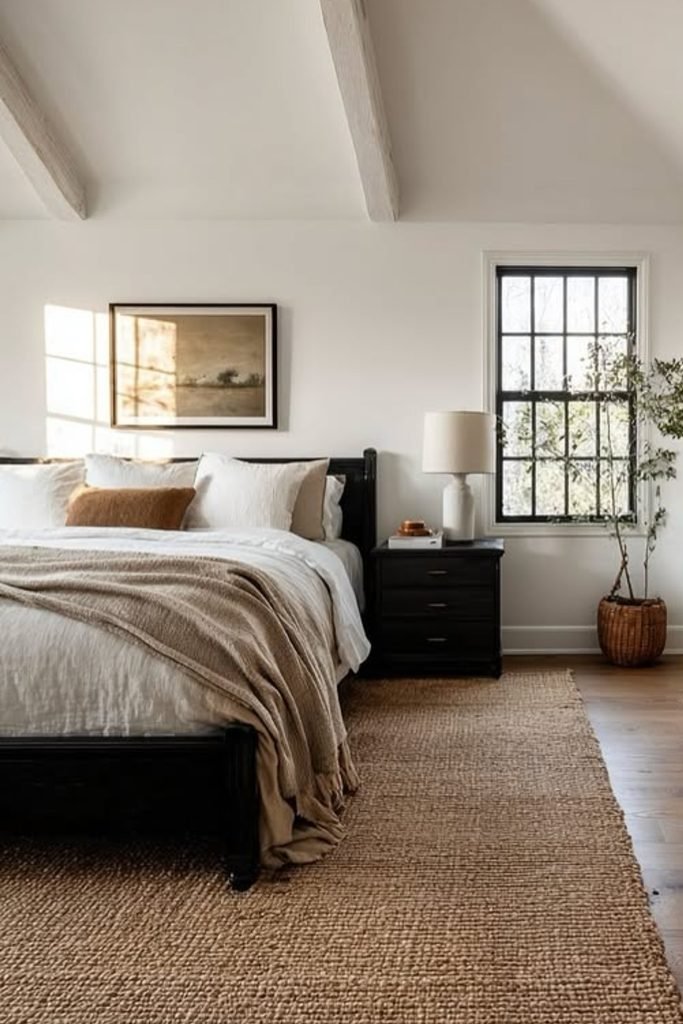
Moody Layers
Instead of making every dark surface identical, layer charcoal, taupe, black, and soft gray to give a moody bedroom noticeable depth.
Keep the bed comfortably layered with contrasting pillows and textured throws, then use oversized artwork to break up the darker wall behind.
A woven wall light adds warmth exactly where needed, creating softer evening illumination while giving the otherwise modern palette some natural texture.

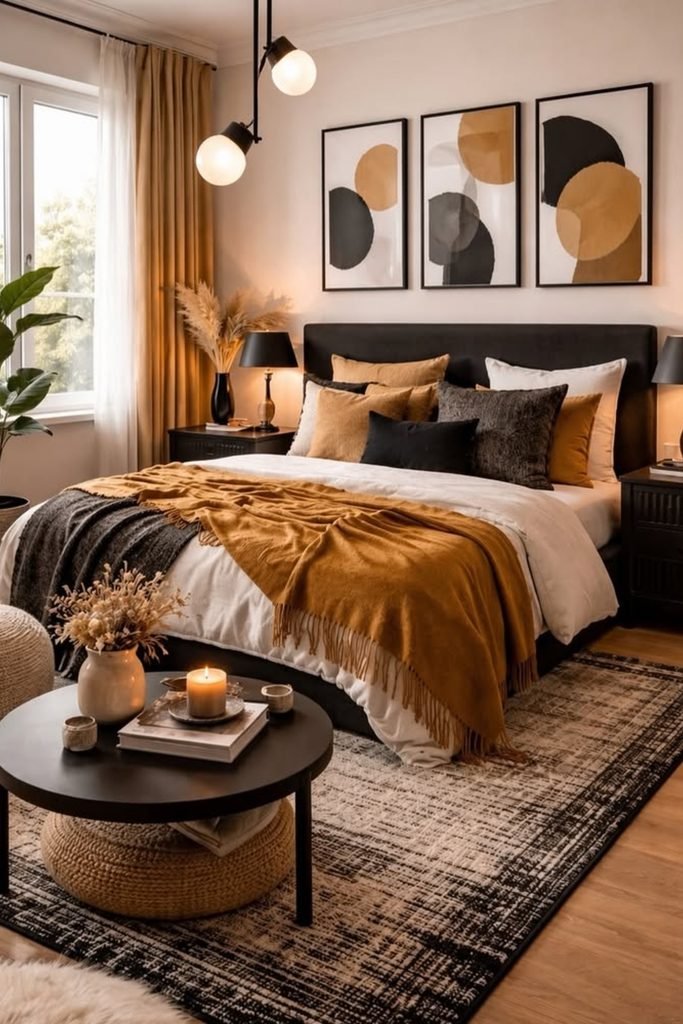
Mustard Accents
Mustard can warm up a black and white bedroom quickly, making it especially useful when your neutral scheme starts feeling too flat.
Repeat the shade through pillows and a relaxed throw rather than larger furniture, letting those smaller accents connect naturally across the bed.
Black lamps, graphic artwork, and patterned rugs provide structure, while daylight and pendant lighting keep the deeper contrasts from becoming visually heavy.
Earthy Green
Olive walls bring a grounded warmth into the bedroom, especially when natural sunlight can reveal the softer undertones throughout the day.
Balance the deeper green with creamy bedding, warm brown upholstery, and textured neutrals so the room stays cozy rather than overly dark.
Large plants and earthy wall art strengthen the organic direction, while pendant lights and bedside lamps create a comfortable evening atmosphere.

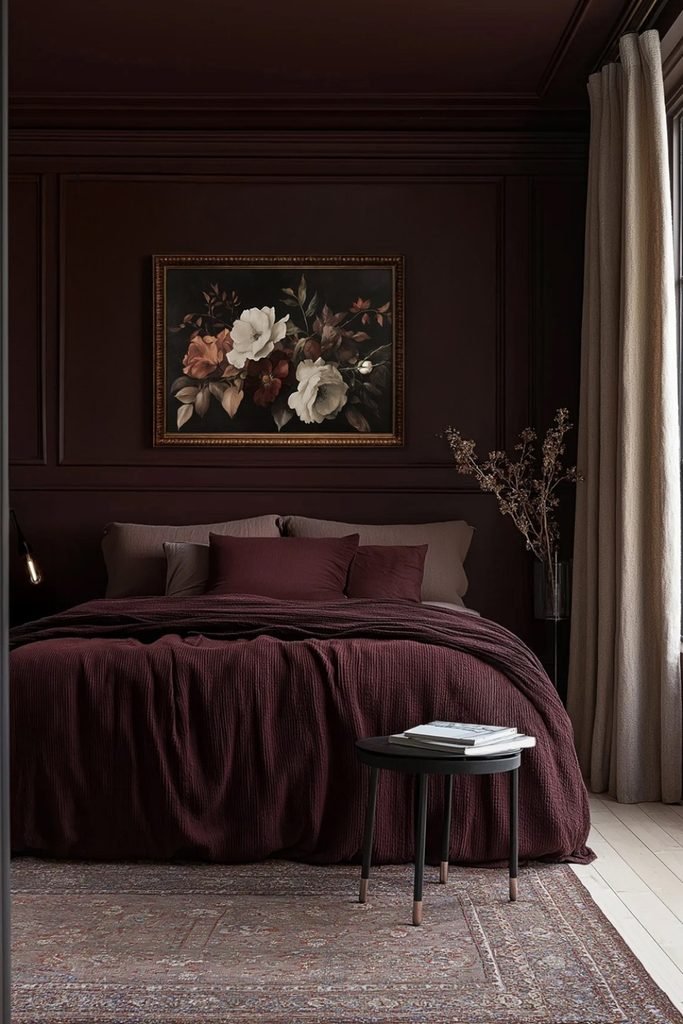
Burgundy Cocoon
Wrapping the walls and ceiling in burgundy creates an intimate bedroom that feels especially fitting for anyone drawn toward rich, dramatic interiors.
Instead of introducing sharp contrast, continue similar wine tones through the bedding, then soften everything with taupe pillows and neutral curtains.
Traditional wall molding and floral artwork give the palette character, while restrained bedside lighting keeps the darker setting calm and comfortably atmospheric.
FAQs
What colors make a moody bedroom feel warmer?
Warm dark shades like olive, chocolate, burgundy, and soft black usually feel cozier than cool gray when paired with natural wood.
If you already have charcoal walls, bring in cream bedding, rust accents, brass lighting, or walnut furniture to soften the overall look.
Keep one or two lighter surfaces in the room, because too many equally dark finishes can make even a large bedroom feel heavy.
Can a small master bedroom still look moody?
Yes, but use darkness carefully by keeping the bedding lighter, limiting bulky furniture, and letting natural light reach as much space as possible.
A deep wall color can actually create a cocooning feel, especially when trim stays simple and the furniture does not crowd the room.
Use mirrors, warm lamps, and a lighter rug to keep the space balanced, then repeat the dark shade in smaller accents.