A swivel chair looks easy to add until you start wondering where it should sit, how much space it needs, and whether it will crowd your living room.
Get the placement, scale, and shape right, though, and one swivel chair can make your layout more flexible without forcing you to rearrange everything.
In this article, you’ll see how to use swivel chairs in real living rooms, plus practical ideas you can copy based on your own space.
Let’s jump in!
Are Swivel Chairs Good for a Living Room?
Yes, swivel chairs work really well in living rooms because they give you extra seating without locking the chair into one direction.
They are especially useful when your room has two focal points, like a TV and fireplace, or opens into a kitchen or dining area.
A single swivel chair can finish the open end of a sectional, while two chairs opposite a sofa can create a better conversation setup.

For smaller rooms, choose a compact chair with a lower back and slimmer arms so you do not make the seating area feel crowded.
You also need enough space around the chair for it to turn without hitting a coffee table, wall, side table, or nearby sofa.
Get the size and placement right first, and a swivel chair can make your living room easier to use without changing the whole layout.
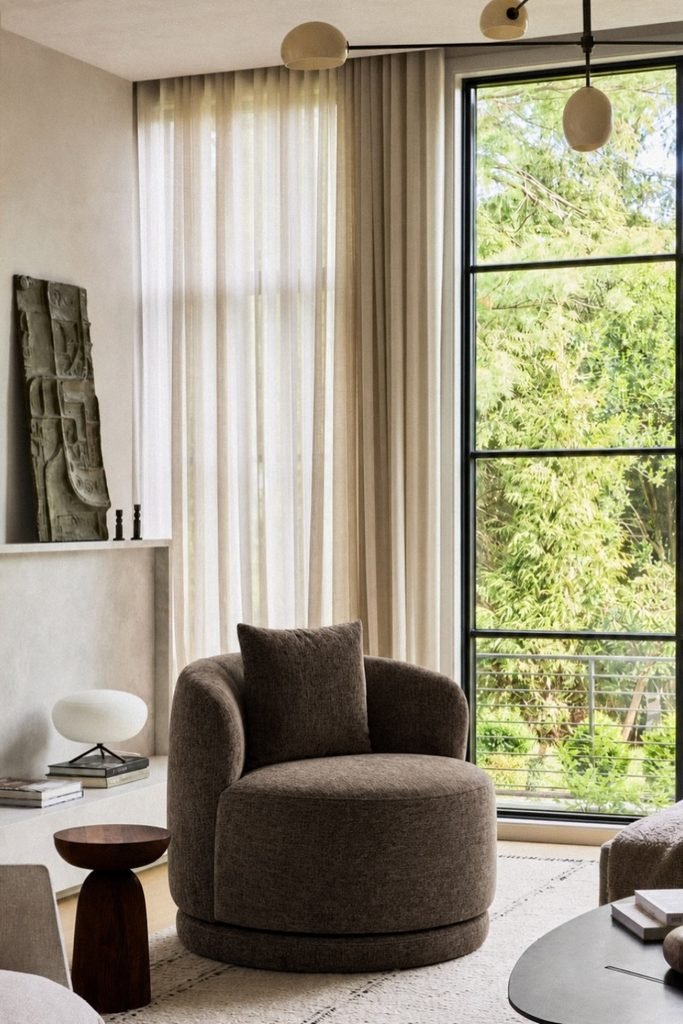
Window Swivel
A deep swivel chair beside a large window gives you a flexible seat that can face the view or conversation.
Choose a rounded, low-back shape when the chair sits near open sightlines, so it feels substantial without blocking natural light.
Keep the side table slim and outside the turning path, then repeat warm wood nearby to connect the chair with the room.
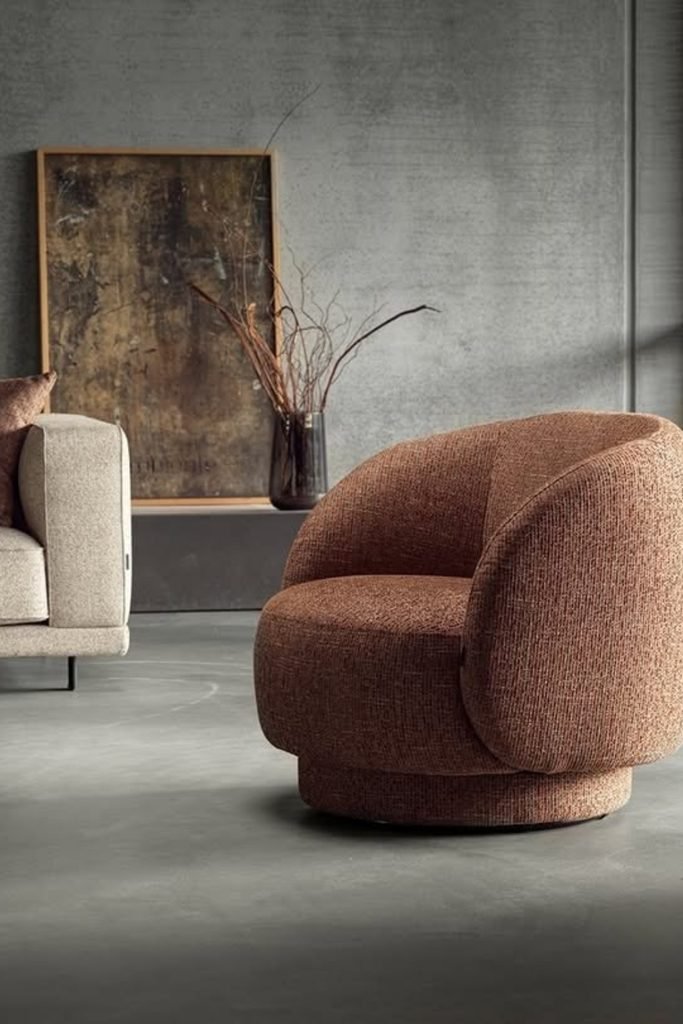
Rust Contrast
A rust swivel chair can wake up a quiet neutral living room without forcing you to change the sofa or wall color.
Let the chair carry the stronger color, then echo its warm tone through one pillow, artwork, or a small decorative piece.
This works best when the surrounding furniture stays simple, because the curved chair already gives the room enough shape and focus.
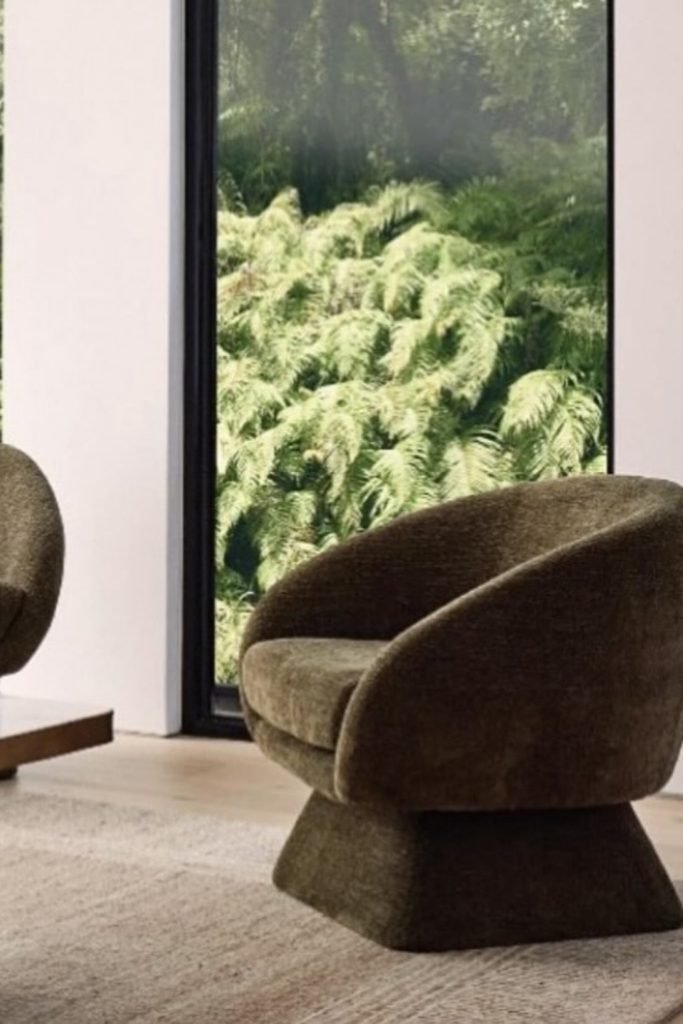
View Pair
Two matching swivel chairs near tall windows can share the same view while still turning inward when you want an easy conversation.
Angle them slightly toward the coffee table instead of lining them up flat, which keeps the seating area from feeling too formal.
A low profile is useful here because it protects the window sightline and lets greenery remain part of the living room.
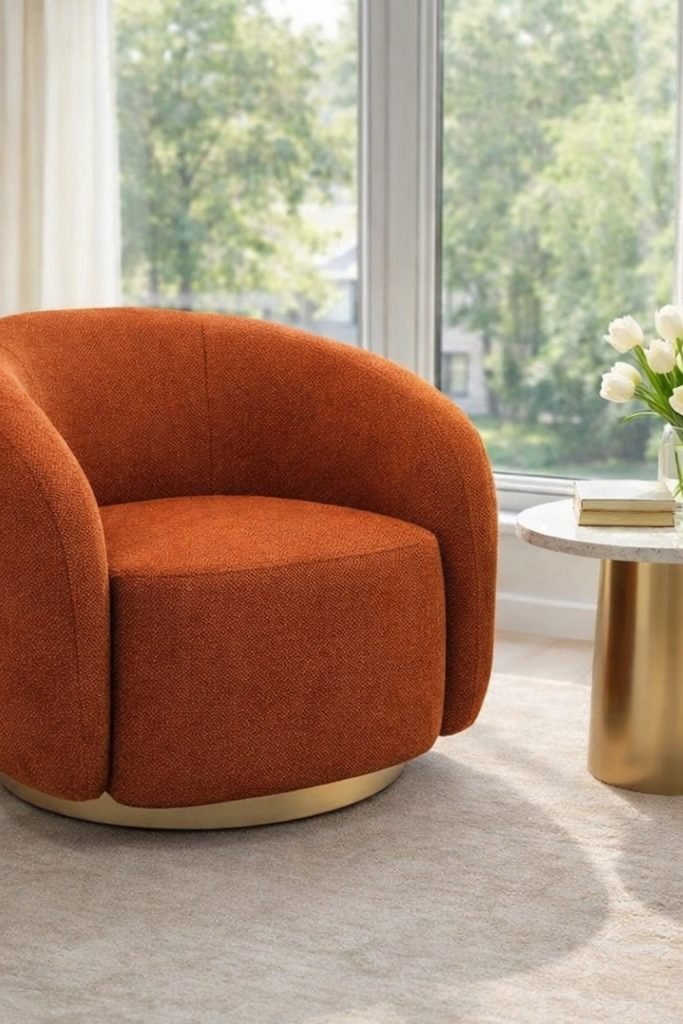
Orange Accent
One bold swivel chair is enough to break up a pale living room, especially when the sofa and curtains stay soft and neutral.
Use a warm orange like this near natural light, then keep the rug and side table simple so the color feels intentional.
Leave a little breathing room around the base, because a statement chair loses its purpose when nearby furniture limits its swivel.
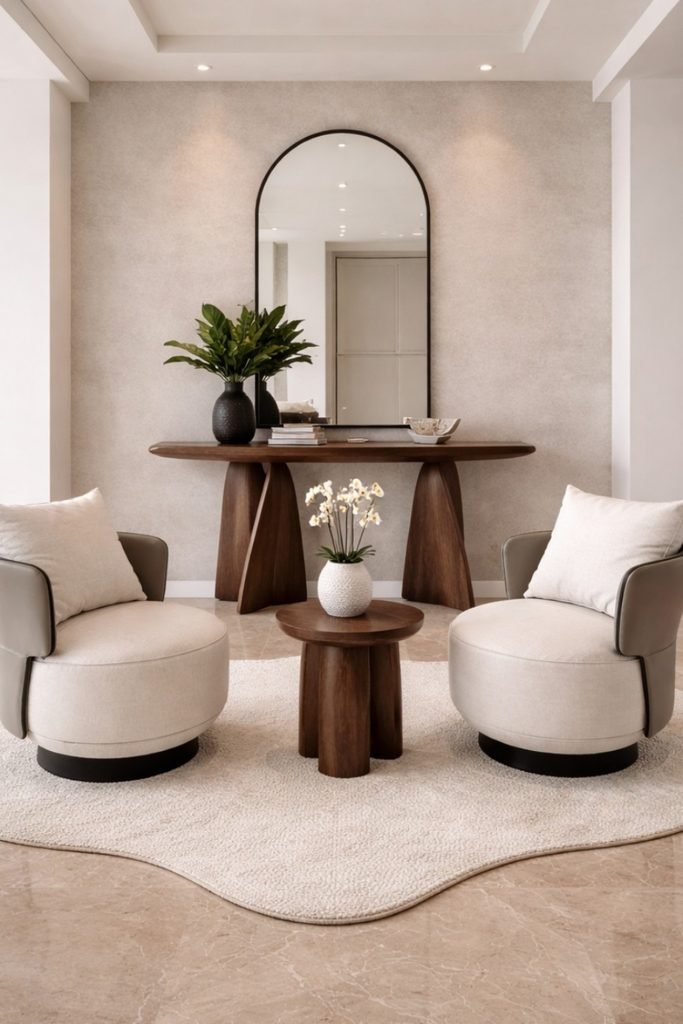
Balanced Pair
Two matching swivel chairs can turn an open living room corner into a proper conversation spot without adding another bulky sofa.
Place them on one shared rug with a small table between, so the setup feels connected instead of floating separately.
Keep enough room behind both chairs for turning, especially when a console, wall, or walkway sits close to the seating area.
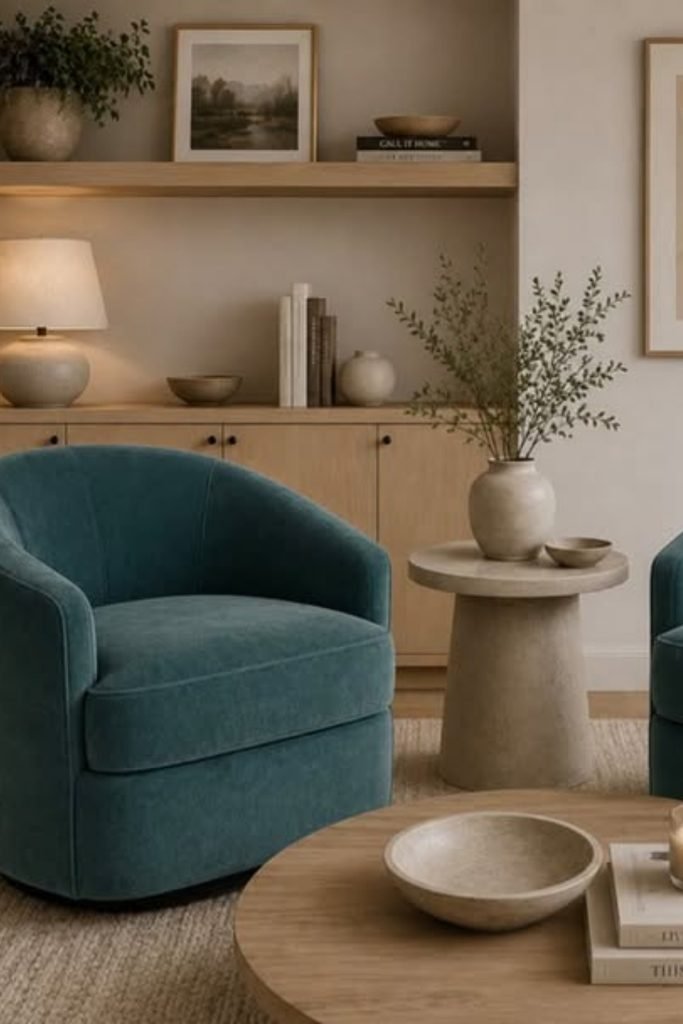
Color Pair
Matching teal swivel chairs are a smart way to bring color into a neutral living room while keeping the seating layout calm.
Use the same fabric on both chairs, then repeat softer green or blue touches elsewhere so the color feels planned.
A round table between them keeps drinks within reach and gives each chair more freedom to turn during conversation comfortably.
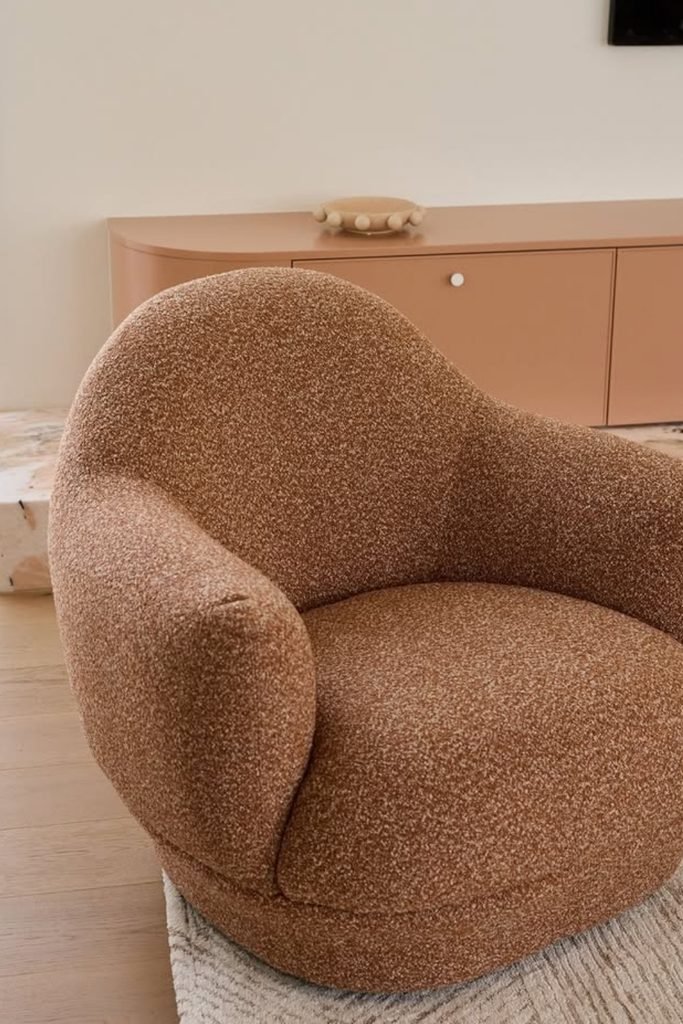
Soft Curves
A sculptural swivel chair can soften a room filled with straight cabinets, walls, and tables without needing extra decorative pieces around it.
Choose a rounded back and generous seat when the chair will sit alone, because its shape needs enough presence to feel intentional.
Let nearby furniture stay simple and low, then leave clear space around the base so the chair can rotate without catching anything.
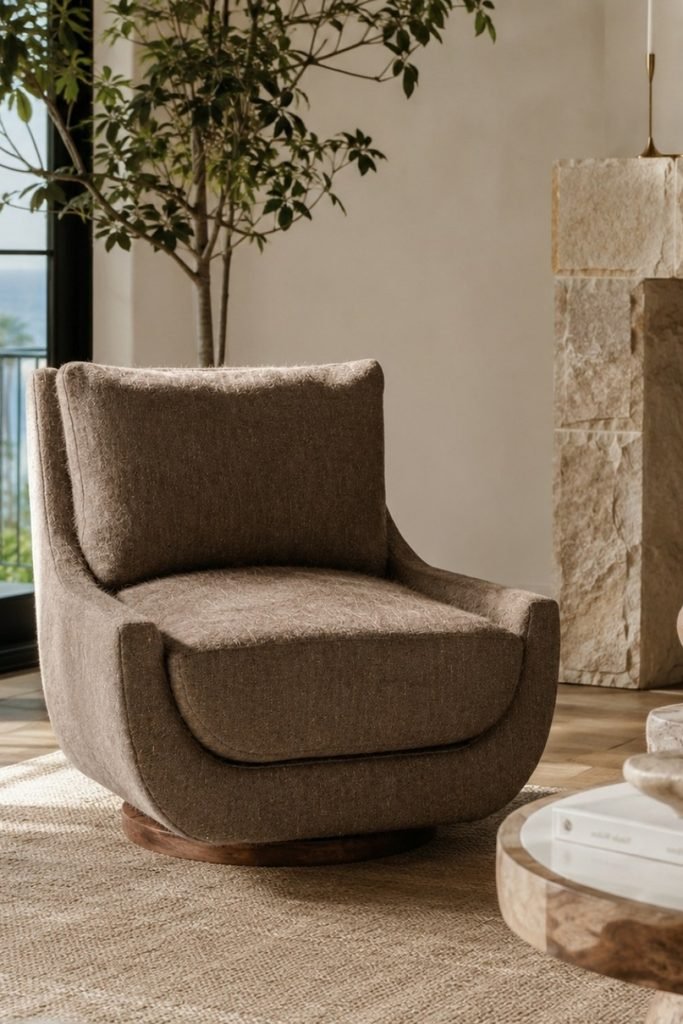
Dual View
This kind of swivel chair earns its place when your living room has two strong focal points, such as a fireplace and view.
Position it between both directions rather than facing one permanently, so you can turn toward the fire or window whenever needed.
A higher back also makes this setup better for longer sitting, while the warm neutral fabric keeps the chair visually quiet.
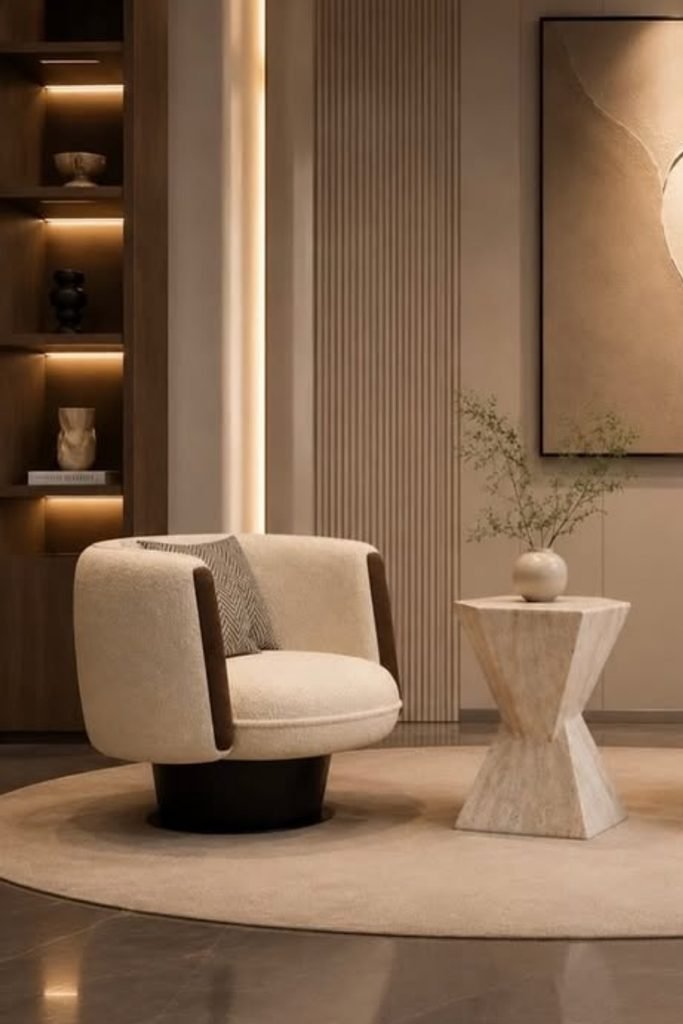
Conversation Pair
Two matching swivel chairs can create a polished conversation zone when you want extra seating without adding another full-size sofa nearby.
Center a small table between them and keep both chairs on one rug so the arrangement reads as one intentional group.
Leave clear turning space behind each chair, especially in open rooms where people still need an easy path around the seating.
Garden Turn
Dark swivel chairs work beautifully beside a bright window because the deeper upholstery gives the seating area stronger visual weight.
Place a slim drink table between the pair so both seats stay useful without crowding the view or limiting rotation.
This setup suits quiet conversation corners where you want the chairs to face inward, then swivel toward the garden when relaxing.

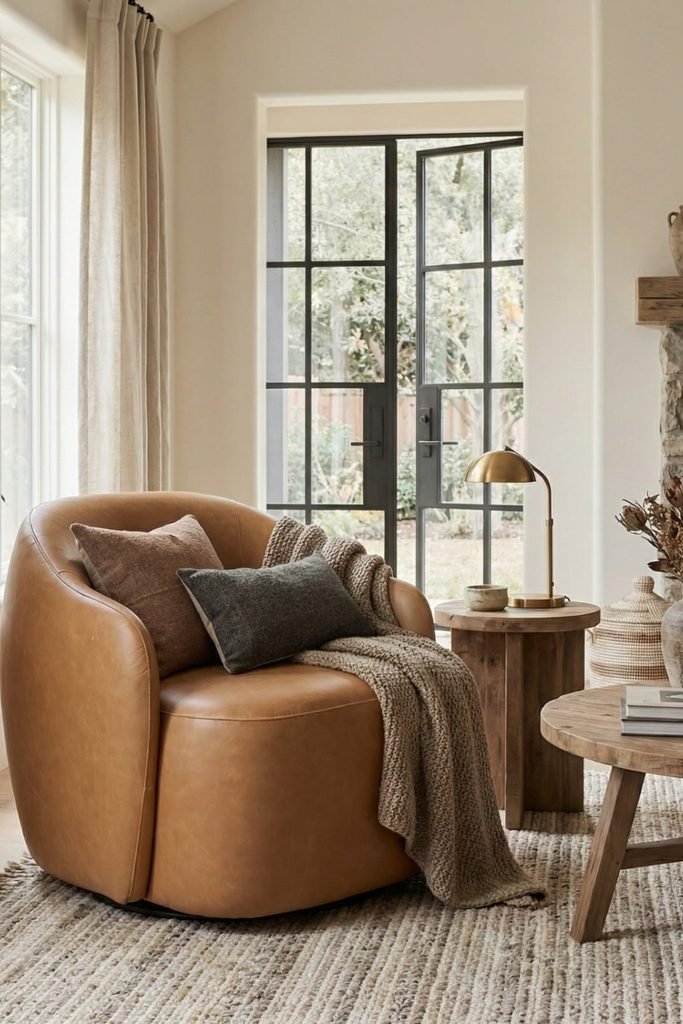
Leather Lounge
A large leather swivel can become the comfort seat in a living room when you want somewhere to read, lounge, or unwind.
Place it near both a window and fireplace so the chair can turn toward natural light or warmth throughout the day.
Keep nearby tables compact and easy to reach, because an oversized chair already takes enough floor space and needs room to rotate.
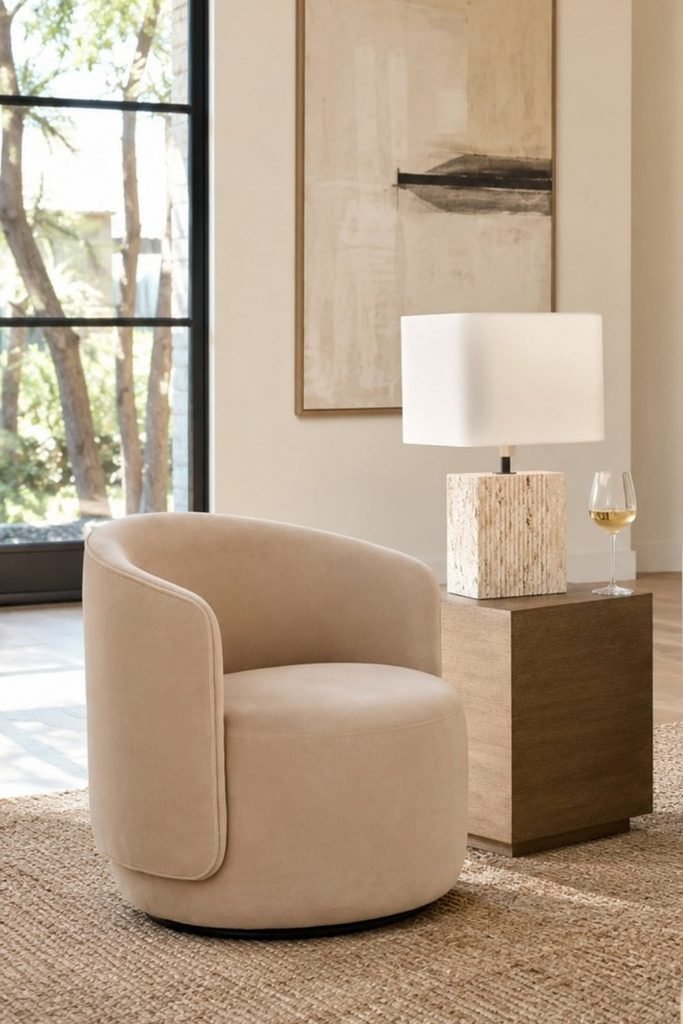
Neutral Pair
Two soft neutral swivels can fill an open side of the living room without making the layout feel heavy or closed.
Use a narrow pedestal table between them instead of a bulky side table, giving each chair more room to turn freely.
Keeping the upholstery close to the wall and rug tones makes the chairs blend in while their rounded shape adds gentle contrast.
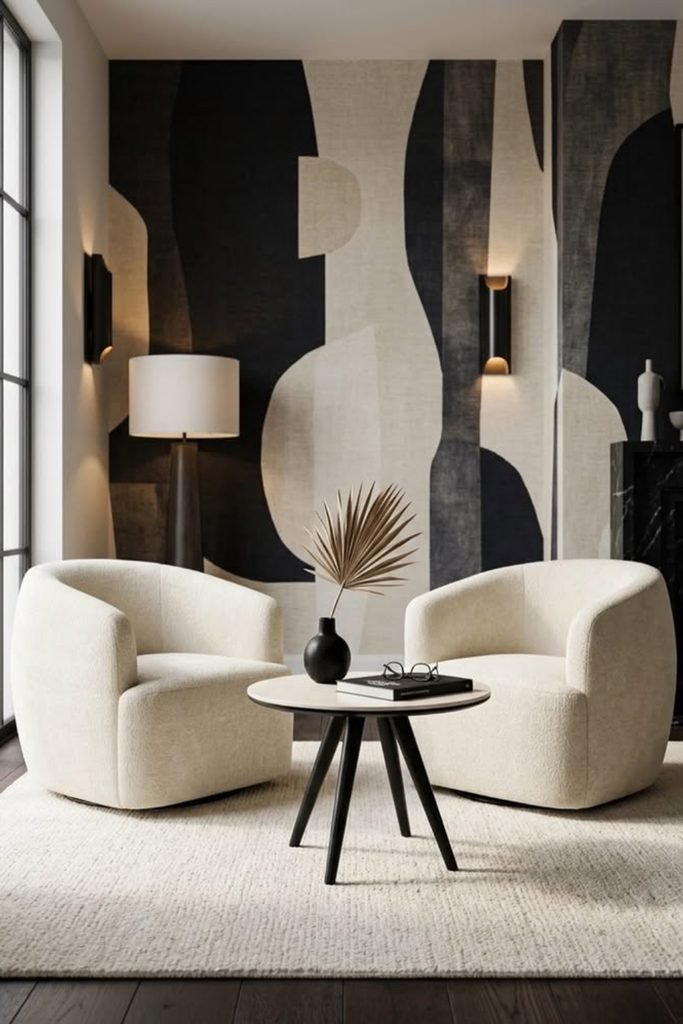
Graphic Pair
Bold wall art can carry the drama, so keep two swivel chairs light and simple when you want the seating area balanced.
Set the pair around a small round table, then let the chairs face inward while still leaving enough room to turn.
This works especially well in modern living rooms where strong black accents need softer furniture to stop the space feeling too heavy.
Stone Corner
A swivel chair beside a stone fireplace gives you one seat that can face the fire, coffee table, or nearby conversation area.
Choose warm neutral upholstery here because it connects easily with natural stone, wood tones, and the softer colors already in the room.
Keep the table low and slightly forward so the chair can rotate without catching its edge when you change direction.
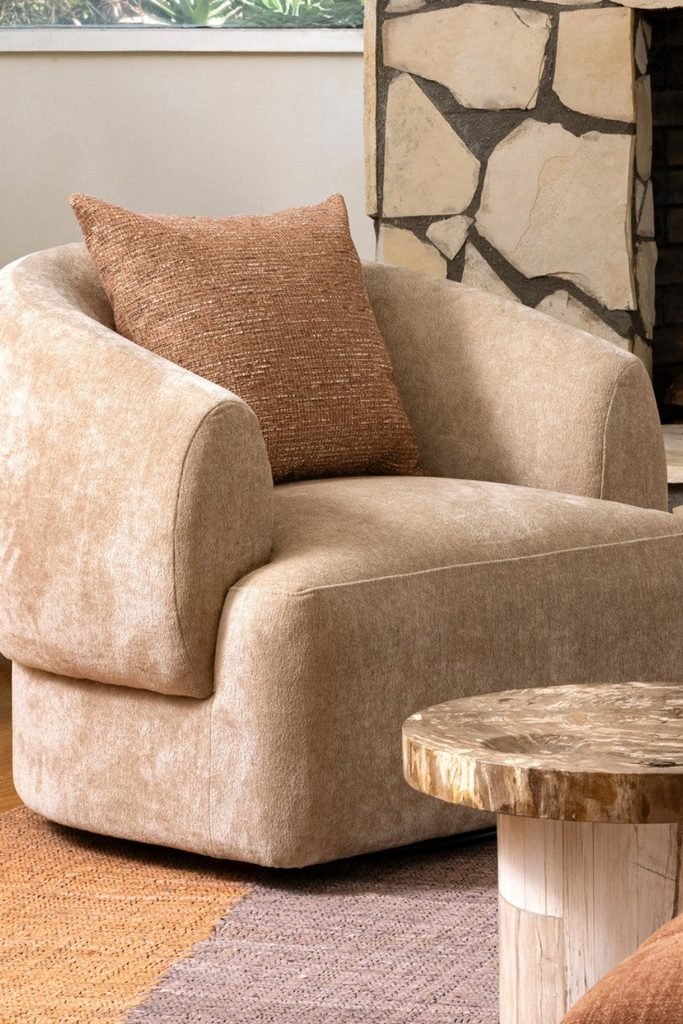
Fireplace Lounge
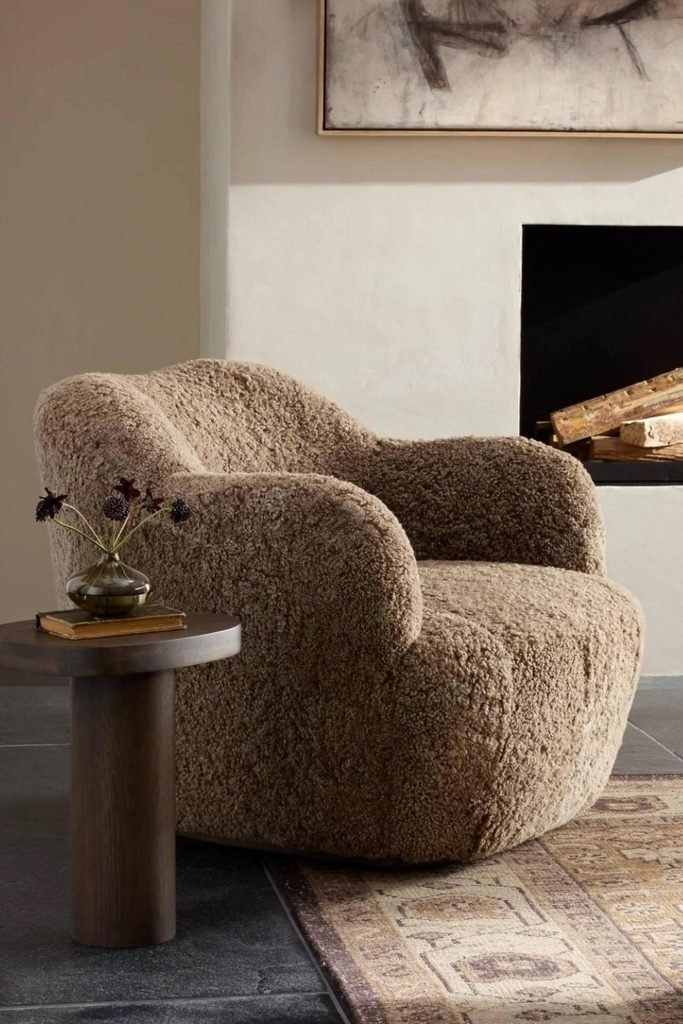
A deep textured swivel near the fireplace turns an empty side of the room into a comfortable spot for longer sitting.
Use a wider seat and supportive back when this chair will handle reading or relaxing, not just occasional conversation with guests.
Place the side table within reach but outside the turning path, then let the fireplace remain the main visual anchor.
Classic Balance
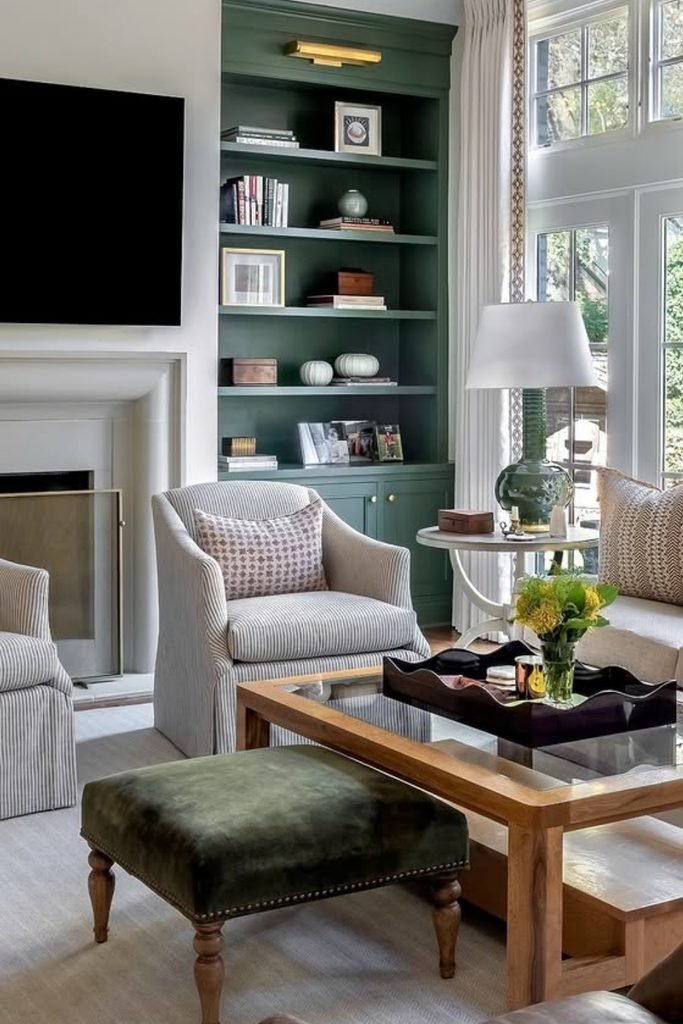
Traditional living rooms can use swivel chairs without looking modern, especially when the upholstery has stripes, piping, or a tailored shape.
Place one near the sofa to close the seating area, while keeping enough space to turn toward the television or fireplace.
Repeat one fabric color through pillows or nearby decor, so the chair feels connected without matching every other seat exactly.
Brown Anchor
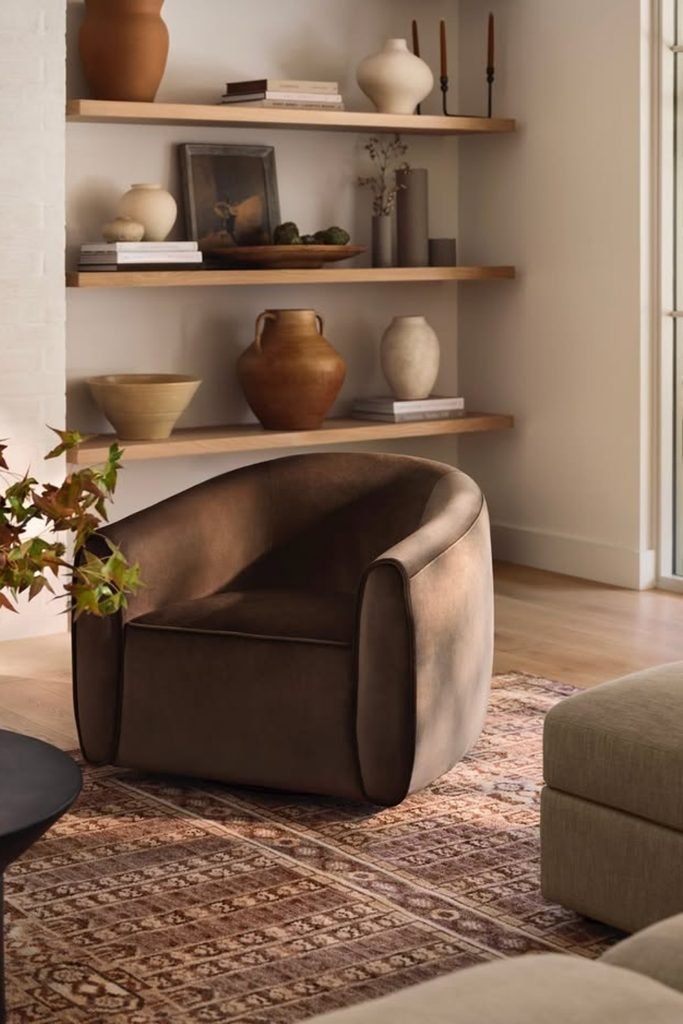
A warm brown swivel chair can ground a pale living room when the sofa, walls, and shelves already lean light and neutral.
Set it slightly away from the shelving so the chair feels connected to the room without making the corner look packed.
A patterned rug underneath helps tie the darker upholstery into the seating area while keeping the chair easy to turn.
Lounge Swivel
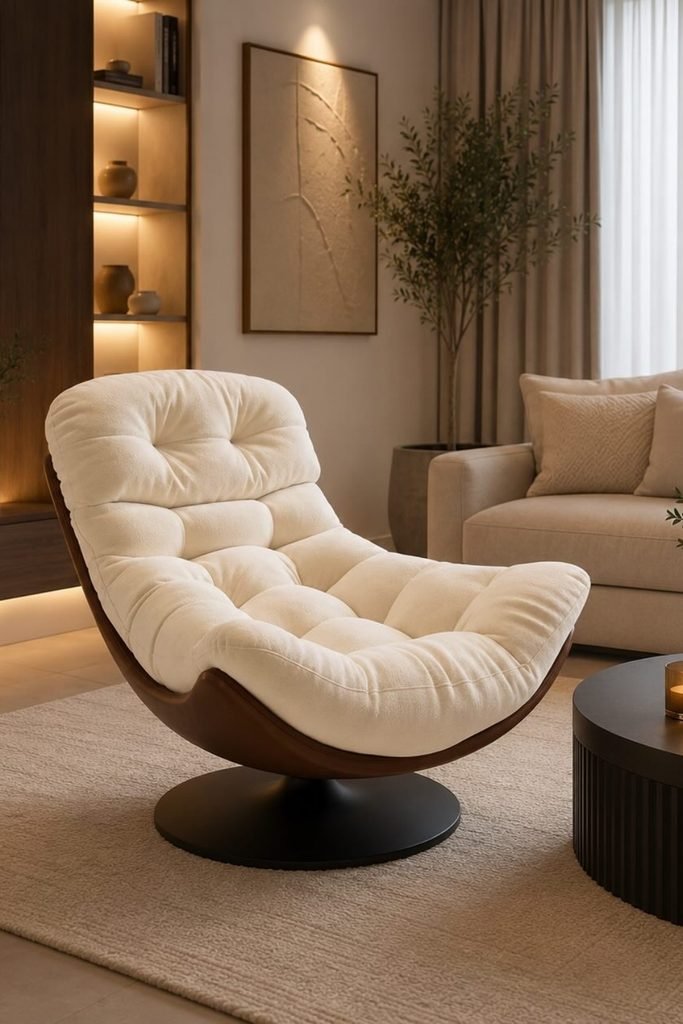
This oversized swivel works best when you want one seat to handle long lounging, reading, and TV time without adding a recliner.
Give the curved base more breathing room than a standard accent chair, because the wide shell needs space to rotate comfortably.
Keep the nearby coffee table low and rounded, then let the sofa stay simple so the chair remains the comfort piece.
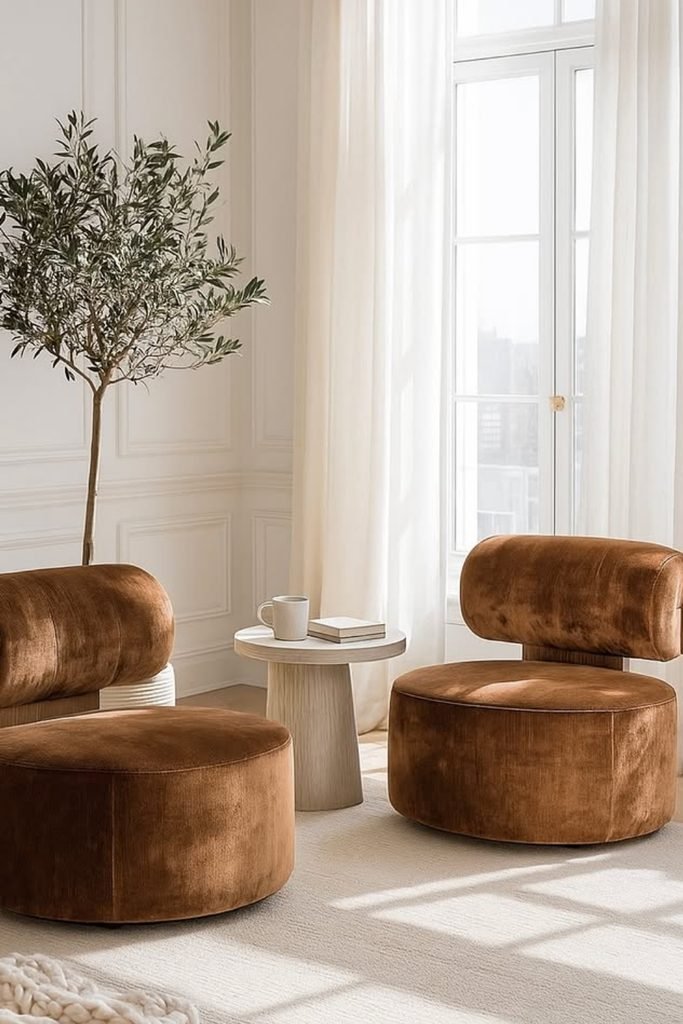
Velvet Pair
Two low swivel chairs can fill a bright formal room without covering tall windows or making the seating area feel visually heavy.
Choose warm velvet or suede-like upholstery when the walls are pale, because the richer tone gives the pair enough presence.
Place a small table between them and keep both bases fully on the rug so the arrangement stays balanced and easy.
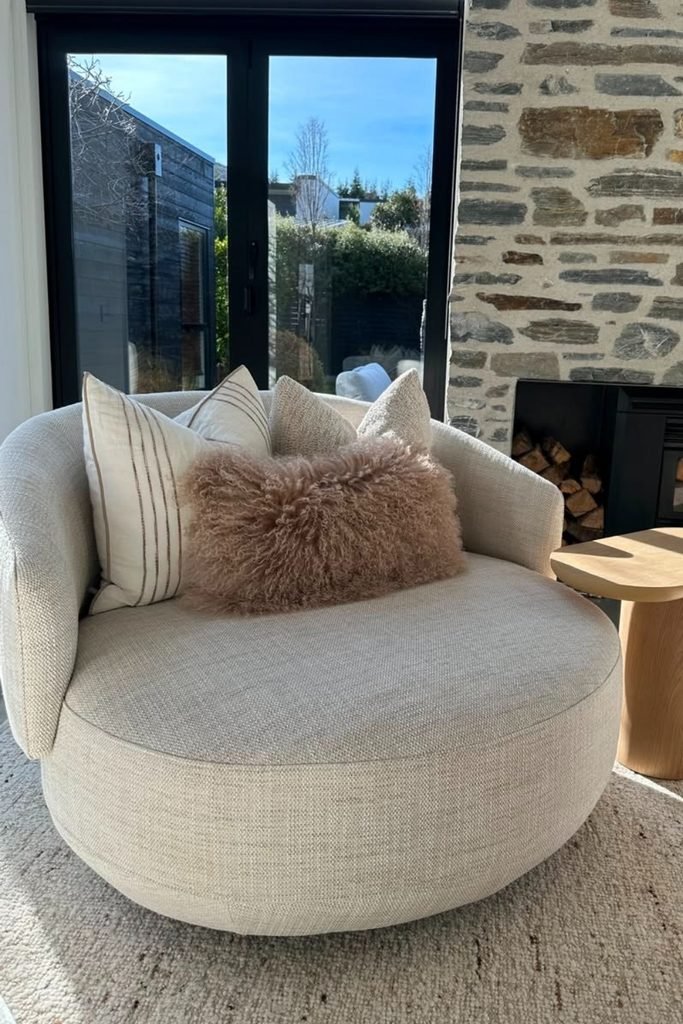
Oversized Nest
A roomy round swivel makes sense beside a fireplace when you want one deep seat for curling up without using a loveseat.
Pull it far enough from the hearth and side table to protect the turning path, especially with such a wide base.
Layering several soft pillows makes the oversized chair better for lounging, while the light upholstery keeps its bulk from dominating the room.
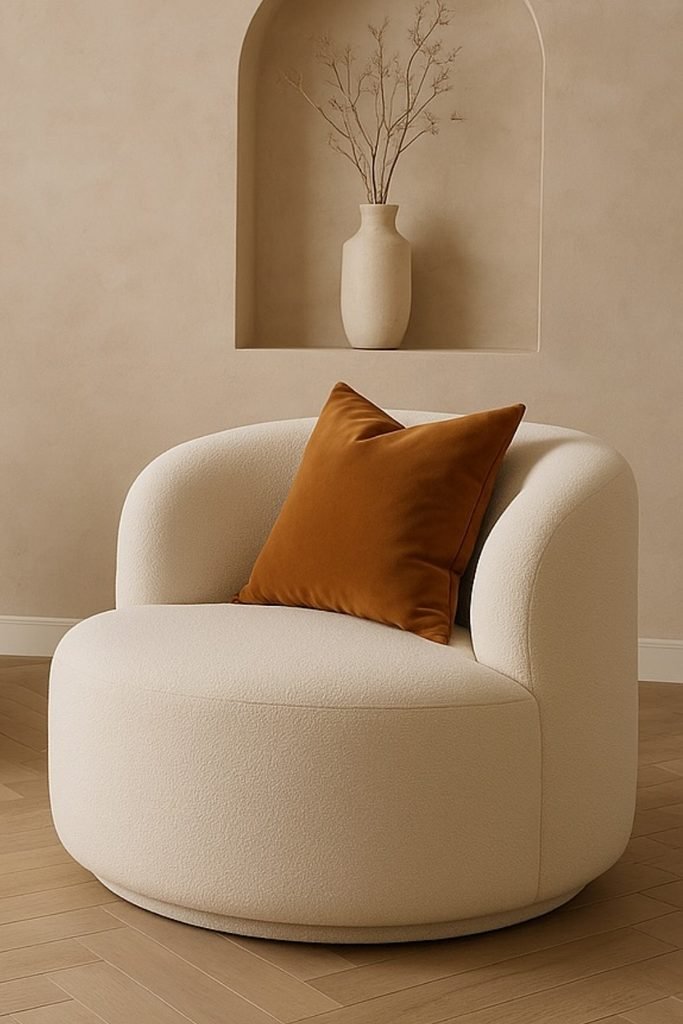
Warm Pair
Two cream swivel chairs work beautifully in a warm neutral room when you want extra seating without making the space feel crowded.
Add rust-colored pillows to break up the pale upholstery, then repeat warm wood nearby so the chairs feel tied into the room.
Keep the coffee table low and rounded, and leave open space around both bases so each chair can swivel freely.
FAQs
How Much Space Does a Swivel Chair Need?
A swivel chair needs enough open space around its widest point to turn without hitting the sofa, wall, table, or fireplace.
Before buying, mark the chair footprint with painter’s tape, then check whether the back and arms have room to rotate.
This quick test helps you avoid a chair that technically fits the floor space but becomes awkward once you actually use it.
Should Swivel Chairs Match the Sofa?
No, swivel chairs do not need to match your sofa; they usually look better when the pieces coordinate instead of copying each other.
Repeat one color, wood tone, or fabric texture elsewhere in the room so the chair still feels connected to the overall setup.
A curved chair beside a boxy sofa or leather beside linen can create contrast without making the living room feel mismatched.