Terracotta looks easy to love until you actually try bringing it into your living room.
Paint too much of it and the room can turn dark or overly orange; play it too safe and that warm clay color barely makes an impact.
The real trick is knowing where to use terracotta and what to put around it.
You can build the room around a terracotta wall or sofa, or simply bring the color in through rugs, curtains, and smaller details.
In this article, you’ll find terracotta living room ideas that show how to balance the color.
Let’s jump in!
Which Color Is Best for Terracotta?
Cream and warm white are the easiest colors to pair with terracotta because they soften its orange-red warmth without making your living room feel dull.
If you want more color, try sage or olive green; both create an earthy contrast and work especially well with wood furniture and plants.

Navy or deep teal gives terracotta a stronger contrast, so use these when you want the room to feel richer rather than completely neutral.
Beige and light brown also work, but add cream or another lighter shade so everything does not blend together.
If terracotta covers your walls or sofa, keep most surrounding colors quieter. If you only use terracotta as an accent, you can bring in stronger greens, blues, or darker wood tones.
Olive Meets Terracotta
Terracotta walls become much easier to live with when you cool their warmth using a muted olive sofa instead of adding more brown or orange.
Natural wood keeps both earthy colors connected, while a light neutral rug stops the lower half of the room from feeling heavy.
Try this pairing in a living room with good natural light, and repeat the terracotta only through one or two smaller accents rather than matching everything to the walls.

Layered Desert Warmth
Lean into terracotta when you want the living room to feel cozy rather than bright and minimal.
Textured clay walls work especially well with woven lighting, rattan furniture, patterned textiles, and exposed dark wood because those materials make the color feel natural instead of overly orange.
Keep a few plants and lighter woven details around the room to break up the deeper tones, especially if your space gets limited daylight.

Terracotta in Layers
You don’t need terracotta walls to make the color noticeable. Start with a cream base, then repeat muted clay tones through the rug, cushions, and artwork so the warmth travels around the room naturally.
Dark wood tables give these softer shades more depth, while greenery adds enough contrast to keep the palette fresh.
This approach works especially well in modern living rooms where you want terracotta without committing to a bold paint color.

Color Drenched Clay
Take terracotta beyond a feature wall when you want a living room to feel intentionally bold and cozy.
Carrying the same clay tone onto the ceiling wraps the space in color, while deep green and blue seating gives your eyes a strong break from all that warmth.
Keep the coffee table lighter and artwork slightly muted so the room still has breathing space. This works especially well in rooms with tall windows and plenty of daylight.

Terracotta Through Textiles
A terracotta living room can stay light and colorful without putting clay tones on the walls.
Let a faded terracotta rug cover the larger area, then pull small touches of its color into cushions and nearby seating.
Cream upholstery keeps the palette from becoming busy, while olive green and deep blue add contrast.
Blue Breaks Warmth
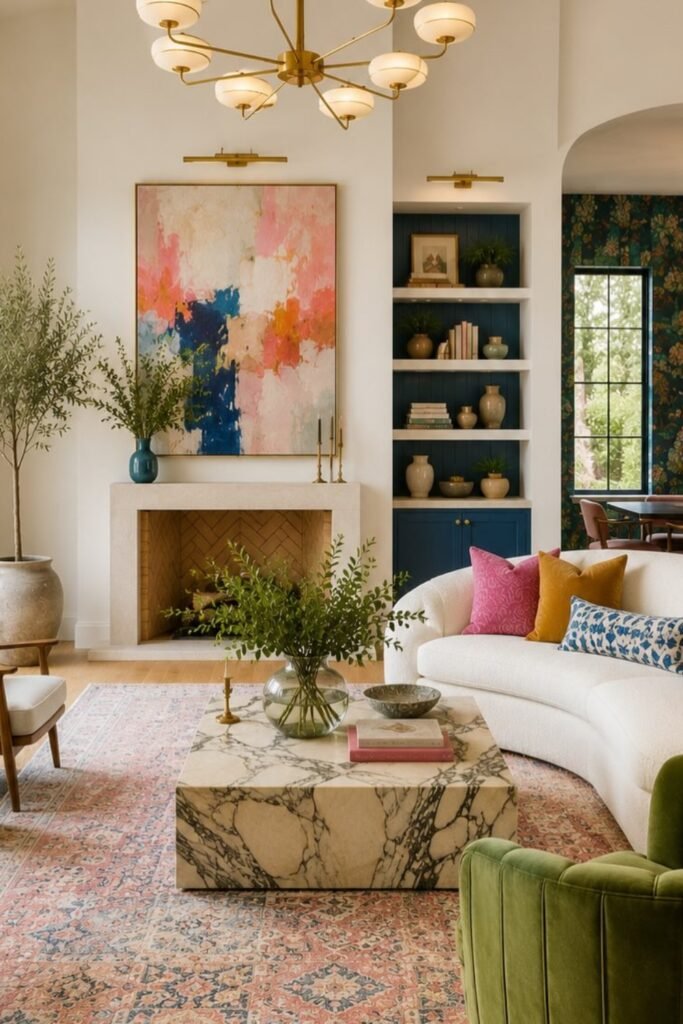
Deep blue seating is a smart counterweight when terracotta already appears across curtains, chairs, artwork, and the rug.
Rather than matching every warm piece, bring in one large cool-toned sofa to give the palette a clear focal point.
Olive seating adds another earthy layer without competing with either color.

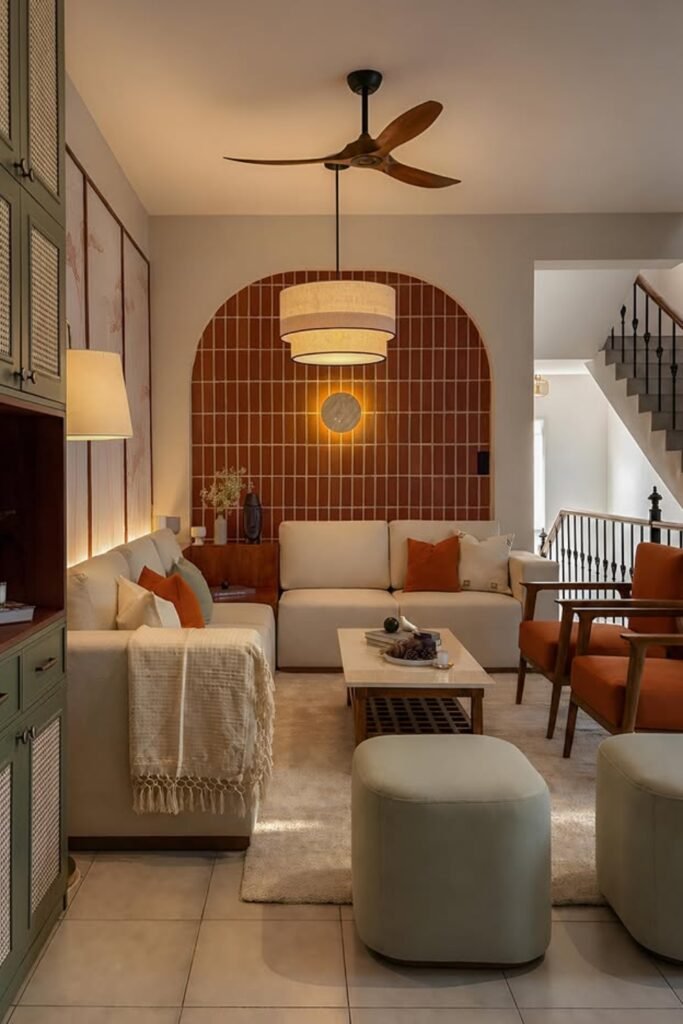
Terracotta Tile Nook
A tiled terracotta feature can give you stronger texture than paint while keeping the color limited to one clear focal point.
Framing the tile inside an arch makes it feel built into the room rather than added later.
Keep the main sofa cream, then echo the clay shade through a couple of cushions or accent chairs.
Clay Accent Seating
Let terracotta live in the furniture when you want warm color without changing the walls.
A rust-toned lounge chair and a few clay cushions bring enough warmth to an olive sofa, while walnut furniture ties both colors together through its reddish-brown grain.
Keep the rug and walls light so these earthy shades do not make the room feel heavy.

Terracotta Takes Center
One terracotta sectional can carry the whole color scheme when the rest of your living room stays soft and neutral.
Surround a large clay-colored sofa with warm white walls, a cream rug, and pale stone or wood tables rather than repeating terracotta everywhere.
This works particularly well in modern minimalist rooms because the sofa supplies the warmth that an otherwise neutral space can lack.

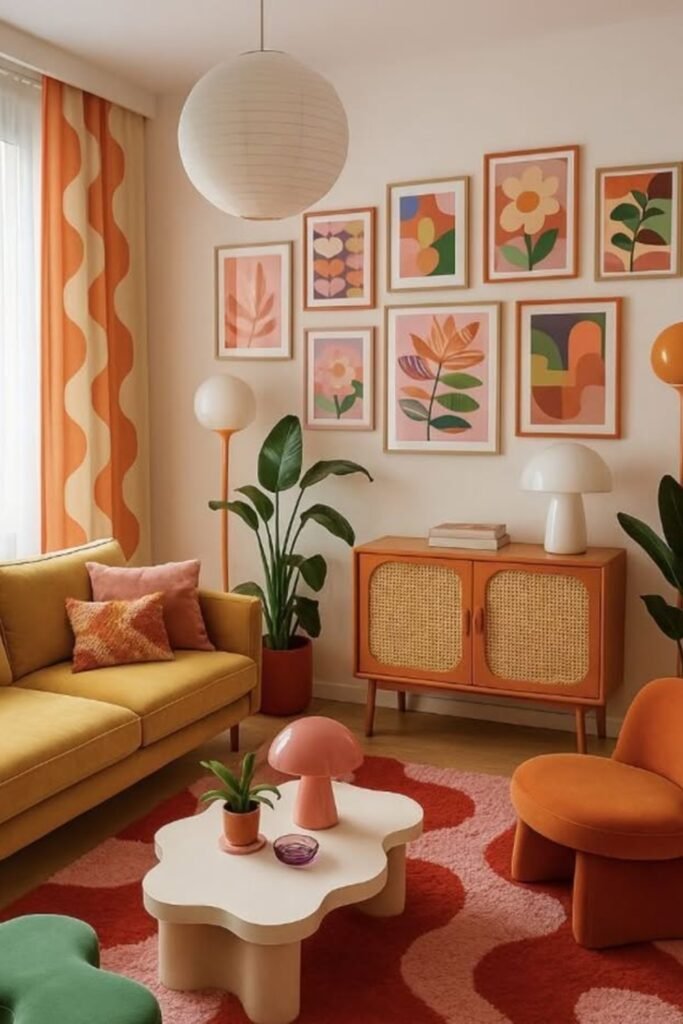
Playful Terracotta Mix
Terracotta does not always need an earthy, muted setting. Pair it with mustard, soft pink, and small touches of green when you want a brighter retro-style living room.
Keep the walls creamy so the stronger colors can come through furniture, curtains, rugs, and artwork without overwhelming the space.
Repeating clay-orange in different shades rather than one exact match also makes the room feel collected and playful instead of overly coordinated.
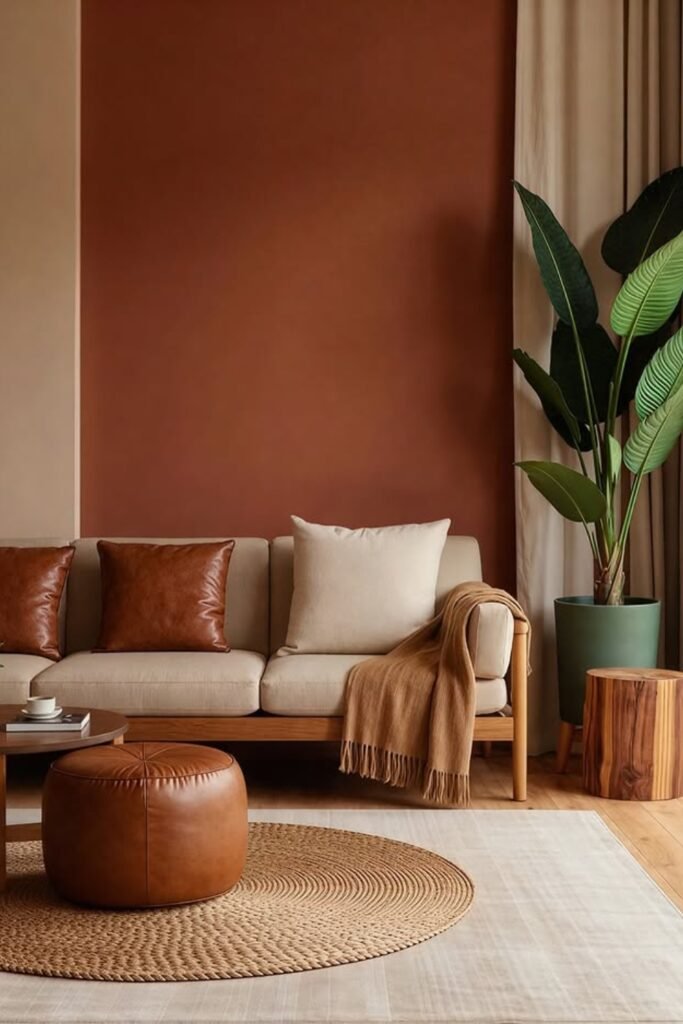
Grounded Accent Wall
A deep terracotta feature wall gives you plenty of warmth without forcing the color onto every surface.
Balance that stronger backdrop with a cream sofa and light curtains, then use cognac leather and natural wood to bridge the warm shades instead of matching the paint exactly.
A tall green plant adds the contrast this palette needs. Try this approach when you want one wall to carry the room while the remaining space stays calm and neutral.
Navy Grounds Terracotta
Strong terracotta walls can handle darker contrast when the room has enough natural light.
A navy built-in breaks up the warm backdrop, while olive seating and cream upholstery keep the palette from leaning too orange or too dark.
Repeat terracotta through just a few cushions and one soft ottoman, then let dark wood ground the lower half.

Terracotta Built Ins
Built-in cabinetry is a smart place to use deep terracotta when painting every wall feels like too much.
The larger cream sectional softens that darker clay tone, while rust cushions pull a little of the cabinet color into the seating area.
Natural wood and a woven rug keep the transition warm without adding another strong shade.

Painted Terracotta Arch
A painted arch gives terracotta a clear boundary, making it perfect when a full accent wall feels too heavy.
Center it behind the sofa so the shape works almost like an oversized piece of artwork, then leave the surrounding walls warm white for contrast.
A light sofa keeps the deeper clay shade from dominating, while striped cushions, woven textures, and pottery repeat its warmth in smaller doses.

Sculpted Terracotta Wall
Terracotta feels much more modern when the wall gets texture instead of relying on color alone.
A large sculpted arch gives the clay finish depth, while olive seating cools the warmth and dark walnut furniture adds definition.
Keep the rug light and fairly simple so the stronger wall and furniture have room to stand out.

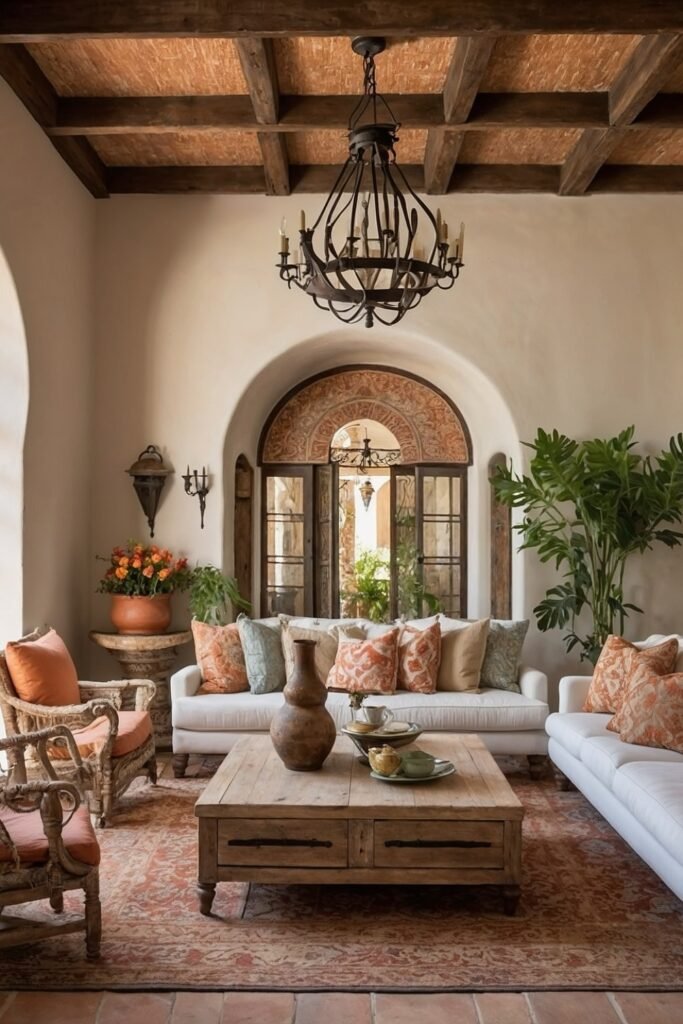
Mediterranean Clay Accents
Let the architecture stay light when your living room already has dark beams, rustic wood, or other strong details.
Terracotta works beautifully here in smaller doses through patterned cushions, chair upholstery, pottery, and a faded rug rather than another painted wall.
White sofas give those earthy accents plenty of contrast, while touches of soft green keep the palette from becoming too warm.
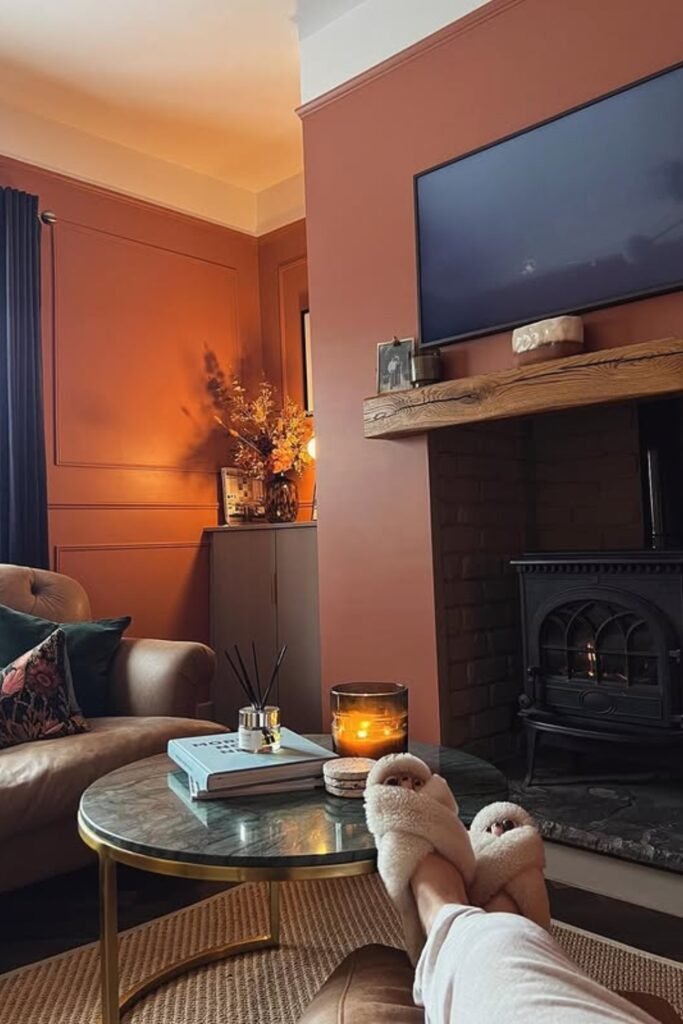
Fireplace Wrapped Terracotta
A fireplace wall is a natural place to go heavier with terracotta because it already acts as the room’s focal point.
Carry the clay shade across nearby paneled walls for a cozy, connected look, then use black around the fire and through curtains to sharpen the warm palette.
Brown leather works well here because its deeper tone adds warmth without trying to match the paint. Keep the ceiling light so the darker colors don’t close in the room.
Olive Frames Terracotta
Terracotta walls feel richer when olive green is used on the architectural details instead of appearing only in small accessories.
Carry the green onto the ceiling, trim, fireplace, and chairs to give the warm walls a strong boundary, then bring in a light sofa so the room still has breathing space.
A terracotta ottoman can repeat the wall color at floor level, while brass adds a cleaner finish.

Terracotta Statement Wall
Give one large wall the full terracotta treatment when you want strong color without making every side of the room equally warm.
A long cream sectional creates enough light contrast to handle that saturated backdrop.
While the oversized terracotta coffee table carries the color forward without needing lots of small matching accessories.

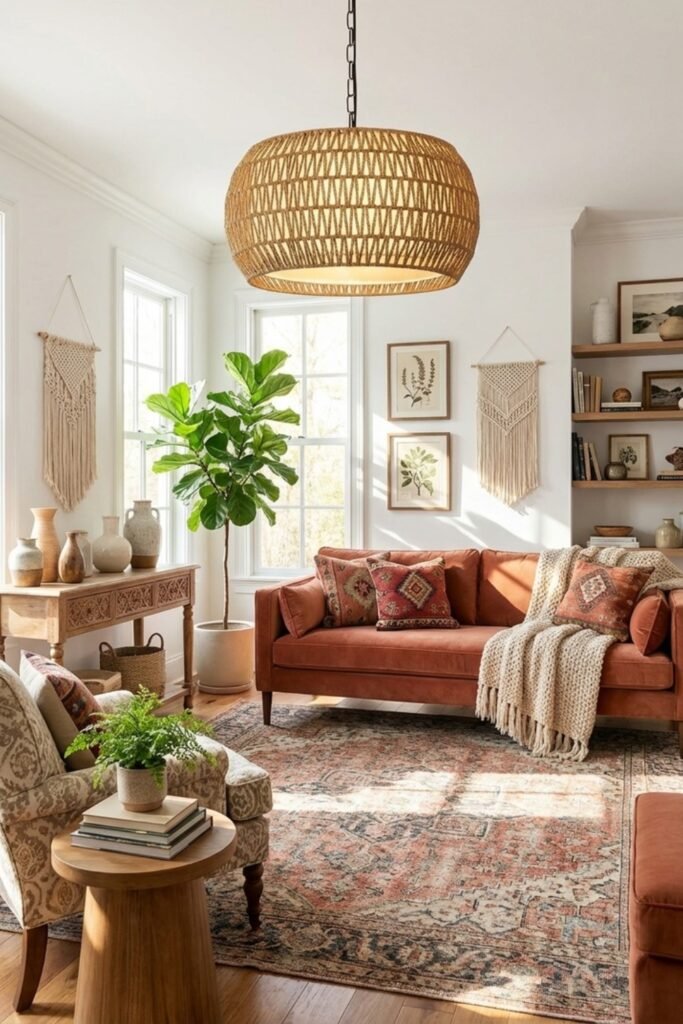
Terracotta Sofa Anchor
Keep the walls bright when you want a terracotta sofa to become the main source of warmth in the living room.
Patterned cushions and a faded rug can repeat clay tones without looking matched, while woven lighting, pale wood, and cream textiles soften the stronger upholstery.
Greenery adds a fresh break from all those warm shades. This setup is especially useful in smaller or naturally bright rooms where terracotta walls might feel like too much commitment.
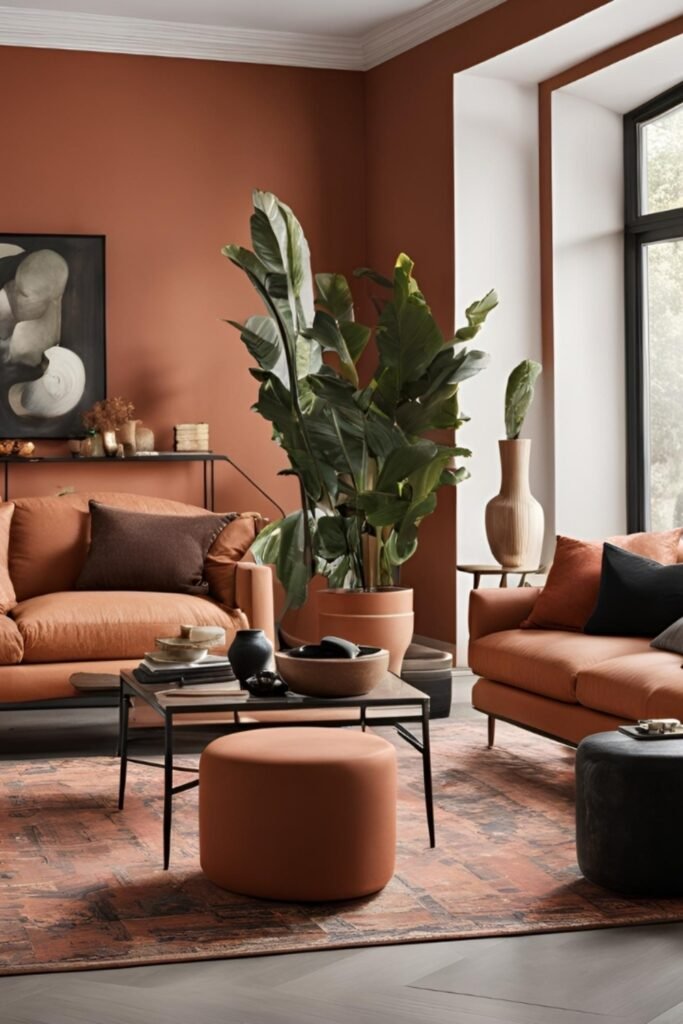
Terracotta Goes Tonal
Going all-in on terracotta can work when you deliberately vary the shade instead of matching everything exactly.
Use a deeper clay tone on the walls, slightly lighter terracotta sofas, and a faded patterned rug to create separation between each layer.
Black tables, cushions, and window frames are important here because they cut through the warmth and give the room sharper definition.
Simple Terracotta Backdrop
A single terracotta wall can warm up an everyday living room without requiring new furniture or a full redesign.
Keep existing cream or light gray seating, then bring in pale wood furniture to stop the clay backdrop from feeling too dark.
Green plants work as an easy contrast and also fill empty corners without adding another decorating color.

FAQs
Does Terracotta Make a Living Room Look Dark?
It can if you use a deep terracotta shade across several walls in a room with limited daylight.
If you want to keep the space brighter, pair terracotta with cream furniture, light rugs, pale wood, and warm white walls or ceilings.
You can also limit the color to one feature wall instead of covering the entire room.
How Do You Make Terracotta Look Modern?
Keep the furniture simple and avoid filling the room with too many rustic accessories.
Pair terracotta with cream, olive, black, dark wood, or clean neutral finishes, then use a few larger pieces instead of lots of small decor.
Modern lighting and simple artwork can also stop terracotta from leaning too traditional or heavily boho.