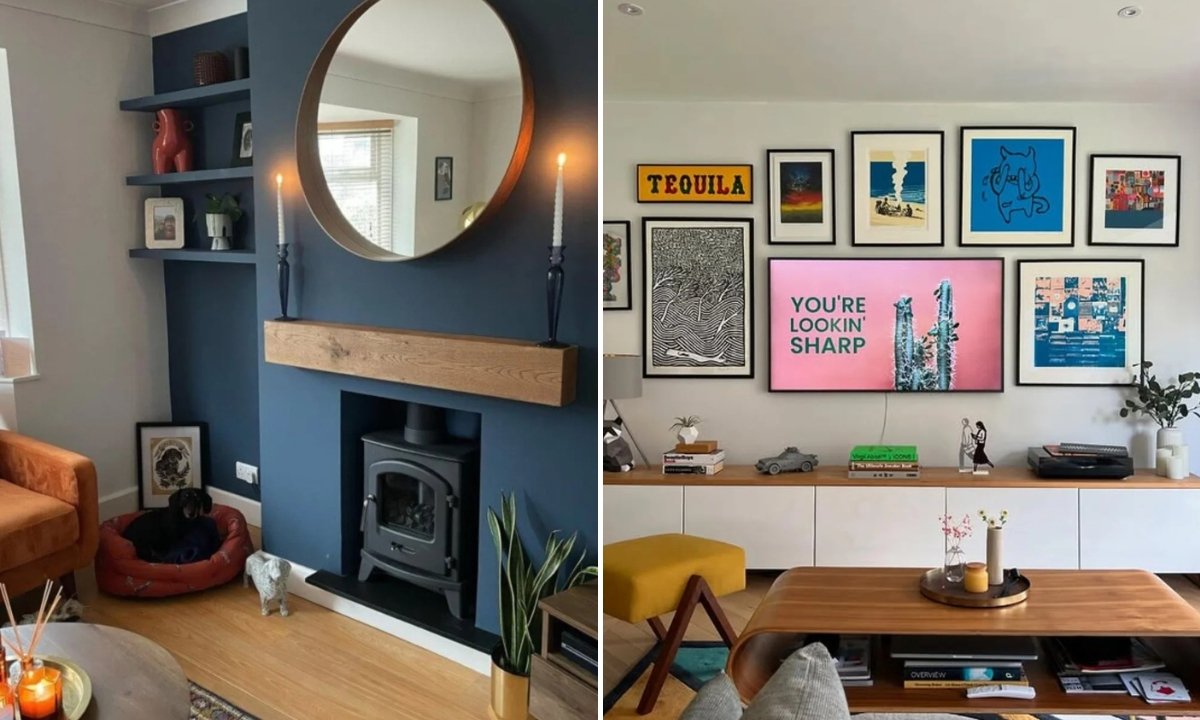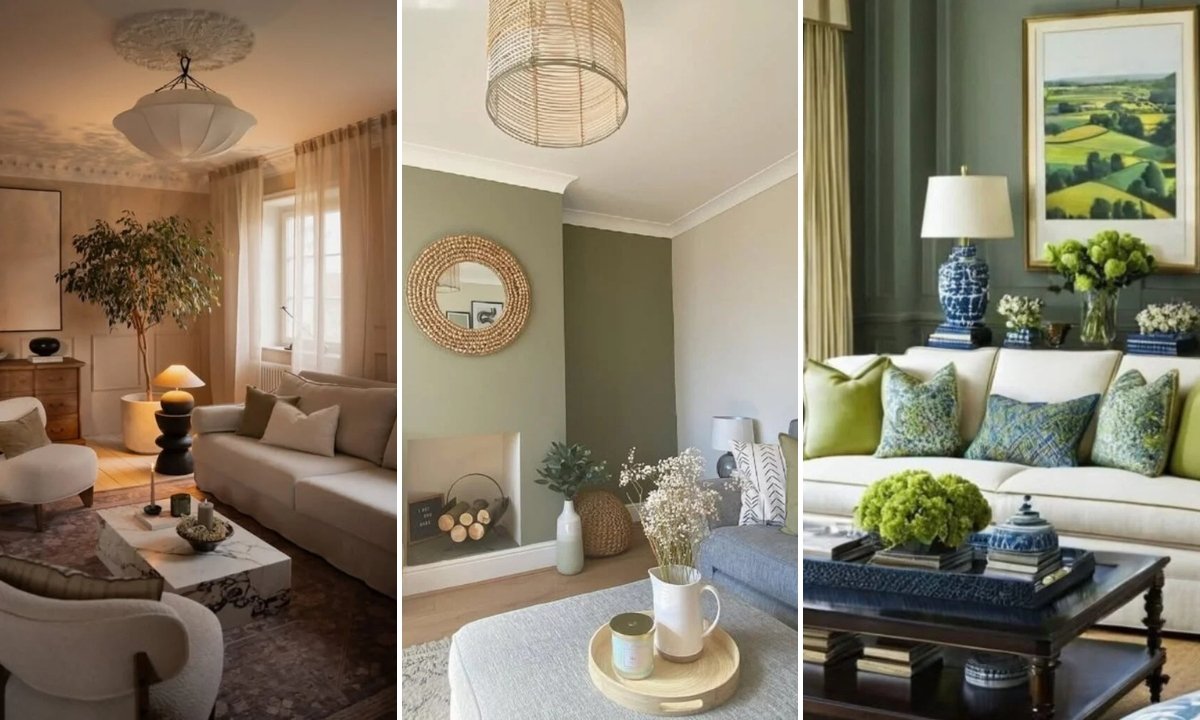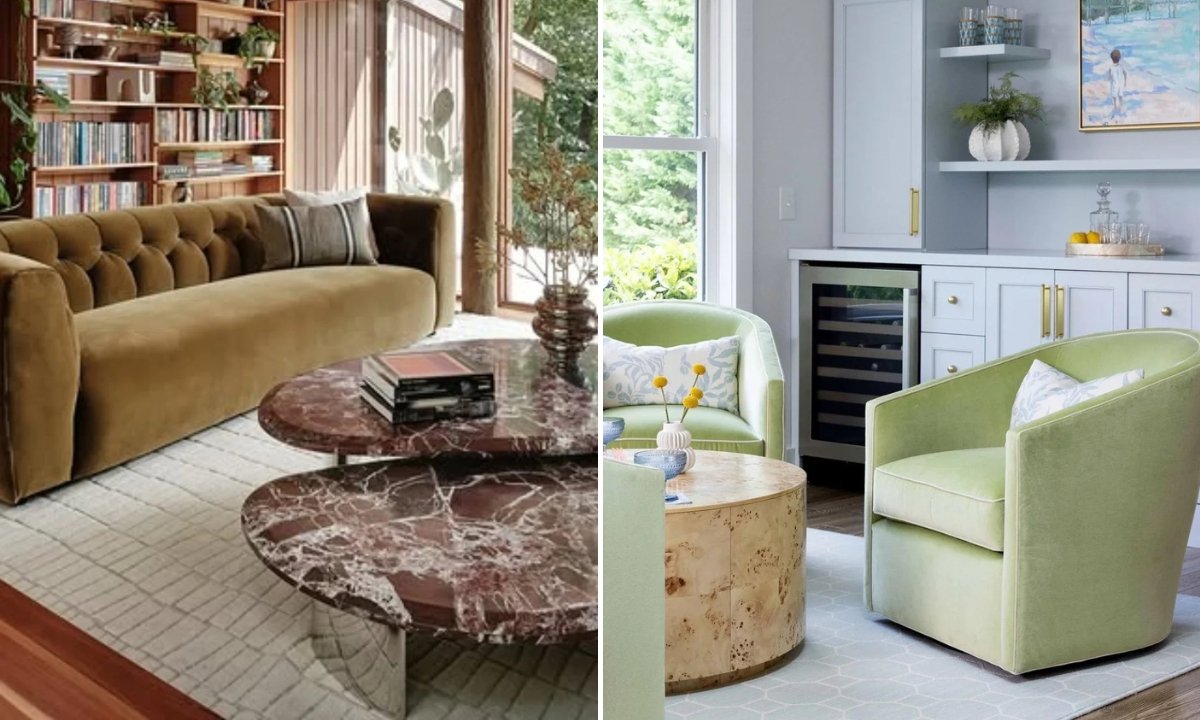

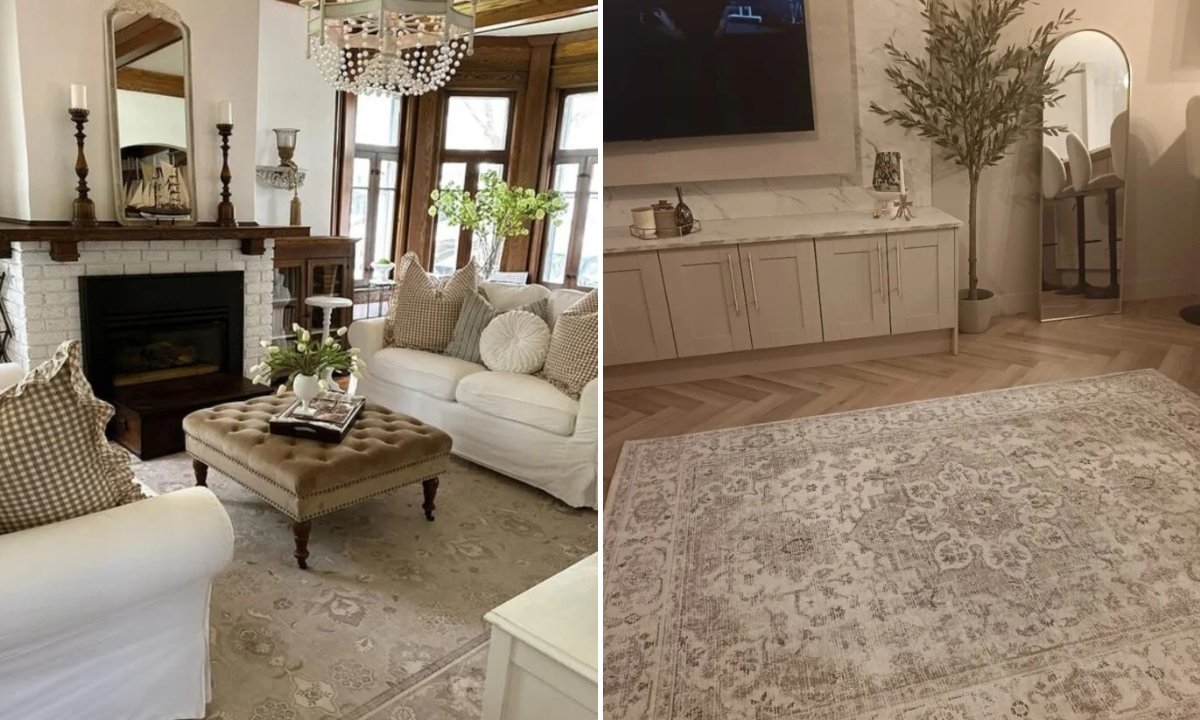
Your living room can have a nice sofa, a good coffee table, and beautiful decor, but if the rug sits in the wrong place, the whole room can still feel off.
Maybe the rug looks too small. Maybe the sofa feels separate from the chairs. Or maybe the room looks unfinished even after you tried to style it.
That usually happens because the rug is not connecting the seating area.
A living room rug should not float alone under the coffee table. It should help pull the sofa, chairs, and table into one clear zone.
In this article, you will learn the simple living room rug placement rules that help your space feel balanced, connected, and easier to use.
Let’s jump in!
Table of Contents
- Why Rug Placement Matters in a Living Room?
- 8 Rules Of Rug Placement
- 1. Keep the Front Legs of Furniture on the Rug
- 2. Choose a Rug Bigger Than Your Coffee Table Area
- 3. Leave Floor Space Around the Rug
- 4. Center the Rug Around the Seating Area
- 5. Make Sure the Rug Fits the Sofa Width
- 6. Keep Walkways Clear
- 7. Use One Rug to Define the Living Room Zone
- 8. Avoid Tiny Rugs in Large Living Rooms
- How Rug Placement Changes the Look of Your Living Room?
- What to Do if Your Rug Looks Too Small?
- Conclusion
Why Rug Placement Matters in a Living Room?
Rug placement matters because it can change how your whole living room feels.
Even if your sofa, chairs, and coffee table look nice, the room can still feel unfinished when the rug sits in the wrong spot.
A rug should not look like a small piece floating in the middle of the floor. Its main job is to connect the seating area.
When the sofa, chairs, and coffee table relate to the same rug, the room feels more planned and balanced.
If your rug only sits under the coffee table, it can make the furniture feel separate.
The sofa may look pushed away, the chairs may look random, and the room may feel smaller than it really is.
Good rug placement helps your eye understand the layout. It shows where the living room zone starts and ends, especially in open spaces.
It also makes the seating area feel warmer and more comfortable.
So before you focus on color or pattern, check the placement first. A simple shift forward or a larger rug can often fix the room faster than adding more decor.
8 Rules Of Rug Placement
Following are the 8 rules of rug plaement.
1. Keep the Front Legs of Furniture on the Rug
The easiest rule to follow is the front-legs rule. Place at least the front legs of your sofa and chairs on the rug.
This helps connect the seating area instead of making the rug look separate from the furniture.
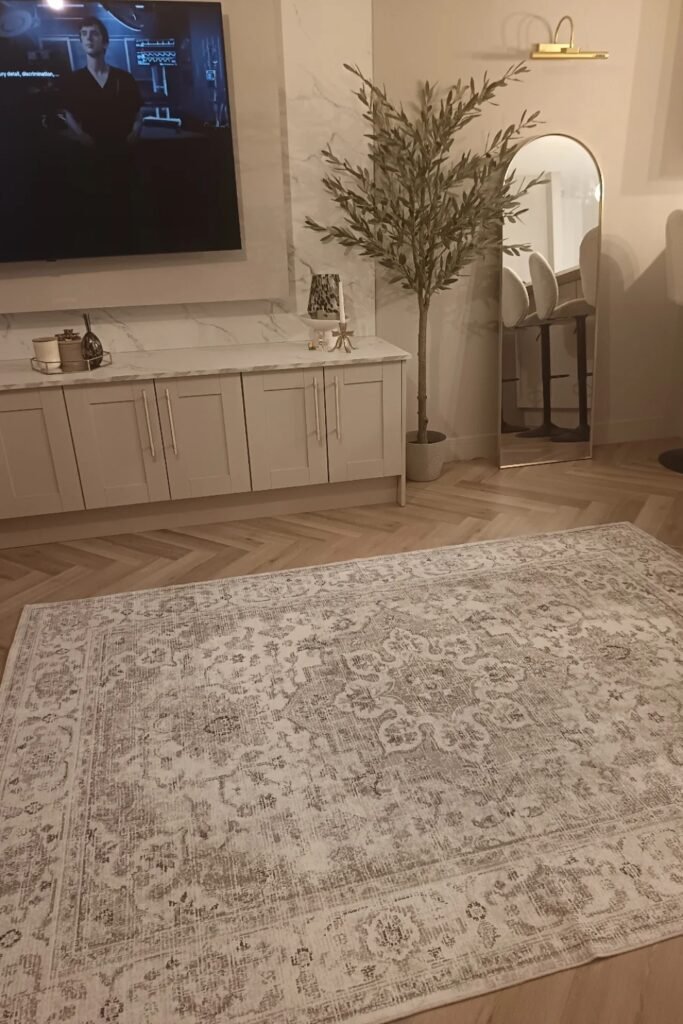
2. Choose a Rug Bigger Than Your Coffee Table Area
A rug should not stop at the coffee table. It should extend under part of the seating area too.
Small rugs often make the room feel broken and unfinished.
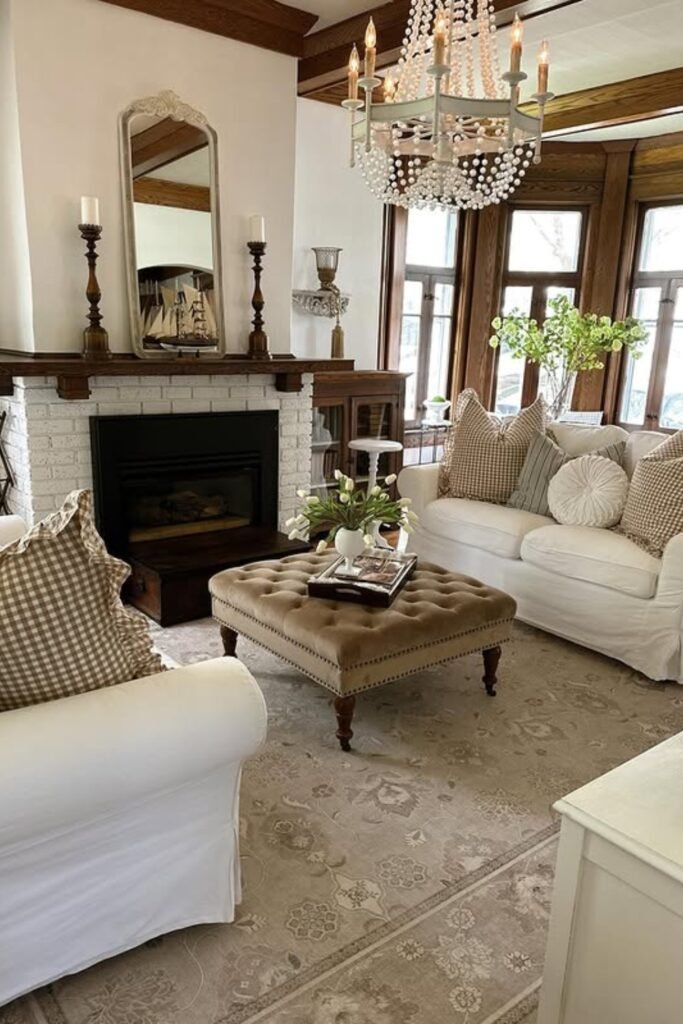
3. Leave Floor Space Around the Rug
Do not push the rug wall to wall unless the room already has carpet.
Leave some visible floor around the edges so the living room can breathe and look balanced.
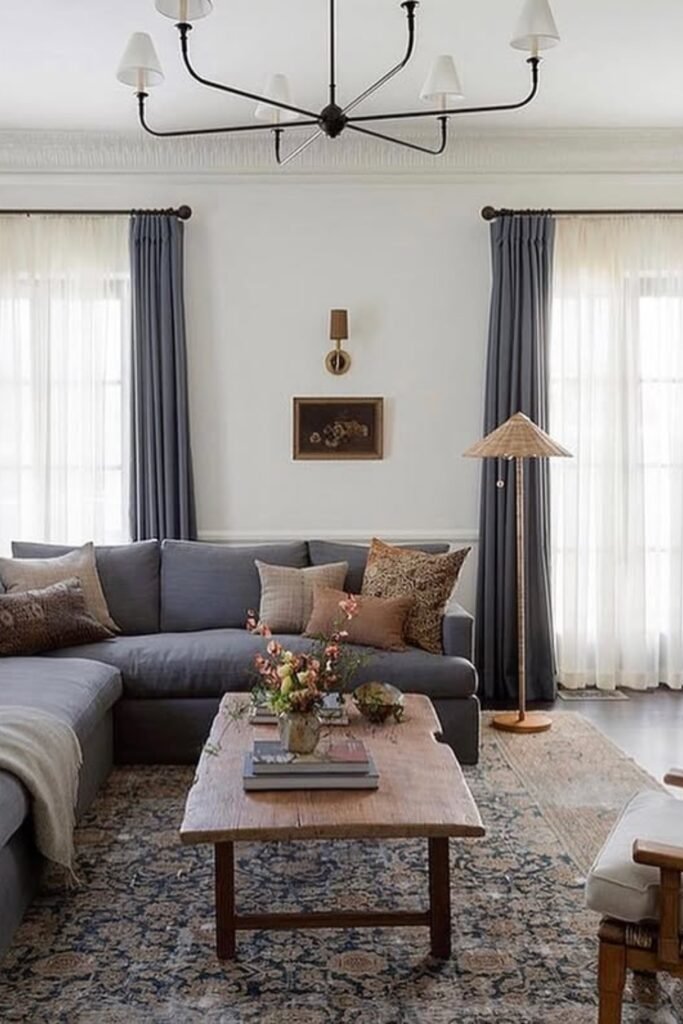
4. Center the Rug Around the Seating Area
Many people center the rug in the room itself, but the better rule is to center it around the sofa and chairs.
The rug should support the conversation area, not empty floor space.
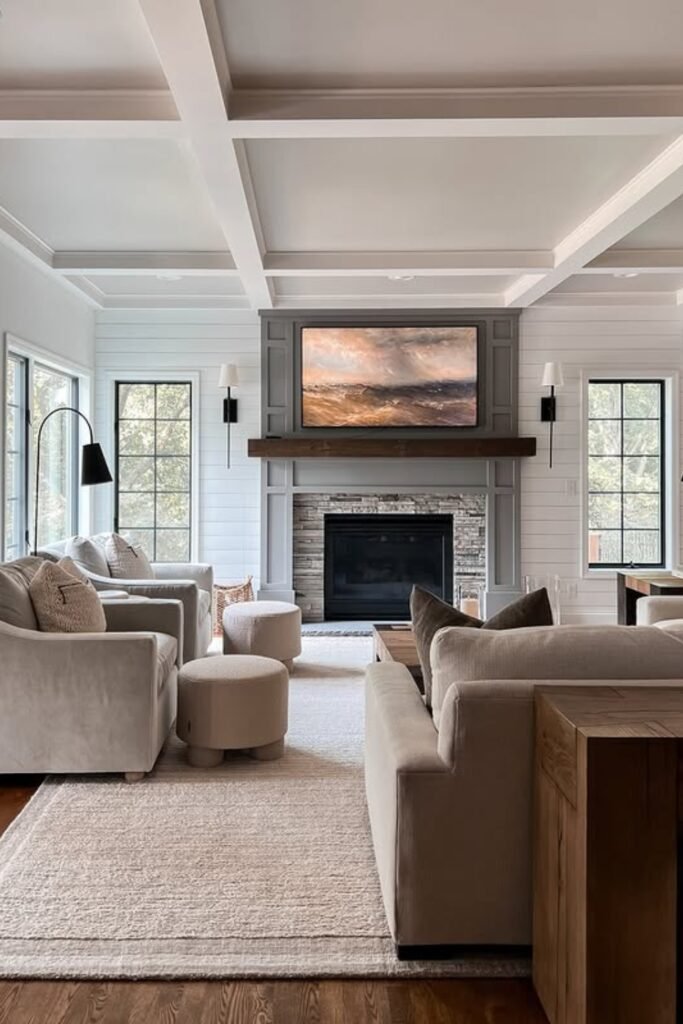
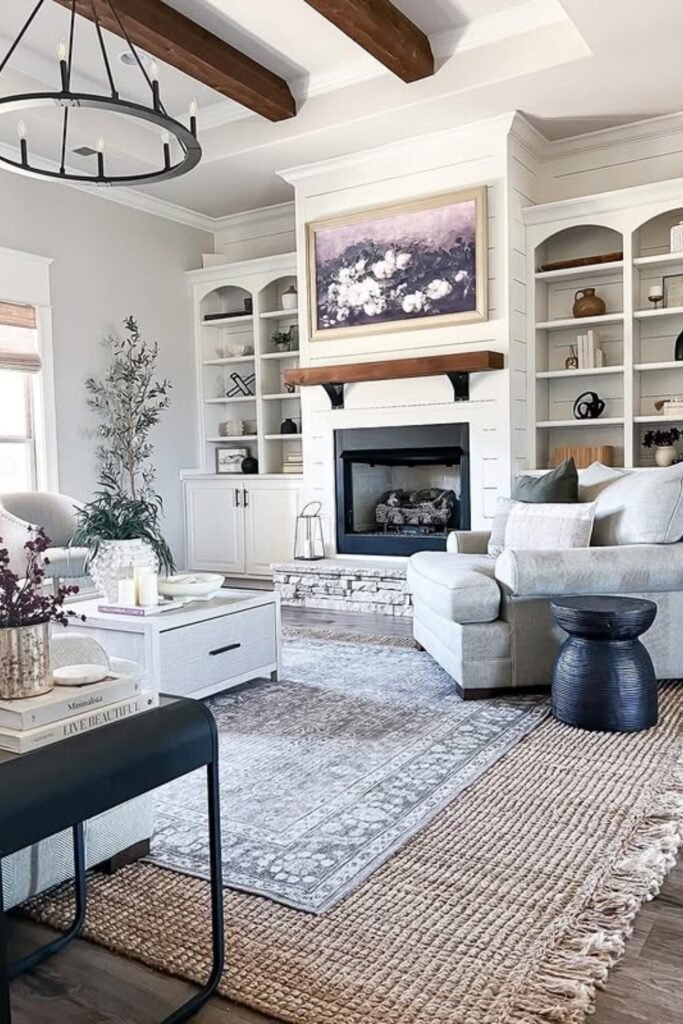
5. Make Sure the Rug Fits the Sofa Width
Your rug should usually extend beyond the sofa on both sides.
A rug that looks narrower than the sofa can make the whole setup feel tight and awkward.
6. Keep Walkways Clear
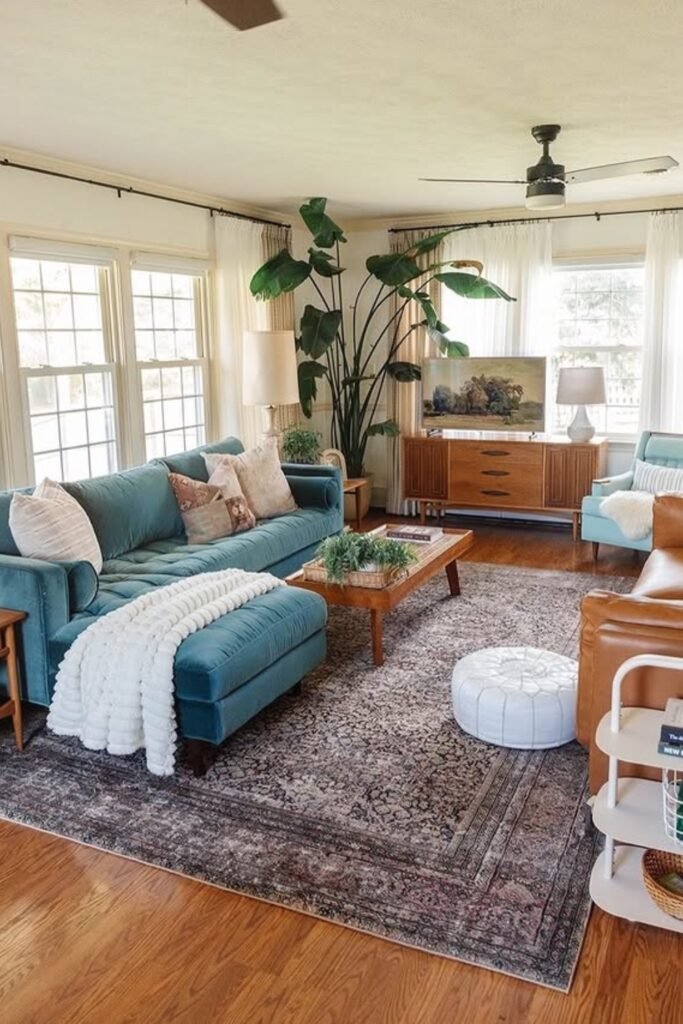
Do not place the rug where it blocks natural walking paths.
People should move through the room without catching the rug edge or stepping around furniture awkwardly.
7. Use One Rug to Define the Living Room Zone
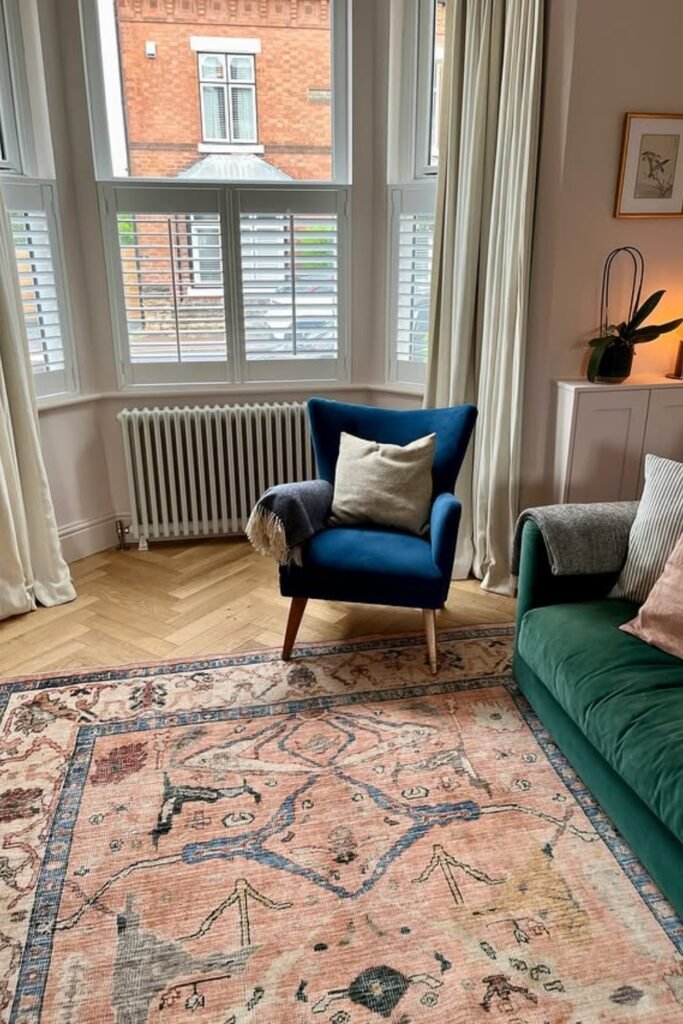
In open-concept homes, the rug should clearly define the living room area.
It helps separate the seating space from dining or kitchen areas without adding walls.
8. Avoid Tiny Rugs in Large Living Rooms
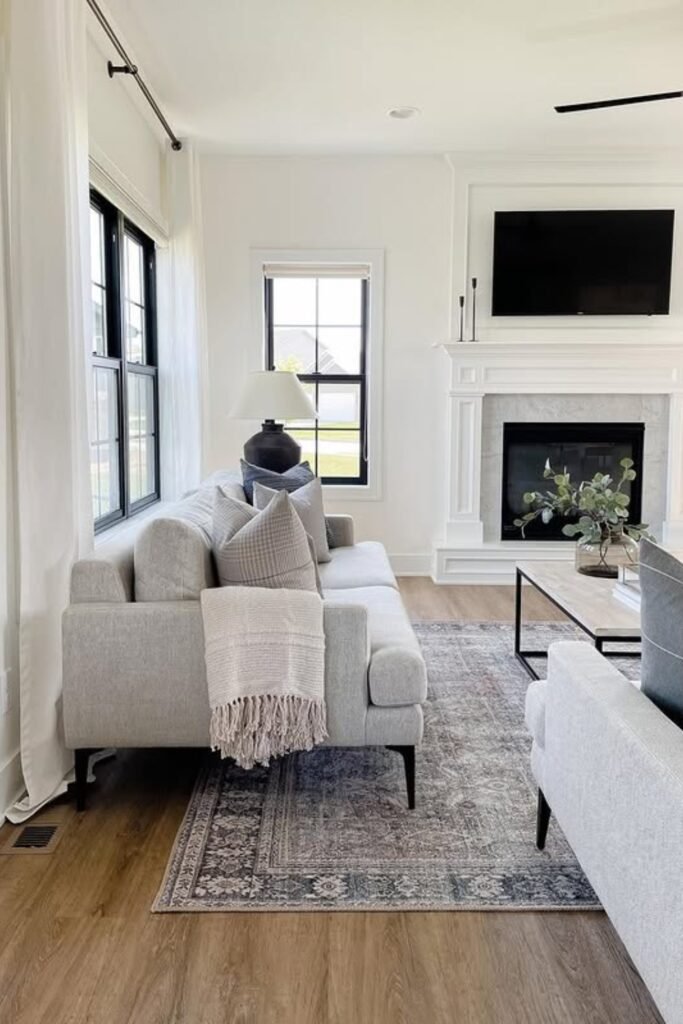
A small rug in a large room can make everything feel disconnected.
In bigger spaces, use a rug large enough to hold most of the furniture together visually.
How Rug Placement Changes the Look of Your Living Room?
Rug placement affects the entire feeling of your living room more than most people realize.
A rug is not only there for softness or color. It helps organize the furniture and makes the room feel complete.
When the rug sits in the right position, the sofa, chairs, and coffee table look like they belong together instead of looking scattered around the room.
A rug can also change how large or small your space feels. A properly sized rug usually makes the room feel bigger because it creates one connected seating zone.
On the other hand, a tiny rug floating in the middle can make the room feel tight and awkward even when you have enough space.
Placement also affects balance. If the rug sits too far from the sofa, the furniture may look disconnected.
If it sits too close to one side of the room, the layout can feel uneven. Good placement keeps the room visually balanced without needing extra decor.
This becomes even more important in open-concept homes. A rug helps separate the living room from nearby spaces like the dining area or kitchen.
Without that visual boundary, the room can feel messy and unclear.
What to Do if Your Rug Looks Too Small?
A rug usually looks too small when it only fits under the coffee table and does not connect to the furniture around it.
This is one of the most common living room mistakes because people often buy rugs based only on price or pattern without checking how the rug fits the seating area.
The first thing you should do is move the rug closer to the sofa. Try placing the front legs of the sofa and chairs on the rug.
This simple change often fixes the disconnected look immediately and helps the room feel more intentional.
You can also rearrange nearby furniture slightly closer together. Large gaps between the sofa, chairs, and rug can make the rug appear even smaller than it really is.
If replacing the rug is not possible, layering can help. Place the smaller rug over a larger neutral rug like jute or wool. This trick adds more visual size without removing the rug you already own.
If your sofa is much wider than the rug, or the rug does not extend beyond the seating area, moving up to a larger size like 8×10 or 9×12 may be the best solution.
Conclusion
Living room rug placement becomes much easier when you stop treating the rug like a small decor piece and start using it to connect the seating area.
Your rug should help the sofa, chairs, and coffee table feel like one clear zone.
If the room feels off, first check the rug size and position. Pull it closer to the sofa, place the front legs on the rug, and make sure it extends wider than the coffee table.
Small changes can make the whole living room feel more balanced, comfortable, and finished.
You may interested to read!