Loving retro bathrooms is easy until pink tiles, bold patterns, and vintage fixtures start making your space feel more dated than stylish.
The trick is knowing which old-school details deserve attention and which ones need a cleaner, simpler background to work.
Even one smart choice, from checkerboard flooring to a colored sink, can bring back that nostalgic character without overwhelming the whole bathroom.
In this article, you’ll find practical retro bathroom ideas that balance vintage personality with the comfort and function you still need today.
Let’s jump in!
What Does a 1920s Bathroom Look Like?
A 1920s bathroom usually feels clean and practical, with white surfaces doing most of the work instead of bold colors everywhere.
Small hexagon or penny tiles often cover the floor, while white subway tiles protect the lower walls from everyday splashes.
Black borders, dark grout, or simple mosaic patterns can break up all that white without making the room feel busy.
For the sink, a pedestal or wall-mounted style fits naturally, especially when you pair it with polished chrome or nickel fixtures.
Built-in tubs, recessed medicine cabinets, and simple glass lighting can bring in more period character without turning your bathroom into a themed space.
If you want the look today, choose a few recognizable 1920s details and let modern plumbing, storage, and lighting handle the practical side.
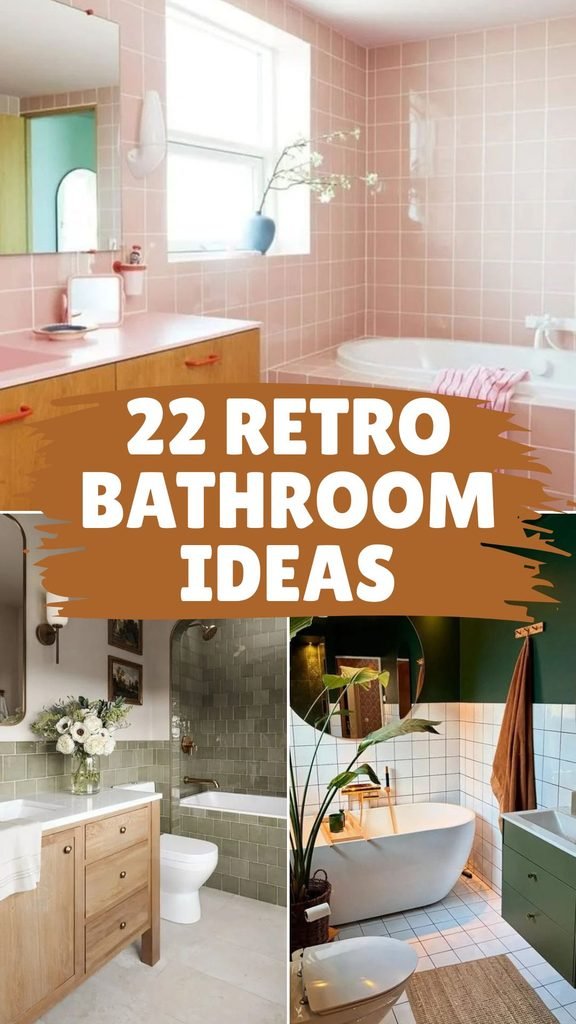
Pink Tiles
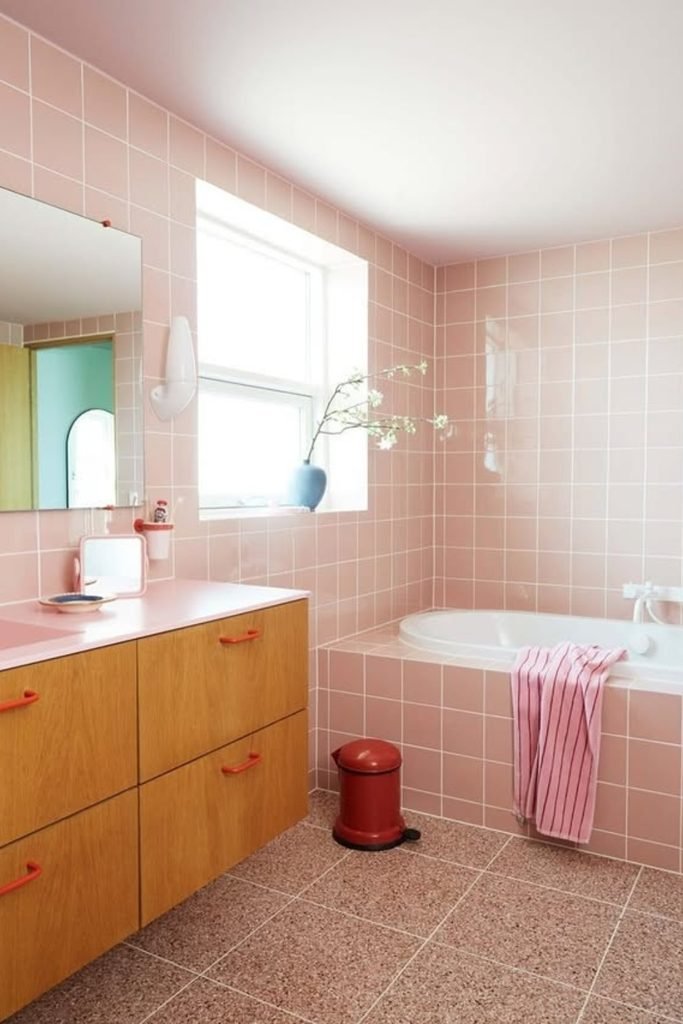
Soft pink square tiles can carry the retro look across the whole bathroom, while warm wood cabinetry stops the color from feeling overly sweet.
Use terrazzo-style flooring underneath to introduce texture, then repeat one stronger accent through handles or accessories so the pastel scheme feels connected.
Natural daylight works especially well here because it brightens the pink surfaces and lets the wood tones stay warm rather than looking heavy.
Sage Shower
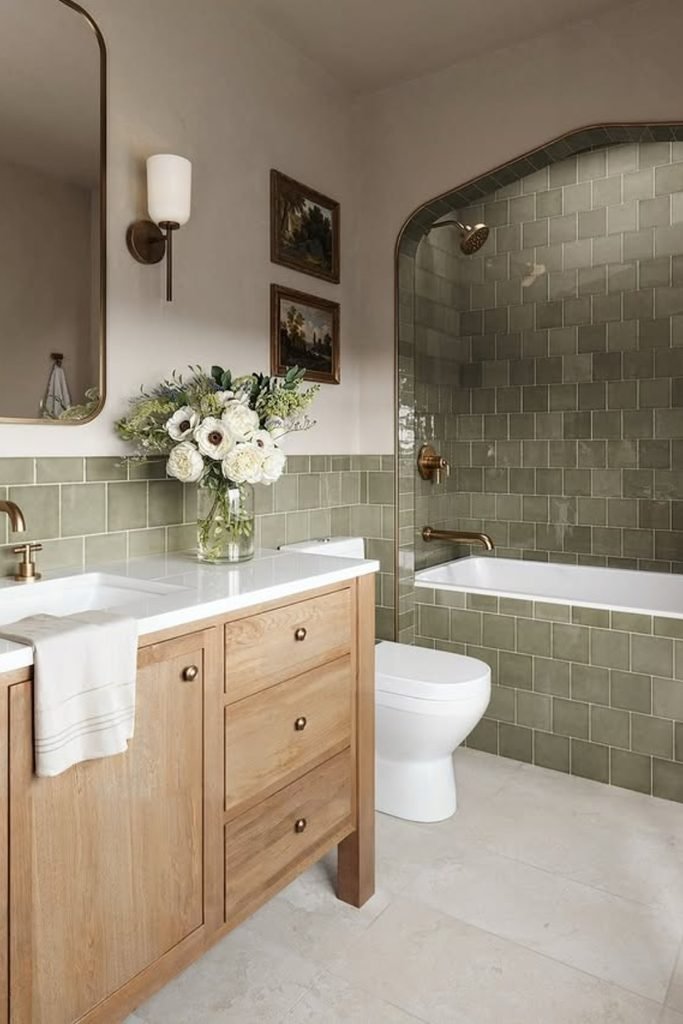
Muted green tile works beautifully when you want retro character without using the brighter colors normally associated with old bathrooms.
Run the tile around the shower and lower walls, then bring in a light wood vanity and aged brass fixtures for a softer transition.
A simple wall sconce beside the mirror adds focused light, while the neutral upper walls prevent the green tile from taking over the room.
Green Contrast
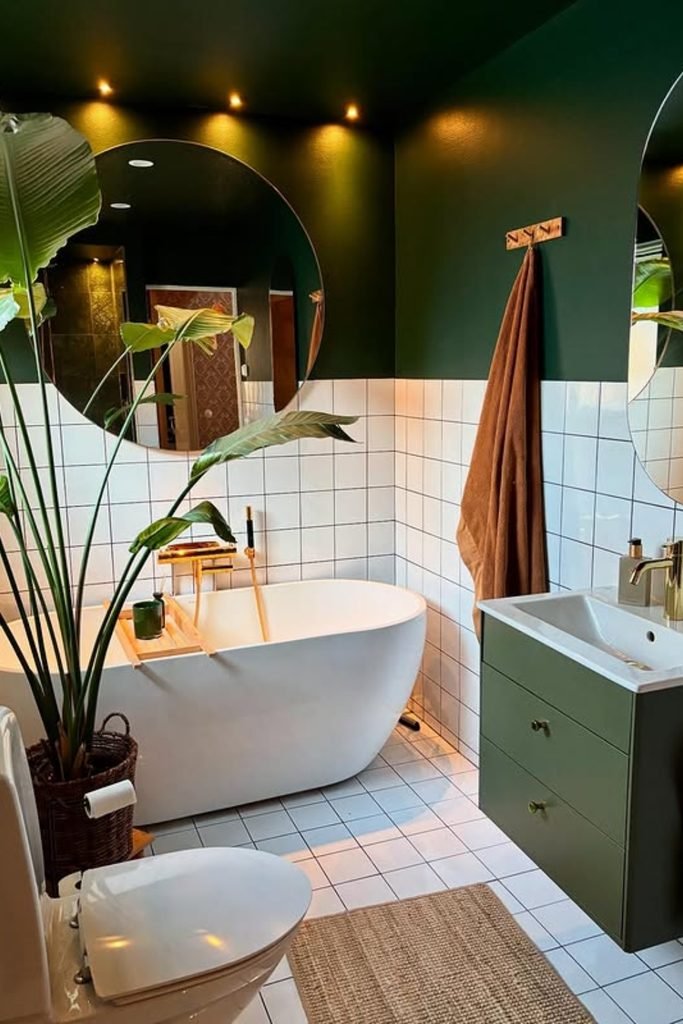
Deep green walls can make basic white square tiles feel far more intentional, especially when you want a moodier take on retro bathroom color.
Limit the tile to the lower walls, then repeat the green through a compact vanity so the upper and lower sections feel connected.
Small ceiling spotlights bring warmth into the darker paint, while brass fixtures and natural greenery stop the black-green backdrop from feeling flat.
Utility Sink
An old-style wall sink can become the main retro feature when your bathroom is too small for a full vanity and extra cabinetry.
Pair its exposed brass plumbing with muted wall paneling and a rounded wood-framed mirror to soften the practical shape without hiding its character.
One glass wall light above the mirror provides useful task lighting, while patterned flooring brings detail into the narrow space without crowding the walls.

Penny Flooring
Small penny mosaics can bring an older bathroom feel underfoot without forcing you to use bold retro colors across every wall.
Pair the patterned floor with white shower tile and a dark wood vanity so each material has enough room to stand out.
Brass fixtures and slim wall sconces add warmth around the neutral surfaces, making this approach especially useful for narrow or windowless bathrooms.

Circle Patterns
Oversized circle wallpaper can introduce playful mid-century character while letting the vanity, countertop, and other expensive finishes remain fairly simple.
Run a narrow band of glossy green tile below the pattern, then use warm wood cabinetry to connect both surfaces without adding another color.
Globe pendants continue the rounded theme around the mirrors and provide useful vanity lighting without competing with the busy wallpaper behind them.

Avocado Suite
Original avocado fixtures deserve attention rather than automatic replacement, especially when you want the bathroom to carry unmistakable 1970s personality.
Build around them with matching green square tile, warm wood cabinetry, and floral wallpaper instead of introducing cool modern finishes that feel disconnected.
Daylight can handle much of the color during daytime, while globe vanity bulbs bring warmer light across the green surfaces after dark.

Copper Tub
A copper bathtub can anchor a darker retro bathroom, especially when you want an older, collected look rather than a polished mid-century finish.
Surround it with muted green walls, dark wood trim, vintage-style artwork, and leafy plants so the metal feels connected to the room.
One warm pendant above the tub works with daylight from a large window, helping the deeper wall and ceiling finishes retain their detail.

Peach Shower
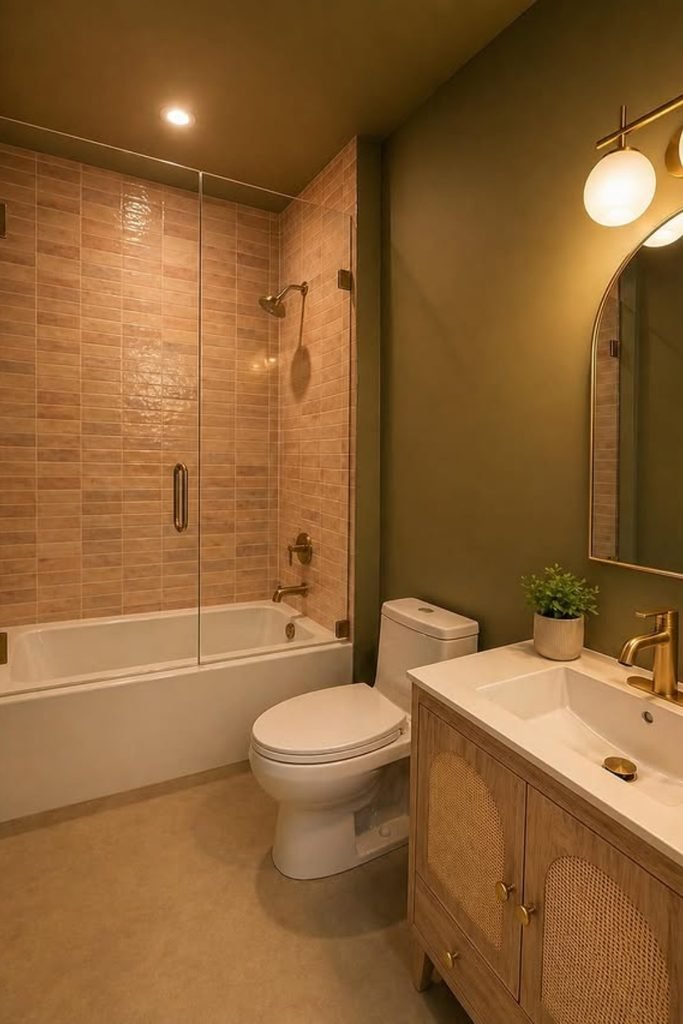
Soft peach tile can warm up a compact bathroom without pushing the retro theme too far, especially beside deep olive painted walls.
Use the tile mainly inside the shower, then bring in cane-front cabinetry and brushed brass fixtures to carry warmth beyond the wet area.
Round globe lights beside an arched mirror soften the darker walls and make the peach tones feel richer during evening use.
Terrazzo Walls
Large terrazzo surfaces can bring a 1970s influence into a bathroom while still feeling clean enough for a more modern home.
Run the material across the lower walls, floor, and vanity, then use a rust-colored upper wall to pull out its warmer stone chips.
Soft mirror lighting works especially well here because it washes across the textured surfaces without adding another decorative feature to compete for attention.

Walnut Vanity
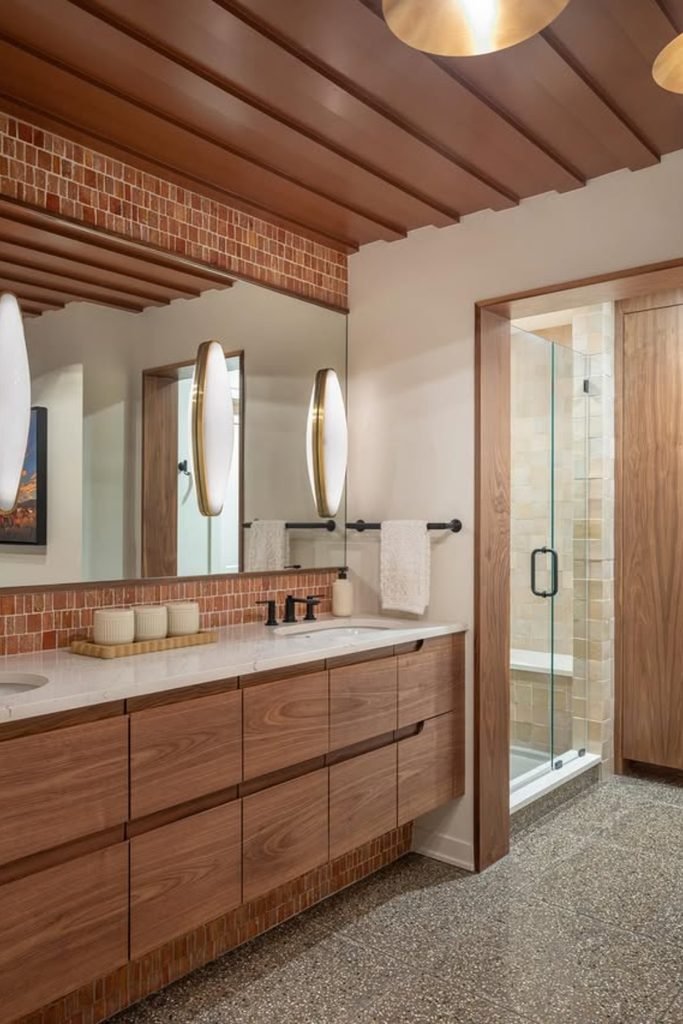
Long walnut cabinetry works well when you want mid-century character but still need plenty of closed storage for a busy shared bathroom.
Frame the vanity with narrow rust tiles and repeat the warm tone overhead, while a pale countertop prevents all that wood from feeling heavy.
Oval wall lights bring a softer shape beside the straight cabinetry, and their warm glow highlights the wood grain without overpowering the room.
Antique Details
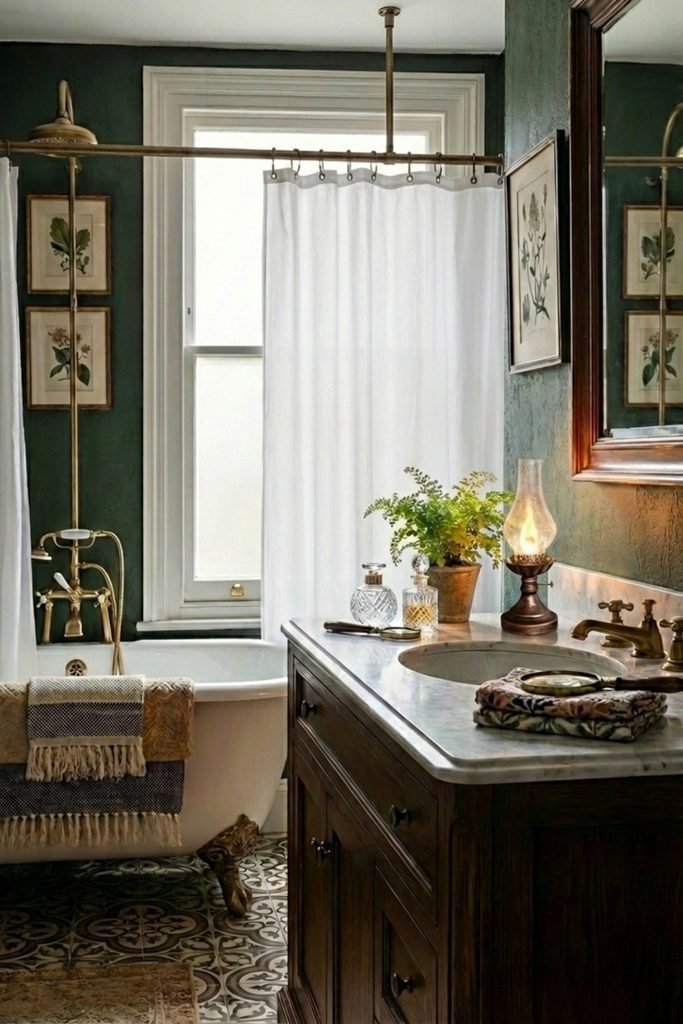
Dark wood, aged brass, botanical artwork, and patterned flooring can build an older bathroom feel without relying on colorful retro tile everywhere.
Use a traditional vanity and exposed shower fittings as the main period pieces, then let deep green walls create a richer background around them.
Daylight from a tall window can balance those darker finishes, while one warm decorative lamp adds a softer glow around the vanity after sunset.
Vertical Tiles
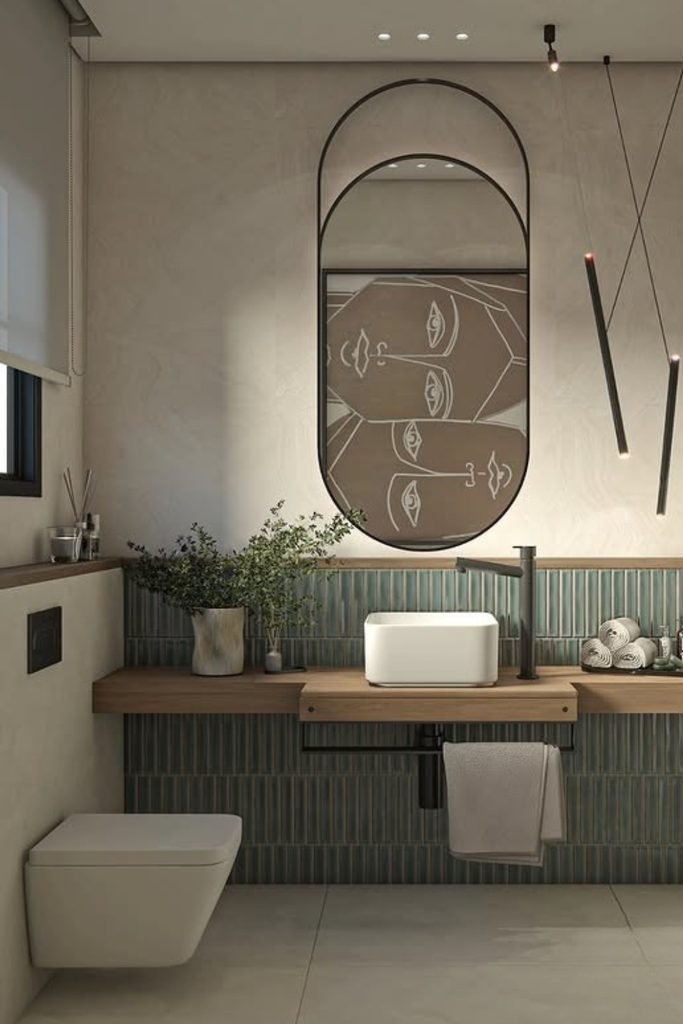
Slim vertical tiles can bring retro rhythm into a modern bathroom without covering every surface or making a compact layout feel overly busy.
Run them behind a floating wood counter, then use an oversized rounded mirror to soften the straight tile lines and simple sanitaryware.
Small directional ceiling lights work well here because they highlight the vanity area while leaving the decorative wall as the main feature.
Double Vanity
Warm wood cabinetry can bring mid-century character into a shared bathroom while still providing the drawer space two people need every day.
Pair it with a muted green countertop, rectangular wood-framed mirrors, and wall-mounted brass faucets so the materials feel connected rather than overly matched.
Place warm sconces between and beside the mirrors to light both sinks evenly, while nearby windows bring out the natural wood grain.

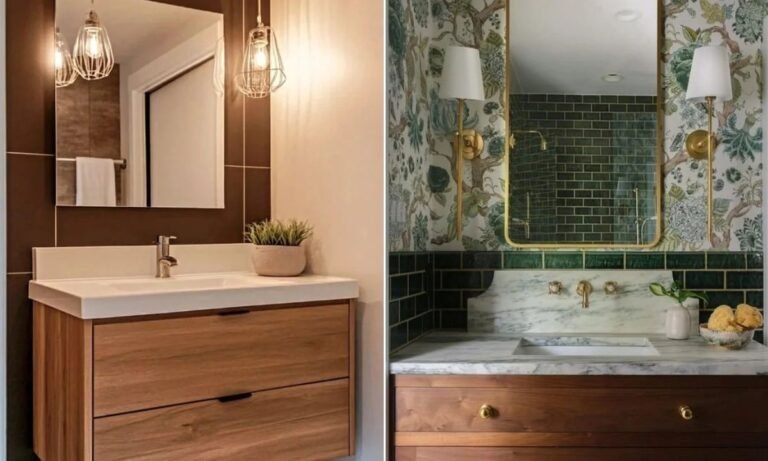
Emerald Basin
A deep green basin can become the retro statement in a small powder room, letting you use stronger color without committing every fixture.
Pair it with botanical wallpaper and brass fittings, then repeat the green through the pattern so the sink feels intentionally placed.
Warm decorative sconces are especially useful with darker wallpaper because they highlight the metallic details and stop the compact room from feeling too shadowy.

Checkerboard Floor
Black and white checkerboard flooring can establish an older bathroom look immediately, leaving you free to use simpler finishes across the remaining surfaces.
Add a clawfoot tub, dark wood vanity, and aged brass fixtures to strengthen the period feel without filling every wall with decoration.
Warm wall sconces and natural window light balance the darker floor and wood, making this combination especially effective in bathrooms with tall windows.

Brown Tiles
Glossy brown tiles can create a warmer retro vanity area when you want something deeper than the usual pink, green, or pastel palette.
Cover the lower wall and counter with the same narrow tile, then use a white vessel sink to break up the darker surface.
Round wall lights beside a tall mirror add soft illumination, helping the brown glaze catch light without making the compact space feel heavy.

Turquoise Tiles
Turquoise square tiles can carry strong retro character across a bathroom, especially when you want color to become the main design feature.
Wrap the walls, floor, and tub surround in the same tile, then introduce dark wood through blinds, shelving, and smaller furniture pieces.
Warm accent lighting and natural window light soften the cool blue surfaces, while black fixtures create enough contrast to stop everything blending together.

Soft Luxury
A clawfoot bathtub with floral details creates a softer Victorian look by adding romance without making the bathroom feel heavy.
This style works beautifully in guest bathrooms where you want a warm, welcoming atmosphere with classic decorative touches.
Use cream walls, antique mirrors, and brass fixtures to recreate this elegant look with a comfortable vintage feeling.

Arched Shower
An arched shower entrance adds architectural character and makes a modern bathroom feel inspired by traditional Victorian homes.
This idea works best when you want a unique feature that separates the bathing area from the rest of the room.
Pair curved shapes with green tiles, warm lighting, and vintage hardware to create a more custom Victorian design.
Green Vanity
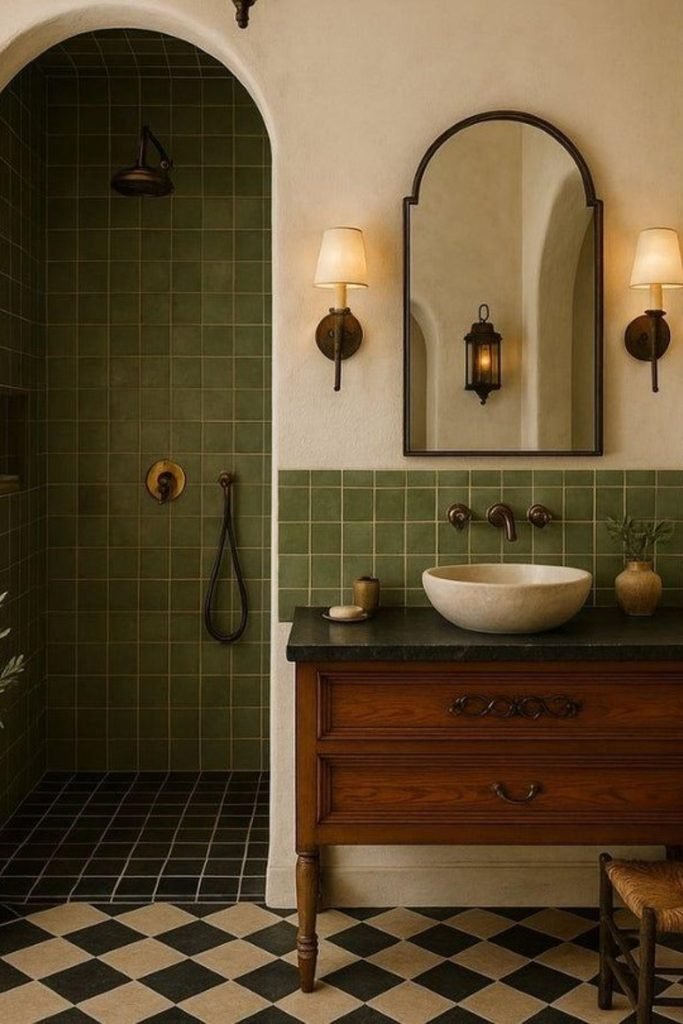
A green vanity brings Victorian influence into smaller bathrooms by adding color while keeping the design practical.
Use this idea in powder rooms or guest bathrooms where a statement cabinet can become the main feature.
Combine painted wood, brass handles, and stone countertops to create a classic vanity that feels collected over time.

Dark Romance
A dark Victorian bathroom creates a cozy atmosphere by combining deep colors, patterned floors, and soft lighting together.
This style works well in larger bathrooms where darker walls can add depth without making the space feel closed.
Use warm fixtures, textured surfaces, and traditional mirrors to build a dramatic yet comfortable bathroom retreat.
FAQs
Can Retro Bathrooms Work in Small Spaces?
Yes, but choose one strong retro feature such as colorful tile, checkerboard flooring, or a vintage-style sink instead of filling every surface.
Use lighter walls and simple fixtures around that feature so a compact bathroom still feels open while carrying plenty of personality.
Wall-mounted storage, a large mirror, and practical lighting can save useful space without pulling attention away from the retro details.
Should You Replace Original Retro Bathroom Tiles?
Original pink, green, blue, or patterned tiles can be worth saving when they remain secure, clean, and free from serious water damage.
Update the paint, mirror, lighting, hardware, or shower curtain first because smaller changes can make older tile feel intentional again.
If tiles are loose or moisture problems sit behind them, deal with those repairs before deciding how much of the original bathroom stays.