A bathroom mirror can look perfect online, then feel completely wrong once it sits above your vanity because the size, shape, and placement do not work together.
Choose one that is too small, too wide, or badly lit, and even a beautiful bathroom can suddenly feel awkward and unfinished.
In this article, you’ll learn what actually works and see bathroom mirror ideas that can help you choose the right look for your own space.
Let’s jump in!
What Is the Best Type Of Mirror for A Bathroom?
The best bathroom mirror is one that fits your vanity size, gives you enough reflection, and works with the lighting around it.
If your bathroom feels small, a larger frameless mirror can open up the wall and bounce more light around the room.
For a wide vanity, choose a mirror with enough width to balance the cabinet instead of leaving too much empty space on both sides.
If you need extra storage, a mirrored medicine cabinet makes better use of the wall without taking up more floor or counter space.
Whatever style you choose, make sure the frame and fittings can handle bathroom humidity, especially if you are using wood or powered LED features.
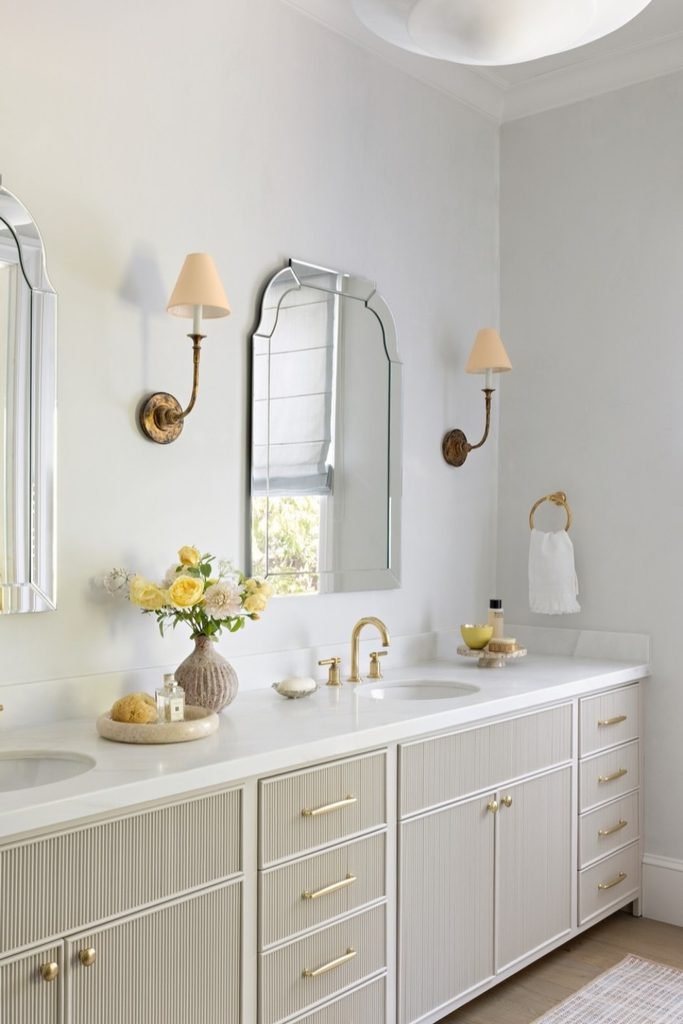
Paired Arches
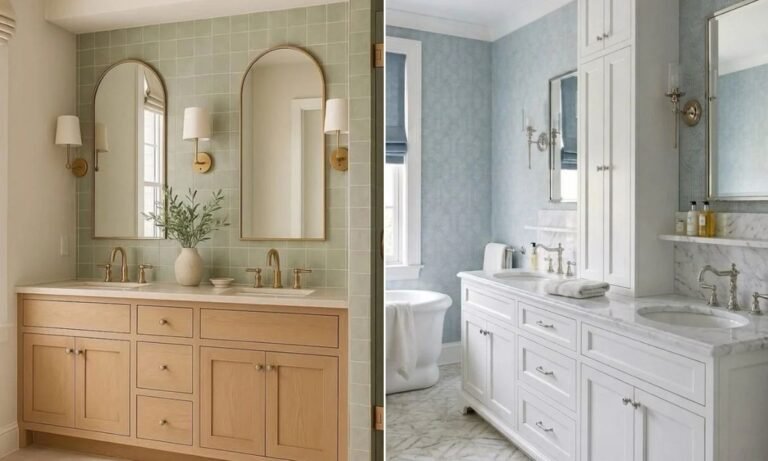
Use matching arched mirrors over a long double vanity when you want each sink to feel defined without making the wall heavy.
Keep the frames slim and reflective so they blend with pale walls, while warm sconces add contrast and useful face-level light.
Center each mirror over its basin first, then use the space between them for lighting rather than forcing one oversized piece.
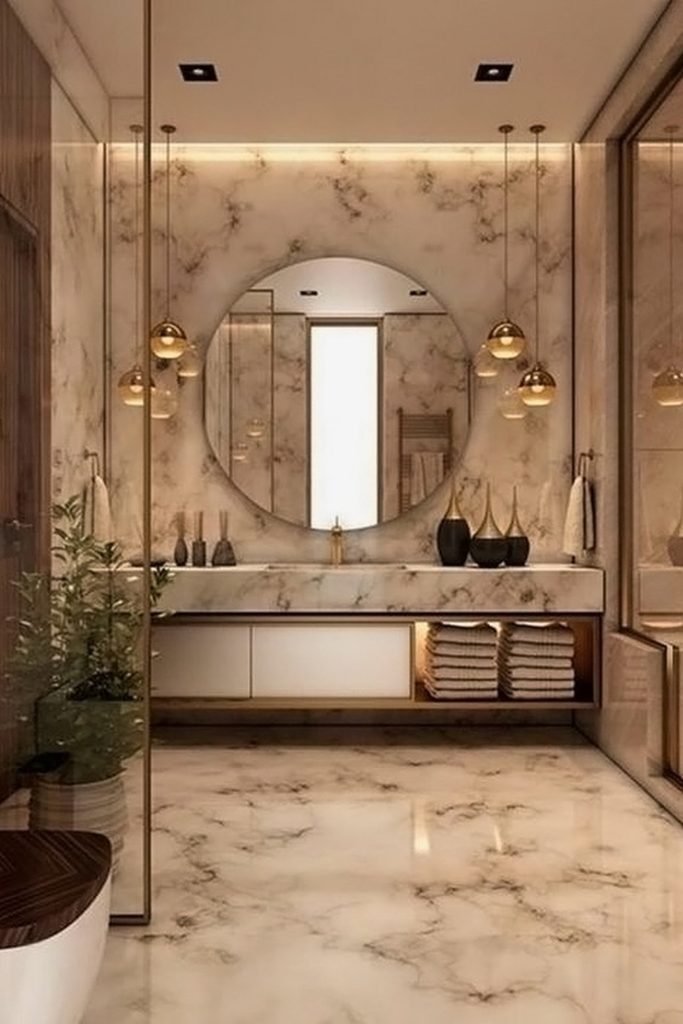
Round Balance
A large round mirror works beautifully in a marble-heavy bathroom because its curve breaks up straight stone lines and keeps the room softer.
Hang pendants on both sides instead of crowding the wall with sconces, especially when you want the mirror to stay visually clean.
Choose a diameter that feels generous above the vanity, but leave enough marble visible around it so the wall still has breathing room.
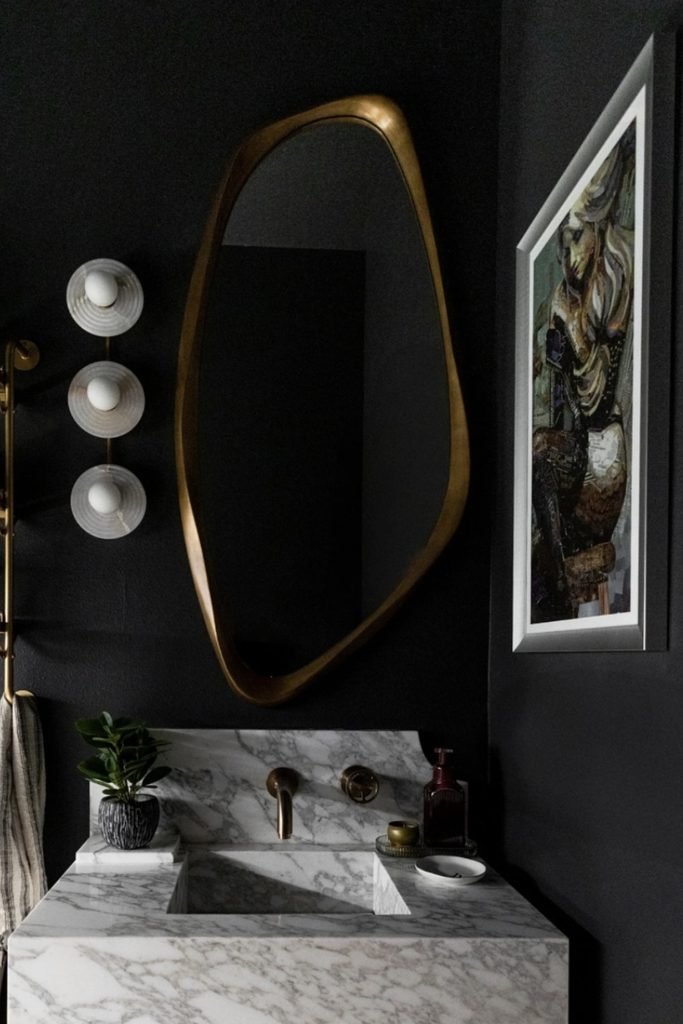
Organic Brass
If your bathroom has dark walls and a strong stone vanity, an irregular brass mirror can stop the whole scheme feeling too rigid.
Let the mirror shape do the decorating, then keep nearby shelving and artwork simple so the wall does not become visually crowded.
Repeat the brass in one or two small fittings, such as the faucet or shelf frame, to make the unusual shape feel intentional.
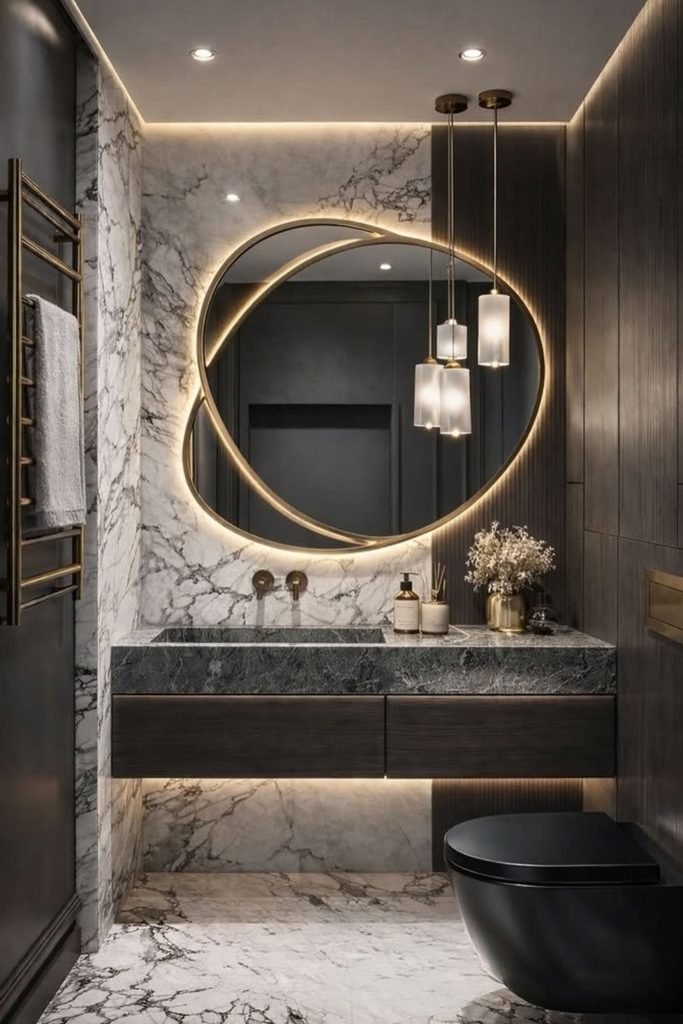
Backlit Sculpture
Use a sculptural backlit mirror when a compact bathroom needs one strong focal point, especially against dark wood, stone, or paneled walls.
The glow behind the glass adds depth without taking counter space, while the irregular outline keeps a narrow vanity from feeling boxy.
Pair it with simple pendant lights and minimal accessories, because too many decorative details will compete with a mirror this visually dominant.
Golden Frame
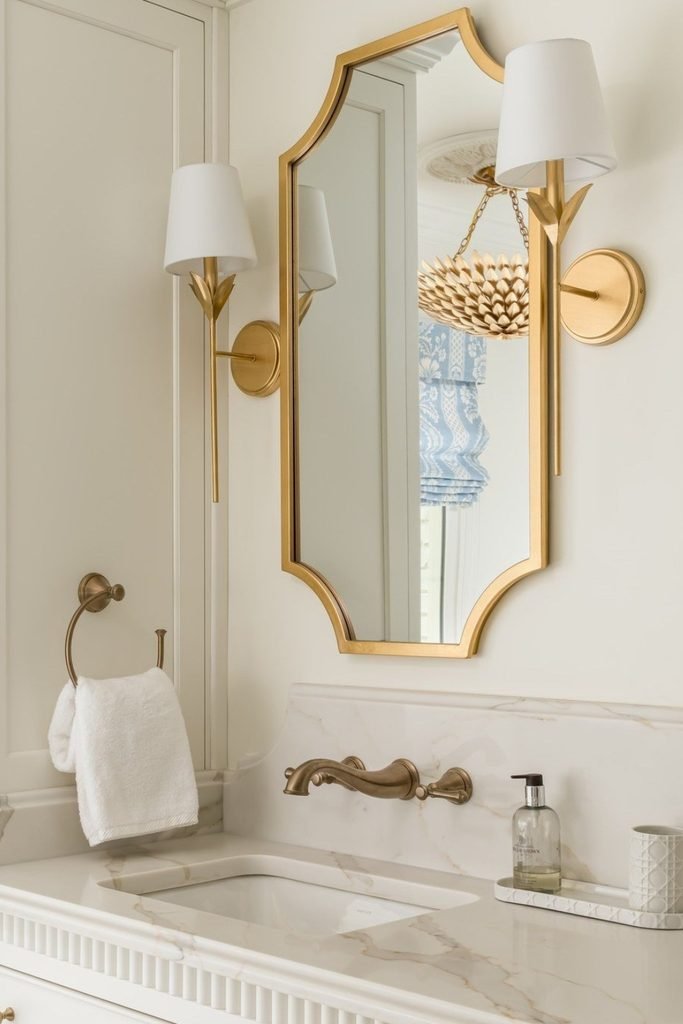
Let a slim brass frame warm up a pale bathroom when soft wallpaper, white cabinetry, and classic fixtures already keep the room light.
Center the mirror over the sink, then place matching sconces at both sides so the vanity gets even light without covering wallpaper.
Repeat the brass through faucets and small hardware, but keep the frame simple so the patterned wall stays part of the design.
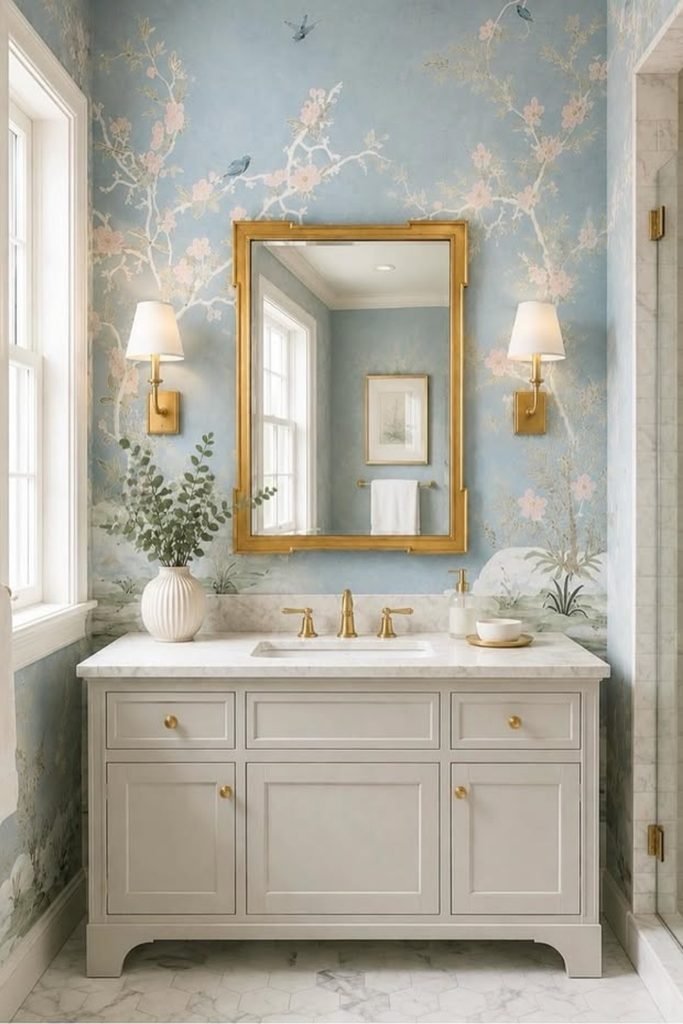
Backlit Oval
An oversized oval mirror can soften a modern bathroom filled with straight tile lines, while backlighting gives the vanity a calmer evening glow.
Mount it slightly above the vessel sink so the curved shape has breathing room and the faucet never crowds the lower edge.
Keep surrounding finishes warm and quiet, then let one slim side light handle extra task lighting when the backlight feels too soft.
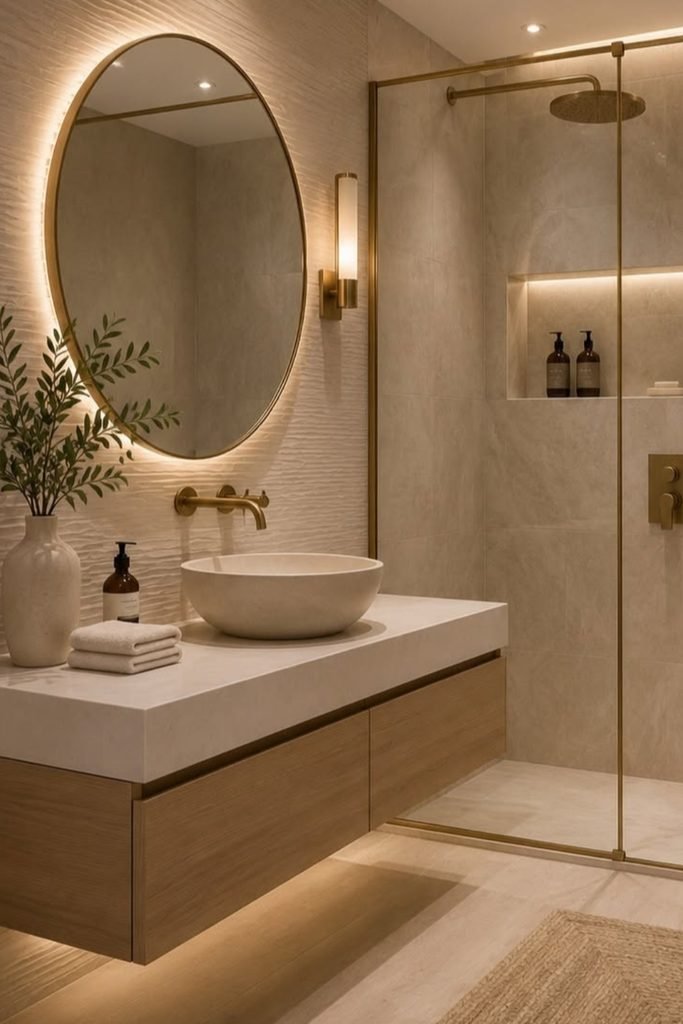
Scalloped Pair
Give a double vanity more personality with matching scalloped mirrors when straight cabinet doors and repeated wallpaper patterns need a softer counterpoint.
Keep both mirrors equal in size and centered over each basin, then use narrow vertical lights to preserve clean spacing between them.
A muted frame color works best here because it links with the wallpaper without competing against the pattern or making the wall busy.
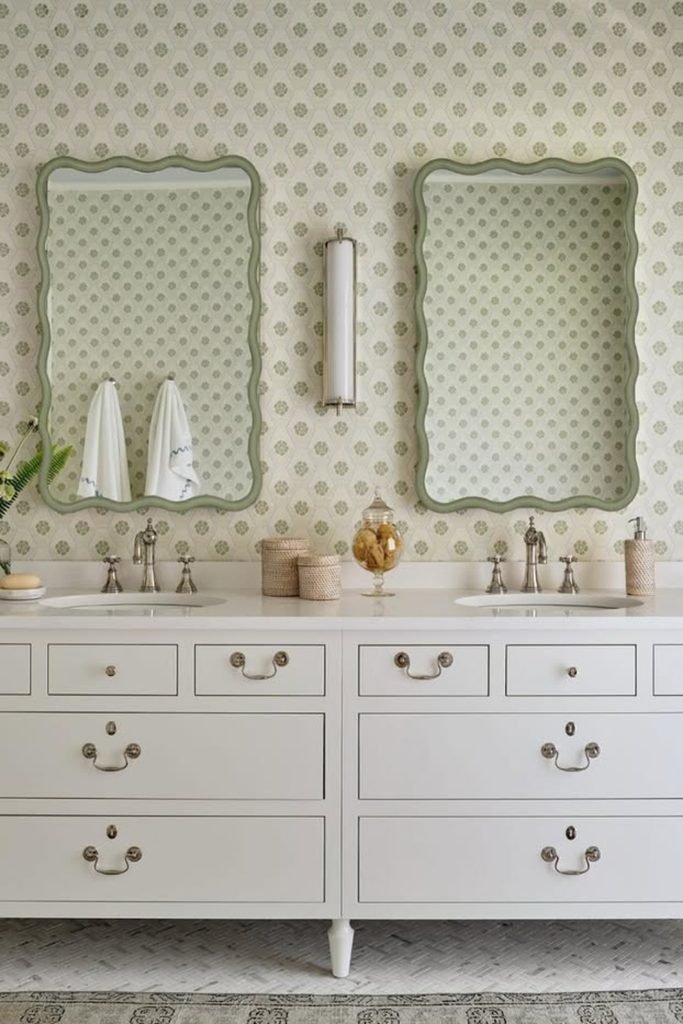
Arched Glow
A softly lit arch works well when you want a simple vanity wall to feel finished without adding a heavy decorative frame.
Choose a mirror wide enough to balance the cabinet below, but leave a little wall visible so the curved outline still reads clearly.
Use warm integrated lighting for evening softness, then keep plants and countertop pieces minimal so the arch remains the strongest visual feature.
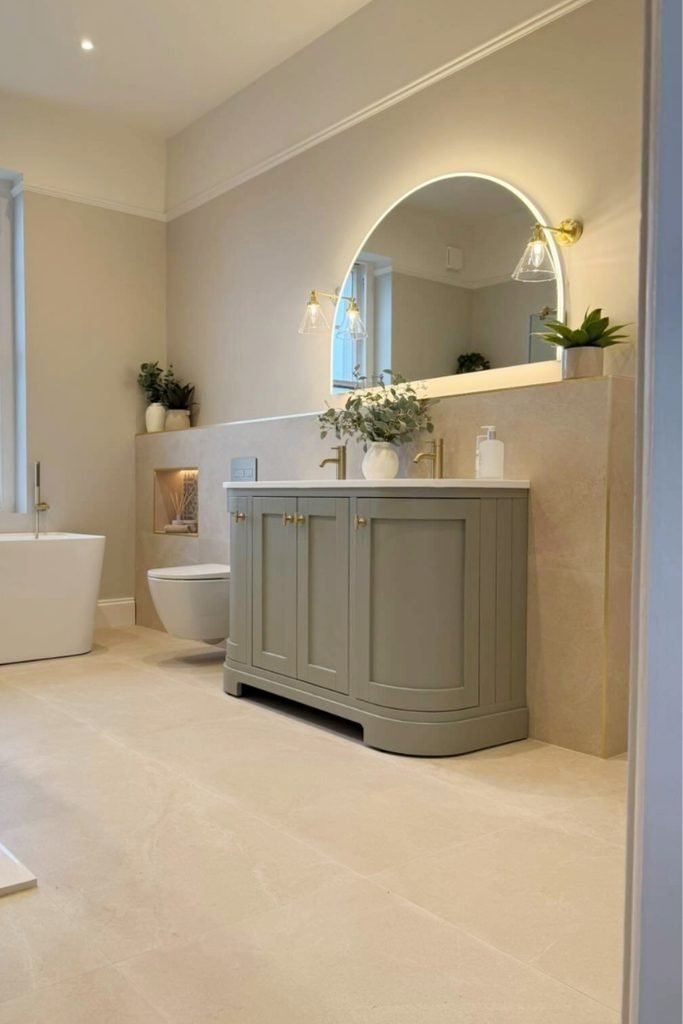
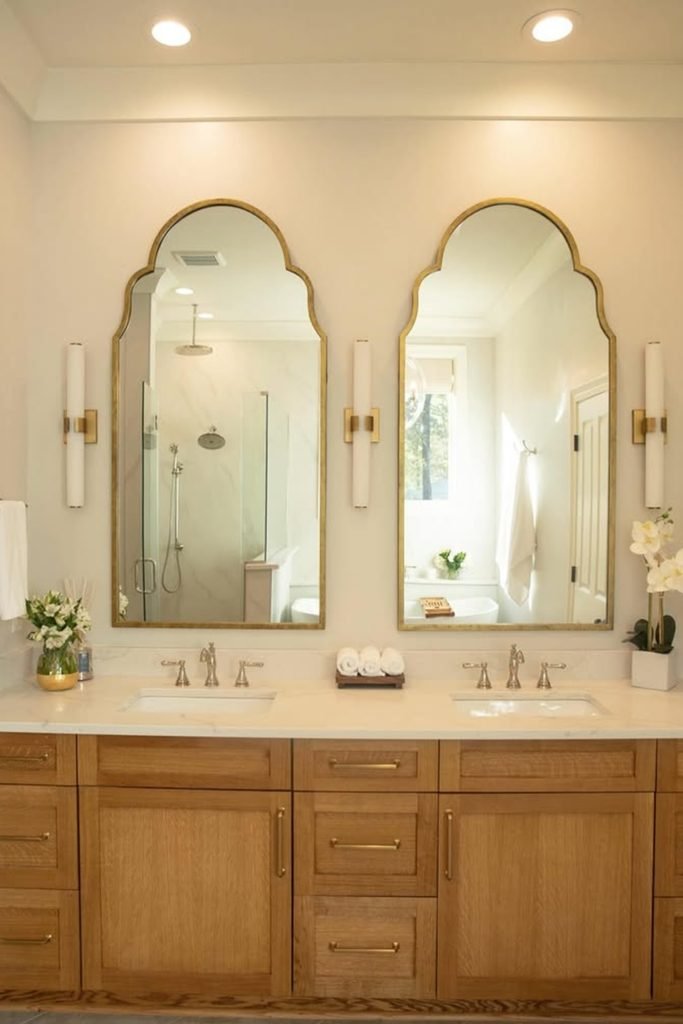
Arched Pair
Choose tall arched mirrors for a wide double vanity when you want each sink to feel separate without breaking the room’s symmetry.
Keep the frames slim and warm, then place narrow sconces between and beside them so every grooming area gets balanced light.
Let the mirror height follow the cabinetry scale, because undersized pieces can make a substantial vanity look shorter and visually unfinished.
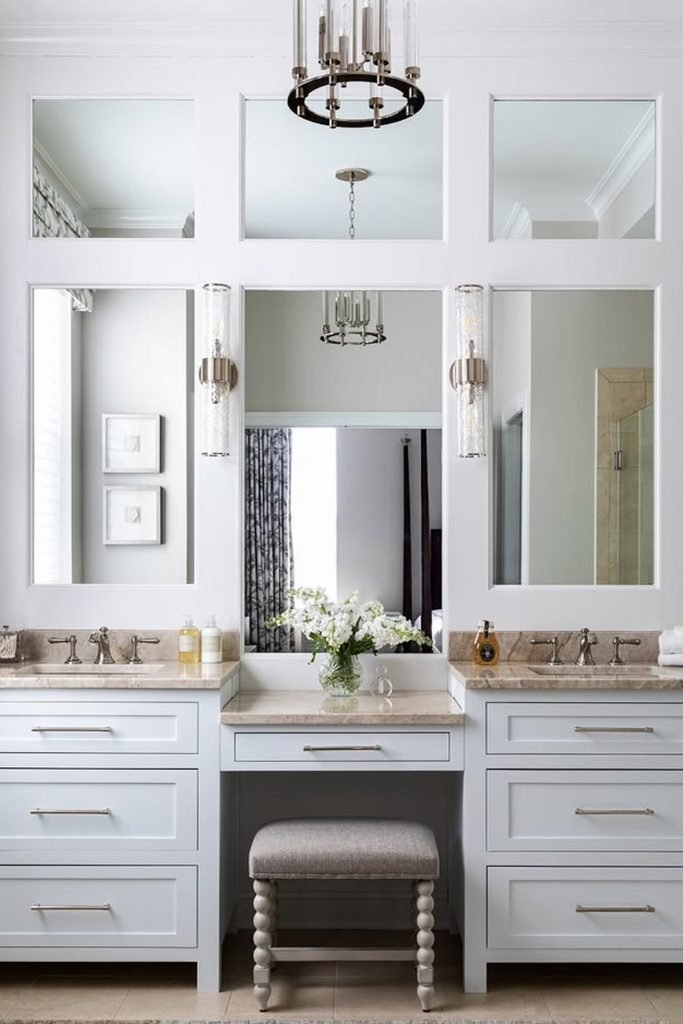
Mirror Grid
Use a grid of mirror panels when one plain sheet would feel too flat across a tall, built-in vanity wall.
Align every panel with the cabinetry below, then repeat the same spacing so the entire wall reads as one intentional composition.
This layout suits larger bathrooms especially well because the extra reflection spreads light while preserving clear zones for sinks and seated grooming.
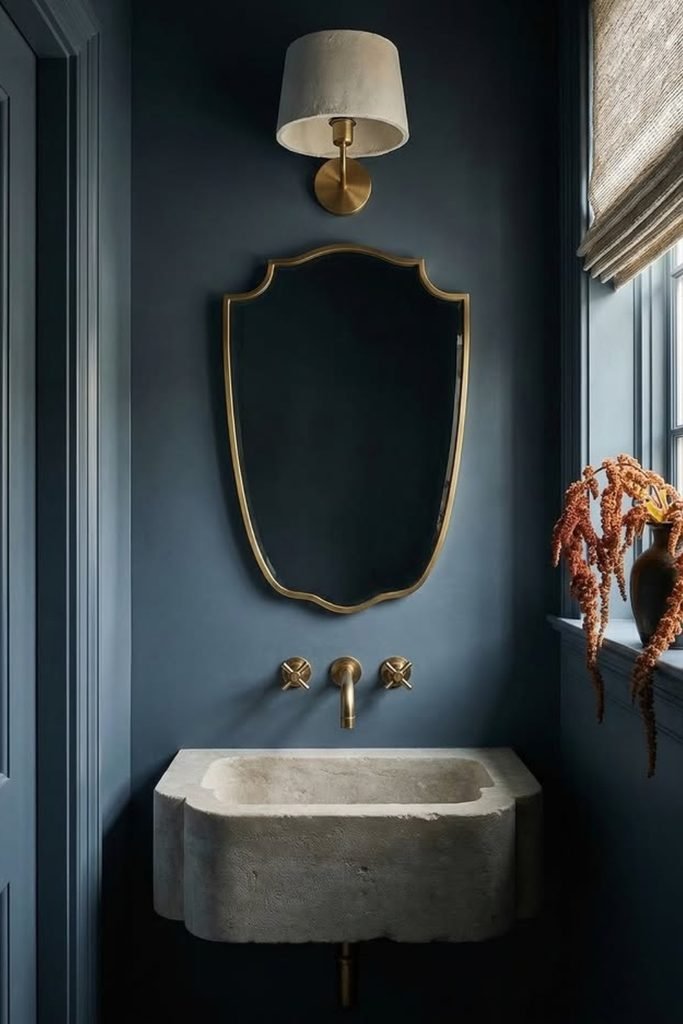
Shield Mirror
A shield-shaped mirror can give a narrow powder room character without needing extra wall decor, especially against deep painted walls.
Choose a warm metal frame to connect with the faucet and sconce, then leave enough dark wall visible around its outline.
Keep the sink simple and compact so the mirror remains the feature rather than competing with another strong decorative shape below.
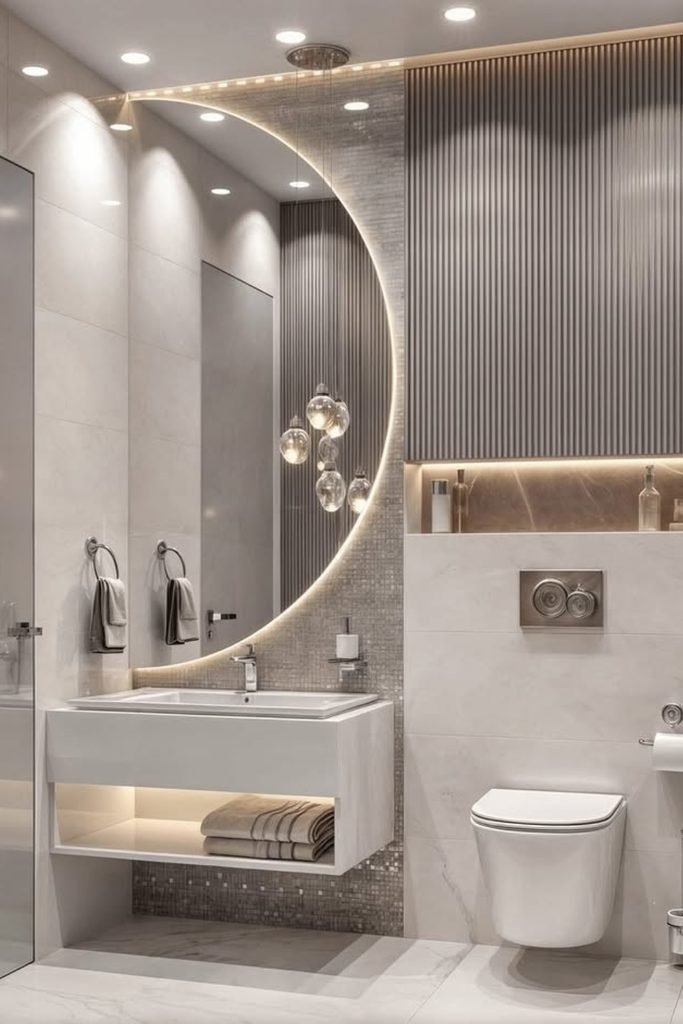
Curved Mirror
Try a large curved mirror when a compact modern bathroom needs more reflection but a full rectangular panel would feel too rigid.
Run the mirror high above the vanity, then use soft backlighting along the curved edge to separate it from textured surfaces.
Keep surrounding finishes quiet and linear, because the sweeping curve already adds movement and can carry the entire vanity wall visually.
Suspended Mirrors
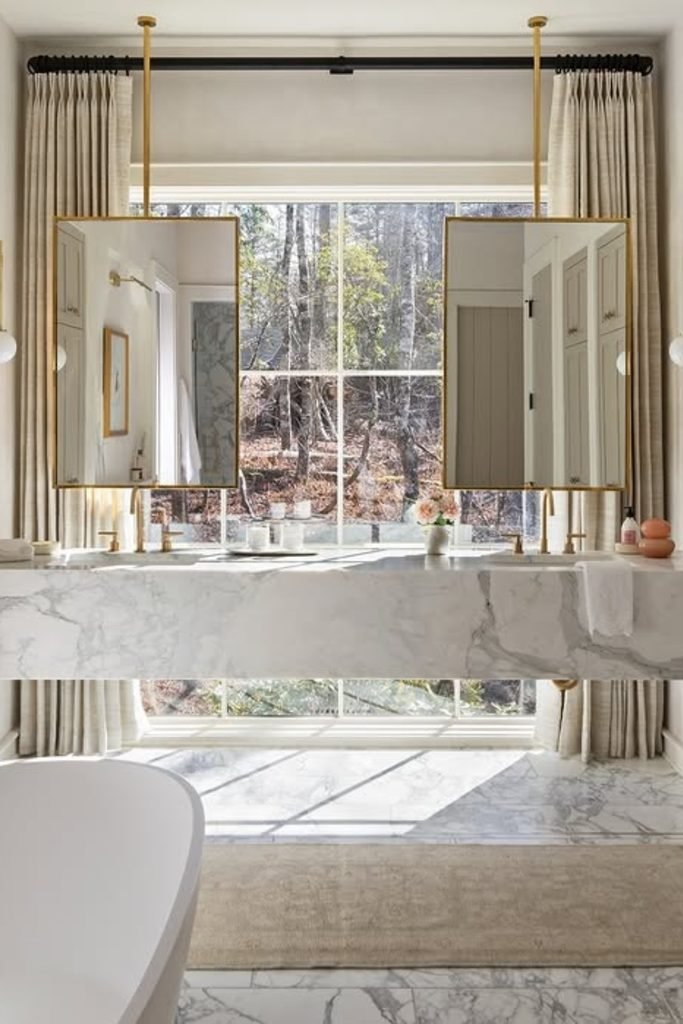
Suspend mirrors in front of a wide window when you need vanity reflection without blocking the daylight that makes the bathroom feel open.
Use slim metal frames and ceiling rods, then center each mirror over its sink so the layout stays balanced and functional.
Keep surrounding cabinetry simple and symmetrical, because too many heavy details will compete with the window and make this airy setup feel crowded.
Wooden Ovals
Tall oval mirrors suit warm, earthy bathrooms because their curves soften the vanity while the wood frames repeat natural tones already nearby.
Place one above each basin and keep equal spacing between them, especially when the vanity is long enough to support clear symmetry.
Finish with simple wall-mounted faucets and quiet accessories so the mirrors stay connected to the calm palette instead of becoming decorative extras.

Niche Arch
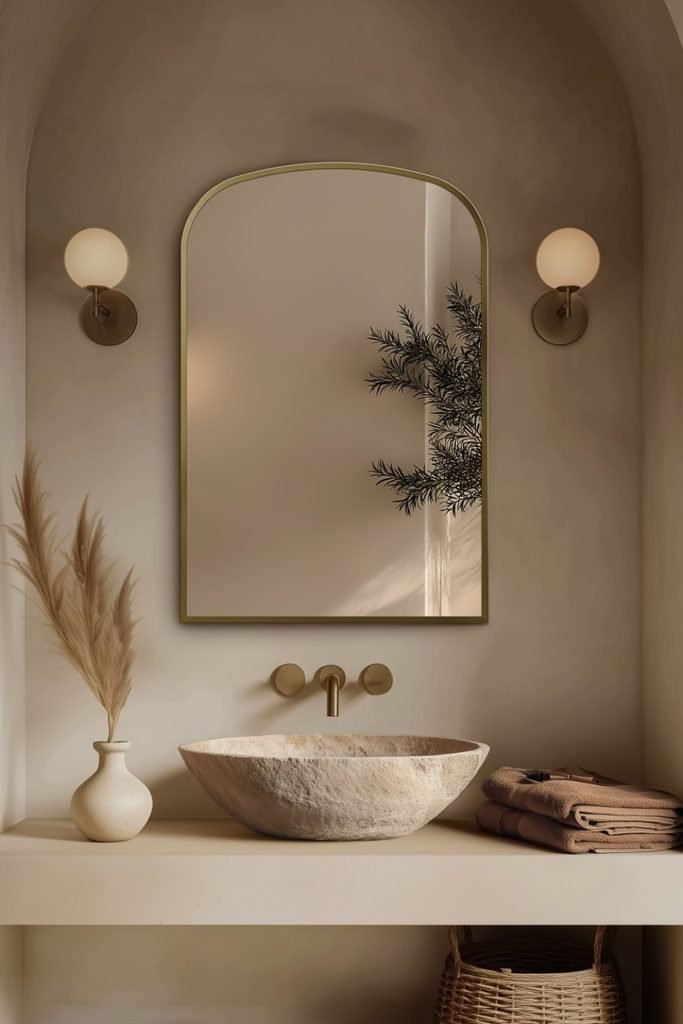
An arched mirror feels especially intentional inside a recessed vanity niche, where its curved top can echo the architecture instead of fighting it.
Choose a frame finish that repeats the faucet, then place matching sconces on both sides to keep the small setup polished and balanced.
Leave plenty of plain wall around the mirror, because the alcove already creates enough shape and does not need extra visual noise.
Wavy Mirror
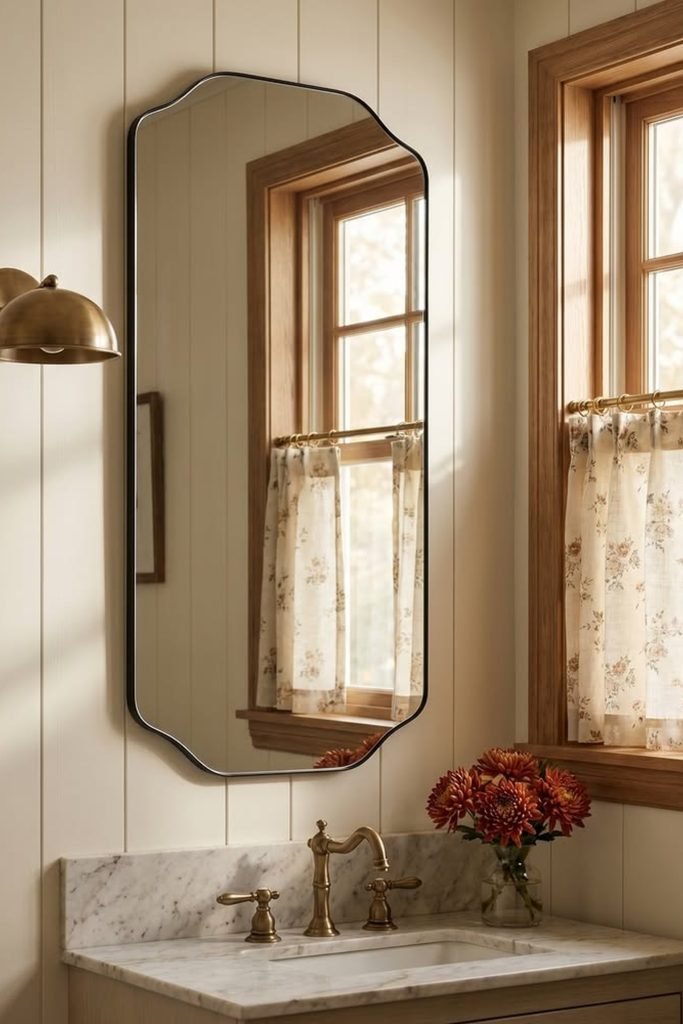
A tall wavy mirror works well beside a window when the vanity is narrow and you want more height without adding visual bulk.
Keep the frame thin and dark so the shape reads clearly against light paneling, then let the nearby timber add warmth.
Use one compact wall light instead of two side sconces, especially when a window already limits how much wall space you have.
Ornate Gold
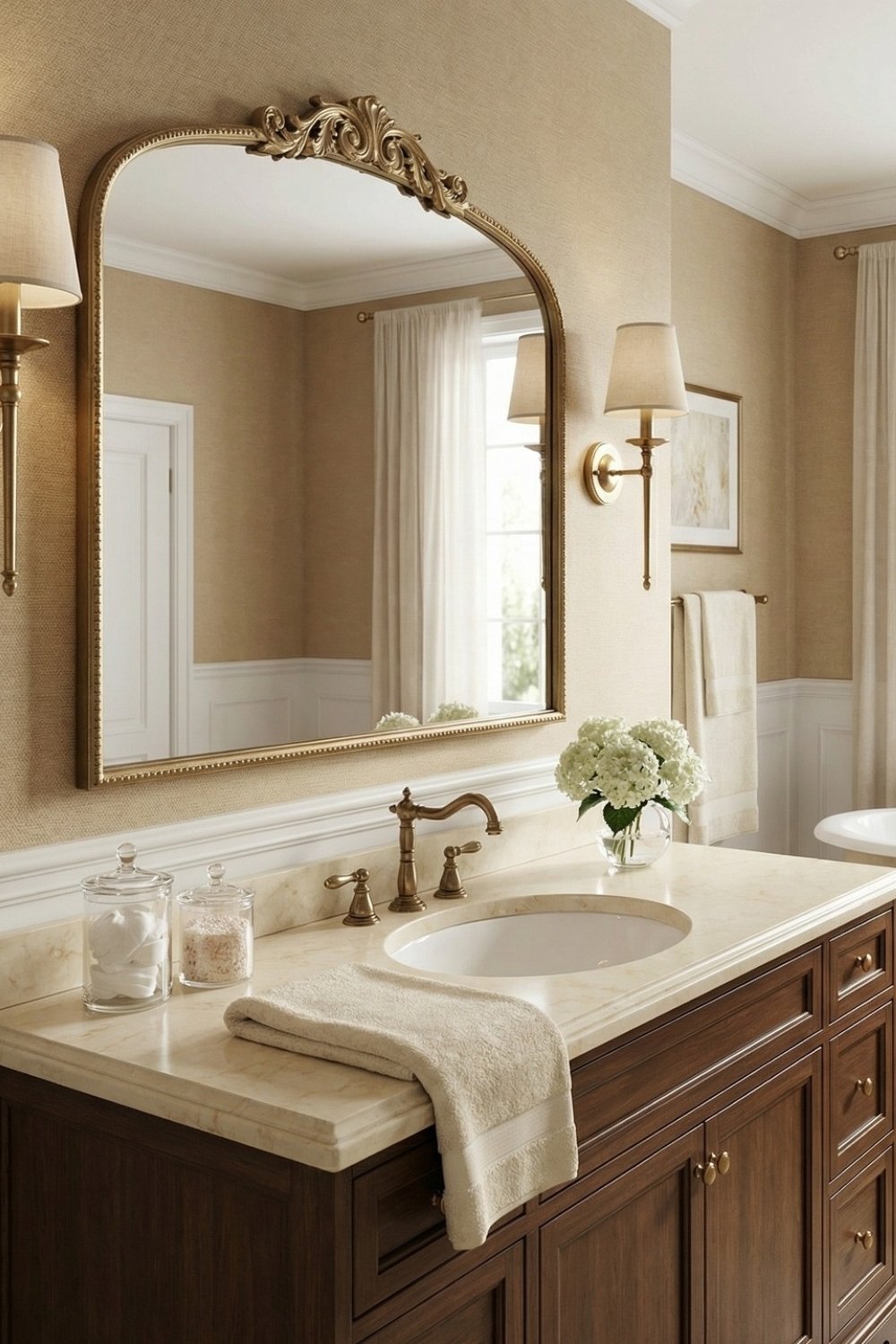
Choose an ornate gold mirror when a traditional bathroom needs one decorative feature that can carry the room without extra wall art.
Pair it with warm wood cabinetry, cream stone, and classic sconces so the detailing feels connected instead of overly formal.
Keep the surrounding palette quiet and let the carved frame bring character, especially if your vanity itself has simple traditional lines.
Black Rectangle
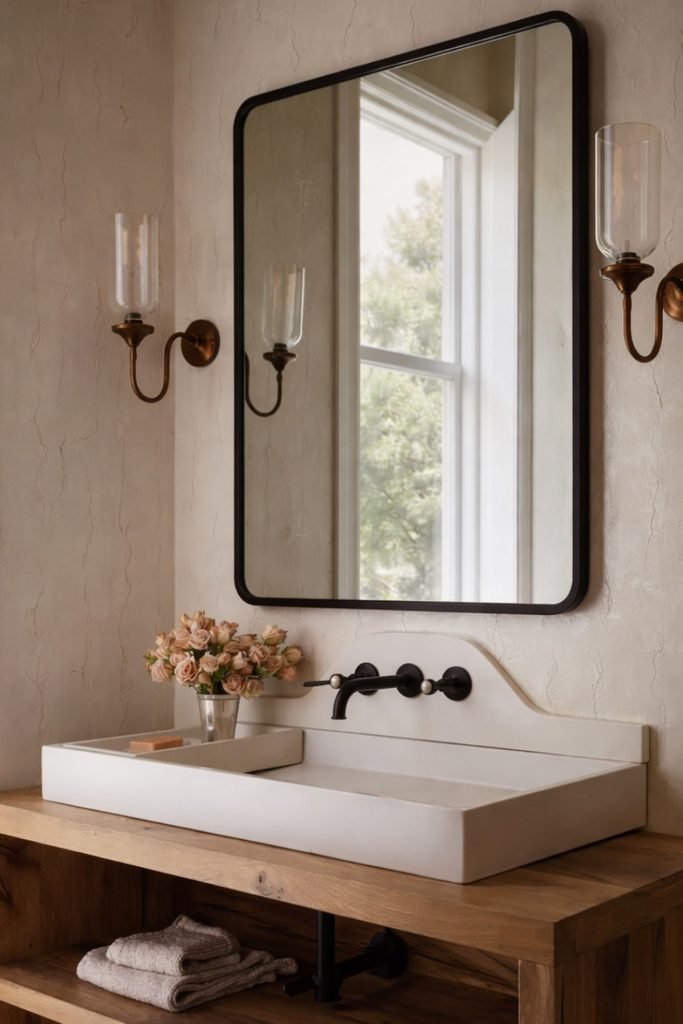
A slim black rectangle works best when your bathroom mixes rustic wood with clean modern fixtures and needs one grounding detail.
Use rounded corners to soften the shape, then position simple sconces outside the frame so the mirror stays visually calm.
Repeating black at the faucet or towel rail ties everything together without forcing every metal finish to match perfectly throughout the room.
Sculpted Brass
Use a sculpted brass mirror to give a pale bathroom more shape when the vanity, walls, and cabinetry are otherwise very straight.
Its narrow profile suits smaller vanities especially well, because you get decorative impact without covering too much of the surrounding wall.
Match the frame with sconces or cabinet hardware, then keep countertops restrained so the unusual outline remains easy to notice.
Organic Outline
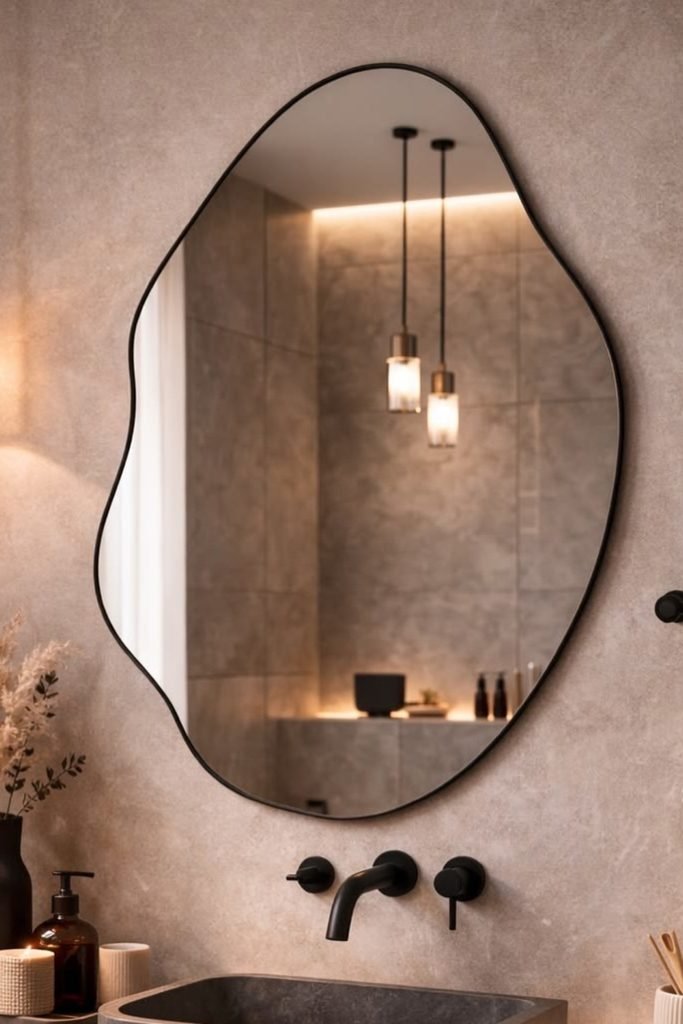
An organic mirror is a smart choice when textured walls and dark fixtures need something softer than another strict geometric shape.
Choose a size that fills the vanity zone generously, but leave enough wall around it for the irregular edge to read.
Warm pendant lighting works especially well here, because it highlights the outline while keeping the black frame from feeling too harsh.
Slim Rectangle
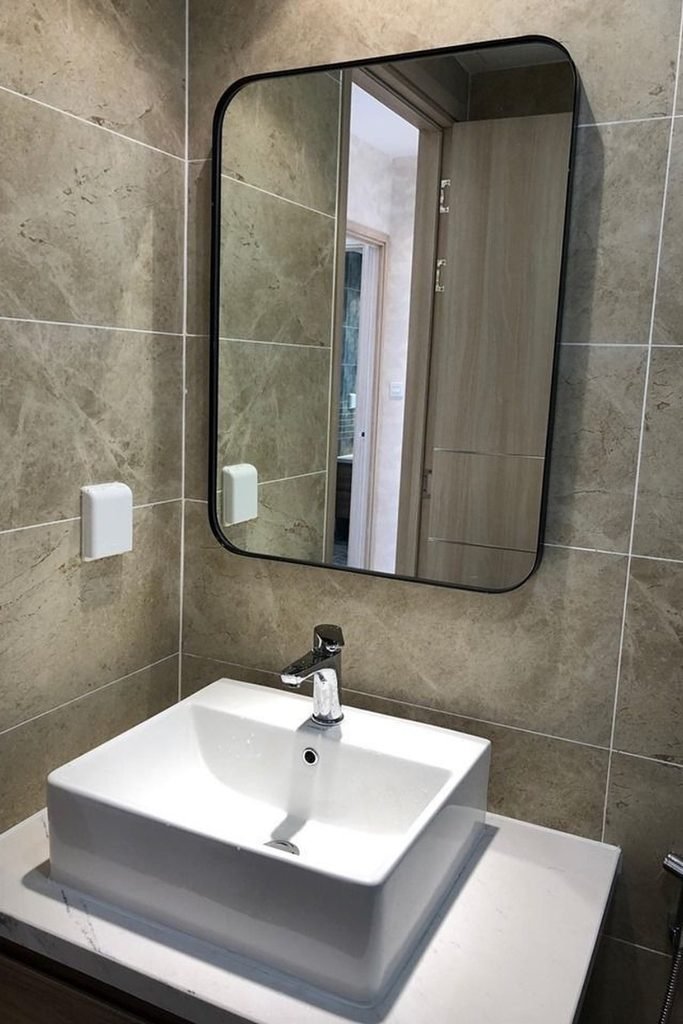
Choose a slim black mirror when a compact tiled bathroom needs definition without adding another bulky feature above the sink.
Rounded corners soften the hard tile lines, while the narrow frame keeps the wall clean and visually easy to handle.
Center it closely over the basin, then keep nearby accessories minimal so the small vanity does not start feeling crowded.
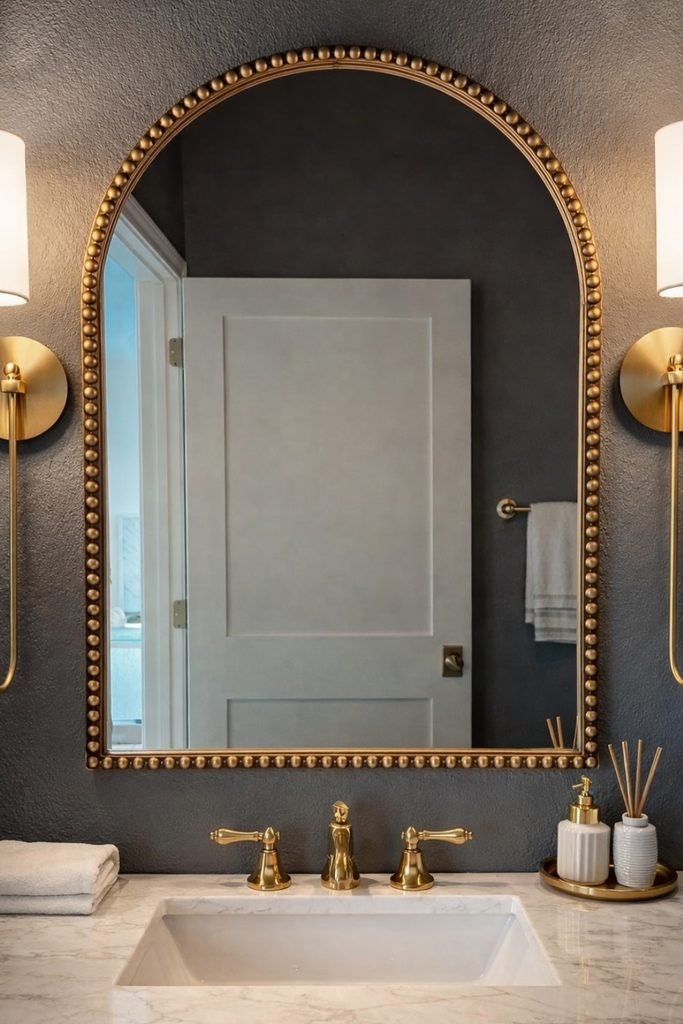
Beaded Arch
A beaded gold arch works best against dark walls, where the detailed frame can stand out without needing extra decoration.
Place matching sconces at both sides to brighten the face evenly and repeat the warm metal finish around the vanity.
Keep the countertop simple, because the textured border already gives the mirror enough presence to anchor a small bathroom wall.
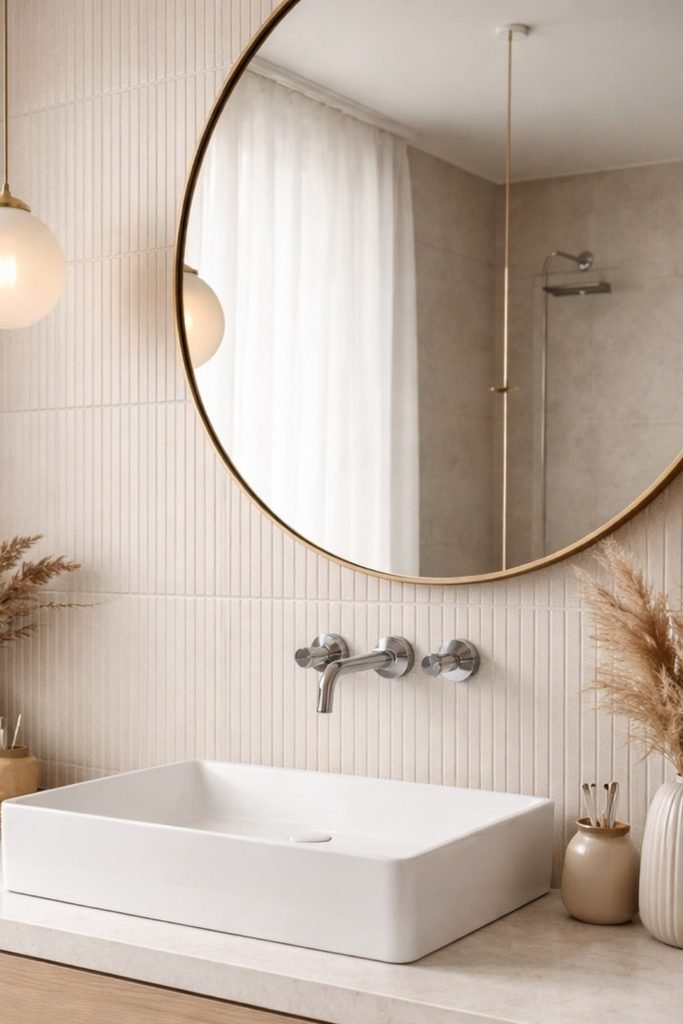
Round Brass
Use a large round mirror to soften vertical tile and square cabinetry when your bathroom already has plenty of straight lines.
A thin brass frame adds warmth without stealing attention from natural wood, especially in bathrooms built around beige and cream tones.
Hang the mirror high enough for comfortable use, but leave breathing room above the vessel sink so everything feels balanced.
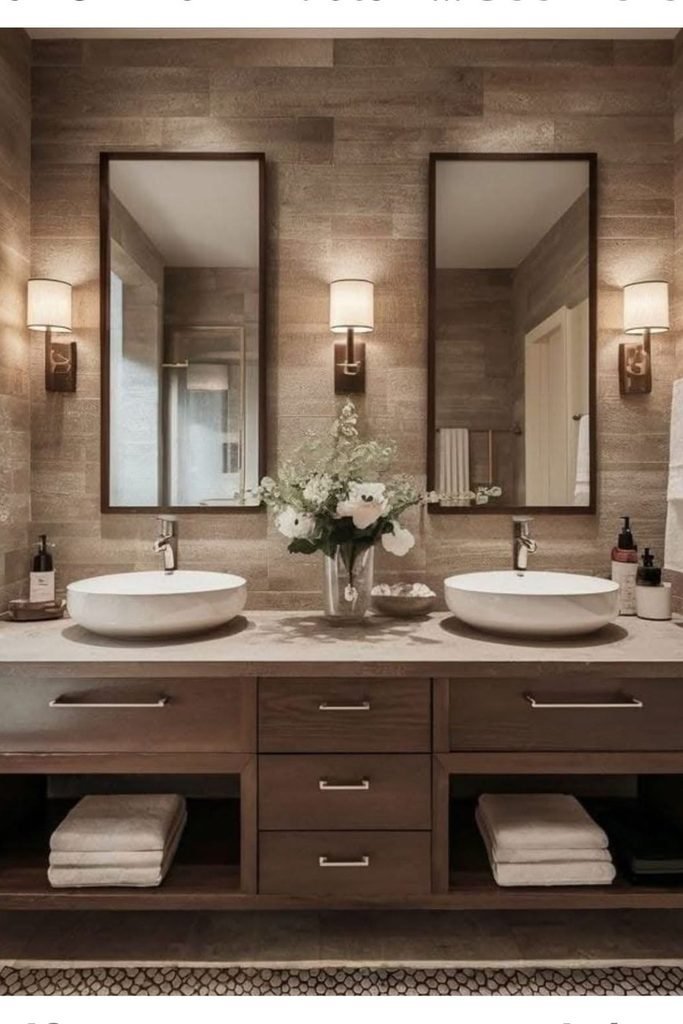
Vertical Pair
Tall rectangular mirrors suit a double vanity when you want each sink clearly defined and the wall to feel more structured.
Keep both frames narrow and equal in height, then center them directly over each basin to maintain clean visual symmetry.
Add sconces between and outside the mirrors, because that spacing gives both users useful light without crowding the stone wall.
Marble Glow
Let a backlit organic mirror break up a marble wall when the stone already brings plenty of movement and visual detail.
Keep the frame slim so the glowing edge feels clean, then center it tightly above the basin for a balanced setup.
This works especially well in compact bathrooms, where warm lighting can soften darker stone without adding another fixture beside the mirror.

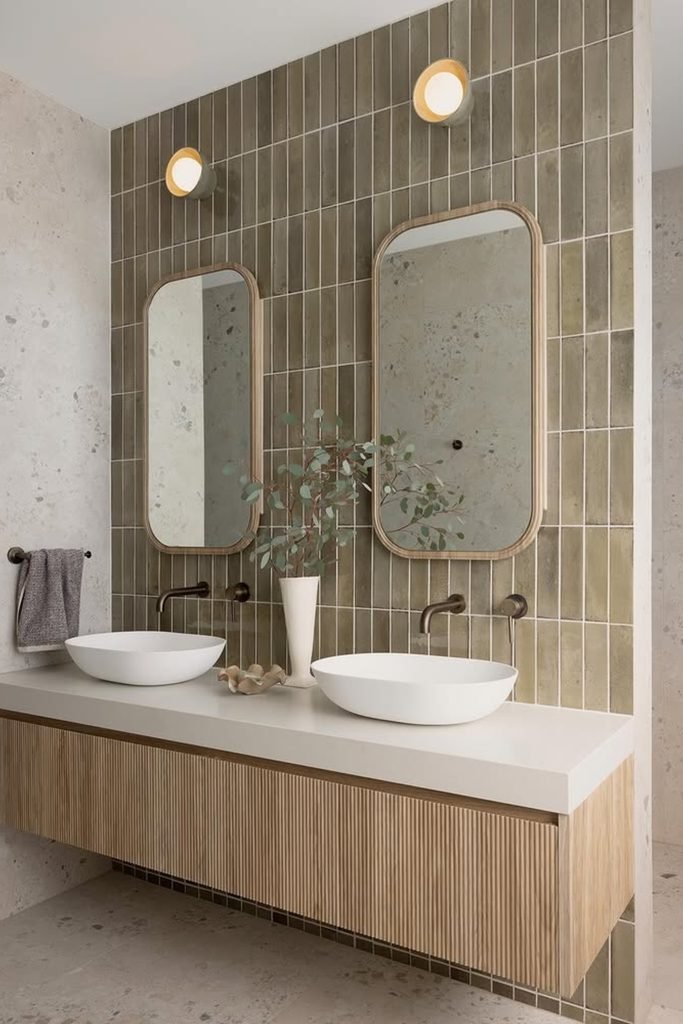
Twin Rectangles
Use matching rounded rectangles over a double vanity when you want clear symmetry but a full-width mirror would feel too heavy.
Center each mirror over its vessel sink, then leave enough tile between them so the wall pattern stays visible and intentional.
Warm wood frames tie into the vanity below, while small overhead lights keep the setup practical without crowding the sides.
FAQs
Should a bathroom mirror be wider than the vanity?
A bathroom mirror usually looks best when it stays slightly narrower than the vanity, but the exact width depends on sink placement.
If your vanity is very wide, one larger mirror can work well, especially when you need more reflection and visual balance.
Leave enough space for sconces, cabinet doors, or nearby walls so the mirror never feels squeezed into the available area.
How do you stop a bathroom mirror from fogging?
Good ventilation is the first fix, because removing humid air after a shower helps reduce condensation before it covers the mirror.
If fogging happens often, an anti-fog mirror or heated demister pad can keep the central viewing area clear for grooming.
Keep in mind that some demisters heat only part of the glass, so check the covered area before buying one.