Choosing a bathroom that looks beautiful today is easy, but choosing one you will still love years from now is where most people get stuck.
If you play it too safe, the room can feel plain; if you follow every trend, expensive tile, vanities, and fixtures can date faster than expected.
In this article, you’ll learn how to create a timeless master bath that feels warm, current, practical, and personal.
Let’s jump in!
What Makes A Timeless Bathroom?
A timeless bathroom starts with choices that still make sense after trends change, especially the tile, vanity, countertop, layout, and plumbing fixtures.
If you keep these expensive parts simple and well balanced, you can update the room later without starting another full renovation.

Warm neutrals, natural wood, classic stone, practical storage, and good lighting usually age better than finishes that depend heavily on one current trend.
You also need to think about daily use, because a beautiful bathroom will not feel timeless if the shower feels cramped or storage never works.
The best approach is to build a strong, practical base first, then add personality through paint, mirrors, hardware, art, and other details you can change easily.
Marble Bath
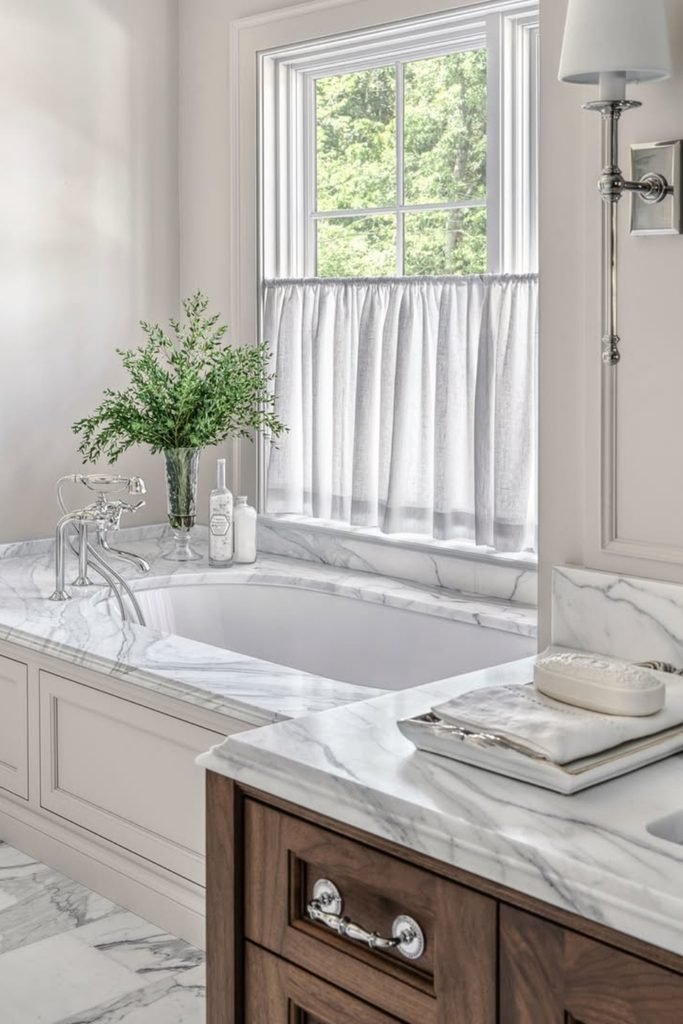
Placing the tub beneath a bright window turns an everyday soak into a calm focal point without crowding the bathroom.
Carry marble across the tub surround and nearby counter so separate functional zones feel connected, polished, and intentionally planned together.
For privacy without losing daylight, a simple café curtain works beautifully, while chrome fixtures keep the pale palette crisp and classic.
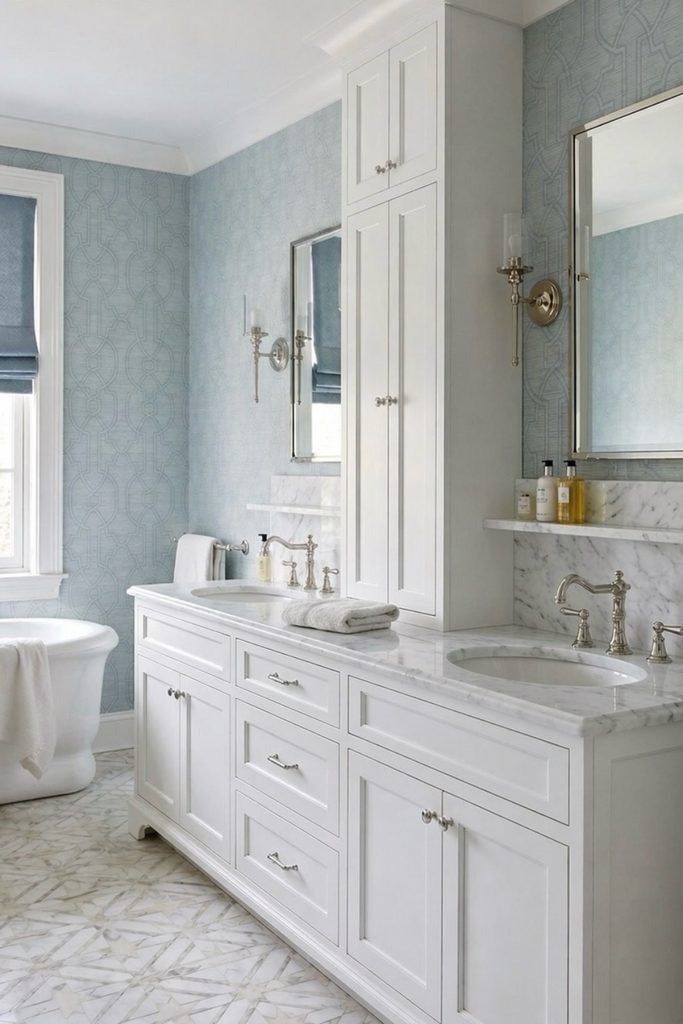
Blue Vanity
When a bathroom has one long wall, stretching the vanity across it gives two sinks generous storage without breaking visual flow.
Soft blue wallpaper adds pattern behind the mirrors, while white cabinetry and marble surfaces prevent the detailed backdrop from feeling busy.
Use tall built-in cabinets between grooming zones when shared bathrooms need extra linen storage without sacrificing valuable countertop space nearby.
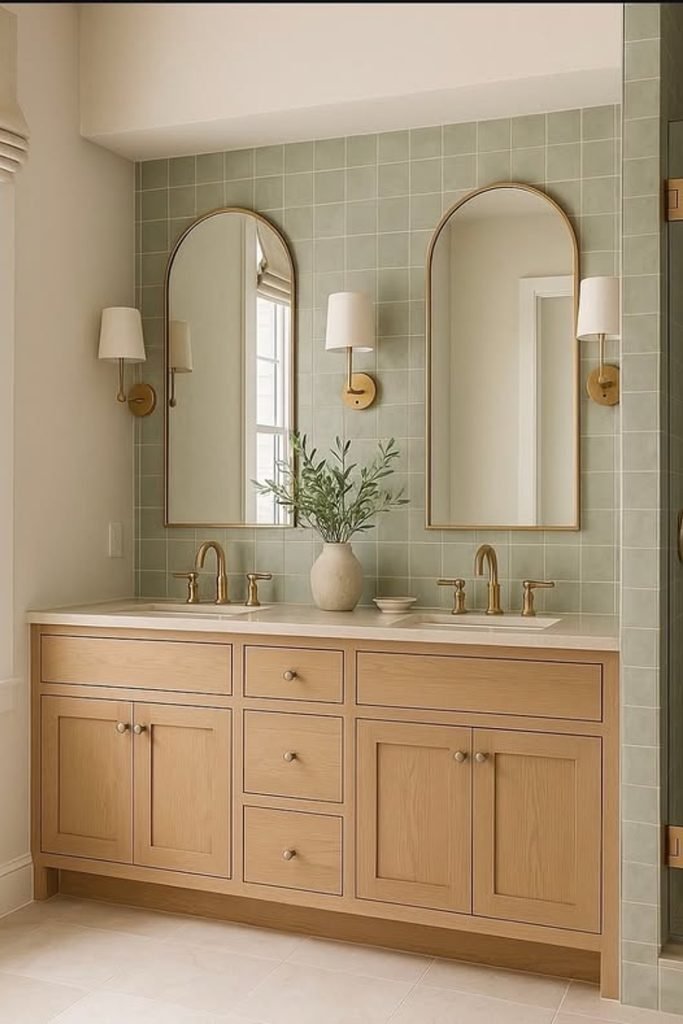
Sage Tiles
Muted sage tiles make a double vanity feel warmer than plain white walls, especially when natural light already fills the room.
Pair them with light oak cabinetry and slim brass mirrors to create contrast while keeping the bathroom soft, relaxed, and uncluttered.
Running the same tile into the shower creates continuity, making this approach especially useful when vanity and shower share one wall.
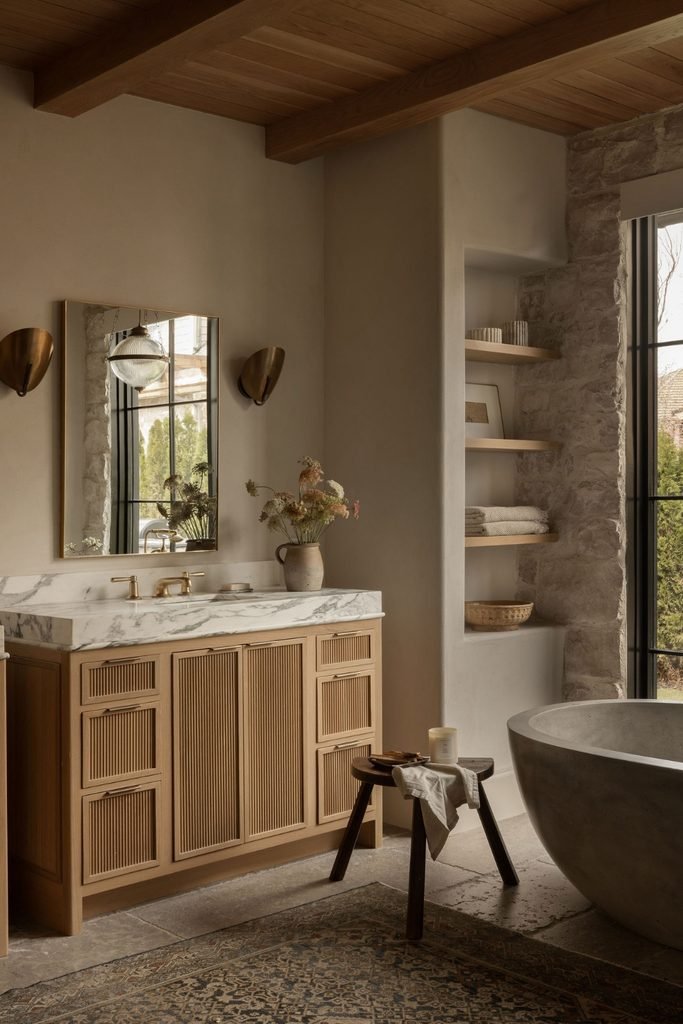
Rustic Textures
Rustic bathrooms feel more finished when natural textures repeat, so connect a timber ceiling, wood vanity, stone walls, and earthy flooring.
Choose fluted cabinet fronts when you want the vanity to bring texture without adding another decorative pattern to an already layered room.
A freestanding stone tub beside the window balances the heavier cabinetry, while open wall niches keep towels accessible and visually relaxed.
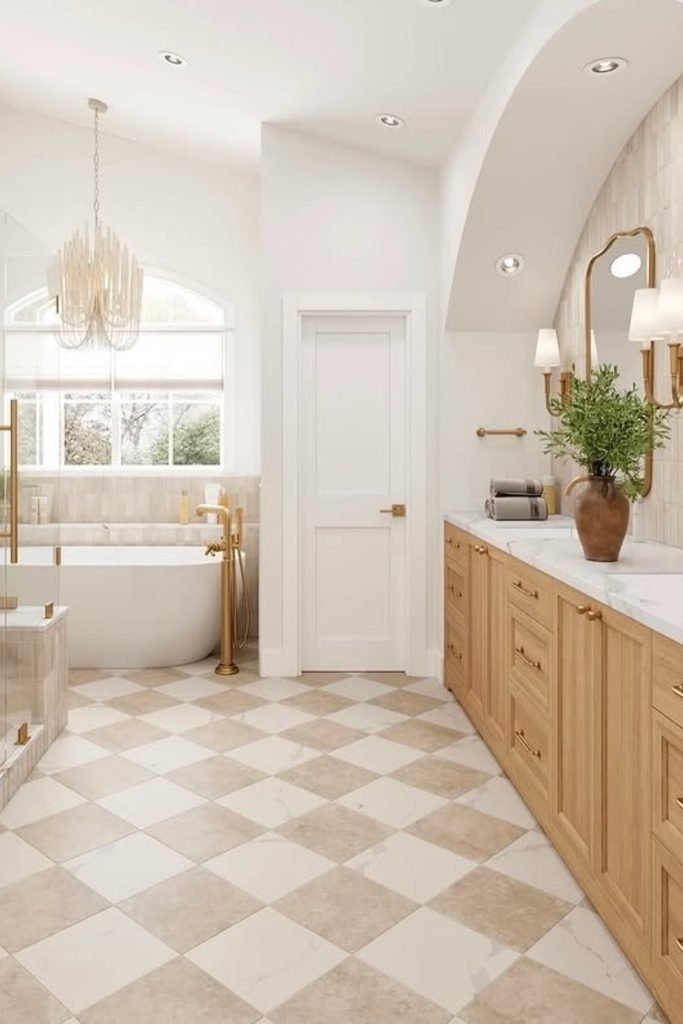
Arched Vanity
A sweeping arch above the vanity softens the long bathroom layout, making practical cabinetry feel more architectural and thoughtfully integrated.
Repeat warm oak, creamy stone, and brushed brass across the vanity so the spacious room stays cohesive instead of visually disconnected.
Checkerboard flooring brings gentle movement underneath, while recessed ceiling lights and shaded sconces keep the pale surfaces comfortably illuminated throughout.
Balanced Layout
Centering a freestanding tub between matching vanities creates satisfying symmetry and gives a large primary bathroom an instantly organized visual rhythm.
Keep both vanity sides nearly identical with stone counters, oversized mirrors, open towel storage, and matching fixtures for a composed finish.
Finish the central bathing zone with a chandelier and tall window treatments, drawing attention toward the tub without overcrowding surrounding surfaces.

Compact Wetroom
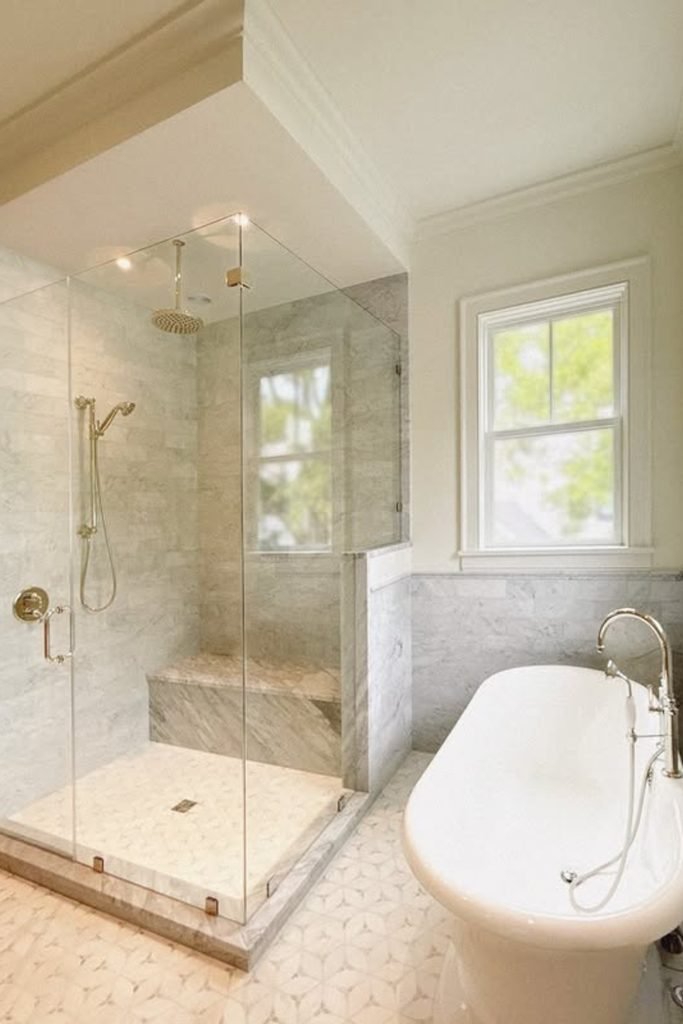
Limited floor space becomes easier to manage when the shower and freestanding tub sit together rather than competing across separate bathroom zones.
Build the shower with frameless glass and pale stone, allowing light from nearby windows to travel through instead of stopping abruptly.
Continue similar marble tones across flooring and half walls so every surface connects naturally, making the narrow arrangement appear noticeably more spacious.
Window Tub
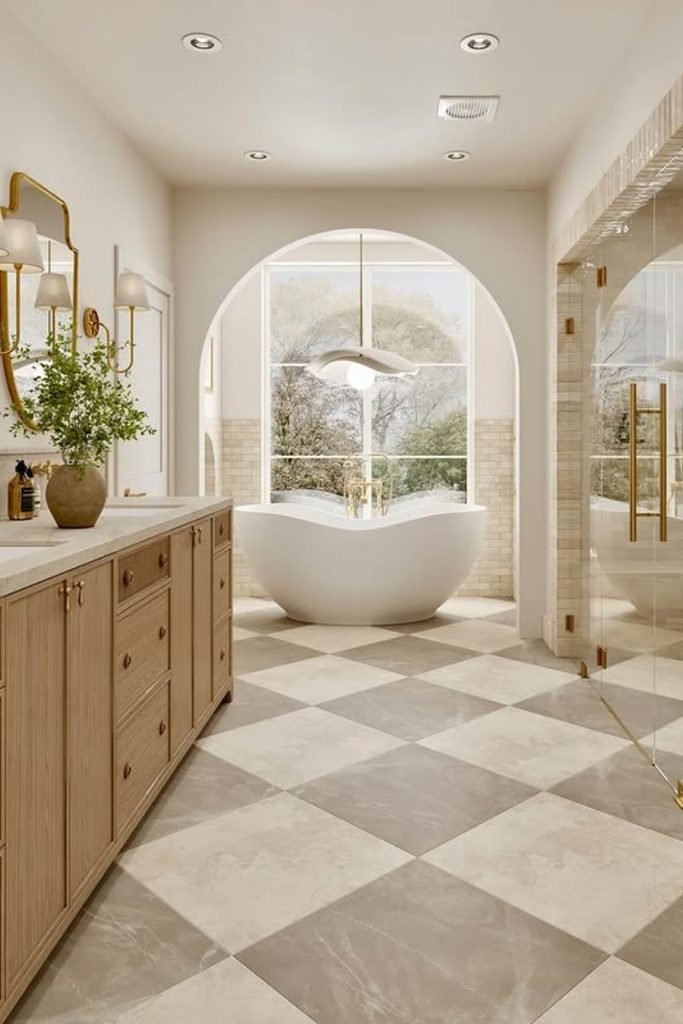
A large arched window gives the bathtub a natural destination, turning the far end of a long bathroom into an inviting retreat.
Keep the pathway open by placing the vanity along one wall and the glass shower opposite, leaving comfortable circulation through the center.
Large checkerboard tiles visually connect each zone, while warm wood cabinetry and brass fixtures soften the bathroom’s otherwise bright neutral palette.
Seamless Stone
Covering walls, floors, and counters in closely matched stone tones makes a narrow bathroom feel continuous instead of divided into separate sections.
Keep the vanity streamlined along one side, leaving a clear walkway toward the tub while frameless glass prevents the shower from closing in.
Warm recessed strips, small ceiling spots, and pendant lights soften the stone surfaces and bring depth without introducing unnecessary decorative clutter.

Botanical Retreat
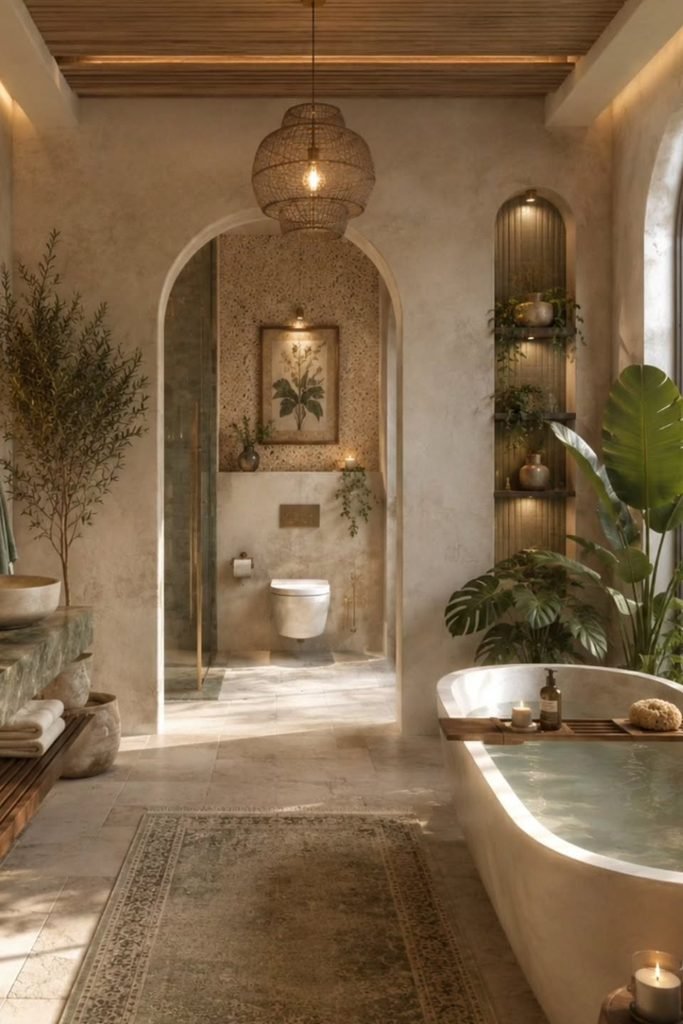
Bring greenery beside the bathtub when large windows provide natural light, turning an ordinary bathing corner into a relaxed garden-inspired escape.
Stone vessel sinks and an open wood vanity reinforce the earthy mood, while arched openings help different bathroom zones connect naturally.
Layer vertical sconces, niche lighting, ceiling strips, and a woven pendant to keep the textured walls warm after daylight begins fading.
Vintage Bath
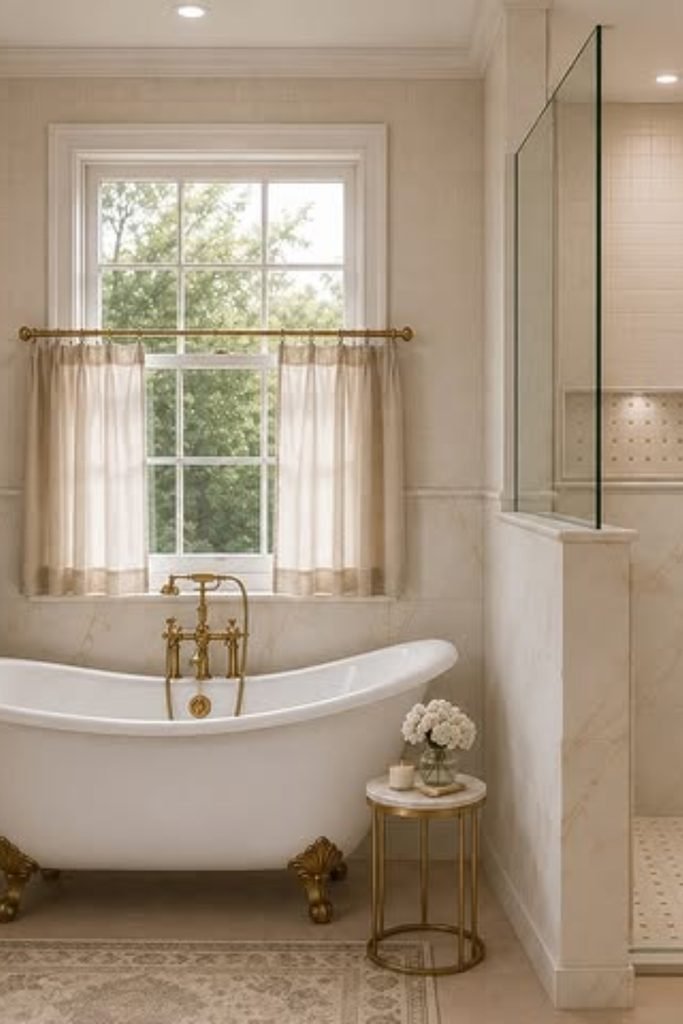
A clawfoot tub instantly gives a smaller bathroom character, especially when positioned beneath a window where it can become the main feature.
Use soft marble around the nearby walk-in shower, keeping the palette light so the traditional bathtub never makes the room feel dated.
A café curtain adds privacy while preserving daylight, and aged brass fixtures connect the shower, tub, and small accent table beautifully.
Grand Symmetry
Putting the bathtub directly beneath a dramatic window creates a strong center point that makes a spacious bathroom feel intentionally balanced.
Flank the bathing area with matching white vanities and tall cabinetry, giving everyday storage plenty of room without distracting from the view.
Finish overhead with a crystal chandelier, then repeat warm brass hardware around the cabinetry to bring softness into the crisp white scheme.

Warm Retreat
Soft beige finishes work especially well when you want a larger bathroom to feel cozy rather than overly polished or empty.
Run the wood vanity along one wall, then balance its visual weight with a freestanding tub and glass shower opposite.
Built-in niches add practical storage, while amber sconces and concealed lighting bring enough warmth to soften every stone and timber surface.

Window Bath
When you have a wide bathroom window, placing the tub beside it lets natural light become part of the bathing experience.
Keep the opposite wall dedicated to a long wood vanity, giving storage plenty of space without interrupting the open central walkway.
Clear shower glass maintains those sightlines, while brass fixtures introduce enough warmth to connect the pale stone with darker wood cabinetry.
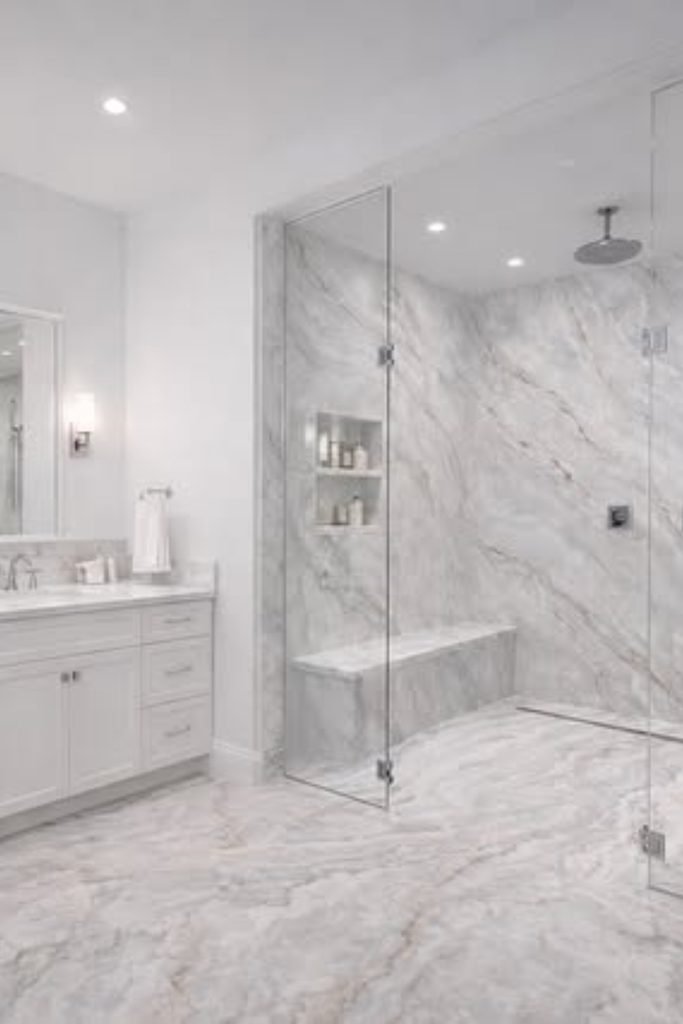
Marble Shower
For a bathroom that already has generous floor space, an oversized glass shower can become the feature instead of adding extra furniture.
Continue marble from the floor into the shower walls, creating a seamless transition that makes the enclosure feel integrated rather than separate.
Keep the vanity pale and understated beside it, then use simple sconces and recessed ceiling lights to maintain the clean atmosphere.
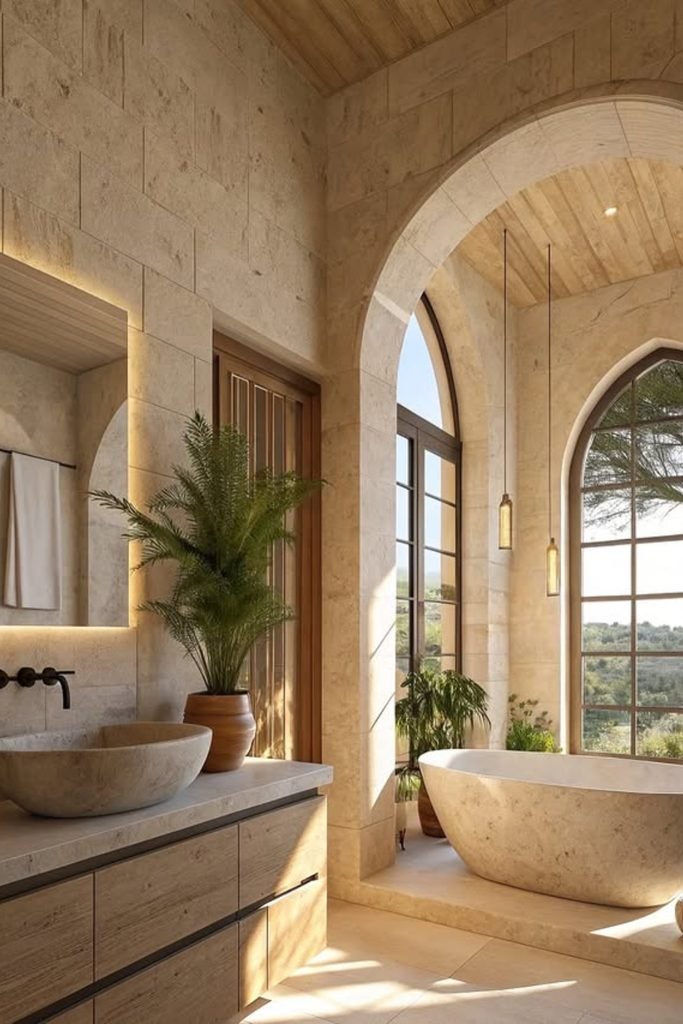
Stone Arches
Tall arched openings can turn the bathing area into its own destination while keeping it visually connected with the vanity nearby.
Repeat sandy stone across walls, floors, and the sculptural tub, then introduce warm wood overhead to break up the hard surfaces.
Slim pendant lights emphasize the ceiling height, while large windows and leafy plants keep the earthy palette feeling bright and naturally relaxed.
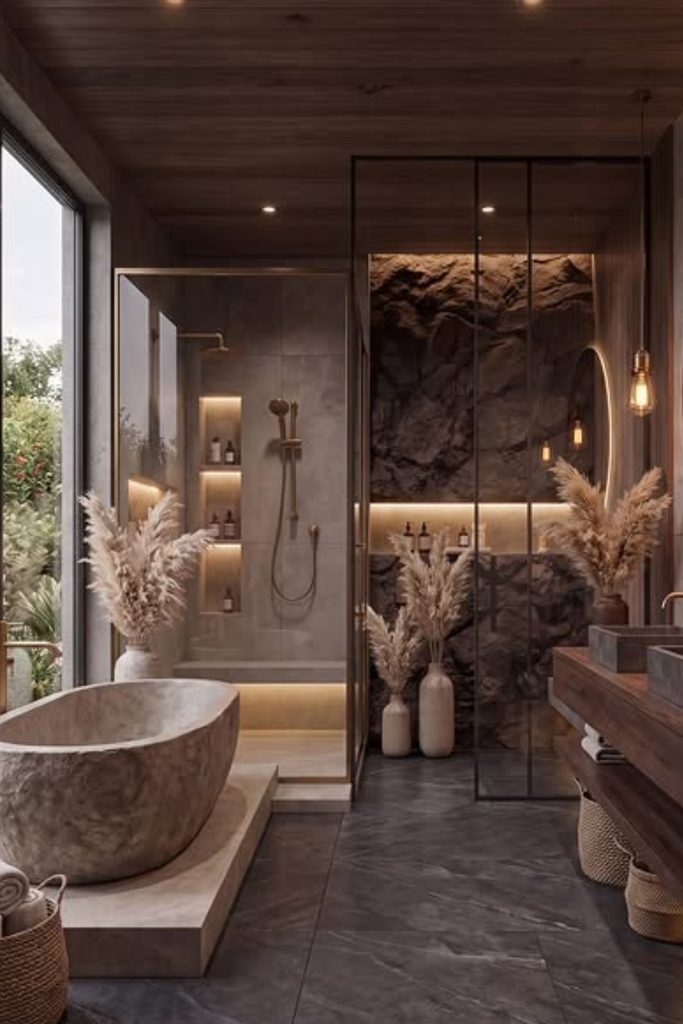
Moody Spa
Dark stone and walnut instantly create a cocooning bathroom, especially when generous windows prevent the deeper palette from feeling enclosed.
Set a sculptural stone tub near the glass, then repeat natural textures through woven baskets, pampas stems, and an open vanity.
Backlit mirrors, pendant lights, and illuminated shower niches add layered warmth, bringing definition to darker surfaces without overpowering their relaxed mood.
Garden Bath
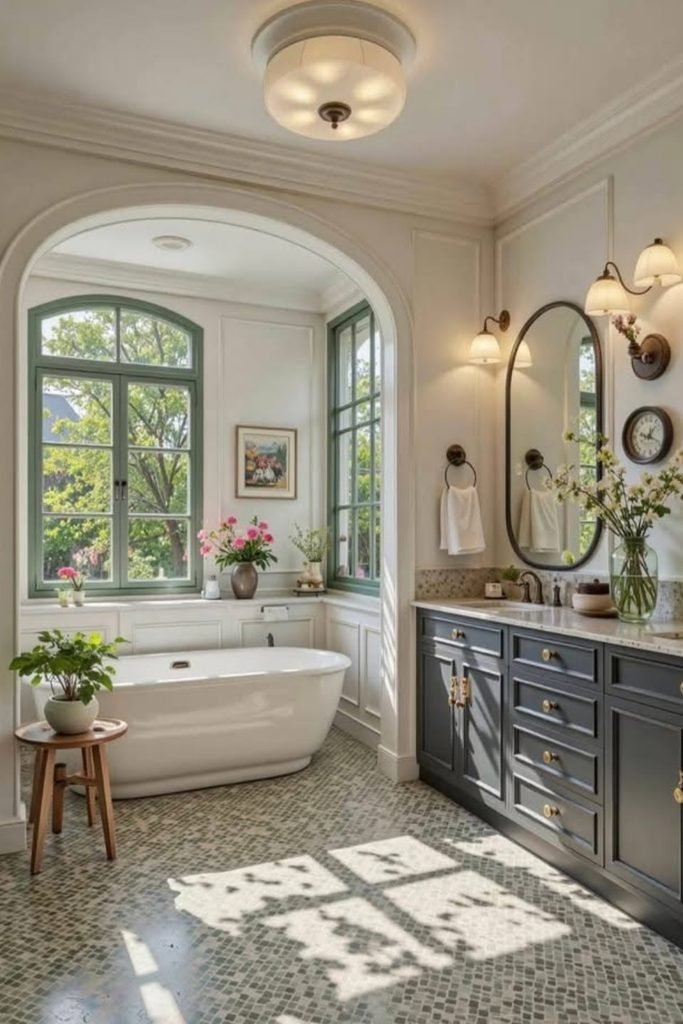
An arched opening can separate the bathtub without closing it away, giving a traditional bathroom a charming room-within-a-room feeling.
Deep charcoal cabinetry grounds the brighter walls, while green window frames and small mosaic flooring introduce character without relying on bold decoration.
Use flowers and leafy plants around the window ledge, letting garden views become part of the bathroom rather than adding unnecessary accessories.
Open Shower
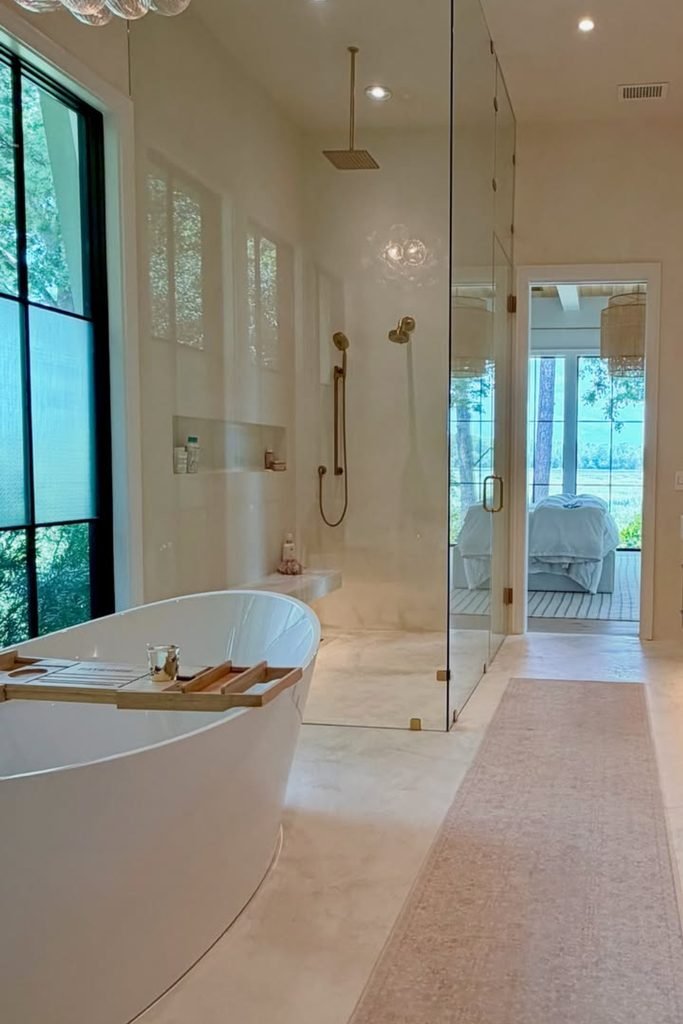
Skipping bulky shower framing makes a long bathroom feel noticeably wider, especially when the tub and shower already share the same side.
Choose one oversized glass panel to define the shower, then keep pale stone underfoot so the entire bathroom reads as continuous.
A floating wood vanity adds warmth opposite the glass, while tall mirrors and slim sconces draw attention upward through the narrow layout.
Classic Contrast
Dark wall paneling gives a white clawfoot tub much stronger presence, making this approach perfect for bathrooms with traditional architectural details.
Carry rich wood across the ceiling trim and arched doorway, then use brown curtains to frame the window behind the bathtub.
Small patterned floor tiles keep the palette from becoming heavy, while brass fixtures and globe lighting add warmth without changing its heritage character.

Refined Vanity
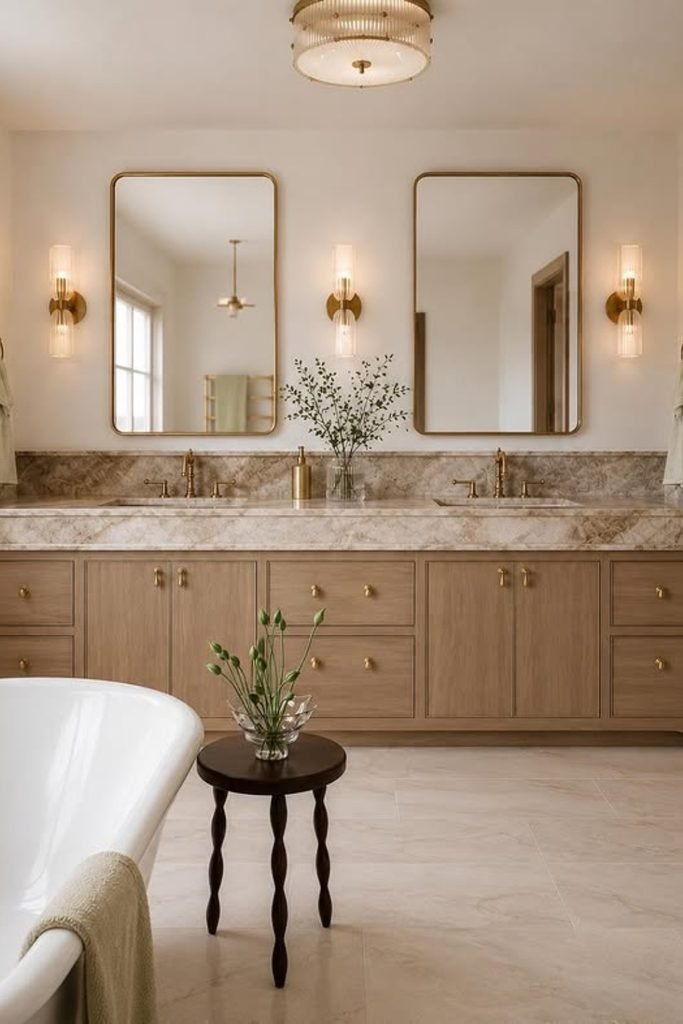
A wall-length double vanity gives shared bathrooms breathing room, especially when separate mirrors and sconces create a clear grooming zone for each sink.
Choose warm wood cabinetry with a softly veined stone counter, then repeat brass hardware to keep the neutral palette from feeling flat.
Leaving the tub partially visible in front adds depth, while a small dark table creates contrast and keeps bathing essentials conveniently nearby.
Earthy Washroom
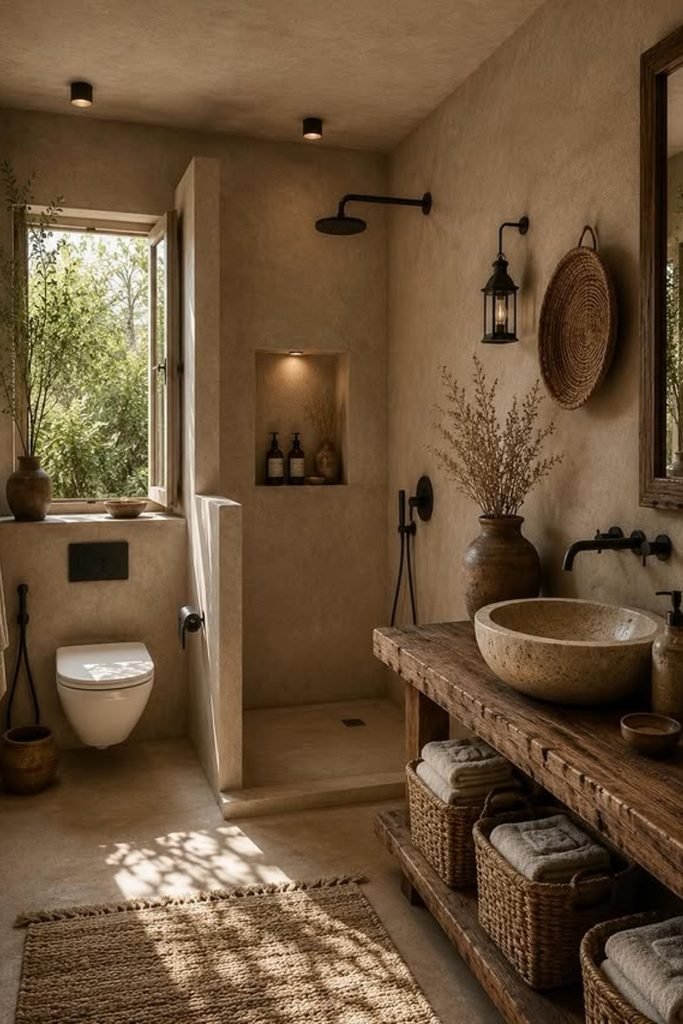
Raw plaster walls make a small bathroom feel intentionally rustic, especially when every fixture follows the same warm, earthy direction.
Build a thick timber vanity with open shelving underneath, using woven baskets to hide toiletries while keeping fresh towels easy to reach.
Matte black fixtures sharpen the softer textures, while a recessed shower niche and open window provide practical storage and natural brightness.
Cottage Bathroom
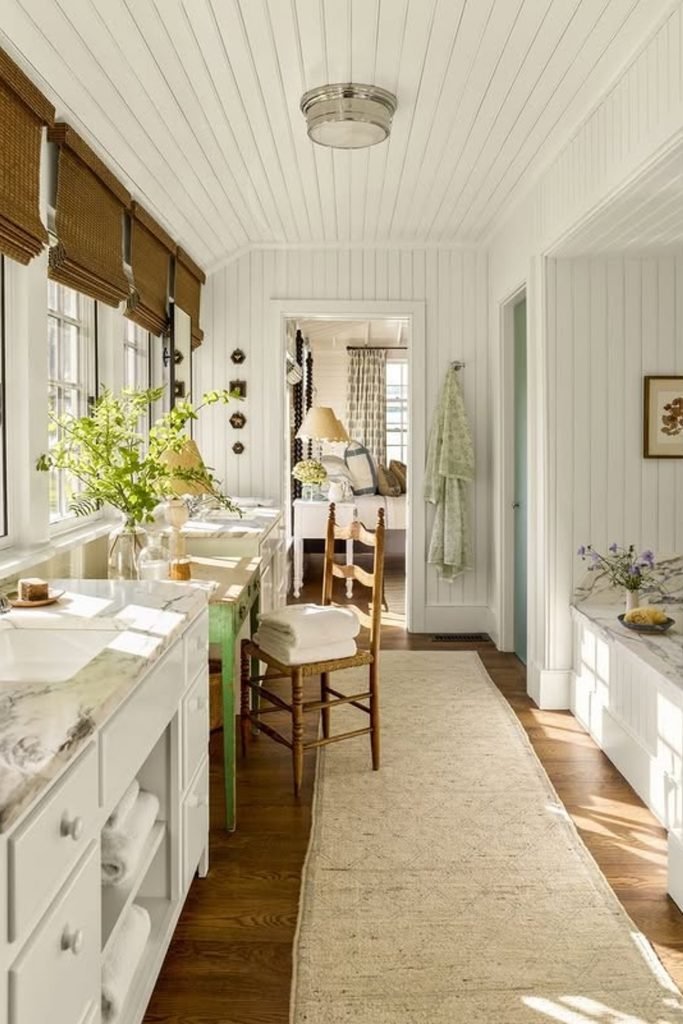
Natural light does most of the decorating here, making this long bathroom especially suited to windows running beside the main vanity.
Keep cabinetry and paneled walls white, then introduce warm wood flooring and woven blinds so the bright room still feels comfortable.
A slim runner guides the eye through the narrow layout, while marble counters and small botanical touches add gentle pattern without clutter.
Marble Glow
Full-height marble feels far less overwhelming when frameless shower glass and a floating vanity keep the bathroom visually open and streamlined.
Choose an extra-wide mirror above double sinks to bounce light around the room while making the vanity wall appear noticeably larger.
Hidden lighting behind the mirror softens the stone veining, while recessed ceiling lights and brass fixtures provide practical brightness where needed.

FAQs
What colors make a bathroom feel timeless?
Warm whites, cream, soft beige, muted green, and natural wood tones give you a flexible base that does not feel tied to one trend.
If you want more color, keep it controlled and let permanent surfaces stay quieter so future updates remain easy.
The goal is not to avoid color completely, but to use it where it adds personality without taking over the whole bathroom.
How do you keep a timeless bathroom from looking boring?
Start with classic materials, then add interest through texture, wood grain, framed mirrors, lighting, wall details, and one or two stronger accents.
If every surface is plain and neutral, the room can feel flat, so mix smooth finishes with natural texture and subtle pattern.
Keep the expensive parts calm, then use easier-to-change details for personality so the bathroom feels finished without becoming trend-heavy.