Your bathroom can have cabinets and shelves and still feel like there is nowhere to put anything once the counter starts filling up.
When toiletries, towels, and everyday essentials all compete for the same small space, even a clean bathroom can quickly feel cluttered and hard to use.
In this article, you’ll find practical bathroom storage ideas that help you clear the mess.
Let’s jump in!
What Kind Of Storage Is Best for A Bathroom?
The best bathroom storage is the kind that fits what you actually use every day instead of just filling empty space.
If your bathroom is small, wall cabinets, floating shelves, and tall narrow units give you storage without taking over the floor.

For messy vanities, drawers and closed cabinets work better because they keep toiletries easy to reach without leaving everything on display.
Use baskets, dividers, or pull-out organizers inside deep cabinets so smaller items do not disappear at the back.
Before adding anything new, look at your walls, corners, under-sink area, and space above the toilet, because these are often the easiest places to gain storage.
Corner Cart
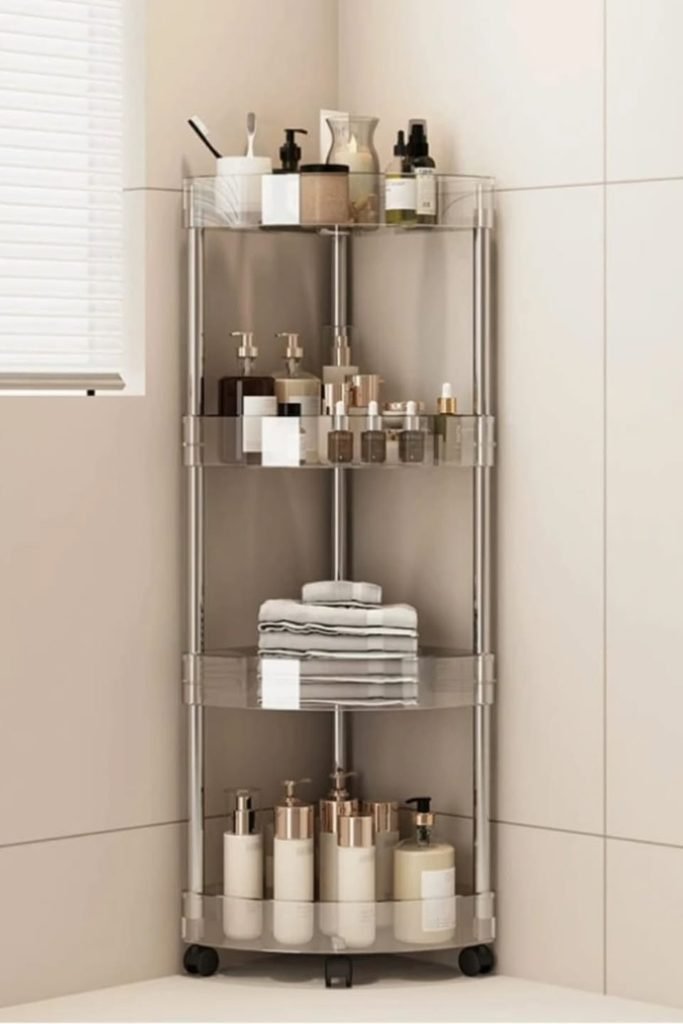
When floor space is tight, a slim corner cart gives toiletries, folded towels, and daily essentials one vertical home without crowding pathways.
Keep the products you grab most on the middle shelves, then use the lower level for bulkier bottles or extra towels.
Choose a rust-resistant frame and wipeable shelves near the shower, because constant moisture can quickly ruin storage that was meant for dry rooms.
Linen Cabinet
A tall linen cabinet works best when you need serious storage but still want towels and toiletries hidden from the busiest parts of the room.
Use open shelves for neatly folded towels, while drawers below can hold smaller items that usually make bathroom counters look messy.
If you have a narrow wall beside the vanity, pick a cabinet with more height than width to gain capacity without stealing floor space.

Storage Niche
An awkward strip beside the shower can become useful storage when you build shallow shelves into it instead of leaving the space empty.
Use baskets for loose toiletries, reserve one shelf for backups, and place a hamper low so laundry stays contained without taking another corner.
Hooks beside the niche handle damp towels better than stuffing them inside, while the open cubbies keep fresh items easy to reach.

Door Racks
Deep bathroom cabinets waste space fast, so use the inside of the door for bottles and smaller toiletries you reach for often.
Keep towels and larger baskets on the main shelves, then move narrow products onto door racks where they stay visible and easy to grab.
This setup makes sense beside a vanity because daily supplies stay close, while backup towels and extras can live deeper inside the cabinet.

Basket Bench
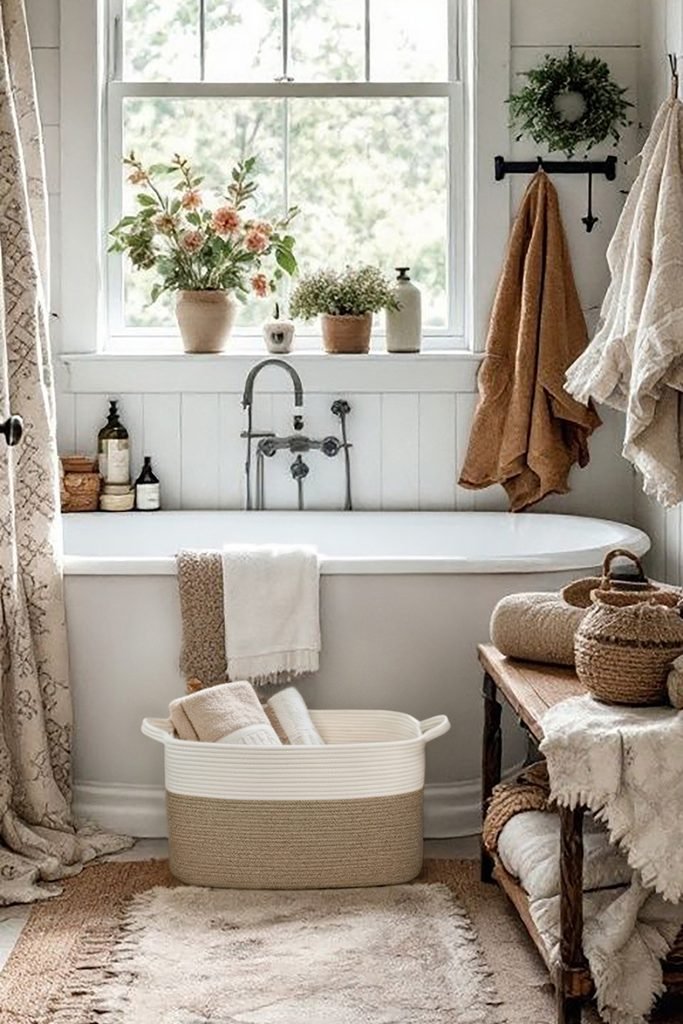
Keep a basket beside the tub when towels and bath linens need a home, especially in bathrooms without a built-in linen closet.
A low bench can hold folded extras underneath, while hooks above keep used towels drying instead of mixing with clean ones.
This setup suits relaxed, cottage-style bathrooms because soft baskets add storage without making the room feel crowded with another bulky cabinet.
Toilet Shelves
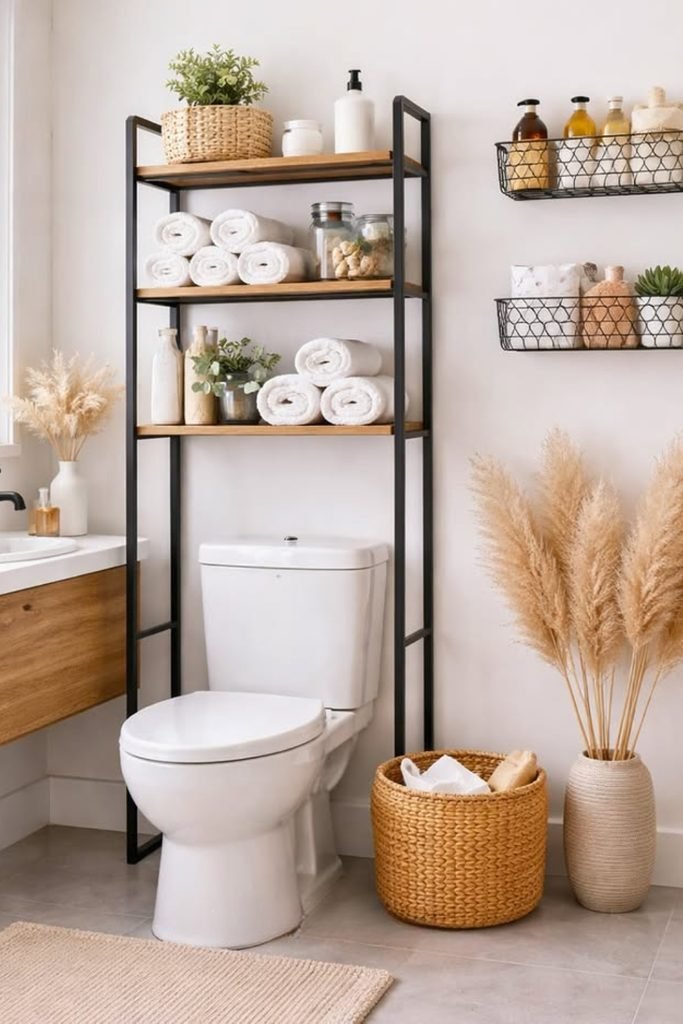
Turn the wall above the toilet into working storage when your bathroom has almost no spare floor space for another cabinet.
Use deeper shelves for rolled towels and backup toiletries, then add wall baskets nearby for smaller products you reach for often.
Keep the display edited rather than packed, because too many bottles and decorations can make this useful vertical zone look cluttered fast.
Wall Cubbies
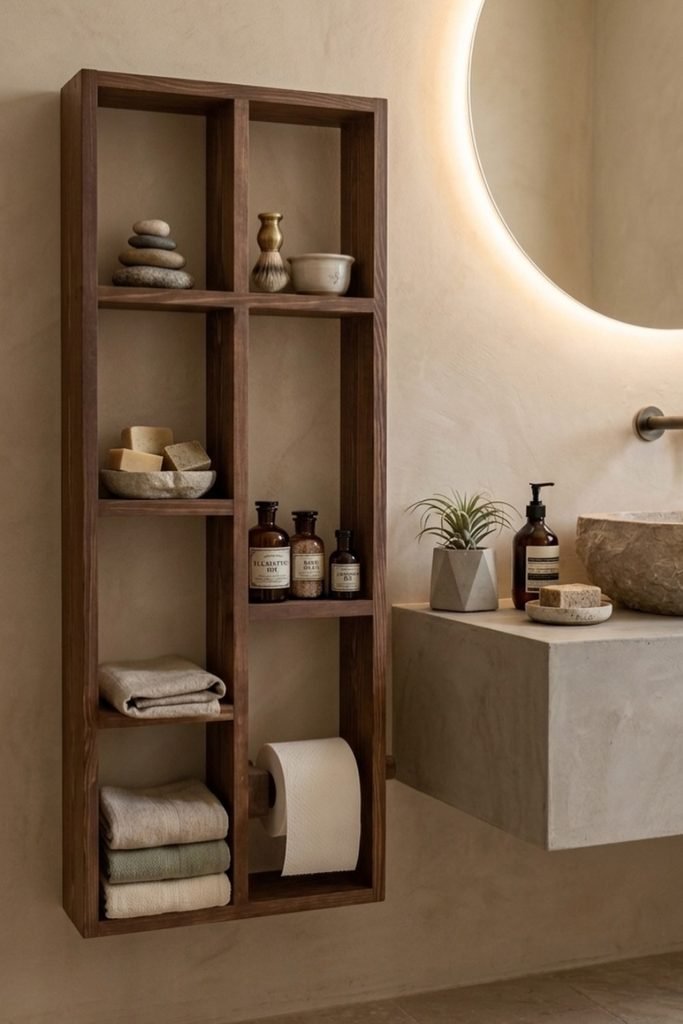
A narrow wall beside the vanity can hold more than you expect when you divide it into small, purpose-built open cubbies.
Give towels, soap, grooming products, and toilet paper separate compartments so everyday items stay visible without spreading across the countertop.
Keep the unit shallow enough to protect walking space, and use the highest cubbies for lighter backups you do not need daily.
Layered Storage
Good bathroom storage works better in layers, so let vanity drawers handle small essentials while open shelves carry towels and baskets.
Add floating shelves above the toilet for lightweight backups, keeping the counter mostly clear for the few products used every morning.
This combination works especially well in small bathrooms because each storage zone has one job instead of forcing everything into one cabinet.

Shelf Hooks
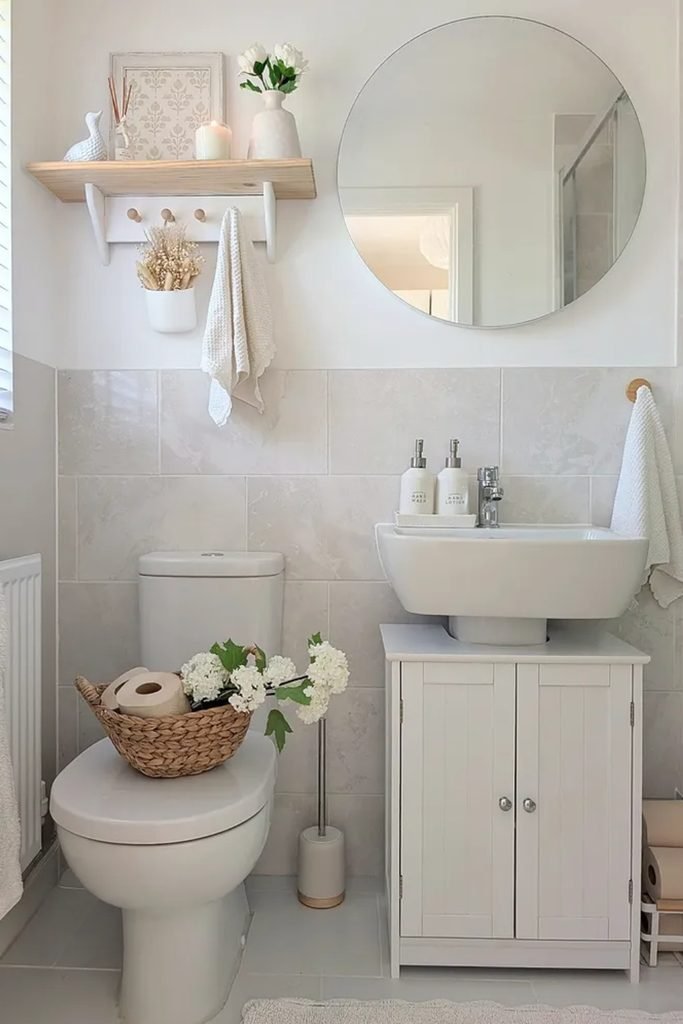
When your bathroom lacks a linen closet, combine one shallow wall shelf with hooks so towels and small essentials stay off surfaces.
Keep everyday hand towels on the hooks, then reserve the shelf for lighter items that will not make the wall feel crowded.
If toiletries still gather around the sink, use the cabinet below for backups and leave only daily products within easy reach.
Hamper Tower
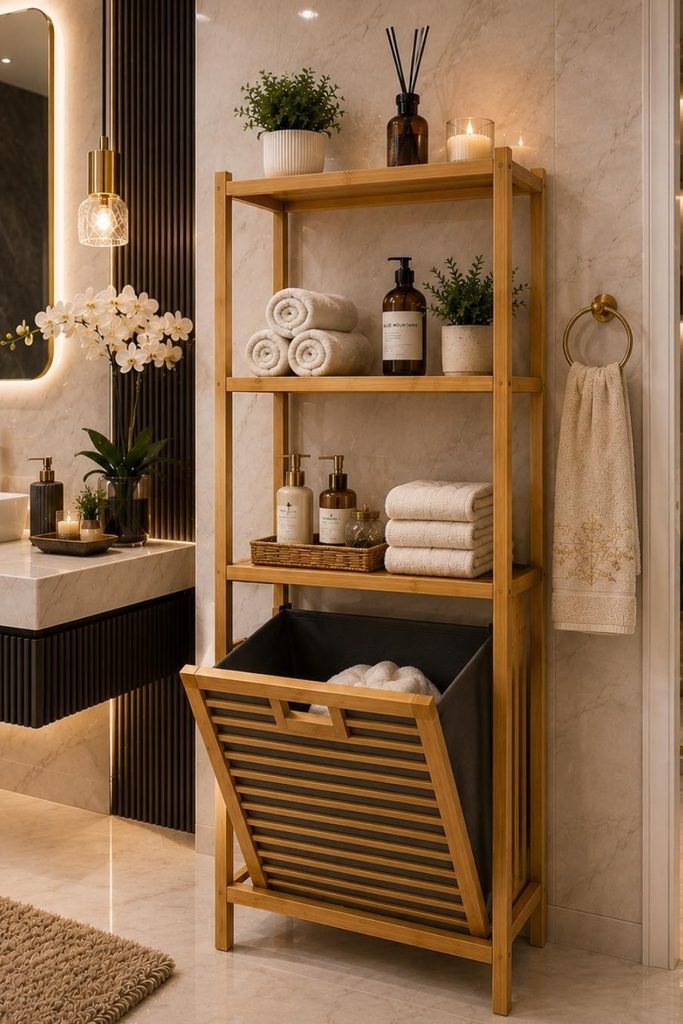
A tall shelving unit with a built-in hamper is useful when clean towels and dirty laundry are competing for the same corner.
Stack towels and toiletries higher up, then keep the hamper at the bottom so used linens disappear without needing another basket.
Choose this setup for larger bathrooms or open wall sections where vertical storage can grow upward without blocking movement around fixtures.
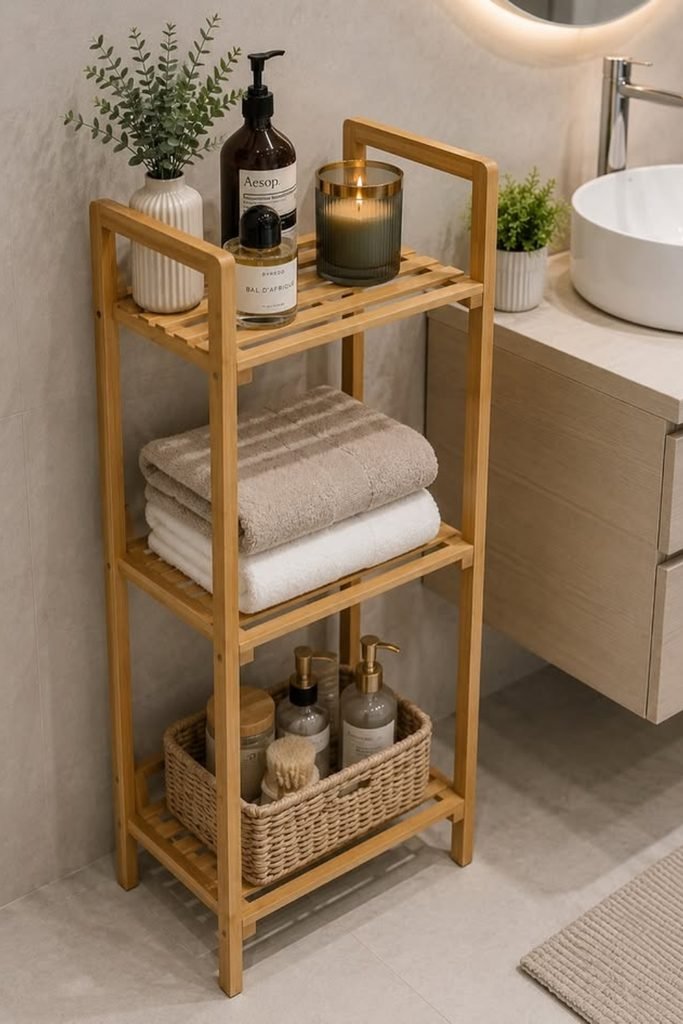
Slim Shelf
If the gap beside your vanity is too narrow for a cabinet, a slim three-tier shelf can turn it into useful storage.
Fold towels on the middle level, place grouped toiletries in a basket below, and keep the top clear for daily items.
Because open shelving exposes everything, limit each tier to one purpose and avoid mixing backup bottles with the things you use daily.
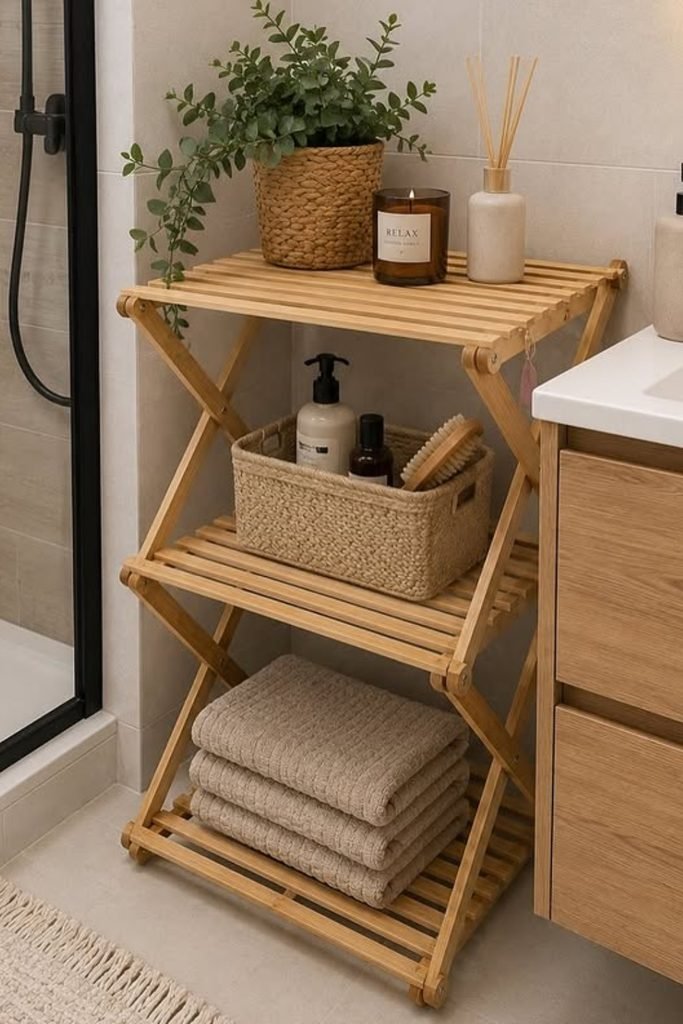
Folding Shelf
A folding bamboo shelf is a smart choice when you need extra storage now but do not want permanent cabinetry or wall drilling.
Use the bottom tier for folded towels, the middle for a contained toiletry basket, and keep the top mostly decorative.
This works especially well beside a vanity or shower because you can move the unit whenever the bathroom layout or storage needs change.
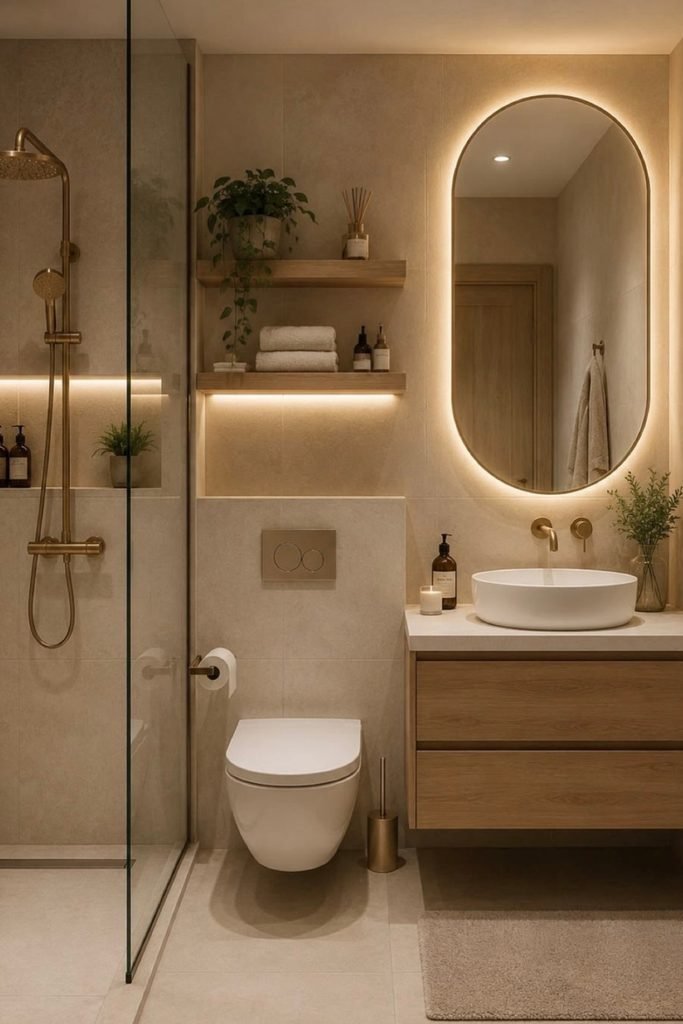
Recessed Shelves
Use recessed shelves when a narrow wall beside the shower would otherwise go unused, especially in compact bathrooms with limited cabinet space.
Keep folded towels and daily toiletries on the lower shelf, then place lighter extras higher so the area stays easy to use.
Adding soft lighting beneath one shelf can improve visibility at night while keeping the storage zone useful without taking any floor space.
Towel Rack
A tall open rack works well when you need extra towel storage but still want everything easy to grab after bathing.
Group bottles in baskets and keep folded towels on separate shelves, so the unit stays organized instead of becoming one crowded display.
Add wall hooks beside it for damp towels, because separating wet and dry linens keeps the shelving cleaner and easier to manage.

Linen Closet
If your bathroom has a spare closet, turn it into dedicated storage before adding more furniture that will reduce your walking space.
Keep towels high, toiletries at eye level, and laundry hampers low so each shelf matches how often you reach for those items.
Use matching baskets for loose products and backups, because categories are much easier to maintain when every group has one clear home.

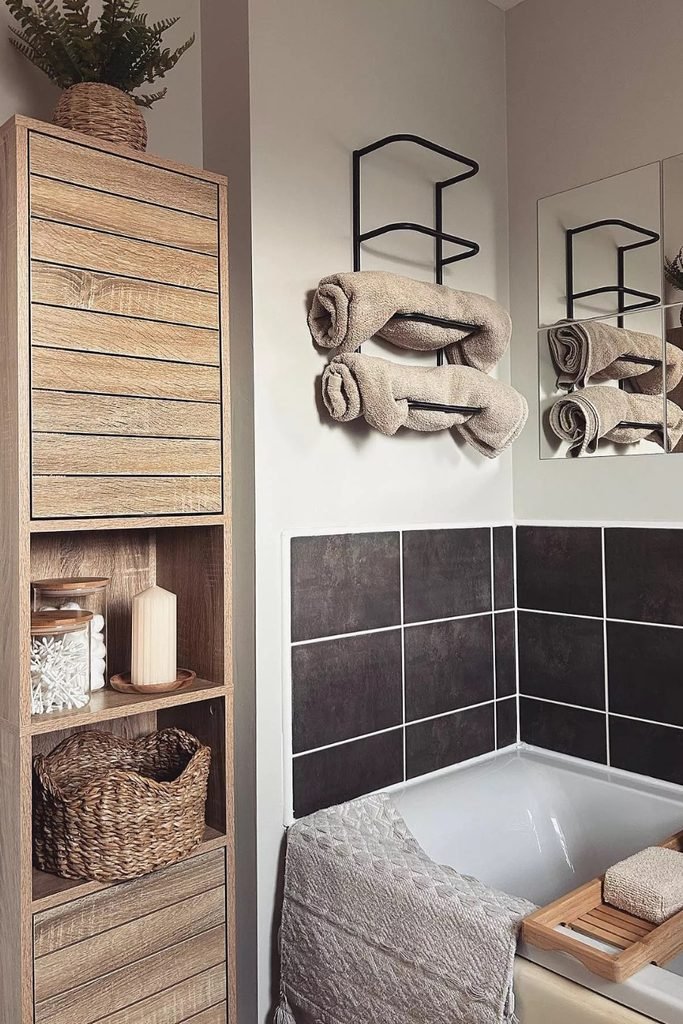
Tower Cabinet
A narrow floor-to-ceiling cabinet can solve storage shortages beside a tub without making the bathroom feel packed with bulky furniture.
Use closed sections for clutter, open cubbies for baskets and daily supplies, and wall racks nearby for towels that need airflow.
This setup works especially well in long bathrooms where vertical storage uses height efficiently while leaving the central floor area open.
Vanity Pair
Pair a wide vanity with a tall cabinet when you need everyday storage and extra towel space in one bathroom.
Keep daily toiletries in the vanity drawers, then use the taller unit for folded towels, backups, and less-used products nearby.
This setup suits larger bathrooms because it separates quick-access items from bulk storage without scattering multiple organizers around the room.

Linen Zones
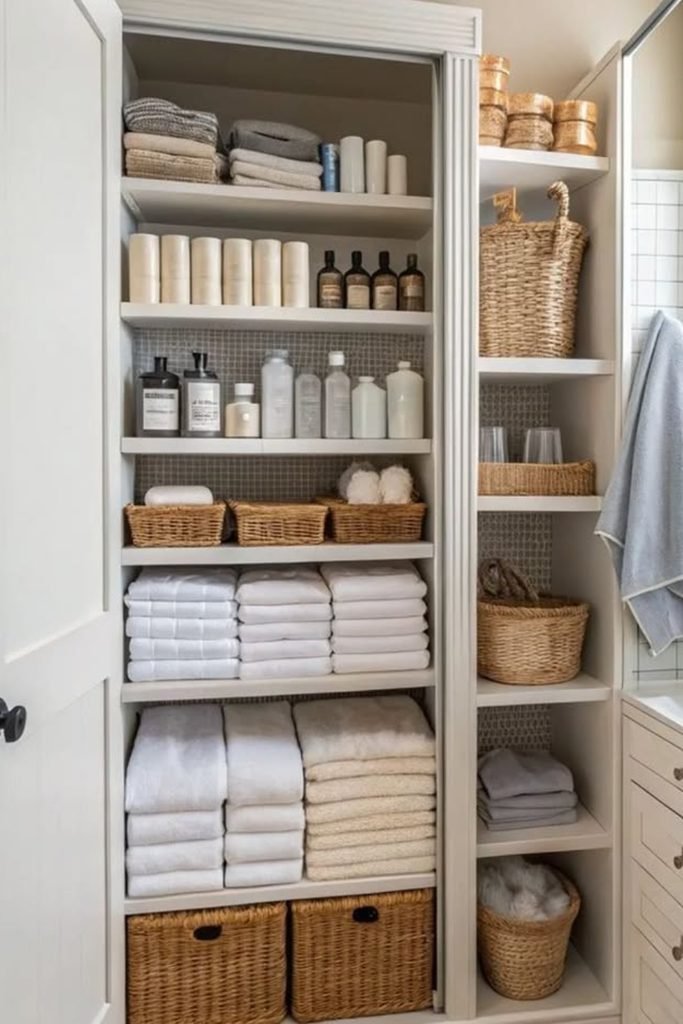
A linen closet works hardest when every shelf has a job, so towels, toiletries, and baskets stop competing for space.
Place bulky towels on lower shelves, lighter backups higher up, and use baskets to contain small products that otherwise spread everywhere.
If the closet sits near the sink, keep daily extras at eye level so refilling cabinets takes seconds instead of becoming a chore.
Drawer System
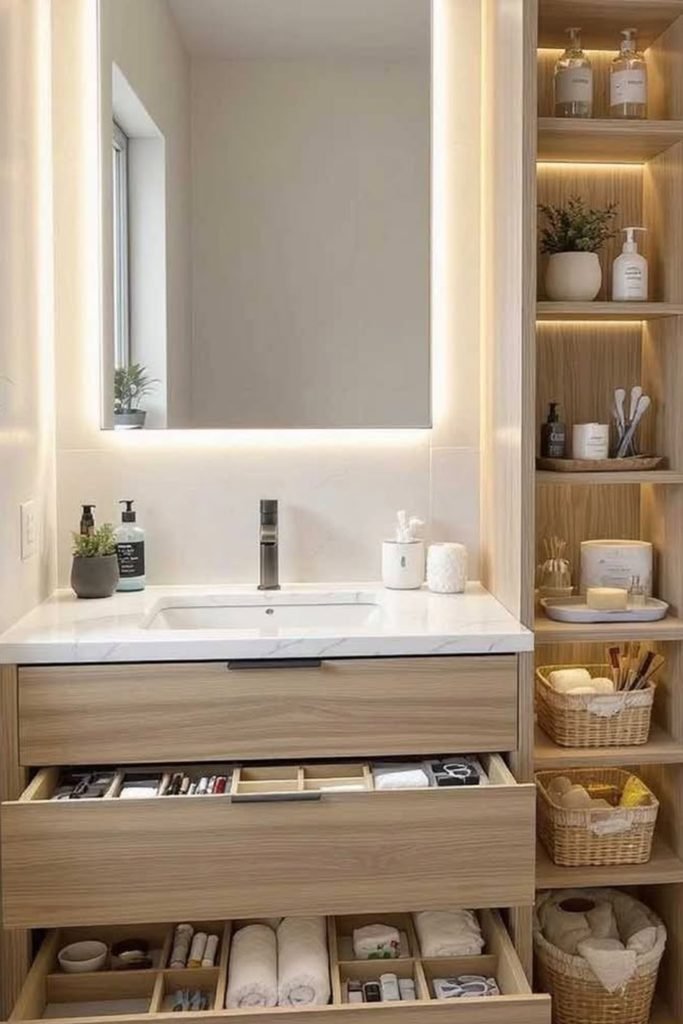
Deep vanity drawers are easier to live with when you divide them by routine instead of mixing every small bathroom item together.
Use shallow inserts for grooming tools and skincare, then keep towels or bulky backups in the deeper drawer underneath the sink.
Add a narrow side shelf only for frequently used bottles, so the countertop stays clear without hiding everything you reach for.
Integrated Storage
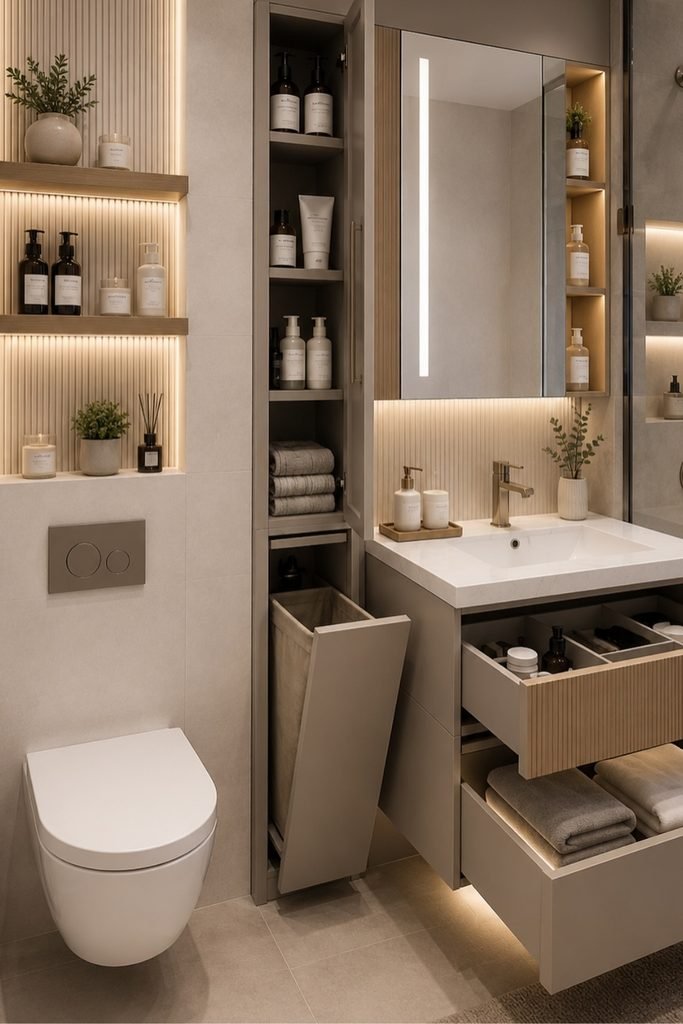
Built-in storage makes the most sense in compact bathrooms when cabinets, drawers, niches, and laundry space all share one wall.
Keep daily products in the vanity drawers, towels below, and reserve the tall side cabinet for backups or hidden laundry.
Recessed wall niches handle the items you want visible, while closed storage keeps bulk supplies from making the room feel busy.
FAQs
How do I add storage to a small bathroom?
Start by using empty wall space, the area above the toilet, and narrow gaps before adding another bulky floor cabinet.
Floating shelves, slim towers, and wall cabinets give you useful storage while keeping more of the bathroom floor open and easy.
Keep everyday items at reachable height, then move backups higher or deeper so the storage stays practical instead of becoming cluttered.
What should not be stored in a bathroom?
Bathrooms stay humid, so avoid keeping medicines, large makeup backups, paper goods, or anything else that can be damaged by moisture.
Check medicine labels carefully, because many products need a cool, dry place rather than a cabinet beside a shower or sink.
Use bathroom storage for towels, toiletries, and daily grooming items, then keep sensitive backups somewhere drier when your home allows it.