A black living room can look incredible in a saved photo, but bringing that much black into your own home feels like a bigger risk.
What if the room suddenly feels smaller, darker, or just too heavy? You don’t need to cover every wall in black to get that bold, cozy look.
You can start with one dark wall, a black sofa, built-ins, or even a few well-placed accents.
In this article, you’ll find black living room ideas that show different ways to make this color work without letting it take over the space.
Let’s jump in!
What Color Goes With Black in a Living Room?
Black works with almost any color, but the right pairing depends on how you want the room to feel.
Pair it with cream, beige, or warm white if you want to soften dark walls or black furniture without losing contrast.
Natural brown and wood tones add warmth, which helps black feel cozy rather than cold.

For a richer look, bring in olive green, rust, burgundy, or deep blue through chairs, cushions, and artwork.
Gold or brass works well in smaller details when you want a more polished finish.
If your living room already has plenty of black, use lighter colors on larger pieces like the sofa, rug, or curtains to keep the room balanced.
Black Slatted Wall
A floor-to-ceiling black slatted wall gives you plenty of drama, while its vertical grooves keep the dark surface from looking completely flat.
Bring in a cream sofa and pale artwork to break up the black, then repeat darker touches through cushions, chairs, and accessories.
This approach suits contemporary living rooms where you want black to dominate one focal area without carrying the color across every surrounding wall.

Black Gold Glamour
A black sectional can carry most of the room’s visual weight, so keep the walls pale and let natural light soften its presence.
Gold pillows, table frames, and small accents warm the dark upholstery, while patterned cream textiles stop the palette from becoming overly formal.
Try this combination in a bright contemporary living room, repeating black and gold sparingly so every piece feels connected without looking overly matched.

Silver Black Balance
Black works beautifully as a supporting color when you repeat it through cushions, curtains, artwork frames, and furniture instead of darkening walls.
A silver-gray sofa keeps the room bright, while reflective surfaces and pale flooring bounce light around and prevent those black accents feeling heavy.
Use this approach in smaller living rooms where you want a clear black theme but still prefer an open, airy backdrop around furniture.

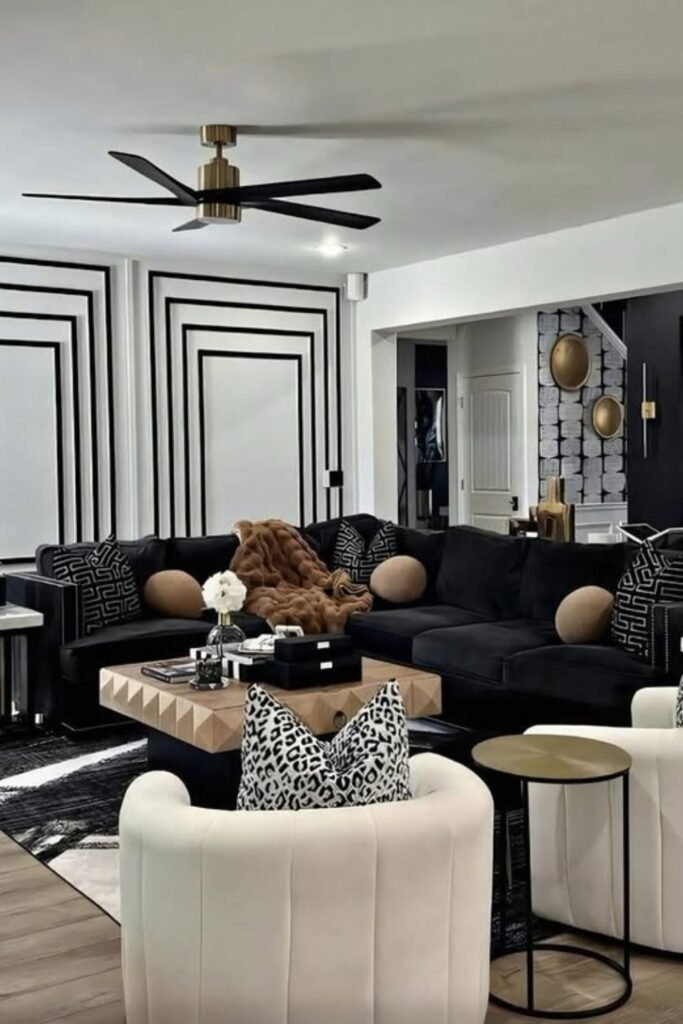
Graphic Black Contrast
A black sectional creates a strong center for the room, while white walls and chairs keep the overall layout from becoming visually crowded.
Carry black onto wall molding, rugs, and patterned cushions so the sofa feels connected, then add warm brown accents for welcome softness.
This setup works especially well in open living rooms, where bold black outlines can define the seating zone without adding another physical divider.
Candlelit Black Seating
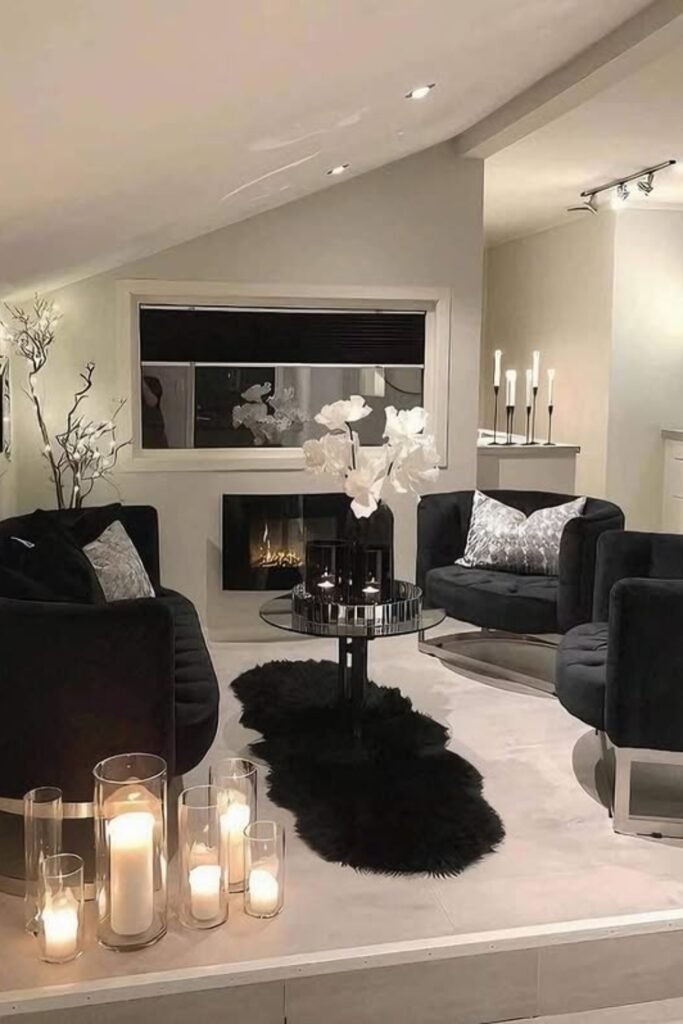
Black velvet chairs can feel surprisingly cozy when you surround them with warm candlelight, pale walls, and reflective metallic details instead of more darkness.
Keep the flooring and larger surfaces light, then repeat black through a small rug, fireplace, and window treatment to connect the seating naturally.
This idea suits intimate sitting areas where soft lighting matters more than bright color, especially when you want an elegant evening atmosphere.
Sculpted Black Sectional
A deeply tufted black sectional becomes the main feature here, so creamy walls and a pale rug give its bold shape breathing room.
Choose curved or cushioned upholstery when using lots of black, because softer forms make such a large dark piece feel more inviting.
Warm wood flooring and gentle lighting finish the balance, making this approach especially useful when your living room needs generous family seating.

Framed Black Panels
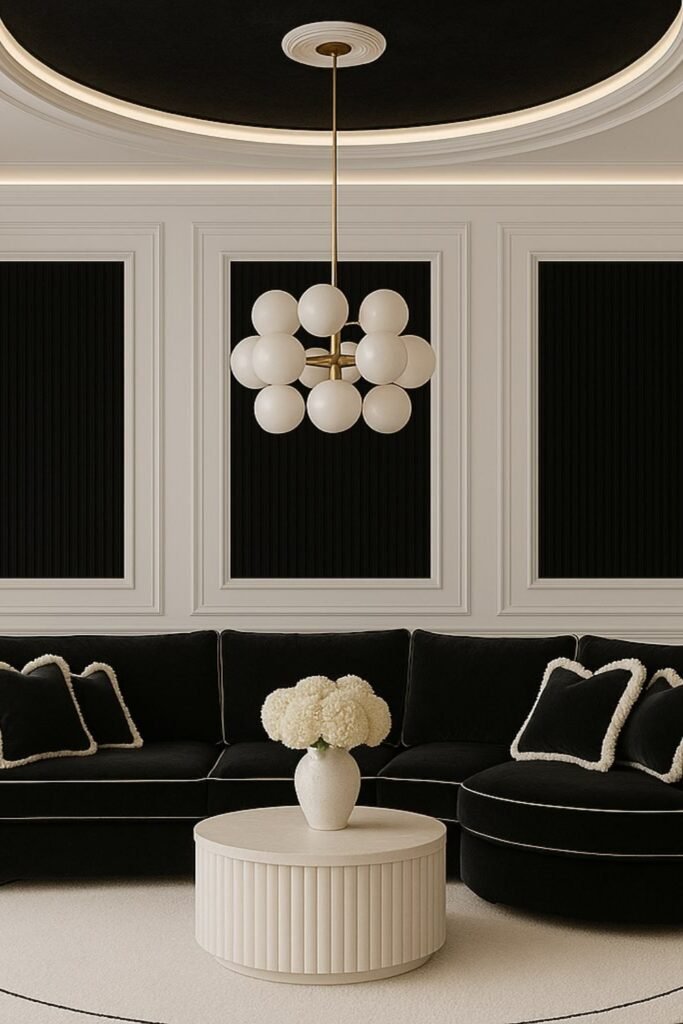
Instead of painting every wall black, place dark panels inside traditional molding to get strong contrast while keeping most surfaces light.
Echo those panels with a black sofa and ceiling inset, then use cream piping, rugs, and tables to sharpen each dark shape.
This treatment fits elegant living rooms especially well, giving you plenty of black without covering the architectural details that make the room interesting.
Minimal Black Accents
You don’t need black walls to build a strong black theme; a large coffee table can create enough weight in lighter rooms.
Repeat the color through cushions, artwork, and a slim wall light, keeping each accent separated so the room still feels calm.
This approach is ideal for minimalist living rooms where you want noticeable contrast without sacrificing the bright, open feeling of cream furnishings.

Soft Black Seating
A plush black sofa feels less imposing when you place it against pale walls and light carpet instead of surrounding it with dark finishes.
Keep nearby furniture slim and open, using glass and black metal so the seating stays dominant without making the arrangement feel visually crowded.
Silver accessories and patterned cushions add enough contrast for smaller living rooms where you want black furniture to feel comfortable rather than overly dramatic.

Black Accent Layers
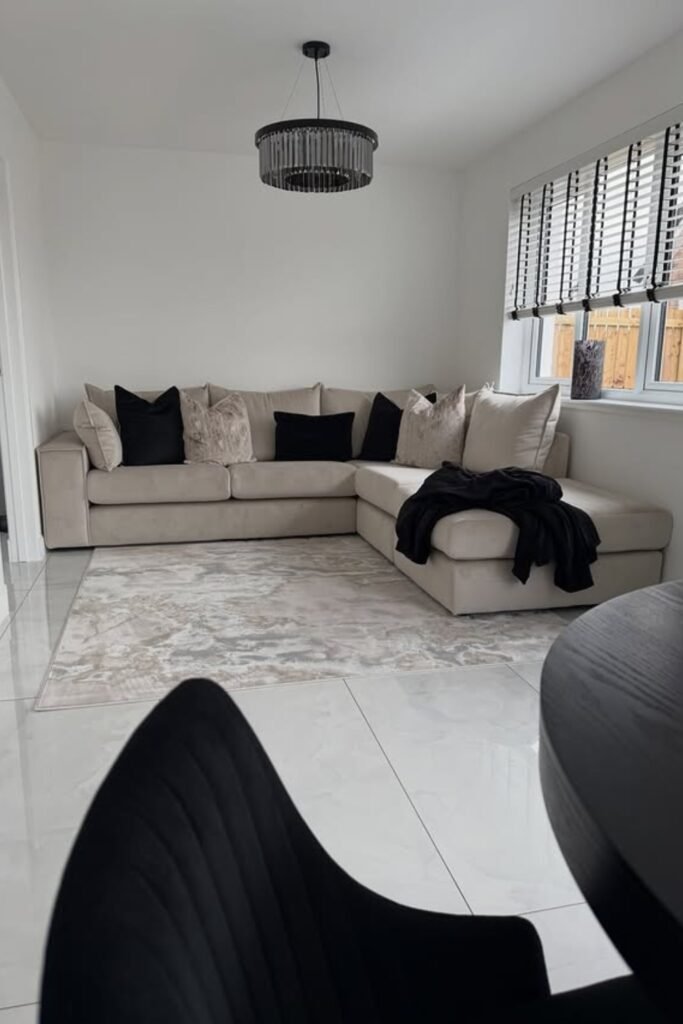
A mostly cream living room can still carry a clear black theme when cushions, throws, lighting, and window details repeat the color.
Keep larger pieces pale when your room is compact, then spread smaller black accents around the space instead of concentrating them together.
This lighter approach gives you plenty of contrast while preserving natural brightness, making it especially practical for apartments or everyday family living rooms.
Grounded Black Contrast
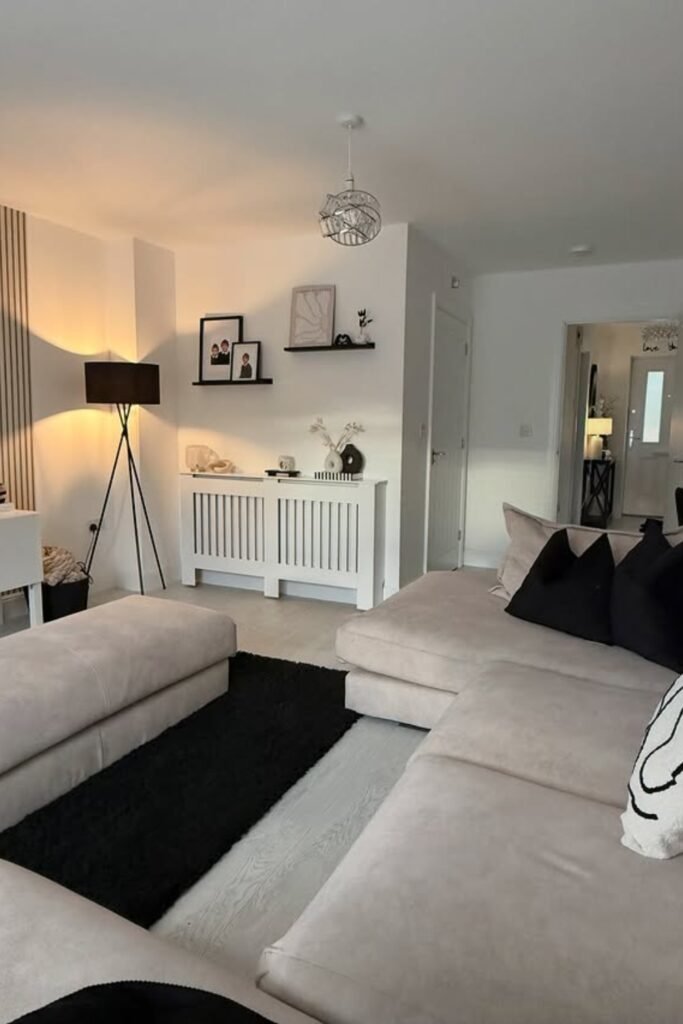
A black rug can ground pale furniture without darkening the whole room, giving your seating area a stronger center and clearer visual boundary.
Repeat that dark tone through cushions, shelving, and a floor lamp, while warm lighting keeps the simple neutral palette from feeling stark.
This strategy works especially well in relaxed family rooms where you want black to feel noticeable but still easy to change later.
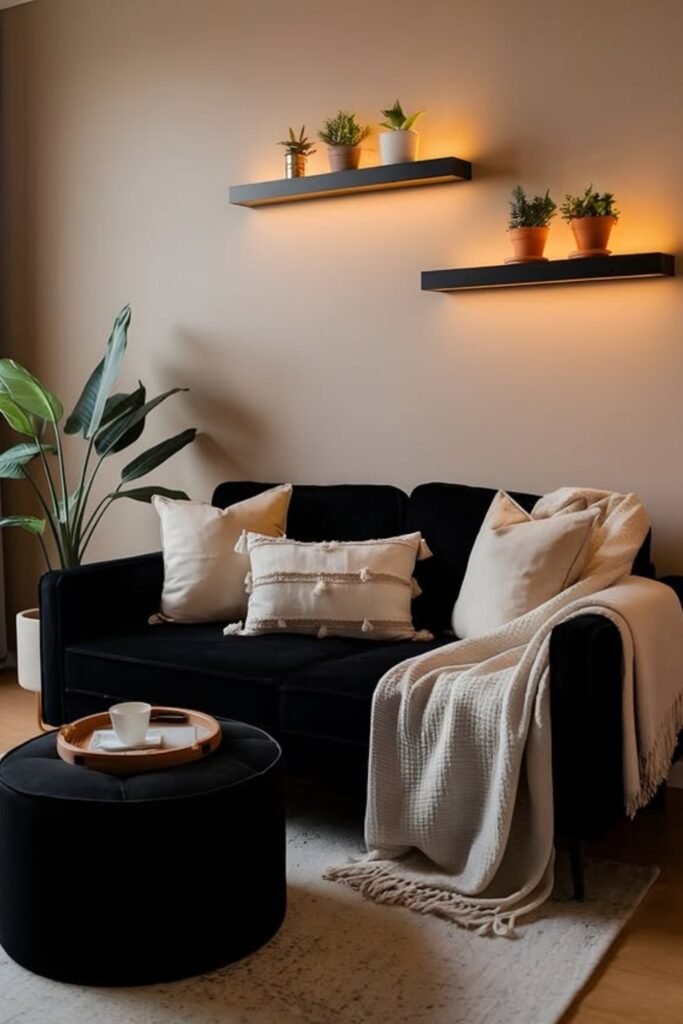
Cozy Black Corner
A compact black sofa feels much softer when you layer it with cream pillows and a textured throw instead of adding more dark upholstery.
Warm shelf lighting and natural greenery pull attention upward, helping the black seating feel grounded without becoming the room’s only noticeable feature.
Try this setup in smaller living rooms, pairing black furniture with warm neutrals and soft lighting when you want a cozy evening feel.
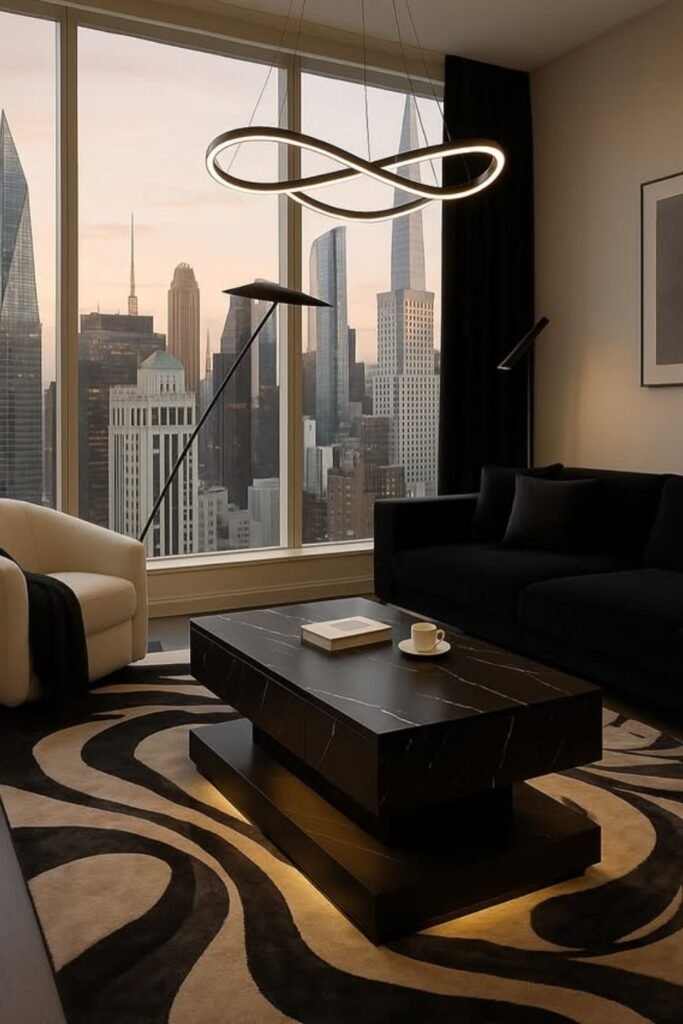
Black City Lounge
Floor-to-ceiling windows let you use substantial black furniture without losing openness, because the wide outdoor view naturally offsets those heavier pieces.
Keep one chair light and choose a patterned rug with warm beige sections to break the dark sofa, curtains, and coffee table apart.
Sculptural lighting works especially well in this modern setup, adding evening warmth while preserving the clean look that makes black feel sophisticated.
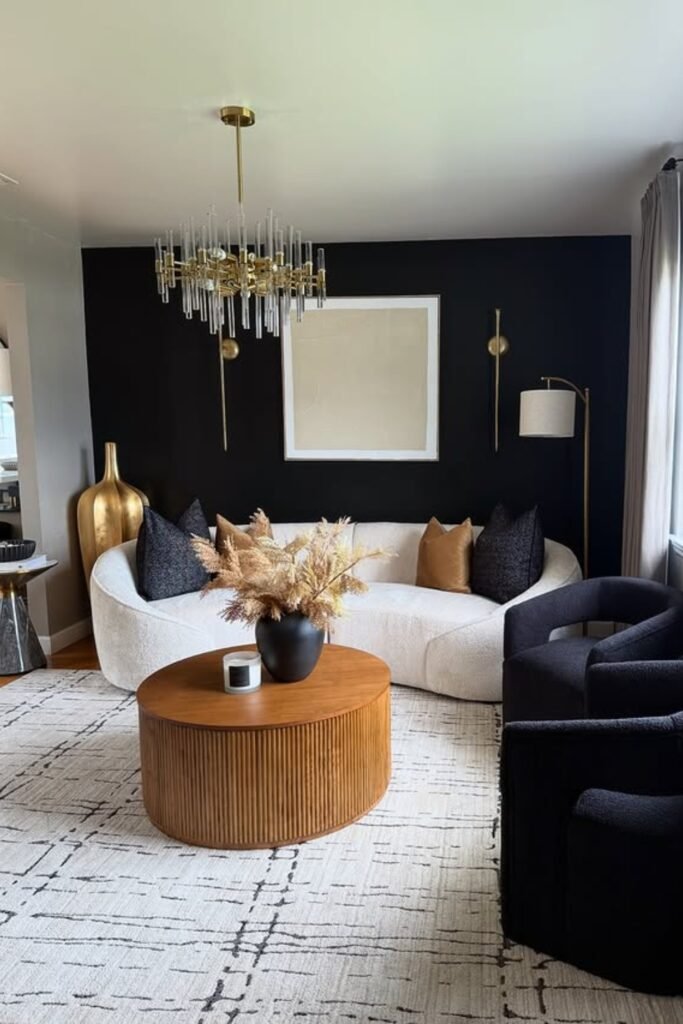
Warm Black Feature
A full black feature wall feels far less heavy when a curved cream sofa covers part of it and introduces a softer shape.
Bring natural wood into the center with a substantial coffee table, then use brass lighting to warm the contrast without adding extra colors.
This balance suits bright living rooms where you want a dramatic black backdrop while keeping the main seating area comfortable and welcoming.
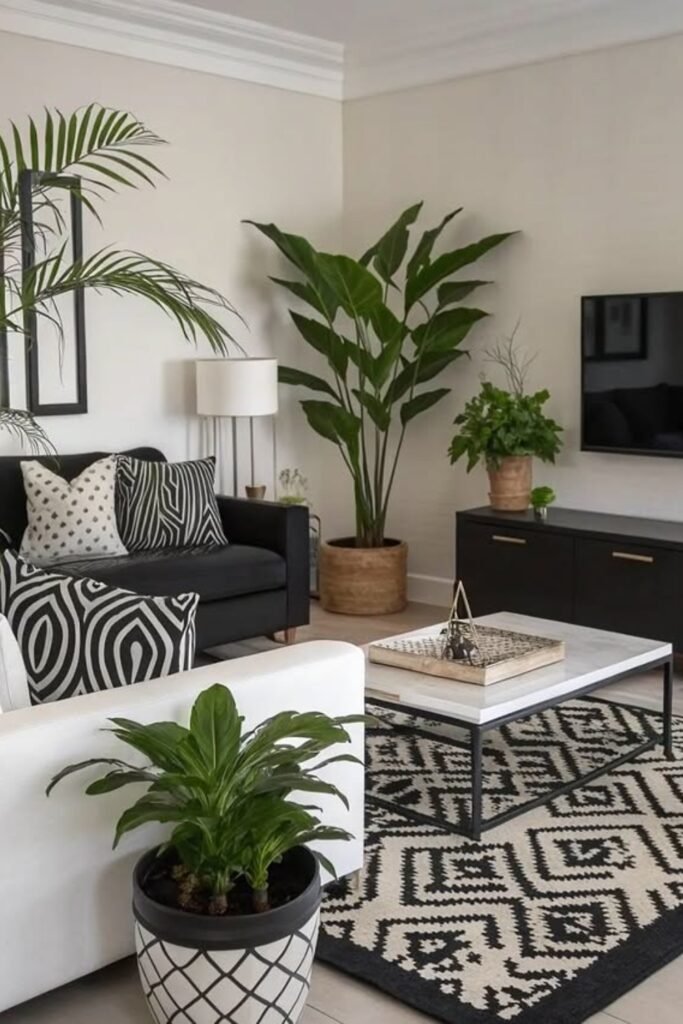
Botanical Black Balance
Black furniture feels much fresher when you surround it with leafy plants, letting natural green soften the contrast against pale neutral walls.
Mix a black sofa and media cabinet with white seating, then repeat both colors through patterned cushions and a bold geometric rug.
This approach works beautifully in bright living rooms where you want strong black accents without losing the relaxed, natural feeling plants provide.
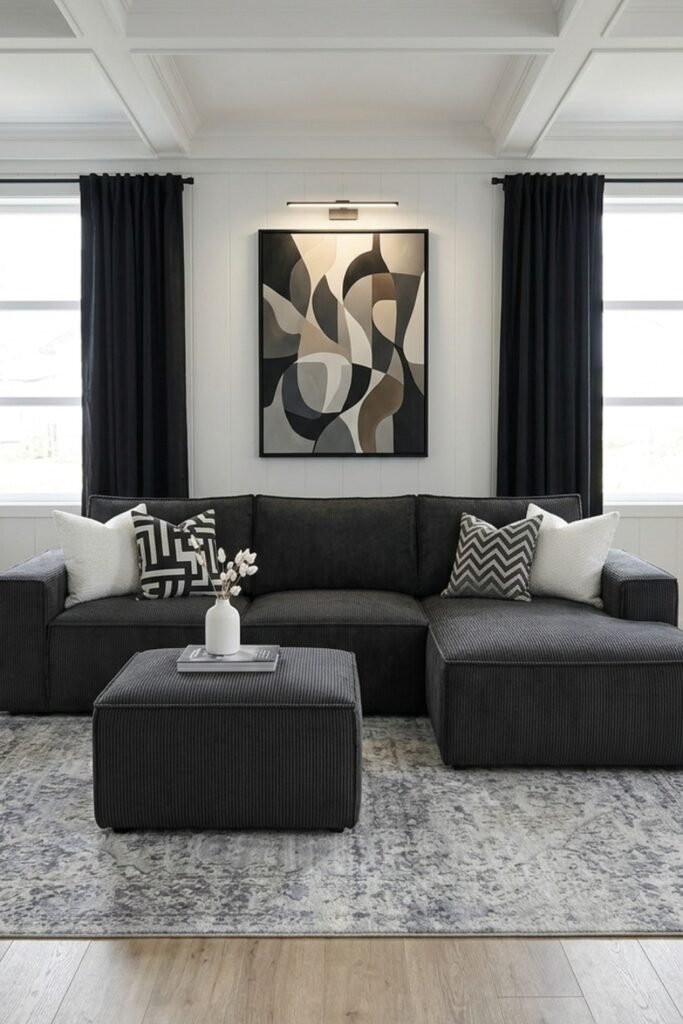
Charcoal Window Frame
Dark charcoal seating feels balanced when you frame it with matching black curtains, allowing the bright windows between them to provide natural contrast.
Keep the walls white and flooring light, then use cream cushions and a faded gray rug to soften the furniture without weakening it.
This layout suits naturally bright living rooms where you can repeat darker tones generously while still keeping the space comfortable throughout the day.
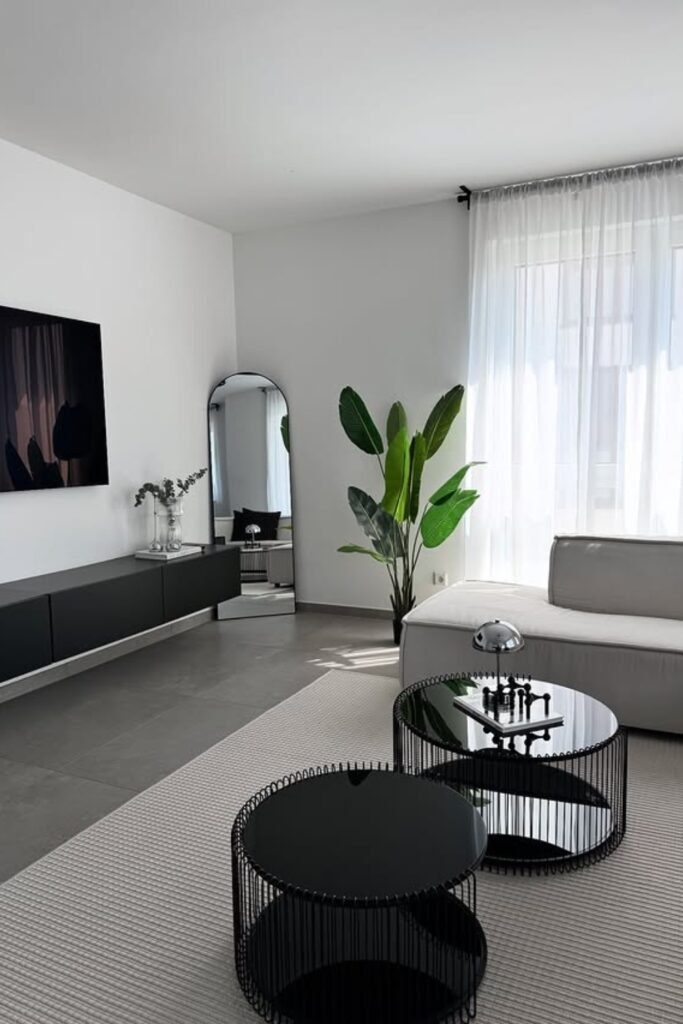
Floating Black Media
A floating black media cabinet gives a bright living room strong definition without taking up floor space or making the wall feel bulky.
Pair it with open black coffee tables, then keep the sofa, rug, and curtains pale so daylight remains the room’s dominant feature.
This setup is especially useful for compact modern spaces, where slim dark furniture adds contrast while maintaining clear sightlines and an uncluttered layout.
Minimal Black Statement
A low black sofa makes a strong statement here, while wide white walls and pale flooring leave enough empty space around it.
Keep the furniture shapes simple and skip busy patterns, then use a light rug underneath to separate dark seating from hard flooring.
Soft perimeter lighting adds warmth without cluttering the minimalist layout, making this approach ideal when you prefer clean lines and controlled contrast.

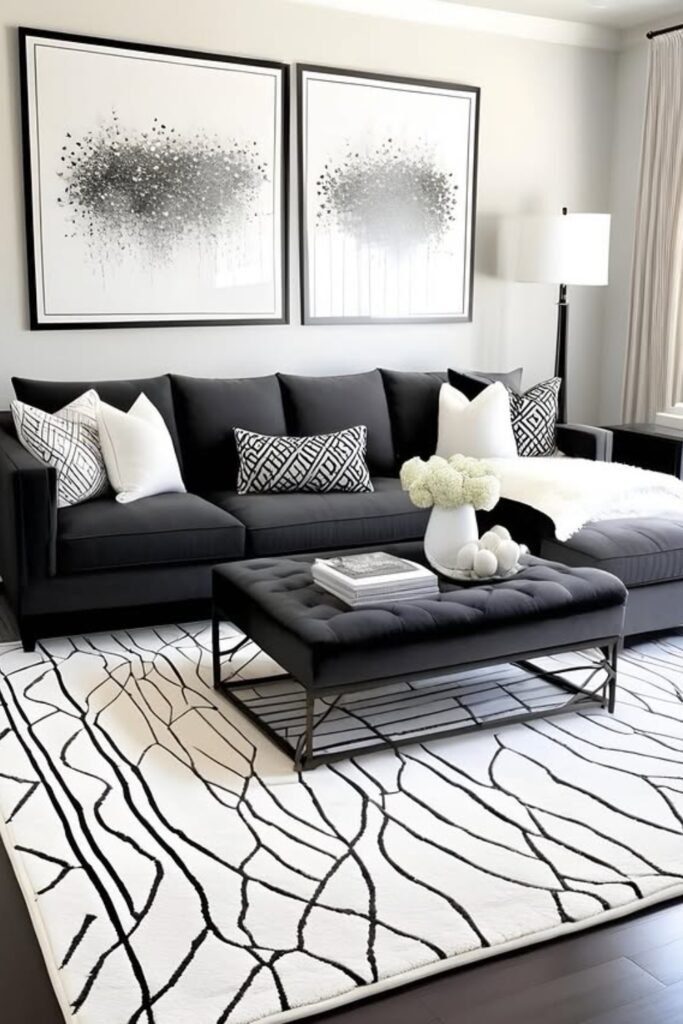
Monochrome Sofa Styling
A charcoal sofa becomes easier to style when crisp white pillows and graphic patterns interrupt the dark upholstery without introducing competing colors.
Choose a mostly white rug with loose black lines underneath, giving the seating area contrast while keeping the floor visually light.
Finish with oversized monochrome artwork and slim black furniture, a smart combination for contemporary rooms that need personality without relying on bright color.
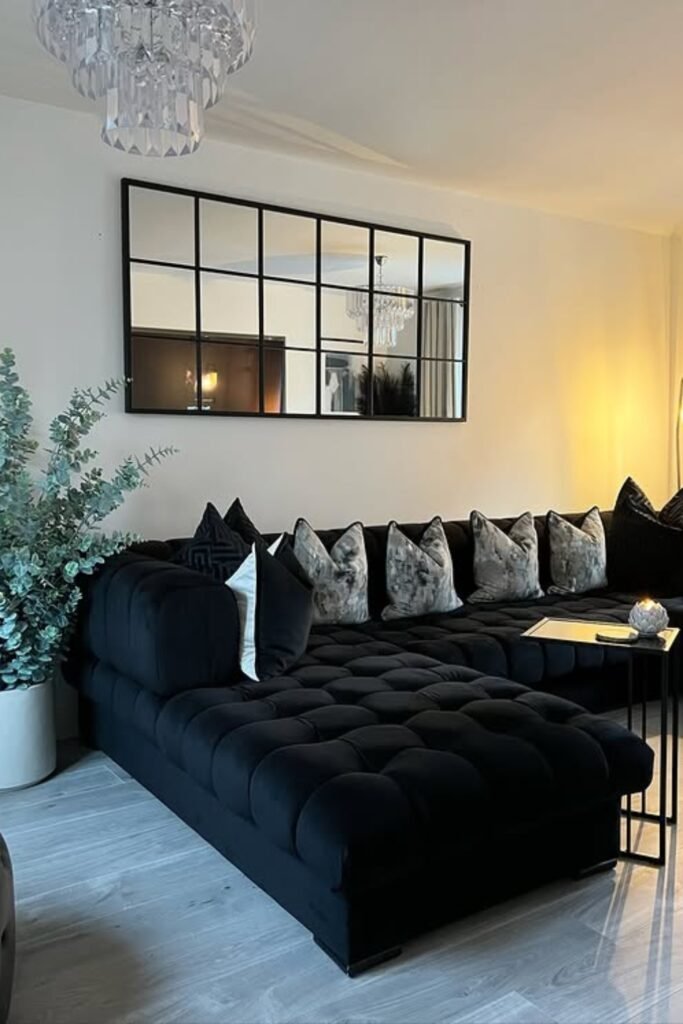
Tufted Black Sectional
Deep tufting gives a large black sectional extra texture, which stops all that dark upholstery from reading like one heavy block.
Break up the seating with smoky gray cushions, then use a large mirror and pale flooring to reflect light around the darker furniture.
This idea suits larger living rooms where generous seating matters, especially when warm lamps and greenery can soften the black throughout the evening.
Relaxed Black Sectional
A simple black sectional can feel casual rather than formal when you soften it with beige cushions, warm wood flooring, and natural greenery.
Choose a textured neutral rug large enough to sit beneath the seating, giving the dark sofa a lighter base and clearer definition.
A slim black lamp and understated artwork continue the color upward, making this setup easy to recreate in practical everyday living rooms.

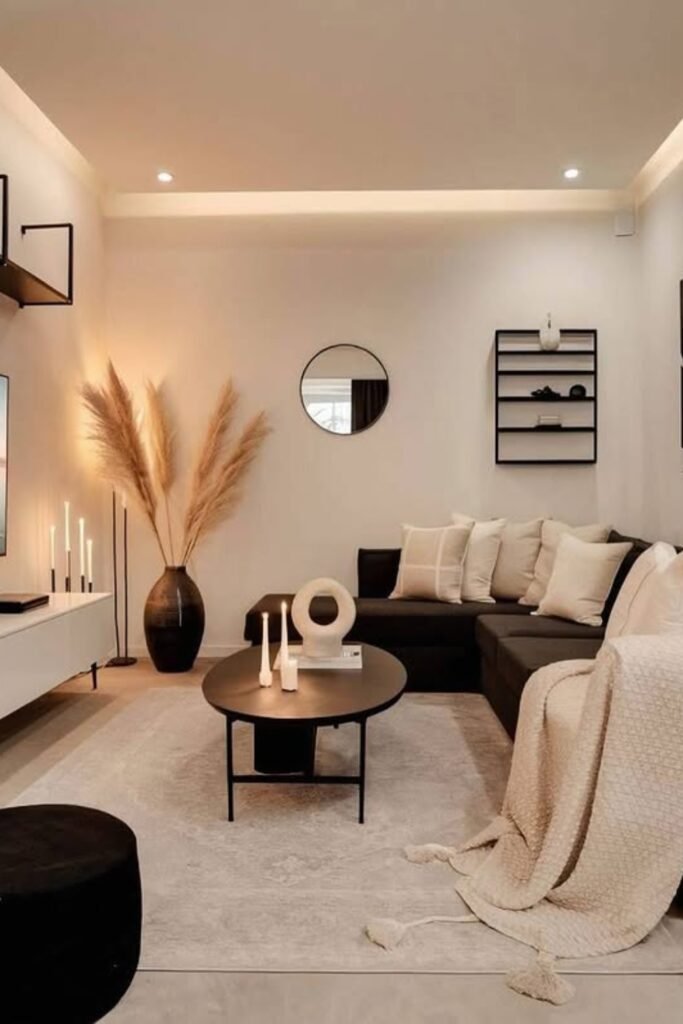
Warm Black Layers
Black furniture feels noticeably softer when you pile on cream cushions and throws, creating contrast without introducing several competing colors into the room.
Warm perimeter lighting, candles, and natural dried stems prevent the monochrome palette from feeling cold, especially when you use the room after sunset.
Keep surrounding walls and rugs pale, then repeat black through tables, shelves, and artwork for a balanced look that still feels relaxed.
FAQs
How Do You Keep a Black Living Room From Feeling Too Dark?
Balance larger black pieces with cream walls, lighter rugs, warm wood, and plenty of natural light.
You can also add lamps at different heights to brighten darker corners without losing the cozy look.
What Color Rug Looks Best With Black Living Room Furniture?
Cream, beige, ivory, and light gray rugs work especially well because they create separation beneath black furniture.
If you prefer patterns, choose one that repeats small amounts of black to tie everything together