Blue sounds perfect for a French country kitchen, until the wrong shade suddenly makes the whole space feel cold, coastal, or too modern.
The real challenge is balancing that blue with warm creams, natural wood, aged metals, stone, and traditional details without making everything feel overly rustic.
In this article, you’ll find blue French country kitchen ideas that feel warm, elegant, collected, and much easier to recreate in your own space.
Let’s jump in!
What Colors Are Suitable For A French Country Kitchen?
French country kitchens look best with soft, muted colors that feel warm rather than crisp or overly polished.
Cream, warm white, dusty blue, sage green, soft gray, and faded beige all work because they sit comfortably beside wood and stone.
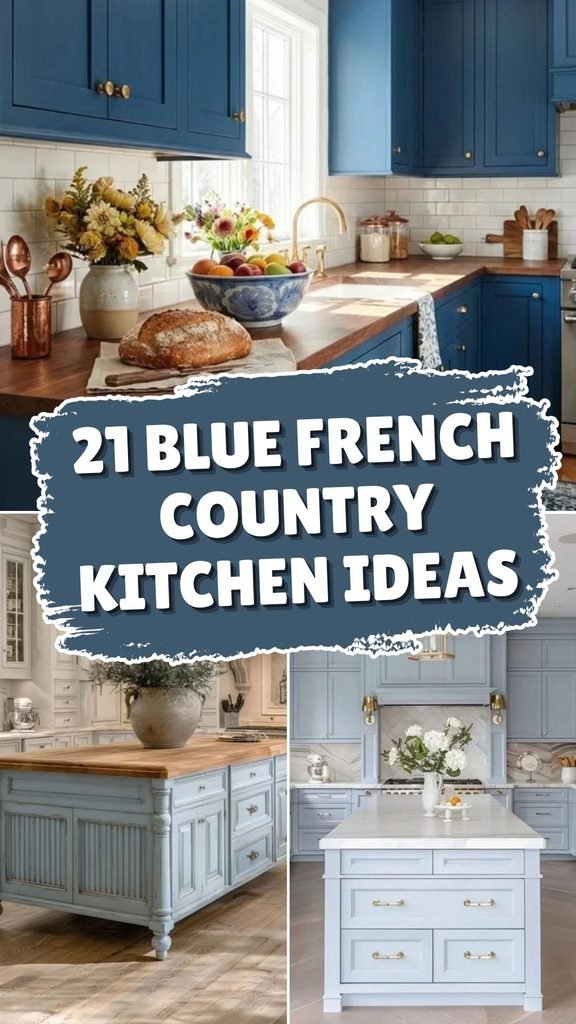
If you want blue to lead the palette, pair it with cream, oak, limestone, brass, or terracotta so the room never feels cold.
Deep navy can work too, but it needs lighter counters, warm metals, and plenty of natural light to keep the kitchen balanced.
The easiest rule is to choose colors that look slightly aged, sun-softened, and natural instead of bright, glossy, or heavily saturated.
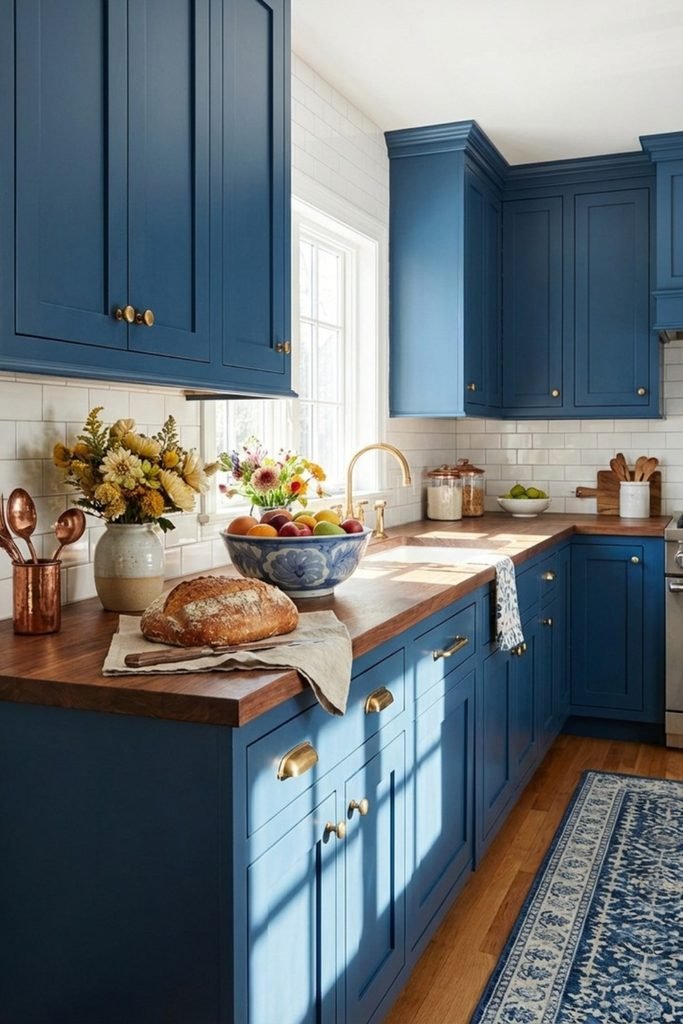
Navy Cabinets
Deep navy cabinetry gives a busy kitchen stronger definition, especially when warm wood counters keep the darker color from feeling too heavy.
Pair shaker doors with brass hardware and white subway tiles, then let natural window light sharpen the contrast across surrounding surfaces.
Long kitchens benefit from this combination because matching upper and lower cabinets create continuity while patterned runners introduce softness underfoot without clutter.
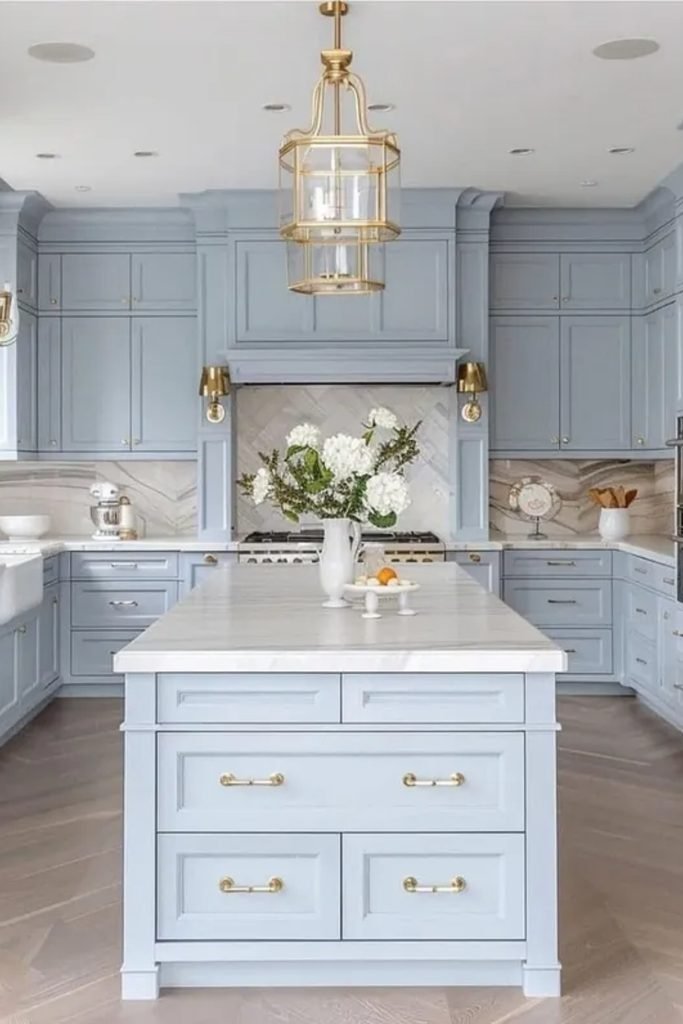
Powder Blue
Soft powder blue cabinetry can make a spacious kitchen feel calmer, while pale stone counters keep the overall palette polished and comfortably bright.
Carry cabinetry toward the ceiling for generous storage, then repeat warm brass hardware and pendant lighting to prevent cooler tones feeling flat.
Centered islands work beautifully here because symmetrical surrounding cabinets establish balance, leaving the large work surface visually open for everyday preparation.
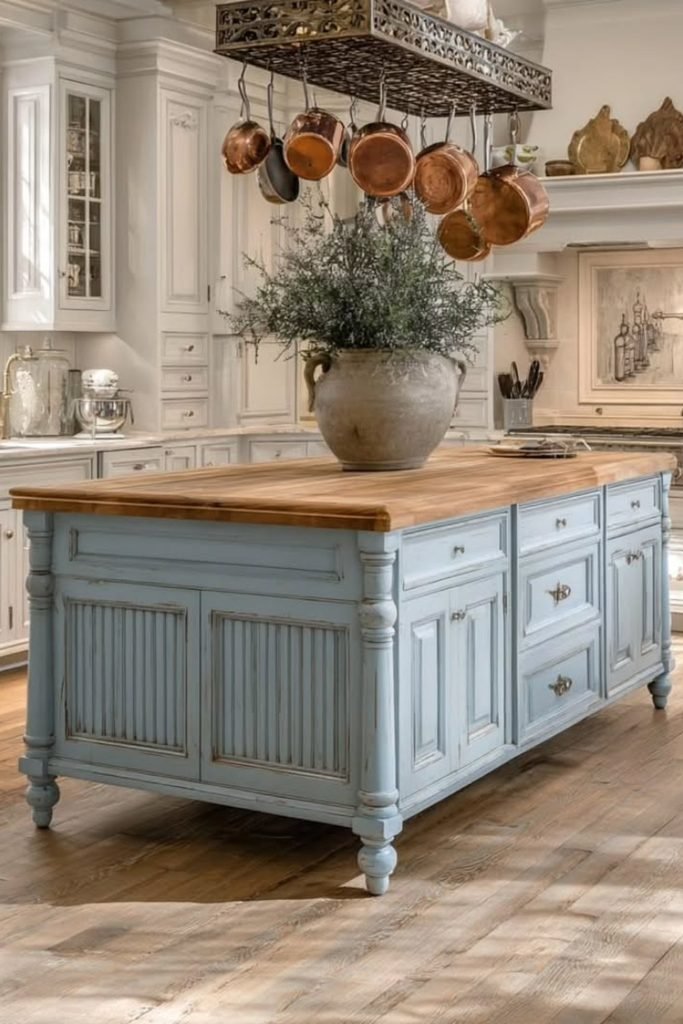
Vintage Island
Character comes naturally when a furniture-style blue island replaces sleek cabinetry, bringing turned legs, paneled details, and gentle aging into the kitchen.
Choose a warm butcher-block top to strengthen the vintage feeling, then keep surrounding cabinets creamy so the island remains the main feature.
Larger traditional kitchens handle this substantial piece best, especially when overhead pot storage uses vertical space without crowding valuable drawers or countertops.
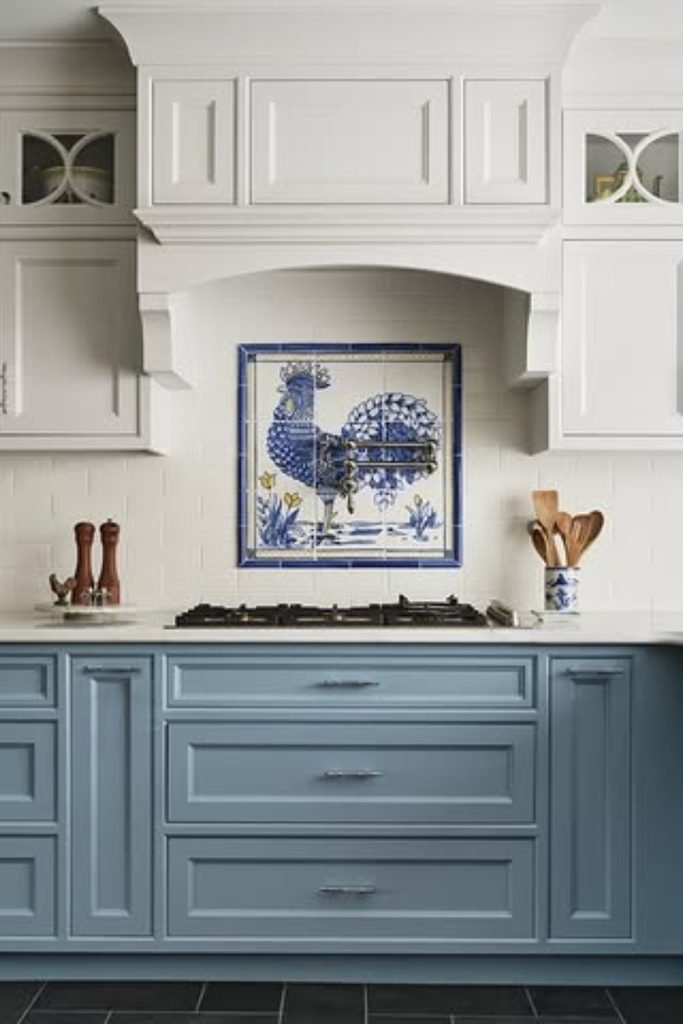
Blue Peninsula
Muted blue lower cabinetry can ground an open kitchen beautifully while crisp white uppers prevent the storage-heavy arrangement from dominating the entire room.
Use simple recessed panels and understated metal pulls, then introduce patterned backsplash artwork to give the restrained color scheme one memorable focal point.
Peninsula layouts benefit from this approach because the blue visually defines the working zone while white cabinetry connects smoothly with adjoining living spaces.
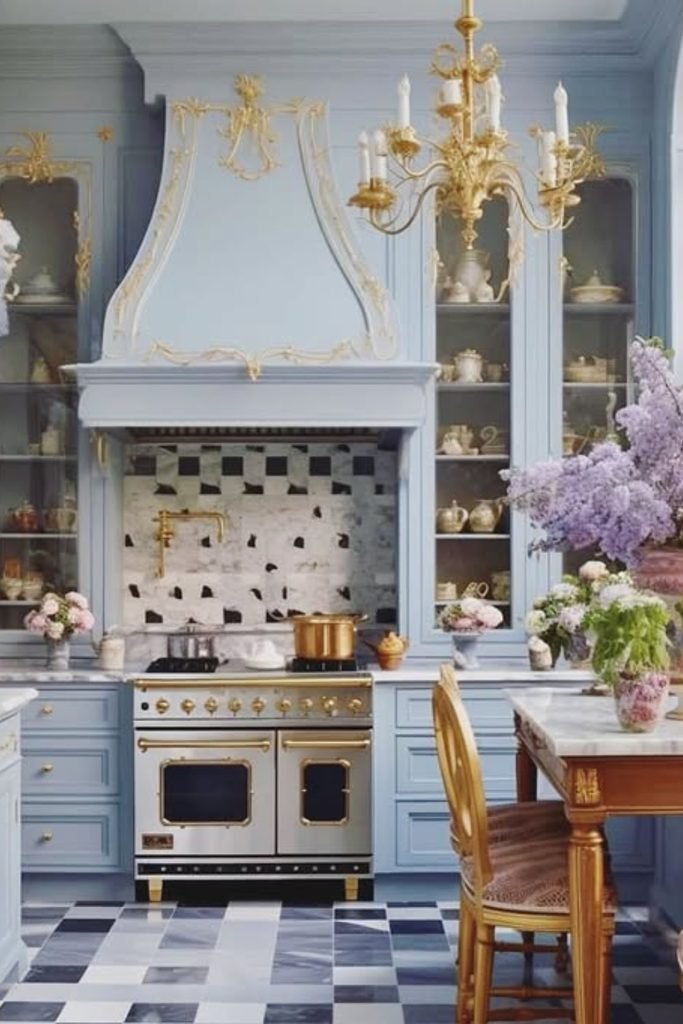
Gilded Blue
Ornate gold detailing turns soft blue cabinetry into a dramatic statement, working especially well in kitchens with tall ceilings and generous natural light.
Balance decorative cabinetry with a graphic backsplash and checkerboard flooring, letting repeated black accents keep the elaborate gold touches from becoming overwhelming.
Large windows can carry such layered styling beautifully, while glass-front cabinets and floral arrangements soften the formal finish with relaxed everyday character.
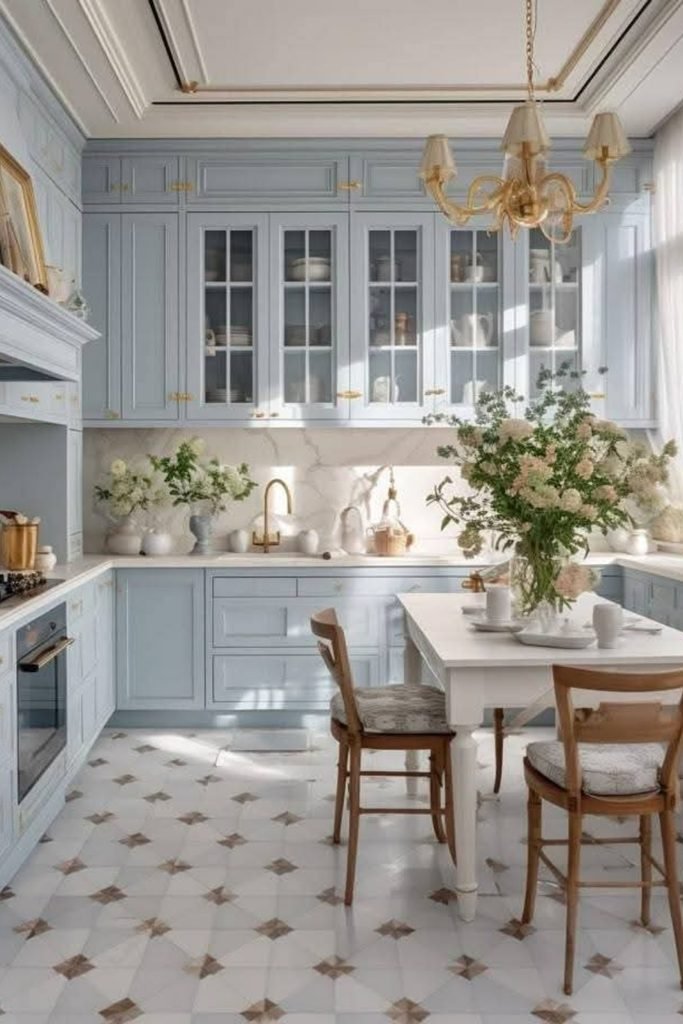
Airy Blue
Morning light makes pale blue cabinets feel especially fresh, so this approach works beautifully when your kitchen already has large sunny windows.
Run cabinetry toward the ceiling for storage, then use glass doors, white counters, and delicate brass details to maintain an open feeling.
Instead of adding a bulky island, choose a simple table with wooden chairs to create an informal eating spot without interrupting circulation.
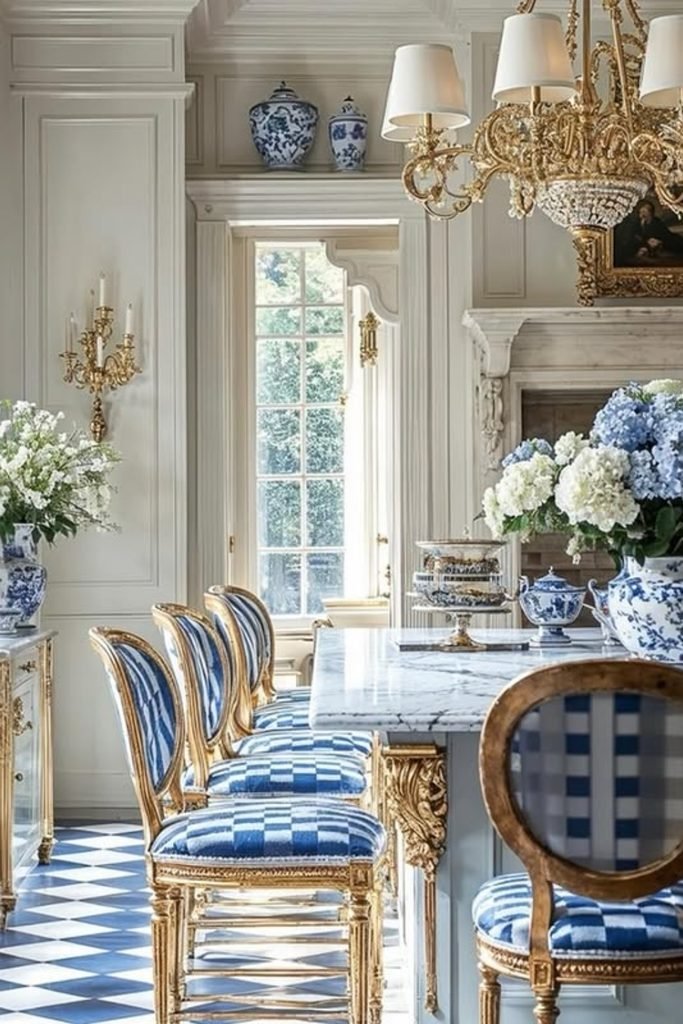
Regal Checks
Bold blue checks can push a traditional kitchen beyond predictable styling, especially when gold furniture frames repeat the warmth of ornate lighting.
Keep surrounding cabinetry and walls creamy white, allowing patterned seating, porcelain accessories, and flooring to introduce blue without visually crowding the room.
Formal kitchens with generous proportions handle this layered approach best, while oversized flowers add softness between marble surfaces and highly decorative metallic details.
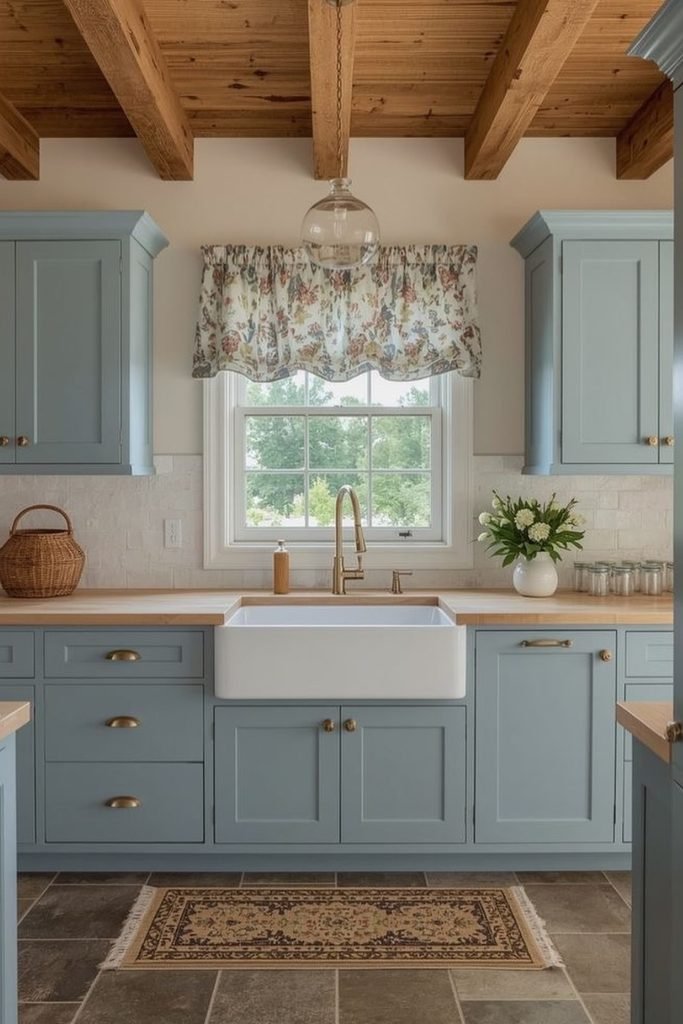
Cottage Blue
Smaller kitchens feel warmer when dusty blue cabinetry meets natural wood, giving practical storage a softer character without sacrificing valuable working space.
Centering a farmhouse sink beneath the window creates an easy focal point, while matching wood counters connect naturally with exposed ceiling beams.
Finish with brass hardware, a floral window valance, and a vintage runner so functional cabinetry feels collected rather than overly polished or formal.
Split Cabinetry
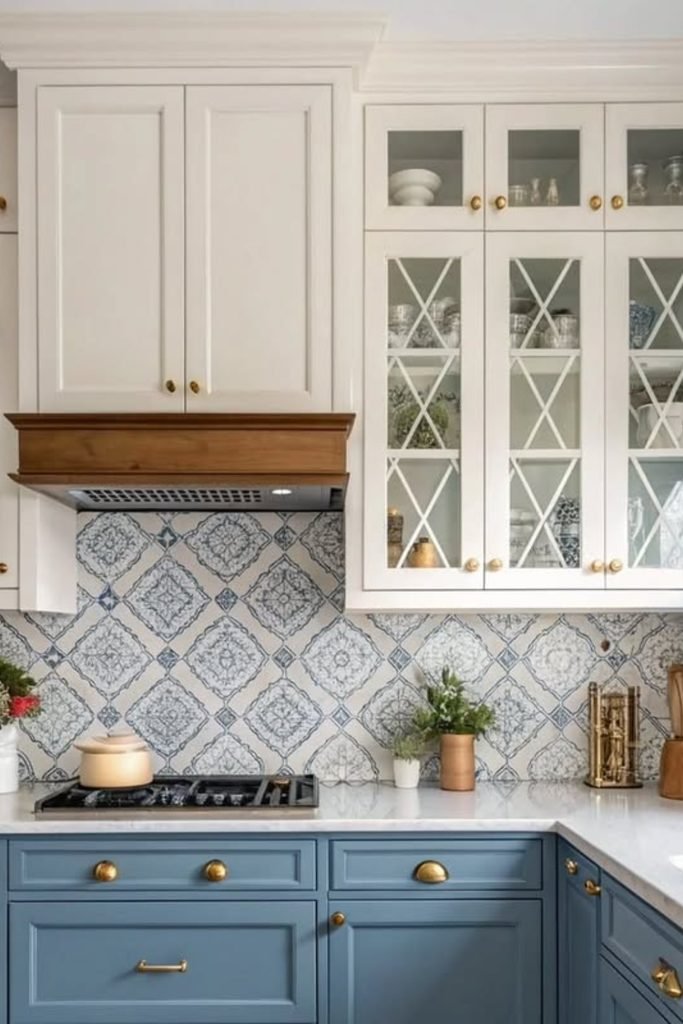
Mixing white upper cabinets with dusty blue lowers gives a compact kitchen contrast without making patterned surfaces feel overly busy.
Use glass fronts above eye level and brass hardware throughout, then let blue-and-white backsplash tiles carry most of the decorative detail.
Corner layouts benefit from this split-color approach because lighter cabinetry lifts the walls while darker bases visually anchor work zones.
Porcelain Display
Collected blue-and-white pottery can become part of the architecture when open shelves and a decorative range hood frame it intentionally.
Keep lower cabinets muted blue, then repeat porcelain patterns across the backsplash so displayed pieces feel connected rather than scattered.
Traditional kitchens suit this layered treatment especially well, while warm wood shelves and copper utensils stop crisp blues feeling too formal.

Sunlit Island
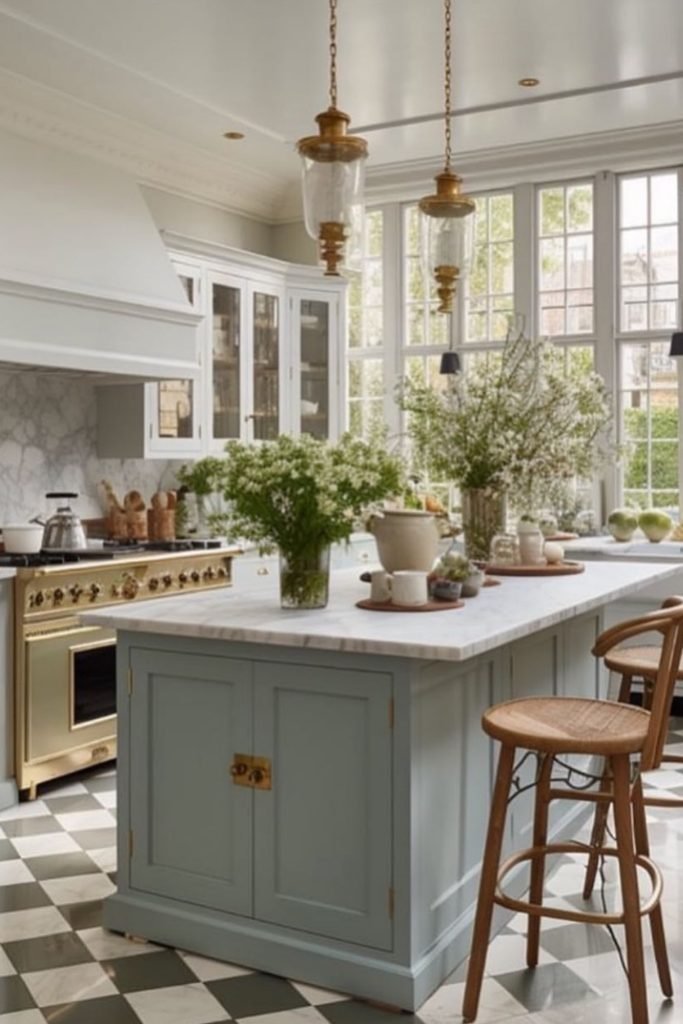
Sunlight does much of the decorating here, allowing pale blue cabinetry, marble surfaces, and brass details to stay soft and balanced.
Choose an oversized island with hidden storage, then leave enough countertop overhang for slim wooden stools that preserve an airy walkway.
Checkerboard flooring adds gentle movement beneath the restrained palette, making this combination especially useful for large kitchens needing definition without darkness.
Arched Window
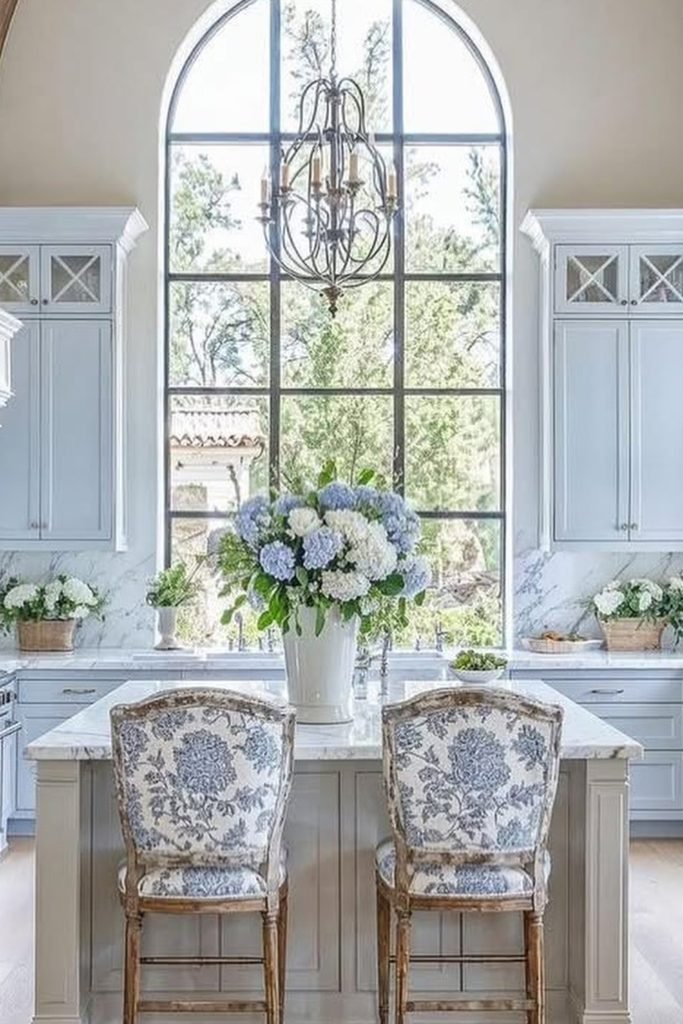
An arched window can set the entire kitchen mood, especially when pale blue cabinetry stays symmetrical around its dramatic height.
Position the island directly beneath the central sightline, using light stone counters and floral upholstered stools to soften surrounding cabinetry.
Tall ceilings need appropriately scaled details, so crown molding, cross-pane cabinet doors, and an open chandelier help fill vertical space gracefully.
Moroccan Blue
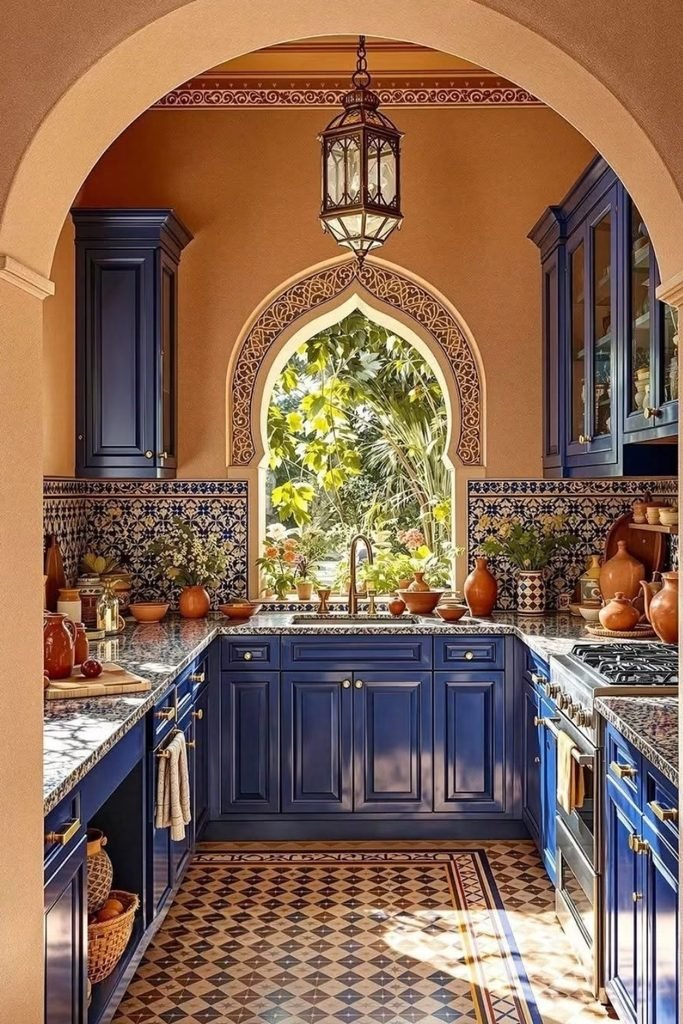
Rich navy cabinetry feels especially immersive when arched openings, patterned tiles, and terracotta walls surround the kitchen with warm architectural character.
Recreate the mood with deep blue shaker doors, brass hardware, patterned backsplash tiles, and stone counters that handle decorative layering comfortably.
Narrow galley kitchens can carry this bold palette when daylight enters centrally, keeping dark cabinetry balanced against earthy walls and detailed flooring.
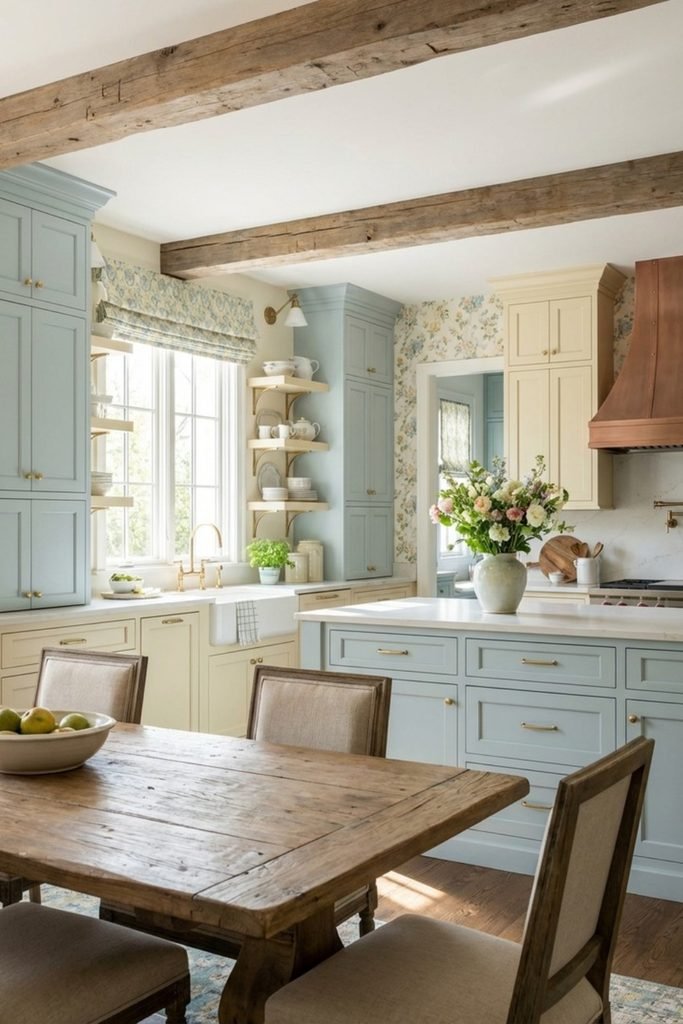
Country Blue
Soft blue cabinetry settles naturally into a country kitchen when reclaimed beams, floral wallpaper, and aged wood furniture bring warmth nearby.
Mix blue storage towers with cream cabinets rather than matching everything, then repeat brass hardware to connect both finishes across the room.
Family kitchens benefit from this relaxed combination because a large wooden dining table adds everyday function without competing with the painted cabinetry.
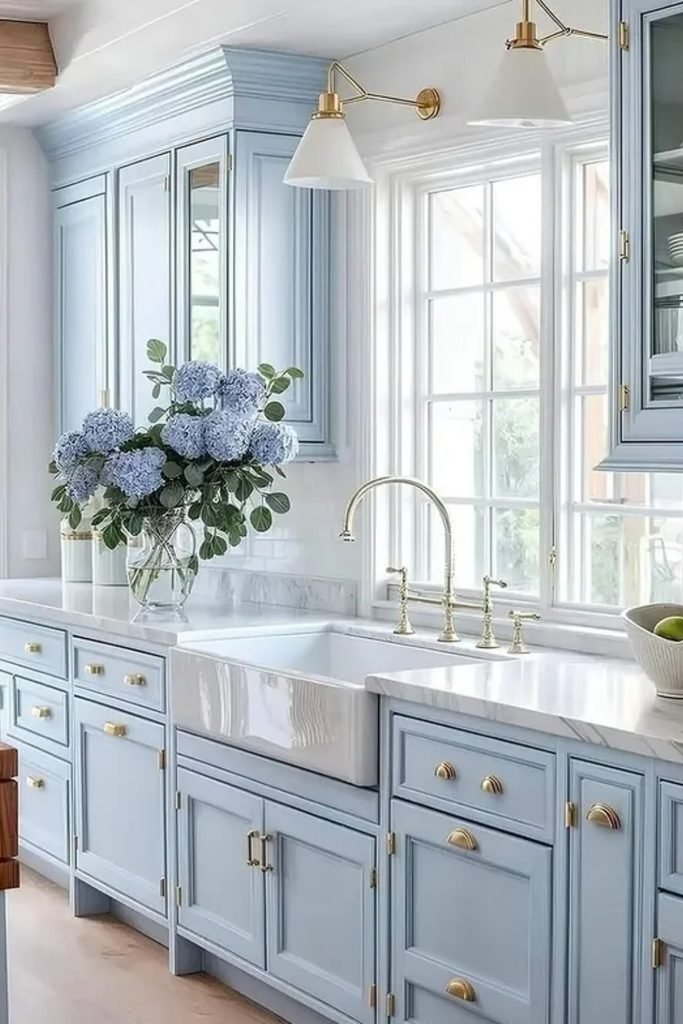
Window Sink
Placing a farmhouse sink beneath wide windows gives pale blue cabinetry a bright focal point while making everyday washing areas feel more inviting.
Keep counters and backsplash white, then use brass faucets, shell pulls, and simple wall lights to warm the cool cabinet color gently.
Long countertop runs work especially well here because repeated lower drawers provide practical storage while glass-front uppers keep the window wall visually lighter.
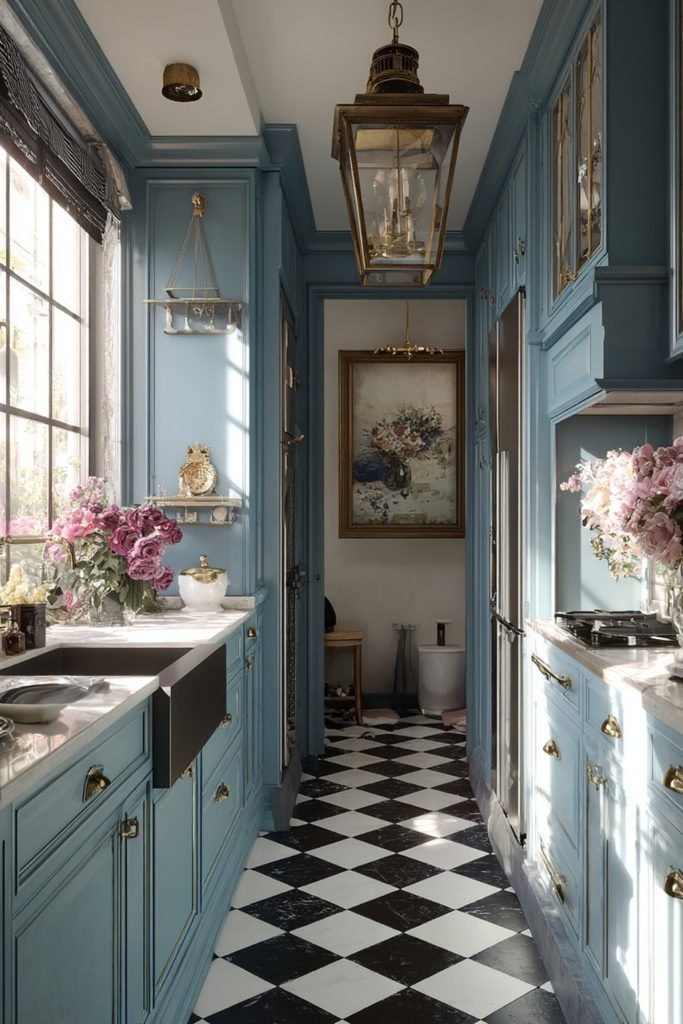
Gallery Kitchen
Moody blue cabinetry can make a narrow galley kitchen feel intentional rather than cramped when decorative details continue consistently from end to end.
Pair paneled cabinets with brass hardware, marble counters, and black-and-white flooring, letting oversized lantern lighting emphasize the kitchen’s long central walkway.
Natural light from one side prevents the deeper blue from closing in, while flowers and framed artwork soften the formal cabinetry beautifully.
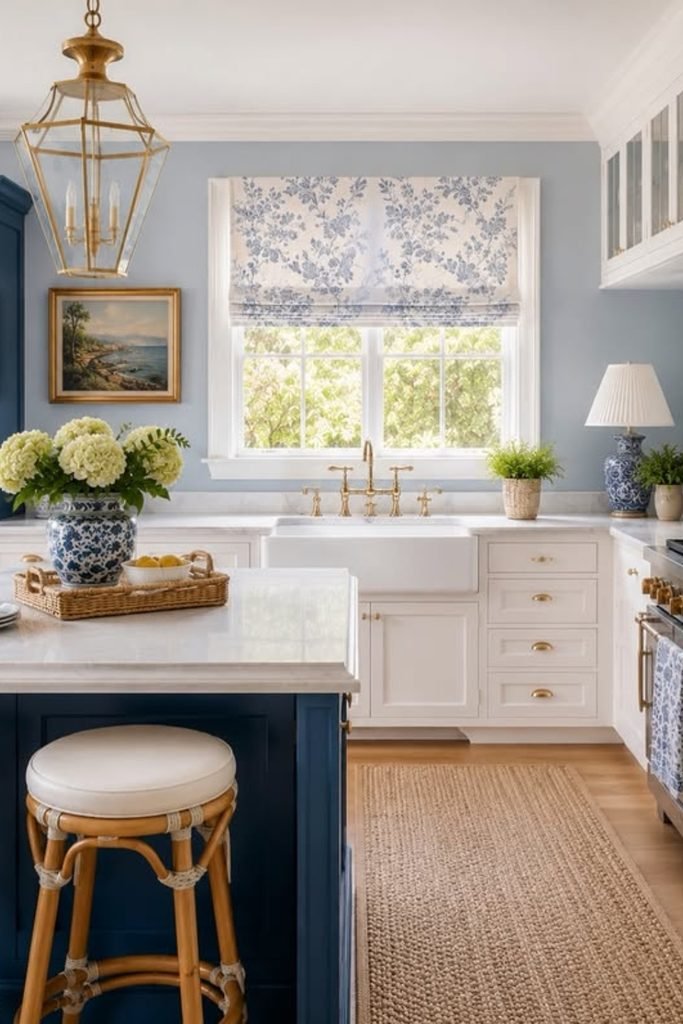
Coastal Contrast
Navy island cabinetry gives this bright kitchen a strong anchor, while white perimeter cabinets keep the compact layout feeling open and balanced.
Bring the palette together with brass fixtures, blue-and-white textiles, and woven stools, using natural textures to soften polished stone surfaces.
Kitchens with one main window suit this arrangement well because pale blue walls reflect daylight while the darker island adds controlled depth.
Industrial Blue
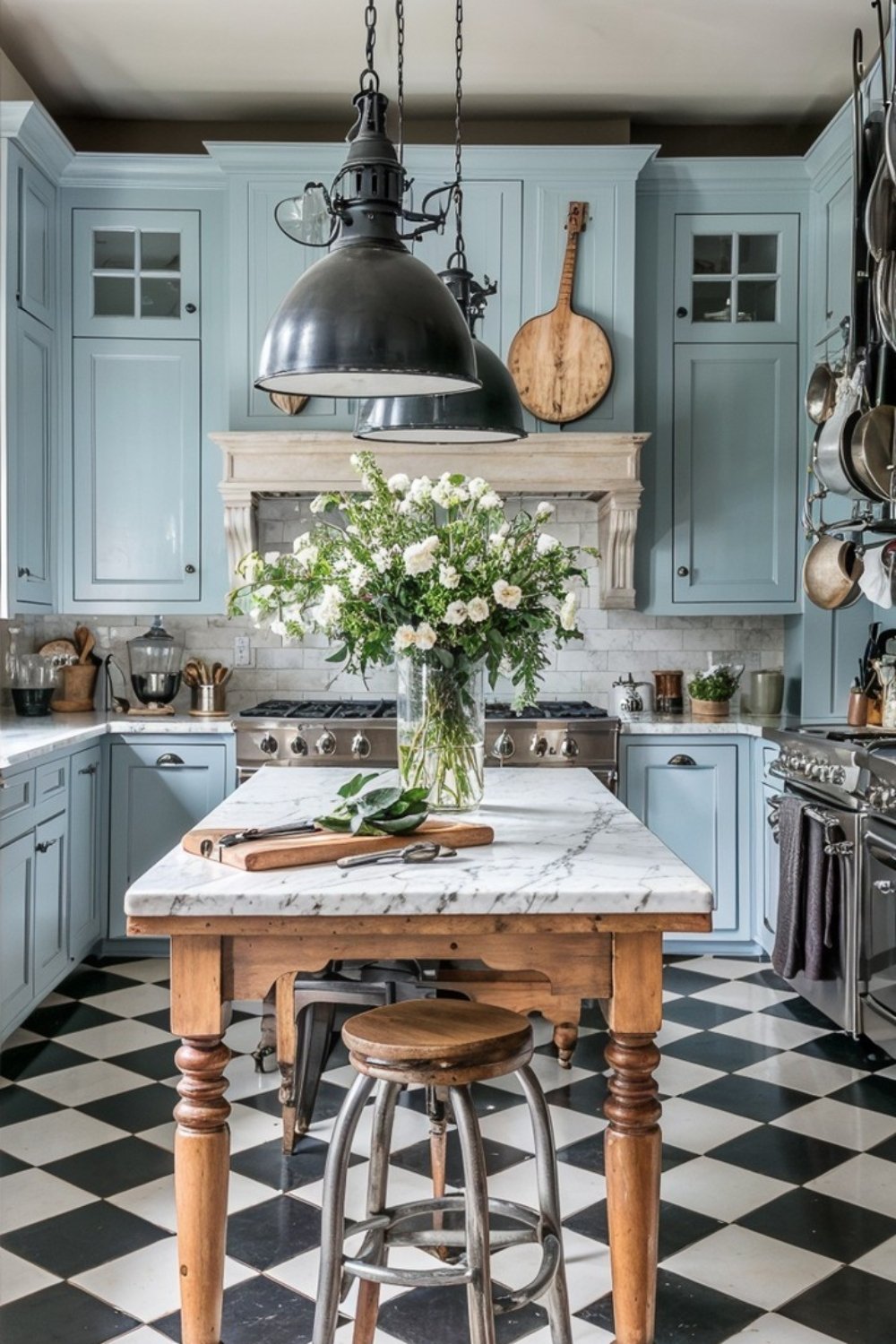
Industrial pendant lights bring unexpected edge to powder blue cabinetry, creating a kitchen that feels collected instead of overly coordinated or delicate.
Pair shaker cabinets with a worn wooden island and marble top, then repeat black accents through hardware, appliances, and checkerboard flooring.
Busy cooking spaces benefit from this mix because sturdy furniture and generous work surfaces handle daily use while softer blue keeps everything approachable.
Farmhouse Island
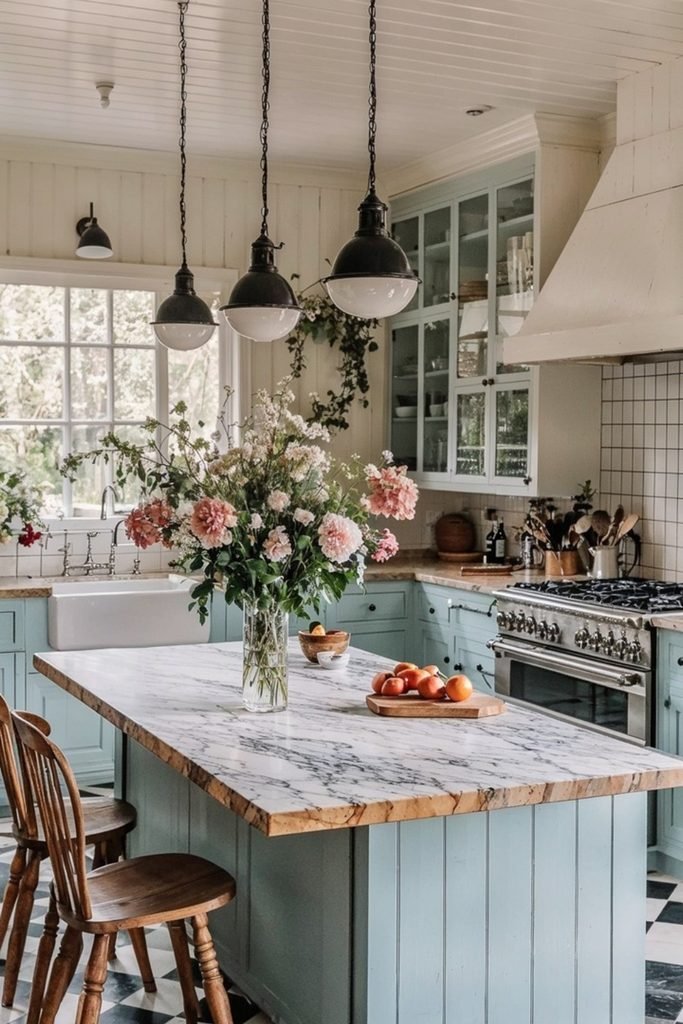
Country character feels more relaxed when a large blue island becomes the working centerpiece beneath simple black pendants and a white paneled ceiling.
Choose vertical paneling around the island base, marble counters, and wooden stools, then repeat pale blue across surrounding cabinets for gentle continuity.
Open family kitchens handle this substantial island beautifully because seating stays accessible while generous preparation space remains available around the farmhouse-inspired centerpiece.
Botanical Blue
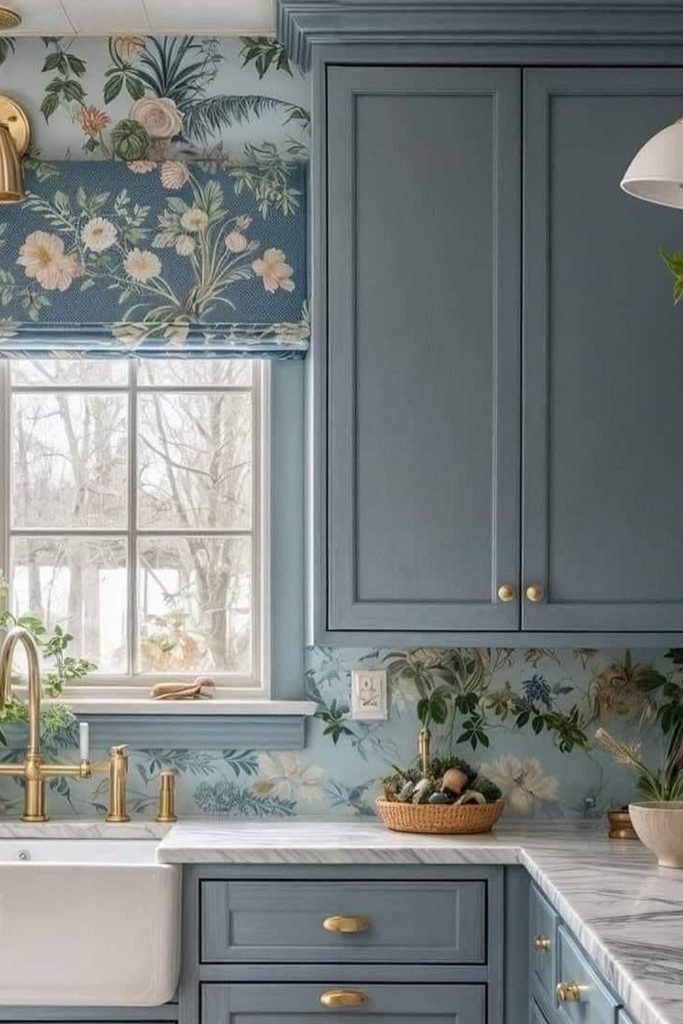
Floral wallpaper gives deep blue cabinetry a softer direction, turning a practical sink corner into something decorative without sacrificing useful storage.
Repeat botanical patterns on the window shade, then use marble counters and brass fixtures to add cleaner surfaces between the layered floral details.
Smaller kitchens can borrow this idea on one wall, letting natural window light and open wooden shelves prevent patterned finishes feeling enclosed.
Tailored Blue
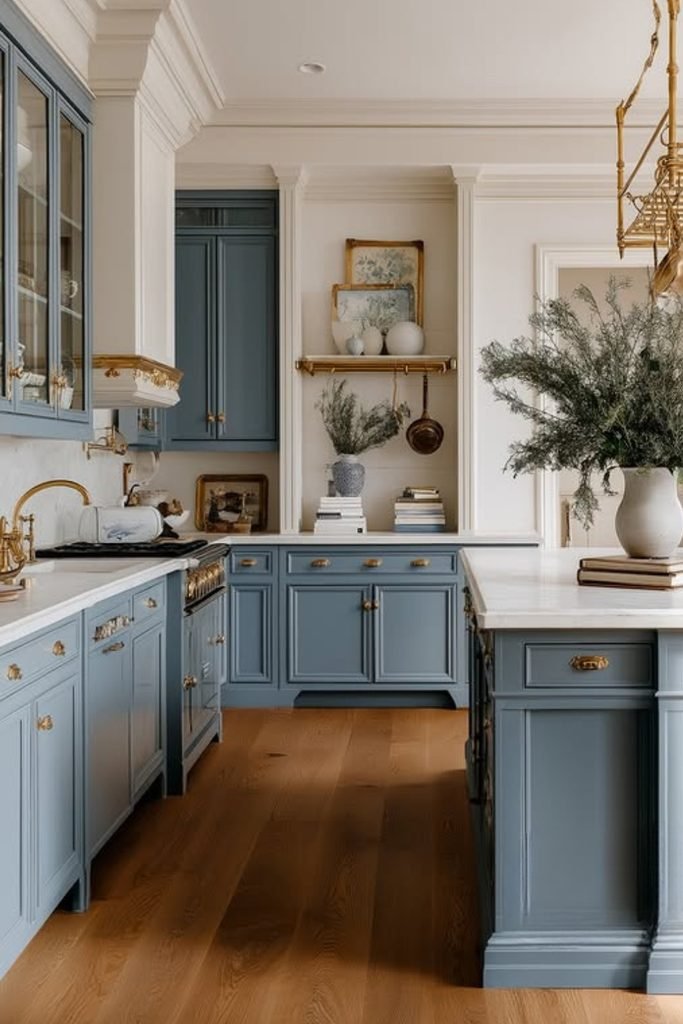
Refined blue cabinetry feels especially polished when detailed molding and brass hardware are repeated consistently across both perimeter storage and the island.
Keep counters pale and uncluttered, then introduce warm wood flooring so the cool cabinet color never makes the kitchen feel overly formal.
Generous kitchens suit this arrangement beautifully, while overhead pot storage uses ceiling height practically and adds character above the spacious central island.
FAQs
Can a blue French country kitchen work in a small space?
Yes, especially when you choose a soft blue and keep the surrounding walls, counters, or upper cabinets light and warm.
Using blue on lower cabinets, an island, or one pantry section can add character without making the room feel visually heavy.
Natural wood, cream, and brass also help soften the blue while keeping a smaller kitchen warm, balanced, and inviting.
How do you stop a blue French country kitchen from looking coastal?
Avoid pairing pale blue with too much bright white, chrome, glossy tile, or obvious nautical details, because those elements can shift the style coastal.
Bring in warm materials such as limestone, aged brass, copper, terracotta, oak, and creamy neutrals to create a more grounded French-country look.
Traditional cabinetry, curved details, vintage-inspired lighting, and furniture-style pieces also help the blue feel collected rather than beachy.