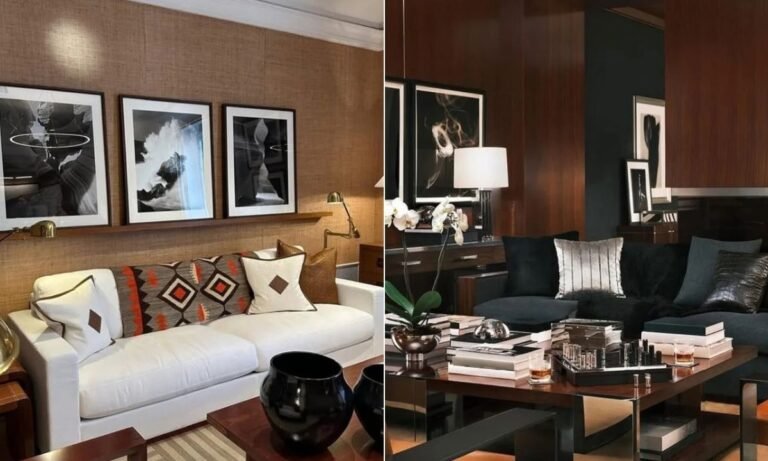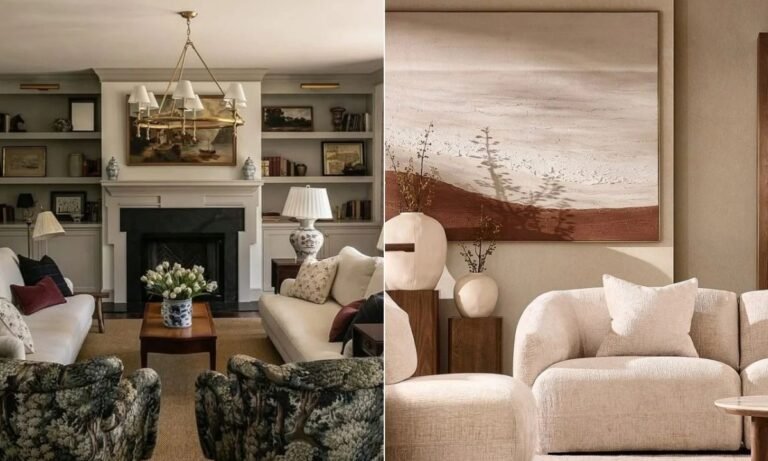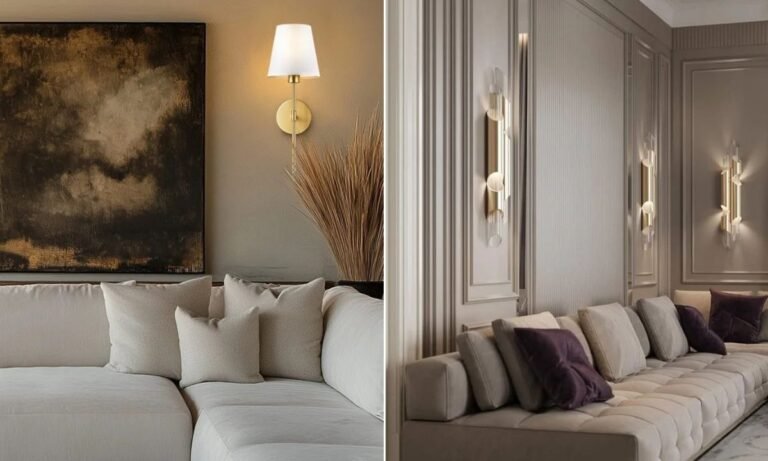
A contemporary living room can look amazing in photos, but copying that clean style at home often leaves the space feeling cold or unfinished.
Add too much decor, and you lose the calm look; remove too much, and suddenly your living room feels more like a showroom.
The sweet spot comes from balancing clean furniture with warm textures, comfortable seating, personal details, and a layout that works for everyday life.
In this article, you’ll find contemporary living room ideas that show you how to get that balance.
Let’s jump in!
What Is a Contemporary Living Room?
A contemporary living room reflects what feels fresh and current today, rather than following one strict design style from the past.
You’ll usually see clean furniture lines, open space, simple layouts, and a mix of wood, stone, glass, metal, and soft fabrics.
But don’t mistake contemporary for cold minimalism; you can use warm colors, curved furniture, textured rugs, artwork, and even vintage pieces.
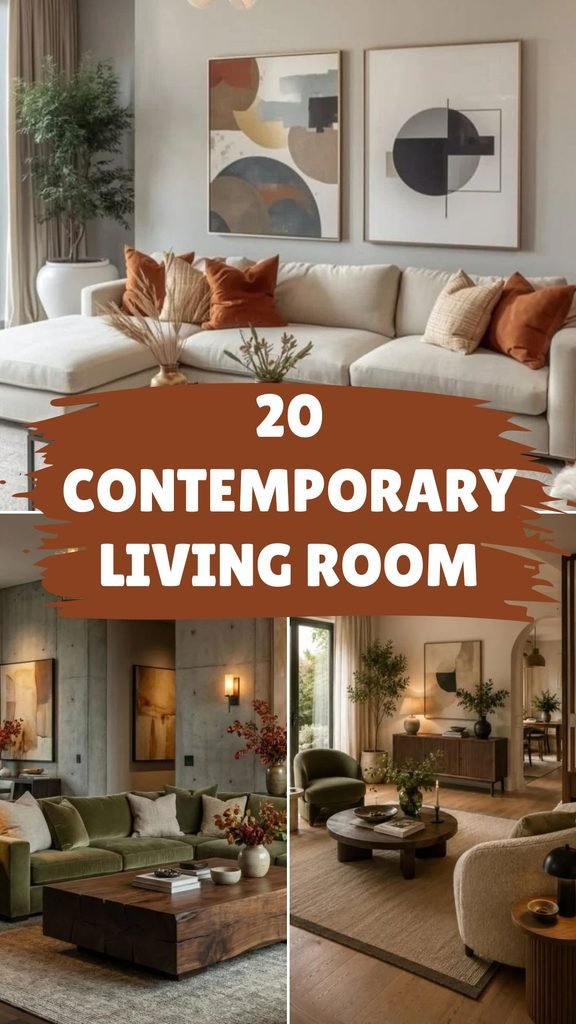
The key is choosing fewer things with purpose, so your sofa, lighting, tables, and decor work together without making the room feel crowded.
If your space feels too plain, add warmth through natural materials and texture instead of filling every empty corner with extra decorations.
Aim for a room that feels current and polished but still comfortable enough for relaxing, watching TV, talking, and everyday family life.
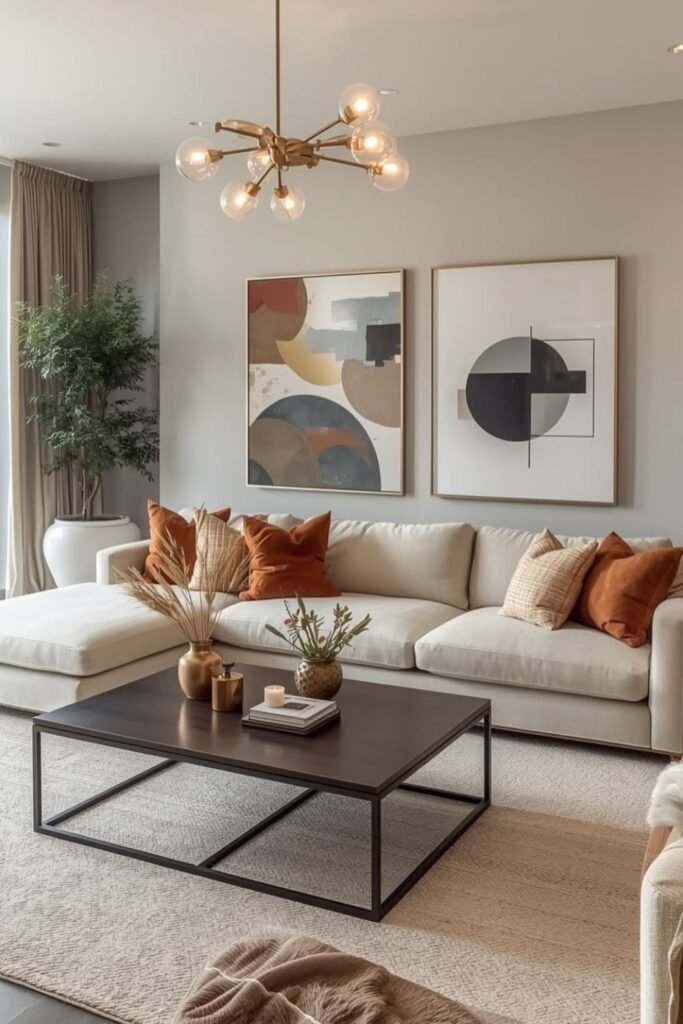
Warm Rust Accents
If your neutral living room feels flat, use rust cushions and large abstract art to bring warmth without disturbing the clean foundation.
Keep the sofa, rug, and walls light, then ground them with a dark metal coffee table for sharper contemporary contrast.
This approach works especially well in bright rooms, where natural light keeps deeper accents from making the space feel visually heavy.
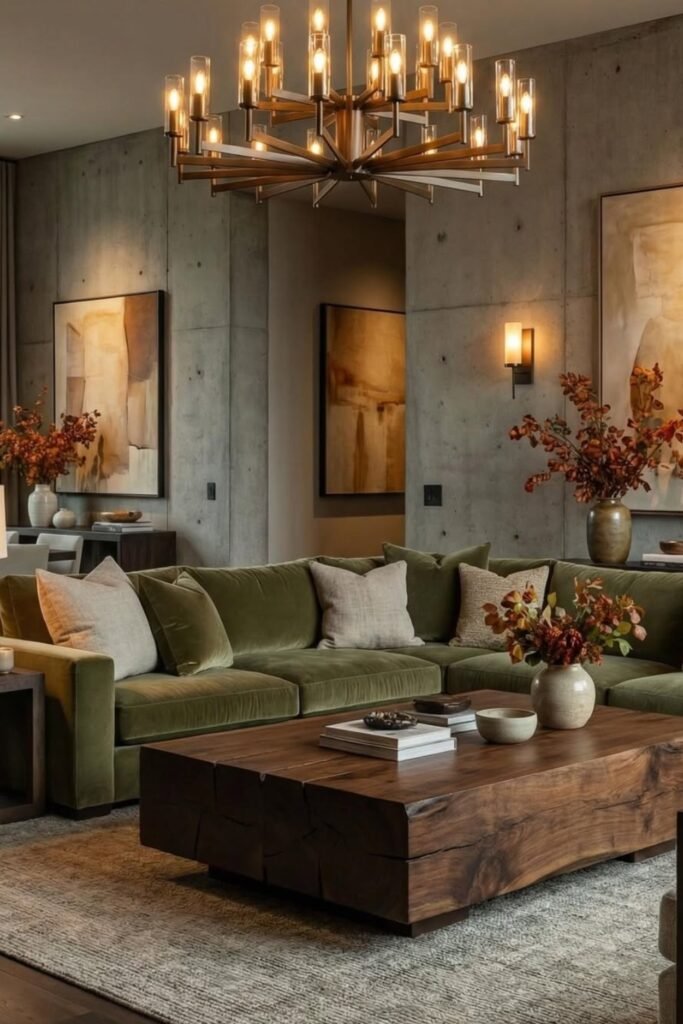
Industrial Warmth
Concrete walls do not have to feel cold when you balance their hard finish with velvet seating, warm wood, and soft lighting.
Choose an olive sectional as the main color, then repeat earthy tones through artwork, branches, and accessories instead of adding competing shades.
A chunky wood coffee table adds enough natural character to soften the industrial backdrop while keeping the overall room contemporary and grounded.
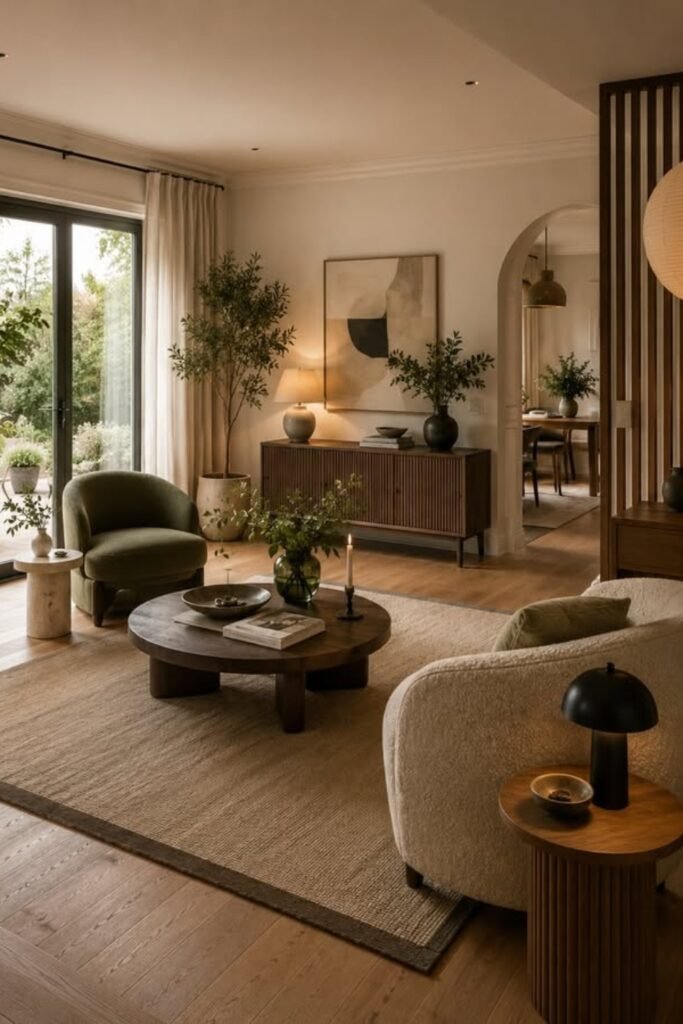
Curved Conversation Area
If you prefer contemporary rooms that feel relaxed, build the layout around rounded chairs rather than relying on a large sectional sofa.
Pair soft curves with warm wood, a textured rug, and simple artwork so the room stays inviting without becoming overly decorative.
This setup suits smaller conversation spaces especially well because separate chairs keep sightlines open and make the furniture arrangement easier to adjust.
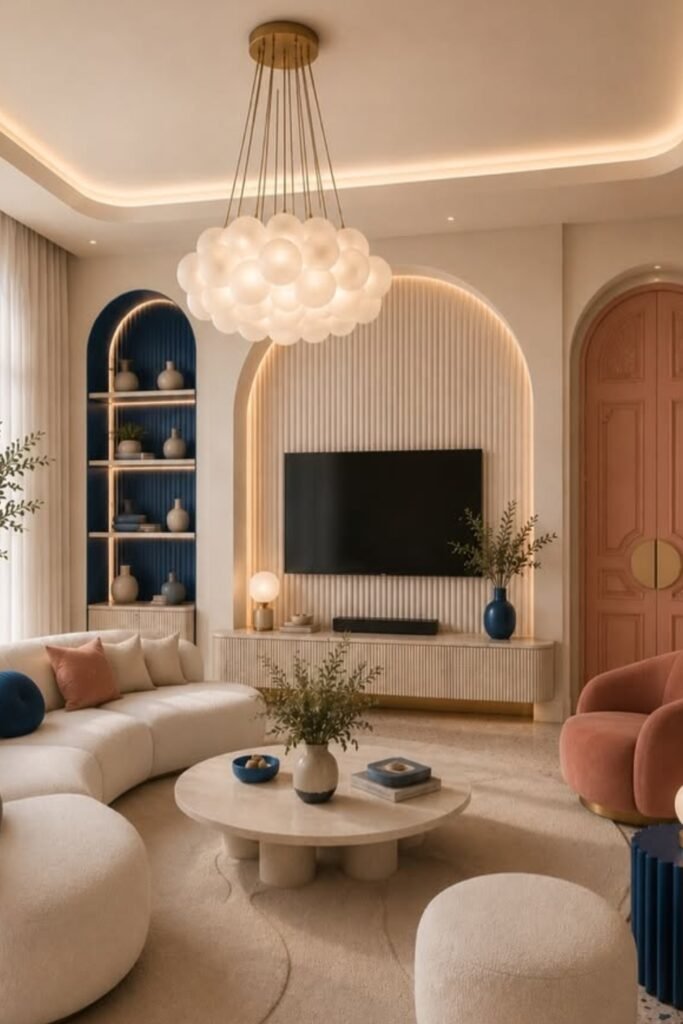
Arched Media Wall
Turn the television into part of the architecture by framing it with a rounded niche instead of leaving it on a plain wall.
Carry the curved shape through the sofa, chair, doorway, and lighting so the room feels connected rather than filled with unrelated statement pieces.
Use one deeper accent color, like navy or dusty coral, to break up creamy neutrals while keeping the overall palette controlled.
Open City Layout
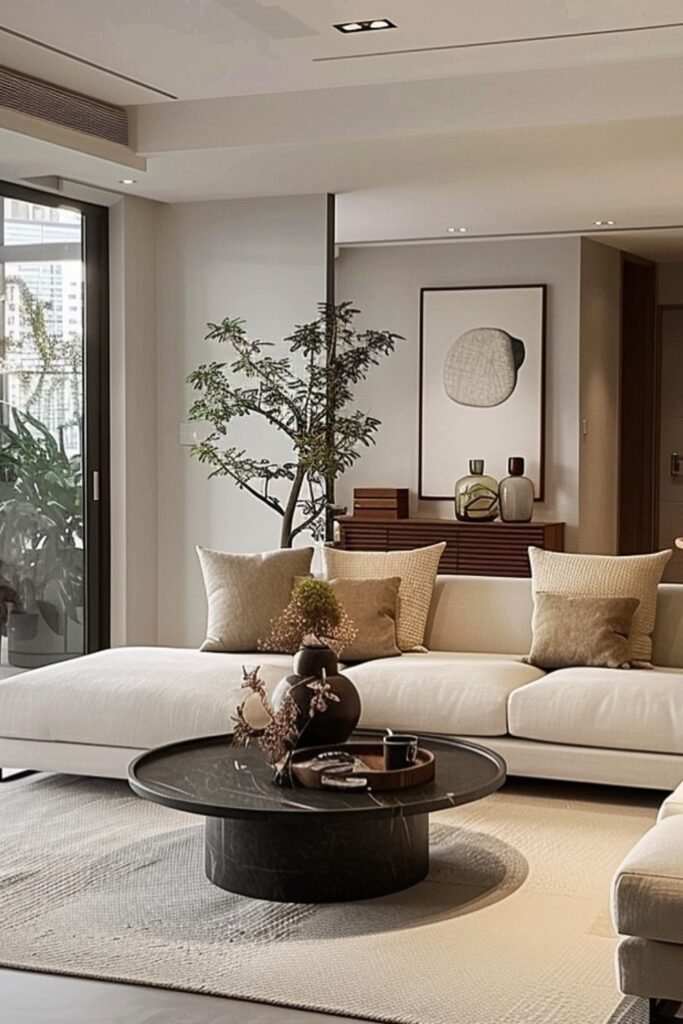
When your living room shares space with the kitchen, keep large furniture neutral so both zones connect without looking overly matched.
A low sectional preserves sightlines toward the windows, while one dark round table gives the pale seating area a clear visual anchor.
Use a generous rug beneath the entire seating group to define the lounge naturally without adding partitions that interrupt an open layout.
High-Contrast Elegance
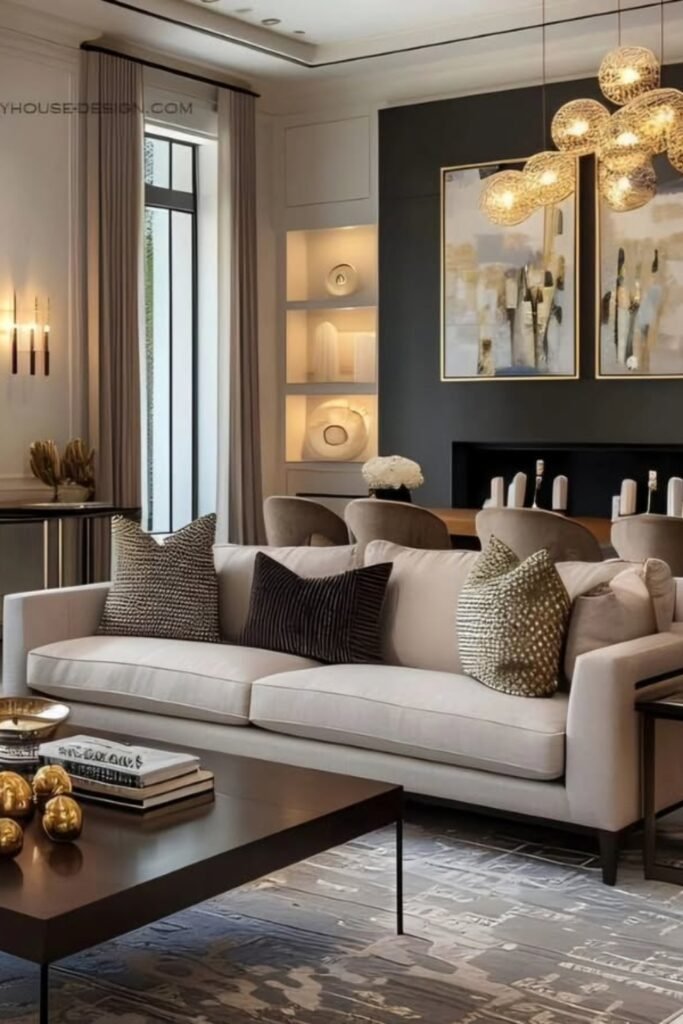
A dark feature wall can make a contemporary room feel richer, especially when you balance it with cream seating and warm metallic details.
Instead of filling that wall with decor, choose oversized abstract art and integrated lighting so each element has enough space to stand out.
Carry black and gold through cushions, tables, and lighting in small doses, giving the room consistency without making everything look coordinated.
Terracotta Statement Seating
Large contemporary rooms can handle stronger color, so let terracotta seating warm the space rather than relying on accessories for personality.
Balance that saturated upholstery with cream seating and a muted oversized rug, which keeps the conversation area polished instead of overly colorful.
This works especially well with tall ceilings because vertical wall panels and slim lighting draw attention upward while the furniture grounds everything below.

Fireplace Comfort Zone
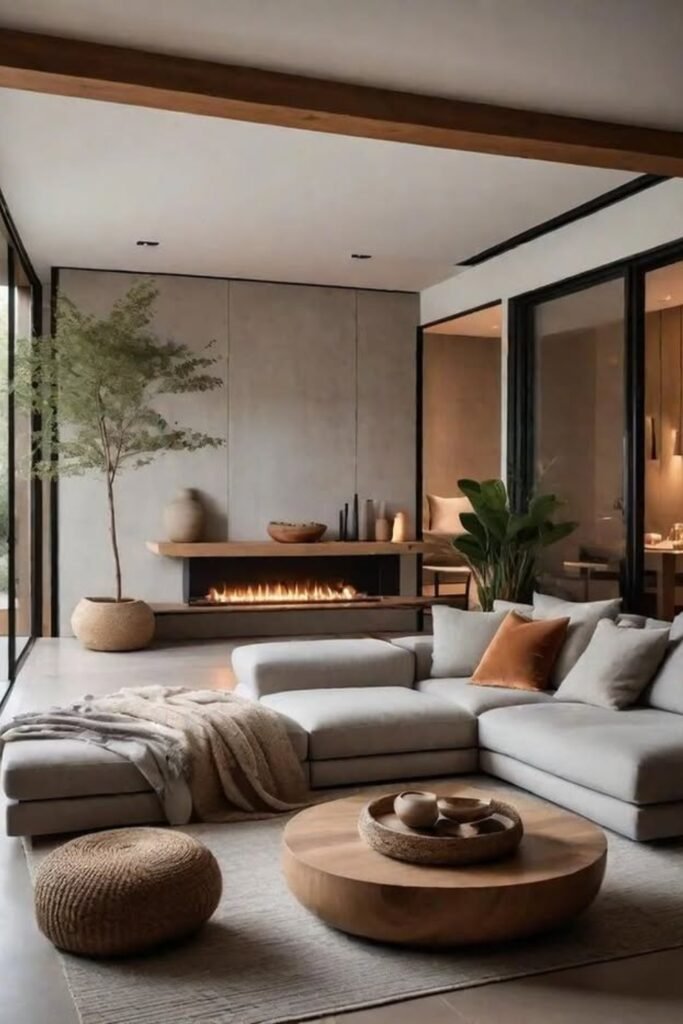
For a contemporary room built around relaxation, combine a deep sectional with a low fireplace rather than making the television the main focus.
Keep wood close to the floor through the hearth and round coffee table, helping the wide seating arrangement feel warmer and more grounded.
Plants, woven pieces, and a loose throw soften the clean architecture, making this approach ideal when minimalist rooms usually feel too controlled.
Botanical Green Corner
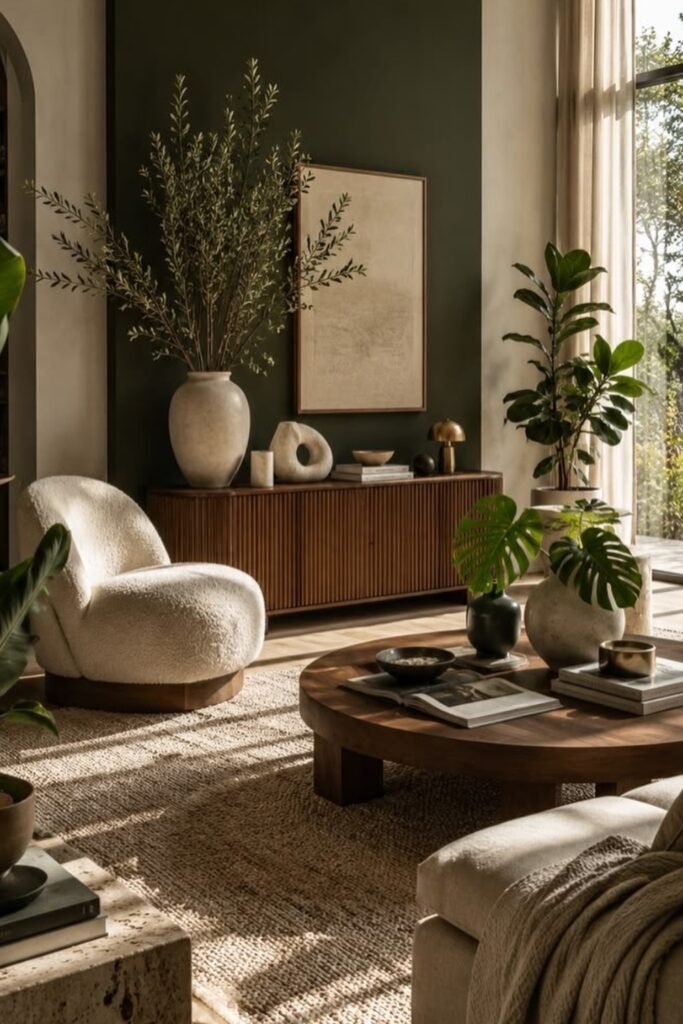
Give an earthy contemporary room more depth with a dark green wall, then soften it using warm wood and creamy textured seating.
Instead of scattering small plants everywhere, group a few larger varieties near natural light so the greenery feels intentional rather than cluttered.
Finish with simple ceramics and a low wooden table, letting natural shapes carry the decoration without needing lots of colorful accessories.
Indoor Garden Living
If your living room has generous glazing, use the view as part of the decor and let greenery shape the entire atmosphere.
Keep sofas and rugs fairly quiet so abundant plants remain the focus, while warm wood flooring connects the indoor space with nature outside.
This idea suits sunrooms and garden-facing extensions, where plants at different heights can soften large windows without blocking valuable daylight.
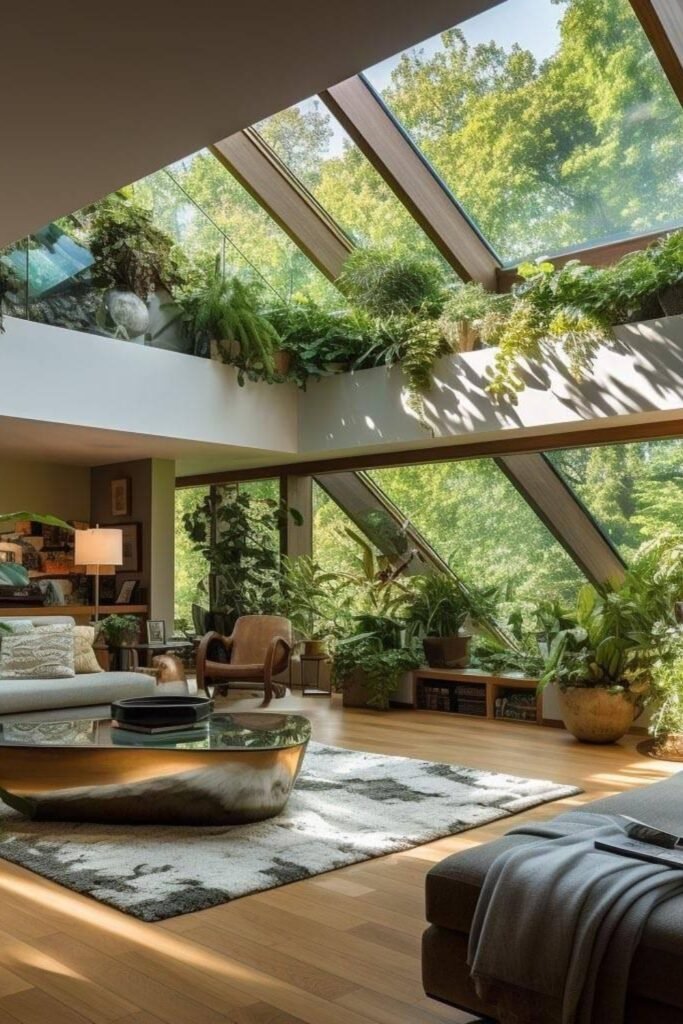
Double-Height Luxury
A soaring living room needs furniture with enough scale, so create one generous seating zone instead of spreading smaller pieces across the floor.
Use tall curtains and a floor-to-ceiling media wall to emphasize the height, then bring attention downward with a large textured rug.
Keep the palette light when windows dominate the room, allowing architectural scale and statement lighting to provide drama without adding excessive color.

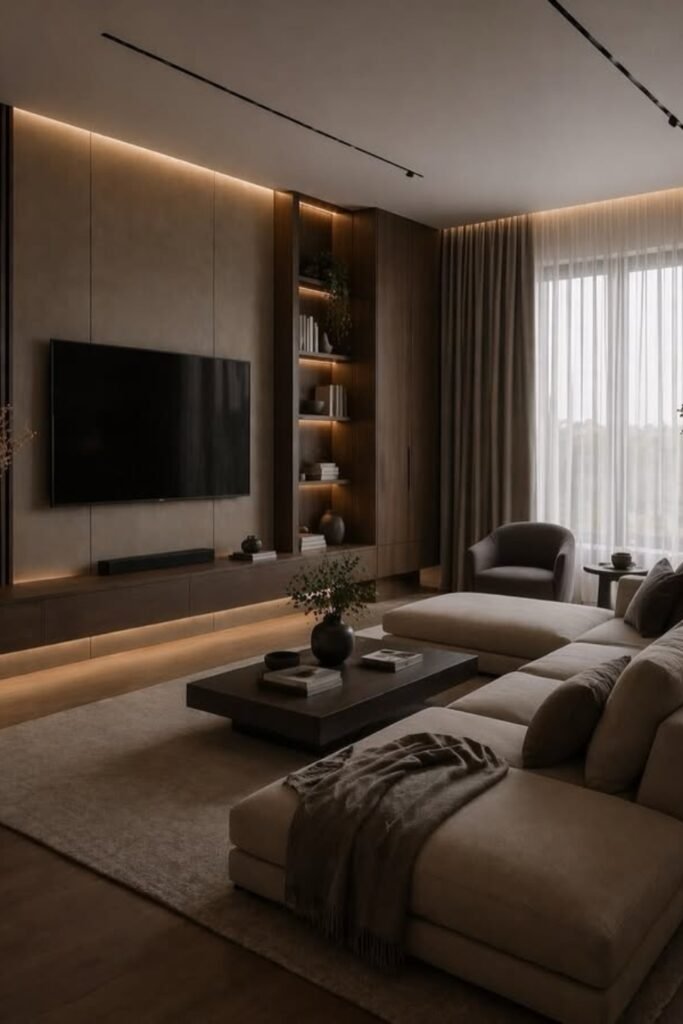
Integrated Media Storage
If you want a calmer TV room, build storage around the screen so cables, devices, books, and everyday clutter have dedicated places.
Warm wood cabinetry keeps the built-in from feeling flat, while concealed lighting adds depth without competing with the television.
Choose a deep sectional and low coffee table for this setup, creating a comfortable media zone that still looks clean when unused.
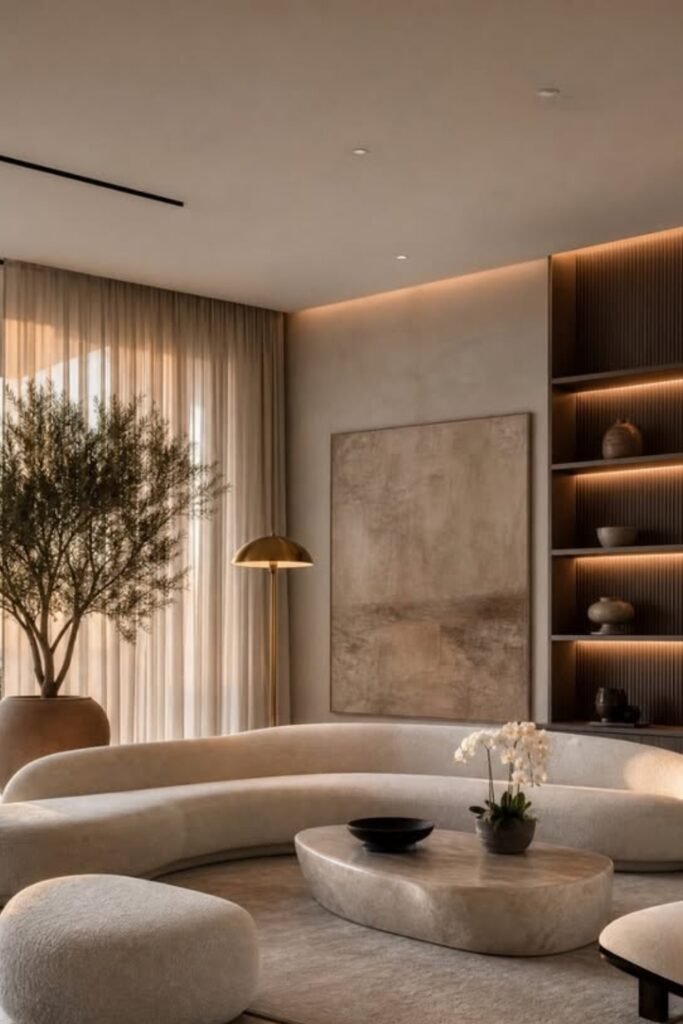
Sculptural Neutral Seating
A neutral room feels far less predictable when the sofa itself brings shape, so choose curved seating before adding extra decorative color.
Keep surrounding pieces low and rounded, allowing the sofa, stone table, and soft ottoman to create movement without making circulation feel awkward.
Built-in shelves with warm lighting work especially well here, adding evening depth while keeping books and objects neatly contained along one wall.
Balanced Conversation Layout
For a living room made for conversation, face two sofas toward each other and place accent chairs across the remaining open side.
Mix cream upholstery with brown leather to stop the symmetrical layout from feeling formal, then use black details for a sharper contemporary edge.
A substantial stone coffee table suits this arrangement because it anchors all four seating directions and gives everyone an easy surface to reach.

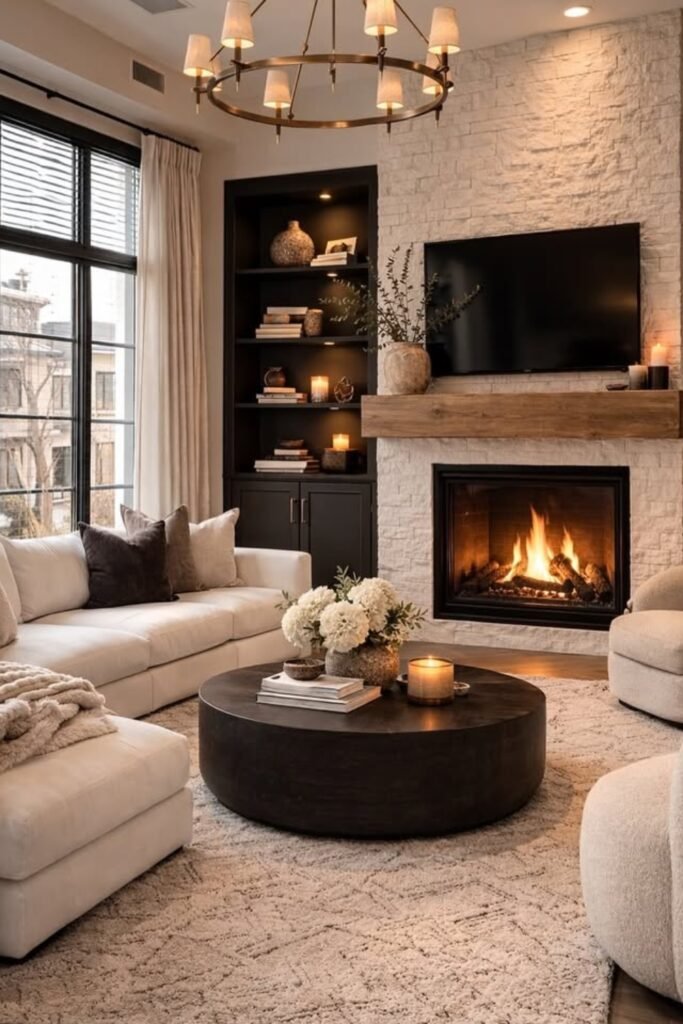
Fireplace Media Wall
When your fireplace and television share one wall, treat them as a single feature instead of decorating each element separately around them.
Use pale stone to soften the black screen, then add a thick wood mantel that introduces warmth and clearly separates both focal points.
Dark built-ins on either side provide useful storage and contrast, while soft cream seating keeps the overall room comfortable rather than visually heavy.
Airy Gathering Space
High ceilings can make seating feel disconnected, so pull sofas and chairs into one generous group instead of following the room’s perimeter.
Let tall windows and architectural openings provide the drama, then keep upholstery creamy and bring warmer brown tones through smaller accent pieces.
A broad rug and long coffee table visually connect the furniture, making a large contemporary room feel welcoming rather than oversized and empty.

Slatted Media Wall
Give a plain TV wall more structure with vertical wood slats, then keep the center smooth so the screen never feels visually crowded.
Run a low cabinet across the wall for hidden storage, while warm accent lighting highlights texture without needing shelves full of decorations.
This setup works beautifully in family rooms because the sectional stays comfortable and practical while the media area looks neat every day.

Nature-Led Lounge
When large windows already connect your room with outdoors, repeat that warmth inside through timber furniture, greenery, and soft neutral upholstery.
Keep seating low to protect the view, then use oversized pendant lights above to fill vertical space without blocking sunlight or garden sightlines.
A broad natural rug pulls the arrangement together, while the dark fireplace gives this open, plant-filled room one strong architectural focal point.

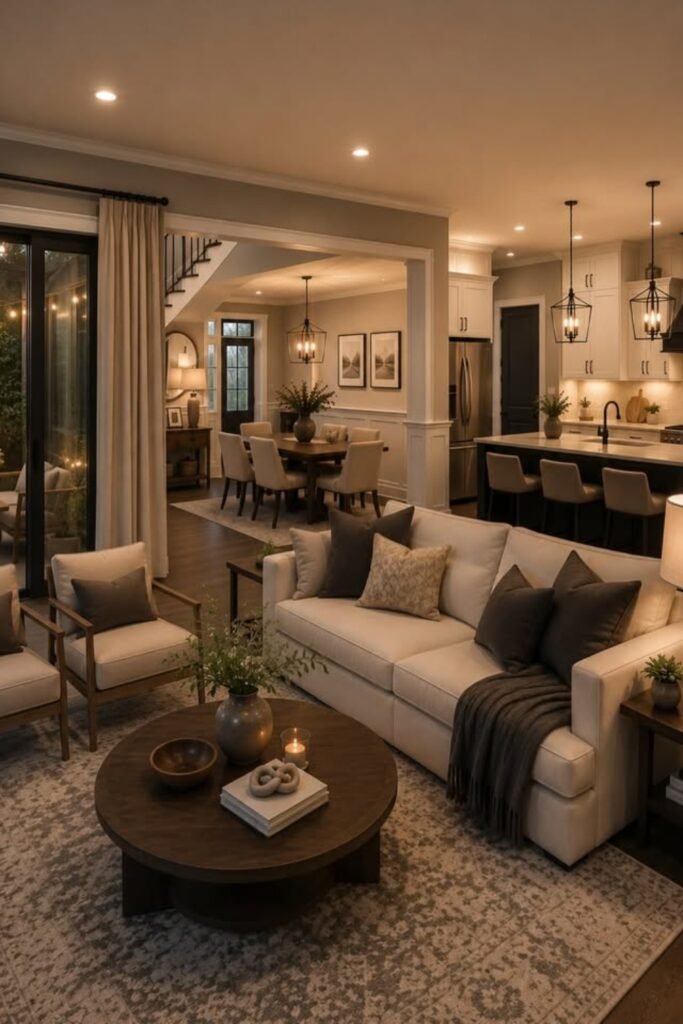
Connected Open Plan
If your living room opens directly into dining and kitchen areas, repeat a limited palette so all three spaces feel naturally connected.
Use cream seating and dark wood in the lounge, then carry those same tones toward dining furniture, cabinetry, and smaller decorative details.
A patterned rug clearly marks where the living area begins, giving you separation without adding walls that would interrupt everyday movement.
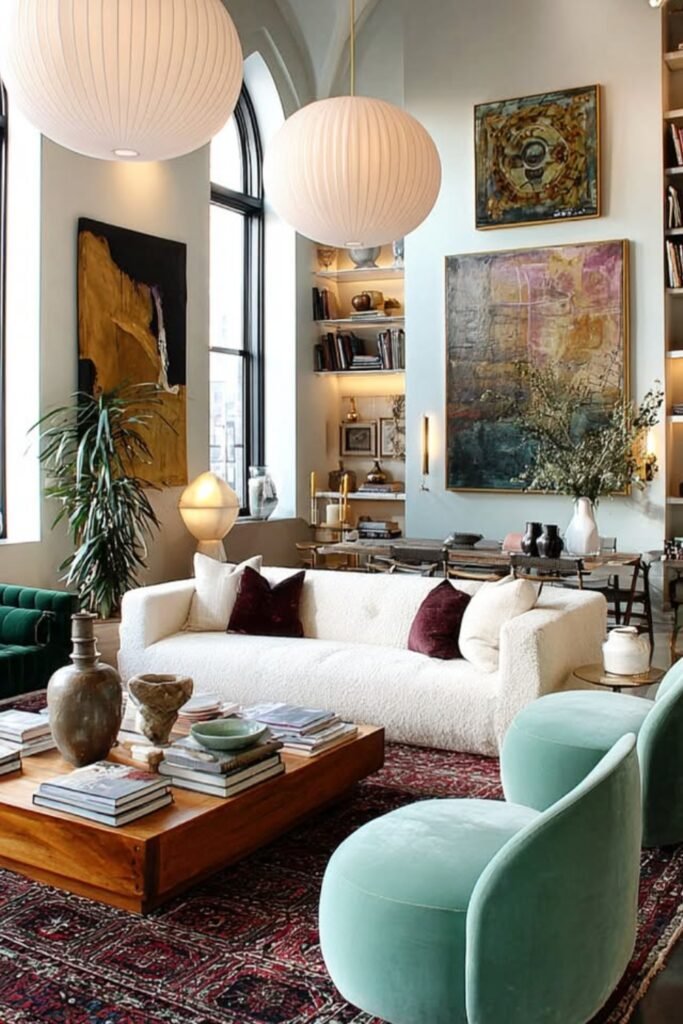
Collected Contemporary Style
Contemporary does not need to look minimal, so mix expressive artwork, books, vintage rugs, and colorful seating when personality matters more.
Start with one calm sofa, then introduce deeper green, burgundy, and aqua through separate pieces instead of matching everything around one color.
This approach suits art-filled homes especially well because varied furniture and collected objects make the room feel personal without losing thoughtful balance.
FAQs
Can You Mix Traditional Furniture With a Contemporary Living Room?
Yes, and one or two older pieces can actually stop a contemporary room from feeling too new or showroom-like. Keep the main furniture clean and simple, then bring in a vintage chair, wooden cabinet, or antique table for contrast.
Repeat a color or material elsewhere in the room so the older piece feels intentional rather than out of place.
How Can You Update a Living Room Without Replacing the Furniture?
Start with the details that change the room around your furniture.
A larger rug, new cushions, warmer lighting, updated curtains, and oversized artwork can quickly shift the overall look.
You can also remove unnecessary decor and rearrange seating to create clearer walkways.
If your furniture is neutral, adding wood, textured fabrics, and a few darker accents can make it feel much more current.