You start with beige, add a few plants and wooden pieces, yet somehow the room still feels flat instead of warm and earthy.
The problem usually isn’t what you added, but how the colors, textures, materials, and lighting work together.
Too much brown can make the room heavy, while too many pale neutrals can leave it looking unfinished.
In this article, you’ll find practical earthy living room ideas that show you how to build that balance.
Let’s jump in!
How to Create an Earthy Living Room?
Start with two or three earth tones that already work with your sofa, flooring, and natural light instead of changing everything at once.
Warm beige, cream, olive, rust, clay, and brown give you plenty of room to build a balanced palette.
Next, bring in natural materials through a wooden coffee table, linen curtains, a jute or wool rug, and simple ceramic pieces.

Mix smooth and rough textures so neutral colors don’t fall flat.
If the room starts feeling too brown or dark, break it up with cream fabrics, lighter walls, or greenery.
Finish with floor and table lamps instead of relying only on overhead lighting. Keep accessories limited so the natural materials remain the focus.
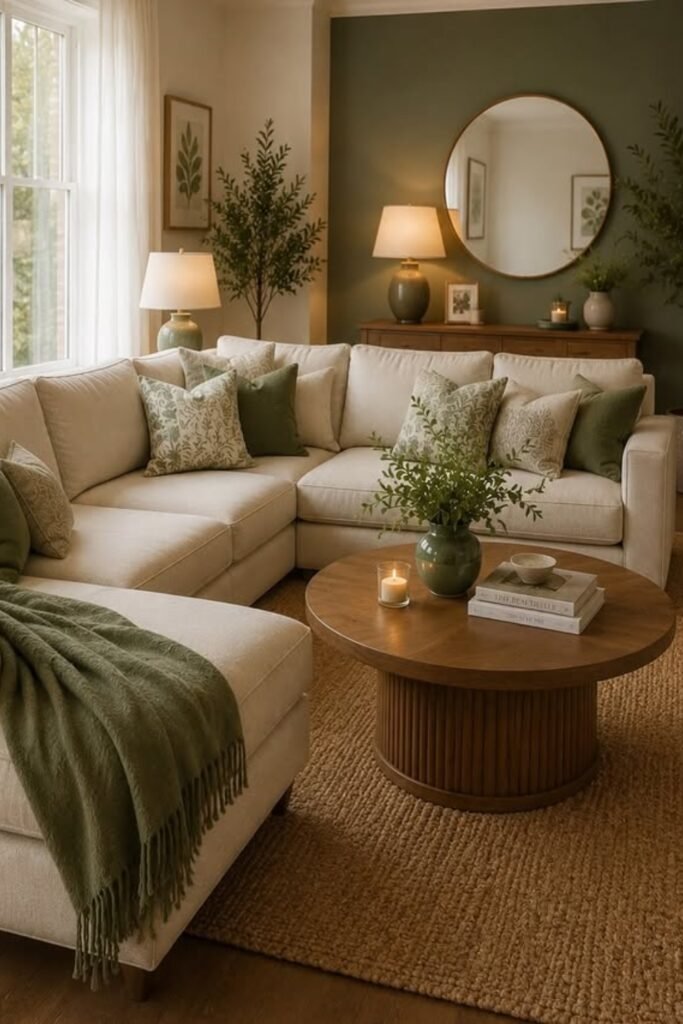
Olive Balance
Pair deep olive walls with a cream sectional when you want rich earthy color without making the living room feel visually heavy.
Bring walnut cabinetry and a round wooden table into the scheme, then repeat olive and rust through cushions for a connected palette.
Keep sheer curtains and layered warm lighting around darker finishes, as both help the wood and green tones stay inviting after sunset.
Natural Layers
Let a cream sectional form the quiet base, then layer olive cushions and a matching throw to introduce earthy color gradually.
Ground the pale upholstery with a chunky jute rug and dark wooden coffee table, giving a bright living room warmth and definition.
Place leafy branches near windows and use ceramic lamps beside the sofa, bringing natural shapes indoors without filling every surface with plants.
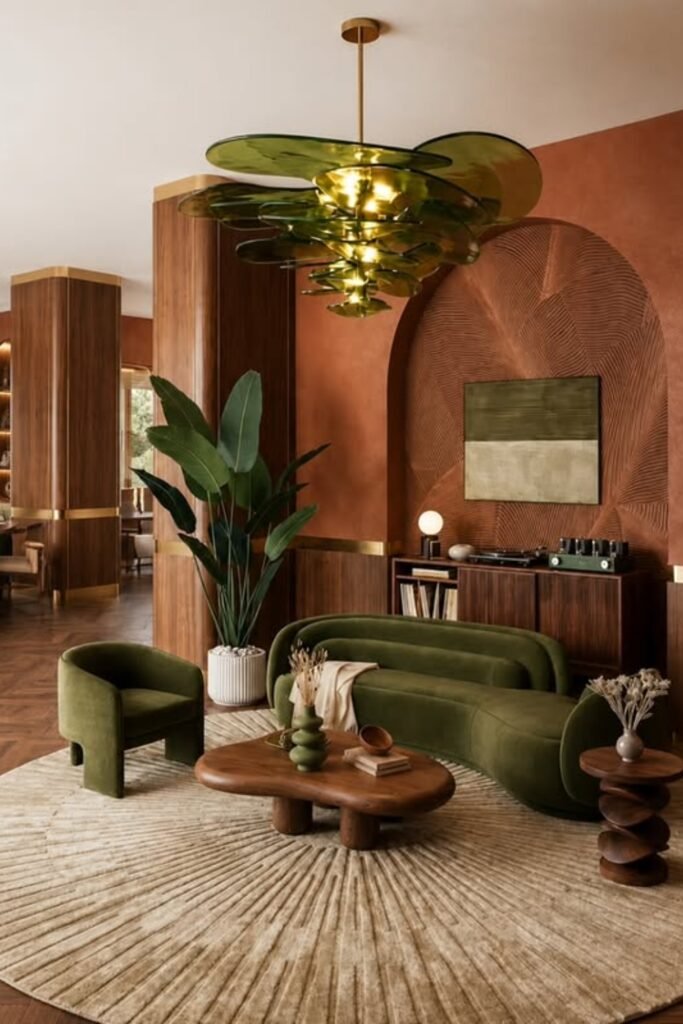
Terracotta Mood
Go bolder with terracotta walls when your living room has enough open space and natural light to handle a deeper earthy backdrop.
Balance the warm walls with olive velvet seating, walnut furniture, and a large cream rug so the stronger colors never compete.
Choose curved seating and sculptural wooden tables instead of boxy pieces, letting softer organic shapes reinforce the nature-inspired palette without extra decoration.
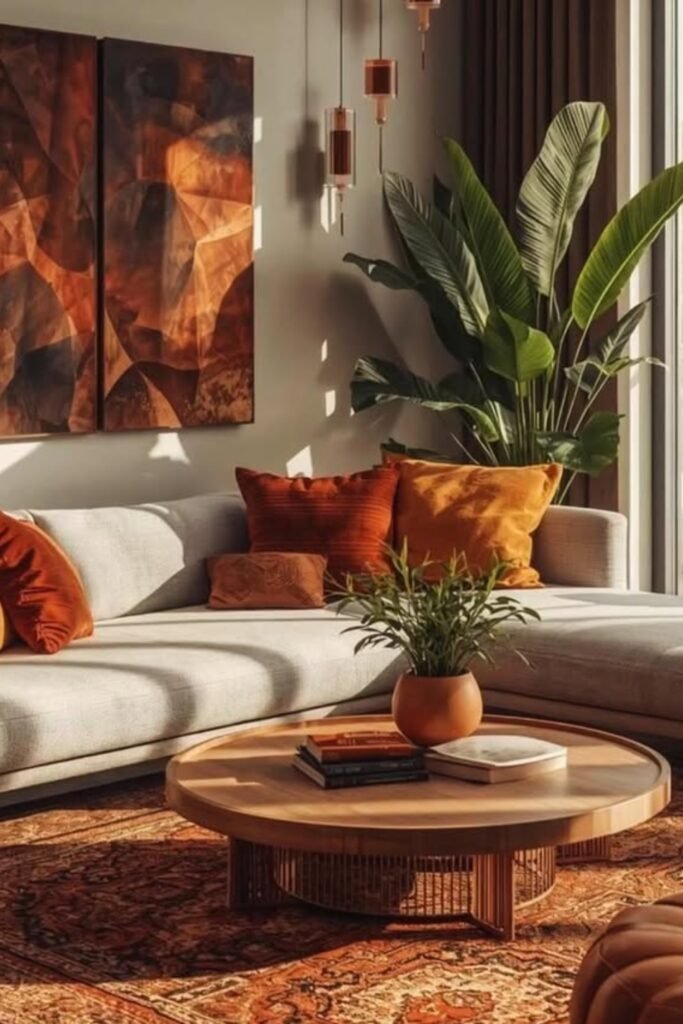
Burnt Orange
Use burnt orange as an accent when a cream sofa feels too plain but you still want the room to stay warm.
Repeat the orange through cushions, artwork, and a patterned rug, while natural wood keeps those stronger accents tied to an earthy foundation.
Add one large leafy plant beside the seating rather than several small pots, creating fresh green contrast without making the arrangement feel cluttered.
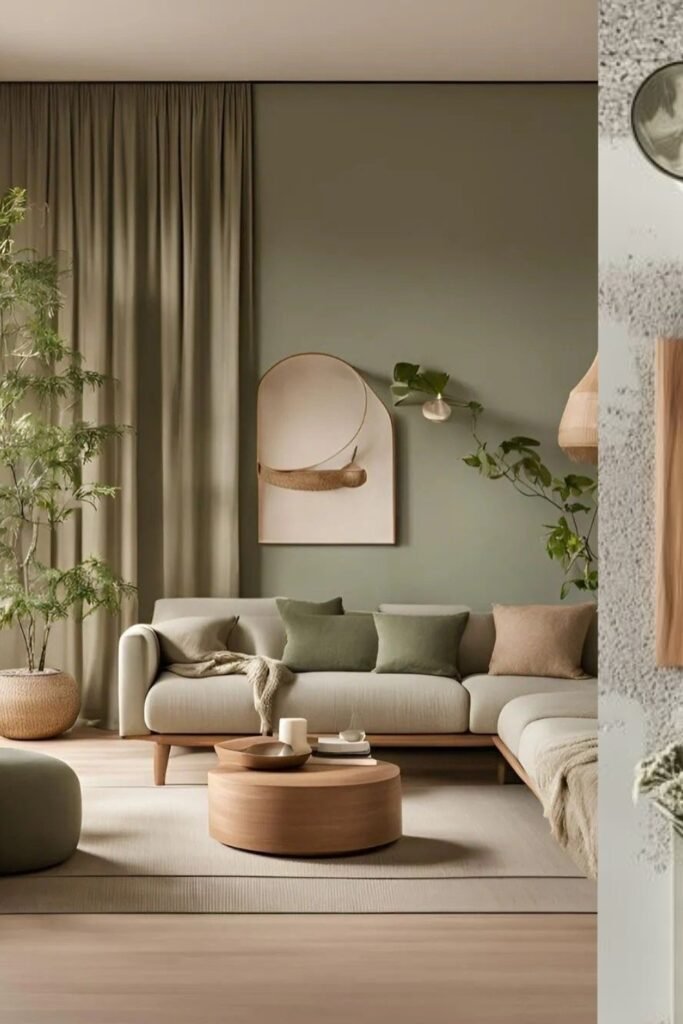
Sage Simplicity
Keep sage walls slightly muted when you want earthy color to feel calm, especially in smaller living rooms with simple neutral furniture.
Choose a cream sofa and pale wooden table to soften the green, then repeat similar tones through cushions without adding busy patterns.
Finish with floor-length neutral curtains and one airy indoor tree, allowing natural texture to fill empty corners without making them feel crowded.
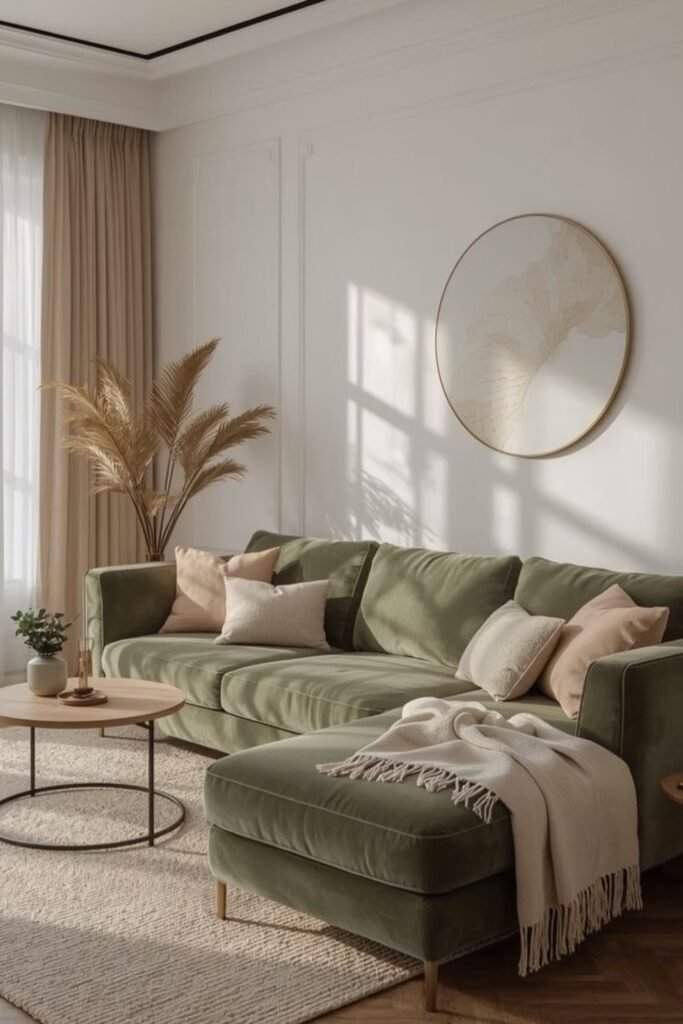
Green Sectional
Make an olive sectional your main earthy statement when white walls already give the living room plenty of brightness and visual breathing room.
Surround the deeper upholstery with cream pillows, a pale textured rug, and light wood so the green stays warm rather than overpowering.
Let sunlight do part of the decorating by keeping window treatments soft and neutral, which helps every muted green tone appear more natural.
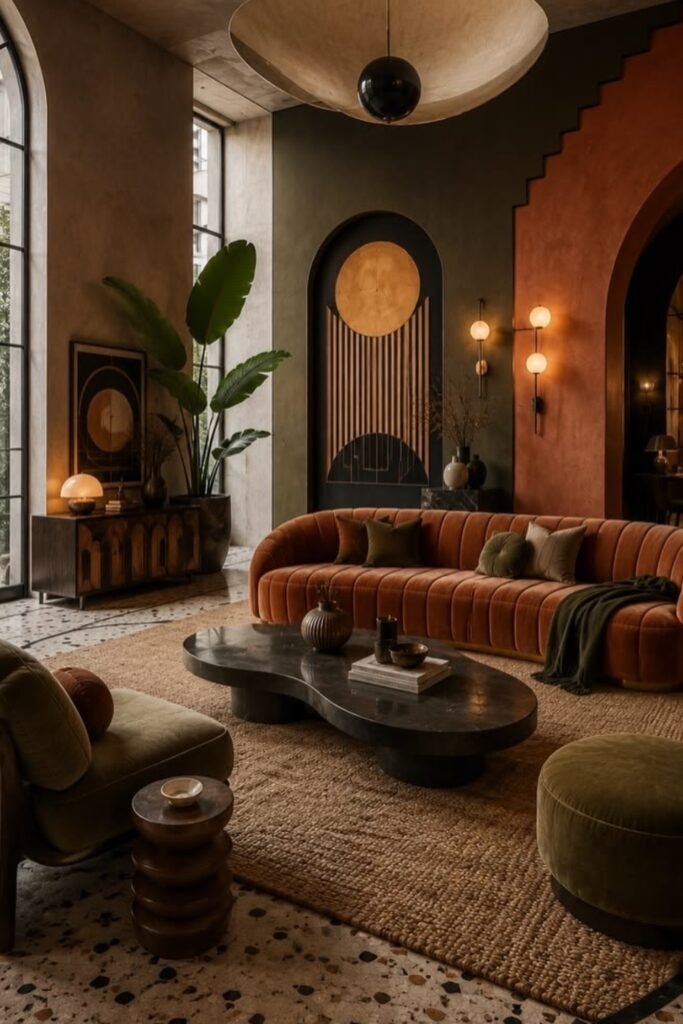
Clay Drama
Push earthy colors deeper in a spacious living room by pairing burnt clay upholstery with olive walls and dark sculptural furniture.
Anchor those saturated shades with a large woven rug, giving the seating area warmth while preventing the darker furniture from feeling too dominant.
Use globe sconces and small table lamps around the room, since pools of warm light make terracotta and olive especially rich after dark.
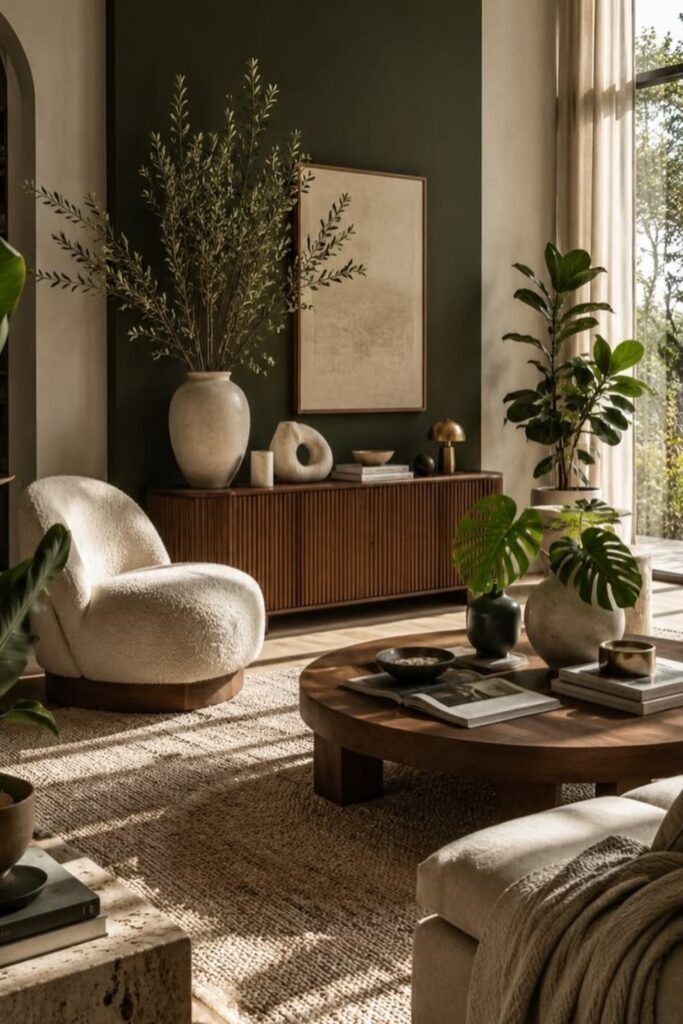
Botanical Corner
Turn one tall wall into an earthy focal point with deep forest green, leaving nearby walls lighter so the contrast feels intentional.
Set warm walnut storage against the darker backdrop, then introduce cream seating and stone-toned pottery to keep the palette balanced and relaxed.
Cluster plants at different heights near the windows, where natural light supports healthy greenery while creating depth without covering shelves with accessories.
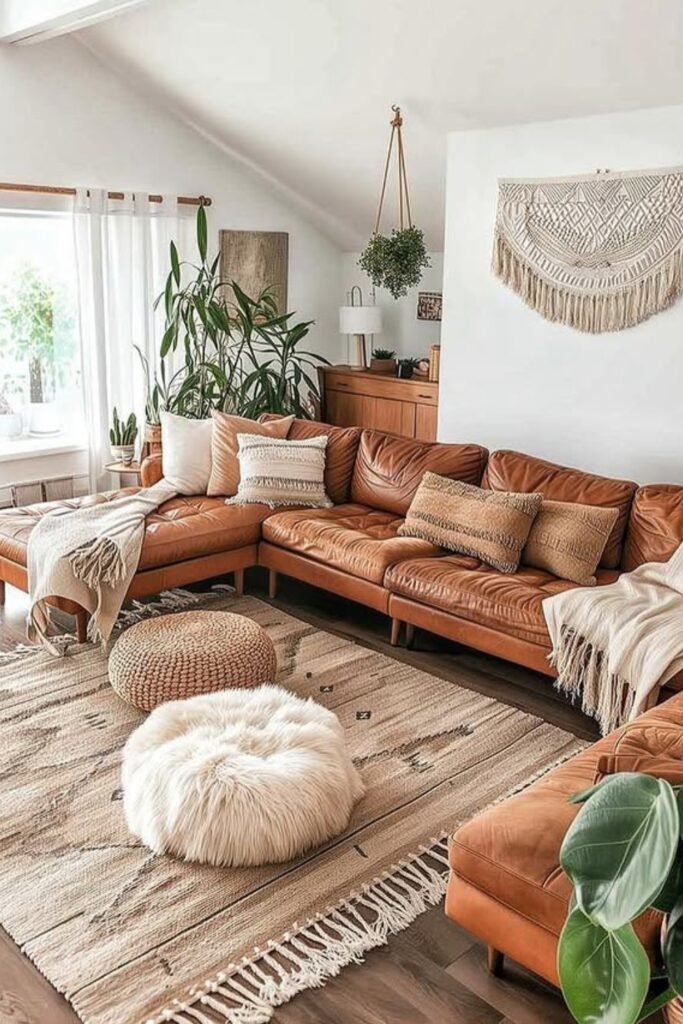
Leather Warmth
Build around a cognac leather sectional when you want strong earthy warmth without painting the walls or making permanent decorating changes.
Soften all that leather with cream throws, woven cushions, and a large textured rug, keeping the seating comfortable instead of visually heavy.
Bring plants into empty corners and hang one woven wall piece above the sofa, adding natural character while preserving the room’s airy feeling.
Retro Earth
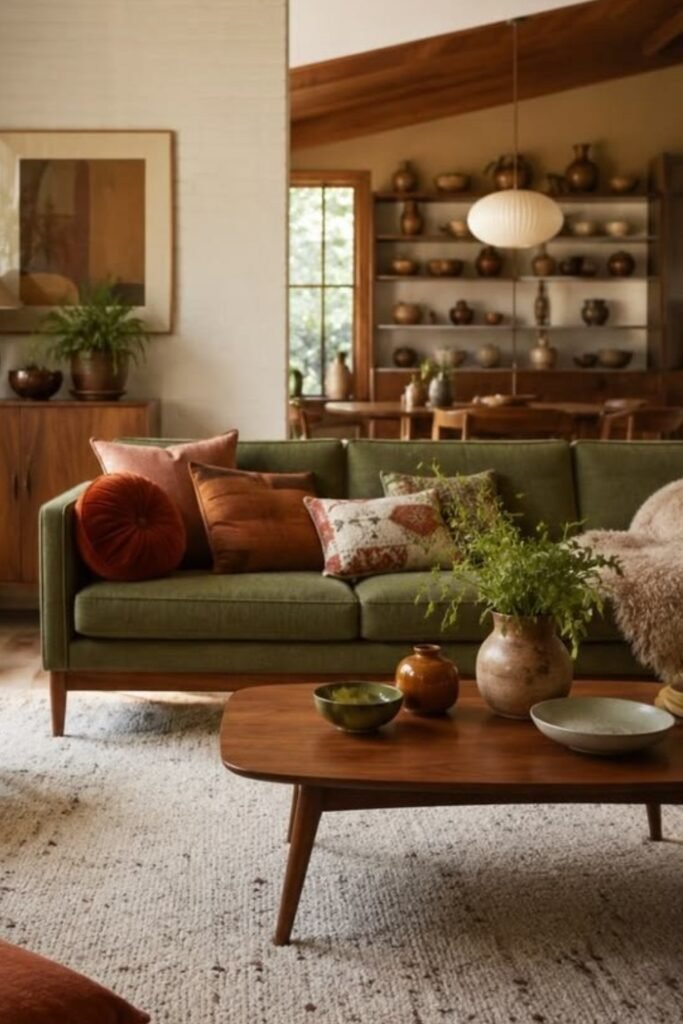
Mix olive upholstery with rust accents when you want an earthy living room that feels collected rather than built around predictable beige.
Choose walnut tables and vintage-style chairs with slim legs, allowing the furniture to add warmth without making the seating arrangement feel bulky.
Keep the rug pale and lightly textured beneath these richer colors, giving every warm wood and fabric tone enough space to stand out.
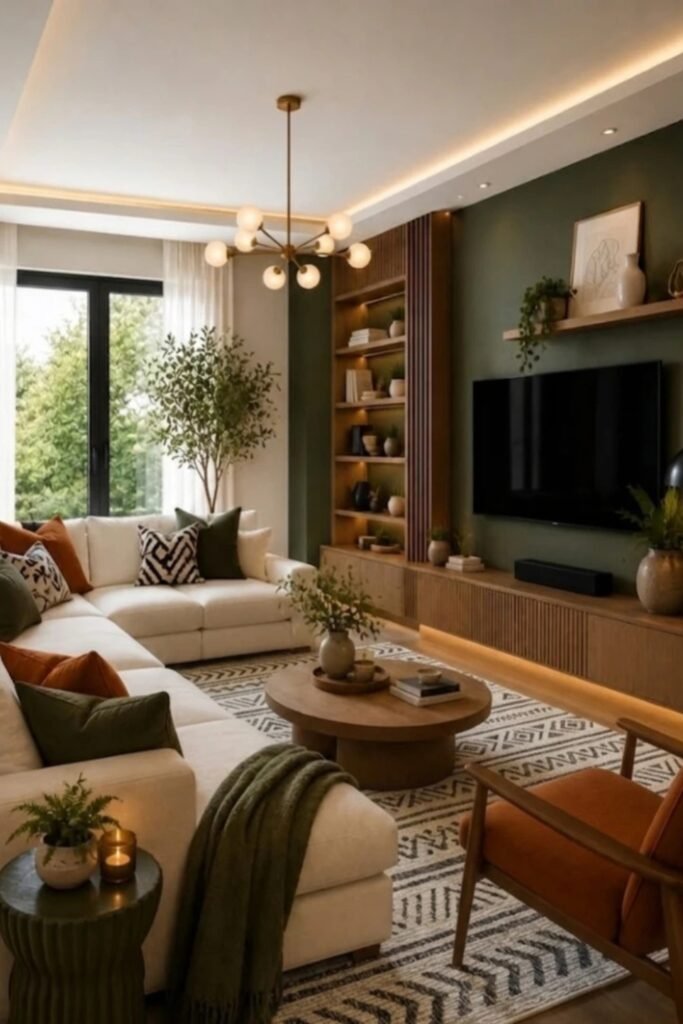
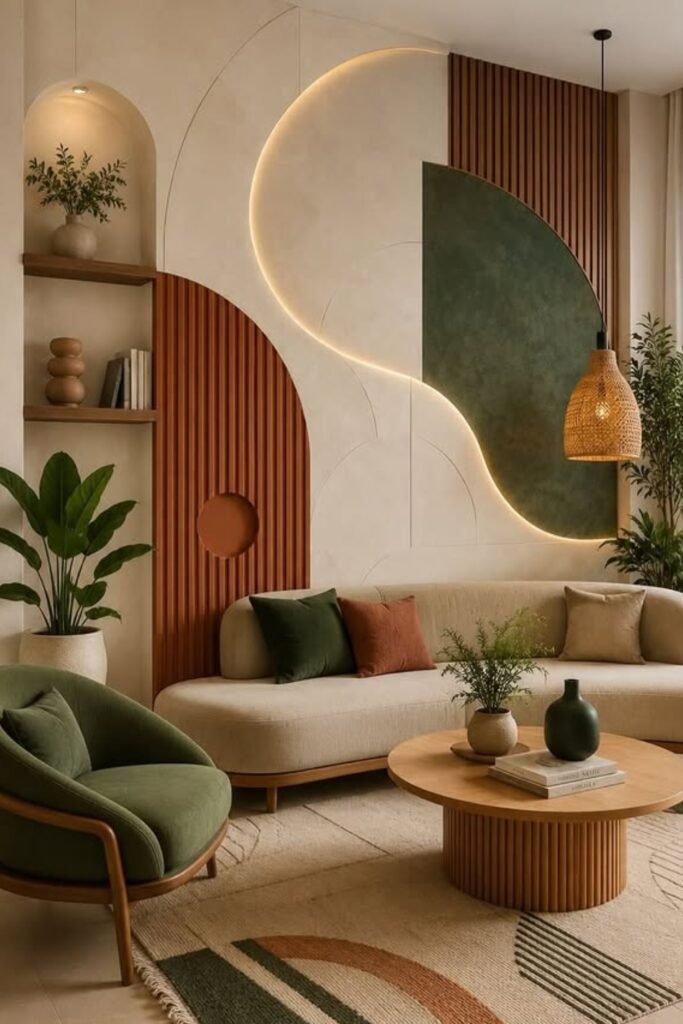
Sculpted Earth
Treat a plain wall as part of the earthy palette by combining curved forms, warm wood slats, and one muted green section.
Carry those wall colors into olive seating and terracotta cushions, creating repetition that makes a modern living room feel thoughtfully connected.
Hide warm lighting behind the curved wall detail and add a woven pendant, bringing soft evening glow to otherwise clean architectural finishes.
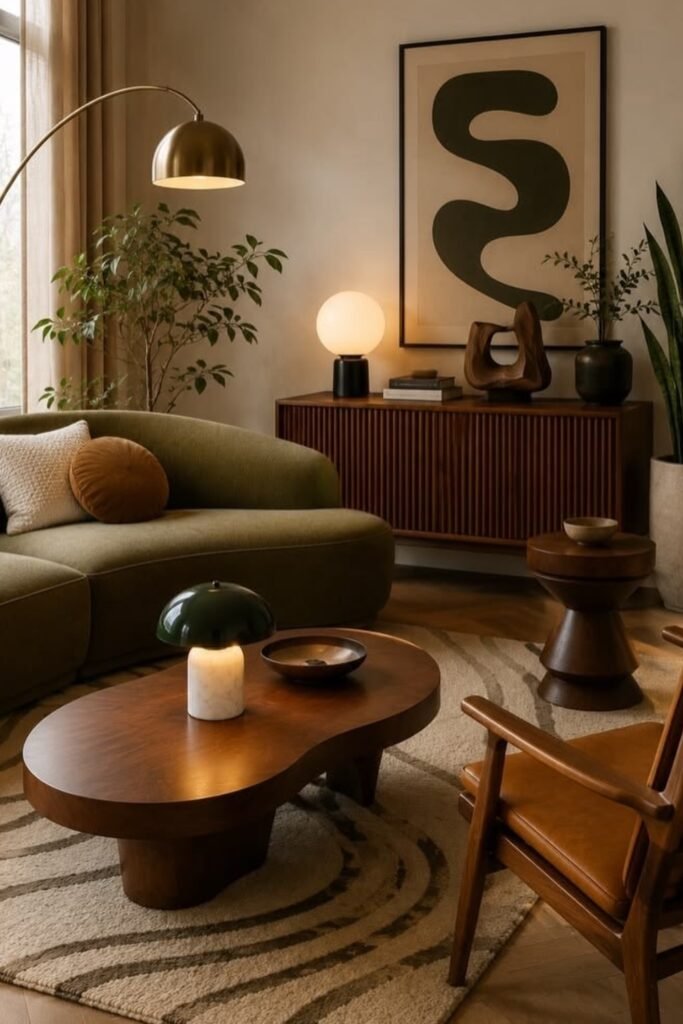
Walnut Glow
Lean into walnut furniture when you prefer a richer earthy room, then balance its depth with olive seating and creamy surrounding walls.
Introduce caramel leather through one accent chair rather than another matching sofa, giving the palette warmth while keeping the furniture mix interesting.
Spread lighting between an arched floor lamp and smaller table lamps, creating gentle pools of light that make darker wood feel especially cozy.
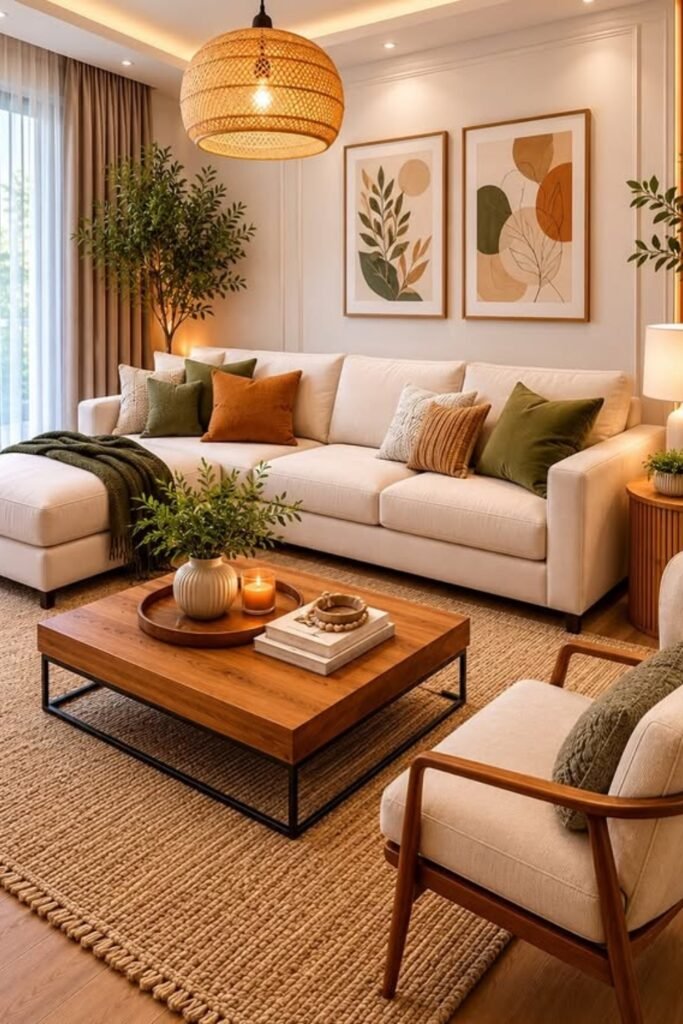
Woven Foundation
Start with a large jute rug when you want instant earthy texture while keeping cream seating and light walls feeling fresh.
Layer olive and rust cushions across the sofa, then use warm wood furniture to spread those natural colors evenly around the room.
Hang a woven pendant above the seating area and add table lamps nearby, giving the neutral palette warmer depth once daylight fades.
Modern Contrast
Give an olive sectional a cleaner modern edge by surrounding it with black furniture, cream textiles, and plenty of open wall space.
Keep the rug light and understated beneath the darker pieces, so the green sofa remains grounded without making the whole room feel heavy.
Use black artwork and lamps sparingly as anchors, then soften their sharp contrast with leafy branches, pale curtains, and warm shelf lighting.
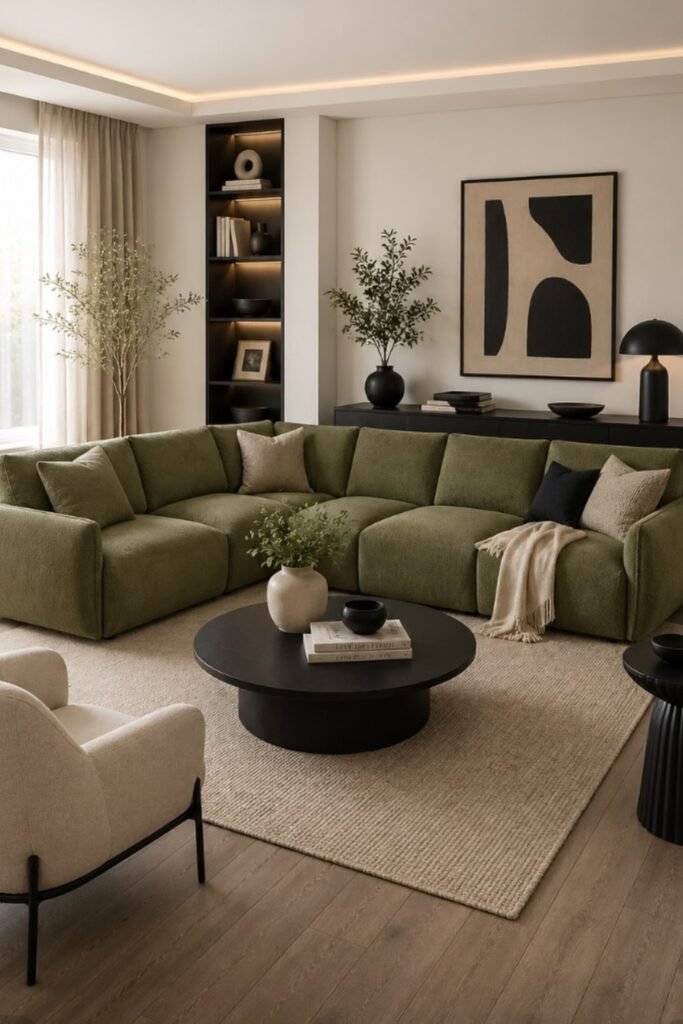
Gray Revival
Warm up an existing gray sofa with cream textiles, natural wood, woven baskets, and rust accents instead of replacing perfectly usable furniture.
Choose a dark wooden coffee table to create stronger contrast, then repeat lighter wood near the windows so the room stays balanced.
Bring dried branches and leafy greenery into simple ceramic vessels, adding earthy color naturally without forcing green or brown onto every surface.
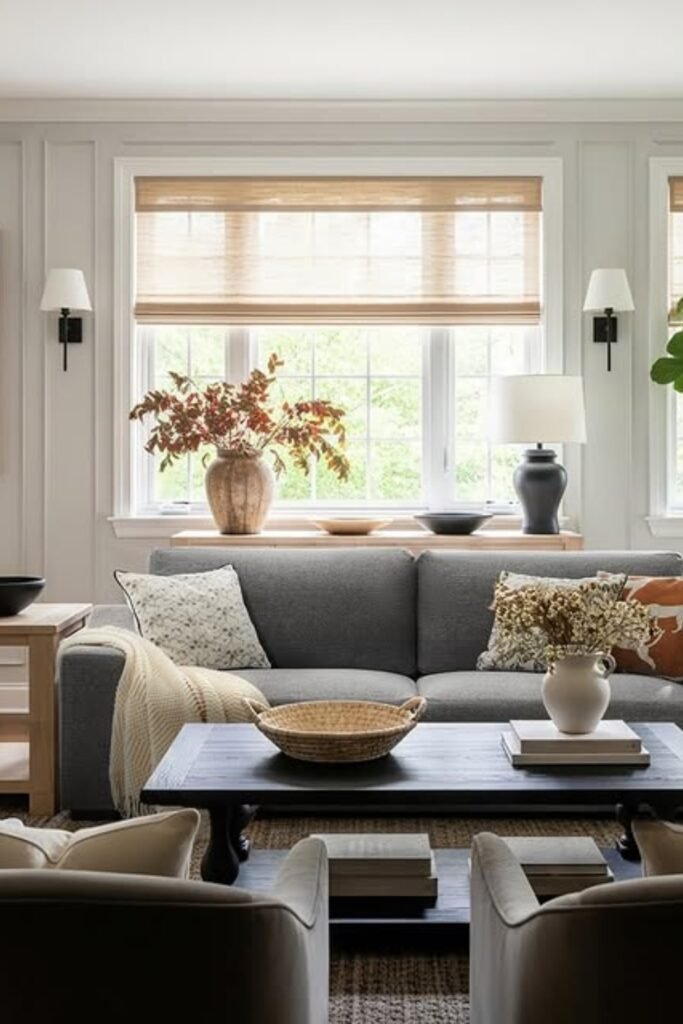
Botanical Textiles
Let botanical patterns carry the earthy theme when you prefer softer color over large areas of olive, brown, or terracotta paint.
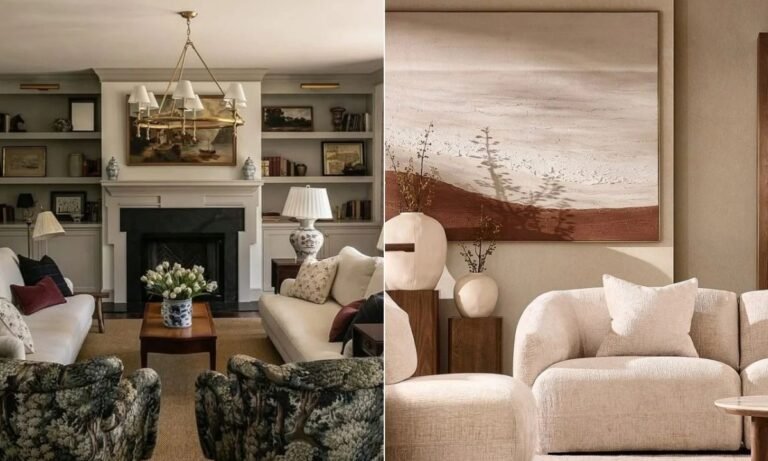
Pair a cream sofa with sage and dusty rose cushions, then repeat those garden tones through an upholstered ottoman and traditional rug.
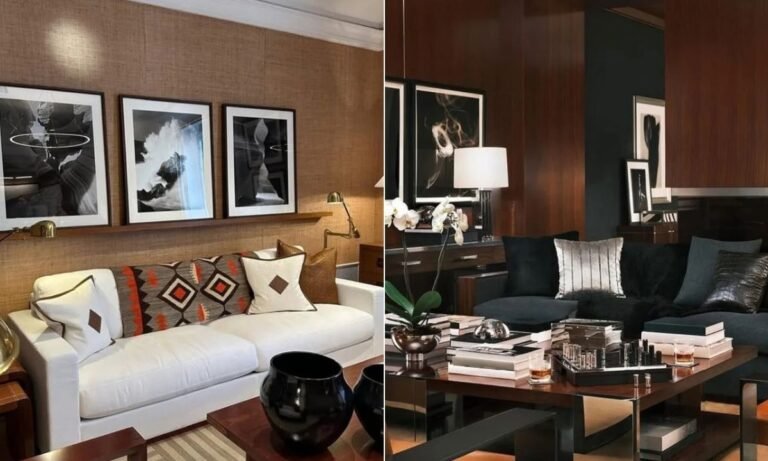
Deep brown walls give these gentle patterns more presence, while brass sconces and cream curtains stop the overall scheme from becoming overly dark.

Moody Neutrals
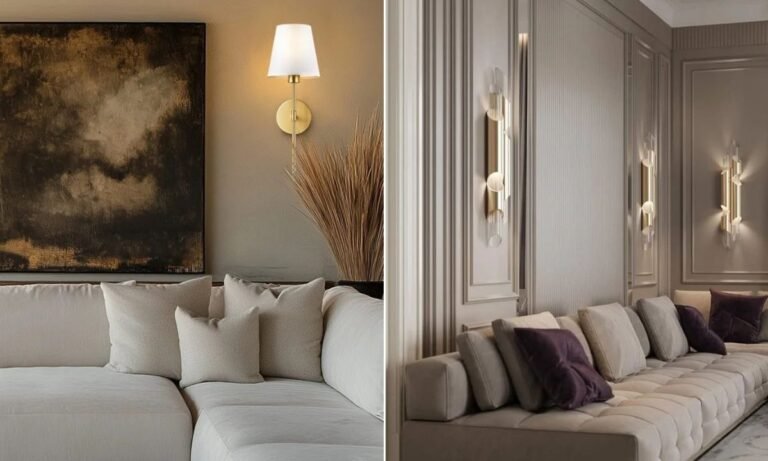
Embrace deeper taupe and charcoal when you want an earthy living room that feels intimate, especially in spaces used mostly during evenings.
Warm the darker upholstery with medium wood tables and oatmeal accent chairs, creating enough contrast without introducing bright or unrelated colors.
Use directional wall lights instead of flooding the room with brightness, allowing shadows and soft pools of light to strengthen the cozy mood.
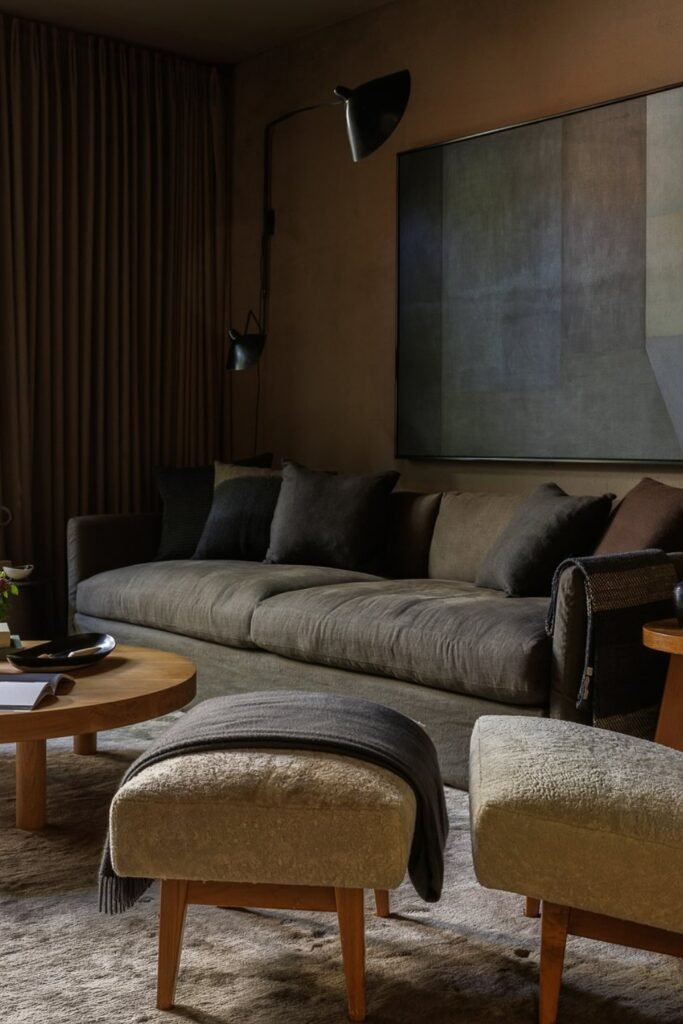
Quiet Earth
Keep the palette close to cream, mushroom, and warm brown when you want earthy character without bringing obvious green or terracotta indoors.
Give the neutral sofa more depth with patterned cushions, a faded rug, and ribbed wood furniture rather than adding several competing colors.
Frame large windows with taupe curtains and place greenery around the edges, letting daylight and natural shapes quietly warm the restrained scheme.
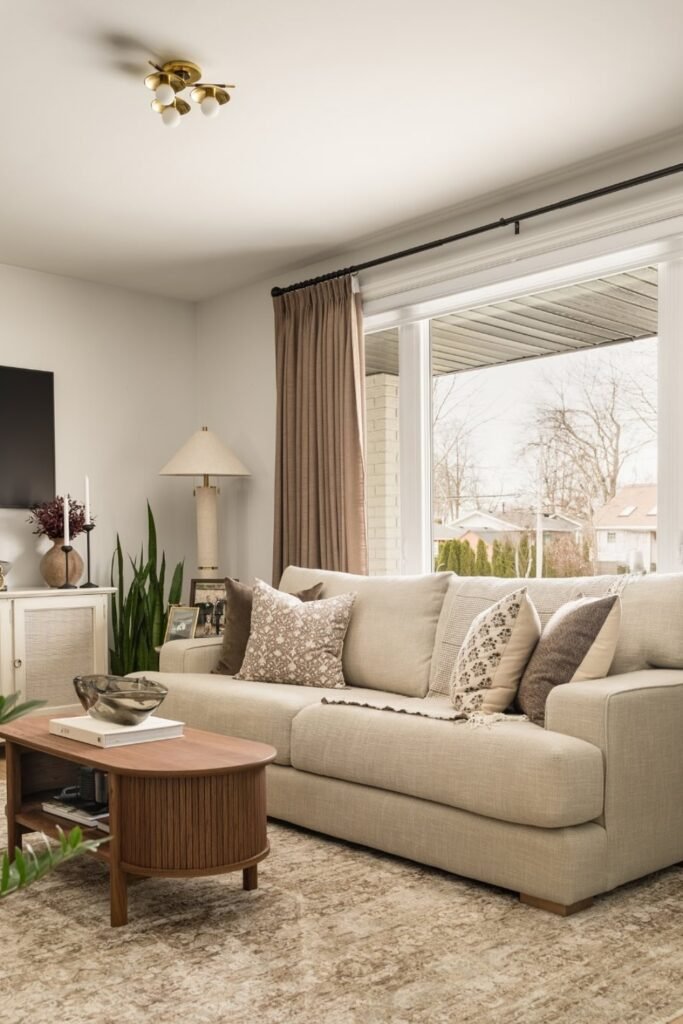
Minimal Warmth
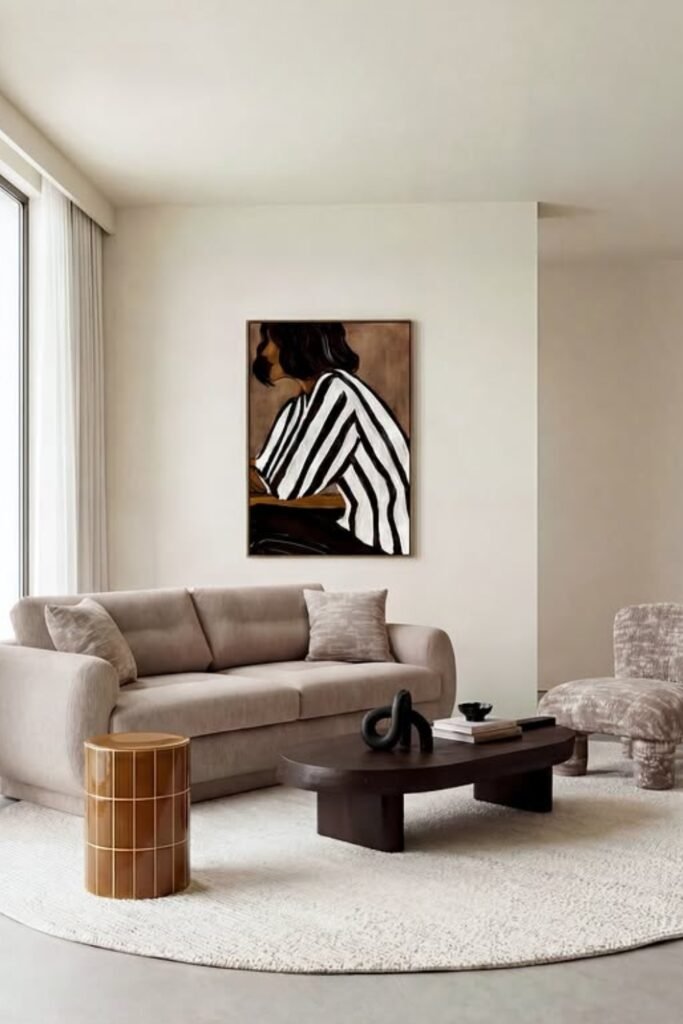
Strip the earthy palette back to mushroom, chocolate, and amber when you prefer a cleaner living room with fewer decorative layers.
Choose rounded furniture and one dark wooden coffee table to create contrast, while a pale circular rug keeps the arrangement soft and grounded.
Let one amber side table provide the warm accent, proving you can create an earthy mood without relying heavily on greenery or accessories.
Rattan Storage
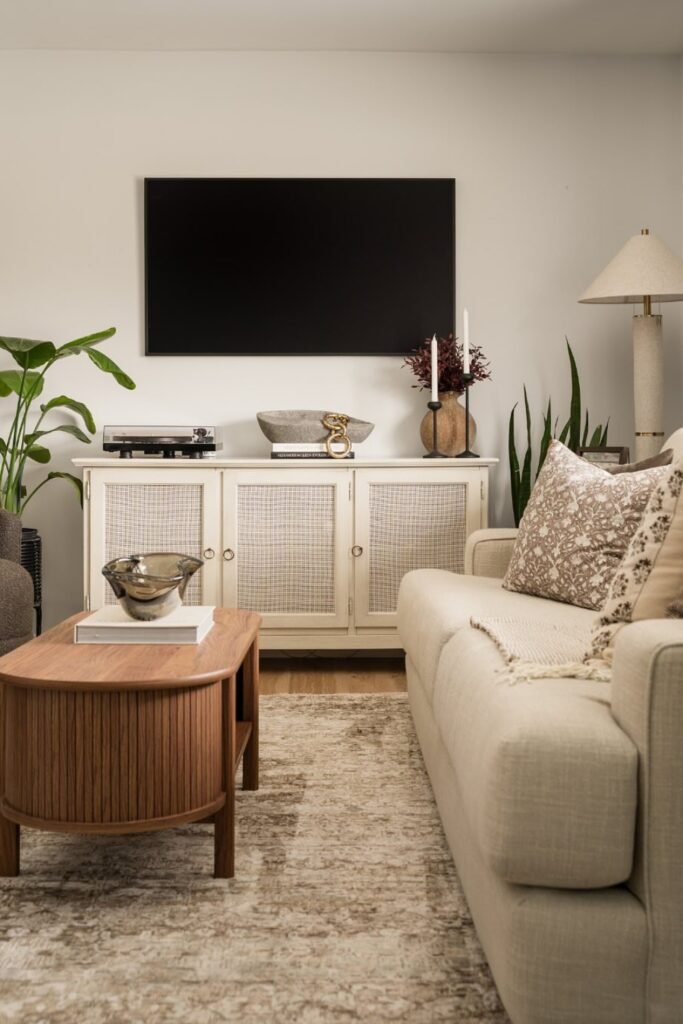
Use woven-front storage to warm a television wall when you need practical furniture but still want the living room to feel naturally textured.
Pair the pale cabinet with a walnut coffee table and patterned neutral rug, giving an otherwise cream room enough variation to avoid flatness.
Place tall plants beside the media unit and keep smaller décor restrained, so greenery softens the television without making that wall feel busy.
Black Earth
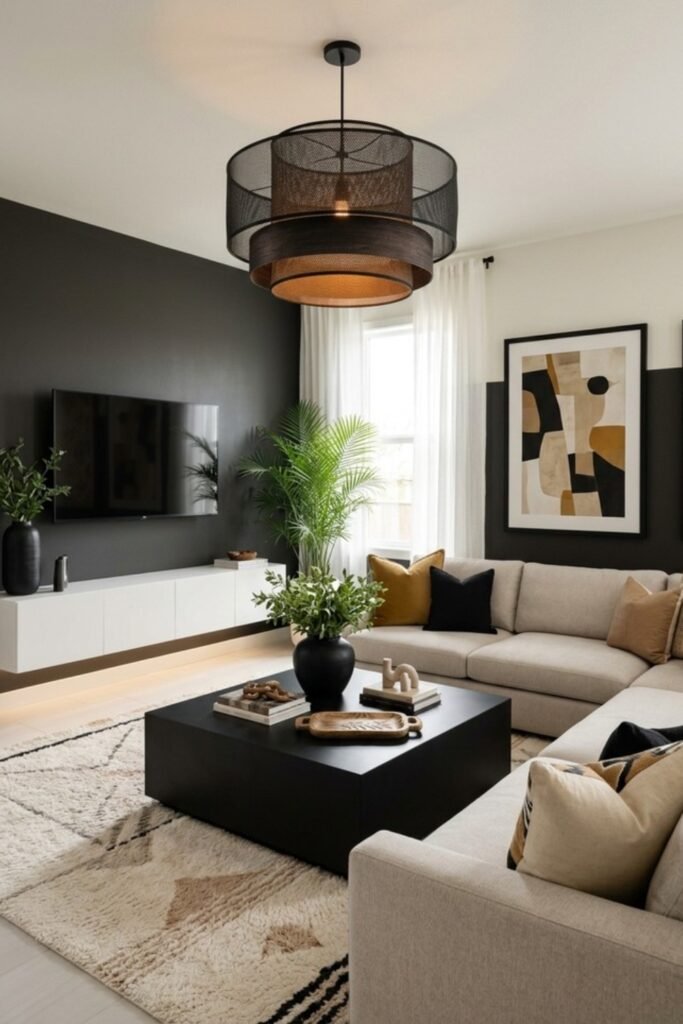
Try a charcoal feature wall when you want earthy neutrals to feel sharper and more modern without losing their natural warmth.
Balance the black with a cream sectional and textured rug, then introduce camel cushions and greenery to soften the strong contrast.
Choose a woven pendant and low ambient lighting to warm the darker finishes, keeping the living room cozy rather than overly dramatic.
FAQs
How do I make an earthy living room feel warm without using too much brown?
Start with cream, warm beige, or soft taupe as your base, then bring brown in through wood furniture instead of covering the whole room with it.
Add olive, sage, rust, or terracotta through cushions, artwork, and throws to create more color variation.
Natural materials such as jute, linen, wool, and ceramics will add warmth through texture, while plants bring in fresh contrast.
Finish with warm table and floor lamps so the neutral colors feel cozy rather than dull.
Can I create an earthy living room without replacing my existing furniture?
You can build an earthy look around most furniture by changing the smaller layers first.
Keep your current sofa and add a textured rug, wooden coffee table, linen curtains, earthy cushions, pottery, and a few plants.
If your furniture is gray or cool-toned, use camel, rust, olive, cream, and warm wood nearby to soften it.
These changes are also useful for renters because you can create a noticeable earthy feel without painting walls or buying expensive new furniture.