Fairy lights can look dreamy in saved photos, then somehow feel messy, too bright, or even a little childish once you hang them in your own bedroom.
The difference usually comes down to where you place them, how much wire you leave visible, and whether the glow works with the rest of your room.
In this article, you’ll find fairy lights bedroom ideas that help you create a cozy, polished look without making the space feel cluttered or overdone.
Let’s jump in!
Where Should I Put Fairy Lights In My Bedroom?
Start with the area you want people to notice first, such as your bed, window, mirror, reading corner, or an empty wall.
If your room already has plenty of decor, keep the lights around one feature instead of running them across every wall.

For a softer glow, place them behind sheer curtains, around a headboard, or slightly behind furniture so the wire stays less noticeable.
If your bedroom is small, use vertical areas like mirrors, shelves, windows, or corners because they add interest without taking up floor space.
Before hanging anything, check where your outlet sits and plan the wire route first, otherwise a beautiful setup can quickly look messy.
Vine Glow
If your bedroom already has plants and wall art, weave warm fairy lights through the greenery instead of hanging bare strands everywhere.
Let the vines follow shelves, corners, and the headboard wall so the lights connect separate areas without making the room feel crowded.
Keep the bulbs warm and slightly uneven, then repeat soft textures and wood tones nearby to make the whole setup feel naturally layered.

Floral Halo
A decorative wall like this works best when you want the bed to become the main feature without filling the room with furniture.
Build the layout around one flowing light line, then place oversized flowers and lightweight butterfly details beside it rather than covering every inch.
Match the wall accents to your bedding, and keep bedside lamps simple so the floral lighting stays soft instead of turning visually busy.
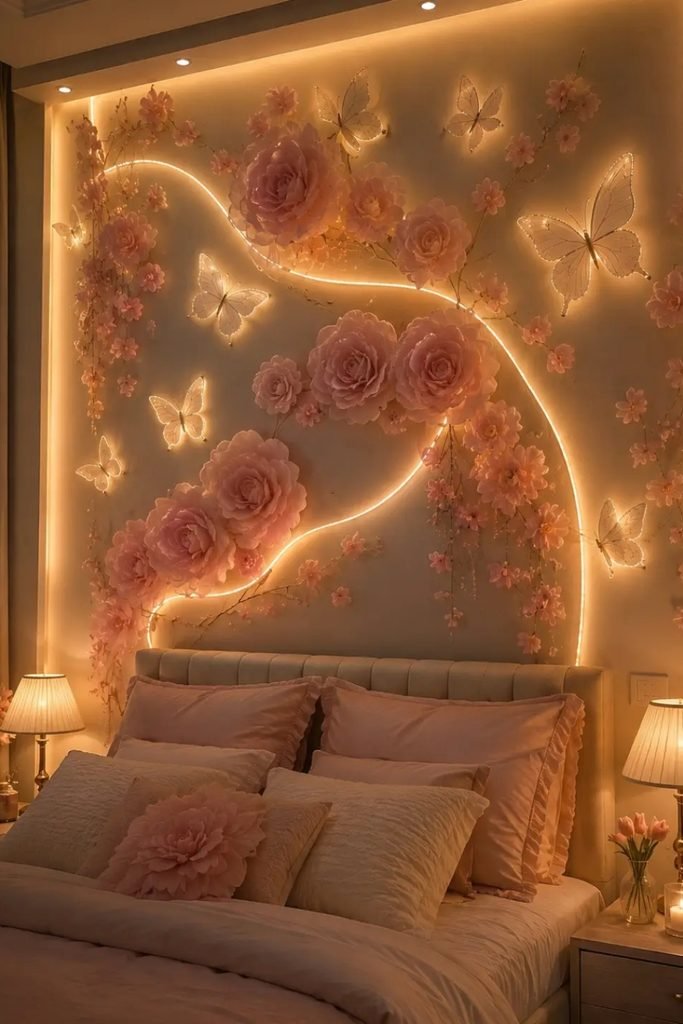
Photo Corner
When your bedroom is small, run one loose strand around the corner instead of outlining every wall from floor to ceiling.
Use the lights to frame a photo cluster and mirror area, which gives two everyday zones a shared look without adding bulky decor.
Choose warm bulbs with pale bedding and light furniture, then keep the wire relaxed so the room feels casual rather than overly arranged.

Pink Perimeter
A pink bedroom can handle more fairy lights than a neutral room, but the placement still needs a clear path to avoid clutter.
Run the strand along the ceiling edge and window frame, then thread faux ivy beside it to soften the straight cable lines.
Keep the rest of the palette tight with blush bedding, matching curtains, and small floral accents so the lighting feels connected rather than random.

Rustic Arch
If your bedroom already leans rustic, frame the bed with leafy garlands and warm fairy lights instead of adding another large wall feature.
Keep the strand loose around the greenery so small bulbs peek through naturally, then repeat wood, woven baskets, and creamy bedding nearby.
This works especially well in calm neutral rooms, where the lights can add warmth without pushing the space into a themed look.

Shelf Glow
Blank wall space above the bed becomes useful when you let floating shelves carry both your decor and the fairy lights.
Run the strand behind pots and along shelf edges, leaving a few bulbs visible so the wire does not become the main detail.
Use simple planters and warm bedside lamps around it, because too many competing colors will make this layered setup feel busier.

Plant Canopy
If you love a plant-filled bedroom, thread fairy lights through hanging greenery so the lighting feels built into the display.
Keep the bulbs spaced around shelves and trailing stems, then let larger floor plants balance the wall without covering every open section.
This approach suits relaxed boho rooms especially well, and natural wood furniture helps the warm lights feel softer rather than decorative.

Attic Glow
Sloped ceilings can feel dark after sunset, so use fairy lights along the lower edges to pull warmth into overlooked corners.
Pair them with woven pendants and a softly lit mirror, letting each light source sit at a different height around the room.
Keep the strands close to walls, windows, or furniture lines, because scattered floor lights can quickly make a relaxed bedroom look untidy.

City Glow
If your bedroom has a large window, frame the nearby shelves and wall edges with warm fairy lights instead of covering the glass.
That placement keeps the city view open while giving books, plants, and darker furniture enough glow to feel connected after sunset.
Use a dimmer setting beside purple or charcoal bedding, because softer bulbs stop the room from competing with bright lights outside.

Canopy Lights
A four-poster bed already gives you the perfect structure, so wrap fairy lights around the frame before adding sheer fabric.
Drape the fabric loosely between posts and keep the bulbs underneath it, which softens each point of light without hiding the shape.
This works best in pale bedrooms where blush, cream, or white textiles can carry the glow without needing extra wall decorations.

Reading Nook
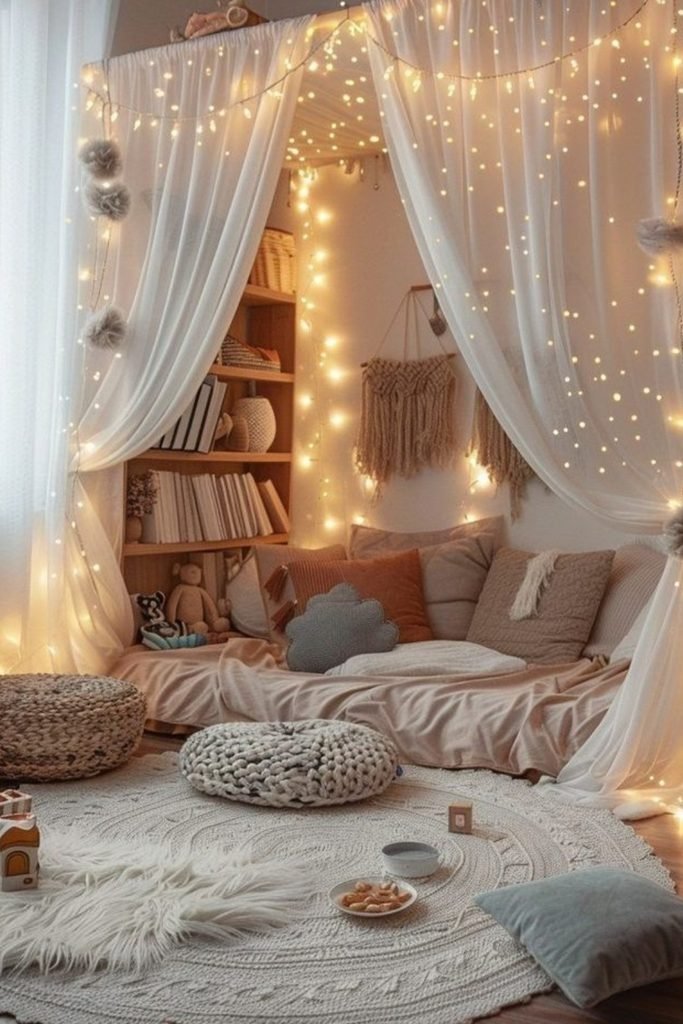
Turn an unused bedroom corner into a reading nook by hanging sheer panels first, then layering warm fairy lights behind the fabric.
Keep the lights concentrated around the opening and back wall, so the nook feels enclosed without making the whole room overly bright.
Add floor cushions, soft bedding, and one nearby shelf to make the setup useful for reading, resting, or quiet evening time.
Floral Lights
Maximal rooms need fairy lights to follow the decor, not fight it, so weave them through floral garlands and ceiling greenery.
Let the bulbs trace arches, windows, and the bed area, creating several soft focal points instead of one harsh bright section.
Keep the light color consistently warm, because mixed tones can make romantic flowers, pink fabrics, and decorative details feel visually scattered.

Blossom Branches
Skip a basic wall strand if you want something decorative; branch-style blossom lights create a focal point without needing extra artwork.
Place them behind the headboard where the branches can spread upward, then keep nearby bedding simple so the shape stays clear.
Warm pink bulbs work best against neutral walls, especially when you want soft color without committing to painted or wallpapered surfaces.

Sheer Canopy
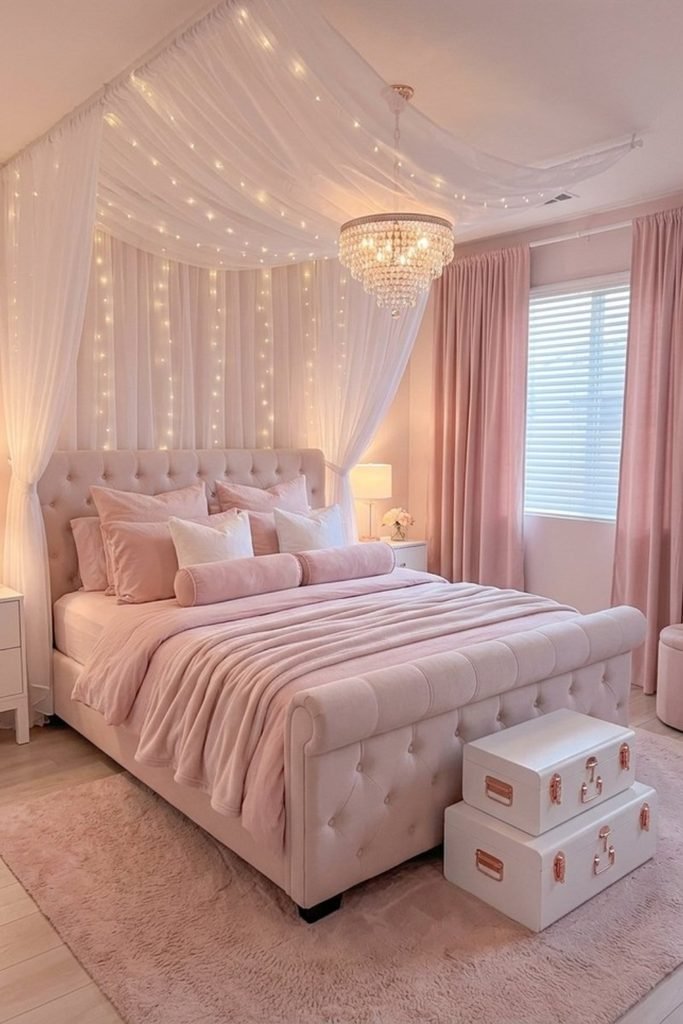
A ceiling canopy is worth trying when you want fairy lights to soften the whole bed area instead of outlining furniture.
Stretch sheer fabric from ceiling points above the headboard, then tuck warm micro lights behind the folds for a diffused glow.
Keep the rest of the room pale and uncluttered, because too many strong colors can compete with this soft overhead feature.
Curtain Sparkle
Tall windows give you a natural frame for curtain lights, especially when you want the bedroom to feel brighter after dark.
Hang the strands behind sheer panels so the fabric softens each bulb, then let the lights fall almost to the floor.
Cool white bulbs suit icy blue rooms, but keep them dim enough that mirrors and glossy surfaces do not create distracting glare.

Beam Strings
Exposed beams already divide the ceiling, so string lights can follow those lines and add warmth without making brick walls feel busy.
Drape the bulbs loosely between beams rather than pulling them tight, which keeps the industrial room relaxed instead of overly polished.
Choose larger warm bulbs for high ceilings, then repeat that amber tone through wood, rust-colored textiles, and a few low lamps.

FAQs
Can Fairy Lights Replace a Bedside Lamp?
Fairy lights work best as mood lighting, not your main bedside light, because most strands are too dim for comfortable reading.
If you read in bed, keep a proper lamp nearby and use fairy lights only to soften the room after dark.
A dimmer or timer helps you control the glow, so the lights stay decorative without taking over your practical lighting.
How Do You Hide Fairy Light Wires?
Visible wires can ruin an otherwise neat setup, so plan the cable route before you attach the first clip or hook.
Run the lead along furniture edges, behind curtains, or beside shelving where it stays accessible without becoming part of the display.
Choose clear or fine wire on pale walls, and hide battery packs behind furniture instead of leaving them exposed near the bed.