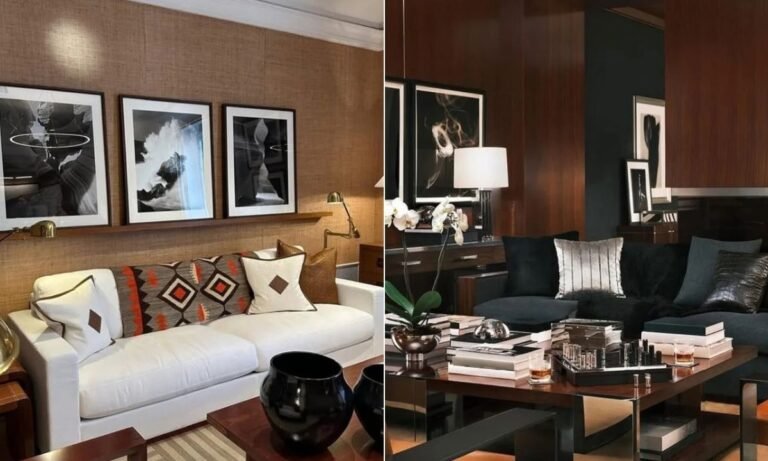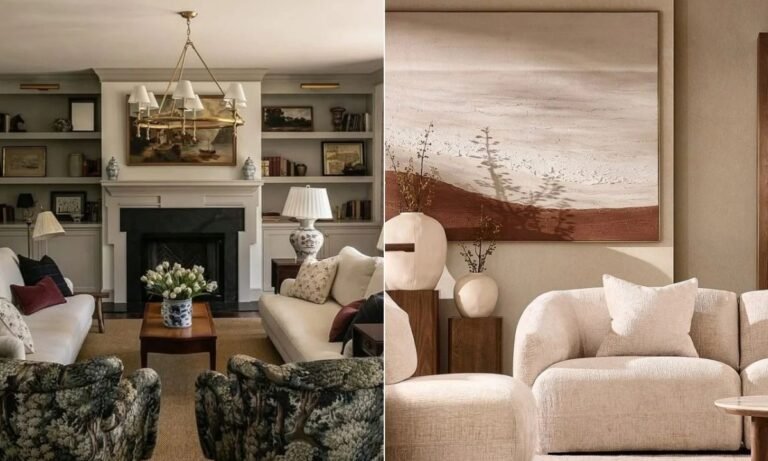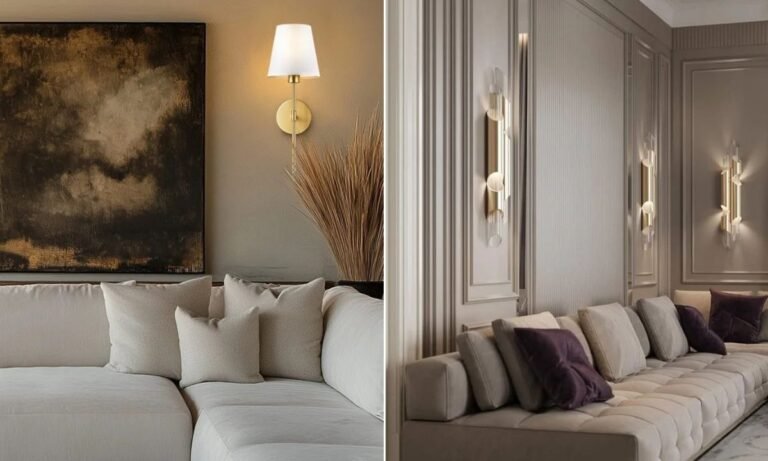
A family living room can go from calm to cluttered fast when toys, blankets, screens, and everyday mess all land in the same space.
You still want enough seating for everyone, room for kids to move around, and a setup that does not feel like a full-time playroom.
The trick is choosing furniture, storage, and a layout that can handle daily family life without making the room feel crowded or hard to keep tidy.
In this article, you will find practical family living room ideas that help you create a comfortable, stylish space everyone can actually use.
Let’s jump in!
How to Style a Family Living Room?
Start with the layout because a family room needs to work well before you start adding decor or extra furniture.
Make sure everyone has a comfortable seat, but keep enough open floor space so kids can move around without bumping into things.
If toys, games, and blankets pile up quickly, use closed cabinets, baskets, or a storage ottoman to keep them easy to reach.

Choose a rug and sofa fabric that can handle daily use, spills, pets, and regular cleaning without becoming stressful to maintain.
Add warm lighting, soft cushions, and a few personal pieces so the room feels relaxed instead of looking too formal.
Most importantly, choose pieces that fit your family’s routine instead of copying a layout that only looks good in photos.
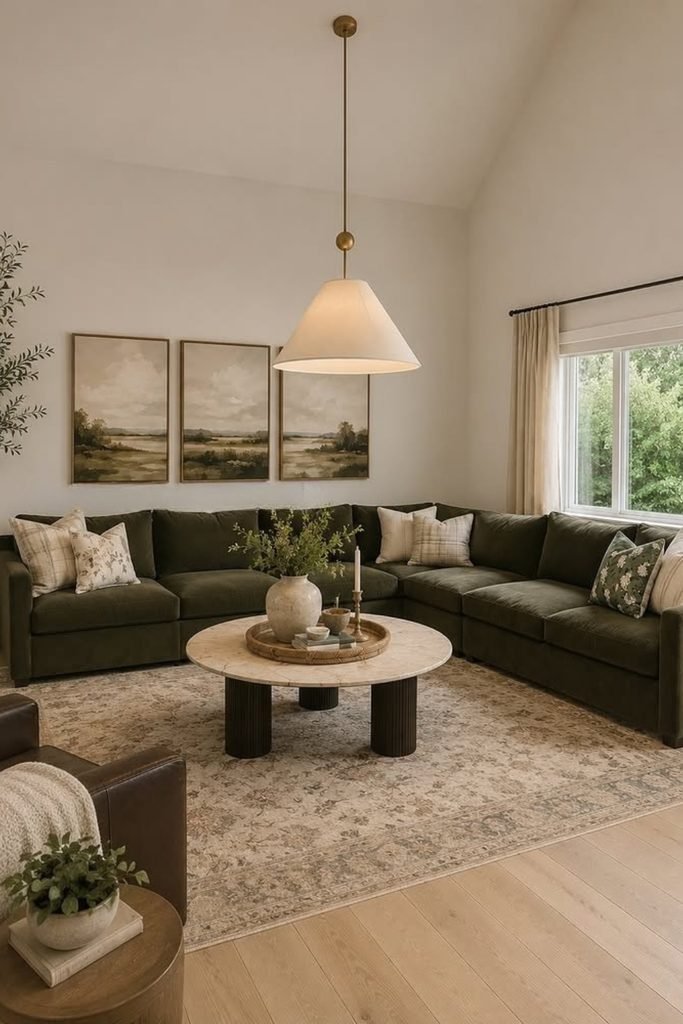
Forest Sectional
Deep green seating gives a neutral living room stronger character without making the space feel overly dark, especially beside large sunny windows.
Pair the sectional with warm beige walls, a faded patterned rug, and a pale round table to soften its heavier visual weight.
Finish with landscape artwork, linen pillows, and simple greenery so the richer sofa color feels naturally connected to the surrounding earthy palette.
Family Comfort
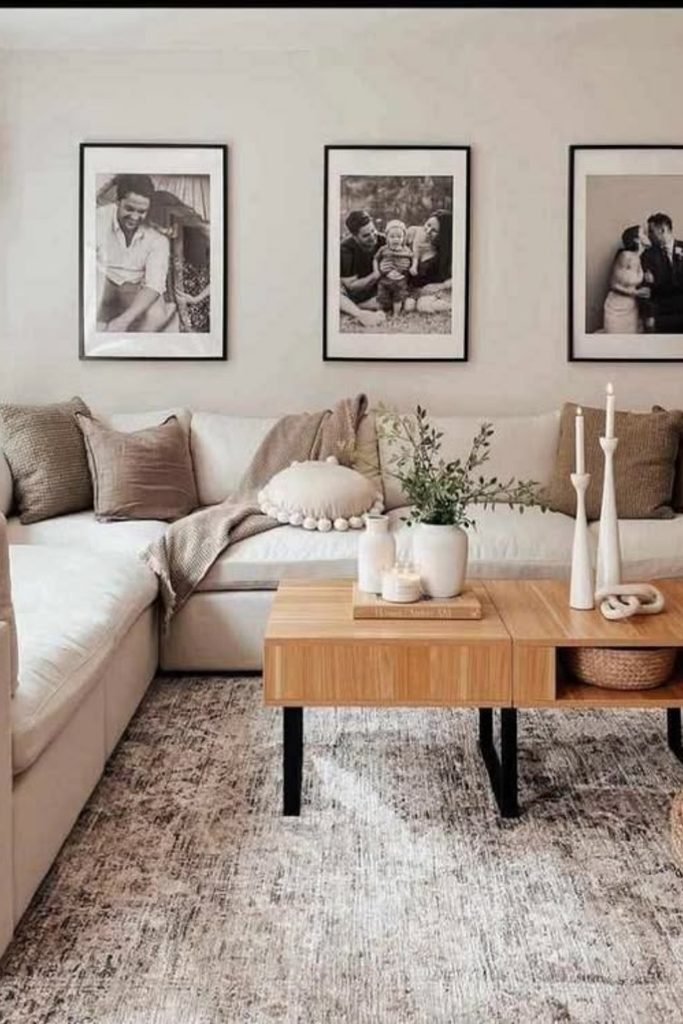
Soft cream seating works especially well in family living rooms where you want generous lounging space without creating a bulky or crowded appearance.
Keep larger furniture light, then introduce warmth through a wooden coffee table, muted brown pillows, and a textured rug underneath the seating area.
Personal photographs arranged in matching black frames can complete the room, giving an otherwise neutral scheme character while keeping the wall visually organized.
Balanced Seating
Separate sofas can make an open living room easier to navigate when doorways, stairs, and adjoining spaces require several clear walking routes.
Position matching sofas around a substantial coffee table, then bring in one textured armchair to create conversation seating without forcing perfect furniture symmetry.
Natural woven tables, floral cushions, and exposed ceiling beams add enough texture to keep the soft green upholstery and white surroundings from feeling plain.

Coastal Color
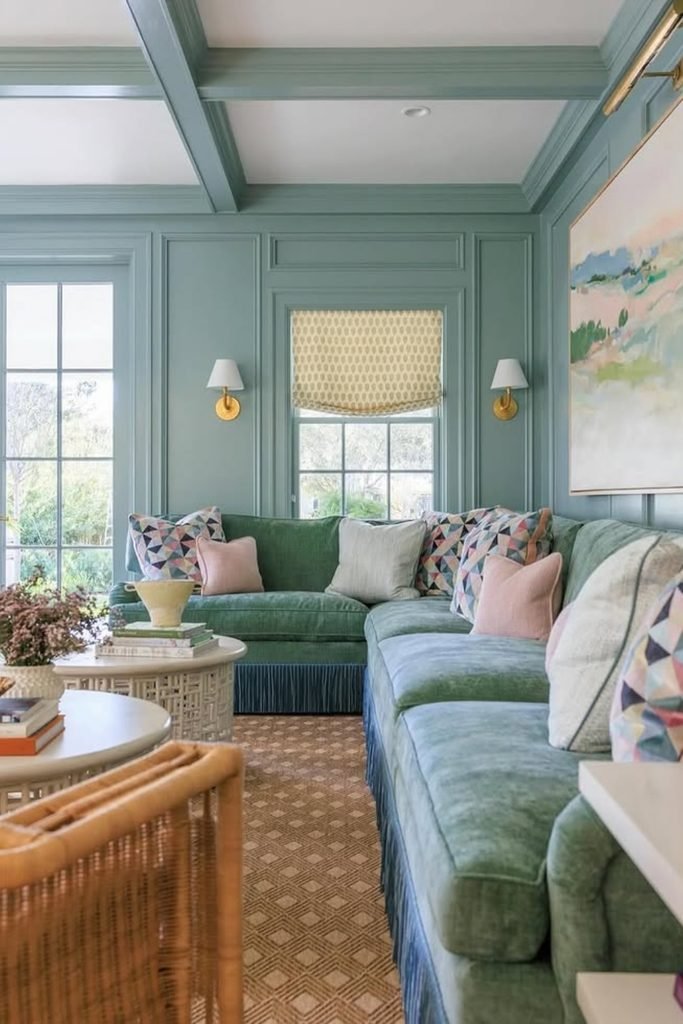
Muted blue-green walls can turn a bright living room into a cozy retreat while still feeling fresh beside windows and glass doors.
Carry similar tones onto sectional seating, then break up the color with blush pillows, geometric patterns, and warm woven furniture for gentle contrast.
Using wall molding and painted ceiling beams extends the palette beyond furniture, making the entire room feel intentionally layered rather than simply color-matched.
Collected Gallery
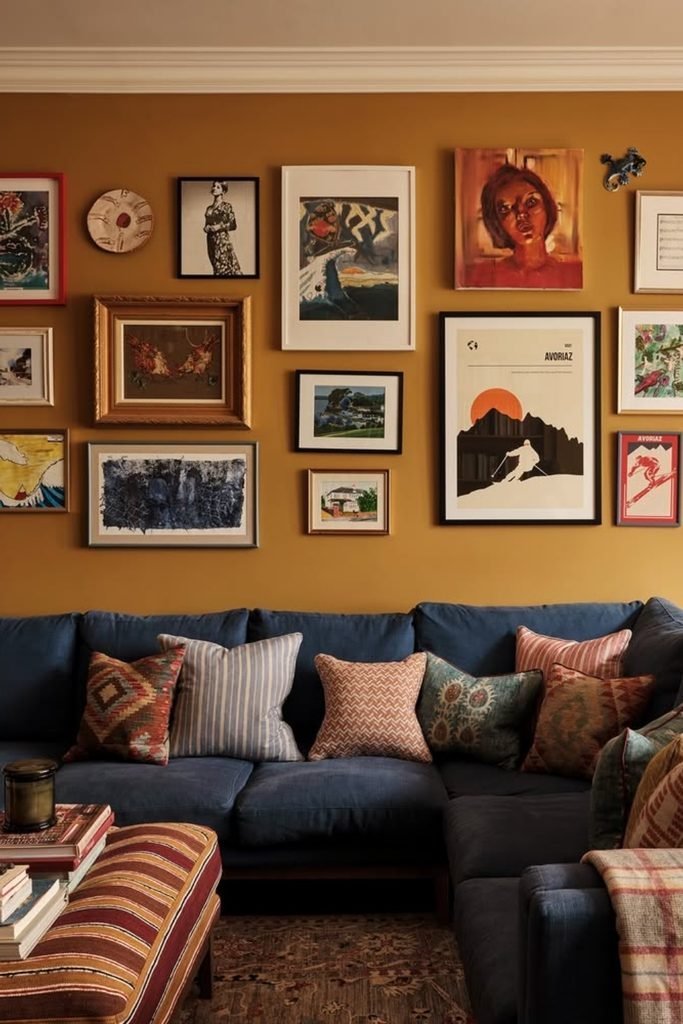
Bold wall color gives a living room instant depth, especially when paired with a dark sectional that can handle stronger decorative surroundings.
Build the gallery gradually with mixed frame sizes, personal artwork, and vintage pieces, leaving small gaps so the collection feels relaxed rather than rigid.
Pull rust, cream, and patterned tones from the artwork into pillows and textiles, helping the seating area connect naturally with the busy wall.
Classic Media
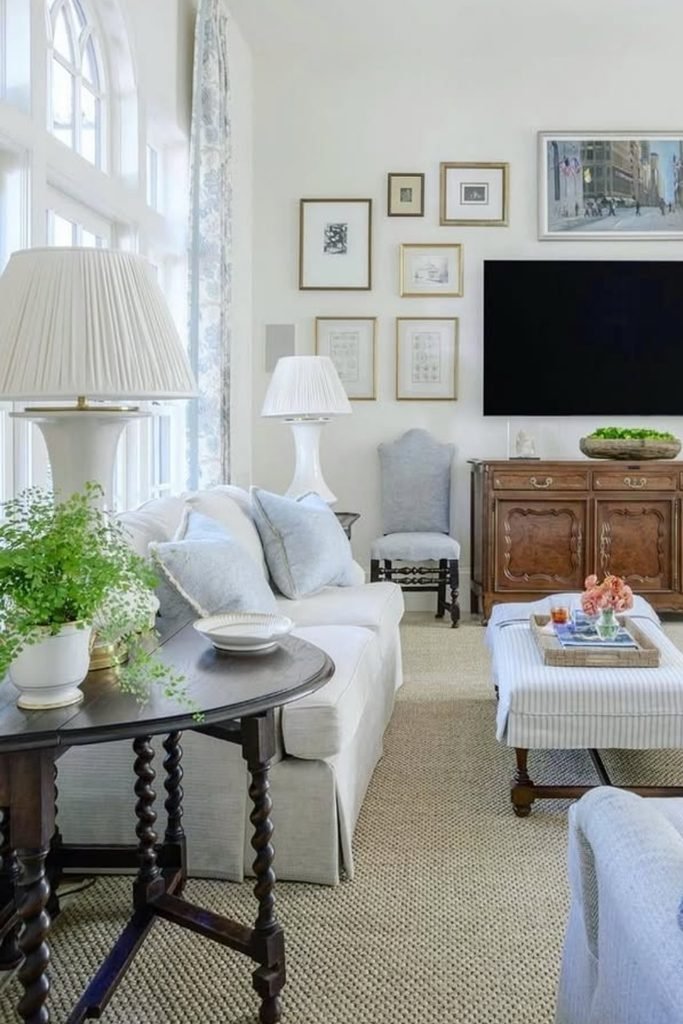
Large televisions feel less dominant when artwork surrounds them, making this approach useful for traditional living rooms where technology can interrupt softer styling.
Place the screen above a character-rich wooden cabinet, then arrange smaller framed pieces around it instead of creating one perfectly symmetrical gallery.
Keep sofas and upholstered pieces pale so dark wood, black screens, and scattered gold frames provide contrast without making the room feel visually heavy.
Layered Neutrals
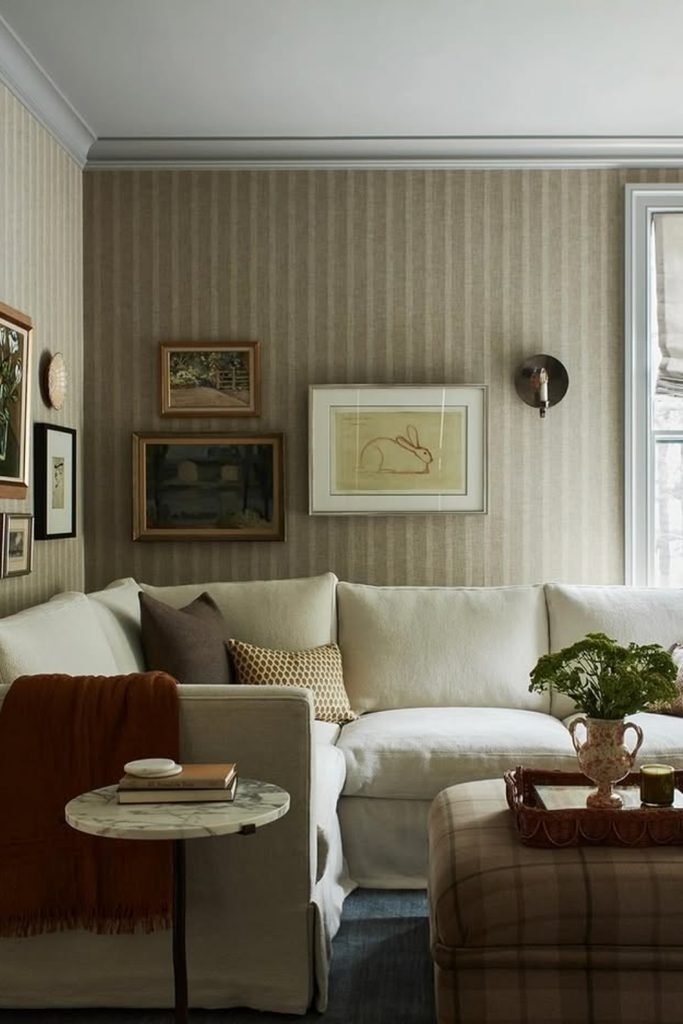
Subtle striped wallpaper brings quiet dimension to smaller living rooms where plain beige walls might otherwise make cream furniture feel slightly unfinished.
Let an oversized sectional handle most seating, then use a compact marble side table and upholstered ottoman without squeezing extra furniture into corners.
Warm brown throws, checked fabric, vintage artwork, and greenery introduce enough variation to make the neutral palette feel collected, comfortable, and lived-in.
Warm Minimalism
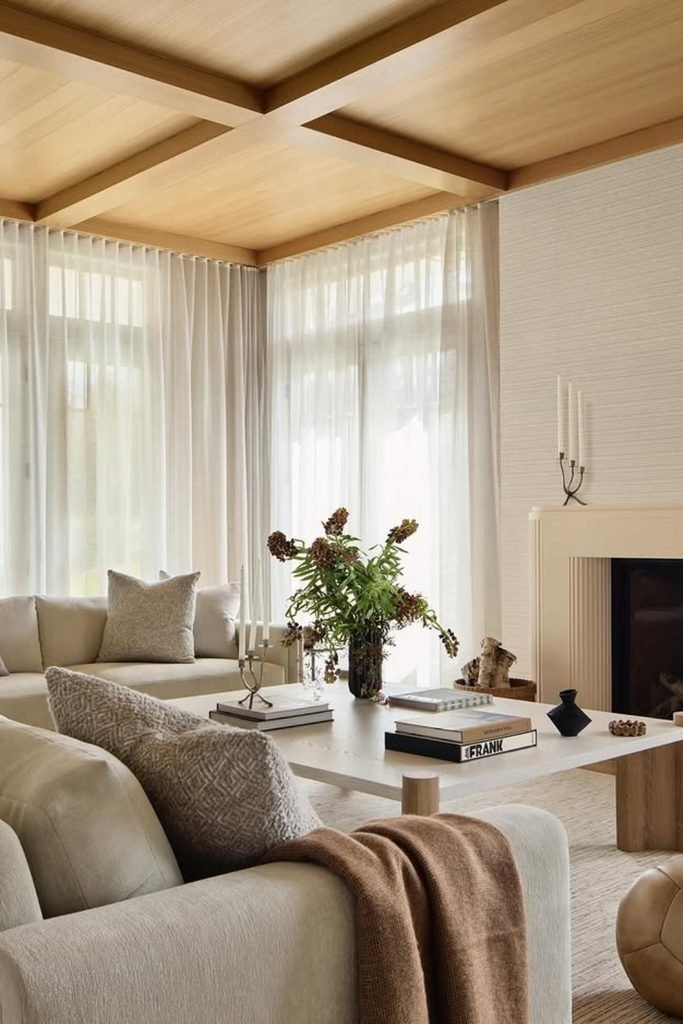
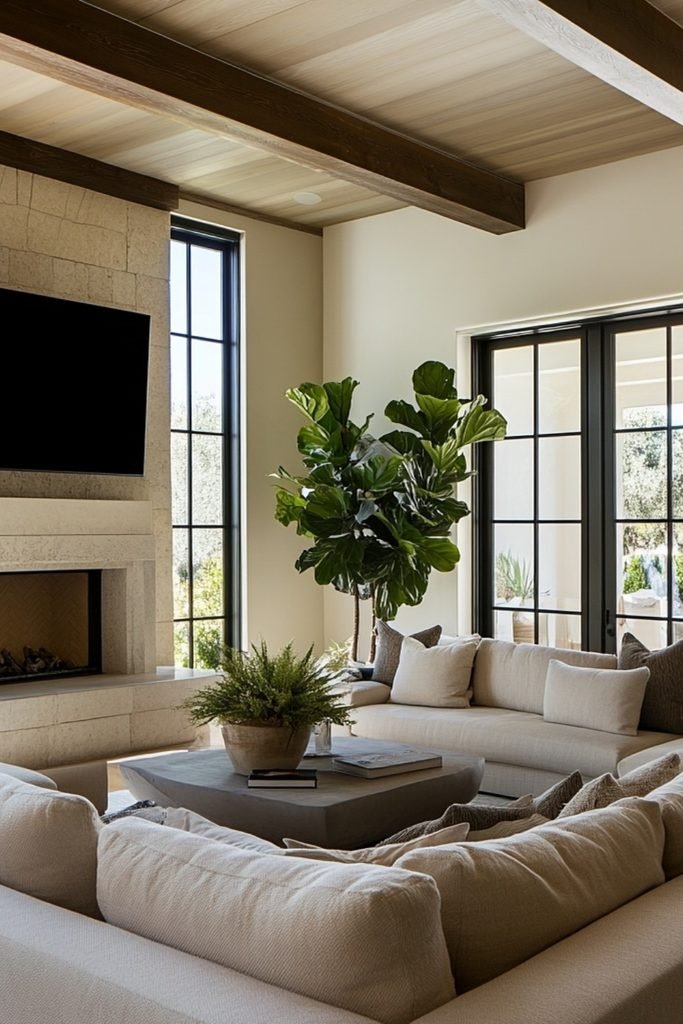
Sun-filled living rooms benefit from restrained furniture when large windows and architectural ceilings already provide plenty of visual interest throughout the space.
Choose low cream seating and a substantial pale wood table, keeping their shapes simple so natural light can remain the strongest design feature.
Add only a few textured pillows, warm throws, books, and sculptural accessories to create softness while preserving the room’s calm, open character.
Sculpted Storage
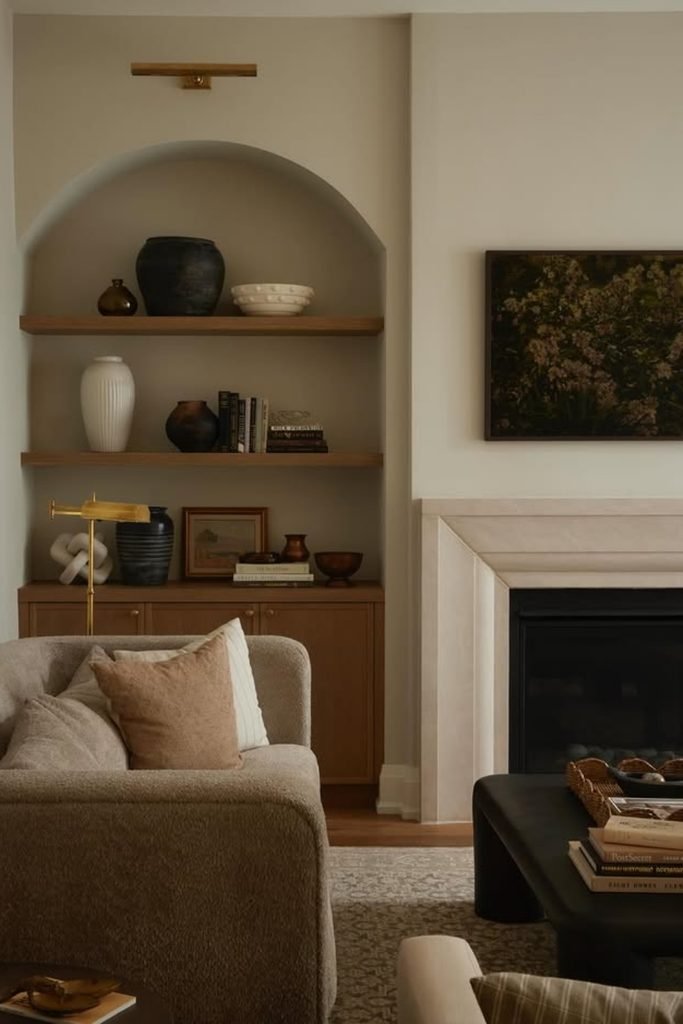
Built-in shelving beside a fireplace gives compact living rooms useful storage while turning an otherwise awkward wall recess into a polished feature.
Repeat warm wood across shelves and lower cabinets, then mix pottery, books, and small artwork instead of filling every available surface.
Choose softly curved seating and a dark coffee table to balance the straight architecture, creating contrast without disturbing the room’s calm neutral mood.
Window Lounge
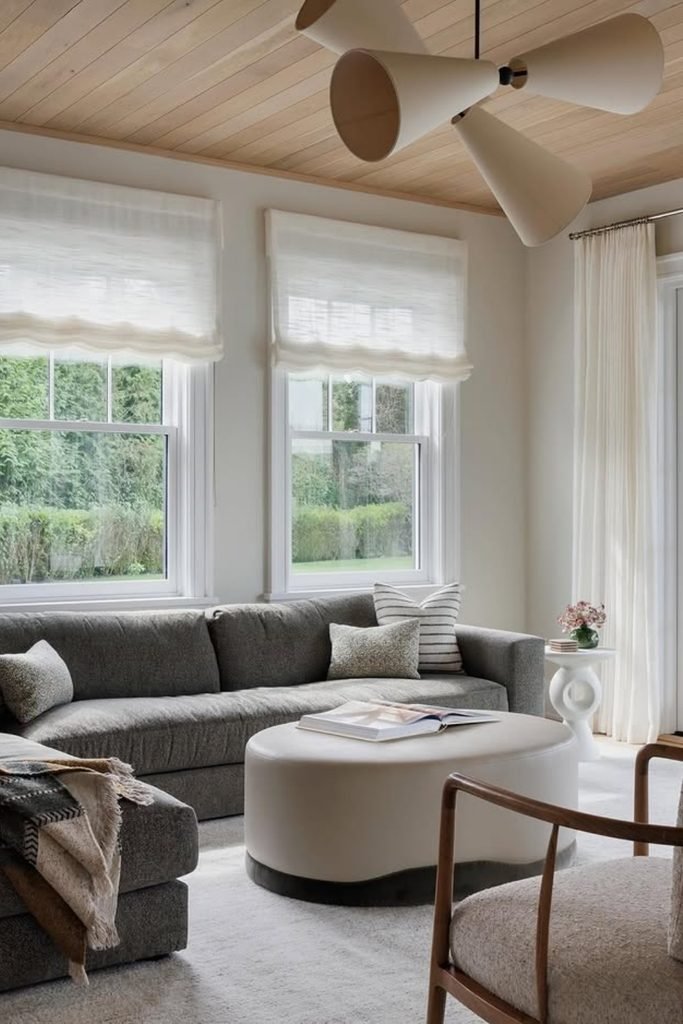
Natural light can become the main feature when a sectional sits beneath wide windows instead of competing with them through oversized wall décor.
Keep window treatments sheer and furniture low, then introduce a rounded ottoman so movement around the seating area stays comfortable and visually fluid.
Wooden armchairs and a paneled ceiling bring warmth into the gray palette, preventing the bright living room from becoming overly cool or stark.
Rustic Elegance
Exposed ceiling beams instantly suit living rooms connected to traditional kitchens, helping both spaces share character even when their furniture styles differ.
Ground the seating area with a simple cream sofa, then layer botanical pillows, velvet cushions, and aged wooden pieces for comfortable collected contrast.
Vintage lamps and pleated shades reinforce the traditional mood, while repeated green accents create an easy visual connection between living and kitchen areas.

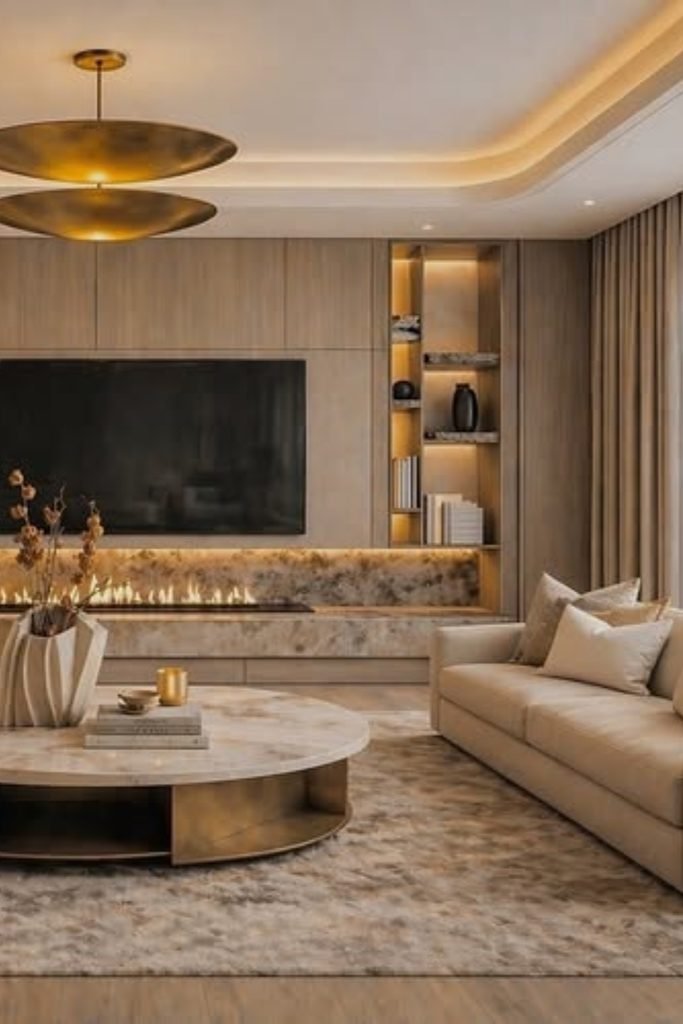
Ambient Luxury
Layered lighting works especially well in larger living rooms where one central fixture would leave the furniture wall feeling flat after daylight fades.
Combine recessed ceiling lights, illuminated display niches, and concealed lighting beneath the television wall to spread a warm glow across different heights.
Keep sofas, chairs, rugs, and tables within soft beige tones so sculptural brass fixtures and subtle lighting become the room’s strongest finishing details.
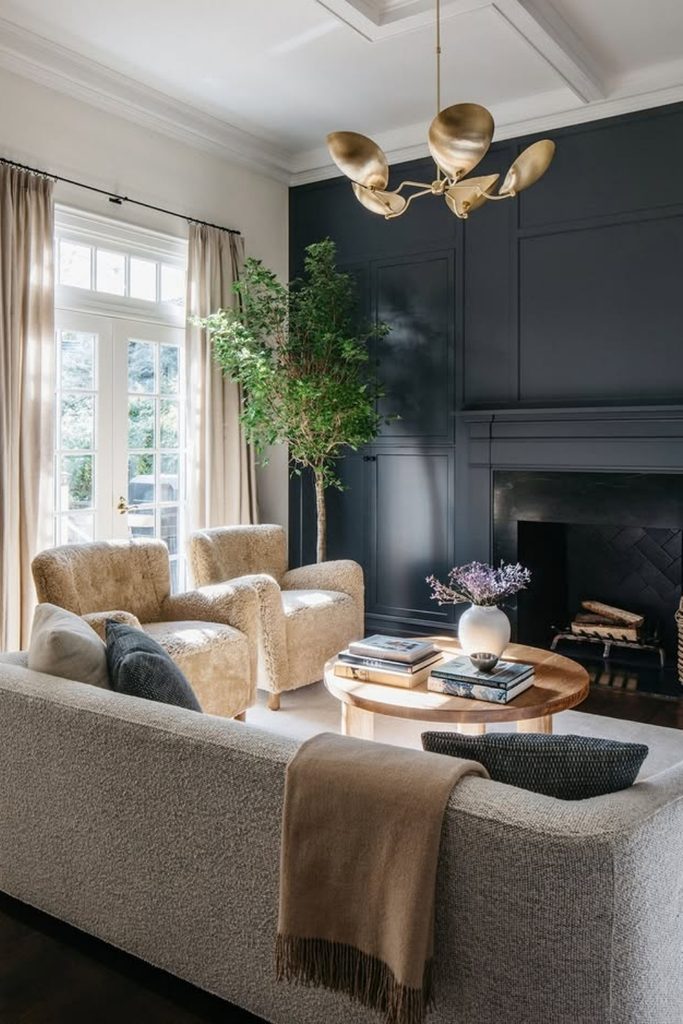
Dramatic Contrast
Dark paneled walls make a fireplace feel more architectural, especially in bright living rooms where tall windows can balance such a deep finish.
Bring in cream boucle seating and natural wood furniture to soften the black backdrop while keeping enough contrast for the fireplace to stand out.
One tall indoor tree adds freshness beside the dark wall, while a sculptural brass chandelier draws attention upward and emphasizes the generous ceiling height.
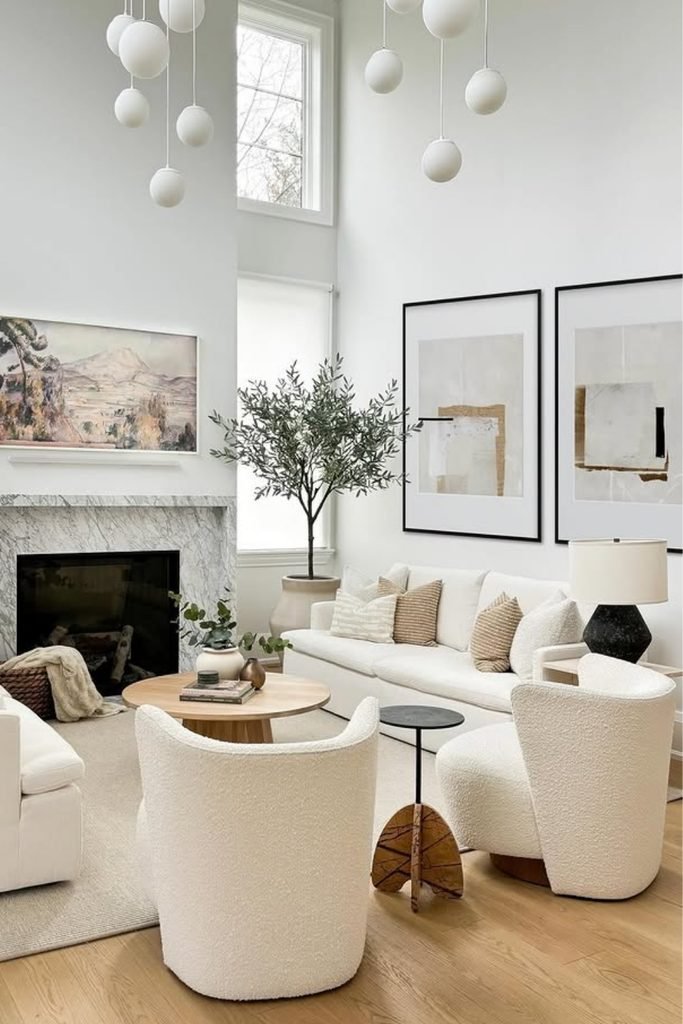
Airy Gathering
Double-height living rooms can feel disconnected unless furniture creates a comfortable gathering zone that brings the large scale closer to everyday life.
Arrange pale sofas and rounded chairs around a low wooden table, keeping upholstery consistent so multiple seating pieces never make the room feel crowded.
Marble around the fireplace adds quiet pattern, while suspended globe lights use the empty upper space and give the tall room stronger visual balance.
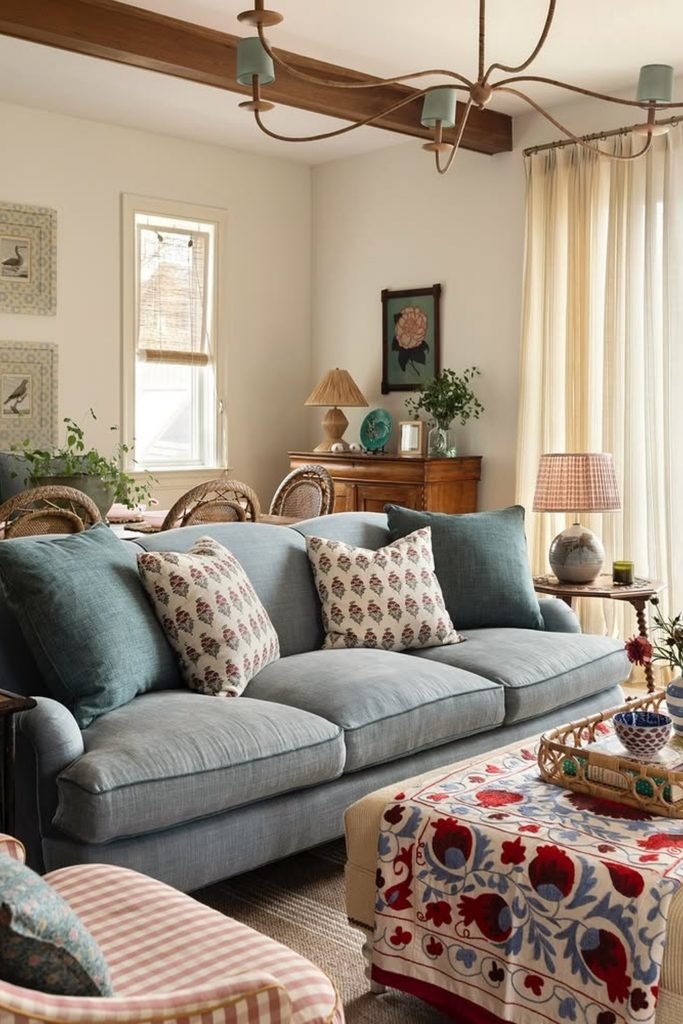
Patterned Comfort
Soft blue upholstery creates an easy foundation for living rooms where you want to combine floral patterns, stripes, wood, and vintage-inspired accessories.
Layer printed pillows and a colorful textile over a neutral ottoman, letting smaller patterns introduce personality without covering every large furniture surface.
Warm wood furniture and woven dining chairs help ground the cooler blue tones, making connected living and dining areas feel collected rather than coordinated.
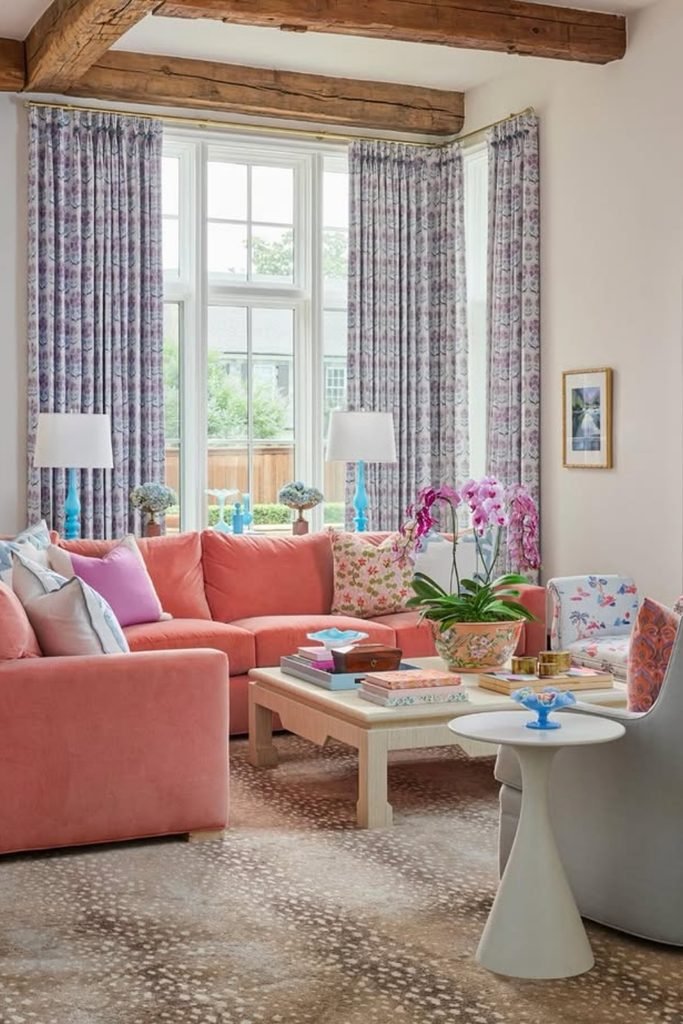
Playful Coral
Coral seating can energize a family living room without overwhelming it when surrounding walls, flooring, and larger accent furniture stay relatively soft.
Use floral curtains and patterned pillows to introduce neighboring pinks and blues, giving the sectional enough supporting color to feel intentionally chosen.
Exposed wooden beams keep the cheerful palette grounded, while orchids, colorful lamps, and small accessories add personality without requiring more large statement furniture.
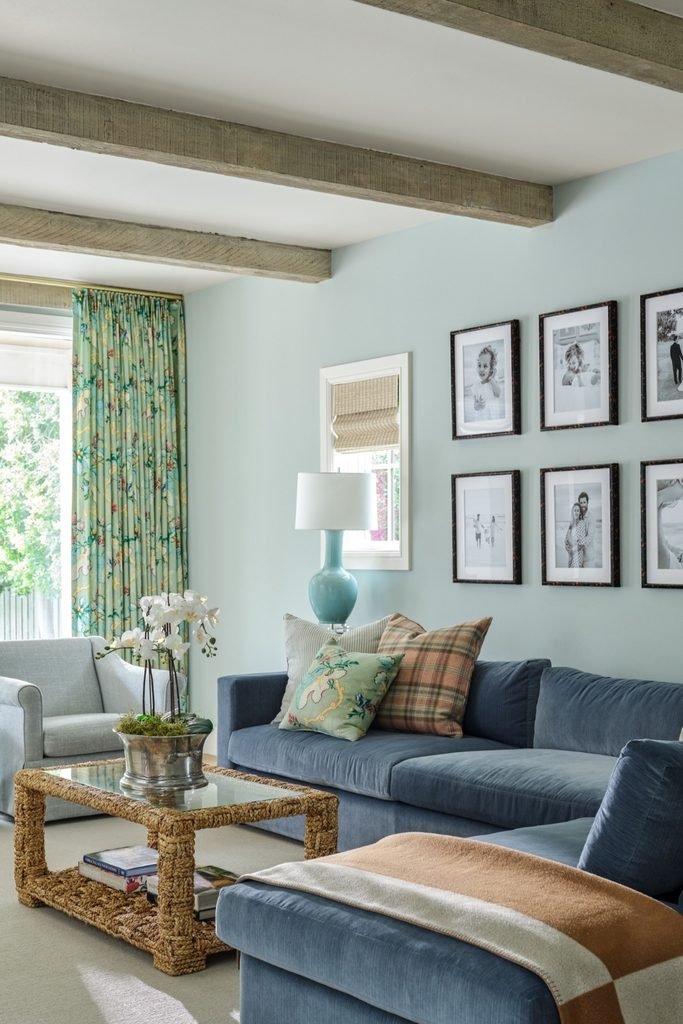
Coastal Layers
Blue upholstery works beautifully in relaxed living rooms when surrounding walls stay pale enough to keep the deeper seating from dominating the space.
Bring patterned curtains, plaid pillows, and woven furniture into the mix, repeating small blue notes so every decorative layer feels naturally connected.
Family photographs can fill the long wall above the sectional, adding personality while matching frames keep the arrangement orderly against the soft blue backdrop.
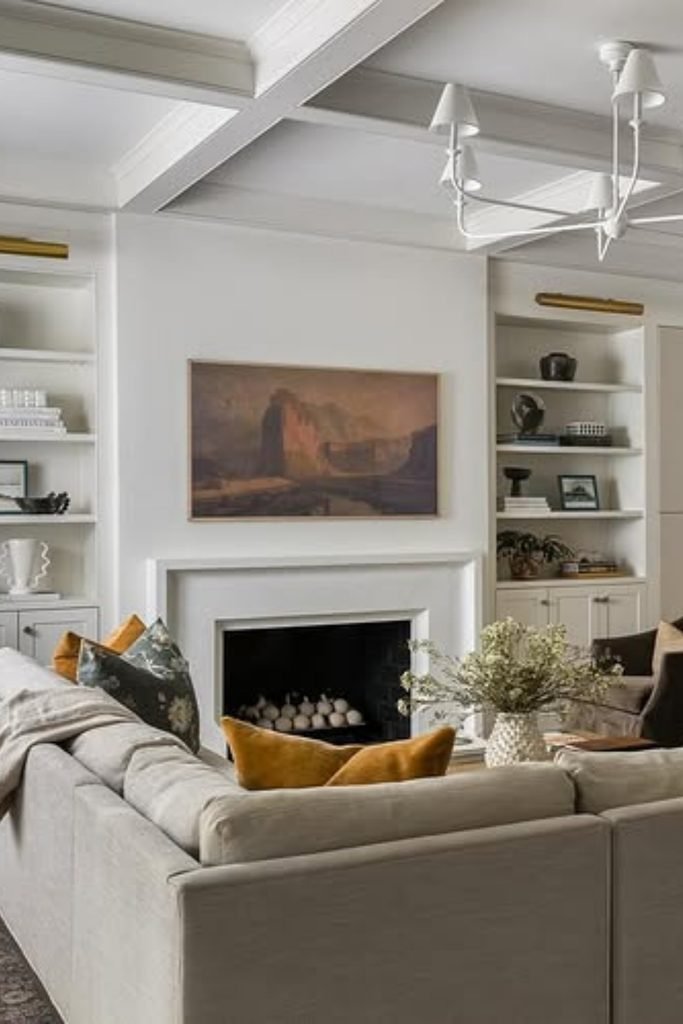
Builtin Balance
Built-in shelves can give a formal living room useful character while framing the fireplace without requiring extra cabinets or bulky freestanding storage pieces.
Position a large sectional toward the fireplace, then angle darker armchairs nearby to create an intimate conversation zone within the wider rectangular room.
Leave plenty of white around artwork and accessories so warm wood floors, mustard pillows, and darker seating accents provide contrast without visual clutter.
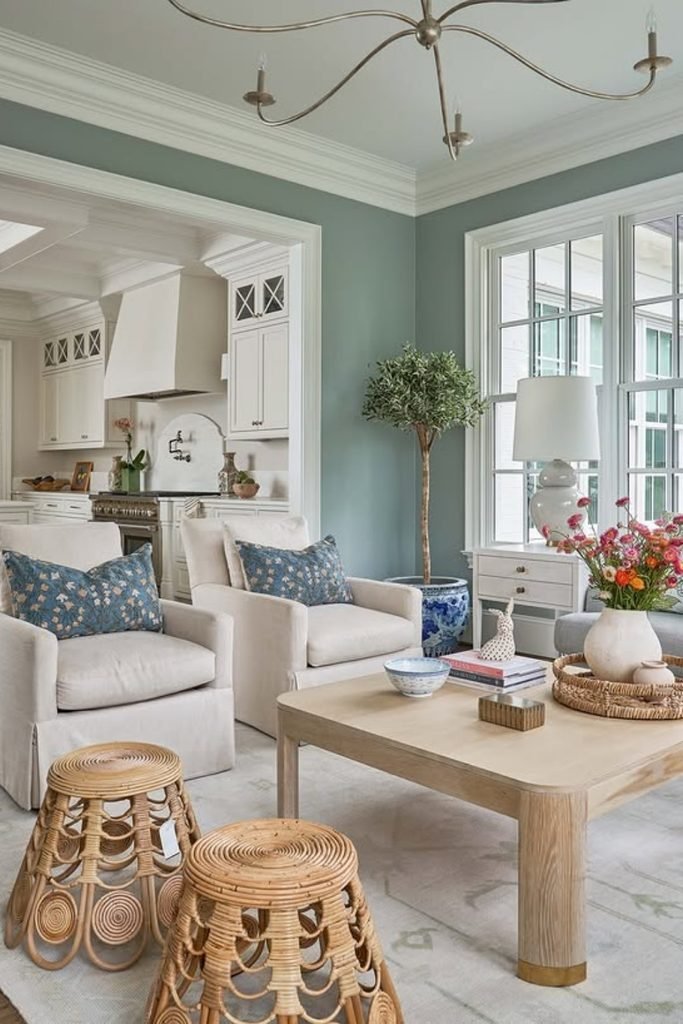
Open Connection
Connected kitchens feel more welcoming when the adjoining living room uses soft colors and lightweight furniture that keeps sightlines open between both areas.
Arrange cream chairs and a pale sofa around a simple wooden table, leaving generous pathways so people can move easily during everyday gatherings.
Sage walls, blue patterned pillows, woven stools, and fresh flowers introduce gentle color while helping the polished kitchen transition into a comfortable sitting area.
Graphic Warmth
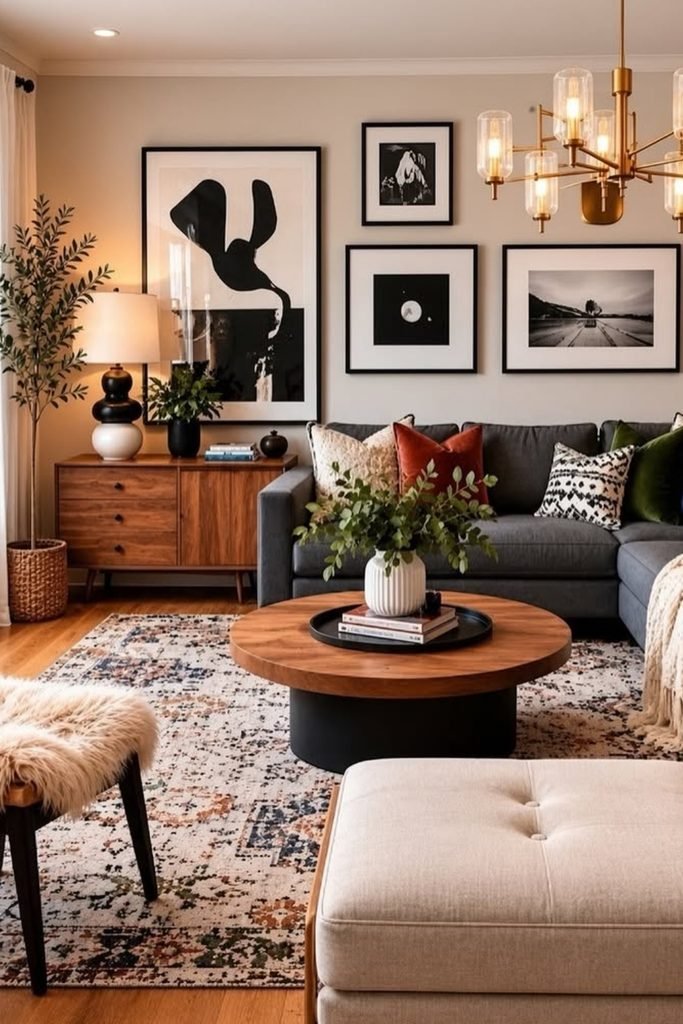
Black framed artwork gives a neutral living room sharper definition, especially when gray seating and warm wooden furniture already create a balanced foundation.
Mix artwork sizes rather than matching everything, then repeat black through table bases, lamps, and smaller patterns to connect the gallery with furnishings.
Rust, green, and navy pillows add controlled color around the sectional, while a patterned rug spreads those warmer tones across the entire seating zone.
Framed Fireplace
Large sectionals can comfortably fill spacious living rooms when arranged around one strong focal wall instead of scattering seating across open floor space.
Use pale upholstery beside a stone fireplace, then repeat dark window frames through ceiling beams to give the neutral palette stronger architectural definition.
Keep the central table low and substantial, adding greenery nearby so the generous seating arrangement feels fresh rather than heavy or overly formal.
Lakeside Comfort
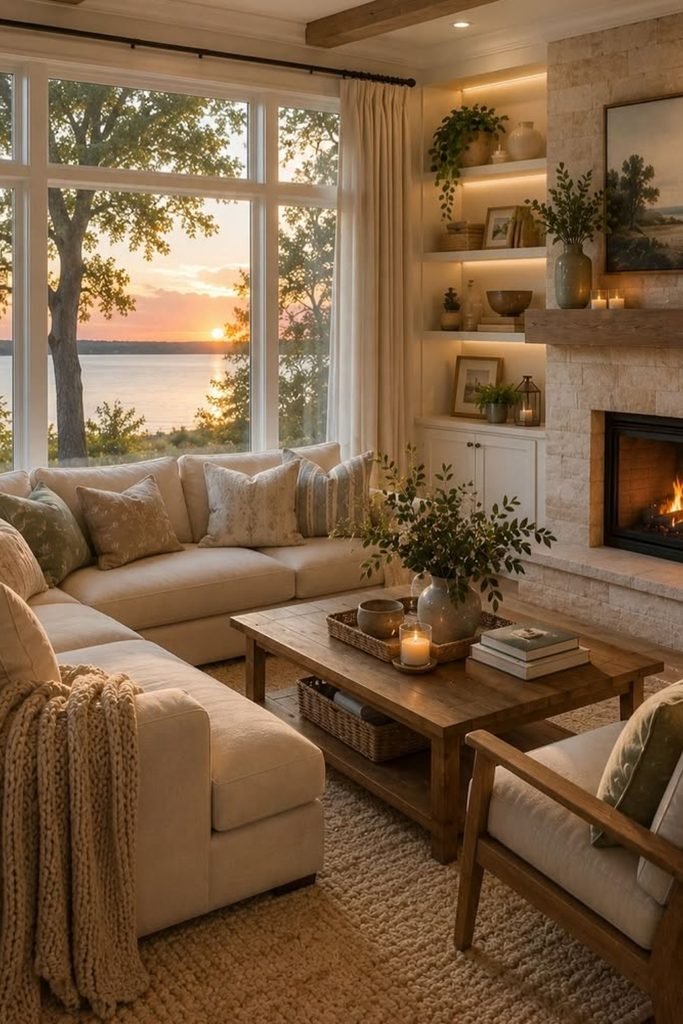
Rooms facing a beautiful outdoor view need furniture that supports the scenery rather than competing with it through strong colors or oversized decorative pieces.
Set a cream sectional beside the windows, then introduce warm wood through the coffee table and armchair to echo the natural landscape outside.
Firelight, illuminated shelving, knitted throws, and leafy branches create evening warmth, allowing the same living room to remain inviting after sunset disappears.
Fireplace Symmetry
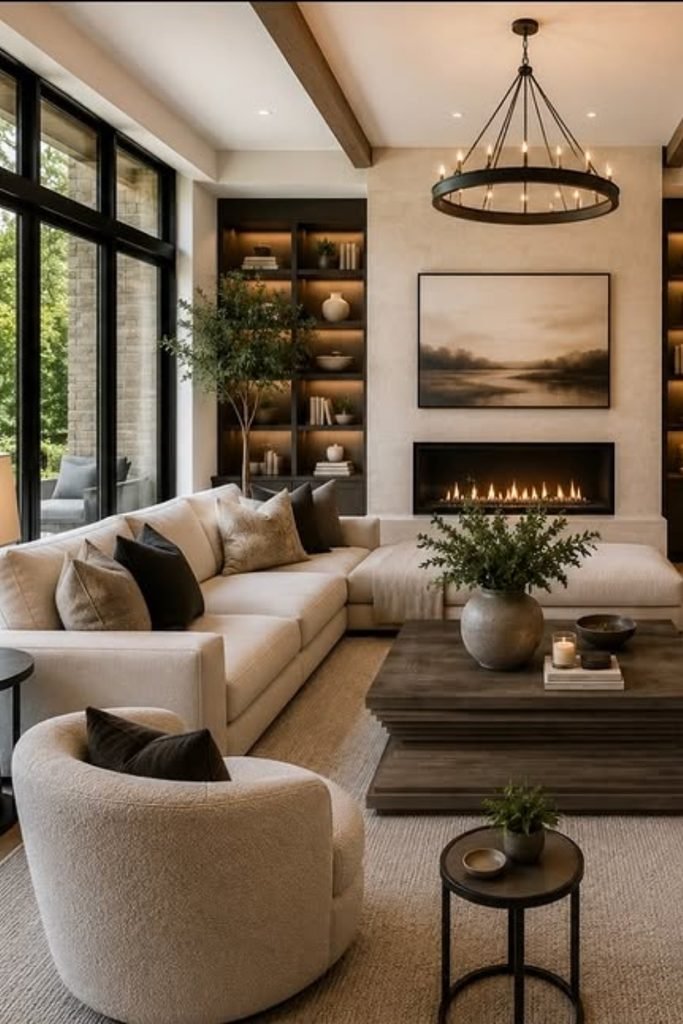
Tall living rooms feel more grounded when a centered fireplace and matching built-ins establish clear symmetry before sofas and chairs fill the remaining space.
Balance a cream sectional with leather chairs and rounded accent seating, giving larger gatherings several comfortable options without creating one oversized furniture block.
Dark shelving adds depth around the pale fireplace, while warm internal lighting highlights books and pottery without requiring extra decoration across every wall.
Traditional Scale
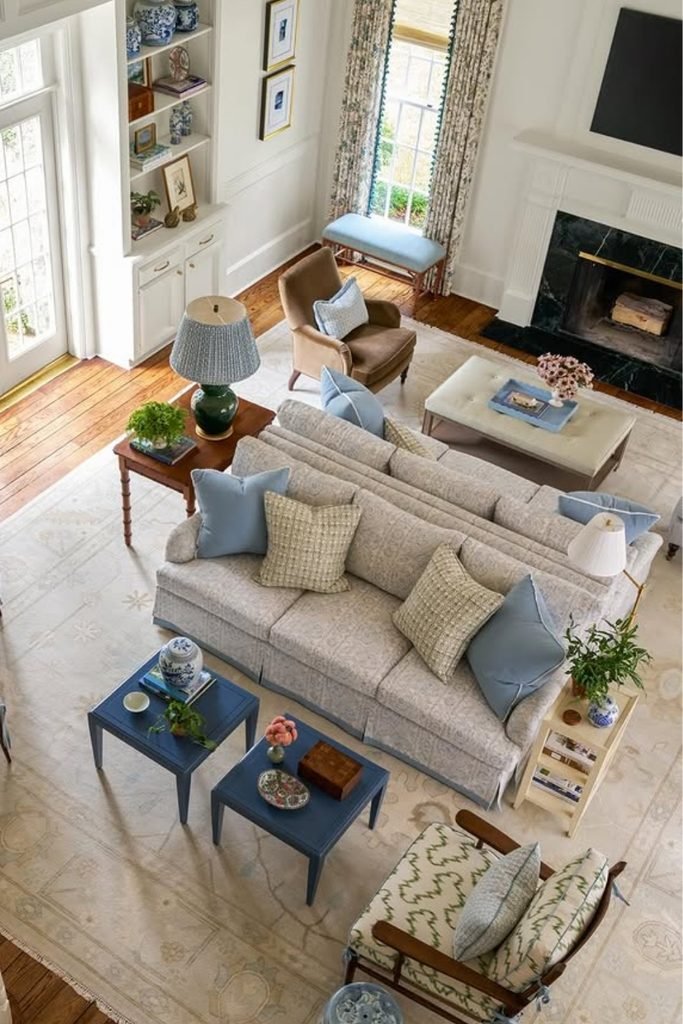
Double-height living rooms become easier to furnish when one generous sofa anchors the center instead of pushing every seating piece against distant walls.
Use smaller blue tables and classic armchairs around it, allowing each piece enough breathing room while preserving practical pathways through the larger floor plan.
Built-in shelves filled with blue-and-white pottery reinforce the traditional character, while pale rugs and upholstery prevent tall architectural features from feeling too imposing.
Relaxed Stripes
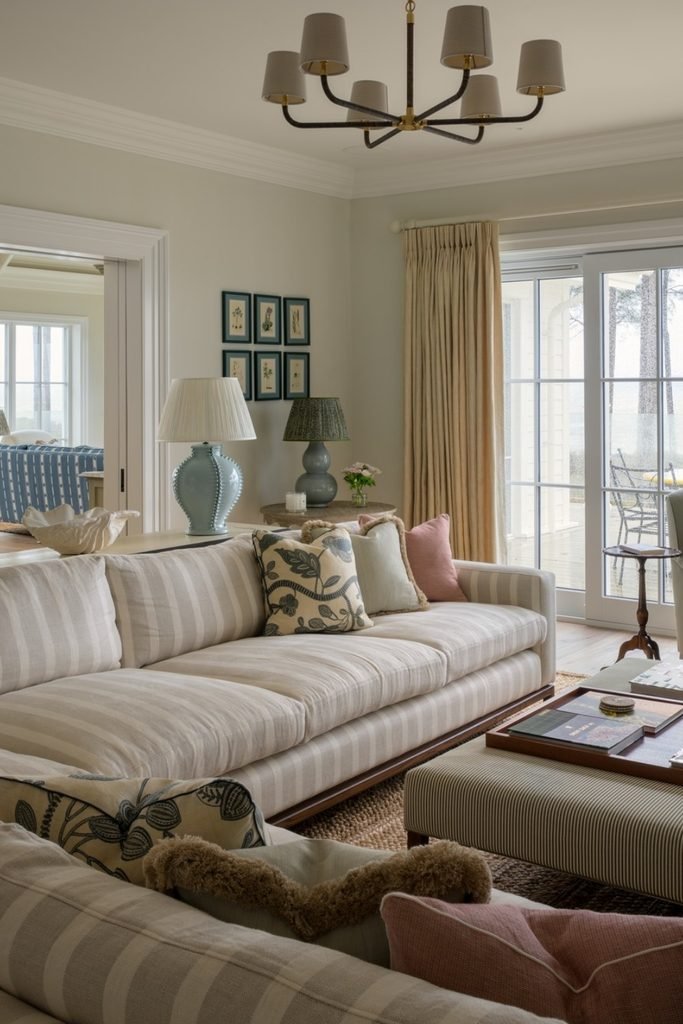
Wide striped sofas bring gentle pattern into a neutral living room, giving large seating pieces more character without making them visually overwhelming.
Pair them with botanical pillows and dusty pink accents, then repeat soft blue through lamps and chairs for an easy layered color scheme.
An upholstered ottoman works well for books and trays while keeping the seating zone softer and more comfortable than a hard coffee table.
FAQs
How Do You Keep a Family Living Room From Looking Cluttered?
Give everyday items a fixed home, because clutter builds quickly when toys, blankets, remotes, and games are left without proper storage.
Use closed cabinets for larger messes, then keep one or two baskets nearby for things your family reaches for most often.
Keeping surfaces mostly clear will make the room feel calmer, while still letting you display a few personal pieces you actually love.
What Furniture Works Best in a Busy Family Living Room?
Choose furniture that can handle daily use first, especially a comfortable sofa, sturdy tables, and pieces that offer hidden storage.
Rounded coffee tables, washable rugs, and movable ottomans work especially well when kids need floor space or family seating changes often.
If your room is small, pick fewer useful pieces instead of squeezing in extra furniture that blocks walkways or makes cleanup harder.