A fireplace can look beautiful on its own, but once you add a sofa, TV, chairs, and walkways, the whole room can suddenly feel awkward.
You may end up with furniture that blocks the view, a TV that sits too high, or empty corners that make the layout feel unfinished.
The good part is that a few smart layout and styling choices can make the fireplace feel like it truly belongs in the room.
In this article, you’ll find practical fireplace living room ideas that help you arrange, balance, and style the space.
Let’s jump in!
Should a Living Room Have a Fireplace?
A fireplace can be a great addition to a living room because it gives the space a clear focal point and makes seating feel more connected.
It works especially well if you enjoy cozy evenings, entertaining guests, or simply want the room to feel warmer and more inviting.
Before adding one, think about your layout first because the fireplace will affect where your sofa, chairs, TV, and walkways can go.

If the room is small, a slim electric or built-in fireplace can give you the look without taking up too much floor space.
For larger rooms, a wider stone, brick, or plaster fireplace can help fill an empty wall and make the seating area feel properly anchored.
A fireplace is worth having when it supports the way you use the room instead of making the layout harder to manage.
Layer Warmth
A compact fireplace works best when the seating stays close, letting the room feel intimate without blocking the main walking path.
Keep the mantel simple, then repeat warm wood tones through the coffee table and side furniture so the room feels naturally connected.
Soft throws, low lamps, and a basket of logs add comfort here, especially in smaller living rooms that need warmth without clutter.

Frame Symmetry
Traditional fireplaces look stronger when matching chairs sit on both sides, creating a balanced conversation area without forcing the sofa directly forward.
Use a mirror above the mantel to reflect light, then layer books, lamps, and collected pieces around it for a lived-in feel.
This setup suits wider rooms especially well because the chairs define the fireplace zone while still leaving clear movement around the coffee table.
Build Contrast
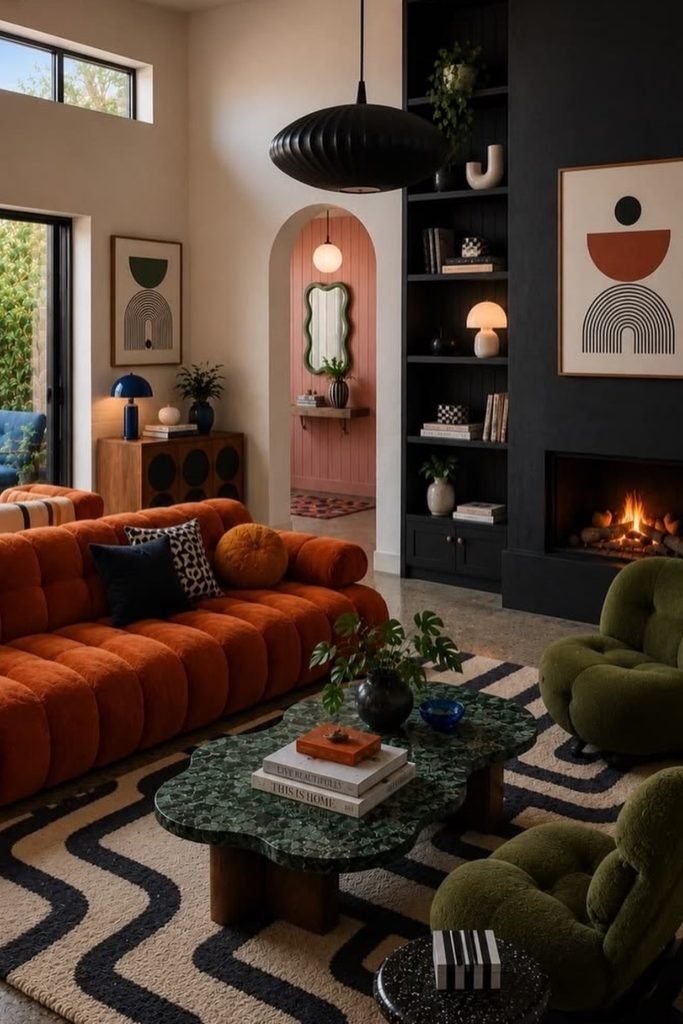
A dark fireplace wall can handle bold furniture, so pair it with saturated seating instead of letting the whole room turn heavy.
Built-in shelves make the black wall useful, while a lighter surrounding wall keeps the fireplace from swallowing the room visually.
Choose one patterned rug to connect the strong colors, then keep smaller decor controlled so the seating and fireplace remain the focus.
Seasonal Layers
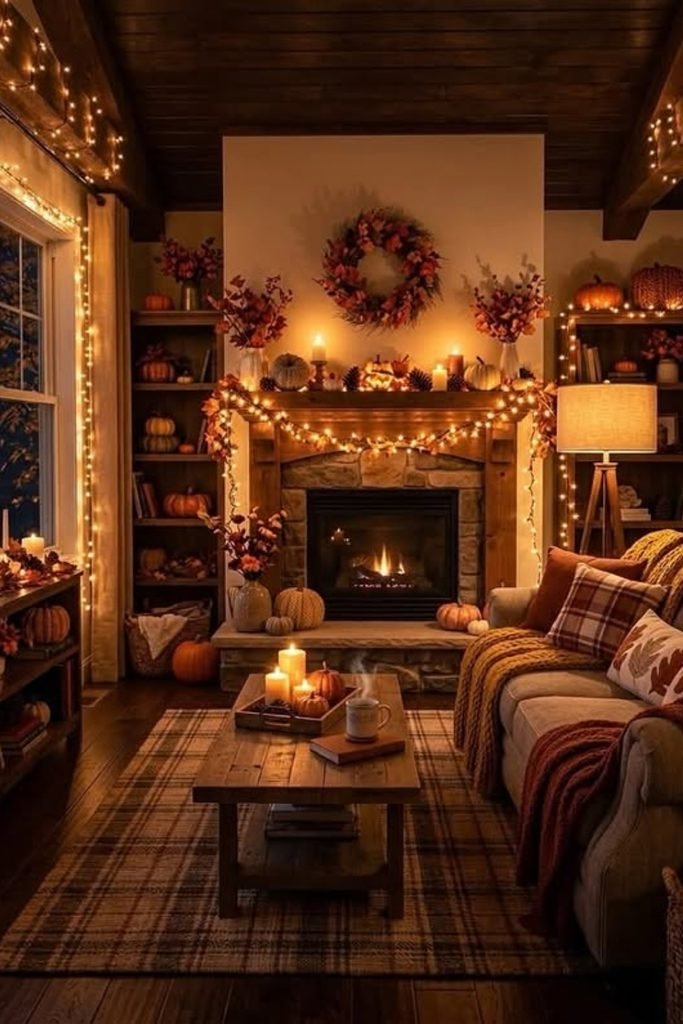
Seasonal decor works better when you concentrate it around the fireplace, rather than spreading small themed pieces across every surface in the room.
Start with the mantel, repeat a few autumn colors through cushions and throws, then let warm lamps carry the mood after dark.
Keep the coffee table simpler than the fireplace display, so the room still feels comfortable for everyday use instead of staged.
Center Seating
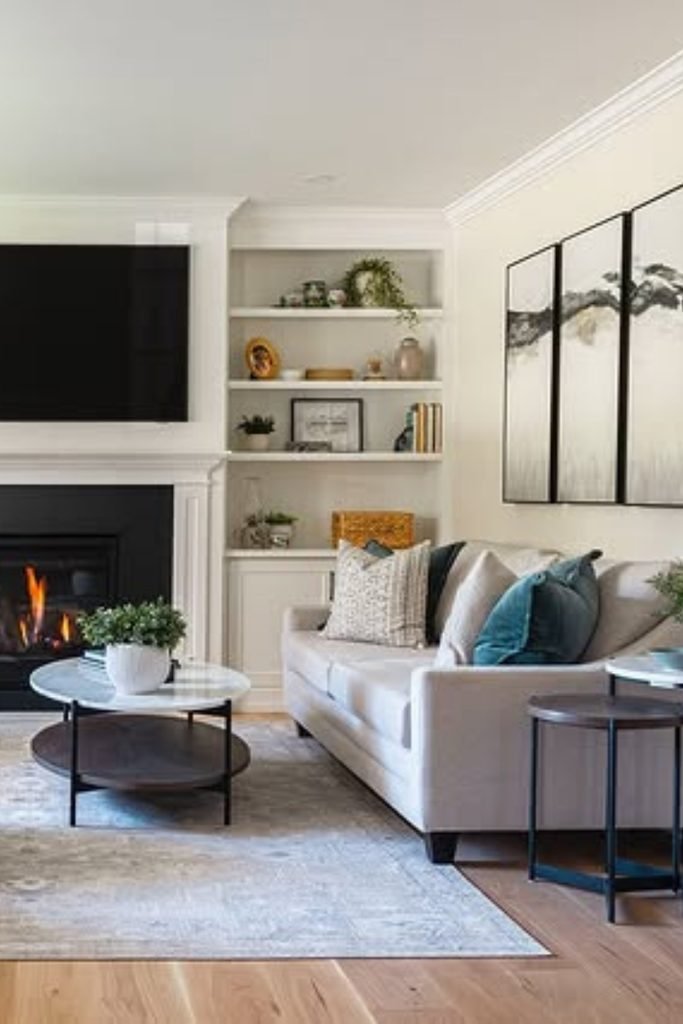
When the fireplace and TV share one wall, arrange the sofa and chairs around both so neither feature fights for attention.
Built-ins on each side keep the wall balanced and give you storage without needing extra cabinets around the rest of room.
Keep the coffee table light and compact, then leave enough floor space between seats so conversation still feels easy and open.
Soften Brick
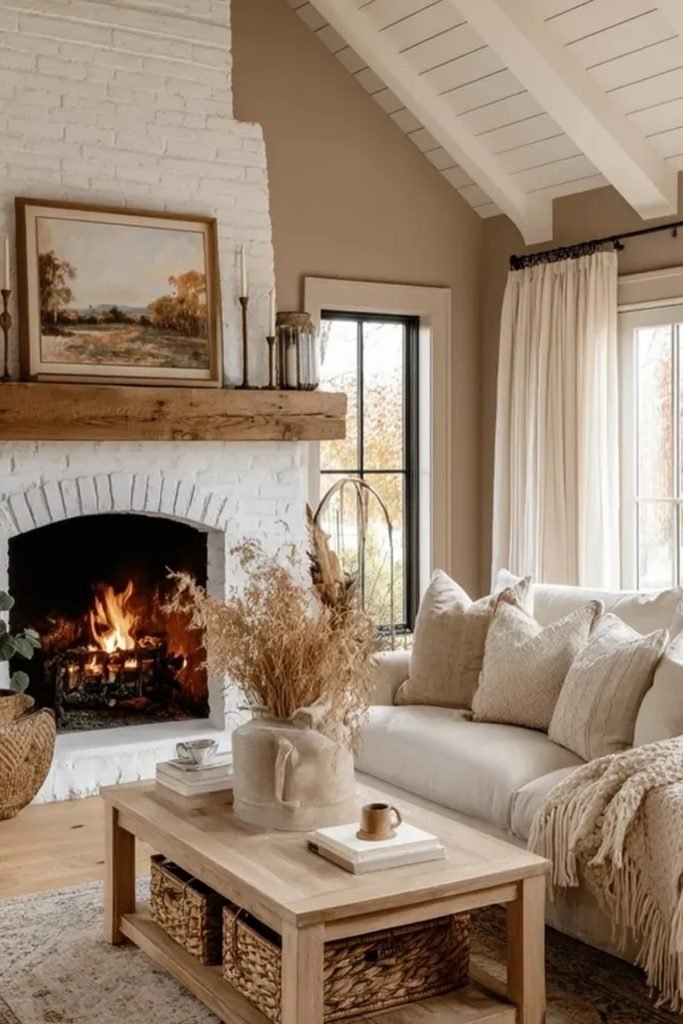
Whitewashed brick works especially well in relaxed living rooms because it keeps the fireplace textured without making the wall feel visually heavy.
Pair it with a raw wood mantel and soft neutral upholstery to bring warmth back into a room filled with pale finishes.
This setup suits cottage or farmhouse spaces best, especially when natural light, woven baskets, and simple artwork already soften the architecture.
Face Inward
Two sofas facing each other turn a fireplace wall into a conversation zone, which works beautifully in wider living rooms made for entertaining.
Keep the fireplace centered, then mirror built-ins on both sides so the room feels balanced even with a long coffee table.
Use warm wood inside the shelving to stop pale walls from feeling flat, and repeat those tones through smaller furniture pieces nearby.
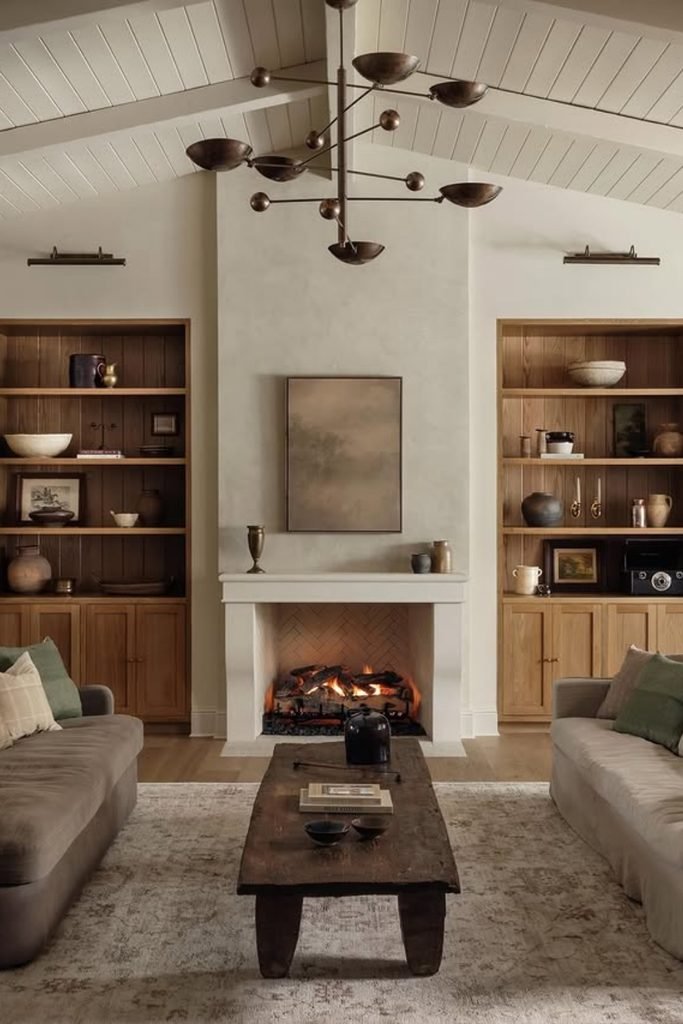
Light Mantel
Wall sconces beside the fireplace are useful when you want the mantel to feel finished without filling it with too many decorative pieces.
Place one larger artwork in the middle, then keep greenery lower so the wall stays balanced and the fireplace remains clearly visible.
This approach fits traditional living rooms well because the lighting, trim, and simple mantel styling work together instead of competing for attention.
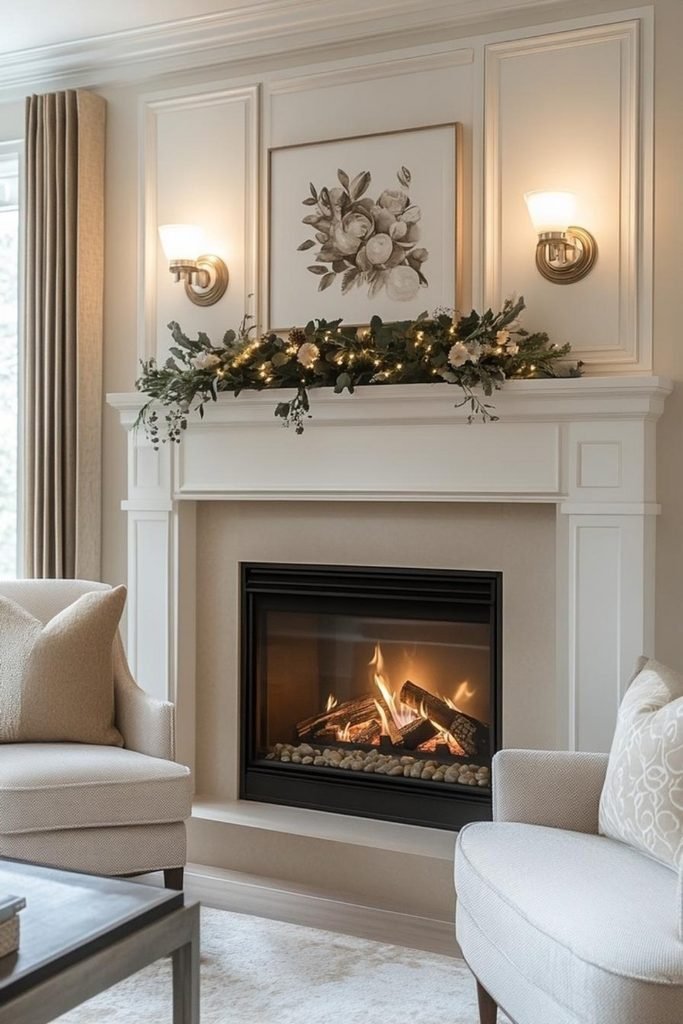
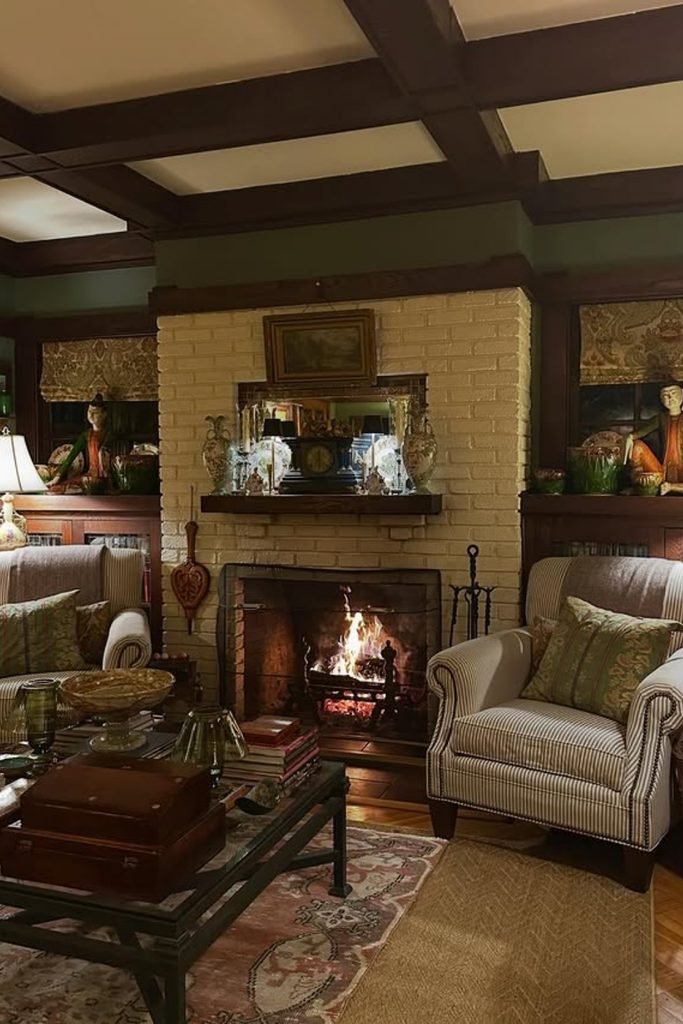
Create Intimacy
A darker fireplace corner works beautifully in smaller rooms, especially when you pull one comfortable chair close enough for relaxed reading.
Use flowers, candlelight, and a practical log basket nearby, then let the mantel carry just a few collected pieces with character.
Deep green upholstery and worn wood keep the fire from feeling too formal, making this setup ideal for cozy everyday living.
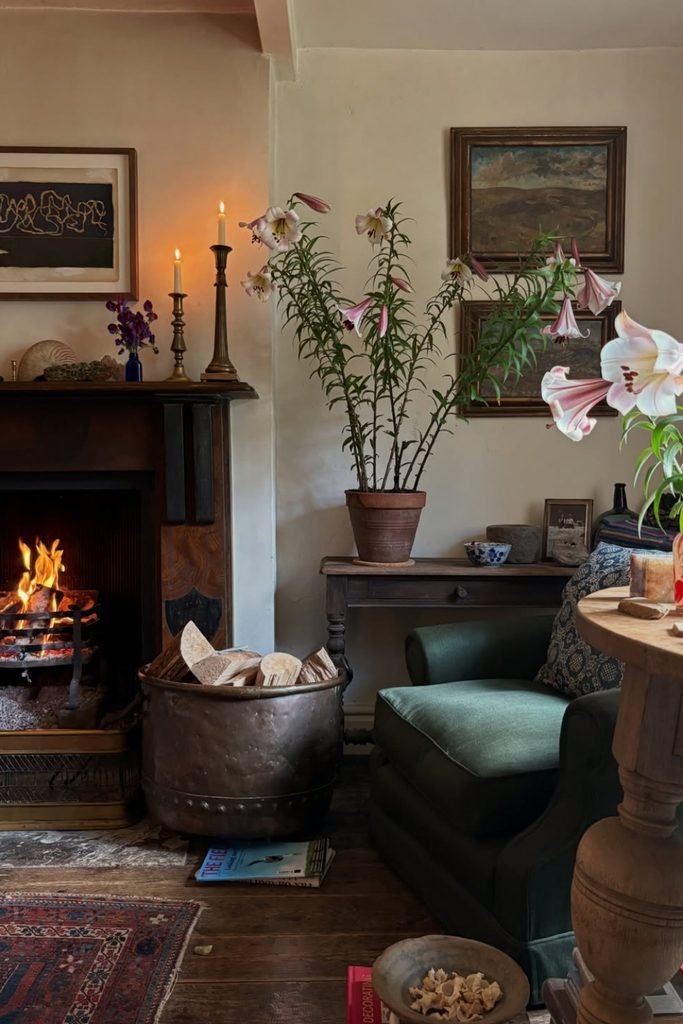
Extend Outdoors
A covered patio can function like a true living room when the fireplace, sectional, rug, and coffee table all share one zone.
Keep the television above or beside the fire only when viewing height and manufacturer clearances work safely for your specific installation.
Layer durable textiles and warm wood under the roof, so the space feels furnished enough for evenings without becoming precious.
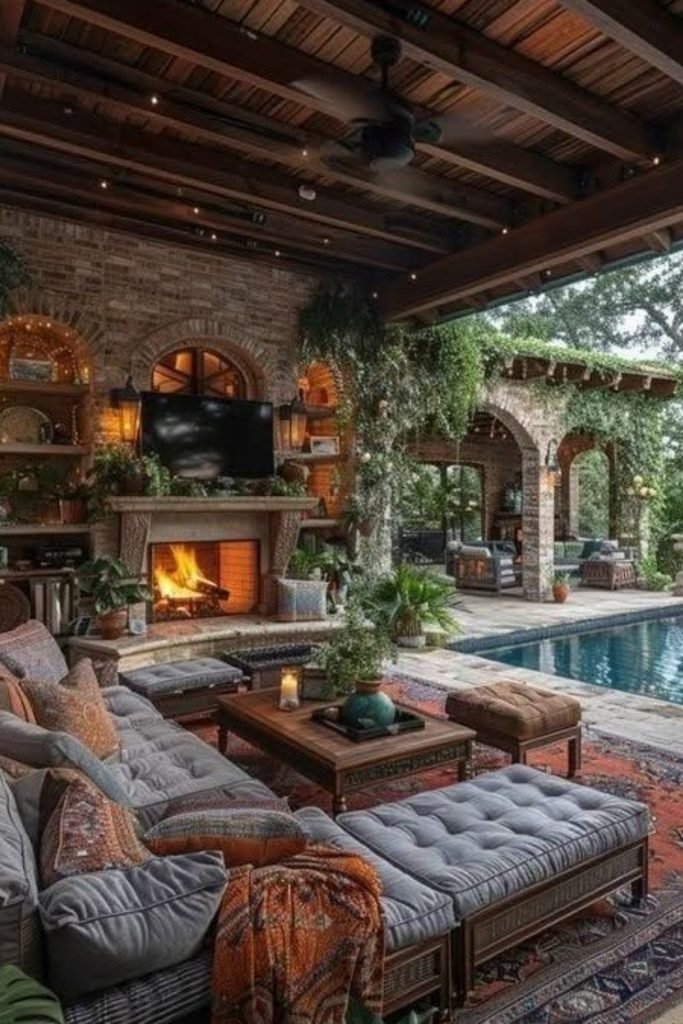
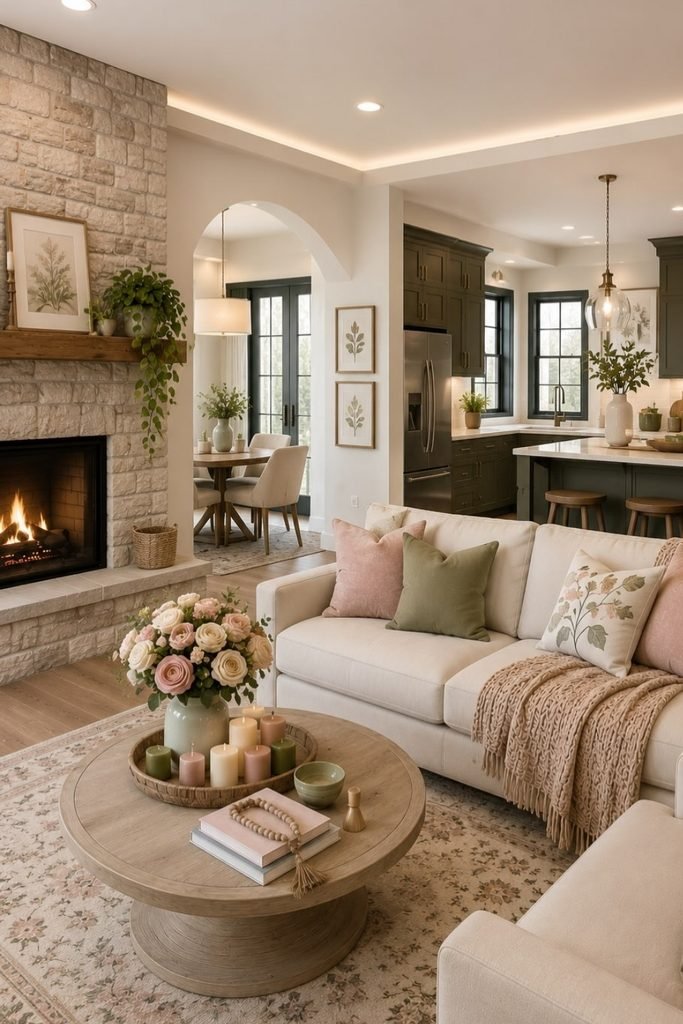
Open Flow
In an open-plan room, let the fireplace anchor the seating area while the kitchen stays visually connected through repeated colors and finishes.
A round coffee table softens the straight lines here and keeps movement easier between the sofa, fireplace, and nearby dining area.
Choose light upholstery and quieter stone if you want the fireplace present without letting it overpower a bright shared family space.
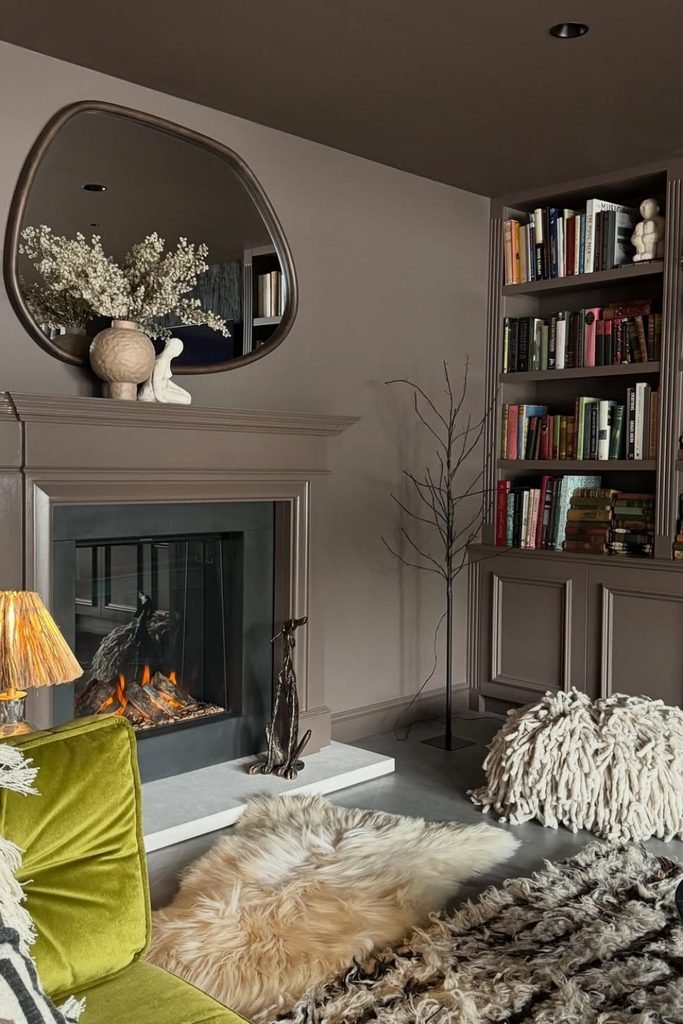
Layer Texture
Moody fireplace rooms feel far more inviting when you mix smooth painted walls with velvet, wool, shaggy textiles, and warm lamplight.
Use a large sculptural mirror above the mantel to break up dark tones and reflect light without adding another busy focal point.
Built-in bookshelves give the fireplace wall purpose, while one brighter chair or cushion keeps the whole room from turning visually flat.
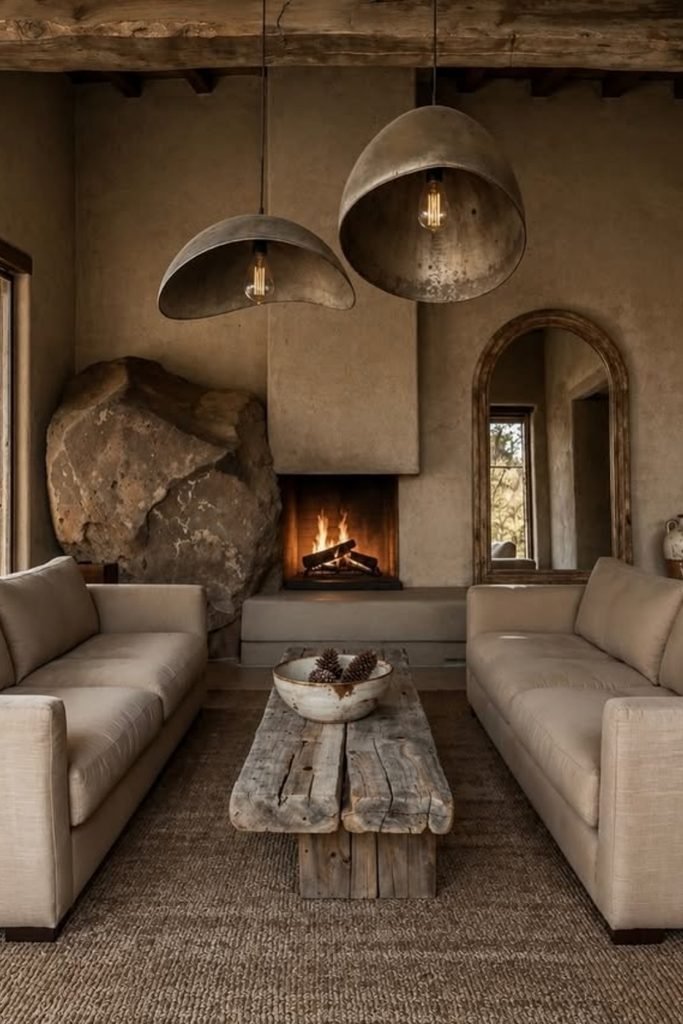
Balance Texture
Two facing sofas work especially well in narrow rooms, giving the fireplace a clear role while keeping conversation easy from both sides.
Keep the palette earthy, then let rough plaster, reclaimed wood, and one oversized stone bring character without filling the room with decor.
A long wooden coffee table follows the seating shape, so the whole arrangement feels grounded instead of looking too formal or carefully staged.
Frame Architecture
When your fireplace has strong trim and paneling, let those details lead instead of covering the wall with several competing decorative pieces.
Place one substantial artwork above the mantel, then repeat warm wood through side tables so the room feels connected from wall to seating.
This approach suits traditional living rooms best because it keeps the architecture visible while still giving the space enough softness for everyday use.

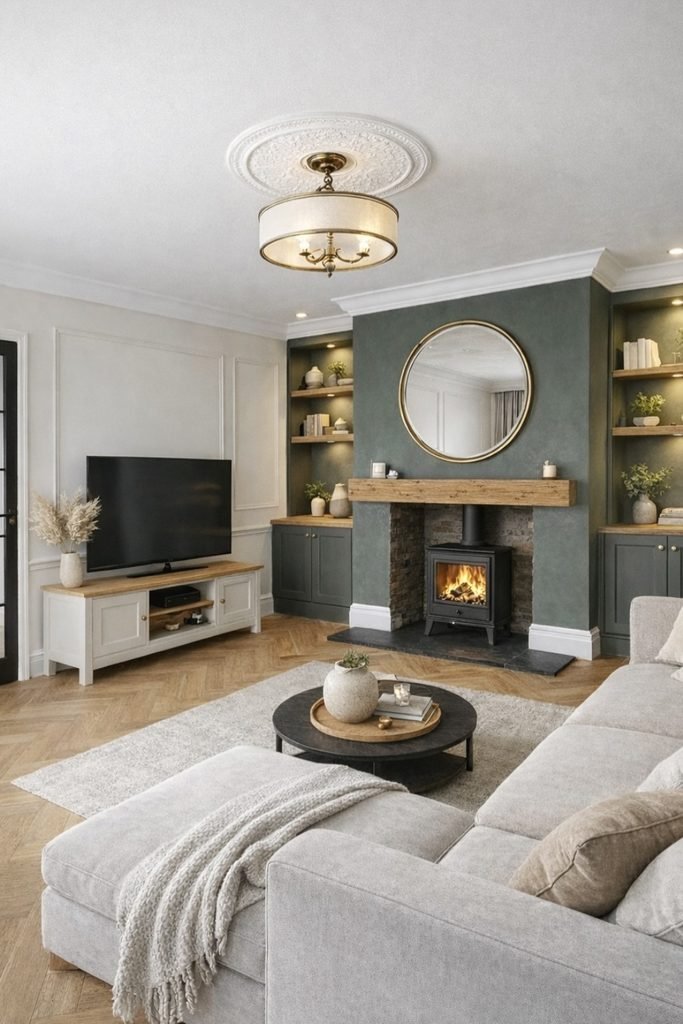
Split Focus
If the television and fireplace sit on different walls, angle the seating so both remain usable without making either one dominate.
Built-ins around the fireplace add storage and visual weight, while a low media console keeps the television side lighter and less bulky.
A sectional works nicely here because one corner can face the fire while the longer side still gives everyone a comfortable screen view.
Warm Contrast
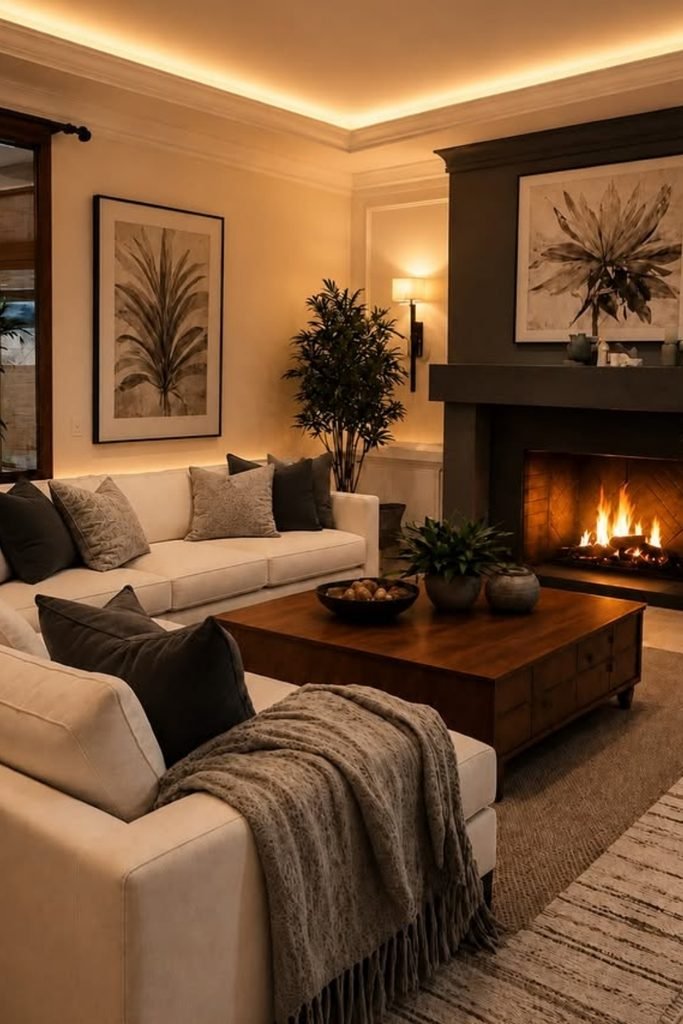
A dark fireplace wall feels softer when you surround it with cream seating, warm wood, and layered lighting instead of more dark furniture.
Keep the artwork large and simple above the mantel, then use plants near the corners to stop the strong wall from feeling flat.
This setup works best for evening-focused living rooms, where ceiling glow, firelight, and table lamps can build warmth without adding extra clutter.
Layer Cottage
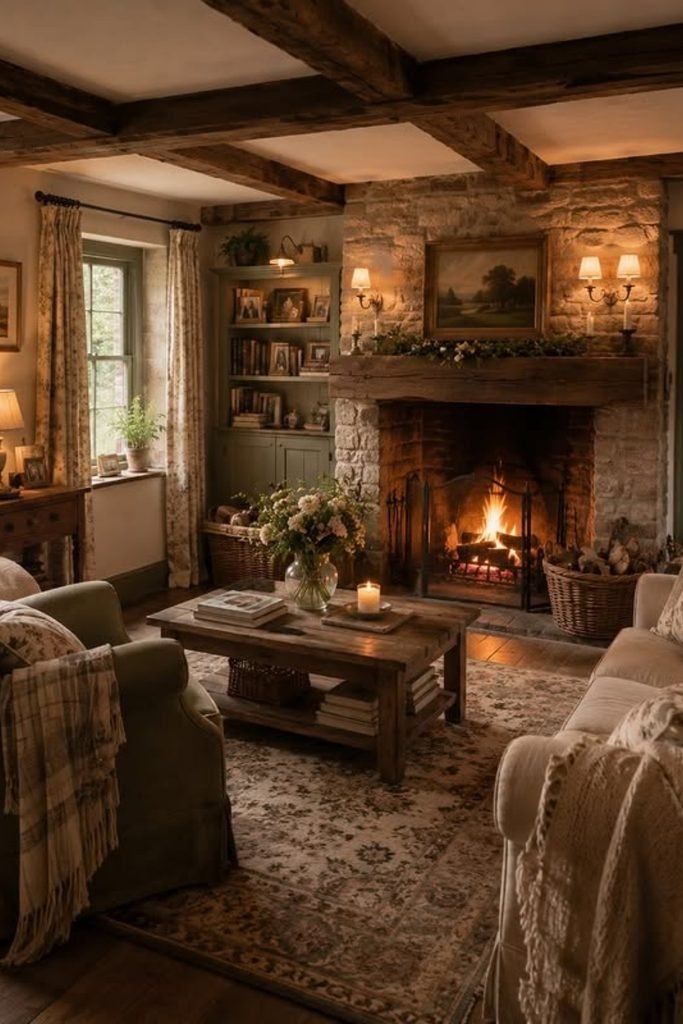
A deep stone fireplace feels most natural in cottage rooms where exposed beams, soft seating, and warm wood already shape the space.
Keep the sofa and armchairs close enough for conversation, then use one large rug to pull the whole seating area together.
Bookshelves beside the hearth work best when they hold everyday pieces, because useful storage keeps a cozy room from looking overly styled.
Stretch Vertical
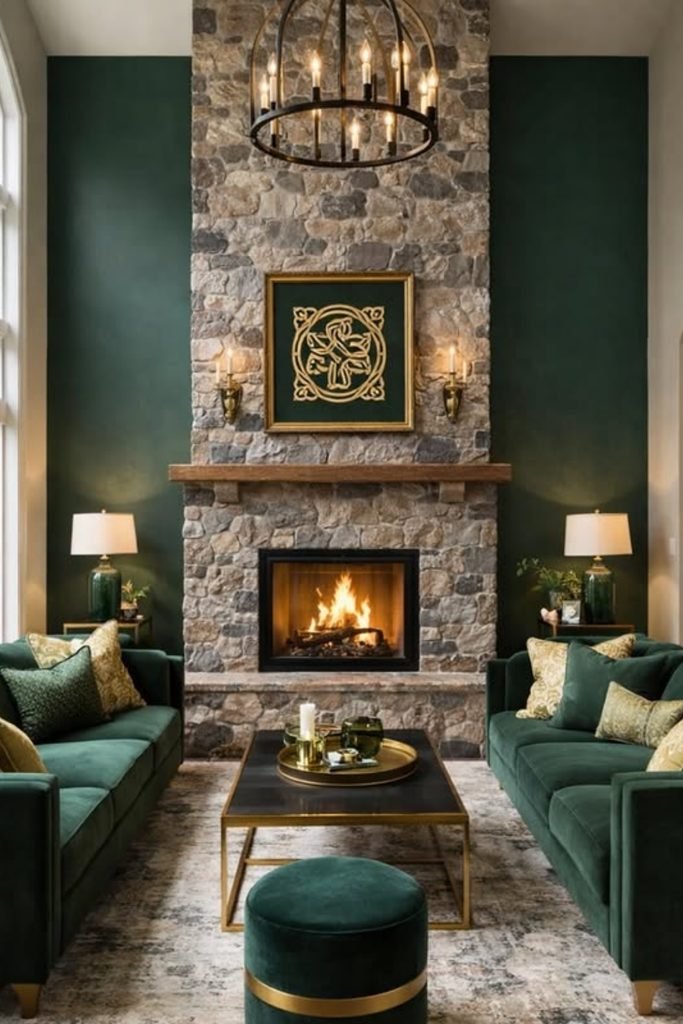
In a tall living room, take stone all the way upward so the fireplace matches the ceiling height instead of feeling undersized.
Place matching sofas opposite each other to keep the layout balanced, then let the fireplace sit naturally at the visual center.
Dark green walls beside rough stone add depth without hiding texture, especially when brass lighting and pale accents repeat across the room.
Create Balance
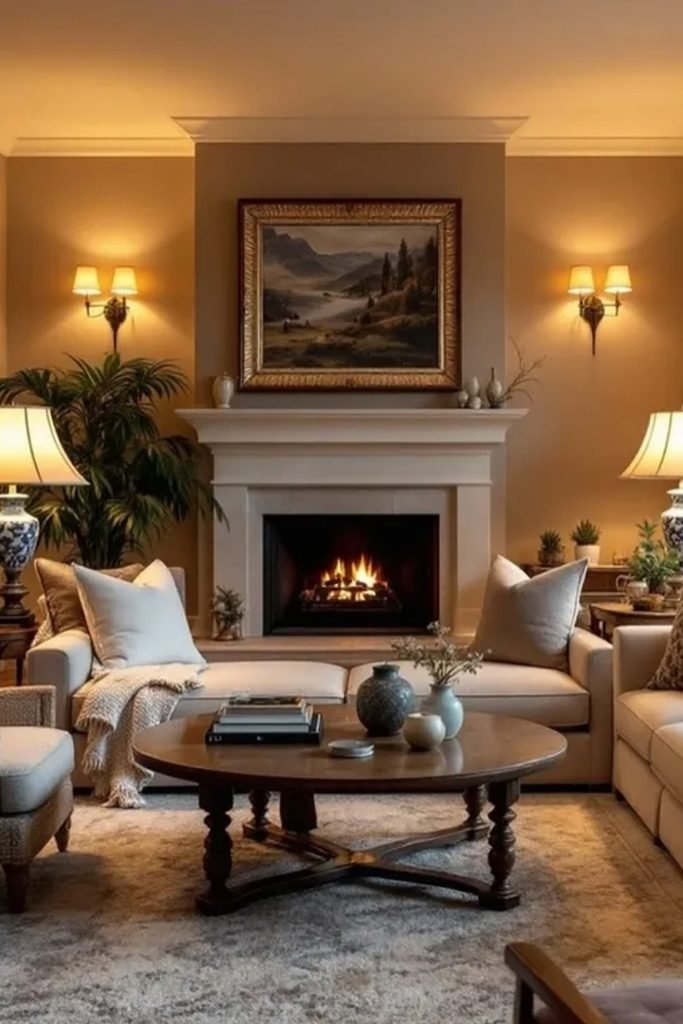
When a fireplace sits on a narrow wall, surround it with balanced seating so the room feels gathered rather than pushed outward.
Use matching lamps or sconces on both sides to widen the focal area without adding bulky furniture beside the mantel.
A round coffee table works well here because it softens the formal symmetry and makes movement between several seats much easier.
Unify Media
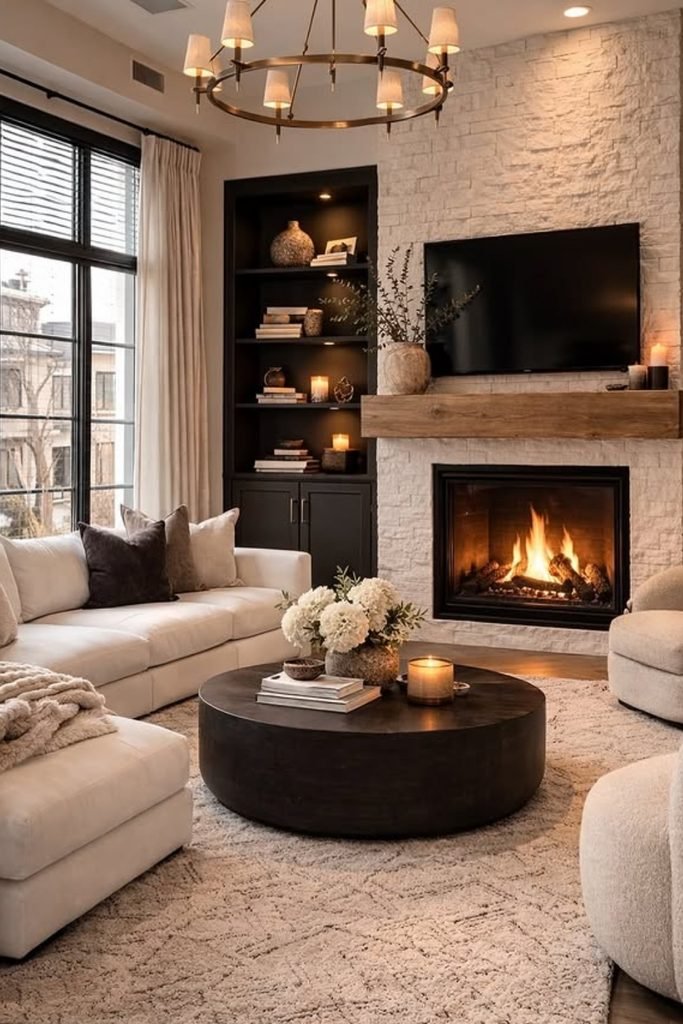
When the TV has to sit above the fireplace, frame both with built-ins so the wall reads as one planned feature.
Keep the shelving dark and the seating light, which gives the media wall weight without making the whole room feel heavy.
Before mounting the screen, check the fireplace and television manufacturer guidance, then keep seating far enough back for comfortable viewing.
Keep It Slim
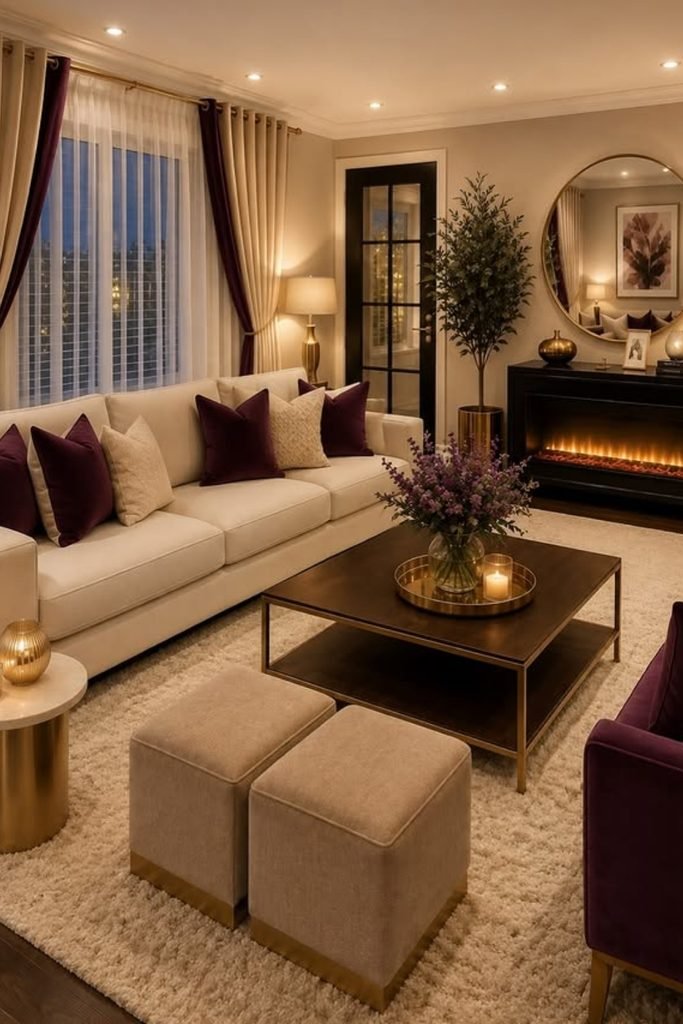
A slim electric fireplace works well when wall space is limited, giving the room a clear focal point without taking over the layout.
Pair cream seating with deeper burgundy accents, then repeat brass through tables and lamps so the whole room feels polished and connected.
Keep a large mirror above the fireplace to bounce light around, especially in evening spaces where you want warmth without heavy wall decor.
Simplify Surround
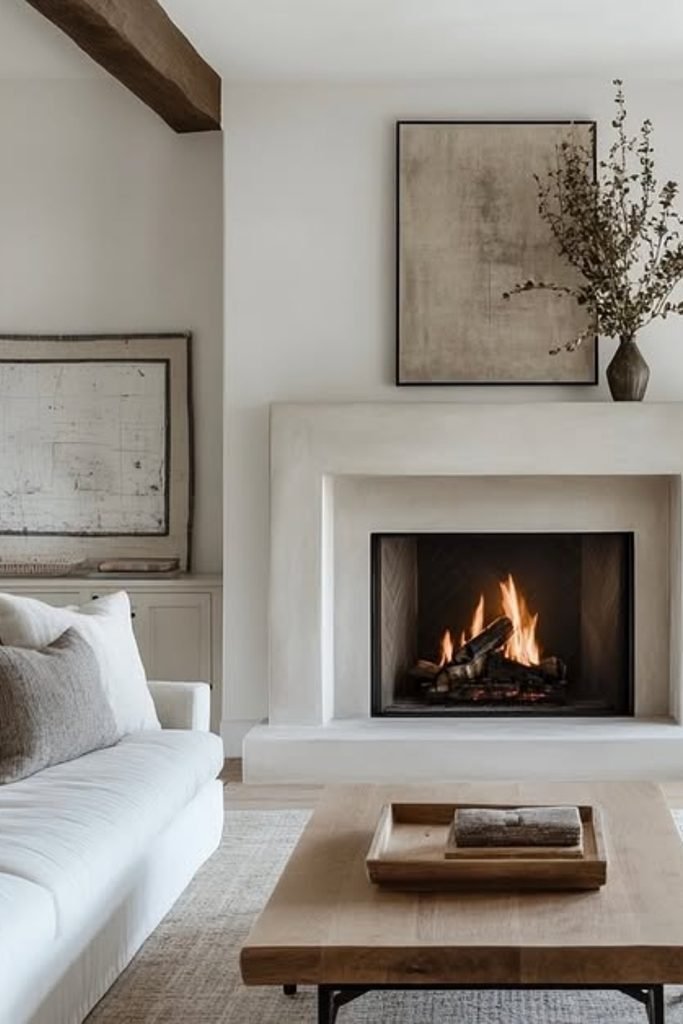
A simple plaster fireplace suits calm living rooms where you want the fire to stand out without relying on stone, tile, or ornate trim.
Use one recessed niche for logs and shelves, which adds useful storage while keeping the main fireplace wall clean and uncluttered.
Natural wood, soft upholstery, and exposed beams keep the pale palette from feeling cold, making this setup ideal for relaxed modern interiors.
FAQs
Where Should the TV Go With a Fireplace?
If your fireplace already takes the main wall, place the TV beside it or on another wall whenever comfortable viewing allows.
Mounting it above can save space, but check viewing height, heat limits, and the manufacturer’s clearance rules before deciding for your setup.
When both features sit on different walls, swivel chairs can help people turn easily without making the furniture layout feel awkward.
How Do You Decorate Around a Fireplace Without Clutter?
Start with one larger piece above the mantel, then add only a few objects that repeat colors already used around the room.
Built-ins, baskets, or closed cabinets can handle books, logs, and everyday items so the fireplace wall stays useful and visually calm.
Leave some empty space around artwork and decor because a fireplace usually looks stronger when every part of the wall is not filled.