A floor-to-ceiling fireplace can look stunning, but it can also feel too heavy, too tall, or awkward if the proportions are wrong.
You may also be stuck choosing between stone, tile, plaster, a mantel, or a TV setup that actually fits your living room.
The right design should match your ceiling height, room size, and layout so the fireplace feels intentional instead of overpowering everything around it.
In this article, you’ll find practical floor-to-ceiling fireplace ideas that help you choose the right material, scale, layout, and finishing details.
Let’s jump in!
What Are Some Ideas For a Floor-To-Ceiling Fireplace?
Start with the room itself because a fireplace that works under a vaulted ceiling may feel too heavy in a smaller living room.
Stone adds strong texture, while plaster, limestone, or large-format tile keeps the wall cleaner if you want a softer look.
For a modern setup, pair a linear fireplace with a TV, but keep the screen height comfortable and follow the fireplace clearance rules.

A wood mantel can warm up stone or brick, while a mantel-free design works better with marble, travertine, or smooth plaster.
Built-ins, floating shelves, or firewood niches can fill the side walls without making the whole area feel crowded.
If your fireplace is off-center, use asymmetrical storage or furniture instead of forcing perfect balance.
Vaulted Stone
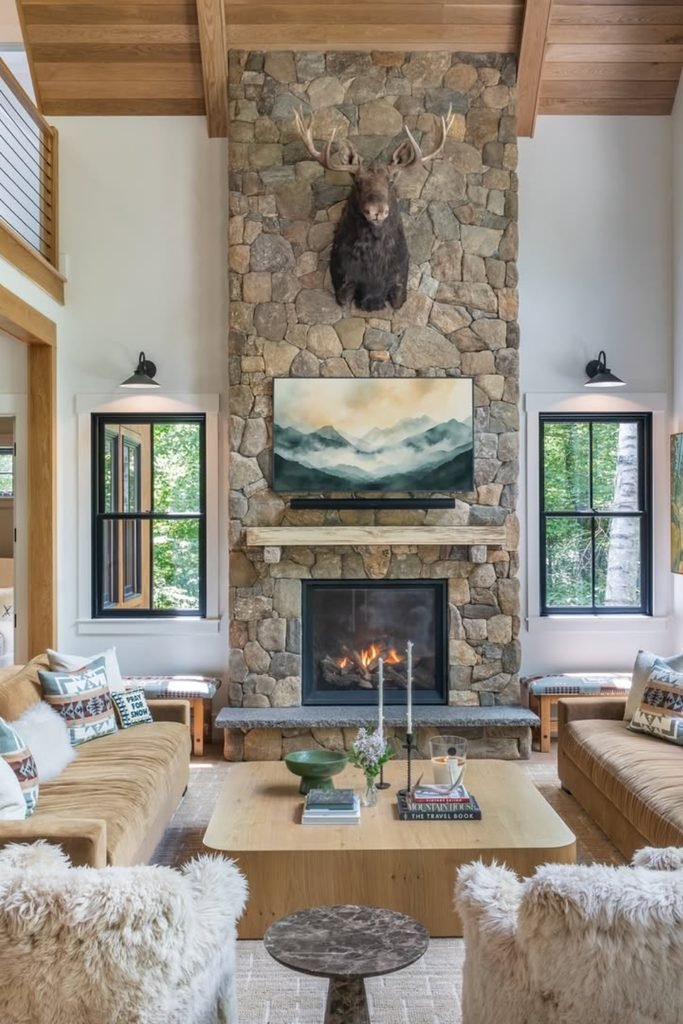
Let the stone rise into the vaulted peak when your ceiling is tall, because stopping halfway would make the fireplace feel undersized.
Keep the stone tone close to the wood ceiling and upholstery so the room feels warm, balanced, and visually connected.
For a similar setup, center the fireplace between windows and keep the seating low so the architecture remains the main focus.

Rustic Balance
A rough stone column works best in a tall lodge-style living room where exposed wood ceilings and large windows already carry natural texture.
Break up the height with a simple mantel and centered screen, then leave enough stone above to keep the wall feeling intentional.
Matching sofas on both sides help steady the heavy fireplace, while soft textiles keep the stone from making the room feel cold.
Built-In Contrast
Use dark built-ins beside a pale stone fireplace when you want the center wall to feel taller without adding more stone width.
Carry the cabinetry high enough to frame the fireplace, but stop below the ceiling so the stone column still reads separately.
A slim mantel and centered TV keep the arrangement tidy, while closed lower cabinets give you storage without cluttering the living room.

Quiet Limestone
Choose large pale stone slabs when you want a tall fireplace to feel substantial without adding the busy texture of stacked stone.
Keeping the firebox simple and skipping a mantel lets the stone stay continuous, which suits modern rooms with strong window lines.
Repeat the warm beige tones through the sofa, rug, and coffee table so the fireplace blends smoothly instead of feeling stark.

Marble Drama
Let dramatic marble carry the full wall when your living room has enough height and space to handle strong natural movement.
Keep the surrounding cabinetry quiet and neutral so the veining stays dominant without making the entire seating area feel visually busy.
A low linear fire beneath the TV keeps the composition grounded, while oversized sectionals help match the scale of the feature wall.

Slatted Balance
Frame a pale fireplace with vertical wood slats when you want a tall room to feel warmer without losing its clean modern shape.
Built-in shelves on both sides add useful storage, but keep their styling light so the center fireplace still holds visual attention.
Repeating the wood tone in chairs or cabinetry ties everything together and stops the white fireplace from feeling too cold or isolated.
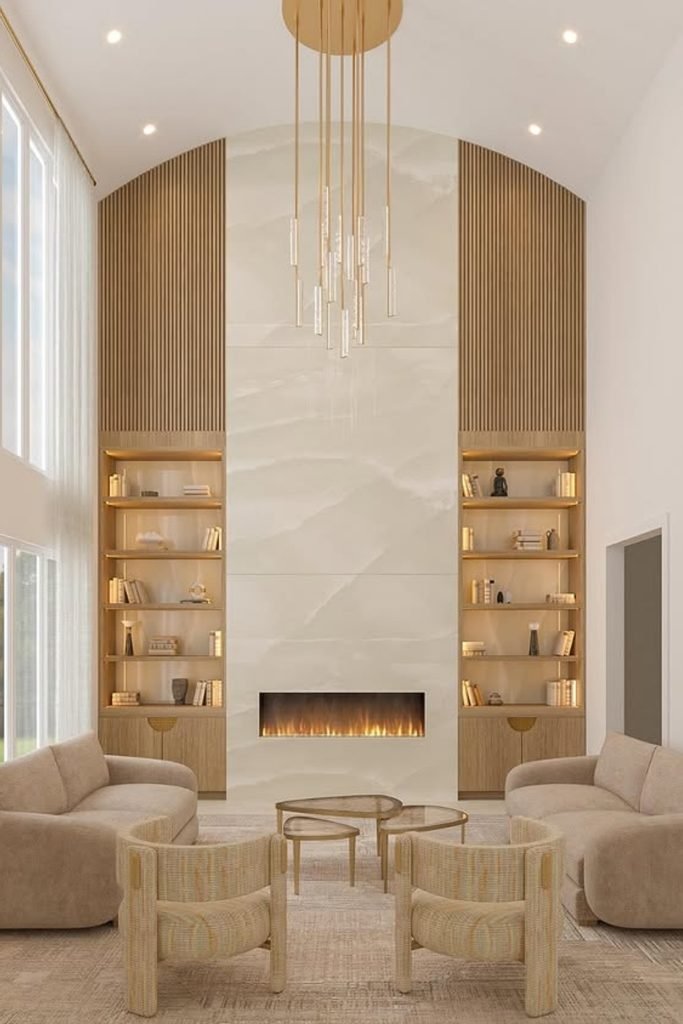
Quiet Monolith
A tall stone column works beautifully in rooms with huge windows because the solid center gives all that open glass some needed weight.
Keep the firebox low and skip extra decoration when the surrounding landscape already provides plenty of visual interest through the windows.
Choose long vertical stone pieces to echo the room height, then soften the harder surfaces with generous seating, rugs, and indoor greenery.
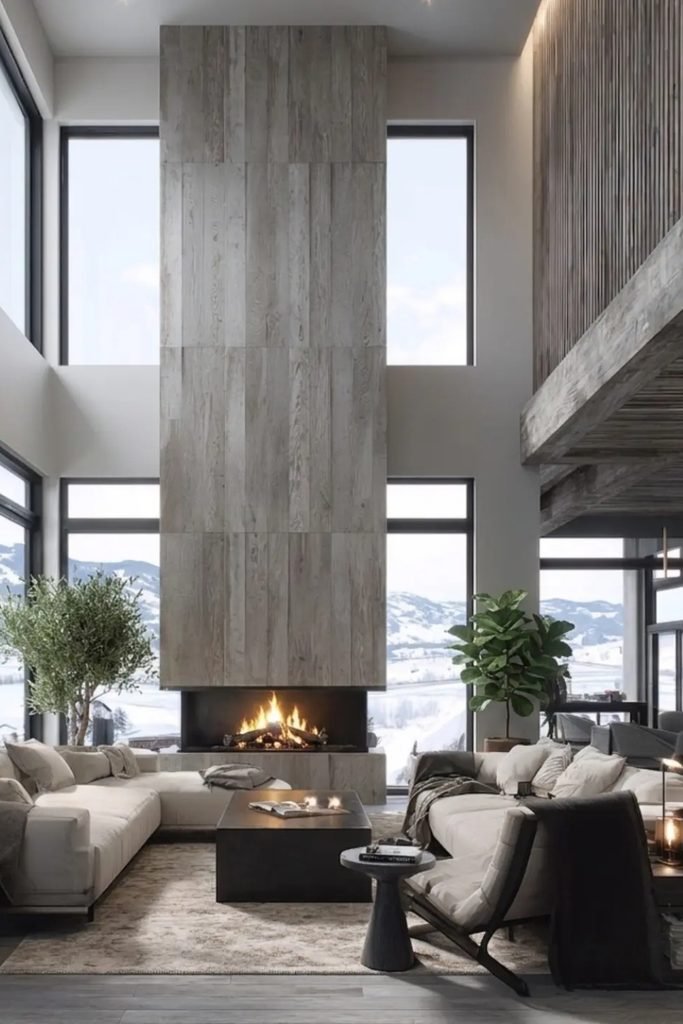
Lodge Scale
Rustic rooms with tall ceilings need a fireplace wide enough to match the architecture, not a narrow stack of stone climbing upward.
Use a chunky wood mantel to break the height and connect the stone with exposed ceiling beams, tables, and other warm timber details.
Arrange substantial seating around the fireplace so the room feels grounded, while black window frames keep the natural stone from looking dated.

Soft Stone
Light irregular stone works well in tall neutral living rooms because the texture adds character without making the fireplace feel visually heavy.
A dark wood mantel gives the pale stone a clear break, while simple seating keeps the fireplace from competing with surrounding details.
Choose this approach when windows already bring in plenty of light, then repeat charcoal accents through pillows, frames, or nearby lighting.

Gallery Hearth
A soft stone fireplace becomes much more personal when oversized artwork replaces a TV and gives the tall wall a calmer focal point.
Run the stone upward in a narrow column, then use a thick wood mantel to create warmth and stop the height feeling endless.
Built-in shelves beside the fireplace work best when kept lightly styled, so storage supports the room instead of creating extra visual clutter.

Vaulted Simplicity
Not every tall room needs stone to the ceiling; a simple white surround can still work when beams already carry strong vertical interest.
Use matching built-ins on both sides to widen the composition, which keeps a compact fireplace from looking undersized beneath vaulted ceilings.
Warm wood shelves, ceiling beams, and neutral seating tie everything together, while the centered artwork keeps attention anchored around the fireplace.

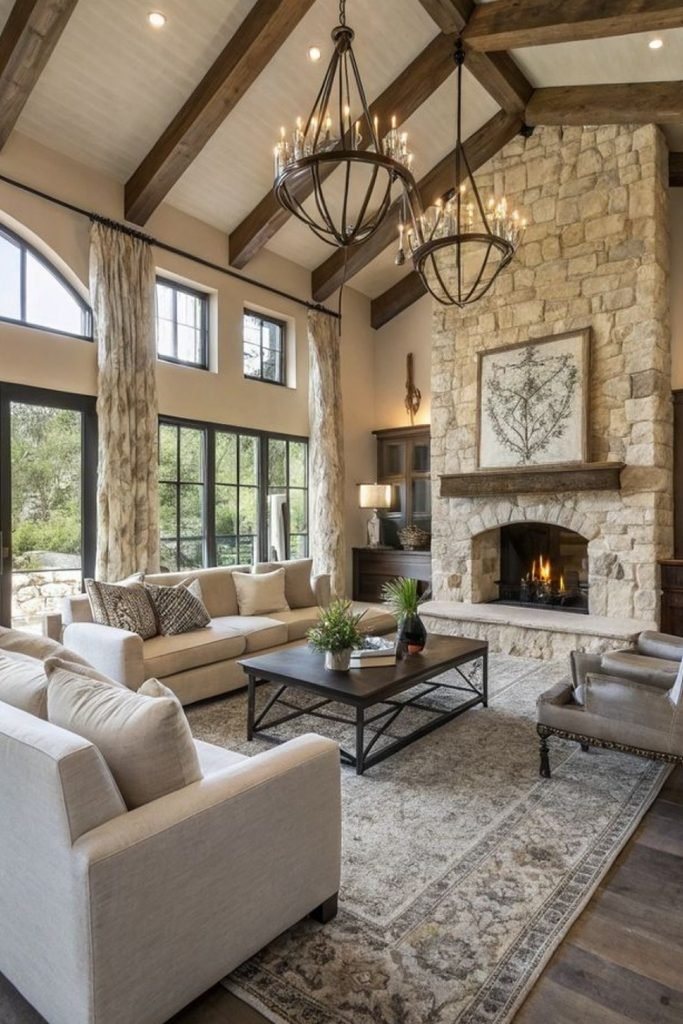
Stone Grandeur
Large irregular stone suits a wide vaulted room because its chunky scale can hold its own against heavy beams and oversized windows.
An arched firebox and thick timber mantel add traditional character, while keeping the artwork simple prevents the tall wall from becoming busy.
Pull the seating inward around a large rug and coffee table so the fireplace feels connected to conversation rather than standing apart.
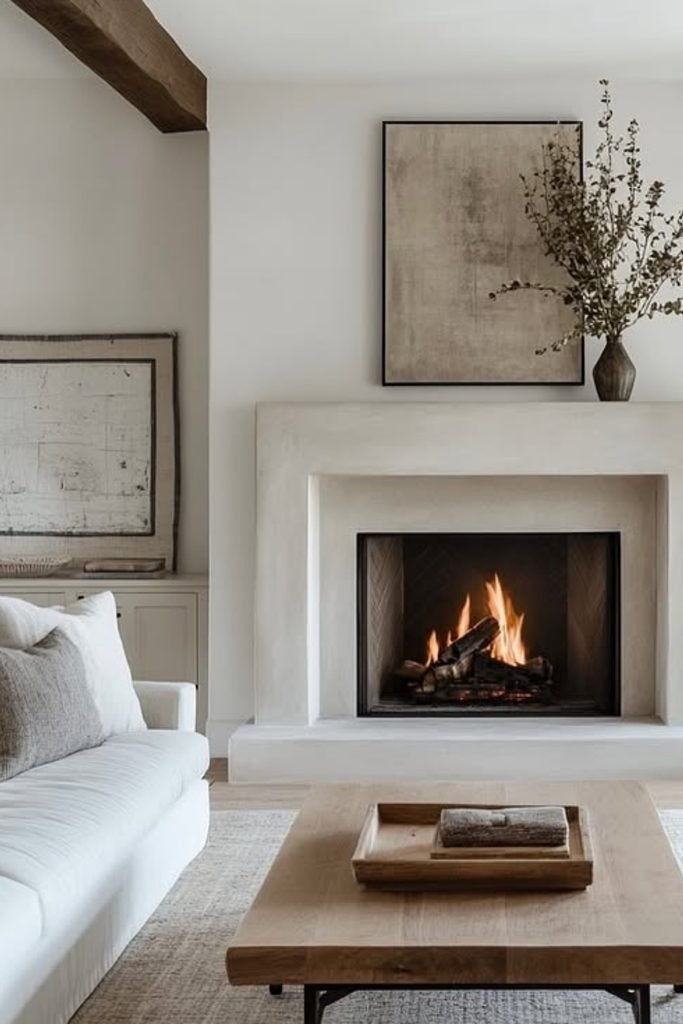
Plaster Column
A smooth plaster column suits a tall minimalist room because it adds height without bringing in the visual weight of stone.
Keep the firebox low and simple, then let the finish continue upward so the wall feels calm rather than overly decorated.
Warm wood chairs, a textured rug, and one sculptural light are enough to soften the clean lines without distracting from the fireplace.

Classic Drama
Use dark stone at the fireplace when tall arched windows and wall paneling already give the living room a formal architectural frame.
A large vertical artwork above the mantel fills the height gracefully, while matching chairs keep the composition balanced from both sides.
Repeat deep brown or black accents through tables and textiles so the fireplace feels connected instead of looking like a separate feature.

Built-In Elegance
Built-in shelves work beautifully around a traditional fireplace when you want the whole wall to feel finished instead of leaving awkward gaps.
Keep both sides symmetrical and use soft lighting inside the shelves, which gives display pieces presence without making the room feel cluttered.
A round mirror above the mantel breaks up all the straight cabinetry lines and adds a softer focal point at eye level.

Plaster Niche
A wide plaster surround is a smart choice when you want a cozy fireplace wall without the heavier look of full stone.
Build a recessed niche beside it for shelves and stacked logs, which adds useful storage while keeping the main fireplace visually clean.
Repeat the warm wood from the shelves in the coffee table or ceiling beams so the simple white finish feels grounded.
Paneled Balance
Turn a tall fireplace wall into built-in architecture by carrying simple panel molding upward instead of extending heavy stone to the ceiling.
Keep marble around the firebox only, then use matching recessed benches and shelves on both sides to widen the whole composition.
This works especially well in double-height living rooms, where symmetrical storage fills empty space without making the fireplace feel too bulky.

FAQs
Do Floor-to-Ceiling Fireplaces Make a Room Look Taller?
Yes, extending the surround upward draws your eye toward the ceiling, which can make a standard room feel taller and more intentional.
The effect works best when the material stays fairly simple, because busy patterns can make a tall fireplace feel visually heavy.
Keep nearby furniture lower and avoid overcrowding the wall so the vertical fireplace remains the strongest line in the living room.
Should a Floor-to-Ceiling Fireplace Have a Mantel?
A mantel is useful when you want warmth, display space, or a visual break between the firebox and the tall surround.
Skip it when you are using marble, plaster, or large stone slabs, since uninterrupted material usually creates a cleaner modern look.
Whichever route you choose, check the fireplace manual first because mantel height and combustible clearances change between fireplace models and types.