Floor-to-ceiling windows can make you fall in love with a room at first sight, but living with all that glass brings questions the pretty photos rarely answer.
How do you get privacy at night, control harsh afternoon sun, or stop the space from feeling cold and exposed?
With the right furniture placement, window treatments, warm textures, and lighting.
You can make those oversized windows work with your room instead of against it.
In this article, you’ll find 17 practical floor-to-ceiling window ideas that help you enjoy the natural light and open views.
Let’s jump in!
What Is a Floor-to-Ceiling Window Called?
A floor-to-ceiling window is commonly called a window wall, full-height window, or floor-to-ceiling glazing, depending on its design.
If several large glass panels cover most of an exterior wall, you’ll often hear the term window wall or glass wall.
A single fixed panel may simply be called a full-height or picture window. Don’t get too caught up in the names when choosing one for your home.
First, decide what you need from the glass. If you mainly want an uninterrupted view, fixed panels work well.
If you also want fresh air, combine fixed glass with casement or other operable windows.
For an indoor-outdoor connection, large sliding glass panels can give you a similar floor-to-ceiling effect while also providing access outside.
Arched Windows
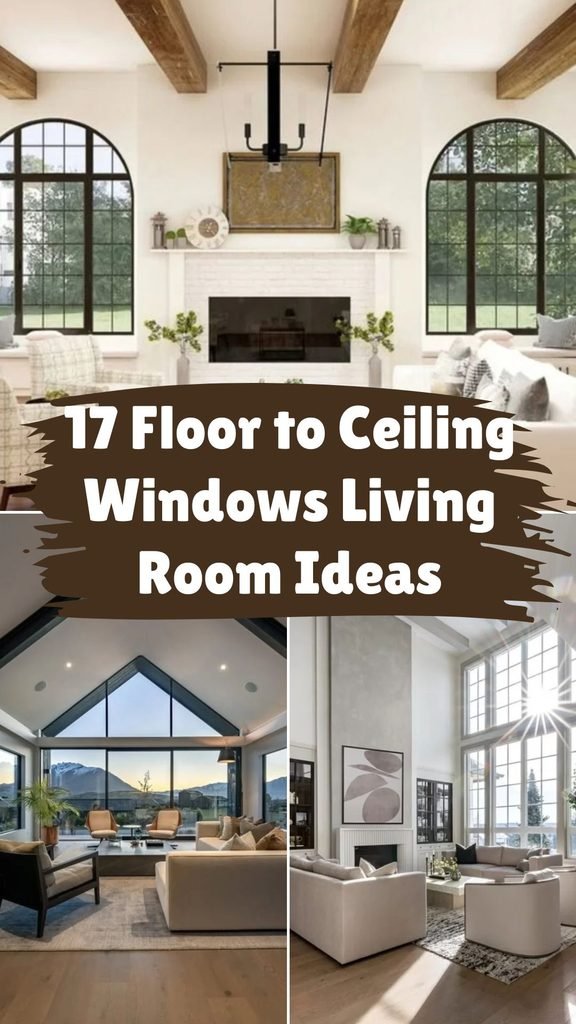
Give a traditional living room more height by using tall arched windows with slim grids, letting daylight frame the fireplace without overpowering it.
Keep seating low and centered around the fireplace, so people can enjoy the garden views while the room still has a clear focal point.
Warm wood beams, pale upholstery, and a large neutral rug balance the dark window frames and keep all that glass feeling comfortable and welcoming.

Gable Glass
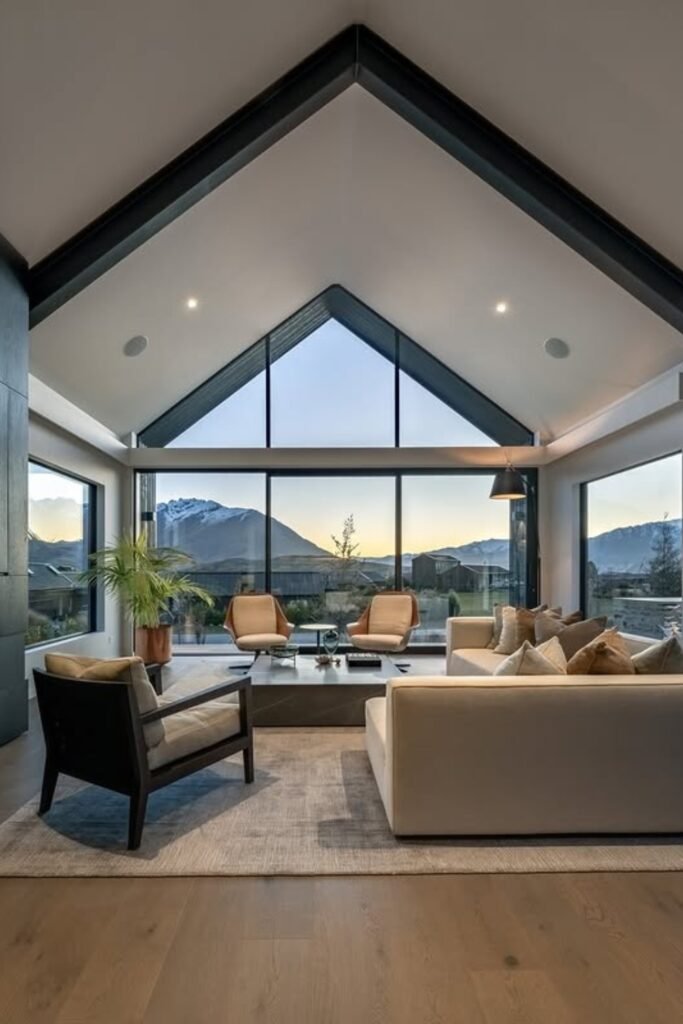
Carry your windows into the roofline when you have a vaulted ceiling, because leaving the upper triangle solid wastes both daylight and mountain views.
Arrange the main sofa below the side windows rather than across the front glass, keeping the strongest sightline completely open from the seating area.
Choose warm neutral furniture and restrained recessed lighting so the dramatic architecture stays prominent.
Double Height
Make a tall living room feel intentional by extending divided windows upward, filling otherwise empty wall space while drawing natural light deep inside.
Pull sofas and curved chairs into a compact conversation zone instead of pushing everything against the glass, which preserves circulation and open views.
Built-in cabinetry, a tall indoor tree, and an oversized fireplace help balance the window height so furniture never looks undersized within the room.

Window Trio
Three narrow full-height windows are a smart alternative when you want generous garden views without sacrificing every inch of usable wall space.
Leave slim wall sections between each panel to create stronger architectural definition while still allowing greenery and daylight to dominate the seating area.
Place low stools, compact tables, and soft seating nearby, then repeat the black framing through smaller accents to make the windows feel connected.

Peak Windows
Let the roof shape guide your glazing when you have a vaulted ceiling, extending glass into the peak instead of leaving blank wall.
Keep the main sofa low beneath the windows so mountain or countryside views remain visible from chairs positioned throughout the conversation area.
Natural wood beams and soft neutral upholstery add warmth around the expansive glass, preventing a high-ceiling living room from feeling overly stark.

Layered Drapes
Soften a double-height window wall with ceiling-length sheers and heavier side drapes, giving you flexible control over sunlight, glare, and privacy.
Choose fabric that closely matches the walls when you want curtains to blend into the architecture rather than compete with oversized windows.
Anchor the tall space with a generous sectional and statement pendant, creating comfortable proportions without placing bulky furniture.

Corner Glass
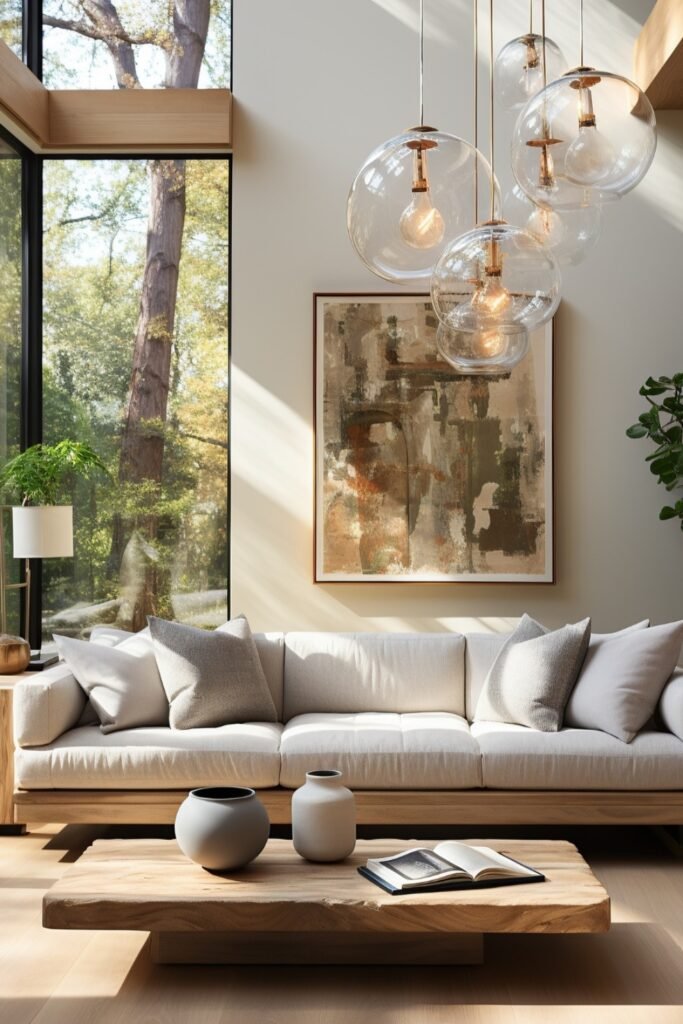
Turn a wooded view into part of your décor by wrapping tall glazing around a corner instead of filling both walls with artwork.
Position the sofa beside the windows rather than directly across them, leaving the strongest outdoor sightline open while creating an intimate seating zone.
Repeat natural wood through beams, tables, and furniture frames, helping the indoor finishes connect visually with trees immediately beyond the glass.
Framed View
Treat a dramatic window wall like the room’s main artwork by keeping curtains, tall cabinets, and heavy décor away from its central sightline.
A low sectional can define the seating zone without hiding the lower windows, while glass furniture keeps the foreground visually light and open.
Bring large plants toward the outer edges to soften the transition between indoors and outdoors without competing with the greenery beyond the windows.

Ceiling Track
Solve privacy without visually shortening tall windows by mounting curtains near the ceiling and letting the fabric fall completely to the floor.
Keep the panels gathered between window sections during daytime, so you gain softness around the glass without covering the outdoor view.
Pair creamy curtains with darker seating and a faded rug to give a bright living room enough contrast without making it heavy.

Opening Glass
Bring fresh air into a window-heavy living room by making one full-height glazed section operable instead of relying entirely on fixed panes.
Place a sectional below the glazing to keep seating comfortable and low, allowing sunlight and leafy views to remain the strongest feature.
Exposed timber beams and a black chandelier warm up the modern frames, making this approach especially effective in updated rustic homes.

Sheer Layers
Use two curtain layers when privacy changes throughout the day: lightweight sheers filter sunlight while heavier outer panels provide coverage when needed.
Let both treatments run from ceiling to floor, because short curtains can look noticeably undersized beside windows spanning two full levels.
Keep sofas and chairs in soft neutral shades so filtered daylight spreads evenly around the room instead of fighting with strong furniture colors.

Fireplace Balance
Keep some solid wall beside expansive glazing when your living room needs a fireplace, television, shelving, or other practical architectural features.
Arrange seating between the fireplace and windows so neither feature gets ignored, giving conversations a cozy focus while preserving outdoor views.
Choose pale brick, warm whites, and textured upholstery to reflect incoming daylight, then add a chandelier for softer illumination after sunset.

Breezy Frames
Choose operable full-height windows when you want more than a view, because opening selected panels brings fresh air directly into the living space.
Frame each window with full-length neutral curtains, keeping fabric pulled beyond the glass so daylight stays generous whenever privacy is unnecessary.
Ground the airy setup with warm wood, textured upholstery, and a large rug, then use a floor lamp for comfortable evening light.

Sunset Wall
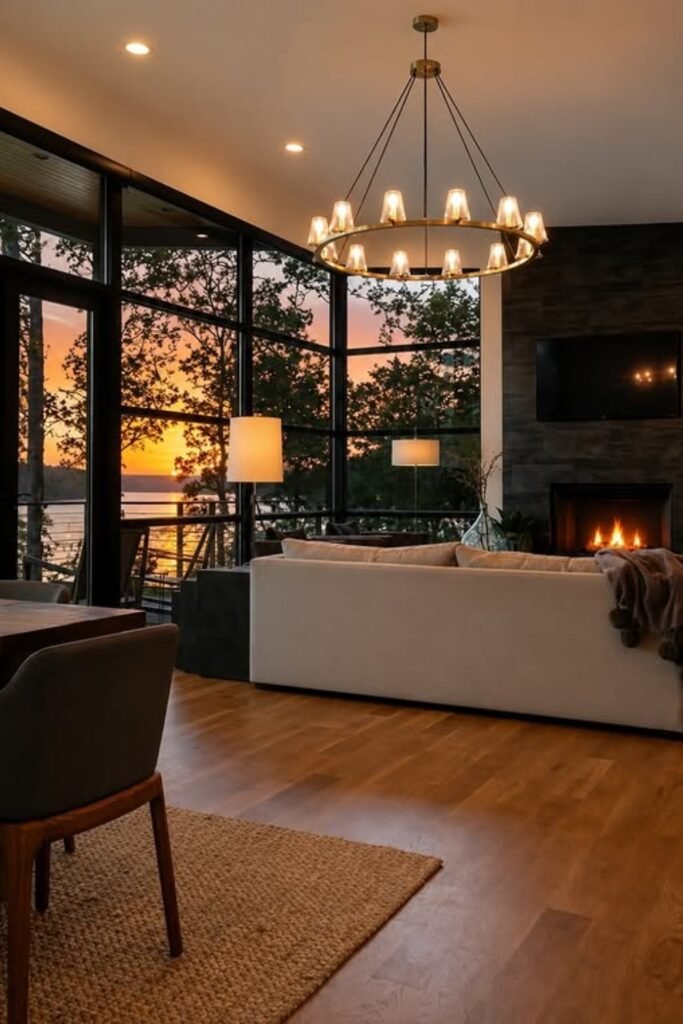
Make a scenic sunset part of your living room by keeping the window wall open and directing the main seating toward the view.
Place the television and fireplace on a solid neighboring wall, preventing screen glare from competing with the windows during brighter parts of day.
Warm chandelier light, floor lamps, and firelight take over after sunset, helping the glass-heavy room stay inviting once natural light disappears.
Timber Frames
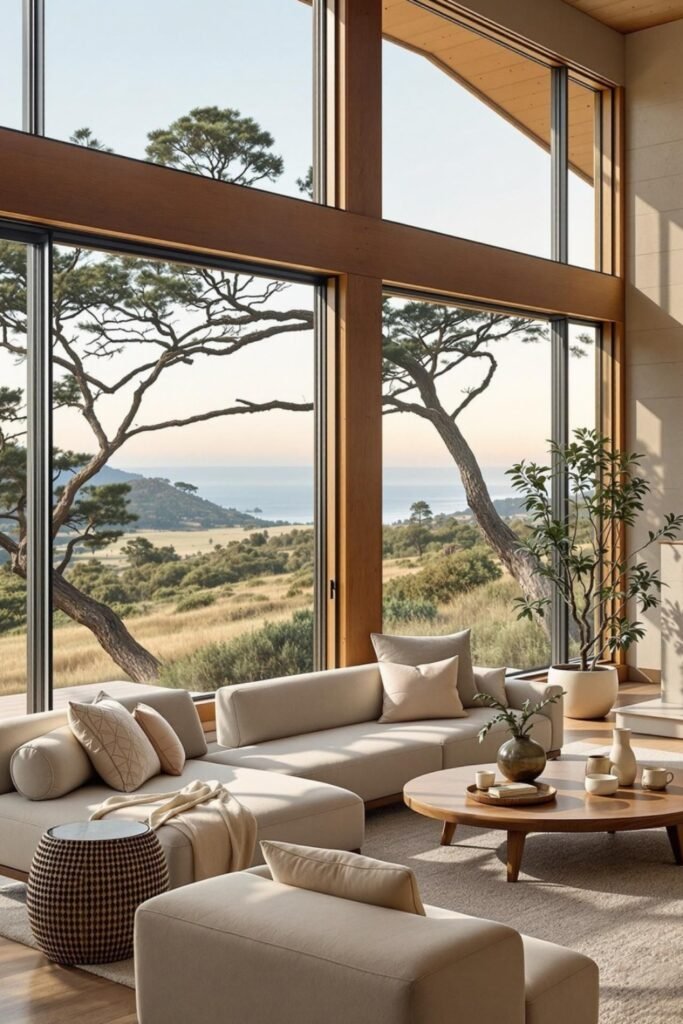
Warm up expansive glazing with thick timber surrounds when slim metal frames would make a large contemporary living room feel too sharp.
Keep the sectional below the main view line and choose low tables, allowing the landscape to remain visible across the entire seating area.
Carry similar wood tones into the coffee table and ceiling details, creating an easy visual connection between architecture, furniture, and scenery.
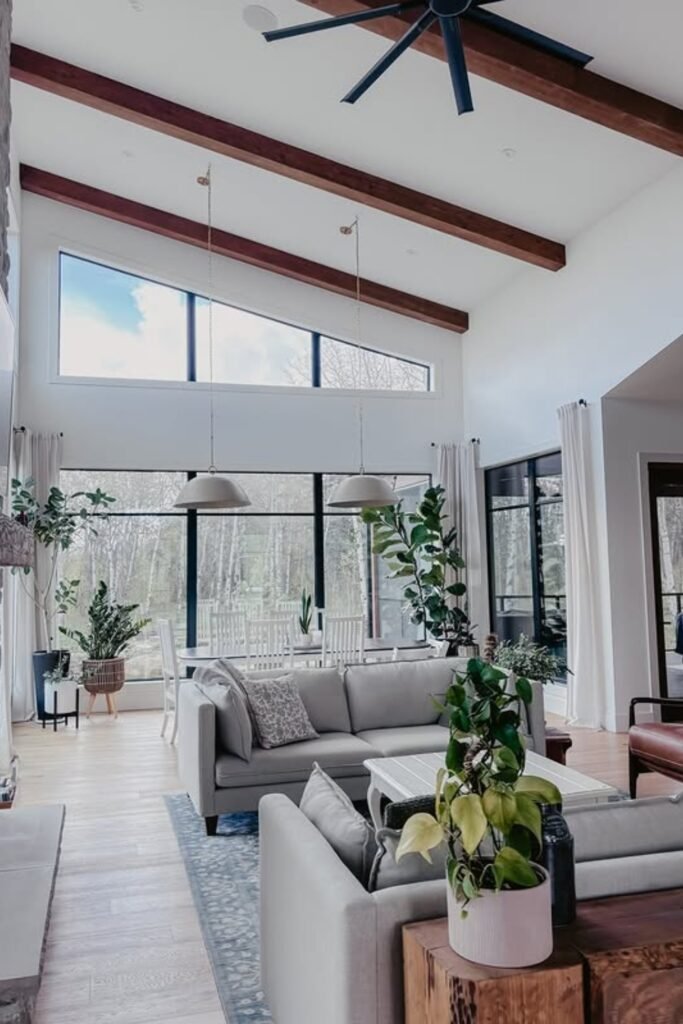
Clerestory Light
Add high clerestory windows above your main glazing when you want extra daylight without turning every available wall into floor-level glass.
Use the lower window sections for garden views while the upper panes brighten the high ceiling and reduce dark areas deeper inside.
Plants near the windows reinforce the outdoor connection, while exposed beams and pendant lights bring warmth and definition to the tall open room.
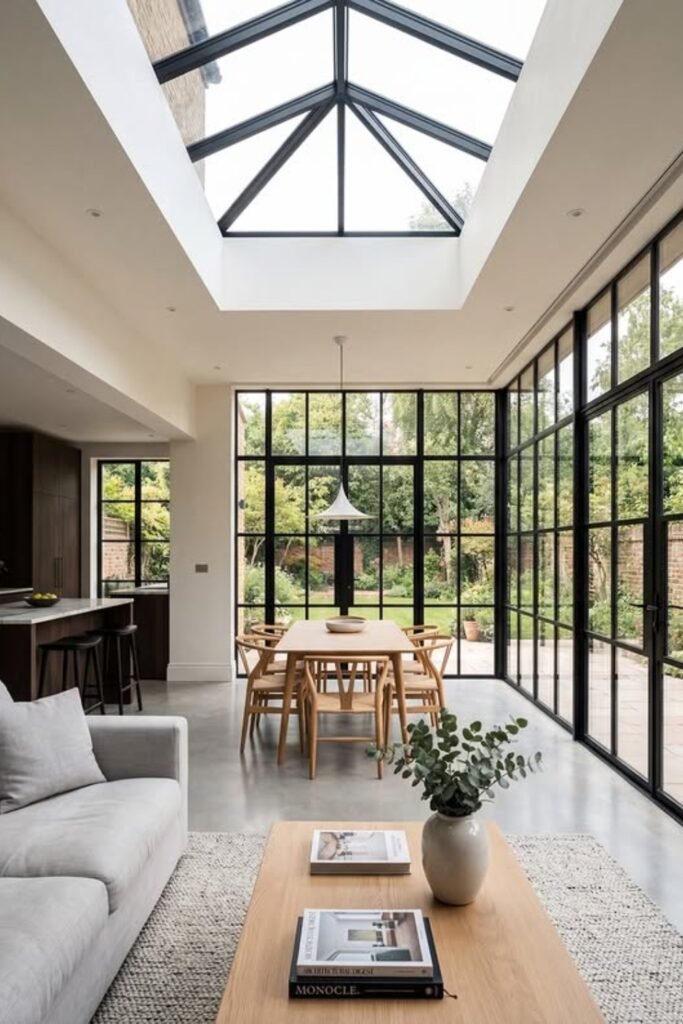
Glass Extension
Open-plan rooms gain more daylight when full-height windows continue around two walls, giving the living and dining zones the same garden connection.
Keep furniture away from the glazing and use slim dining chairs, so movement toward the patio stays easy without interrupting outdoor sightlines.
Add a glazed roof section above the dining area to pull light deeper inside, while black frames give the expansive glass clear definition.
FAQs
Do Floor-to-Ceiling Windows Make a Living Room Too Hot?
Floor-to-ceiling windows can make a living room noticeably warmer when direct sunlight enters for several hours, especially through large west-facing glass panels.
You can control the heat with energy-efficient glazing, solar shades, exterior shading, or full-length curtains.
Choose options that filter strong sunlight without completely covering the glass, so you can still enjoy the natural light and outdoor views.
How Do You Get Privacy With Floor-to-Ceiling Windows?
Privacy can become tricky after sunset because interior lighting makes your living room much easier to see from outside.
Sheer curtains work well during the day because they soften the view without making the room feel dark.
For nighttime coverage, layer them with full-length drapes, roller shades, or blinds that close completely.
While keeping the windows open and unobstructed whenever privacy is not needed.