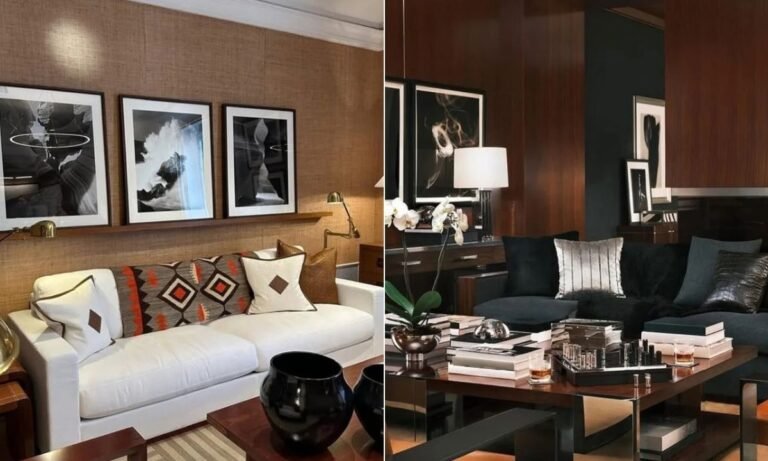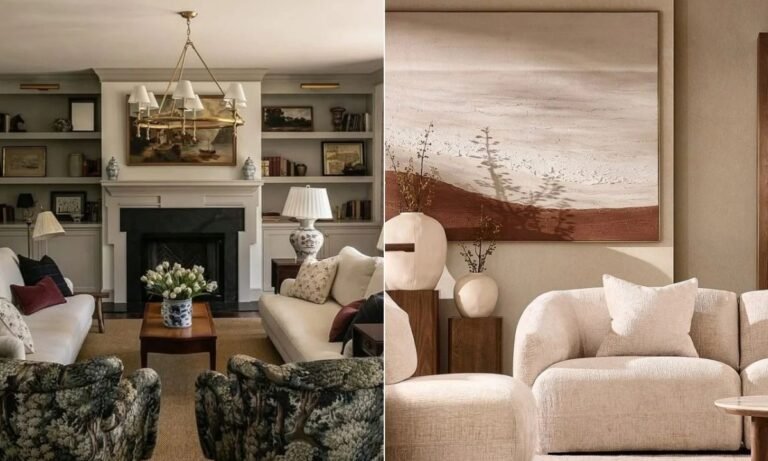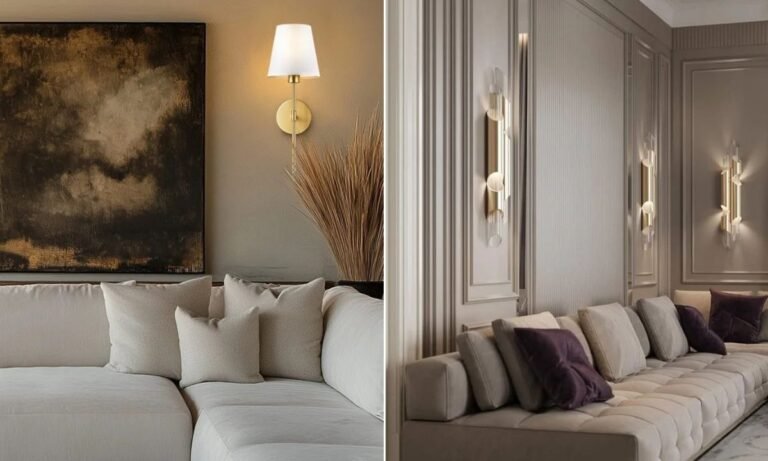
Green can make a living room feel fresh, calm, and inviting, but choosing the wrong shade can quickly make the space feel dull or too heavy.
Sage may look soft in one room and gray in another, while deeper greens can overwhelm a small space if you don’t balance them well.
You don’t need to make everything green to create a beautiful look.
In this article, we will discuss is green color good for living room with 21 ideas you can choose from.
Let’s jump in!
Is Green a Good Color for a Living Room?
Yes, green is a great living room color because you can make it feel calm, cozy, fresh, or even dramatic depending on the shade you choose.
If your room gets limited natural light, softer greens like sage or muted olive are usually easier to work with.

In a brighter room, you can comfortably try deeper forest or emerald tones.
You also don’t have to paint every wall green. If you already have neutral walls, bring green in through a sofa, armchair, curtains, or rug.
The key is balance. Pair green with cream, beige, warm wood, brown, or brass so it feels connected to the rest of the room rather than looking like a separate color you added afterward.
Let Plants Lead
Green doesn’t have to come from paint. Use trailing plants on open shelving to bring the color in naturally while creating a soft divider in an open living room.
Warm leather, wood, woven baskets, and a patterned rug keep all that greenery from feeling too cool.
If the shelving sits away from a bright window, add a small grow light so the plants can handle the spot without losing the cozy look.

Ground Green Naturally
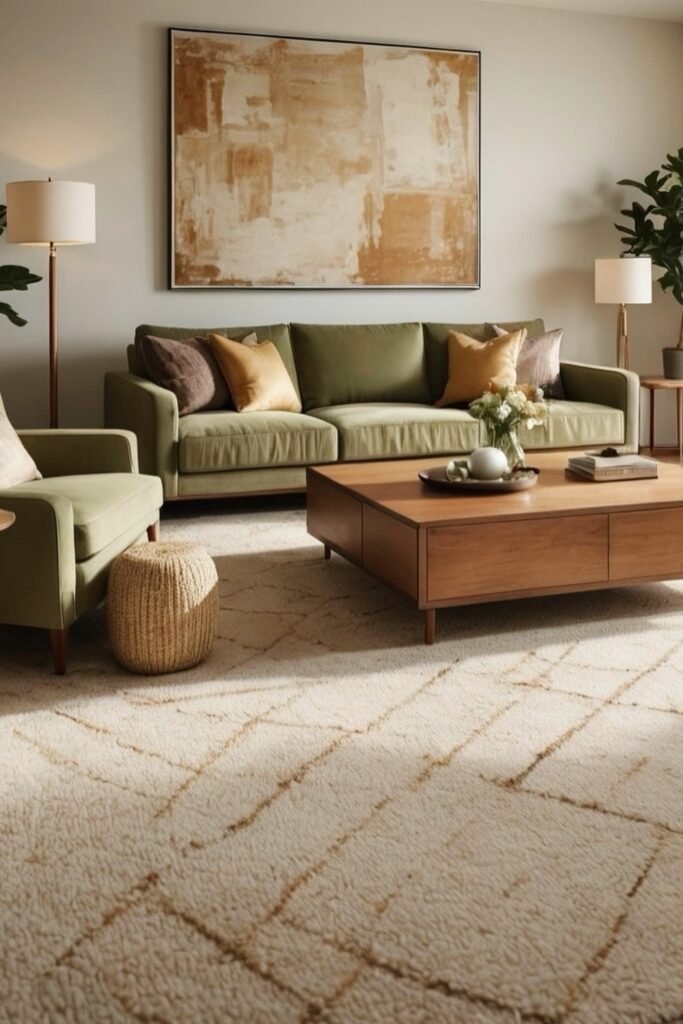
A muted olive sofa works beautifully when you want noticeable color without committing to green walls.
Keep the background cream, then bring in warm wood through the coffee table and side furniture to soften the green.
A large neutral rug prevents the seating from feeling too heavy, while tan and brown pillows connect the whole palette.
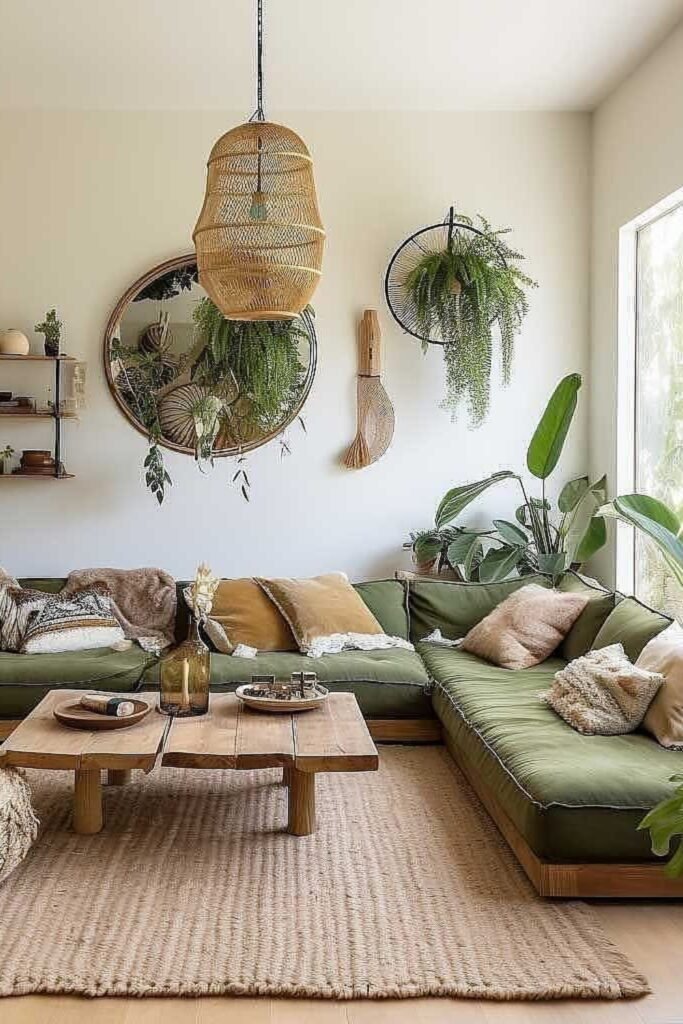
Build Around Olive
Olive seating already brings plenty of green, so let the rest of the room stay warm and natural.
Pair it with raw wood, jute, rattan, and sandy beige textiles instead of adding more solid green decor.
Large leafy plants can repeat the color without looking overly matched.
Go Bold Green
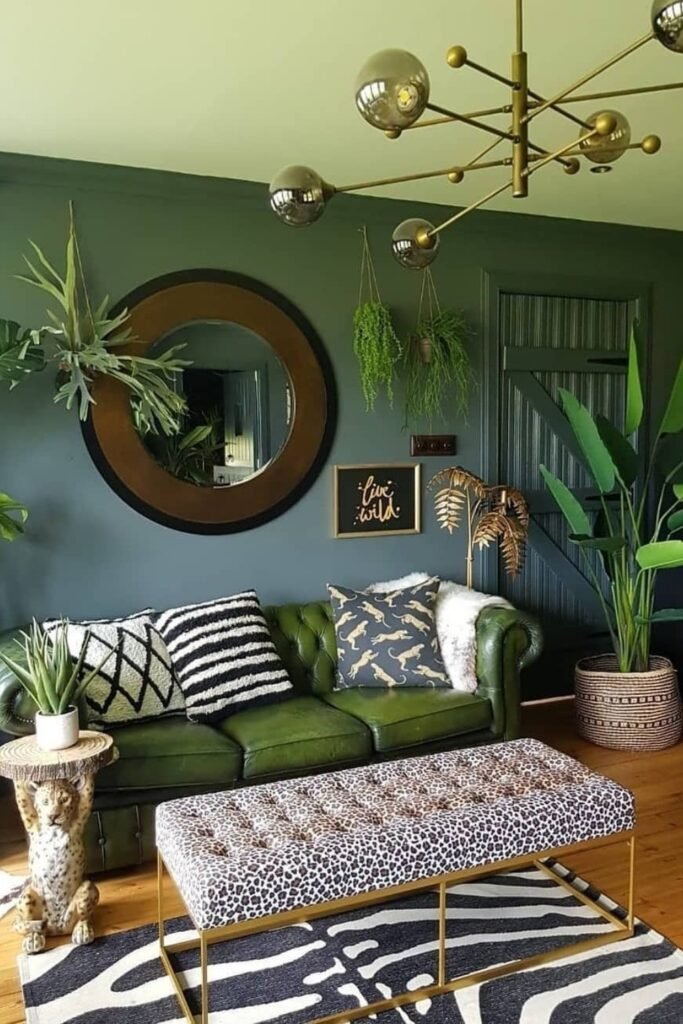
Deep green walls can handle equally strong furniture when you want the living room to feel dramatic rather than light and neutral.
Use a slightly different green on the sofa so the pieces layer instead of disappearing into each other.
Black-and-white patterns add sharp contrast, while brass lighting and warm wood floors stop the darker palette from feeling flat.
Warm Green Layers
Bright green can feel much softer when you surround it with warm wood instead of cool gray or black furniture.
Pair a fresh green sofa with walnut-toned shelves, side tables, and flooring, then keep curtains and the rug light to balance the stronger colors.
If your living room gets plenty of sunlight, repeating similar green tones on the walls and seating can work beautifully because the natural light keeps the combination from feeling heavy.

Pair Green Leather
Deep olive walls and brown leather naturally suit each other because both bring warm, earthy tones into the room.
Add wall molding if you want the darker green to feel more detailed and traditional rather than flat.
Keep the rug lighter to break up the rich colors, then use warm lamps and small green accents to tie everything together.

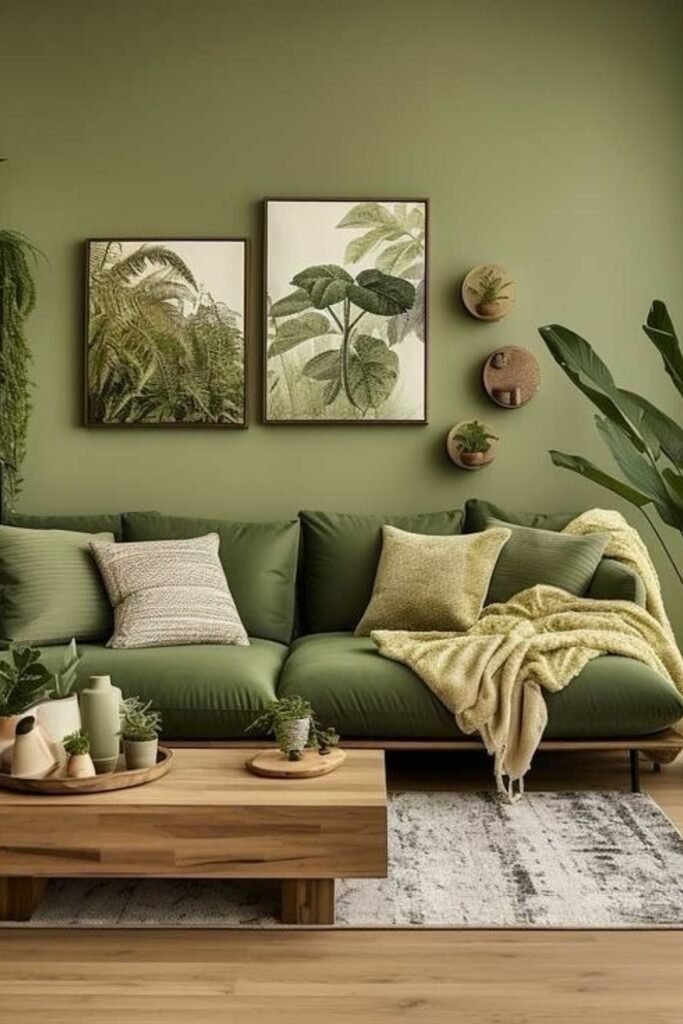
Layer Olive Tones
Using olive on both the walls and sofa can create a calm, wrapped-in-color look without needing an exact shade match.
Break up all that green with cream pillows, a light rug, and a simple wood coffee table.
Plants can introduce darker and lighter greens naturally, while botanical artwork keeps the palette connected.
Soften Forest Green
Forest green feels much easier to live with when you give it plenty of warm, lighter pieces to sit beside.
Use cream seating and natural woven rugs to break up dark walls, then repeat green through one chair, pillows, or throws.
Soft pink accents are especially useful here because they add contrast without fighting the earthy palette.

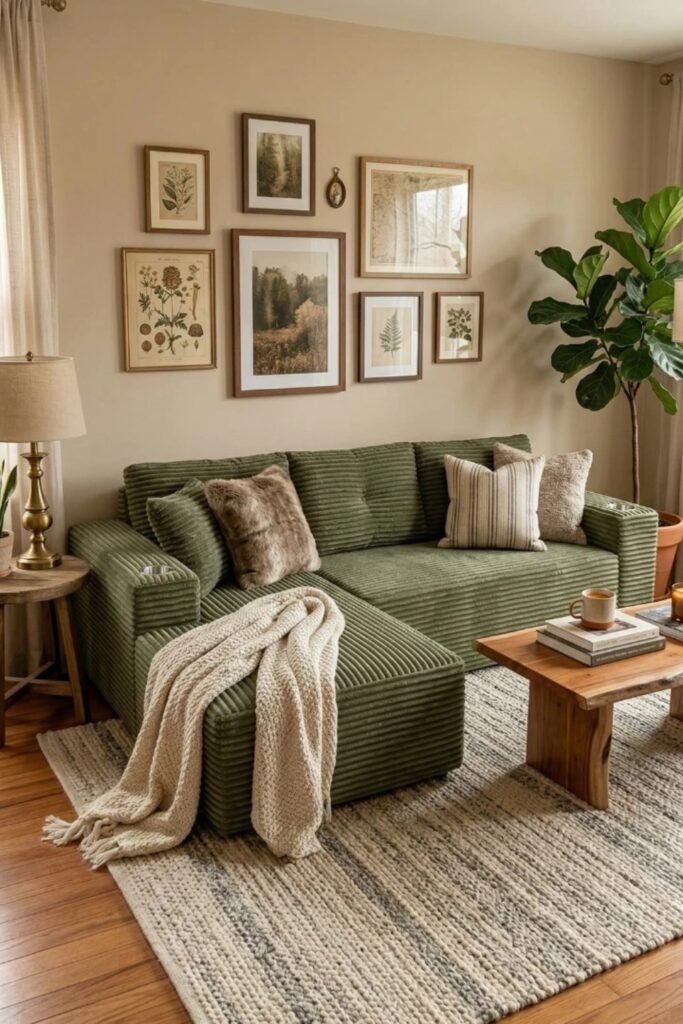
Let Texture Shine
When green is limited to the sofa, texture can make the color feel much richer without adding more green around the room.
A corduroy sectional brings depth, while cream walls, a chunky neutral rug, and soft throws keep the space light.
Warm wood tables and botanical artwork connect the sofa to the natural theme without making everything match.
Frame Green Elegantly
You can make sage green feel polished by using it on decorative wall panels instead of covering every surface.
Break the green with a warm cream center section, then repeat both colors through the sofa, chair, and pillows.
Small terracotta accents keep the palette from becoming too safe, while brass lighting adds warmth.

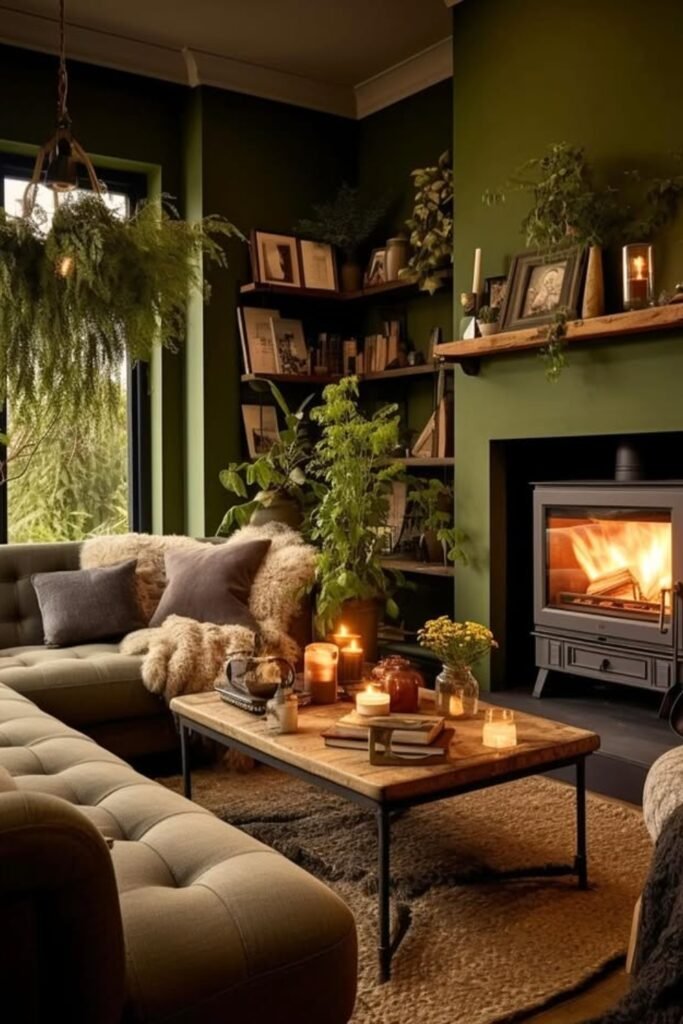
Embrace Moody Green
Dark olive walls work beautifully when your goal is a cozy living room rather than a bright, airy one.
Carry the green around the fireplace and shelving so the room feels wrapped in color, then soften it with taupe seating, fluffy throws, and a natural rug.
Warm wood shelves and amber lighting are important here because they stop the deep green from feeling cold.
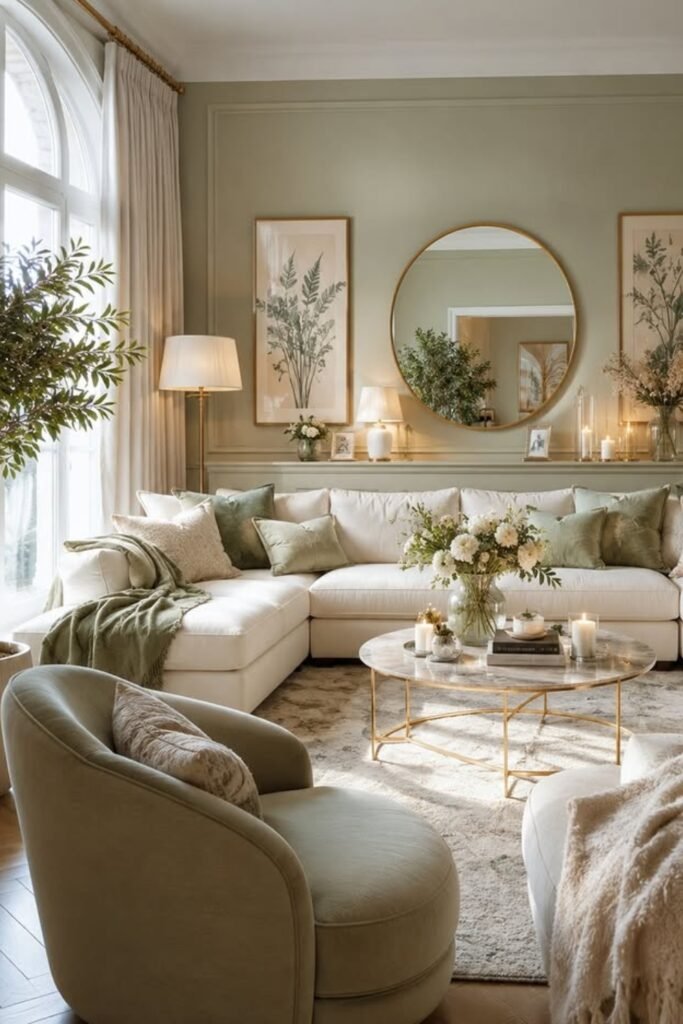
Lighten Sage Walls
Sage walls can stay soft and airy when you pair them with a large cream sofa instead of matching green furniture throughout the room.
Repeat the wall color lightly through pillows, a throw, and one accent chair so everything feels connected.
Gold details, pale wood, and warm lighting keep the muted green from turning gray.
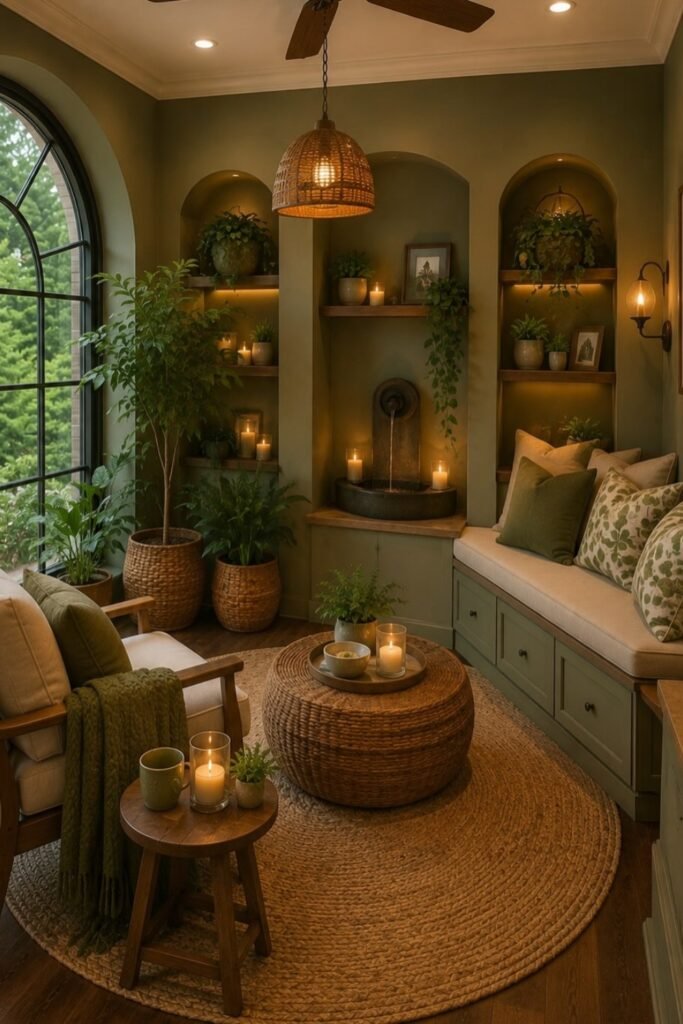
Cozy Green Nook
A small living room can handle plenty of green when you lean into coziness instead of trying to make everything look bigger.
Carry olive across the walls, built-ins, and window trim, then use cream seating to create a clear break.
Woven furniture, wood, and a natural round rug bring warmth without adding another strong color.
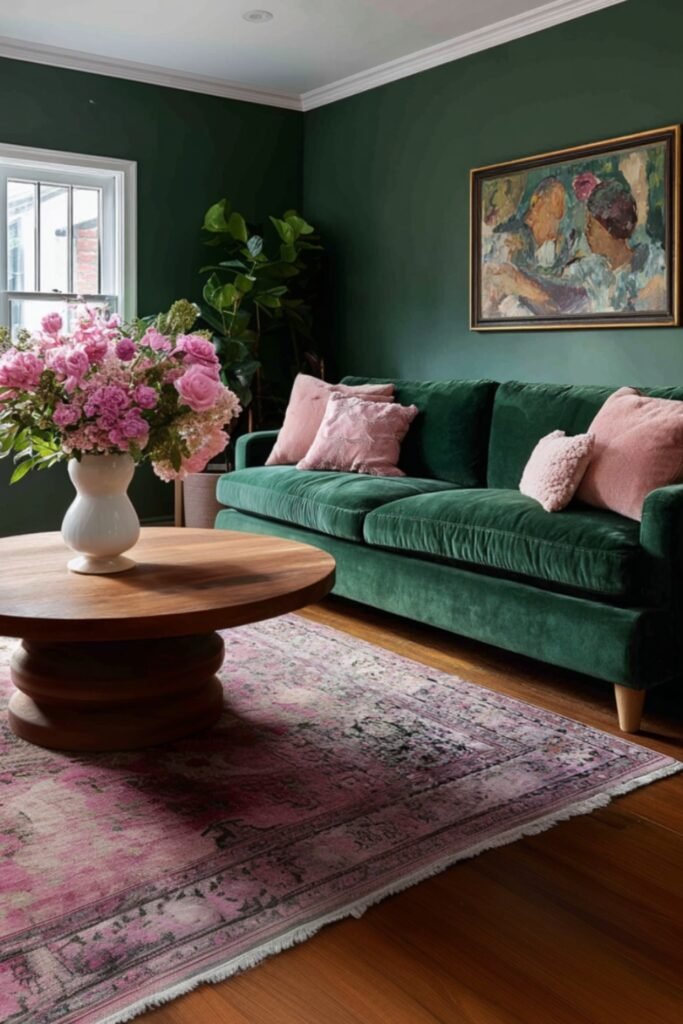
Contrast Green Pink
Deep green becomes much more lively when you bring in a softer contrasting color instead of relying only on neutrals.
Dusty pink pillows and a faded pink rug work especially well because they brighten forest green without taking away its rich look.
Keep some warm wood in the room through the coffee table and flooring to ground both colors.
Highlight Green Fireplace
If you want green walls without wrapping the whole living room in color, use the fireplace as your focal point.
A muted olive chimney breast gives the room enough green while cream built-ins and walls keep everything bright.
Repeat the shade through an olive sofa and a few patterned pillows so the fireplace doesn’t feel isolated.
Double Down Green
Matching deep green walls with a green velvet sofa can work when you want a rich, cocooning room rather than strong contrast.
Let texture separate the layers by combining smooth paint, tufted velvet, soft throws, and a muted rug.
Keep the coffee table in warm wood to break up the darker palette.

Balance Olive Walls
Olive green works especially well in an open living and dining space when you balance it with plenty of pale wood and cream.
Keep the green on one main wall, then use oak furniture, woven lighting, and a neutral sofa to warm it up.
Small green touches on the dining chairs can carry the color into the next zone without painting everything.

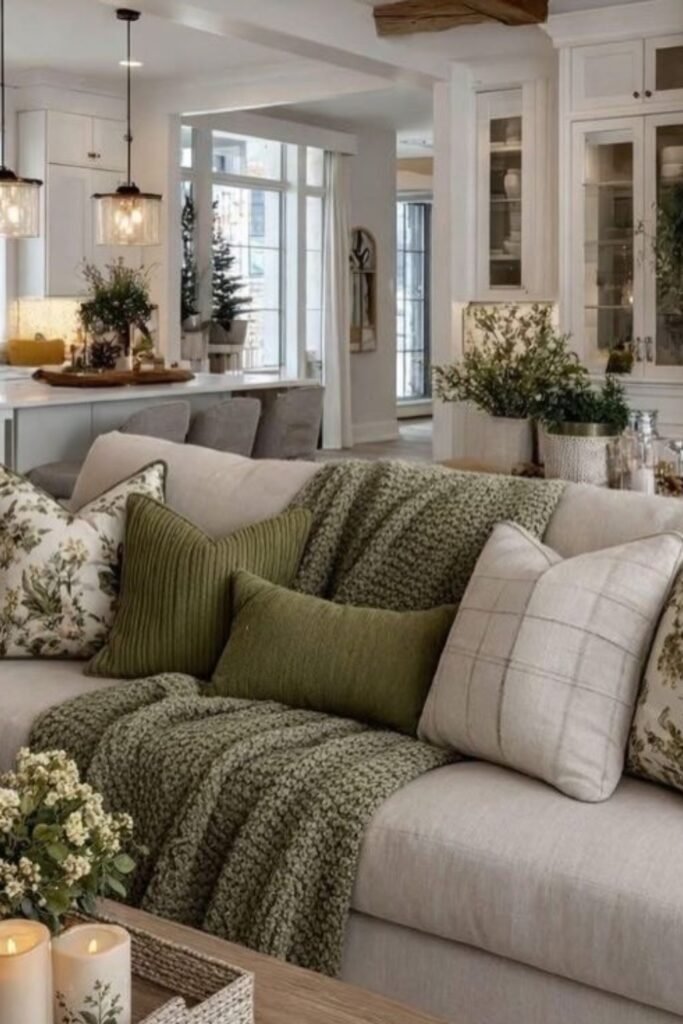
Add Green Softly
You don’t need green walls or a green sofa to bring the color into a neutral living room.
Layer olive pillows, a textured throw, and subtle botanical prints over cream seating for an easy, low-commitment approach.
Mix solid greens with patterned fabrics so the accents feel collected rather than overly matched.
Keep Green Simple
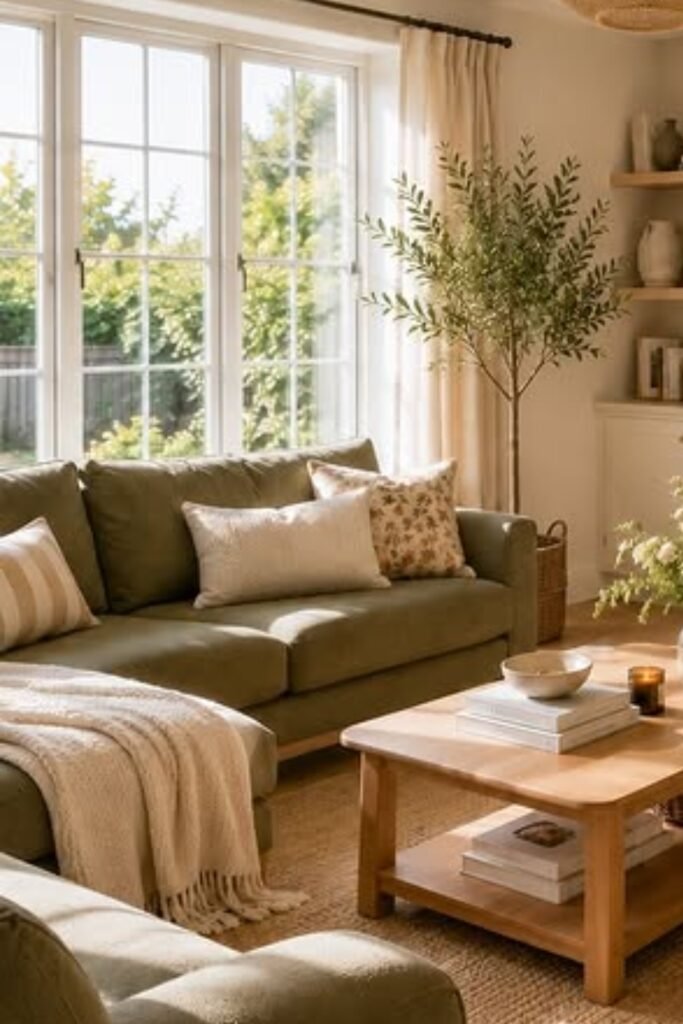
A green sectional can carry the whole color scheme when the rest of the living room stays quiet.
Pair muted olive upholstery with warm white walls, beige curtains, and a light textured rug so the sofa stands out without feeling heavy.
Soft blush pillows add just enough contrast, while pale wood keeps the palette warm.

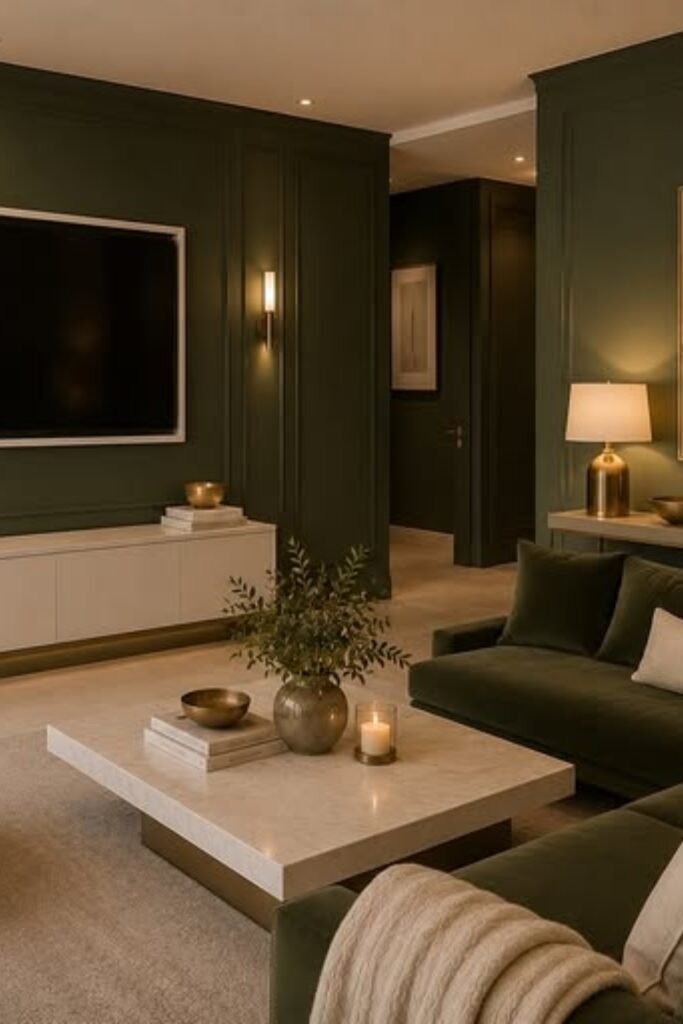
Ground Dark Green
Dark green can cover both the walls and sofa without making the living room feel closed in if you give it enough light contrast.
Bring in cream chairs, a pale rug, and a light stone coffee table to break up the deeper color.
Warm lamps are especially useful after sunset, when forest green can look much darker.
Accent One Wall
If full green walls feel like too much, paint one clear focal wall behind the main seating area and leave the surrounding walls warm white.
A cream sectional keeps the room bright, while olive pillows and a matching throw repeat the green without competing with the wall.
Add medium-toned wood and a natural rug to warm the palette. This setup works especially well in family living rooms where you want noticeable green but still prefer a light, relaxed space.

FAQs
What Colors Go Best With a Green Living Room?
Cream, beige, warm white, brown, and natural wood are easy choices because they balance green without competing with it.
If you want more contrast, try dusty pink, terracotta, rust, or muted blue.
Always consider the green’s undertone first, warm olive usually works better with earthy colors, while cooler sage pairs naturally with softer neutrals.
How Can You Use Green Without Painting the Walls?
Start with one larger green piece, such as a sofa, armchair, rug, or curtains, then repeat the color through two or three smaller accents.
Pillows, throws, artwork, and plants are easy to change later.
Keep the surrounding furniture neutral so those green touches feel intentional without turning the whole living room into a green-themed space.