A high ceiling can make your living room look impressive, but it can also make the space feel empty, cold, and hard to balance.
You may have plenty of height, yet your sofa, artwork, lighting, and even the fireplace can still look too small for the room.
The fix is not filling every blank wall, it is knowing where to add scale, warmth, and visual weight so the room feels comfortable.
In this article, you’ll find practical high ceiling living room ideas that help you use the extra height without making the space feel crowded.
Let’s jump in!
What to Do With High Ceilings in a Living Room?
Start by deciding whether you want to highlight the height or make the room feel a little warmer and more grounded.
Use large furniture, a wide rug, and grouped seating so the lower half of the room does not feel lost.
For empty walls, choose one strong feature like oversized art, tall shelving, paneling, or a full-height fireplace instead of adding random decor.

Hang curtains close to the ceiling, especially around tall windows, because this connects the upper wall with the rest of the room.
A large chandelier can fill empty overhead space, but add floor and table lamps too so the seating area still feels comfortable.
Most importantly, do not decorate every inch upward; leave some open space so the height feels intentional rather than crowded.
Low Seating
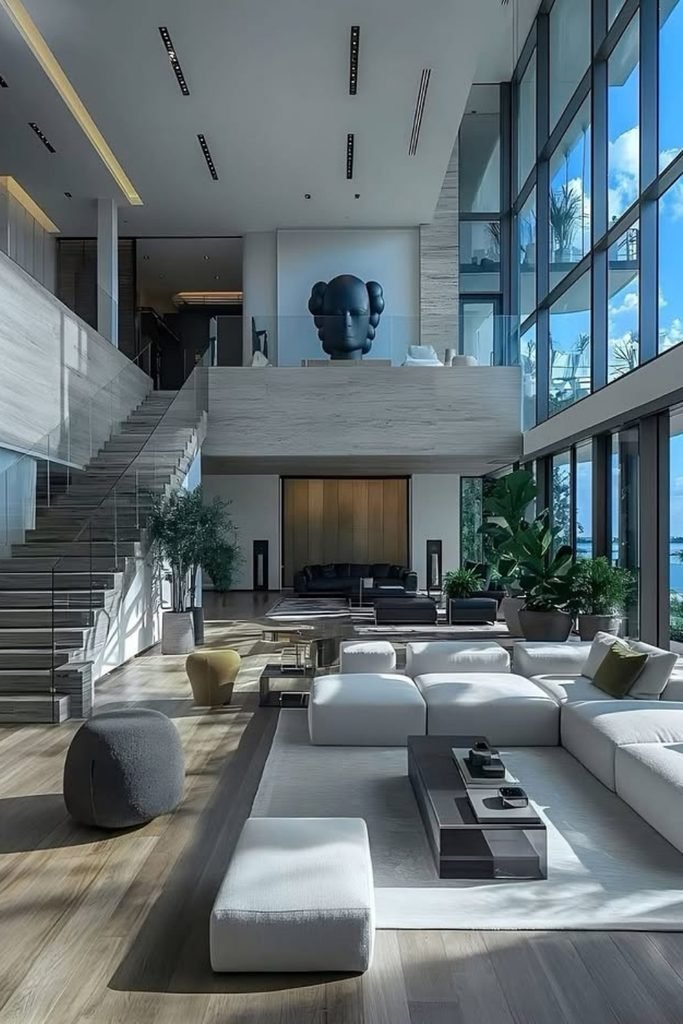
Keep the furniture low and wide when your living room already has dramatic height, because bulky tall pieces can compete with the architecture.
Large sectionals and a generous rug work especially well in open modern rooms, giving the seating area enough weight without blocking windows.
Let tall glass, stairs, and one oversized object carry the upper level, while plants and simple tables keep the lower space relaxed.
Window Balance
When tall windows dominate the room, build your furniture layout around them instead of trying to decorate every empty section of wall.
Pairing full-height windows with built-in shelves gives the eye something solid to land on, which keeps the room from feeling too open.
A large rug and inward-facing chairs finish the job by pulling attention back to the conversation area rather than the ceiling.

Stone Anchor
A floor-to-ceiling fireplace works best when one tall wall needs a clear purpose, especially in two-story rooms with balconies or open landings.
Carry the stone all the way upward rather than stopping near the mantel, so the fireplace feels sized for the room instead of underscaled.
Keep the sofa, rug, and coffee table simple around it, because the tall fireplace should do the visual work without extra wall clutter.

Vertical Drama
Use a cascading chandelier when the ceiling feels disconnected from the furniture, since its drop visually links the upper volume with the seating below.
Long curtains and vertical wall panels strengthen that connection, making them especially useful in formal living rooms with very tall, narrow wall sections.
Arrange curved chairs around a central table to keep the lower area intimate, so the room feels grand without turning cold or distant.

Warm Contrast
Dark wood overhead can stop a very tall modern room from feeling cold, especially when glass walls already dominate the space.
Repeat that warmth through the dining table, lamps, and smaller wood details so the lower level feels connected rather than scattered.
This approach works best in open-plan living rooms where one material can visually tie seating, dining, and the high ceiling together.

Central Cascade
A wide cascading chandelier can fill the empty center of a high ceiling while keeping attention directly above the main seating zone.
Use curved sofas and a round rug underneath, because softer shapes help a grand room feel more intimate and easier to gather in.
Long curtains, wall lights, and tall built-ins can then frame the height without forcing extra decoration across every upper wall.

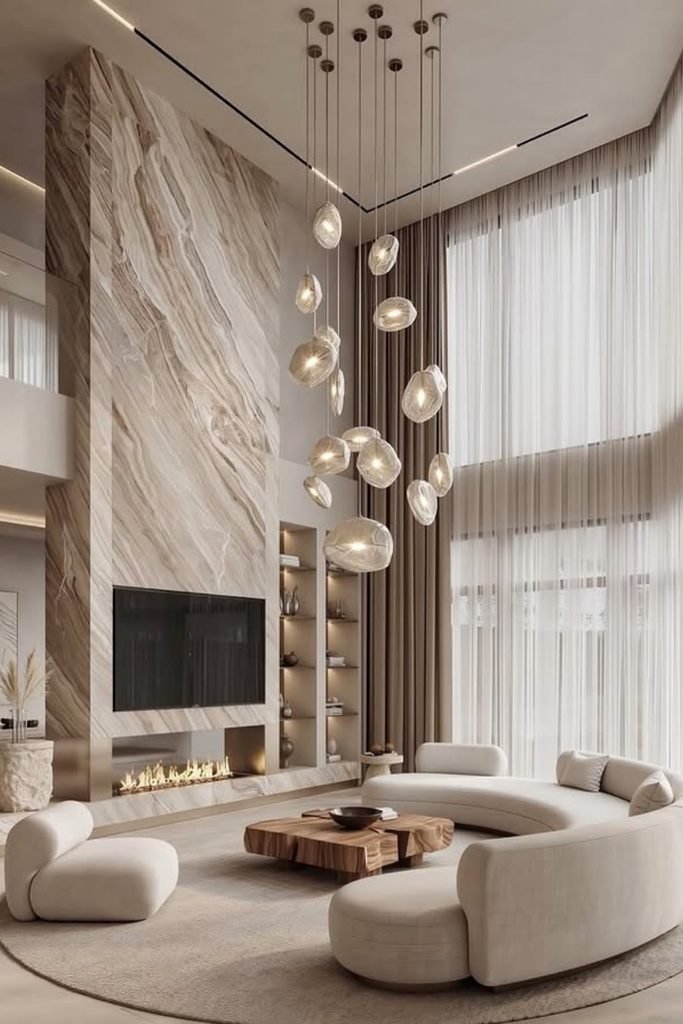
Marble Spine
Turn one tall wall into the room’s anchor by carrying stone or marble upward instead of leaving a large blank section above.
A low fireplace and television keep daily use comfortable, while the full-height finish gives both pieces enough presence for the architecture.
Pair it with soft curved seating and a simple rug so the strong vertical surface does not make the living area feel rigid.
Floating Focus
When the walls are mostly glass, use a hanging feature in the center to give the room a focal point without blocking views.
A sculptural chandelier works especially well here because it occupies empty vertical space while still leaving the floor plan open and calm.
Keep the sofas balanced on both sides and repeat darker accents below, so the eye settles naturally before traveling upward.

Window Wall
Let the windows do most of the decorating when your high ceiling already has strong beams and a dramatic outdoor view.
Keep the main seating low and generous, then use warm wood overhead to bring some of that height back down visually.
A large rug, one central table, and a few tall plants are enough to connect the floor with the upper architecture.

Arched Glazing
A single oversized arched window can become the whole focal point, so avoid competing with it through heavy wall decor nearby.
Use pale seating and a low coffee table to keep attention on the view while still giving the room a comfortable center.
This works especially well in bright double-height rooms where natural light already provides more visual interest than extra artwork ever could.

Fireplace Scale
When the fireplace sits on a very tall wall, give it enough weight with stone, timber, and one oversized artwork above.
Stacked windows on both sides help the whole wall feel balanced, especially in rustic rooms with exposed beams and natural finishes.
Keep the sectional, rug, and coffee table broad rather than tall, so the seating zone feels grounded beneath all that vertical space.

Classic Proportion
Traditional high ceilings look better when molding follows the room upward, because plain empty walls can make formal furniture feel unexpectedly undersized.
Use one tall mirror above the fireplace and repeat slim wall lights nearby instead of scattering small frames across the upper walls.
A large chandelier finishes the scale, while matching sofas, a warm rug, and tall greenery keep the lower room comfortable and lived-in.

Cozy Layers
High ceilings feel less formal when you build warmth at eye level with soft seating, layered rugs, throws, and table lamps.
Use matching built-ins beside the fireplace to fill tall wall space gradually, rather than forcing one oversized feature into the room.
Ring chandeliers and upper windows can handle the height above, while sage accents and florals keep the seating area relaxed and welcoming.

Sculptural Drop
Instead of filling every tall wall, give the empty center a sculptural light that drops toward the sofas and defines the gathering area.
A full-height tree works especially well beside glass walls, adding natural scale without covering the view or making the room feel decorated.
Keep sofas long and low, then repeat warm stone and wood below so the dramatic ceiling still feels connected to everyday living.

Vertical Shelves
Use narrow illuminated shelves to stretch a tall media wall upward, giving the architecture rhythm without adding bulky cabinets across the room.
A pendant cluster can descend through the open height in smaller points, which feels lighter than one oversized chandelier above relaxed seating.
Finish with a wood ceiling and tall plants near the windows, so warmth reaches upward while the floor stays simple and uncluttered.

FAQs
How do you make a high ceiling living room feel less empty?
Bring more visual weight around the seating area with a large rug, fuller furniture, warm lighting, and a few well-sized accessories.
Then use one or two taller features, such as curtains, shelving, plants, or artwork, to connect that lower zone with the ceiling.
Avoid filling every blank wall, because leaving some open space keeps the room balanced and stops the height from feeling overly busy.
Should furniture be bigger in a high ceiling living room?
Larger furniture can work well in a spacious room because small pieces often look lost beneath very tall walls and open ceilings.
Choose a substantial sofa, wider coffee table, and properly sized rug, but keep the layout comfortable instead of simply buying oversized everything.
For smaller rooms with high ceilings, keep furniture compact and use curtains, lighting, plants, and wall decor to handle the extra height.