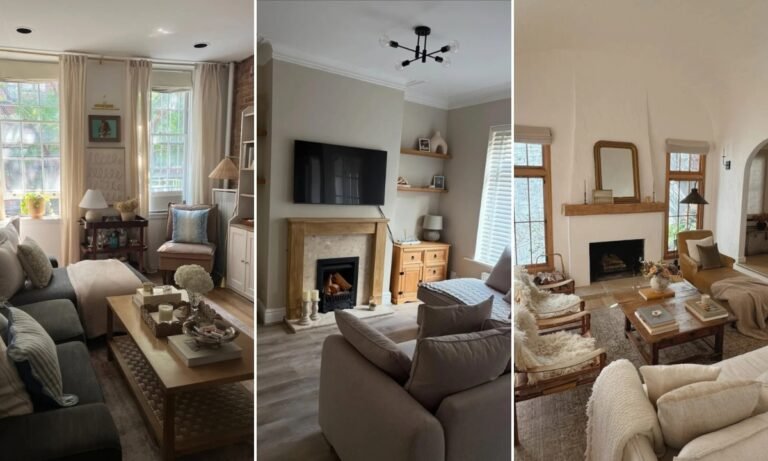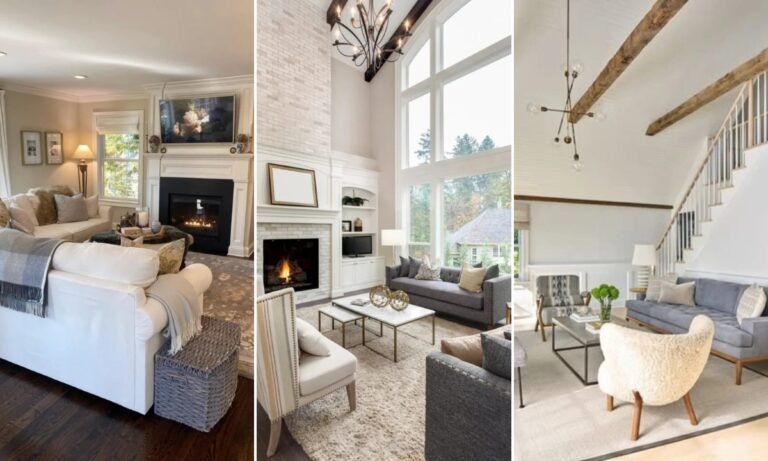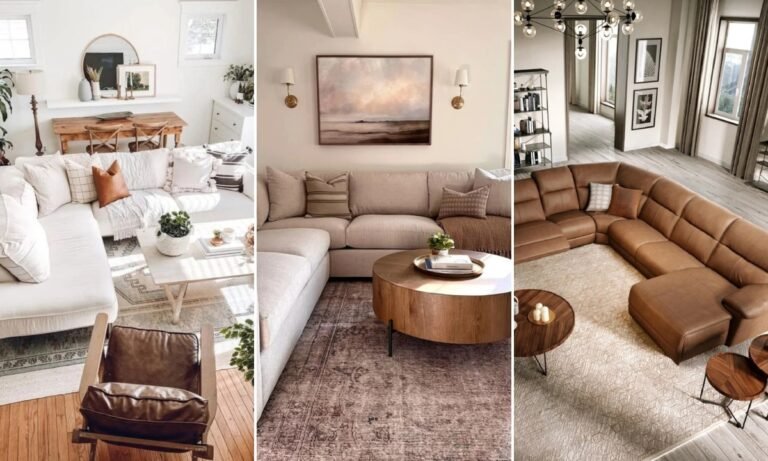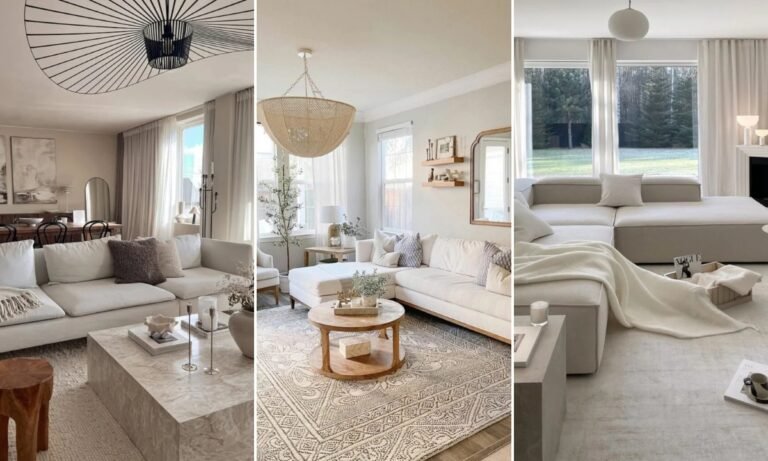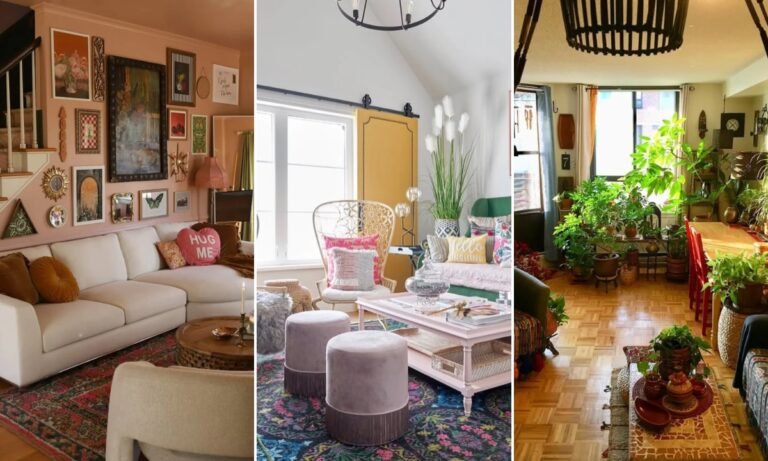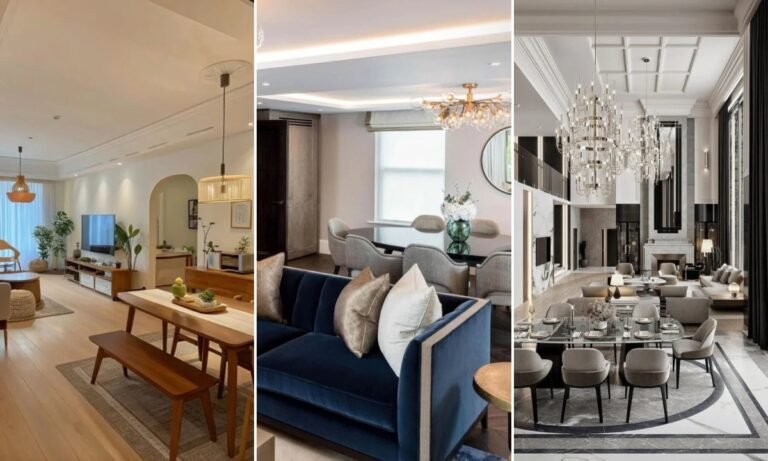
20 Japandi Living Room Ideas for 2026
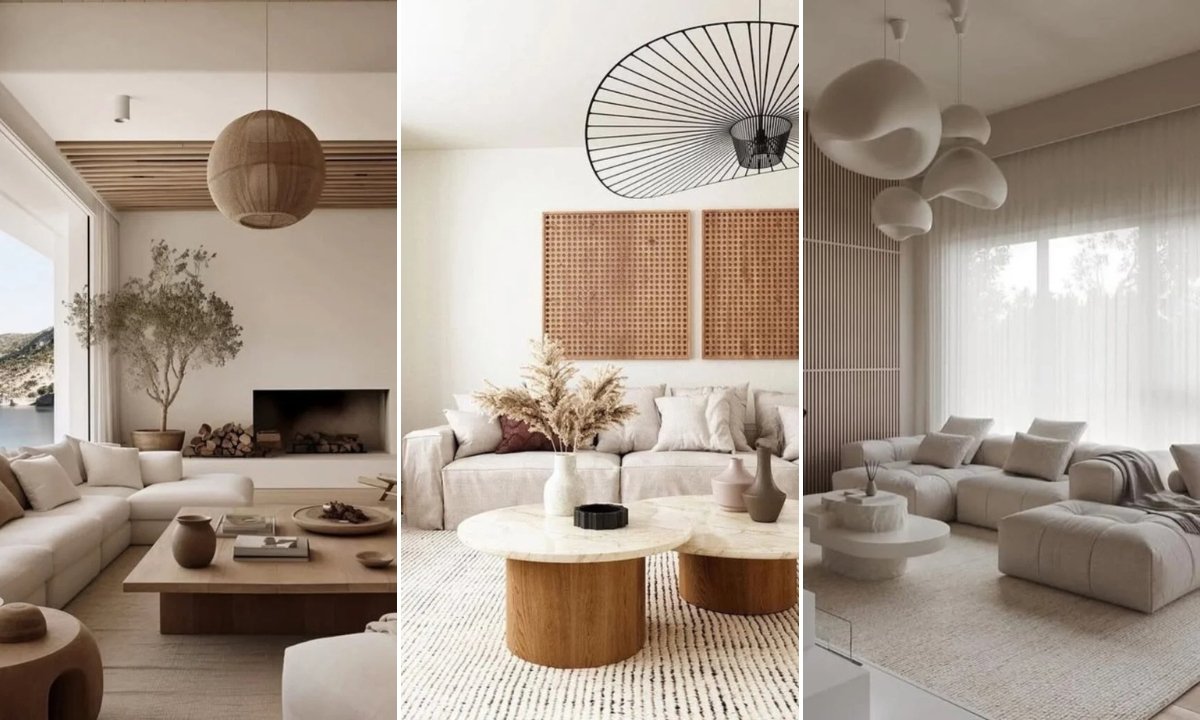
Your living room looks fine, but you can still feel that something isn’t quite right.
Maybe you’re looking around and you think you have too much clutter, or maybe you tried going minimal and now you feel like your space looks cold and empty.
When you scroll through Japandi interiors, you start thinking, “You want this calm, clean look but how would you actually make it work in your own space?”
You might feel inspired, but you also might feel confused about where you should even begin. That’s usually where you get stuck, just like most people do.
In this article, you’ll learn what Japandi really means, and more importantly, you’ll see how you can create this look step by step without feeling overwhelmed.
Let’s jump in!
What is a Japandi Style Living Room?
A Japandi living room is all about creating a space where you can feel calm, clean, and comfortable at the same time.
You bring together Japanese minimalism with Scandinavian coziness, so you can enjoy a space that feels simple but still warm.
In simple words, you start removing what you don’t need, and you keep only what you feel actually adds value to your space.
If your living room feels cluttered, you can use Japandi to fix it by focusing on fewer, better pieces. Instead of adding more decor, you choose items that you know are simple, functional, and visually relaxing.
When you start choosing with intention, you’ll notice your space instantly begins to feel more peaceful.
Start with colors, because you’ll quickly see how much they change your space.
You can go for soft neutrals like beige, off-white, light gray, and muted earth tones, and you’ll notice your room immediately feels calmer.
If you start adding too many bold colors, you might feel the space getting busy, and you’ll lose that peaceful Japandi feeling.
Next comes furniture, and this is where you can really shape the room. You can choose low-profile, simple designs, like a clean sofa with wooden legs, a minimal coffee table, and pieces that don’t feel bulky.
If your furniture looks heavy or oversized, you’ll notice your room starts losing that light and airy feel.
Materials matter a lot here, and you’ll want to bring in natural textures wherever you can.
You might add wood, linen, cotton, or even a bit of stone or ceramic, and you’ll see how these materials make your space feel warmer.
This is how you keep your room from feeling cold, even when you’re keeping things minimal.
And here’s the key rule you should remember: don’t overdecorate. If you start adding too many items, you’ll break the balance you’re trying to create.
You can stick to a few meaningful pieces like a vase, a plant, or a simple artwork, and you’ll notice how much calmer your space feels.
If you follow this approach, you won’t just create a living room that looks good, you’ll create a space where you feel calm every time you walk into it.
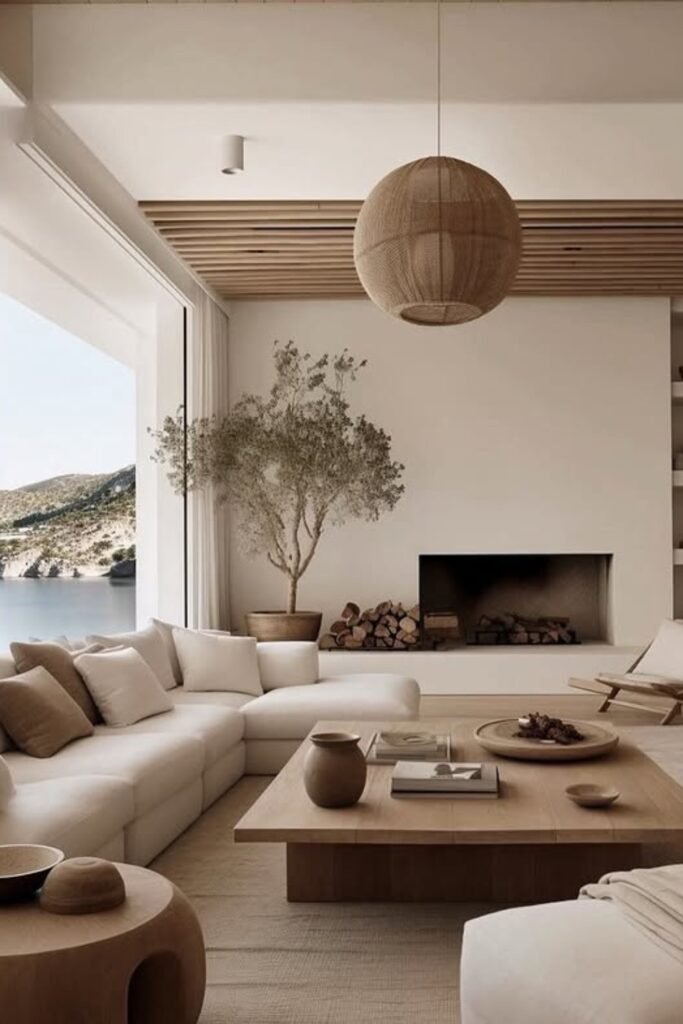
Low Grounded Living
You’ll notice how everything sits low – the sofa, the table, even the decor – and you can immediately feel how relaxed and open the space becomes.
If your living room feels heavy, you can swap bulky furniture for low-profile pieces and keep your layout closer to the ground.
When you pair it with soft neutrals and add one natural element like a tree or plant, you’ll instantly create that calm Japandi feel.
Raw Textured Warmth
If you want your living room to feel warm without adding clutter, you can focus on texture instead of more decor.
You see how the rough walls, exposed wood ceiling, and raw wood table already do all the work for you.
You can recreate this by mixing imperfect materials like plaster walls, natural wood, and soft fabrics.
When you use this in a space with natural light, you’ll notice how the textures stand out and create that cozy Japandi depth.
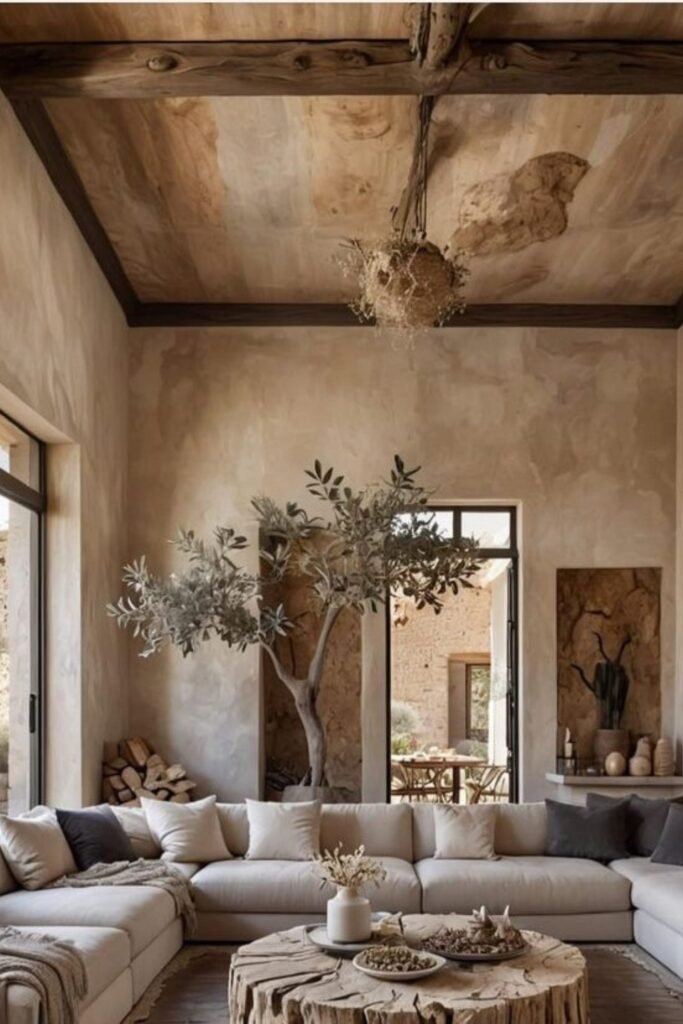
Soft Layered Neutrals
When your space starts to feel flat, you can layer soft tones to fix it instantly.
You can see how different shades of beige, sofa, rug, cushions, and curtains, create depth without adding clutter.
You can recreate this by sticking to one color family and mixing textures instead of colors.
When natural light hits these layers, you’ll notice everything feels lighter and calmer.
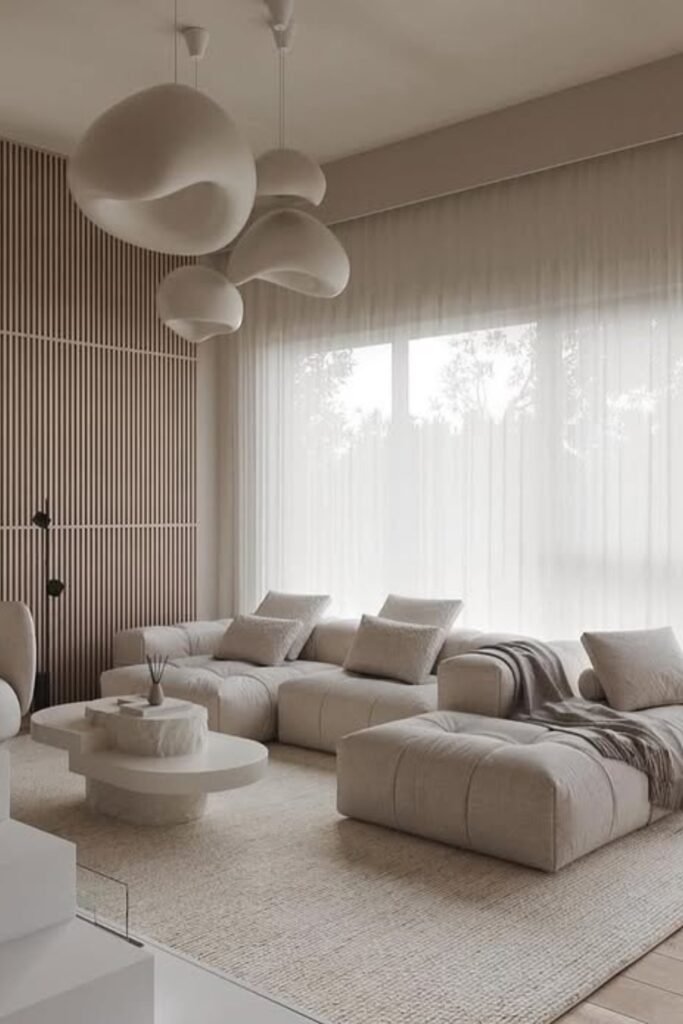
Balanced Statement Pieces
Sometimes you feel like your living room looks too plain because nothing stands out.
Instead of adding more decor, you can choose one or two strong elements like bold wall panels or a sculptural light.
You can see how the artwork and ceiling light create interest without clutter. When you keep everything minimal, you’ll let those standout pieces define your space.
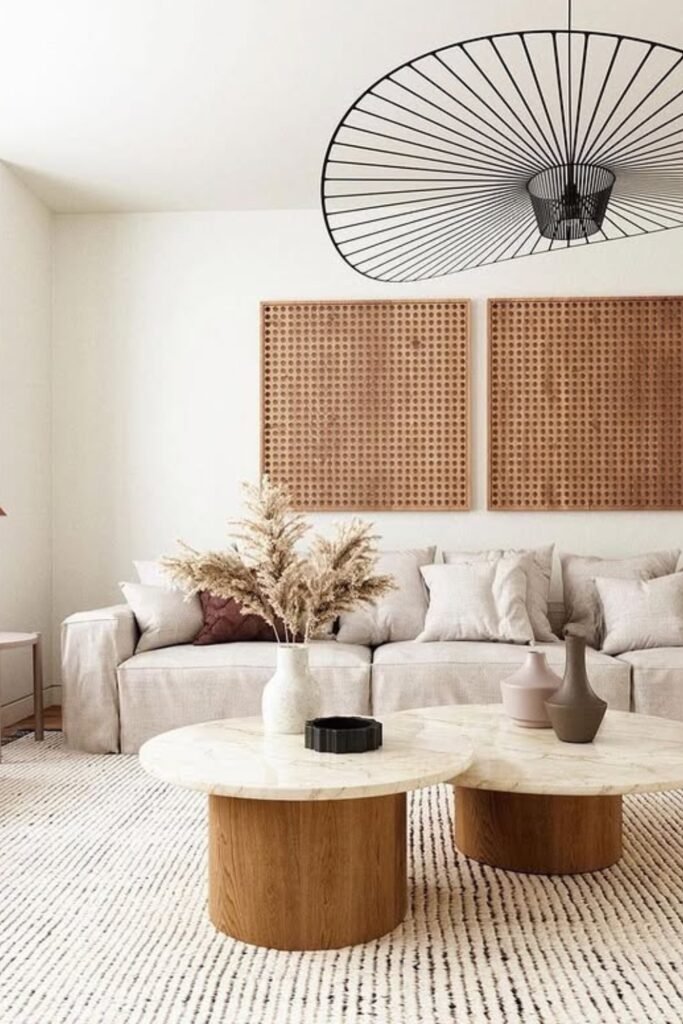
Light Open Layout
When your living room feels tight, you can open up the layout and you’ll see how everything changes.
You notice how the space flows into the dining area, and you can feel how soft colors and minimal furniture make it calmer.
You can recreate this by keeping pathways clear, using fewer bulky pieces, and sticking to light tones.
When you do this, you’ll create a space that feels connected, not crowded.
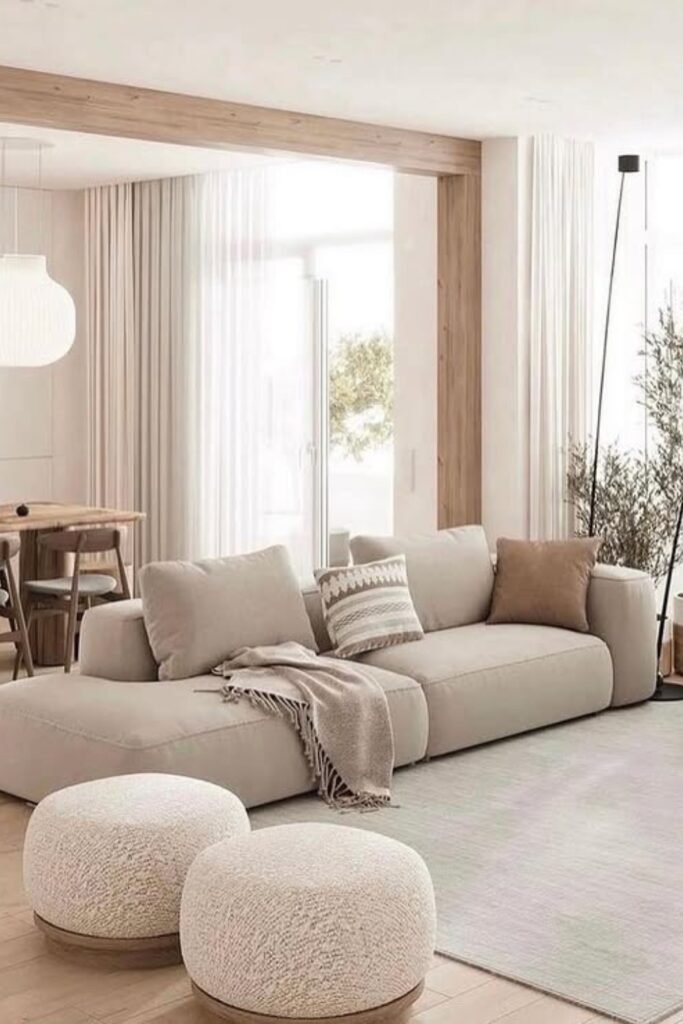
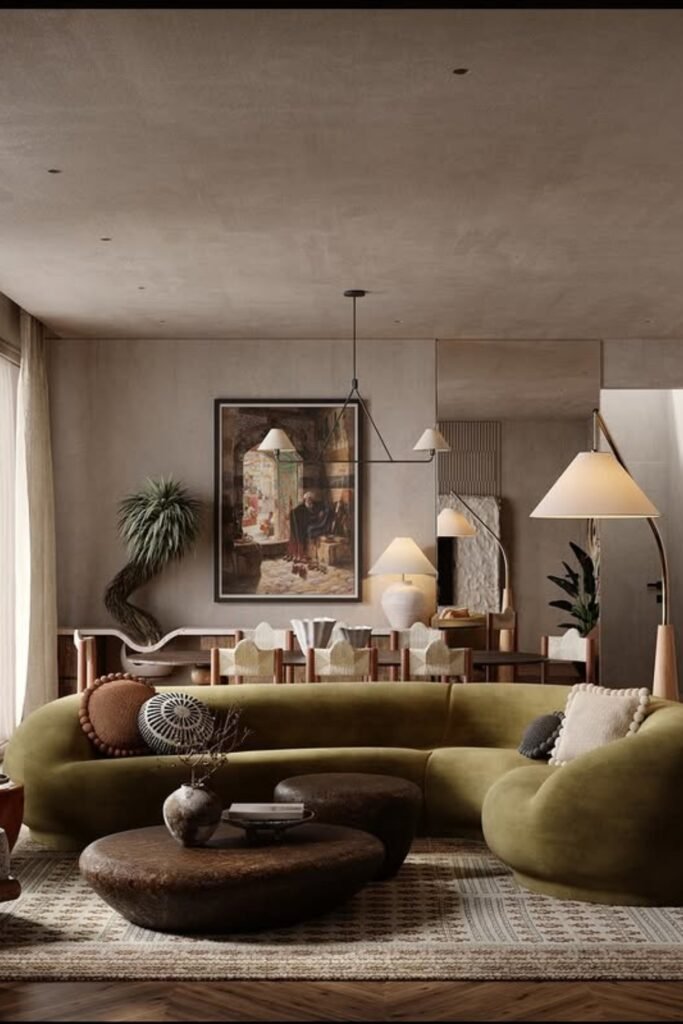
Warm Earthy Contrast
When everything feels too neutral, you can add one deep earthy tone and you’ll instantly bring life back into your space.
You see how the curved olive sofa becomes the focal point without breaking the calm vibe.
You can recreate this by keeping your base neutral and introducing one rich color through a sofa or accent piece.
When you do this, you’ll anchor the entire room without losing the Japandi calm.
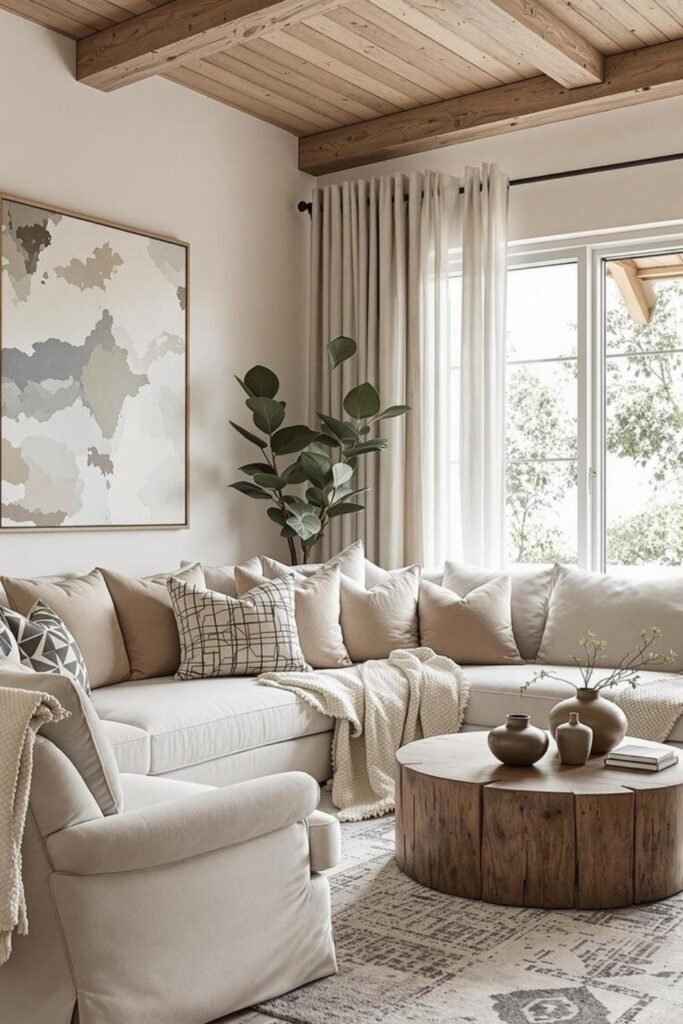
Cozy Natural Layers
If your living room feels too plain, you can layer soft textures and you’ll completely change the mood.
You notice how the linen sofa, knit throws, and textured rug add warmth without clutter.
You can recreate this by combining different fabrics in similar tones and adding one solid wood piece for balance.
When you layer thoughtfully, you’ll keep comfort without losing that clean Japandi look.
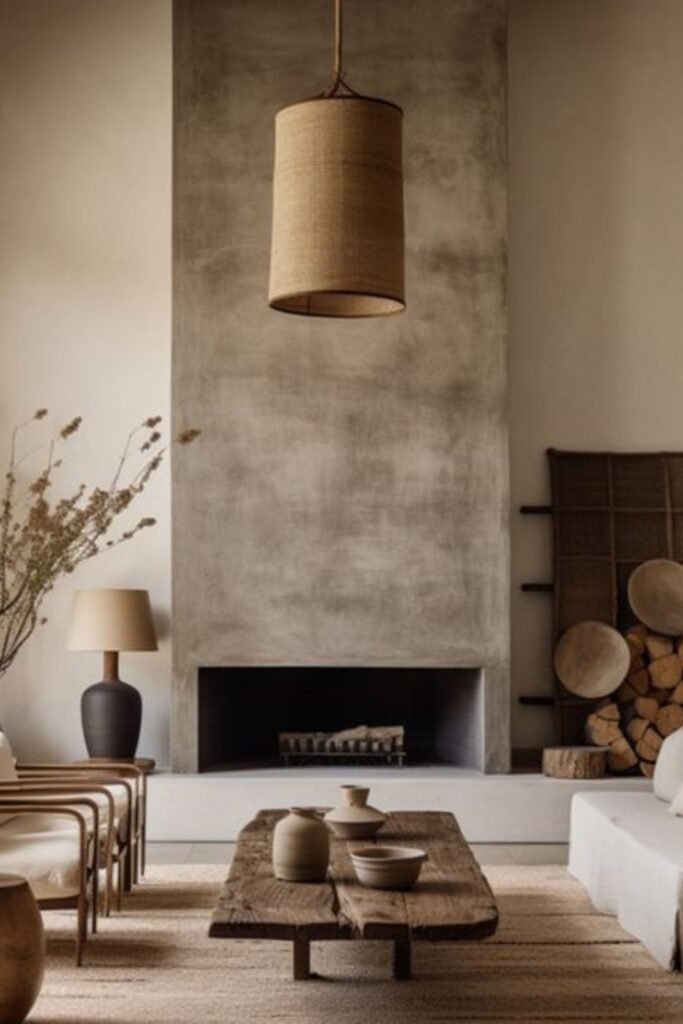
Simple Focal Fireplace
Sometimes you just need one quiet focal point, and you’ll notice your living room starts to feel complete.
You see how the raw plaster fireplace naturally draws attention without extra decor.
You can recreate this by keeping your wall clean and highlighting one architectural element.
When you pair it with low seating and earthy accessories, you’ll keep everything balanced and calm.
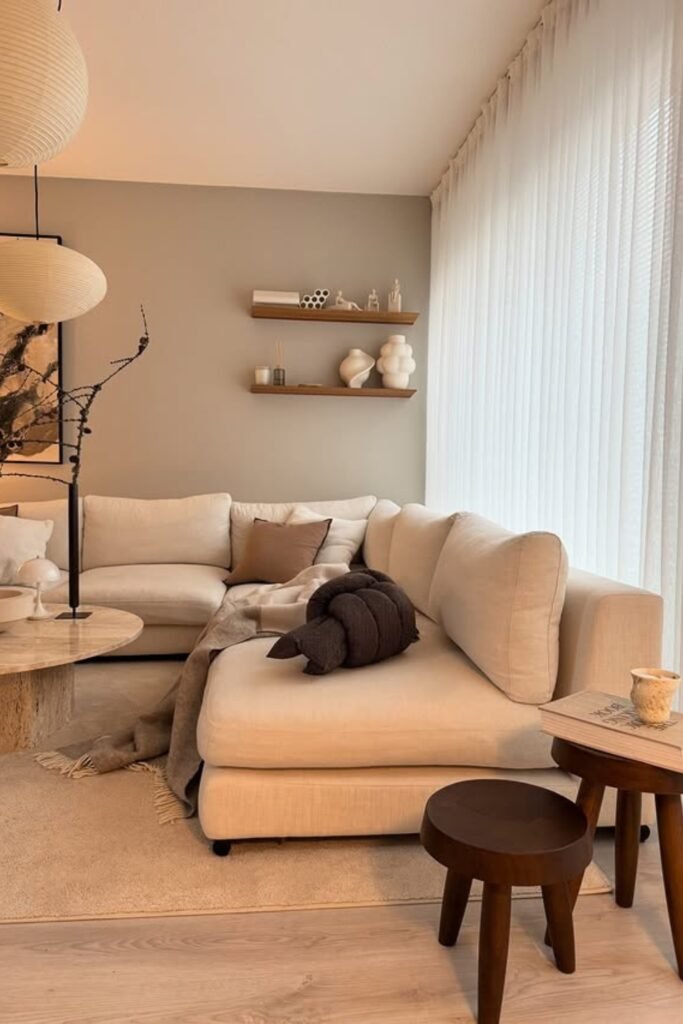
Soft Cozy Corner
Sometimes you only need one inviting corner, and you’ll feel the whole living room change.
You notice how the deep sofa, soft lighting, and layered textiles create a space you actually want to sit in.
You can recreate this by adding a chaise or corner seat, warm lighting, and a simple shelf above.
When you focus on comfort, you’ll make even a small living room feel intentional.
Sculpted Minimal Space
When you want your living room to feel like a retreat, you can remove the noise and focus on form.
You see how curved seating, soft edges, and built-in niches create a smooth flow.
You can recreate this by choosing rounded furniture and keeping walls clean with subtle texture.
When you keep things simple, you’ll create a calm, spa-like atmosphere without visual clutter.
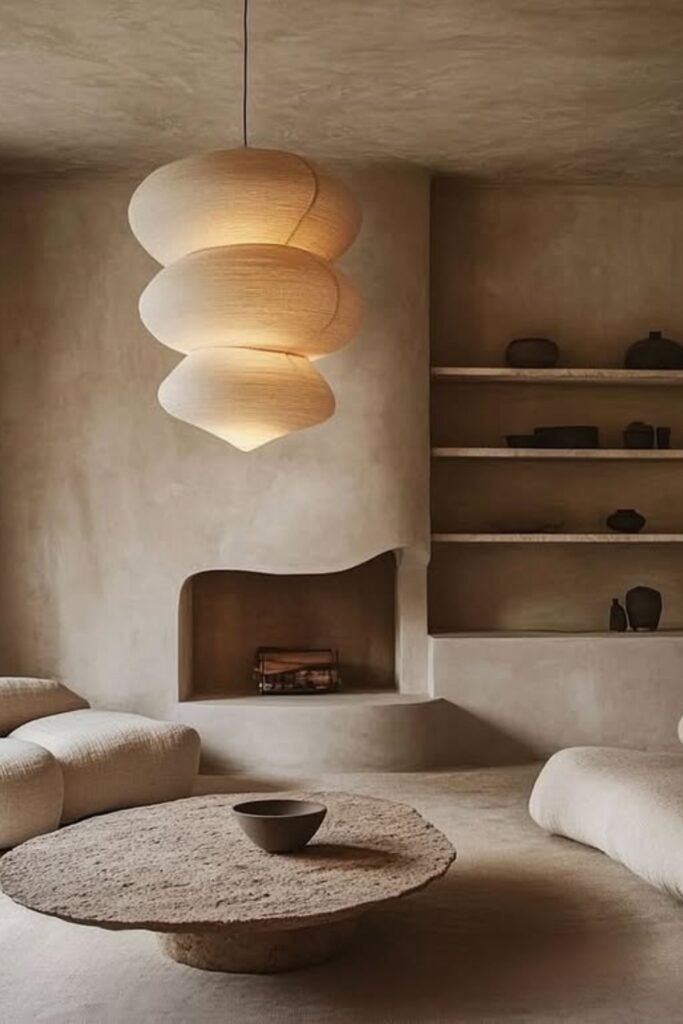
Clean White Calm
If your living room feels overwhelming, you can strip it back to soft whites and you’ll instantly reset the space.
You notice how light tones, sheer curtains, and minimal furniture help you create something open and breathable.
You can recreate this by limiting your palette to whites and light wood, then you can add one natural element like a branch.
When you keep things simple, you’ll maximize brightness, especially in small or low-light spaces.
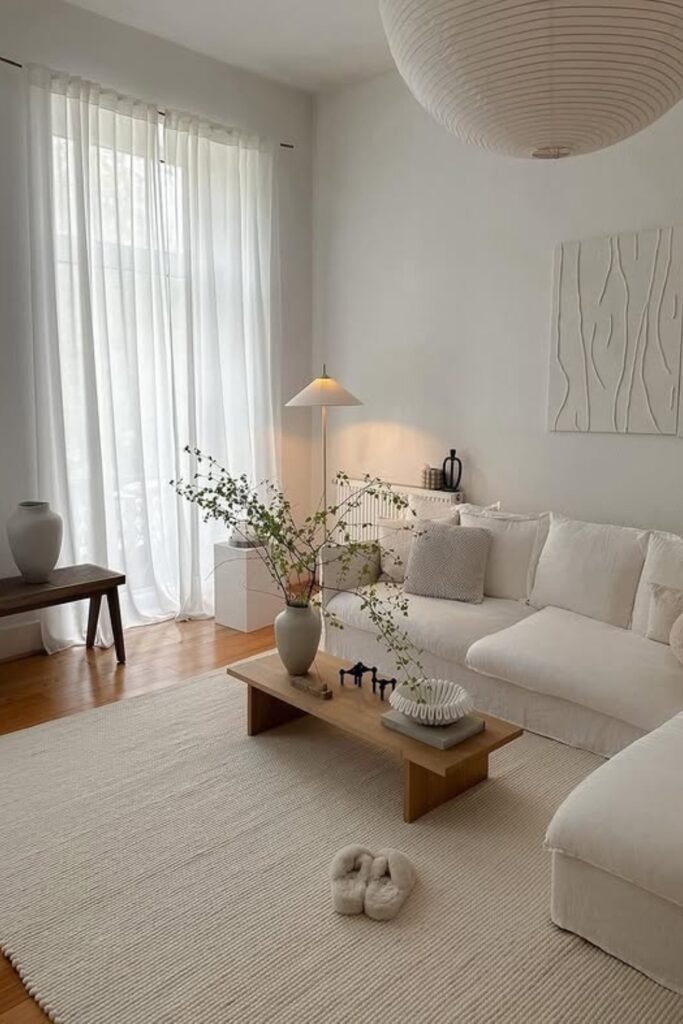
Soft Curved Harmony
Sharp edges can make your living room feel rigid before you even realize it.
You can see how everything flows, the curved sofa, rounded table, and soft rug and you’ll notice the space instantly feels more relaxed.
You can recreate this by swapping straight-line furniture for rounded pieces and keeping your colors soft.
When you soften the shapes, you’ll create a gentle, welcoming feel.
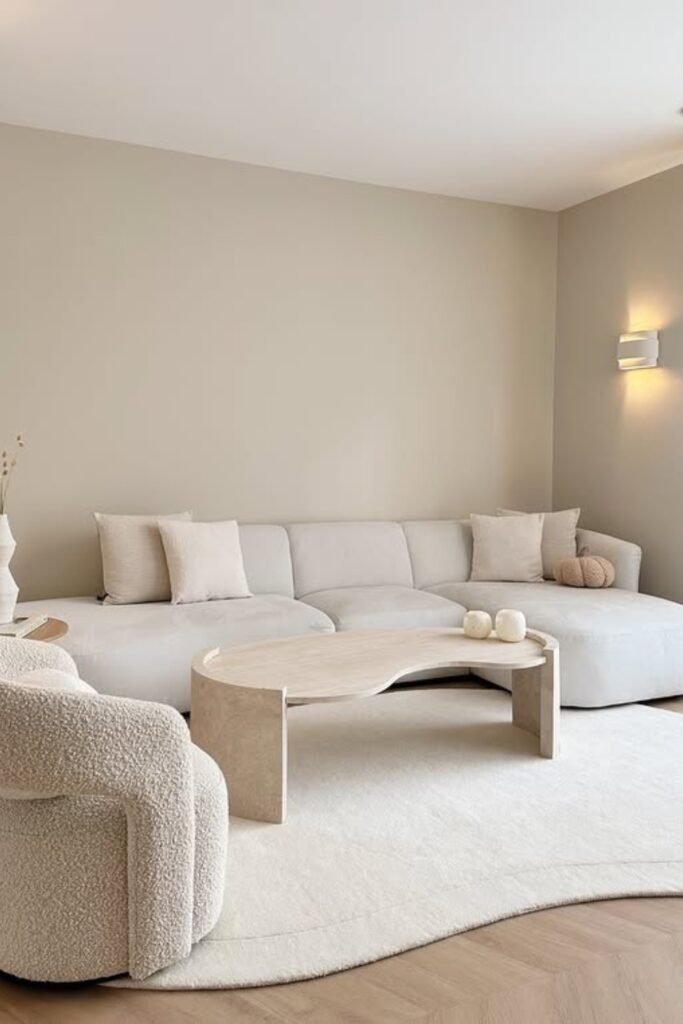
Cozy Layered Comfort
A Japandi living room doesn’t have to feel empty, you can still make it feel lived-in and soft.
You’ll notice how layered rugs, throws, and cushions add comfort without breaking the clean look.
You can recreate this by keeping your base neutral and adding cozy layers in similar tones.
When you layer thoughtfully, you’ll keep both style and everyday comfort.
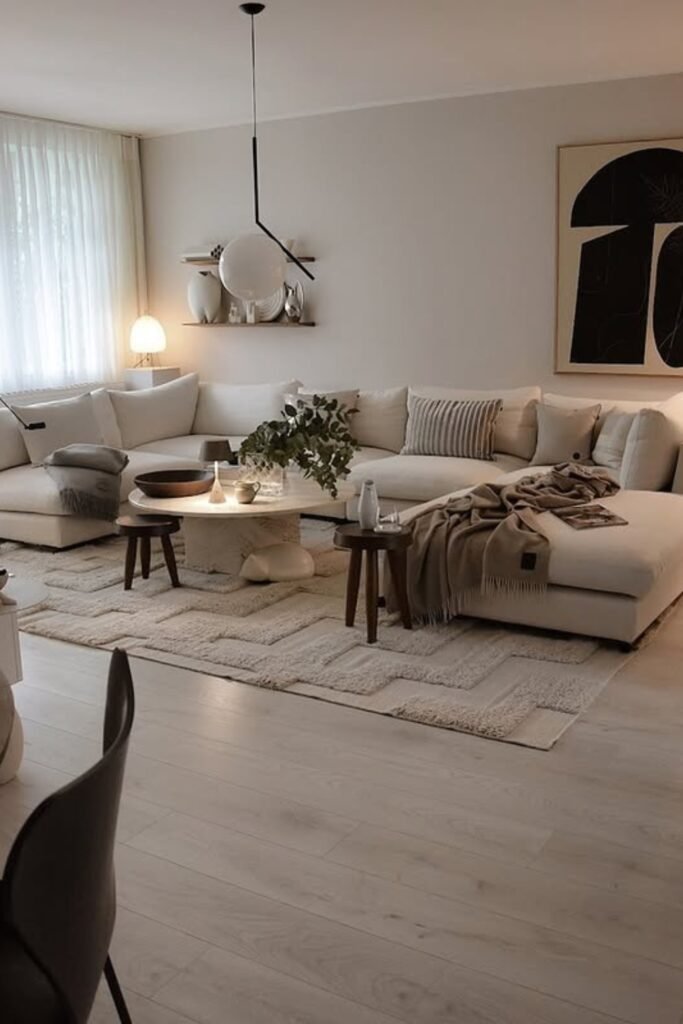
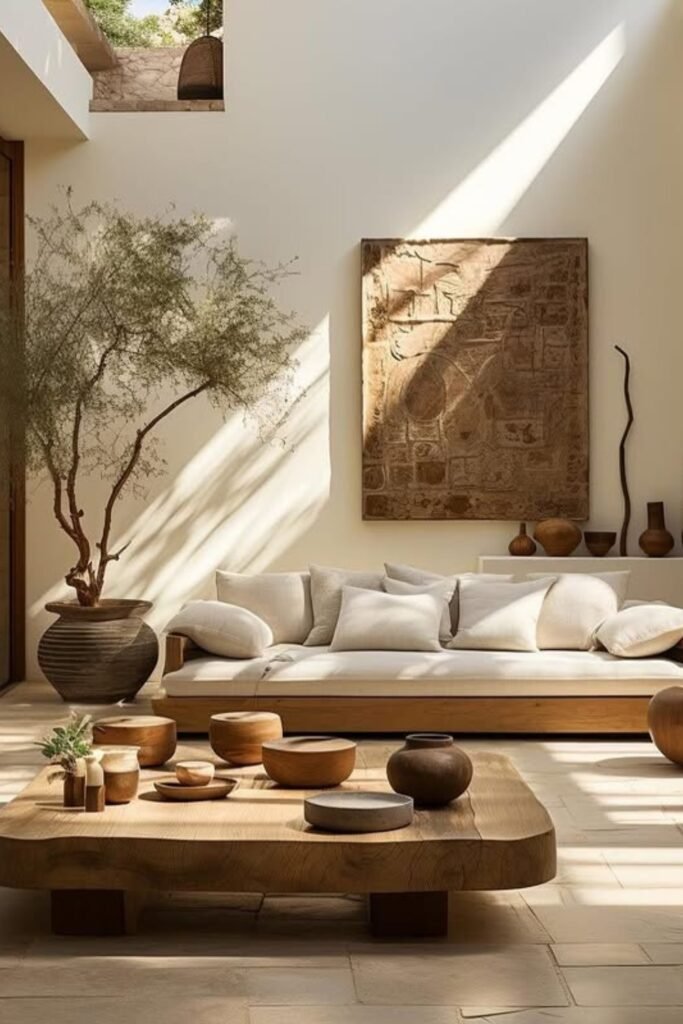
Sunlit Natural Focus
Natural light can do more for your living room than any decor you add.
You see how sunlight, warm wood tones, and one statement artwork create the entire mood.
You can recreate this by placing your main seating near a window and keeping decor minimal.
When you let light lead, you’ll create that effortless, calm Japandi feel.
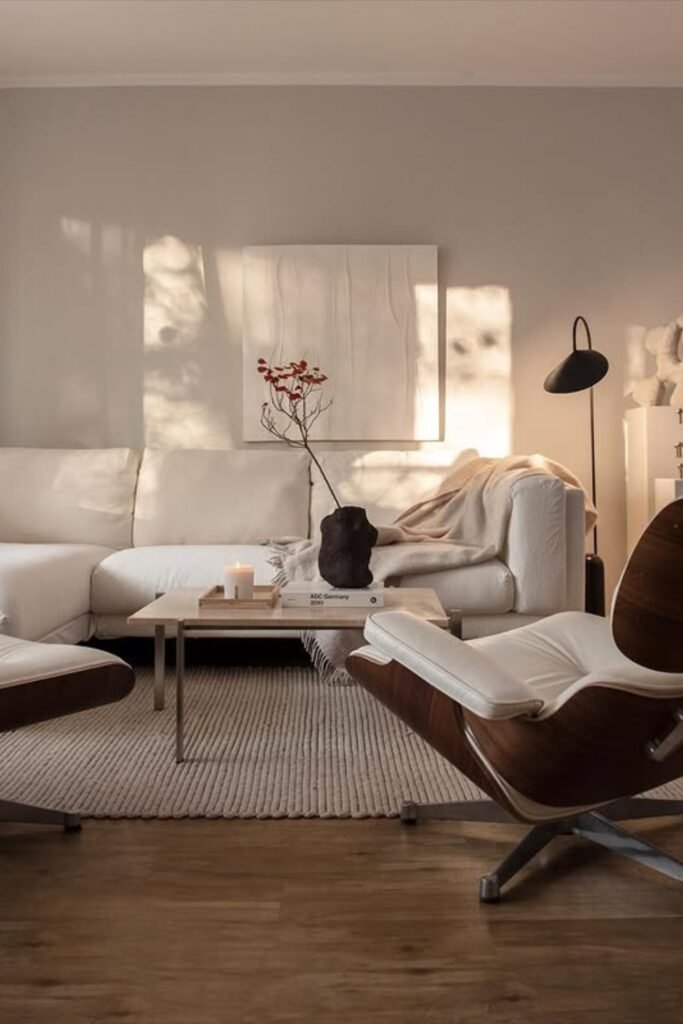
Warm Minimal Contrast
A completely neutral space can sometimes feel too soft, and you might notice it starts to look flat.
You see how dark wood chairs and a black lamp break the monotony without overpowering the room.
You can recreate this by keeping your base light and introducing two or three darker elements.
When you add contrast carefully, you’ll create depth without losing calm.
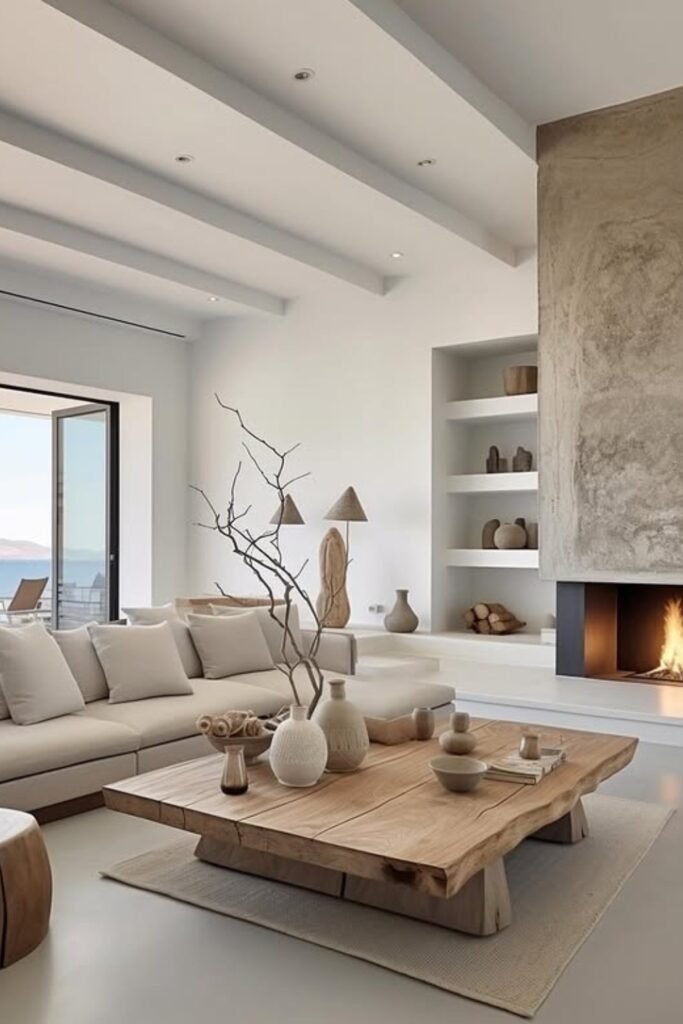
Minimal Architectural Focus
Sometimes you don’t need extra decor because your space already has strong features.
You notice how the fireplace, ceiling beams, and built-in shelves create structure on their own.
You can recreate this by keeping walls clean and letting those architectural elements stand out.
When you add just a few simple pieces, you’ll ground the space without clutter.
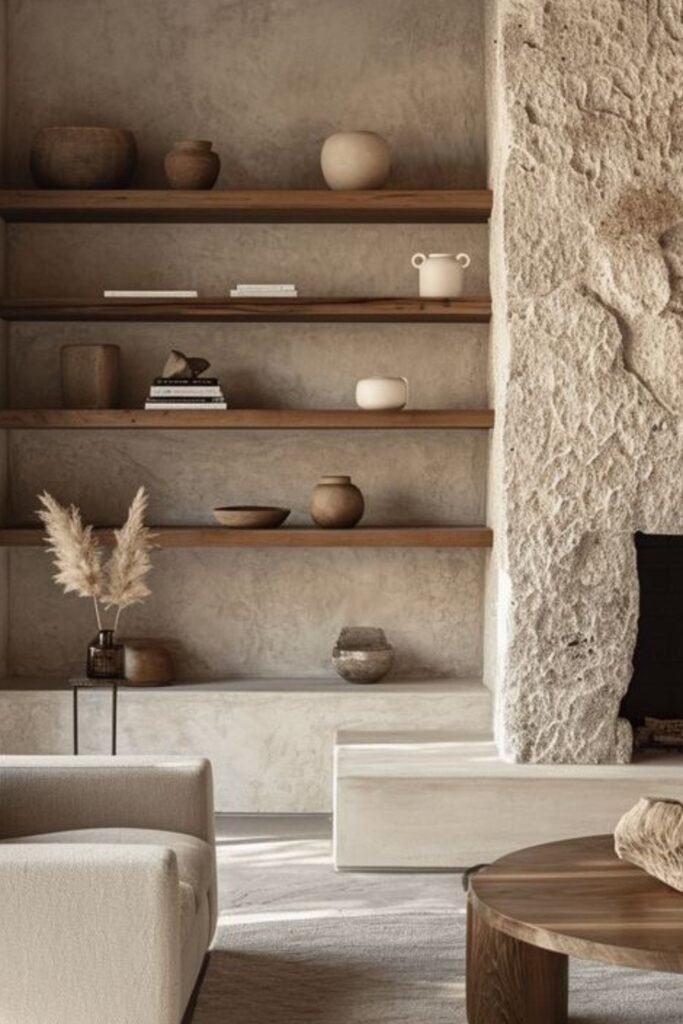
Styled Open Shelving
Empty shelves can either look messy or intentional, it all depends on how you style them.
You see how a few ceramic pieces, books, and natural textures create balance.
You can recreate this by spacing items out and sticking to neutral tones.
When you keep things minimal, you’ll turn storage into decor without visual clutter.
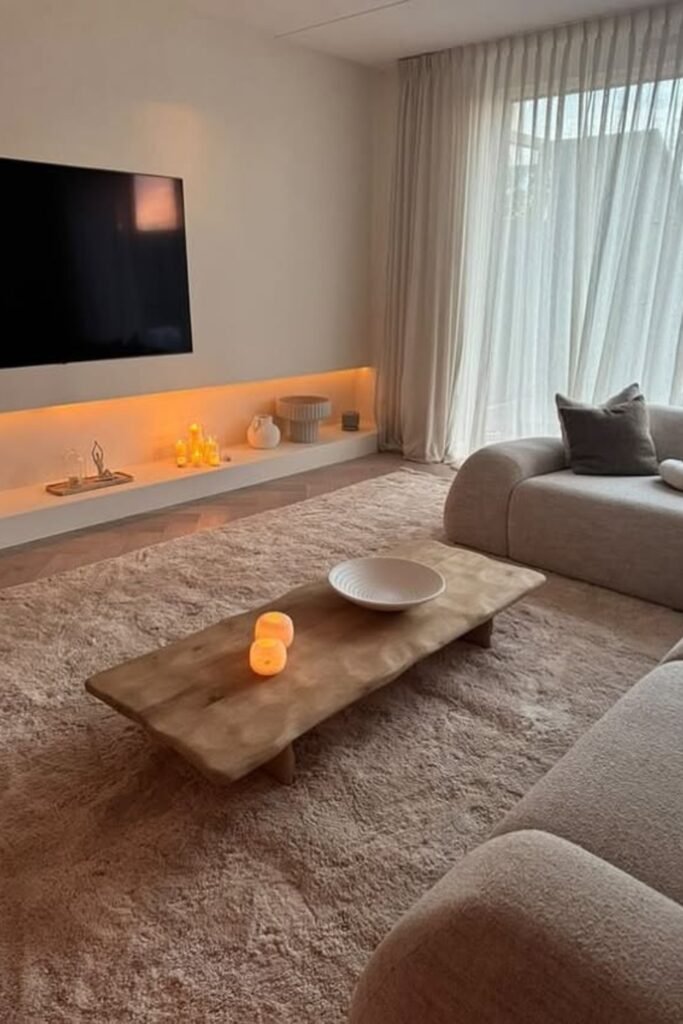
Warm Ambient Lighting
Lighting can completely change how your living room feels, especially at night.
You notice how soft hidden lights and candles create a warm glow without harsh brightness.
You can recreate this by adding LED strips under shelves or behind walls and using warm-toned bulbs.
When you soften the lighting, you’ll instantly shift the mood from minimal to cozy.
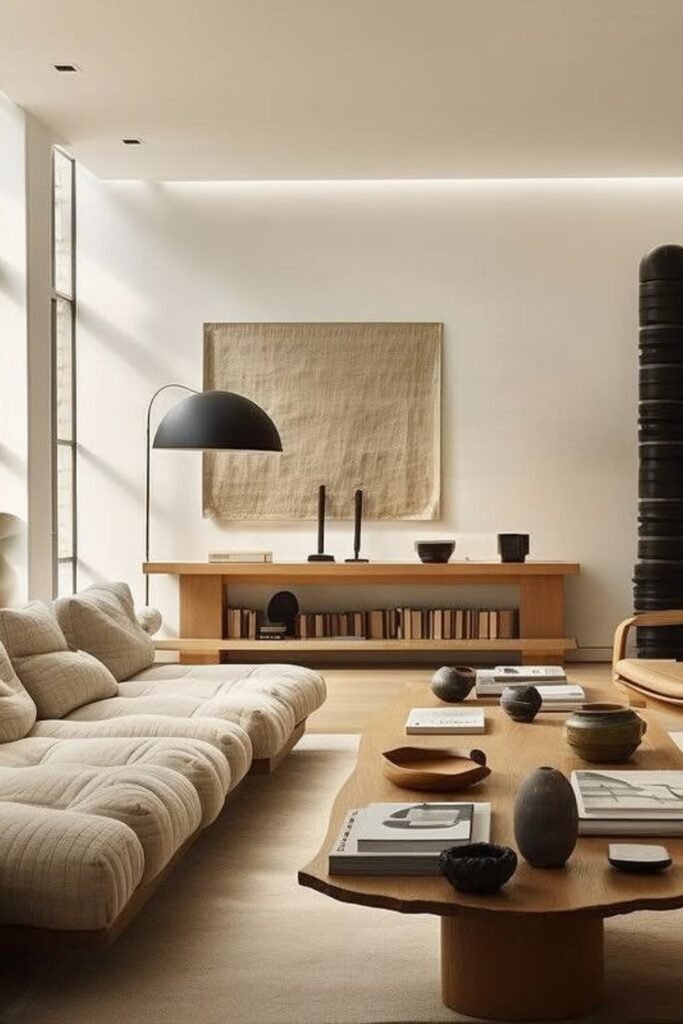
Balanced Wood Contrast
Too much beige can make your living room feel washed out, and you might notice the space lacks depth.
The light wood furniture and small black accents bring everything into balance.
You can recreate this by pairing neutral seating with wooden tables and adding small dark elements.
When you add contrast carefully, you’ll keep the space visually interesting.
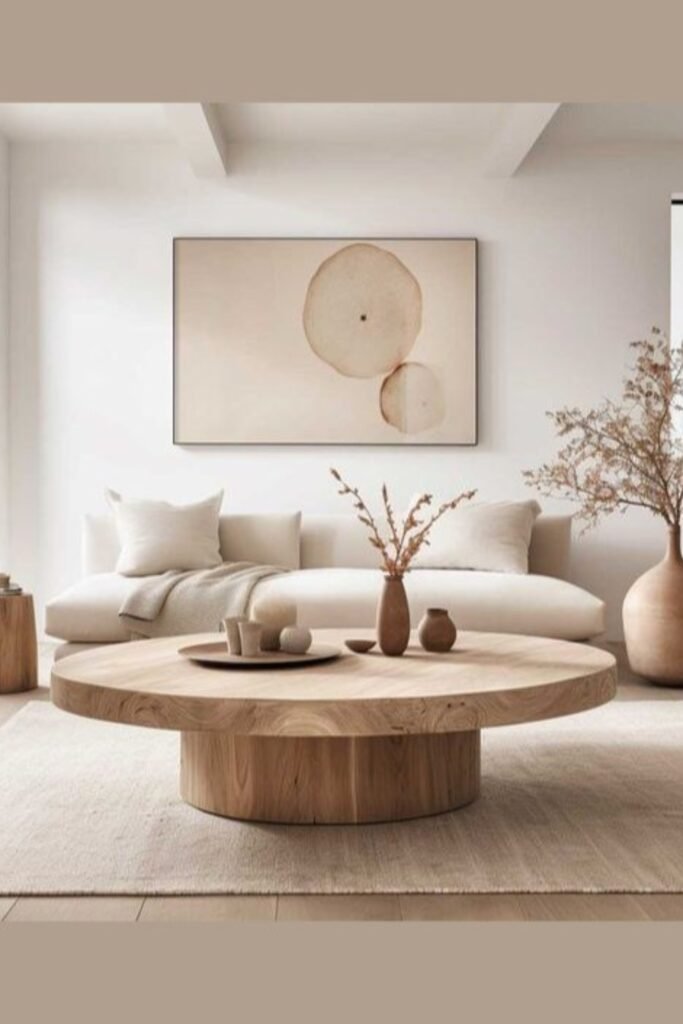
Simple Wood Focus
When you’re unsure what to center your living room around, you can let one strong material lead.
You see how the solid wood table anchors the entire space without extra decor.
You can recreate this by choosing one standout wooden piece and keeping everything else minimal.
When you keep the focus clear, you’ll create a natural focal point without clutter.
FAQs
How do I make my Japandi living room feel warm instead of empty?
Focus on texture instead of adding more decor, and you’ll instantly feel the difference.
You can layer linen cushions, soft rugs, and natural wood pieces to bring warmth without clutter.
If your space feels too plain, you’ll usually find that you don’t need more items, you just need better materials.
Even when you add one plant or a simple ceramic piece, you can make the room feel more lived-in while still keeping that clean Japandi look.
Can I mix dark and light tones in a Japandi living room?
Yes, and you’ll notice it actually improves your space.
You can start with a light neutral base, then you can add a few darker elements like a chair, lamp, or decor piece.
If everything feels too light, you might notice your room starts to look flat.
When you add a little contrast, you can define the space while still keeping it calm and balanced.
You may interested to read!