You bought the sofa, and you placed the TV. You pushed everything against the walls, and yet… you still feel like your small living room is tight, awkward, and unfinished.
When you walk across the room, you feel like you’re squeezing through a hallway, and you notice your couch might actually be swallowing the entire space.
You’re not alone, you see, most small living rooms don’t really have a size problem; you have a layout problem.
In this article, you’ll see exactly how you can arrange your small living room so that you feel open, balanced, and comfortable, without making yourself buy all new furniture.
Let’s jump in!
What Is The Best Layout For A Small Living Room?
There isn’t one “perfect” layout that will work for every small living room, but you can find the one that fits your room’s shape, your furniture, and how you actually use the space.
If you mostly watch TV, you should let your layout revolve around it. You’ll want your sofa facing the TV, not the window or some random wall.
And if you love hosting, you’ll need your seating to face each other so you can actually enjoy conversation. You have to start with how you use the room, not how it looks on Pinterest.
Next, you must protect your walking space. If you block the natural path from the door to your sofa or across the room, you’ll notice the space feels cramped no matter how stylish it is.
You should always leave clear space so you can move around comfortably.
Then you should pick one clear focal point. You might choose the TV, a fireplace, or even a large window.
Once you decide that, you’ll want to arrange your main seating around it. If you let everything compete for attention, you’ll feel like the room is chaotic.
Finally, scale really matters. If your sofa is too big, you’ll feel it dominates the room. If your rug is too small, you might notice the layout feels disconnected.
You should aim for a layout that balances furniture size, clear pathways, and one strong focal point.
When you get those three things right, function, flow, and scale, you’ll see your small living room instantly feel bigger and more put together. And you’ll finally enjoy it the way you should.
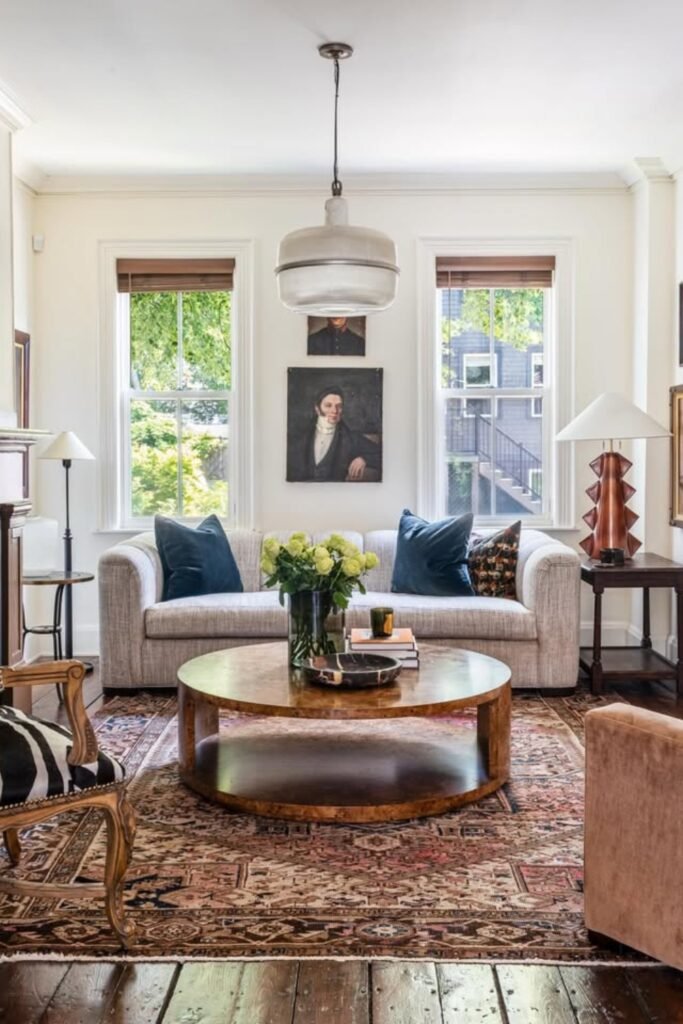
Centered Sofa Balance
When you have two windows like this, don’t fight the symmetry, you should use it. You can place your sofa right between them and let natural light frame your seating area.
You might add a large round coffee table to soften the straight lines and make it easier for you to move around.
You’ll see that matching lamps on both sides create balance without making the space feel stiff. If your room is narrow, this setup helps you feel grounded but not crowded.
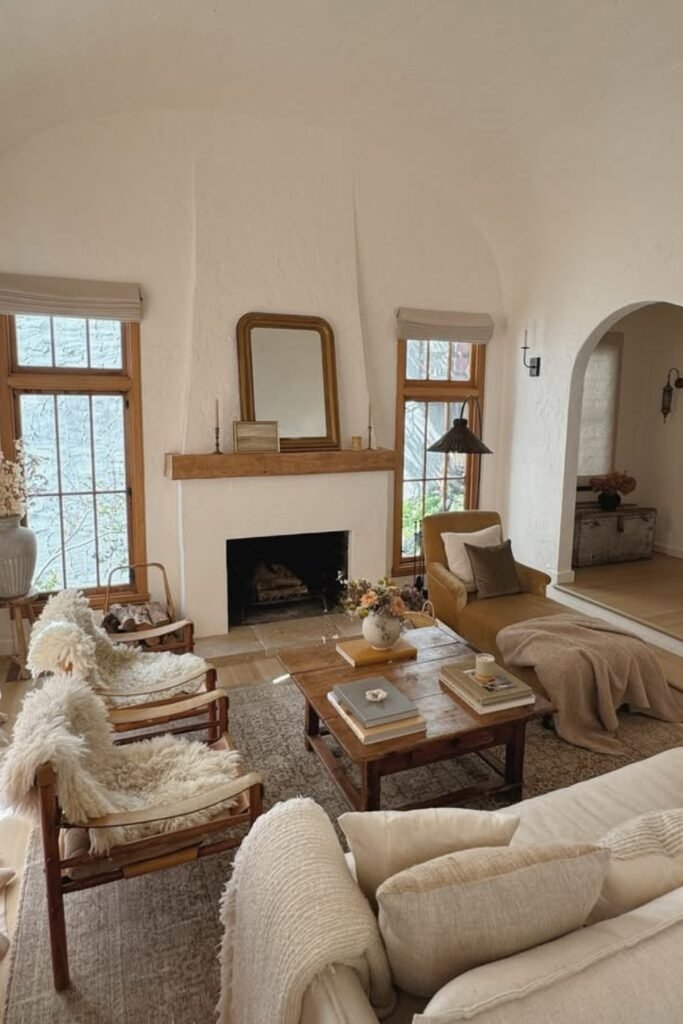
Fireplace Facing Seating
When your fireplace sits between two windows, you should let it lead your layout.
You can angle your chairs toward it and pull your sofa slightly back so the room feels open instead of boxed in.
You might add a simple rectangular coffee table to keep everything grounded.
If you want cozy conversation without blocking light or walkways, you’ll see this layout works beautifully in your small living room.
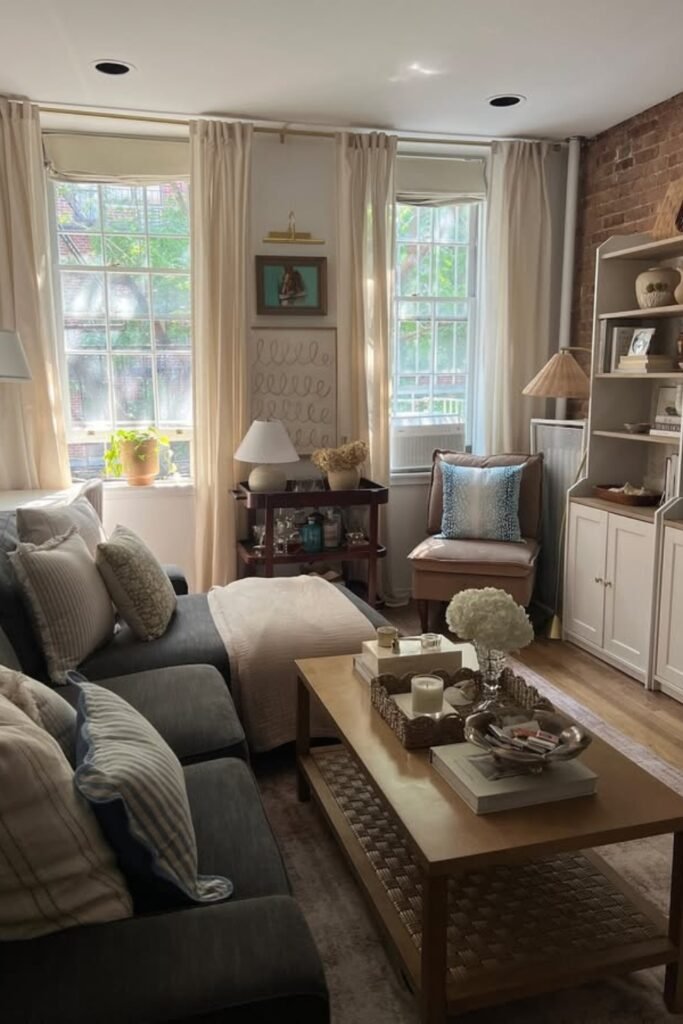
Narrow Room Strategy
Long and tight doesn’t mean you can’t be comfortable. You can push your sofa along one wall and keep the opposite side light with slim storage instead of bulky furniture.
You might place a single accent chair near the window so you can create a conversation angle without blocking your walkway.
You’ll see that tall curtains help draw your eye up and make the room feel wider.
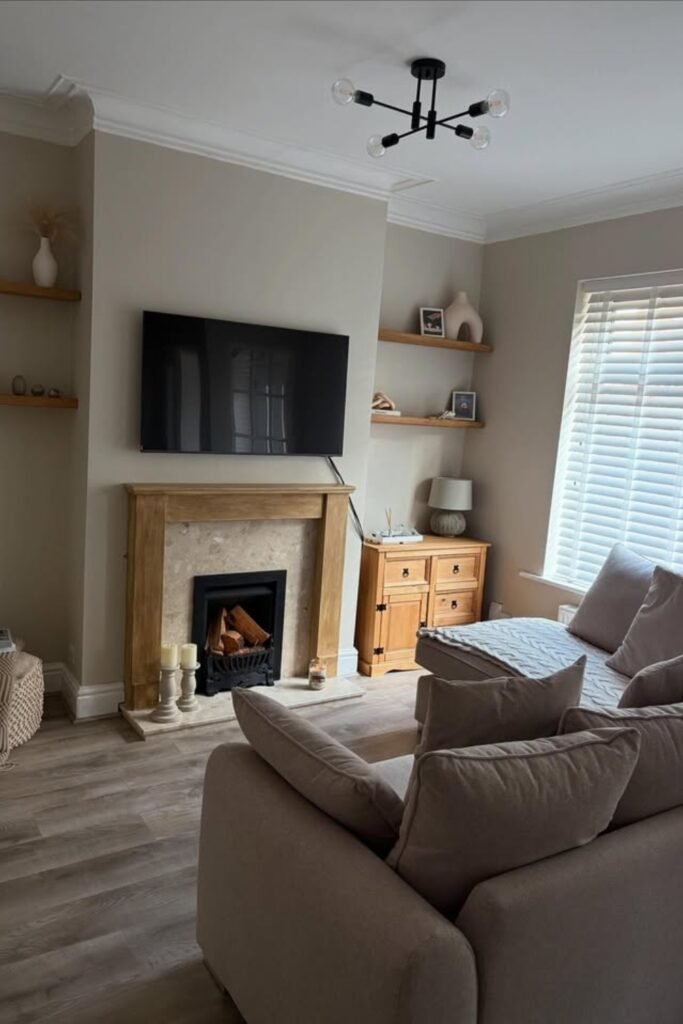
Fireplace TV Focus
When your fireplace and TV share the same wall, you should keep everything centered and simple.
You can mount your TV above the mantel to free up floor space, then float your sofa directly opposite for a clear focal point.
You might skip extra chairs if the room is tight, you’ll let the open floor make it feel bigger. You can also add built-in or floating shelves on both sides for storage without crowding your layout.
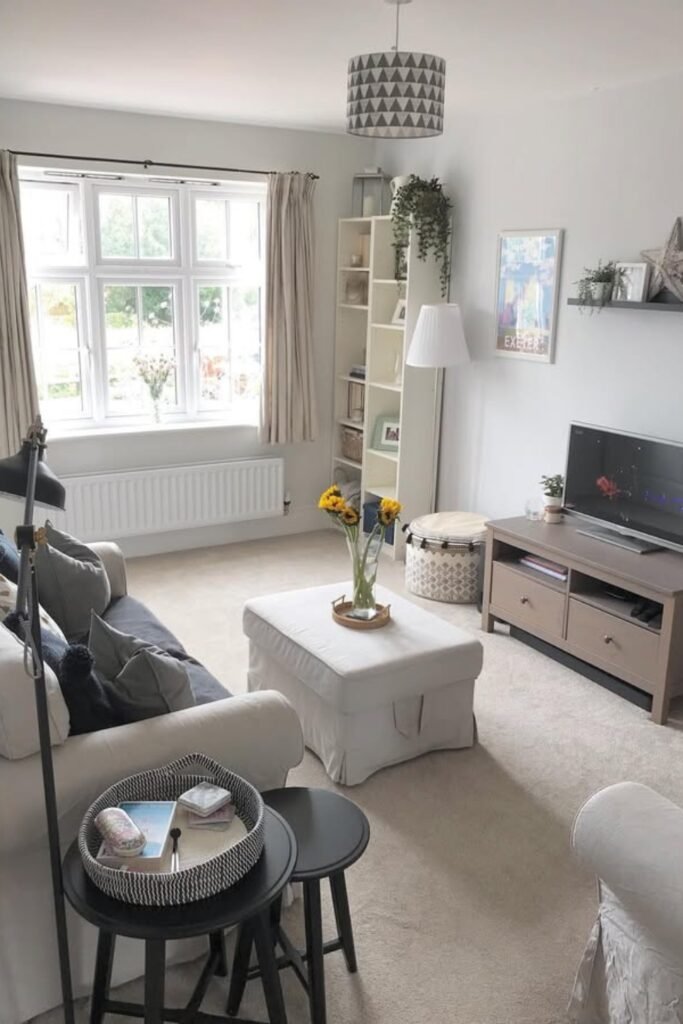
Light Window Layout
You can let the window do the heavy lifting. Place your sofa against the longest wall and keep your TV unit low so natural light stays the star.
You might use an ottoman in the center instead of a bulky coffee table because you can move it whenever you need.
You’ll see that tall shelving in the corner adds storage without blocking brightness, which makes your small square room feel open and airy.
Sectional Corner Flow
Corner sectionals can work beautifully in your small living room if you let them hug the wall instead of floating awkwardly in the middle.
You can keep the longer side against the window wall and face it toward a slim TV unit to open up the center.
You might add a round coffee table to soften sharp angles and improve movement. You’ll see that light fabrics and a large rug underneath make everything feel cohesive and spacious.
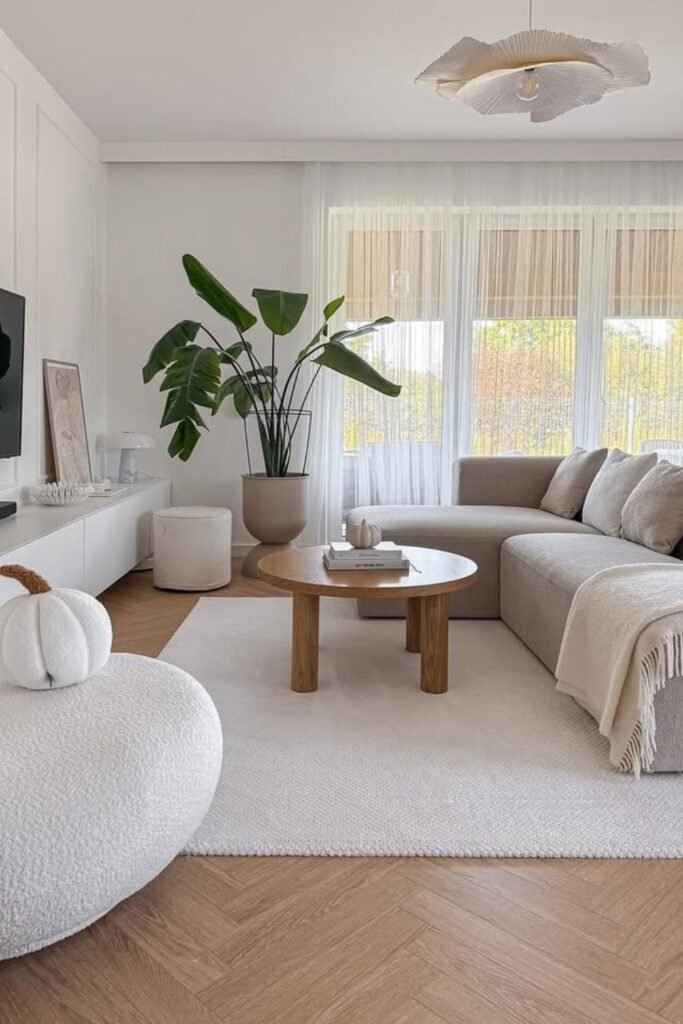
Balcony Facing Setup
If your living room opens to a balcony, you should keep your layout light and breathable.
You can place your sofa against the longest wall and position a single accent chair near the glass door to create a soft conversation corner without blocking access.
You might use a slim TV console and a glass coffee table to avoid visual heaviness. You’ll find that sheer curtains keep privacy while letting daylight stretch your room visually.
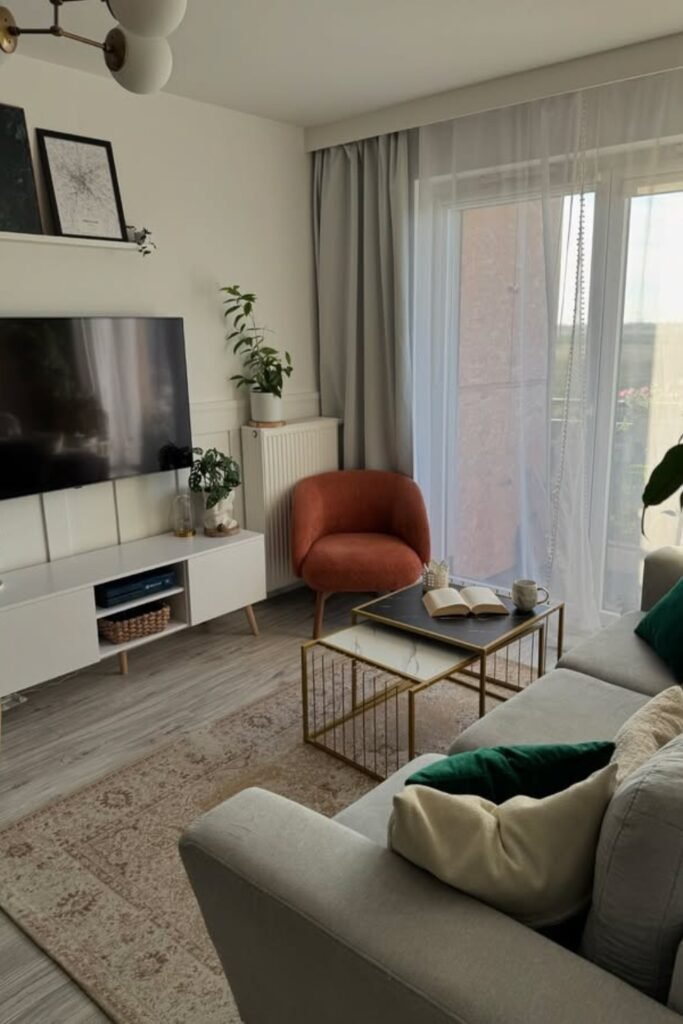
Window View Layout
When you have floor-to-ceiling windows and a view like this, you mustn’t block it with bulky furniture.
You should keep your sofa low and place chairs facing inward so you can enjoy the skyline from every seat. You can add a slim console along the wall for storage without stealing space.
You’ll see that a large rug anchors everything and keeps your layout tight, perfect for your small city living room.
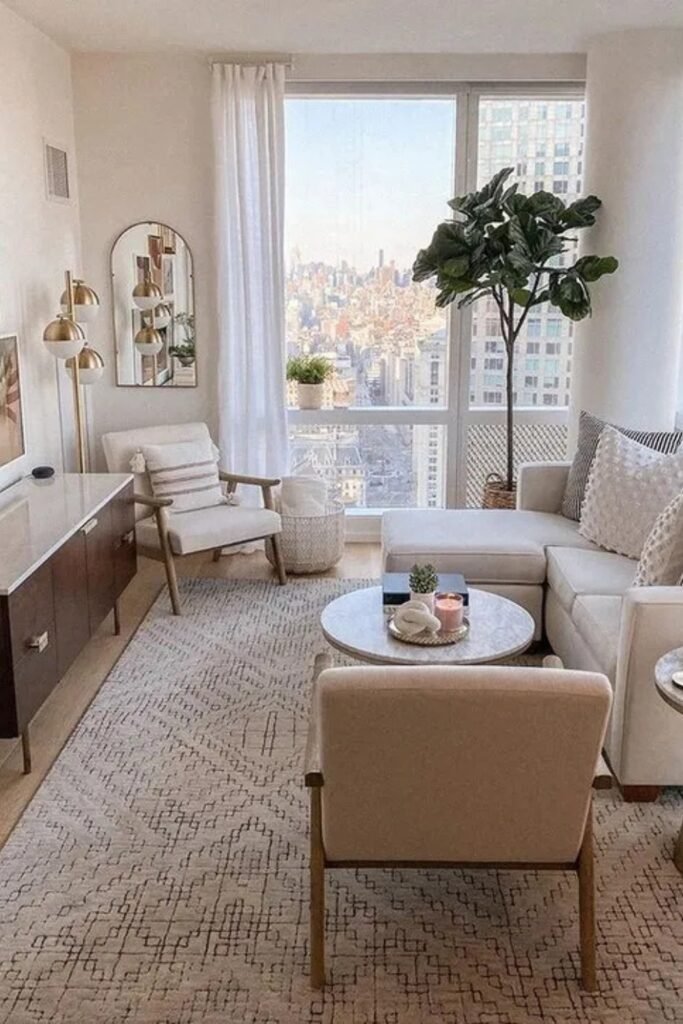
Fireplace Anchored Layout
You should let your fireplace set the rules. Place your main sofa facing it and pull it slightly onto a large rug to define your seating zone.
You can add one statement chair off to the side instead of crowding both corners. You’ll see that a low coffee table keeps sightlines open.
This setup works great if you want warmth and conversation without blocking your room’s flow.
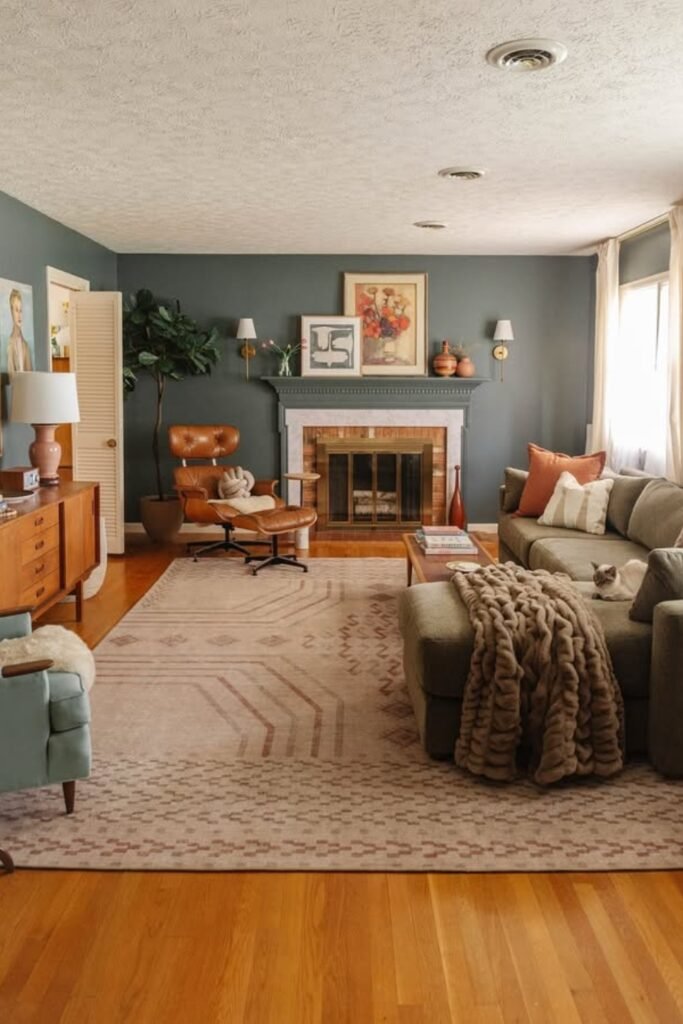
Conversation First Layout
Forget lining everything up against the walls, you should turn your seating inward so your sofa and chairs face each other around a centered coffee table.
You might keep your fireplace and TV on one side, but let your conversation area lead. You’ll see that built-in shelves give you storage without stealing floor space.
This layout is perfect if you entertain often and want your small living room to feel intimate, not stretched out.
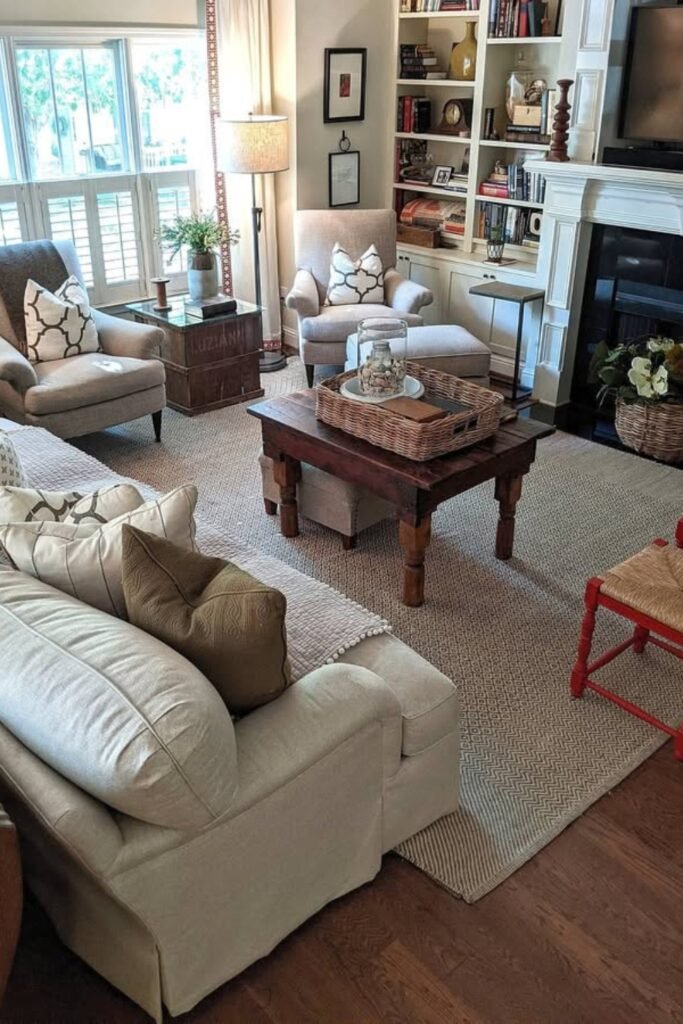
Soft Symmetry Layout
Balance makes your small living room feel calm. You can place your sofa on one side and a single armchair directly across to create a simple face-to-face setup.
You should keep your TV unit slim and low so it doesn’t overpower the space.
You’ll notice that a medium rug under all the front legs ties everything together. Use this layout in narrow rooms if you want clean lines and easy movement without clutter.
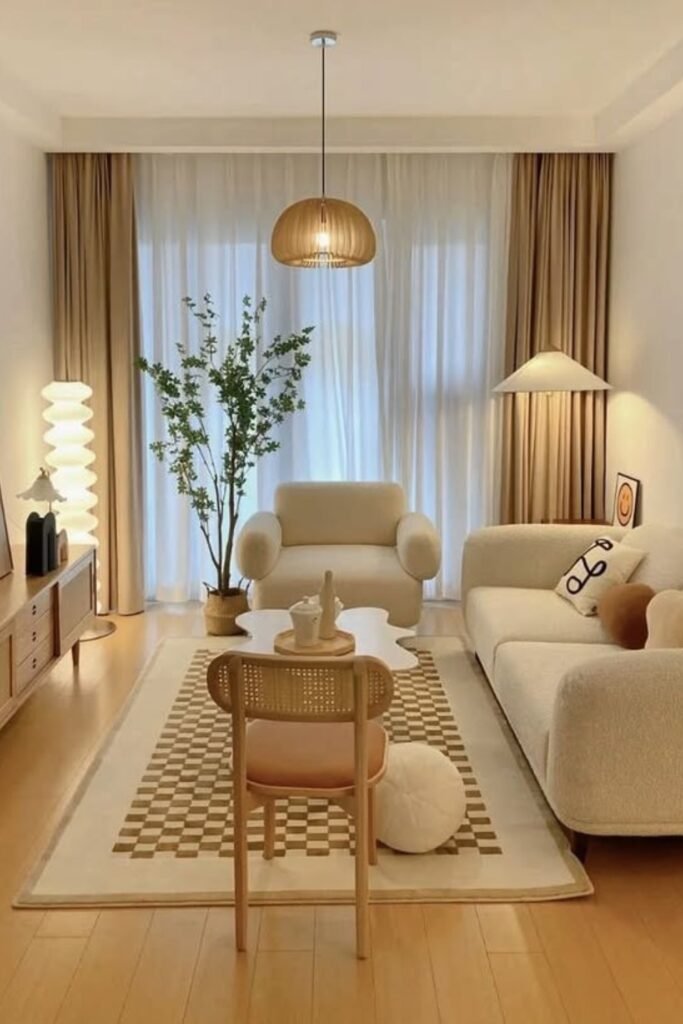
Open Conversation Circle
You can pull your seating off the walls and build your room around the coffee table. You should place your sofa facing the fireplace and angle two chairs inward to form a loose circle.
You’ll want a large rug underneath to define your zone and prevent your layout from floating. You might choose a round table to improve flow.
This works perfectly if you want your small living room to feel balanced without blocking light.
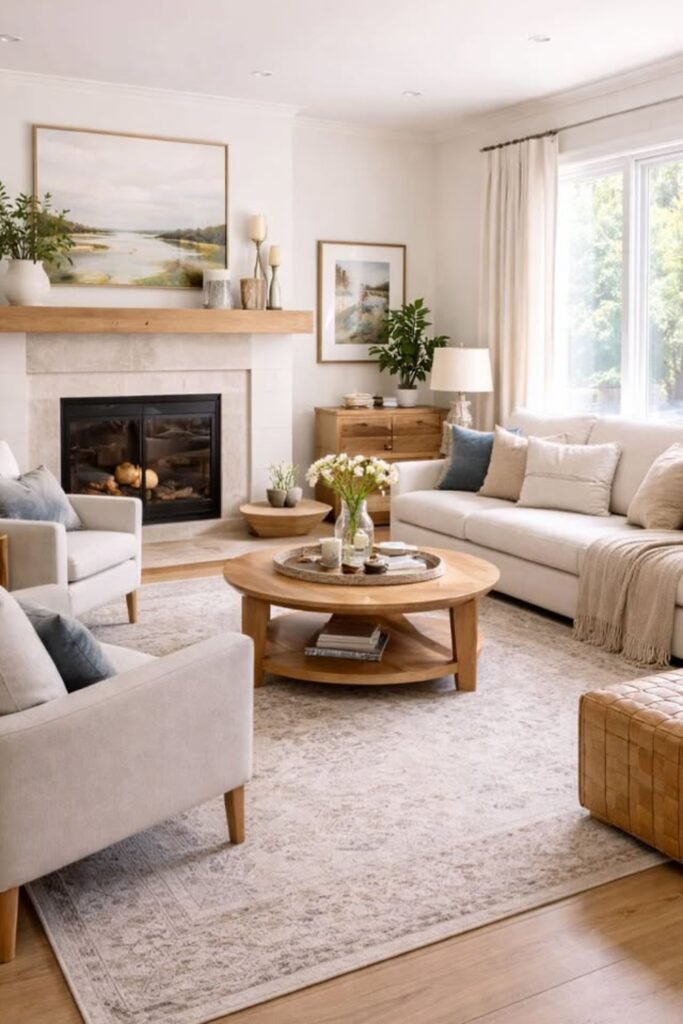
Dining Living Combo
When your living room shares space with a dining area, you should keep your layout straight and simple.
You can place your sofa along one wall and line your TV console directly opposite to create a clean visual path.
You might use two small round chairs near the window instead of bulky seating to save space.
You’ll see that a compact round coffee table improves flow. This setup works great if you need clear zones without walls in an open-plan apartment.
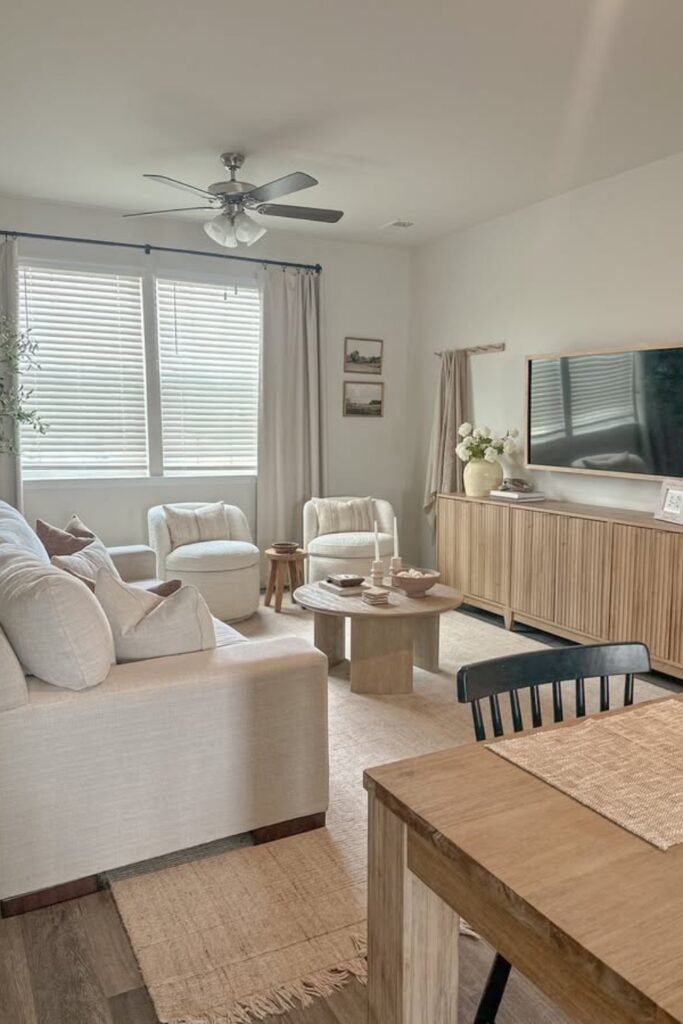
Garden Facing Layout
When your living room opens straight to the garden, you should keep your center clear so your view stays uninterrupted.
You can place your sofa along one wall and position a single accent chair diagonally to create balance without blocking doors.
You might keep your TV unit slim and low. You’ll notice that a light rug defines your seating zone while maintaining easy access outside. Ideal for compact homes with patio doors.
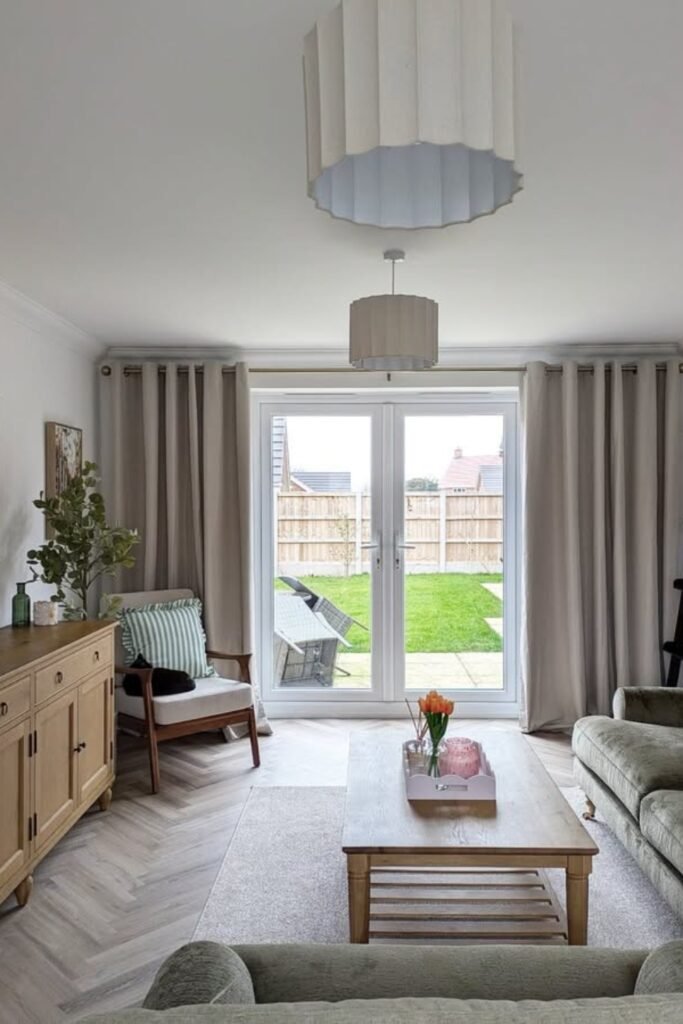
Slim Wall Alignment
When your room is long and narrow, you should line up your main pieces instead of scattering them. You can keep your sofa on one wall and mount your TV directly opposite to create a clean visual corridor.
You might use a lightweight coffee table with open legs so the center doesn’t feel heavy. You’ll see that adding one accent chair near the window gives balance.
Perfect for small apartments where you need structure without clutter.
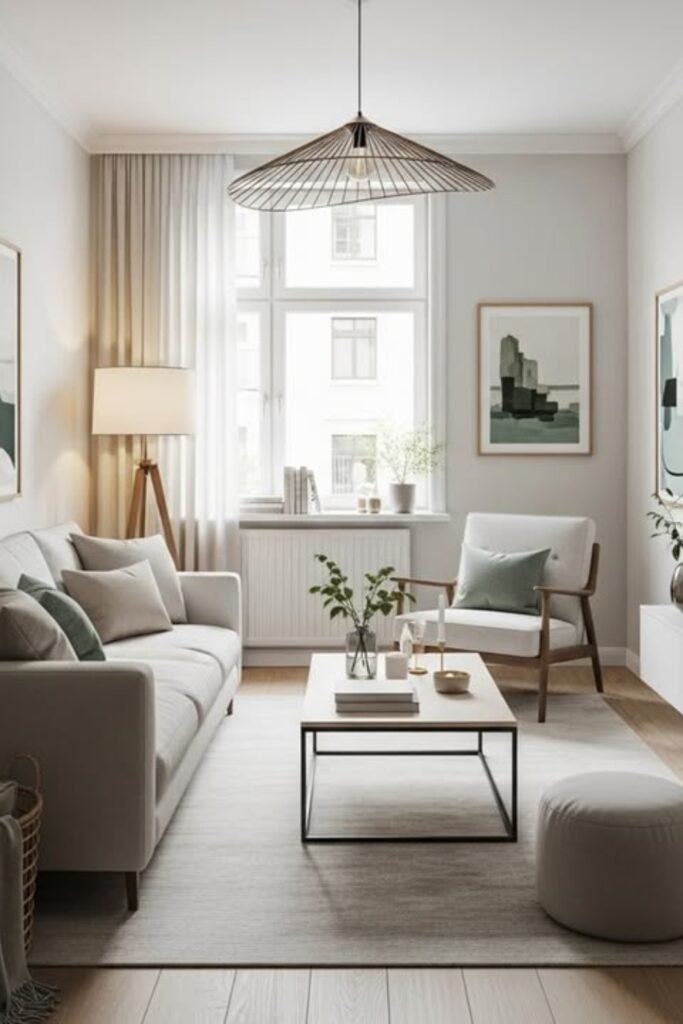
Cozy Family Corner
When you want your living room to feel warm and usable, you should build your layout around comfort first.
You can keep your sofa near the window for light, add a large ottoman in the center for flexible seating, and use built-in shelves around the fireplace instead of extra cabinets.
You’ll notice that a soft rug under everything pulls it together. Ideal if you want your small family living room to prioritize lounging over formality.
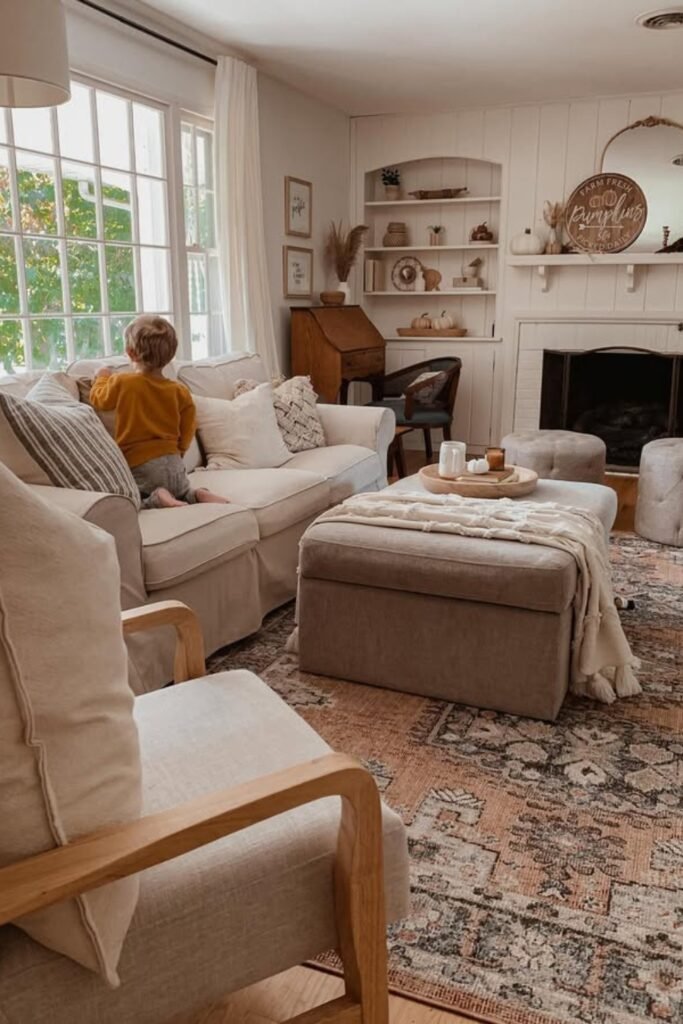
Bold Accent Layout
Small rooms don’t mean you have to play safe. You can push your sofa against one wall to keep the center open, then add one statement chair across from it to create balance.
You should use a slim media console to prevent crowding, while nesting tables save space when not in use.
You might try a bold accent wall behind your seating to add depth. Perfect for narrow living rooms that need personality without extra furniture.
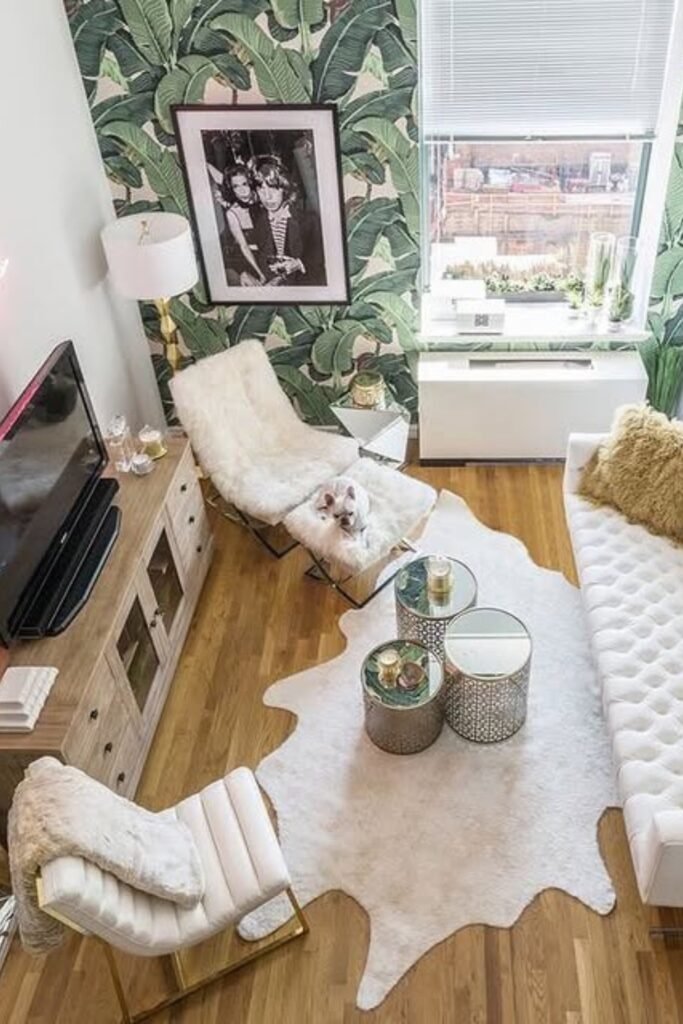
Compact Studio Flow
When every wall matters, you should turn your storage into part of the layout. You can line both sides with built-in shelves and keep seating light in the center.
You might use a single armchair and compact sofa facing each other to create balance without blocking the path to your window. You’ll want a small round coffee table to keep movement easy.
This layout works perfectly if you live in a studio apartment where living, storage, and style must all work together.
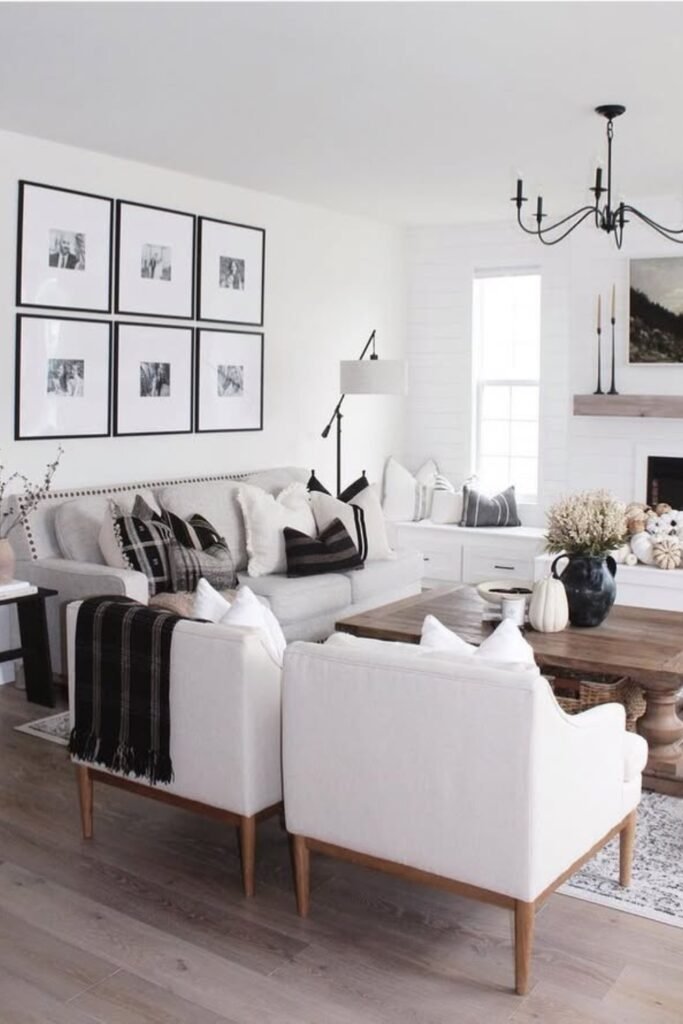
Framed Seating Grid
Structure can make your small living room feel intentional. You can place your sofa against one wall and position two compact chairs opposite to create a balanced rectangle around your coffee table.
You should keep your fireplace as the focal point and anchor everything with a large rug underneath.
You might add a gallery wall above your sofa to give height without taking floor space. Ideal for small rectangular rooms where you want order and symmetry.
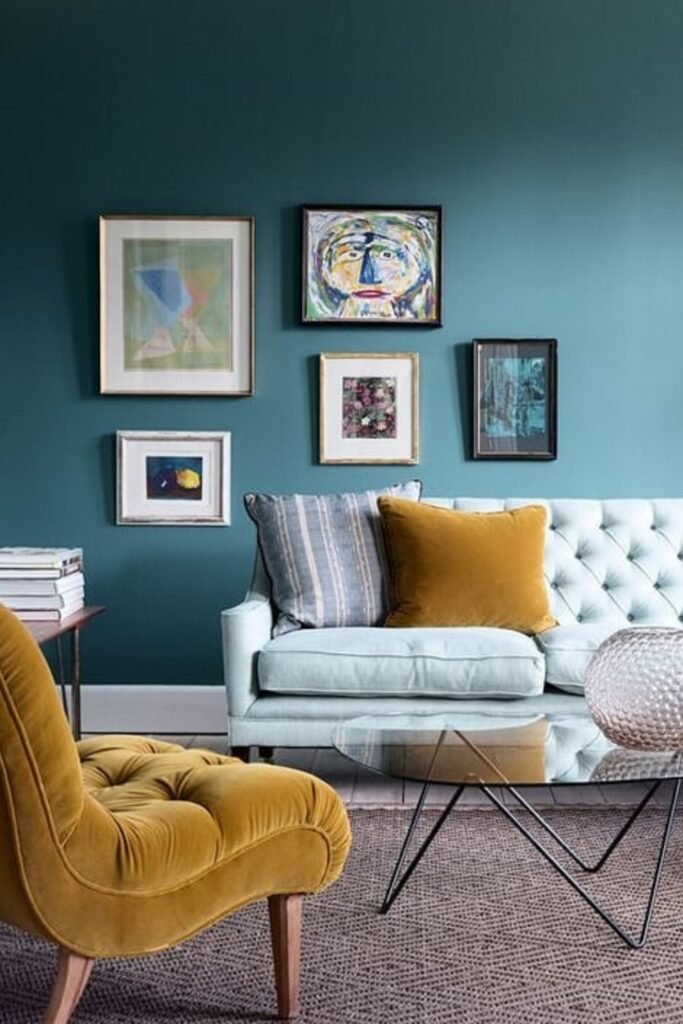
Accent Wall Focus
Color can do what square footage can’t. You can keep your sofa against one wall and turn that wall into a statement with bold paint and layered art.
You might add a single contrasting chair across from it to create balance without crowding.
You should use a glass coffee table to keep your center visually open. Perfect if you want impact in your small living room without adding more furniture.
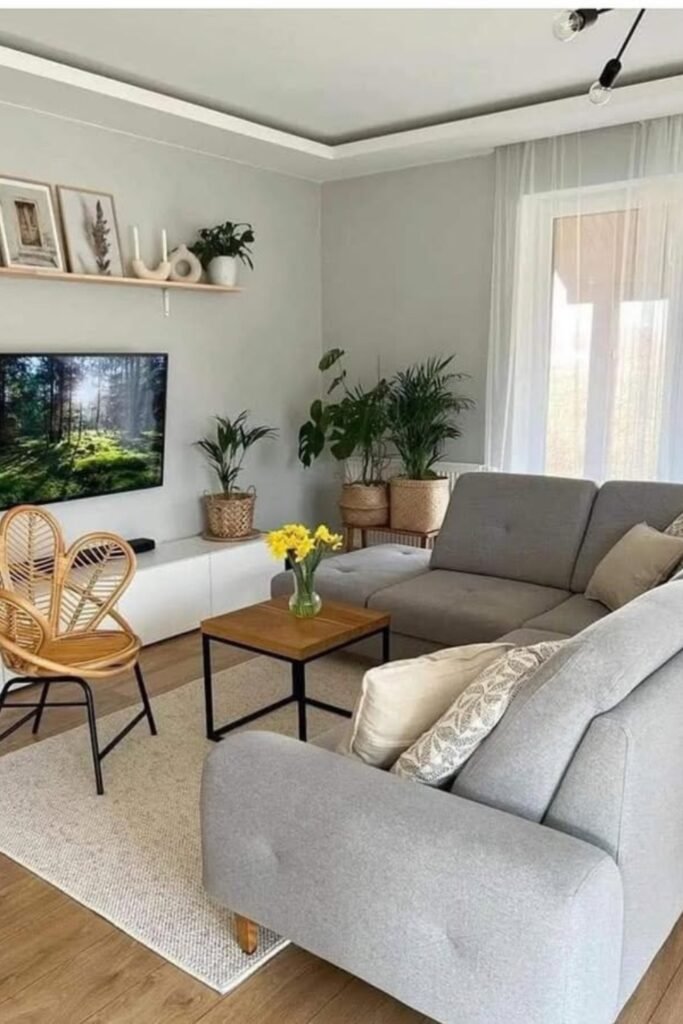
Corner Sectional Smart
You should let your sectional work with the walls, not against them. You can tuck it neatly into a corner so the center stays open and easy to walk through.
You might mount your TV on the opposite wall and keep your console low to avoid visual clutter. You’ll see that a small square coffee table fits better than oversized pieces.
You can add one lightweight accent chair if you need extra seating without crowding your layout.
FAQs
How do I arrange furniture in a small living room without it feeling crowded?
You should start by choosing one focal point usually your TV or fireplace and build your layout around it. You’ll want to keep your main sofa in place first, then add only what you truly need.
You should leave clear walking paths and avoid oversized pieces. If your room feels tight, you might remove one chair or swap a bulky coffee table for a smaller round one.
You’ll see that space matters more than extra seating when you want your small living room to feel open and comfortable.
What size sofa works best in a small living room?
You should measure your wall before you even start shopping. You’ll notice that in most small living rooms, a sofa between 72-84 inches works best for you.
You might want to avoid deep, overstuffed styles that eat up your floor space.
If your room is narrow, you can choose a slim-arm design or a compact sectional that fits neatly in the corner.
You’ll see that the right size helps you keep your room balanced instead of feeling overwhelmed.
You may interested to read!