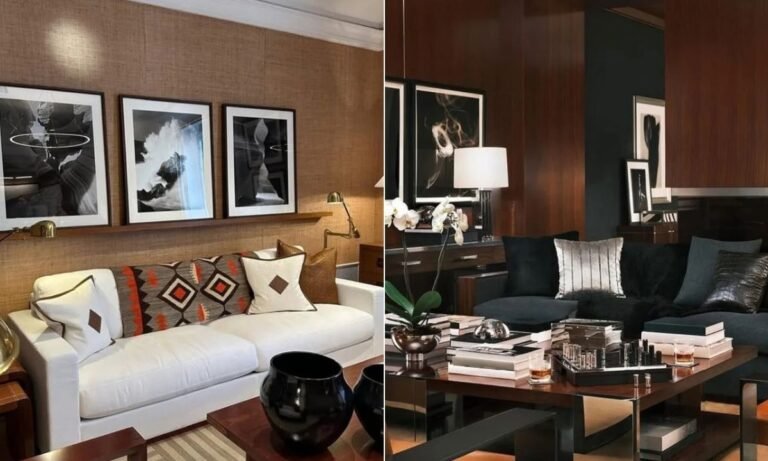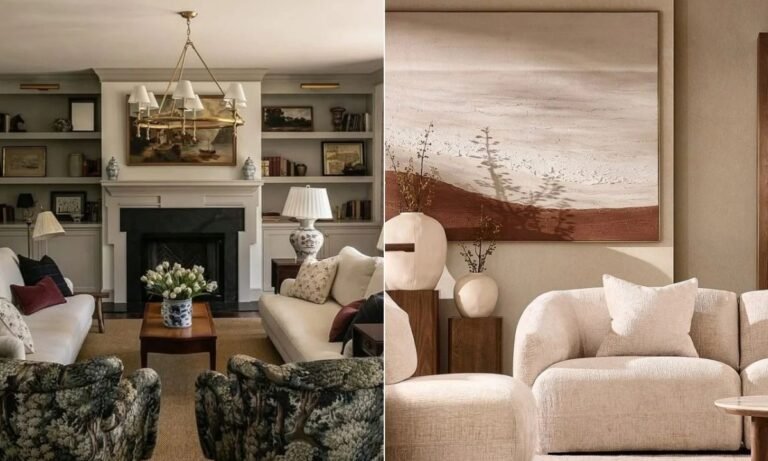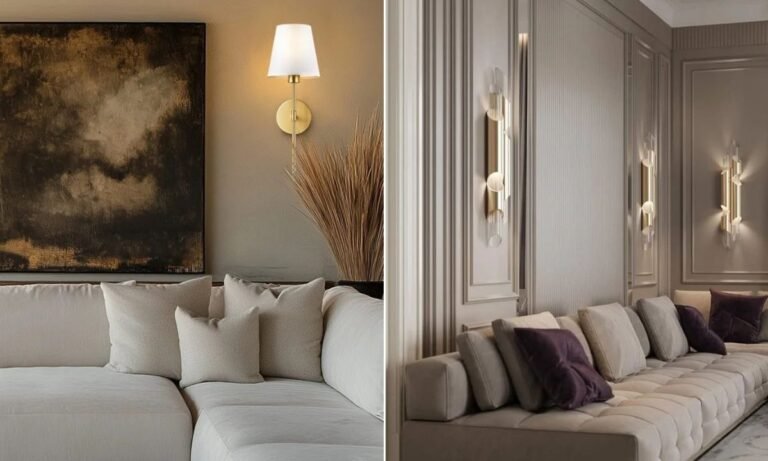
You find an accent chair you love, but once you picture it beside your sofa, you start wondering if it will clash.
A few smart choices with size, color, shape, and placement can make that chair feel like it was always meant to be there.
In this article, you will find practical living room accent chair ideas that show you how to style, place, and pair them.
Let’s jump in!
How to Style an Accent Chair in a Living Room?
Start with placement, because even the right chair can look awkward if it blocks a walkway or sits too far from the main seating area.
Keep it close enough to the sofa and coffee table so it feels like part of the conversation instead of a separate corner piece.
If your sofa is plain, use the chair to bring in texture, pattern, or color, but repeat one detail elsewhere so everything still connects.

Pay attention to scale too, because a bulky chair can overwhelm a small sofa while a tiny chair may look lost beside a large sectional.
Add a small side table, lamp, or pillow when needed so the chair feels useful instead of looking like something placed there only for decoration.
The goal is simple: let the chair stand out a little, but make sure its size, color, and position still work with the whole room.
Ground Neutrals
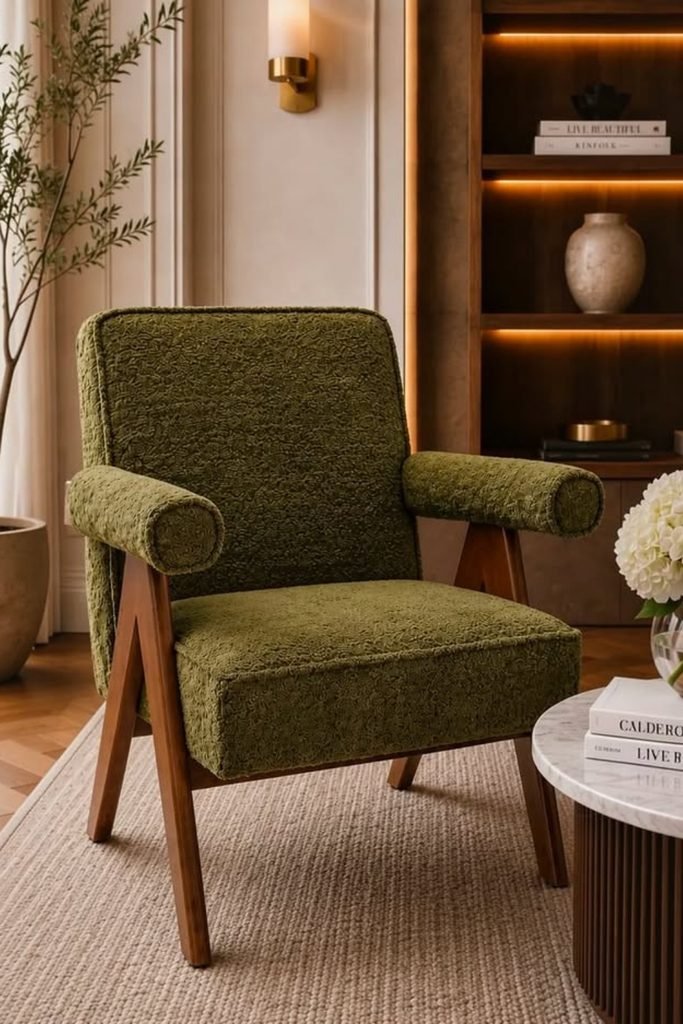
A deep olive chair works beautifully in warm neutral living rooms because the color adds character without fighting natural wood or beige finishes.
Choose a textured fabric when the surrounding furniture feels smooth, since that extra surface detail gives the seating area more depth.
Keep nearby accessories simple and repeat one earthy tone in plants, wood, or decor so the chair feels connected rather than isolated.
Soften Corners
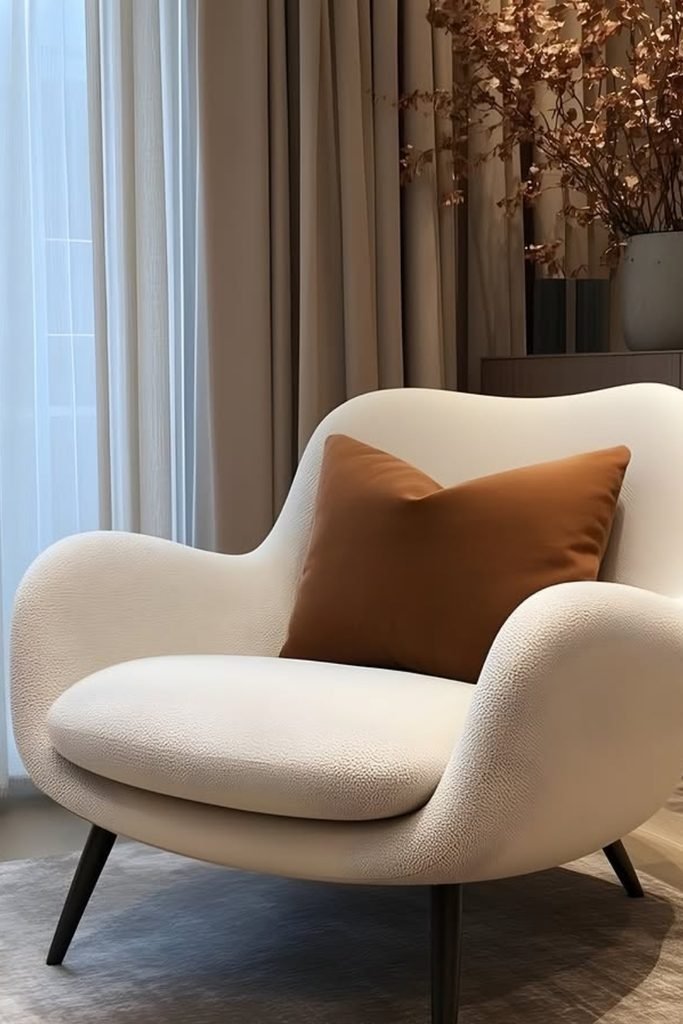
A rounded cream chair can soften a living room filled with straight sofas, square tables, or sharp cabinetry without adding another strong color.
Place it near a window or open corner where the curved shape has enough breathing room to become an intentional focal point.
Bring in one warmer cushion or throw if the palette feels too pale, giving the chair contrast while keeping the room calm.
Frame Conversation
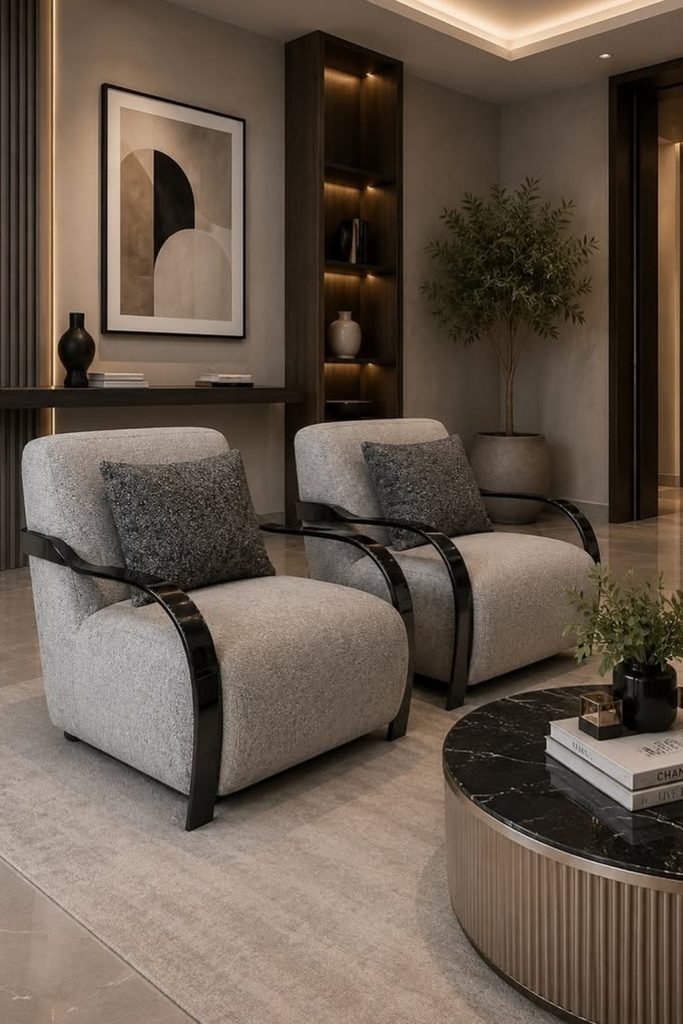
Two substantial chairs can anchor a larger living room when a sofa alone leaves the seating area feeling open or visually unfinished.
Set the pair close enough to share the coffee table, then angle them slightly inward so conversation feels natural rather than formal.
Dark metal arms work especially well with warm gray upholstery, adding definition while keeping the chairs polished against a moody neutral backdrop.
Create Symmetry
A matching chair pair instantly brings order to a bright living room, especially when one side of the sofa needs stronger visual balance.
Choose slim arms and raised wooden legs when floor space is limited, because lighter shapes give you seating without making the layout heavy.
Keep the upholstery close to the wall and rug tones, then let plants or artwork provide contrast so the arrangement stays soft.

Pair Contrasts
Two different accent chairs can share one corner beautifully when their shapes feel equally relaxed and their warm tones still relate.
Pair a patterned chair with solid leather to add variety, then keep both on the same rug so the setup feels connected.
This approach suits casual living rooms where matching furniture feels too formal, especially when you want a collected, comfortable look.

Soften Finishes
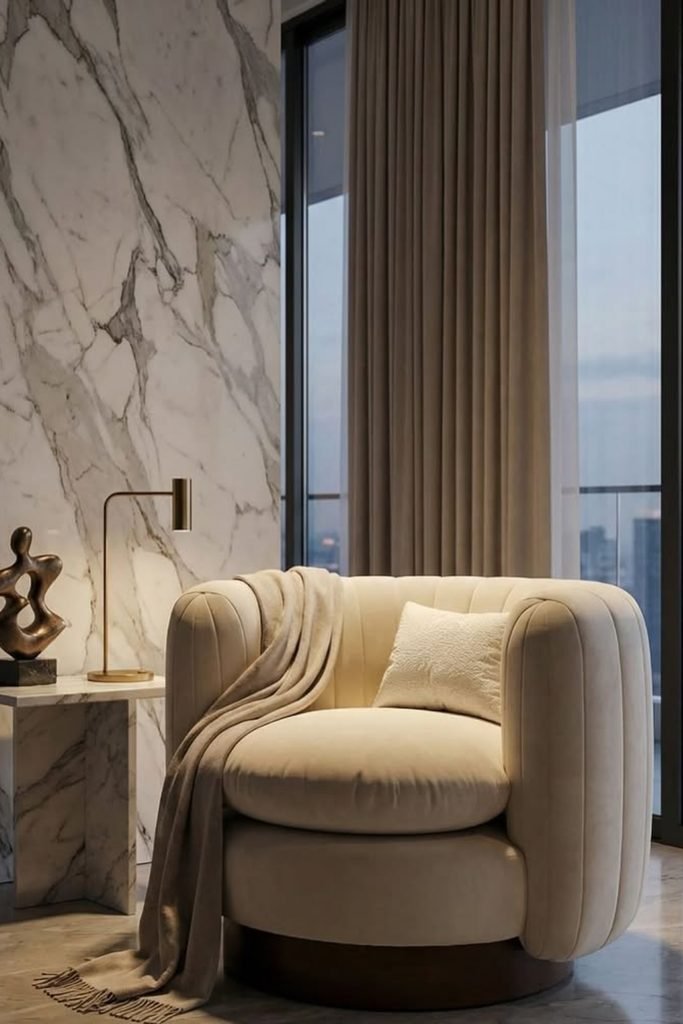
A plush cream chair can soften a living room with marble, glass, or other hard finishes without taking attention from them.
Choose a rounded, deeply cushioned shape when you want the seat to feel inviting, then place a slim table within easy reach.
Finish with a throw and small lamp so the corner works for reading while still keeping that clean, polished look.
Open Conversation
In a large open living room, two rounded chairs can create a smaller conversation zone without needing another bulky sofa.
Float them on the same rug with a compact table between, leaving enough space around each chair for easy movement.
Keeping the upholstery light helps the arrangement feel airy near tall windows, while curved backs soften the room’s strong architecture.

Balance Contrast
A rust chair and cream chair can face each other without looking mismatched when their rounded shapes and leg styles stay similar.
Use this pairing in neutral living rooms where you want one stronger color, but still need the seating area to feel balanced.
Let the brown coffee table bridge both chairs, giving the contrasting upholstery one shared anchor that makes the whole setup feel intentional.

Brighten Corners
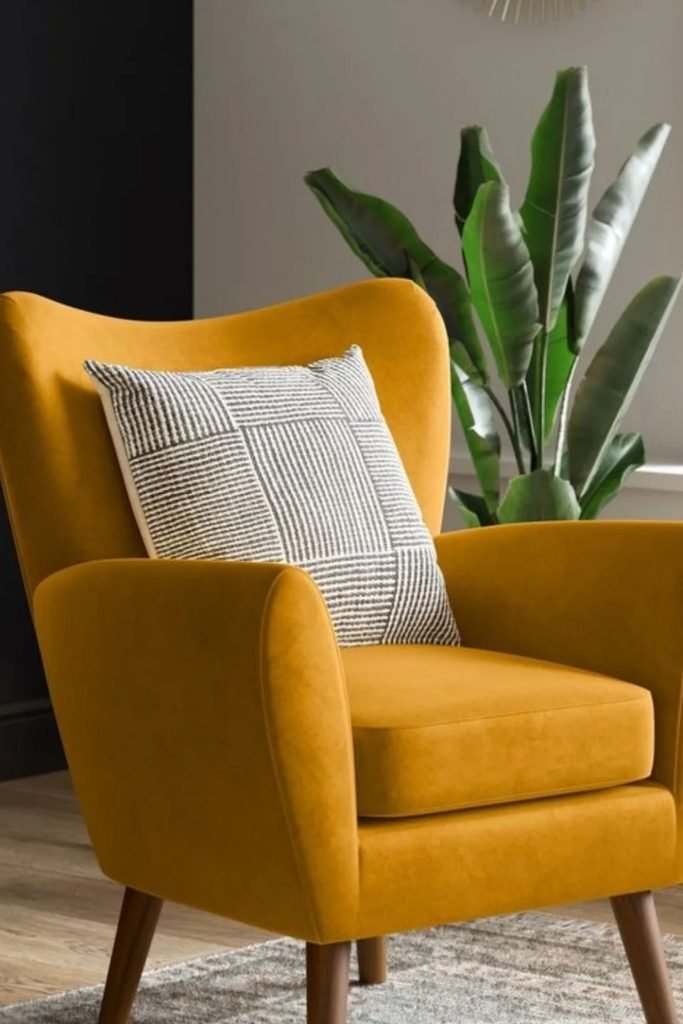
A mustard chair can wake up a dark living room corner, especially when black walls or deep finishes need warmer contrast.
Place it near a window or side table so the color feels intentional while the chair still works for everyday seating.
Repeat small warm touches through brass, wood, or patterned cushions, which helps the bold upholstery blend into the wider room.
Mix Materials
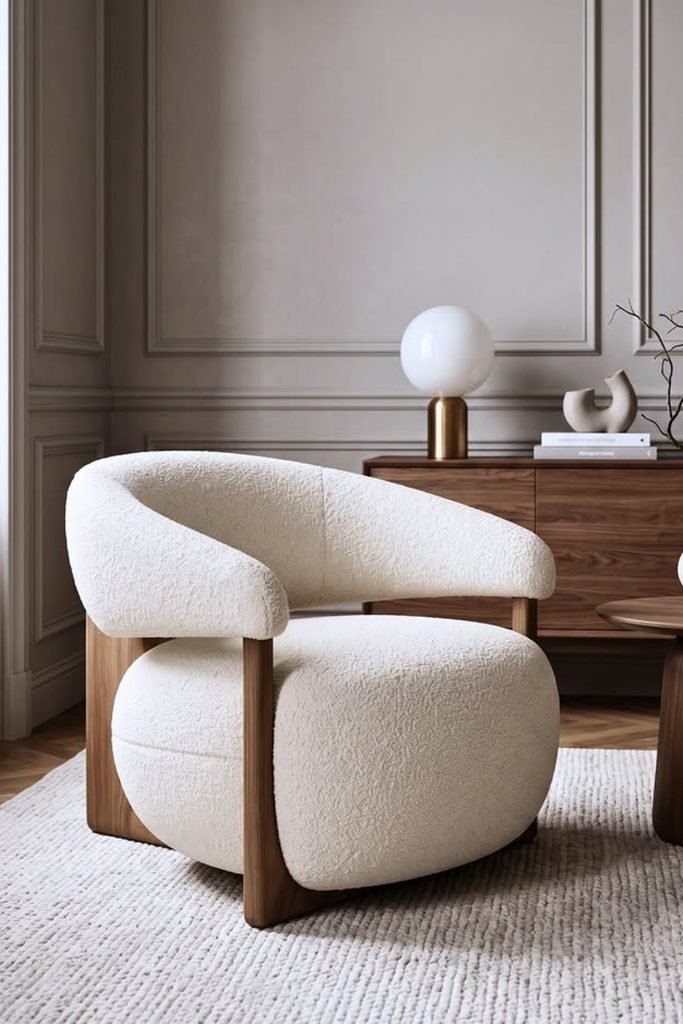
A cream chair with exposed wood adds interest to a neutral living room without relying on strong color or busy pattern.
Choose this combination when your sofa is fully upholstered, because the visible frame breaks up softness and gives the room more structure.
Keep nearby tables in a similar wood tone so the chair feels connected, then let textured fabric provide the contrast.
Build Comfort
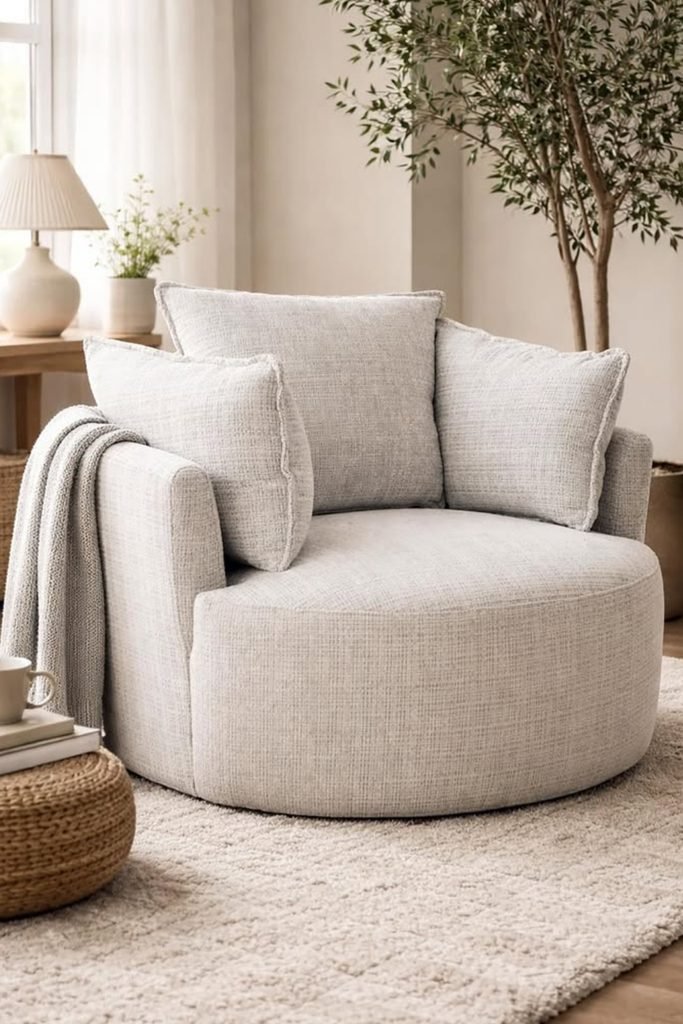
An oversized chair works best in a relaxed living room where you want one seat to double as a cozy lounging spot.
Give it enough floor space around the sides, since a wide rounded base can quickly crowd a narrow seating arrangement.
Layer soft cushions and a throw for comfort, but keep nearby furniture smaller so the chair remains inviting instead of overwhelming.
Keep Airy
Cane chairs are a smart choice when a living room needs extra seating but another fully upholstered piece would feel too heavy.
Set a matching pair across from the sofa to create conversation, while the open backs keep light moving through the layout.
Natural wood and woven seats suit warm neutral rooms especially well, and a textured rug helps pull the separate pieces together.

Echo Color
Let one bold chair color appear again in nearby artwork, because that repetition makes strong upholstery feel planned instead of random.
A matching pair works especially well beside a large window or open wall where the chairs can create their own seating zone.
Keep the rug and side table neutral, then let the repeated orange tone carry enough warmth through the whole living room.

Sculpt Corners
A sculptural chair can turn an empty corner into a real feature, especially when the room already uses a quiet neutral palette.
Choose a rounded back and low profile near windows so the chair adds softness without blocking natural light or open sightlines.
A small wooden table beside it keeps the setup useful for coffee or books while repeating warm tones from the upholstery.

Warm Fireside
Near a fireplace, choose a chair with a supportive back and generous arms so the spot feels comfortable enough for longer sitting.
Soft gray upholstery keeps the chair calm beside warm flames, while the rounded base prevents the fireplace area from feeling too rigid.
Set a compact table within reach for a drink or book, but leave enough clearance so the hearth still stays visually open.

Open Backs
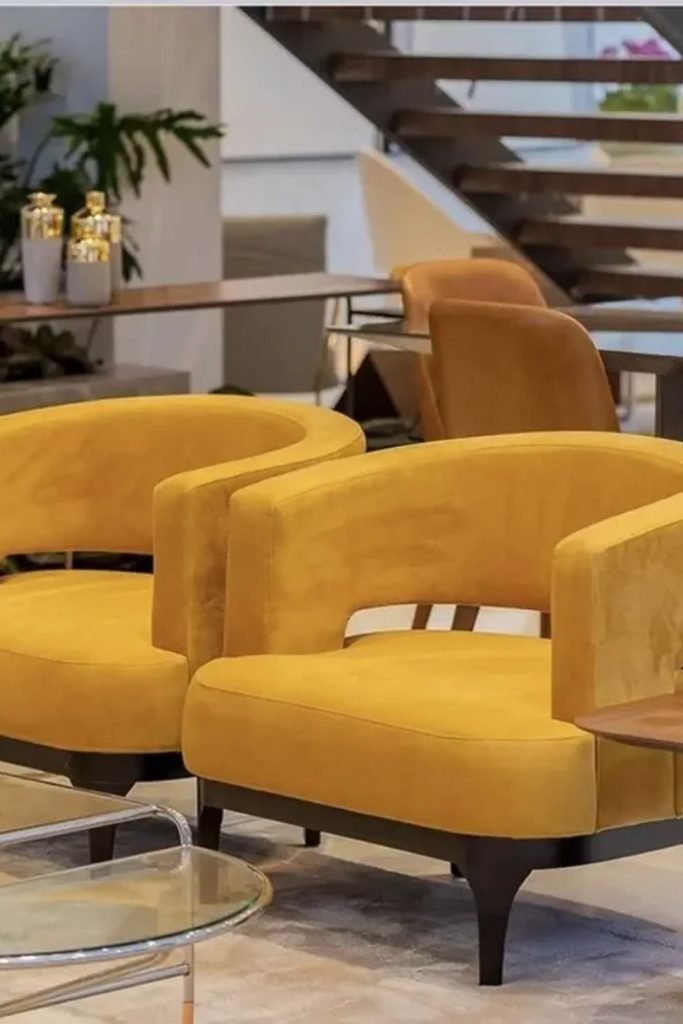
Cutout backs are useful when you want two accent chairs without creating a solid visual wall across the living room.
Their curved mustard upholstery brings energy, while the open section keeps the pair lighter than fully wrapped barrel-style seating in compact layouts.
Pair them with a simple wood table or glass coffee table so the bold color stays noticeable without making the arrangement feel busy.
Deepen Neutrals
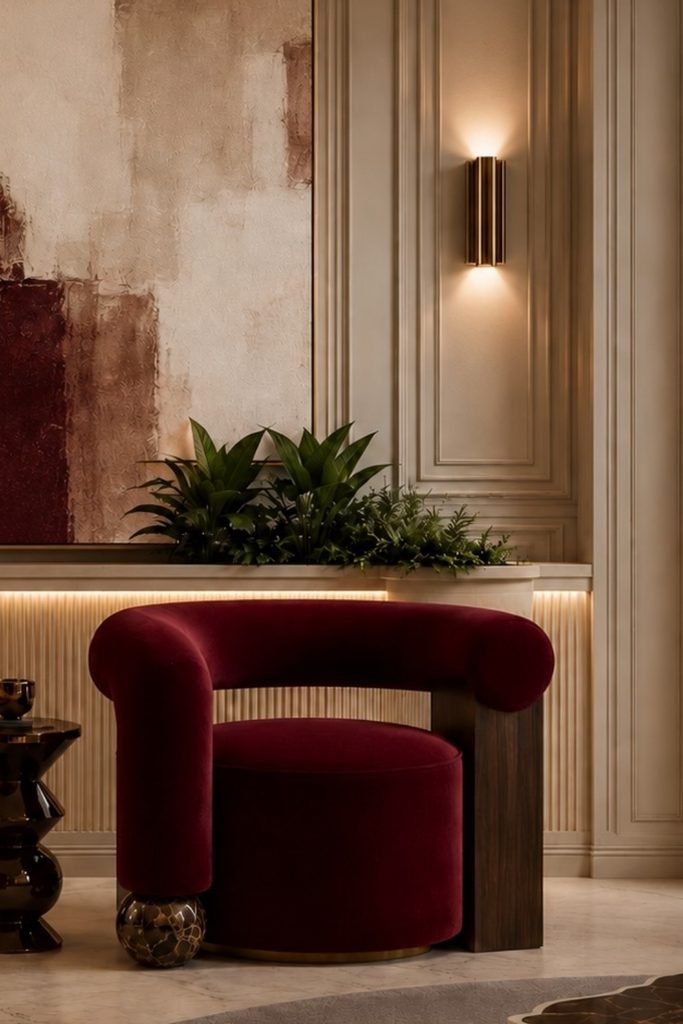
Deep burgundy chairs can give a formal neutral living room more depth, especially when the same shade appears again in nearby artwork.
Choose rounded silhouettes when the room already has strong wall molding or straight cabinetry, because softer curves keep the space from feeling rigid.
Keep surrounding tables small and finishes warm, letting the chair color carry the drama without competing with too many decorative details.
Shape Corners
Two compact cream chairs can turn an unused side of the living room into a calm conversation spot without needing much floor space.
Place a small table between them for drinks or books, then use striped cushions to bring in contrast without changing the neutral palette.
This setup suits apartments or quiet corners where you want extra seating to feel intentional, comfortable, and visually separate from the sofa.

Add Flexibility
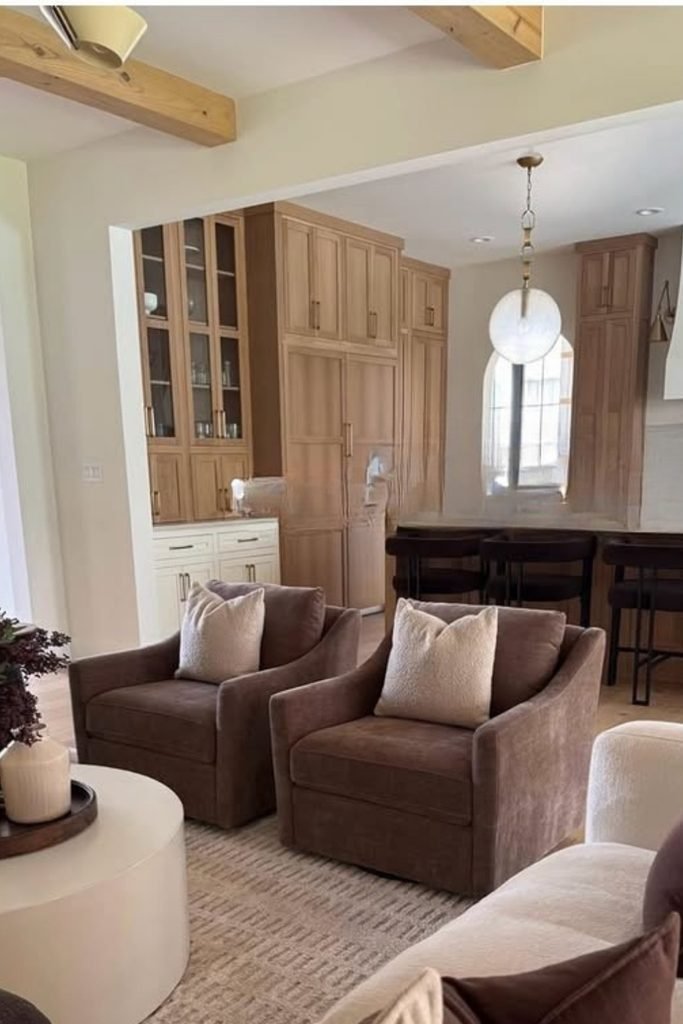
Swivel chairs work especially well beside a large sectional when your living room opens toward a kitchen, fireplace, or another activity zone.
Position them across from the sofa so guests can join the conversation, then rotate the seats whenever attention shifts somewhere else.
Choose upholstery close to the sofa palette to keep the larger arrangement calm, while darker cushions add enough contrast to define each seat.
Lighten Seating
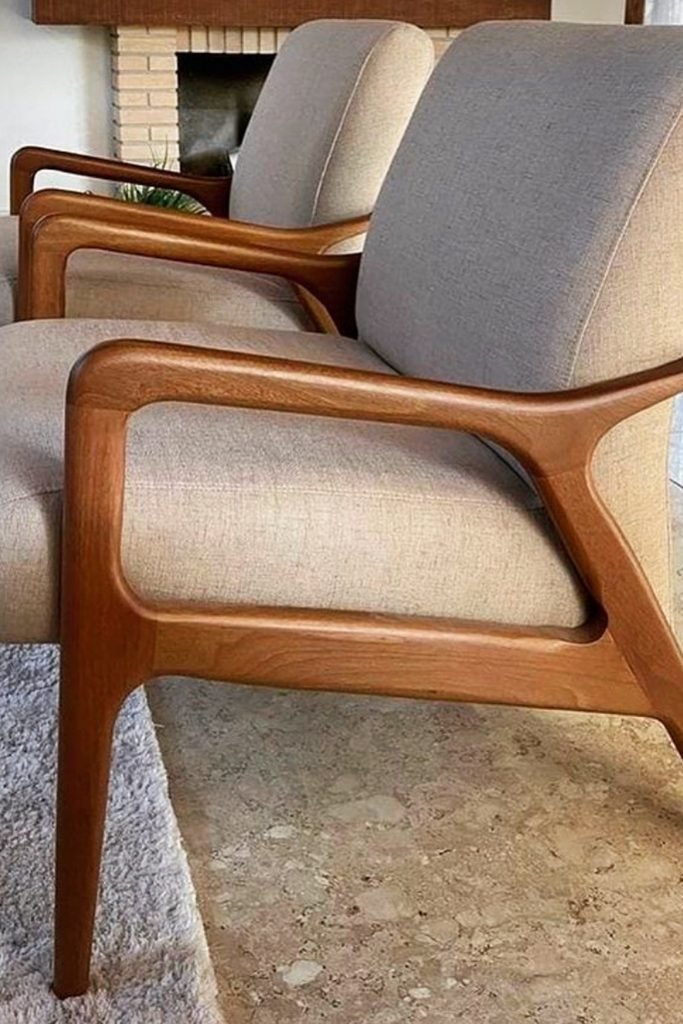
Wood-framed chairs are a smart way to add two seats without making a living room feel packed with heavy upholstered furniture.
The open sides expose more floor and give the pair a lighter look, which works especially well beside sofas or near fireplaces.
Match the wood tone with nearby tables or cabinetry, then choose simple neutral upholstery so the frame becomes the detail that stands out.
Complete Seating
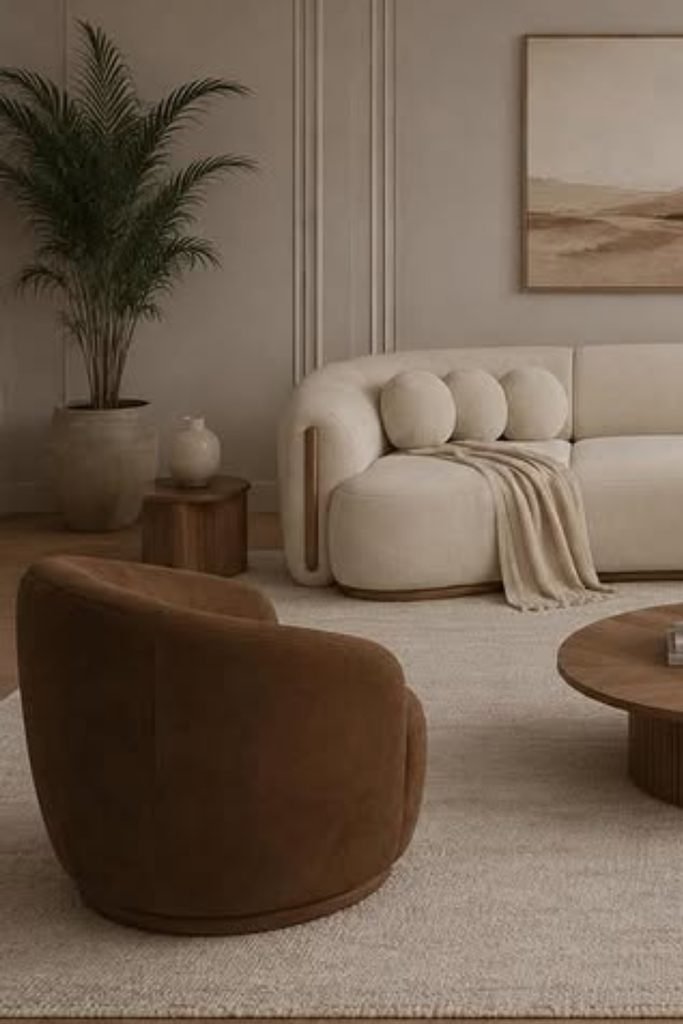
Two rounded brown chairs can complete a large neutral living room by filling the open side without adding another bulky sofa.
Angle them toward the coffee table so everyone stays part of the conversation, while the curved backs keep movement easy.
Choose a deeper earthy tone than the sofa to create contrast, then repeat warm wood nearby so the seating still feels connected.
Layer Darkness
A dark accent chair can disappear in the wrong room, but layered charcoal, brown, and black tones make this setup feel deliberate.
Pick a chair with carved or textured framing when the palette stays deep, because visible detail keeps the furniture from looking flat.
Place the pair near the main sofa or media wall, then use softer upholstery to keep the darker arrangement comfortable and balanced.

Style Softly
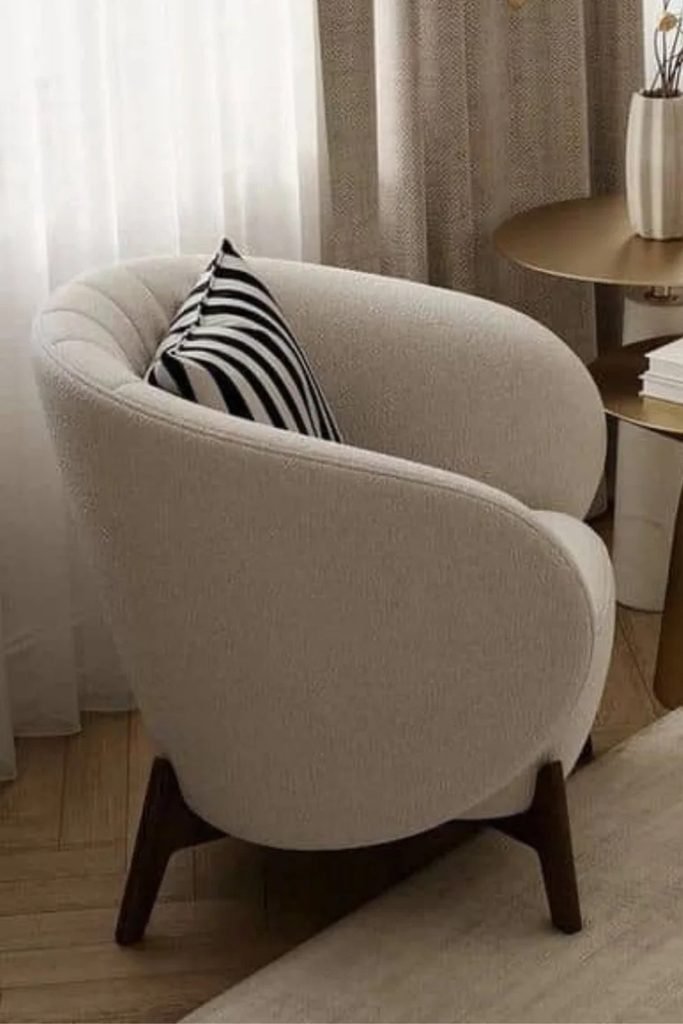
Two cream chairs can soften a quiet living room corner, especially when you want extra seating without introducing another strong color.
Use a small metallic table between them to add polish, then keep both chairs partly on the rug for a more unified arrangement.
Striped cushions are enough to break up the pale upholstery, giving the seating area contrast without disturbing the calm neutral palette.
FAQs
How Many Accent Chairs Should a Living Room Have?
One accent chair is often enough in a small living room, while larger spaces can comfortably handle a matching or mixed pair.
Let the room size and existing sofa decide first, because forcing extra chairs into tight walkways will make the layout feel crowded.
For bigger rooms, place two chairs across from the sofa or around the coffee table to create a balanced conversation area.
Should an Accent Chair Match the Rug?
Your accent chair does not need to match the rug exactly, but both should share at least one color, tone, or overall mood.
With a patterned rug, choose simpler upholstery so the seating area stays balanced instead of letting too many strong details compete.
If the rug is plain, a textured or colorful chair can bring interest while still keeping the room easy to style.