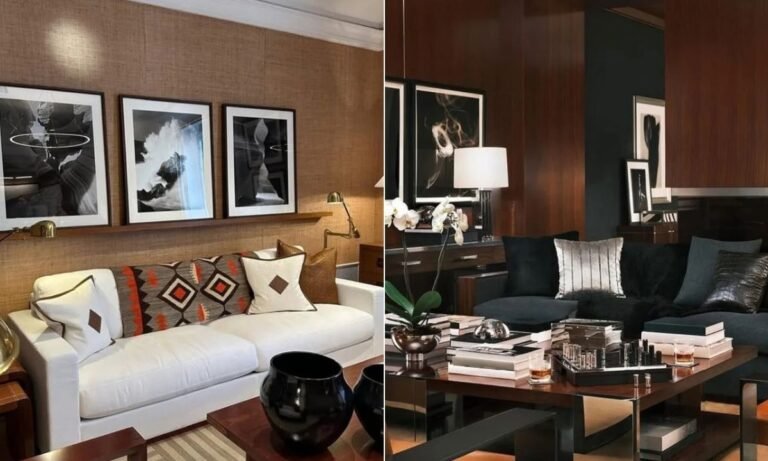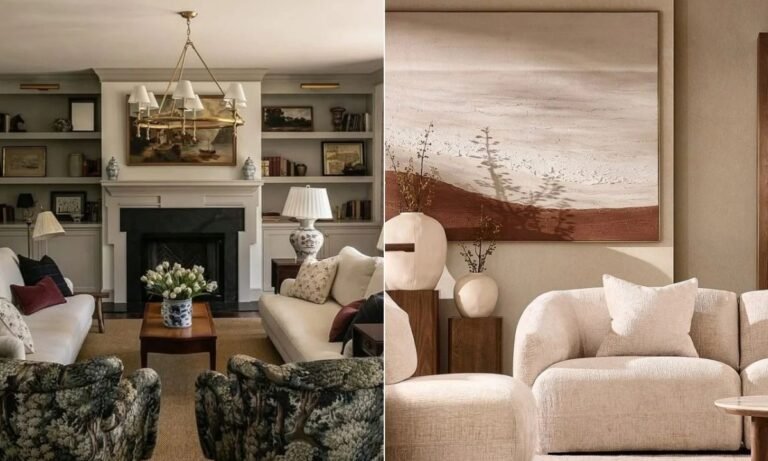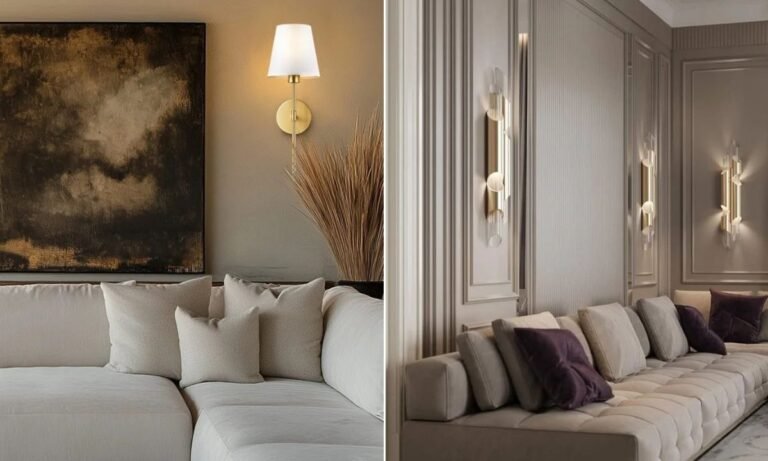
You save a beautiful accent wall, then look at your living room and wonder, “Which wall should I actually use?”
Choose the wrong one, and even a great color or wall treatment can feel out of place.
The right accent wall can pull your sofa, TV, fireplace, and decor together without overwhelming the room.
In this article, you’ll find 22 living room accent wall ideas that help you choose a style that actually works with your space.
Let’s jump in!
Which Wall Should Be an Accent Wall in a Living Room?
Start with the wall your eyes naturally notice when you enter the living room.
If you have a fireplace, built-in shelves, or a TV setup, that wall already has a focal point, so highlighting it usually feels natural.
The wall behind your sofa can also work well, especially when it is large and mostly uninterrupted.
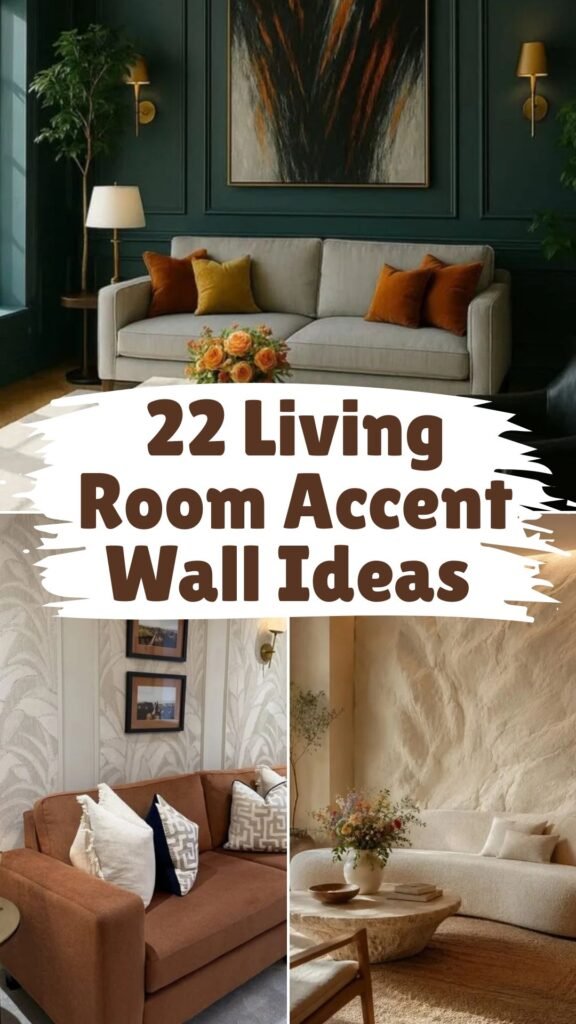
You can use paint, wallpaper, molding, wood panels, or artwork to give it more purpose.
Avoid choosing a wall just because it is empty. Look at your furniture placement, windows, doors, and lighting first.
If another feature already demands attention, build your accent wall around it instead of creating a second focal point that makes the room feel busy.
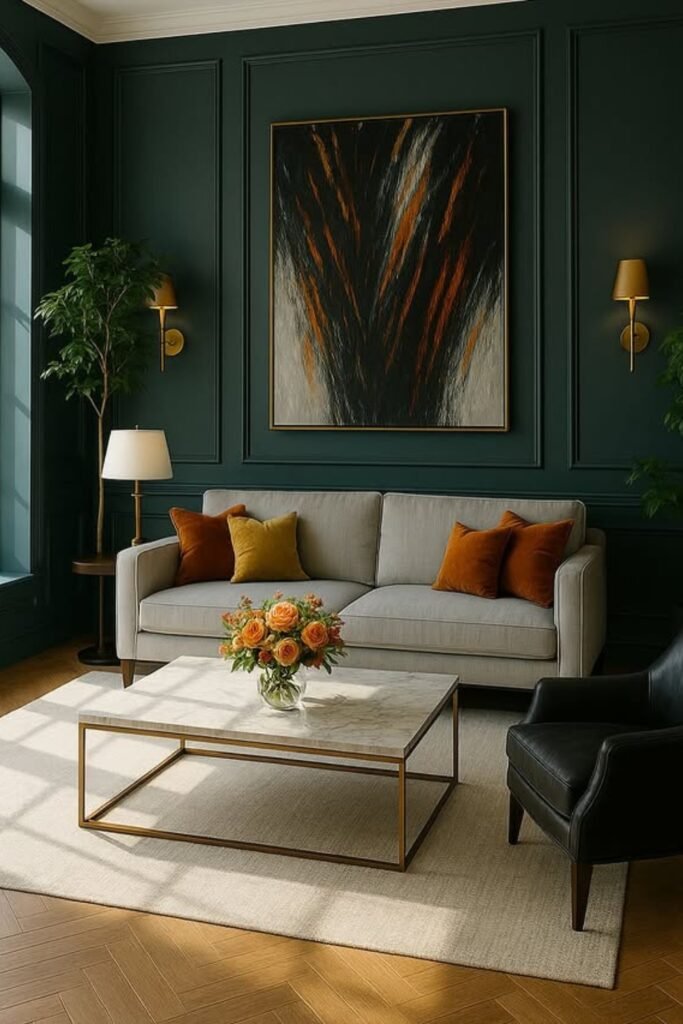
Deep Green Molding
A deep green wall works beautifully behind a neutral sofa when you want strong contrast without filling the living room with extra decoration.
Add simple rectangular molding before painting everything one shade, then center one oversized artwork.
Warm brass lighting and rust-toned cushions can soften the dark green, making this approach easier to use in bright or naturally lit rooms.
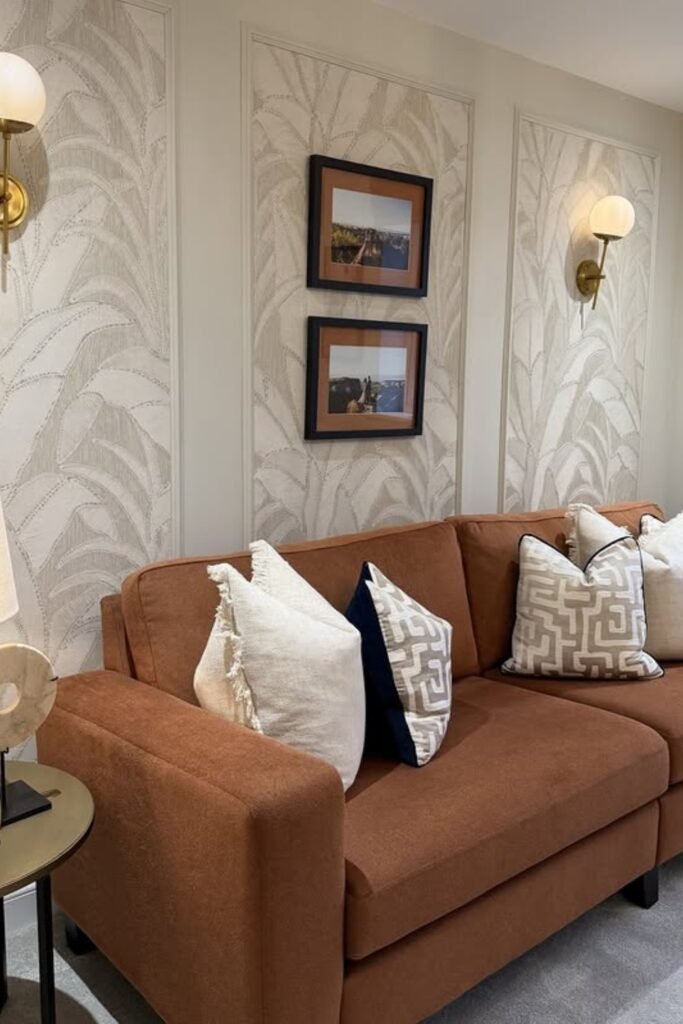
Framed Wallpaper Panels
Instead of wallpapering the entire living room, place a soft patterned paper inside molding panels to bring pattern in without overwhelming your furniture.
This approach suits a long sofa wall especially well because repeated panels break up the width while still keeping the overall arrangement balanced.
Keep the surrounding wall neutral, then repeat one wallpaper tone through cushions or accessories so the patterned sections feel connected to the room.
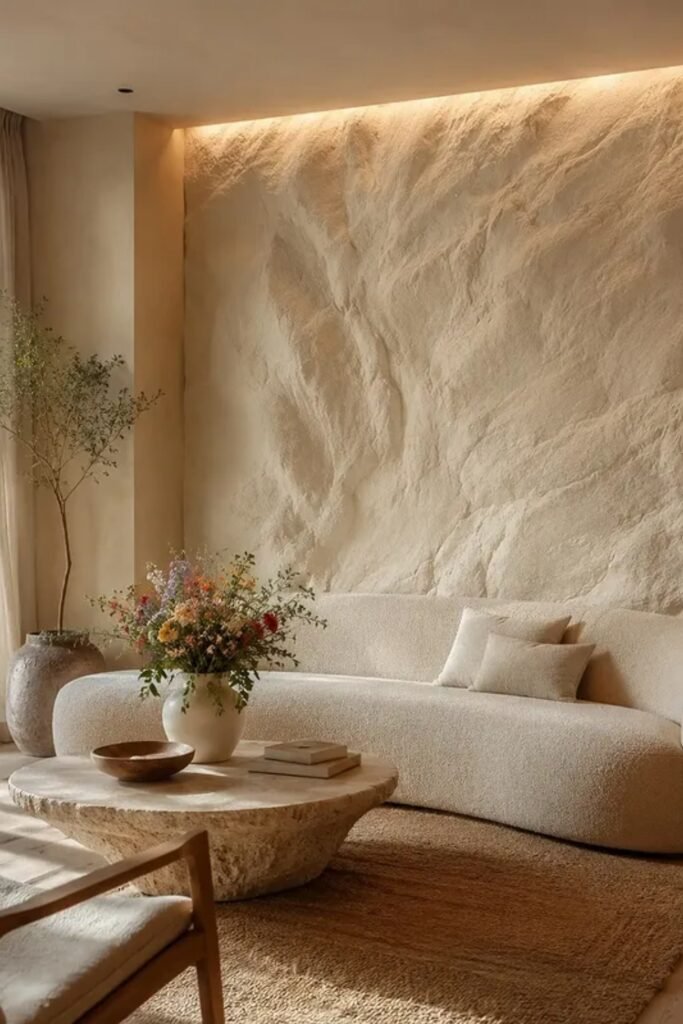
Textured Plaster Wall
When a neutral living room feels too plain, a heavily textured plaster wall can add interest without introducing another strong color or pattern.
Use this treatment behind a simple sofa, then add concealed lighting above it so every ridge and uneven surface becomes more noticeable after sunset.
Keep artwork off the finished wall and choose quiet furniture nearby, allowing the natural texture to become the feature rather than competing decoration.
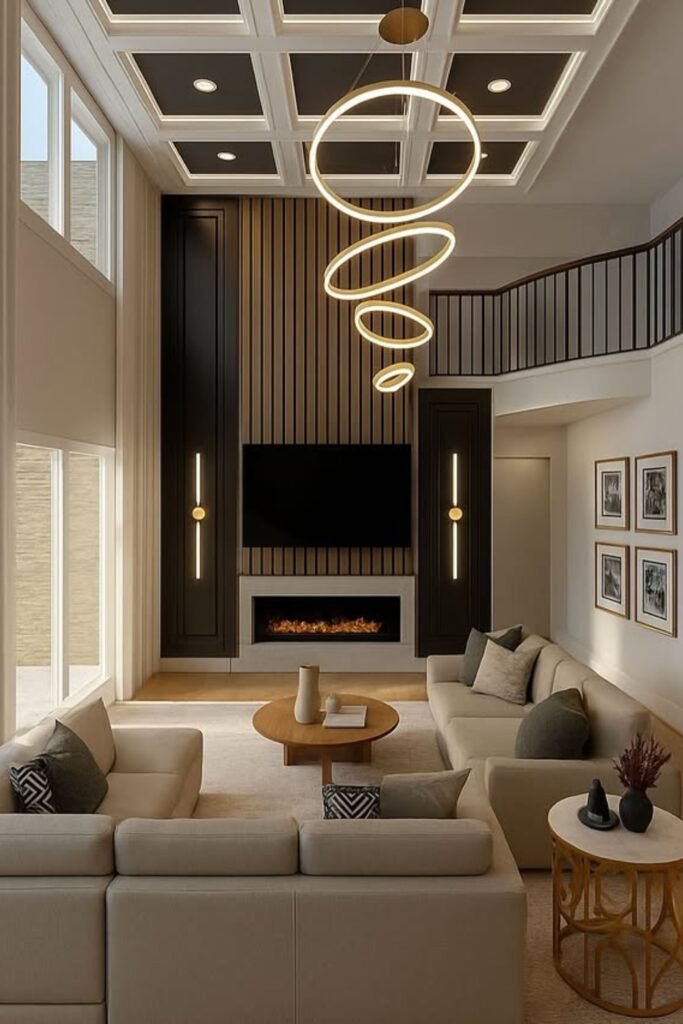
Tall Slatted Media Wall
A double-height living room needs an accent wall with enough scale, and vertical wood slats can carry attention upward without adding visual clutter.
Run the slats from floor toward ceiling behind the television, then use darker side panels to give the oversized wall a clearer center.
Adding a slim fireplace beneath the TV keeps both focal points together, which works better than spreading competing features around a large living room.
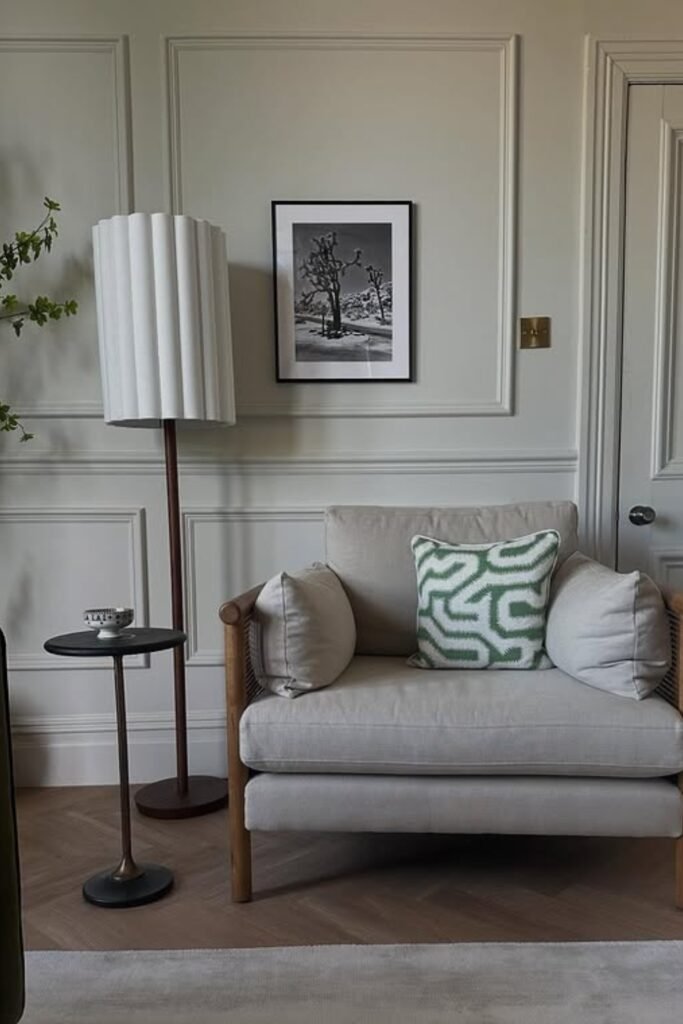
Soft Neutral Molding
You don’t need bold paint to make an accent wall noticeable; matching molding and wall color can create depth through shadow alone.
Use this approach behind a reading chair or sofa when your living room already has colorful furniture, artwork, or strong natural textures.
Keep the trim layout wide and simple, then add one small artwork rather than filling every panel and losing the architectural effect.
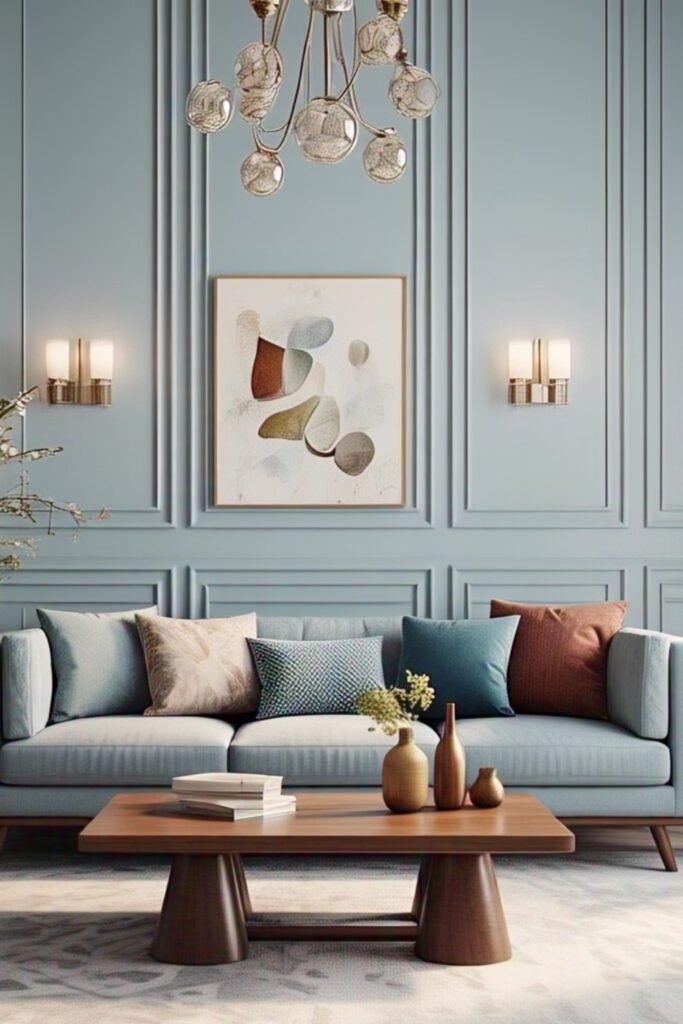
Dusty Blue Paneling
Dusty blue gives traditional wall molding a fresher direction, especially when you want color that feels noticeable without becoming too dark or dramatic.
Carry the same shade across every panel and trim piece, then place one centered artwork between sconces to keep the wall visually organized.
Warm wood tables and muted rust accents balance the cooler blue, making this combination especially useful for transitional or modern classic living rooms.
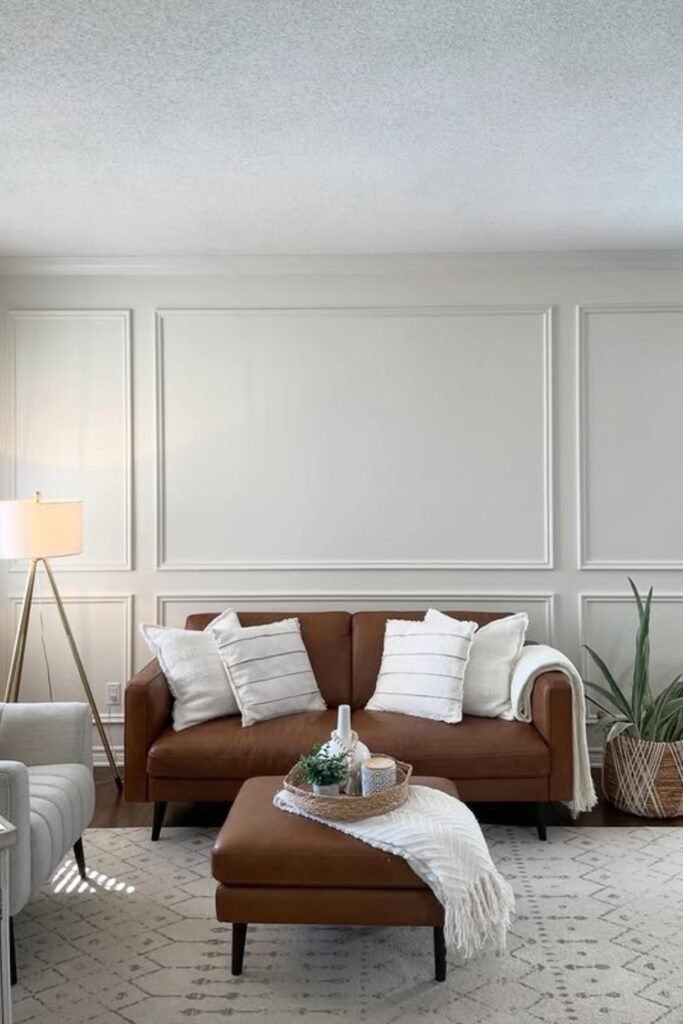
White Picture Molding
A brown leather sofa already brings plenty of visual weight, so a crisp white molded wall can add character without competing for attention.
Create large rectangular panels behind the seating area and paint the trim with the wall, letting natural shadows define each architectural section.
This is an easy direction for smaller living rooms where dark paint could feel heavy but a completely plain white wall feels unfinished.
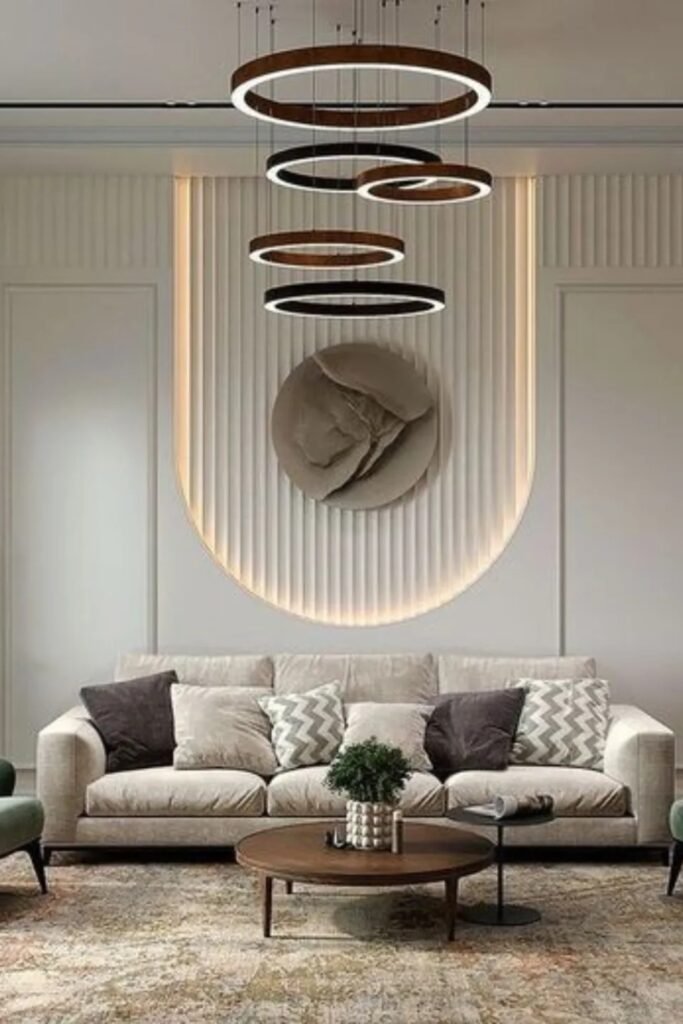
Curved Fluted Feature
For a living room that needs something more distinctive than rectangular paneling, combine vertical fluting with a large curved outline behind the sofa.
Hide warm LED lighting along the inner curve so the feature gains depth at night without requiring bold paint or busy wallpaper.
Keep the surrounding panels simple and symmetrical, allowing the illuminated center to anchor your seating arrangement.
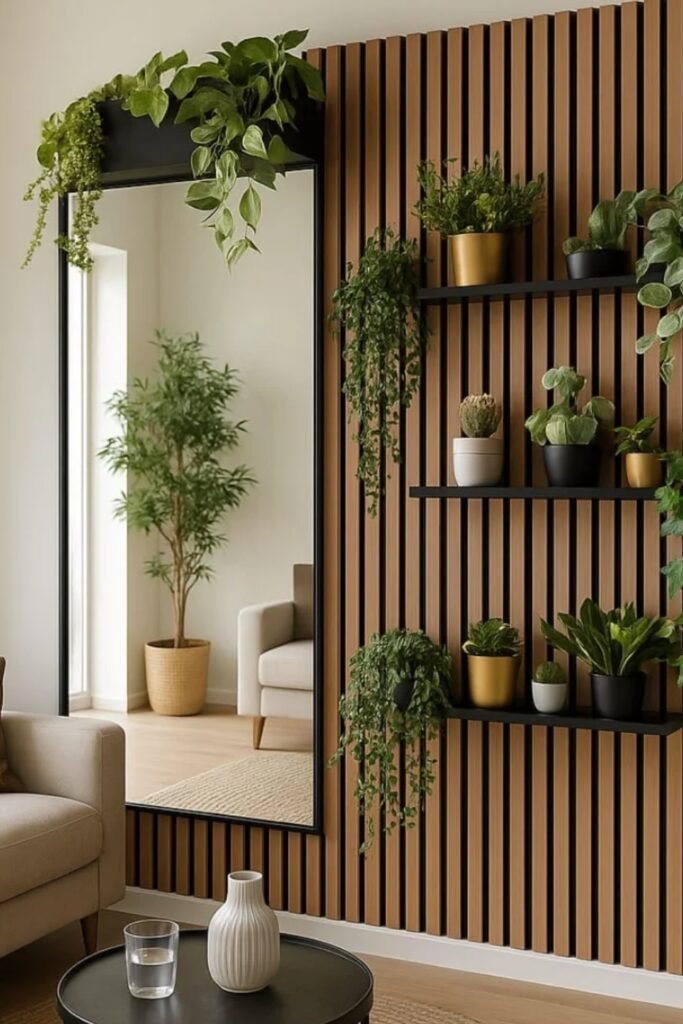
Plant Display Slats
Turn a narrow living room wall into something useful by pairing warm vertical slats with slim shelves instead of adding another bulky cabinet.
Use the shelves for trailing plants and smaller pots, then add a tall mirror beside them to bounce light around compact spaces.
Keeping the slatted treatment within one section makes this especially practical when you want an accent feature without covering the entire living room wall.
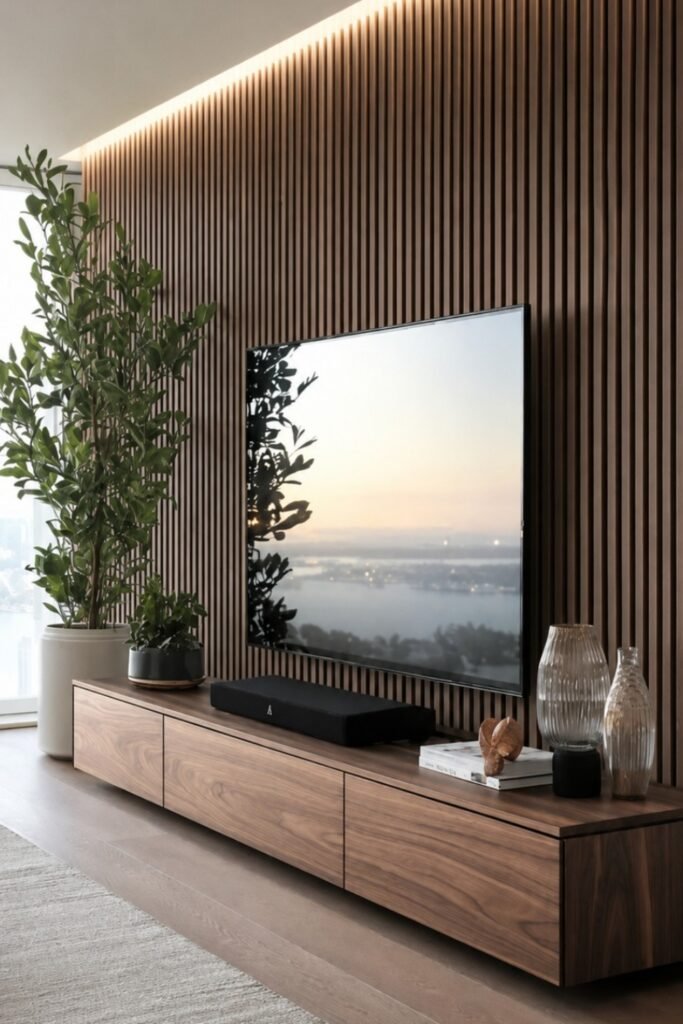
Walnut TV Wall
A large television feels much more integrated when dark walnut slats cover the whole media wall instead of leaving the screen floating alone.
Run the slats floor to ceiling and choose a low wood console in a similar tone, creating one clean and connected entertainment zone.
Finish with concealed lighting along the ceiling edge, which highlights the vertical texture and keeps this darker treatment from feeling overly heavy.
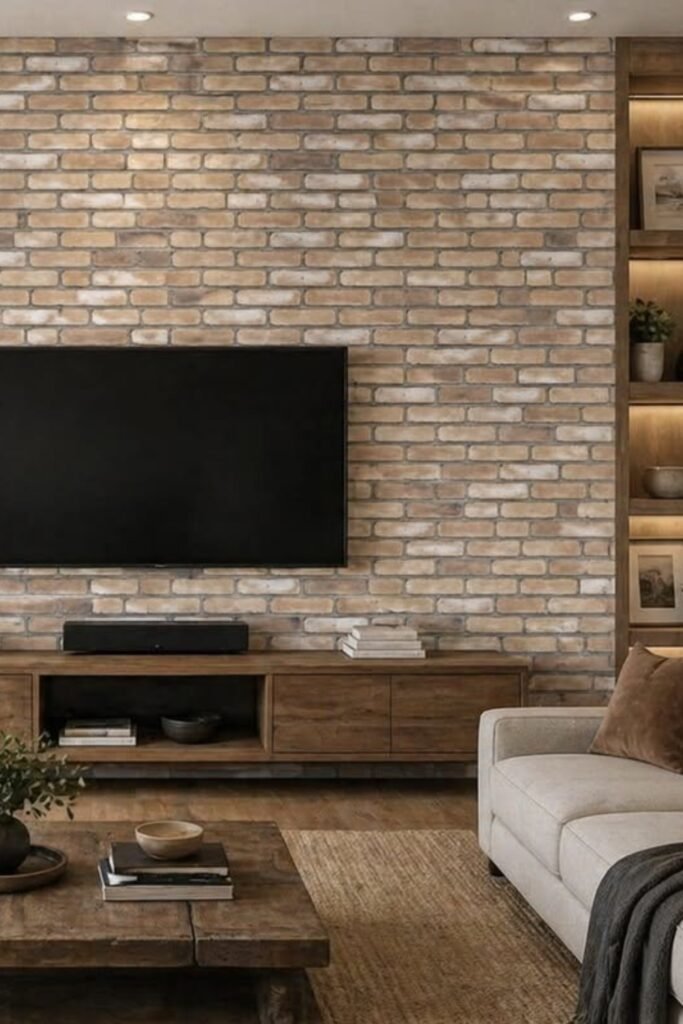
Warm Brick Media
Brick is a smart choice when a modern living room needs warmth and age, especially around a television that otherwise feels overly sleek.
Cover the main media wall with softly varied brick, then bring in a simple wood console so both materials share the visual weight.
Built-in shelves along one side can finish the setup, giving books and decor a home without covering the brick with unnecessary accessories.
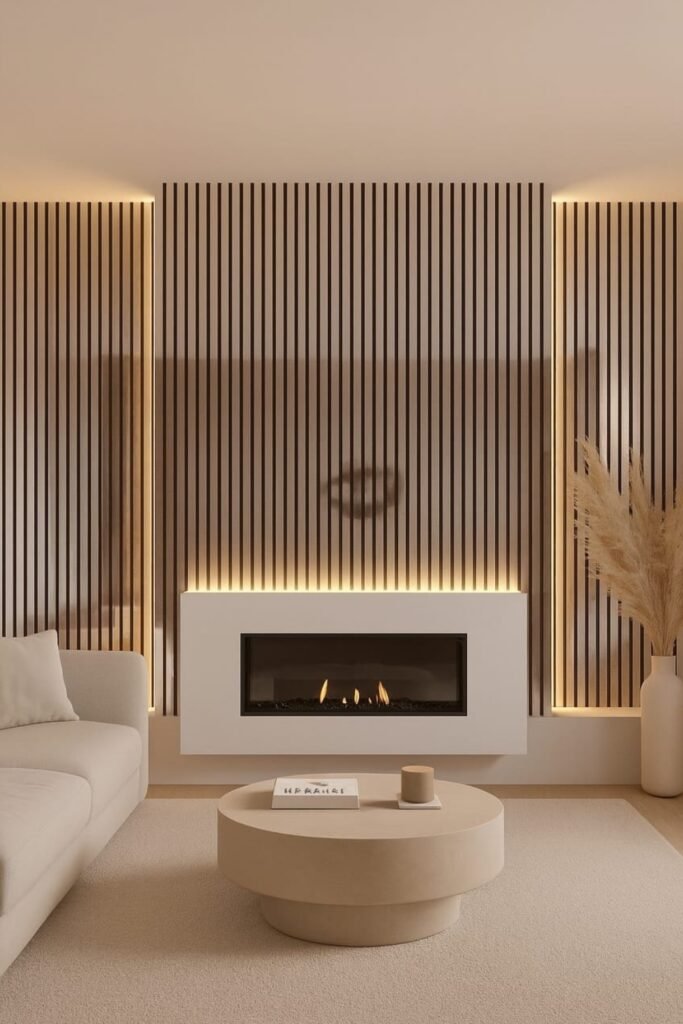
Lit Fireplace Slats
Let the fireplace become the natural focal point by framing it with tall slatted sections rather than creating another feature elsewhere nearby.
Leave some light wall visible behind narrow dark slats, then add warm backlighting so the pattern gains depth without dominating neutral furniture.
This symmetrical layout works particularly well in calm modern living rooms, where a fireplace needs presence but heavy stone would feel too imposing.
Stone Slat Media Wall
Mixing charcoal stone with warm wood slats gives a TV wall enough contrast to feel designed without relying on extra artwork or shelves.
Keep the stone centered behind the screen, then frame both sides with matching slats so the television becomes part of one balanced composition.
A floating wood console and concealed lighting soften the darker surface, making this combination easier to use in modern neutral living rooms.
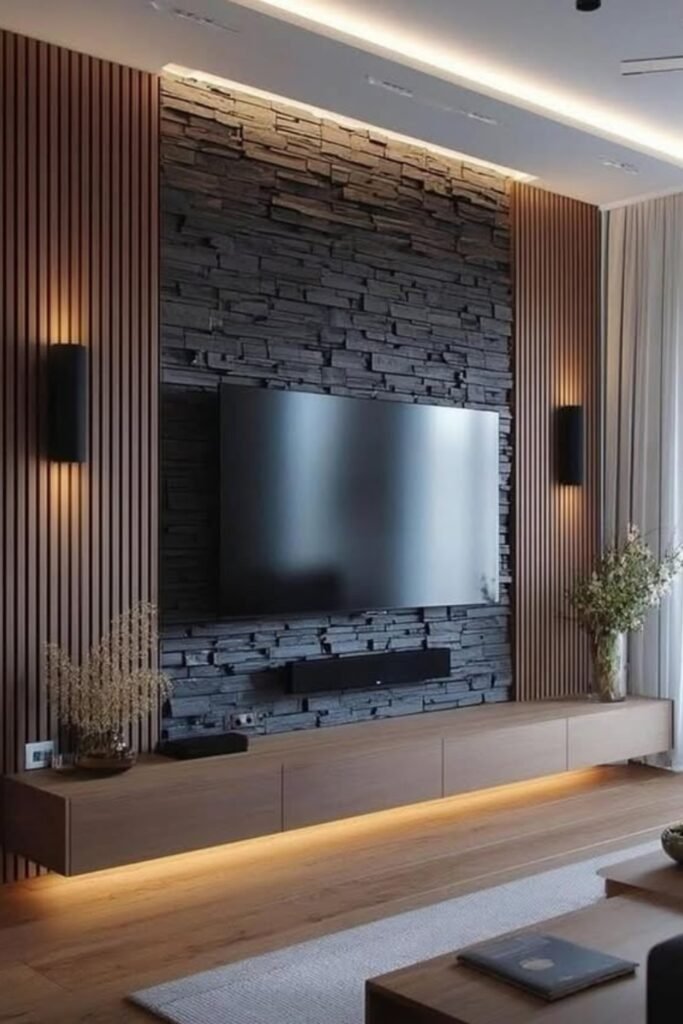
White Fluted TV Wall
Small living rooms can still handle a textured TV wall when you keep the fluted panels white and let shadow create the contrast.
Run narrow vertical grooves across the full wall, then use a low white console so storage blends in rather than breaking the clean look.
Bring warmth back through wood flooring, plants, and rounded furniture, which keeps an all-white media setup from feeling cold or overly plain.
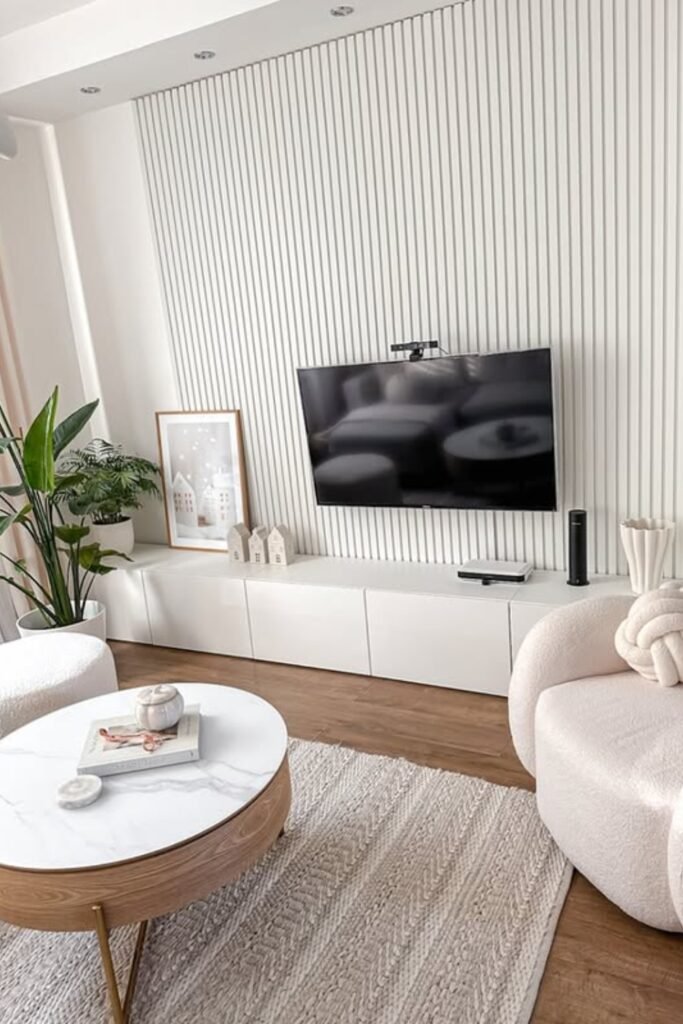
Geometric Trim Wall
When a tall blank wall feels impossible to decorate, oversized geometric trim can create enough movement that you barely need artwork at all.
Plan the pattern on paper first, then attach slim molding strips and paint everything one neutral shade to keep the lines visually controlled.
This treatment works best behind a simple sofa, where solid upholstery can balance the busy wall pattern instead of competing with it.

Charcoal Stone Center
A dark stone center can make a television almost disappear when switched off, while warm slatted sides stop the media wall feeling too cold.
Use this layout on a wide uninterrupted wall, keeping the television centered and extending a slim floating console across the lower section.
Small ceiling spotlights can wash across the stone texture, giving the darker surface depth while leaving the rest of the living room understated.

Hexagon Media Feature
A hexagon-paneled backdrop gives a media wall texture without using rough stone, making it a cleaner choice for polished contemporary living rooms.
Frame the darker center with narrow wood slats, then keep the console black so separate materials still read as one connected feature.
Use slim sconces beside the screen instead of extra artwork, giving the geometric pattern enough space to stay visible and visually balanced.
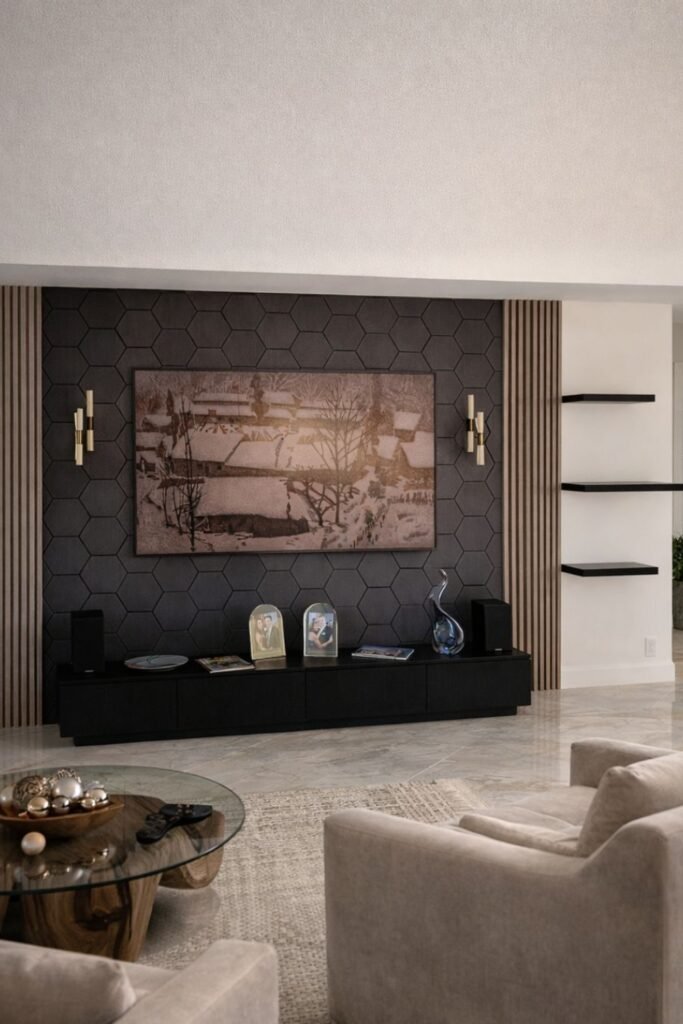
Backlit Walnut Slats
Warm lighting can completely change a dark slatted wall, especially when your living room needs a cozy focal point without brighter colors.
Run walnut slats across the main wall, then hide LED strips along the top and lower edge to wash light over the texture
Keep nearby furniture low and neutral so the illuminated wood remains dominant, while large plants can soften all those straight vertical lines.
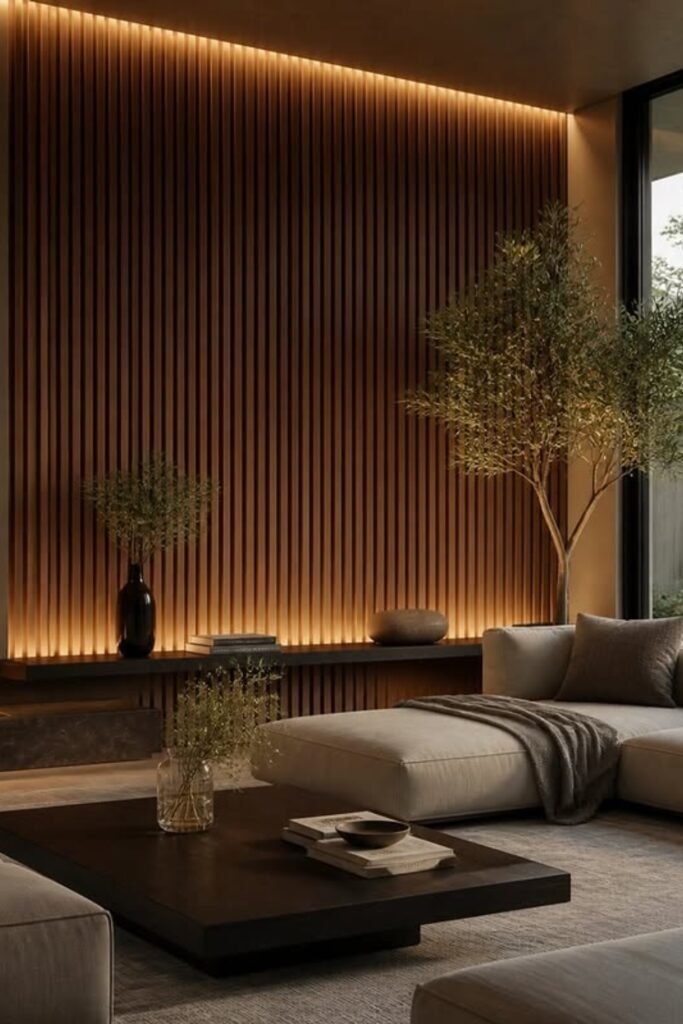
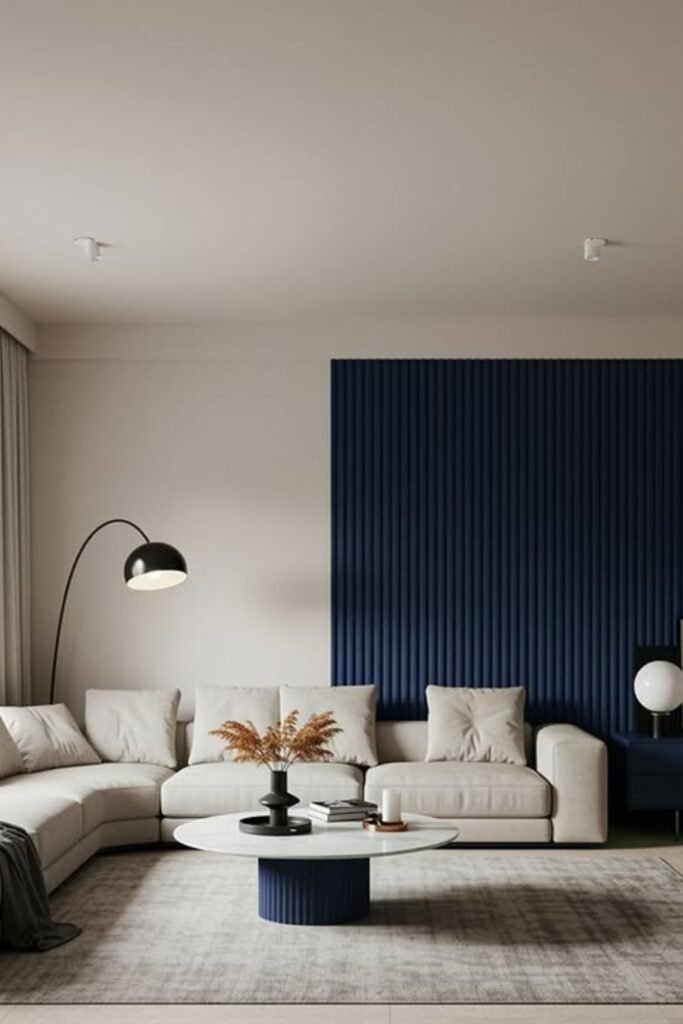
Navy Fluted Panel
You can introduce deep color without darkening the whole living room by limiting navy fluting to one clearly defined section behind seating.
Keep the surrounding walls warm and light, then repeat the navy once through a table or accessory so the feature feels deliberately connected.
This partial treatment suits open living rooms particularly well because it creates a visual zone without needing partitions, shelving, or extra furniture.
Taupe Grid Wall
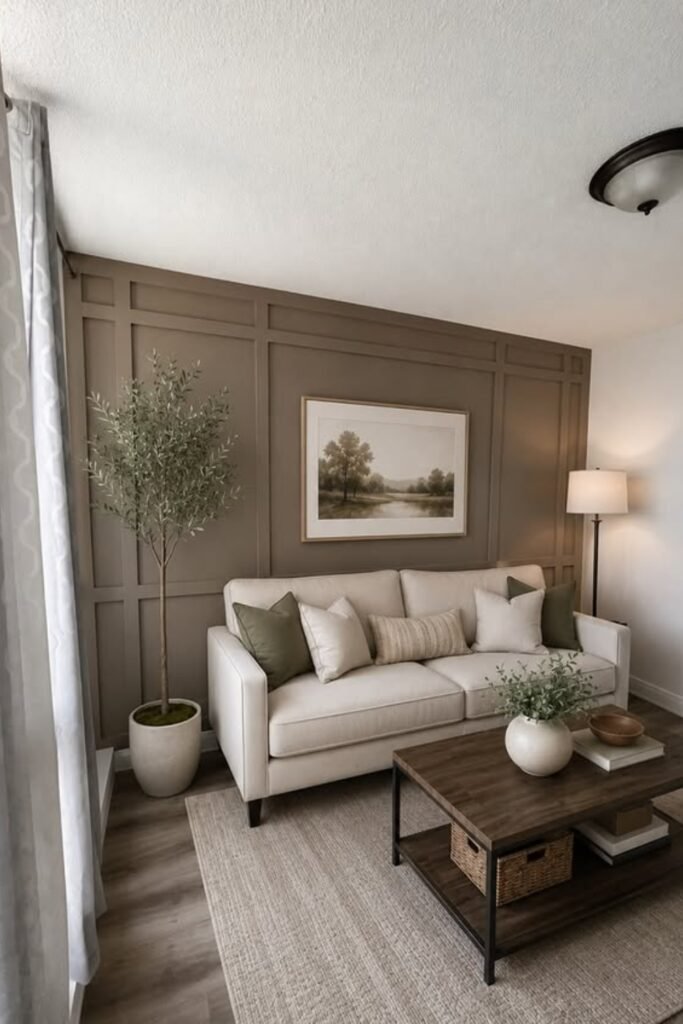
A warm taupe grid wall gives a small living room more character while staying quiet enough to sit behind everyday neutral furniture.
Build wide rectangular sections with simple trim, then paint the molding and background together so shadows create detail instead of contrasting colors.
Center one landscape print above the sofa and stop there; restrained artwork lets the paneling carry the wall without making compact seating feel crowded.
Shelved Slat Media Wall
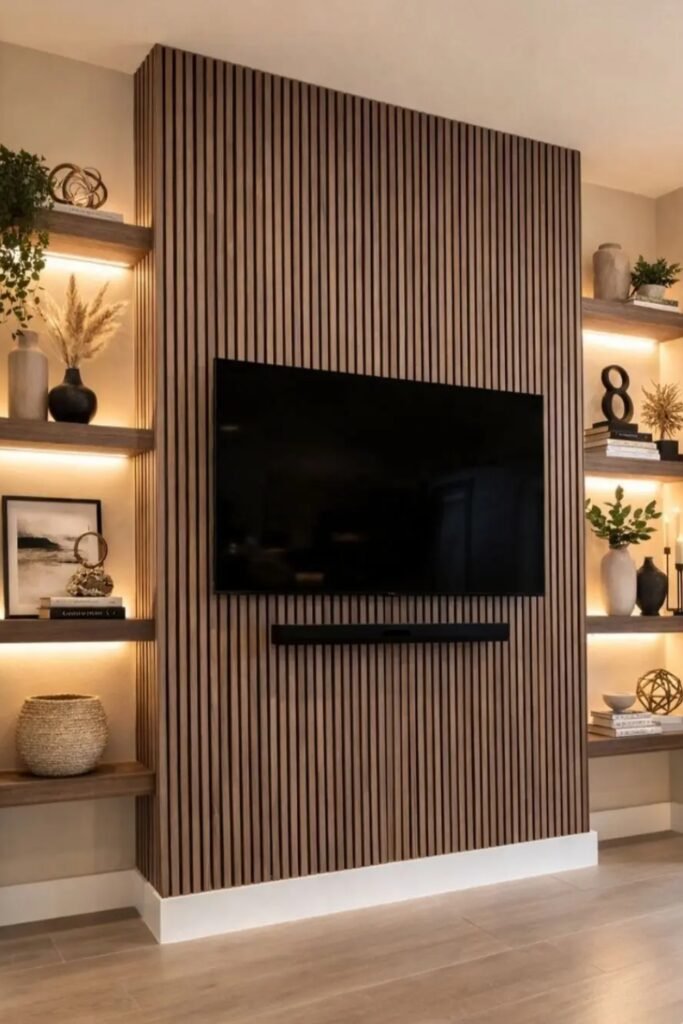
When your TV wall also needs storage, extend floating shelves beside a central slatted panel instead of adding heavy cabinets across the room.
Mount the television directly onto the wood slats, then use warm lighting beneath each shelf to make everyday decor feel more intentional.
Keep shelf styling loose with books, plants, and simple objects, leaving enough empty space so storage does not overpower the main media feature.
Navy Paneled Wall
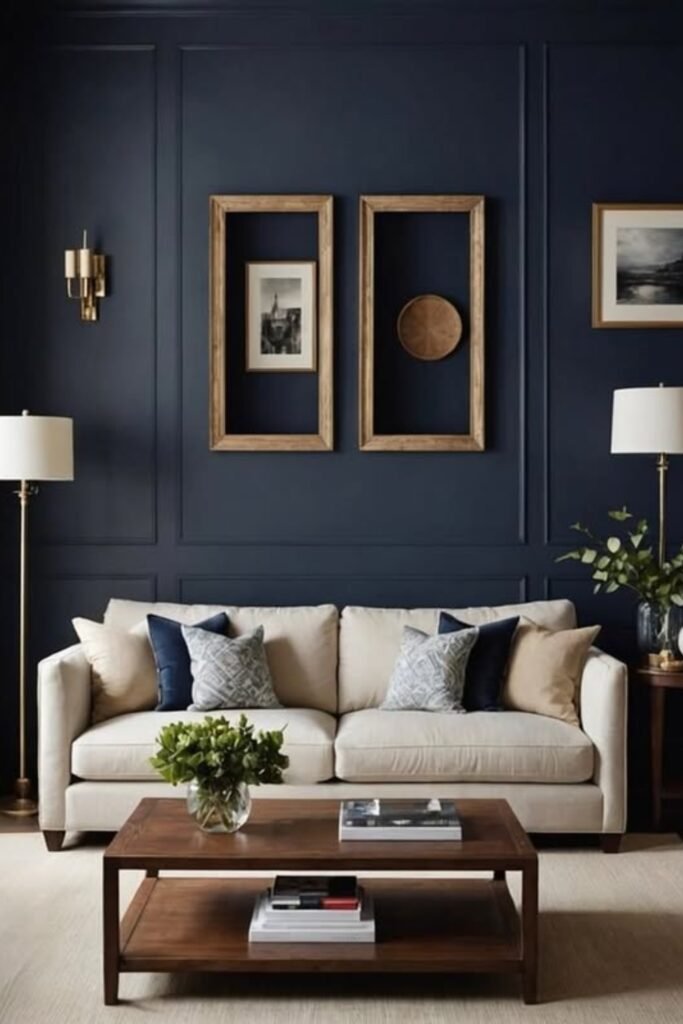
Deep navy can give a plain sofa wall instant structure, especially when traditional molding keeps the dark color from looking flat or unfinished.
Paint the trim and wall together, then bring in cream seating and warm wood furniture to balance the stronger background without weakening it.
Use only a few framed pieces inside the panels, allowing the navy surface and architectural lines to carry most of the visual interest.
FAQs
Can an Accent Wall Make a Living Room Look Bigger?
Yes, if you use it carefully. Choose a wall that naturally draws your eye deeper into the room, then keep the surrounding walls lighter.
Vertical slats, subtle molding, and low-contrast colors can also add depth without making a small living room feel closed in.
Should an Accent Wall Be Lighter or Darker Than the Other Walls?
Either can work, so base the choice on your room rather than following a fixed rule.
A darker accent wall creates stronger contrast, while a lighter or softer shade works better.
When the room already has dark furniture, limited daylight, or several bold features.