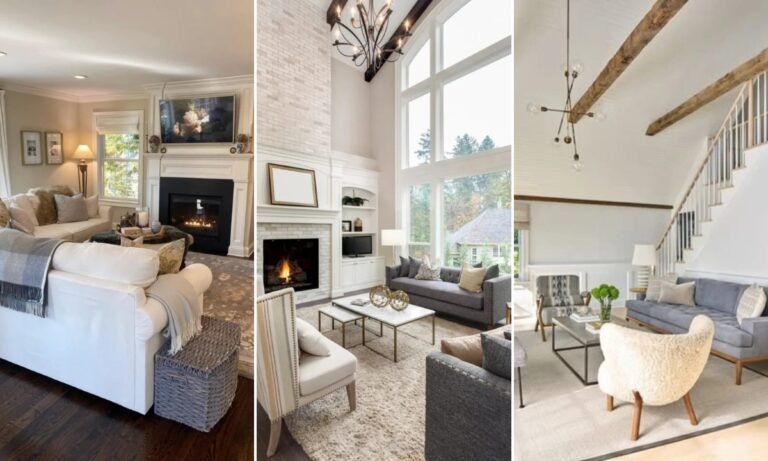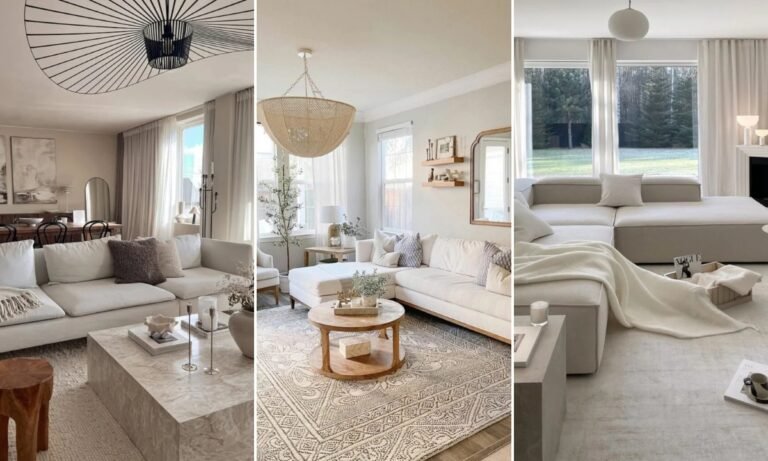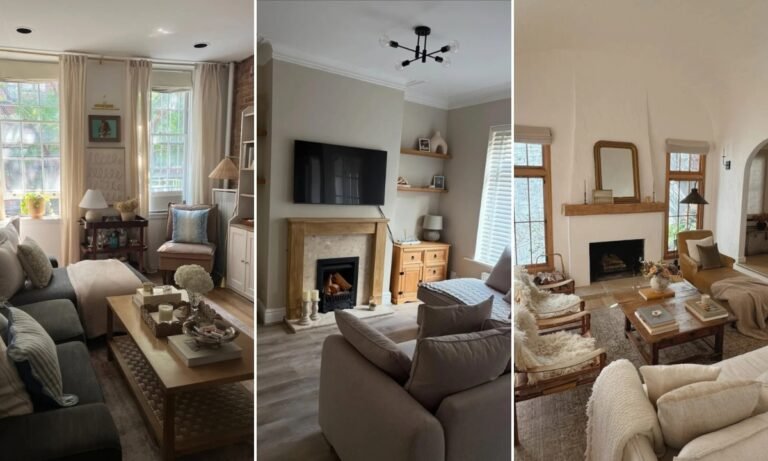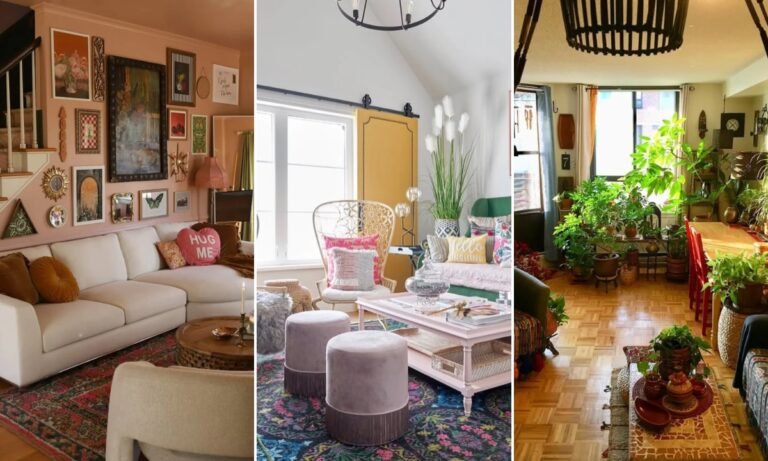
26 Living Room And Dining Room Combo Ideas for 2026
You keep walking around your living room, and you keep asking yourself, “Where are you supposed to eat?”
You see the couch taking one side, and you notice the TV owning the other. You don’t see a separate dining room anywhere, do you?
If you try to squeeze in a table, you might wonder, will you feel cramped? Will you feel awkward? Will you feel like you forced it?
You’re not alone, you and many others face this same problem in small homes or open layouts. You can put a dining table in your living room, and you can make it look intentional.
In this article, you will see exactly how you can make living room and dining room combo work togeather with these 26 ideas.
Let’s jump in!
Can You Put a Dining Table in a Living Room?
Yes, you can. But you can’t just drop a table anywhere and expect it to work. You will notice a dining table in a living room only looks right when you plan it carefully.
If you try to squeeze in a table that’s too big, you might block your walkway, or you might ignore the layout, and you’ll feel the room get tight and awkward.
But if you place it with intention, you’ll see the space feel smart and functional.
First, check your walking space. You need clear paths from one side of the room to the other. If you find yourself twisting sideways to pass the table, it’s too big. You should always measure before you buy.
Next, think about zones. You want your living area and dining area to feel separate, even without walls.
You can do that by placing your sofa with its back facing the dining table, adding a rug under your seating area, or hanging a pendant light above your table.
These small moves will tell your eye, “This is the dining zone.”
Also, choose the right table shape. If your room is narrow, you might go with a round or oval table. You’ll see how it softens the space and improves your flow.
If your room is long and rectangular, a rectangular table can line up naturally along one side, and you’ll feel how it fits.
So yes, you can put a dining table in your living room. You just can’t treat it like an afterthought. You need to plan it, measure it, and design it like it truly belongs there.
Loft-Style Living Combo
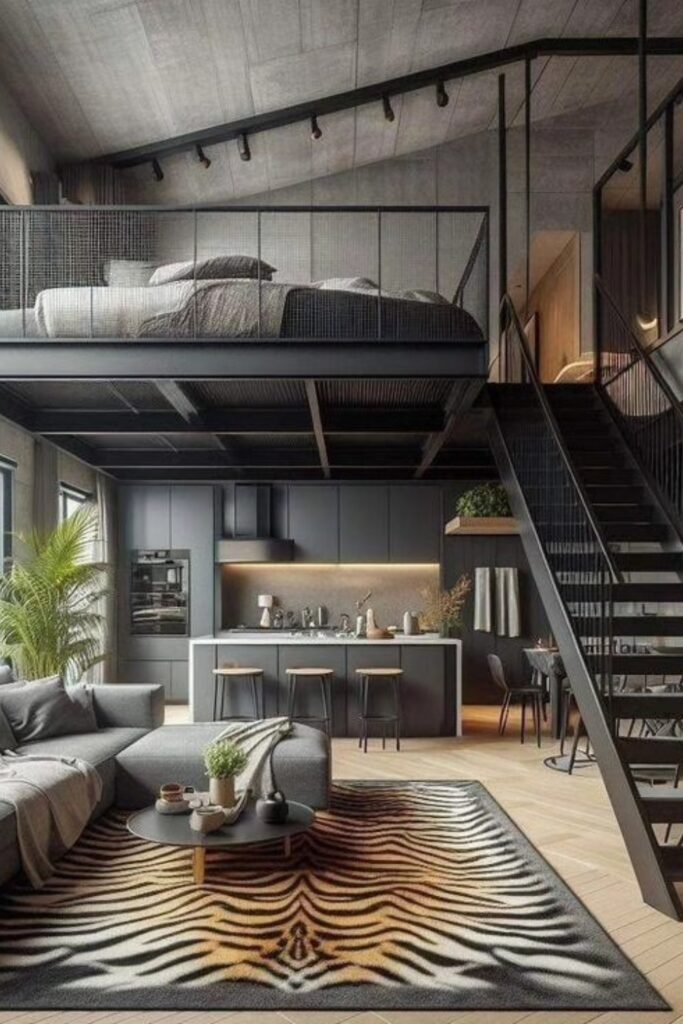
When you have high ceilings, you will see how everything changes. You don’t need walls to separate your dining area when your living room sits in a loft layout like this.
You can let your sectional anchor your lounge area with a bold rug, while you tuck your dining table naturally under the stairs near your kitchen.
That’s how you create smart zoning. If you keep your furniture low in the seating area, you’ll let your vertical space feel open instead of crowded.
And if you have a mezzanine or double-height room, you can let the structure do the dividing instead of adding partitions yourself.
Covered Patio Combo
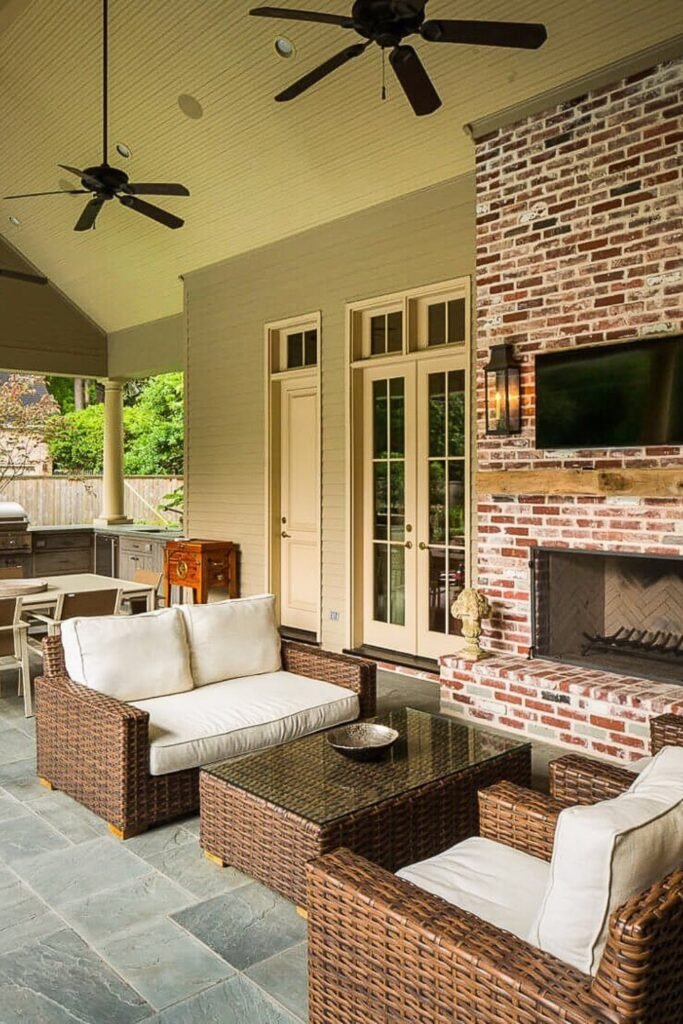
You will notice that dinner feels better when you let your living room spill outdoors. You can place your seating area facing the fireplace and TV, while you set your dining table just behind it near the grill.
That order matters, if you put it wrong, you might block your traffic flow.
You should keep lounging closest to your focal wall and push your dining slightly back so you can move naturally.
And if you entertain often, you can use durable furniture and wide spacing so you can pull your chairs out easily.
Statement Wall Dining
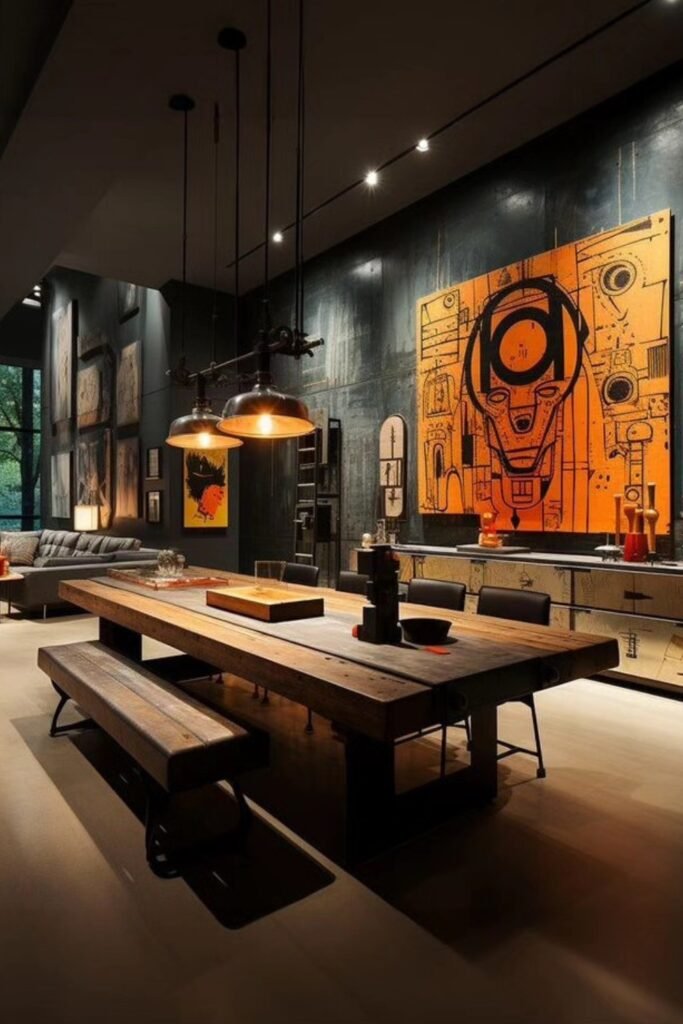
You can make your dining table the star instead of hiding it.
If you place oversized artwork behind it and a long wooden table in front, you will see it command attention, while your lounge area sits deeper in your space.
You can make this shift work in larger rooms with high ceilings. When you hang bold art behind your table and use low, moody lighting, you’ll define your dining zone clearly.
You’ll notice that when dining becomes your focal point, your room feels intentional, not crowded.
Luxury Open Flow
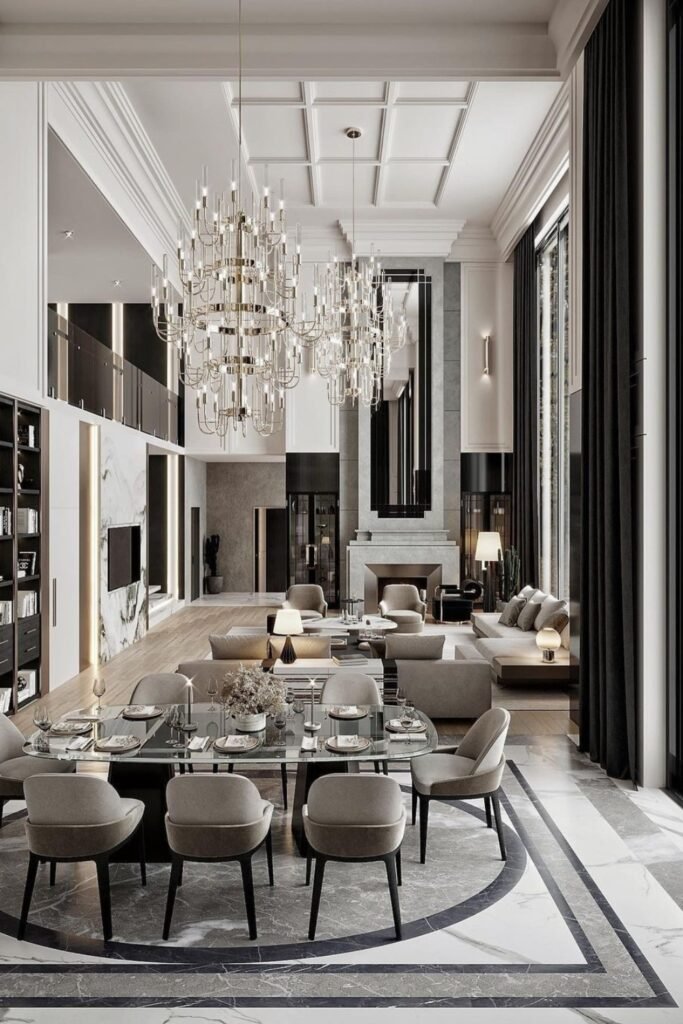
When your ceiling does the talking, you will want to keep your layout calm.
You can stretch your living room deep with seating centered around the fireplace, while you place your dining table upfront under a dramatic chandelier.
That works if you have a long, tall space, you can layer your zones from front to back.
You should anchor your dining area with a large rug or floor inlay so it doesn’t float. And if you keep your colors consistent across both zones, you’ll maintain a seamless, high-end flow.
Sofa-Back Divider
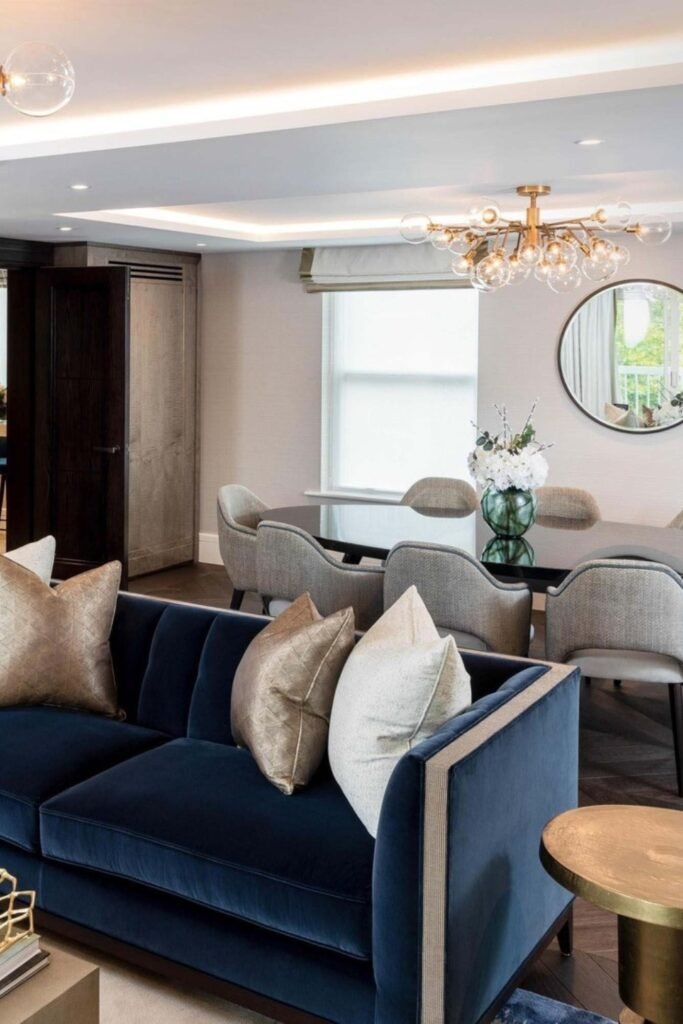
You can turn your sofa into your boundary line. If you float your sofa slightly away from the wall, you’ll see the back quietly separate your lounge from your dining area without blocking light.
That’s the trick. You can keep both areas in the same color family, and you’ll feel how they connect.
This works beautifully in medium-sized rooms when you want separation without adding clutter.
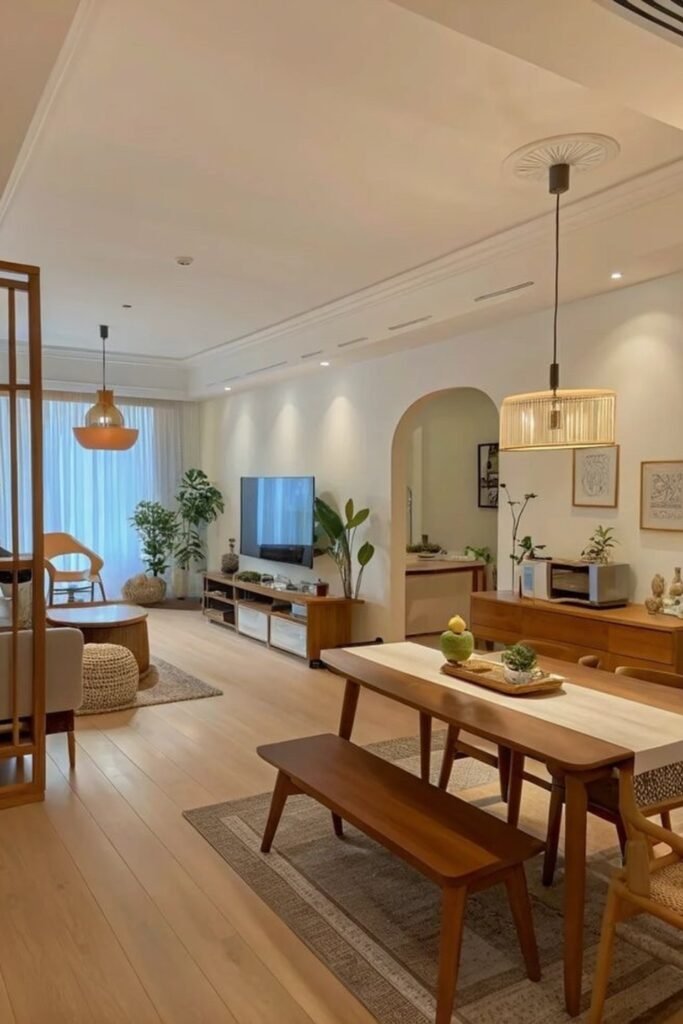
Warm Wood Flow
If you have a long room, you will need direction. You can line up your dining table with the length of your living room and guide your eye straight toward your TV wall.
That will keep your layout calm and balanced. If you use a slim rug under your table and match wood tones across both zones, you’ll notice the harmony.
If your space is narrow, you can place dining along one side and leave a clear walking path on the other. You’ll see that clean lines and light colors will keep it from feeling tight.
Glam Light Balance
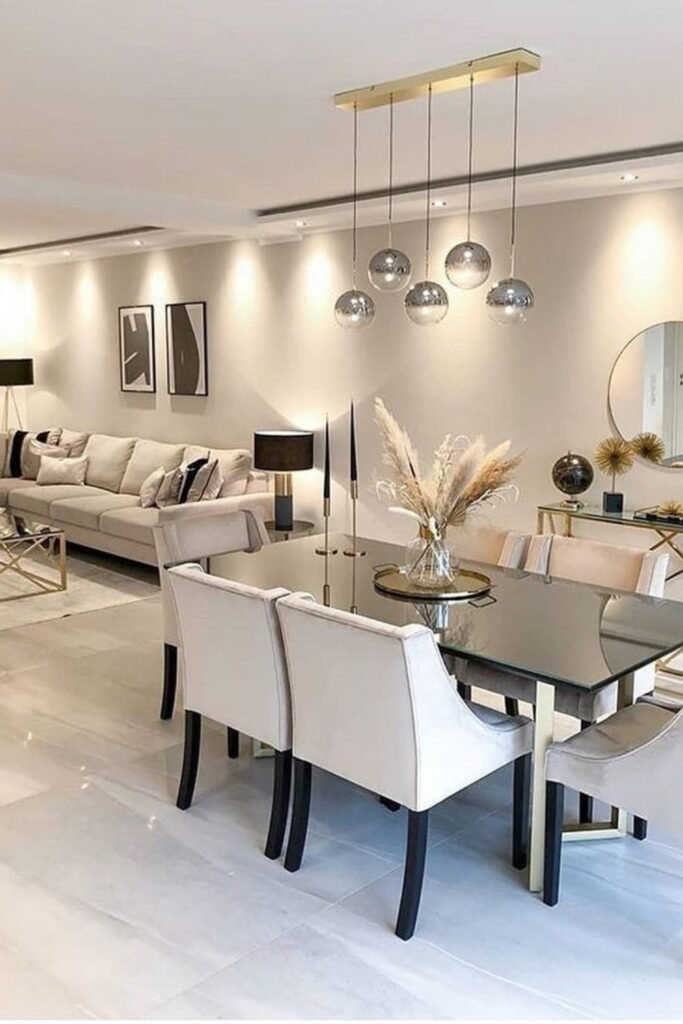
You can use lighting to separate your room without building a wall.
If your living room stretches along one side with a soft sectional, you can place your dining table under a bold pendant cluster.
That drop in ceiling lights creates a clear dining boundary. You should keep your sofa simple and let your chandelier do the zoning.
This works best in open rectangles when you want elegance without adding dividers.
Zoned By Rug
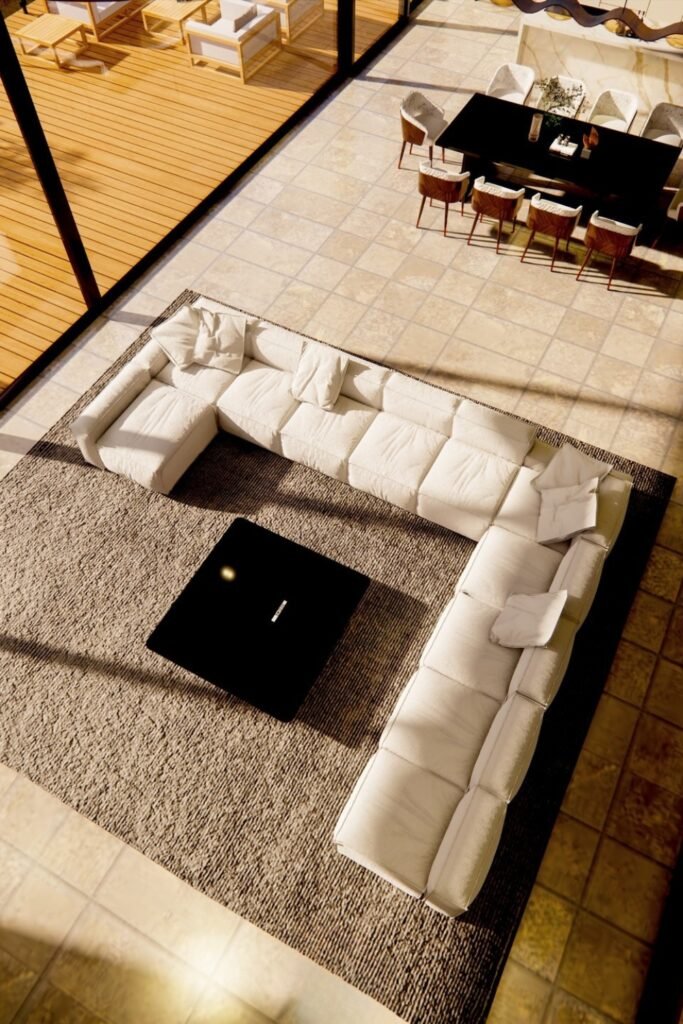
You will see that one oversized rug can control your entire living room.
You can place your sectional fully inside the rug boundary, creating a lounge island, while your dining area stays on bare tile near the kitchen.
That contrast separates your functions without walls. If your space is wide and open, you can anchor your sofa with a large rug and keep your dining on a different surface. You’ll instantly create structure.
Island Sofa Layout
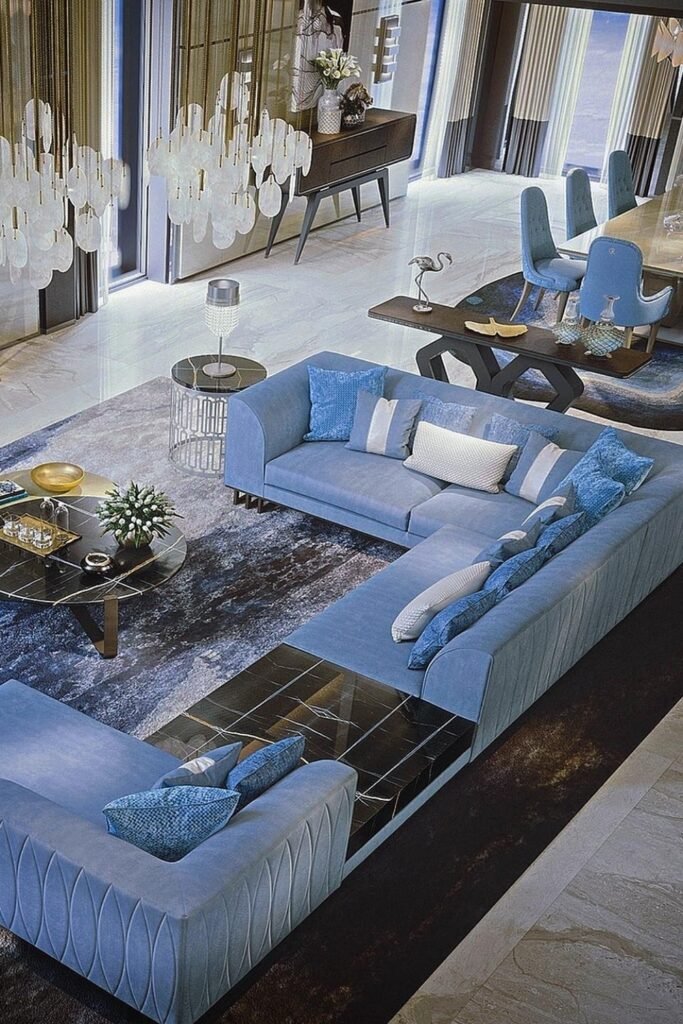
Sometimes, you will notice the best divider is furniture placed in the center.
You can form a clear lounge island with a U-shaped sectional fully on a dark rug, while keeping your dining area open behind it. That gap between zones lets your traffic flow smoothly.
If your room is large and open, you can pull your seating away from the walls and build a defined island.
You’ll see how it makes your space feel designed, not scattered.
Bright Window Pairing
You will realize that natural light does half your design work. You can place your dining table close to sliding doors to soak up daylight, while your living room stays slightly behind with a soft sectional.
That order keeps your meals bright and your conversations relaxed.
If you have large windows, you should put your dining closest to them and let your sofa anchor the back zone. Keep your colors light, and you’ll notice how both areas blend without competing.
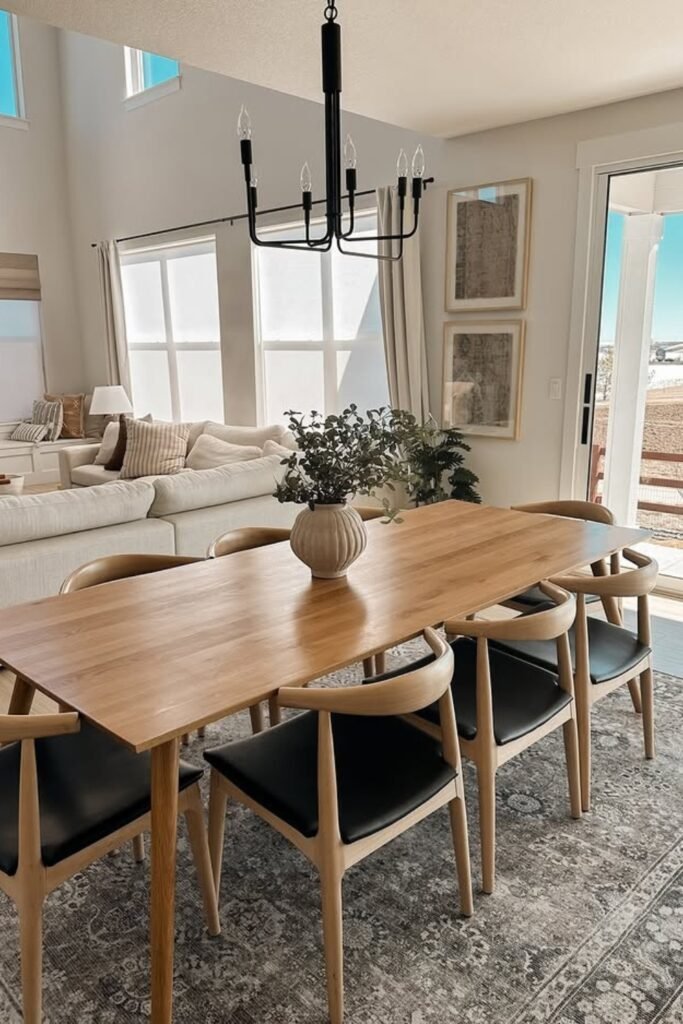
Sculpted Lounge Flow
You will notice how curves can soften your shared space instantly.
You can use rounded seating and a circular rug to create a cozy conversation zone, while you line your dining table neatly behind it near your kitchen.
That contrast between soft and structured helps you keep both areas clear. If your room feels tight, you should choose curved furniture in your lounge and keep your dining layout simple and straight.
You’ll see how it prevents visual chaos.
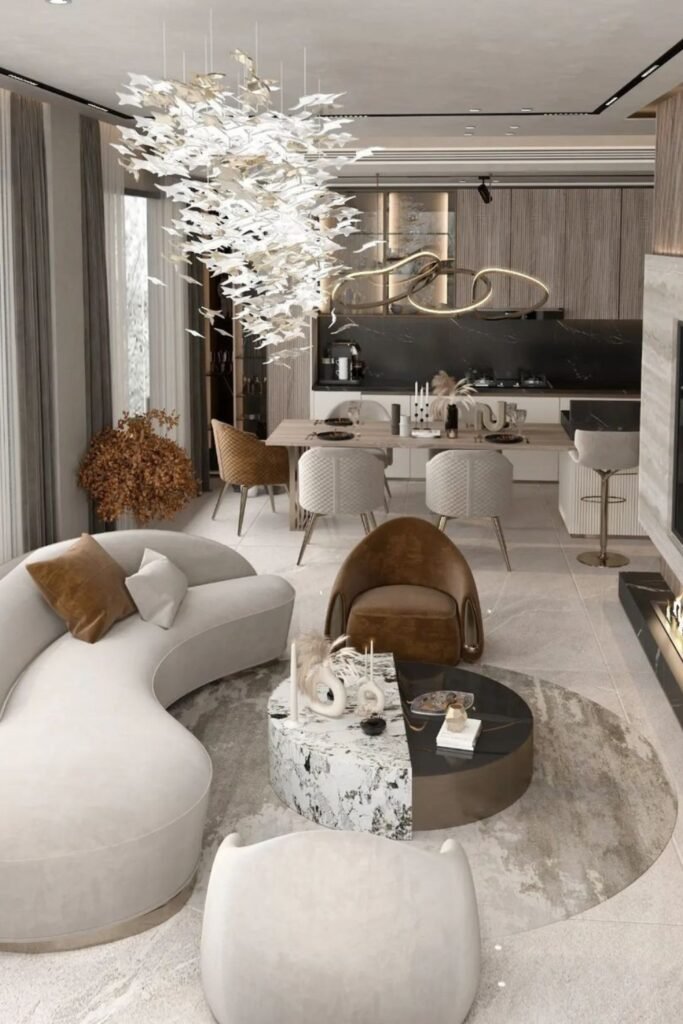
Cabin Open Blend
When you have vaulted ceilings and tall windows, you’ll notice they already divide your space visually.
You can anchor your living room with a large rug and centered sofa, while you place your dining table closer to your kitchen and glass doors. That natural order will help you keep everything practical.
If your home has dramatic height, you should let your architecture lead your layout.
You can keep your seating grouped tight and push dining toward your prep area so you can entertain easily.
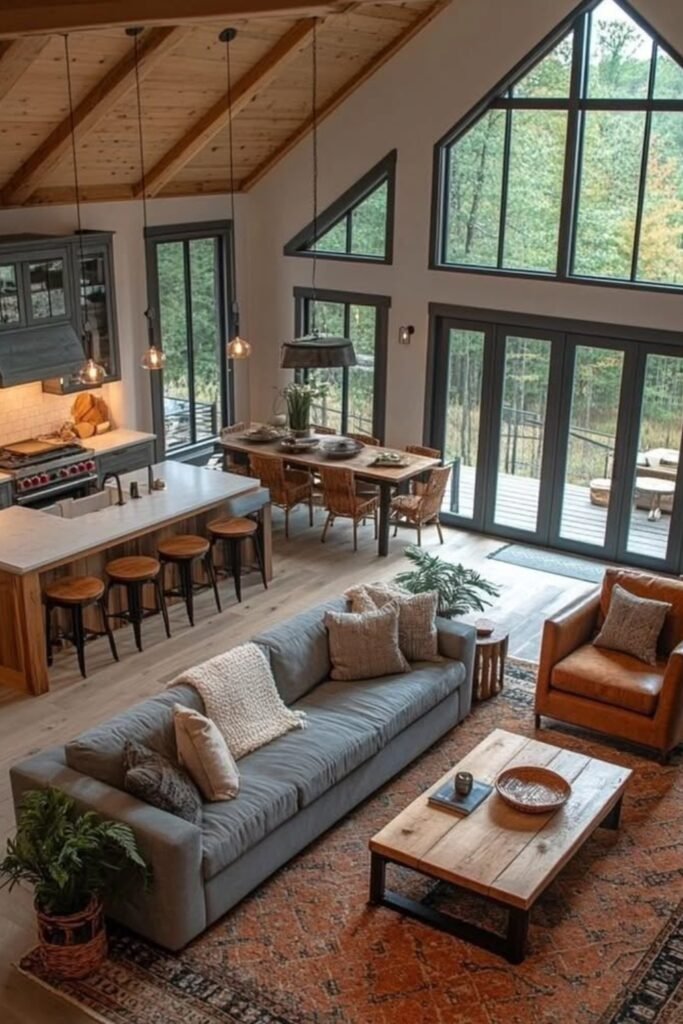
Fireplace Centered Plan
You can let one strong focal point control both zones. You might anchor your seating area around your fireplace, while you line your dining table beside it under a statement chandelier.
Everything will feel connected because you will repeat colors and materials. If you have a feature wall, you should build your lounge around it first.
Then you can place dining parallel to that axis so your whole space feels intentional and balanced.
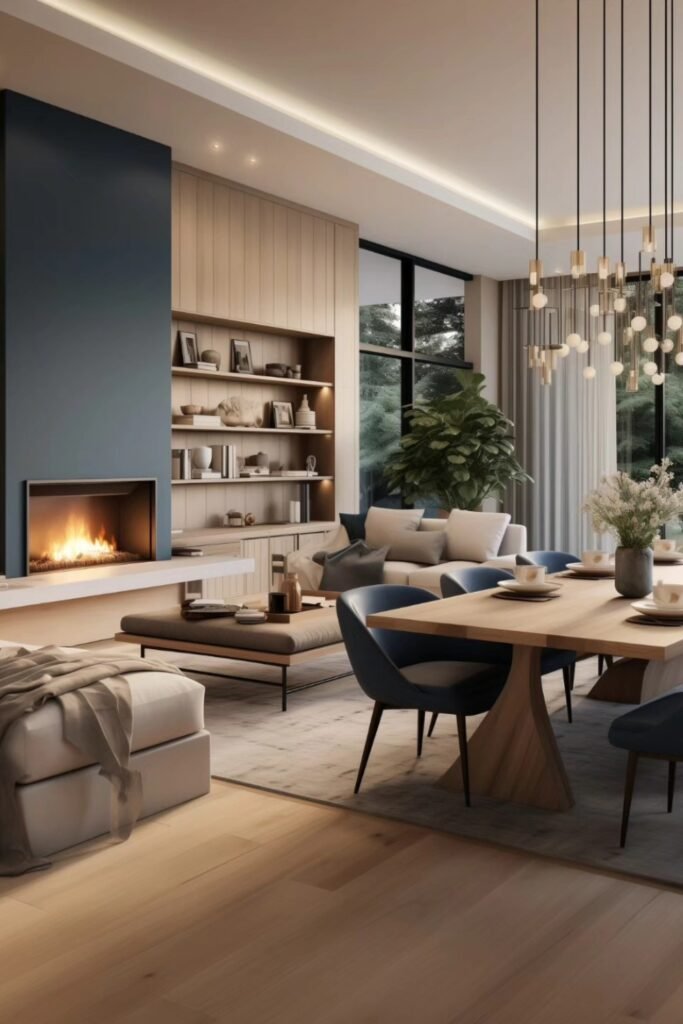
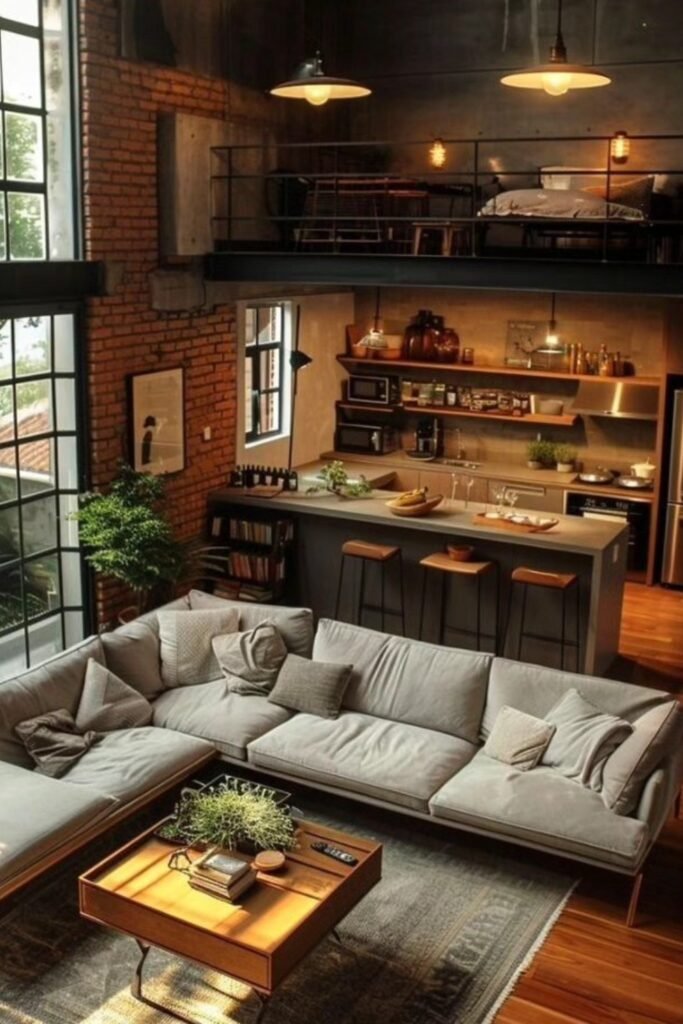
Industrial Loft Layers
When you have brick walls and double-height ceilings, you’ll see how zones are defined without any effort.
You can keep your living room grounded with a large sectional and rug, while your dining island sits just behind it near your kitchen.
That layered setup will keep everything compact but functional. In smaller lofts, you should stack functions vertically and keep dining close to your prep space.
You can let texture, brick, wood, metal, separate your areas instead of adding partitions.
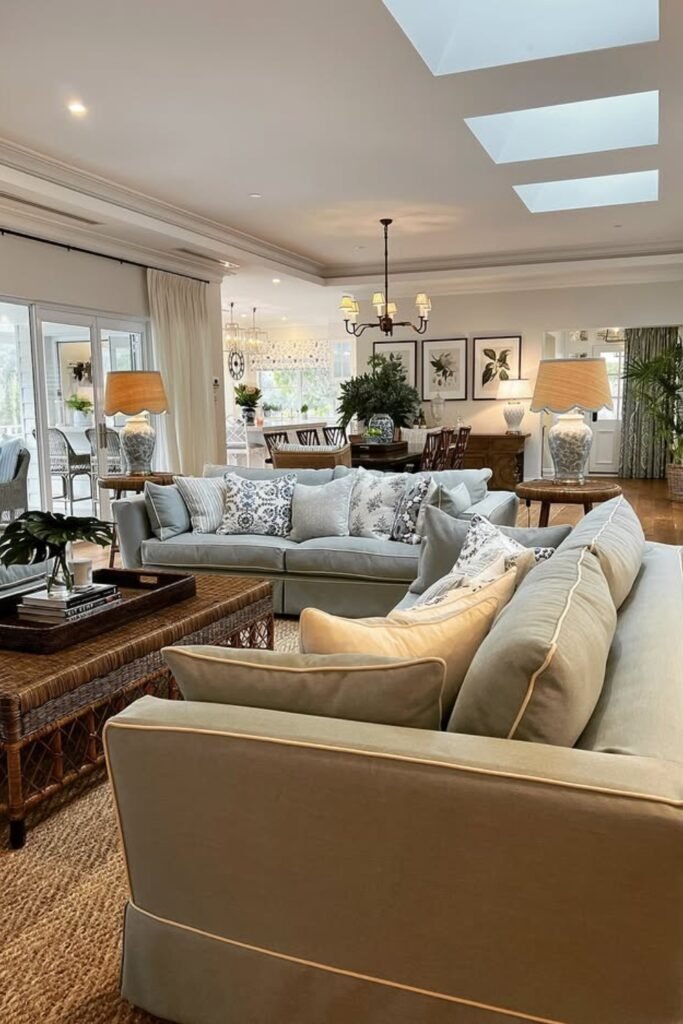
Skylight Depth Layout
You will see how depth makes this layout work. You can place your living room upfront with layered sofas and a large coffee table, while your dining area sits farther back under its own chandelier.
That front-to-back arrangement will help you keep your room open but organized.
If you have a deep rectangular space, you should anchor seating closest to your main entrance or TV wall. Then you can let dining settle naturally in the brighter rear zone.
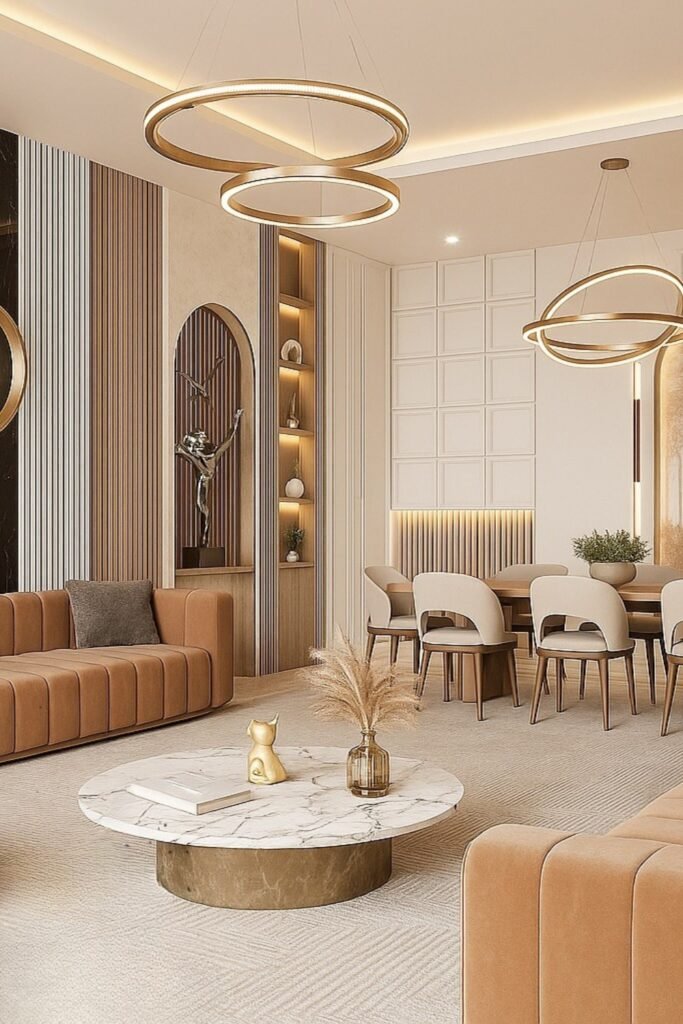
Statement Ring Lighting
You can let ceiling rings do the zoning for you. You might place a circular fixture to mark your lounge, while a second pendant defines your dining table behind it.
That repetition will keep your space connected but clearly divided. If your room feels too open, you should use two different light fixtures aligned with each zone.
You can keep your furniture low and structured so your lighting becomes your visual separator.
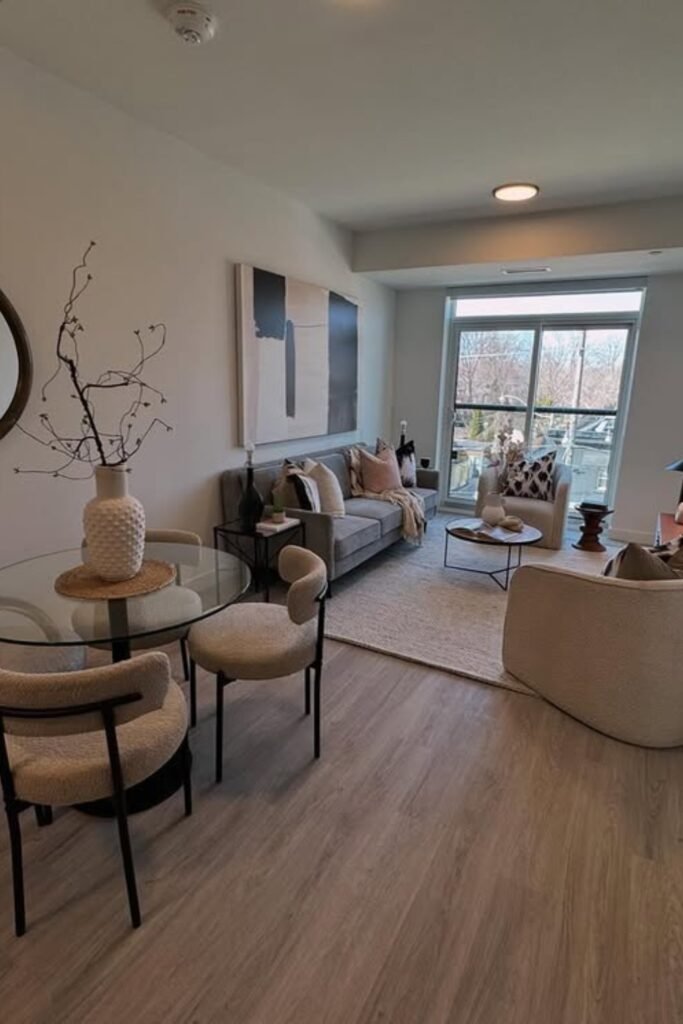
Compact Corner Dining
If your space is tight, you can claim a corner. You can keep your sofa and accent chair toward the window, leaving a small round dining table near the wall.
That shift will protect your walkway and prevent crowding. In narrow apartments, you should use a round glass table with slim chairs so your area feels light.
You can keep your dining set close to a wall and let your lounge stretch toward natural light.
Kitchen-First Placement
You should start with your kitchen, not your sofa. You can place your round dining table right beside your island, making serving easy and natural.
You can stretch your living room out beyond your sofa to keep traffic away from your cooking zone. If you have an open kitchen, you should place dining closest to it.
Then you can let your lounge claim the remaining space so your flow feels practical, not random.
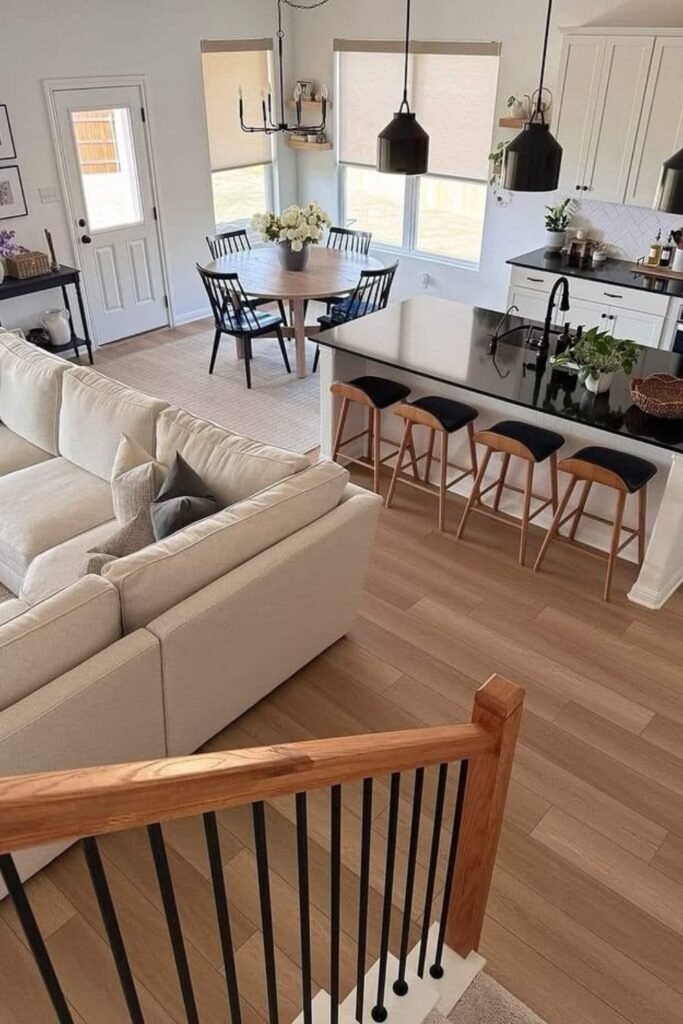
Window-Side Dining
You will notice how sunlight makes this layout feel effortless.
You can place your dining table right by a large window, turning everyday meals into bright moments, while your living room stays tucked deeper inside.
That placement will help you keep your lounge cozy and glare-free for TV time.
If you have big windows, you should claim that edge for dining first. Then you can arrange your sofa farther back so both zones feel comfortable and purposeful.
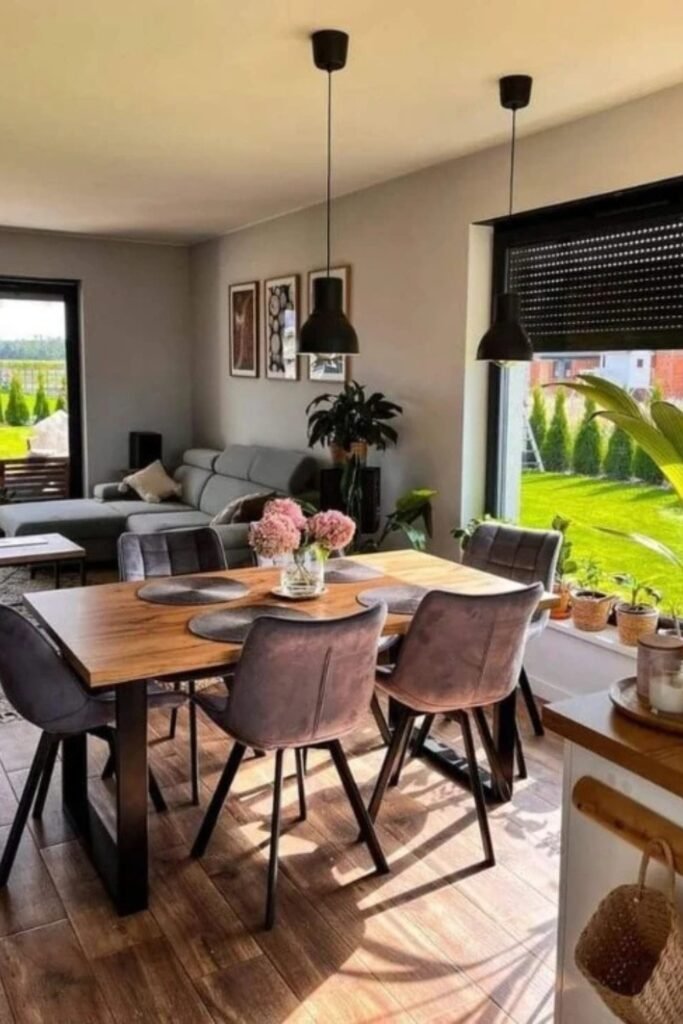
Soft Divider Column
You will notice how one simple column can change your whole layout. You can use a vertical beam to separate your dining table from your living room without blocking light or sightlines.
You might keep your sofa relaxed near the window, while you tuck your dining neatly beside built-in shelves.
If your space has a structural column, you should use it as your natural divider. You can arrange furniture on either side of it to create two clear zones without adding extra pieces.
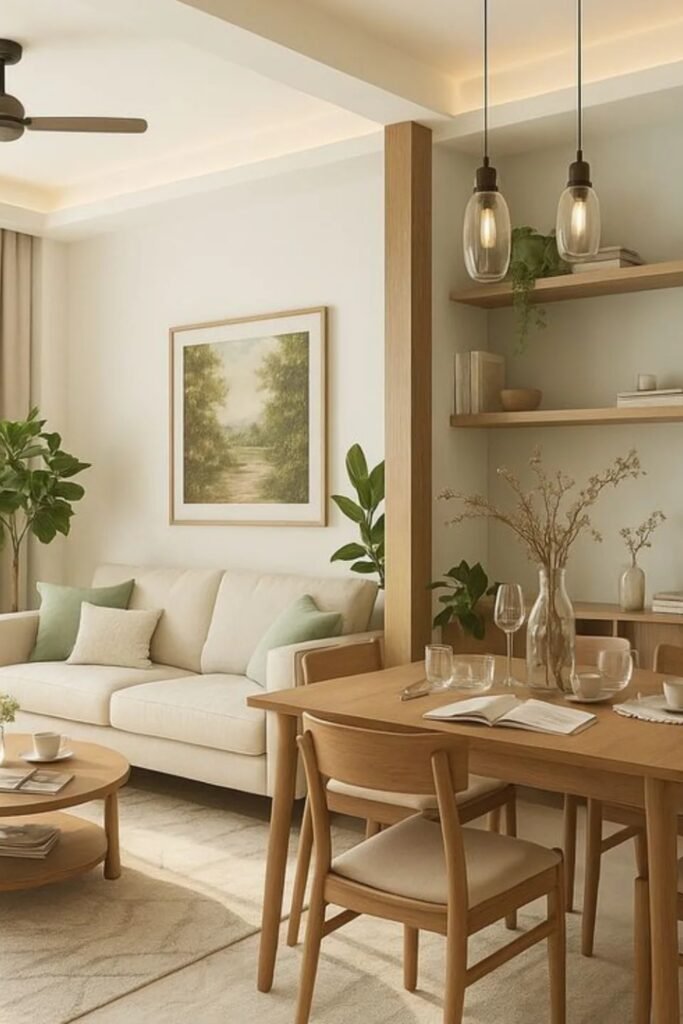
Double-Height Separation
You will see how height gives you breathing room. You can place your seating slightly tucked into a corner on its own rug, while your dining table claims the open center under a chandelier.
That shift in placement will create two clear zones without walls. If you have tall ceilings, you should use rugs and light fixtures to define each area.
You can also keep your furniture scaled properly so your room feels grand, not empty.
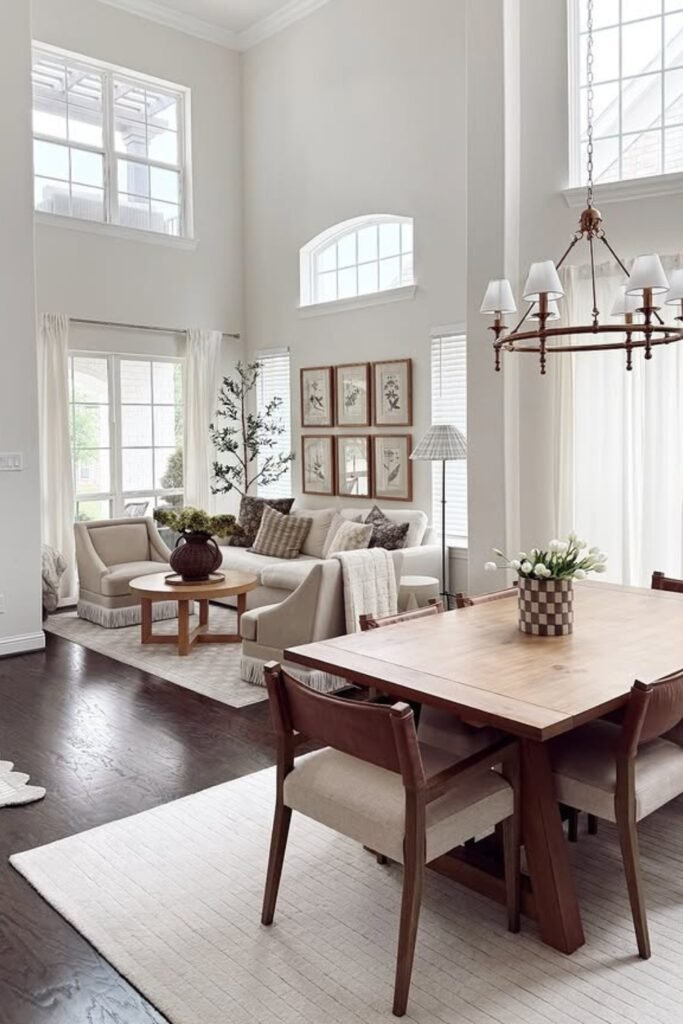
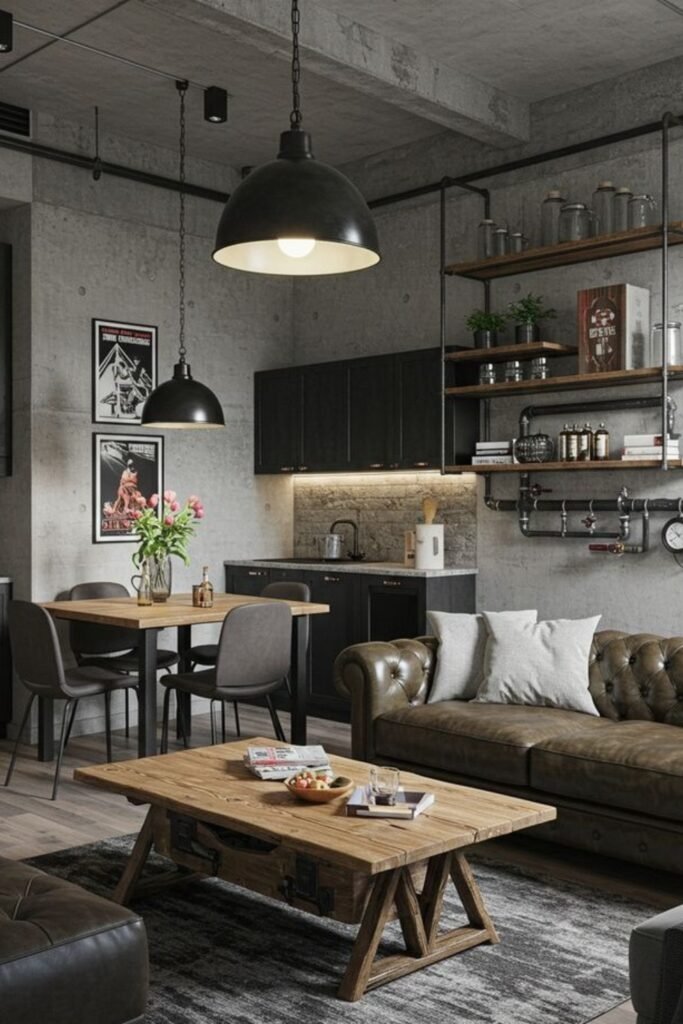
Industrial Compact Setup
You might think small space means sacrificing dining, but you can make it work.
You can keep your living room tight with a leather sofa and compact coffee table, leaving just enough room for a square dining table beside your kitchen wall.
You will notice how pendant lights clearly mark the eating zone. If you live in a studio or loft, you should push dining against one wall and keep your lounge grouped close.
You can use clean lines and darker tones so your space feels intentional, not cramped.
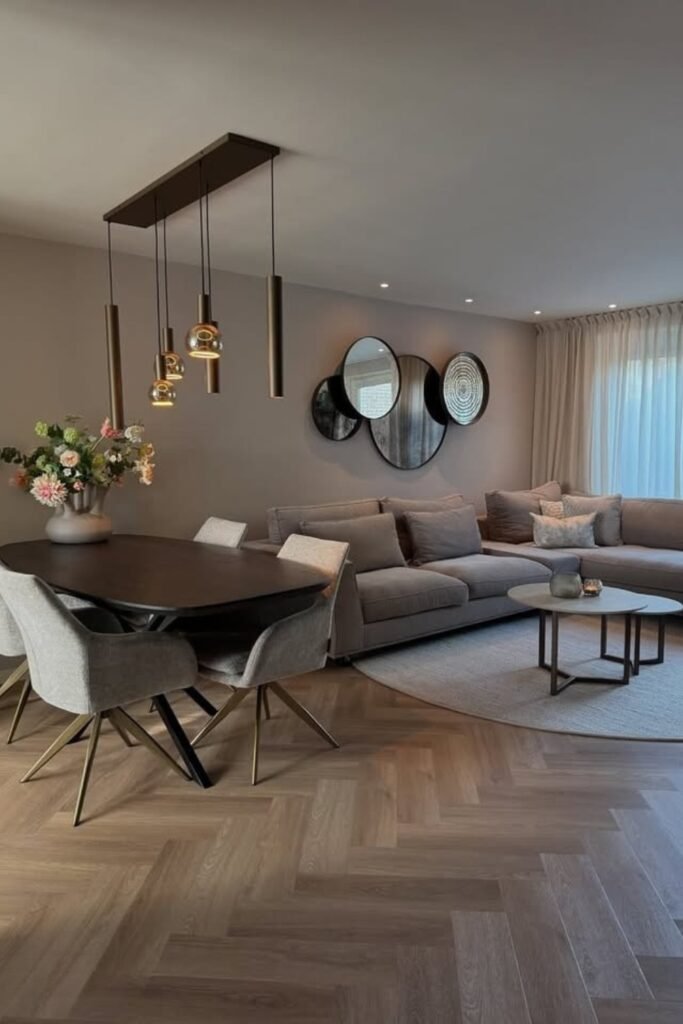
Curved Sofa Balance
You can mix straight dining with curved lounging to keep your layout interesting.
You might place an oval table neatly along one wall under slim pendants, while your curved sectional wraps around its own round rug. Each zone will have its own shape and identity.
If your living room feels flat, you should mix geometry. Keep dining structured and let your lounge go softer. You’ll see how that difference helps both areas stand out without fighting each other.
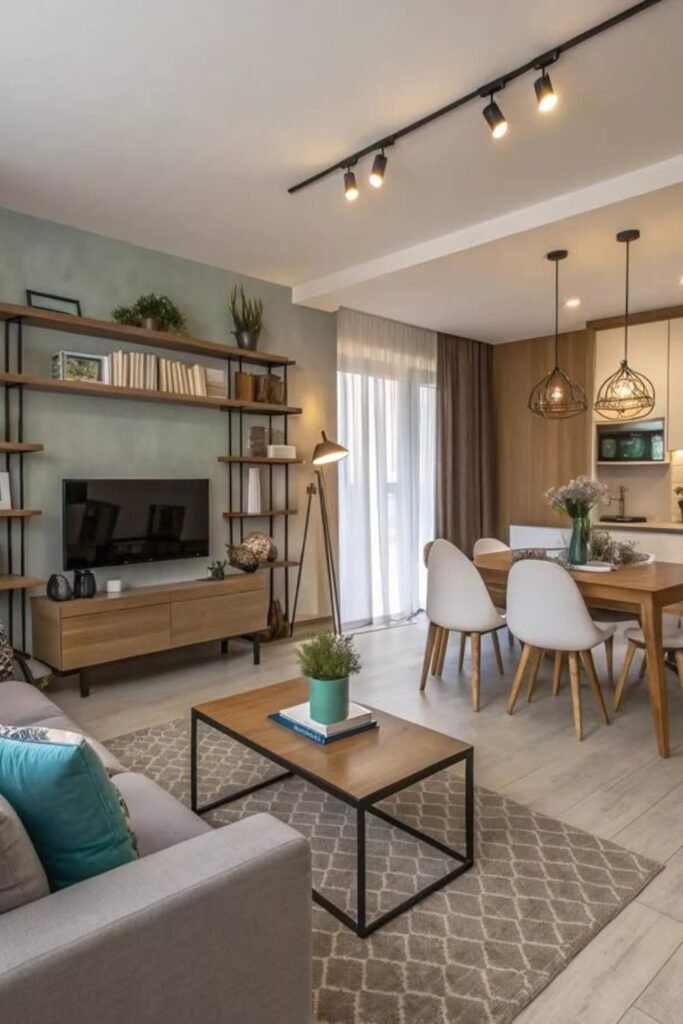
Shelf-Defined Living
You will notice how open shelving can quietly frame your living room.
You can anchor your lounge with the TV wall and floating shelves on one side, while you place your dining table clearly beyond it near your kitchen.
You might keep a rug under your sofa to ground that zone. If your space is narrow, you should line one wall with storage and media.
Then you can place dining on the opposite end to create a clean, linear flow.
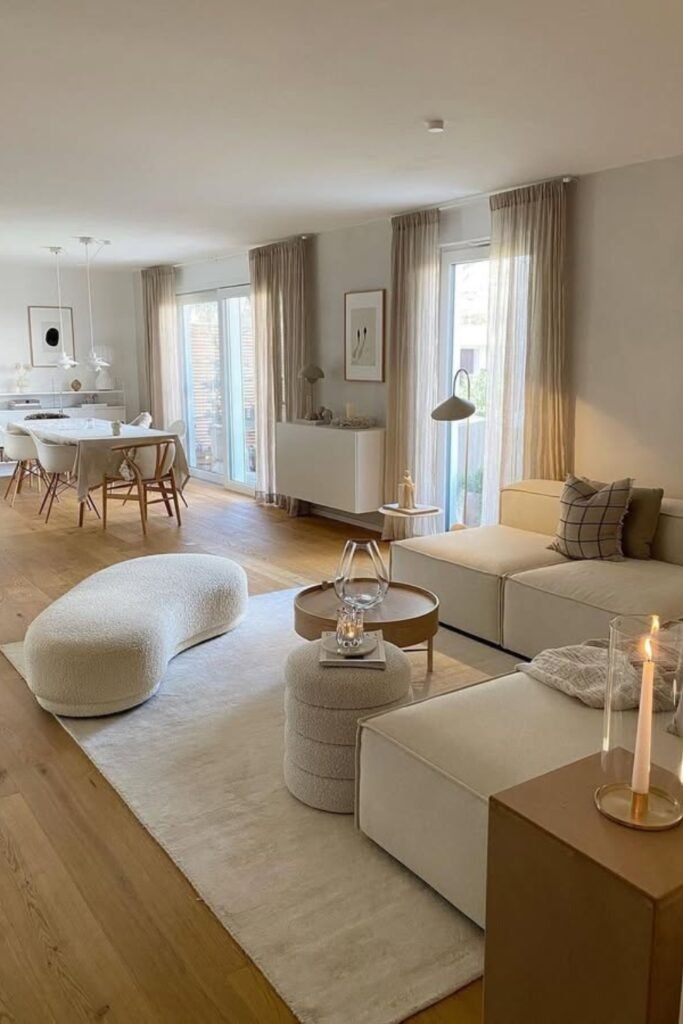
Linear Scandinavian Flow
You will see how long and bright spaces need rhythm. You can place your living room closest to yourself with low modular seating on a soft rug, while your dining table aligns at the far end near the windows.
That straight-line setup will keep your walkway clear along one side. If your room stretches in one direction, you should arrange zones one after another instead of side by side.
You’ll notice how clean lines and light tones keep your space airy.
FAQs
How can I make a long living-dining space feel cohesive?
You should use a consistent color palette and repeat materials throughout your space.
You can match your wood tones, coordinate your textiles, and align your lighting fixtures so you’ll see how each zone connects visually.
At the same time, you can still let each area serve its own function without feeling disconnected.
What is the best way to define zones in an open-plan layout?
You can layer rugs, lighting, and your furniture placement to subtly separate your areas.
You might anchor your living space with a large rug, and you can place your dining table under a statement pendant so you’ll see how each section stands out clearly, all without adding walls.
You may interested to read!