You add the bookshelf, arrange your favorite books, place a few decor pieces, and step back, only to wonder why it looks more cluttered than cozy.
Where you place it, how much you display, and how you balance books with open space can completely change the room.
Even an awkward corner, empty wall, or space beside the TV can become useful storage when you choose the right setup.
In this article, you’ll find 20 living room bookshelf ideas that show you how to use different spaces, and arrange your shelves.
Let’s jump in!
How to Style Bookshelves in a Living Room?
Start with the books you actually want to keep within reach, then build the rest of the shelf around them.
Mix upright books with a few horizontal stacks to break up straight lines, and use those stacks to support smaller decor pieces.
Add framed photos, pottery, plants, or objects you already love instead of buying fillers just to cover empty spots.

Leave some breathing room between groups because filling every shelf can quickly make the whole living room feel busy.
Place larger pieces first, then add smaller items where the shelf needs balance.
If you have closed cabinets below, use them for games, cables, and everyday clutter so the open shelves stay useful without looking overloaded.
Ceiling Library
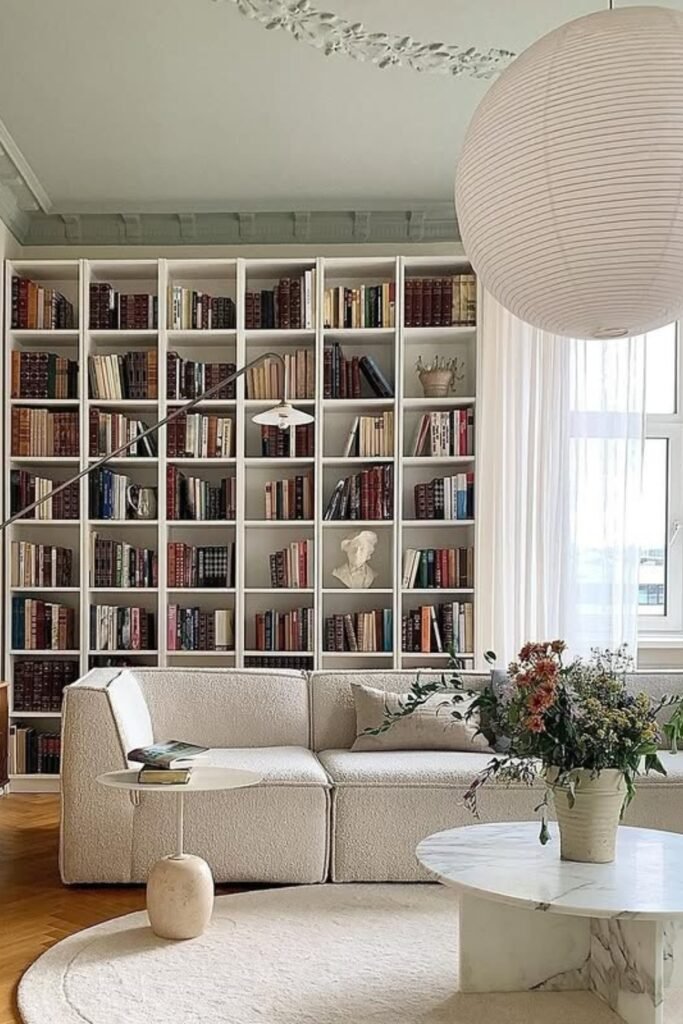
Turn a tall blank wall into useful storage by running slim bookcases nearly to the ceiling instead of spreading furniture outward.
Keep the shelving white when your living room is light and neutral, so a large book collection still feels visually quiet.
Place the sofa slightly forward from the shelves, leaving access behind it while letting the book wall frame your main seating area.
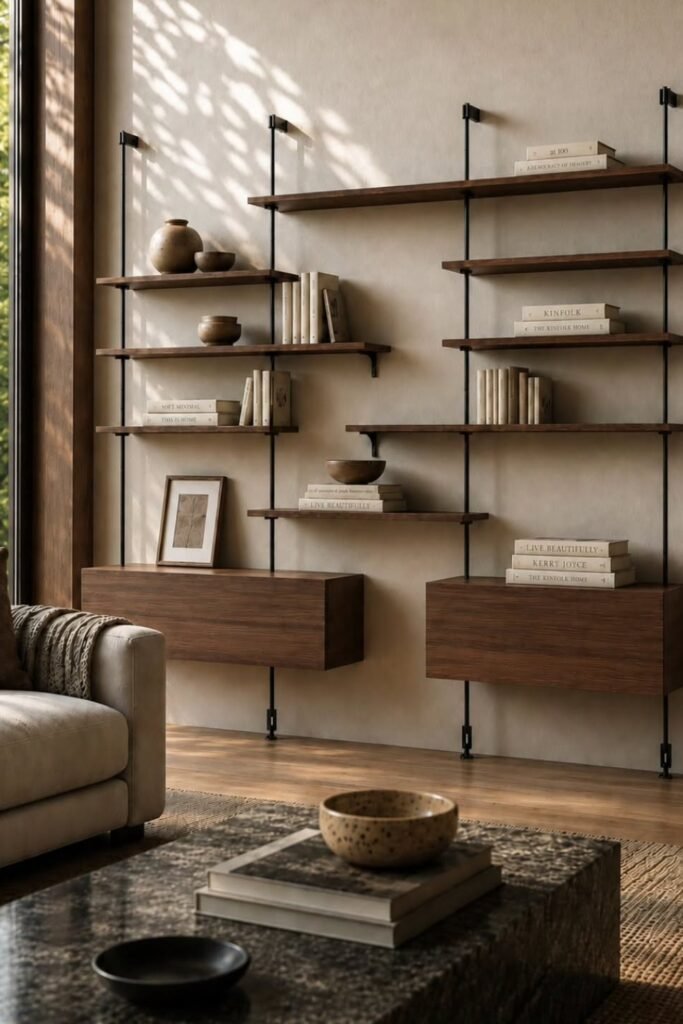
Floating Shelves
Skip a bulky bookcase when floor space is tight; wall-mounted wood shelves give you display room without crowding the seating zone.
Use uneven shelf lengths to break up a wide empty wall, then leave generous gaps between books, pottery, and framed art.
Add floating drawers below if you need hidden storage; keeping them off the floor preserves the lighter, more open appearance.
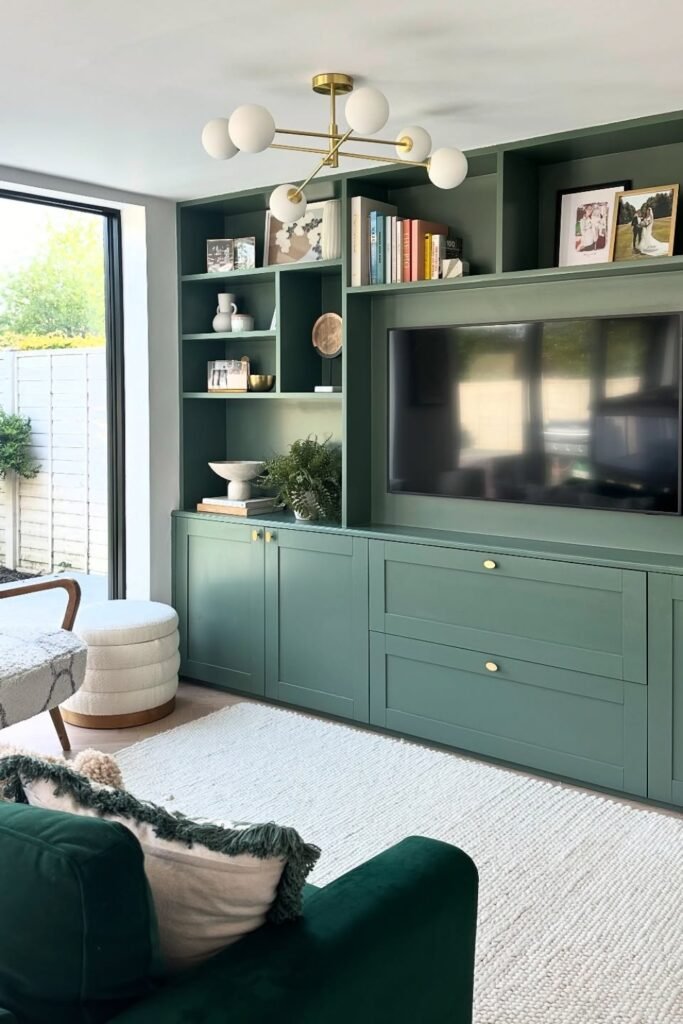
Media Bookshelf
Build shelving around the television when you want one wall to handle media, books, display pieces, and everyday living room storage.
Keep lower cabinets closed for cables, games, and clutter, while the open upper sections hold only books and pieces worth displaying.
Painting the entire unit one deep green makes separate cabinets and shelves read as one feature, especially beside strong natural light.
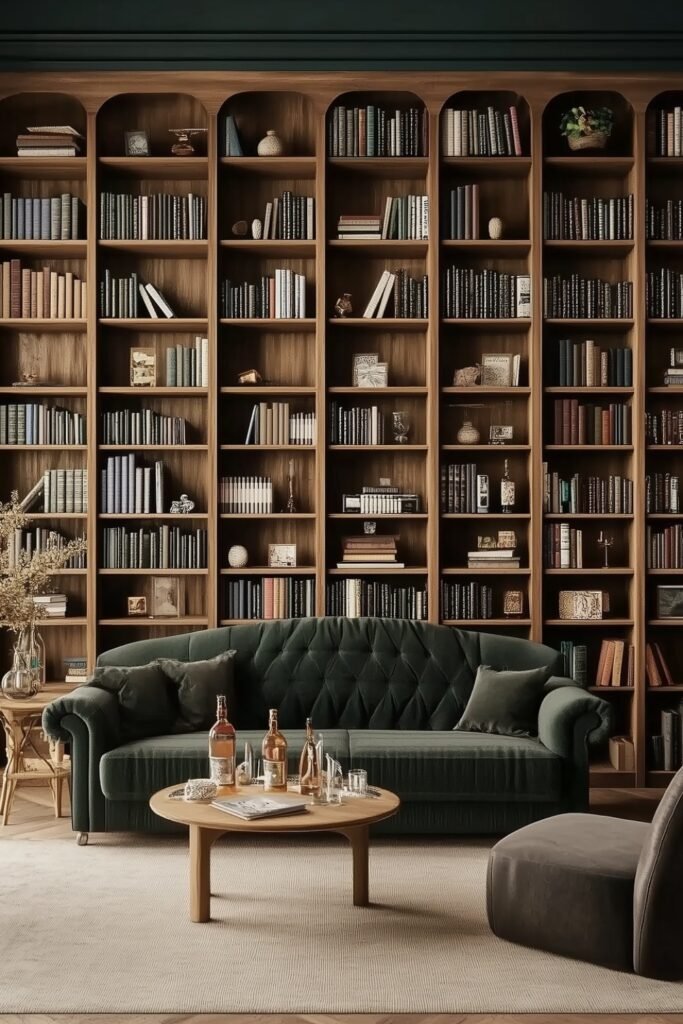
Library Backdrop
Let a full-height book wall become the backdrop for your seating when you have a large collection and generous ceiling height.
Choose warm wood shelving against dark walls to create contrast, then spread books across compartments instead of packing every section completely.
Position the sofa directly in front when circulation allows; the centered furniture turns the library wall into the room’s strongest focal point.
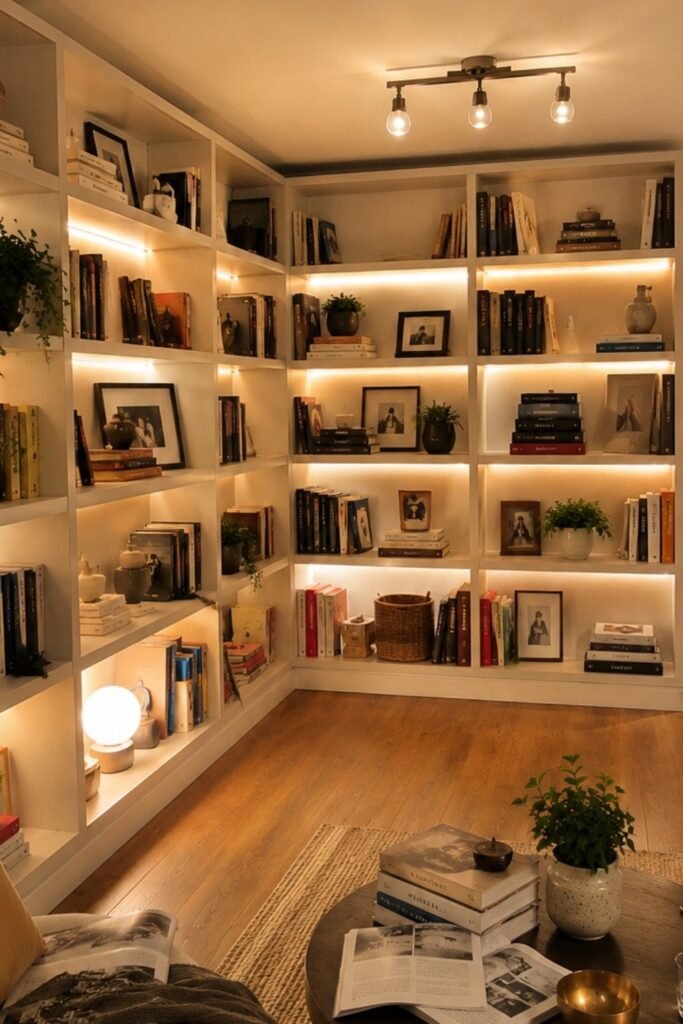
Corner Glow
Wrap shelving around two adjoining walls when you want to turn an overlooked living room corner into substantial book and display storage.
Run warm lighting beneath each shelf to brighten deeper sections, then alternate upright books, horizontal stacks, framed photos, and small plants.
Keep the shelving finish close to the wall color so the large installation feels integrated rather than visually closing in the room.
Sculptural Shelving
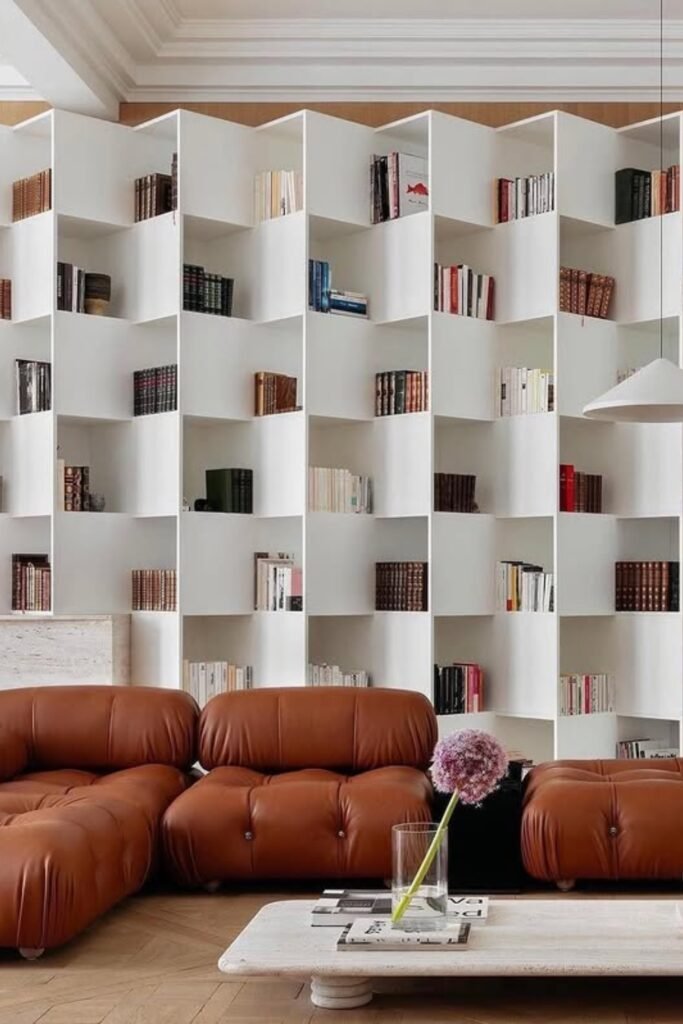
Break away from straight bookcase grids with staggered shelving when your living room needs storage that also works as architectural wall art.
Spread books across alternating compartments instead of filling every opening, allowing the unusual shelf shapes and generous negative space to stay visible.
Pair the crisp white structure with warmer furniture, such as caramel leather seating, to stop the large bookshelf wall from feeling too stark.
Lit Woodwork
Give one narrow wall more presence by framing warm wood shelves with vertical slatted panels and integrated lighting from top to bottom.
Keep books in small groups and mix them with framed art and sculptural pieces, letting the illuminated backing provide visual interest between objects.
Use this approach in modern living rooms where one statement bookshelf can add storage without covering every available wall with cabinetry.

Reading Wall
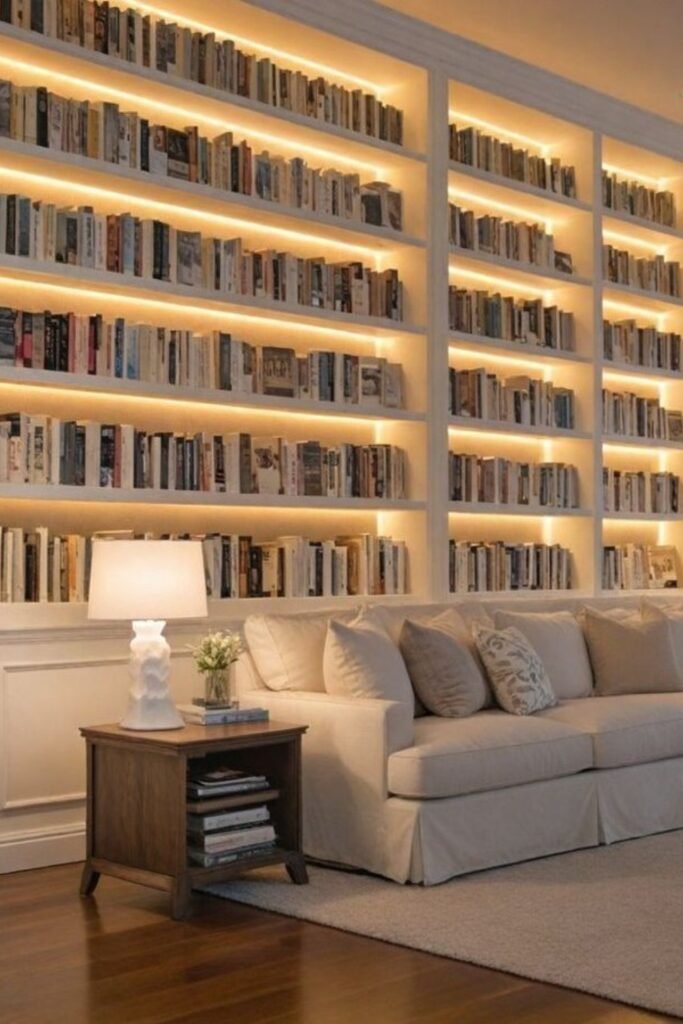
Make a book-heavy living room feel inviting after dark by adding warm shelf lighting behind long rows rather than relying on ceiling lights.
Fill most shelves with books when storage matters, but vary their heights and occasionally leave small gaps for artwork or personal pieces.
Set the sofa directly against the library wall if shelves begin above backrest height, creating a comfortable reading zone without wasting floor space.
Hidden Media
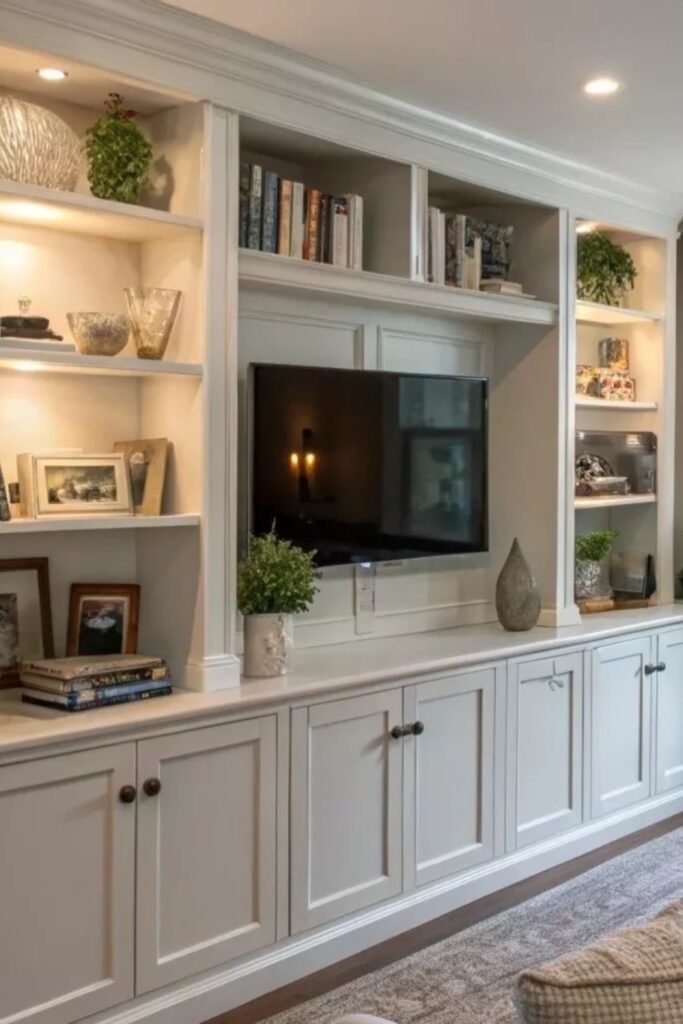
Turn a TV wall into hardworking storage by placing open display shelves above closed cabinets, keeping entertainment clutter hidden but easily accessible.
Use books, framed photos, plants, and larger decorative pieces sparingly, so the television stays visually balanced rather than surrounded by small clutter.
Add warm shelf lighting on both sides when the room needs softer evening light, while keeping the central television area relatively simple.
Book Ledges
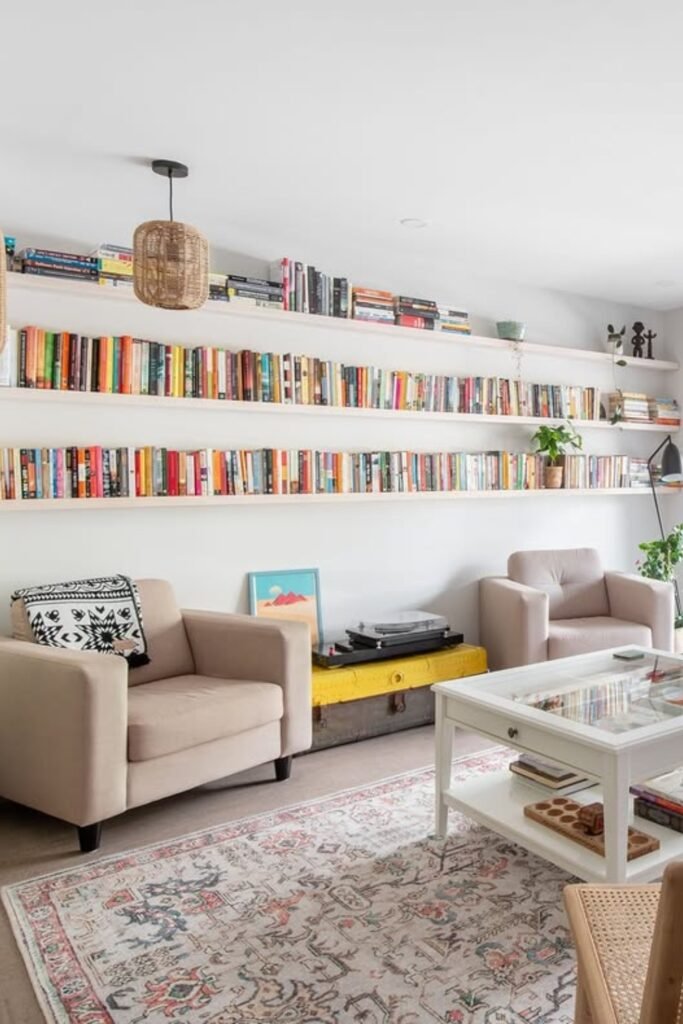
Stretch slim floating shelves across a long wall when you own plenty of books but do not want bulky cabinetry taking floor space.
Keep most books upright in relaxed rows, then add occasional stacks and plants to stop the continuous shelving from feeling too rigid.
Mount the lowest shelf comfortably above seated head height, especially when chairs sit underneath, so the reading area remains practical and open.
Gallery Shelves
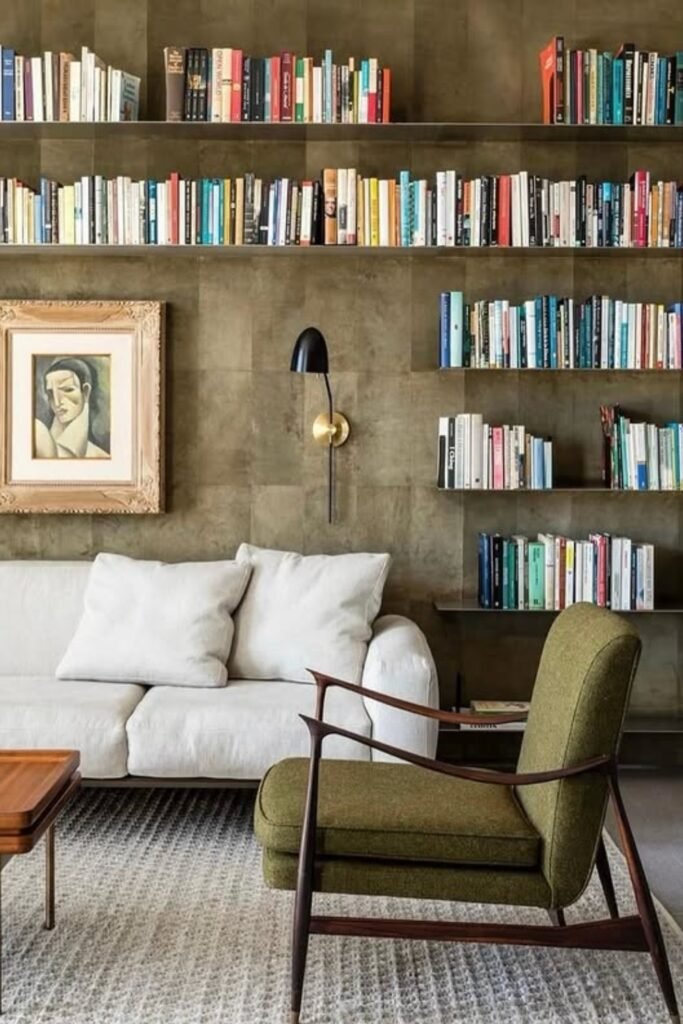
Use a dark textured wall behind floating shelves when colorful book spines need stronger contrast and the living room already has neutral furniture.
Break long shelves into different lengths around artwork and lighting, creating intentional pauses instead of forcing books across every inch of wall.
Keep shelving visually thin so the wall finish remains visible; heavier cabinetry would compete with the airy sofa and open midcentury seating.

Fireside Storage
Use the space beside a fireplace for built-in shelving when you want storage without taking attention away from the room’s natural focal point.
Paint the cabinetry in a muted earthy shade, then keep the shelf interiors darker to give books, artwork, and ceramics more depth.
Hide everyday items behind lower doors and reserve open shelves for fewer meaningful pieces.

Framed Media
Frame the television with narrow illuminated shelves when you want media storage to feel polished without letting books compete with the screen.
Keep the longest book row above the TV, then use side compartments for pottery, framed art, and smaller grouped collections.
Continue closed cabinets across the bottom to hide electronics and household clutter, giving a formal living room one clean storage wall.

Sofa Library
Build shelves around the sofa when wall space is limited, turning the seating area into a library without adding another furniture piece.
Leave one wider opening behind the sofa for artwork, then use narrower side sections to keep frequently read books within reach.
Warm leather seating and traditional lamps work especially well here because they reinforce the comfortable, collected feeling of a genuine reading room.

Open Framework
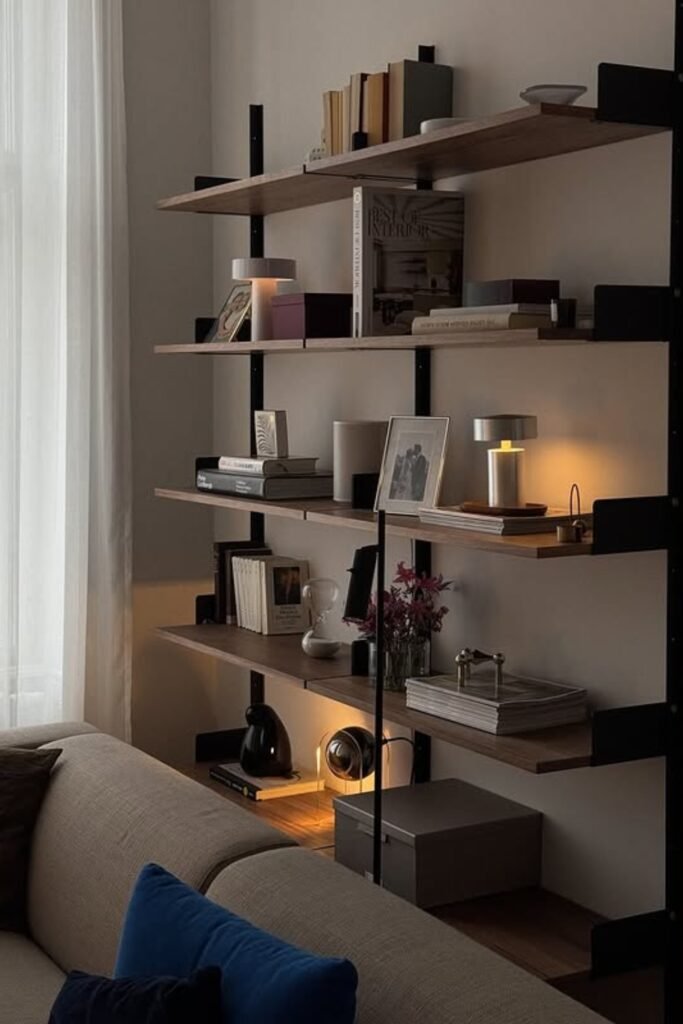
Choose an open metal framework when you need substantial shelving but want the wall behind it to remain visible and visually light.
Space books, photographs, boxes, and ceramics across separate levels, leaving enough empty surface around each group to prevent visual clutter.
Add small cordless lamps between displays for evening warmth, especially when the shelving sits away from existing wall sconces or ceiling fixtures.
Reading Corner
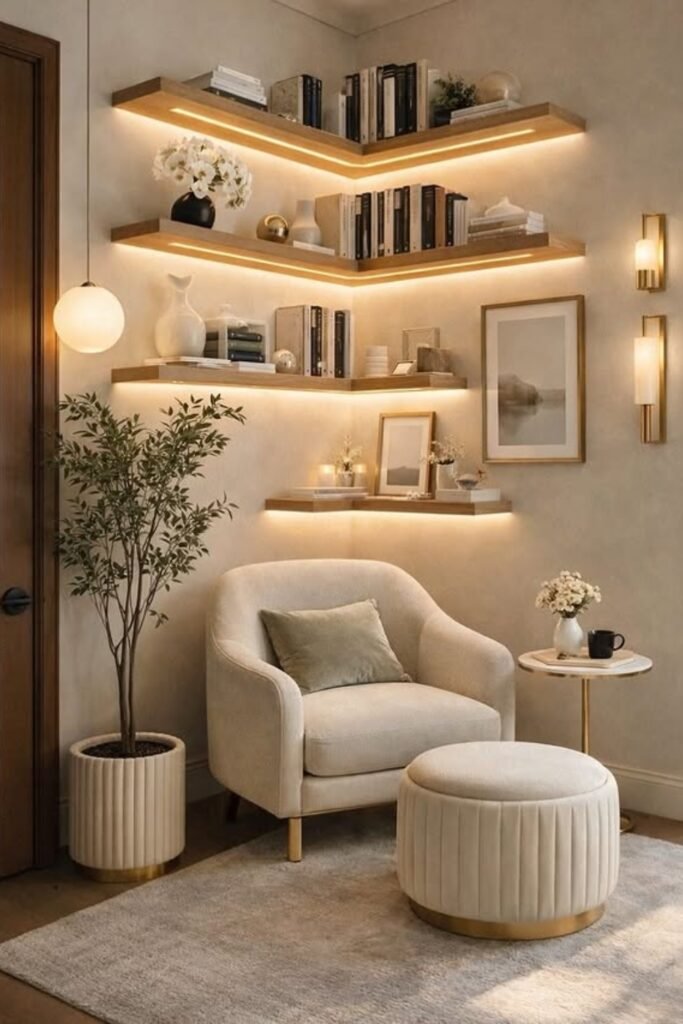
Turn an unused corner into a reading spot by wrapping floating wood shelves around both walls instead of squeezing in a bookcase.
Run warm lighting beneath each shelf to make the corner feel intentional, then balance book groups with pottery, flowers, and framed artwork.
Place a comfortable chair and ottoman directly below, keeping the lowest display shelf high enough that the seating area never feels cramped.
Cozy Book Corner
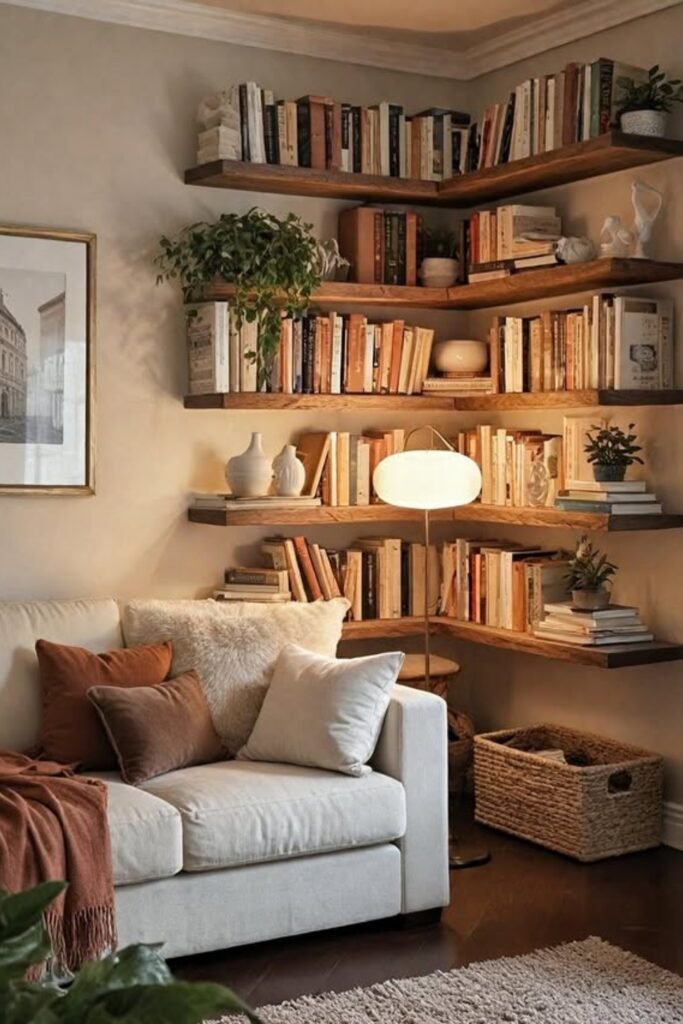
Fill a narrow corner with wraparound wood shelves when you want serious book storage without bringing another freestanding bookcase into the room.
Let books occupy most of the shelves, then soften the dense rows with trailing greenery, small sculptures, and occasional horizontal stacks.
Pull a comfortable chair close to the shelving and add a table lamp nearby, creating an easy reading spot within arm’s reach.

Dark Library
Go dark with built-in shelving when a large book wall needs stronger definition and your living room receives plenty of natural daylight.
Break up pale book spines with woven baskets and trailing plants, which add warmth and prevent the black cabinetry from feeling overly formal.
Keep the sofa light and neutral in front of the shelves, creating enough contrast for both the seating and library to stand out.

Wraparound Shelves
Use two adjoining walls for floating shelves when one short wall cannot hold your collection and a corner would otherwise stay underused.
Carry each wood shelf around the corner at the same height, creating continuous storage without the bulk of full-depth built-in cabinetry.
Tuck a sofa beneath the lower shelves and add a floor lamp nearby, turning the compact arrangement into a comfortable reading zone.
Display Lighting
Treat floating shelves as part storage and part lighting feature when your living room needs warmth without another large floor or table lamp.
Install warm strips beneath long wood shelves, then alternate book groups with framed pictures, greenery, and larger objects rather than tiny accessories.
Finish with closed cabinetry underneath to hide everyday items, giving the open shelves enough breathing room to stay organized and easy to maintain.

FAQs
How Do You Keep Living Room Bookshelves From Looking Cluttered?
Leave some open space instead of filling every shelf, and group books with a few larger objects rather than many small accessories.
Balance upright books with horizontal stacks, then repeat similar colors or materials across different shelves so the entire bookcase feels connected.
Should Living Room Bookshelves Match the Wall Color?
Matching shelves to the wall helps large built-ins blend into the room, which works especially well when you already have plenty of books.
Choose contrasting wood or darker paint when you want the bookshelf to become a stronger focal point instead of quietly blending in.