Choosing living room curtains sounds easy until you actually start shopping.
Should they match the walls, contrast with the sofa, touch the floor, or let more light through?
Pick the wrong length or fabric, and even beautiful curtains can make the whole room feel slightly off.
You need to look at your windows, natural light, privacy needs, and the colors already in your living room first.
In this article, I’ll show you living room curtain ideas you can actually use, whether you want something light and relaxed.
Let’s jump in!
What Type of Curtain Is Best for a Living Room?
The best living room curtain depends on how much light and privacy you need.
If you want plenty of daylight, choose linen, cotton, or sheer curtains that soften sunlight without making the room feel closed in.
For more privacy or stronger light control, go with lined curtains or layer heavier drapes over sheers.

Fabric also changes how the room feels. Linen works well for relaxed and modern spaces, while velvet adds more weight and suits a cozy or formal living room.
Whatever fabric you choose, use floor-length panels when possible and hang them higher than the window frame.
This simple placement can make your windows look larger and your ceiling feel taller.
Ceiling Track Sheers
When your living room has wide windows, take the curtains across the whole wall instead of framing each window separately.
Choose warm ivory sheers that soften strong daylight while keeping the room bright, especially when you already have pale walls and natural wood.
A ceiling-mounted track keeps everything clean and uninterrupted, making this approach especially useful when you want low ceilings to feel visually taller.

Layered Neutral Curtains
If privacy changes throughout the day, one curtain layer may not be enough, so pair light sheers with thicker neutral outer panels.
Keep the heavier curtains gathered beside the window during daytime, then close them when you need more privacy or better light control.
Warm beige works particularly well with cream sofas because it adds definition around the window without breaking the calm, neutral color scheme.
Framed Sheer Drapes
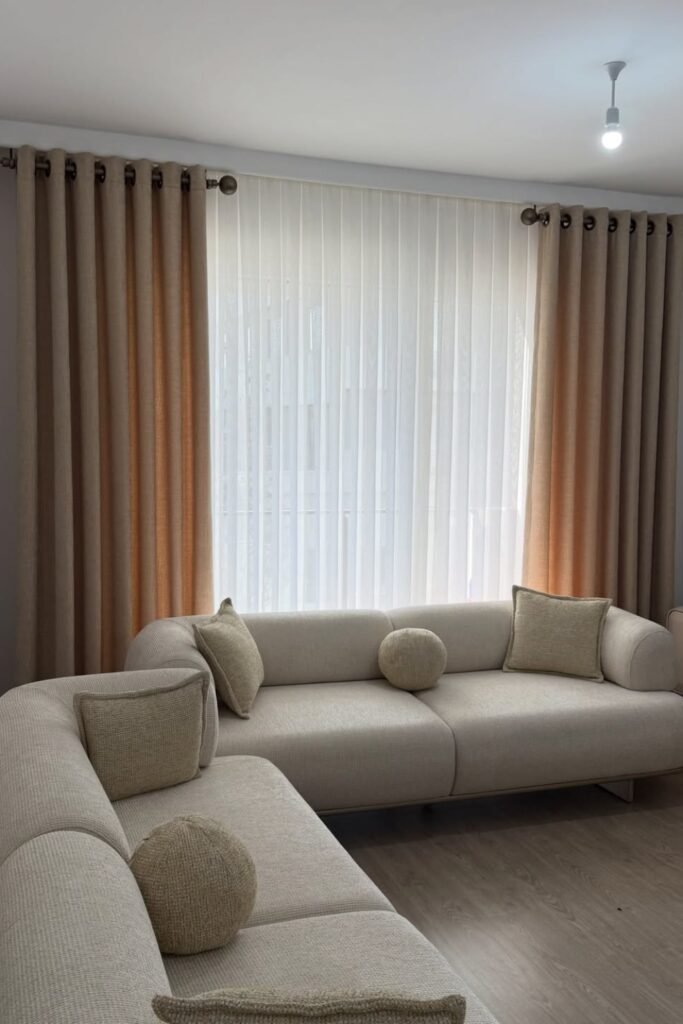
A large window can become part of the room’s design when you frame soft white sheers with darker curtains on both sides.
Use the center sheers for filtered daylight, then bring in taupe or brown side panels to connect with cushions and other darker accents.
Curtain tiebacks keep the heavier fabric controlled and create a more formal finish, making this setup useful for traditional or polished living rooms.

Patterned Curtain Layers
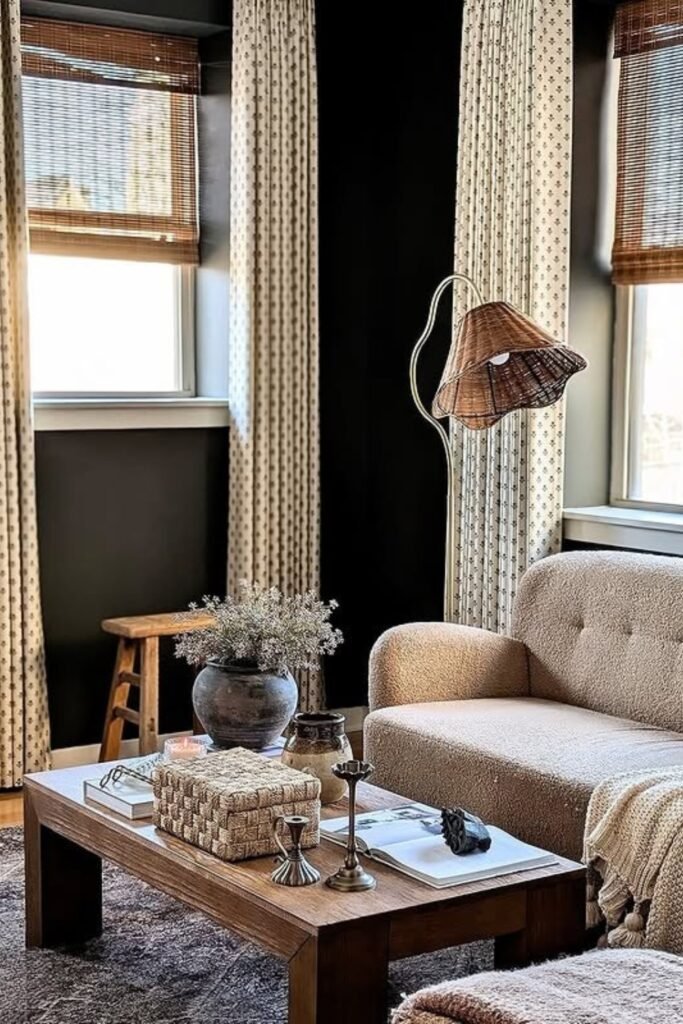
Plain curtains aren’t always the best answer, especially when your living room already has strong wall colors and plenty of natural texture.
Try a small repeating pattern rather than a large print, so the curtains add character without competing heavily with furniture, rugs, and accessories.
Pair them with woven shades when you want flexible light control; the natural brown texture also helps patterned fabric feel grounded.
Dark Olive Drapes
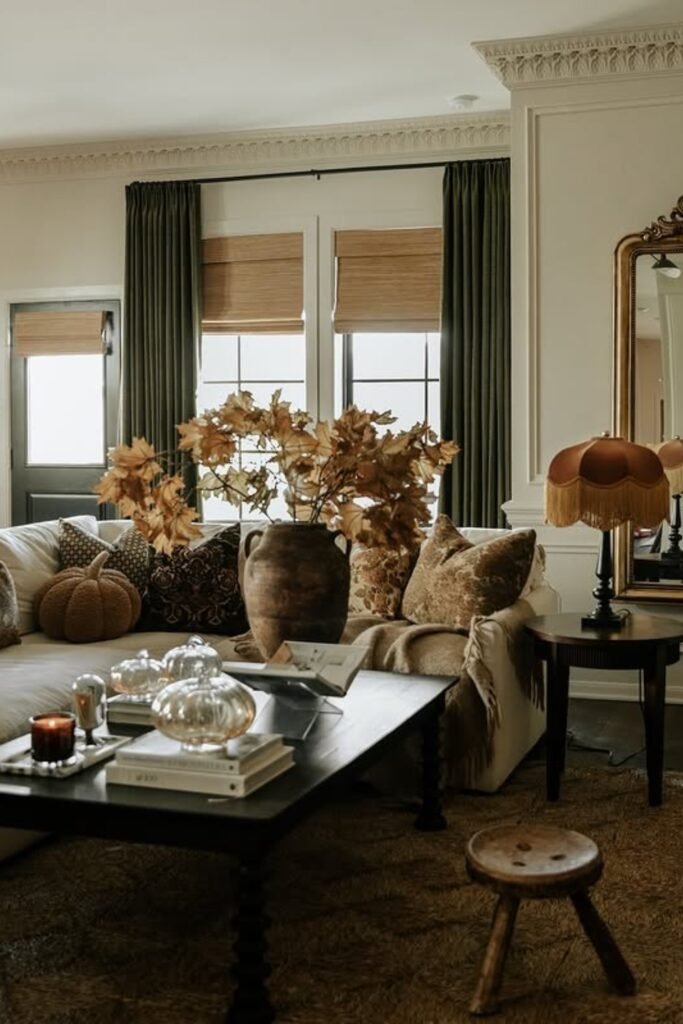
Dark olive curtains work beautifully when you want a neutral living room to feel deeper without introducing a bright or distracting color.
Pair them with woven shades to control daylight separately, while repeating earthy browns through rugs, cushions, wood, and smaller decorative pieces.
Mount the rod beyond the window edges so opened panels clear more glass and the tall, narrow windows appear noticeably wider.
Blue Patterned Curtains
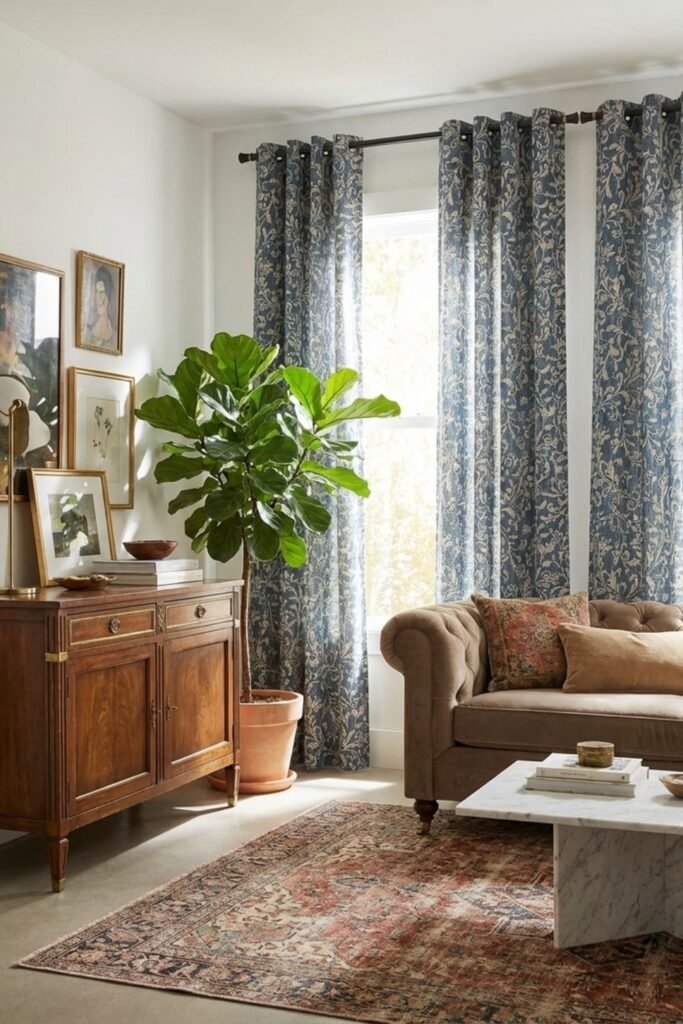
Let patterned curtains carry some personality when your walls are simple, especially in traditional living rooms filled with warm wood and vintage pieces.
Choose a medium-scale print with colors already found in your rug or cushions, which helps different patterns feel connected rather than busy.
Keep the panels floor length and generously gathered; enough fabric gives the print soft folds instead of making it look flat.
Colorful Sheer Curtains
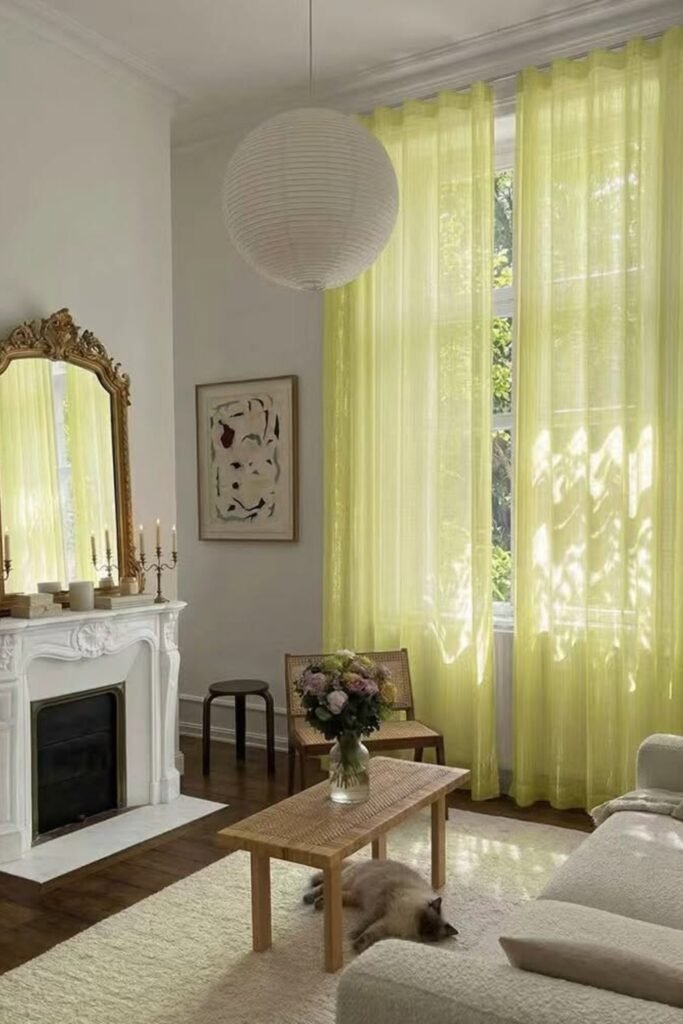
Colorful sheer curtains are an easy way to bring personality into a bright living room without sacrificing the sunlight you already enjoy.
Try a light yellow-green fabric against white walls, where daylight can pass through and cast a warmer, softer glow across the room.
Keep surrounding furniture fairly quiet so the curtain color gets breathing room, then repeat its tone subtly through flowers, art, or accessories.
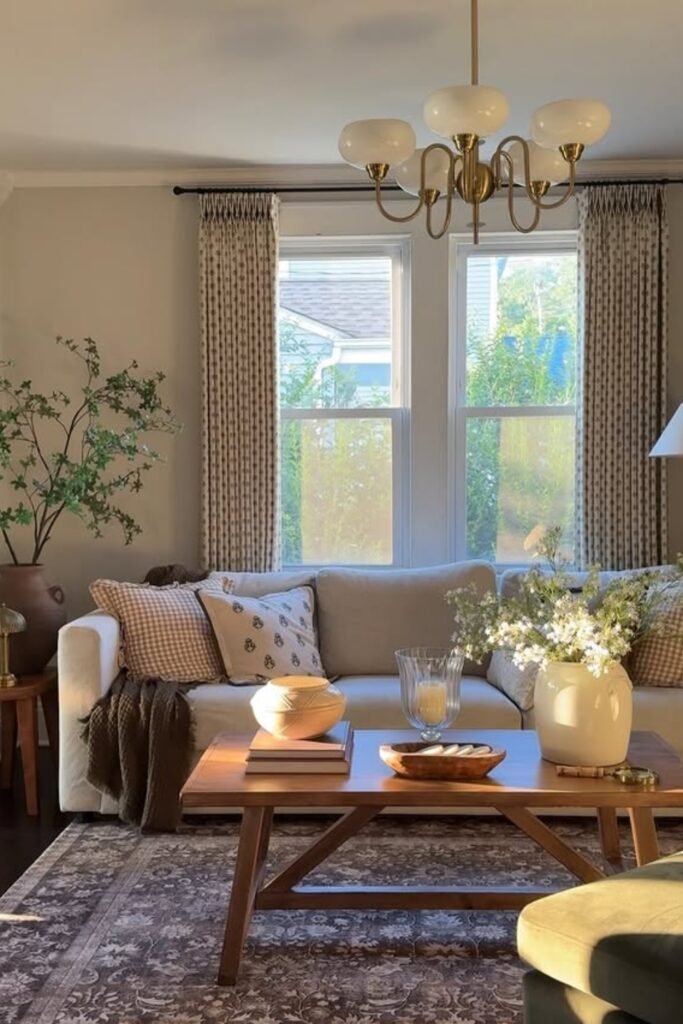
Subtle Printed Panels
Small patterned curtains can soften a simple living room without demanding attention, making them useful when your rug and cushions already add character.
Hang one long rod across neighboring windows to visually connect them, then let each panel fall straight instead of using decorative tiebacks.
Choose a print with a light background and restrained colors, so it adds detail while still allowing the room to feel relaxed.
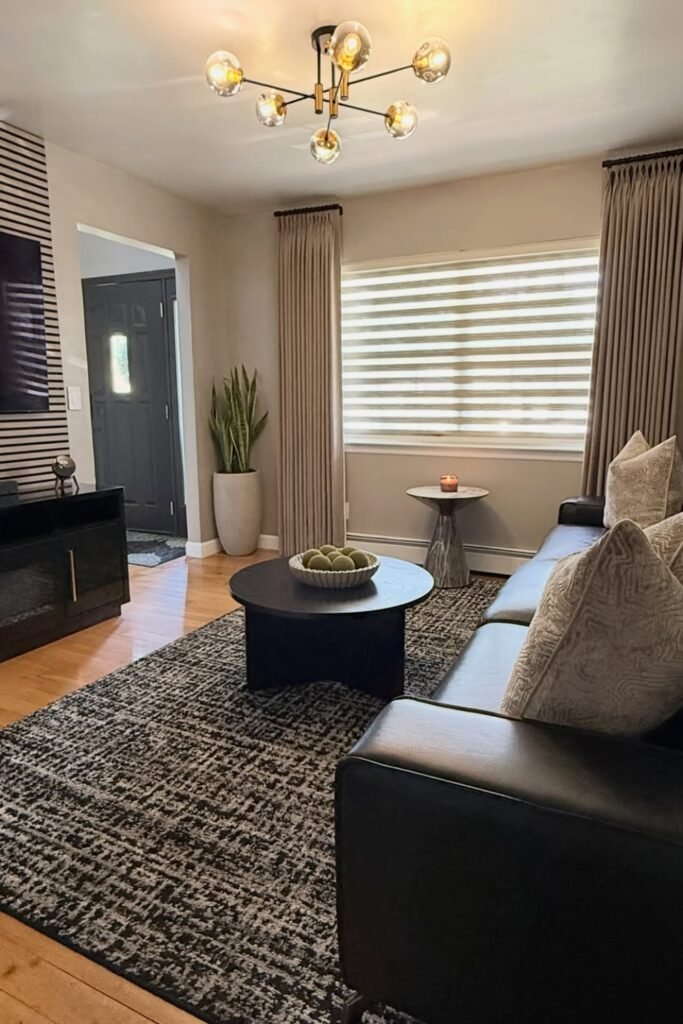
Tailored Neutral Drapes
When a living room already has strong black furniture, choose tailored taupe curtains to soften those dark pieces without losing the modern mood.
Pair the curtains with a light-filtering shade, giving you daytime privacy while letting you control glare without constantly closing the drapes.
Take narrow panels close to the ceiling and floor, which adds vertical height without using bulky fabric around a smaller living room.
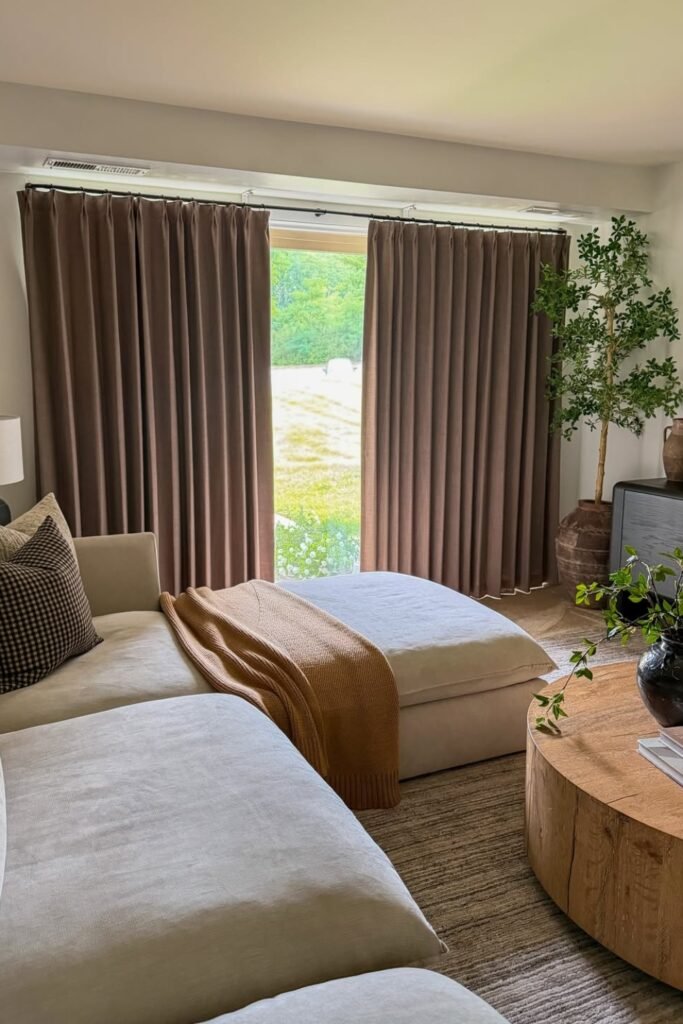
Warm Brown Curtains
For wide glass doors, fuller brown curtains can make a large opening feel warmer while giving you useful privacy whenever you need it.
Pull the color from natural wood, pottery, or throws nearby, so darker curtains feel connected instead of becoming one heavy visual block.
Leave enough stacking space beside the glass so the panels can open widely and preserve the outdoor view during brighter daytime hours.
Soft Plaid Curtains
A quiet plaid is perfect when you want pattern around the windows but already have floral, textured, or decorative pieces elsewhere in the room.
Choose thin neutral lines on a cream background, then repeat one of those tones through cushions or rugs to keep everything connected.
Run the curtain hardware around corner windows when possible, creating one continuous treatment instead of making each window feel visually separated.

Repeated Window Drapes
Multiple windows can quickly make a living room feel disconnected, so use the same curtain style to create a steady visual rhythm.
Choose a muted brown or taupe that relates to your sofa and rug, letting the windows frame the room without dominating it.
Keep every rod at the same height and every panel at the same length, which makes separate windows feel intentionally coordinated.

Small Scale Pattern
When your living room already mixes several patterns, choose small-scale curtains that support the room instead of adding another bold focal point.
Pull one curtain color from the sofa, artwork, or wood furniture, which helps the window treatment settle naturally into a collected interior.
Add woven shades behind the panels for flexible light control, especially when you want daytime filtering without closing your decorative curtains completely.

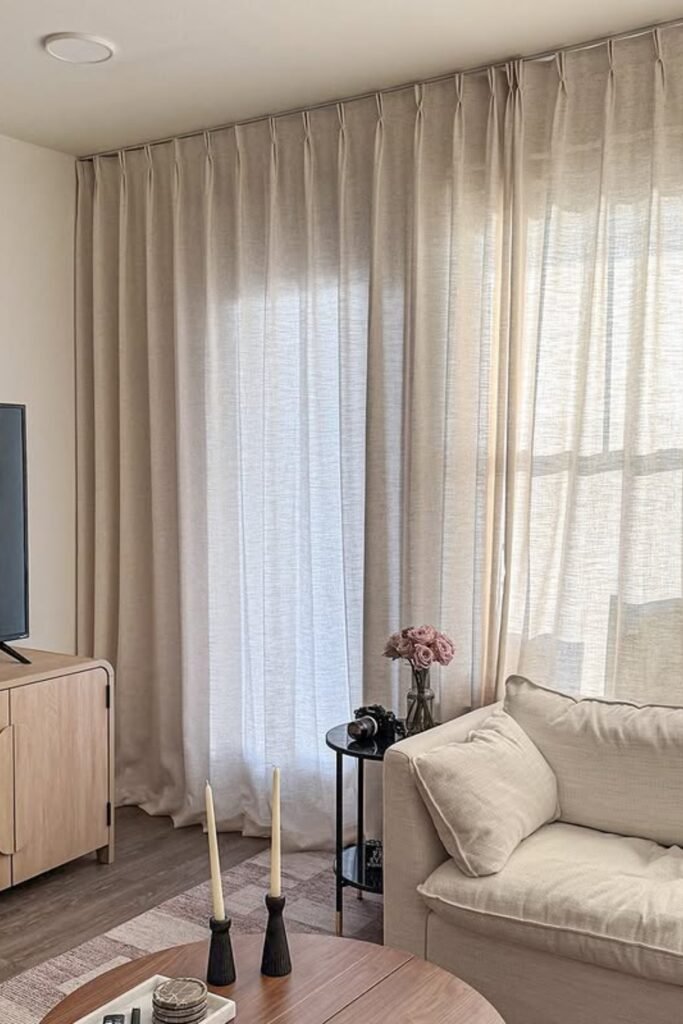
Wall Wide Sheers
Covering an entire window wall with soft sheers works especially well when you want privacy without making a compact living room feel enclosed.
Choose an off-white or warm beige fabric that relates closely to your sofa, walls, and flooring for a calm continuous backdrop.
Install the track directly near the ceiling and let panels reach the floor, creating stronger vertical lines around a wide window area.
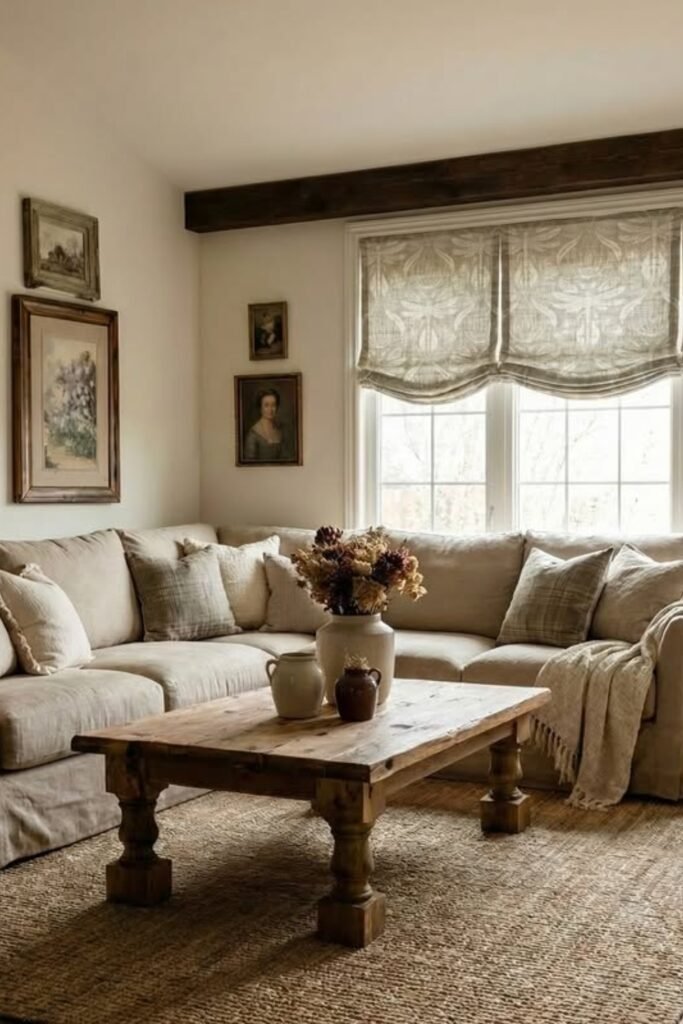
Relaxed Roman Shade
You do not always need full curtains; a relaxed Roman shade works beautifully when furniture sits directly beneath a wide living room window.
Choose a lightly patterned fabric to soften a neutral room, then keep the shade partially raised whenever you want more natural daylight.
This treatment leaves the floor completely clear, making it especially practical around sectional sofas where long curtain panels could become awkward or hidden.
Frame Wide Windows
For a wall of beautiful windows, keep curtain panels mainly at the outer edges so you preserve the view and incoming daylight.
Use warm ivory fabric against dark window frames, creating enough contrast to soften the architecture without covering its strong graphic lines.
Extend one rod across the full window wall, then use generously gathered panels so the arrangement feels balanced rather than visually undersized.

Tiny Floral Curtains
Tiny floral curtains are a smart choice when you want pattern across several windows without making a busy living room feel even heavier.
Keep the background light and the motif small, allowing the curtains to complement warm wood, neutral upholstery, and textured walls more easily.
Take every panel close to ceiling height and repeat it consistently across the windows, which creates rhythm while making the room feel taller.
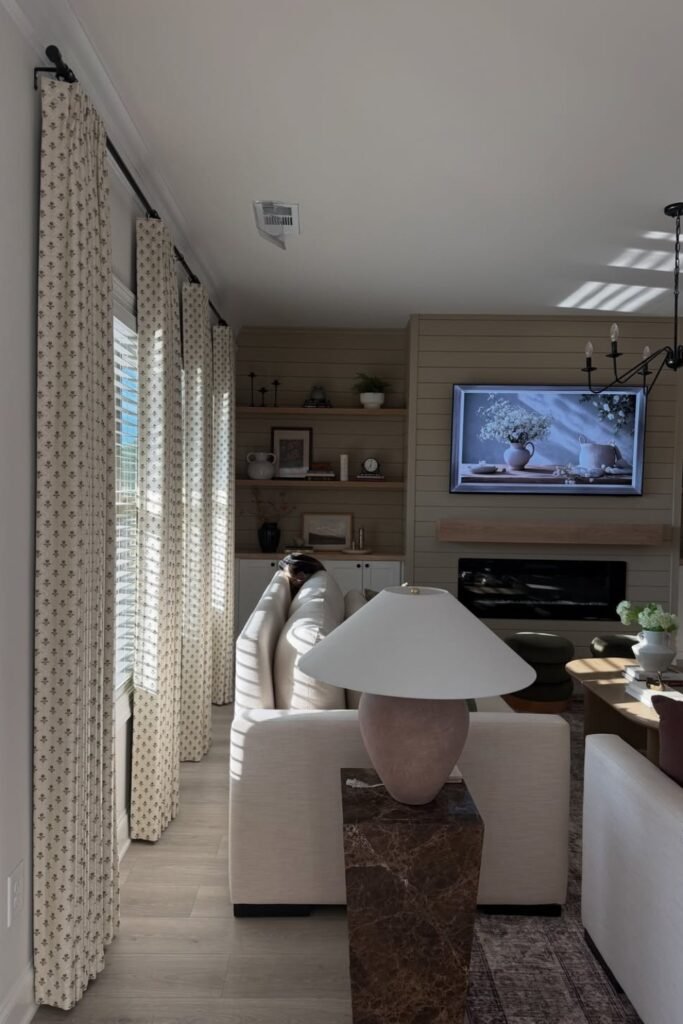
Separate Window Panels
When several tall windows sit close together, separate curtain panels can define each opening while still making the whole wall feel connected.
Choose one muted neutral for every panel, then add simple shades behind them so privacy and daylight can be adjusted independently throughout daytime.
Keep the curtains narrow enough to stack between windows, preventing bulky fabric from covering too much glass when you want maximum natural light.
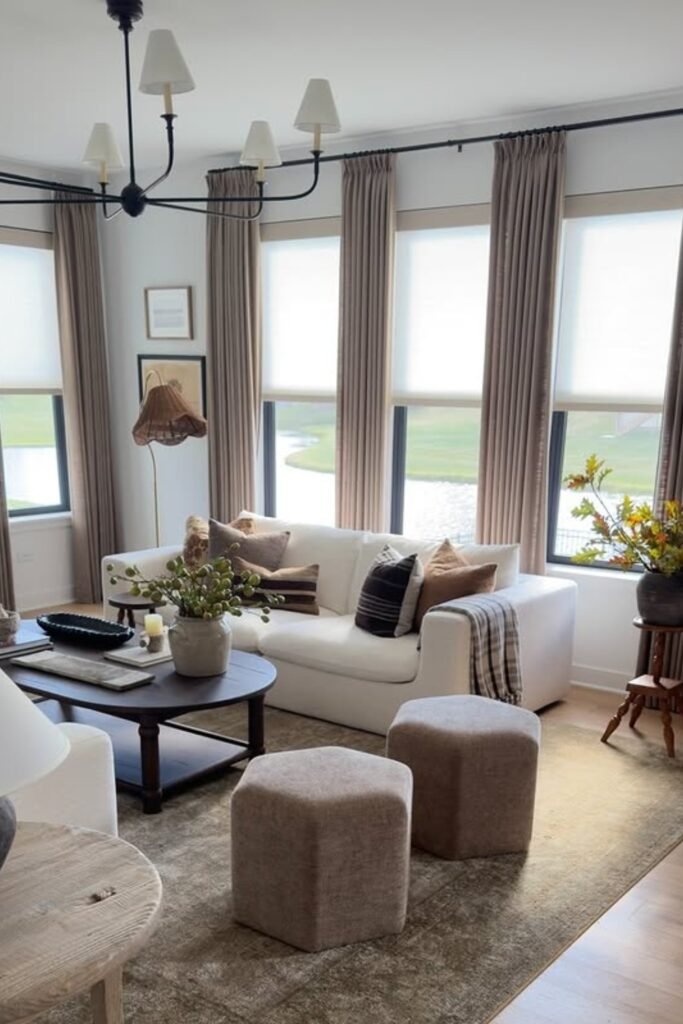
Full Wall Layering
For a clean modern living room, covering the entire window wall can make curtains feel architectural rather than like separate decorative accessories.
Layer translucent sheers behind warm neutral drapes, giving you soft daylight during the day and a more private setting after dark.
Hide or minimize the curtain hardware near the ceiling, then carry both layers to the floor for an uninterrupted, custom-looking finish.

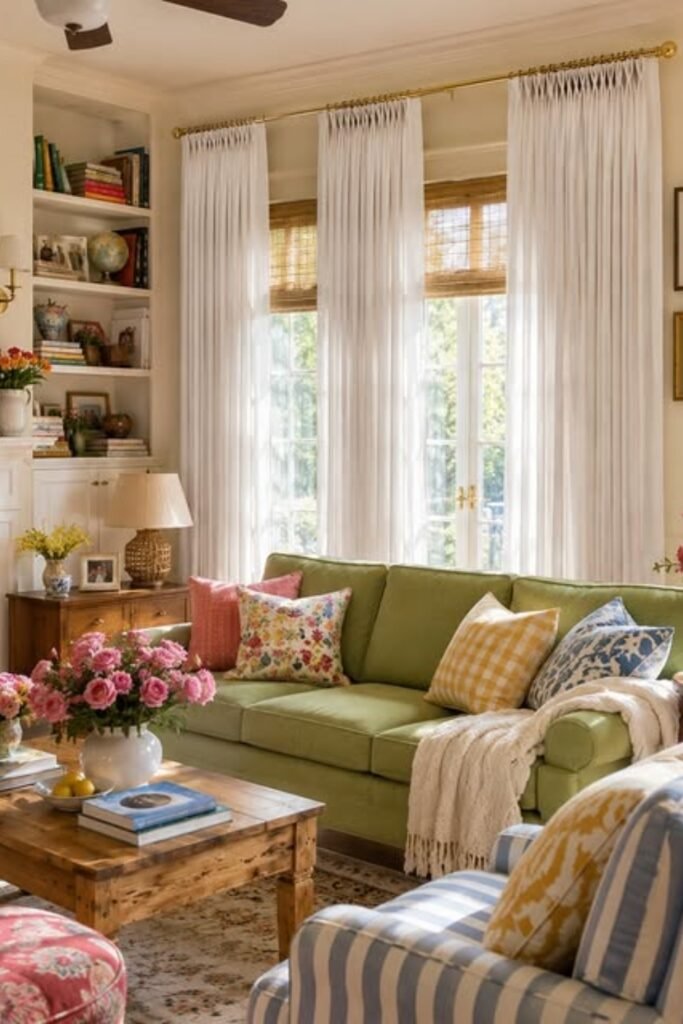
White Breezy Drapes
White curtains can calm a colorful living room because they give patterned furniture and bright accessories a simple background instead of more competition.
Use lightweight fabric when you want sunlight to remain part of the room, especially around tall windows overlooking a garden or backyard.
Add woven shades behind the curtains for extra privacy and warmth, then use brass hardware to complement traditional furniture and colorful decorative accents.
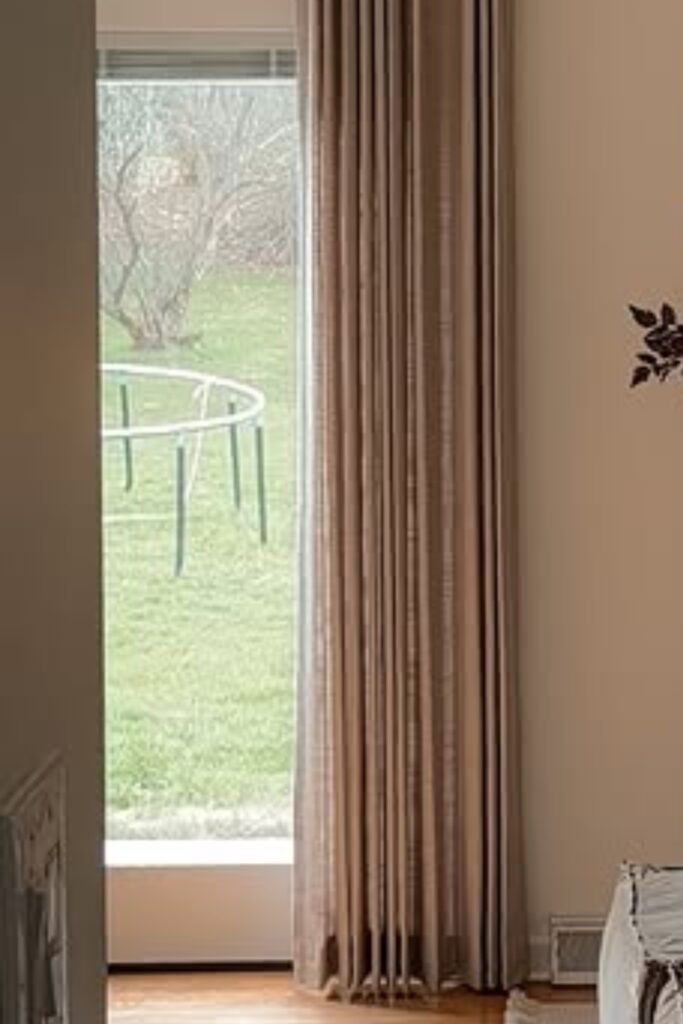
Slim Neutral Panels
Narrow windows do not need bulky curtains; slim taupe panels can add softness while leaving plenty of wall space visible around them.
Choose a shade slightly deeper than your walls, then repeat similar browns through wood furniture, pillows, and rugs for an easy connection.
Keep the panels floor length and pair them with simple shades, giving you privacy control without adding another heavy layer of fabric.
Soft Double Layers
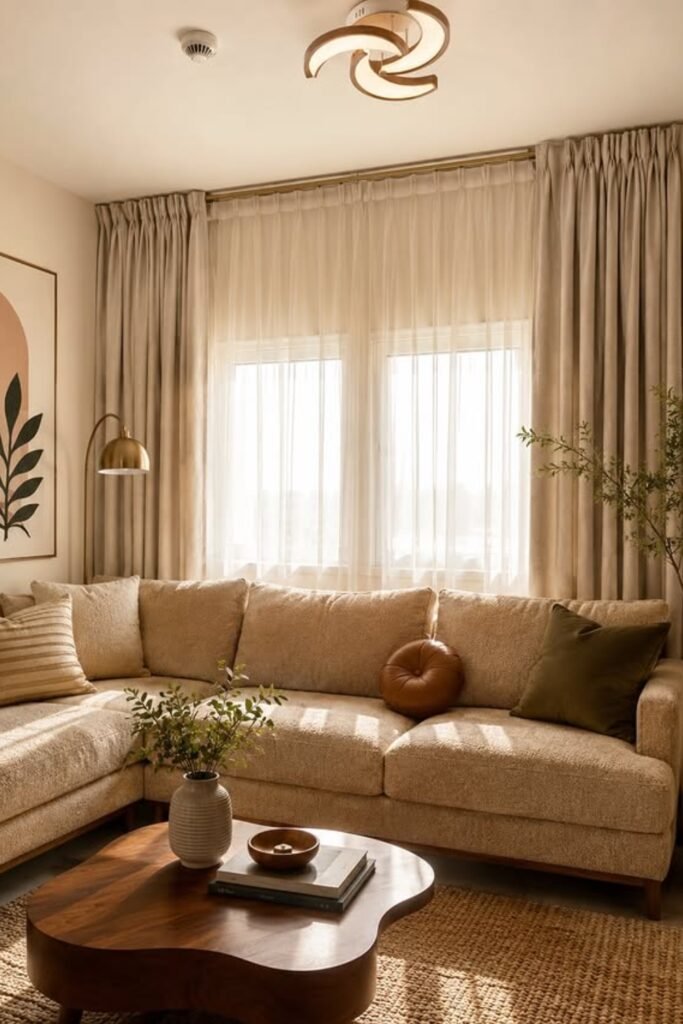
Layering sheers with beige outer curtains works especially well behind a sectional, where you want privacy without making the seating area feel dark.
Let the sheer layer cover the entire window for softened daylight, while thicker side panels stay open until you need extra privacy.
Match the outer curtains closely to your upholstery, then bring warmer contrast through wood and olive accents so the neutral scheme stays interesting.
Balanced Window Curtains
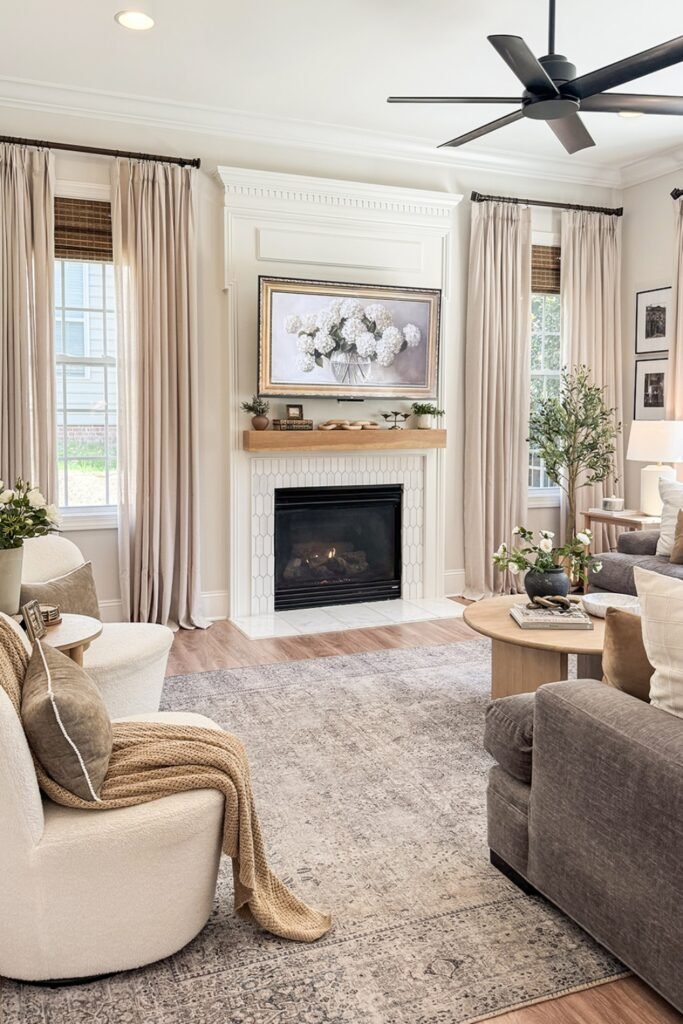
When a living room has windows on both sides of a fireplace, matching curtains can bring symmetry without competing with the central feature.
Choose warm ivory panels that sit close to the wall color, allowing dark shades and furniture to provide stronger contrast elsewhere.
Mount every rod at an identical height and let panels lightly meet the floor, which keeps separate windows looking polished and connected.
FAQs
Should Living Room Curtains Match the Sofa or the Walls?
They do not have to match either one exactly.
If you want a calm, spacious look, choose curtains close to your wall color.
For more contrast, pull a shade from the sofa, rug, cushions, or artwork so the curtains still feel connected to the room.
How Much Wider Should Curtains Be Than the Living Room Window?
Aim for enough fabric to create visible folds even when the curtains are closed.
As a practical starting point, your combined curtain width should be around twice the window width.
Extend the rod beyond both sides too, so open curtains do not block unnecessary daylight.