A blank living room wall looks easy to decorate until you start placing frames on it.
Suddenly, the artwork feels too small, the spacing looks off, or the whole arrangement competes with your sofa instead of working with it.
It’s about choosing the right scale, finding a layout that suits your wall, and giving different pieces enough connection to feel like one collection.
Whether you’re working above a sofa, around a TV, or with an awkward narrow wall, the right approach can make planning much easier.
In this article, you’ll find 22 practical gallery wall ideas and simple tips you can adapt to your own living room.
Let’s jump in!
How to Do a Gallery Wall in a Living Room?
Start with the wall and furniture you already have instead of choosing frames first.
Above a sofa, keep the full arrangement narrower than the sofa and hang the lowest frames close enough that both feel connected.
Pick one larger piece as your anchor, then build smaller frames around it, keeping the gaps roughly 2-3 inches for a grouped look.

If you prefer something cleaner, use equal-sized frames in a simple grid.
Your artwork doesn’t need to match, but repeat one element, such as frame color, art tones, or subject, to keep everything connected.
Before making holes, arrange the frames on the floor or tape paper templates to the wall so you can fix awkward spacing and balance first.
Family Memory Wall
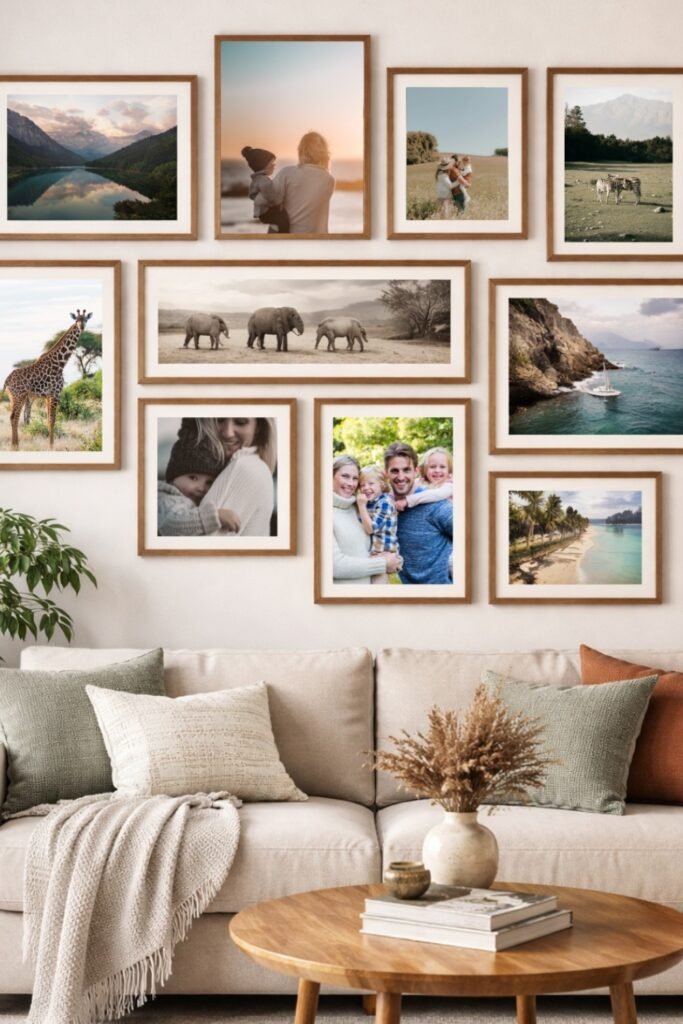
Turn family memories into the main decoration by mixing portraits with travel landscapes instead of filling every frame with matching prints.
Warm wood frames work especially well above a cream sofa because they connect naturally with wooden tables and earthy accessories.
Keep different frame sizes fairly close together, then use one wide landscape near the center to steady the irregular arrangement.
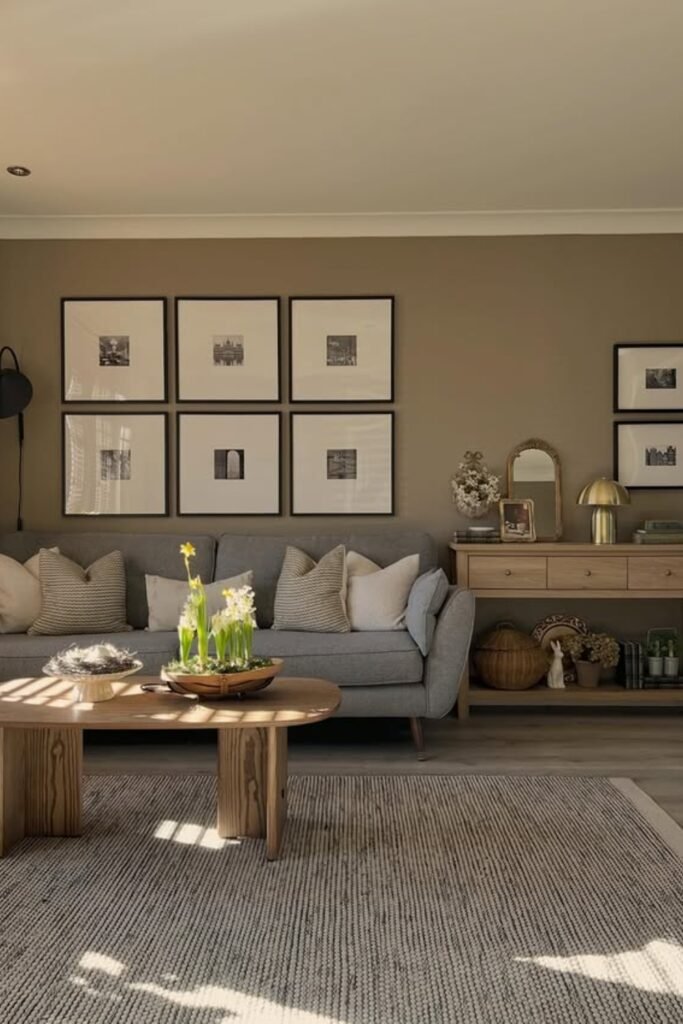
Balanced Frame Grid
Choose a six-frame grid when you want the living room to feel calm, ordered, and polished without making the wall boring.
Use identical black frames and generous cream mats, then keep every gap equal so even small photographs carry enough visual weight.
Position the grouping directly above the sofa, while repeating two smaller frames near a console to connect both furniture zones naturally.
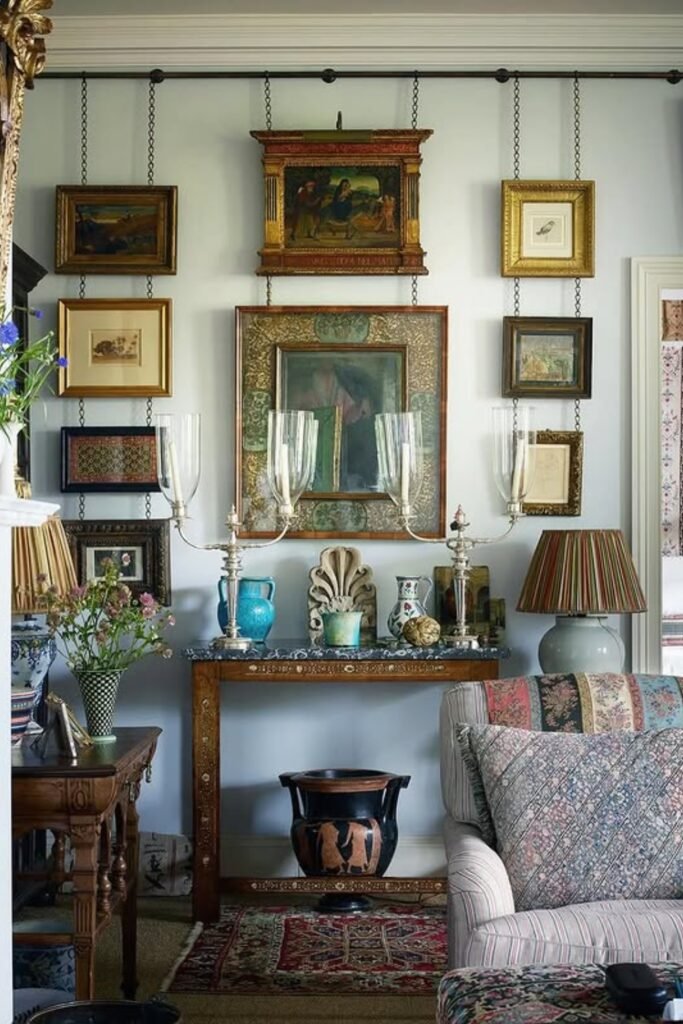
Antique Picture Rail
Skip ordinary wall hooks when you want a collected, old-house character; a picture rail lets antique artwork become part of the architecture.
Hang different frame sizes from chains, keeping the largest artwork near the center while smaller paintings fill narrow spaces around it.
Pair this approach with vintage furniture, patterned textiles, and table lamps so the gallery feels collected gradually rather than newly installed.
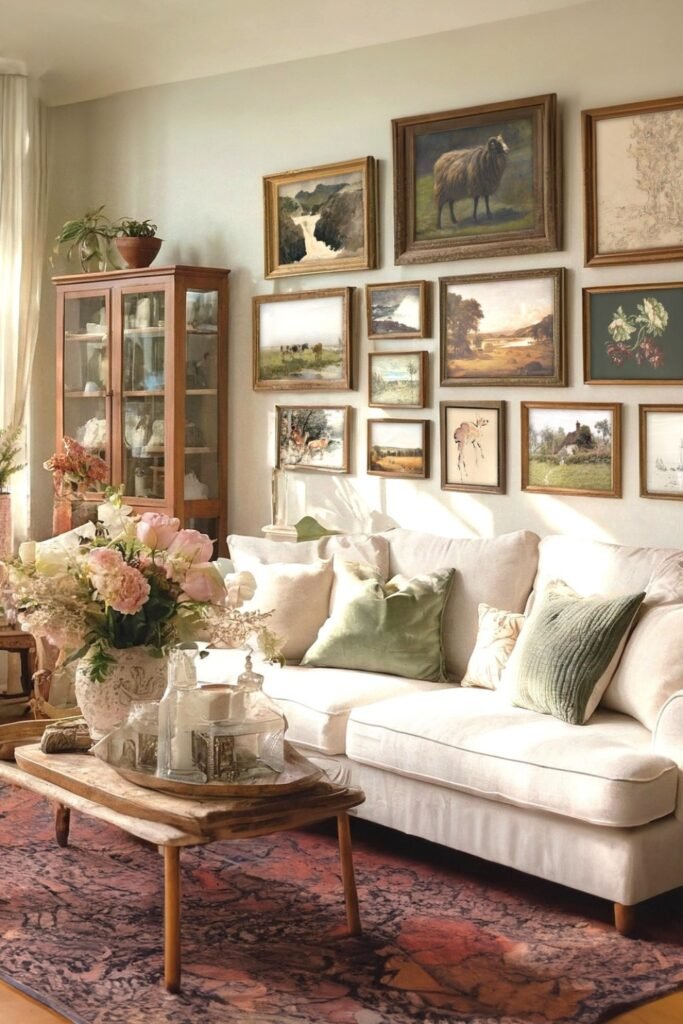
Collected Landscape Wall
Let one shared subject hold an irregular gallery together; landscapes, animals, and botanical artwork can vary greatly while still feeling intentionally connected.
Mix small and large wooden frames above a light sofa, leaving fairly consistent gaps so the different artwork sizes never become chaotic.
Natural daylight makes this arrangement especially effective in cottage-style living rooms, where warm woods, plants, and muted textiles.
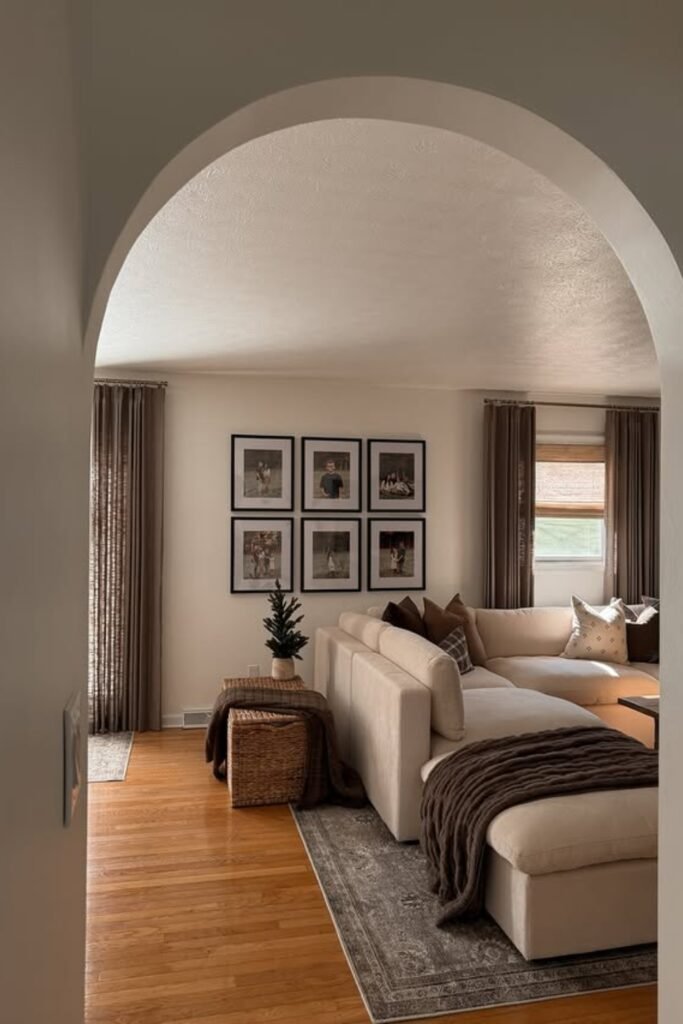
Quiet Photo Grid
A six-frame grid gives a tucked living room structure without making the seating area feel overly decorated or visually busy.
Use matching black frames and equal spacing, then center the full arrangement on the open wall visible beyond your sectional.
Keeping photographs similar in tone helps the strict layout feel calm, while warm curtains, wood flooring, and textiles soften its edges.
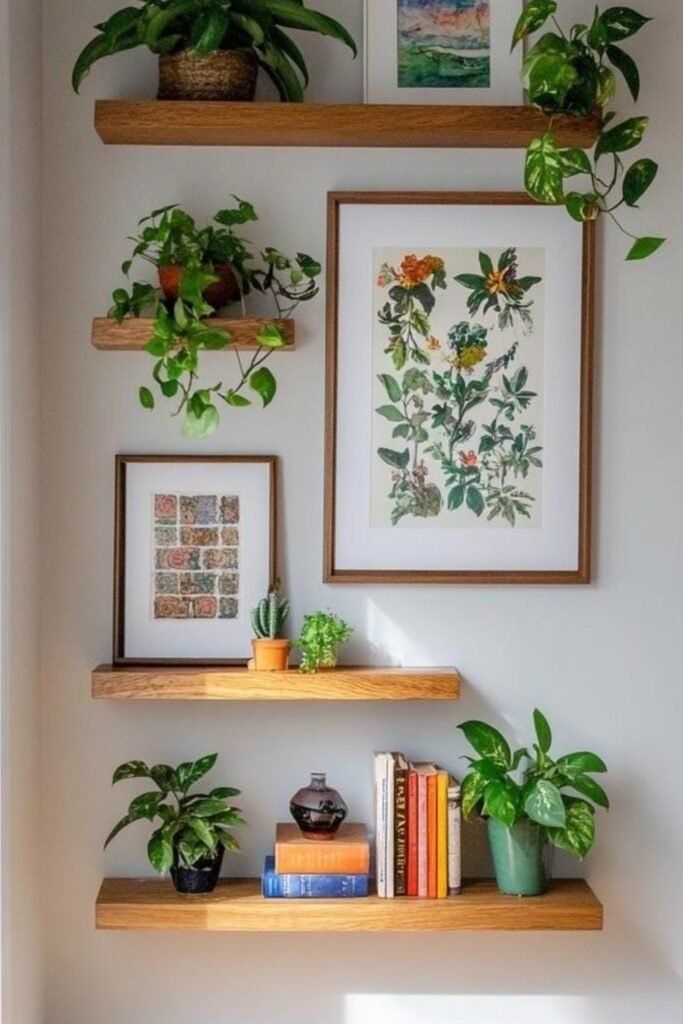
Botanical Shelves
Floating shelves can become part of your gallery when a narrow living room wall needs both decoration and useful display space.
Place one larger botanical print between staggered oak shelves, then repeat smaller framed artwork among leafy plants, colorful books, and pottery.
Let trailing greenery overlap some shelf edges because it connects the artwork with real plants and keeps the arrangement relaxed.
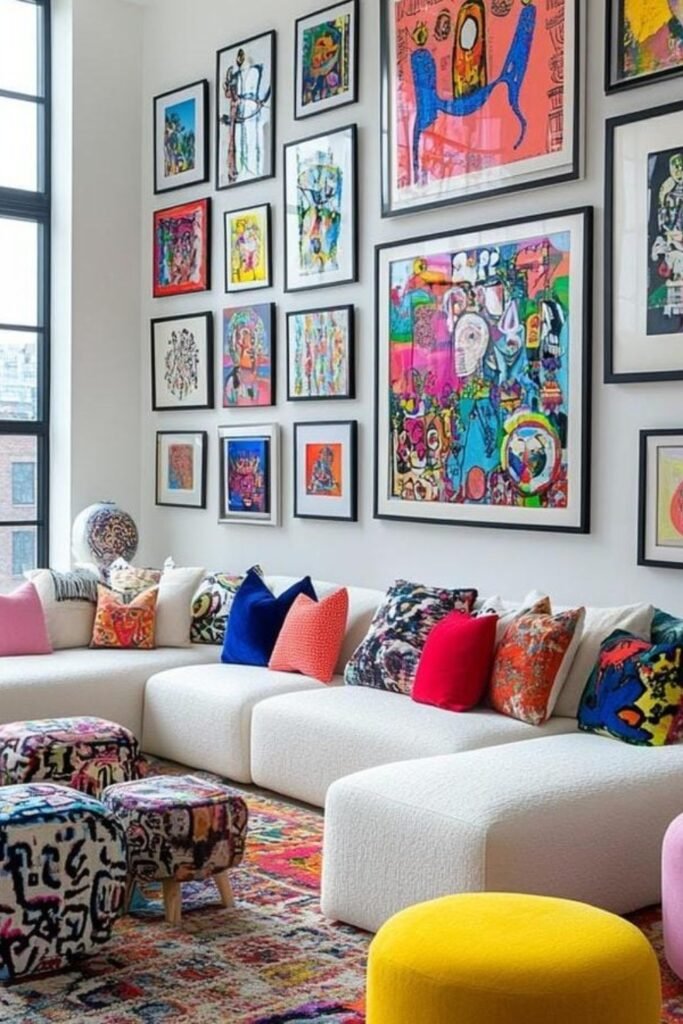
Colorful Art Wall
Go bold on a tall wall by mixing artwork sizes while repeating slim black frames to control all that strong color.
Start with two oversized pieces as anchors, then fit smaller prints around them instead of trying to create perfect rows.
Pull several artwork colors into cushions, rugs, and stools so the gallery feels connected to the living room below it.
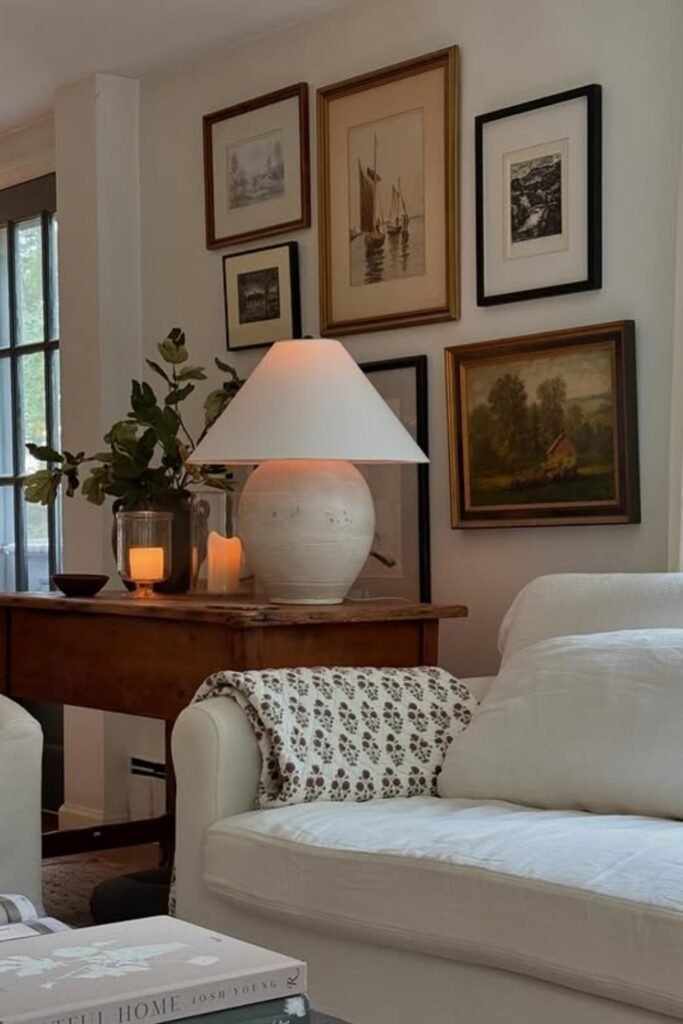
Cozy Corner Gallery
A console wall is ideal for a smaller collected gallery, especially when your sofa leaves another quiet corner needing character.
Combine warm wood and black frames in different sizes, but keep muted landscapes and sketches related enough to avoid clutter.
Use a table lamp and candles below the artwork to warm this corner at night and make darker vintage pieces easier to notice.
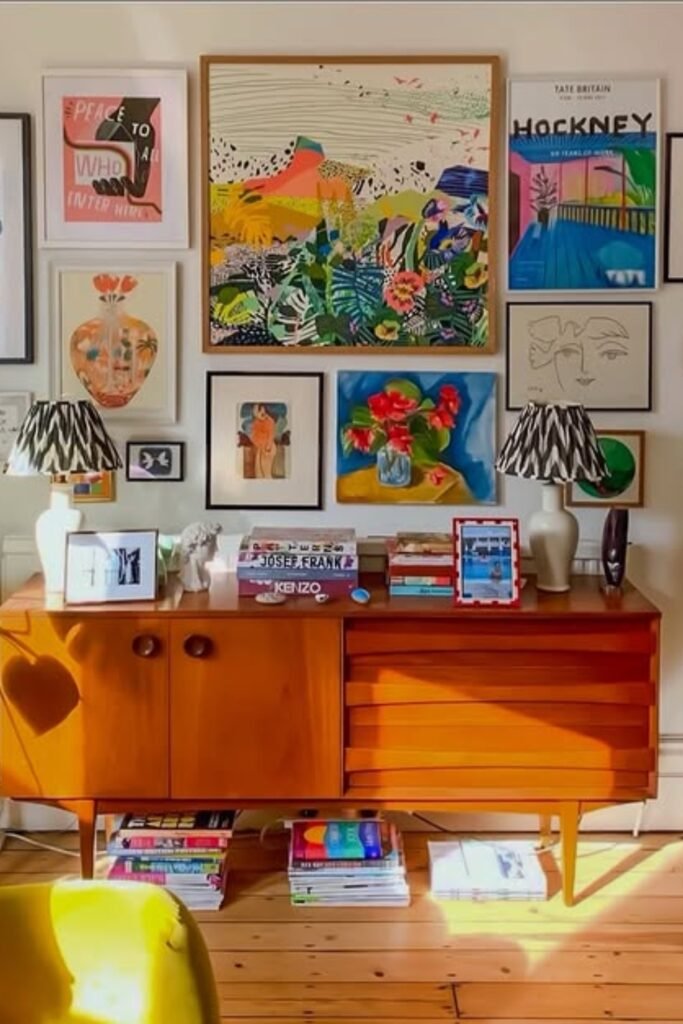
Playful Art Mix
Let one oversized colorful print lead the arrangement, then surround it with smaller illustrations that repeat a few lively colors throughout.
This approach works above a long sideboard, where varied frame sizes can spread outward without competing directly with your main seating.
Add patterned lamps, books, and leafy plants below to carry the gallery’s playful personality naturally into the rest of the room.
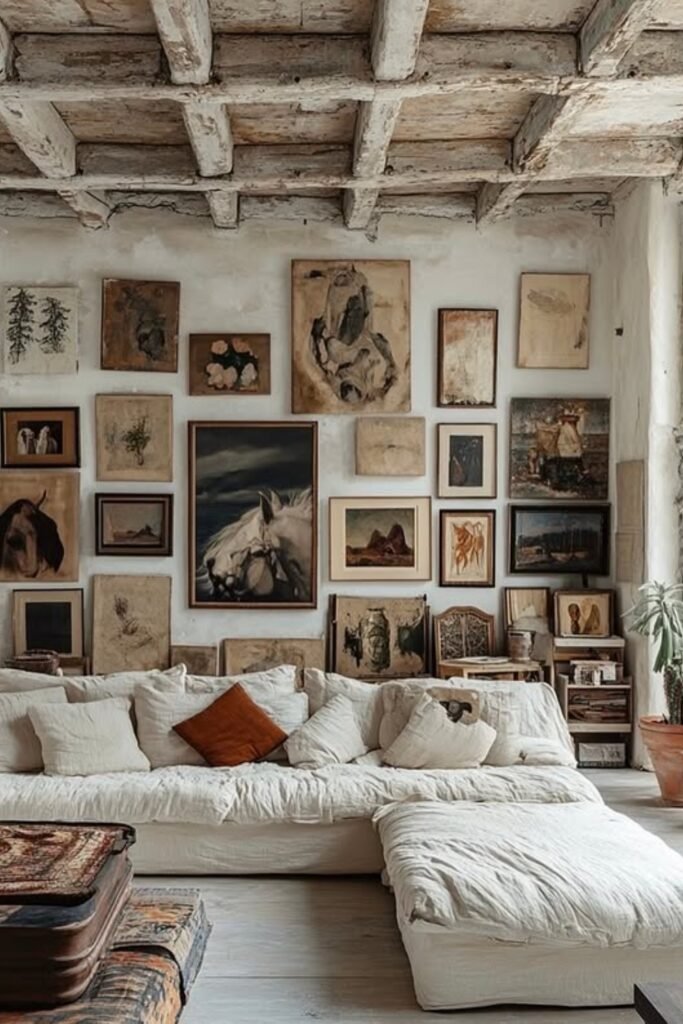
Rustic Salon Wall
High ceilings can handle a gallery that climbs upward, so use the full wall instead of keeping artwork close to furniture.
Mix weathered paintings, sketches, and earthy artwork in uneven sizes, placing stronger dark pieces between softer ones to create visual rhythm.
Keep the palette muted when frames and subjects vary heavily; this prevents a large salon arrangement from overwhelming relaxed neutral seating below.
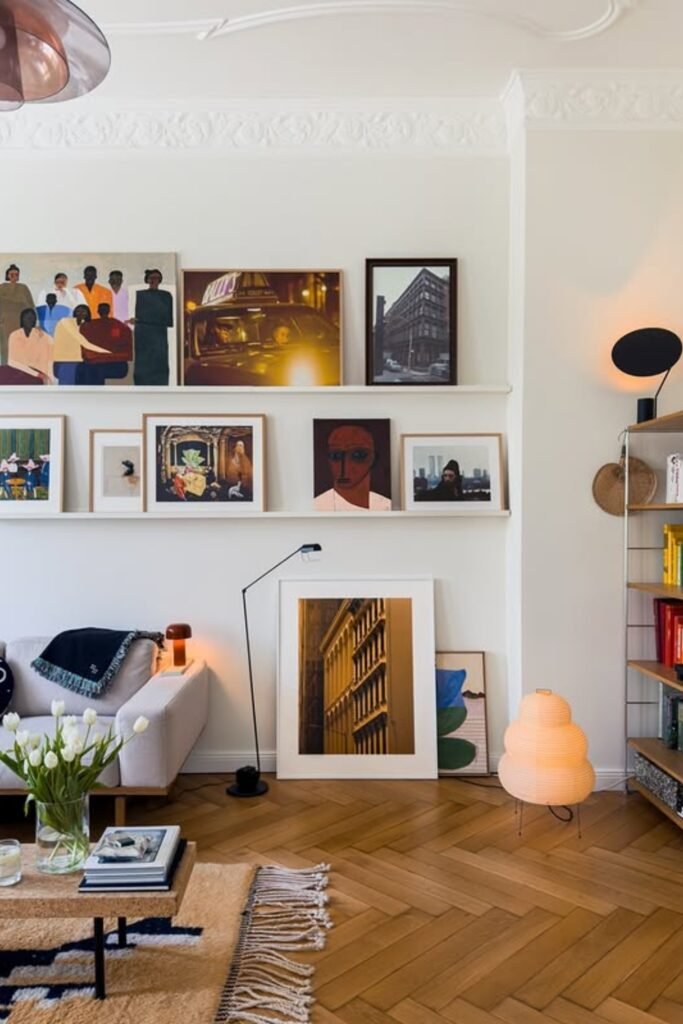
Layered Picture Ledges
Picture ledges are a smart choice when you enjoy changing artwork because frames can move around without creating new wall holes.
Use two long ledges with different sized prints, letting some frames overlap slightly rather than spacing everything into rigid individual positions.
Leave one oversized piece resting on the floor below to extend the collection downward and give a tall living room wall balance.
Personal Photo Gallery
Turn the wall behind your sofa into something personal by mixing family photographs in different sizes while keeping generous white mats throughout.
Choose two or three frame finishes, then arrange your largest photograph near the center so smaller memories naturally build around it.
This works especially well in neutral living rooms because meaningful photographs add warmth without introducing colors.

Collected Art Corner
A small living room corner feels far more interesting when artwork, plants, woven pieces, and floating shelves share the same wall.
Instead of matching every frame, repeat warm wood tones across several pieces, then use trailing greenery to soften gaps between your artwork.
Try this approach beside an accent chair where the layered display can create a cozy reading spot without requiring another large furniture piece.

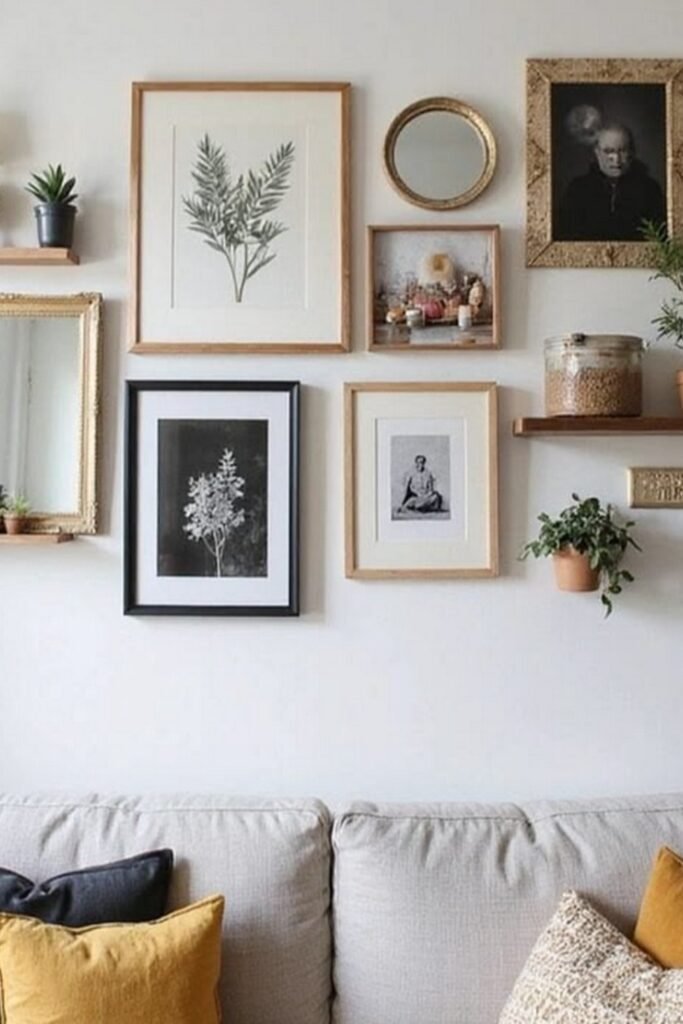
Art And Greenery
If a gallery wall feels too flat, bring small plants and narrow wooden shelves between framed prints to give it extra depth.
Keep larger artwork around eye level, then place mirrors and greenery toward the edges so the arrangement spreads naturally above your sofa.
Mustard cushions are especially useful here because their warm color connects wooden frames and plant pots while giving a pale living room contrast.
Vintage Travel Gallery
Give a traditional living room more personality by pairing vintage travel posters, sketches, and smaller artworks instead of relying on matching prints.
Let one oversized poster anchor the arrangement, then fill surrounding spaces with smaller frames so the gallery feels collected rather than planned.
This approach suits warm velvet seating beautifully, especially when patterned cushions and an antique-style rug repeat colors.

Soft Color Gallery
Neutral furniture gives you freedom to introduce color overhead, so build your gallery with soft pinks, greens, terracotta, and earthy landscape tones.
Mix botanical prints, abstract artwork, and landscapes while keeping slim pale frames consistent enough to prevent the busy arrangement.
Use this idea in bright living rooms where natural sunlight can strengthen those gentle colors without requiring bold paint or heavily patterned furniture.

Dark Gallery Backdrop
When colorful artwork needs stronger definition, a deep teal wall can turn individual frames into a striking feature above your living room sofa.
Combine ornate gold, natural wood, and dark frames, but spread each finish around the arrangement instead of grouping similar styles together.
A mustard sofa completes this look particularly well because its warmth stands against the dark wall while connecting naturally with gold-framed artwork.

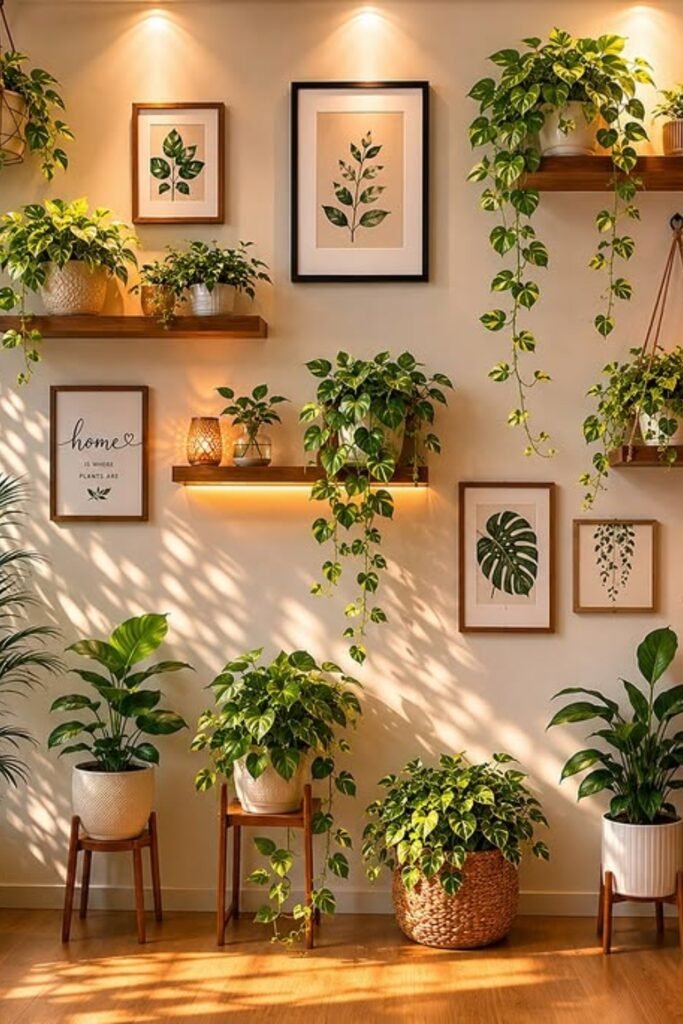
Living Plant Wall
Skip a conventional gallery wall when your living room needs freshness, and let trailing plants become part of the wall decoration instead.
Mount wooden shelves at different heights, then combine hanging vines with simple botanical prints so greenery travels naturally.
Place this arrangement near a bright window where plants receive enough light, while warm lamps can make the greenery feel cozy after sunset.
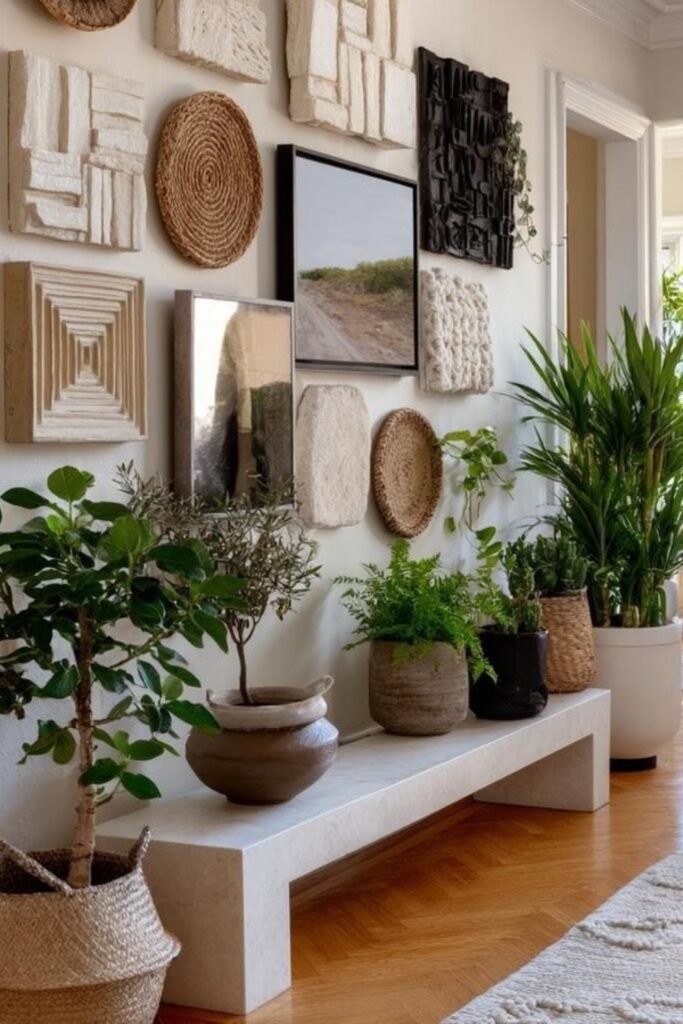
Textured Wall Layers
Flat artwork is not your only option; woven discs, sculptural panels, mirrors, and framed photography can give a neutral living room dimension.
Keep everything within cream, tan, black, and natural wood tones so multiple textures feel connected instead of making the wall visually crowded.
Finish with plants at floor level and along a low bench, creating a softer transition between your textured display and living space.
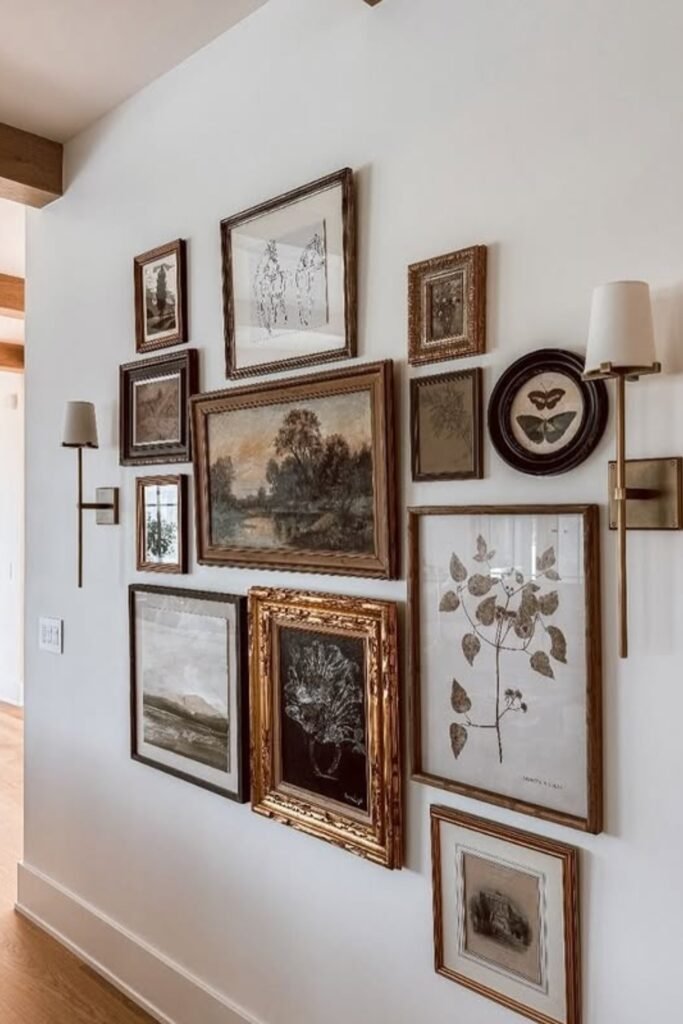
Antique Art Collection
A narrow living room wall can become a character-filled focal point when you build the gallery around landscapes, botanicals, and vintage-style illustrations.
Start with one larger landscape near the middle, then surround it with smaller pieces while maintaining fairly tight gaps throughout the arrangement.
Traditional brass sconces placed on both sides add symmetry and evening light, making this idea especially fitting for classic or transitional living rooms.
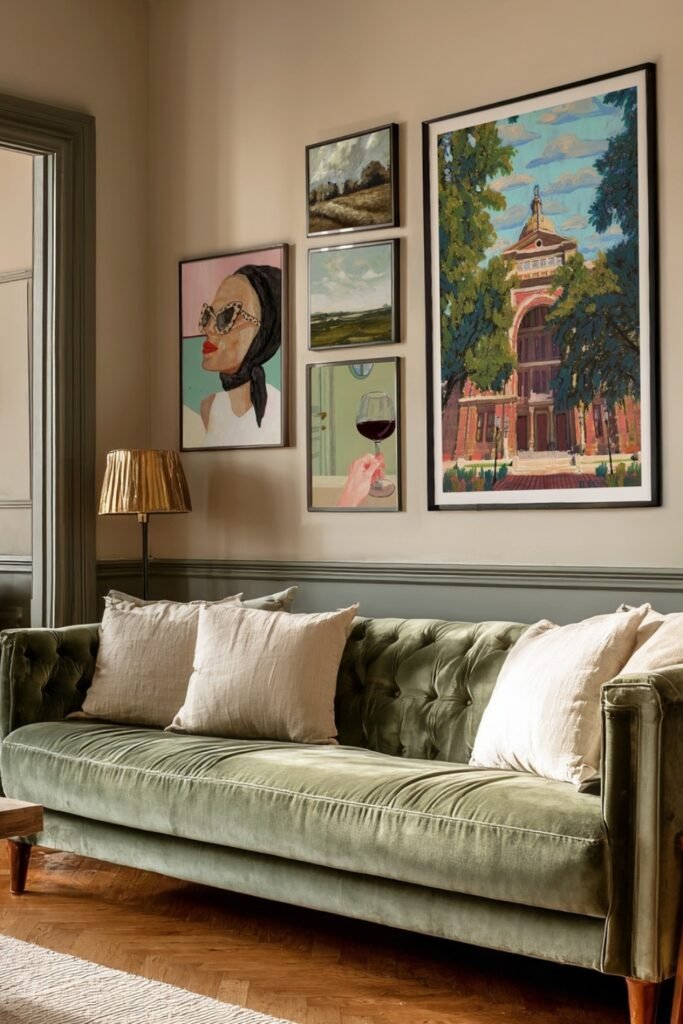
Colorful Art Cluster
You do not need dozens of pieces for an expressive gallery; five well-chosen artworks can completely change the mood above your sofa.
Pair one oversized colorful print with smaller landscapes and playful portraits, using slim dark frames to give very different subjects one common detail.
This combination works beautifully with an olive velvet sofa because its muted green grounds brighter artwork while keeping the living room sophisticated.
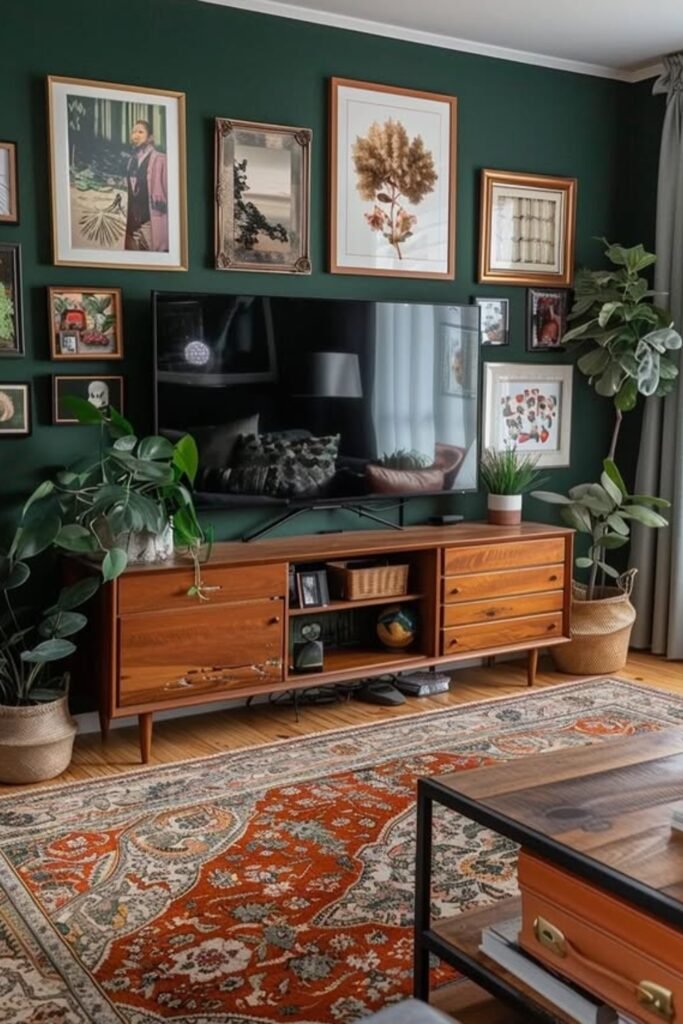
Gallery Around TV
Instead of letting a television dominate your living room wall, surround it with artwork that draws attention across the entire feature area.
Paint the background deep green, then position medium and small frames around the screen while leaving enough breathing room along its edges.
Warm wood furniture, leafy plants, and an earthy patterned rug help connect the dark gallery wall with the rest of your living room.
FAQs
How do I keep a living room gallery wall from looking too busy?
Give the arrangement one repeating element, such as similar frame colors, consistent spacing, or a limited palette that connects different artwork naturally.
Leave some visible wall between pieces and avoid filling every empty spot, especially when your living room already has patterned furniture or rugs.
If you love mixing photographs, prints, and mirrors, choose one larger piece as the anchor so the smaller items have a clear focus.
Should a gallery wall match the living room furniture?
Your gallery wall does not need to match every furniture color, but repeating two or three room tones will make everything feel connected.
Pull subtle colors from your sofa, cushions, rug, or wood furniture and repeat them through artwork, frames, or decorative wall pieces.
For neutral living rooms, you can introduce stronger artwork colors while keeping frames understated, giving the space personality .