You can have a beautiful sofa, the right wall color, and perfectly styled decor, yet your living room can still feel off when the lighting is wrong.
One bright ceiling light often feels harsh, while too few lamps leave awkward dark corners.
The fix isn’t always adding more lights. It’s choosing the right types and placing them where you actually need them.
In this article, you’ll find living room lighting ideas that help you layer ceiling lights, lamps, sconces, and accent lighting.
Let’s jump in!
What Type of Living Room Lighting Is Best?
The best living room lighting uses more than one light source. Start with ambient lighting, such as a ceiling fixture or recessed lights, to brighten the whole room.
Then add task lighting beside your sofa or reading chair where you actually need stronger light.
Finish with accent lighting, such as sconces, picture lights, or shelf lighting, to brighten darker areas and give the room more depth.
For a warm, comfortable feel, choose bulbs around 2700K–3000K and use dimmers when possible.
If your living room has a TV, avoid placing bright lamps where they reflect on the screen.
The goal isn’t to make every corner equally bright. Instead, layer your lights so you can change the mood depending on how you use the room.
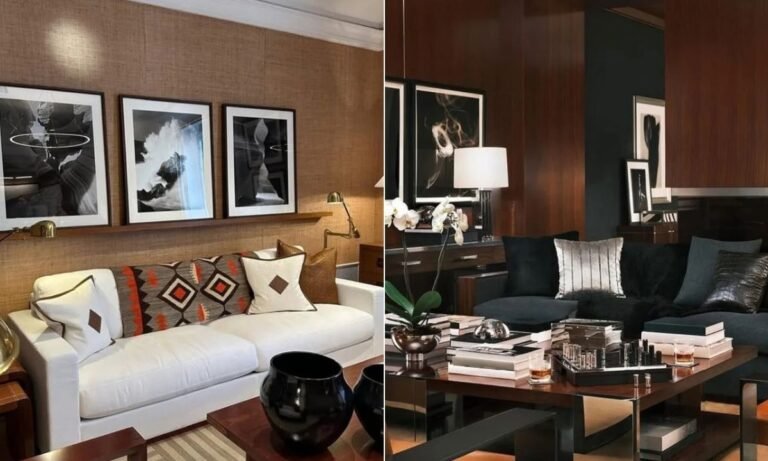
Sconces Frame Art
Use matching wall sconces around a large artwork when you want the wall to become a focal point without adding another floor lamp.
Choose fixtures that cast light upward and downward, creating soft wall patterns while keeping direct glare away from people sitting below them.
A chandelier and nearby floor lamp can complete the layers, making this setup especially effective in traditional rooms with taller ceilings.

Hidden Ceiling Glow
Run concealed lighting along the ceiling edges when you want broad illumination without filling a clean, modern living room with visible fixtures.
Pair that indirect glow with an arc floor lamp and small table lamp, giving your seating area stronger light exactly where needed.
Keep every source similarly warm and dimmable so the TV wall stays comfortable at night instead of becoming surrounded by distracting brightness.
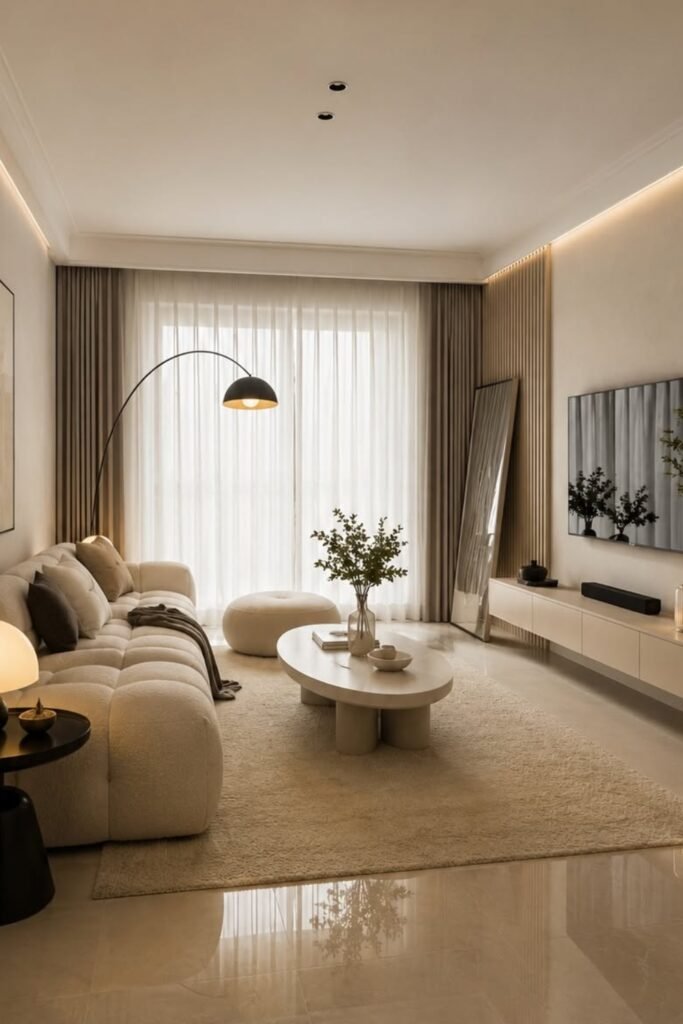
Light the TV Wall
A dark TV corner feels much softer when you combine a curved floor lamp with concealed lighting underneath the floating media cabinet.
Position the floor lamp beside the sofa rather than facing the screen, giving you useful light without creating annoying television reflections.
Add low accent lighting beneath the cabinet for depth, but keep it subtle enough that your screen remains the brightest viewing focal point.

String Lights Overhead
String lights can soften a living room instantly when you run them along the ceiling edge instead of relying on one bright fixture.
Add a woven pendant over the main seating zone, then use small table lamps and candles to spread warmth closer to eye level.
This combination suits boho or relaxed rooms especially well, because natural textures look richer when several gentle light sources overlap around them.

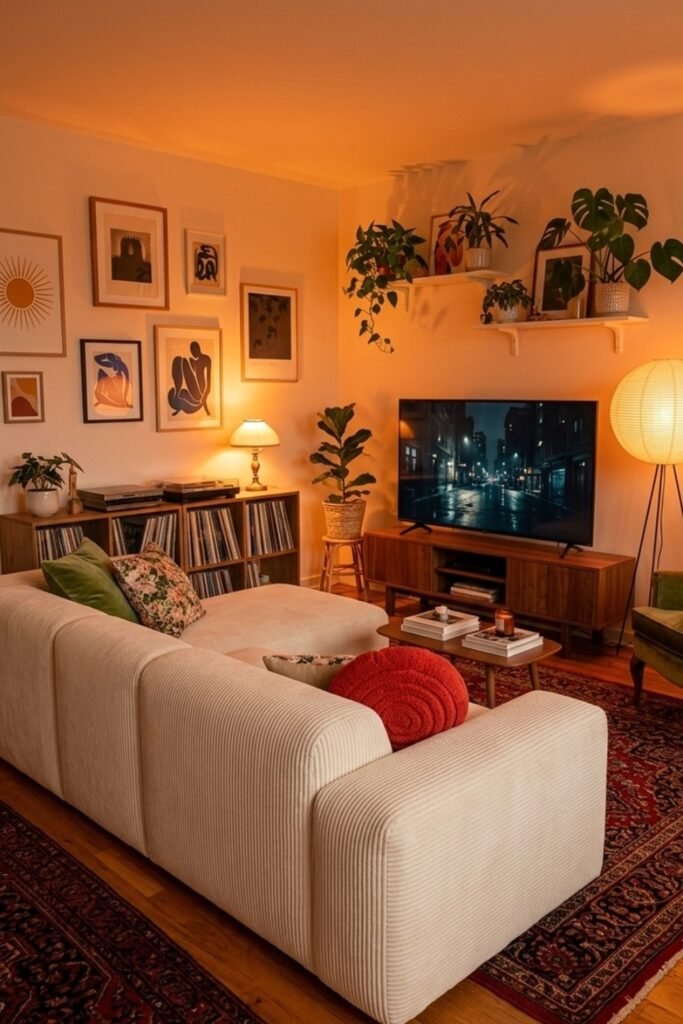
Lamps Around Television
When your television wall feels dark, place warm lamps on both sides rather than installing a bright light directly above the screen.
A tall paper floor lamp can fill one corner softly, while a smaller table lamp balances the opposite side without causing glare.
Keep both bulbs similarly warm so evening viewing feels comfortable and your artwork, plants, and wood furniture remain visually connected after dark.
Highlight Textured Walls
Textured walls deserve their own lighting, so aim a small spotlight across brick or stone to reveal shadows instead of flattening them.
Pair that architectural light with wall sconces around artwork and table lamps beside seating, creating several comfortable brightness levels throughout the room.
This technique works beautifully in larger living rooms where exposed beams, brickwork, and deep corners can otherwise disappear once daylight starts fading.

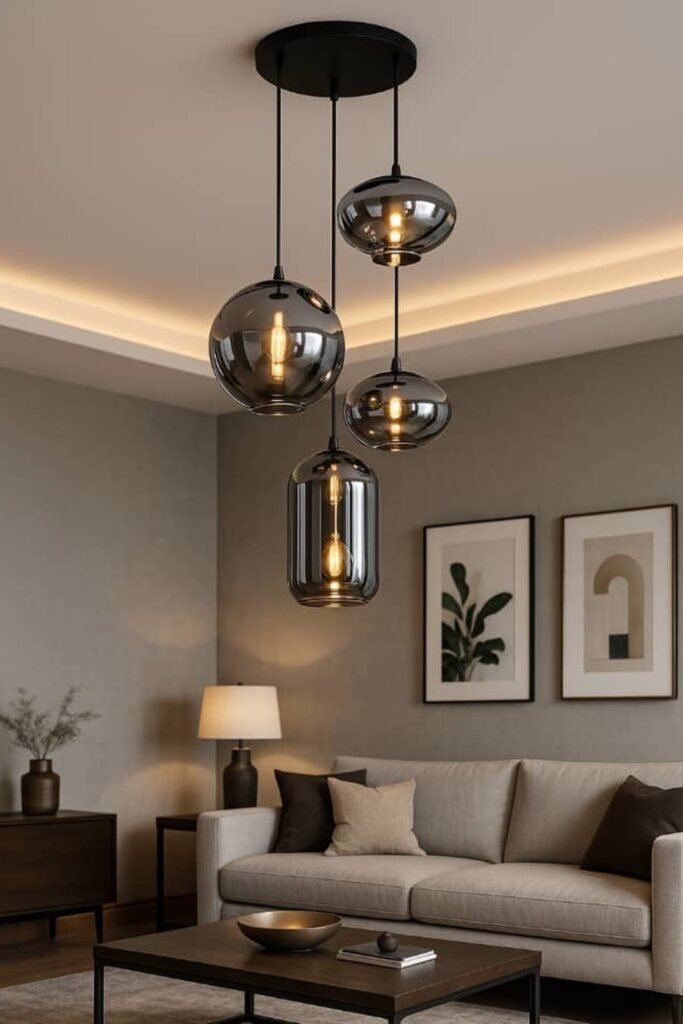
Clustered Pendant Lighting
Choose a clustered pendant when one ceiling fixture feels too ordinary, especially if your living room has enough height for multiple hanging forms.
Hang each pendant at a different level to create movement, but keep the lowest fixture safely above normal walking and conversation areas.
Add a shaded table lamp nearby for softer evening light, since exposed pendant bulbs alone can feel too direct when you are relaxing.
Track Lights for Flexibility
Track lighting works especially well when one ceiling point cannot cover the room, because each spotlight can aim toward a different area.
Direct some lights toward artwork or walls, then let nearby floor lamps handle softer illumination around the sofa and reading spots.
Keep the track simple and close to the ceiling if your room is compact, so it provides flexibility without visually crowding the space.

Build Multiple Light Layers
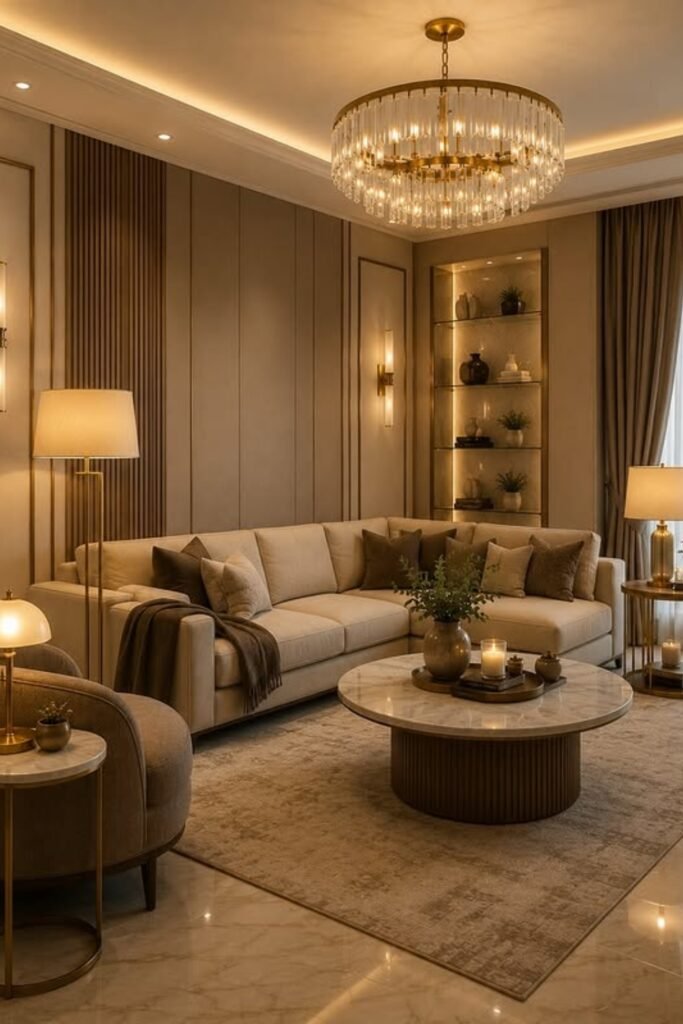
For a polished living room, give each lighting layer its own job instead of expecting one statement chandelier to handle everything.
Let the chandelier provide general light, then use sconces, floor lamps, table lamps, and shelf lighting around the room’s main zones.
This approach suits larger living rooms especially well, since you can brighten individual seating areas while keeping the overall evening atmosphere warm.
Create a Reading Glow
Turn an unused corner into an inviting reading spot by placing a warm floor lamp slightly behind or beside your favorite armchair.
A second decorative wall light can brighten the surrounding wall, giving the corner depth without flooding the entire living room with light.
Choose warm bulbs and keep direct glare above eye level, especially when you want the space to feel calm during evening reading.

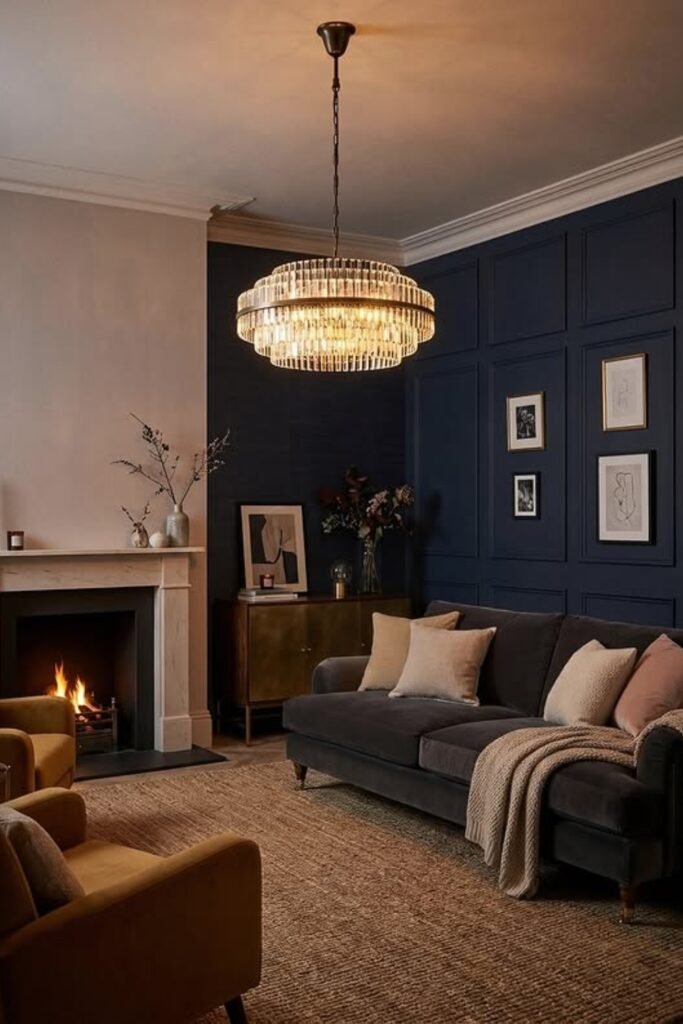
Chandelier Against Dark Walls
A crystal chandelier becomes especially effective against deep wall colors because its warm glow creates contrast and prevents the room feeling heavy.
Center it over the main conversation area rather than automatically using the room’s dimensions, so the fixture visually anchors your furniture arrangement.
Keep nearby lighting restrained when the fireplace is burning, allowing the chandelier and flames to create separate layers of warmth across the room.
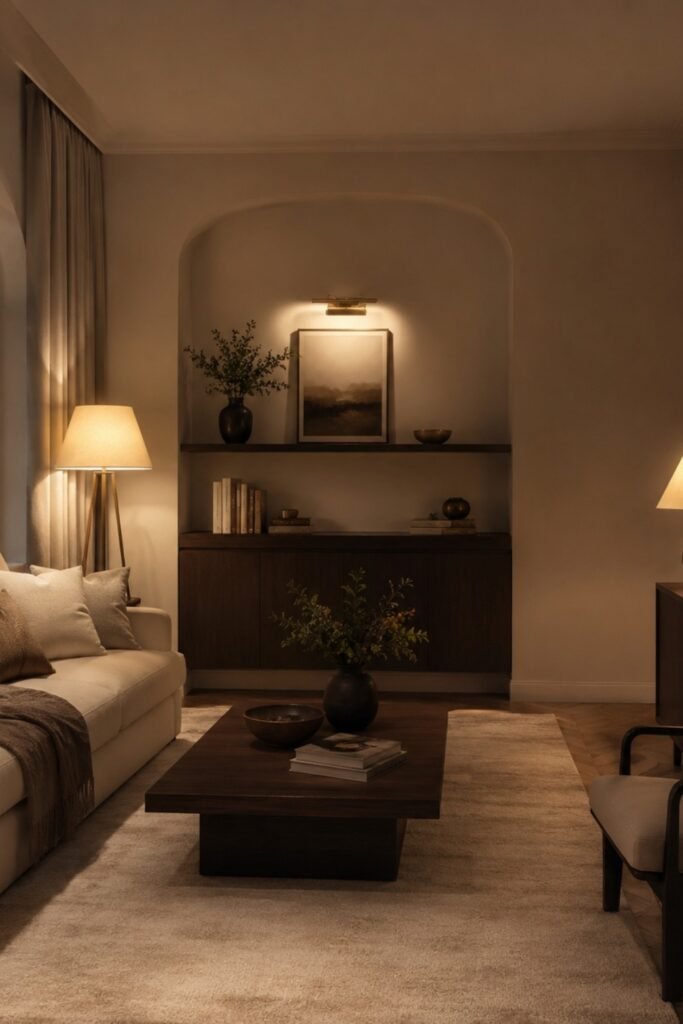
Light the Artwork
A picture light can turn a recessed wall into a quiet focal point while keeping the rest of your living room comfortably dim.
Balance it with a floor lamp near the sofa and another table lamp across the room to avoid one overly bright corner.
This setup works beautifully for evening rooms where you want artwork, shelving, and conversation areas visible without switching on harsh ceiling lights.
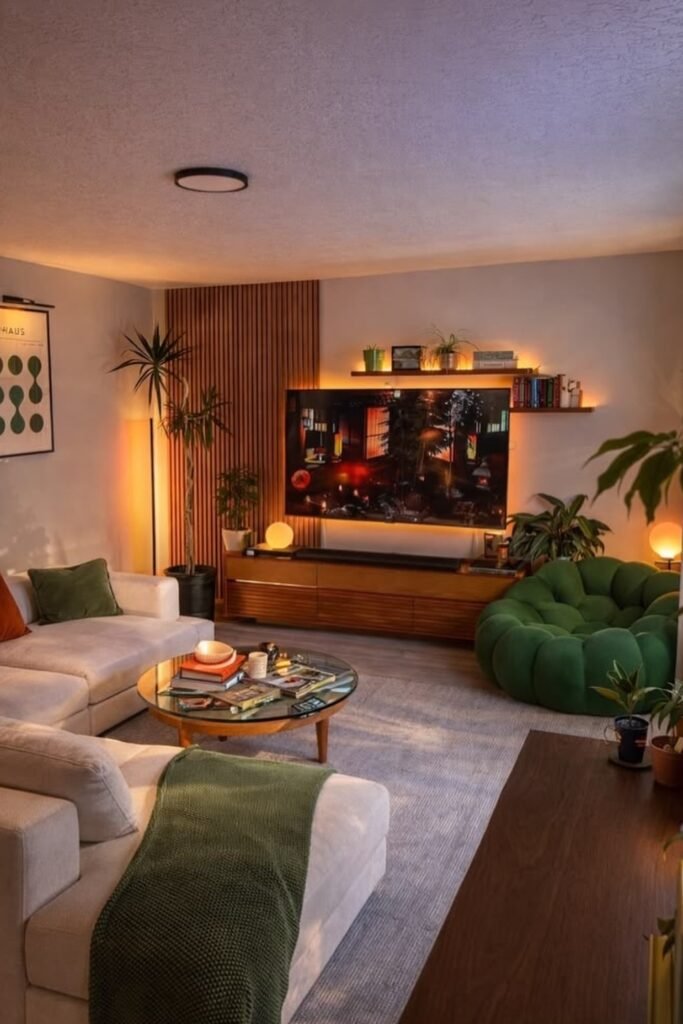
Backlight the TV
Instead of lighting the television from above, add a warm glow behind the screen to soften the contrast during nighttime viewing.
Continue that light beneath nearby shelves or along wall panels, creating depth without placing bright bulbs where they can reflect onscreen.
Small lamps around the room can finish the setup, giving you enough visibility to move around while keeping movie nights comfortably dim.
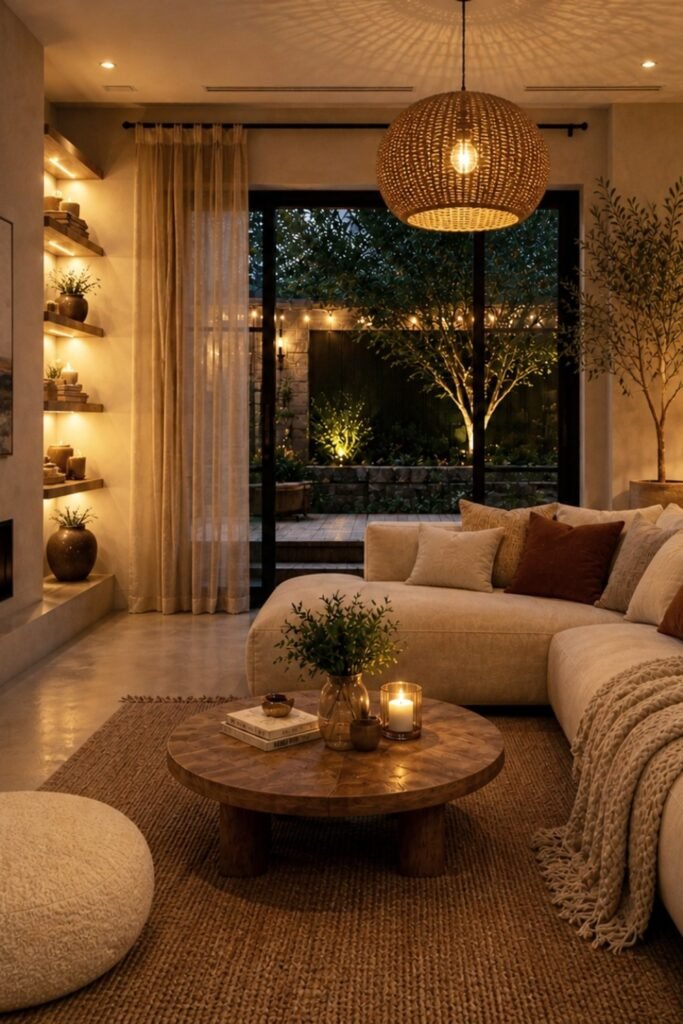
Illuminate Open Shelves
Built-in shelf lighting gives you two benefits at once: it displays your favorite pieces and brightens an otherwise forgotten side wall.
Hide warm LED strips beneath each shelf, then pair them with a woven pendant so the room receives light from different heights.
This works especially well beside fireplaces or large windows, where illuminated shelving can keep the interior balanced once outdoor light disappears.
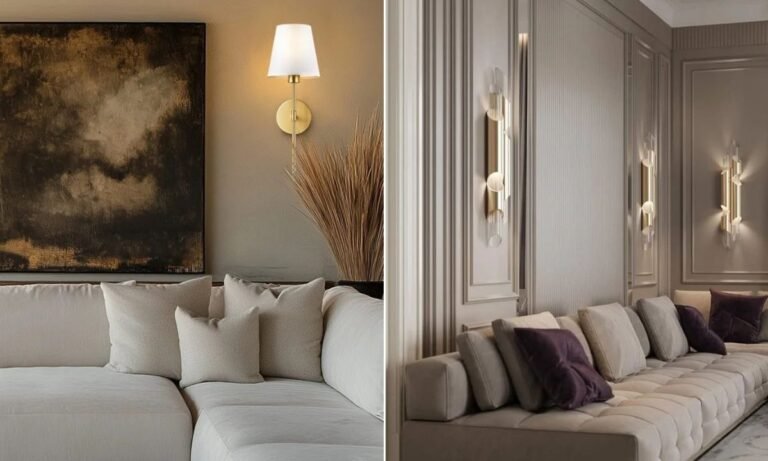
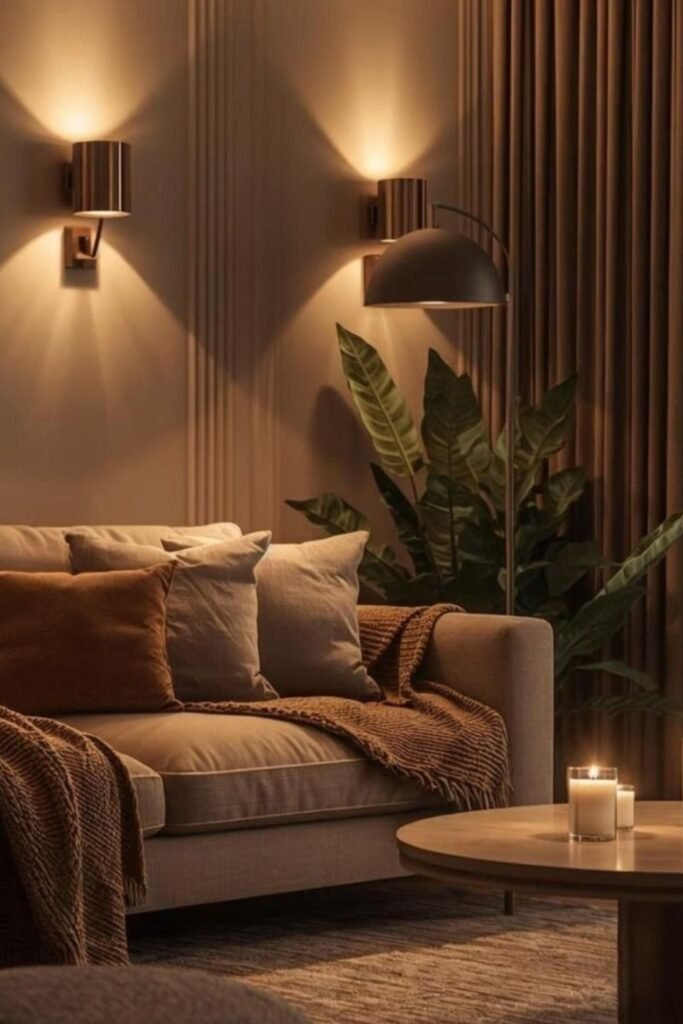
Sconces Beside Seating
Wall sconces are a smart choice behind a sofa when side tables are limited and you still want comfortable evening illumination nearby.
Choose fixtures that wash light both upward and downward, creating a softer background glow instead of shining directly toward seated eye level.
Add a curved floor lamp near one end when you need stronger reading light, while the sconces continue handling the room’s relaxed atmosphere.
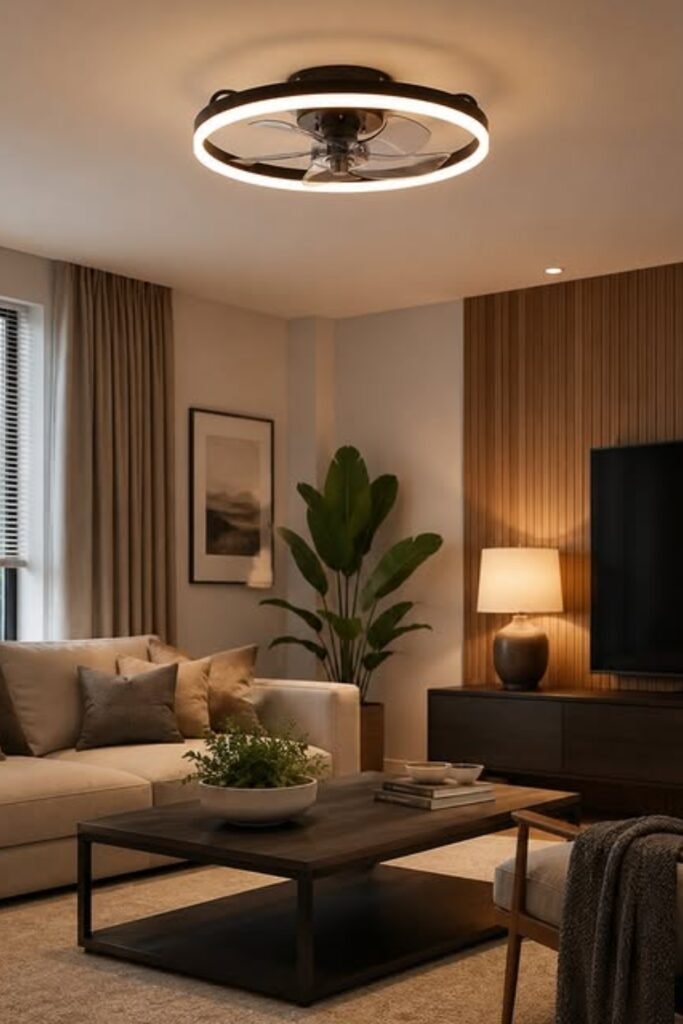
Fan Light Combo
A ceiling fan with an integrated ring light works well when you need everyday brightness and airflow without installing two separate ceiling fixtures.
Choose a low-profile design for average ceilings, then add a warm table lamp near the TV to soften the room after sunset.
This practical combination suits family living rooms where comfort matters, while the simple circular fixture keeps the ceiling looking clean and uncluttered.
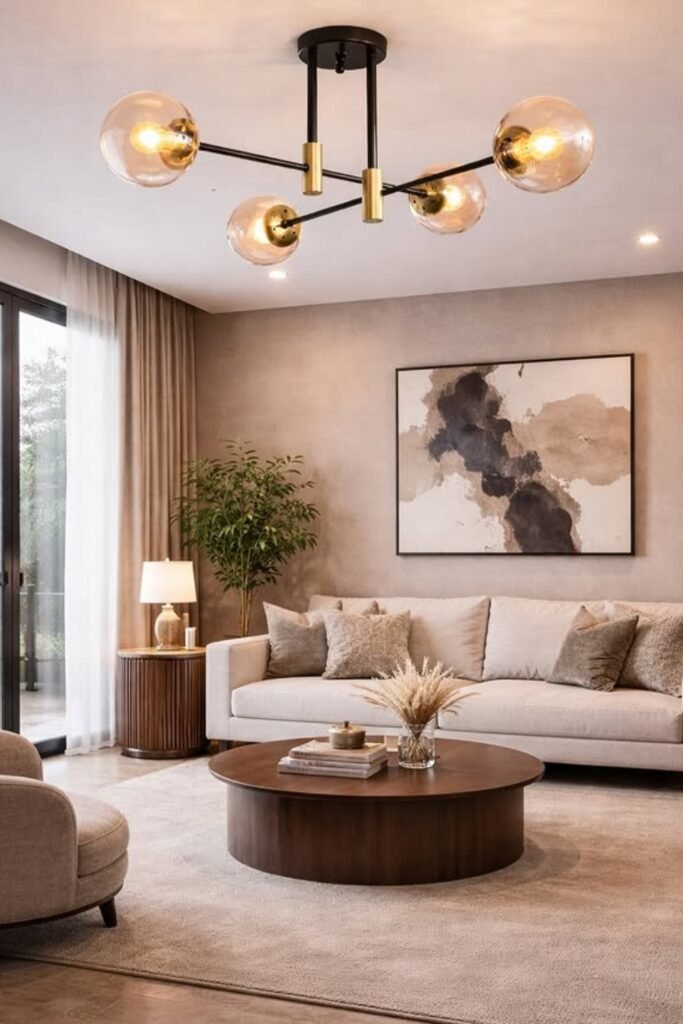
Modern Globe Chandelier
A branching globe chandelier spreads light across a wider area, making it useful when your seating arrangement extends beyond one central point.
Use warm bulbs inside clear globes to keep the fixture inviting, then add a table lamp for softer light beside the sofa.
This style works best in modern living rooms with simple furniture, where its sculptural shape can add interest without overwhelming the décor.
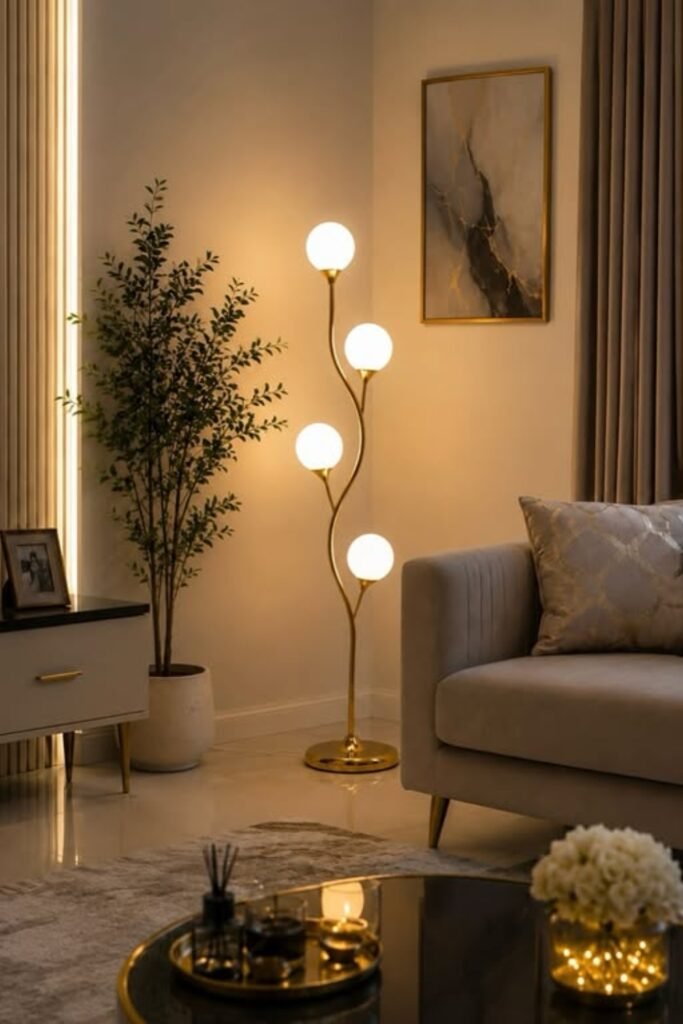
Sculptural Corner Lamp
An empty corner becomes useful lighting space when you choose a tall multi-globe floor lamp instead of squeezing another table beside furniture.
Place it between the sofa and TV area so several bulbs spread gentle light at different heights without pointing directly toward the screen.
This idea suits smaller contemporary rooms especially well, because one slim fixture can provide atmosphere, decoration, and practical corner lighting together.
Light Around Fireplace
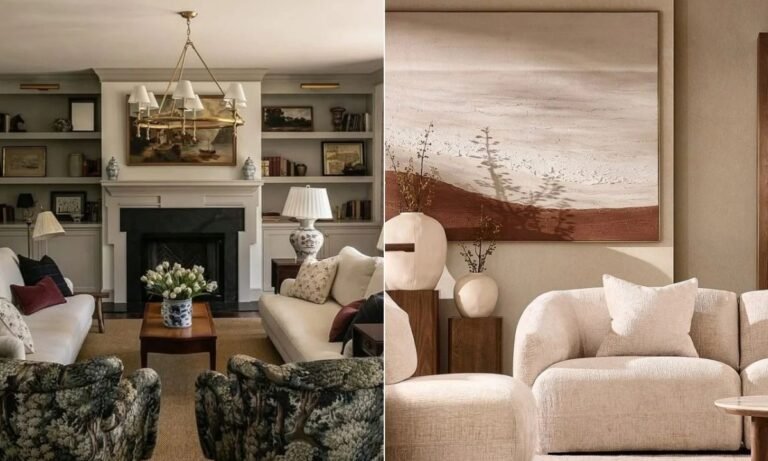
Let a statement pendant anchor the seating area, then use picture lighting and shelf lights to draw attention toward the fireplace wall.
Keep these secondary sources softer than the main fixture, so artwork and built-ins remain visible without competing with the fireplace after dark.
This layered approach works beautifully in traditional living rooms where several focal points need enough light to feel connected rather than separate.
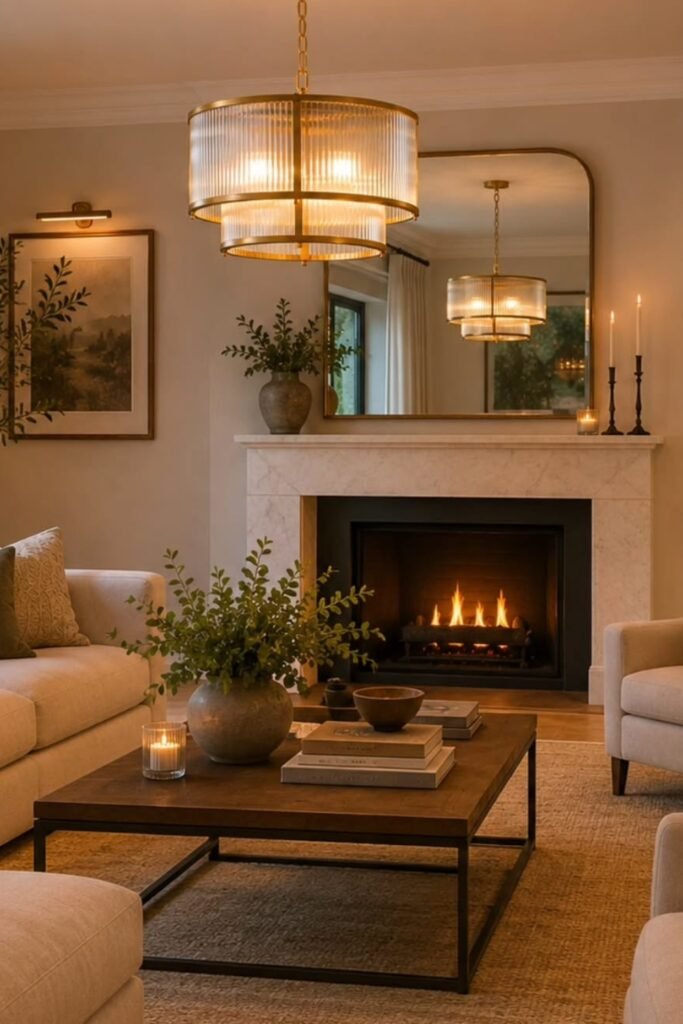
Shelf Lighting for Warmth
Turn open shelving into a soft light source by running warm LEDs beneath each shelf instead of leaving the display wall dark.
Pair those small lights with a decorative ceiling fixture and nearby lamps, so brightness reaches both upper walls and lower seating areas.
This setup suits cozy living rooms filled with books, plants, and collected décor because every detail remains visible without harsh overhead lighting.
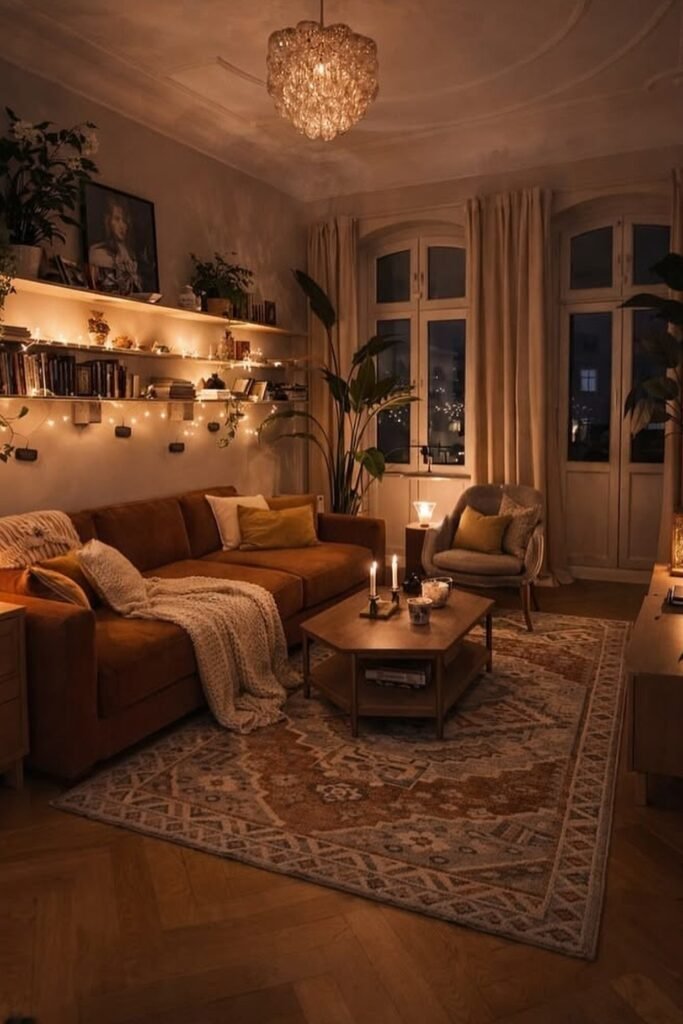
Directable Track Lighting
Use adjustable track lights when your living room needs flexible coverage, especially when furniture or artwork does not sit beneath existing ceiling points.
Aim individual heads toward walls, artwork, and seating rather than straight downward, which spreads the light and reduces harsh pools overhead.
Then add floor lighting beside the sofa for evenings, giving you a softer option when full track illumination feels unnecessarily bright.
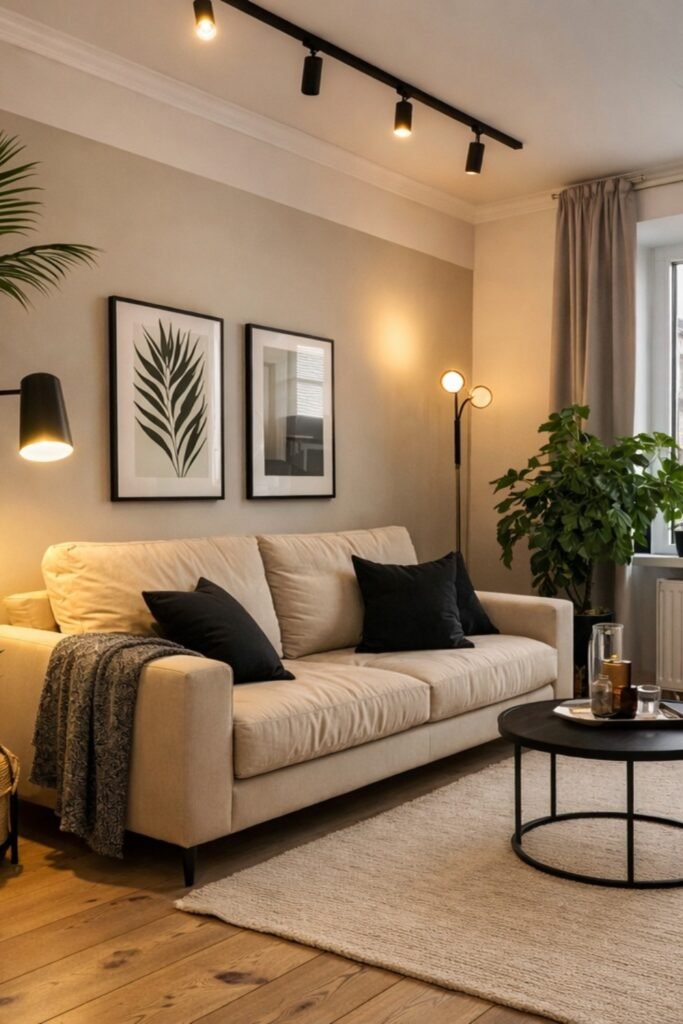
Balance Lamps and Sconces
A sectional needs light across its full width, so combine table lamps, a floor lamp, and wall sconces instead of one source.
Place the taller lamp near the deepest corner, while sconces brighten the wall above without taking valuable space from your side tables.
Keeping every bulb similarly warm makes this arrangement feel calm and connected.

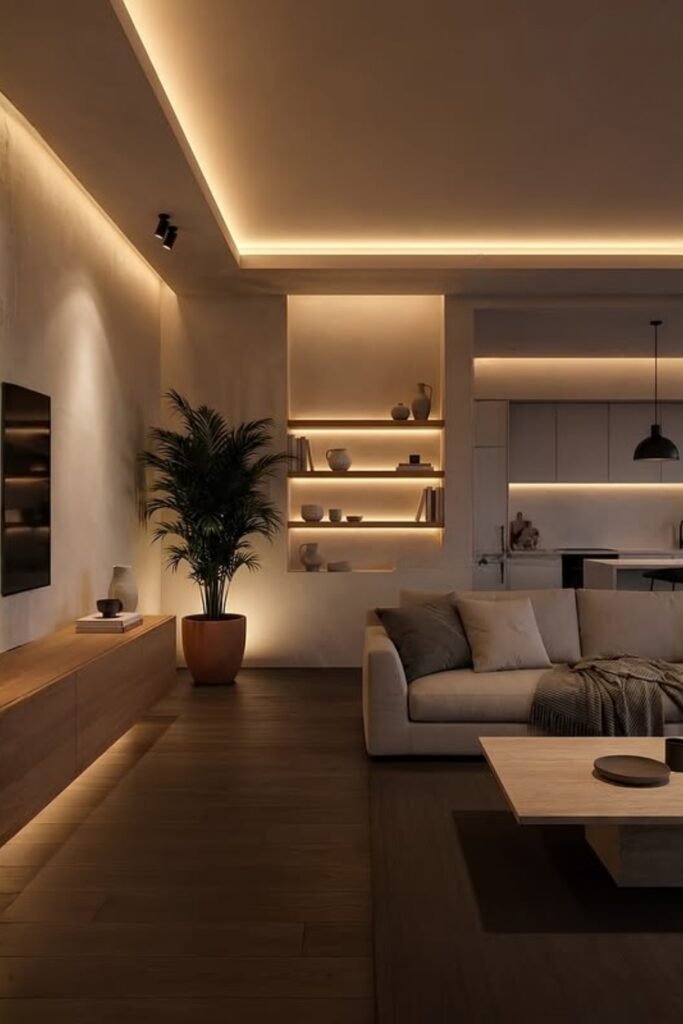
Cove Lighting for Depth
Cove lighting works best when you want the ceiling to glow softly without seeing the actual light source from your normal seating position.
Run warm LED strips inside ceiling recesses, then repeat that indirect light beneath shelves or cabinets to connect different parts of the room.
This approach suits modern open-plan living rooms because it defines zones and architectural lines without filling the ceiling with multiple decorative fixtures.
FAQs
How many light sources should a living room have?
There is no fixed number, but most living rooms work better with at least three lighting layers.
Combine general ceiling lighting with task lights near seating and accent lighting around artwork, shelves, or architectural features.
Larger rooms may need several lamps so dark corners do not get ignored.
How can I make my living room lighting feel cozy?
Start by replacing harsh, cool bulbs with warm white bulbs around 2700K–3000K.
Then spread table lamps, floor lamps, or sconces around the room instead of relying only on the ceiling light.
Add dimmers where possible so you can lower the brightness when relaxing, watching TV, or entertaining.