An ottoman looks like an easy living room addition until you start wondering about the right size, shape, and placement.
Choose one that is too big and your room can feel crowded, while a small one may look awkward beside a large sofa.
In this article, you’ll learn how to choose and use a living room ottoman properly, plus see practical ideas.
Let’s jump in!
Can You Put an Ottoman in a Living Room?
Yes, an ottoman can work very well in a living room, especially when you want comfort without adding another bulky piece of furniture.
You can use it as a footrest, extra seat, storage spot, or even replace the coffee table when you add a firm tray.
The main thing is choosing a size that suits your sofa and still leaves enough room for people to walk around comfortably.

A round ottoman can soften tight layouts, while rectangular or square shapes usually work better with larger sofas and sectionals.
You also do not need to match the sofa exactly; a different fabric, color, or texture can make the seating area feel more balanced.
Before buying one, decide what job you need it to do first, then choose the shape, height, material, and placement around that purpose.
Hide Clutter Beautifully
A woven storage ottoman works especially well in relaxed living rooms where you need hidden space without adding another bulky cabinet.
Choose a cushioned top for comfort, then place a sturdy tray in the center so drinks and decor stay stable.
Repeat warm wicker, wood, and neutral fabric nearby, and the ottoman will feel connected instead of looking like separate storage.

Stack Woven Ottomans
In a larger conversation room, two lightweight woven ottomans give you extra footrests without competing with the main coffee table.
Keep them near the seating edge or stack them together when unused, which frees the center and keeps walking paths open.
Natural fiber pieces work best when the room already uses wood, jute, or earthy colors, because the textures immediately feel intentional.

Center Large Sectionals
A broad square ottoman can fill the empty middle of a large sectional without introducing the hard edges of another table.
Keep its height close to the sofa seat, so everyone can reach it comfortably and use it as a shared footrest.
Use one low tray instead of covering the whole top, leaving enough soft surface free for feet, blankets, or casual seating.

Extend Sofa Seating
If your sectional has a matching ottoman, push it against one seat to create a chaise without buying a larger sofa.
Match the ottoman height closely with the seat cushion, otherwise the extension can feel uneven and less comfortable for lounging.
This setup suits smaller living rooms because you can move the ottoman away later whenever you need more open floor space.

Add Soft Contrast
A compact furry ottoman works well beside a low neutral sofa when you want extra softness without crowding the whole seating area.
Choose a warm brown tone against cream upholstery, and the contrast will make the living room feel layered rather than flat.
Keep the ottoman movable near the coffee table, so it can become a footrest, spare seat, or easy pull-up perch.

Dress Traditional Seating
A skirted ottoman suits traditional living rooms because the soft fabric shape connects naturally with patterned chairs, layered pillows, and classic furniture.
Place a large woven tray on top to create a firm surface for drinks while keeping the upholstered base relaxed and inviting.
Repeat wicker and warm wood around the room, and the ottoman will blend into the collected look instead of feeling overly formal.

Anchor Mixed Seating
A large square ottoman can tie two different sofas together when your living room uses mixed colors, fabrics, or furniture styles.
Choose a quiet striped fabric that picks up nearby neutrals, so the center feels connected without matching either sofa exactly.
Use one broad basket tray for candles and books, leaving enough open upholstery around it for feet or casual extra seating.

Match Sectional Scale
A matching square ottoman works best with a roomy sectional when you want one piece to handle lounging, seating, and hidden storage.
Keep its height close to the sofa cushions, so you can pull it forward for feet without creating an awkward level change.
Center it on the rug with clear walking space around every side, which keeps the open-plan living area practical and balanced.

Tuck Ottomans Under
A nesting ottoman setup works well in smaller living rooms because the extra seats stay hidden until you actually need them.
Choose cubes that slide neatly beneath the table edges, so the center stays useful without filling the room with separate furniture.
Keep the ottomans close to sofa height if guests will sit there, and pull them out only when extra seating is needed.

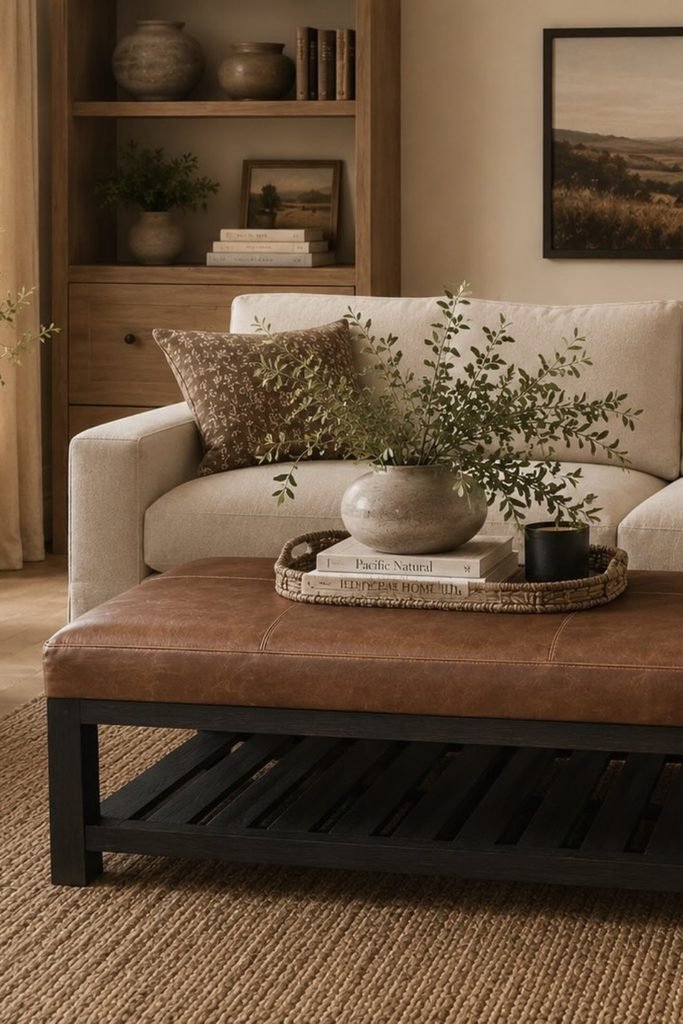
Warm Up Neutrals
A brown leather ottoman gives a cream living room needed contrast, especially when the sofa, rug, and walls are mostly light.
Pick a design with an open lower shelf if you want storage for books or baskets without hiding everything inside.
Add one low tray on top for drinks and decor, leaving enough leather exposed so the ottoman still works comfortably for feet.
Ground Formal Seating
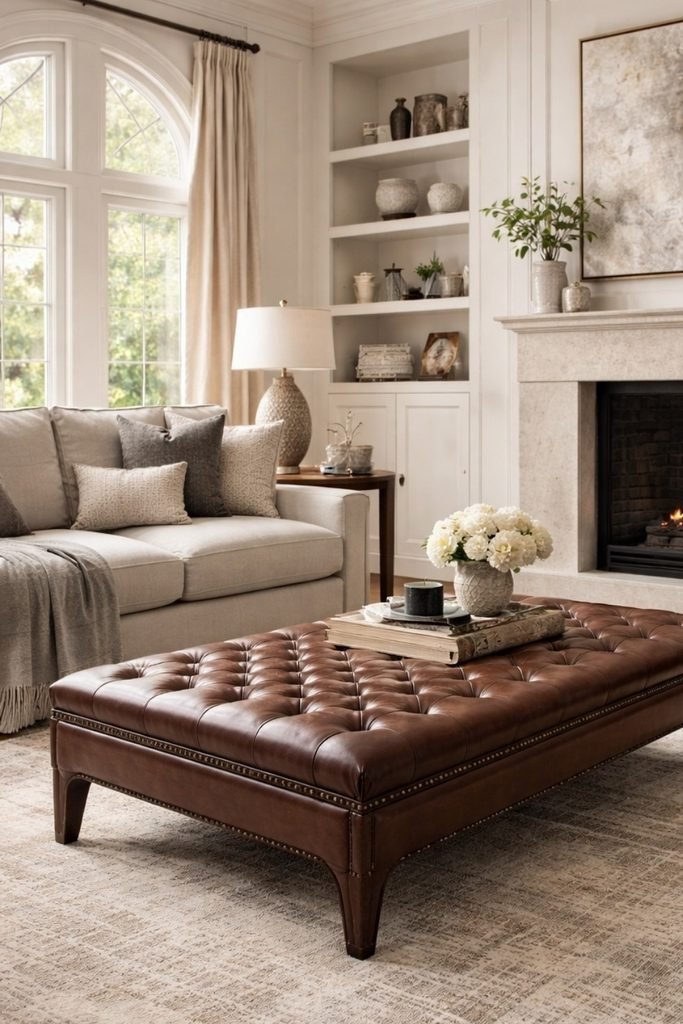
A large tufted leather ottoman can ground a formal living room when the sofa and fireplace already create a strong symmetrical layout.
Keep the ottoman broad but not oversized, so people can still move around it comfortably without squeezing past the fireplace seating.
Because deep tufting makes cups unstable, use a firm tray or stacked books to create a safer surface for drinks and decor.
Split Extra Seating
Two small cube ottomans are easier to move than one large piece, making them useful in open living rooms with changing needs.
Place them beside the coffee table instead of replacing it, so you keep a hard surface while gaining flexible footrests and seats.
Choose fabric that connects with the rug or sofa tones, which helps separate ottomans look intentional rather than randomly added stools.

Pair Accent Ottomans
Two small velvet ottomans work well in a conversation area because you can move them between the sofa, chairs, and coffee table.
Choose a deeper accent color than the seating, and the pair will add warmth without taking over the whole room.
Keep them just outside the main walking path, so guests can pull one closer whenever they need another seat nearby.

Use Flexible Pairs
A pair of compact cylinder ottomans is a smart choice when your living room needs extra seating but has limited floor space.
Place them beside a lightweight side table, and you can separate the pieces easily instead of committing to one bulky centerpiece.
Pick removable or lift-off tops if you want hidden storage, then keep everyday throws, remotes, or magazines inside within easy reach.

Build A Chaise
A matching ottoman can turn one sofa seat into a chaise, which works especially well when you want flexible lounging space.
Keep the ottoman level with the seat cushion and push it close enough that the gap does not interrupt your legs.
When you need more floor room, move it away from the sofa and use it as a footrest or extra seat.

Layered Neutral Comfort
Soft neutrals work beautifully in bright living rooms because layered fabrics, warm wood, and subtle patterns keep pale furniture from feeling flat.
Pair a generous sectional with compact stools and a dark coffee table, giving larger seating arrangements enough contrast without making them visually heavy.
Finish with linen curtains, textured pillows, ceramics, and dried stems so natural light can bring out each material’s warmth throughout the day.

Minimal Sectional Calm
Clean-lined living rooms feel warmer when one oversized sectional becomes the anchor, leaving surrounding walls and floors intentionally quiet and visually open.
Choose creamy upholstery, a low rounded coffee table, and a large woven rug to create softness while maintaining the room’s streamlined contemporary character.
Recessed lighting and softly illuminated shelving add evening depth, while one tall indoor tree introduces organic movement without disturbing the minimalist arrangement.

Oversized Ottoman Centerpiece
Busy family living rooms can benefit from an oversized upholstered ottoman, especially when everyone needs a softer, more flexible alternative to hard tables.
Position it centrally beside a deep sectional, then use a woven tray for plants, candles, or drinks while keeping loose accessories safely contained.
Choose upholstery that contrasts with the sofa, allowing subtle checks or woven texture to brighten darker seating without introducing another strong furniture color.

Striped Ottoman Charm
Traditional living rooms gain an inviting focal point when a striped upholstered ottoman replaces the usual wooden coffee table with something softer and warmer.
Echo its warm stripes through patterned cushions and natural wood flooring, creating gentle repetition without making every fabric in the room perfectly coordinated.
Style the broad surface with stacked books and a handled wicker tray, keeping decorative pieces removable whenever extra footrest space becomes more useful.

Warm Modern Layers
Warm brown accents can stop a cream living room from feeling washed out, especially when leather, wood, and velvet appear together.
Center a dark round coffee table before the sectional, giving the pale seating a strong anchor while preserving comfortable movement around it.
Complete the room with sheer curtains, abstract artwork, and soft lighting, allowing natural textures to create coziness without adding unnecessary decorative clutter.

Rustic Collected Comfort
Collected furniture works especially well in open living rooms where mixed shapes and earthy fabrics can define seating zones without using solid dividers.
Build depth around a dark sofa using woven armchairs, upholstered stools, and a generous ottoman, keeping every piece within one muted palette.
Bring in dried branches, textured pottery, patterned cushions, and vintage-style rugs to soften architectural beams while giving the space an intentionally lived-in character.

FAQs
Can You Use an Ottoman and Coffee Table Together?
Yes, you can use both when you want a hard surface for drinks and a softer piece for feet or extra seating.
Keep the ottoman beside the sofa or chairs instead of forcing both pieces into the center where walking space becomes tight.
Choose finishes that share a color, wood tone, or fabric detail so the two pieces feel connected without needing to match.
Should an Ottoman Be the Same Height as the Sofa?
For footrest use, the ottoman should sit close to the sofa seat height so your legs rest naturally without lifting upward.
A slightly lower ottoman usually feels comfortable, but a much lower piece can become awkward to reach or use as a table.
Measure your sofa before buying because seat heights vary, and matching the proportions matters more than following one fixed number.