You can buy the prettiest plant in the store and still wonder why it looks completely wrong beside your sofa.
Maybe you have an empty corner that needs height, bare shelves that feel unfinished, or a small living room.
You simply need to choose plants that suit your room and place them where they actually add something.
In this article, you’ll find 23 living room plant ideas that show how to use greenery around windows, and furniture.
Let’s jump in!
What Plants Are Best for a Living Room?
The best living room plant is one that matches the light you actually have, not simply the one that looks good online.
If your room gets plenty of bright, indirect light, try monstera, rubber plant, bird of paradise, or fiddle-leaf fig for bigger greenery.
For lower-light areas, snake plants, pothos, ZZ plants, and cast iron plants are easier choices.

Think about space too. Use a tall, narrow plant when you need to fill an empty corner without crowding the floor.
Before buying anything, check its watering needs and mature size.
If you have pets, also check whether the plant is pet-safe rather than assuming every houseplant is harmless.
Bright Window Cluster
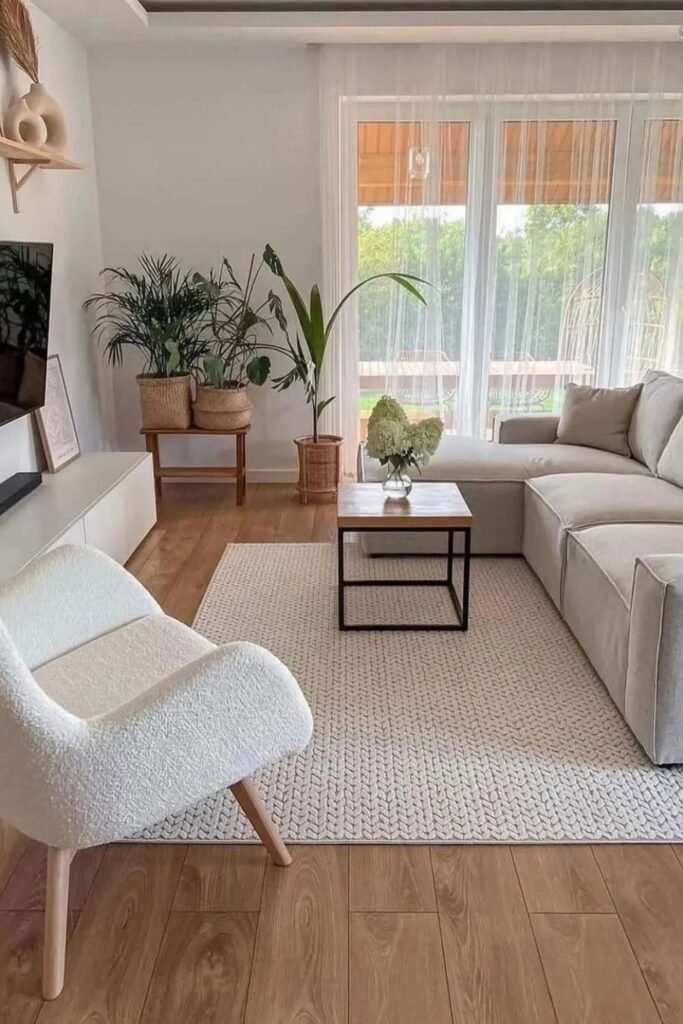
Turn a bright window corner into a plant zone by grouping leafy pots at different heights instead of scattering them around.
Keep the tallest plant closest to the glass, then raise smaller pots on a wooden stand to build an easy layered arrangement.
Woven planters work especially well in neutral living rooms because their warm texture connects the greenery with wood floors and simple furniture.
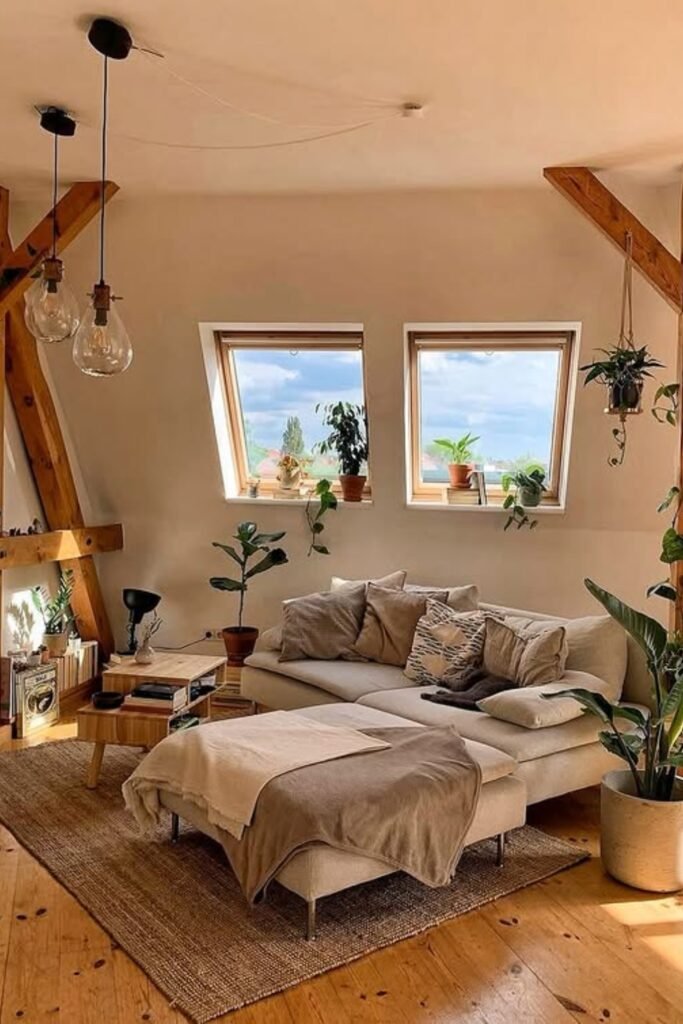
Beam Climbing Greenery
Let existing architecture do some decorating by training trailing vines around exposed beams, giving an open living room greenery without extra furniture.
Pair those climbing plants with one broad floor plant beside the sectional, so the greenery moves naturally from ceiling level downward.
Sunny attic rooms suit this approach best; keep light-loving pots near roof windows and rotate them occasionally for more even growth.
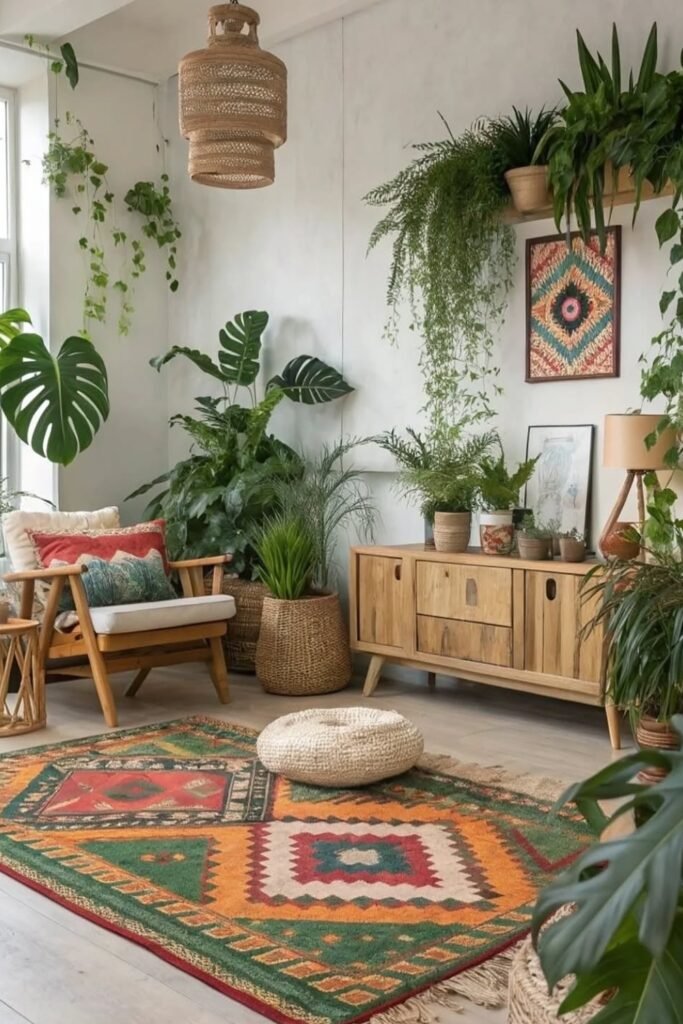
Indoor Jungle Layers
Go lush without making the room chaotic by giving plants clear levels: floor baskets below, cabinet pots midway, and vines overhead.
Anchor the arrangement with large monsteras and palms near the window, then use trailing varieties to soften shelves and blank wall space.
Keep planters within a similar earthy palette so different leaf shapes can mix freely while the living room still feels pulled together.
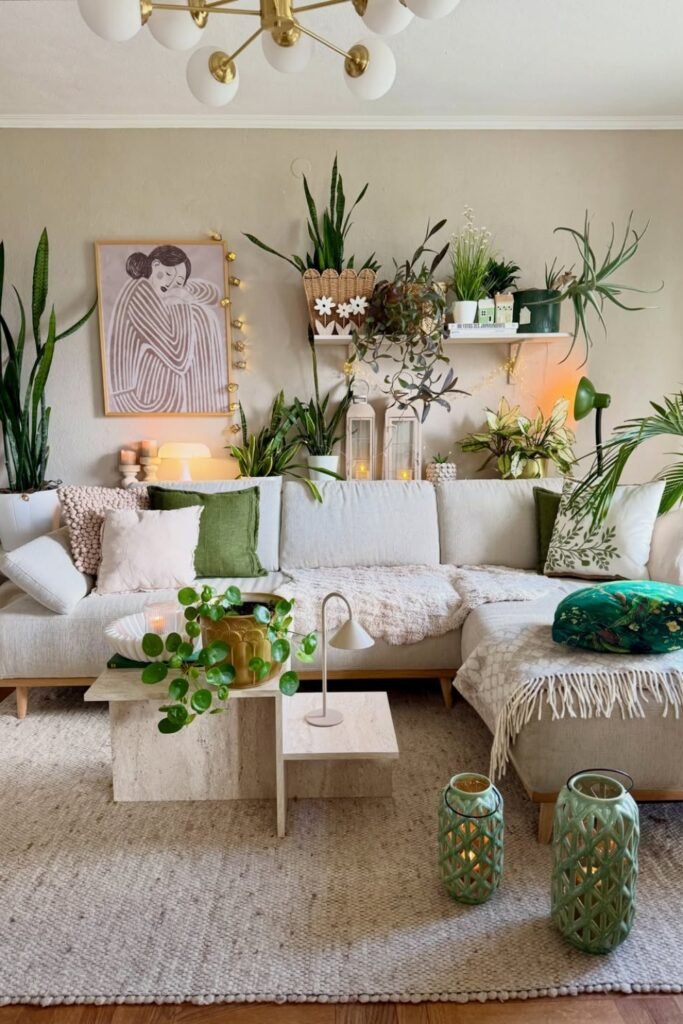
Sofa Plant Wall
Use the wall behind your sofa as a plant display when floor space is already busy with seating, tables, and everyday furniture.
Start with tall snake plants at the outer edges, add smaller pots behind the sofa, then let trailing foliage loosen the shelf line.
Warm lamps and lanterns can brighten the evening setup, but keep plants positioned for natural daytime light rather than decorative lighting alone.
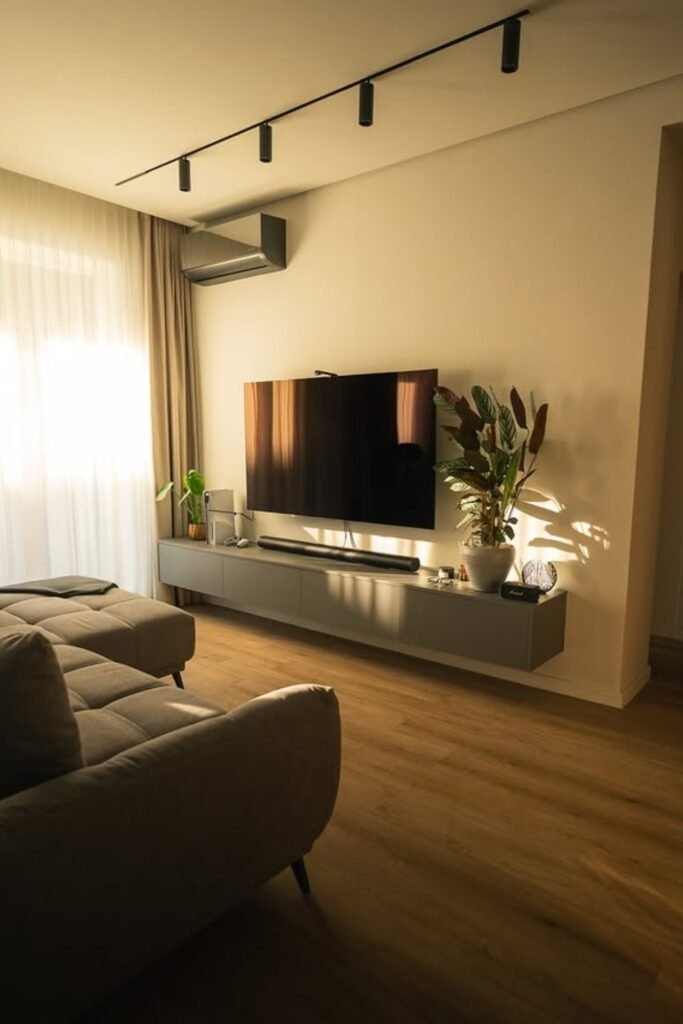
Console Greenery
Keep your TV wall clean by using just two plants to soften the long console without distracting from the screen.
Position one taller leafy plant near the outer edge and a smaller pot opposite it for simple visual balance.
Bright filtered window light suits this setup well, while neutral planters help the greenery blend into a modern living room.
Shelf Cascades
Take greenery upward when your TV wall has open shelving, letting trailing plants fill unused vertical space instead of floor space.
Keep larger pots near the window and lighter trailing varieties overhead, so each plant gets useful light without crowding seating.
Wooden shelves and woven floor baskets connect especially well with colorful boho furniture, patterned rugs, and warm natural textures.

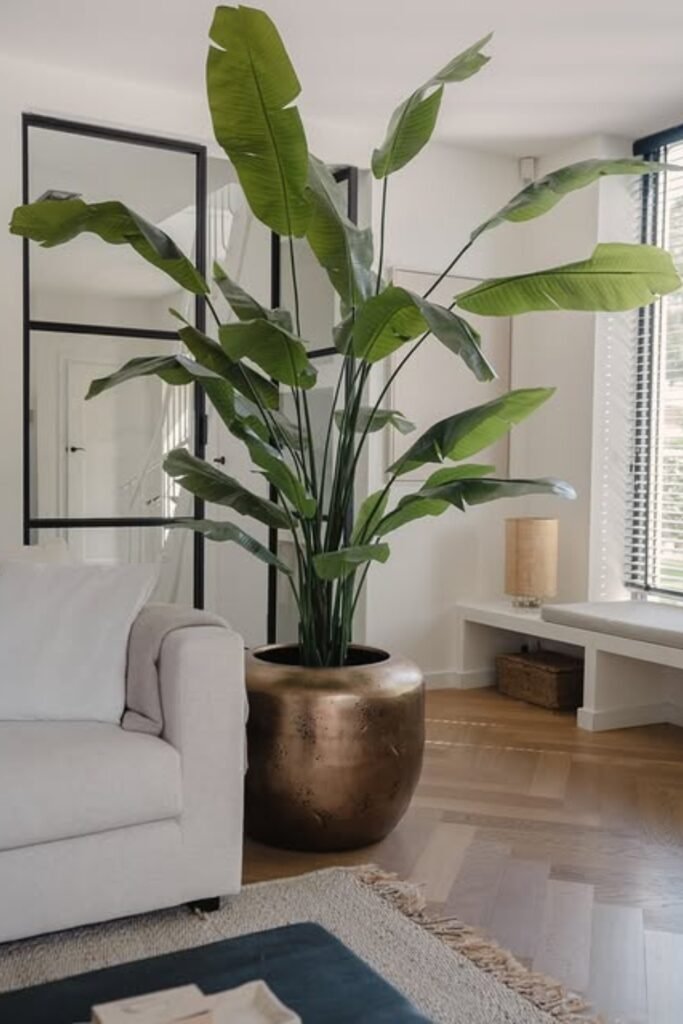
Tropical Statement
One oversized bird of paradise can finish an empty sofa corner without adding several small pots or extra decorative pieces.
Give its broad leaves breathing room beside low furniture, and choose a substantial planter that visually supports its height.
A bright window nearby is important for this tropical statement, making the arrangement better suited to naturally well-lit living rooms.
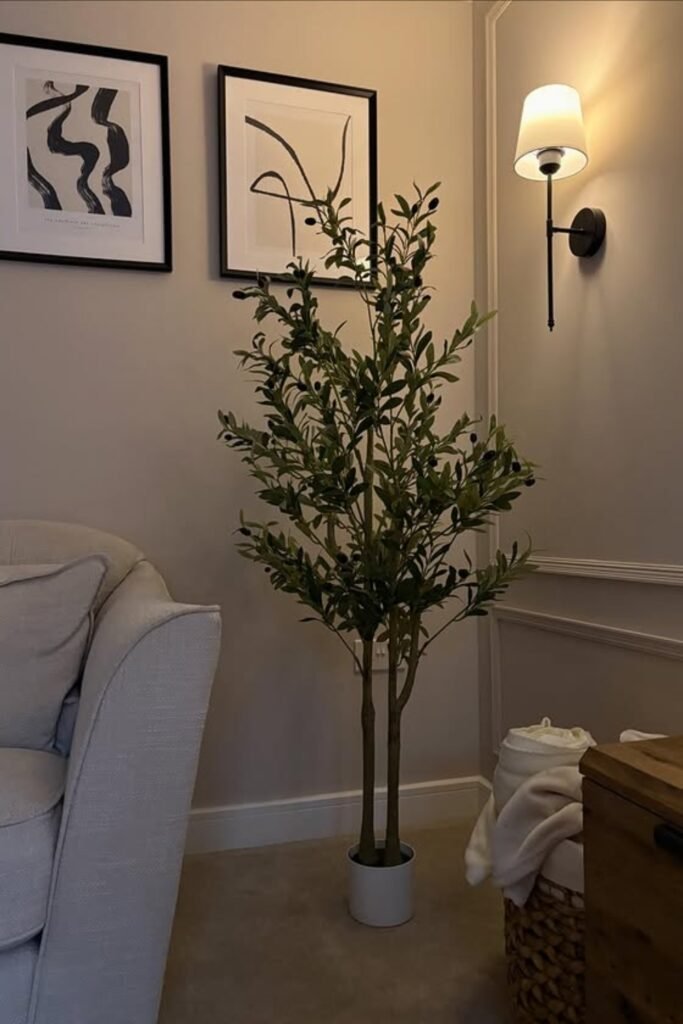
Slim Corner Tree
Treat a narrow gap beside the sofa as useful vertical space by filling it with one slim indoor tree.
Its height can balance framed wall art and a nearby sconce while leaving valuable walking and furniture space untouched.
Choose an upright variety with a compact canopy, then keep enough natural light reaching it instead of relying on the nearby lamp.
Sculptural Palm
Bring a sunlit corner to life with a full palm whose soft fronds add movement without filling the room with several pots.
Set it beside the window and sofa, then use a sculptural black planter to sharpen the otherwise quiet neutral palette.
Leave enough space around the fronds to spread naturally, especially in modern living rooms where one strong plant feels cleaner.

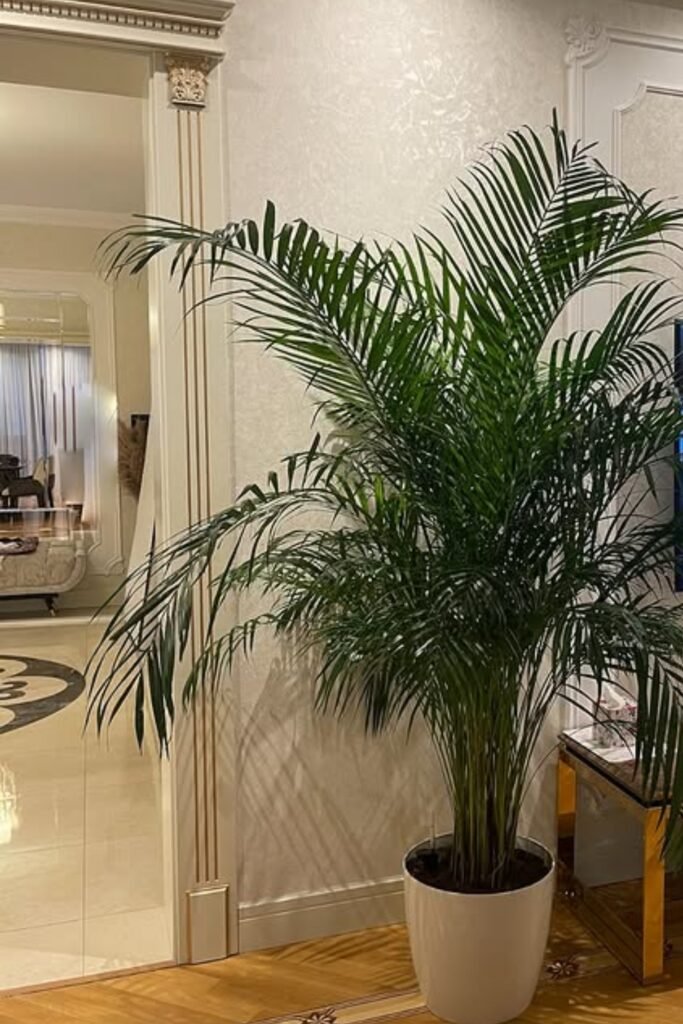
TV Wall Palm
A generous palm can soften an ornate TV wall when polished surfaces and formal detailing start making the room feel rigid.
Keep the pot slightly outside the screen edge so spreading fronds frame the media area without blocking your everyday view.
Choose this arrangement for spacious living rooms, giving the palm breathing room and keeping nearby accessories low and visually simple.
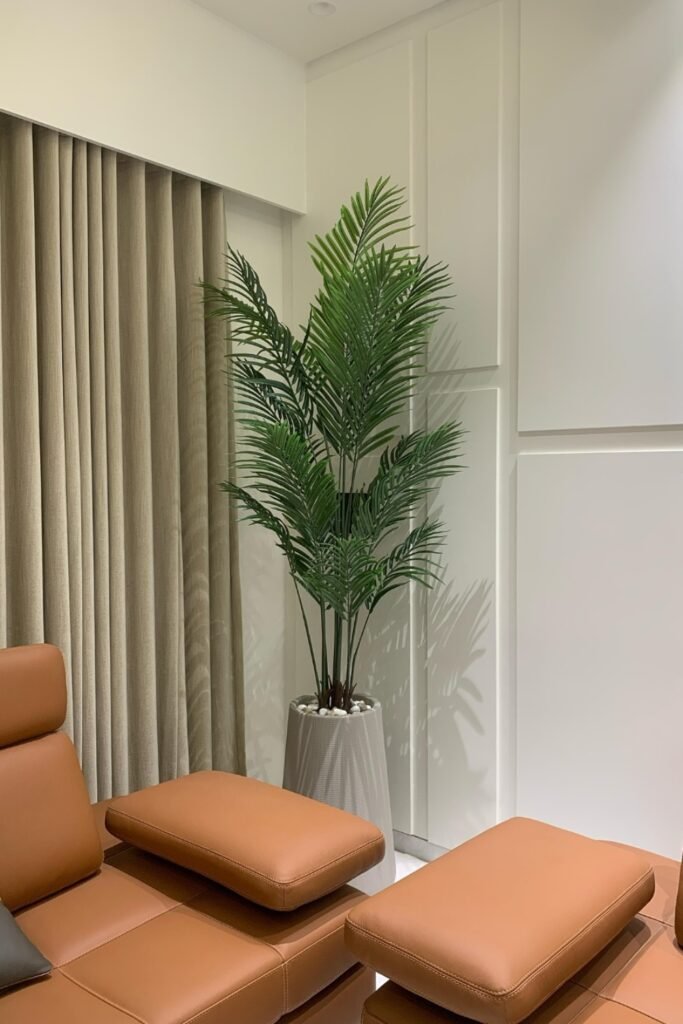
Seating Corner Palm
When two lounge chairs leave a bare gap behind them, use one narrow palm to add height without stealing seating space.
A tapered floor planter keeps the footprint compact, while upright fronds draw attention toward tall walls instead of crowding furniture.
If natural daylight is limited in that corner, move a live palm nearer the window rather than sacrificing its health for styling.
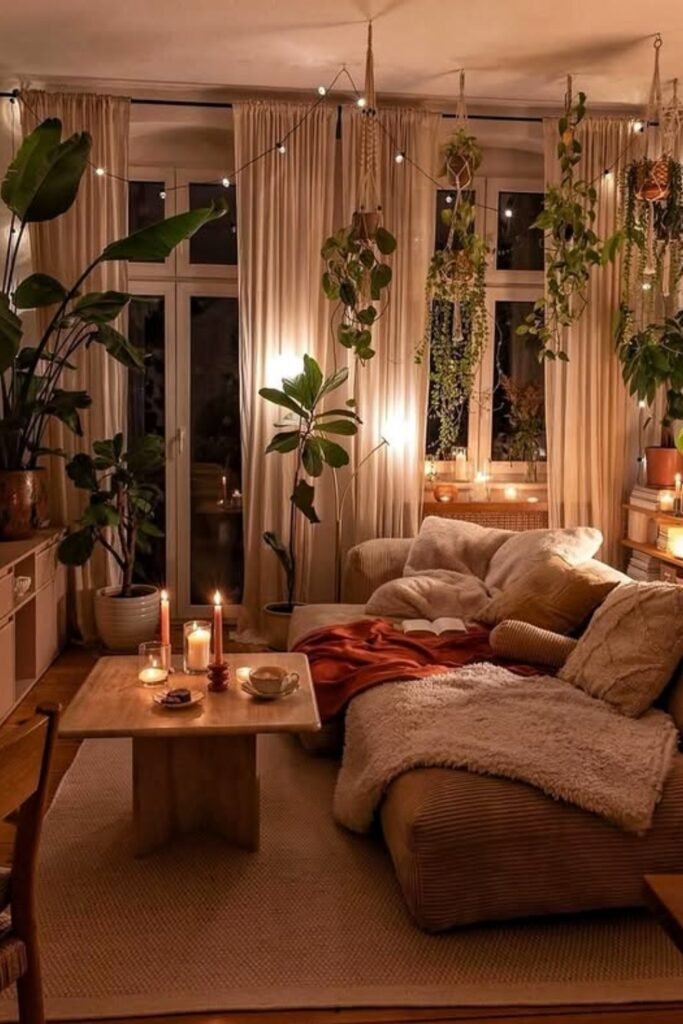
Hanging Plant Canopy
Instead of crowding every surface with pots, suspend trailing plants across the windows and let their vines create greenery overhead.
Balance the hanging layer with a few taller floor plants, keeping the sofa area open enough for comfortable everyday movement.
Warm lamps, candles, and string lights make this setup especially cozy after dark, while window placement provides plants with daytime light.
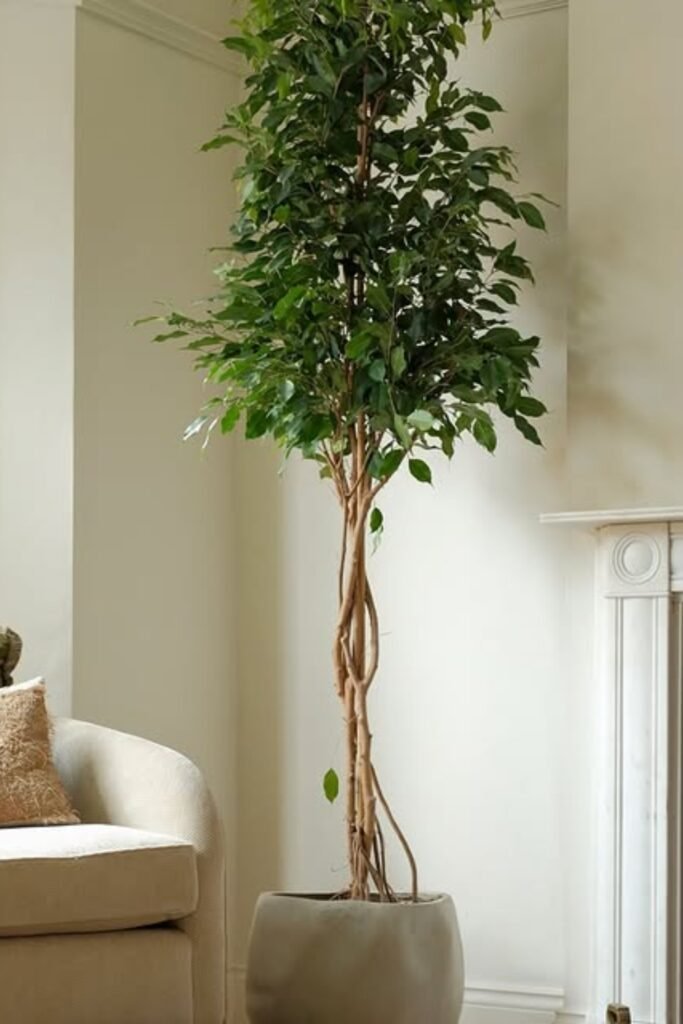
Fireplace Tree
Give the narrow space beside a fireplace some height with a slim indoor tree that fills the wall without competing with seating.
Choose a tall planter with a small footprint, then keep the canopy above sofa level so the corner stays visually open.
This works especially well in classic living rooms where one tree can soften moldings, fireplace edges, and other structured architectural details.
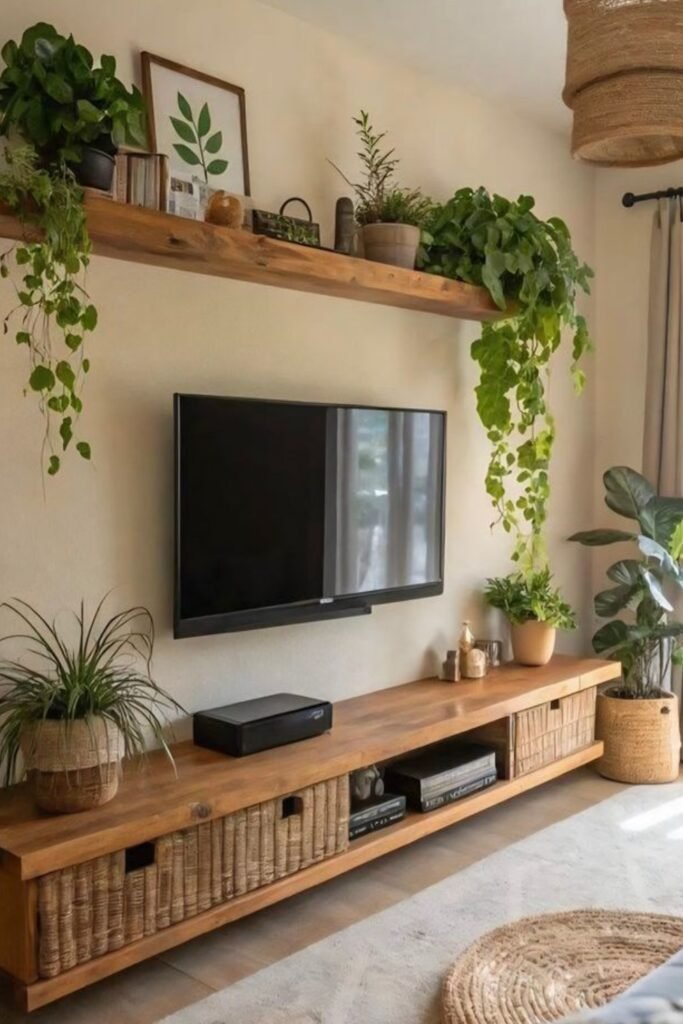
Framed TV Greenery
Turn the TV wall into a balanced plant display by placing trailing greenery above and larger upright plants near the floor.
Let vines fall from both ends of a wooden shelf, creating a soft frame around the screen without covering its view.
Finish with smaller console plants and woven planters, repeating natural textures so the whole media area feels connected rather than cluttered.
Window Monstera
Give a large monstera the spotlight beside tall windows, where its oversized leaves can spread freely and receive plenty of daylight.
Keep surrounding furniture simple and low so those dramatic leaves become the main feature instead of fighting with busy decorative pieces.
A textured neutral planter keeps attention on the foliage, making this approach especially effective in bright modern or minimalist living rooms.

Greenery Everywhere
Build a plant-filled living room gradually by spreading greenery across windows, shelves, corners, and tables instead of creating one crowded cluster.
Use tall plants beside seating for height, smaller pots across shelves, and compact greenery on the coffee table for layered depth.
Repeating terracotta pots and warm wood helps many different plants feel connected, while open wall space prevents the room.

Window Plant Corner
Turn a bright TV corner into a dedicated plant zone by combining floor plants, hanging foliage, and smaller pots around the console.
Keep the fullest plants nearest the window, then let trailing greenery use upper wall space where another floor pot would feel crowded.
Mix woven baskets with simple ceramic planters to create variety while repeating natural textures already found in wooden furniture and flooring.
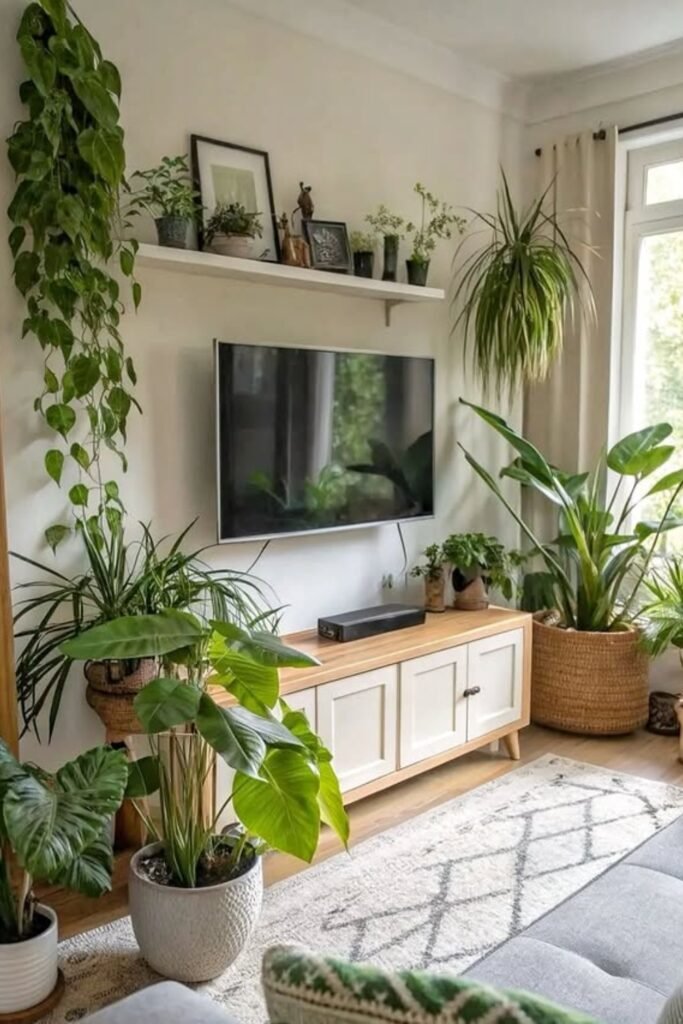
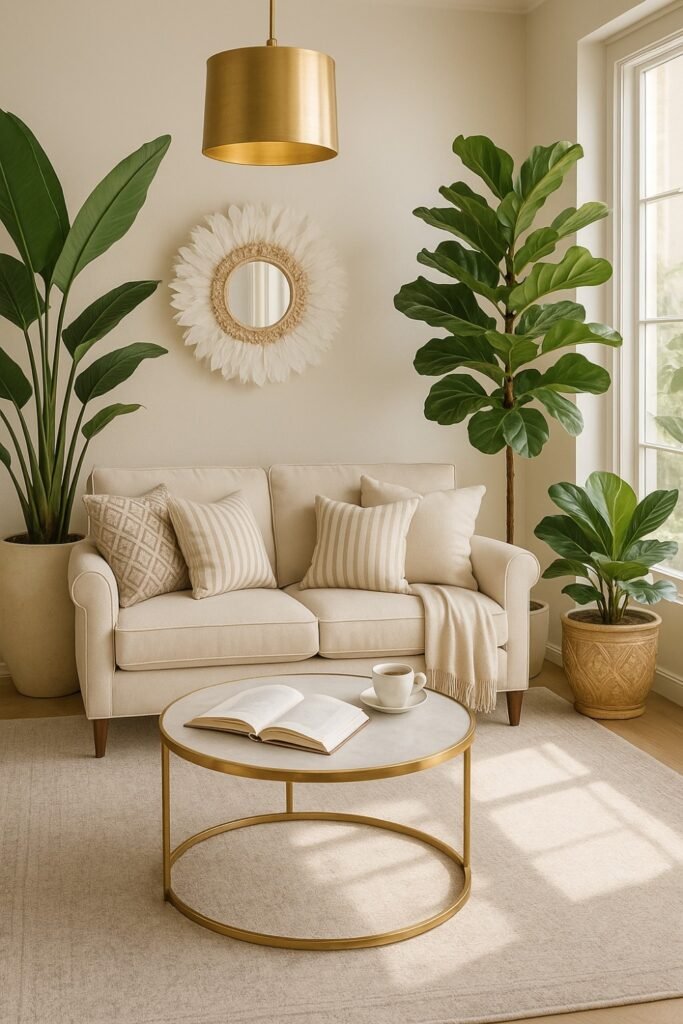
Sofa Plant Balance
Frame a compact sofa with tall plants on both sides when you want strong greenery without filling every table and shelf.
Choose different leaf shapes and heights so the arrangement feels relaxed, keeping the larger specimens close to the brightest available window.
Neutral pots let deep green foliage stand out beautifully, while one decorative planter can echo warmer metals, woods, or nearby lighting.
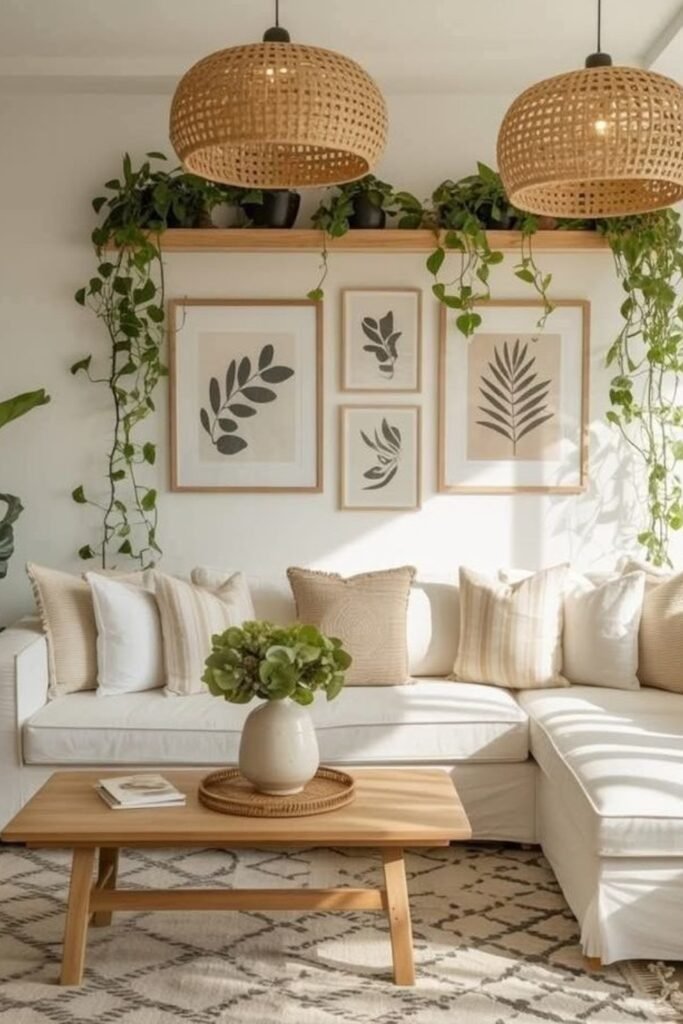
Overhead Vines
Give the wall above a sectional more purpose by letting trailing plants fall from one long shelf around simple framed artwork.
Position several pots across the shelf rather than one heavy cluster, allowing vines to drop at different points for softer visual movement.
Keep the furniture and planters mostly neutral so abundant greenery remains noticeable without making a smaller living room feel overly busy.
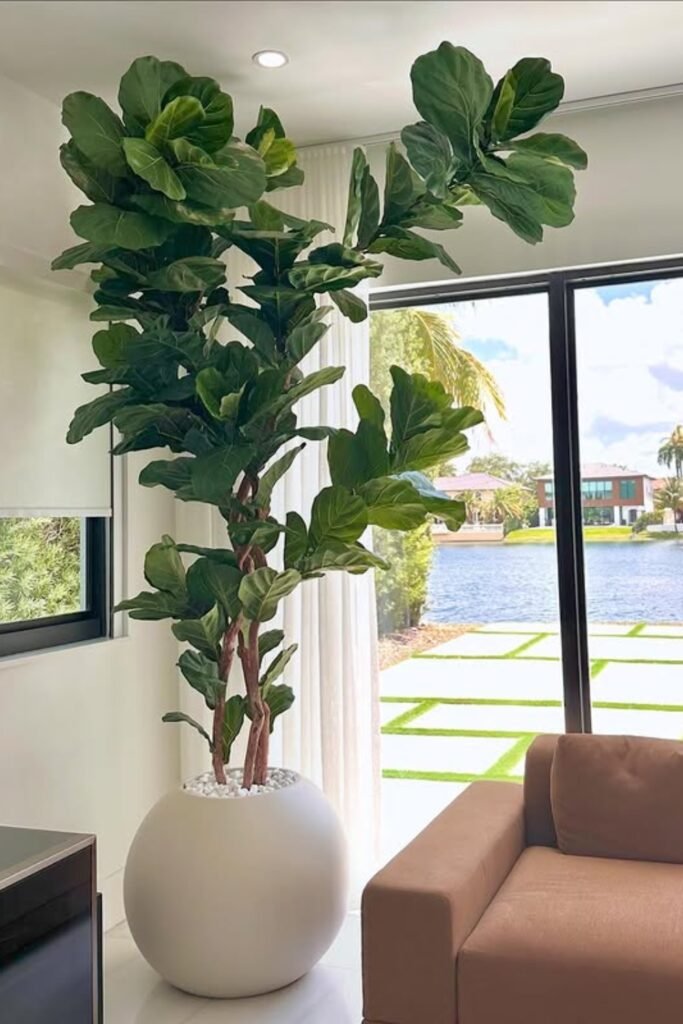
Oversized Fiddle Leaf
Use one oversized fiddle-leaf fig when a tall window corner needs something substantial enough to match the room’s generous proportions.
A rounded floor planter gives the large canopy a grounded base while keeping attention on the leaves rather than decorative accessories.
Leave space between the plant and nearby seating, giving broad leaves room to spread while maintaining an easy path through the room.
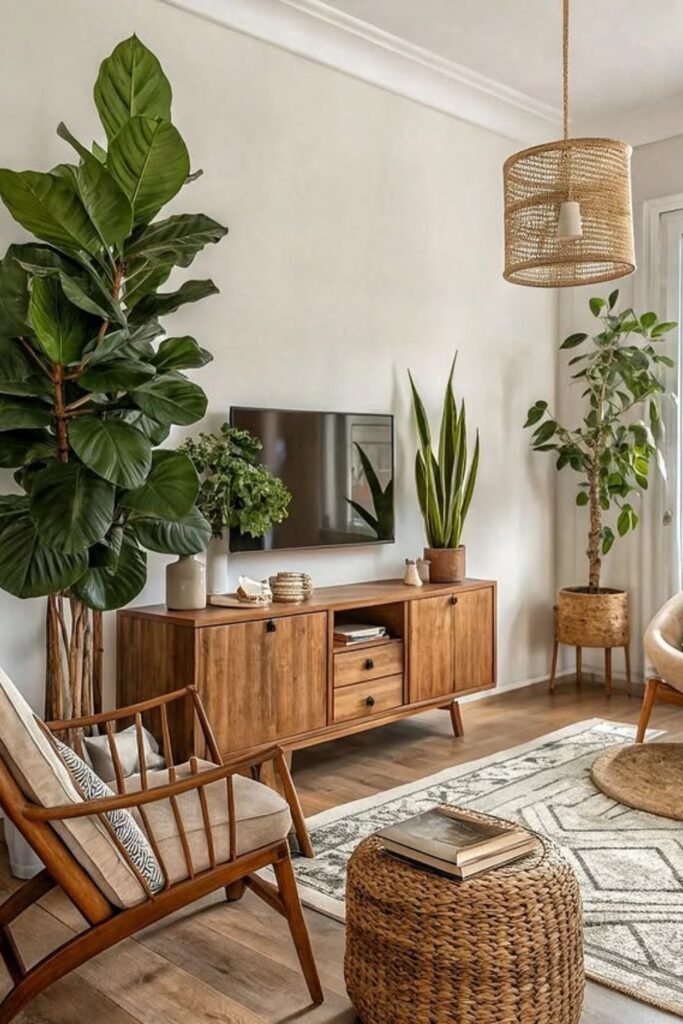
Layered TV Plants
Make a simple TV wall feel finished by using plants at three heights instead of filling the console with small decorative pieces.
Let a tall fiddle-leaf fig anchor one side, then balance it with an elevated tree and upright snake plant across the room.
Warm wood furniture and woven accents keep the greenery connected to the living room, while open floor space prevents visual heaviness.
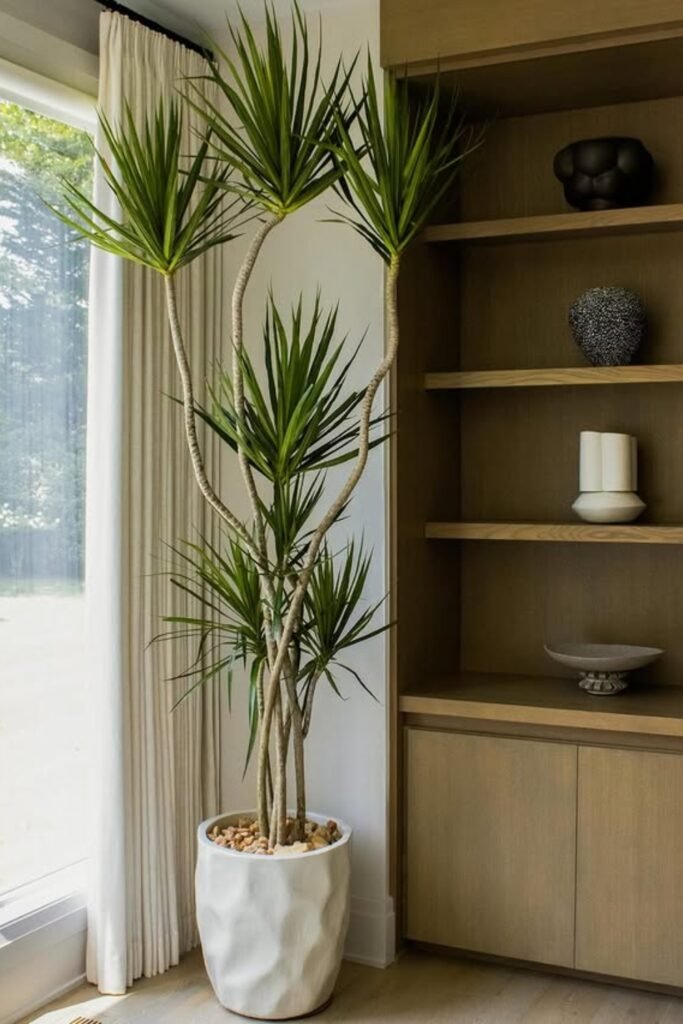
Sculptural Dragon Tree
Use a tall dragon tree beside built-in shelving when you need vertical interest but want the shelves themselves to stay uncluttered.
Its narrow trunks and spiky crowns occupy very little floor space, making the arrangement especially useful beside windows or cabinetry.
Choose a simple floor planter that matches the surrounding finishes, allowing the unusual plant shape to provide most of the decoration.
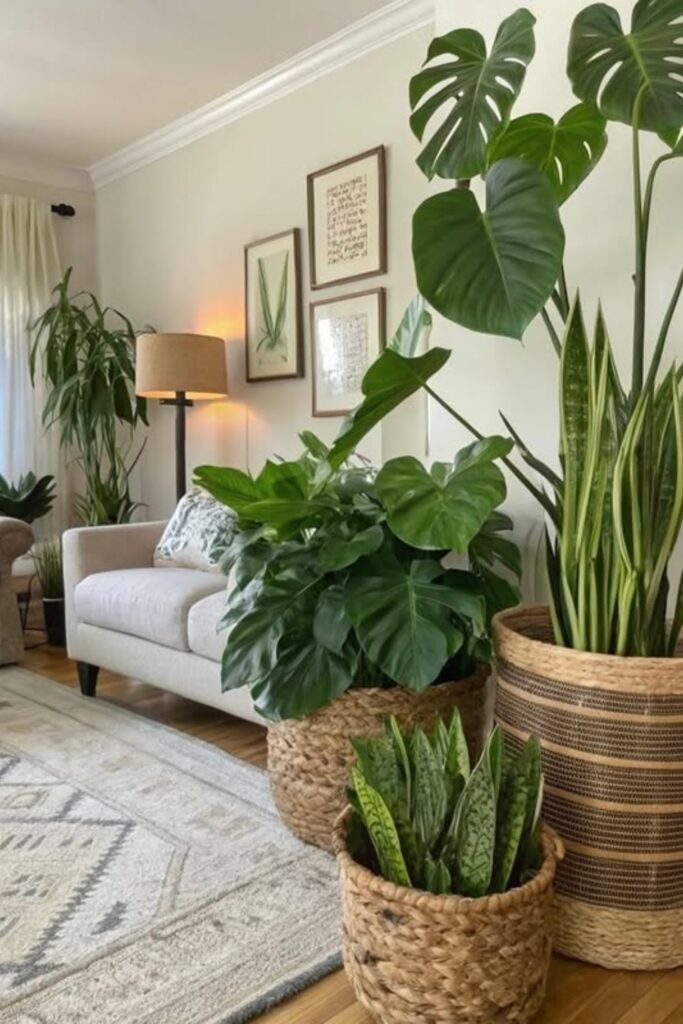
Mixed Plant Corner
Create a fuller plant corner by combining broad monstera leaves, upright snake plants, and dense foliage instead of repeating one shape.
Place the tallest pot behind the group, then step smaller baskets forward so every plant remains visible from the seating area.
Woven baskets make mixed greenery feel warmer and more coordinated, especially in relaxed living rooms with neutral upholstery and natural wood.
FAQs
How Many Plants Should I Put in My Living Room?
There is no perfect number because it depends on your room size, furniture, available light, and how much greenery you actually want.
Start with one large plant or two smaller plants in empty areas, then add more only when another spot genuinely needs visual interest.
Mix tall floor plants with smaller pots or trailing greenery, as different heights create balance without making your living room feel overcrowded.
Where Should I Avoid Putting Living Room Plants?
Avoid completely dark corners, heating vents, air conditioners, and busy walkways where changing temperatures can damage your plants.
heck each plant’s light needs before choosing its position, because even low-light varieties still need some usable natural or suitable supplemental light.
Leave enough space around larger plants for leaves to spread comfortably without pressing against furniture & blocking windows,.